Archive
Summing up Wine Blogging Wednesday, Plus Some Surprises
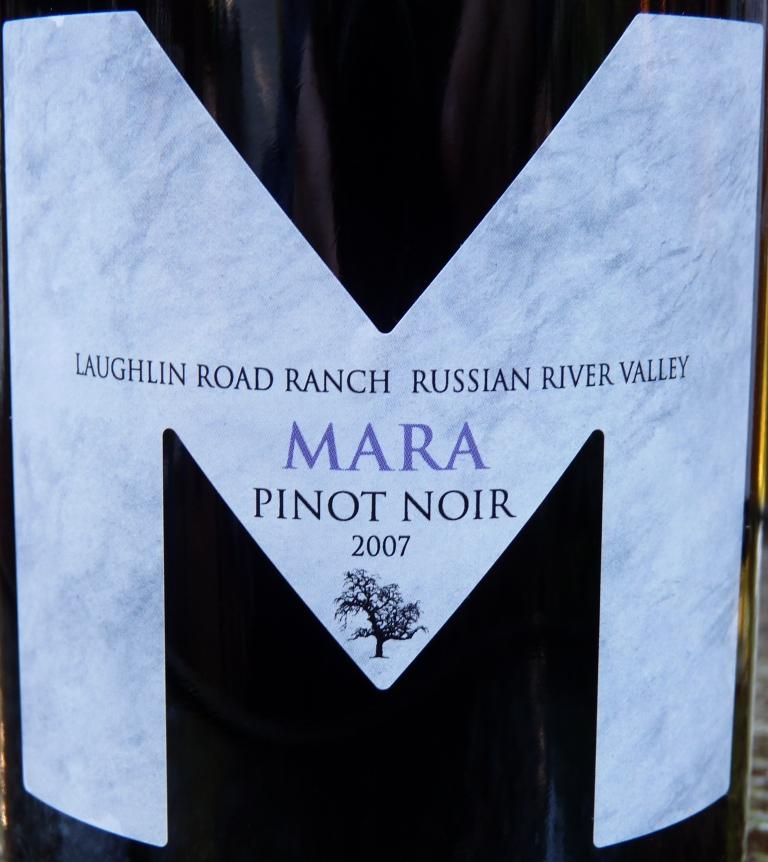
 In my last post about Wine Blogging Wednesday #75, I promised to sum up the experience with my Single – 2007 Mara Pinot Noir Laughlin Road Ranch, Russian River Valley, so here we go.
When I tasted 2007 Mara Pinot Noir about 1.5 years ago (October of 2010, here are the notes), the wine was coming out as big and brooding, with wide shoulders, and tremendous elegance and balance. One and a half years later, the wine took on a lot more subtle expression, coming out in elegant layers. Here are more detailed notes: Blueberries and blackberries on the nose, with a hint of nutmeg. Lots of red fruit on the palate, fresh strawberries and red plums, lots of tannins. More tannins. More tannins. Good acidity, and good balance. Lots of pleasure.
I always like to leave some amount of wine to be tasted at the next day just to see how the wine develops and what might be the aging potential (pumping the air out with Vacuvin) – this is exactly what I did with this wine. It became even more mellow than the day before, but still had lots of tannins in the finish, and perpetual elegance. I think this wine has at least another 8-10 years to reach its peak, so will see how it will develop. All in all, it was a great experience for the Singles night.
 Now let’s talk about the surprises. When I was reaching out for the bottle of Mara Pinot the day after Singles night, I noticed a bottle standing next to it with the Vacuvin rubber cork on top. This was a bottle of M. Cosentino California Ol’ Red – I completely forgot about this wine, which by now was standing there for 6 days. Oops was the first thought – this is going to the dump. It was nice and very drinkable when it was open on Saturday, but now, on Thursday? Also interestingly enough, this wine can’t be any further from Singles which I had the night before – if you remember our discussion about single vineyards, this Ol’ Red wine is made from the grapes coming from the biggest circle – entire California, and to top it off, it is not even a single vintage wine, as it doesn’t have vintage designation on the label.
Well, I have to give a chance to any wine, can’t just dump it – I have to at least give it a try, right? So with the first sip came literally a Wow emotion ( from oops to the wow) – the wine practically didn’t change since Saturday! It was still coming out as nice and complex red. Dark cherries and dark chocolate on the nose, more dark chocolate and cinnamon on the palate, blueberry jam, good tannins and good acidity (Drinkability: 8-). Coupled with the fact that this wine costs $11.99, you get here quite a value. I’ve had a very few wines which would last that long after the bottle was open (well, some of them, like Dunn Cabernet, need 6 days just to start opening, but this is whole another story), hence the nice surprise.
That’s all, folks. Let’s raise the glass to the great surprises in our lives. Cheers!
Singles Night Out – Wine World Singles, It Is
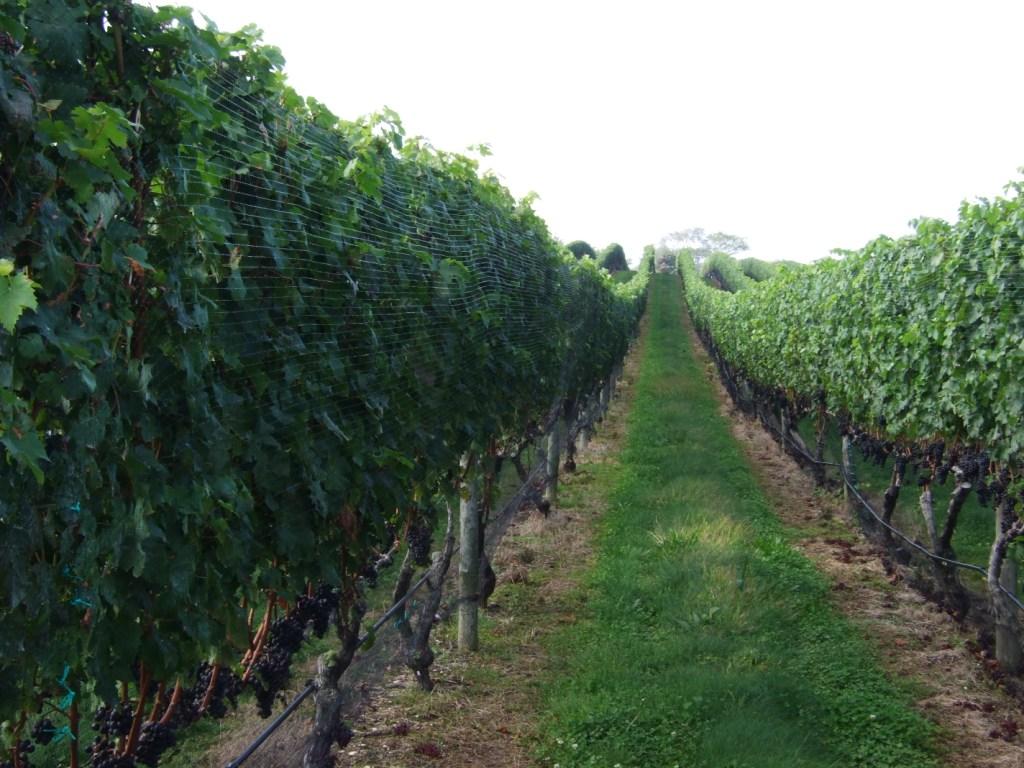 Confused by the title of this post? Don’t be. It is wine we will be talking about here, not marital statuses – but these are the wines which are usually quite special.
Looking at the wine label, you will always find designation of place. For new world wines, it is usually easy to see where the wine is coming from – Napa Valley in California, Maipo Valley in Chile, Barossa Valley in Australia. For some of the old world wines, it might be more tricky to figure out the place versus just the wine name, but with the little effort, you can always find out where the wine is coming from.
Wine is made in different places all over the world. Each place has its own unique characteristics, called Terroir – soil, climate, altitude, typical weather conditions, ecological surroundings – all contribute to unique terroir.
Let’s talk about wine origins for a second. Imagine nested circles. First circle is a big geographical area, like California or Bordeaux. If the wine is made out of the grapes grown anywhere in California, it can have a California designation on the label. If the wine is made out of the grapes grown anywhere in Bordeaux, it will have a Bordeaux designation on the label, most typically something like “Grand Vin de Bordeaux”. The next circle will be smaller, representing some specific area within the bigger region – for instance, Napa Valley instead of the whole California, or Medoc instead of the whole Bordeaux. If the grapes are grown only in Napa Valley instead of the whole California, this will be appropriately designated on the label. Inside Napa valley, there are again smaller grape growing areas, each one with its own unique terroir – for instance, Stag’s Leap District or St. Helena. Again, if the wine is made out of the grapes grown in such a specific area, it will be stated on the bottle.
Now we need to place one more circle inside of all the circles we already drew – this circle should signify the Estate, or the whole winery. If you saw something like “Estate Grown” on the label this is what it usually relates to. Okay, now let’s jump to the smallest circle of all – yes, we got to the level of individual vineyards. Wine makers and grape growers always made an effort to identify which vineyards or even parcels of the vineyards produce the best grapes, and subsequently, best wines have being produced from the best vineyards. The wine produced from one individual vineyard is commonly referred to as a “Single Vineyard” wine and often carries the name of the vineyard on the label. This is definitely a common practice for California wines – however, if you think about the place where the “single vineyard” concept reached its ultimate expression it would be Burgundy, where individual domains own vineyards or even specific parcels of the vineyards – of course you would only see a designation of Domaine on the label.
What is the importance of the “single vineyard” concept? This is usually where the best wines are coming from, the wines with the character, the wines which can be identified and related to. And these single vineyard wines are the subject of today’s Wine Blogging Wednesday event!
 This is the 75th Wine Blogging Wednesday, which is hosted by Joe Roberts, a blogger behind 1WineDude blog – and here you can find his post about the event and wine he have chosen for it.
What is my choice of the wine for today? I had a long back and force with myself, until I finally settled on one – the wine for tonight will be 2007 Mara Pinot Noir Laughlin Road Ranch, Russian River Valley, which was my personal Wine of the Year for 2010. It is a single vineyard Pinot Noir from Russian River Valley region, and it should be a perfect choice for tonight (I also have another reason to open a great bottle of wine – it is my daughter’s 10th birthday). It will be really interesting to see how this wine evolved and what my impression will be now – but this will be a subject of another post.
Happy Wine Blogging Wednesday! Find your special Single for tonight and have fun! And don’t forget to leave a comment about your experience! Cheers!
Notes from Slocum & Sons Wine Tasting in Connecticut
This past weekend I attended yet another great wine tasting by Connecticut wine distributor Slocum and Sons. Of course when hundreds of wines are presented in the tasting, there is a good chance of finding lots of great wines among them. This tasting was no exception – I had a lot of tasteful encounters at the event. Here are some notes, with pictures, as usual.
Let’s start with the sparkling wines. One of the first wines we tasted was Armand de Brignac Brut Gold (Ace of Spades):

The Champagne is this sparkled (no pun intended) bottle was good, with good body, green apple and zinging acidity running in the back. At the same time, as I’m always looking for QPR when I’m thinking about wine, this wine, the most expensive in the entire tasting, at about $270 per bottle, doesn’t not represent value at any level. If I have to spend this amount on the bottle of Champagne, I would much rather drink Krug.
Continuing sparkling wines category I have to mention Champagne Vollereaux, which is a Growers Champagne. We tried Vollereaux Brut NV, Vollereaux Rose Brut NV and 2004 Vollereaux Cuvee Marguerite – all beautiful wines, full flavored champagnes, with the most expensive one still being less than 1/4 of the price of Armand de Brignac – and delivering more pleasure.There were other great Champagnes there, such as Laurent Perrier and Veuve Clicquot, but I also have to mention a wide variety of excellent Cavas, sparkling wines from Spain – here is the picture of the line up of one of my all time favorites – Segura Viudas, with all four wines being one better than the other:

Moving one to the white wines, there were some personal discoveries and some “meet and greet” with old favorites. In the “personal discoveries” group first I would like to mention 2008 Trefethen Dry Riesling Oak Knoll District, Napa valley – this is the first California Riesling which I really enjoyed – it got all the beautiful white fruit, balancing acidity and even hint of petrol!

The next discovery are two wines from Bodegas Shaya – 2010 Bodegas Shaya Verdejo Rueda DO and 2009 Bodegas Shaya Habis Rueda DO.

Both wines are made from the 100 years old vines Verdejo, first wine fermented in stainless steel tanks and second one, Habis, fermented in French oak barrels. Bodegas Shaya comes out with very clean fruit and minerality expression, good acidity, very balanced. But once you taste Habis, the first and immediate impression is Wow – this will beat any Chardonnay! I don’t want to push it too far, but I would love to see this wine next to Peter Michael Chardonnays in the blind tasting – that would be a very interesting experiment.
Few more highlights in the white wines category. Three of the Talbott Chardonnays – 2009 Tabott Sleepy Hollow Chardonnay, 2009 Talbott Logan Chardonnay and 2009 Talbott Kali Hart Chardonnay were all outstanding, showcasing balanced wines, with good acidity, white fruit and hint of vanilla. I didn’t have Talbott wines before, so I was very impressed with the quality. And then in the “familiar category” I want to mention two Spanish whites, both of them I got to know thanks to the The Capital Grille’s “The Generous Pour” summer wine program. These wines are 2010 Jorge Ordonez Botani and 2010 Bodegas La Cana Albarigno.
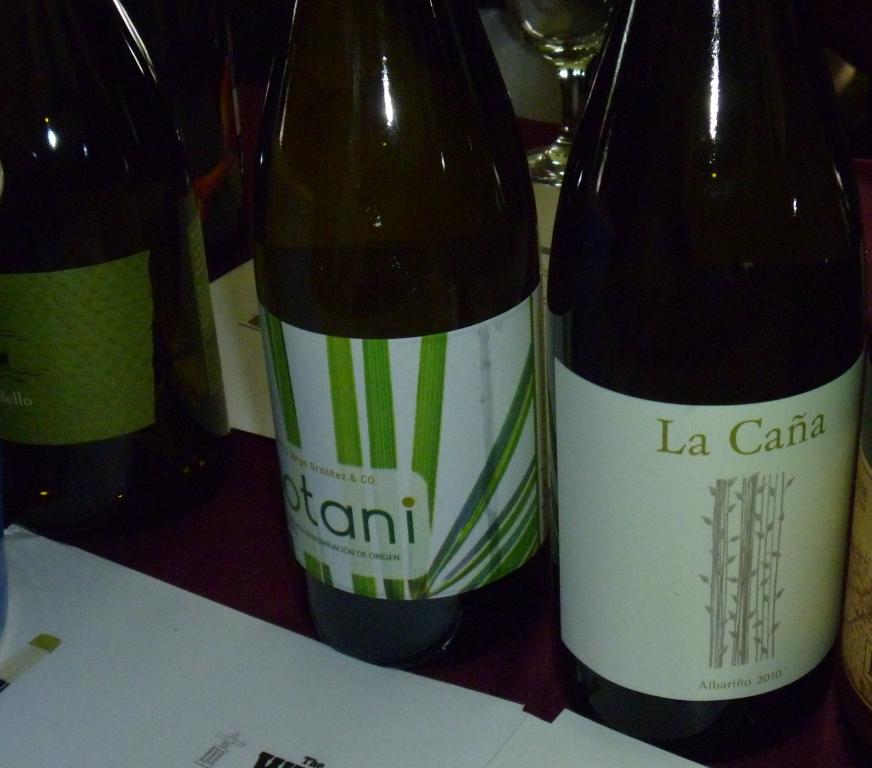
Both were beautifully refreshing, with floral notes on the nose, with La Cana having a bit more of acidity and mineral expression – both wines should be perfect on any summer day.
Coming to reds, the task of sharing my impressions becomes even more challenging – there were A LOT of great ( did I say “great”?) wines from Spain, California and France, so I will have to resolve to more of the pictures than words.
I want to start from the wines of Charles Mara. As some of you might remember, 2007 Mara Pinot Noir Laughlin Road Ranch was my most favorite wine last year (#1 in the Top Dozen). Now, I had an opportunity to try 2008 Mara Pinot Noir Laughlin Road Ranch Russian River Valley. What a radical departure! If I would be given those wines in the blind tasting, I would never even guess that those wines are coming from the same vineyard, left alone made by the same person. While 2007 was California Pinot at its best, 2008 is a pure Burgundy – dry, austere and in need of time – it probably needs another 5 years to open up.
Another very interesting wine was 2008 Mara Russian River Valley Zinfandel “old vines”:

As Charles Mara said himself, he was trying to make a “super-Tuscan” of Zinfandels, by blending zinfandel grape with Cabernet Sauvignon grapes from two different vineyards. I think he successfully accomplished that, ending up with powerful, dense red wine, showing beautiful fruit with a great restraint. This wine also need at least another 5 years to showcase fully.
Spanish reds selection at the tasting was so strong that it is nearly impossible to decide what wines should be mentioned and which were my favorites – El Nido, Alto Moncayo, Muga, Sierra Cantabria, Tesso La Monja – all powerful, beautiful wines, all age-worthy, delivering pleasure right now and for the next 30-40 years (or longer). I guess I would have to put a stick in the ground and say that 2007 Bodegas El Nido El Nido was my favorite Spanish wine in the tasting ( with the second thought in my head – well, yeah, and what about … ) – powerful, with amazing structure, firm tannins, good fruit, very balanced – “wow” was my single word descriptor.

By the way, standing next to El Nido are two Spanish wines, 2009 Blau and 2009 Can Blau – both were outstanding, fresh, with lots of sour cherries on the palate – and quite affordable for every day enjoyment.
There are few more reds I want to tell you about. First, it is Chateau Leoville Poyferre from Saint Julien. I already wrote about great experience with 2005 Chateau Leoville Poyferre Grand Cru Classe wine (here is the link to the post). This time I was able to try first, second and third labels of Chateau Leoville Poyferre – 2006 Chateau Leoville Poyferre Saint Julien Grand Cru Classe, 2006 Pavillion de Poyferre Saint Julien and 2008 Chateau Gulliver Bordeaux AOC.
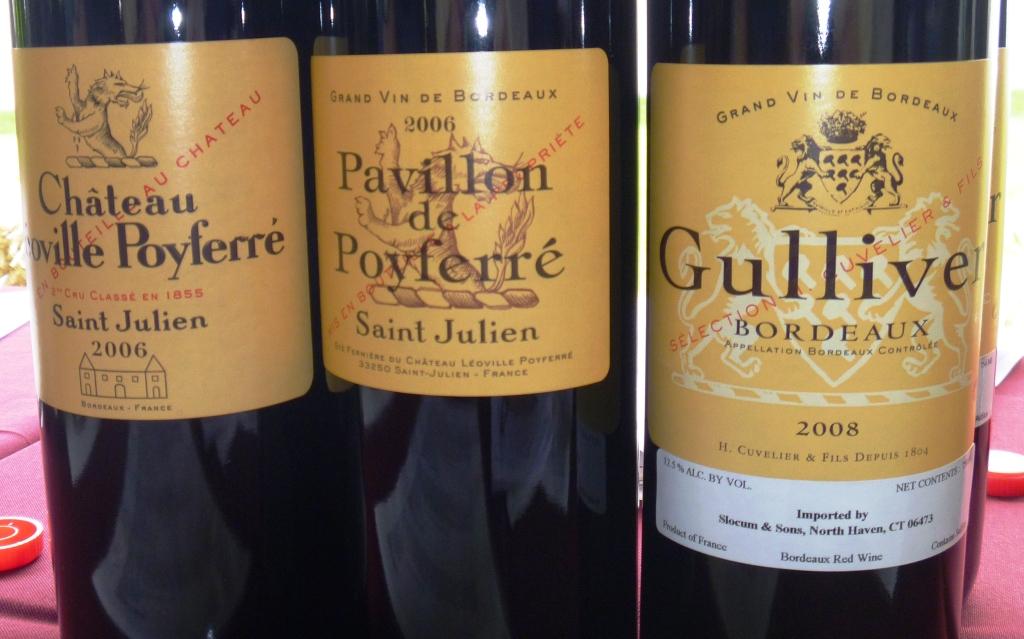
Chateau Gulliver was the lightest from the group, showing lots of earthy notes on the palate, and both Chateau Leoville Poyferre and Pavillion de Poyferre were big, powerful and well structured wines, with chewy tannins and lots of dark fruit, very balanced.
There was another set of wines which belong to the same group (owned by Chateau Leoville Poyferre), but coming from across the ocean – from Argentina, to be precise. These are the wines from Cuvelier Los Andes – take a look at the similarities in the label design:

Two out of four wines presented in the tasting were my favorite – 2009 Cuvelier Los Andes Cuvee Maule, soft and round, and 2007 Cuvelier Los Andes Grand Vin, a Malbec blend, big and powerful.
Last but not least was a group of wines from Ferraton, coming from Northern France – 2006 Ferraton St. Joseph La Source, 2007 Ferraton Cote Rotie L’Eglantine and 2006 Ferraton Hermitage Les Miaux:
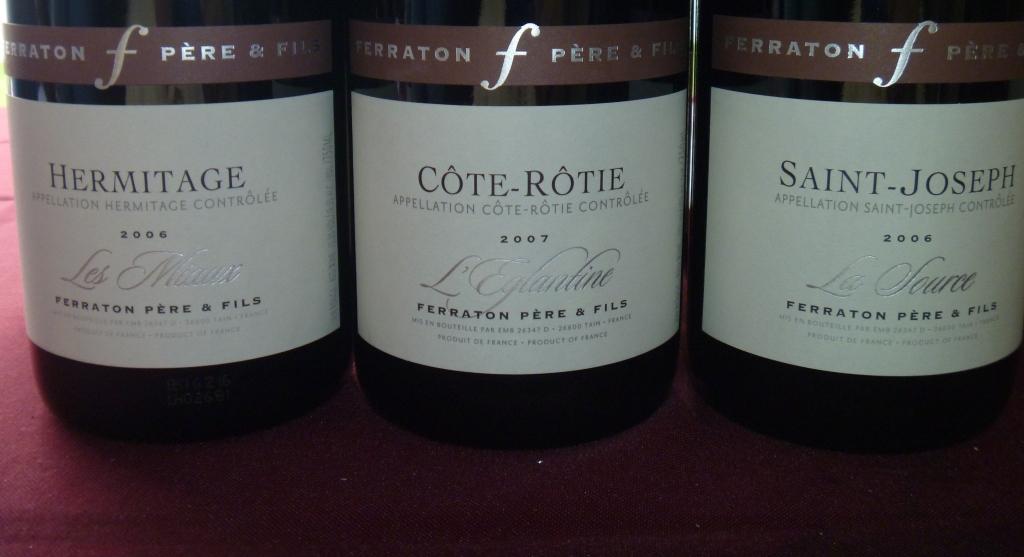
Both St. Joseph and Hermitage were classic Syrah wines, earthy, spicy, with the hint of white pepper and good amount of dark fruit. But my absolute favorite was Cote Rotie. First, I have to admit that it was my first ever taste of Cote Rotie. Actually Cote Rotie meaning in English is “roasted slope”, due to the amount of sunlight and positioning of the vineyards. You could actually taste all those roasted rocks in this wine, creating unforgettable impression. Needless to say this was my absolute favorite in the tasting.
I think it is time to finish – there were still more wines I wanted to share with you, but I think this is enough for now. More great stories is coming, but for now – cheers!
Top Dozen Wines of 2010
 One more year is passing by, becoming memories. As the closing bell nears, we often like to count good things which happened during that year. After reading the post by Joe Roberts, where he talks about his ten most interesting wines of the year, the idea for this post was born.
Here we go – a dozen of wines which made special memories throughout the 2010. Are these the best ever wines I had? No. Are these the best wines of 2010? Not necessarily. Why is there a dozen? After going through my records, I simply counted 12 wines I want to reflect upon. A lot of these wines were covered in the prior posts – I will give you links and prices if I have them. And I will explain why I felt so special about these wines. And – I will make an effort to sort the list. Prioritizing memories and experiences is hard, but I will do it nevertheless – may be just to get a good chuckle later on. And now, without further delay…
12. Haut Charmes Sauternes 2007 ($17). One of the best Sauternes I ever had – clean, balanced, with white peaches and honeysuckle on the palate. Few reasons to be in the “Top Dozens” – legend has it is declassified Chateau D’Yquem, plus great QPR for the Sauternes.
11. Cambria Bench Break Chardonnay 2006, Santa Maria ($25). For the first time in a long while, California Chardonnay tasted like California Chardonnay – lots of vanilla, butter and toasted oak on the palate, extremely balanced at the same time. Real Chardonnay as opposed to wimpy white wine without identity.
10. Hamilton Russell Vineyards Pinot Noir 2008, South Africa ($40). Totally unexpected – amazing Pinot Noir from South Africa (!). Profoundly Burgundian style, with tremendous finesse and balance. Great QPR. Worth seeking – if you like Pinot, you will enjoy it immensely.
9. Flora Springs Soliloquy Sauvignon Blanc 2009 ($18). Literally the best California Sauvignon Blanc I ever had. In general, I love French, New Zealand and Chilean versions, and ignore California Sauvignon Blancs. However, this wine you can not ignore – beautiful combination of traditional grassiness with fruit forward and finesse. Outstanding!
8. Visp Chantone Eyholzer Roter 2008 ($26). Swiss wines are great – it is unfortunate that they literally can’t be found in US. I’m lucky to be able to experience the Swiss wines – and this particular red is probably the best Swiss wine I ever had. Playful, balanced, easy to drink and thought provoking – good till the last drop.
7. Domaine de Granajolo Corse Porto-Vecchio 2009 (€12). Best Rose wine I had in 2010. Nuf said.
6. Domaine de Torraccia Niellucciu 2009, Corse Porto-Vecchio (€11). Accidental find in the wine shop in Paris (while hunting for the new grapes) – amazing. Playful, balanced and inviting – pure pleasure in the glass.
5. Chateau Hosanna 2003, Pomerol ($100). One of the best Bordeaux wines ever. Very approachable now, and will be amazing in another 20 years.
4. Jamesport Petit Verdot 2006, Long Island ($100). One of the biggest surprises of the year – having only bad experience with 100% Petit Verdot wines from Australia, this wine was absolutely pleasantly unexpected. Luscious , silky smooth, concentrated wine – no edges or rough corners. Lots of pleasure.
3. Satrapezo Saperavi 2006, Georgia ($28). This wine completely changed my perception of Georgian wines. Georgia was a birthplace of winemaking, but tasting Georgian wines until recent was saying that the art is lost. This wine changed that. Perfectly balanced and restrained, with earthiness, fruit, acidity and tannins coming to play as a team. Great wine, and great value.
2. Rozes Over 40 Years Old Port ($90). My best port ever. I can close eyes and imagine the smell and taste of this wine – multiple layers, tremendous complexity and great opportunity to reflect on life when the finish lasts for 15 minutes. Find this wine and experience for yourself.
1. Mara Laughlin Road Ranch Pinot Noir 2007, Russian River Valley ($45). Incredibly balanced, silky smooth wine, very powerful and round. Alcohol content is 15.6%, and it can’t be noticed unless you read the label. Great wine now, will improve with some cellar time. Find it if you can.
There were many other wines worth mentioning, and I did my best throughout the year to cover them. The wines in this group delivered special experiences – that’s why they listed here. That’s all, folks – for this post. I will be glad to hear, however, about YOUR special wines and wine experiences from 2010. Speak up – now is the time!
Last Bottle Sign Up ($10 credit)




 Talk-A-Vino