Archive
One on One With Cristina Mercuri, Master of Wine
As you might know, I love interviews.
That didn’t happen from the first day of blogging. It took me some time to realize the value of conversation. But once it “clicked”, interviews became one of my favorite subjects on this blog – “Stories of Passion and Pinot” series might be the best proof of that.
Today’s interview is a bit different than the most. The majority of my interviews are with winemakers. However, today I would like to offer to your attention my conversation (virtual, as it often goes, even though this is one of the cases where I would much prefer a face-to-face format) with Cristina Mercuri, Master of Wine.
Cristina Mercuri is the first woman Master of Wine (MW) in Italy, and the fourth Italian MW overall. To put things in perspective, only 521 people have become Master of Wine since 1953, according to the Institute of Master of Wine as of February 2026. This is definitely an achievement to celebrate, so I was very excited when I got an opportunity to talk to Cristina. She is also the founder of Cristina Mercuri Wine Club – we will touch on that in our conversation below.
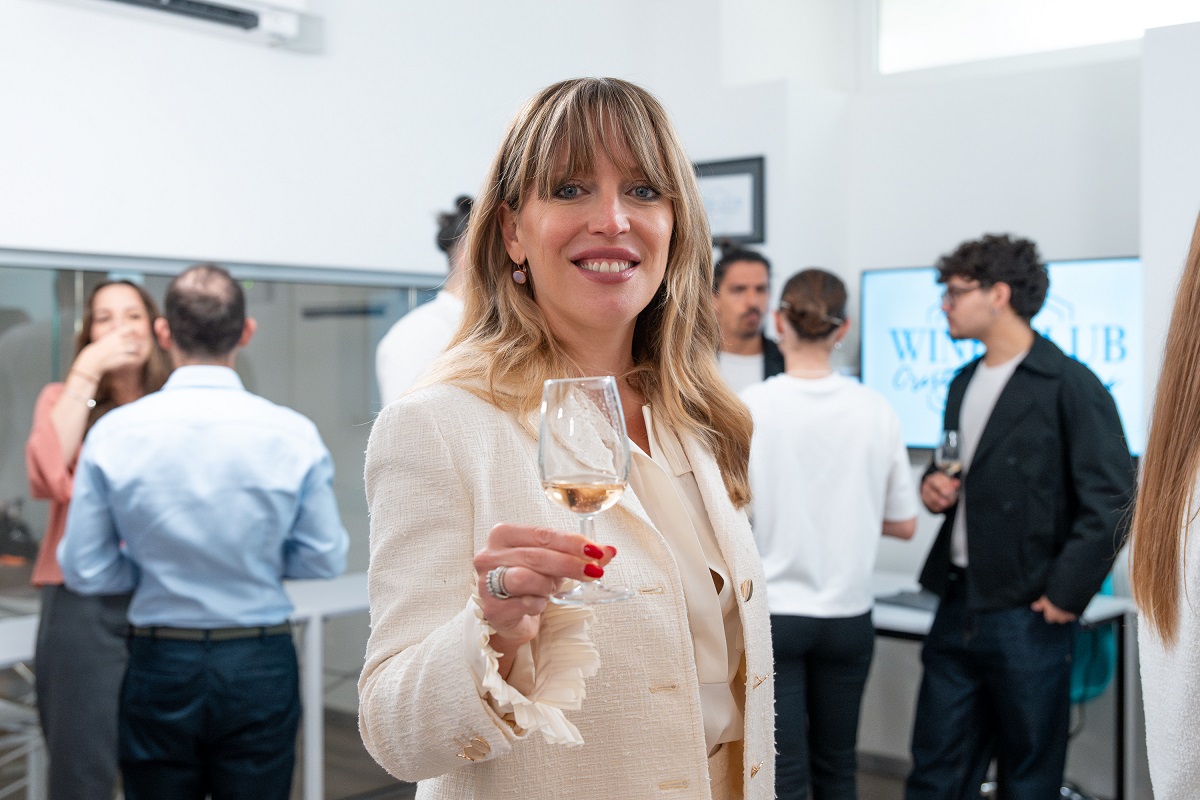
Cristina Mercuri
Here is what transpired in our conversation:
[TaV]: This might be a “duh” question, as you grew up in Italy, and yet – as a wine lover, not as a wine professional, how did you get into the world of wine? Family traditions? Was there a pivotal wine in your life?
[CM]: Wine was always present in my life in the way it often is in Italy: around the table, as part of everyday culture rather than something intellectualized. It belonged to meals, to conversations, to conviviality.
My real entry into the wine world happened much later. I was working as a lawyer and, despite having built a solid career, I felt increasingly bored and disconnected from what I was doing. I needed a radical change, something intellectually stimulating and culturally rich. Wine offered exactly that.
I began studying through the WSET programmes while still working in law, initially out of curiosity. Very quickly that curiosity turned into a serious commitment. By the end of 2015 I decided to leave the legal profession entirely and dedicate myself to wine. What started as a personal exploration became a new professional path.
[TaV]: What made you switch from a successful career in law to the unpredictable world of wine?
[CM]: Law gave me a very strong analytical framework, discipline and the ability to structure complex reasoning. But at a certain point I felt the need to work in a field where cultures creativity and human connection were more present.
Wine offered exactly that. It is an industry where agriculture, craftsmanship, economics and storytelling coexist. Each bottle represents a product, but also a narrative about land, people and time. I realized that the skills I had developed in law — critical thinking, precision, strategic analysis — could be applied in a different way to the wine world.
Leaving law was a significant decision, but it never felt like abandoning something. It felt like redirecting the same intellectual energy toward a field that resonates deeply with identity, culture and global exchange.
[TaV]: You recently became the first woman Master of Wine in Italy (and only the 4th in Italy overall) – how does it feel? What was the hardest part of the MW journey? What was your favorite part of studying?
[CM]: Becoming the first Italian woman Master of Wine is both a personal achievement and a symbolic milestone. In a different world it would be big news that another professional became an MW. In today’s reality, it also represents a small step toward greater diversity in a sector where leadership has long been male-dominated.
The hardest part of the journey is consistency. The MW programme is not only intellectually demanding, it requires years of sustained discipline while continuing to work professionally. Preparing for the Stage 2 examination felt almost like an Olympic training period: blind tasting every day, theory study, mock exams, mental preparation.
My favorite part was the intellectual depth of the programme. It forces you to think about wine from every possible perspective: viticulture, economics, geopolitics, consumer behaviour, communication. It teaches you that wine is not only about what is in the glass, but about the entire system around it.
[TaV]: If at all possible in this format, can you share with us the gist of your master thesis, “Wine, Women and Fascism: A Visual Analysis of the Representation of Women in Propaganda in Enotria (1922–1942)”?
[CM]: My research paper examined how women were represented in the Italian wine magazine Enotria during the Fascist period. I analyzed the covers published between the 1920s and early 1940s using visual semiotics and historical analysis.
What emerged was a very clear pattern: women were rarely portrayed as producers, professionals or decision-makers within the wine world. Instead, they appeared mainly as decorative figures, symbols of beauty, domesticity or national mythology. The visual language reflected broader political and cultural narratives of the time, where gender roles were tightly controlled and instrumentalized.
The research was interesting because it connects visual culture, political ideology and wine communication. It also helps explain why certain stereotypes persisted for decades in the way wine — and women in wine — have been represented.
[TaV]: I heard many times that women are better tasters than men. Do you share the same opinion?
[CM]: I don’t think wine tasting is determined by gender. Sensory ability can vary enormously between individuals, but excellence in tasting comes primarily from training, discipline and experience.
The best tasters I know share certain qualities: concentration, memory, analytical thinking and intellectual humility. Blind tasting especially is a skill that develops through repetition and structured practice.
Reducing tasting ability to gender risks oversimplifying something that is actually much more complex. Wine evaluation is a professional competence that can be developed by anyone willing to dedicate the time and rigor required.
[TaV]: There is a lot of talk everywhere that the world of wine at large is in trouble, as younger people either don’t drink wine at all, or have very specific requirements (low alcohol seems to be one of the most important ones, no oak, etc.). What do you think about young adults and wine? Does the wine industry at large need to do something to address it, or is it just a part of the cycle?
[CM]: I think the conversation around younger consumers often starts from the wrong assumption. It is not that young people reject wine; it is that they expect wine to speak a language that resonates with them.
For decades the industry communicated mainly through tradition, hierarchy and technical jargon. Younger consumers tend to look instead for transparency, authenticity and clarity. They want to understand what is in the glass, who made it, how it was produced and why it matters.
This requires a shift in communication more than a reinvention of wine itself. When wine is presented with honesty, clarity and relevance, younger audiences respond very positively. The future of wine depends largely on our ability to listen to those audiences and adapt the narrative accordingly.
[TaV]: Do you have a favorite Italian wine and/or producer?
[CM]: Italy is incredibly diverse, so choosing one wine is almost impossible. But if I had to mention a style that fascinates me deeply, I would say Etna Bianco. The combination of volcanic soils, altitude and Mediterranean light produces wines with remarkable tension, precision and aging potential.
Producers such as Maugeri or Palmento Costanzo are doing extraordinary work in expressing the subtle differences between contrade and elevations. Etna is a perfect example of how a historic territory can also represent the future of Italian wine.
[TaV]: Same question, taking the view of the world – can you share some names of your favorite wines and/or producers from around the world?
[CM]: I have always been deeply fascinated by Burgundy, particularly producers like Olivier Leflaive or Alain Chavy, who express incredible precision and terroir transparency in Chardonnay.
In Champagne, houses like Krug, Philipponnat or Yann Alexandre represent a philosophy of blending and long maturation that creates wines of extraordinary depth and longevity.
I also admire producers who work with clarity and restraint in different parts of the world — those who allow the vineyard to speak rather than imposing heavy stylistic signatures, like Creation in South Africa.
[TaV]: Do you have a wine cellar? If you do, what would we find there?
[CM]: Yes, I do have a cellar, although I tend to think of it as a working cellar rather than a collector’s one. You would find a mix of Italian classics — Barolo, Brunello, Etna — alongside Champagne and Burgundy.
There are also many bottles linked to personal moments: wines opened to celebrate milestones, wines shared with friends, wines connected to travel or professional encounters. For me a cellar is not only about aging potential; it is also a memory archive.
[TaV]: Can you tell us more about your project, Mercuri Wine Club? What are your aspirations? What are you trying to achieve? How do you see this project evolving over the next 10 years?
[CM]: Mercuri Wine Club was born from a desire to combine education, communication and strategic consultancy within the wine sector.
The project has two main dimensions. One focuses on education, offering structured training programmes that help professionals and enthusiasts understand wine with clarity and depth. The second focuses on strategic consultancy, helping wineries and wine institutions position themselves more effectively in international markets.
Over the next ten years I see the project evolving into a broader platform that connects education, market intelligence and communication. The wine industry needs more bridges between production, markets and consumers, and that is precisely the space where Mercuri Wine Club operates.
[TaV]: Last question: have you had a chance to watch Drops of God series on Apple TV? If you have, what do you think of it? If not, I can’t recommend it highly enough 🙂 [CM]: Yes, I have watched it, and I found it fascinating from a cultural perspective. The series captures something very real about wine: the emotional dimension, the role of memory, and the intensity of sensory perception. In that sense it does a good job of showing that tasting is not just technical evaluation, but also interpretation and personal experience.
At the same time, what slightly disappointed me is the risk of portraying wine tasting as something almost supernatural or accessible only to a few exceptional individuals. In reality, tasting wine is a skill that anyone can develop with curiosity, attention and practice. Blind tasting is not about superpowers, and it certainly shouldn’t be intimidating.
If anything, wine should invite people in, not push them away. The real beauty of tasting is that it sharpens perception and encourages dialogue. Anyone can sit at a table, taste a wine blind, and enjoy the process of discovering it. That sense of curiosity and shared exploration is what truly makes wine special.
Here you are, my friends. I hope you enjoyed reading our conversation, and until the next time – cheers!
One on One With Winemakers: Tasting The Stars
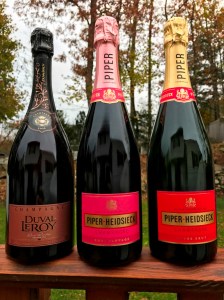 “Come quickly, I am tasting the stars!” – whether Dom Perignon said these words or not is not really important – but if you thought that we will be talking about the Champagne, you got it right! Also, plural mention of “winemakers” in the title is not a mistake – today’s “one on one” post is actually a double-feature.
The story of Duval-Leroy Champagne goes almost 160 years back, to 1859, when Edouard Leroy, wine négociant, met Jules Duval, grape grower – the rest is a history which you can read for yourself here. Today Duval-Leroy farms 200 hectares (about 500 acres) of vines, mostly in Premier and Grand Cru appellations, also using sustainable viticulture – Duval-Leroy is known as a pioneer of the sustainable grapegrowing in Champagne.
In 1785, “Heidsieck & Cie” company was founded with one dream – to create a Champagne worthy of a queen. After tasting the stars, Queen Marie Antoinette became the first “brand ambassador” for the Heidsieck Champagne. I don’t want to try to regurgitate here the rich history of Piper-Heidsieck Champagne, you would be far better of reading it for yourself, but for all these years, Piper-Heidsieck story always included royal families, fashion designers, and movies. The bottle of Piper-Heidsieck was the first Champagne to ever appear in the movie in 1933. Since 1993, Piper-Heidsieck is an official supplier of Cannes Film Festival, and many actors and producers were recognized with the special Piper-Heidsieck Award at film festivals around the world.
Now, let’s get to that double-feature interview I promised. I’m running this “one-on-one” series of the interviews for about 3 years now. Until now, there was always a unique set of questions, prepared specifically for the particular winery and the winemaker. This time, I decided to play it a bit differently – ask the same set of questions of two winemakers – however, in this case, there is a great “common space” between the subjects of the interview – they both make Champagne!
I had an opportunity to [yes, virtually] sit down with Sandrine Logette, Cellar Master of Champagne Duval-Leroy, and Séverine Frerson, Chef de Caves at Piper-Heidsieck, and here is what transpired:
[TaV]: What is your approach to the blending of Vins Clairs? How many Vins Clairs are typically comprising your most standard NV house blend?
[DL]: It is necessary to first think about the flavor profile you would like to achieve: the aromatic notes with its intensity and its descriptors, its mouthfeel, its volume, its angles, its power and persistence as well as the volume: number of bottles to produce, volume of reserve wines to use and volume of wine to save for future ‘liqueur d’expédition’. The vins clairs are tasted several times (at least twice) after the malolactic fermentation to familiarize ourselves with their characteristics. The first approach to blending is always a minimal concept; which is what I call it my ‘accounting idea’. It is tasted, assessed and compared to our first and last blends of this wine made in previous years. The vins clairs are then improved by modifying only one character at a time. The same improvement is repeated as many times as necessary to achieve the best result. We use about 45 to 55 vins clairs to produce our Champagne Duval-Leroy Brut Réserve.
[PH]: We blend over 100 crus to make Piper-Heidsieck’s NV cuvée: the Cuvée Brut. I think of the vins clairs (base wines) as spices stored in little boxes in her mind and I know exactly which boxes/spices (and proportions) I need to add to create the same taste every year.
[TaV]: Can you describe your “house style”?
[DL]: Our goal is to maintain the quality of our Brut Réserve NV vintage after vintage:
- A complex aromatic profile showing fruity notes of yellow peach, damson and subtle red berries along with notes of cocoa powder and toasted bread
- An integrated, round and generous mouthfeel but yet elegant and fresh.
[PH]: Piper-Heidsieck’s wine style is fruity, structured and complex, with lots of deepness. It’s a champagne to treat yourself and to share with your loved ones. Champagne serves as a bridge between people. It triggers and enhances moments of sharing, complicity and joy. And we are the ones who strive to create memorable experiences. It is all truly wonderful!
[TaV]: Somewhat of a continuation of the previous question: I don’t know if you ever experimented with this, but I wonder if a panel of wine consumers (non-experts) would be able to identify your standard NV offering in a blind tasting?
[DL]: We have worked with a panel of French consumers who tasted our Brut Réserve NV. This panel was able to detect the fruity nose without going into details and recognize the roundness of the mouthfeel and the integrated acidity.
[PH]: The goal of our Cellar Masters is to maintain Piper-Heidsieck’s style, and make it recognizable. Our wines are fruity, structured and profound but also well balanced, straight and bright. In the case of the Cuvée Brut, it’s a seductive champagne that you can recognize on your palate right away. What gives it away is its notes of almond and fresh hazelnut that are very lively, subtle and light. It’s a very smooth an pure champagne with notes of fresh pear and apple with a delicate hint of citrus fruits (pomelo). You can also taste the blonde grapes and juicy white fruits that create the lightness of the champagne.


[TaV]: Similar question to the second one, only now for the vintage Champagne – can you describe your house style?
[DL]: Our vintage “house style” is given by the characteristics of that specific year which varies according to the weather, therefore, the quality of the grapes (acid-sugar balance – fruit richness). We do not look for our vintage cuvées to be identical year after year. We make the best vintage with what nature has to offer.
[PH]: The Cellar Masters’ goal when creating a vintage champagne is to put a special year in a bottle. They want to take a snapshot of this particularly great year to keep it as a memory and reward the hard work of our vineyard team without forgetting about the Piper-Heidsieck style. Every vintage is different but they all answer to the Piper-Heidsieck style: wines that are fruity, structured with great depth. Our Cellar Masters took the best grapes from 2008 to put it in our current vintage: Vintage 2008 is a precise, elegant and free-spirit wine that showcases the greatest wines 2008 had to offer.
[TaV]: I would assume all (many?) of the Champagne houses have their “secret stash” of Champagnes which had not been disgorged yet – and the wines are disgorged on one by one basis, maybe for the special clients. Do you have such a “secret stash”? What are the oldest, not yet disgorged wines you have in your cellars?
[DL]: Of course, Duval-Leroy has its secret reserve Champagnes that are not disgorged and waiting in the cellar for that special request. Vintages such as 1979, 1982, 1986, 1988, 1990 … are kept in bottles and magnums (not systematically in each cuvée).
[PH]: We do have old cuvées in our Cellars, our “secret library” contains old NV from 1980 to now and different vintages from 1982 and on.
[TaV]: Are the Champagne styles changing to address the consumer demand? For instance, I would expect that people would like to drink more of Brut Nature/zero dosage and Rosé Champagne. What do you think?
[DL]: The Champagnes’ style may slightly vary depending on consumers demand, but not fundamentally change. Champagne is an Appellation d’Origine Contrôlée which defines production rules and style objectives of quality.
We have seen a greater demand for Champagne Rosé and 5 to 10% sales increase over the past 10 years.
Rosé Champagne is an accessible Champagne, more obvious in terms of taste, festive by its color and more enticing.
The growing demand is also linked to the fact that Rosé Champagne has more personality and a specific identity. It is definitely easier to produce due to warmer weather in recent years.
We find an equally interesting demand for low dosage Champagnes. These low dosages are made possible because of a better integrated acidity naturally due to the wines richness and roundness.
[PH]: We do see some trends in the industry, people tend to be more knowledgeable about what they consume and younger generations like to be more informed. They become more and more wine experts so they ask to question about dosage, disgorgement dates … We have our cuvée Essentiel that works really well with wine experts since they have all the information they need on the label (disgorgement date, bottling date, lot number…) and it’s an extra brut. At Piper-Heidsieck we have a wide range of champagnes to please everyone, we have Rosé Sauvage, Essentiel (extra brut) for wine experts and connoisseurs, our Cuvée Brut, a vintage and Cuvée Sublime (a demi-sec). Our range satisfies all consumers, from non-experts to wine lovers and our entire range has complimentary food pairings.
[TaV]: Champagne seems to enjoy higher popularity overall over the last few years. Do you expect that trend to continue? Are the challenges for Champagne which need to be overcome?
[DL]: Of course we want this trend to continue and Champagne to remain the leader sparkling wine out there. In order to overcome any challenges, the Champagne region needs to continue improving.
[PH]: This trend will continue for sure. As mentioned before, the younger generation tends to be more and more knowledgeable about what they consume, especially for wines. They gain interest and want to develop their palate and their knowledge about wine. With more educated consumers that know the quality of champagne and tend to pair champagne with food more and more often we will keep seeing an increasing popularity in champagne consumption in the upcoming years.
The biggest challenge we will be facing is climate change. The Earth is getting warmer and the climate is changing making it even more difficult for us to ensure the quality of grapes as the years go on. With the unpredictable weather, our vineyard team will have to work even harder to protect our vines and ensure a high quality. At Piper-Heidsieck we already took measures to protect the environment as much as we can with recycling measures, reducing our water consumption and gas emissions. It’s a global concern and a challenge that will affect all industries in one way or another.
Another challenge would be the increasing sales of other sparkling wine, but it’s not too concerning as sparkling wines and champagne are very different products consumed for different reasons. As the consumers are getting more knowledgeable they can tell the difference between sparkling wines and champagne and they consume one of the other at different occasions.
[TaV]: What is your most favorite Champagne you personally or your house overall ever produced and why?
[DL]: My favorite is our Femme de Champagne tête de cuvée and specifically the 1995 and 1996 vintages. Very great vintages with beautiful and precise balance and a great aging potential.
[PH]: I actually don’t have a favorite champagne! It all depends on the moment, when I will open it and with whom! I will choose the Cuvée Brut for a festive aperitif with friends. I love the Vintage 2008 for an intimate dinner and the Rosé Sauvage in the summer with a barbecue.
[TaV]: Champagne rules allow using 7 different grape varieties, yet absolute majority only uses 3 from that list. Have you ever experimented with using any of those 4 leftover grapes? If yes, did you get any interesting results?
[DL]: Since 1998, we regularly vinify one of the old grape varietal of Champagne called ‘petit meslier and produce a specific cuvée: Précieuses Parcelles. Petit Meslier is a white grape varietal that grows well in soils rich in clay (a natural cross between Gouais and Savagnin) in the right bank of Vallée de la Marne.
It is a varietal that struggles to ripen, therefore has a mouthfeel marked by sharp acidity and aromatic notes of rhubarb.
I chose to vinify it in barrels to add some fine oak and spicy notes. Currently, we are working on the 2007 vintage with a low dosage of 4 g / l.
It is a cuvée of curiosity, interesting for its rusticity and for an unusual “Taste” of Champagne.
[PH]: Piper-Heidsieck’s Cellar Masters never experienced with the other grapes, because they only focused on those 3 grapes and developed an expertise in those grapes.
[TaV]: Sparkling wines are produced absolutely everywhere in the world today. Have you tried any of the Methode Classique sparkling wines produced outside of France (Italy, Spain, South Africa, USA,…), and if yes, did you find anything you liked? You don’t have to love them, but maybe you liked just a little, tiny bit? 🙂
[DL]: Fifteen years ago, the Duval-Leroy family contemplated purchasing vineyards in England but decided otherwise. They’d rather stay focused on the terroirs of Champagne.
[PH]: Today sparkling wines are developing, but Champagne stays the luxurious sparkling wine of reference.
It’s always interesting to discover other regions – for example, I tasted high quality sparkling wines from Italy, Spain and Hungary and even if we are in the sparkling wine category they all had they own style and authenticity!
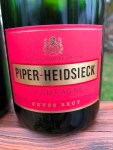
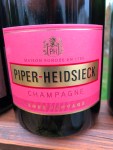
Time top drink some Champagne, isn’t it?
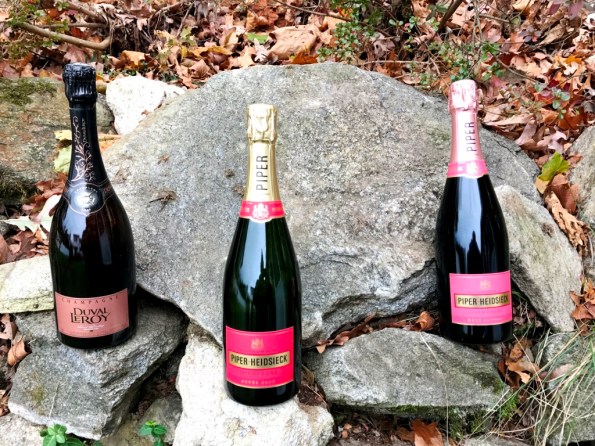
First, I wanted to try NV Duval-Leroy Rosé Prestige Premier Cru (Chardonnay/Pinot Noir blend) and NV Piper-Heidsieck Rosé Sauvage (50-55% Pinot Noir, 30-35% Meunier, 15-20% Chardonnay) side by side, as both are Rosé Champagne. There was a dramatic difference in appearance and taste profile. Duval-Leroy, in a word, was sublime. Delicate pinkish color, just a light salmon pink, whiff of the toasted bread, vibrant acidity on the palate, touch of lemon – seductive, and yes, sublime. Sauvage, on another hand, means “wild” in French – and that exactly how the Piper-Heidsieck was. Strawberry pink in the glass, fresh tart strawberries and a touch of yeast on the nose, and then generous toasted bread, granny smith apples and strawberries on the palate. Truly different and delicious in its own right.
NV Piper-Heidsieck Cuvée Brut (50-55% Pinot Noir, 30-35% Meunier, 15-20% Chardonnay, 10-20% reserve wines) was, in a word, classic – generous, voluptuous, touch of toasted bread and yeast, full mouthfeel, golden delicious apple sweetness, good minerality, very present and excellent overall.
Three Champagnes, three different wines, each delicious in its own right, each worthy to be a star of a special celebratory dinner or a quiet evening for two. And two conversations about the wines, the passion, the style, the stars. We spoke enough today; if you are still reading this, thank you and cheers!
Last Bottle Sign Up ($10 credit)




 Talk-A-Vino