Archive
Perfect Pairing for a Quiet Night
 Quick: can you name the wine (a type of wine) which would help you to enjoy your quiet evening? Winter evenings often bring out this “quiet night” analogy, as it gets dark really early, and you might find more time available to yourself. But of course, there are plenty of quiet nights during spring, summer, and fall. When all the daily chores are done, the house is getting quiet, you can pour yourself a glass of something, sit in your favorite chair with your favorite book (maybe), and just feel at ease. So what would that “something” in your glass be?
If you said Scotch (neat!), we are totally intuned, but this we will discuss other time.
If you said Port, then we really understand each other, because it is Port I want to talk about today.
What do you think of Port? Not the port-style, but actual, classic Port from Portugal – 10, 20, 30, 40 years old, vintage, late bottled vintage, colheita – doesn’t matter what type and age, but classic Port?
Port used to command the wine world. It was born out of need more than anything else – in the 17th century, the war between England and France forced Englishman to seek a replacement to the French Claret. Portuguese wines were not great, tart and austere, and had a tendency to spoil in transit, until someone discovered that the addition of Brandy can prevent the spoilage – and additional of Brandy during fermentation made wines to retain a lot more of the sugar, thus making them even more palatable.
In the middle of the 18th century, in 1756, the Douro region of Portugal (this is the region where Port is produced) became the first identified and protected wine-growing area in the world (take a note – this is a perfect fact to know for the next wine trivia night with friends). Another interesting trivia fact is that the first time Vintage port terminology was used in the wine auction catalog in 1773, to identify a bottle of an excellent 1765 Vintage Port. However, I don’t want to take you too far into Port types and styles – I wrote about it in the past so please refer to this article if you want to learn more.
Everything was going right for Port in the 18th and a good half of the 19th century until Douro vineyards received a “perfect” one-two punch – first, powdery mildew epidemic which started in 1848, followed by … yes, I’m sure you guessed it – the phylloxera hitting the vineyards in 1870. It was not until 1896 that the Douro vines were consistently grafted on phylloxera-resistant rootstock. From there on, Port started working on the comeback, but never reached its glory days of demand and appreciation.
Just to get a bit philosophical for a minute – you got time, you don’t mind, do you? I would say that there are three reasons why Port doesn’t have the attention it deserves nowadays.
First, the way we eat changed. One of the best “classic” pairings of Port is Port and stilton, the stinky, sharp cheese. Now, we lost the art of dinner where cheese is offered as a dessert course (by the way, forget traditions – there is a scientific explanation of why it makes perfect sense). At the best, cheese is considered an appetizer, often offered as part of the charcuterie board together with smoked and cured meats – but heavy and powerful Port is anything but an aperitive type beverage (I’m not talking about white Port – this is a separate category we are not discussing today).
Second, sweet = shame. We became extremely cautious about other people’s opinions towards us. Port is sweet. It is commonly appropriate to publicly despise sweet things, while secretly craving them. We are born with a love of sugar, and we need sugar as a source of energy – everything in moderation, of course. But outside of enjoying an actual dessert, and especially when it comes to the wine, we are trained to state how much we don’t like sweet, and we don’t enjoy sweet wines at all. “Oh no, I don’t drink sweet wines, no”. The pleasure of the wine is in the balance of the elements – sugar-loaded Sauternes, BA/TBA Rieslings, PX Sherries, Port – as long as the wine has enough acidity, it becomes an absolute pleasure, but we are too afraid to admit publicly that this is something we might be suspected of enjoying.
Third, we lost our ability to relax. You want to take your time with a glass of Port. The time stopped. You can just be, taking tiny sips from a glass, looking at the fire, flowers, or slow-rolling waves. Just be. But we can’t. There is always something new on the phone we need to attend to. We can’t just lose time relaxing. There is a new post to like, what relaxing are you talking about?
It is hard to properly introduce Symington Family Estates and explain its role in the Portuguese wine industry and the world of Port in particular. Symington Family Estates story started more than 130 years ago when Andrew James Symington arrived in Portugal at the age of 19. After spending some time at Graham’s Port, he started a Port shipping company under his name, which was the beginning of the family business.
It is impossible to represent the history of 5 generations of the Symington Family in a few sentences here – here is the link to the Symington Family Estates website where the history is presented in all the finest details. Over the years, Symington Family Estates acquired four of the Port producers – Graham’s, Dow’s, Warre’s, and Cockburn’s, as well as a number of wineries in the Douro Valley. Symington Family Estates owns 26 vineyards (Quintas) in the Douro Valley, a total of 2,255 ha (5,600 acres) of which 1,024 ha (2,560 acres) are under vine. All the vineyards are managed under a strict minimal intervention policy, and 260 acres are certified organic. Symington Family Estates is also a registered B Corporation, the first wine business in Portugal to receive such certification.
Enough about the business – let’s talk about the Port. I want to offer to you a choice of Port for all those quiet moments your heart desires.

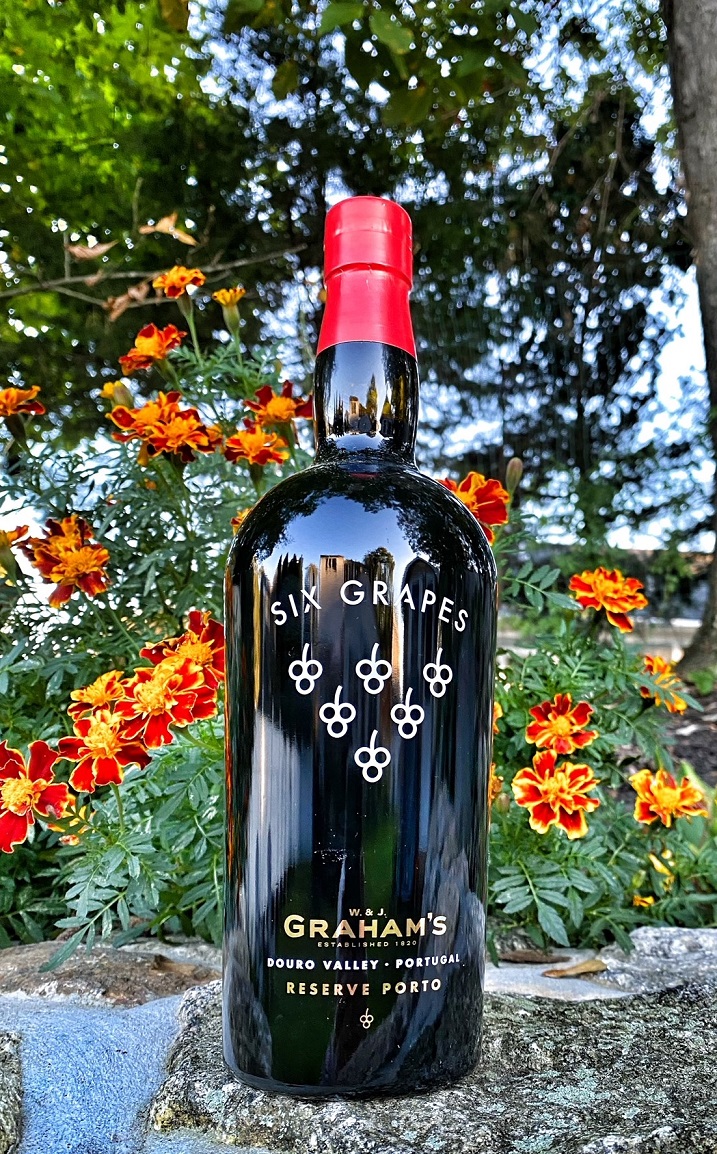
First, the Graham’s Six Grapes Reserve Port (20% ABV, $26, Touriga Nacional, Touriga Franca, Tinta Roriz, Tinta Barroca – with the addition of Tinta Amarella, Tinta Cão, Souzão, and Tinta Francisca from the mixed plantings). I had this port many times before but never paid attention to its story. It appears that in the old days, the grape symbols were used to represent the quality of wine in the individual barrels, from 1 to 6. Six grapes implied that the wine in the barrel had Vintage port potential, or effectively was of the highest quality. In the early 1900s, Graham’s started bottling such wines under its own “Six Grapes” label, and it continues to do so to this day.
This bottle had a recent redesign, now adorned with the red top, slick and beautiful. The Port was excellent – dark cherries and blackberries on the nose, blackberries, blueberries, and more of the dark cherries on the palate, with nice tannins in the finish. This wine ages in the oak barrels between one and two years, so the tannins overall are noticeable – and contrary to the general recommendation of chilling the Port slightly before serving, I don’t recommend it – the tannins on this wine become too pronounced and bitter. (Drinkability: 8).
Now, three more Ports from Dow’s, one of the original Symington holdings. The grapes for Dow’s Ports are harvested from some of the finest Quintas in Douro – Senhora da Ribeira and Bonfim, both supplying grapes for the Dow’s port for more than a century. Two of the Ports below are so-called Old Towny Ports, which means that the wines were undergoing a special wood aging regimen to reach their specific character. And another interesting tidbit – over the 10 years of aging, the Port barrel loses 25% of its original content. For the 20 years old Port, this number reaches 35% – while these Ports might seem to be pricey, you really need to appreciate the amount of labor and effort going into the creation of such a bottle.


Dow’s 10 Year Old Tawny Port (20% ABV, $39) – dry fruit and candy notes on the nose, a touch of mint. Hazelnuts and dried figs on the palate, good acidity, overall delicious (Drinkability: 8)
Dow’s 20 Year Old Tawny Port (20% ABV, $67) – Powerful and complex nose – dried herbs, dried fruit, present but not overpowering, inviting and seductive. On the palate, beautifully integrated, with perfect acidity, dried fruit harmoniously balanced and intertwined. (Drinkability: 8+).
And the last wine for you for today – Late Bottled Vintage Port. Late Bottled Vintage, or LBV for short, is a very special category of Port. You see, in Portugal, each and every type of wine should be approved to be released in its category by the IVDP, the regulatory body. If a company wants to declare a vintage year for a Port, it needs to request approval for that from IVDP. If such approval is not granted, the company can proceed with such a Port either in the path of the Old Tawny (the Ports we just discussed) or it might age it for some time and then declare it an LBV.
2016 Dow’s Late Bottled Vintage Port (20% ABV, $26, Touriga Franca, Touriga Nacional, Souzão, Tinta Barroca, Tinta Roriz, 4-6 years in seasoned oak before release) comes from a difficult vintage – warm winter, cold spring, one of the hottest and rainiest summers on record. Dry, sunny weather before harvest helped quite a bit, and the result was tasty and powerful Port – tart and sweet cherries on the nose, a hint of dried figs on the palate, cherries, good acidity, nicely present tannins on the finish. (Drinkability: 8).
Here you are, my friends. You can be honest with yourself – it is okay to enjoy well-made, sweet, but balanced, harmonious wines. And one way or the other, we all need our quiet moments. So get a bottle of Port, get comfy, and just enjoy your being. At least for a few moments.
An Eventful Friday – Sparkling, Port, Radio Talk Show and more
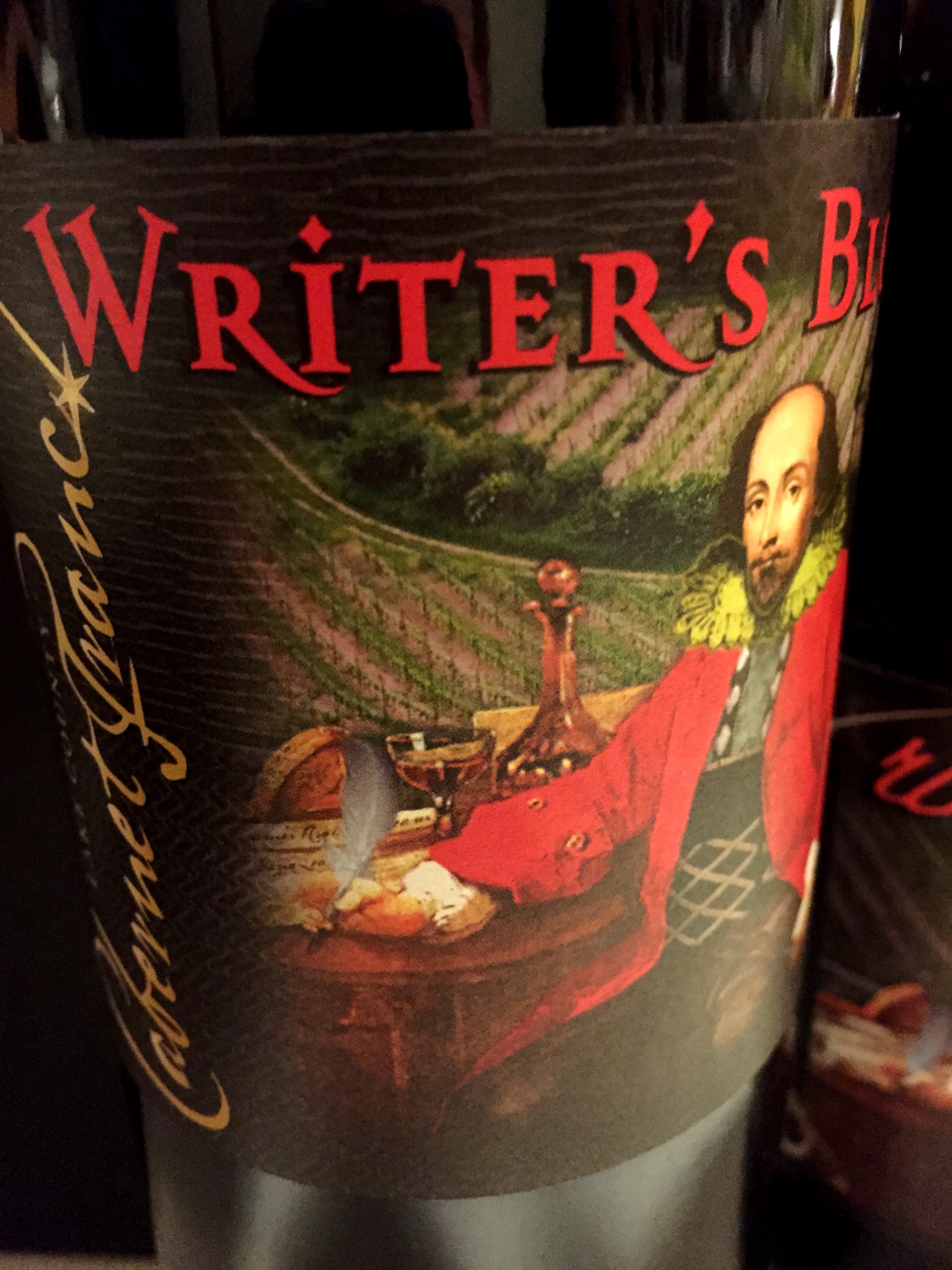 As you probably noticed, the number of posts on Talk-a-Vino is down very significantly. There are many reasons for that – different workload from my day time job, few time consuming projects we tackle at home, and of course the plain familiar writer’s block. Yep, the writer’s block – when there is lots running in your head, and you have a great difficulty to put something out on the “paper”. I tried to address the last one using the wine, I would hope specially made for such an occasion – the wine called Writer’s Block and made by Steele Wines in California. I first saw this wine mentioned in the blog I follow, called Mrsugarbears, and as you might see in my comment to that post, “Must. Find. This. Wine” was the first thing I said. I found the wine, and I got the Cabernet Franc and Grenache to try, out of the vast variety of the wines under that “Writer’s Block” label (you can see the full line of wines here).
We opened the 2011 Writer’s Block Cabernet Franc Lake County, California (13.8% ABV, $17) – it had eucalyptus, tobacco and fresh leaves on the nose. Palate was showing a medium body, tart blackberries, green bell peppers and more tobacco. On Friday, the characteristic cassis showed up, which made me happy while finishing the wine. Not sure it helped with my writer’s block, but I will gladly drink it again. Will try the Grenache next time. Drinkability: 7+
Let’s get back to that Friday. In the morning, the shipment of Horsepower Syrah arrived. I’m not sure how I managed to get on the list for this first release of super-highly allocated wine – but somehow I did, back in May. The wines comes from the legendary Christophe Baron (Cayuse, No Girls), from the tiny vineyards in Walla Walla Valley, all farmed sustainably and biodynamically (here you can read more about Horsepower Vineyards).
Okay, so it is all great, but not my main point here. I got a shipping notice from UPS at the beginning of the week, and then I got shipping delay notice from UPS, saying that the wine would be delivered only on Monday, which would be a problem as I’m traveling again next week, and there would be good chance that nobody would be able to sign for the wine during the day. This is why the delivery on Friday was so exciting that I even decided to share it in this post. This was also the first wine I received wine in the nice wooden box – so here are some pictures for you.


The next event on Friday was a really a double pleasure. At the beginning of the week, I connected to the @TheVineWineClub on Twitter, and then I got a note about possibly joining a radio talk show about the wine. Really? Yes, I can talk wine, I actually love to talk wine, so I said that I will be glad to do it – and it instantly happened, right on that Friday. At 3 PM, I was a guest at the regular radio talk show called “Off the Vine Radio Show with Benita and Terricinia“, hosted as you can tell from the name, by Benita and Terricinia. The theme was about the sparkling wines, so to support the conversation I decided to open a sample which I recently got – Ferrari Perlé from Trento in Italy. I almost feel guilty talking about Ferrari wine just matter-of-factly – the winery was founded by the Guido Ferrari in 1902; he was responsible for bringing Chardonnay grape into Italy, and he can be pretty much considered a father of Italian Méthode Champenoise wine industry. Full range of Ferrari sparkling wines is nothing short of spectacular and again, it really deserves it own coverage in a separate blog post.


This 2007 Ferrari Perlé Trento DOC, Italy (12.5% ABV, $35, 100% Chardonnay) was absolutely delicious – fine mousse, delicate aromas of apple and hint of toasted bread, perfect balance on the palate – apples, yeast, toasted bread, acidity – just very classic wine, making you say “ahh” after every sip. Drinkability: 8+
And the radio show – it was fun all the way! Benita and Terricinia were great hosts, very knowledgeable about the wine, so we definitely had a fun conversation (I really hope I didn’t overstepped my boundaries by talking to much)! I’m not going to recite our conversation here, but if you got a bit of time, here is the link for you for the broadcast. And if you will actually listen to the program – let me know (honestly!) what you think.
And the last highlight of the day – Port and Madeira tasting!


The tasting was focused on the Graham Port wines, one of the oldest Port houses in Portugal. There were 4 different ports presented in the tasting. The first one was really special, produced in the total quantity of 500 cases (less than 300 cases imported to US). This port was produced as part of the “Six Grapes” line, but for the first time in more than 100 years, it was done using the best grapes from 2011 and 2012 vintages, which were both simply outstanding vintages (some are saying that 2011 was one of the two or three very best over the last 100 years), and this is something never done before. You can read the full story here. Well, for what it worth, here are my notes:
Graham’s Six Grapes Old Vines Port ($34.99) – young and aggressive. Needs some time to mellow down – it has a sharpness of young fruit which still needs some polishing when it comes to the Port wine. After a bit of the breathing time, will perfectly finish a meal.
2011 Graham’s Vintage Port ($75.99) – again, this is the port from the amazing vintage, so it needs a lot of time to develop. Young bright fruit, blueberries and blackberries, firm and powerful body, excellent balance. Give it a 20 years, it will show what it is capable of.
Graham’s 10 Years Old Tawny ($27.99) – delicious. Dried fruit all over – figs, apricots, touch of hazelnut. And I love the bottle’s look and feel – this is a new packaging for this port which I think makes the wine shine even more.
Graham’s 20 Years Old Tawny ($45.99 – great price!) – make it double delicious. More dried fruit, nuttiness all the way, extremely complex. Thought provoking and might make you forget all the world troubles if you will be left alone with the bottle. My favorite from the tasting.
Last but not least – Blandy’s Malmsey 10 Years old Madeira ($23.99 – an amazing QPR) – a bit of sweet fruit on the palate, lots of complexity between nutty and salty profiles – delicious all the way.
Here we are, my friends – one eventful Friday. Writer’s blog, be bone – I can’t deal with you. Cheers and have a great week ahead!
Last Bottle Sign Up ($10 credit)




 Talk-A-Vino