Archive
American Pleasures #10: Meyye Wines
Wine should give you pleasure – there is no point in drinking wine if it does not. Lately, I have had a number of samples of American wines that were delicious standouts – one after another, making me even wonder if someone cursed my palate. I enjoyed all those wines so much that I decided to designate a new series to them – the American Pleasures.
And we are back to talk about more delicious American wines.
Rob Campbell got into winemaking in 1992 when he started helping his future father-in-law Bruce Tichenor at Story Winery in Plymouth, California. 20 years and three other careers later, Rob decided that it was the time to go into the winemaking all the way, taking over the wine-making at the Story Winery. While producing award-winning wines at the Story Winery, Rob realized that he could also produce ultra-premium wines, capitalizing on the success of his 2014 Zinfandel. When the family decided to sell Story Winery in 2019, Rob finally got an opportunity to start making the wines he had always dreamt of, and he founded Meyye Wines.

With Meyye Wines, Rob wanted to honor his Native American heritage. Rob Campbell is a member of the Federated Indians of Graton Rancheria (Coastal Miwok/Southern Pomo), the tribe is based in Rohnert Park, California, which lies within Sonoma County. Meyye (pronounced may-yea) means ‘bird’ in the Coastal Miwok language, and the first 4 wines that Rob started producing are all called after the birds native to the different regions where Rob was sourcing the fruit from, using native Miwok names for the birds. You can also appreciate the beauty of these wine labels which started as photographs taken by acclaimed wildlife photographer Steve Zamek, expertly rendered to create a three-dimensional representation of an image of each bird.
As Rob explains:
“Native Americans have been making wine in California for over 250 years. I descend from multiple Mission Indians who worked vineyards or made wine in three different California missions in the 19th century (Mission San Jose, Sonoma, and San Rafael). I’m intentionally using the Coast Miwok language since the language was considered ‘officially dead’ in the past, but my people are making a concerted effort to restore it. In addition to being ultra-premium wines that taste great, it’s my small way of preserving our language by sharing it with native and non-native people alike. “
I had an opportunity to taste 4 of Rob’s wines, and they were literally one better than the other. I’m also sure you would be able to recognize the names of the vineyards and appreciate the pedigree of these wines.
Here are my notes:
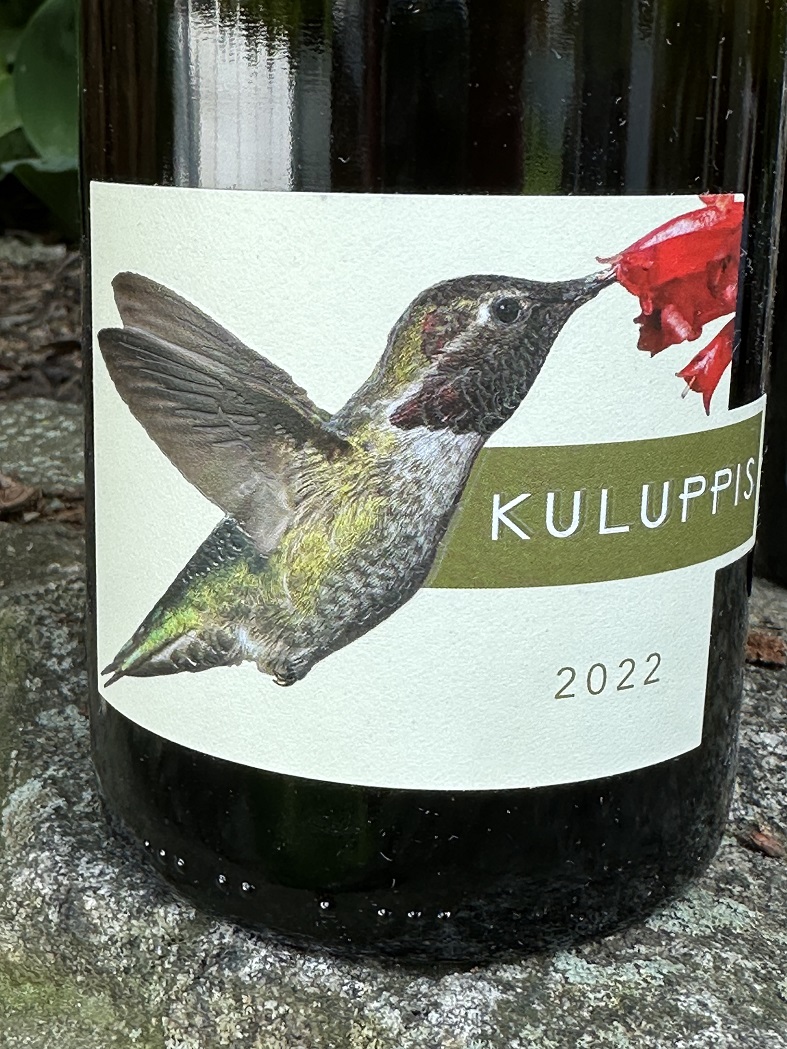
2022 Meyye Wines Kuluppis Chardonnay Sonoma County Los Carneros (13.7% ABV, $55, Sangiacomo vineyards, Kuluppis pronounced kuh-luu-pee; Anna’s hummingbird)
Light golden
Immediately upon opening – rich, opulent, butter, vanilla and tropical fruit on the nose, buttery toast on the palate, big, rich, hedonistic.
Literally 30 seconds later – a lot more restrained and leaner wine, all butter is gone, just some apples left. Well, no, there is still butter, just the toast is gone 🙂 nice and elegant, well balanced. Some perceived bitterness on the palate. Let’s see how it will develop.
Second day showed some honey notes and improved balance. Overall – excellent.
8+
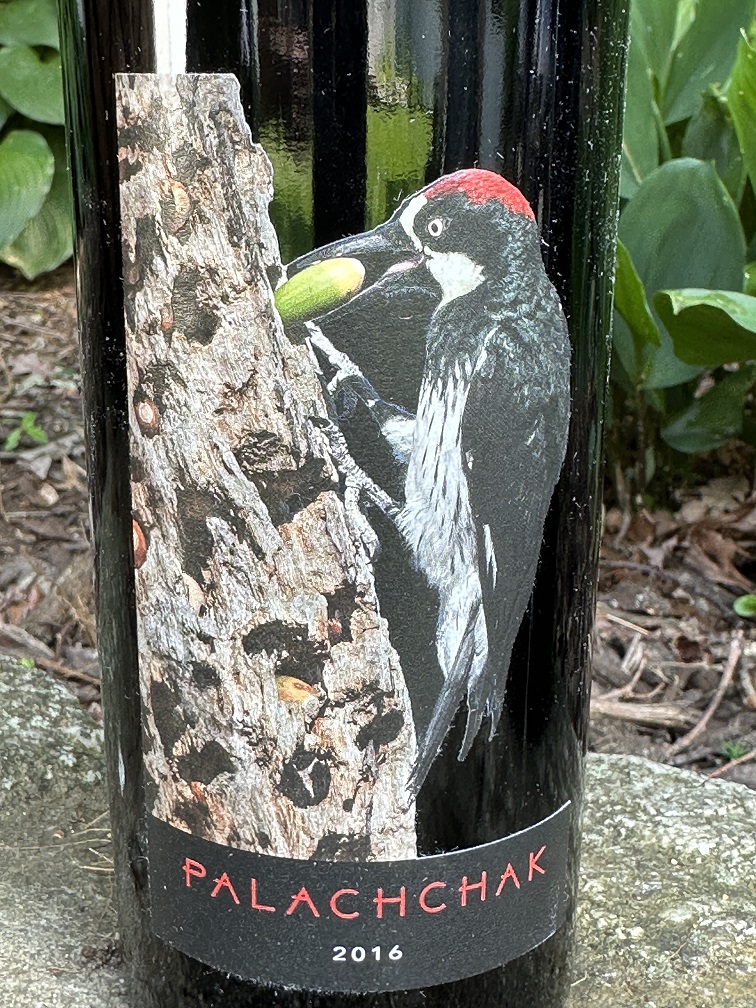
2016 Meyye Wines Palachchak Zinfandel Shenandoah Valley (15.5% ABV, $70, 90% Zinfandel, 10% Syrah, Palachchak pronounced pah-lah-chak; red-headed acorn woodpecker)
Dark chocolate and black currant, intense and beautiful
Blackberries and blueberries on the first day,
Dark chocolate with a touch of pepper, cherries, good structure, full body, clean acidity, good balance. Lasted for 4 days. Became a bit more round.
8
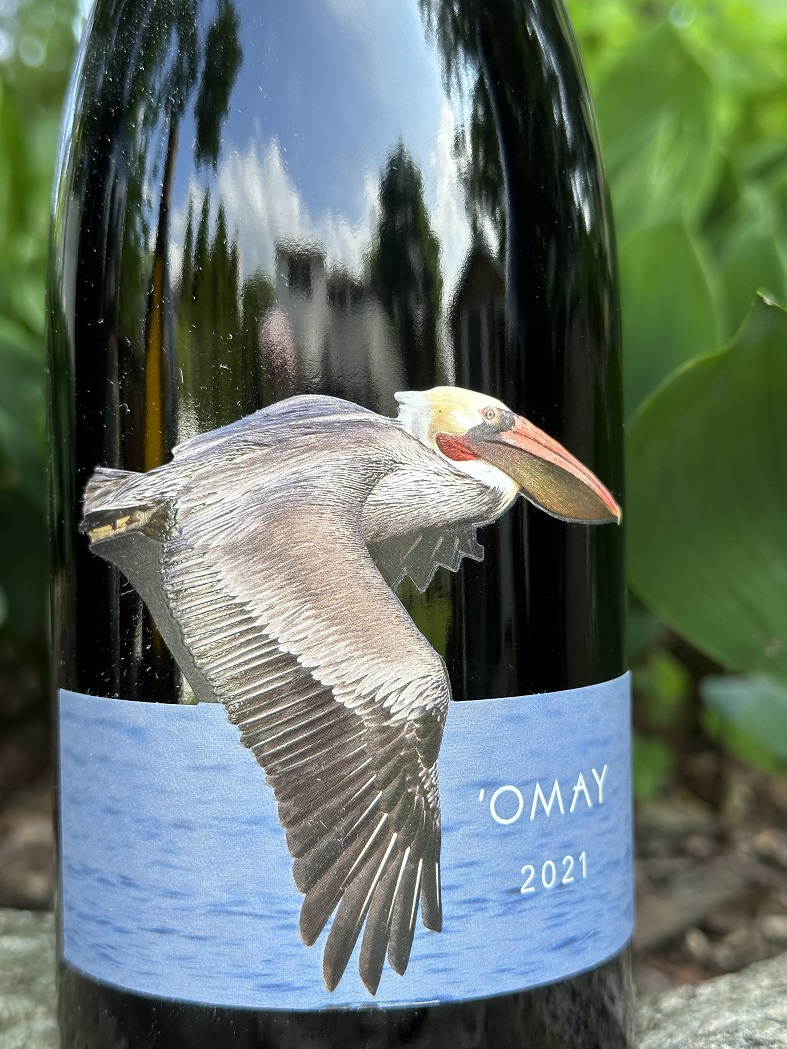
2021 Meyye Wines ‘Omay Pinot Noir Sonoma County Petaluma Gap AVA (13.9% ABV, $75, 100% Pommard Clone, Sangiacomo Vineyard, ‘Omay pronounced oh-may; brown pelican)
garnet
Smoke and plums, classic CA Pinot
Black Plums, violets, lavender, clean acidity, medium to full body – delicious.
8
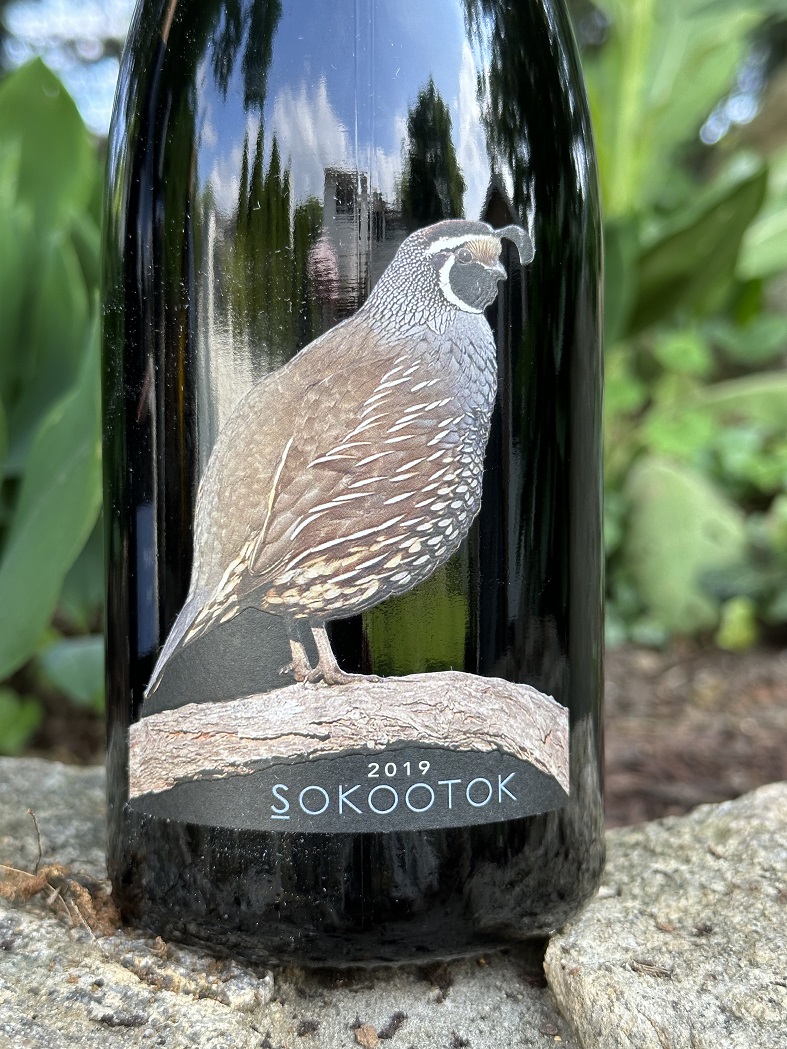
2019 Meyye Wines Sokootok Red Blend Sierra Foothills (14.5% ABV, $60, 50% Grenache, 28% Syrah, 10% Petite Sirah, 9% Counoise,
3% Zinfandel, Sokootok pronounced show-koh-tock; California quail)
Dark Ruby
Dark fruit, hint of minerality, sweet cherries, herbs
Black and red fruit, medium body, well-integrated tannins, good acidity, then tannins grip the finish – in a nice, but assertive way. This will develop nicely over the next 10-15 years.
8+, delicious.
Here you go, my friends. Another story of American Pleasures – delicious wines well worth seeking. And Meyye wines you will actually have to seek, due to their ultra-low production, so good luck to you.
Until the next time – cheers!
American Pleasures #9: Balverne Wines
Wine should give you pleasure – there is no point in drinking wine if it does not. Lately, I have had a number of samples of American wines that were delicious standouts – one after another, making me even wonder if someone cursed my palate. I enjoyed all those wines so much that I decided to designate a new series to them – the American Pleasures.
And we are back to talk about more delicious American wines (after a long and unintended break).
I love how wine not only entices your senses but lets you play a sleuth, a researcher, a scientist, a philosopher – a different role on a different day, or all of them at once – take your pick.
I can give it to you right now [spoilers alert]: I got a sample of three California wines, one better than another, one of them possibly even WOTY 2023 (told ya, spoilers) – and ended up doing the whole research (thanks, Google) trying to connect layers one by one. From the roles I mentioned above, I played mostly a sleuth trying to understand how far history was taking me and how all the little pieces fit together. Ah, never mind, let’s just get to it.
Source: Notre Vue Estates
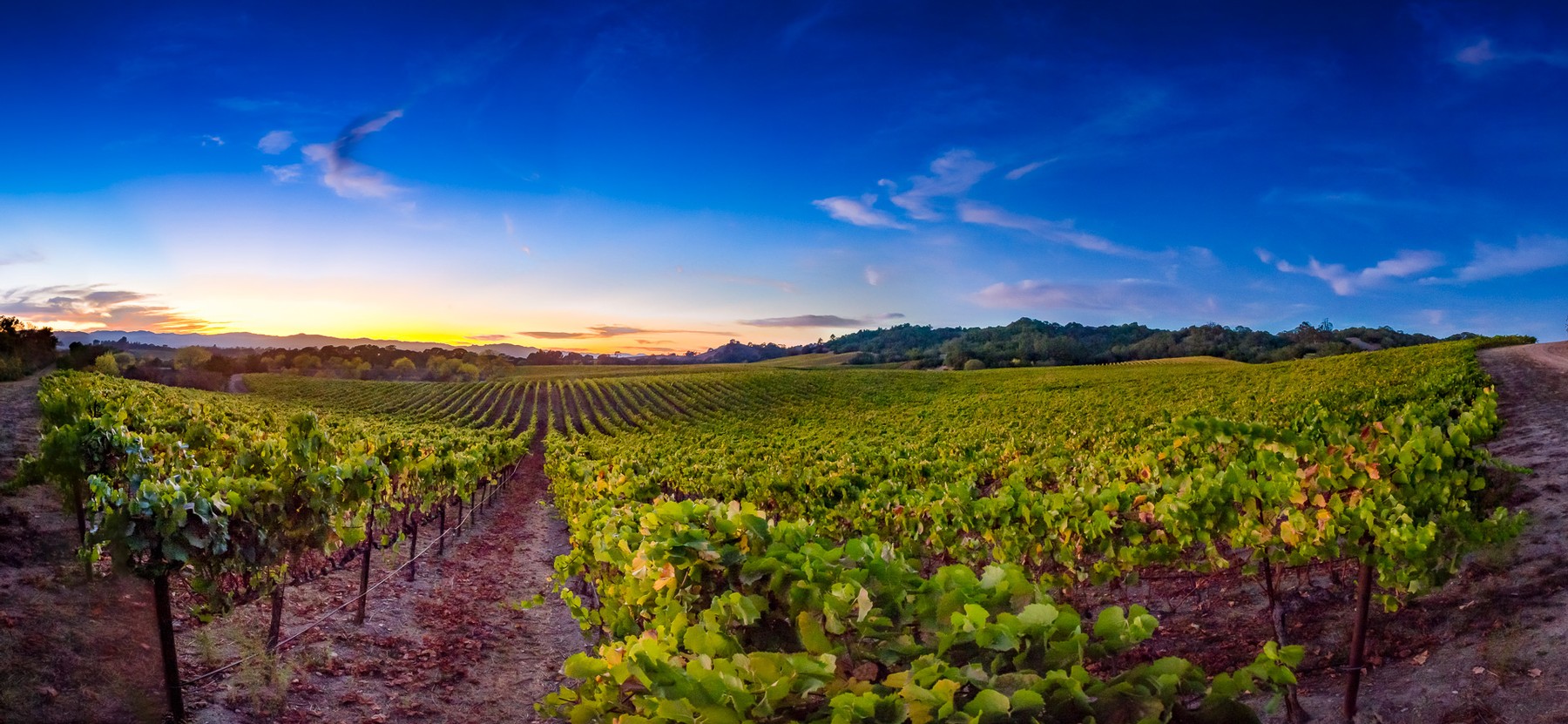
In the center of this excitement are the wines produced by the Notre Vue Estate (Notre Vue stands for Our View in French) and called Balverne. Notre Vue is a 710 acres estate located in the heart of Sonoma County next to Healdsburg and acquired by Bob and Renee Stein in 1992. The history of the land where the estate is situated goes all the way back to 1841 when it was the part of Rancho Sotoyome land grant of 1841. The grapes had been growing on the estate starting from 1869, and commercially starting from 1907 – I’m assuming after the estate was acquired by Antonio Perelli-Minetti.
Let’s take a quick stop here – have you heard of Antonio Perelli-Minetti? I have to shamefully admit that I never have. We all know who Rober Mondavi and Andrew Tschelisteff are, but Antonio Perelli-Minetti? When Antonio Perelli-Minetti died in August of 1976 at the age of 95, his obituary in S.F. Chronicle was titled “Dean of winemakers is dead at 95″. Dean of winemakers – and with all my passion for wine, all the reading and learning, I never came across his name? Well, it may be just me… But then there is almost nothing written about him, for sure online… Okay, moving along…
The winemaking at the estate started in 1972 under the name of Balverne Cellars – supposedly, Balverne is a hybrid Anglo-French term meaning “a place of trees”, which is very appropriate for the estate. In the 1980s, two recent UC Davis graduates, Doug Nalle and John Kongsgaard (I’m sure both names need no introduction), made the estate famous with Balvernet Cellars wines being served at the White House dinners and at some of the finest restaurants in Los Angeles and New York. After Steins acquired the estate in 1992 they were mostly selling the estate grapes to some of the best wineries in California. The winemaking was reintroduced at the estate in 2005 under the name of Windsor Oaks Vineyards, and in 2013, the Balverne name was brought back.
Whew, done with the history. Let’s talk about the present.
At the heart of the Notre Vue estate lays 350 acres of “Forever Wild” Nature Preserve, covered by a variety of oak trees and inhabited by red-tailed hawks (Red-Tailed Hawk is a symbol of Balverne, depicted on every label), wild turkeys, owls, bluebirds, coyotes, bobcats, grey foxes, hares, rabbits and lots more. This Forever Wild nature oasis is a critical element of sustainable viticulture practiced throughout 250 acres of surrounding vineyards. These Sonoma’s Certified Sustainable vineyards are split into multiple blocks growing 18 grape varieties, and they span two of Sonoma County’s prominent AVAs – Russian River Valley and Chalk Hill.
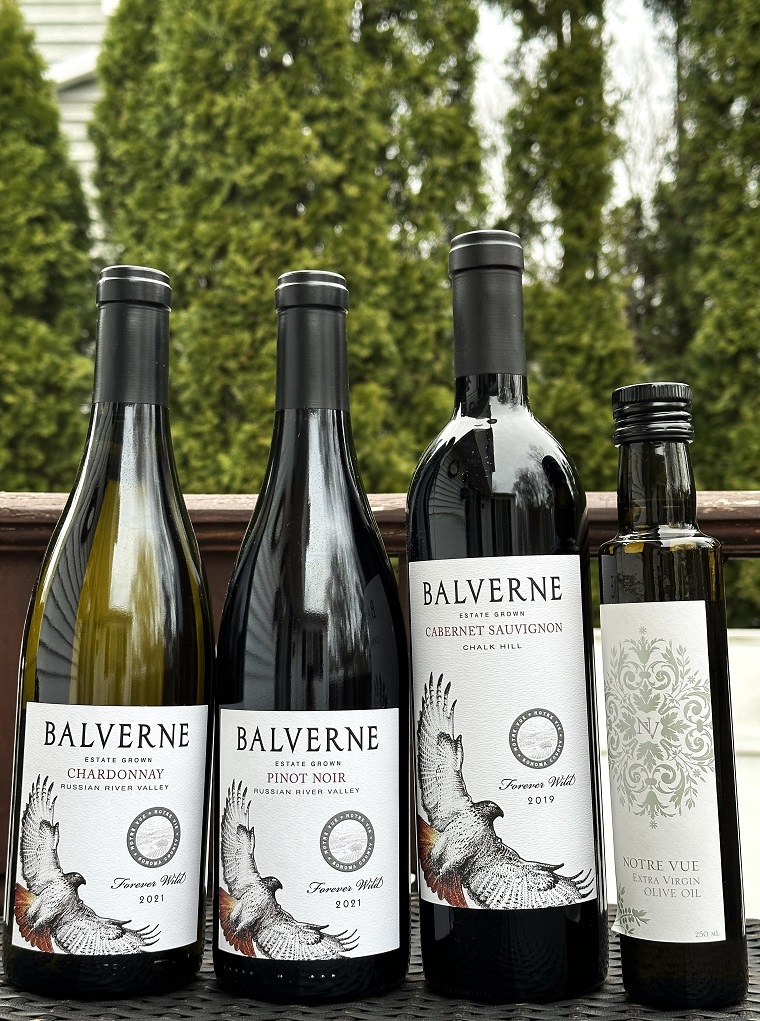 I had an opportunity to try 3 of Balverne’s recent releases – Pinot Noir, Cabernet Sauvignon, and Chardonnay. I would typically start tasting with the white wine – here, as I was tasting in the comfort of the house instead of the tasting room, I started with the red – Pinot Noir. The wine was excellent, tightly woven which is not always the case with California Pinot.
2021 Balverne Pinot Noir Russian River Valley AVA (14% ABV, $35, Pinot Noir clones 459 and 667 with a small percentage of 114 and 115, 9 months in 25% new French oak)
Dark garnet
Plums, violets, intense, inviting
Nicely restrained, dark cherries, tart, crisp, lean, well structured
8, excellent
Cabernet Sauvignon followed, being nothing short of excellent, and perfectly drinkable from the first pour.
2019 Balverne Cabernet Sauvignon Chalk Hill AVA (14.3% ABV, $48, 79% Cabernet Sauvignon, 9% Petit Verdot, 9% Malbec, 3% Cabernet Franc, 18 months in French oak)
Dark garnet
Eucalyptus, cassis
Everything weaves around the acidic core. Perfectly restrained, nice Bordeaux/old world style, harmonious, balanced, delicious.
8+, outstanding.
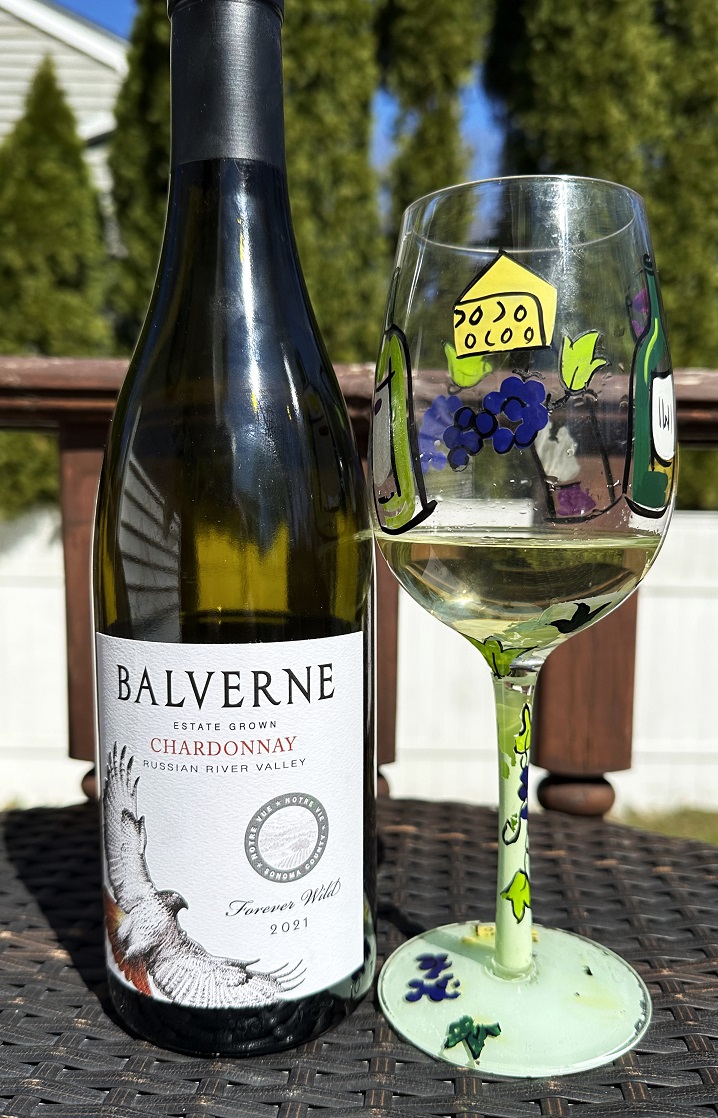 And then came Balverne Chardonnay.
I poured a glass without much thought. Sometimes, it is best to have no expectations – not low, not high, just none. This was the case, even after the first two very successful reds. White wine is difficult. With white wine, the winemaker has nowhere to hide. Even if it will be two out of three, this would be a successful encounter.
The very first whiff of the glass made me literally speechless. The following sip confirmed my excitement:
2021 Balverne Chardonnay Russian River Valley AVA (14.2% ABV, $35, clone 17, 5 months in 20% new French oak)
Light golden
Beautiful, varietally correct nose – vanilla, apple, lemon
The first sip blows your mind – vanilla, golden delicious apple, honey, lemon, minerality – impeccable balance and beauty only a Chardonnay is capable of expressing.
9, spectacular. This wine is just something. Something special.
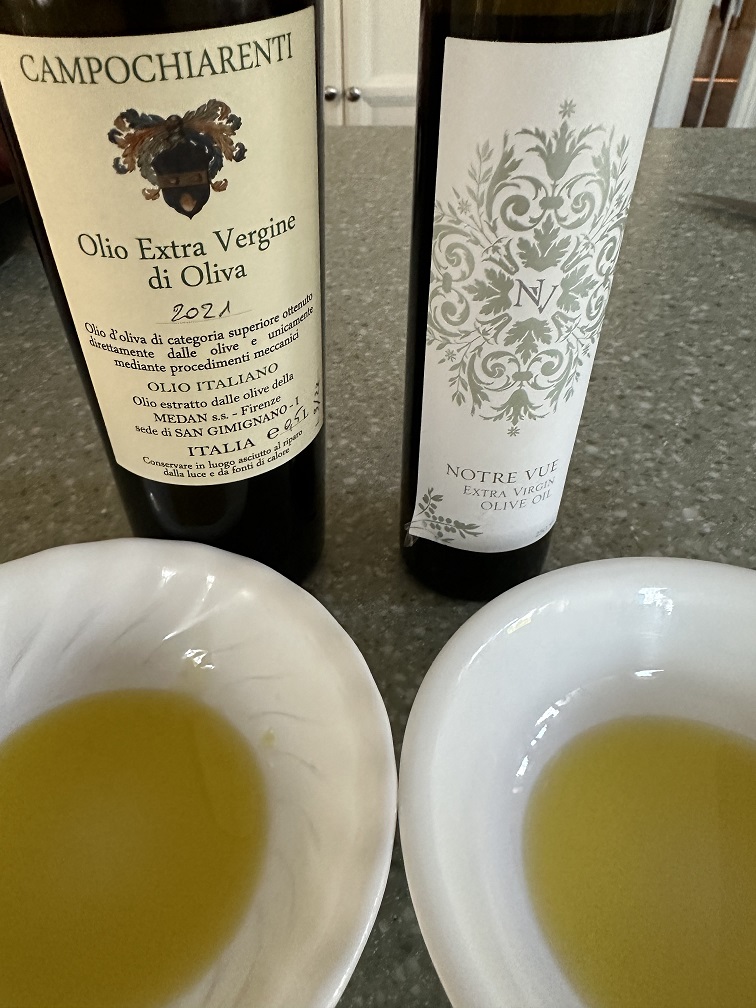
As you might see in one of the pictures above, my sample set went beyond wine – The Notre Vue’s own California Extra Virgin Olive Oil was a part of the package. I decided to do [an unfair] comparison between Californian and Italian EVOO. Both olive oils were expectedly different, with the Italian one showing green, tight, and peppery, and the Californian one being much more fruity. The beauty – it is not a competition, depending on what dish you are using the olive oil for, each one would have its own advantages.
Now you have a complete experience report, including my uninvited research (but everyone is entitled to their own version of fun). What’s important is that I presented to you three excellent wines, both on their own and as a value. Once you taste this Chardonnay, believe me, you’ll understand…
And we are done here. But – I always have more American pleasures to share, so stay tuned…
Last Bottle Sign Up ($10 credit)




 Talk-A-Vino