Archive
Wednesday’s Meritage – Wine Quiz Answer, Le Féret, En Premeur Tales, 1WD Giveaway and more
Meritage time!
Let’s start from the answer to the wine quiz #59, Grape Trivia – Zinfandel. In the quiz, you were supposed to answer 5 questions about California’s star grape, Zinfandel. 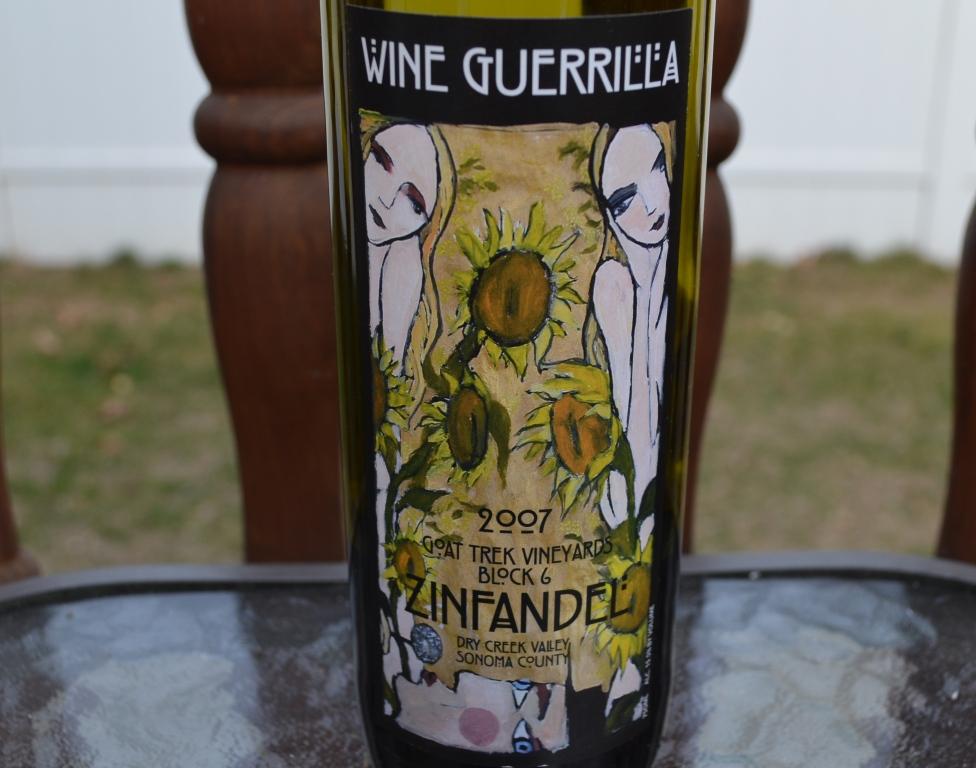
I know many people prefer to answer quizzes in the Google-free form – however, this Zinfandel quiz was somewhat of an exception. Let’s move on to the answers.
Q1: It was established recently that Zinfandel existed in Croatia under a different name, at least from the 15th century. Do you know what was that name?
A1. This was actually a tricky question. People, I mentioned Crljenak Kaštelanski right in the text of the quiz – I was hoping that this would be enough of a hint that this will not be a right answer. If someone will look into Wikipedia, you will be able to find that “After years of research and DNA testing of vines from vineyards across the globe, a single 90 year old grape vine from the garden of an elderly lady in Split, Croatia, provided the evidence to show that Zinfandel was a Croatian grape that has been known as Tribidrag since at least the 15th century.” So the correct answer for the question #1 is Tribidrag.
Q2: While Zinfandel typically listed on the label, very often some other grapes are added to the blend. Name one grape which can be considered a traditional blending partner of Zinfandel
A2: Petite Sirah. Look at the information on many Zinfandel wines, and you will often see at least some percentage of Petit Sirah to be a part of the blend.
Q3: Pink Zinfandel was discovered by accident. Can you explain how that happen, and possibly use the proper winemaking term for the “accident”
A3: Oops, sorry, I should’ve being checking my writing. It is actually White Zinfandel, not Pink, of course – pink is just a color… Anyway, I see that many of you figured out what I meant ( I will still correct the question) – yes, White Zinfandel was discovered as a result of the accident, which is called “stuck fermentation” – all the yeast dies and fermentation stopped before sugar was fully converted into the alcohol.
Q4: Two California winemakers are largely credited with putting red Zinfandel wines on the wine map. Can you name them?
A4: Most of you mentioned only the wineries – and the question was actually about the winemakers. But thedrunkencyclist was correct mentioning Ridge and Ravenswood – Paul Draper of Ridge and Joel Peterson of Ravenswood are largely considered the pioneers of California Zinfandel.
Q5: Most of the well known Zinfandel producers still make other wines from the different grapes. But there is one winery in California ( at least that I know of), which make nothing but Zinfandel wines. Can you name that winery?
A5: Yes, this was a tough question too. Most of the famous Zinfandel producers – Turley, Ravenswood, Rosenbloom, Seghesio, Robert Biale, and so on – are all producing other wines in addition to their great Zinfandels. The only winery I know of which produces Zinfandel and nothing but Zinfandel is Wine Guerilla – it is not for nothing they are calling themselves “An Art and Soul of Zinfandel”. Take a look at their line up – they are currently offering 13 different kinds of Zinfandel – and nothing but Zinfandel.
Summing it up, we don’t have winners this week, and Jeff, a.k.a. thedrunkencyclist gets an honorable mention with 3 correct answers out of 5.
Now, to the interesting stuff around vine and the web!
Have you heard of Editions Féret? I have to admit that I didn’t, not until I read a Wine Spectator article called “The Book that Defined Bordeaux“. It appears that the book, now called Editions Féret, or simply Le Féret, which started exactly 200 years ago as 84 pages travel guide, and had grown to become a 2,296 pages bible, largely defined Bordeaux wines, starting from famous 1855 classification – it was that book which rated the wines simply based on their prices in 1850, which was taken as a foundation of 1855 classification. Read the article, I think it is quite interesting.
According the post on Dr.Vino’s blog, it appears that during En Premeur, a primary Bordeaux event where new vintages are presented, one and the same wine can be “processed ” differently for the different groups of tasters – Americans will get the wine exposed to more of the new oak, and the same wine for the French audience will be finished to have more subtle showing of the fruit. Is it true? I have no idea. But it gets a final product into an interesting perspective – does it mean that one and the same Bordeaux wine can taste differently depending on where you will buy it ( in US or in Europe)? Hmmm…
Do you like giveaways? Of course you do, who doesn’t? So assuming that you do, please go and check this post at 1WineDude web site – if you leave a comment there, you will get a chance to wine one of the 5 memberships in the French Wine Society. I think it is not a bad deal, huh?
Last but not least – mark your calendars for June 19th – and make room in your wine cellars and their equivalents. Yep – WTSO is doing it again! Famous Cheapskate Wednesday is coming into town on June 19th – for more information please visit WTSO web site (you can find link in the “Buying Wine section to your right) or click this link.
That’s all I have for you for today, folks – the glass is empty. But refill is on on its way. Until the next time – cheers!
Wednesday’s Meritage – Wine Quiz Answer, Blind Tasting Escapades, Wine Books Review and more
 Yes, it is still Wednesday somewhere! I’m actually on the west coast, so I have an excuse (okay, lame) for this post not coming out Wednesday morning, as usual. But let’s get to it.
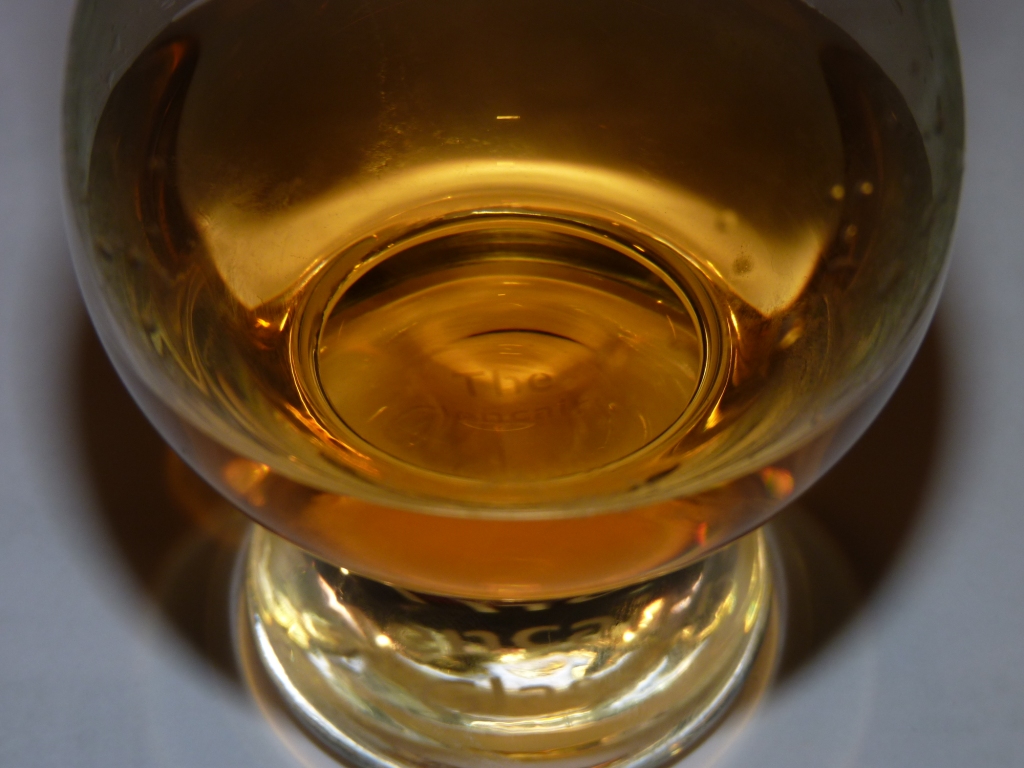
First, the answer for the Wine Quiz #27 – This Whiskey Can’t Age Any Longer. Looks like this was an easy quiz, as most of you got it right – it is a high altitude and climate which don’t let whiskeys such as Stranahan’s to age for the long time. As Stranahan’s distillery located high in the mountains, if the cask will be left to age for 8 years, there will be nothing left in that cask (ohh, those angels…). Stranahan’s distillery is not the only one with such problem – Amrut, a very good quality whiskey from India, can’t age for longer than 3 years due to the same issue of altitude and climate. Located at 3000 ft in Himalayan Mountains in the tropical climate, Amrut whiskey rapidly disappears from the cask if kept for longer than 3 years. As a side note, even with [only] 3 years of age, it is a whiskey you don’t want to miss – if you are into the whiskey, of course.
Going into the interesting wine happenings section, W. Blake Gray had done it again – stirred the debate, I meant. Here is the post and here is related poll (poll is closed, but you can see the results), all about blind tasting by the wine publications, or may be not so blind? Read and decide for yourself – and be sure not to miss the comment section, as it has a lot of emotions brewing.
Joe Roberts of the 1WineDude fame reviewed some of the wine books which I think worth your attention – you can read his reviews here.
It is the harvest time in the Northern hemisphere, so of course there are lots of harvest news from all over. Decanter magazine gives you a good harvest run down for Europe and US (they expect the prices of California wine to go up – this is great, I think I missed the memo about economy being in the excellent state), and here is a take on California harvest from W. Blake Gray.
Last, but [may be] not least – did you have Pizza today? You should’ve, as September 5th was a National Cheese Pizza Day. Well, yes, I missed it too.
The glass is empty – Meritage is all gone for today, however full shipment is expected to arrive in a week. Until then – cheers!
Advent of Wine And Social Media
 Someone can probably run a very interesting study as to why people blog. I guess that we [bloggers] have something to say to the world, and the Internet gave us an ultimate platform to deliver the message – I’m not sure if this explains the phenomena of mass social media, but I will leave that research to the professionals, and while they are working on the answer, I will keep blogging.
Another interesting question for me is how do we [bloggers] come up with the subjects for the blog. I’m sure that some people have a plan. My method, though, should be called an “opportunistic blogging” – I rarely know in advance what my next blog post will be all about, so I’m blogging as the life takes place. Consequently, the subject I want to discuss here was not planned in advance at all – the idea for this blog post was born after reading the post by Joe Roberts, a.k.a. @1WineDude, which was called “This Is Me Totally NOT Lightening Up On Wine And Social Media“. The best thing you can do is read the original post – but to give the main idea, the blog post is about wineries not investing enough into the social media, not engaging the consumers through the social media channels and not building up their respective brands.
This is definitely an interesting discussion. How much time and effort should wineries dedicate to the social media? I don’t have an answer to that question – just some thoughts. Twitter and Facebook are two major social media outlets for the task of reaching out. The question is – are you reaching out wine professionals or the consumers? If we are talking about the need for wineries to engage wine professionals in the restaurants and the stores, wine writers and sommeliers – yes, I fully agree with that, this is an important way to communicate with your immediate target audience. Trying to reach the consumers? How effective it will be, outside of delivering your message to the people who are already in your club or the mailing list? In the store which has hundreds and hundreds of bottles from all over the world, where appearance of the label is the first deciding factor for majority of the wine purchases, will your social media message help?
Actually, as I warned you, I don’t have the answers. For someone like myself, social network recommendations and discussions play an important role – this is where I learn about new wines and decide what I want to try. But what about the majority? I guess the full blown study needs to be engineered to assess how much of the social media engagement by the wineries will translate into the actual buying decisions. While we can only hope that someone will actually conduct such a study, I decided to compare some simple numbers for wine world versus general food products in terms of the number of followers on Facebook (FB) and Twitter (T).
Here are some numbers. First, for the brands: Beringer Vineyards – FB: 18K, T: 9K; Robert Mondavi Winery – FB: 20K, T: 5.8K; Francis Ford Coppola Winery – FB :15K, T: 4K; d’Arenberg Winery – FB: 6.5K, T: 3.6K. Now, for comparison: Barilla Pasta – FB: 48K, T: 14K; Breakstone’s (sour cream etc.) – FB: 50k; Pepperidge Farm -F: 22K, T: 9K. Food products do have an edge over wineries, but the gap is not very big.
For retail, my comparison will not be fair, but I still find it interesting. Wine world: BevMo! – FB: 28K, T: 2.4K; Wine Library – FB: 39K, T: 21K; WTSO.com – FB: 10K, T: 10K (very interesting exception with the number of Facebook and Twitter followers being practically the same). For comparison: Target – FB: 9.9M, T: 300K; Wal-Mart – FB: 13M, T: 150K; Amazon – FB: 3.1M, T: 229K. Okay, as I said, this will not be a fair comparison.
For publications: Wine Spectator – FB: 61K, T: 48K. For comparison, Glamour – FB: 680K, T: 160K; Wall Street Journal: FB: 461K, T: 1.55M.
When we are talking about publications, I can’t help it but to mention that there are thousands of the wine blogs – of the time of this writing, 659 blogs are registered with the web site called Vinography – and that is considering the fact that you have to request to be listed on the Vinography site. Interestingly enough but that leads back to Joe’s point about social media engagement from the wineries – there are only 72 winery blogs registered on Vinography site. Talking about wineries’ engagement, I want to mention a blog post by Steve Heimoff, an Editor of Wine Enthusiast Magazine, which was titled “Staying relevant: for wineries, it can be tricky” – while Steve’s point is not directed at the social media, I think that in today’s world, “staying relevant” includes great degree of social media connection and engagement for any business, wineries included.
I also want to give you a great example of the social media engagement – if you look at the picture, you can see @KingEstate printed right on the cork – this cork is from the bottle of a very good Pinot Gris from King Estate winery in Oregon which we had a week ago. If someone needs a proof that wineries are taking social media engagement seriously, I think we don’t need to look further.
Okay, enough is enough. It’s time to round up this post. I gave you a lot of numbers here – if someone knows how number of followers translates in to the actual sales, I would be really curious to know. That’s all, folks. Cheers!
Best Wine Reviews Ever
 Aren’t you tired of reading wine reviews about “hint of apple”, “cinnamon and clove”, “coriander and last year’s rain”? Especially when you can’t find that specific flavor profile in your glass no matter what? Today I managed to come across two wine reviews which were much easier to assess and appreciate.
First, here is review of the Corison Cabernet Sauvignon (not so widely known but excellent Cabernet from Napa Valley) by Joe Roberts, a.k.a. 1WineDude (@1WineDude on twitter): “07 Corison Kronos Vineyard Cabernet Sauvignon (Napa Valley): Sort of like owning a trained black panther; dark, piercing & gorgeous.“. How do you like that? Is this is the wine you want to try or what? I don’t know about you, but I will be glad to meet this black panther at any time.
And the next one was a review by Adler Yarrow, who has one of the best wine blogs called Vinography. Latest two posts in that blog are on the subject which is an ultimate treasure for any wine lover – wines of Domaine Romanee-Conti (DRC, as it is typically called). DRC wines are considered best of the best, in any vintage and any time. So I think all people who are serious about wine can be divided into two categories – those who tasted DRC wines, and those who are dreaming about it. I belong to the second group ( sigh). Adler Yarrow belongs to the first, and he recently tasted full line of DRC 2009 wines – you can find his detailed notes here. But one particular review attracted my attention. It was for 2009 Domaine de la Romanée-Conti Grand Cru Montrachet, the only white wine produced by DRC and considered the rarest of the rare. While the descriptions there allude to the usual taste elements such as nuts and apples, one sentence I think puts that review in a totally different prospective: “In the mouth the wine has an incredible texture that I’m prompted to describe as liquid sex, and gorgeously balanced flavors that…“. Once you read this description, do you really care about the rest of the grapefruits and nuts, or do you really get one pounding question in your head: “where can I try this wine”?
I’m really glad to find those reviews – now I got a frame of reference for my own reviews to aspire to. What is your favorite wine review, the one which forced you to resolve “nothing can stop me, I will find and drink this wine”? Anyway, while you are thinking, let me go back to my dreams. Cheers!
Ten Wine Blogs I’m Reading
 In the world of wine, reading is second most important thing next to actually drinking the wines. Yes, of course, you can say that no, visiting vineyards and talking to the winemakers is a lot more important – and I would agree with you, however, it is reading that you can do at any time and a lot more often than actually visiting the wineries – at least for someone like me, where wine is a passion but not a profession.
When it comes to reading, books and magazines and indispensable – and there are hundreds and hundreds of them to read, starting from encyclopedias such as The World Atlas Of Wine by Hugh Johnson and Jancis Robinson, great day-to-day books such as Kevin Zraly’s Complete Wine Course to the Wine Spectator magazine which reviews thousands of wines in every issue.
Then there are wine blogs, like the one you are reading right now. Wine blogs deliver information in much timelier fashion than any books or magazines, and they also express a lot more of the author’s personality in a much more direct way than any book or magazine article – which makes them a great fun to read. I like reading blogs when I get a chance, and generally I come across many different blogs as lots of them are referring to each other (very common practice in blogging world). However, while my blog reading is often sporadic, simply based on available time, there are some blogs which I’m making an effort to at least skim through on the regular basis (using Google Reader) – and this is the list which I would like to share with you. The list below has no prioritization whatsoever, and I add few of my thoughts as to what kind of content you can find in the respective blog.
- 1WineDude – IT-convert Joe Roberts provides great insight into the world of wines. Lots of wines are reviewed using the A to F ratings ( no, I didn’t see a single F yet) as opposed to the popular 100 points scale.
- Fermentation – very interesting blog, covering a lot from the world of law, consumer rights, politics and more – of course all centered around wine.
- Serious About Wine – wants to see lots of new cool label designs? Flip through this blog’s pages, its worth it.
- The Feiring Line – Alice Feiring is a book writer and a blogger with “unique and different” point of view. Love her wine descriptions written directly on the bottle’s label.
- Dr. Vino – one of the best wine blogs overall, lots of interesting information tidbits from the wine world.
- The Wine Economist – Great source of information about wine, lots of stats of all kinds – merlot versus pinot noir consumption in the numbers, most requested wine of the past year and so on.
- The Gray Report – W. Blake Gray writes one of the most insightful and controversial wine blogs – I always love reading his posts. You should judge for yourself, though.
- Vinography – Superblog of wine blogs – lots of information plus a comprehensive list of wine blogs on the Internet
- Steve Heimoff Wine Blog – exactly as it says, a wine blog by Steve Heimoff, a wine writer and Wine Enthusiast magazine’s West Coast Editor. Lots of interesting information, especially as it comes to California wines.
- Paul Gregutt Unfined&Unfiltered – Paul Gregutt is a wine writer and a Northwest Editor for Wine Enthusiast magazine. He writes about wines of Pacific Northwest.
That’s all, folks for my list of ten blogs I’m reading – if you like wine, check them out for yourself. Cheers!
Last Bottle Sign Up ($10 credit)




 Talk-A-Vino