And The Answer For Wine Quiz #13 Is…
 Wine quiz #13 was about wine and history, “When wine is a matter of life and death“. I would say that this quiz worked better, as different answers were chosen by about the same number of people (in most of the previous quizzes there was a clear majority preferred answer). I might have to learn about history of Haro in Spain, which was one of the historical centers of Rioja, but correct answer is Jamestown.
In 1619, at the first representative assembly of the New World, held at Jamestown church, Acte 12 was passed: “…every householder doe yearly plante and maintaine ten vines, untill they have attained to the arte and experience of dressing a Vineyard, either by their owne industry, or by Instruction of some Vigneron. And that upon what penalty soever the Governour and Counsell of Estate shall thinke fitt to impose upone the neglecters of this acte”. And the penalty was eventually decided to be the “pain of death”. I will tell you in one of the follow up posts about the source of this information, but for now you have your answer.
Whomever answered “Jamestown” can pat themselves on the back and have an extra glass of wine (or two). Until the next quiz – cheers!
Rosé!
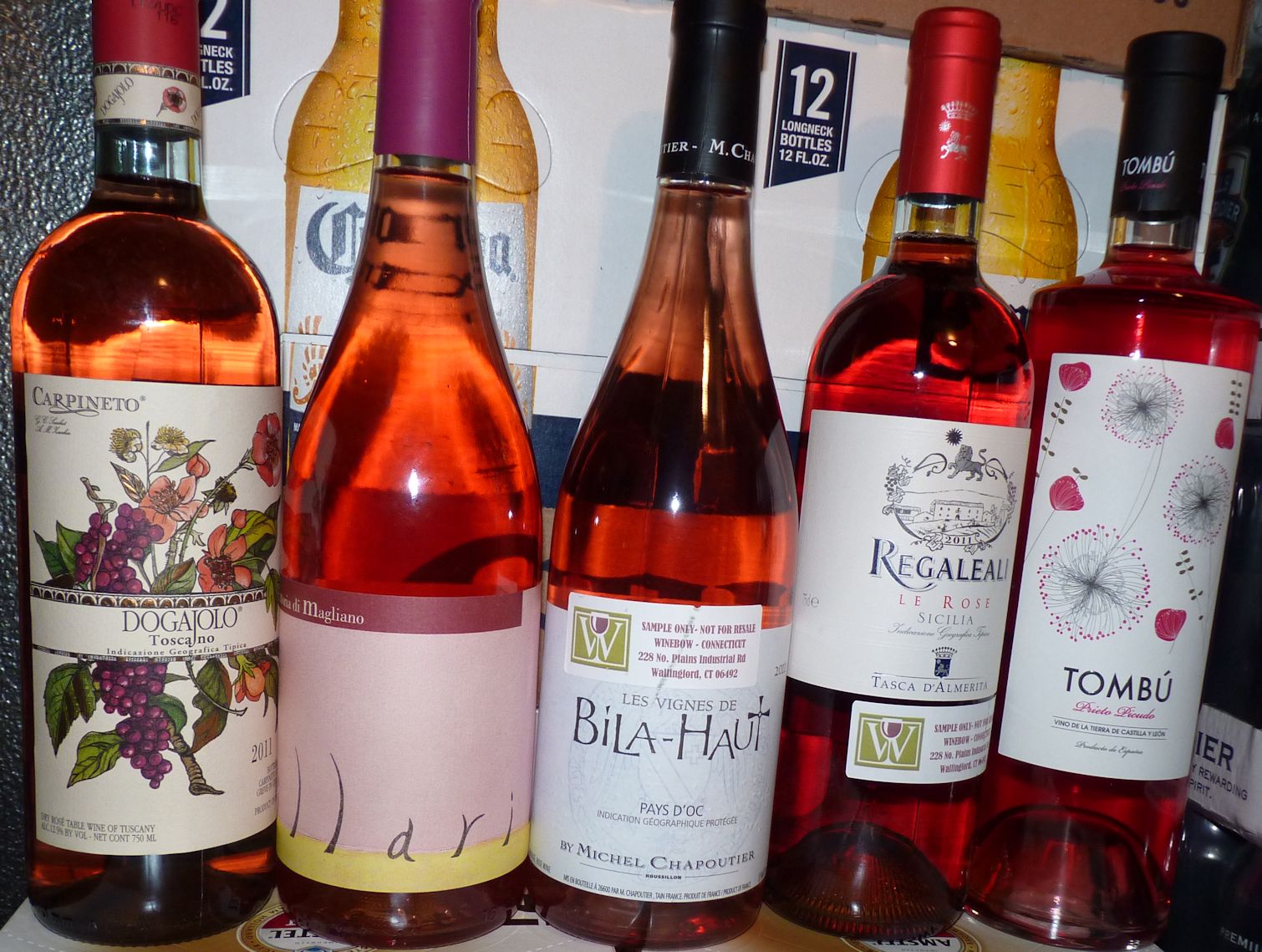 The weather fully turned around, and despite way too much rain (at least here in Connecticut), summer season has started. Which means we can start drinking Rosé, and feel good about it!
In the US, Rosé had being a very interesting phenomenon. Even 6-7 years ago, it was pretty hard to find Rosé wine on the shelves of the wine stores. Tavel (one of the world most famous Rosé wines from the Rhone region in France) was practically the only Rosé you could find in the better wine stores. Mind you, I’m talking specifically about dry Rosé wines, not White Zinfandel or any other sweet concoctions. I guess many years of the pink colored plonk trained US wine consumers that you can not expect anything good from the pink-colored liquid, therefore stores had no incentive to offer Rosé. Little by little, situation changed, and now you can see lots of different Rosé coming from all over the world, made out of every possible grape and occupying more and more shelf space at the wine stores.
What I like about Rosé wine is that it combines light and refreshing qualities of the white wine with the fruit and structure of the red, making Rosé a perfect complement to anything you do and anything you eat on a hot summer day. Don’t get me wrong – personally, I’m happy to drink Rosé at any time of the year, but somehow it has a notion of being ”summer wine”. I remember being in France in November of 2006, and when I asked for the Anjou Rosé offered on the restaurant wine list, my French companion said with the expression of disapproval on his face ”but you only supposed to drink Rosé during summer?!”. I’m very happy that summer is here and glass of Rosé is officially appropriate.
Couple of days ago, I had an opportunity to taste 8 different Rosé wines which my friend Zak was considering for his store – and I’m glad to share my tasting notes with you.
 2011 Les Quatre Tours Espirit Sud Rosé, Coteaux d’Aix-en-Provence – this was the first wine of the tasting, and it set it on the right foot. Provence Rosé in general are some of the best wines in the world, which is probably not very surprising considering the fact that Provence is a birthplace of French winemaking. This particular wine is a blend of Grenache, Cinsault, Syrah and Cabernet Sauvignon. Pale salmon hue in color, strawberries on the nose, subtle and delicate on the palate, with very good acidity. Drinkability: 7+
 2011 Chateau Les VaValentines Le Caprice de Clementine Rosé, Cotes de Provence – second wine from the Provence. This one is a blend of Cinsault and Grenache.
This wine had bigger body compare to the first one – however, it was not very balanced and had too much bite (may be needed some time, but I will leave that for you to check). Drinkability: 6
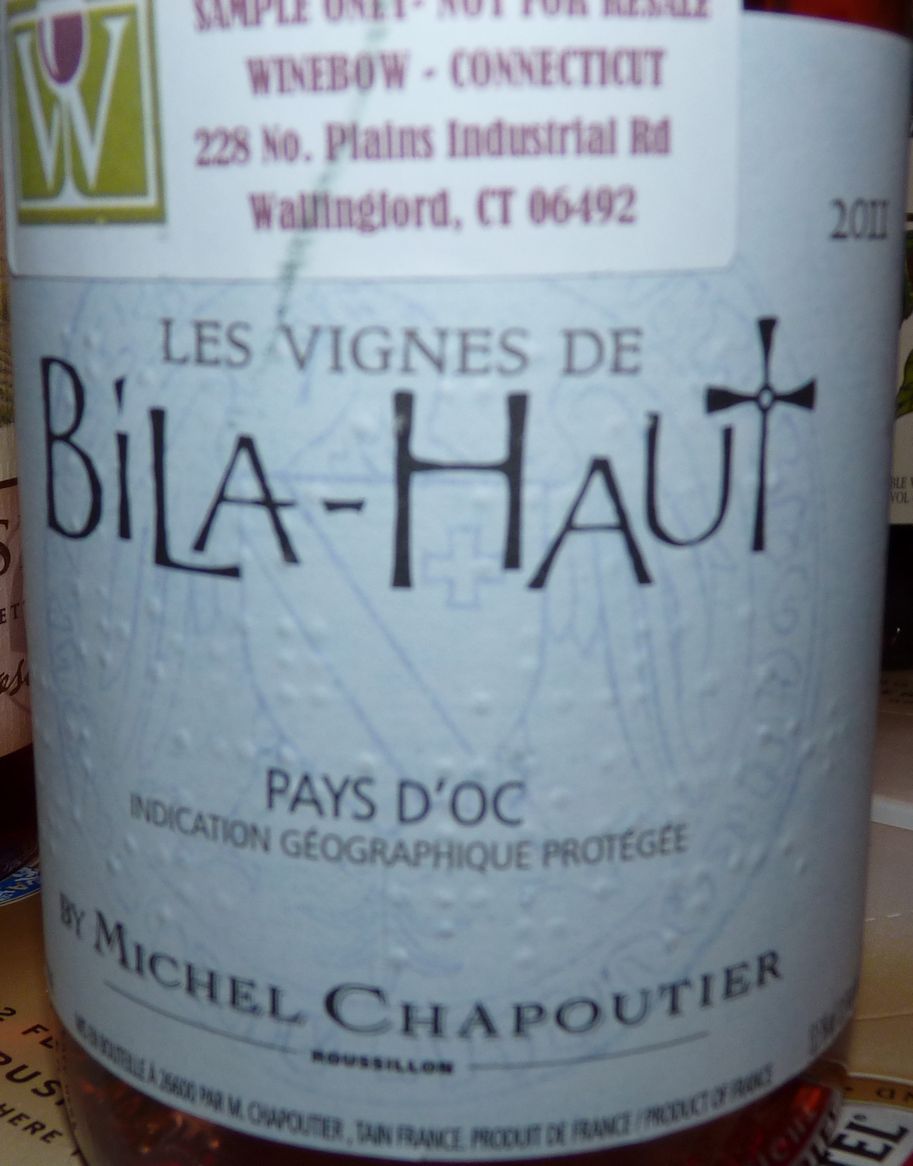 2011 M. Chapoutier Les Vignes de Bila-Haut, Cotes de Languedoc (13.5% ABV) – yet another wine from France, this time it is from the area called Languedoc. Bila-Haut wines are made by M. Chapoutier, a very respected producer. I had some Bila-Haut reds in the past, and they were very good, so I was definitely interested to see how Bila-Haut Rosé woud fare. This wine is yet again a blend of Grenache and Cinsault.
Nice pale pink color, not very expressive on the nose, same on the palate – the wine showed some bite and tamed fruit. Drinkability: 6+
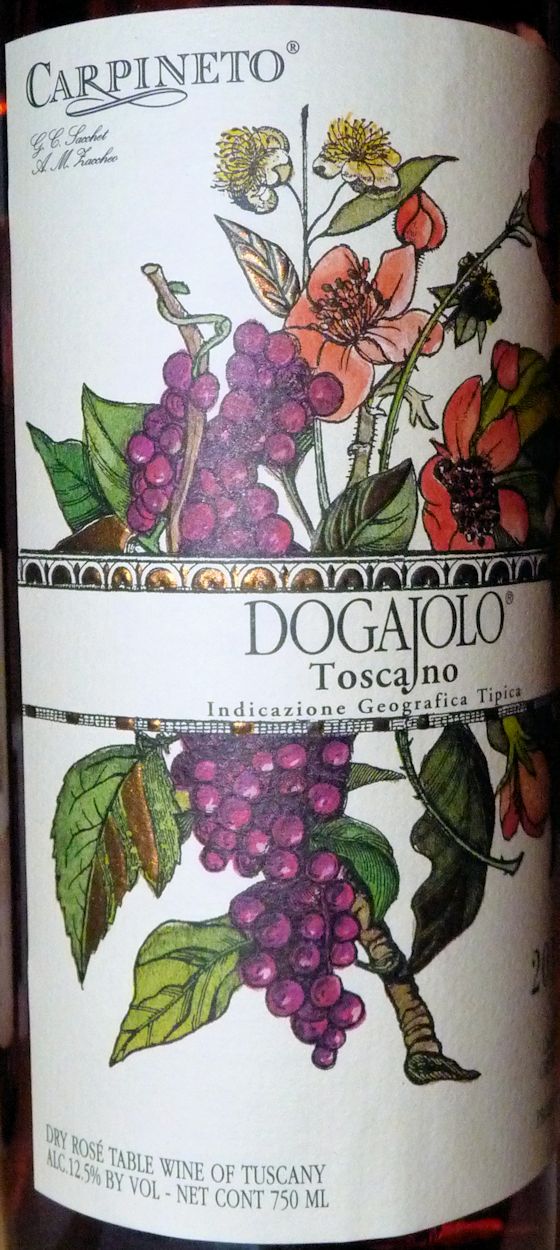 2011 Carpineto Dogajolo Toscano IGT (12.5% ABV) – Carpineto produces Super Tuscan wines, made out of Sangiovese with the addition of Cabernet Sauvignon and other grapes.
After being pressed and left in the contact with the skins for the short time, this wine was fermented in the stainless steel tanks and bottled in January.
Solid pink color, this wine showed some good fruit, but was somewhat lacking the acidity. Drinkability: 7-.
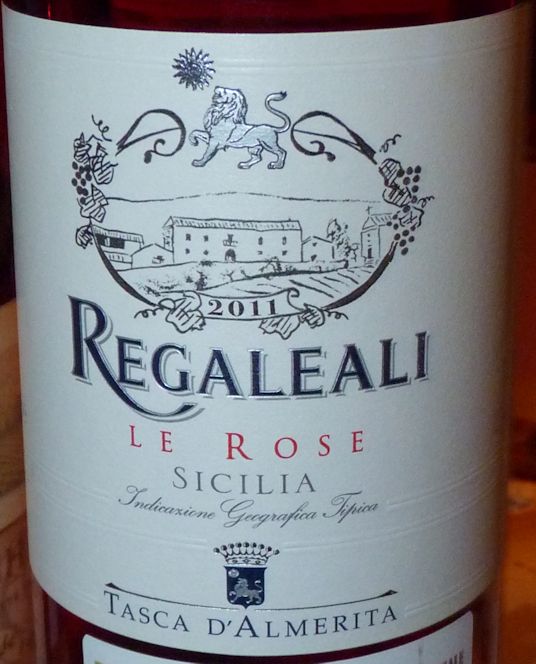 2011 Tasca d’Almerita Regaleali Le Rose Sicilia IGT (12.5 ABV) – another Italian wine, this time from Sicily. The name of the wine comes from thousands of roses which had being brought from all over the world and are happily growing at the Regaleali estate. The wine is made out of 100% Nerello Mascalese, an indigenous Italian variety growing primarily in Sicily.
The wine showed beautiful strawberries and cranberries both on the nose and on the palate. Overall, wine had very good body and great balance. Drinkability : 7+.
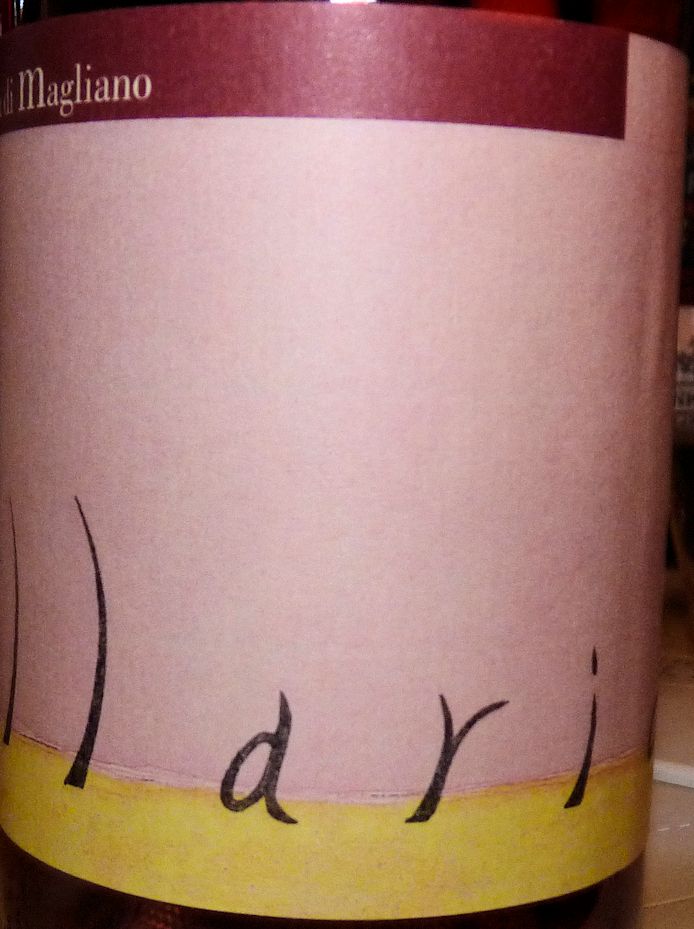 2011 Fattoria di Magliano Illario Rosato, Maremma Toscana IGT (13% ABV) – One more Rosé from Italy, again from Tuscany. This wine actually comes from Maremma region which is famous for its Super-Tuscan wines. This wine is produced by Fattoria di Magliano out of 100% Sangiovese grape.
The wine was similar to the previous one, showing red fruit with nice acidity, but a bit more delicate on the palate. Drinkability: 7+
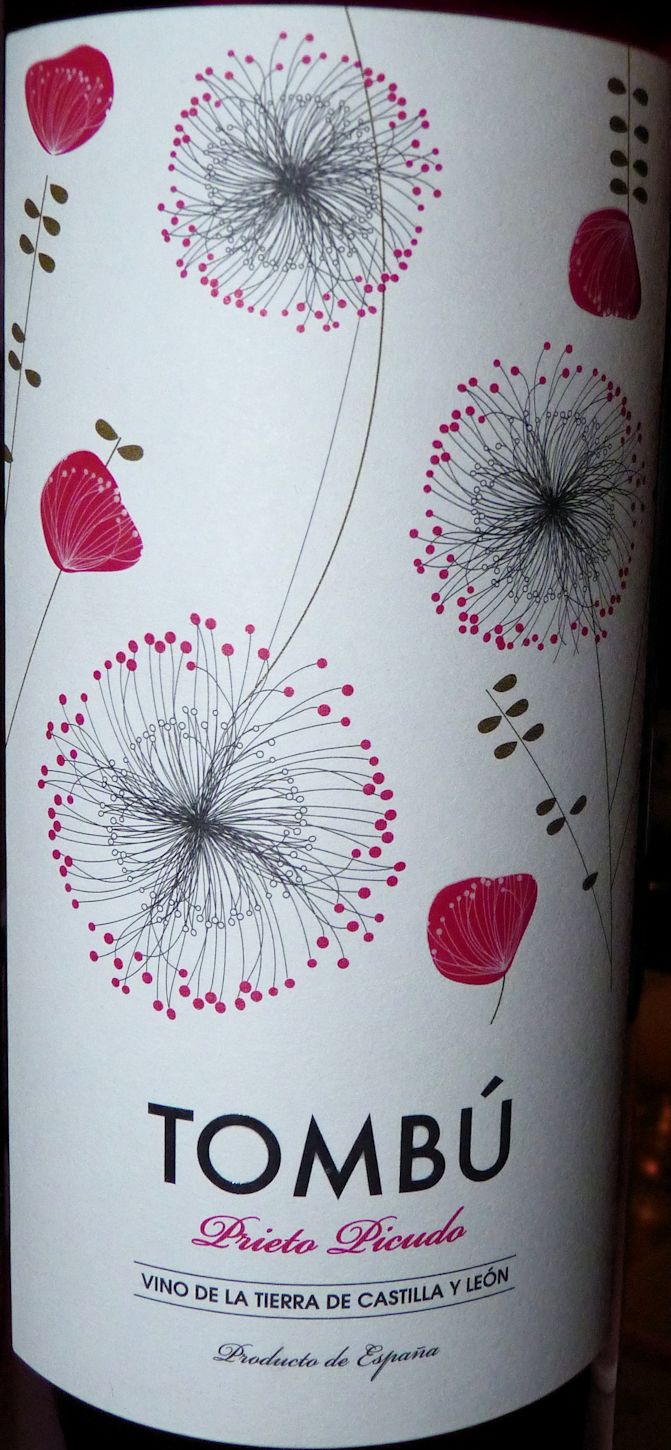 2011 Tombu Rose Castilla y Leon, Spain (13.5% ABV) – Something different – this wine comes from Spain, from the Castilla y Leon region, and it is made out of indigenous grape called Prieto Picudo.
As far as tasting notes are concerned…Would you accept a very short and simple “WOW!” as complete tasting notes? Saturated pink color, akin to cranberry juice, this wine starts from the concentrated nose of fresh cranberries and continues to deliver an exuberant punch of fresh zesty summer on the palate – perfect balance of fruit and acidity, extremely refreshing. Best of tasting! Drinkability: 8+
 2011 Adelsheim Pinot Noir Rosé, Willamette Valley, Oregon (13.4% ABV) – Last but not least, this Rosé comes from Oregon, and as you would rightfully expect it is made out of 100% Pinot Noir which was sourced from 6 different vineyards in the region.
Inviting nose of strawberries and cranberries, may be a hint of sour cherries, beautifully balanced on the palate with the same fruit and right amount of acidity. Again, very refreshing and just what the doctor ordered for the hot summer day. There are only 1,200 cases produced, so if you want this wine, you better not wait. Drinkability: 8-
I don’t know what you think of Rosé wines, but I can’t stress their greatness enough. If you were ignoring them until now, it’s time to change. If you had being a fan all along, I will be glad to learn about your favorites! Whatever you do, don’t let summer heat get to you – protect yourself with some Rosé in your glass! Cheers!
Following Wines Til Sold Out – Top 100 Tuesday
 If you are reading this blog regularly, you probably have seen some of the previous posts about Wine Til Sold Out, one of the best online wine stores. Every once in a while Wine Til Sold Out (WTSO for short) hosts a special “marathon” events, where they offer lots of wines during 18 or 24 hours period – here is a link to one of my previous “follow” posts.
About a month ago WTSO run a new type of marathon – this time, all the wine offered for sale were listed in various Top 100 lists by Wine Spectator, Wine Enthusiast and other wine publications. Marathon started at 10 AM on Tuesday, April 24th, and was continuing until midnight. On average, new wine was offered for sale one per hour – however, couple of wines (Bodegas Los Astrales and Orin Swift Saldo) were sold out within 5 minutes of being offered, so the other wines had to take its place. For most of the offers it was necessary to buy 4 bottles to receive free shipping, however for some of the wines it was only 3. All in all, lots of great values were offered – you can see for yourself in the table below. I also couldn’t resist but to include the last wine in the table, White Cottage “Risa” – it was not the part of the Super Tuesday, but it represented a great value.
As always, here is the guide to rating abbreviations typically used in the WTSO offers: WS – Wine Spectator, WA – Wine Advocate, ST – Steven Tanzer, WE – Wine Enthusiast, WRO – Wine Review Online, W&S – Wine and Spirits, MS – Mari Stull, JHN – Jonathan H. Newman, D – Decanter Magazine, rating goes in stars ( 5 stars is max).
And here is the table:
| Time | Wine Name | Rating | Orig. Price | WTSO Price | % off |
| 10:00 am | Bodegas Los Astrales Astrales Ribera Del Duero 2008 – #53 Top 100 WS | WS94 | |||
| 10:04 am | Markus Molitor Wehlener Sonnenuhr Spatlese Riesling 2009 #78 Top 100 WS 2011 | WS93 | $36.99 | $24.99 | 32% |
| 10:45 am | Bodegas Resalte de Penafiel Ribera del Duero Crianza 2005 #26 Top 100 WS 2010 | WS94 | $36.99 | $23.99 | 35% |
| 11:04 am | Domaine Louis Cheze Caroline Cuvee Prestige AOC Saint Joseph Syrah 2009 #98 Top 100 WS 2011 | WS92 | $65.00 | $29.99 | 54% |
| 12:00 pm | Orin Swift Saldo Zinfandel 2008 – #69 Top 100 WS 2010 | WS91 | 35% | ||
| 12:05 pm | Allegrini Palazzo Della Torre IGT Veronese 2008 #60 Top 100 Wines WS 2011 | WS90, WA89 | $23.99 | $16.99 | 29% |
| 1:00 pm | Bodegas Dinastia Vivanco Seleccion de Familia Rioja Crianza 2008 #59 Top 100 WS 2011 | WS90 | $19.99 | $13.99 | 30% |
| 1:05 pm | Fattoria Viticcio Chianti Classico Riserva 2007 #40 Top 100 WS 2010 | WS93 | $34.99 | $21.99 | 37% |
| 2:30 pm | Fonseca Late Bottled Vintage Port 2005 #96 Top 100 WE 2010 | WE92 | $26.00 | $17.49 | 33% |
| 3:30 pm | Cascina Adelaide Preda Barolo DOCG 2007 #37 Top 100 Wines WE Italy 2011 | WE94, JS93 | $86.99 | $42.99 | 51% |
| 4:30 pm | Super Tuscan 2007 Terrabianca Campaccio Toscana IGT #36 Top 100 WS 2011 | WS93,WA92 | $34.99 | $22.99 | 34% |
| 5:30 pm | Bodegas Ondarre Reserva Rioja 2004 #58 Top 100 WS 2010! | WS91 | $22.99 | $11.49 | 50% |
| 6:30 pm | Rivetto Barolo Serralunga 2007 #59 Top 100 2011 Wine Enthusiast | WE94,WS94 | $74.99 | $37.49 | 50% |
| 7:30 pm | 2010 Albarino Rias Biaxas Bodegas Martin Codax #77 Top 100 WE Best Buys 2011 | WE90 | $17.99 | $12.49 | 31% |
| 8:30 pm | Domaine Louis Cheze Caroline Cuvee Prestige AOC Saint Joseph Syrah 2009 #98 WS Top 100 | WS92 | $65.00 | $29.99 | 54% |
| 9:15 pm | Michele Chiarlo Reyna Barbaresco 2006 #6 Top 100 WE 2009 | WE93 | $50.00 | $29.99 | 40% |
| 10:15 pm | Bodega Tikalo Kios Elite (Vina de la Tierra de Castilla) 2004 #77 Top 100 Wines WE | WE91 | $34.99 | $16.99 | 51% |
| 10:50 pm | Bodegas Ondarre Reserva Rioja 2004 #58 Top 100 WS 2010! | WS91 | $22.99 | $11.49 | 50% |
| 11:26 pm | Super Tuscan 2007 Terrabianca Campaccio Toscana IGT #36 Top 100 WS 2011 | WS93,WA92 | $34.99 | $22.99 | 34% |
| 12:00 am April-25 | White Cottage Estate ‘Risa’ Howell Mountain Cabernet Sauvignon 2009 | $45.00 | $19.99 | 56% |
If you are not following Wine Til Sold Out – you really should, WTSO means real savings. Enjoy! Cheers!
Weekly Wine Quiz #13 – Wine as a Matter of Life and … Death
Continuing our historical angle, here is a new quiz for you. While reading a wine book, I was surprised to learn about harsh ways wine industry was using in order to promote itself. What do I mean by the harsh ways? So there was a town which enacted a law, requiring all households to plant and tend for grape vines. The penalty for not complying? Nothing less than “pain of death”! Don’t know about you, but that doesn’t sound pretty for me.
Anyway, would you care to guess which town was it?
Have a great long weekend! Cheers!
Wine, Pick Me Up, Please!
 So you had a bad day at work. During the meeting, the boss kept giving you the look, you know, that one. Engineering just informed you that project delivery will be delayed [yet again] by 4 weeks, and you are the one to come up with the third(!) apology/excuse to the customer. And actually, this Sunday you will have to be on the plane, and it will be 3rd week in a row you have had to travel over the weekend and cancel all your plans. Is that bad enough, or do we need to throw in a flat tire and a speeding ticket on the way to work?
Okay, you arrive home in a sufficiently bad mood. Sit down, relax, and maybe put on some nice music (I don’t know about you, but Stan Getz, Frank Sinatra or Tony Bennett will fit the bill for me). Will a glass of wine help to cheer you up? Most probably. But what bottle should you open? If your answer is “the only one I already have”, this post might not help you much…
My wine teacher Kevin Zraly always said that “the wine should give you pleasure“. So another short answer would be “the one which will give you pleasure” – and what we need to keep in mind is that the wine I would enjoy immensely might be completely not your thing. Let’s put this aside, and let’s assume that I actually had a bad day at work. Well, it would be the easiest then to write this blog post empirically and emphatically, but I’m not sure that if I actually had a bad day at work, I would be able to write a good blog post, so … did I lose you yet? Let’s get back to the subject.
Here are three important criteria for selecting the “pick me up” wine. First, it should be an “instantly on” wine. What I mean is that the wine should be ready to drink as soon as the bottle is open. This will effectively exclude lots of big Italian wines, such as Barolo and Brunello, as well as many California Cabs (unless you have something aged to perfection in your cellar and it is actually ready to drink now) – anything which needs decanting or prolonged breathing time should be avoided here.
Then I would suggest that the wine should be familiar. It should be the wine you had before and you know how it will taste like. There is nothing wrong with opening a totally unknown bottle of wine, but – you are in a bad mood already, are you sure it is worth taking chances?
The last factor I want to throw in here – I want this wine to have a great smell. I think the “pick me up” process should start from the very first whiff of your glass, way before you take a first sip. Smell has a great power to transform your mood right away – and the great bonus or a great smell is that you can smell the wine indefinitely as opposed to drinking it.
Oh, wait, there is one more desired feature here – the wine should be good. In other words, it should give you pleasure. In my personal book it means that the wine should be balanced and as an added bonus, have a sense of place.
Let me give you some examples of wines that should be able to improve one’s mood (I’m sure they will work for me).
 2010 Fiction Red Wine Paso Robles by Field Recordings. I talked about this magnificent wine a number of times already in this blog, so let me just quote myself: “First and foremost, it is a smell which doesn’t let you put the glass down. Fresh flowers, meadows, herbs, fresh summer air – it is all captured in the smell of this wine. On the palate, this wine shows bright red fruit, like raspberries and cherries, all perfectly balanced with great finesse. Any time you want to experience a beautiful summer day, reach out to that wine.”
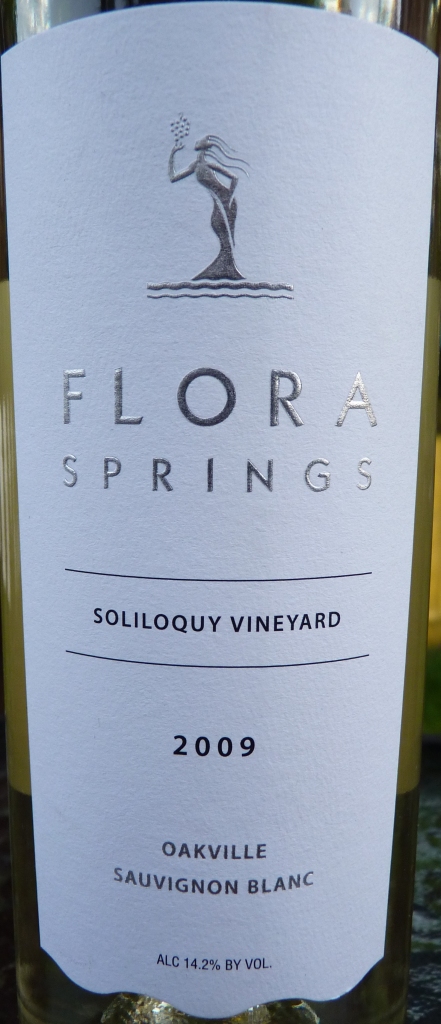 Flora Springs Soliloquy Sauvignon Blanc 2009. “One of the very best California Sauvignon Blanc I ever had. Beautiful combination of traditional grassiness with fruit-forward and finesse. Outstanding!”
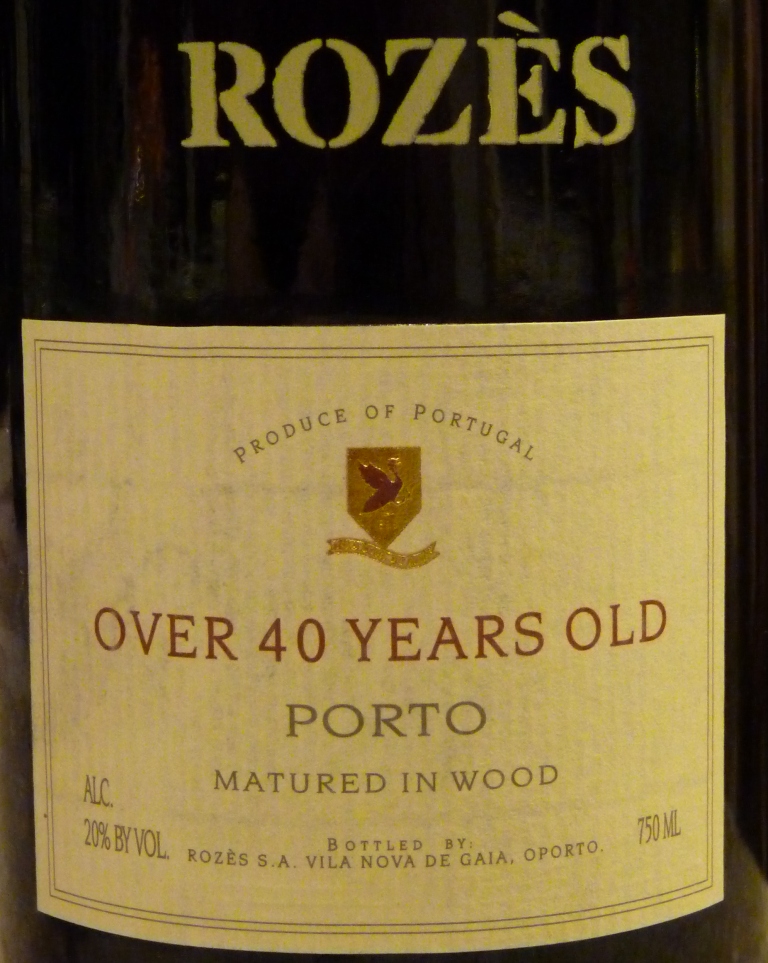 Rozes Over 40 Years Old Port. “My best port ever. I can close my eyes and imagine the smell and taste of this wine – multiple layers, tremendous complexity, and great opportunity to reflect on life when the finish lasts for 15 minutes or longer.”
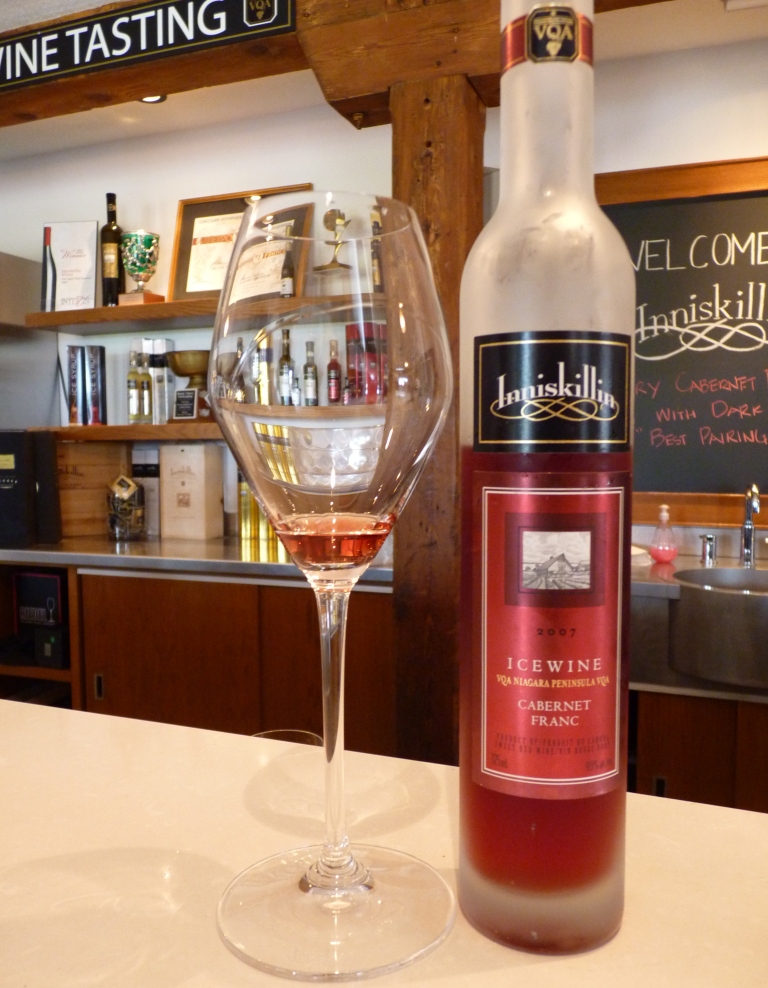 2007 Inniskillin Cabernet Franc Icewine – “This was definitely the best Icewine I ever tried. Light and effervescent (not your usual descriptors for the icewine), with perfect acidity complementing beautiful fruit. A true masterpiece.“
There you have it – I’m sure either one of these wines will greatly improve your mood. However, there is an extremely good chance that any [your personal good] bottle of wine will help too. Besides, having a bad day at work is not at all mandatory to enjoy a glass of wine (or two). Tell me, what will be in your glass today? Cheers!
And The Answer For The Wine Quiz #12 Is…
It seems that lots pf people took study of Prohibition experiment very seriously, which is showing in the results of the Wine Quiz #12, The End of Prohibition. Correct answer is State of Utah, which had a [deciding?] Vote #36 which put an end to the Prohibition (note that both Ohio and Pennsylvania voted on the same day December 5, 1933, but Utah is listed as having the deciding vote).
Here is an answer to the quiz in the form of the picture, as the event was commemorated by High West distillery in Utah (I have to thank W. Blake Gray for this discovery of a great cocktail in a bottle):

You can read all about it on the side label:

Until the next time – Cheers!
Magnificent Rioja
 The title for this post didn’t come up easily. I was back and forth with myself many times. The reason? Tasting these Rioja wines was a phenomenal experience, something which doesn’t happen often during one’s lifetime. The brightness and openness of the 65-years old Rioja was nothing but stunning – but I think I’m getting ahead of myself, let’s go back to the beginning.
I happened to fall in love with Rioja wines about 4 years ago, after attending a Rioja seminar at PJ Wine store (the owner, Peter, is anything but fanatical about Spanish wines – of which PJ Wines houses an amazing selection all the time). At that seminar I was lucky enough to try 1964 Monte Real Gran Reserva Rioja and that was a revelation – the wine was fresh and bright, as it would’ve been maybe 5 years old, not 40+. After that tasting I became a Rioja fan for life. I have to also mention that even today, you can buy 1964 Rioja starting from less than $300 – for comparison, a bottle of 1966 DRC will set you back about $10,000. I rest my case.
When my friend Zak told me that we can get a bottle of 1947 Rioja directly from the winery for less than $400, the decision was instantaneous – this is a once in a lifetime opportunity and it is worth it (don’t remember how many bottles were still available, but surely there were not that many). So we got that 1947 bottle and after a little while, were able to set the date for the tasting.
To make sure our 1947 Rioja will not feel lonely, we got a few more bottles to keep it company. You can see the full line up on the picture above, and here is an exact list:
2008 Raventos & Blanc Reserva Brut Cava
1993 Lopez de Heredia Vina Tondonia Reserva Blanco
1947 Imperial Gran Reserva Rioja
1976 Imperial Gran Reserva Rioja
1995 Imperial Gran Reserva Rioja
Pinord Moscatel NV
There is one more bottle in the picture – Jorge Ordonez Malaga – but, guess what – we never opened that, being quite overwhelmed by the desert time (it is a great bottle of desert wine, but – oh well, there is always a next time).
We started with Cava, of course. It was fresh, round and pleasant – not necessarily hugely distinguishable, but definitely a nice bottle of wine to have before dinner starts.
The first foray into the magnificent world of Rioja was with the 1993 Lopez de Heredia Vina Tondonia Rioja Blanco. I will gladly challenge you to find a bottle of 19 years old white wine that will taste as fresh as this 1993 Rioja. Maybe you will have some luck with white Hermitage, Chablis or some of the white Burgundies, or may be some of the really obscure grapes like Romorantin – but in any case I’m sure it will not be easy. This wine was fresh and complex, with mineral notes, a hint of white apple, perfect mid-palate weight and still bright acidity. Definitely a ”wow” introduction to the ”wow” lineup of reds.

Needless to say we started with 1947 Rioja. Considering the tender age of 65 years, the first challenge of course was to get the cork out. I wish we had one of those glass-cutting devices described in the PJ Wine blog post, which simply allows you to cut the whole neck of the bottle with the cork in it, and not worry about the cork crumbling into your wine – well, we don’t drink wines of that age often enough, so we had to stick with more conventional tools, like the two-prong cork puller.
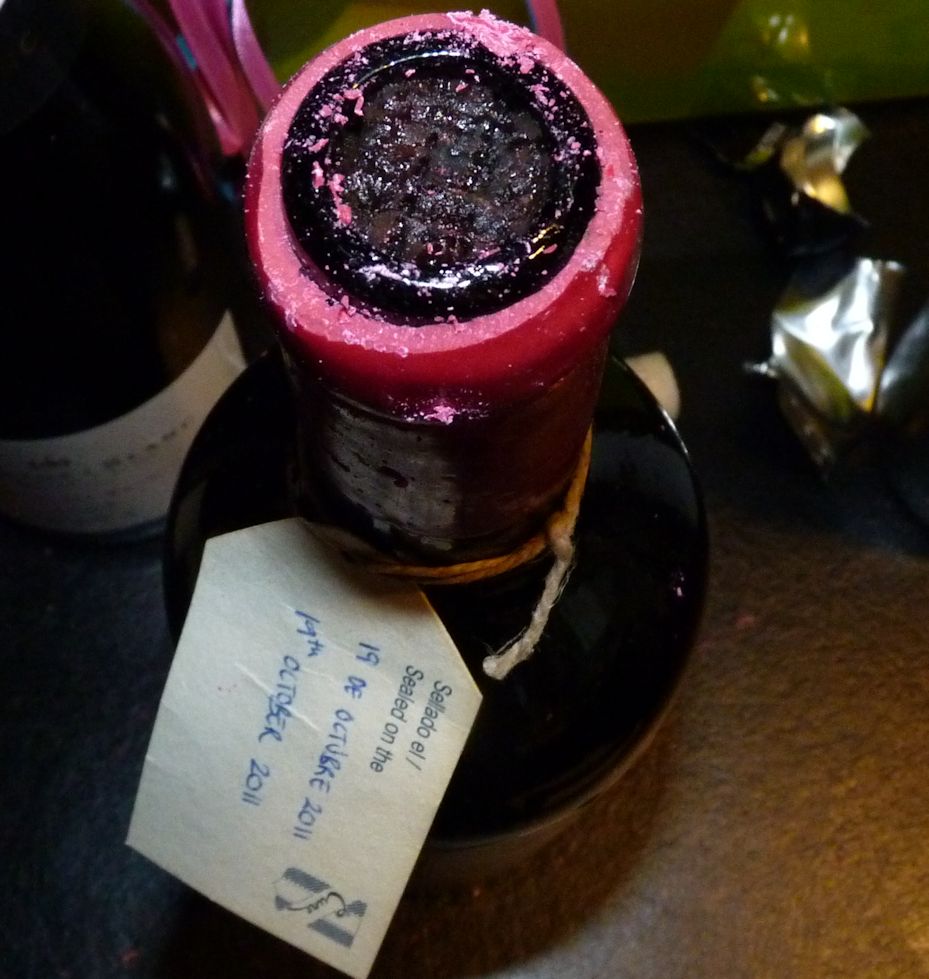 It almost worked.. and then not. It took two people and a good 5 minutes of time to get the cork out, little by little, piece by piece – but we managed to do it almost clean, with maybe one or two tiny pieces falling back into the bottle.
Cork is out, and wine goes into the glasses. The first thing to note is the color, which is still red and not brown – of course, it is not purple, but it is dark garnet red. And for the taste… Should I simply tell you that wine was magnificent and leave it at that? Well, okay, it wouldn’t be fair. Let’s continue. On the nose – cocoa powder, cedar dust, a hint of cinnamon, smoked paprika. On the palate – a good amount of red fruit, wine comes in bright and youthful, with good acidity. Then the second wave came in as wine opened up a bit, with more sweet fruit and then tannins kicking in. I don’t want to bring in exotic animals to describe this wine, as Joe Roberts did with a black panther, so my description will be simple – grace and elegance. I can only wish to have the same grace and elegance myself when I reach that age.
Moving along, it is now time for the 1976 Rioja. 29 years younger than the previous wine and… ahh, so different! Barnyard on the nose, very pungent, savory, with a hint of the same barnyard on the palate, dried cherries, earthiness. If umami is a part of the wine tasting profile, this wine definitely had it.
And for the 1995, we decided to give it a little breathing time – it spent 2 hours in the decanter. The wine was fresh, with beautiful garnet color, bright fruit, very good acidity and soft tannins, a touch of eucalyptus and cedar box. Very youthful and upbeat, if you will.
After tasting this lineup of magnificent Rioja wines from the same producer, the most interesting question in my mind is ”how will these wines evolve?”. Even 1947 didn’t reach the end of life considering the way it was showing, never mind 1976 and 1995. Will the pungency of 1976 stay, or will it evolve to something akin to 1947 in 29 years? How will 1995 taste in 48 years, and will it even last that long? These are all great questions I will not get an answer to – but this is part of the wine connoisseurship game – think about the future but definitely appreciate and enjoy what you have right now (huh – feel free to beat me up in the comments for banalities).
So far I didn’t tell you about the food – there was a lot of great food. While you can’t taste it anyway, here is at least a picture of one of the dishes – roasted potato-encrusted Striped Bass:

We also had “death by chocolate” dessert which perfectly paired with Pinord Moscatel, which happened to be well-aged (the bottle simply got lost under the shelf and was “discovered” many years later).
Overall, this was a great experience, which will stay in my memory for a very long time. To tell you honestly, I think it will not be easy to top off this experience, but as the very least I can promise to share all that with you. Wish you all great fun with wines – cheers!
Weekly Wine Quiz #12: The End of Prohibition
It seems that wine quiz #11, Bubbles, Big and Small, was really simple, and most of you did great – yes, the correct answer is 49,000,000 – assuming our source of information didn’t make a grave mathematical error (you can read about it here).
For the next few of quizzes, I want to focus a bit on history. Actually, a wine quiz by 1WineDude Joe Roberts, called State of (Grape) Affairs, prompted me to look at the historical side of all things wine.
Have you ever tried a wine from state of Missouri? Me neither – and it appears that before Prohibition, there were more than 2 million gallons of wine produced in the State of Missouri, including internationally renowned wines. Prohibition squarely put an end to it and tremendous number of vineyards were destroyed.
I don’t know about you, but I’m surely glad Prohibition was repealed on December 5, 1933. Of course while majority of the states had to vote for repeal of the Prohibition, there is one state which is considered to have a deciding vote. Do you know what state was that?
As a bonus question, please provide a number of deciding vote (use comments section).
Have fun! Cheers!
Let’s Look At Some Wine Videos [Again]
It seems that Wine Videos almost becoming a feature on this blog – well, I’m not sure it will be possible to continue this trail indefinitely. After all, I only share the wine videos which cause at least some emotional resonance on my side – you shouldn’t expect to see dumb ads with flat voices here. But – as long as we are having fun, why not?
So for today let’s start with Australia (yes, again Australia, I know – but I promise that the next one will not be from Chile) – it is for the wine called Wild Oats:
The next one is from Portugal, and it is an ad for Sandeman Port (yes, it is not from Chile, but – it has a train in it):
To tell you the truth, I find both of them interesting – but what are your preferences?
Enjoy! Cheers!
Weekly Wine Quiz #11 – Bubbles, Big and Small
 It seems that my wine quiz #10 was a failure, as there were only 3 responses. Oh well – I wanted to make it “somewhat” difficult, but crossed the border into “very” difficult. Today’s quiz will be nothing like that.
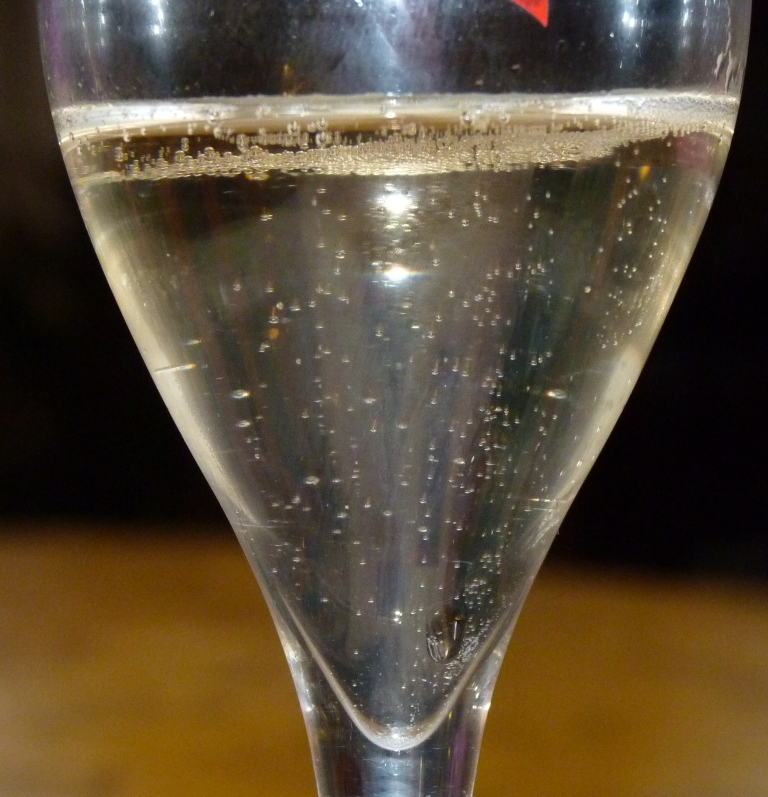
Tomorrow is the Mother’s Day, which is a good reason to open a bottle of champagne (not that we need a special reason for that). Once the celebration liquid is in the glass, did you ever sit still looking at that glass and adoring the chains of tiny bubbles coming up, up and away?
Today’s test will require you to brush up high school or may be even college math curriculum, including Algebra 10, Trigonometry 12, Calculus 15 and …wait, don’t close this page – I’m only kidding. Today’s quiz will not require any math skills whatsoever, but you should put on your best guessing game (yes, check your answer with Google, please – but only after you will vote in your answer).
And the question is: how many bubbles are in a bottle of Champagne? Of course your answer should be only approximate, if you think it is 500,000 or 900,000, chose 700,000 from the list below, it should work just fine. Of course you can use the empirical approach and actually open the bottle of champagne and count all the bubbles, but you better be a very, very fast counter. Good Luck!
No matter what you answered, and sparkling or still, but don’t forget to open a great bottle tomorrow to celebrate Mom! Cheers!
Last Bottle Sign Up ($10 credit)




 Talk-A-Vino