Daily Glass: 2009 Chorus Effect by Field Recordings
I have a question for you. Have you ever experienced a special bottle “today is the day… or not” effect? It is when you have a bottle you want to open, but you can’t decide if today should be the day, or you need to wait a bit longer? I’m not talking about special bottle which. let’s say, bears vintage year of your son or daughter’s birthday – those are easy, you only contemplate once a year whether to open the bottle or not. I’m talking about more of an everyday, reasonably priced wine, of which, let’s say you have only one bottle, and you know that you can’t get another one – this is the case in point.
Ever since I was blown away by the bottle of Fiction by Field Recordings (here is the link to my post about that experience), I wanted to try another wine made by Andrew Jones – Chorus Effect. I had the bottle for about half a year in “to use in the near term” place, and I can’t even tell you how many times I was in the “today is the day” mood, and … nope, I guess it was not.
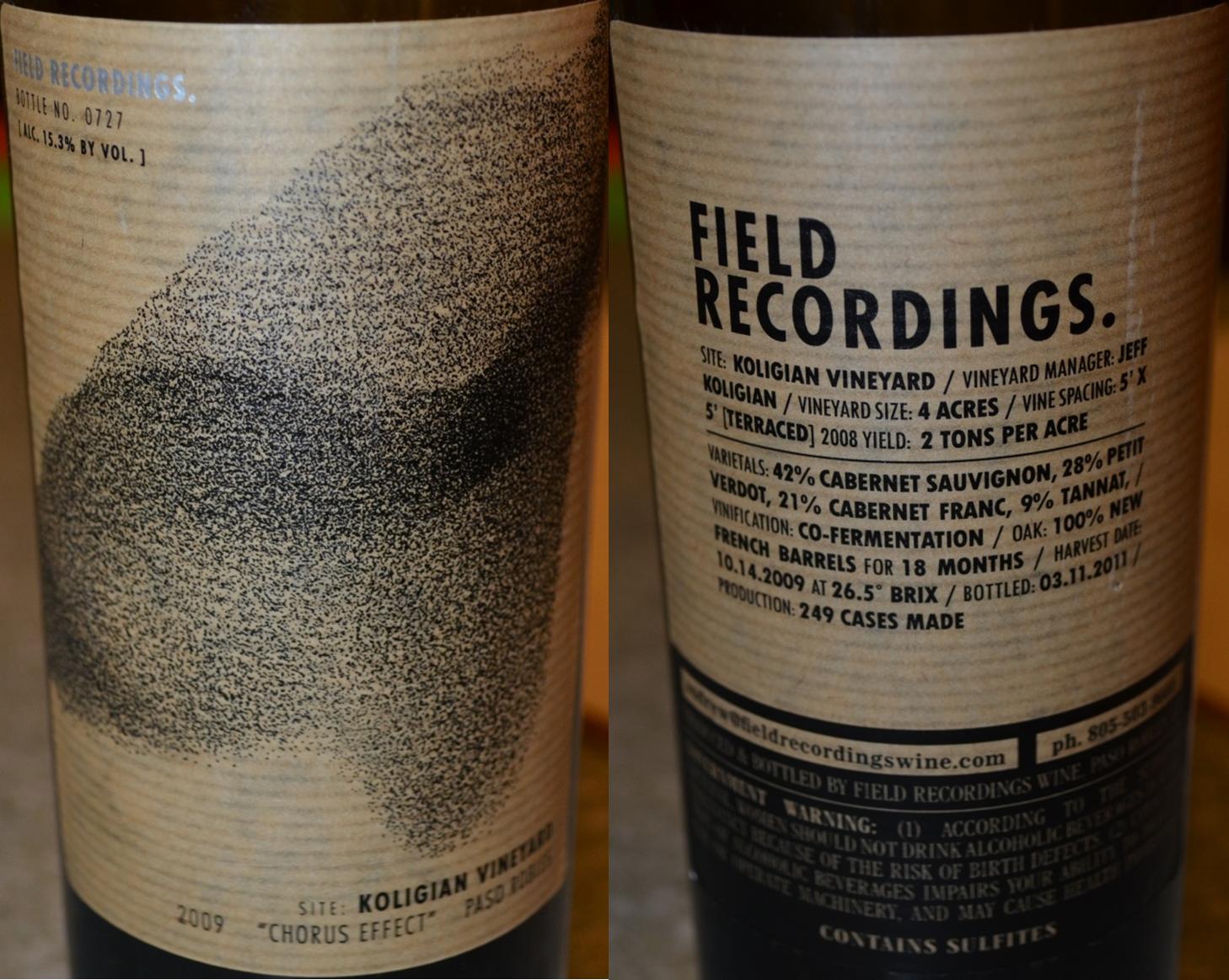
And somehow it happened that the day was finally today, and the bottle was open ( one easy move, you know – those screw tops are perfect for easy opening).
This 2009 Field Recordings Chorus Effect Koligian Vineyard, Paso Robles ($26, 15.3% ABV, 249 cases made) is a Bordeaux-style blend – you can see the exact composition on the picture of the back label.
The wine had beautiful purple color, bright and fresh. Nose was showing sweet cherries, plums and a touch of spices. But the palate… If Fiction, which I mentioned earlier, had absolutely astonishing nose, this wine had the same on the palate. This was a textbook study of a red wine, all in one sip – not the Bordeaux specifically, but the red wine overall. Sweet cherries, ripe plums, blueberries, tar, sweet vanilla, licorice, violet, chocolate, pepper, tobacco, eucalyptus – you could easily taste each and all. At the same time, the wine was balanced, with soft tannins, without any jamminess which can be often observed at such high alcohol levels. I’m not sure if I’m ready to rate it – I really want to see what will happen with this wine tomorrow – but for now, I will put the Drinkability at 8-, mainly due to the alcohol burn which was not noticeable at the beginning but showed up couple of hours after the bottle was opened.
Did you open your special bottle today? Will be glad to hear your story. Cheers!
Wine = Art
 The title of this post is not misleading. I plan to talk about wine as an art form, which is the way I look at it. Why all of a sudden? Couple of articles, both great in its own right (I mentioned both in the Meritage post a week ago), prompted this blog post, despite my claim that I’m not going to enter this debate. I don’t know why is that, but I have a habit of saying “No” where deep inside, as soon as I finish my full and long “no” sentence I already know that, “oh it will be a yes”. Anyway, this blog post is not about me, it is about wine, so let’s get closer to the subject.
In case you didn’t have a chance to read those two articles, they were both on the beaten up (badly beaten up, I have to say) subject of cheap wines versus expensive wines. The first article, published in the Forbes magazine, provided a number of illustrations to the fact that…there are many factors affecting perceived taste of wine – temperature, label, feel of the moment, critics’ opinion, rating and many more (I’m not going to cite a full article here – it is well worth reading if you are into the wine world). I believe that one of the points of the article was to suggest that for the most of us, we can’t distinguish between cheap and expensive wines anyway, so why bother – drink any wine, be happy (I’m oversimplifying, I know).
Then Steve Heimoff took the subject close to his heart and went on to explain that there is a very big difference in taste between $15 and $150 bottles of Napa Valley Cabernet Sauvignon, that more expensive wine is always better than the cheap wine and that the the whole premise of Forbes article in Steve’s words is “man bites dog” attempt at a cheap publicity.
Let me take step aside and explain the meaning of the concept “wine = art”. When you are at home, take a look around you. I would make a safe assumption that for absolute majority of people, your home is decorated in one way or the other. You might have pictures and photos on the walls, statues big and small, flowers live and not, little (or big) mementos and many other things which surround our lives with only one purpose – to give us pleasure, set the mood or may be create lasting connections between time and memories. Taking pictures as the simplest example, they can be your kids’ pictures, copies of the works of the famous artists, works of the completely unknown artists or may be they are actual original paintings. Those pictures can be mass produced and acquired at the neighborhood convenience store for $4.99. But they also can be acquired after a long battle at the auction, where you had to put down $4.9 million to beat another guy and get that painting you always dreamed of.
Now, when was the last time you read an article telling you that you are not supposed to buy any works of art more expensive than $19.99, because you are not capable of understanding the difference between $19.99 and $199 pictures? Or when was the last time you read an article telling you that expensive painting is always better than cheap print? I can bet I’m giving you a very taxiing memory-combing exercise which will yield no results.
 So my question is – why wine is treated in any different way than any other works of art? Read (or talk) about the wines, read about vineyards and places, read about wine makers, grape growers, oenophiles, wine collectors – what do you get out of that reading or talking? Passion, obsession, emotions, feelings. We eat because we have to, but we drink wine because we want to, because of its ability to resonate with our beings, to create emotional response. This is my premise of “wine = art” statement. I believe that wine is a form of the renewable art, which also has a pretty unique advantage compare to a simple painting, for instance. Whatever you see on the painting will be exactly the same in 10 years or in 50 years. It will create different emotions on a different day, of course – but it will not change in principal. At the same time, even the simplest wine will change in the bottle. For better or worse, but it will change. Last weekend we shared a bottle of 1997 Toasted Head Cabernet Sauvignon/Syrah blend (probably $9.99 or less) – believe it or not, but this wine was outstanding – it evolved, it had beautiful fruit, great balance and nice finish. It was memorable, it solicited emotions, it created mental staples for that particular moment. If this is not art, I don’t know what is.
Where am I going with this? I don’t believe cheap versus expensive is a meaningful or useful argument for the wine world. Yes, there are many reasons for the wine to be expensive – best quality grapes with very low yield, state of the art facilities, manual processes, need for aging before release, market demand, reputation and many many other factors define the price and can drive it very high up. But if you will exclude snobbery, arrogance and blissful ignorance, price is simply one of many factors which affect your buying decision – nothing more and nothing less. Yes, $150 bottle will taste different than $15 – but can we say “better”? If someone is a Pinot Grigio drinker (and enjoys it very much), will you be able to prove to him or her that $150 Cabernet Sauvignon is really better that $15? I want to see that happening. When it comes to wine, “better” is a difficult category, as the definition of the best wine is 100% personal – the best wine is the one which tastes best to you. Yes, critics matter, ratings matter – but only as a reference, as food for thought.
Wow, did I bore you to death? I truly hope I didn’t – I think this post was brewing for a very long time, slowly ripening to the point of wanting to get out. These are my true feelings, this is how I see the wine world, and “wine = art” makes it so fascinating for me.
Is this arguable? Of course (comments section is down below and only a click away). I don’t pretend to possess the absolute truth – but “wine = art” makes me open a bottle of wine with hope and excitement. No matter what anyone said about that bottle, how much it costs or what the rating is – I hope you will enjoy it and I hope it will create a special memory, a special moment – just for you. Cheers!
Wednesday’s Meritage
1774 Arbois ‘Vin Jaune’ ©Serge Reverchon
Brand new Wednesday is here, so is your serving of Meritage.
Let’s start with the answer for the Wine Quiz #20 – How much this wine worth to you? I believe this was a hard quiz, may be even hardest so far. I’m glad to see a full spread of answers with 5 out of 6 being picked as potential choice. Another interesting thing for me was that I had one mostly a bogus wine in that list of answers (1878 Petrus), and it was not picked up by anyone – 1878 was the year when Chateau Petrus received gold medal at Paris Exhibition, but I’m sure that it was not the vintage which got the award. Here is a quick run down for the rest of the wines: 1929 was one of the all time best vintages of DRC, so I’m sure that wine would do very well at the auction. 1873 Chateau Mouton Rothschild is the real wine which I saw in the cellar of The Forge restaurant (here is the post which has the picture of the label) – no idea how much that wine could be sold for at an auction, but I’m sure it would not be insignificant.
If you heard of “shipwreck champagne”, 1825 Veuve Clicquot is the one. It didn’t get that much money at the auction, but someone still paid a respectful €30,000 – here is a link for the you. And 1715 Terrantez Madeira might be the oldest wine in existence in the world (certainly the oldest Madeira) – here is a link for you (warning! extensive drooling might occur!).
If you noticed, I skipped 1774 ‘Vin Jaune’ – yes, you got that right – this is the wine which was actually acquired for €57,000 at the auction in France – you can read all the details here. Surprising as it is, we have to assume that it was worth it. My only question is if we will ever read the tasting notes on that wine (hmmm, I wonder how I can get invited to that tasting? yeah, not happening, I know).
In the “interesting news” department, here are few things for you. First, an interesting short post by Dr. Vino – it appears that French politician is proposing to ban California wine as a response to Foie Gras ban in California.
And then I found that two of the [professional] wine bloggers I follow, Blake Gray and Steve Heimoff, completely independently wrote about their experience with bad wines. Both posts are different and talk about different situations, but nevertheless, they both appeared in a very close timing proximity from each other. Blake Gray is talking about bad $80 California wine and arrogant winery owner, and Steve Heimoff is talking about simply a bad wine and wine critic’s dilemma. Be sure to read the comments to both posts, as they are also very interesting.
Last but not least: The finalists for the Wine Blog Awards 2012 are announced – take a look and vote!
That’s all, folks. Happy Wine Wednesday and stay cool (I had to say it). Cheers!
Crus of Beaujolais, Year 2011 – Part 2
I like sequels, Well, in the movies – sometimes, not so much. But when it comes to the writing, whatever you forgot to say in the first part, you can say in the second, and feel good about it, claiming that this was the intent from the get go.
What I didn’t mention in the first post about great tasting of Georges Duboeuf 2011 Beaujolais portfolio is that red Beaujolais make one of the best red wines for summer – they are typically light in alcohol (if you noticed, 13% ABV was the most for all wines mentioned in the first post), and they also taste the best when they are slightly chilled. Considering how hot this summer is across pretty much the whole US territory, I hope this will help you to find a good red wine for the hot day, because sometimes it just have to be red.
In the first post, I described a self-guided part of tasting. That tasting was followed by the lunch, both of which (tasting and the lunch) taking place at db Bistro Modern, one of the restaurants of the famous chef Daniel Boulud.
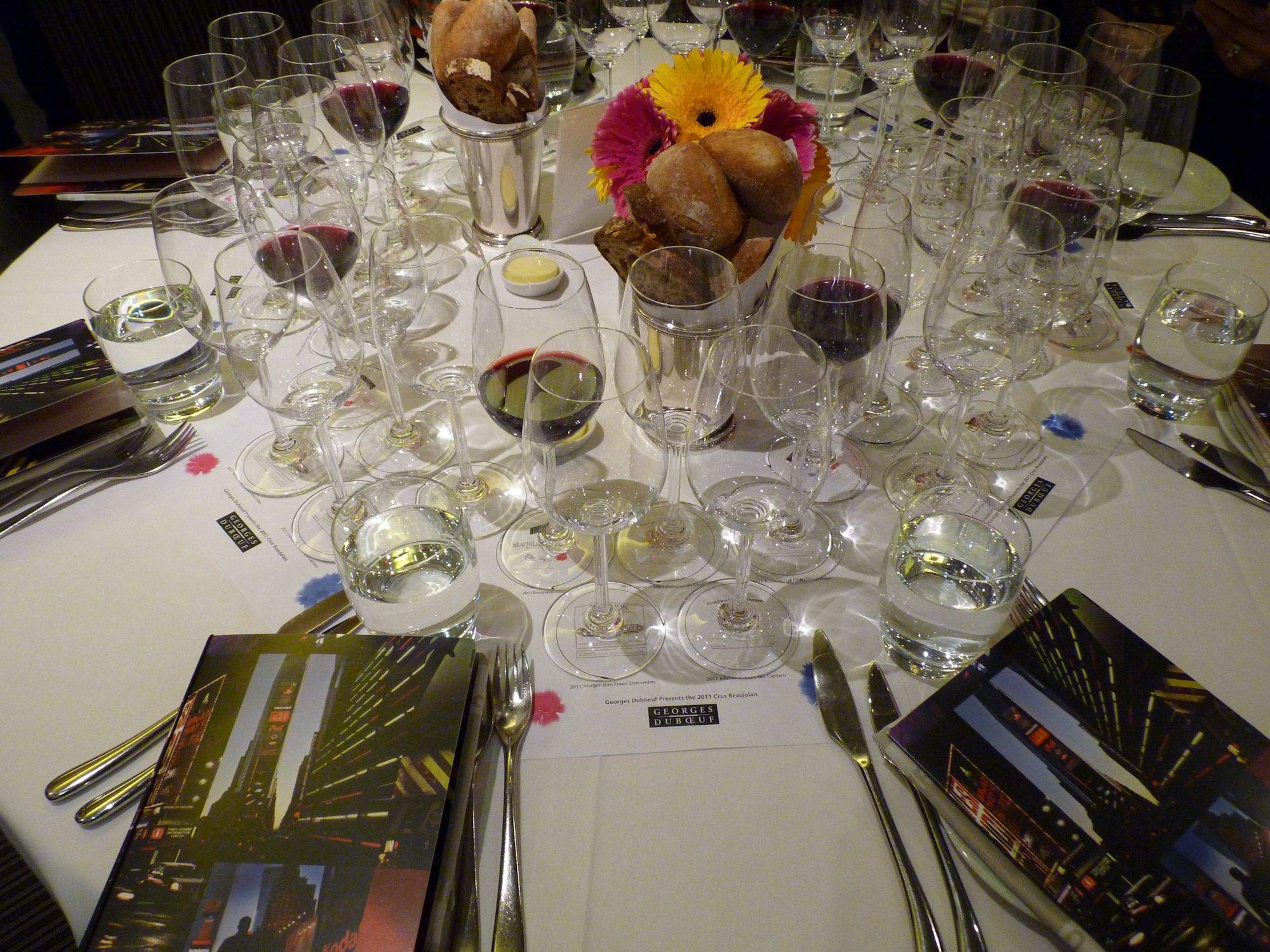
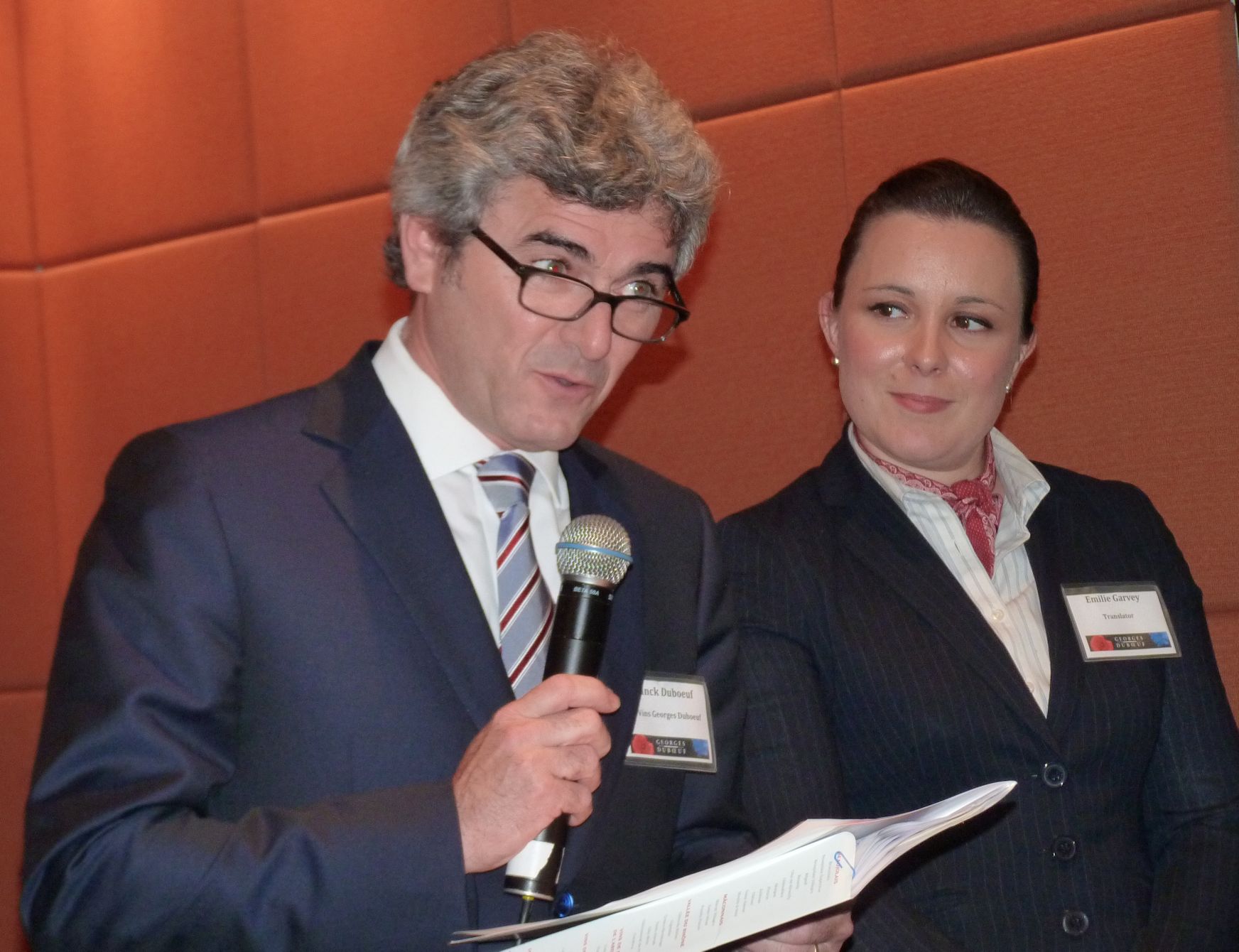
Georges Duboeuf opened the event with presentation of 2011 vintage. Here is my best effort transcript of what he said (remember, I’m not a professional journalist, I’m only pretending): “2011 was a great year. Budding started in April, then flowering started in June, and then harvest started August 22nd and lasted for two weeks. Some areas experienced periods of drought. Overall, grapes reached very good level of ripeness. 2005 and 2009 (considered best in a very long time) were good, but 2011 might be even a little bit better than 2009. Throughout the vintage, there are lots of black cherry and earthy notes.”

After Georges Duboeuf’s presentation, the first dish was served – “Legumes du Marche” – Young Garden Vegetables, Fromage Blanc Dressing, Lavender Honey Vinaigarette.
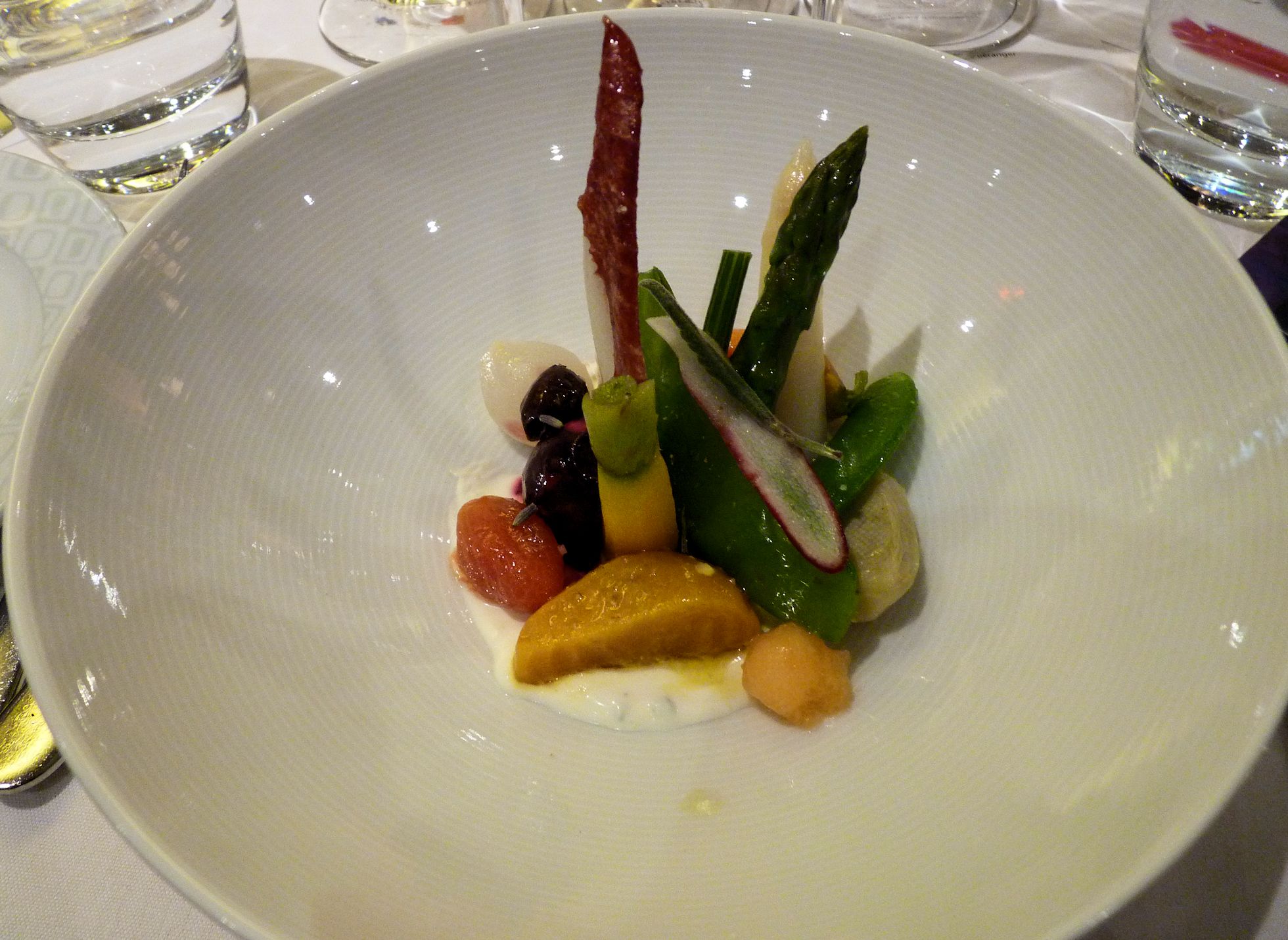
This dish was paired with 2011 Georges Duboeuf Beaujolais-Villages, and it worked together very well by wine complementing soft and earthy flavors of the vegetables.
Next, Frank Duboeuf presented two white wines, Macon-Villages and Pouilly-Fuisse (please see detailed note below). He said that 2011 was equally good year for both whites and the reds, which is a very rare situation. I didn’t take the detailed notes though, as I was preoccupied with parallel discussion at the table and delicious pairing of wine and food ( bad journalism : ( )
White wines were served with the next course, Seafood Risotto – Black Sea Bass, Scallops, Squids, Cockles, Fennel, Tomato Confit “Fumet” Emulsion.

Pouilly-Fuisse worked perfectly well with risotto, which was a unique experience for me. Creaminess of risotto cancelled out some sharpness of the chardonnay, creating next level of experience.
For the next course, Georges Duboeuf presented two red wines, Morgon and Julienas. He described Morgon as having “violet, cassis, kirsch on the nose, same flavors on the palate. A lot of structure. This wine will age very well”. Regarding Julienas, he said that “it is a very special wine, it has great personality. 2011 was a lot like 2009. This particular wine had the biggest success over the last 5-6 years. It was very critical to expand the vineyard (by 4 acres) for the success of this wine. This is a very noble wine with great aging potential. The wine was bottled a week before, right before the event”.
These two reds accompanied the last course of the meal – Duo of Beef – Braised Short Ribs, Beef Tenderloin, Spring Vegetables, Sauce Bordelaise.
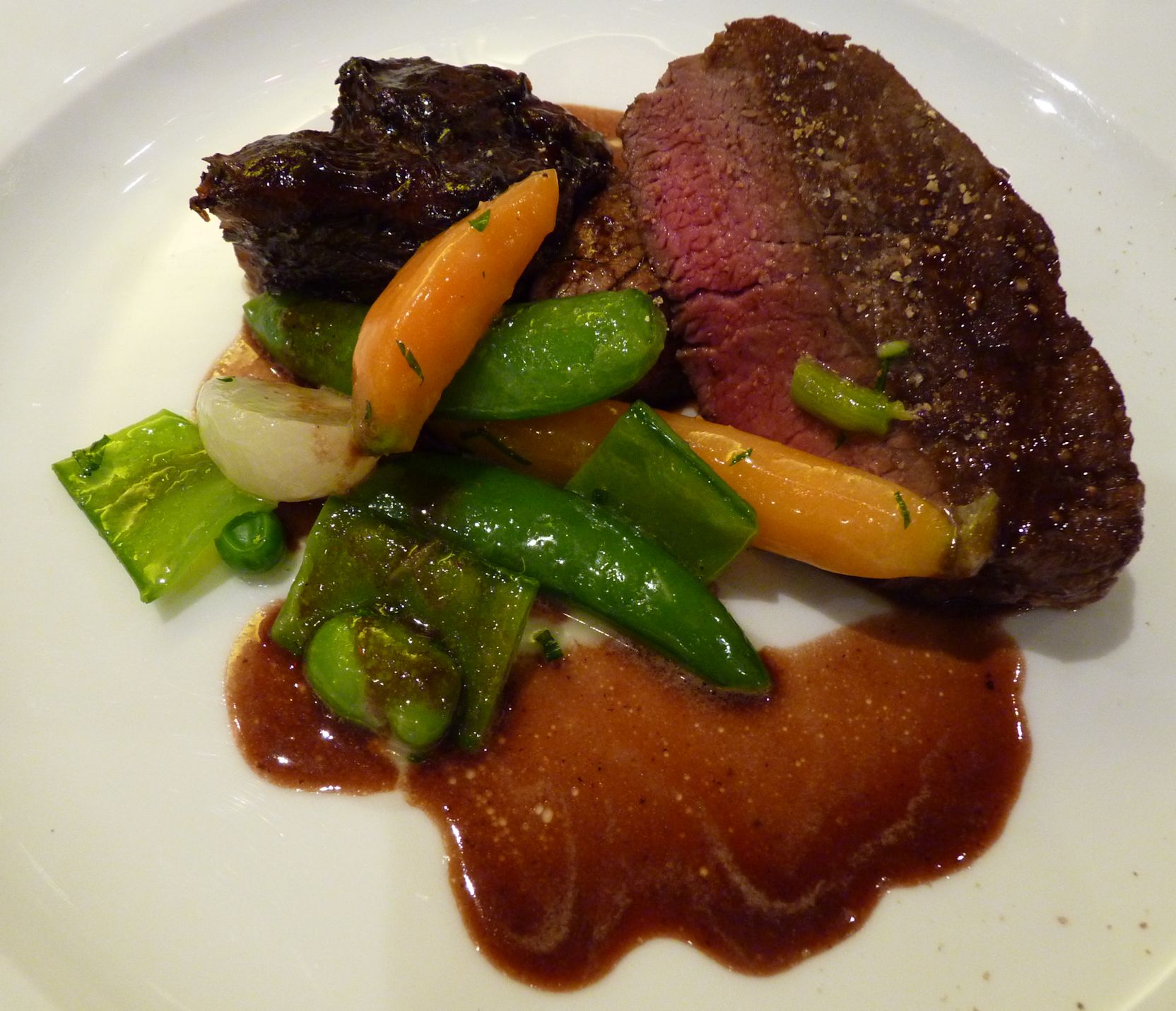
I have to tell that while both food and wine were delicious in its own right, they didn’t work together, so the pairing was not successful by not elevating the whole meal to the next level. But I also have to admit that both food and wine really didn’t bother each other too much – they were really two absolutely parallel experiences without a merge or a collision (which is often the case when wine and food don’t work together).
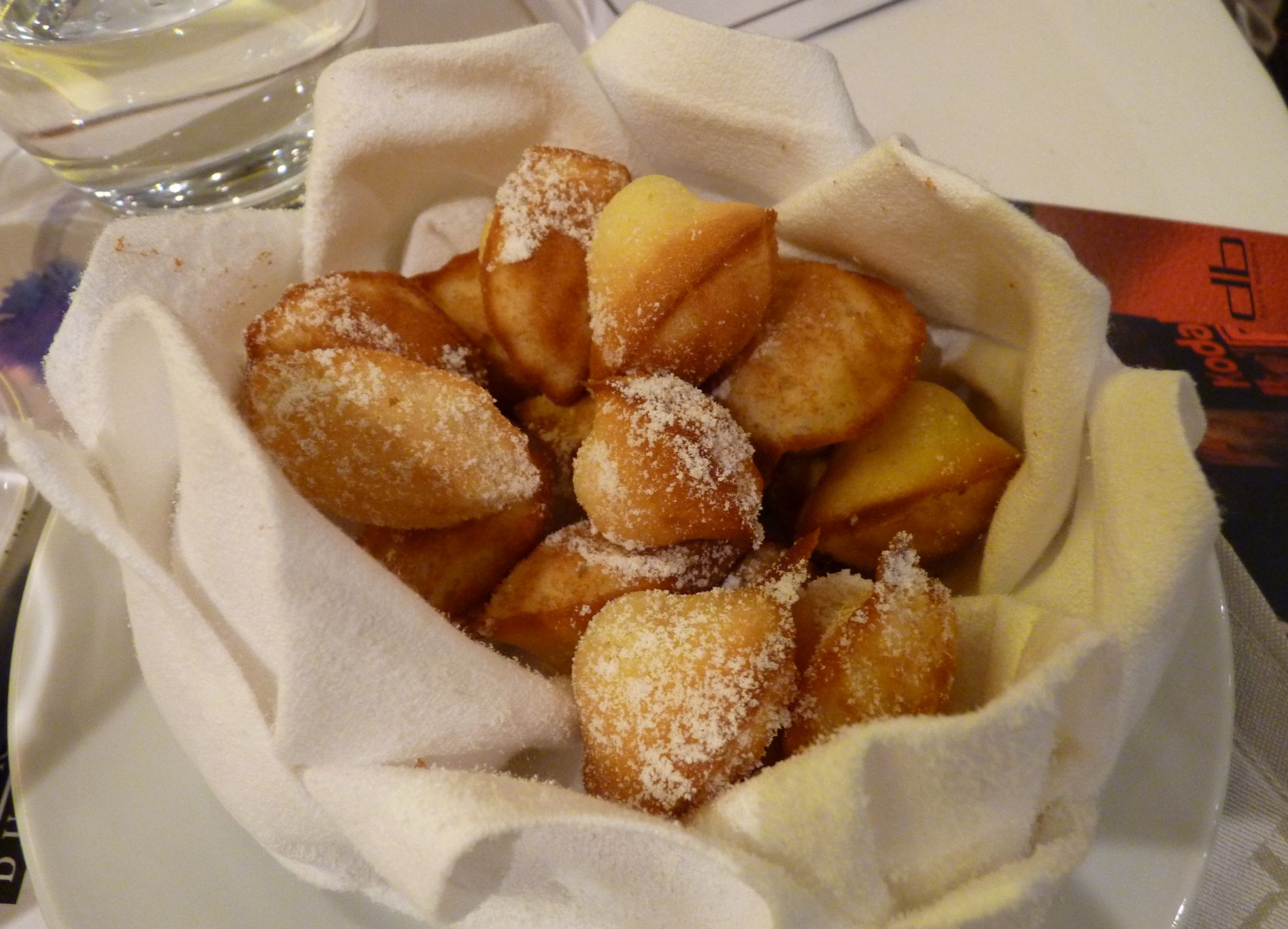
And then…there was a dessert, which was delicious and not paired with any wines (I also have no idea how this little cookies should be called, but it was very hard to stop eating them).
Here are the detailed notes for the wines:
2011 Georges Duboeuf Macon-Villages Domaine Les Chenevieres, Maconnaise, France (100% Chardonnay, SRP: $13.99, 12.5% ABV, 5000 cases produced) – Very nice, hint of hazelnut and citrus on the nose, good fruit, good balance, good acidity, hint of white apples, touch of vanilla and touch of oak on the palate. (Drinkability: 7+)
2011 Georges Duboeuf Pouilly-Fuisse Domaine Beranger, Maconnaise, France (100% Chardonnay, SRP: $17.99, 13% ABV, 3500 cases produced, 1200 imported) – this wine comes from the best area, the actual town of Pouilly-Fuisse. This wine had more pronounced chardonnay qualities than the previous wine – vanilla, touch of citrus and oak notes, excellent balance. (Drinkability: 8- )
2011 Georges Duboeuf Beaujolais-Villages, Beaujolais, France (100% Gamay, SRP: $9.99, 12.5% ABV) – very nice, good balance, a little tartness on the palate, but good overall. (Drinkability: 7)
2011 Georges Duboeuf Morgon, Domaine Jean Descombes, Beaujolais, France (100% Gamay, SRP: $15.99, 13% ABV) – good acidity, fresh fruit, light, soft, a bit too grapey to be great – but should improve with time. (Drinkability: 7)
2011 Georges Duboeuf Julienas Chateau des Capitans, Beaujolais, France (100% Gamay, SRP: $18.99, 14% ABV) – excellent depth, good power, good body, excellent balance. (Drinkability: 8)
All in all, it was one great event, both in the information and experience. Summer is still on, my friends – go find a bottle of Beaujolais to kick it off after a long day. And make an extra effort to find one of Georges Duboeuf wines – it will well worth it. Cheers!
Weekly Wine Quiz #20: How Much Does It Worth To You?
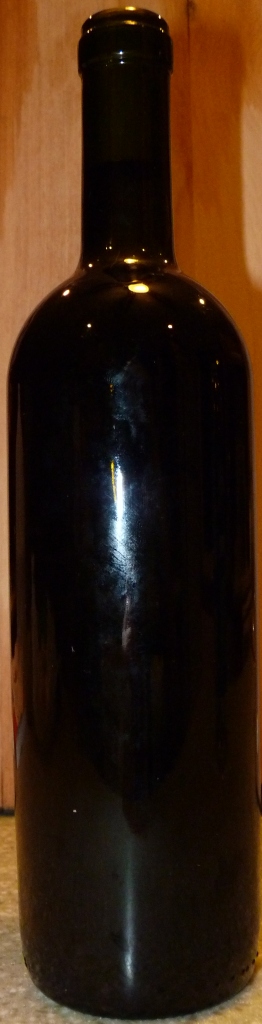 As you might remember, last week’s quiz was about numbers – quite large numbers, err – prices, I have to say. But if you think about it, those $168K are paid mostly for the bottle and not for the wine – you can acquire exact same wine for a tiniest fraction of that price.
Today, continuing the subject of wine and numbers, I want to talk about auctions, where for the most cases you actually pay for the wine. And while auctions take place all the time all over the world, this particular auction took place in France (mind you, not in Hong Kong or China), a little more than a year ago, and the buyer of the wine was French. He paid €57,000 for a bottle of wine, beating another (also a Frenchman) bidder in a tight battle (nobody expected that particular wine to fetch such price).
Assuming money is not an issue, which wine do you think was worth acquiring for that amount?
Have a great weekend! Cheers!
Wednesday’s Meritage
 And the brand new Wednesday is upon us – and here are [by now the usual] updates for you (by the way – let me know if you like this Wednesday mix, or if I better spend time on something else).
Let’s start with the answer for the Wine Quiz #19 – Wine as Facilitator of Art and Craft. I’m glad to see that my readers are well informed (or have an unfathomable capacity for guessing the right answers) – the price of the Penfolds Ampoule is expected to be set at around $168, 000 (in US dollars) and it will be presented in Moscow, Russia by Penfolds Chief Winemaker, Peter Gago – here is a link to an official press release.
In the “interesting news” department, let me share a few things with you.
- Wine Bloggers Conference 2012, also known as WBC12, will be taking place in about a month in Portland, Oregon (the dates are August 17-19). No, I will not be attending, but I still think this event is worth mentioning (well, may be one day I will convince myself…). In conjunction with WBC12, I would like to bring to your attention this post by Tom Wark in his Fermentation wine blog, where he is helping to collect money for Wine Bloggers Conference Scholarship Fund, which is then used to subsidize attendance of the WBC by individual bloggers (Tom is personally matching all donations for up to total of $500).
- The theme for Wine Blogging Wednesday #79 (Twitter: #WBW79) had being announced, and it is not a simple one in my opinion. This #WBW79 is hosted by BrixChiks, and the theme is “Summer Reading, Summer Wine” (here is the link to the announcement). You are supposed to answer one “simple” question – what would your favorite fiction character drink? I’m not sure if I’m up for the challenge, but – there is some time to think about it. This #WBW79 is taking place on Wednesday, July 25th – go get your book, and make sure your character is over 21 (hmmm, really, I just said that? Would that be necessary?).
- Last, but not least – the never ending debate about cheap wine versus expensive wine and consumers versus wine snobs, wine critics, wine ratings, twist, twist, another twist… just got a new twist in the form of an article in Forbes magazine and response from the wine critic Steve Heimoff in his blog. This is the subject of the endless debates, which I don’t want to casually enter (both sides are perfectly arguable and therefore it is a subject of endless debates without possible conclusion) – but I recommend that you will take a bit of time and read both articles and then … comment below! Let’s have the debate here – after all this is the blog for talking about wine, isn’t it?
This is the end of news and updates. Happy Wine [Whiskey] Wednesday, everyone. Cheers!
Crus of Beaujolais, Year 2011
(this self-rant doesn’t belong to this blog post, but I have to let it out of the system. I don’t understand how this works – this post was supposed to be out more than a month ago – the event was great, and the content was very clear in my head – nevertheless, it took soooo long to actually write it. Sometimes, the road from the head to the paper medium is all so twisty, not straight at all. The things are not what they appear… But I think we can proceed now.)
 When you hear the word “Beaujolais”, what is the first thing which comes to mind? Beaujolais Noveau? Yes, me too. At the same time, Beaujolais is a large wine producing region, in area much bigger than Burgundy which it is technically considered to be a part of. And of course there is a lot more wine produced in the Beaujolais region than just a Beaujolais Noveau, a celebratory wine of a new vintage.
At the beginning of June, I was lucky enough to be invited for the tasting of the 2011 portfolio of wines of Georges Deboeuf. Georges Deboeuf is one of the largest and well-known wine merchants in France. He is credited with literally single-handily creating the Beaujolais Noveau phenomenon and often is called the “King of Beaujolais”. I also think that his success with Beaujolais Noveau, both wine and celebration of the new vintage with pleasant but very simple grapey wine, appearing in the stores all over the world always on the third Thursday in November, is also an enemy of serious Beaujolais wines, which can be absolutely fantastic – but this can be a subject for a whole different post, so let’s talk about the portfolio tasting of 2011 Georges Duboeuf Beaujolais wines.
 No, wait. Before we talk about the wines presented in the tasting, let’s take a quick look at Beaujolais wine region. Beaujolais region is located to the south of Burgundy. Red wines constitute absolute majority of wine production in Beaujolais, and Gamay is pretty much the only grape used in the production of that red wine (with small plantings of Pinot Noir been phased out little by little). White wines are produced from Chardonnay with Aligote been also allowed, but overall production of white wines is miniscule. Three levels of wines are produced in Beaujolais – Beaujolais, which allows usage of the grapes from the whole appellation – these wine should generally be avoided; Beaujolais-Villages, which are better quality wines, and so called Cru wines (top level). There are 10 Crus in Beaujolais – Brouilly, Côte de Brouilly, Chénas, Chiroubles, Fleurie, Juliénas, Morgon, Moulin-à-Vent, Régnié and Saint-Amour. In general, Beaujolais wines are considered simple and easy (and thus work well with wide variety of food), and also have lesser aging potential than, for instance, the wines of neighboring Burgundy (however aging is usually defined by the talent of winemaker more than anything else). Now that you know all the theory of the Beaujolais wines, let’s talk about tasting.
The tasting was organized by CRT/Tanaka and I would like to thank Caroline Helper (@ForgetBurgundy) for invitation. The tasting took place at DB Bistro Moderne in Manhattan, and it was split into two parts – self-guided tasting of 12 different newly released wines from Georges Duboeuf portfolio (some wines on the list were denoted as barrel samples, as they were just bottled a week before the event), following by organized lunch. Little bites of food were served during the self-guided tasting, and I had an opportunity to try a famous Daniel Burger (with foie gras inside!) – and it was absolutely delicious.
Here I will share with you my notes from the self-guided tasting – description of the lunch, where both Georges and Frank Duboeuf presented their wines, will make up a separate post (ahh, I hope it will not take me another month to write it!). Of course I can’t leave you with just notes, so you will also see some pictures.
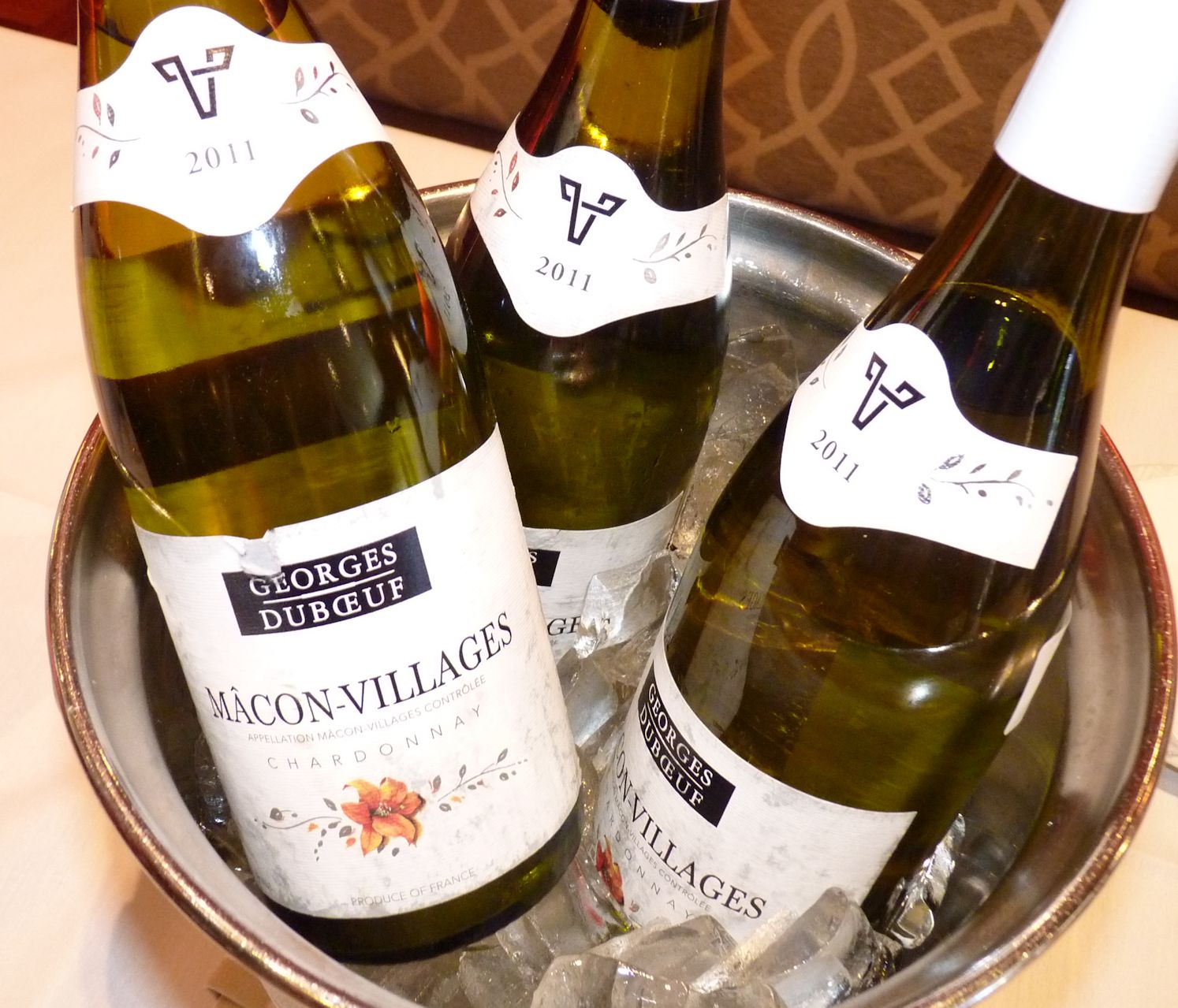
2010 Georges Duboeuf Macon-Villages, Maconnaise, France (100% Chardonnay, SRP: $12.99, 13% ABV) – Crisp acidity, interestingly nutty nose, hint of green apple, very mineral on the palate, with hint of limestone (Drinkability: 7)
2011 Georges Duboeuf Pouilly-Fuisse, Maconnais, France (100% Chardonnay, SRP: $19.99, 13% ABV) – green notes on the nose, lime zest, light, effervescent and crisp on the palate, with a hint of tropical fruit, very refreshing (Drinkability: 8- )
2011 Georges Duboeuf Beaujolais-Villages, Beaujolais, France (100% Gamay, SRP: $9.99, 12.5% ABV) – Fresh fruit nose, very tannic, more fruit and tannins on the palate, with tannins literally reaching Barolo levels. Needs time and may be different temperature (Drinkability: 6 at the moment, but this wine needs to be reassessed)
2011 Georges Duboeuf Chiroubles, Beaujolais, France (100% Gamay, SRP: $13.99, 13% ABV) – plums, acidity out of balance, tamed red fruit on the nose, tannins on the second taste (Drinkability: 6+)
2011 Georges Duboeuf Brouilly, Beaujolais, France (100% Gamay, SRP: $14.99, 13% ABV) – tart cherries on the nose and palate, more balance than the previous wine, but still lacking a bit (Drinkability: 7- )
2011 Georges Duboeuf Brouilly Chateau de Nervers, Beaujolais, France (100% Gamay, SRP: $15.99, 12.5% ABV) – closed, not balanced, all over the place – fruit, acidity, tannins are not harmonious (Drinkability: 6+)
2011 Georges Duboeuf Morgon, Beaujolais, France (100% Gamay, SRP: $14.99, 13% ABV) – very nice nose with open fruit, too dry on the palate, very tannic, needs more fruit (Drinkability: 7- )
2011 Georges Duboeuf Fleurie, Beaujolais, France (100% Gamay, SRP: $15.99, 13% ABV) – good fruit, ghood acidity, reasonably balanced (Drinkability: 7)

2011 Georges Duboeuf Fleurie Domaine des Quatre Vents Beaujolais, France (100% Gamay, SRP: $18.99, 13% ABV) – very nice! Round fruit on the nose and the palate, very good balance (Drinkability: 8- )
2011 Georges Duboeuf Julienas, Beaujolais, France (100% Gamay, SRP: $14.99, 13% ABV) – pleasant nose, good acidity, but fruit is closed (Drinkability: 7)
2011 Georges Duboeuf Moulin-a-Vent, Beaujolais, France (100% Gamay, SRP: $15.99, 13% ABV)- fresh fruit on the nose, lacks substance on the palate, needs more power – this wine is red like white (Drinkability: 7)
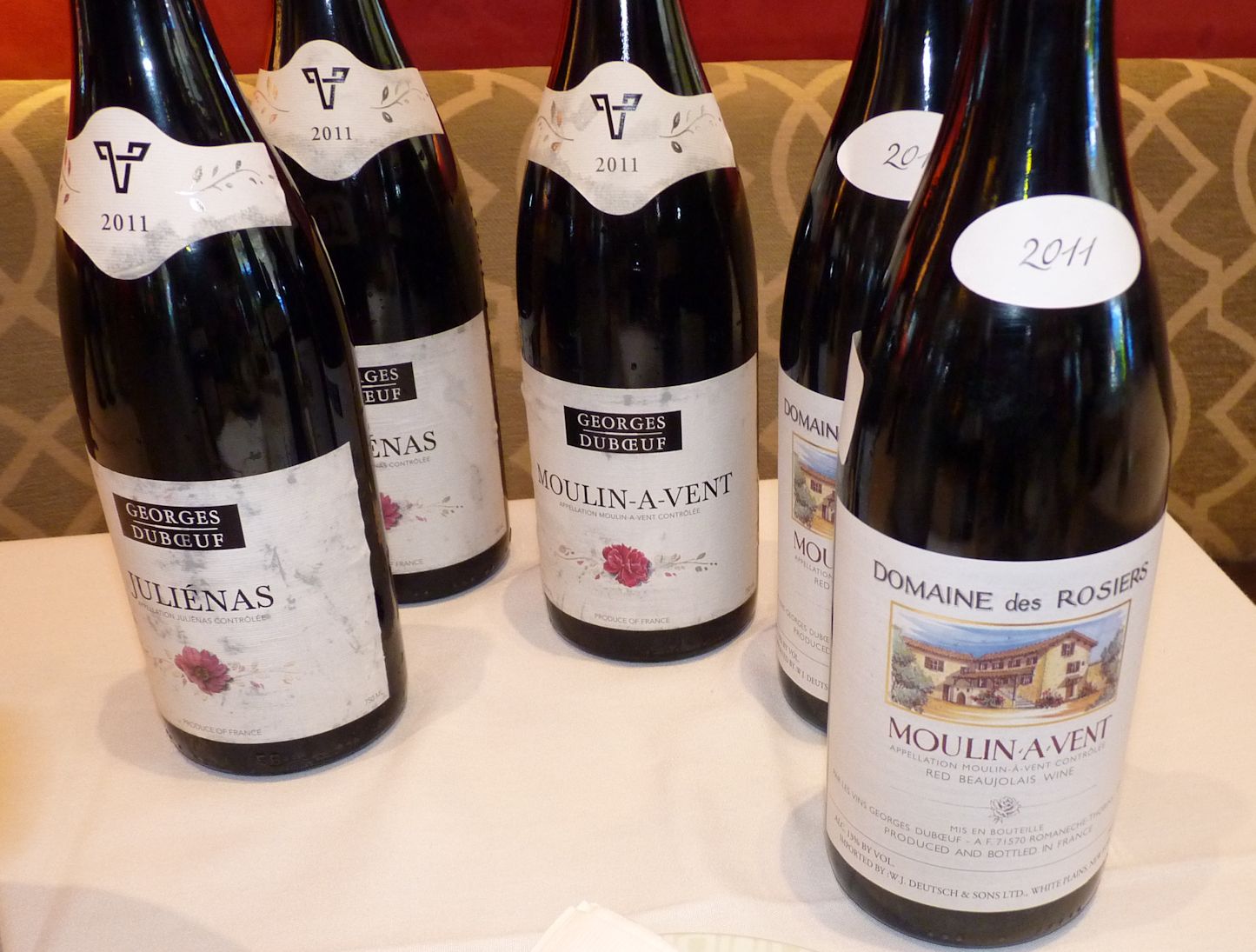
2011 Georges Duboeuf Moulin-a-Vent Domaine des Rosiers, Beaujolais, France (100% Gamay, SRP: $17.99, 13% ABV) – very nice, beautiful color, good fruit on the nose, hint of minerality and spices, good red fruit, plums and raspberries on the palate. Best of tasting. (Drinkability: 8- )
In the end of the day, all the wines were showing very well, and if you think about QPR, all the wines were great values. Make no mistake – some of these wines are in a very limited production (especially all the Domaine-denoted wines), so you will need to make an effort to find them. But – it worth the reward!
That’s all for my first part of the report, folks. Until the next time – cheers!
Weekly Wine Quiz #19: Wine, An Ultimate Facilitator of Art and Craft
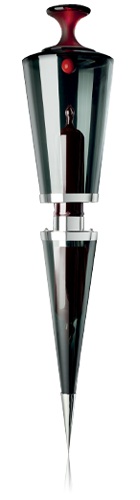 Last week, I learned something fascinating about the wine world. And why my first inclination was to share it with you in my Wednesday’s Meritage, I decided to make the wine quiz out of it first.
Take a look at the picture – what do you think it is? No, this is not a quiz yet. This is actually a very unique bottle of wine (there are only 12 produced, and we are talking bottles, not cases). This bottle is a result of collaboration of some of the best craftsmen and artists in Australia, and it holds the wine made by Penfolds and called 2004 Penfolds Block 42 Cabernet Sauvignon. This wine was produced only twice, in 1996 and 2004, and it comes from world’s oldest continuously-producing Cabernet Sauvignon vineyard. This Kalimna Vineyard was planted in 1885, 30 years after famous 1855 Bordeaux classification. I recommend that you will read the full story of this unique wine project, Penfolds Ampoule at this link – you will find all information about the wine, videos of making those 12 handmade bottles and more.
If you are lucky enough, you can buy the bottle of 2004 Penfolds Block 42 Cabernet Sauvignon (not the Ampoule, just the regular bottle) for about $600+. Penfolds Ampoule is available for sale now, directly from the winery – would you care to guess how much this Penfolds Ampoule would cost you should you choose to buy one?
Have fun! Cheers!
Wednesday’s Meritage: Happy Independence Day!
 First and foremost: Happy July 4th! It feels a bit strange when the holiday falls in a middle of the week, but still it is a nice break.
Now, here is the answer for the Wine Quiz #18 – Wine and Independence Day. It was great to see a variety of opinions, but the right answer is…Madeira! Now almost forgotten (but seemingly coming back, little by little) Madeira was the wine used to toast Declaration of Independence on July 4th, 1776. The great thing about Madeira is that it was made to easily withstand a sea voyage in the barrel, were the other wines would arrive in totally insipid condition. If you want to read a bit more about Madeira, here is the link for you. And I would actually recommend to take it further – if you haven’t had Madeira recently, find a good bottle (forget the cooking stuff, please, get the real thing) – you might discover something you will really like.
For the news updates, I have a few things for you. First, for the “local” news, I finally updated my blogroll to add all the blogs I mentioned in my recent post.
I also want to bring to your attention a special “wine day” holiday. It is not even a day – it is a month-long holiday! In one of his recent posts, NJVinoman mentioned that we need more wine holidays – so his wish is granted – July is The 31 Days Of German Riesling! Now you have 31 days to celebrate the light, refreshing and versatile wine, perfectly complementing any hot summer day.
Last but not least – in addition to The Generous Pour program I mentioned in the last news update, The Capital Grille announced the return of their $18 “Plates” lunch menu for the summer. Well, there is a fine print there – you should check if you local Capital Grille is actually participating in the program – you will find the list of location at the bottom of the link I just shared. But if your Capital Grille is listed – don’t miss it!
That’s all I have for you for today, folks. Let me know what you are going to open to celebrate July 4th (Madeira, may be?). Happy Independence Day! Cheers!
Wine Retail: Bottle King – Values All Around
 It’s been a while since I talked about wine stores in this blog, so may be it is time to tell you about another one of my favorite wine stores (here you can read about other stores from that same “wine stores to love” list – Cost Less Wine and PJ Wine). Today I want to bring to your attention a store in New Jersey called Bottle King – well, actually it is a group of 14 wine stores, all located in New Jersey, plus the online store called The Wine Buyer, so even if New Jersey is far away for you, you can enjoy great values.
The store I usually shop at is located in the town of Glen Rock in northern New Jersey, so this is the store I’m writing about. Bottle King sells everything from beer to wine and to all kinds of liquors, plus stores have a section called The Vineyard Market, where cheeses and such are sold. Interestingly [sadly] enough, wine stores in Connecticut are prohibited from selling of any of the food items – one day I will write a big rant blog post about stupidity of the laws and regulations we have around alcohol… one day. Anyway, let’s go back to the Bottle King wine stores. For me the major feature of the store is wine – but liquors section shouldn’t be ignored, as while it is on the smaller side, the selection, variety and prices are quite good (not that you can really see it in the photo below, but I tried).
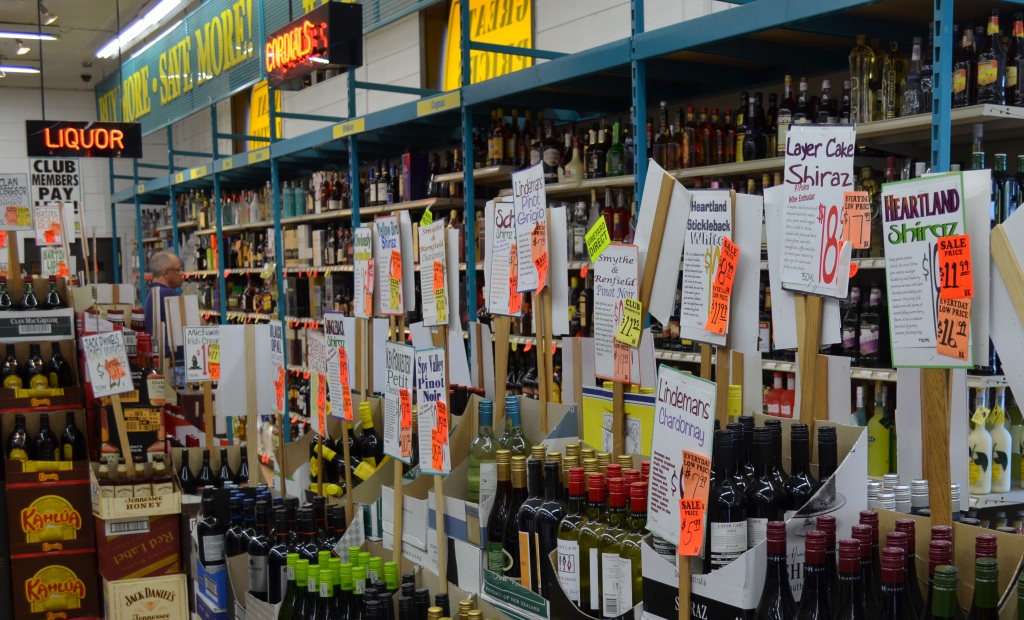
The whole store can be essentially described in one word – value. In any department, there are always lots of great values to be found. Also the concept of “value” is delivered on multiple levels.
First, Bottle King runs loyalty program called “BK Club”. The program is free and easy to sign up for. Once you have a BK Club membership, all you need to do is to look for the special prices advertised for BK Club customers:
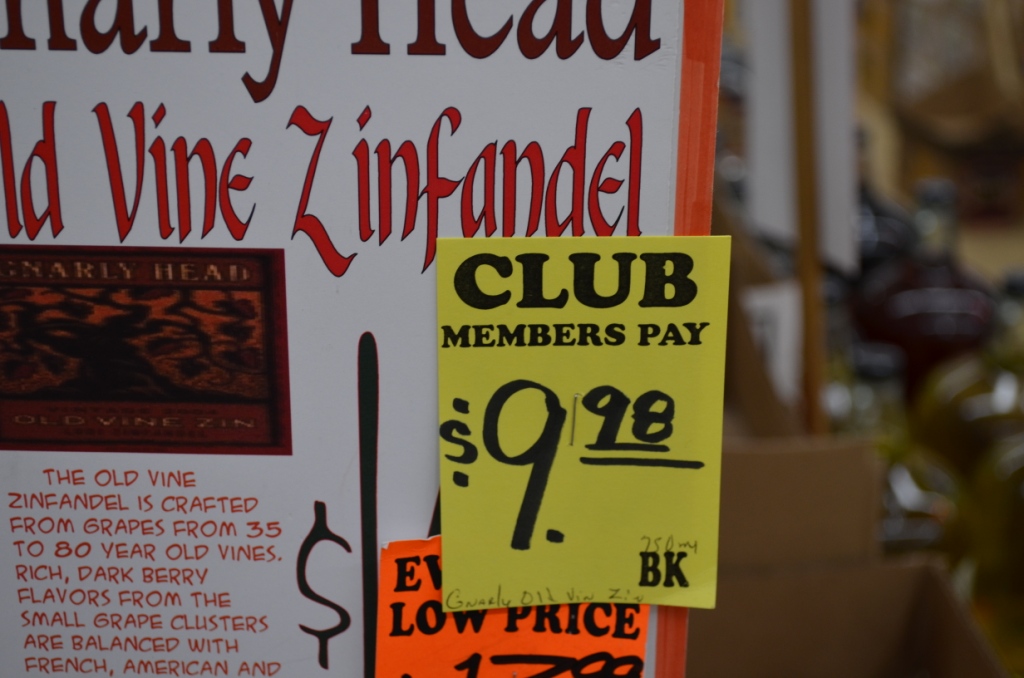
In addition to BK Club deals, there are always many wines on sale, and certain items might be even on “super-sale” which in a lot of cases represents really great buying opportunity. Last but not least, every time you buy a case of wine, there is 20% discount applied to all non-sale and non-club items (but those count towards the case).
Wine is mostly organized by the country, and then by the grape (depending on the size of the country’s section). If you are looking for the value, the section you want to be heading to is Portugal – it is one of the closest to the entrance and it is the section where I usually start my walk around.
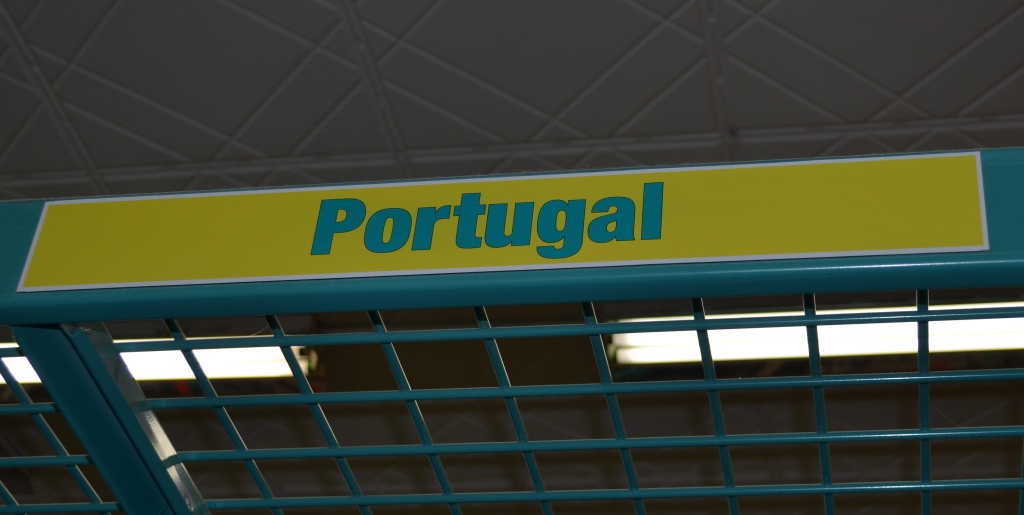
Here is a look at the shelf in that Portugal section:

Just to explain in more practical terms what I mean by value, here is an example of the wines you can find in that Portuguese section.
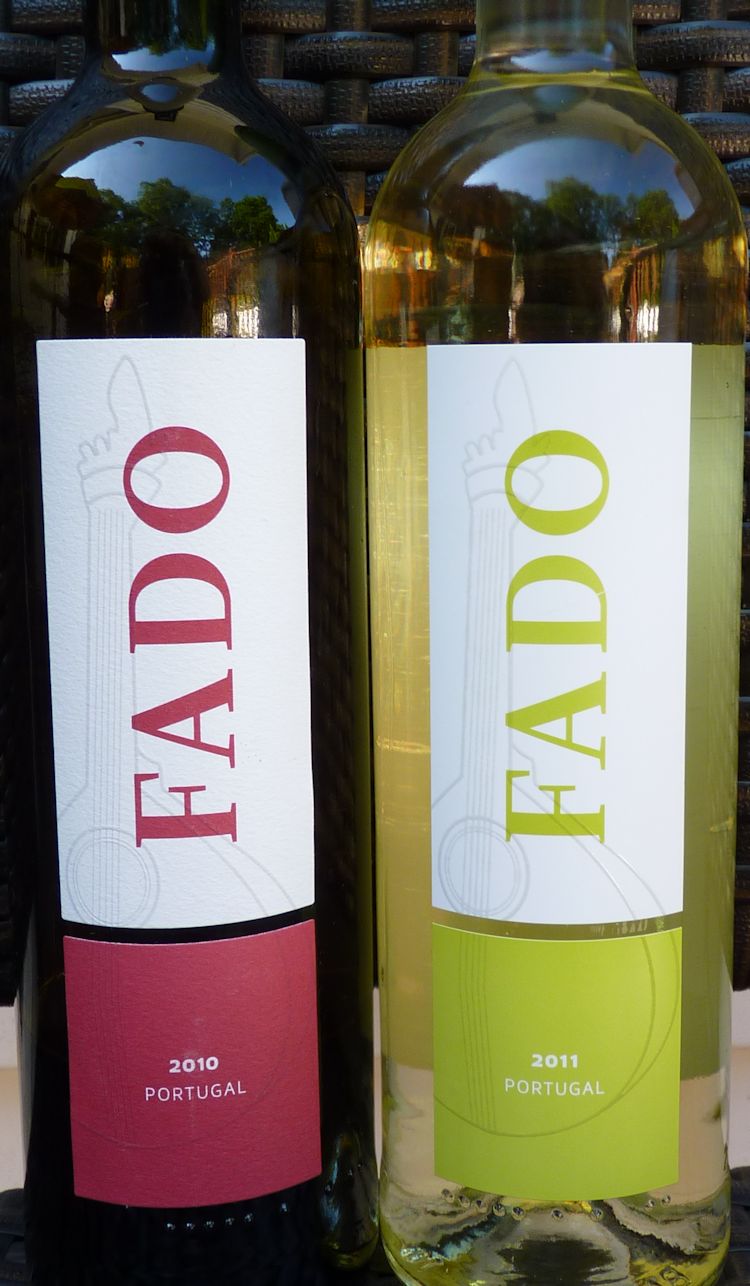 These two wines, made by Fado, cost $4.99 each. 2011 Fado White (13% ABV) has very nice nose with the hint of fresh-cut grass and fresh lemon – just a hint, it is not “in your face” wine. This continues on the palate, with light herbs and citrus notes, perfect acidity, round and balanced (Drinkability: 7+).
2010 Fado Red (13.5% ABV) has medium body, nice red fruit on the nose, more red fruit and again some herbaceous notes with some plums on the palate, soft tannins and good balancing acidity (Drinkability: 7+). Would either of these wines carry a label of France or California, you would gladly pay $20+ for them and still consider it to be a good value.
In addition to Portugal, the same shelf is shared by sparkling wines (not a bad selection, but mostly focused on mainstream France and Italy, lacking growers’ champagne, some of the artisan US sparklers, and also limited in Cava options). You can also find a few wines from South Africa and Greece, but literally only a few different bottles.
There is a decent choice of New Zealand and Australian wines. Spanish wines are underrepresented to my taste, but still have some good values from Rioja, Ribera del Duero, Priorat and so on.
California takes a very significant part of the store, sorted by variety, and of course having a lot of great values in every category.

France is really comes second after California in the amount of the shelf space it is occupying:

And there are plenty of values to be found in the French section:

France is focused on Bordeaux, Burgundy and Rhone, with addition of Languedoc and Loire – if you are looking for obscure Jura wine, this most likely will not be the place for you. Italy is closely trailing France in the amount of shelf space it is occupying, and has good representation of all main regions.
You will also have no problems finding wines from Chile and Argentina, as well as Port (lots of great selections, including super-discounted vintage port from time to time).
I can’t really comment on effectiveness of the service, as I had been offered help a few times, but always declined, as my strong preference is to browse the selection on my own terms, and I don’t really know sometimes what exactly I’m looking for (well, okay, I’m looking for the signs of super-sale and overall the amazingly priced wines, but please keep it a secret). I would love to see people at the cash register a bit more smiling and welcoming (send them for training to the Trader Joe’s, may be?), but hey, value can’t come without some expense, can it?
All in all, Bottle King stores are definitely worth a visit, even if you have to take a special trip – by the way, they are open tomorrow, July 4th, in case you got some time…
That’s all, folks. Cheers!
Last Bottle Sign Up ($10 credit)




 Talk-A-Vino