Archive
Tasting Series At Cost Less Wines – Part 1, Grown Up Champagne (Growers Champagne, It Is)
 Holidays are great (hmmm, that’s a deep and original thought, huh). On one side, life gets really hectic – too many things to do, and not enough time. On another side, it is a special time, and people do special things. Wine is important part of any celebration, so holiday times are rich with great wine experiences. Particularly, starting from last Thursday, there were different wine tastings at Cost Less Wines in Stamford, which will continue until the end of this week. And if you are looking for special experiences – you don’t want to miss any of them (I know, it is Monday already – but better to start late than never!).
Thursday was a special day for the Champagnes. Indisputable king of any celebration, and ten times so for the New Year – Champagne requires no introduction. There are many many other similar wines, which are called “sparkling wines” as a group – but this is not the subject of this blog post, as it was not the subject of the wine tasting. Talking about Champagne, a number of familiar names comes to mind – Moët & Chandon (makers of famous Dom Pérignon), Louis Roederer (makers of Cristal), Taittinger, Veuve Clicquot – but we will not be talking about them here.
As wine overall is getting more popular in US, year after year, more of the interesting wines are becoming available here. In regards to Champagne, there is a growing phenomenon called Growers Champagne. All the Champagne names mentioned above belong to so called Champagne Houses. Champagne Houses do not grow their own grapes – they source their grapes from the whole Champagne region, and then blend the grapes to achieve particular taste profile, specific for each individual House. When it comes to the Growers Champagne, all the grapes are by the winery, which then makes the Champagne wine – only 5% of the grapes can come from outside to be eligible for “Growers Champagnes” designation. Growers Champagnes had being around from the beginning of actual commercial Champagnes, but only in the last 5 years or so, such wines became known in the United States. Before we talk about tasting, just one last note – you can recognize Growers Champagne by initials RM, which stands for Récoltant-Manipulant, which can be found on the label. Traditional Champagnes are typically designated as NM, Négociant-Manipulant. If you want to read more on the subject – wikipedia, as usual, provides great wealth of information.
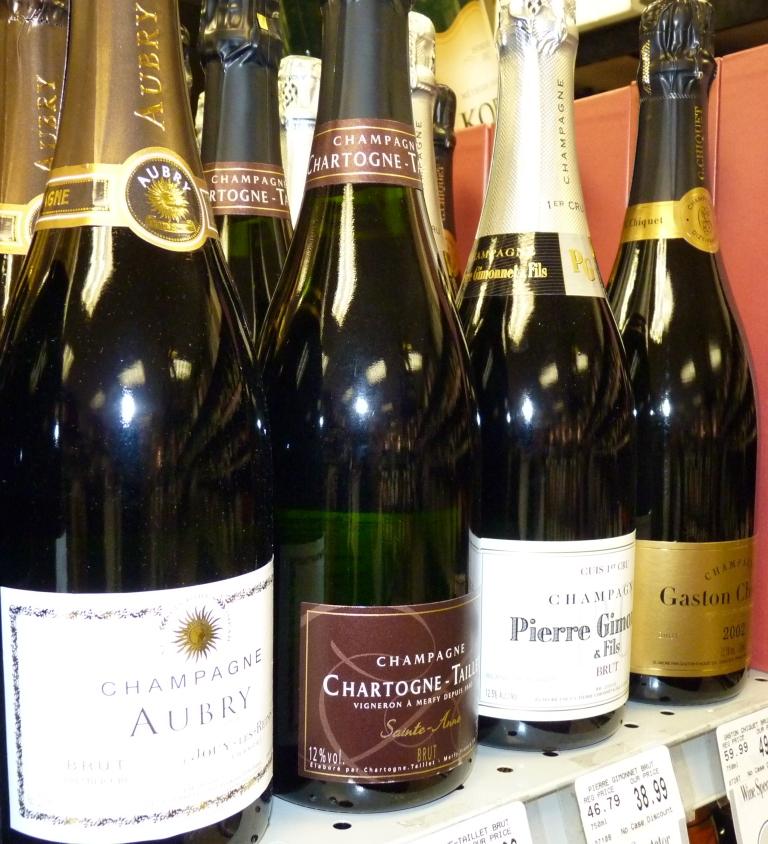
Let’s talk about the tasting. There were 4 Growers Champagnes represented in the tasting: Chateau Aubry, Chateau Chartogne – Taillet Saint-Anne, Champagne Pierre Gimonnet & Fils and Champagne  Gastone Chiquet 2002. The first one, Chateau Aubry was a bit all over the place – yes, it was sparkling wine, but I didn’t get much pleasure out of it. The next 3 delivered different experience. Chateau Chartogne – Taillet had nice yeasty nose and aromas of brioche and fresh bread. Chateau Pierre Gimonnet had nice clean nose and good refreshing acidity – totally different ffrom the previous one, it was still warmly inviting and asking to take another sip.
The best in tasting, however, was Chateau Gaston Chiquet 2002, the only vintage champagne in this tasting. Light and effervescent, medium to full body wine, showing its pedigree with aromas and taste of apples and fresh bread – definitely very nice bubbly (should we also mention great QPR at $50/bottle?).
Great wines, great experience. It would be very interesting to compare the Growers Champagnes with the other sparkling wines – I’m sure you can see the the blind tasting working its way in here. But don’t wait for me – experiment, try something new – find the bottle of Growers Champagne and tell me if it will brighten your Holidays. And just to give you a hint – we are traveling from France to Scotland with the next post…
Treble Journey Update – Advancing Into The Last Ten (#283 – #291)
 When I restarted my Wine Century Club crazy grape adventure in the May of this year, I had no idea how long will it take to get from about 200 grapes (was not so easy to get even there, trust me) to the 300 grapes, which are required to achieve Treble level.
I started documenting the journey from Doppel to the Treble level with one of the very first posts in this blog. On July 20th, I was talking about grape number 240. It is middle December now, and I’m crossing into the last ten. The last advance, from #283 to the #291 was mostly made due to the Georgian wines, where a lot of authentic grapes are used. So in no particular order, the latest group includes the following grapes:
Kisi – from very nice white wine Marani Kondoli Mtsvane Kisi 2008, Georgia
Mujuretuli – red grape used in the famous Georgian wine called Khvanchkara
Aladasturi – red grape used in another Georgian wine, Alaverdi Me and You 2002, Kakheti – nice and round wine
Tsolikauri – white grape used in Georgian wine called Tvishi (Teliani Valley Tvishi 2005) – the wine was surprisingly good, with a hint of sweetness, good fruit and acidity
Tsitska and Chinebuli – white grapes used in the Bagrationi sparking wine I wrote about in my previous post.
In addition to these Georgian grapes, two more wines added 3 grapes:
Picolit and Malvasia Istriana – used in white Italian wine Jermann Vintage Tunina 2006. This was one of the most unusual white wines I ever tried, full bodied, with the tart fruit expression and pronounced sense of place.
Roter Veltliner – white grape from Austria (wine was called Ecker Roter Veltliner 2008). I’m not sure I would be able to distinguish Roter Veltliner from Gruner Veltliner, but at the same time I never tried…
All together that brings us to the number 291. And to put the final target within the reach, more wines are waiting to be tried, which will add Coda di Volpe, Erbaluce, Portugieser, Ruche, Grolleau, Schiava and Pigato – you do the math.
So the fun journey continues, and I will make sure to report on it. As they say on the radio, stay tuned…
When Was The Last Time You Had Georgian Wine?
 Let me repeat the question – when was the last time you had wine from Georgia? I don’t mean one of the US states down south, I mean the Georgian Republic, the country bordering Russia in South Caucasus. I would expect that for some of you the answer will be “long time ago”, and for many others – never. And this is rather expected, but now is the time to change that.
Based on many sources, Georgia is regarded a birthplace of the winemaking. It is considered that winemaking in Europe goes back 5,000 years. Winemaking in Georgia seems to have a little edge over that with start at around 7,000 years ago. While we appreciate historical references, we are drinking the wines now, so the current state of affairs (I mean, of course, winemaking) is a lot more of interest.
Georgia’s wine industry had been through some rough times, starting with Prohibition attempt in former USSR during the 1980s. After Georgia became an independent country, there was a quick turnaround – for profit, it is. A lot of bad wines were produced in Georgia, and even more false Georgian wines were produced outside of it, to take advantage of historical value recognition of the Georgian wines. Luckily, as capitalism is taking hold in Georgia for good, there is a similar change in the Georgian winemaking, with honest people coming back to make honest wines and restore the “pride of the land”.
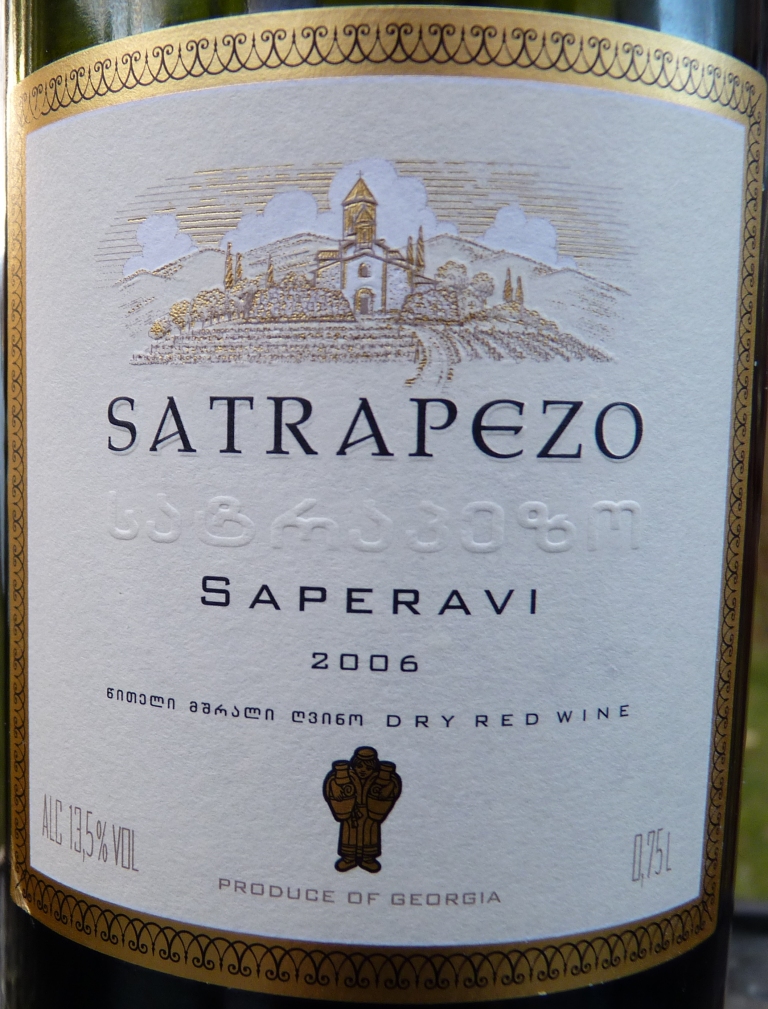
Seeing (oops, sorry, I meant tasting) is believing. Tasting the wine called Satrapezo, made from one of the Georgian authentic grapes, Saperavi, completely changed my perception of the Georgian wines, which I was definitely avoiding for a while. This wine is produced at the winery called Marani. Marani is really focused on making great wines, and it is showing in this flagship wine. Beautiful deep garnet color, layers of concentrated fruit (old world mature style, nice and gentle) and silky smooth tannins, balanced with good acidity and a very long finish. This is the wine to enjoy,…and enjoy, …and enjoy. In terms of Drinkability, this is definitely a 9.
 Another example was (totally unexpected to me) sparkling wine called Bagrationi. Made from three authentic grapes ( yay, Treble Journey advance!), Chinebuli, Tsitska, and Mtsvane, this wine had all the classic champagne traits – yeasty nose, hint of apples and fresh bread on the palate, dry and refreshing.
There are a lot more of Georgian wines to discover and enjoy. I’m glad to add Georgia to my personal wine map – and I highly recommend for you to do the same. Go find a bottle of Georgian wine and enjoy the results of 7,000 years of winemaking history!
What Are [The World’s] Your Best Wines?
 This post was prompted by a Share and question posted on Facebook by my dear friend Kfir Pravda. He shared an article from The Art Of Life magazine titled “Some of the World’s Best Wines“. As I skimmed through the article, the very first feeling which came up was … anger. Anger is a very bad adviser, and in the most of the cases people regret the actions taken while angry. If you are angry, the best thing to do is to do NOTHING, and this is pretty much what I did – well, to be more precise, I promised to write a blog post on the subject, so here we go. Warning: this will be most likely long and mumbling post, more of thinking out loud in search for a truth which might not exist – if you are not in the mood for that, you should probably stop reading right now.
All the feeling aside, let me just explain what triggered the initial negative reaction. The article presents the list of “some of the best wines in the world” – all the wines cost in excess of $350 per bottle (with two exceptions), and many cost more than $1000 per bottle. All the wines except one come from France (one is from Germany). Last thing – I’m missing the logic behind the selection of the particular group of wines with designation of being “some of the best in the world” – if such claims are made, it is always good to see a logic behind it. With so many amazing and rare wines coming from all corners of the world, the top list must include the wines from Italy, Spain, Portugal, US and Australia, as a bare minimum.
Taking it one step further we can come up with an interesting question – is there a such thing as “best wine in the world”? Or even can there be such thing as “best wine in the world”? Yes, we like to designate objects to be “the best in the world”. Why is that done? I guess we need something to aspire to, something to adore, something to be moved by. It is also gives us something we want to experience – somehow, one day, yes, that would be great. When it comes to many “best in the world” things, such as art, architecture and places in general (like mount Everest), chances of “experience” are quite decent. We can experience such things ourselves – no, not own that Picasso painting, but to see it and to be as close to it as we want to at the art exhibit, for instance, or we can travel to Paris and take a tour of Eiffel Tower. If nothing else works, we can read a book or watch a movie – if good, this will bring us fullest possible experience of object of our desire, “the best in the world”.
When it comes to wine, it gets a little tricky. To begin with, I mentioned in a number of posts the definition of a good wine – in the words of Kevin Zraly, “the one which will give you pleasure”. How much pleasure can you get from reading the description of the wine, even if the wine is designated as best in the world and it is very expensive. Yes, from reading the description I can appreciate the fact that someone else thinks that this wine has a flavor of black currant, and that it costs more per bottle that trip to Paris to see Eiffel Tower, including cost of the meals – I don’t know about you, but I don’t get that much pleasure from reading about particular wine as from actually tasting it. Tasting of many “best in the world” wines will be difficult at best, due to the price and sheer availability of those wines. Therefore, the whole concept of “best in the world” is very challenging when it comes to wine (I’m sure it is true for the food in general). Let’s call the wine amazing, outrageous, unbelievable, divine, incredible, “to die for”, “a must try” (ok, enough, you got the point), but not “the best in the world”. Remember, the one which gives you pleasure – it is your own, personal, individual palate we are talking about. If we are to conduct wine tasting, with inclusion of the supposedly “best in the world” wines, but fully blind (you taste the wine without any information regarding what can it be), I wonder how “best in the world” wines would rate… I can bet that in a lot of cases they will not be even designated as “best in the tasting”, as tasting wines blind brings out ultimate truth – I mean your personal version of it.
So, what do you think, should the concept of “best in the world” be applicable to wine? I think the answer is no for the most of the cases (well, I will give it a benefit of a doubt, may be there one wine which is actually the best in the world, the one which I will never try…) For me, someone’s “favorite wines list” concept works a lot better – as long as I trust that “someone”. The someone can be magazine, like Wine Spectator or Wine Advocate, wine store owner, a wine writer or a blogger or your friend – all you need to establish is how your palates align, and then you are on the road to have fun with every bottle you open. Or not – in which case let’s just hope that you didn’t pay the price of “best in the world wine”…
Well, now, please tell me – what wine is the best in your world?
Swiss Wines and Treble Journey Advance (#278 – #282)
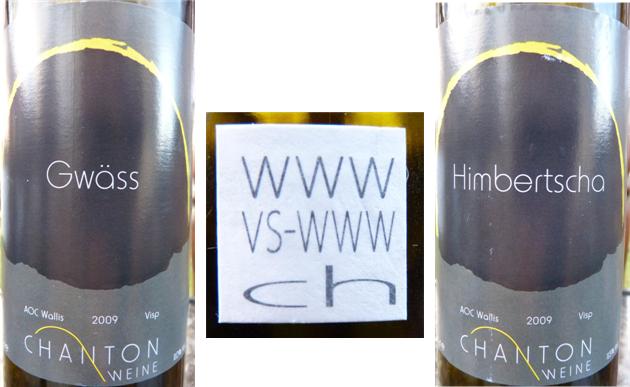 Last couple of weeks brought a breakthrough in the Treble Journey with adding 11 new grapes, plus 5 more grapes available for tasting. The Treble 300 looks a lot more within the reach than before.
This breakthrough was mainly made with Swiss and Georgian grapes – and I would like to cover each group individually.
It is very difficult to find Swiss wines in US, so it really helps to have friends in the right places. I had an opportunity to try this quite unique wines with the help of my friend Patrick, who once again brought me a few bottles.
All the wines came from Chanton Visp in the region called Wallis. All three grapes are in the very scarce supply in Switzerland and the wines have very limited production. The first white wine was made from the grape called Gwass. Very dry and almost expressionless (I would call it bone-dry, but without acidity), this wine worked quite well with various Swiss cheeses which were accompanying our tasting.
Second white wine was made from the grape called Himbertscha. This wine was very different from the first one, with good tropical fruit expression on the palate, but without any unpleasant sweetness. Very nice and balanced, it would be perfect wine for the summer day (minor problem – good luck finding this wine in US). I would put drinkability of this wine at 8.
Last but not least in this group was red wine made out of grape called Eyholzer Roter. It is interesting to note minimalistic approach in labeling of this wine – the label is a tiny piece of paper ( half- an-inch by half-an -inch) with web address on it, and even more, this is web site of the ISP, and not of the winery itself. Despite the strange labeling, the wine was absolutely gorgeous – smooth and very playful, with perfect balance of tannins, fruit, earth and acidity, very easily drinkable (bottle ended too fast for some unknown reason…). This was definitely an 8+ wine – and needless to say that I would be very happy to find this wine in US…
Two more grapes are in the mix here. One is a white grape called Avesso, and it was a part of the blend in Portuguese wine called Famega Vinho Verde – simple summer wine with good acidity (it was begging for seafood). Another one was red grape called Monemvasia, which was part of the blend in the wine from Greece called Paros Moraitis Reserve 2006 – bone dry red wine, with some hint of fruit, and very pleasant overall – I would dare to say that this was if not The best, then at least one of the best Greek red wines I ever tried.
Five new wines, five new grapes, and getting closer to the Treble status.
But – it is the time to conclude the Treble Journey report for now, and Georgian wines will be next.
Most Unusual Wine
 Last Saturday I stopped by Cost Less Wines and Liquors in Stamford. This is almost the routine stop for me, as every Friday and Saturday there is a wine tasting in the store, and as I’m sure you know by now, wine tastings offer opportunity to experience difference wines and learn from that experience (and such wine tastings are usually free!).
Four wines were open on that Saturday night – one Champagne and 3 red wines. The Champagne was Nicolas Feuillatte Brut Reserve, very simple and elegant, with nose of yeast and apples (may I add it is very reasonably priced too?). Then there were three reds. First one was Chateau Lafleur Gazin Pomerol 2004, one of the properties managed by venerable Christian Moueix, owner of Chateau Petrus (one of the world’s most famous and equally expensive wines). This was a typical Bordeaux wine, with good fruit and unmistakable earthiness, or terroir as it should be called properly.
The next wine was one of my favorite California Cabernets – Neyers Napa Valley Cabernet Sauvignon 2003, bristling with black currant and eucalyptus flavors, very nice and balanced wine.
All three wines I mentioned were good – but rather typical. And yet the title of this post promised “most unusual wine”. This leaves us with the wine number 4 to be the most unusual wine, right?
 Yes, and unusual it was! Ceretto Monsordo 1998 from Langhe DOC. Wines produced in that area of Italy are typically single grape varieties – I’m talking about Barolo and Barbaresco, made out of grape called Nebbiolo. Ceretto Monsordo is a blend of Cabernet Sauvignon, Merlot, Syrah and Nebbiolo, but it is only a tiny step towards “unusual”.
What makes me say that it was the most unusual wine (for me, of course – all the experiences are personal)? My reaction to the very first sip was: this is how liquid steak should taste like. While fruits, tannins and acidity are definitely present in good balance in this wine, the main sensation is savory, as piece of good steak, grilled with enough spices on it. Yes, the flavor can be described as earth, tobacco, pepper and smoke, but such a description will not fully convey the sensation of having a sip of that wine in the mouth.
Am I getting too excited? May be. As I said, the experiences are personal. All I can tell you is that you should try to find that wine to have first hand experience with it – and I will be glad to compare notes later on.
But – this begs the question: what is your Most Unusual Wine?
Thanksgiving Wine Pairings
 As promised, this is follow up post to compare Thanksgiving expectations with experiences.
When it comes to the food, the star of our table was dish called Turducken. First time I read about turducken in the late nineties in the Wall Street Journal. Since then we made it a few times for Thanksgiving. The dish is somewhat labor-intense, but absolutely delicious when done right. The word turducken comes from the fact that the dish consists of partially deboned turkey, with fully deboned duck going inside of turkey, and then deboned chicken going inside of a duck. The idea of enclosing birds into each other during cooking is not new, it had being done in Europe for centuries. Turducken specifically is considered to be originated in New Orleans – and one of most popular cooking styles for it is Cajun.
The process of preparation starts from deboning of chicken, duck and then turkey (turkey is only partially deboned with legs and wings left untouched). Next very important step is brining. As critical as it is for smoking, brining helps to retain the moisture in the meat during long cooking time. Brining typically takes 12 hours, so you need to plan your time accordingly.
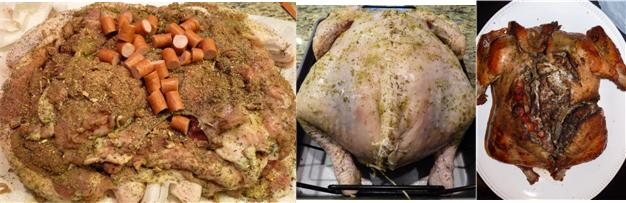
After brining, the process of preparation starts from laying down the turkey, adding spices (or stuffing) on top, then putting in the duck, repeat spices again and then chicken, plus you can put any desired stuffing as the last layer (we used smoked sausages in our case). The next step is to sew the turkey together and place it in the oven for about 5 – 6 hours. The resulting bird is very moist and flavorful, and – may I add – very easy to carve.
So what about wine? Turducken and all the side dishes, such as yams, pumpkin and wild rice stuffing, are very flavorful, so it is hard to tell apriori which wine will work the best – therefore it is an opportunity to experiment. We tried Joseph Drouhin Beaujolais Nouveau – this wine was completely lost next to turducken. Next one was Claraval, Spanish Grenache/Tempranillo blend – this wine well complemented the variety of flavors.
 The winner was Serradenari Barolo 2005. It was decanted for 3 hours prior to the dinner (as always suggested for classic Barolos), and the wine showed beautiful layers of fruit and earth, which worked very well with turducken and other dishes at the table.
Of course we shouldn’t forget about desert. No, there was no pumpkin pie at the table. Yes, it is violation of the tradition, but when nobody likes the dish, it is hard to justify getting it on the table. Instead, Pecan pie is one of traditional staples of the sweet portion of our Thanksgiving dinners:
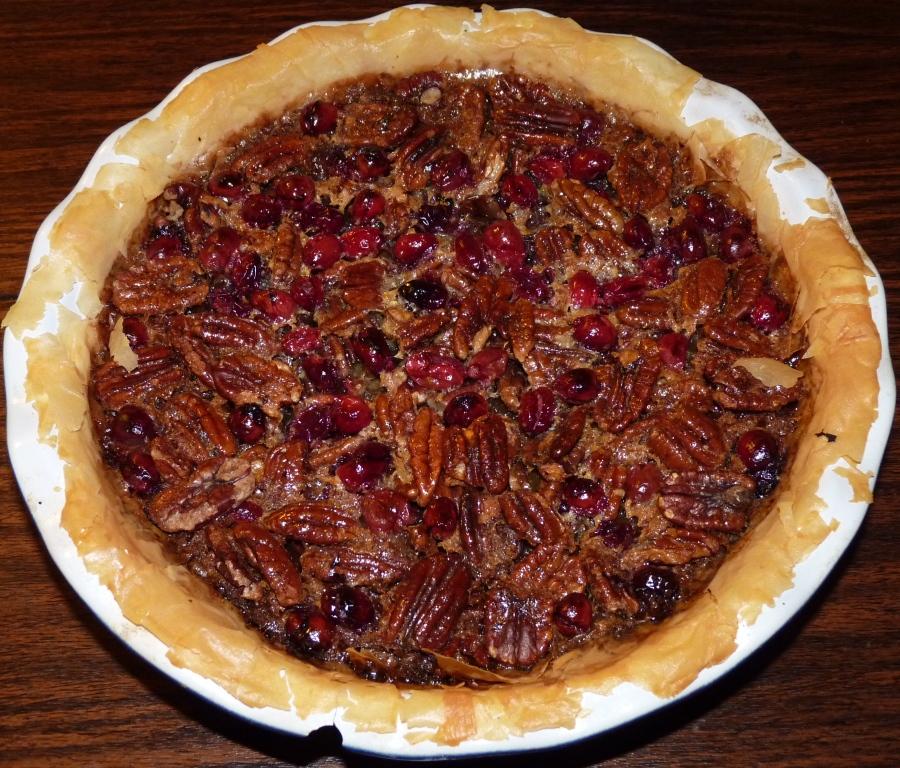 You are saying that coffee or tea would be the best match for such a dish? You are right, however, there are some exceptions here. We were lucky to have Rivesaltes 1936,
 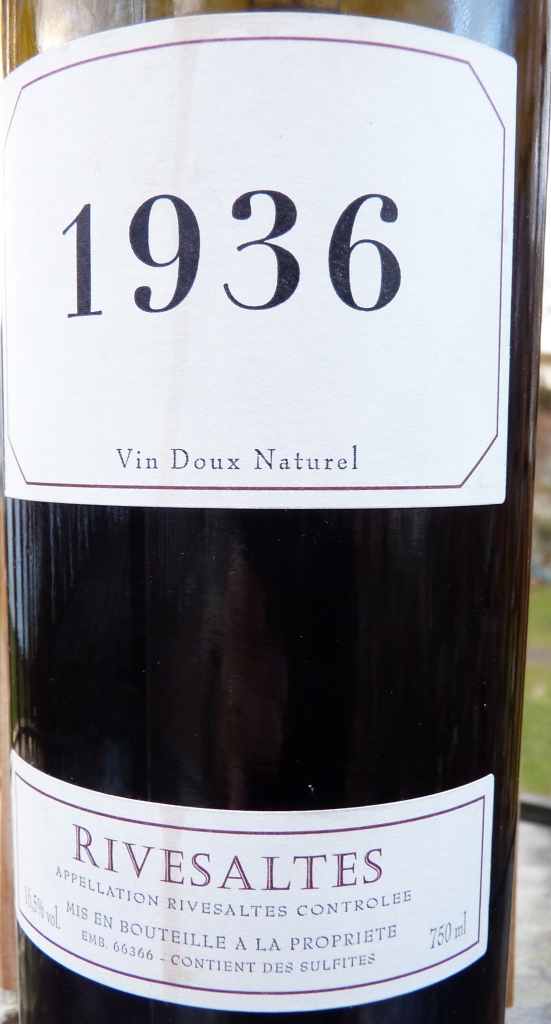 a desert wine produced in Roussillon region in South of France (courtesy of my friend Zak). This is a natural sweet wine, made out of Grenache grape and produced in the same style since 13th century. This wine has luscious layers of nuts, honey, cloves and other spices, without overpowering sweetness of many of the ice wines. It drinks as a very light wine (despite high alcohol content) and perfectly complements many different deserts.
So, I told you what was on our Thanksgiving table. Now, I would love to know what was your most memorable dish and wine?
Beaujolais Nouveau 2010 – Live Blog
 What’s up with the “live blog”? No, I don’t plan to show the live recording in the Gary V. style (for those unfamiliar with Gary V. – please go to the Wine Library TV site, I promise you will enjoy it). For all of my posts so far, I don’t write them at the same time as I taste the wine or visiting the restaurant. Yes, I might take some notes, but all of the writing is still done later on, mostly based on the memory (yes, I make an effort to memorize the experience).
However, today is a special day for many wine lovers across the globe. In the 1970s, the tradition started in France, in the appellation called Beaujolais, to celebrate the first wine produced from the harvest of the same year. What was the French national event in the 1970s, now became a worldwide celebration, which always takes place on the third Thursday in November, and today is the day.
Beaujolais red wines are made from the grape called Gamay, and the wines are produced in the style of the neighboring Burgundy (which are made from Pinot Noir), but typically are lighter and don’t age that well.
When it comes to the Beaujolais Nouveau, this wine is made in 6 weeks after the harvest, so it is really light and fruity wine which is not supposed to age (should be consumed by May of the following year). Also, similar to the Pinot Noir wines, Beaujolais wines should be served slightly chilled (about 55F).
Therefore, considering such a special day, I’m writing this blog as I actually try the wines, starting with the opening of the bottles – and this is why I called this blog “live”. I can also tell you that last year, even before I tried the wines from 2009, I read somewhere that they supposed to be very good wines, so I was already influenced as I was trying the wines (read my previous post if you are curious why is that). This year, I have no expectations whatsoever, except the knowledge that these are young wines and they will taste accordingly to the very young age.
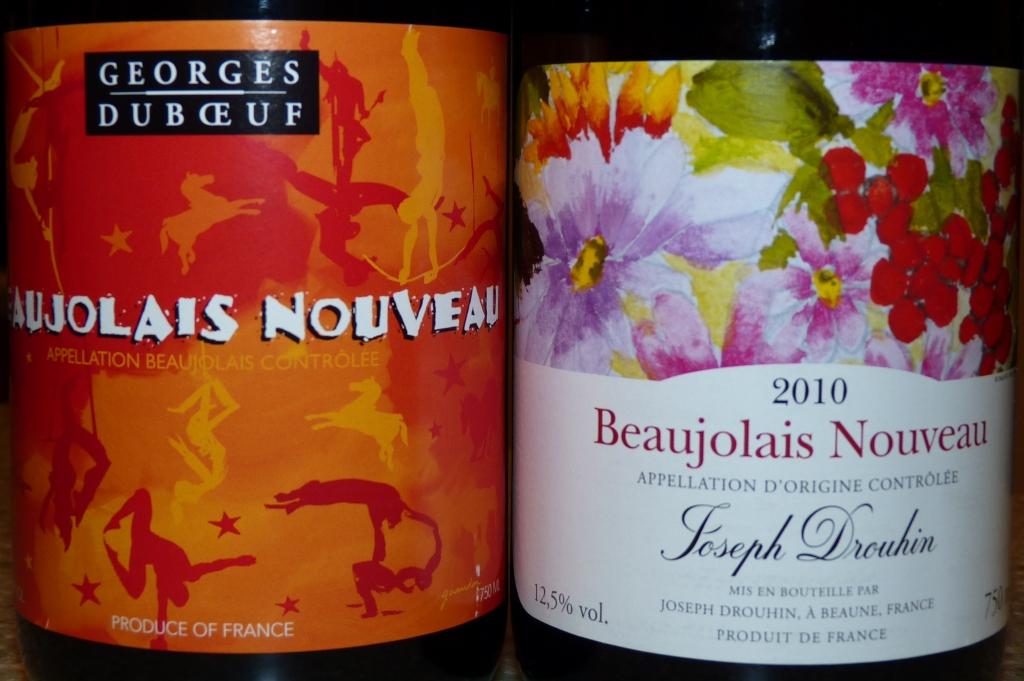
I decided to try Beaujolais Nouveau from two very famous French producers – Georges Duboeuf and Joseph Drouhin. The first producer, Joseph Drouhin used regular cork, and Duboeuf used synthetic one, both corks specifically imprinted for 2010 Beaujolais Nouveau. From the moment the bottles opened, Joseph Drouhin exhibited tremendous aroma of a fresh grape coming strongly right from the bottle, and for Duboeuf the same aroma was also noticeable, but less prominent. From here on, let’s diverge and talk about two wines separately.
Georges Duboeuf. Beautiful very intense dark garnet color. Nose is very solid, doesn’t have any off flavors which are common with very young wines. Cherries and raspberries are noticeable on the nose. With the first sip comes first surprise – the wine has very noticeable tannins. I don’t remember ever tasting the tannins in the Beaujolais Nouveau wines – wonder if this is the style of Duboeuf, but in any case that was a surprise – rather a good one, however. In addition to the cherries I can pick up some plums on the palate, all complemented by good acidity. This wine can be perfectly enjoyed by itself, but will also work very nicely with the wide range of lighter dishes or mild cheese. Considering the price of about $10 per bottle, this wine has great QPR.
Joseph Drouhin. The color is nearly identical – nice deep garnet. Nose is similar to Duboeuf, again without any off flavors. In addition to cherries I would say that there is a hint of strawberries, and again to my surprise, I would probably add a hint of white pepper to that bouquet, which is not something I would typically associate with Gamay grape. On the palate, I would dare to say that this wine has more flavor. I practically don’t pickup any tannins, but instead, there is a great amount of nice supple fruit (again, cherries, plums, raspberries) and very refreshing acidity – oops, and now tannins are coming in approximately 30-40 seconds after the sip of wine. Wow! If the first wine was good, this one is even better – and again, amazing QPR at $11/bottle.
Well, what can I tell you? There is a general sentiment among wine industry professionals that quality of the wines is becoming better and better every year. Tasting these two wines today, I can not agree more. I clearly remember a number of years ago tasting Beaujolais Nouveau with the only one afterthought – “please, I don’t want to ever touch this wine again, and… is it okay to pour the rest of this bottle down the drain?”. My experience this year is totally different. These wines are excellent, and if you didn’t do it yet, you have to go and buy a few bottles… and enjoy! In terms of drinkability, I would rate Duboeuf at 8-, and Drouhin at 8. And, yes, I know it is late, but I need another glass…
Taste Of Wine – Engineering Approach
 You might be baffled by the title of this post, but I promise to explain. I even expect that it will make sense in the end and will not be boring. No, this post will not be talking about kinds of machinery necessary to properly taste wine. Wine, in its seeming simplicity, has a mystic aura surrounding it. Perceived taste of wine is definitely one of the areas where mystery of wine unfolds – and this is what I want to discuss.
Quite frankly, blog post by W. Blake Gray “Why expensive wines taste better: Psychology 101” prompted me to think about subject of taste of wine, and the factors which affect the perceived taste. Being a computer engineer by education, I like to use an orderly approach when a phenomena needs to be analyzed. But wine has nothing to do with computer engineering you contend? True, but it doesn’t mean that we can’t use some interesting tools to put the thoughts in order. As a side note, I want to mention that I have experience successfully using engineer approach in totally non-engineering subjects – in college, together with my friend Alexander (Sasha) we converted whole semester course of philosophy into block-charts, one night before exam. It worked!
Please relax – there will be no block-charts or algorithms in this post. For putting the thoughts in order I would like to use tool from the Mind Mapping category, called FreeMind – you can find it on internet, and if not – send me a message and I will help. This tool allows you to put your thoughts in order, and then do the analysis. How? Let’s see. So here is the group of factors which affect the perceived taste of wine (good/bad, tasty/disguising and so on): Organoleptic (smell, color, taste and so on), Tools which can alter the taste, Expectations and Environment – note, that these are only my thoughts, though. Here is the same – but in the format of the mind map:

What are this “Expectations”, or what does “Environment” means, and do I include screwdriver into the “Tools” and why, you may ask? Let’s add one more level of details and then talk about it. So here is the expanded picture:

Now, there is a lot more we can talk about. Let’s start with expectations. There is a lot of factors which might influence our opinion about the wine by setting our expectations prior to opening the bottle. Do Ratings affect perceived taste of wine? You bet! “Robert Parker gave this wine 97 rating, I’m sure it should taste amazing”. “This wine is rated at 95 by Wine Spectator – I’m sure it will taste great!”. And then it does not – for you personally, it doesn’t. And there is nothing wrong with you – may be you are just in bad mood, or may be this magnificent Cabernet Sauvignon from Napa Valley simply doesn’t work well with Chinese sweet and sour chicken, or may be this is just not the wine you like. Those critics who rated the wine 95 points have to be objective ( this is their job), but you, consumer, don’t have to – like/don’t like is the best rating (we will discuss this in the future).
Where the wine was made (“I love the wines from Napa”, “German wines are the best in the world”…), who made it (“ahh, it is Petrus”, “oh my, this wine is made by Screaming Eagle”) and the price (“I paid $100 for this bottle!”, “yeah, I only paid $10 for this bottle”) – all will (or at least, might) influence the perceived taste. Do other people opinions affect our expectations? Absolutely. What about books, articles and advertisements? Yep, most definitely. However, it is very important to note that the more you learn about wines, and by learning I mostly mean trying different styles of wines coming from different regions, the less “affecting” these factors become.
Will the temperature affect the taste of wine? Of course. Will proper (or improper) decanting affect taste of wine – yes, in many cases. Some of the factors, such as decanting, might affect the taste in the two different ways – one is simply aesthetics, with the expectations are set with the sheer “wow” factor of the proper decanting, and another one is a physical effect, by allowing the wine to “breathe” , open up to reach the optimum flavor profile (yes, there is more to the decanting, but this is not what this post is all about).
We can go and discuss the factors one by one for a long time – it will make this post very long – and probably equally boring. But as we have an advantage of playing with the mind map, let me simply give you more food for thought – here is fully expanded version of this mind map. Remember, it is just a momentary snapshot of your thought process, and it is as fluid as thoughts themselves:
 Before we conclude, I would like to touch on of the important factors which is hiding there in the “Environment” group – blind wine tasting. Of course there are different levels of “blindness”. When you taste the wines as part of the Master Sommelier exams, you have no information about the wine, outside of what you can see, smell and taste. In many other cases, you know only a small piece of information – for instance, tasting the wines during the Windows of the World Wine School classes, we knew the region (Bordeaux, California…), but nothing beyond that. Why it is important to taste the wine blind? It eliminates most of the influencing factors which get in the way of you establishing very simple relationship with the glass of wine you have in your hand – I like it, or I don’t.
Well, I think it is enough for this post. I would love to hear from you – was it boring, was it interesting, am I totally off in my thought process. If you want more information on the mind mapping – I will be glad to send you links. If you want the mind map file for the Taste of Wine – drop me a note, I will be glad to send it to you. And most importantly, tell me your wine tasting stories – and keep learning about the wines!
80 Sips, Loud Music And New Grape (Treble Journey #277)
 Last Friday we attended “Around The World in 80 Sips” wine tasting event in New York City, organized by Bottlenotes. The idea of the event is to present wines from all over the world, from such wine stalwarts like France, Italy and Australia to literally unknown wine producing countries such as Lebanon. There were more than 100 wines presented in the event, which was not free ($75 standard ticket price, we paid $50, courtesy of The Austrian Wines).
Overall, I found the event somewhat challenging to enjoy. No, nothing wrong with the wines – there were a number of very good wines to taste. My first issue was really (I mean, really) loud music. There was not possible to talk face to face, never mind listening to the explanations about wines. The second issue was the sheer crowd. I really like wine tastings, big and small – if I only have a chance, I attend them as much as possible – wine tastings are the best places to learn and experience. I’ve being to all kinds of events – trade only and consumers, with thousands of wines present and with the handful of wines. I never being to the event where you have to stand for 10 minutes, not even in the line, but with your arm with the glass fully extended through the crowd, in the hope that wine will make it into your glass – mind you, we are not talking about tasting Petrus or Screaming Eagle here.
Leaving all the inconveniences aside, there were a number of good wines from those I was able to reach. Particularly, there were a number of interesting wines from Austria. This is where I managed to pick up grape #277, Rotgipfler, with the wine called Stadlmann Rotgipfler Tagelstiner 2008. My particlar favorite here was Fritsch Pinot Noir 2004, which had finesse and elegance of the classic Pinot, with more pronounced earthiness, typical for Austrian wines. It is interesting to note that we went through 3 bottles to really get the beauty of this wine showing – first was so so for some reason, second one corked but the third one was shining.
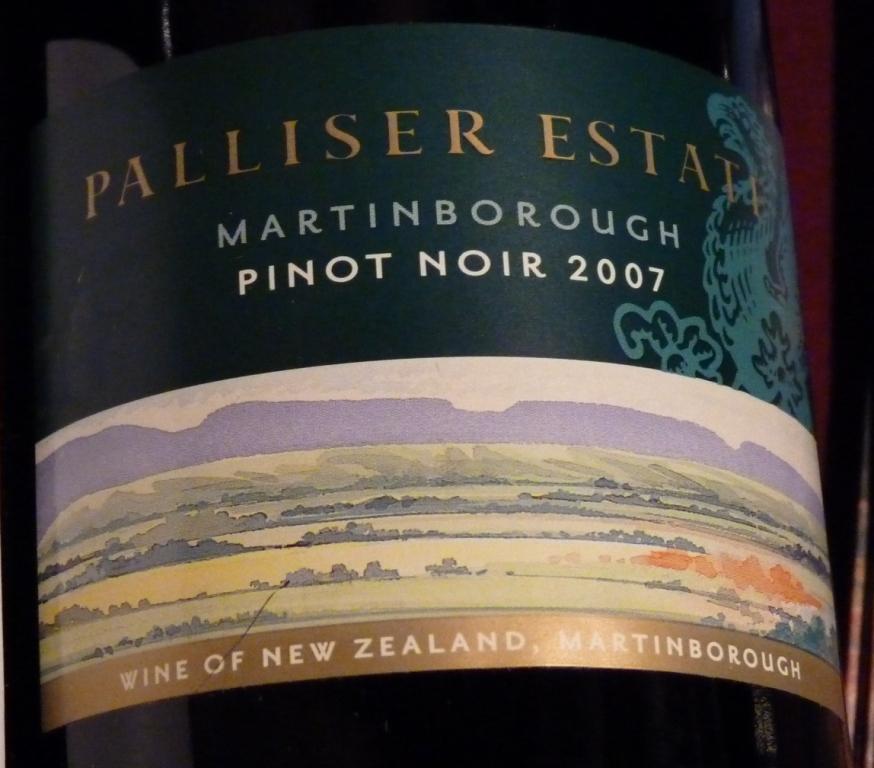 My overall tasting favorites were a couple of wines from New Zealand. First, a Pinot Noir 2007 from Palliser Estate in Martinborough. There were a number of good Pinot Noir wines from New Zealand, both from Martinborough and Central Orago, from 2007 and 2008 vintages. This particular Palliser Estate Pinot Noir had the most elegance out of the group, with classic Pinot smoky nose and restrained fruitiness of the New World wine.
The other two of my favorites where two white wines from New Zealand, one of them being total surprise. 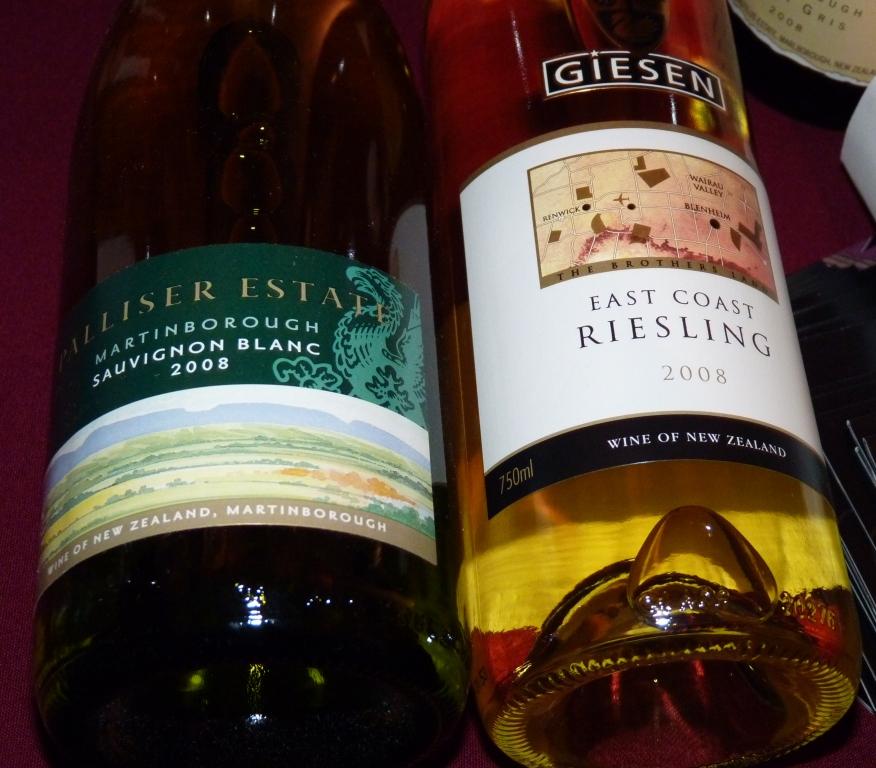 First was Sauvignon Blanc 2008 from the same Palliser Estate. I have to honestly admit that I have a weakness towards New Zealand Sauvignon Blancs – I enjoy them very much. The Palliser Estate Sauvignon Blanc had more of everything – not that it was a fruit bomb, no, simply the fruit was a lot more pronounced, such as in-your-face-gooseberry. I would put Drinkability of this wine at 8+.
And the surprise came in the form of Riesling from New Zealand. Why the surprise? First, I never had before a Riesling from New Zealand. Second, based on the experience with neighboring Australian Rieslings, which I find too dry and not pleasant, my expectations were quite low. And the surprise was in the fact that this particular East Coast Riesling from Giesen was actually tasting like … German Riesling, only done more in the fruit forward style (not sweet at all, the Kabinett level), very nice and pleasant.
To conclude: am I grateful for the experience I had? Of course. Wine tastings are always fun. Will I attend another Bottlenotes event? As of right now – I don’t think so, but hey, you never know…
Last Bottle Sign Up ($10 credit)




 Talk-A-Vino

