Archive
Compass Box – The Art of Blending
Innovation. This word is usually associated with high-tech industry, new cars, new gadgets, an iPhone 6 or 7 – I’m sure you got my point. Yet innovation is not a foreign word when we talk about food, and wine, and the other stuff we drink, even though the original concept didn’t change in many thousands or at least many hundreds of years.
If you scroll through the posts in this blog, you will see that most of them are about wine and food (with a bit of photography). However, from time to time I step outside of the wine world and talk about my second favorite type of enjoyable alcohol, Scotch – and this will be the subject of this post.
What was with all that talk about innovation, you ask? When it comes to Scotch, many of the products are deeply rooted in tradition. Yes, some distillery might change the label or the packaging, and that would be about the full extent of innovation. But then there are companies such as Compass Box – a relative newcomer in the world of fine whisky. Compass Box had a vision – a vision of taking the existent best of the breed whiskys from the different regions, aging them in the best available wood and then blending them together to create a new line of products which would be unique and exemplary at the same time. Most importantly – they managed to succeed with that approach and took their rightful place in the market.
About two month ago I had an opportunity to taste through the whole line of Signature Range of Compass Box whiskys, so here are my notes from that tasting.

Asyla – nice, standard, smooth
Oak Cross – touch of sweetness, very delicate, nice fruit
Spice Tree – very nice, less sweetness than Oak Cross, with coriander notes on the palate
Peat Monster – big, peaty, bad ass beauty, medicinal, round – perfect! Need campfire to pair
Hedonism – very viscous on the nose, nice, delicate, with touch of sweetness, very round – very nice, distinctly different from anything else.
Flaming Heart – beautiful. Peaty but very balanced. Best of tasting.
Orangerie – nice addition of fresh orange, very delicious.
I also sneaked by (no, I didn’t steal anything, I was offered the taste) Johnnie Walker Blue King George V Edition, which is pretty rare and needless to say, expensive – very oily in appearance and on the nose, but then super clean and fragrant on the palate, very very round (if you are into Scotch, this one should be on your “must try list”).
That is all I wanted to share with you, folks. If you know of Compass Box scotches and enjoy them, pour yourself another splash. If you never heard of them, try one – you might discover something new. If you don’t like scotch, there is a good chance you just didn’t happen to find the right one yet – keep trying as you might come across the one which will speak to you… Cheers!
Weekly Wine Quiz #27 – This Whiskey Can’t Age Any Longer…
As you know, the subject of Whiskey is not foreign in this blog, so that is what today’s quiz will be all about.
Similar to the wine, whiskey is usually aged before it is released to the market. Again, similar to the wine, all kinds of wooden casks are used for that process of aging. Quite often used wine barrels become whiskey casks – you can see on the bottle “Port finish”, “Madeira finish” and many others – but this is not the point of this quiz.
Again, similar to wine, when whiskey is aging in the cask, it gains complexity and usually mellows down. There is nothing you can do to substitute time in this process of aging, so as you can expect, the older the whiskey is, the higher price it commands when in the bottle, but again this is not the point of this quiz.
Look at the whiskey shelf in the liquor store, and you will see a lot of bottles with the “age statement” on them – 10 years old, 12, 14, 15, 21, 25, or may be even 30 or 40 (I’m glad this post is not about prices). Typically the decision for how long to age each particular batch of whiskey is taken by the cellar master at the distillery, and whiskey is tasted along the way until it will be declared worthy of the release. But in some cases, external circumstances dictate the maximum age of the whiskey which can be achieved at the distillery, and nothing can be done to age the whiskey for longer. For instance, at Stranahan’s distillery in Colorado, whiskey doesn’t age longer than 5 years, and if they will try aging it until 8 years, they will have a big problem after all. What do you think can cause such a limitation?
Bonus question – explain what exactly happens with whiskey that it can’t age any longer?
Have a great long weekend! Cheers!
And A Few Words, Errr – Whiskys for The National Scotch Day
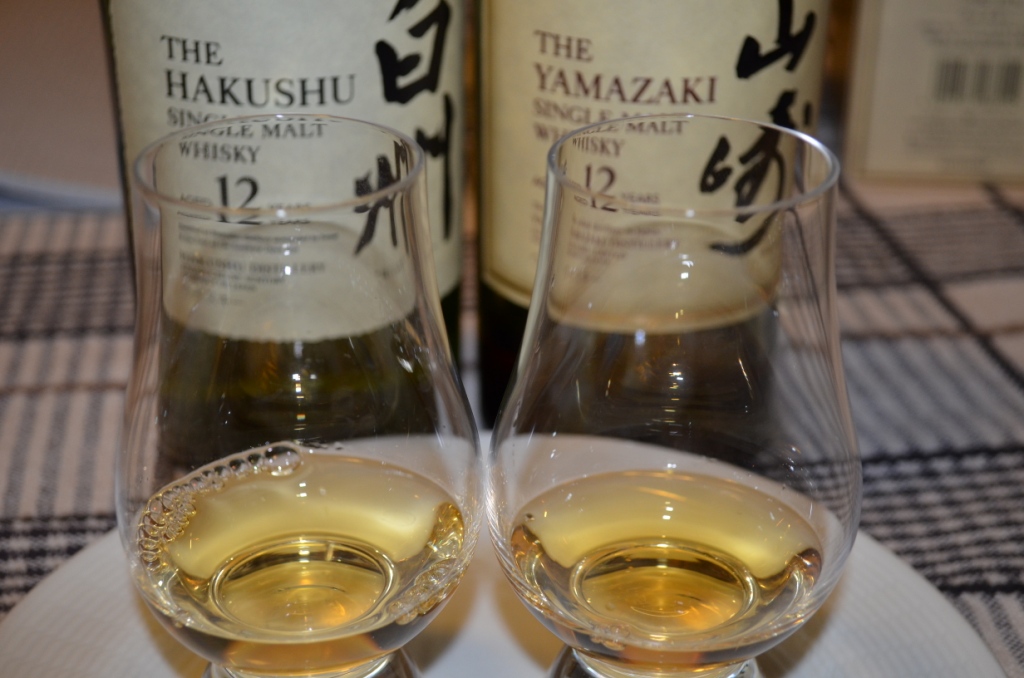 While you are not going to see it well marked in many calendars, July 27th was the National Scotch Day. Actually, if you like Scotch, you should definitely mark it in your calendar for good going forward- unlike some other wine holidays, it always takes place on July 27th – or it seems to be so, as I was unable to trace the origin of this holiday. There is enough references in various blogs mentioning the July 27th as National Scotch Day, so let’s just go with the flow.
Having more holidays is always better, especially when you get an opportunity to celebrate such a distinguished drink as Scotch. And the better word to use is Whisky, as all the Scotch is Whisky, but not all the Whisky is Scotch (and then you got much bigger world of Whiskey- one little letter “e” makes a world of difference – but let’s keep focus on the Scotch for now).
To celebrate in style, I decided to compare two whiskys, both made in Japan by the company called Suntory. Currently, Suntory makes three different lines of whiskys – Yamazaki, Hakushu and Hibiki, with the first two being single malts and the last one being a blend.
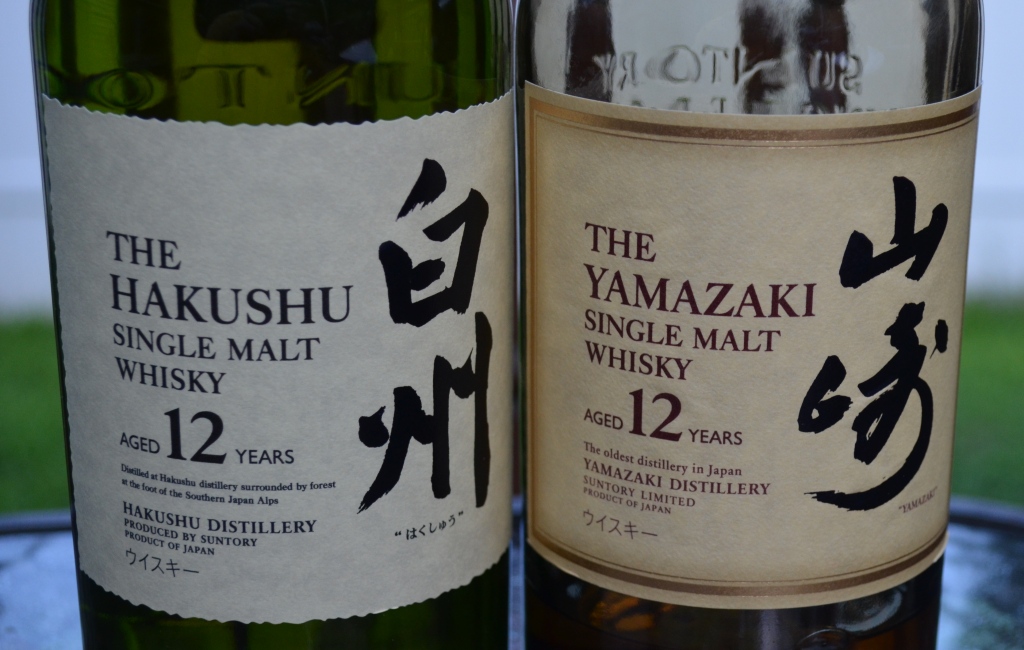
Yamazaki was one of my favorites for a while, but this was the first time I tried Hakushu (my brother in law brought it directly from Japan).
I started with Hakushu 12, which comes from the distillery under the same name, located in the forest in Southern Japanese Alps. On the nose, it had a touch of sweet smoke and a bit of grassiness. On the palate, Hakushu had a touch of sweetness, some vanilla notes, super soft and delicate, velvety and round in the mouth, with grass undertones and hint of butterscotch. Aftertaste was very complex, and had almost numbing qualities.
Yamazaki whisky comes from the distillery under the same name, which was the first malt distillery in Japan, opened in 1924 in the outskirts of Kyoto. This Yamazaki 12 was very clean on the nose with a bit of floral notes, more mellow than the Hakushu – but then I had the bottle open for quite a while, so this might be the factor. Very clean and smooth on the palate with more sweetness than Hakushu, caramel apple undertones and clean finish with high acidity.
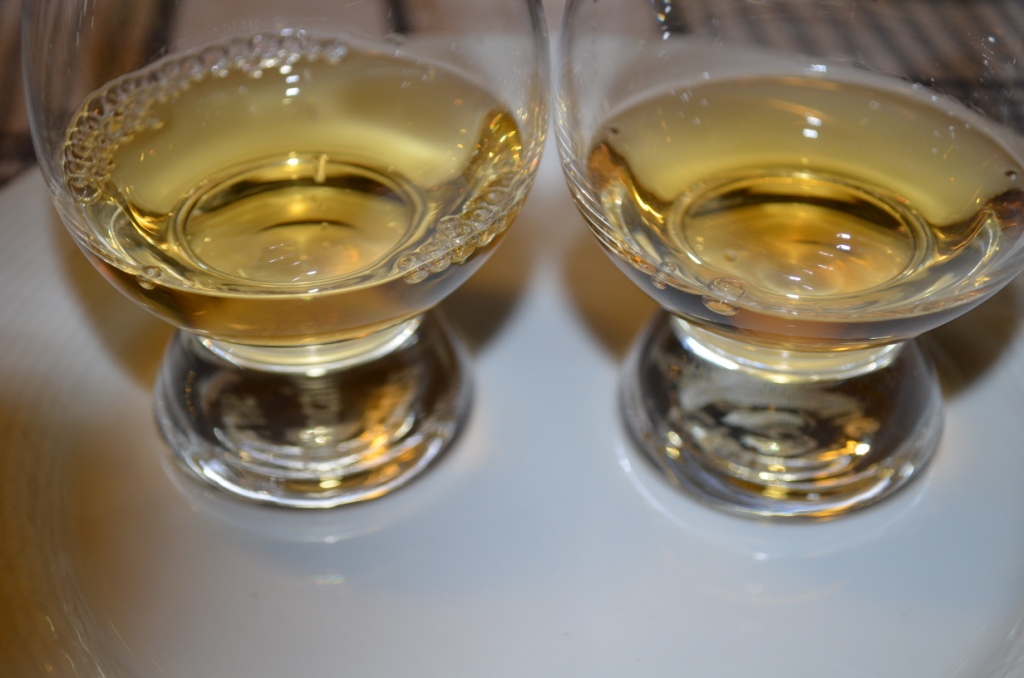 Oh yes, and in case you are wondering, I usually don’t add water to my scotch – with cask-strength sometimes being an exception.
Hakushu had higher complexity of the two, and Yamazaki showed lighter (both whiskys are labeled 43% ABV). If comparison might help, Hakushu was more of a Islay Scotch, similar to Lafroaig, and Yamazaki was much closer to Highland Scotches, similar to Glenlivet or Dalmore. I would highly recommend both Hakushu and Yamazaki – if you are into whisky, they are definitely worth looking for.
That’s all, folks. You don’t have to wait another year to celebrate Scotch – it is a great every day drink, without the need for any special reason to enjoy it. Cheers!
Knowledge or Wisdom? repost from Whisky-online
Today I came across a blog post which stroke a chord – whether or not you are in love with whisky, this will universally apply to all of us who takes keen interest in Wine, Whisky, Beer, Rum or anything else you strive to know more about, because knowledge enhances the pleasure… Here it is:
http://whisky-online.com/blog/knowledge-or-wisdom/
Enjoy!
And The Answer Is …
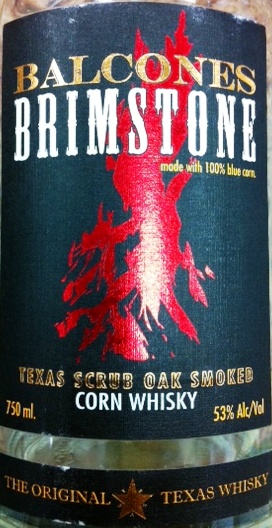 And here is the answer to the last “what is it” post.
Confused? No, there was no whisky in that ice cream. I’m just trying to be allegorical here. I understand that unless you taste or at least smell this Balcones Brimstone Texas Scrub Oak Smoked Corn Whisky, it is hard to pick up what the allegory is. This whisky had a perfect smoked bacon nose and beautiful round palate – very different from traditional Islay smoke, like Caol Ila or Laphroaig, which have a lot more acidity and accompanying roughness with it. This Texas Whisky had bacon or slow-smoked rib on the palate, full-bodied with a hint of sweetness. Very nice.
Did you get my allegory by now? Yep, it was bacon. Actually, it was Maple-Bacon ice cream, and I have to admit, it was delicious.
Those of you with the ice cream making machines – give it a try. And for the rest of you – take my word for it, or visit Biga in San Antonio. Or at least have a glass of Balcones Brimstone. Cheers!
St. Patrick’s Day – What Is In Your Glass?
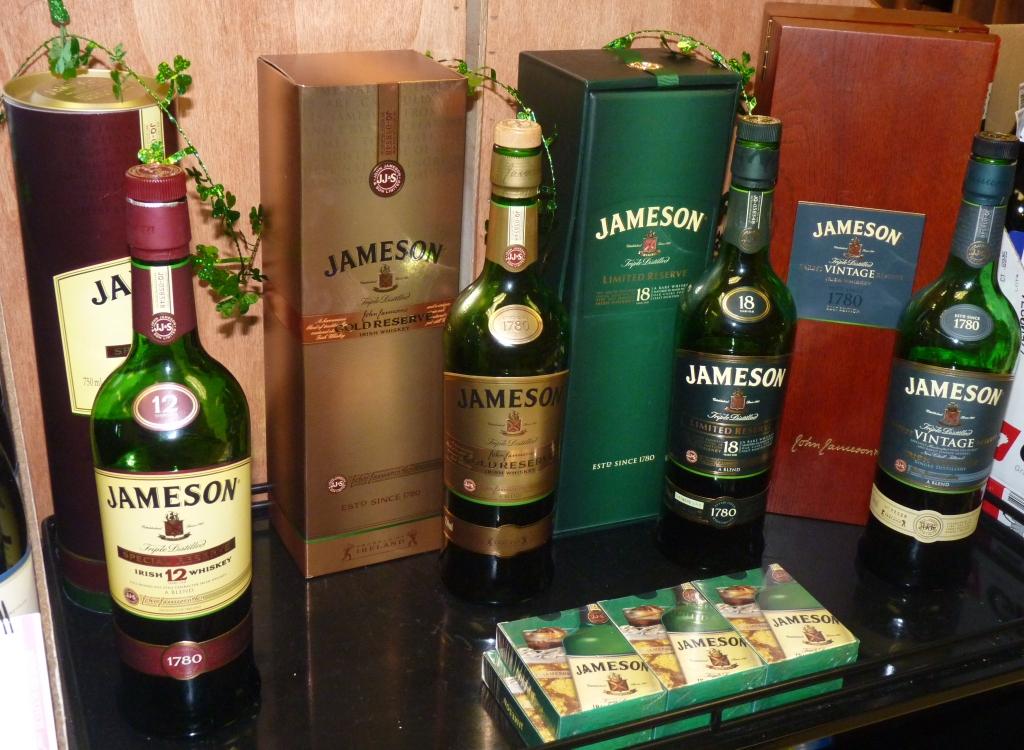 This coming Thursday, March 17th is St. Pastrick’s Day, which is probably the main celebration of Irish heritage. Leaving aside Leprechauns and cabbage, let’s talk about traditional Irish drinks.
I think Guinness is far more traditional Irish drink than anything else, but this is just an opinion ( note: I have no relationship to Irish heritage whatsoever, so may be I don’t know what I’m talking about). And the next thing which comes to mind – no, not wine – Irish Whiskey.
When it comes to Irish whiskey, there are few of the mainstream brands, Jameson and Bushmills being most well known. Few days ago I happened to come across an Irish Whiskey tasting at Cost Less Wines and Liquors, where full line-up of Jameson was represented (almost full – basic Jameson was not there), so I had an opportunity to try all of them. To tell you the truth, I didn’t care for Jameson 12 and Jameson Gold – both were not very impressive. Jameson Vintage felt over-engineered, with mostly oily flavors on the palate, and none of the fruit or acidity or any other components being noticeable. Jameson 18 had an elegance of a mature whiskey (have to stop myself all the time from calling it Scotch), good balance and good flavor profile. In any case, it was an interesting experience and I’m grateful for it.
 And then there was Connemara, a single malt peated Irish Whiskey, which completely stood out. Very nice balance, may be a touch more sweetness than I would care for – but it doesn’t get very noticeable. What was working well is a very nice smokiness – for the Scotch drinkers out there, I will put it between Highland Park (which has a hint of smokiness), and Lagavulin, which is a hallmark of peated Scotch. All in all, very round and balanced, and easy to drink.If you get a chance, find a bottle and enjoy (in case you need a reference, I found mine at Super Wine Warehouse in New Jersey).
So, what will be in your glass this St. Patrick’s Day? It really doesn’t have to be green – but it’s better be enjoyable…
Last Bottle Sign Up ($10 credit)




 Talk-A-Vino