Archive
A Journey of a Thousand Grapes
“A journey of a thousand miles begins with a single step”.
True that.
But sometimes, we have no idea about the journey. We just take a step without putting much thought into it. It is only later on, while looking back, we realize that those were not just some random steps. The journey is going on.
I don’t remember how I learned about The Wine Century Club almost 20 years ago. I guess someone mentioned that it might be something I might be interested in considering my love for wine.
The idea of The Wine Century Club is simple. Take an Excel table with the names of the grapes. Checkmark the grapes you tasted either by themselves or as a part of the blend. Once you checked 100 grapes (century), submit your application and become an official member of The Wine Century Club. And don’t lie – if you do, your palate will be cursed forever.
The table had something around 200 grapes in it, and marking 100 grapes in it was somewhat easy. I submitted my application in June of 2008 and received my certificate in a few months. Mission accomplished. Journey completed.
Ha!
By the time I received my membership certificate, the club evolved to add another level of membership – Doppel, requiring one to try 200 grapes. Okay, then, I can walk a little further, fine. Back to the Excel and wine sleuthing. By the time I submitted my doppel application, the club already had a Treble level (300 grapes). Back to the glass I go.
When I started the Talk-a-Vino blog around June/July of 2010, I was in the middle of the Treble journey, which I started documenting in the blog. One of the first blog posts was on the subject of Trebble journey, just trying to explain what is that I’m talking about.
300 grapes is a lot, right. Okay, finally, the mission is completed for real. Ohhh… Maybe not. Quattro. Pentavini. Hexavin (are you serious, people? Who can try 600 grapes????).
When I reached 500 grapes, I wrote a very happy post and started slowly moving toward the 600, knowing with absolute certainty that this would be it. 600 is very formidable, and yes, I heard that some people are moving toward 700, but there was not even an official designation for that status.
9 years after the 500 submission I finally reached the end of the journey – two days ago I submitted my Hexavin application. While looking for the submission rules that I somewhat forgotten since the last time, I looked at the membership page. Guess what I saw on the membership page…
700 (Heptavin), 800 (Otobis), 900 (Novem) and 1,000 (Millenary) varieties
How about that “end of the journey”, huh? Yep. A journey of thousand miles grapes is going to continue…
Don’t get me wrong. I’m not complaining. Neither I’m bragging. I’m simply documenting my journey on these pages – whether you also want to become a grape geek is entirely up to you. But if, by any chance, you do, then I might be able to help you in that journey.
Few things had been happening recently making this geeky rare grape inquisitive journey a little easier. First, the world is a little smaller now compared to 20 years ago. No, this is not an utter nonsense 🙂 give me a moment to explain. Of course, there are lots more people living in this world – but that is irrelevant to our subject. If you can’t find the wine with specific grapes in your country, you can order it online and not pay a fortune for the delivery. When I ordered Williamson and Magor tea from the UK to be delivered to the US about 25 years ago, about 2 pounds of tea cost $60, and shipping was another $60. Last year I ordered 2 bottles of wine from Malta, and shipping was close to $30. The wines from around the world are more accessible now.
The second, and more important factor, is two-fold, but it is all about grapes. All around the world, ancient grapes are actively brought back to life, some resurrected literally from the last vine left. New grapes are bred to be more disease-resistant or faring better with climate change. And the grape geek’s journey becomes a little easier and faster.
Just for fun of it, here are some of my latest additions to the rare grapes list with a few notes:


Folle Noire (red) – 2020 Château de Bellet Rouge Bellet AOP
Braquet (red) – 2020 Château de Bellet Rouge Bellet AOP
Vlahiko (red) – 2022 Glinavos Paleokerisio Ioannina IGP – very interesting orange lightly fizzed wine. This wine is a blend of Vlahiko and Debina (white) – I don’t mention Debina here as I had it before, but if you will find this wine, you might get two new grapes in this bottle.
Cabernet Cortis (red) – 2022 Petit Sauvage Rouge Vin de France – this wine was unique and interesting – you can learn more here.
Negoska (red) – 2019 Domain Tatsis Xynomavro – Negoska Young Vines Macedonia Greece
Orpicchio (white) – 2020 Dianella Orpicchio Toscana IGT – picked up this grape at the Three Bicchiery event earlier this year.
Amur (red) – 2017 Dr. Konstantin Frank Amur Finger Lakes – Unique grape, well suitable for cold weather.


A few grapes from the Balkans and Moldova – all wines are tasty and really inexpensive – if you want to find them, check The Liquor Barn:
Zupljanka (white) – Vrsacki Vinogradi Banatski Riesling Serbia
Kreazer (white) – Vrsacki Vinogradi Banatski Riesling Serbia
Žilavka (white) – 2019 Tikveš Žilavka Dry White Wine Macedonia
Băbească neagră (red) – 2018 Cricova Rară Neagră Moldova
Lidia (red) – NV Cricova Rose Semisweet Wine Lidia Moldova – it is called semi-sweet, but the wine has only a hint of sweetness. If you are a fun of Izabella grape, you really should try this one…
The next 5 grapes are from Hungary – please read more about the wines here:
Csókaszőlő (red) – 2022 Bussay Pince Csörnyeföldi Csókaszőlő Zala Hungary
Jakab Kadarka (red) – 2021/2022 Bóka Birtok Jakab Kadarka Tolna Hungary
Borsementa (white) – 2023 Turay Családi Pincészet Borsementa Hungary
Fekete Muskotály (red) – 2022 Szentezi Prince Fekete Muskotály Hungary
Turán (red) – 2020 Nyolcas és Fia Borház Turán
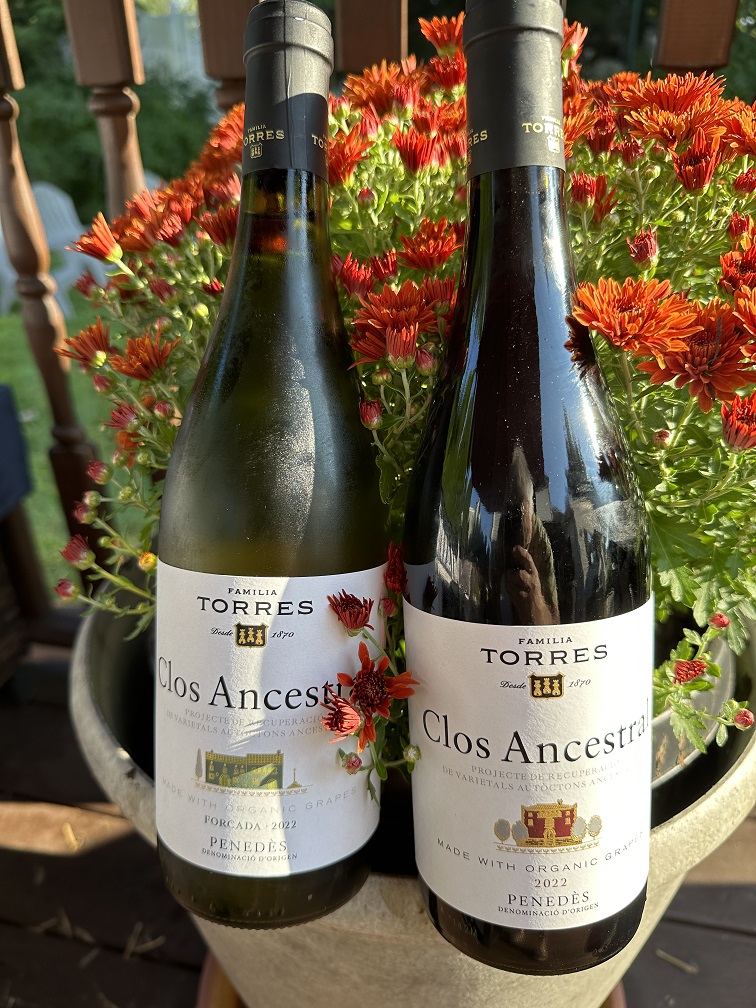 Now Spain comes into the play: as you can tell from the names of the wines, Clos Ancestral, these Spanish wines are celebrating resurrected ancient grapes, all courtesy of one of the largest wine producers in the world:
Forcada (white) – 2022 Familia Torres Clos Ancestral Forcada Penedès DO
Moneu (red) – 2022 Familia Torres Clos Ancestral Red Penedès DO


And here are two more interesting wines from France, not to be outdone:
Mourvedre Blanc (white) – 2021 UNAU Percheron 184 Mourvedre Blanc Vin de France
There is an interesting story behind the name of the wine: “UNAU is named after the female horse at the Fons-Sanatis estate – she is from the Percheron breed. 184 is the size in centimeters of the horse’s withers. Unau is 13 years old. The bottle is from the southwest of France – the cork from Roussillon and the labels are made of vine-plant leaves and stems. There is no use of foil in our packaging – we believe the container should be as environmentally conscious as the content.”
Souvignier Gris (white) – 2023 Petit Sauvage Blanc Vin de France
Also not showing here is one of my latest “strategic” discoveries. There are a few wines in this world produced from many – really many grapes. One such wine is Giribaldi Barolo Cento Uve, made from 152 grapes. Another wine is Vino Della Pace Cantina Produttori Cormòns Vino Blanco, produced from a whopping 855 varieties – while a fun reference, this wine can’t be used to advance your grape count. And then my latest discovery, the wine I had a pleasure tasting this year, Ramos Pinto Urtega from Portugal, produced from 63 grapes (there will be a separate post dedicated to this wine). So yes, there are some shortcuts you can make in this grape journey. And yet a thousand still sounds like an impossible goal.
The journey of a thousand miles begins with a single step. The journey continues one single step after another.
I’m fully enjoying my journey. Wanna come along?
A Quick Trip To Malta and a Few Rare Grape Sightings
Have you been to Malta?
I have not, but hey, this is a wine blog, remember? As I like to say, “Have wine, will travel” – we can get a tiny bit of Maltese experience with the help of Maltese wine.
I honestly don’t remember why was I searching for a Maltese wine, but let’s try to figure it out. I call myself a “collector of experiences”, and I like seld-made challenges. On this very blog, I have this table that lists all (probably “most” is a better word) of the winemaking countries in the world, and I’m always on the lookout for ways to add checkmarks to that table. I added a few new places this year, and I guess while I was at it, I decided to see what wines from what countries I might be able to find. Malta came up during the search, and I found the website called Malta Products which offers food and crafts from Malta, and also wine.
As I was looking through the available wines, to my delight, I realized that I could kill two birds with one stone. Not only can I put a checkmark next to the Malta name, but I can also advance my rare grapes hunt as I found wines made from the two new indigenous grapes.
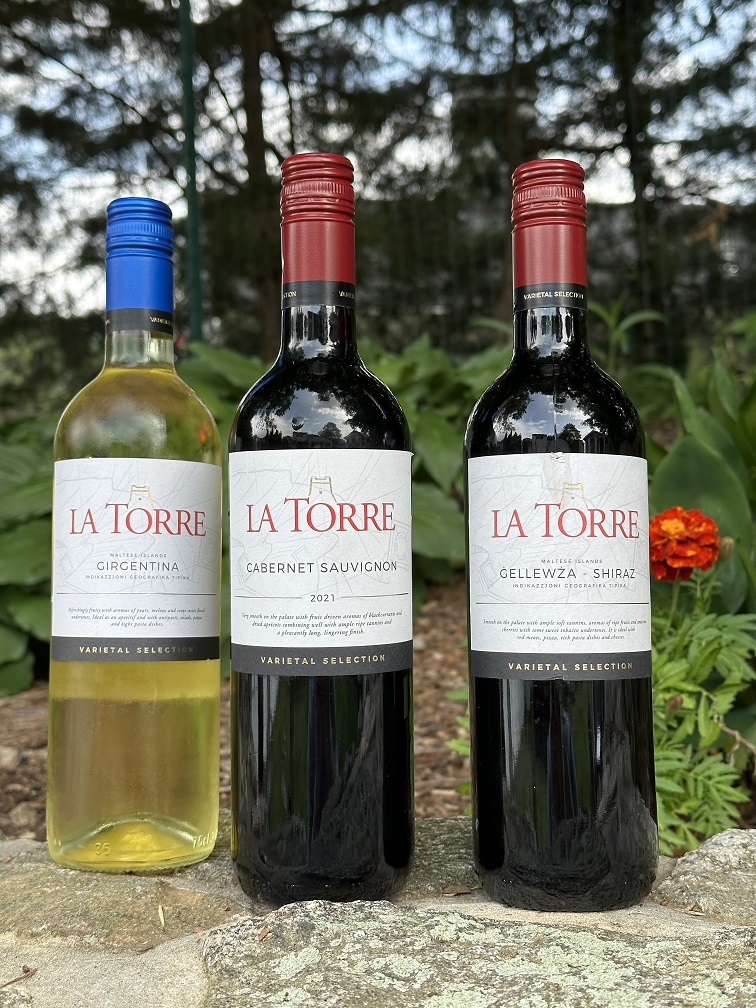


Long story short, I selected two inexpensive wines, one made with the local white grape called Girgentina – 2022 La Torre Girgentina Maltese Islands IGT. The second wine was a red blend containing another indigenous grape – Ġellewża – 2022 La Torre Ġellewża – Shiraz Maltese Islands IGT. The shipping was surprisingly reasonable, so I guess I spent a total of around $50 including shipping directly from Malta.
The wines showed up about 2 weeks later, but when I opened the box I found that instead of Ġellewża – Shiraz I got a bottle of Italian Cabernet Sauvignon from the same producer (La Torre). Considering how inexpensive the wine was, I decided that I would just let it be. On second thought, I decided to at least write to Malta Products customer service and let them know that they sent me the wrong bottle. After I sent them a picture of the wine I received, they apologized and said that they would fix it. I was not expecting anything more than a credit on the card, but instead, about a week later, the proper bottle showed up. It is easy to get cynical in the world we live in today, but then every once in a while we encounter people who actually take pride in the service they provide. If you ever feel like you want to visit Malta via Malta Products, you have my full, unquestionable endorsement.
I finally had an opportunity to try the wines at some point. Girgentina was excellent, bright, round, vibrant and delicious from the get-go. When I took a first sip of Ġellewża – Shiraz, I decided that it’s okay not to like every wine – it was not good [at all]. Not spoiled, but really not drinkable. About an hour later the wine transformed, and while it didn’t become magical, it became light, herbaceous, drinkable red, perfect for a hot summer day. While not a new grape or a place, the 2021 La Torre Cabernet Sauvignon Veneto IGT was simple and quaffable.
That was my quick trip to Malta and the addition of the two rare grapes.
As I’m trying to complete my Hexavin journey and reach that 600 grapes mark, the going doesn’t get any easier (expectedly, but I’m allowed to lament, am I). Or maybe I just like to complain, and it is not that difficult. There is a lot of work done around the world to bring back ancient grapes, to create new wines with a lot of pedigree and heritage, hundreds and hundreds of years of heritage. There are also new grapes, such as Solaris I just wrote about that help grape maniacs geeks move forward. Either way, here are more grapes I’m adding to the collection:
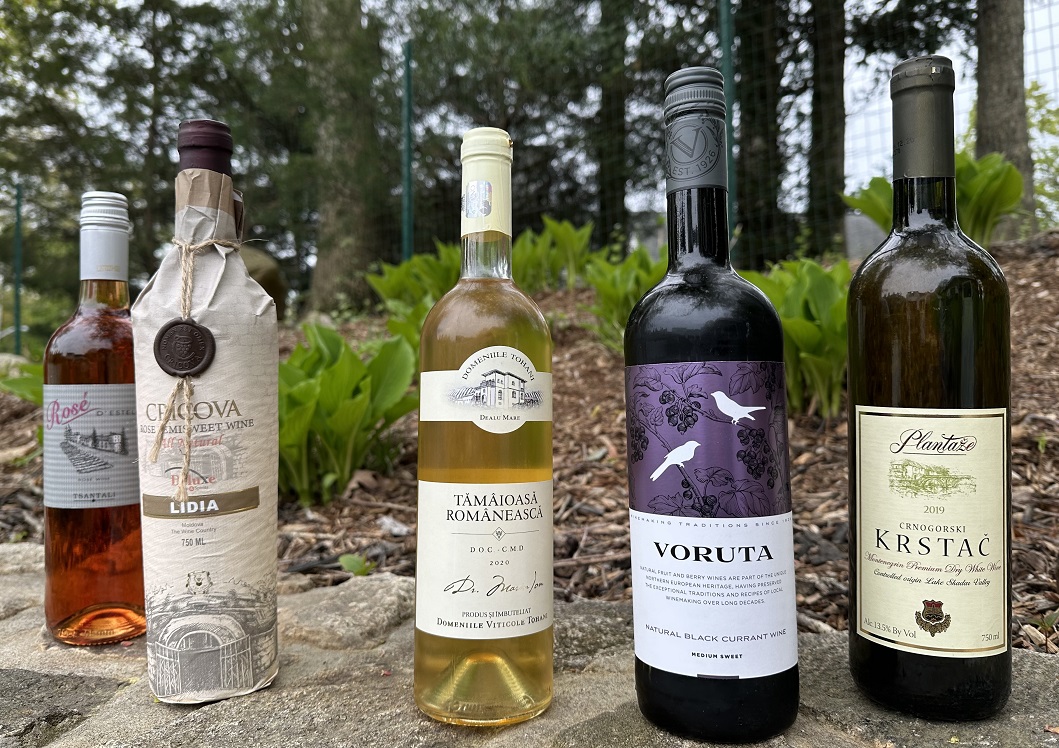


Moschomavro – NV Tsantali Rosé d’Estelle Greece – considering the non-vintage designation, I expected that it would fare worse, but it was drinkable.
Tămâioasă Românească – 2020 Domenile Tohani Tămâioasă Românească DOC Romania – you know that when you you are looking for a princess you might have to kiss a lot of frogs? This was one of them. Horrible.
Busuioacă de Bohotin – 2020 Domain Tohani Busuioacă de Bohotin semi-sweet wine Dealu Mare Region Romania – another surprise. While semi-sweet, the sweetness was nicely restrained and the wine was very tasty.
Krstač – 2019 Plantaže Crnogorski Krstač Montenegro – outstanidng. This was a delicious white wine in its own right. Crispy, focused, delicious.
The next four grapes were picked up last year at the Hudson Valley Wine and Spirits competition last year, where I was one of the judges. These are some interesting grapes, including the hybrid which doesn’t even have the name, only the numbers…
NY81.0315.17 – 2021 Weis Vineyards Perle Finger Lakes
Valvin Muscat – 2021 Milea Estate Vineyard Proceedo Hudson Valley
Regent – 2020 Milea Estate Vineyard Blaufrankish Hudson Valley
Obelin Noir – 2019 Christopher Jacobs Winery Deep Roots New York
Trebbiano Abruzzese – 2022 Masciarelli Trebbiano Abruzzo DOC – this was my recent discovery while working on the Masciarelly post – it appears that Trebbiano Abruzzese is different from the other types of Trebbiano and it is local only to the Abruzzo area…
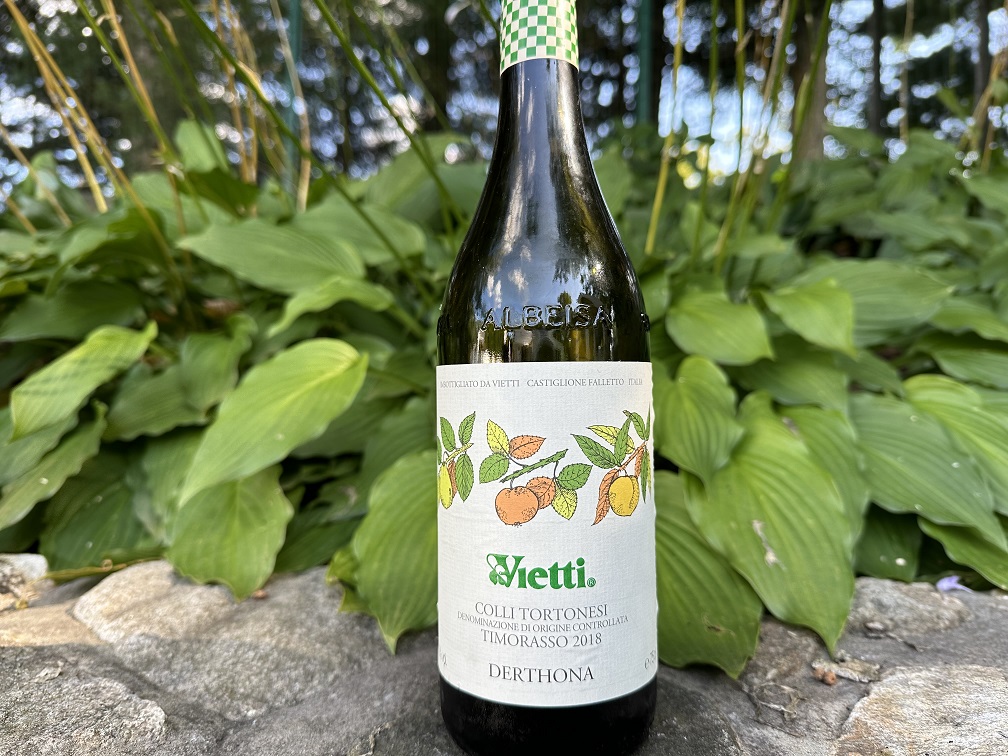
Timorasso – 2018 Vietti Timorasso Derthona Colli Tortonesi DOC – it appears that this grape was already accounted for as part of Giribaldi Cento Uve, so no additional count. The wine, however, was a sheer disappointment – undrinkable.
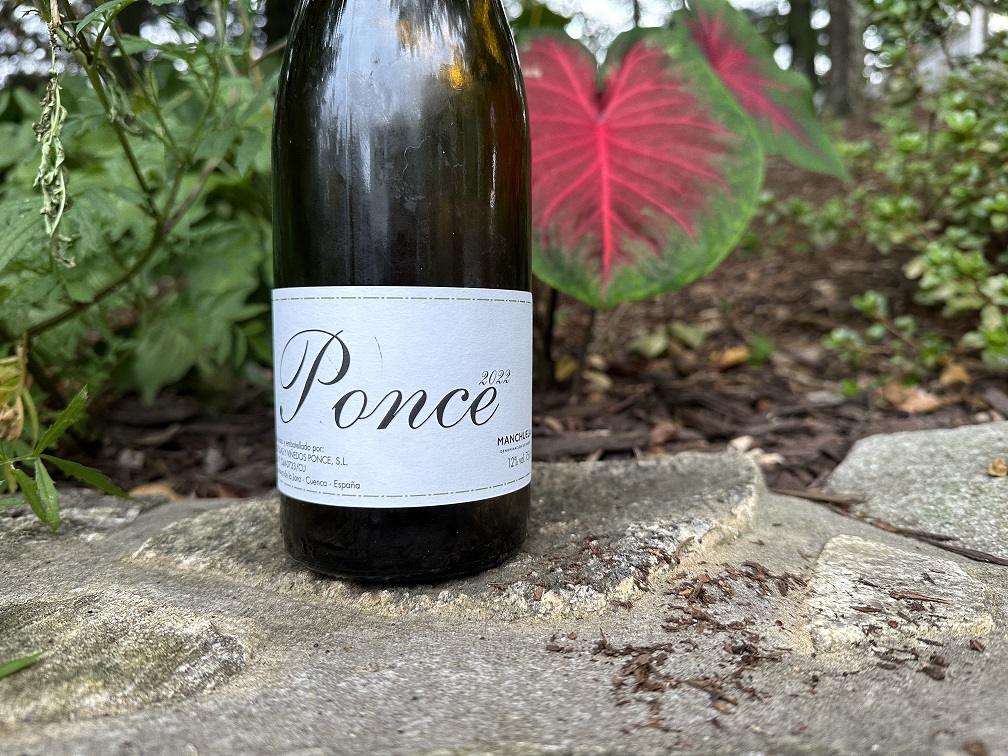
Albilla – 2022 Bodegas Ponce Manchuela DO – this was delicious wine, fresh and vibrant.
All in all, I’m increasing my grape count by 11, and now I’m within the last 10 push before reaching the 600 milestone. I have an easy way of solving this – using clones. I can add 20 clones of Chardonnay, Pinot Noir and Cabernet Sauvignon, all well documented on their usage. Should I do this? I’m not sure, but it is good to have options.
What are the wine artifacts you like to collect?
Rare Grapes, Obscure Tasting
 What is your take on wines made from rare, unknown grapes? I can tell you about mine – I love them.
I have two reasons for that. Well, it might be even just one, but with two sides, I guess. First, I’m a wine geek. As a wine geek, I love tasting each and every type and style of wine, made from whatever grapes they are. I’m willing to taste absolutely any wine at least once. After the opinion is formed, this might be the first and the last time, but nevertheless, I’m willing to try anything.
The second reason is that I’m not only a geek, I’m also a collector. I like collecting experiences. As such, for example, I keep track of the US states and world countries I had a chance to taste the wine from. And I keep track of grapes I ever tasted, after being bitten by The Wine Century Club‘s bug. If you are reading this blog on a PC, look to the right side of the screen, and you will see “grape count” – this is the number of grapes I have tasted to date (if you are reading on the phone, just scroll down). With my goal of reaching 600 grapes, I can only increase the current count further by finding rare, obscure, unknown grapes to taste.
When I got an invitation to attend the Wines of Crete trade tasting, the key words which made me say “yes” was exactly that – “rare grapes” – there were lots of grapes mentioned in the invitation, and I didn’t recognize at least a half of them, so the opportunity to taste new grapes (and increase the count) was definitely enticing.
I have to tell you upfront – this was the most peculiar trade tasting I have ever attended. Being only an advanced amateur, if this makes any sense, I attend maybe about 10 trade tastings in a good year, so I wouldn’t pretend that “I’ve seen them all”. Nevertheless, I have a frame of reference for successful and unsuccessful wine tastings, for sure in my personal book – so when I tell you that this was the most peculiar one, I mean it. Let’s talk about it.
First, notwithstanding of any peculiarity, we need to acknowledge the wines of Crete. Any time a passionate wine lover has an encounter with a region that has a deep wine history, it creates an emotional response, almost awe. The wine history doesn’t go much deeper than it is on Crete – Crete, the largest island in Greece and 5th largest in Europe is the cradle of European winemaking, having its winemaking history spanning more than 4,000 years, going well beyond 1,500 BC.
Crete represents the first real wine culture in Europe. There is evidence of wine presses (first in Europe from about 1,600 BC), pressed grapes and stems, clay pots and amphorae. The wine was produced commercially, and it was praised by many poets. Shortly after the beginning of the first millennium, Crete became famous for producing sweet wine from sundried grapes, Vinum Passum. Crete wines reached Switzerland, France and Italy, and so did the cuttings of the Cretan vines.
From the 14th to 17th centuries, Crete became famous for producing sweet wines from Malvasia grapes (interesting tidbit: American Journal of Enology & Viticulture registered 49 different varieties of the Malvasia grape). Malvasia vines made it to Italy during the same timeframe.
Cretan winemaking history is not all warm and fuzzy. For almost 200 years Crete was under Turkish occupation, and wine production was truly minimized, mostly for family consumption only. Then at the beginning of the 20th century, immigrants brought Sultanina grapes to Crete – a.k.a. Thompson Seedless – not the grape you want to use in wine production. In 1972, Crete experienced the invasion of Phylloxera.
The rebirth of Cretan winemaking started in the 1990s, and today young winemakers continue looking for their own path, often using indigenous grapes to their advantage.
There are 4 mountain systems on Crete, the island of 160 miles long and about 40 miles wide. The majority of the vineyards on Crete are located on the mountain slopes, at altitudes from 800 to 3,000 ft. Mountains play an important role in protecting vineyards from the hot winds coming from Africa. The climate is warm Mediterranean with annual rainfall between 250 and 900 mm.
There are about 10,000 acres of vineyards on Crete, which are spread between 6 Protected Geographical Indication (PGI) and 7 Protected Denomination of Origin (PDO) winemaking regions. There are 36 wineries on Crete, producing about 4 million bottles of wine annually. There are 11 indigenous grape varieties growing on Crete (White: Vilana, Vidiano, Dafne, Thrapsathiri, Malvasia di Candia, Muscat of Spina, Plyto and Red: Kotsifali, Liatico, Mandilari/Mandilaria, Romeiko), as well as international varieties. And as I already told you before, these indigenous grapes were the main attraction for me.
Okay, so now I shared with you almost everything I learned about the rich history of the wines of Crete – let’s talk about the peculiar part.
Upon arrival at the tasting, I got a booklet listing all the wines which we would be tasting. The booklet was organized by grapes – but interestingly enough, the description of the wines didn’t include any producer names – just vintage, variety(ies), ABV, style of wine, and maturation notes. I never saw anything like that at any of the tastings – unless you maybe run a blind tasting, but never mind.
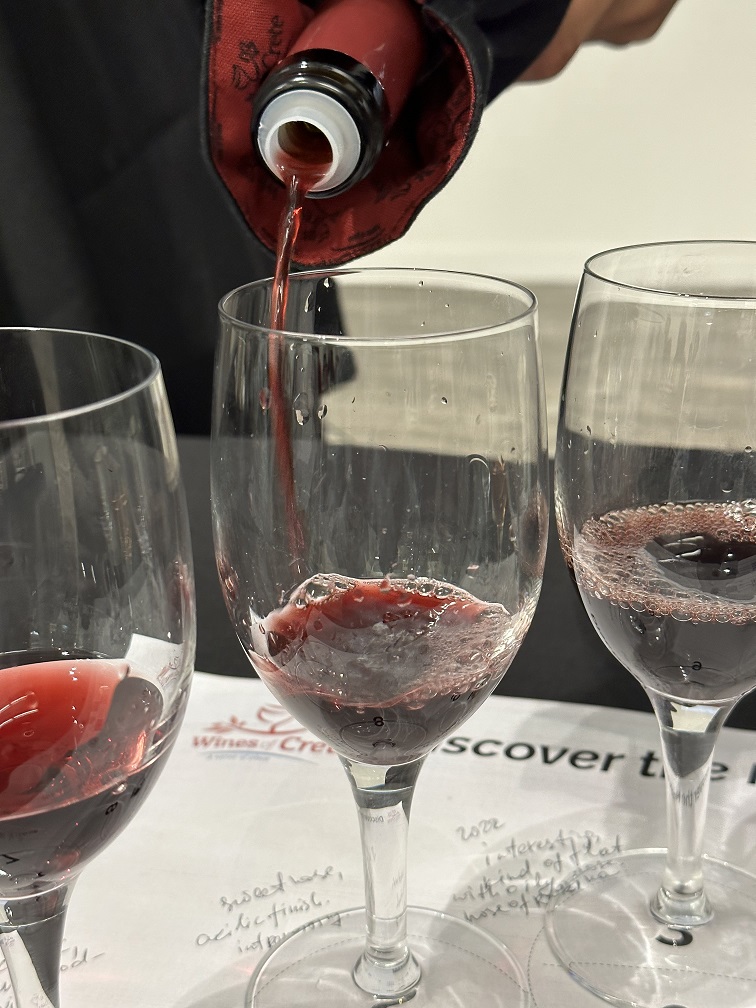
Next, we proceeded with the masterclass, where we learned about all the history and present day, and had an opportunity to taste 11 wines. While poured, all of the wine bottles were hidden inside the black pouches. In the presentation, there were no producer names mentioned – only grapes and regions were presented.
As we learned, this was not an oversight. As the event was sponsored by the European Union, it was the requirement not to mention the wine producers in the masterclass and in the tasting, so the producers not present at the tasting wouldn’t get upset.
I’ll let this sink in for a moment.
Think about it.
Now, let me ask you – how stupid, unbelievably stupid is it? [I guess this is what happens when lawyers run the business – I didn’t have to say it, but this is my blog, so I can].
I’m a blogger, and I’m only interested in education and tasting some obscure grapes. But let’s say you work at a restaurant. You taste the wine, you like it, and you would like to start offering it at your restaurant – but officially, you are not allowed to know the name of the wine you just tasted. Say what??? What is the point of this tasting? With this “blind tasting” move, you brilliantly hurt everyone – those who sent their wines for the tasting, and those who have not.
Okay, let’s get back to masterclass tasting.
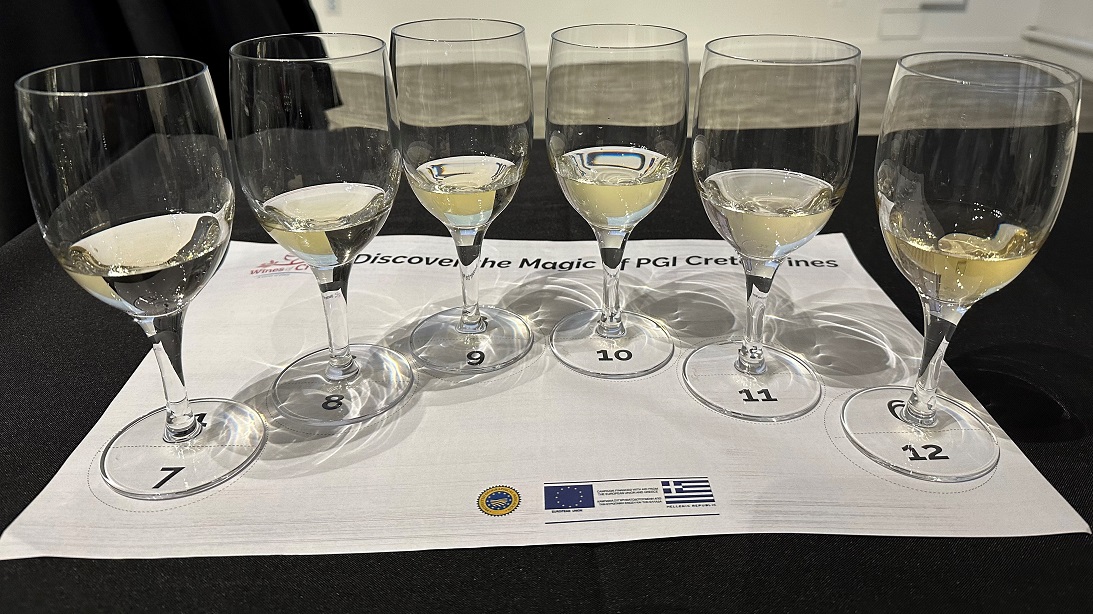
First, we tasted 6 white wines, made from Vilana, Vidiano, Thrapsathiri, and Assyrtiko. Thrapsathiri was a new grape for me, the rest I had tasted before. I don’t believe I liked any of the white wines, unfortunately…
Wine #1 – Vilana grape
Acidic, lean, food-craving
Good
Wine #2 – Vidiano
sweet nose, acidic finish, interesting
Wine #3 – Vidiano
interesting, kind of flat, oily nose, reminiscent of Retsina
Wine #4 – Thrapsathiri
interesting, herbaceous, cut through acidity. Very acidic finish
Wine #5 – Assyrtiko
Smoke, almost moldy on the nose
Corked?
Wine #6 – Vidiano (oak aged)
Plump, oily, full-bodied, crispy finish


Next were 5 reds, made from Liatico, Kotsifali, Mandelaria, and Romeiko. Again, one new grape here – Romeiko. Wine #10 was strange but drinkable. I really loved the Romeiko wine, but this was somewhat of a curveball red wine – it was actually made in the “orange wine” style. Still, this was my favorite wine from the masterclass tasting.
Wine #7 – Liatico 2022
interesting nose, sweet oak
super-tart, tannic, lacks fruit, tart finish
Wine #8 – Liatico/Kotsifali 2016
smoke on the nose, smoke on the palate, insane acidity
Volatile acidity?
Wine #9 – 60% Kotsifali, 40% Mandelaria, 2015
Raisins on the nose, oak, tertiary aromas
flat, tannic, ohhh
Wine #10 – 60% Kotsifali, 40% Syrah, French/American oak aging, 2017
Brett? Spoiled egg level
This is actually drinkable, a little flat on fruit, but good overall
Wine #11 – Romeiko, red grape made as an orange wine
Excellent, delicious, good balance, harmonious, good fruit and acidity, fresh


We managed to convince the staff to show us the wines we tasted, at least some of them, so you can see some of the wines we tasted in the picture above.
Main room tasting had its own issues – it appears that due to some issues with the customs, instead of 64 wines only about 15 were present in the tasting. All black bagged, unfortunately. I tasted another grape I never had before – Plyto, and the wine was quite pleasant, but this is all I can tell you.
There you have it, my friends. For me personally, this was not a waste of time, as I managed to pick up three new grapes I never tasted before. But in the large schema of things, this was a wasteful tasting – and it is sad. The effort was put into organizing it, but would it really help to advance the Wines of Crete in the US – I doubt so very much.
I really hope my next wine tasting will fare better…
Drinking With Purpose
Drinking with purpose.
Okay, so what are we talking about here?
First of all, we are talking about wine. Usually, we drink wine for pleasure. Of course, sometimes people drink just for the buzz, to forget, to relax – there are many reasons why people use alcohol, but wine (I hope) stands a bit apart from the rest of the alcohol. Wine helps us to converse with friends, create memories, enhance our food experiences and simply derive pleasure from the simple moment of existence. Then what is this purpose I’m talking about?
Wine is the product of passion. At least this is how we, wine lovers, want to see it. Wine also enables passion. Not even passion, but passions. It solicits passions. Wine is surrounded by desire, obsession, exclusivity, mysticism, glamor, science, greed, mystery, art, and devotion, it evokes all of these and many other feelings and emotions. Wine allows everyone to find their own passion.
One such passion is collecting. Yes, some people are collecting the wine. In a lot of cases, they simply do this to feel superior to others, as they have something which other people want but can’t have. We can leave this aside, as this is a boring aspect of wine. Collecting unopened bottles is not the only thing to collect around wines.
The wine offers lots of artifacts. People collect unique bottles. People collect unique labels (hundreds of thousands of different wines are produced every year around the world – and many labels can change every year – think of an endless potential here). People collect champagne and sparkling wine bottle caps – this hobby even has an official name, placomusophilia. Peope collect corks and screwtops. I collect grapes and experiences.
Many, many, years ago I came across The Wine Century Club. No, you don’t have to be 100 years old or drink 100 years old wines. It is all about grapes. Anyone who tasted 100 different grapes (obviously, in wines) – don’t have to be individual grapes, blends are totally fine – is welcome to apply to become a member of the club. The application is honor-based (well, if you lie, your palate would be cursed forever – who would want to risk that), and you get the certificate sometime after you submit the application. Tasting the first 100 grapes was relatively easy. By the time I was done with the first 100, the club was already offering the 200 grapes level (Doppel), then 300 (Treble), 400 (Quattro), 500 (Pentavini), and now even 600 (Hexavin).
After I passed the 100 grapes level, hunting for the new grapes became an obsession, which I thoroughly documented on this very blog. I had friends reaching out and asking if I already had such and such grape. I spent countless hours looking for the grape information online, trying to figure out what grapes went into this particular wine from this particular vintage. Hunting down new grapes became drinking with purpose. I didn’t care if I would like the new wine or not – if it had the grapes I didn’t taste before, that was all I needed.
As I mentioned before, I collect not only grapes but also experiences. Wines are made in all of the 50 states in the USA. Wines are made at least in 60 countries around the world, maybe more. I have a personal goal to experience (read: taste) wines of all 50 states. I also would love to taste wines made in all the different countries around the world.
This is how I collect the grapes and experiences. And this is how drinking with purpose happens. A wine from the new state or a country – yes, please! The wine with new grapes? Yes, pretty please!
Recently, I managed to find a few wines with grapes I never had before. Not only that but one of the wines was made in the region which was new to me, so the two proverbial birds were killed with one stone – err, bottle. Here are the quick notes on these wines:


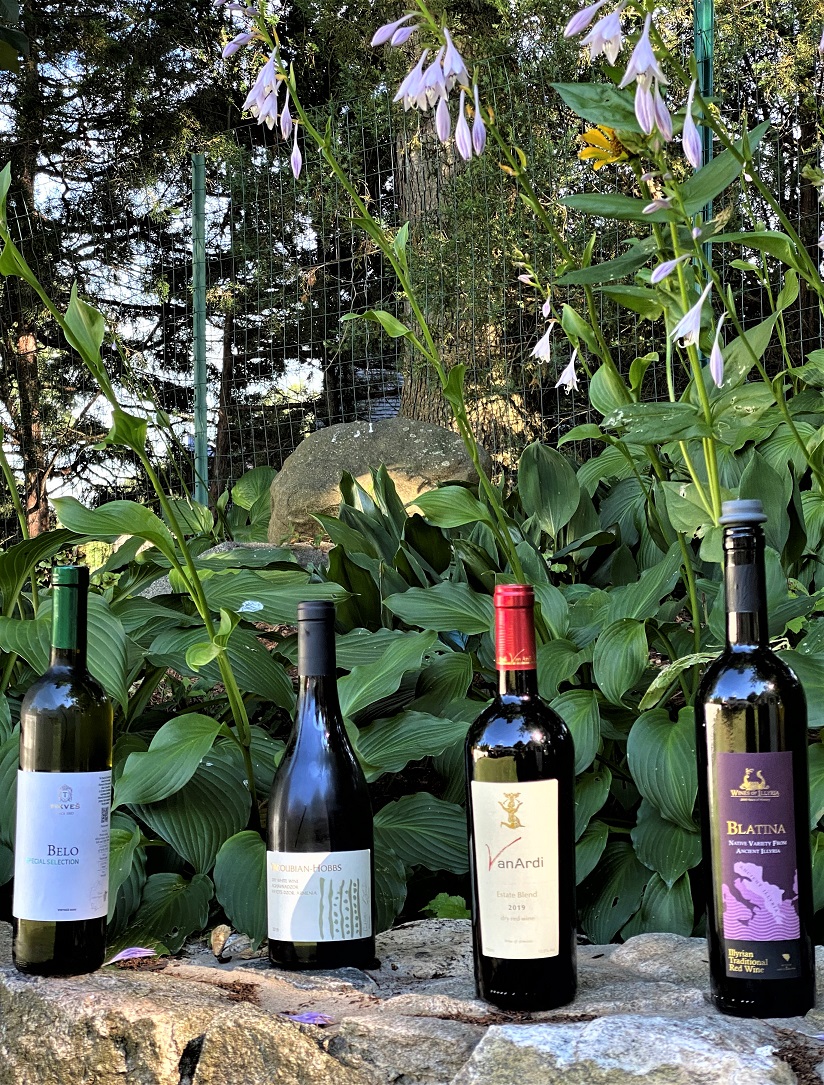
First, two wines from Eastern Europe. I never had the wines of Bosnia and Herzegovina, so this was a new country I was able to add to the list. Both wines were tasty, and Tikveš Belo was probably my favorite wine out of these 4. New grapes are marked in bold:
2015 Čitluk Winery Blatina Bosnia & Herzegovina (13% ABV, 100% Blatina)
Brickish red
Plums, dried fruits, medium intensity
Sour cherries, soft, round, medium body, good acidity, soft tannins
7+, not sure how it was stored. It is still nice, simple, and easy to drink, but probably on the decline.
8, on the second day. Interesting transformation – tertiary aromas are gone, plums, cherries and sage on the palate, nice, round, pleasant.
2020 Tikveš Belo Special Selection North Macedonia (11.5% ABV, Smederevka, Riesling, Marsanne, Roussanne)
A light greenish hue
A hint of gunflint, Whitestone fruit, medium intensity but very confident nose
Lemon, a hint of grass, salivating acidity.
8, this is a beautiful food wine, will compliment a wide range of foods.


It is my second time drinking Armenian wines. I was really looking forward to Yacoubian-Hobbs white, but the wines ended up being a disappointment. The Armenian red was quite drinkable. In any case, when you drink with a purpose, you don’t complain.
2018 Yacoubian-Hobbs Dry White Wine Aghavnadzor Vayots Dzor Armenia (14% ABV, blend of Voskehat, Khatuni, Qrdi, Garan Demak)
Golden color
Stewed fruit on the nose
The palate had some stewed plums, it was overwhelming and had no acidity. The wine was devoid of balance.
N/R, Maybe a bad bottle? Cork broke while I was opening the wine using a standard waiter corkscrew. But the wine didn’t seem oxidized, maybe heat damage?
2019 VinArdi Estate Blend Dry Red Wine Armenia (13.5% ABV, 40% Areni, 35% Haghtanak, 25% Milagh)
Dark Ruby red
Wild berries on the nose
Wild berries, dried herbs, medium+ body, good structure, good acidity, excellent balance.
8-, easy to drink
Now you know all about my wine obsessions. And I get to increase the counter you see on the top of the page from 561 to 567. Little by little…
By the way, there is no stopping in sight. While I’m trying to close on 600, there are people in The Wine Century Club discussing the 800 mark. Talk about obsessions… Enjoy your wine. Cheers!
Pleasures of Obscure: Enjoying the Journey
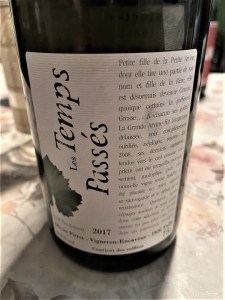 Many moons ago I got bit by the bug of collecting the … grape experiences. Back in 2007 or so, I discovered The Wine Century Club. The word “century” here is used for its exact meaning – a 100. In order to become a member of the Wine Century Club, one has to fill up the application and specify how many grape varieties he or she had tried – as soon as you hit the 100, you can send the application to the designated email address, and your membership certificate will be mailed to you.
The club works on the complete honor system, but there is a legend that if you will lie on your application, your palate will be cursed forever – I don’t know if anyone tried to play the system, but I definitely don’t want my palate to be cursed, so I never tried.
When I started this blog back in 2010, I was at the 200 grapes level – so-called Doppel. I carefully documented my journey to the 300 mark (a Treble Member) under the category of Treble Journey. Since that time I managed to reach the 500 level (called Pentavini) back in February of 2016 (exactly 4 years ago) – and this was the last post on the subject of The Wine Century Club – however, I continued documenting my “rare grape” discoveries throughout the posts (that is yet another category in here), and I still hope to reach the 600 mark (called Hexavini) in my lifetime, even though the process became considerably slower at this point. There are more than 1,300 grapes used in the winemaking today, but it doesn’t mean that wines made out of those grapes are readily available, easy to find, and inexpensive.
While reaching the highest possible number of grapes tasted is the goal, my main joy is in the journey itself. There are multiple fun aspects of that journey. First, you get to drink unique and different wines. When taking a sip of Kharkuna or Prunelart, you have no preconceived notions. You can’t say “ohh, it doesn’t taste like Cabernet”, because it is not Cabernet. You now have to decide if you like or don’t like this specific wine in your glass – you have nothing to compare it to and be disappointed by comparison (“ohh, this $30 Cabernet tastes like crap compared to $20 bottle I had last week”) – you have to make a simple, binary decision – 1. I like it. 2. I don’t like it.
Secondly, you get to play a part of the wine sleuth – you need to find information about the grape, you need to find out if Ull de Liebre is a new grape for you, or if it is simply another name for Tempranillo, and you need to verify and compare your sources – lots and lots of fun, I’m telling you.
Ultimately, the list of grapes you tasted is yours and only yours, and you have to make some decisions – for example, will you count clones or not? Is Sangiovese Grosso the same as Sangiovese? Is Ink de Toro identical to Tempranillo, or should it be considered a different grape? What are you going to do about all of the Pinot Noir clones, which many producers, especially the ones in Oregon, love to tell you about? The journey of every grape geek is unique and different – and fun.
As I mentioned before, my last post on the subject of The Wine Century Club was 4 years ago. At that time, my “grape count” which you can see on the top of the blog, was standing at 518. During these four years, I managed to add another 37 varieties, now reaching the 555 total.


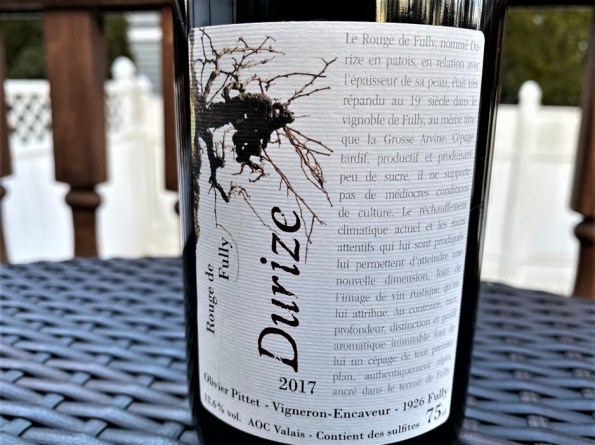
Here is another interesting tidbit for you. Only a month ago, I managed to finally complete the original (!) Wine Century Club table, by adding Arvine Grosso (original table, which you can find on the top of the page here, had 184 varieties listed and had both Arvine and Petite Arvine) to the roster, so this was one of the triggers to this post.
I’m honestly not a hurry, I really enjoy this journey. I have another 3-4 wines made out of unique grape varieties, waiting to be open. Will I ever reach 600? I can’t tell. But I can tell you that I’m thoroughly enjoying each and every rare grape encounter – yes, you can call me a grape geek.
In case you are wondering, below is a full list of all 37 new rare grapes added to the collection over the past 4 years. Have you ever been bitten by the grape bug? Cheers!
Last Bottle Sign Up ($10 credit)




 Talk-A-Vino