Archive
Re-Post: Best Hidden Secrets Of The Wine World: Rioja
During 2011 I wrote a number of posts for the project called The Art Of Life Magazine – of course talking about my favorite subject, wine. The project closed, but I still like the posts I wrote, so I decided to re-post them in this blog. Also, in that project, posts were grouped into mini-series, such as “Best Hidden Secrets” you see here – I will continue re-posting them from time to time.
Also note that the series was written for a slightly different audience – I hope none of my readers will take offense in the fact that sometimes I’m stating the obvious…
 “Let me tell you a secret” – how many stories started from this sentence? Adventures, journeys, discoveries, friendships and feuds, love and hate – secrets can be beginning of many things.
Secrets have special place in our lives. Secret is a hope. Hope, anticipation and promise of unique experience. Humans always hope to find secrets – of health, wealth, attraction, eternal life. When you know a secret, you feel good – you possess something which nobody else does. Or at least nobody from the people you know. And this is when it becomes difficult. We are social creatures, and we want to share. When we share a secret, we feel special, we feel high above, as we share something which a moment ago was unique and exclusively ours. Then we regret we shared – ahh, that moment of weakness. And yes, you are right, there are evil secrets, those which bring death and destruction – but nothing like that belongs to this blog.
Okay, fine, I hear you. This is not a philosophical blog – this is the blog about wine and experience. But – the preamble was necessary, as we will continue from here on. Secrets (sometimes referred to as “know-how”) are everywhere, and world of wine is no exception. Are they really such a secrety secrets? Of course they are not, and you don’t need a special clearance to learn them. However, secrets are personable, and if secrets I plan to share will only make you yawn, please make sure to tell me so.
So what can be so secret about something which is available in abundance literally everywhere? Of course it would be nice to discover a secret of buying a bottle of Chateau Petrus for $100 instead of $3,500, but this is something which I don’t know myself (hey, if by any chance you do, can you PLEASE share that special knowledge with the rest of us?).
So my secrets will be about wines which will give you a lot of pleasure without the need to refinance the house. And they will be about the wines you probably never heard of. I promise you will learn some secrets, and I’m certain you are not going to regret.
Bored, tired, lost my chain of thoughts and need a drink? And even if you like it so far, it might still be a time for a drink. Get your bottle opener and reach out for that Spanish wine called Rioja. Why Rioja? Rioja is a well known wine from Spain – what makes it a “secret”? I truly believe that Rioja is under-appreciated by the wine lovers, despite two very essential characteristics: value and ability to age. Let’s start from aging: Rioja will rival best Bordeaux and Burgundies in its ability to age. Just to give you an example, I recently had an opportunity to try 1964 Monte Real Rioja Gran Reserva (the wine was exactly 45 years old when I had it) – and the wine was still youthful, with bright fruit, very round and polished, and was not over the peak at all. Now, talking about value: how much do you think this 1964 Rioja costs today? Before we get to the numbers, you need to take into consideration that 1964 was one of the most exceptional years for Rioja in the past century. Essentially, best Riojas had being produced in 1964, 1973 and 2001. So if you would take a parallel with great Bordeaux of 1982, a bottle of wine from that vintage would easily cost you thousands of dollars. Yet that 1964 Monte Real Gran Reserva can be bought today for $220 (if you are in US, you can find it at PJ Wine store in New York) – this is an outstanding QPR (quality price ratio).
Rioja wines are typically aged in the oak barrels, and then still can be aged in the bottle before they are released. You can see all that information on the label of Rioja wine. If the wine just called Rioja, it means that it was aged in oak less than a year. If the wine is called Rioja Crianza, it means that it had being aged for two years total – 1 year in the oak, and another year in the bottle. Rioja Reserva had being aged for a minimum of 3 years – 1 in the oak, 2 in the bottle. And the Rioja Gran Reserva is aged for a minimum of two years in oak and 3 years in bottle. Also, Reserva and Gran Reserva is produced only in good years, not always. Why all the classification? Let’s take a look at couple of Rioja wines readily available today.
First, 2001 La Rioja Alta Vina Ardanza Reserva Especial. Just to make things more complicated, here is additional designation of Rioja wines – Reserva Especial. “Good” thing is, you are not going to find too many wines like that, because Reserva Especial is assigned only in the best of the best years – again, repeating from above – 1964, 1973 and 2001. La Rioja Alta is a very good producer with wide variety of great Rioja wines, and one can make a few blog posts talking just specifically about them. This 2001 Reserva Especial is outstanding – when you take a sip, it becomes a fiesta of flavor in your mouth – cherries, plums, cigar box, chocolate notes, all bright but not overpowering at all, with silky smooth tannins and long finish. This is the great wine, and will continue to evolve for many years to come. The price of the pleasure – $29.95!
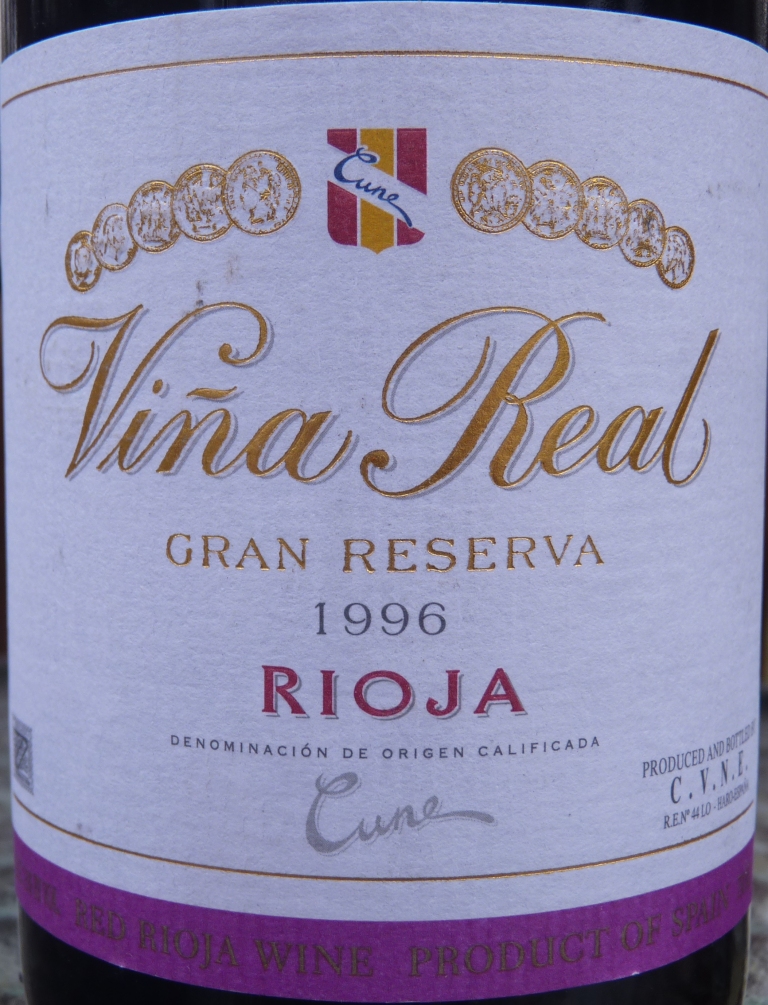 Here is another example – 1996 CVNE “Vina Real” Rioja Gran Reserva. This is Gran Reserva in all meanings – while this wine is 15 years old, it needs time like great Barolo to be enjoyed fully. In the first half an hour of breathing, only tannins opened up to the point of completely puckering the mouth, and the fruit appeared after another half an hour of time. After an hour and a half of breathing, this became a nice and gentle wine with the cherry and eucalyptus notes. Great wine, again at a great price – $31.99! Considering that this is a Gran Reserva, comparable Bordeaux or Burgundy wine would cost probably ten-fold, if not more.
I did my best to share the great secret of Rioja – don’t know if I managed to convince you, but I hope at least you feel encouraged to give Rioja a try. I truly believe you will not be disappointed. In any case, there are many more secrets we are going to share – rare grapes, little known wine regions, and many other wine pleasures to be discovered along the way. Cheers!
Magnificent Rioja
 The title for this post didn’t come up easily. I was back and forth with myself many times. The reason? Tasting these Rioja wines was a phenomenal experience, something which doesn’t happen often during one’s lifetime. The brightness and openness of the 65-years old Rioja was nothing but stunning – but I think I’m getting ahead of myself, let’s go back to the beginning.
I happened to fall in love with Rioja wines about 4 years ago, after attending a Rioja seminar at PJ Wine store (the owner, Peter, is anything but fanatical about Spanish wines – of which PJ Wines houses an amazing selection all the time). At that seminar I was lucky enough to try 1964 Monte Real Gran Reserva Rioja and that was a revelation – the wine was fresh and bright, as it would’ve been maybe 5 years old, not 40+. After that tasting I became a Rioja fan for life. I have to also mention that even today, you can buy 1964 Rioja starting from less than $300 – for comparison, a bottle of 1966 DRC will set you back about $10,000. I rest my case.
When my friend Zak told me that we can get a bottle of 1947 Rioja directly from the winery for less than $400, the decision was instantaneous – this is a once in a lifetime opportunity and it is worth it (don’t remember how many bottles were still available, but surely there were not that many). So we got that 1947 bottle and after a little while, were able to set the date for the tasting.
To make sure our 1947 Rioja will not feel lonely, we got a few more bottles to keep it company. You can see the full line up on the picture above, and here is an exact list:
2008 Raventos & Blanc Reserva Brut Cava
1993 Lopez de Heredia Vina Tondonia Reserva Blanco
1947 Imperial Gran Reserva Rioja
1976 Imperial Gran Reserva Rioja
1995 Imperial Gran Reserva Rioja
Pinord Moscatel NV
There is one more bottle in the picture – Jorge Ordonez Malaga – but, guess what – we never opened that, being quite overwhelmed by the desert time (it is a great bottle of desert wine, but – oh well, there is always a next time).
We started with Cava, of course. It was fresh, round and pleasant – not necessarily hugely distinguishable, but definitely a nice bottle of wine to have before dinner starts.
The first foray into the magnificent world of Rioja was with the 1993 Lopez de Heredia Vina Tondonia Rioja Blanco. I will gladly challenge you to find a bottle of 19 years old white wine that will taste as fresh as this 1993 Rioja. Maybe you will have some luck with white Hermitage, Chablis or some of the white Burgundies, or may be some of the really obscure grapes like Romorantin – but in any case I’m sure it will not be easy. This wine was fresh and complex, with mineral notes, a hint of white apple, perfect mid-palate weight and still bright acidity. Definitely a ”wow” introduction to the ”wow” lineup of reds.

Needless to say we started with 1947 Rioja. Considering the tender age of 65 years, the first challenge of course was to get the cork out. I wish we had one of those glass-cutting devices described in the PJ Wine blog post, which simply allows you to cut the whole neck of the bottle with the cork in it, and not worry about the cork crumbling into your wine – well, we don’t drink wines of that age often enough, so we had to stick with more conventional tools, like the two-prong cork puller.
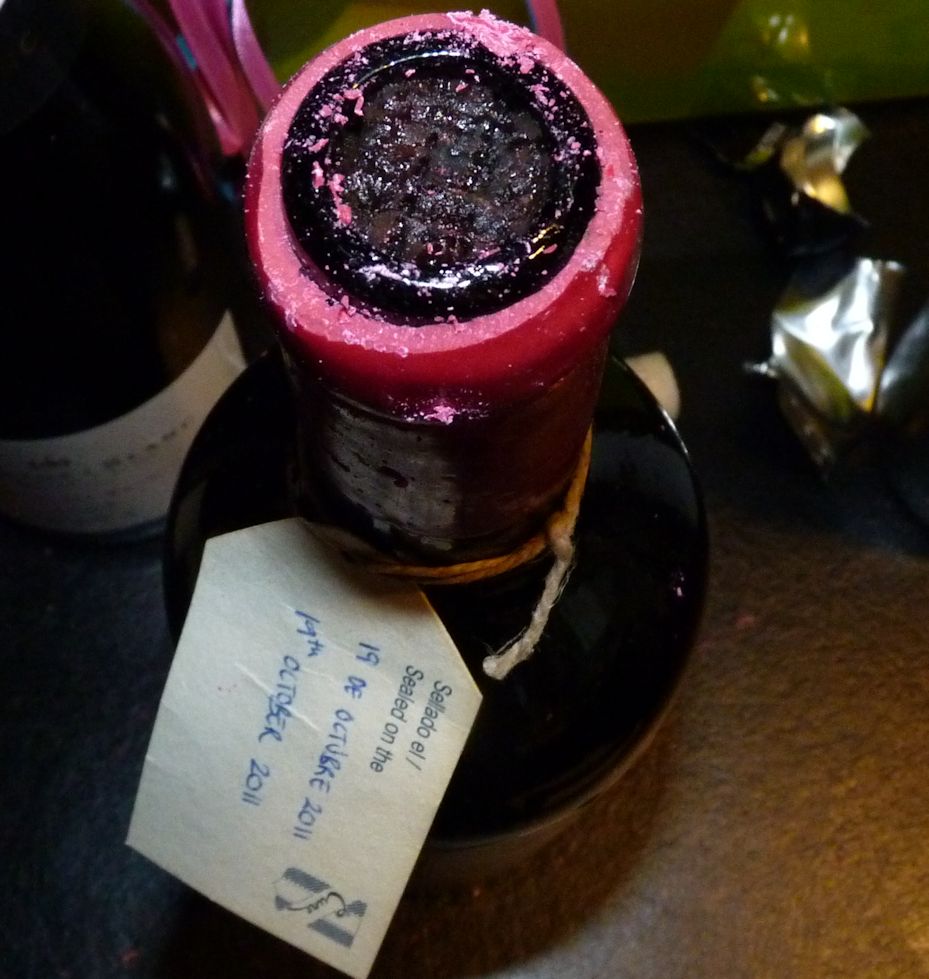 It almost worked.. and then not. It took two people and a good 5 minutes of time to get the cork out, little by little, piece by piece – but we managed to do it almost clean, with maybe one or two tiny pieces falling back into the bottle.
Cork is out, and wine goes into the glasses. The first thing to note is the color, which is still red and not brown – of course, it is not purple, but it is dark garnet red. And for the taste… Should I simply tell you that wine was magnificent and leave it at that? Well, okay, it wouldn’t be fair. Let’s continue. On the nose – cocoa powder, cedar dust, a hint of cinnamon, smoked paprika. On the palate – a good amount of red fruit, wine comes in bright and youthful, with good acidity. Then the second wave came in as wine opened up a bit, with more sweet fruit and then tannins kicking in. I don’t want to bring in exotic animals to describe this wine, as Joe Roberts did with a black panther, so my description will be simple – grace and elegance. I can only wish to have the same grace and elegance myself when I reach that age.
Moving along, it is now time for the 1976 Rioja. 29 years younger than the previous wine and… ahh, so different! Barnyard on the nose, very pungent, savory, with a hint of the same barnyard on the palate, dried cherries, earthiness. If umami is a part of the wine tasting profile, this wine definitely had it.
And for the 1995, we decided to give it a little breathing time – it spent 2 hours in the decanter. The wine was fresh, with beautiful garnet color, bright fruit, very good acidity and soft tannins, a touch of eucalyptus and cedar box. Very youthful and upbeat, if you will.
After tasting this lineup of magnificent Rioja wines from the same producer, the most interesting question in my mind is ”how will these wines evolve?”. Even 1947 didn’t reach the end of life considering the way it was showing, never mind 1976 and 1995. Will the pungency of 1976 stay, or will it evolve to something akin to 1947 in 29 years? How will 1995 taste in 48 years, and will it even last that long? These are all great questions I will not get an answer to – but this is part of the wine connoisseurship game – think about the future but definitely appreciate and enjoy what you have right now (huh – feel free to beat me up in the comments for banalities).
So far I didn’t tell you about the food – there was a lot of great food. While you can’t taste it anyway, here is at least a picture of one of the dishes – roasted potato-encrusted Striped Bass:

We also had “death by chocolate” dessert which perfectly paired with Pinord Moscatel, which happened to be well-aged (the bottle simply got lost under the shelf and was “discovered” many years later).
Overall, this was a great experience, which will stay in my memory for a very long time. To tell you honestly, I think it will not be easy to top off this experience, but as the very least I can promise to share all that with you. Wish you all great fun with wines – cheers!
Weekend Wine Happenings
This past weekend was filled with different wine events, which I want to share with you. First and foremost – arrival of the No Girls wine. No Girls wine is made by Christophe Baron, the wine maker behind Cayuse – one of the cult wineries from Washington state. What is so special? No Girls wine is available only through the mailing list. If you ever dealt with winery mailing lists you probably know that before you get on the mailing list, first you spend time on the waiting list for the mailing list. It took more than two years for me to move from waiting list to mailing list with Turley, makers of the great Zinfandels. I think for more than 3 years I’m still on the waiting list for Alban, Cayuse and Carlisle. With No Girls wine, despite the fact that I signed up literally on the same day as the offer came in, initially I got an e-mail that I didn’t make the mailing list, with the follow up e-mail in a couple of month saying that I got an allocation.
Hence the excitement and anticipation associated with arrival of No Girls wine – 2008 Grenache and Syrah from La Paciencia vineyard in Walla Walla. I can’t tell you anything about the wine itself – I plan to give it some time first. However, even packaging alone can make you excited – and to explain what I mean, here are few pictures for you.

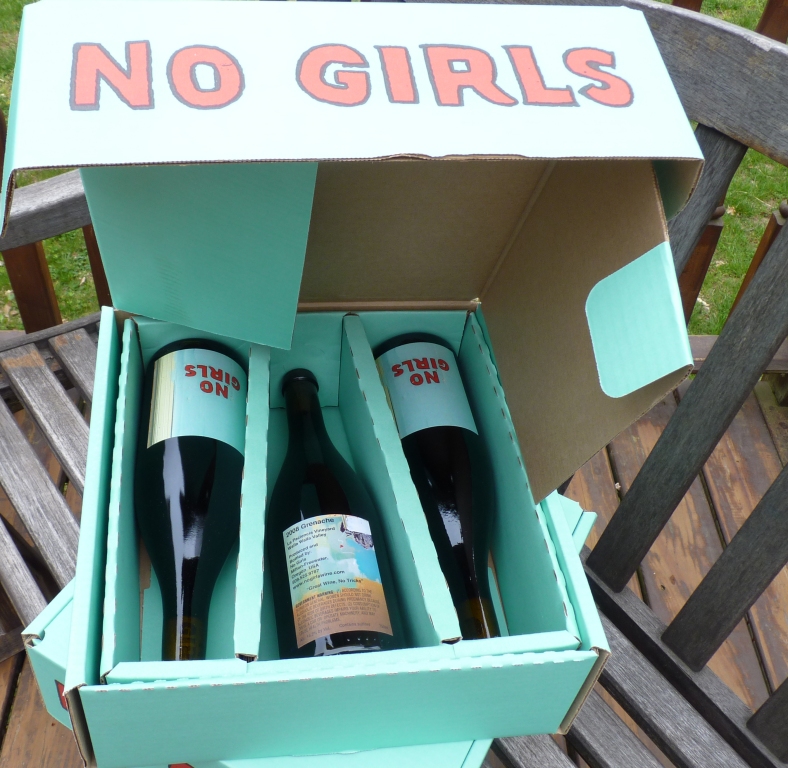

Very bright and clever – what do you think?
Now, on the subject of the wines I actually tasted over this weekend, there were few I wanted to talk about.
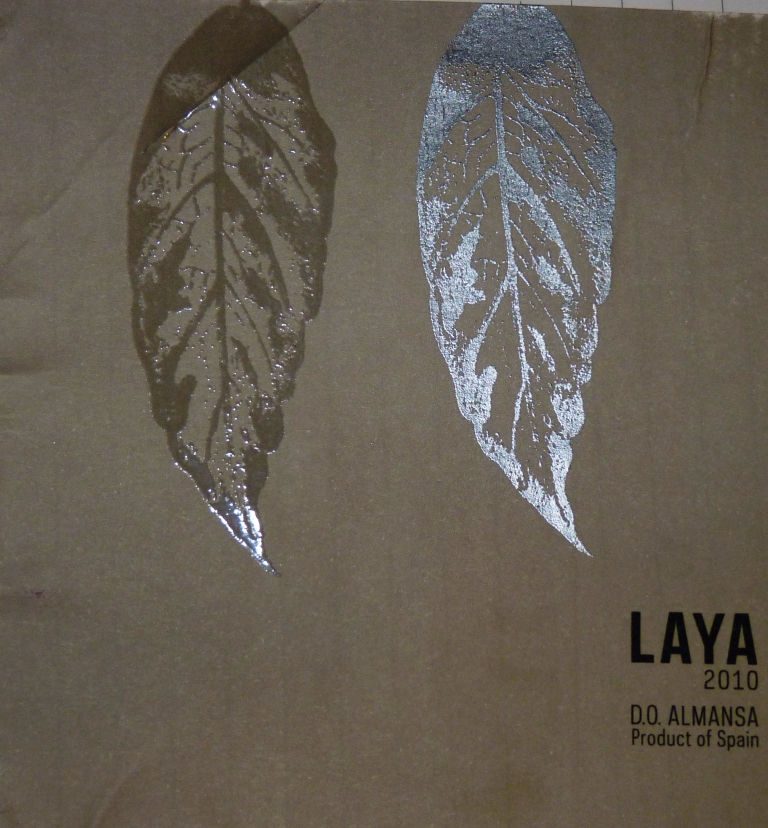
First one is a Spanish wine 2010 Laya D.O. Almansa (14.5% ABV). This wine is a blend of Garnacha (70%) and Monstrell (30%). When you open the bottle and take a first sip, it comes out very grapey and young. It took this wine 3 days to develop a nice undertone of richness, with some ripe red fruit, a touch of spices and smokiness. Considering the price ($7.99) this is a great everyday wine (Drinkability: 7+).
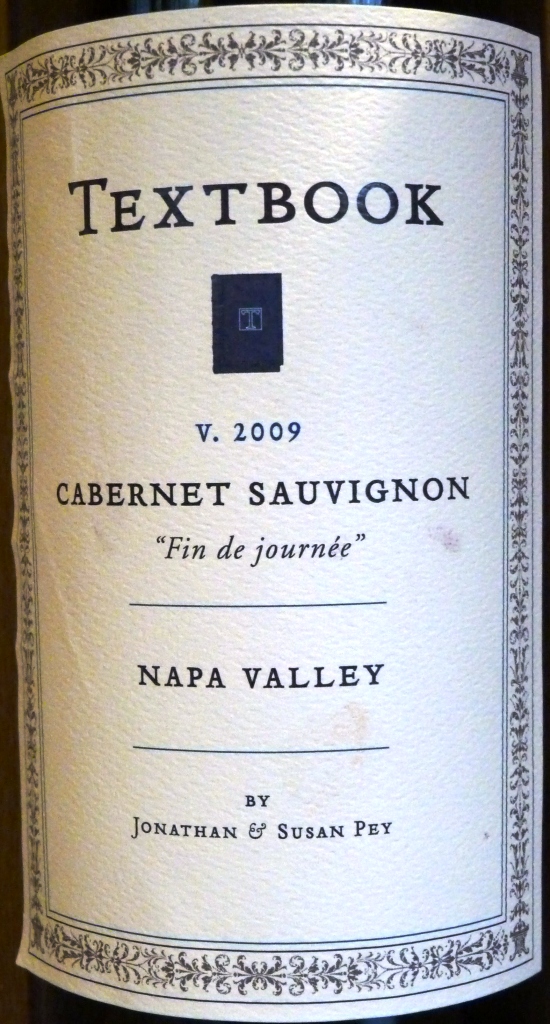 Next one is a 2009 Textbook Cabernet Sauvignon Fin de journee Napa Valley (14.5% ABV). I had this wine for a few months, waiting for the right moment to try it and building up expectations – somehow the name “Textbook” caused a lot of warm expectations, especially with the back label promising a “textbook Napa Cabernet”. The wine had a nice nose of the dense black fruit, not too jammy, but present. On the palate, the fruit grew together with nice tannins and silky texture, only to somehow stop short of delivering the “oompf”. Almost like watching the golf ball slowly rolling after the putt “almost, almost, almost, ahh”. Signature black currant was almost there, but didn’t really show up in its clean beauty. Don’t get me wrong – for a $20 Napa Cab, this was a good wine, but it had to battle my inflated expectations… and lost. Drinkability: 7+.
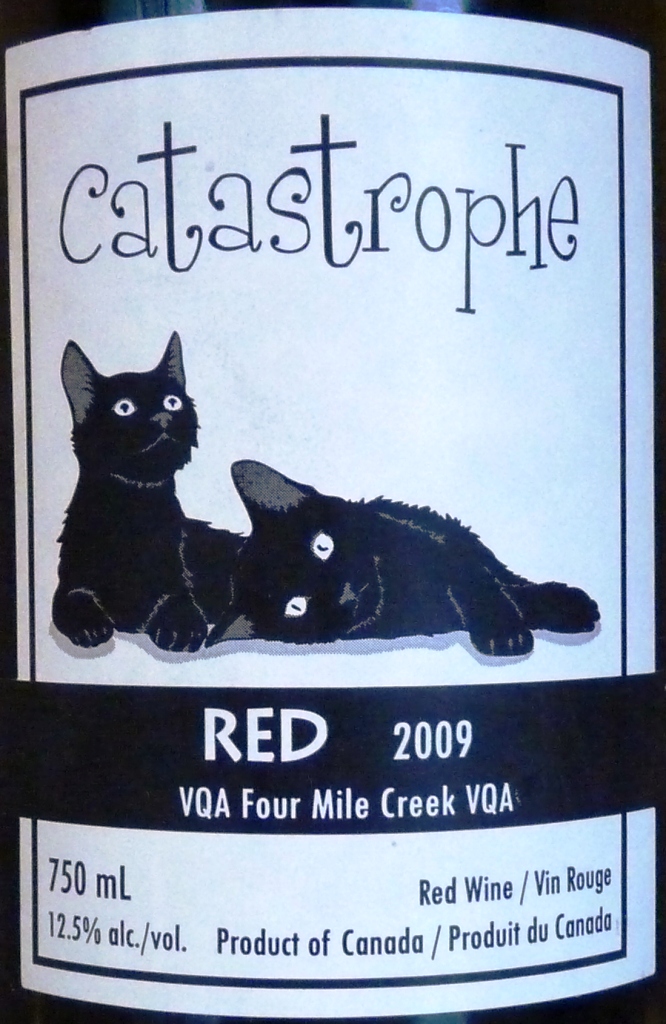
Last but not least was 2009 Catastrophe Red Cattail Creek Estate Winery, Four Mile Creek VQA, Canada (12.5% ABV). We brought this wine back from Canada after the last year’s trip. It is a blend of Gamay Noir, Merlot and Cabernet. On the nose, it has a bright red fruit. On the palate, there is more red fruit, such as sour cherries, hint of earthiness, good clean acidity, very balanced. Medium body and very easy to drink. This wine also would be a great food wine – too bad, I only brought one bottle back. Drinkability: 8-.
That’s all folks. Don’t forget that April 25th is a Wine Blogging Wednesday, with the theme “Barossa Bumerang” – find a bottle of Barossa wine from Australia, enjoy it, and write a blog post or at least leave a comment here. Have a great week! Cheers!
Tasting Spanish Wines – Blind, Of Course
 Once again, we got together with the group of friends to play a fun game of blind wine tasting. This time the subject was Spain (in the past we had a lot of fun blind tasting Pinot Noir and Sparkling wines – you can read the posts here and here).
Why Spain? Spanish wines are getting a lot of recognition among wine lovers of all walks. On average, they deliver the best quality for the price (QPR) among most of other wine regions, and in the end end of the day they simply taste great and deliver lots of pleasure. So the theme was set, the bottles wrapped (every participant have to bring a bottle wrapped in paper bag) and opened, and the numbers are randomly assigned to the bottles.
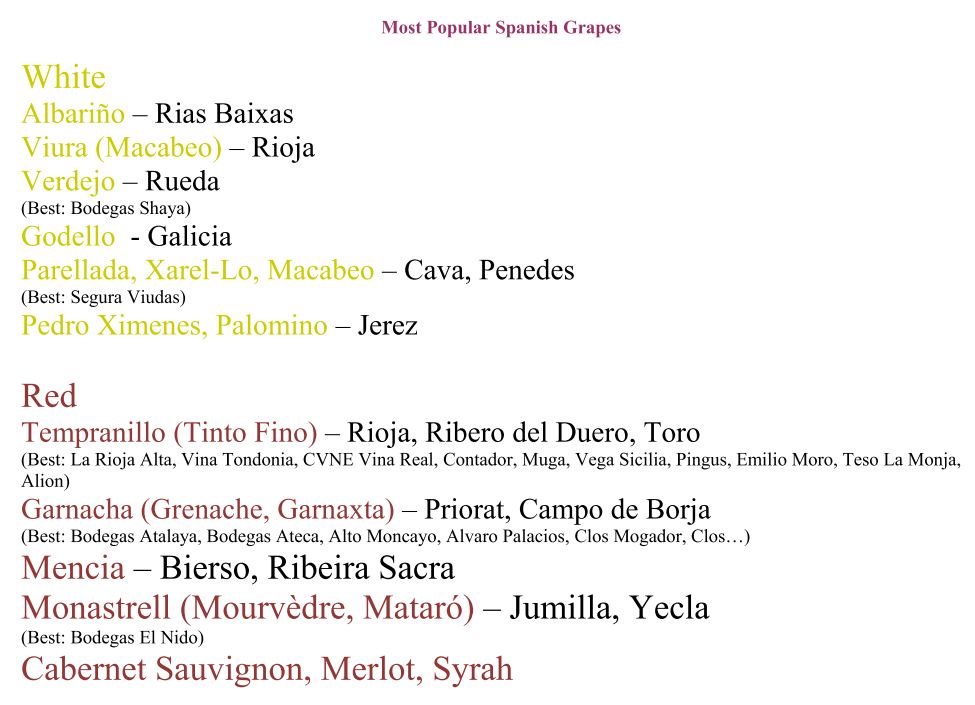
We had total of six wines, all red. The idea would be may be to identify the grape (an added bonus, of course), but mainly to see a consensus as to which wine would be the most favorite of the group – blind tasting has a great leveling effect – you are not intimidated by the price or a label, so you can stay true to your taste buds. Just to set the stage as to what are the most popular Spanish grapes, I prepared the following cheat sheet, which I’m including here in its entirety:
Off we went, so for what it worth, here are my notes as I took them during tasting – no corrections afterwards:
1 brick dust on the nose, good acidity, pepper – tempranillo
2 young wine, good fruit, open – mencia, monastrell?
3 earthy, tame fruit, age, good fruit, dark color, great acidity, pomegranate, smokiness
4 feels like it is corked, but I hope it is not. Fruit at the bottom. Final verdict – corked.
5 beautiful, most balanced, good fruit, plums- Grenache?
6 classic Rioja, cherries, acidity, best of tasting.
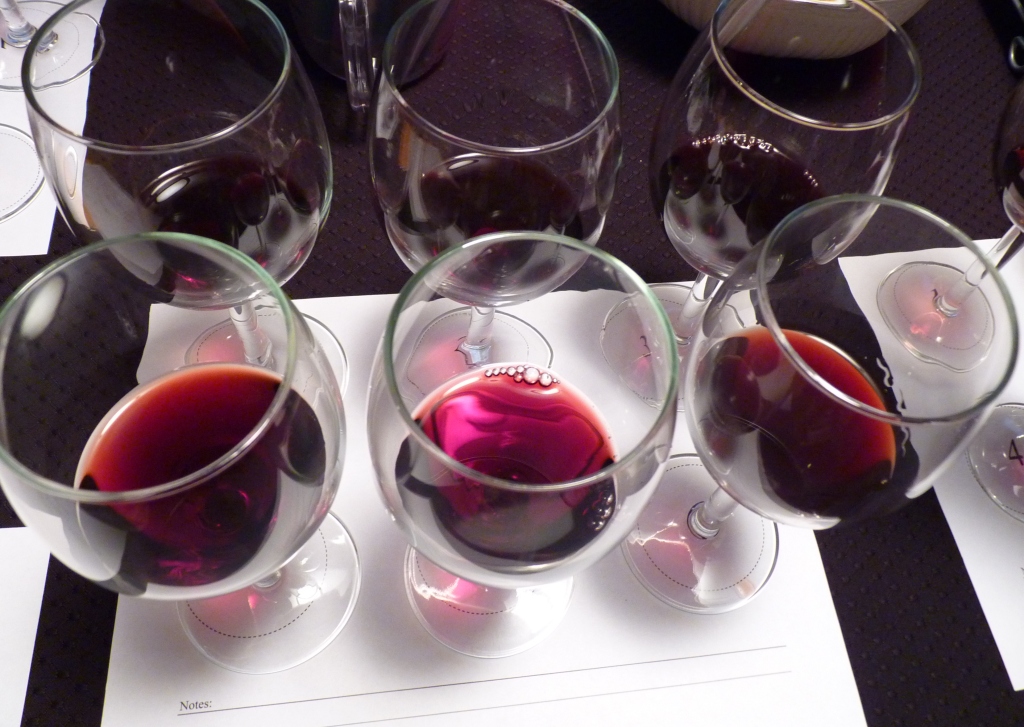
So, reading the descriptions, what do you think those wines are? This is always not an easy guess, as your mind is racing trying to pinpoint taste, texture and any other sensations you are experiencing at the moment against your mental database of the wines you tasted (that database is either resisting and says “nothing found” or goes all the way and says “it is similar to all 10 of these”).
And here are the actual wines:
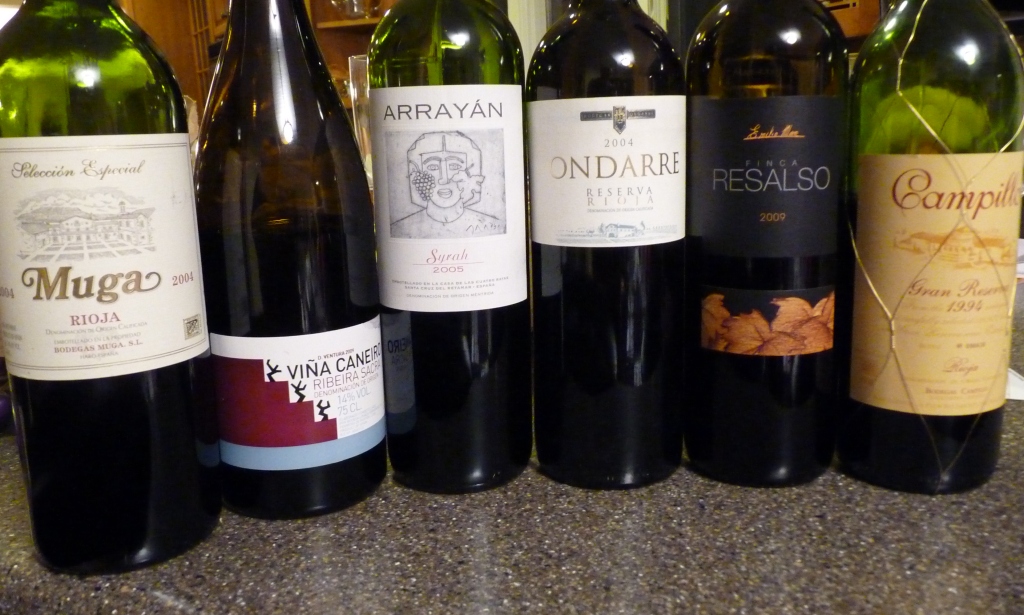
1. 2004 Bodegas Muga Rioja Selection Especiale
2. 2009 D. Ventura Vina Caneiro Ribeira Sacra DO
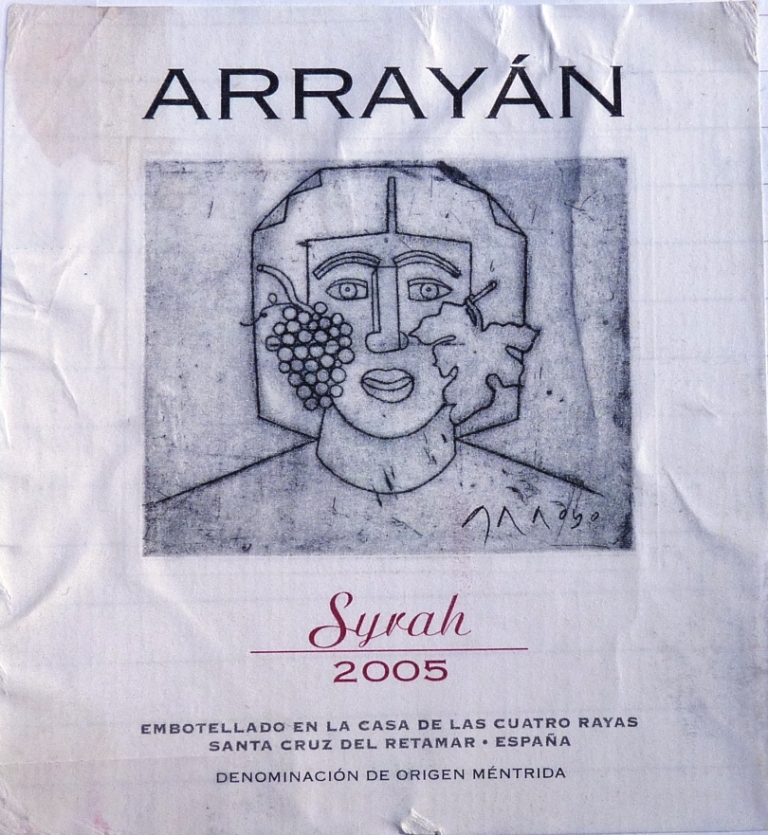
3. 2005 Arrayan Syrah, Mentrida DO
4. 2004 Bodegas Ondarre Rioja
5. 2009 Emilio Moro Finca Resalso, Ribero del Duero
6. 1994 Campillo Rioja Gran Reserva
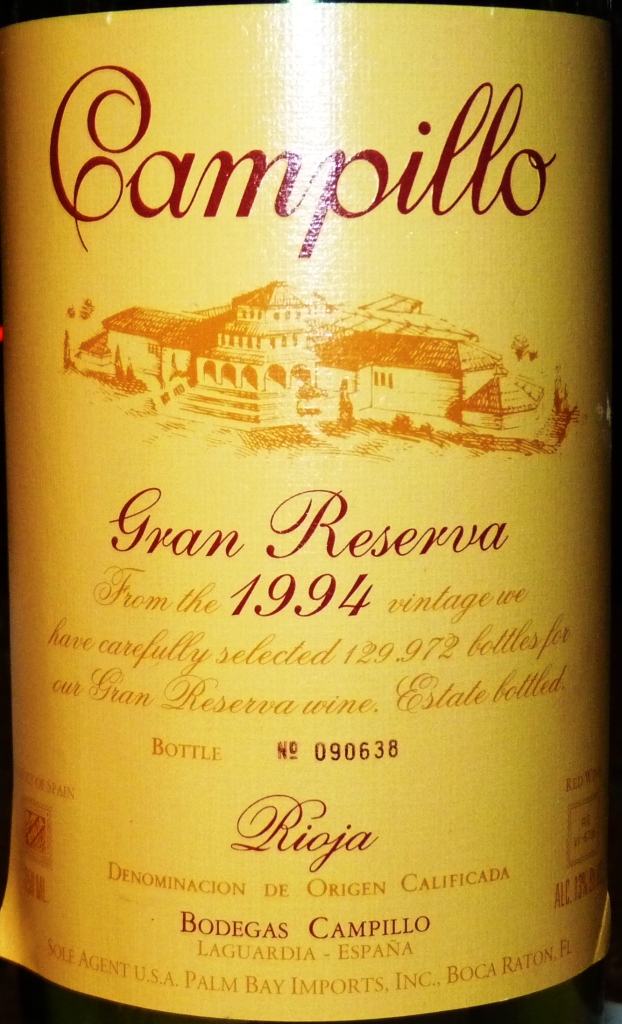 Now for the popularity vote, here is how it works. Everybody can vote for up to two wines (but don’t have to). If there will be one wine which will receive a majority of the votes, it will be declared a winner. If two bottles will receive the same number of votes, we would vote again for the one favorite out of the two.
Can you guess which wine won? If you guessed “Bodegas Campillo” (as the very least judging by the label to the left), you are correct. It won by the unanimous vote – everybody liked it. Distant second was Arrayan Syrah (half of the group voted for it). Bodegas Campillo was classic and pure Rioja, with all the clean flavors of cherries and cedar box, great acidity and very fresh, not even a hint of 17 years of age. Arrayan Syrah was probably the most unusual and unexpected wine in the group – beautiful, balanced, and very pleasant to drink. But just to give due respect to all 6 wines we tasted, all except the corked bottle were very good wines, worthy of being in the competition.
If you feel encouraged to try blind tasting on your own, I would suggest to avoid doing it for the whole country. Single region or a single grape (or a stable blend, such as GSM or Bordeaux) would work much better to showcase the range of possibilities. But other than this remark, I think blind tasting is the best way to learn about your wine preferences, to have great experience and to have fun! If you got blind tasting experiences of your own – please share them here! Cheers!
Notes from Slocum & Sons Wine Tasting in Connecticut
This past weekend I attended yet another great wine tasting by Connecticut wine distributor Slocum and Sons. Of course when hundreds of wines are presented in the tasting, there is a good chance of finding lots of great wines among them. This tasting was no exception – I had a lot of tasteful encounters at the event. Here are some notes, with pictures, as usual.
Let’s start with the sparkling wines. One of the first wines we tasted was Armand de Brignac Brut Gold (Ace of Spades):

The Champagne is this sparkled (no pun intended) bottle was good, with good body, green apple and zinging acidity running in the back. At the same time, as I’m always looking for QPR when I’m thinking about wine, this wine, the most expensive in the entire tasting, at about $270 per bottle, doesn’t not represent value at any level. If I have to spend this amount on the bottle of Champagne, I would much rather drink Krug.
Continuing sparkling wines category I have to mention Champagne Vollereaux, which is a Growers Champagne. We tried Vollereaux Brut NV, Vollereaux Rose Brut NV and 2004 Vollereaux Cuvee Marguerite – all beautiful wines, full flavored champagnes, with the most expensive one still being less than 1/4 of the price of Armand de Brignac – and delivering more pleasure.There were other great Champagnes there, such as Laurent Perrier and Veuve Clicquot, but I also have to mention a wide variety of excellent Cavas, sparkling wines from Spain – here is the picture of the line up of one of my all time favorites – Segura Viudas, with all four wines being one better than the other:

Moving one to the white wines, there were some personal discoveries and some “meet and greet” with old favorites. In the “personal discoveries” group first I would like to mention 2008 Trefethen Dry Riesling Oak Knoll District, Napa valley – this is the first California Riesling which I really enjoyed – it got all the beautiful white fruit, balancing acidity and even hint of petrol!

The next discovery are two wines from Bodegas Shaya – 2010 Bodegas Shaya Verdejo Rueda DO and 2009 Bodegas Shaya Habis Rueda DO.

Both wines are made from the 100 years old vines Verdejo, first wine fermented in stainless steel tanks and second one, Habis, fermented in French oak barrels. Bodegas Shaya comes out with very clean fruit and minerality expression, good acidity, very balanced. But once you taste Habis, the first and immediate impression is Wow – this will beat any Chardonnay! I don’t want to push it too far, but I would love to see this wine next to Peter Michael Chardonnays in the blind tasting – that would be a very interesting experiment.
Few more highlights in the white wines category. Three of the Talbott Chardonnays – 2009 Tabott Sleepy Hollow Chardonnay, 2009 Talbott Logan Chardonnay and 2009 Talbott Kali Hart Chardonnay were all outstanding, showcasing balanced wines, with good acidity, white fruit and hint of vanilla. I didn’t have Talbott wines before, so I was very impressed with the quality. And then in the “familiar category” I want to mention two Spanish whites, both of them I got to know thanks to the The Capital Grille’s “The Generous Pour” summer wine program. These wines are 2010 Jorge Ordonez Botani and 2010 Bodegas La Cana Albarigno.
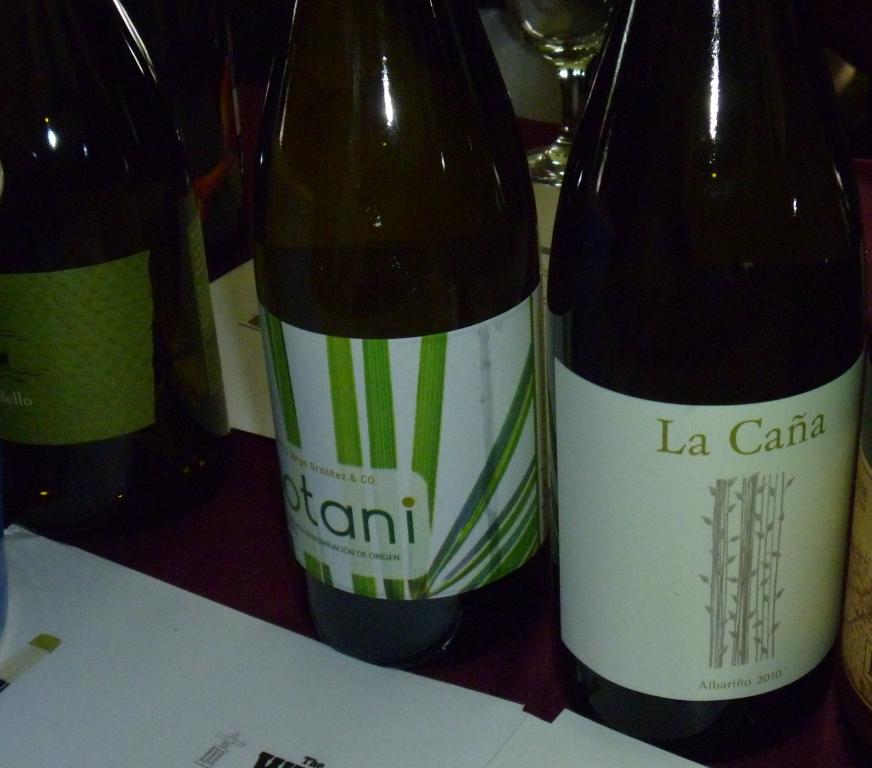
Both were beautifully refreshing, with floral notes on the nose, with La Cana having a bit more of acidity and mineral expression – both wines should be perfect on any summer day.
Coming to reds, the task of sharing my impressions becomes even more challenging – there were A LOT of great ( did I say “great”?) wines from Spain, California and France, so I will have to resolve to more of the pictures than words.
I want to start from the wines of Charles Mara. As some of you might remember, 2007 Mara Pinot Noir Laughlin Road Ranch was my most favorite wine last year (#1 in the Top Dozen). Now, I had an opportunity to try 2008 Mara Pinot Noir Laughlin Road Ranch Russian River Valley. What a radical departure! If I would be given those wines in the blind tasting, I would never even guess that those wines are coming from the same vineyard, left alone made by the same person. While 2007 was California Pinot at its best, 2008 is a pure Burgundy – dry, austere and in need of time – it probably needs another 5 years to open up.
Another very interesting wine was 2008 Mara Russian River Valley Zinfandel “old vines”:

As Charles Mara said himself, he was trying to make a “super-Tuscan” of Zinfandels, by blending zinfandel grape with Cabernet Sauvignon grapes from two different vineyards. I think he successfully accomplished that, ending up with powerful, dense red wine, showing beautiful fruit with a great restraint. This wine also need at least another 5 years to showcase fully.
Spanish reds selection at the tasting was so strong that it is nearly impossible to decide what wines should be mentioned and which were my favorites – El Nido, Alto Moncayo, Muga, Sierra Cantabria, Tesso La Monja – all powerful, beautiful wines, all age-worthy, delivering pleasure right now and for the next 30-40 years (or longer). I guess I would have to put a stick in the ground and say that 2007 Bodegas El Nido El Nido was my favorite Spanish wine in the tasting ( with the second thought in my head – well, yeah, and what about … ) – powerful, with amazing structure, firm tannins, good fruit, very balanced – “wow” was my single word descriptor.

By the way, standing next to El Nido are two Spanish wines, 2009 Blau and 2009 Can Blau – both were outstanding, fresh, with lots of sour cherries on the palate – and quite affordable for every day enjoyment.
There are few more reds I want to tell you about. First, it is Chateau Leoville Poyferre from Saint Julien. I already wrote about great experience with 2005 Chateau Leoville Poyferre Grand Cru Classe wine (here is the link to the post). This time I was able to try first, second and third labels of Chateau Leoville Poyferre – 2006 Chateau Leoville Poyferre Saint Julien Grand Cru Classe, 2006 Pavillion de Poyferre Saint Julien and 2008 Chateau Gulliver Bordeaux AOC.
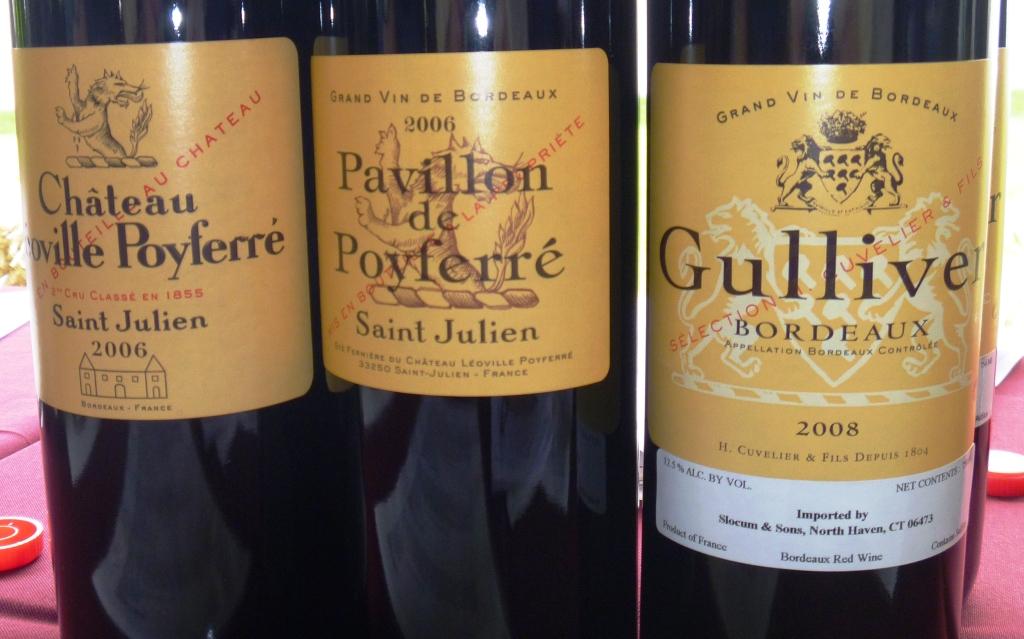
Chateau Gulliver was the lightest from the group, showing lots of earthy notes on the palate, and both Chateau Leoville Poyferre and Pavillion de Poyferre were big, powerful and well structured wines, with chewy tannins and lots of dark fruit, very balanced.
There was another set of wines which belong to the same group (owned by Chateau Leoville Poyferre), but coming from across the ocean – from Argentina, to be precise. These are the wines from Cuvelier Los Andes – take a look at the similarities in the label design:

Two out of four wines presented in the tasting were my favorite – 2009 Cuvelier Los Andes Cuvee Maule, soft and round, and 2007 Cuvelier Los Andes Grand Vin, a Malbec blend, big and powerful.
Last but not least was a group of wines from Ferraton, coming from Northern France – 2006 Ferraton St. Joseph La Source, 2007 Ferraton Cote Rotie L’Eglantine and 2006 Ferraton Hermitage Les Miaux:
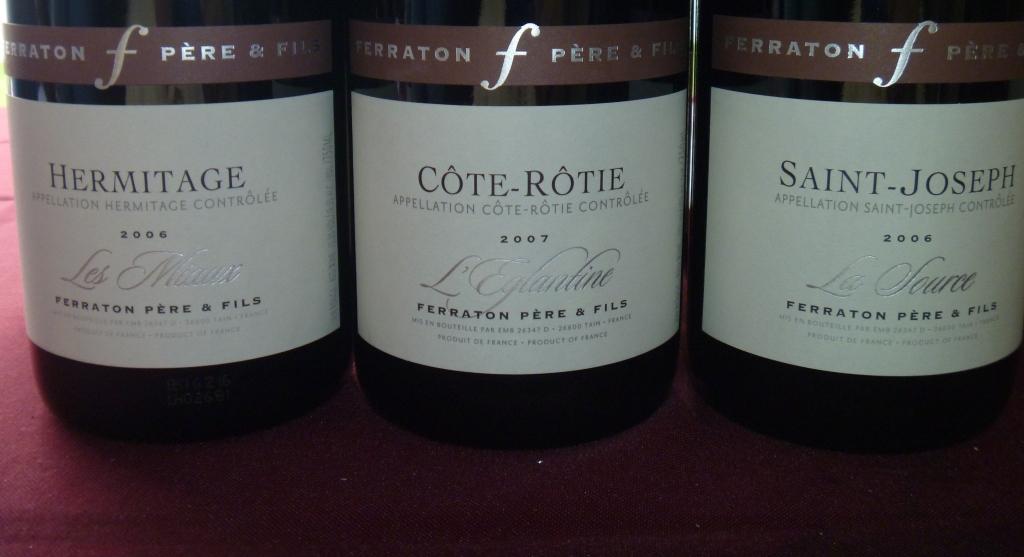
Both St. Joseph and Hermitage were classic Syrah wines, earthy, spicy, with the hint of white pepper and good amount of dark fruit. But my absolute favorite was Cote Rotie. First, I have to admit that it was my first ever taste of Cote Rotie. Actually Cote Rotie meaning in English is “roasted slope”, due to the amount of sunlight and positioning of the vineyards. You could actually taste all those roasted rocks in this wine, creating unforgettable impression. Needless to say this was my absolute favorite in the tasting.
I think it is time to finish – there were still more wines I wanted to share with you, but I think this is enough for now. More great stories is coming, but for now – cheers!
Daily Glass: Martinet Menut
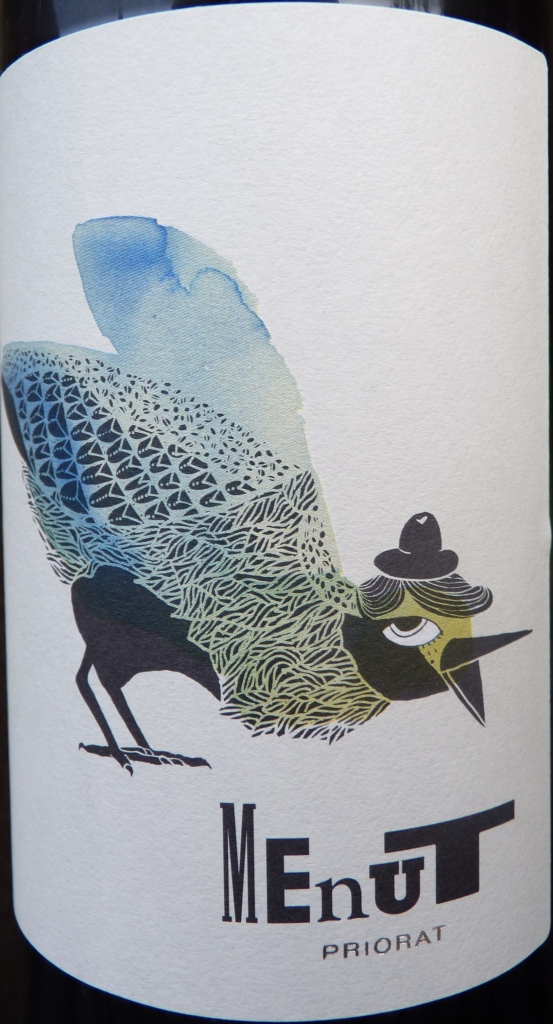 Looking for the bottle to open (this is not ready, not tonight, don’t feel like it,…) I stumbled upon a bottle with the bird picture on the label. Okay, I have no idea how this might taste, never tried that before, don’t know what grape(s) it is made out of – yes, that looks like the right bottle to open.
Cork popped out, and the wine goes in the glass. Energetic swirl (exactly as taught by Kevin Zraly, without covering glass with the hand), sniff and… I couldn’t extort anything beyond sacramental “WOW”… It was a true sensory sensation – the wine had perfect vinous nose, with absolutely everything you want to find in glass of red wine – the fruit, the vineyard, spices, earth, terroir, mystery…
On the palate, it had lots of dark red fruit – plums and cherries, all coupled with good acidity and tannins. Of course, after being blown away so much, I had to check what is it I am actually drinking. This 2007 Martinet Menut is a red wine blend from Priorat region in Spain. I have to tell you – even today, in the age of Internet, there are still plenty of things which are difficult to find. Finding information about this Martinet Menut wine, as well as producer ( supposedly, Clos Martinet, one of the “cult” Priorat wineries) was very challenging. The wine apparently is Grenache-based blend, but this is about all information I’m sure at, so let’s leave it like this. This 2007 Martinet Menut can actually be compared with Clos Mogador I tasted at the Spanish Wine Festival (you can find post here) – definitely in the amount of pleasure one can get from a glass of wine. Drinkability: 8.
You think I got too excited? Always possible, so you’ll be the judge. Get the bottle, and lets compare the notes. Cheers!
Spanish Wine Festival, In Pictures
About 10 days ago, I attended Spanish Wine Festival, organized by PJ Wine in New York. I can give you a summary of the event using only one word: Overwhelming. It is challenging to produce any kind of detailed summary, because there are literally no bad wines in such a well organized tasting event. There are some wines which will leave you indifferent, then there are some which are great, but not ready, and then there is great amount of wines where you go from “wow” to “wow, this is great” and to “wow” again. Therefore, I will simply give you a report in pictures. No, I didn’t get a picture of each and every wine I tried. All the wines shown below are personal favorites, and they are all highly recommended. And the good thing is that PJ Wine regularly carries most of them.
Well, let’s go.
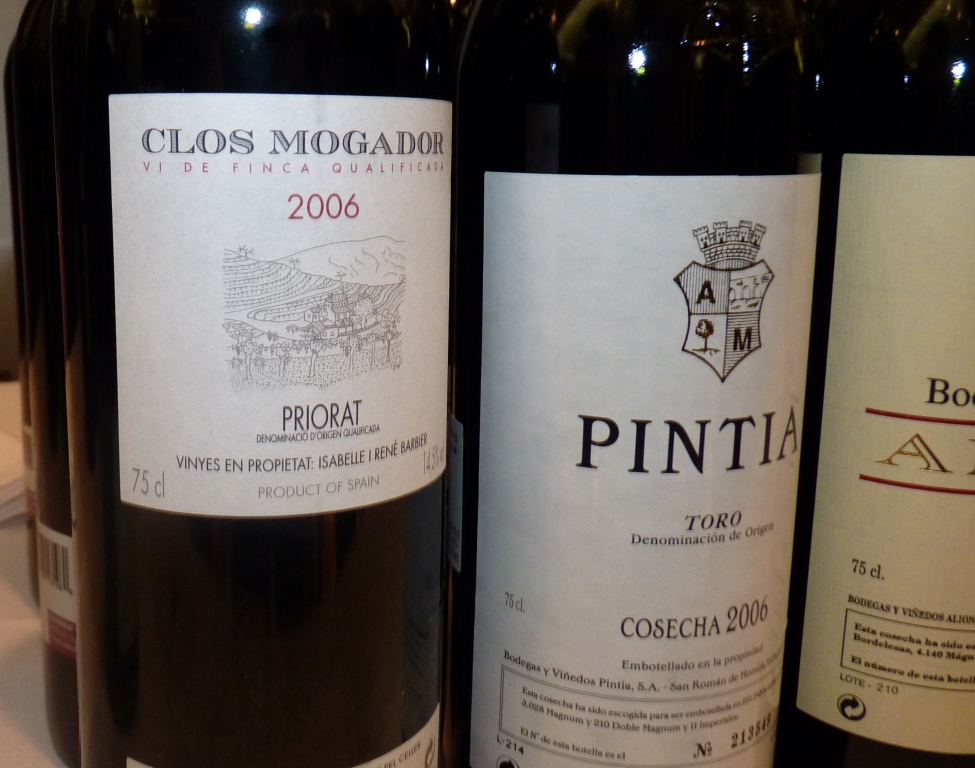
1999 Vega Sicilia Unico and 2000 Vega Sicilia Unico, from Ribera del Duero. These are the wines to be experienced – balanced and luscious:
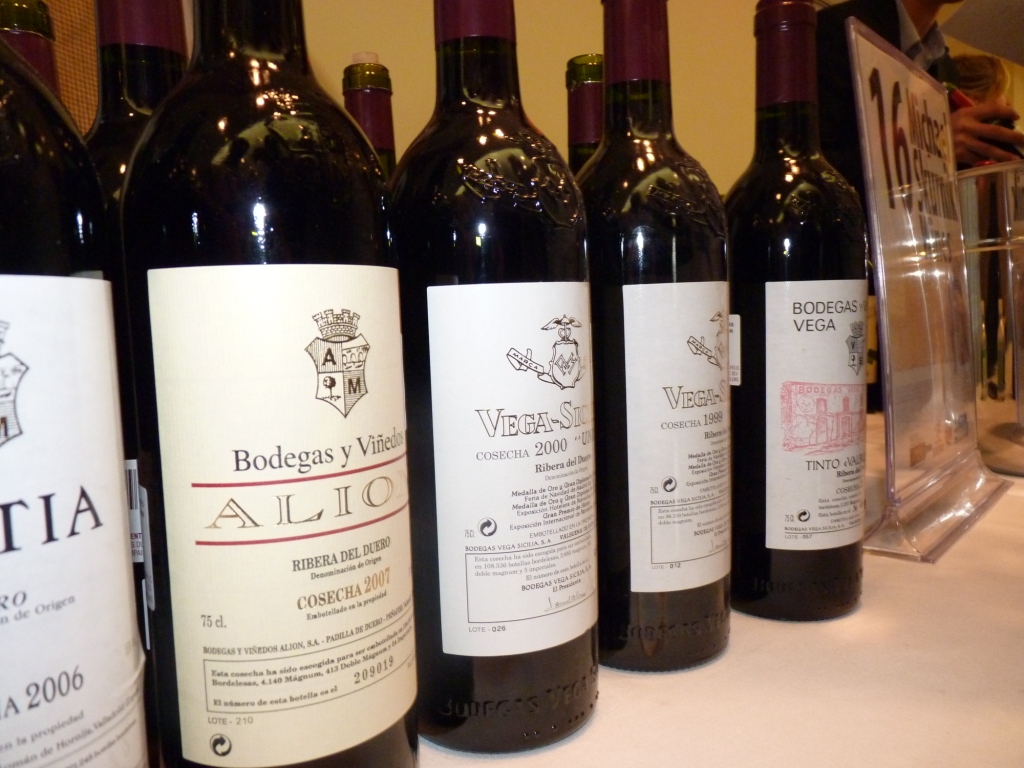
2006 Clos Mogador, Priorat – powerful and balanced:
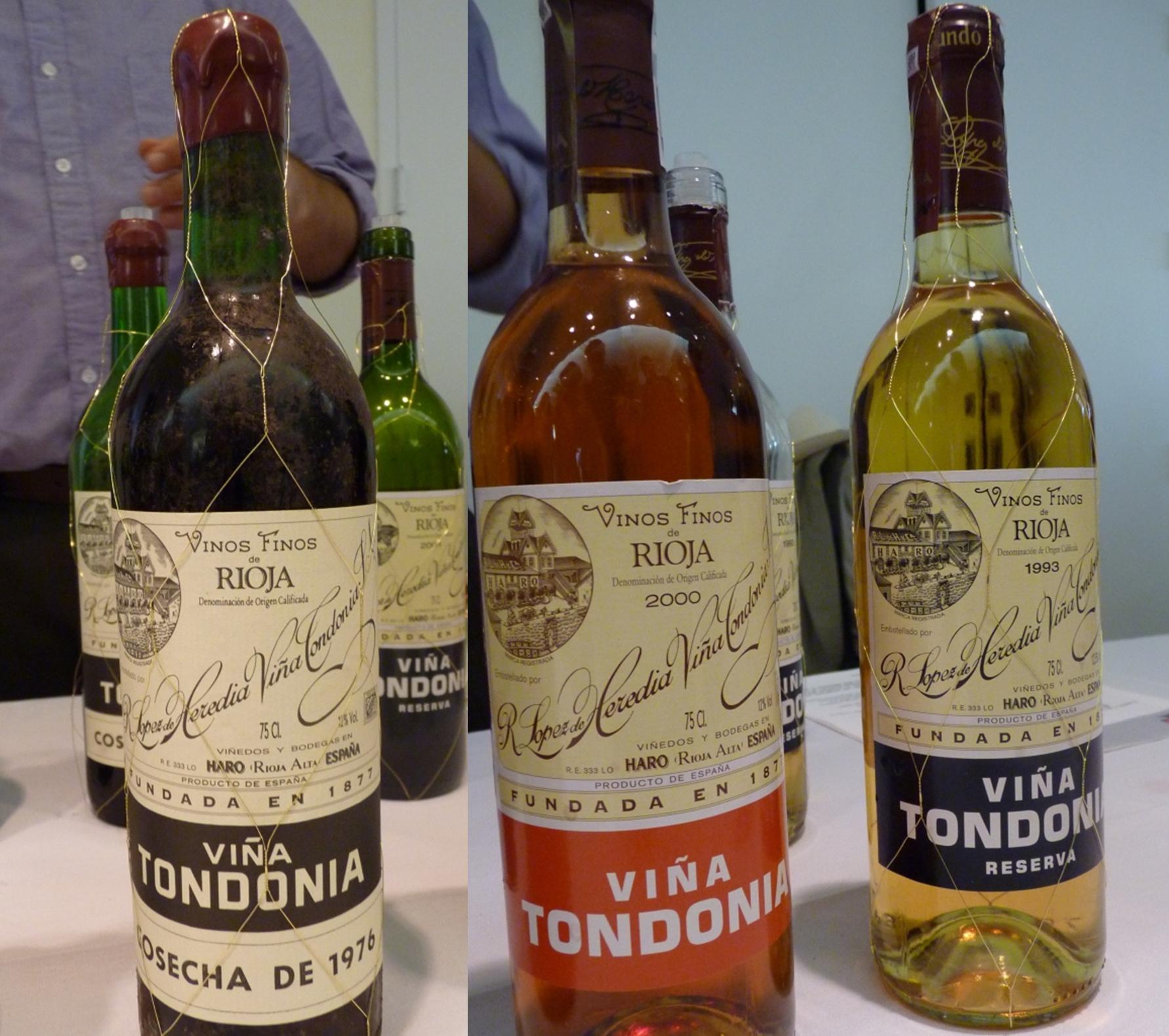
Lopez de Heredia Vino Tondonia Rioja – 1976 Gran Reserva, 2000 Rosado and 1993 Blanco: 18 years old White Rioja and 11 years old Rioja Rosado – both are fresh and vibrant. Wow! And Gran Reserva – beautiful and mature wine, which will still keep going for a while.
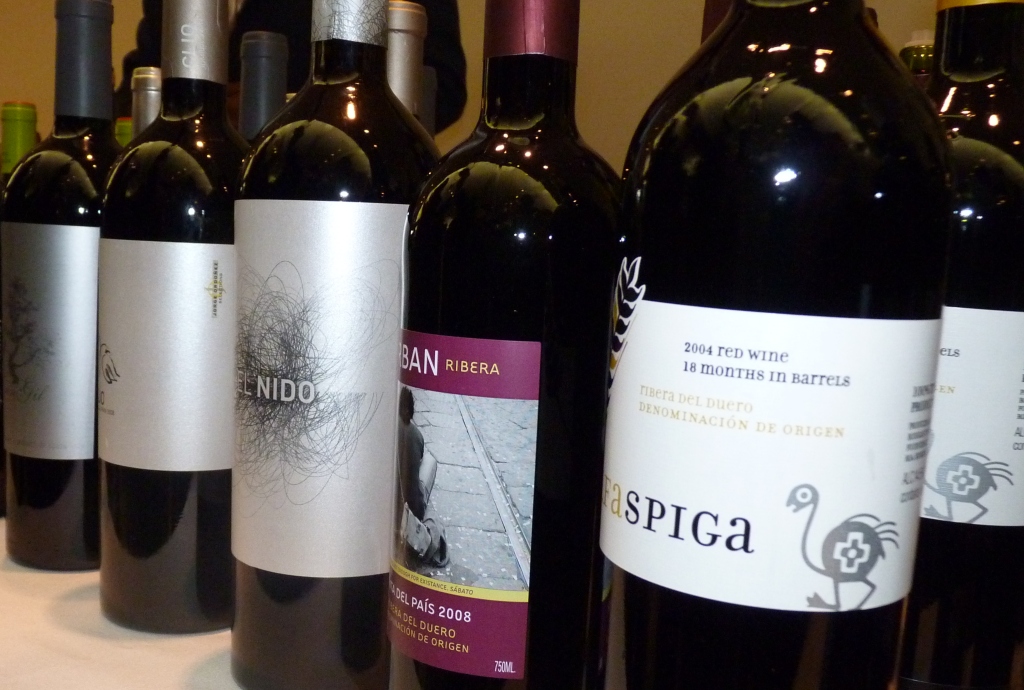
Bodegas El Nido line, including flagship 2006 El Nido – gorgeous layered and balanced, and requiring another 10 years to really blossom:
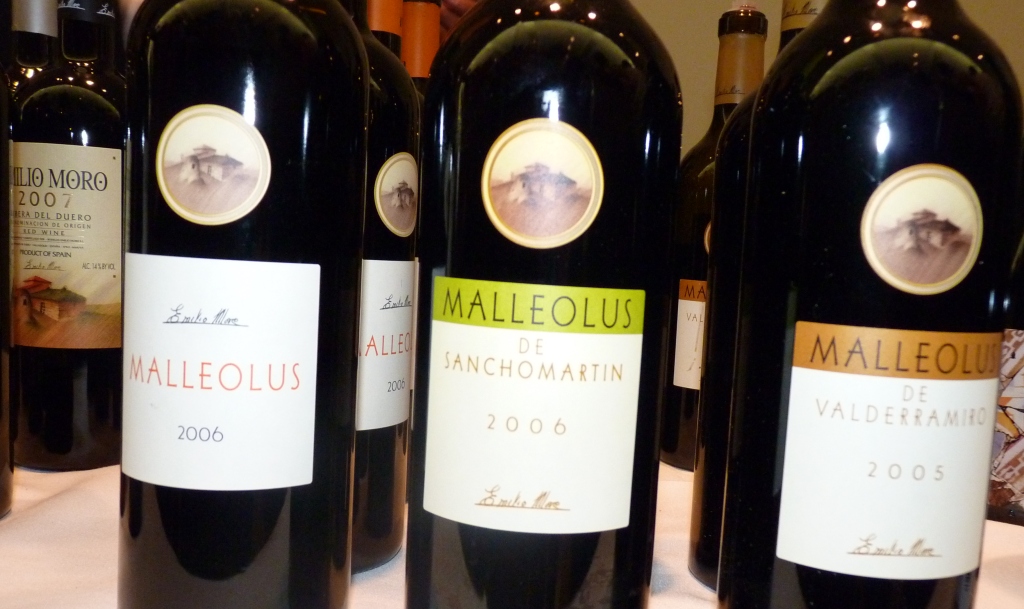
Emilio Moro Ribera del Duero, including full Malleolus line – wines of incredible balance and elegance:
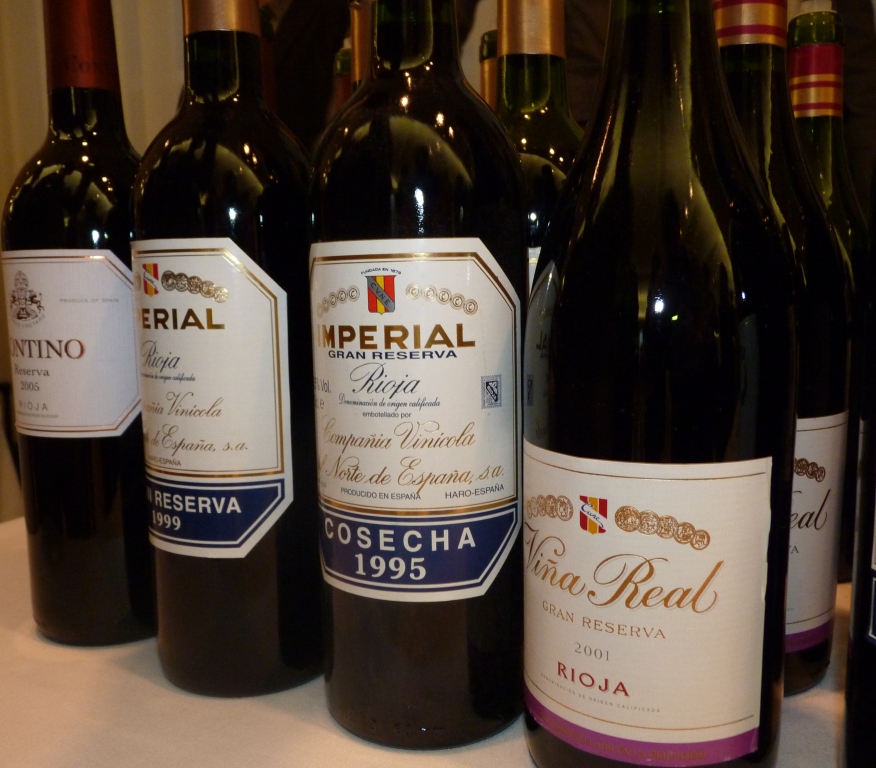
More Rioja – Rioja Imperial Gran Reserva 1995 and 1999, as well as CVNE Vina Real Gran Reserva 2001 –
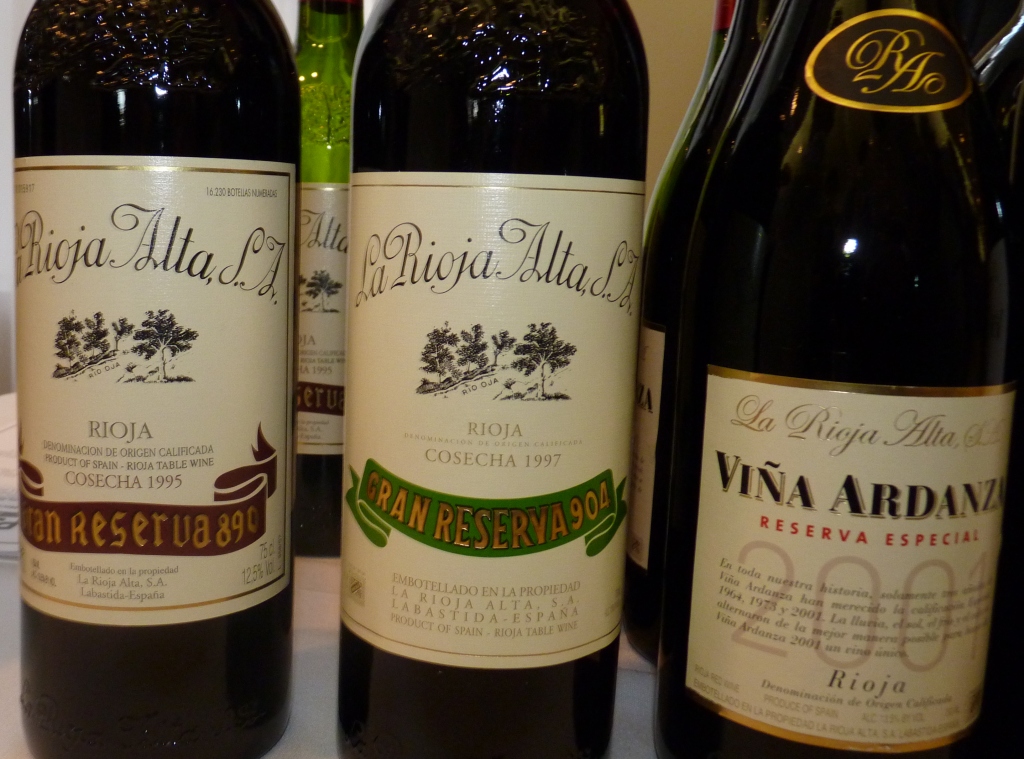
1997 La Rioja Alta Gran Reserva 904, 1995 La Rioja Alta Gran Reserva 890 and 2001 Vina Ardanza Reserva Especial – probably the best Rioja wines. Period. Classic and amazing.
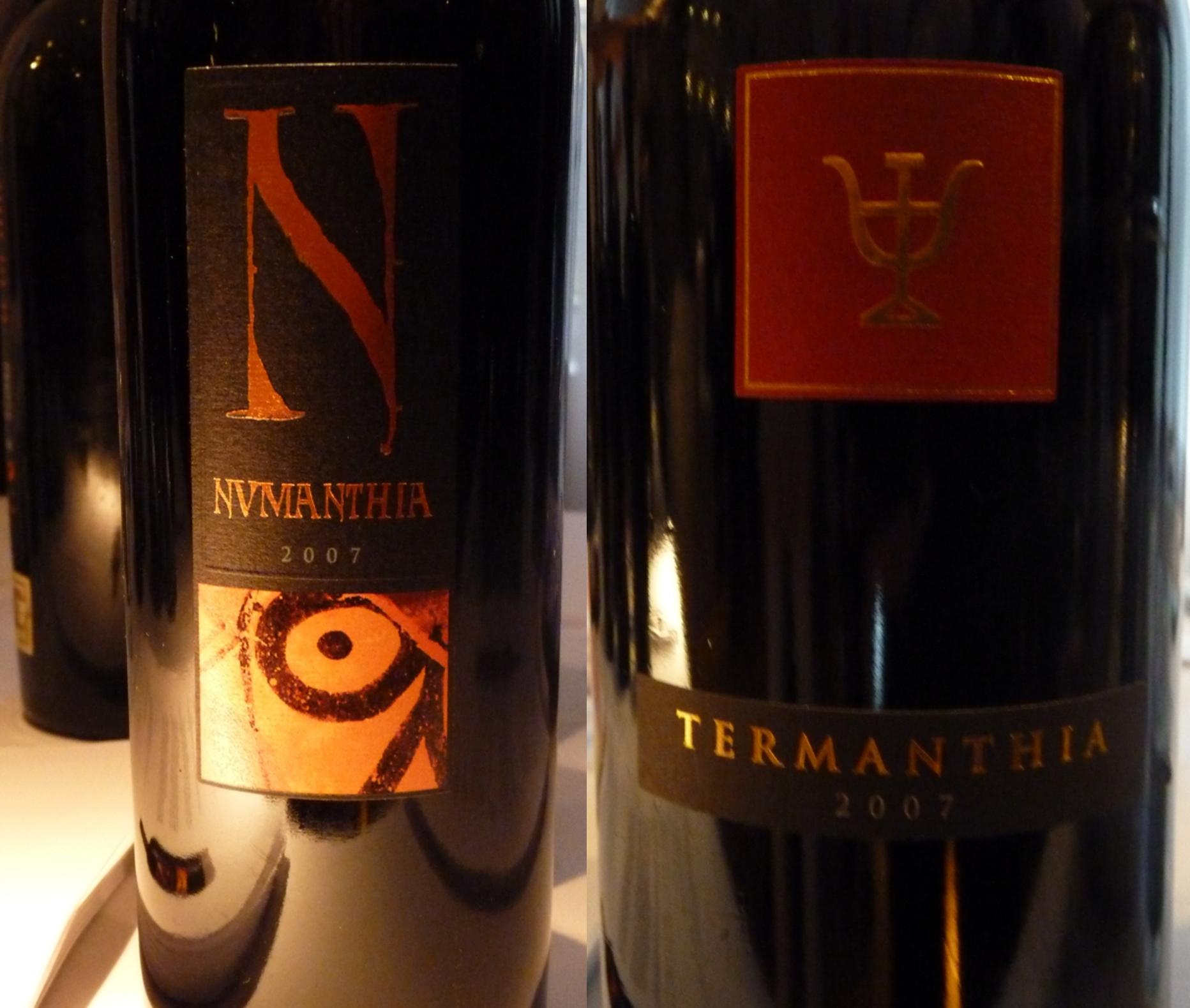
Representing Toro: 2007 Numanthia and 2007 Termanthia, silky smooth, balanced and powerful:
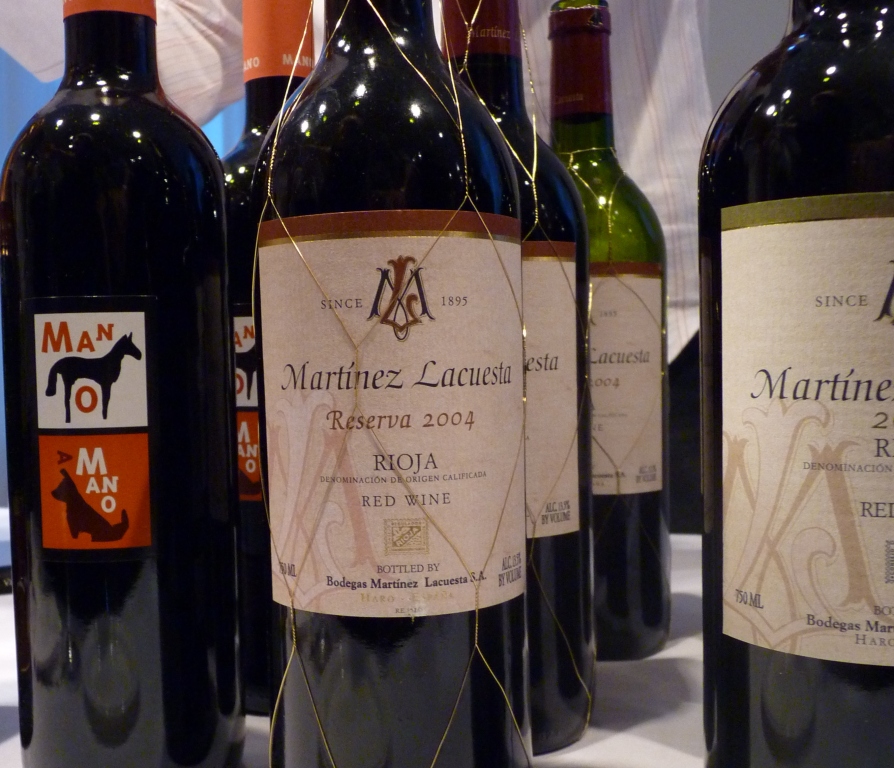
More Rioja – 2004 Martinez Lacuesta Reserva, great wine from the great year:
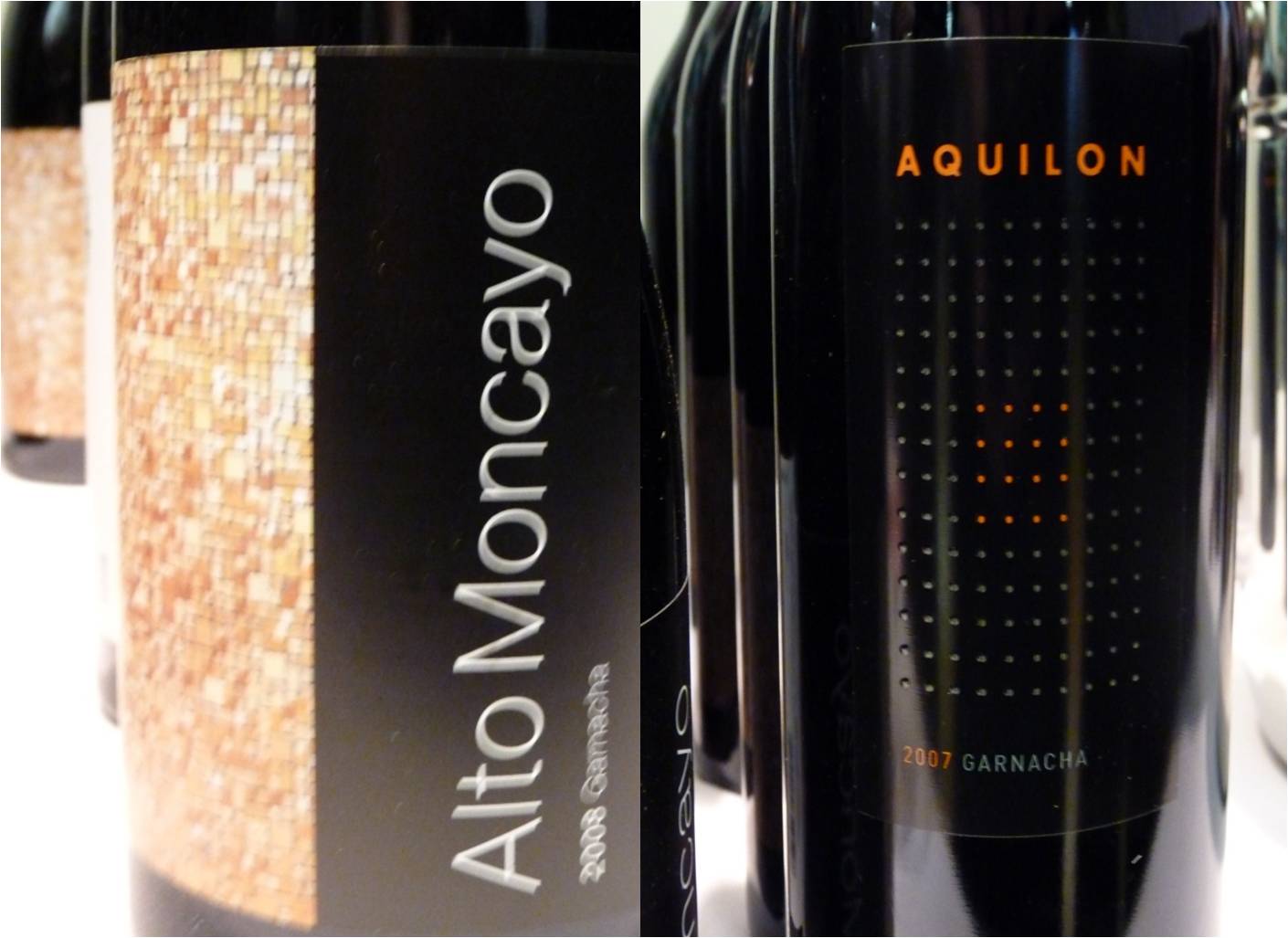
Starring Garnacha from Campo de Borja – 2008 Alto Moncayo and 2007 Aquilon – beautiful, soft and spicy:
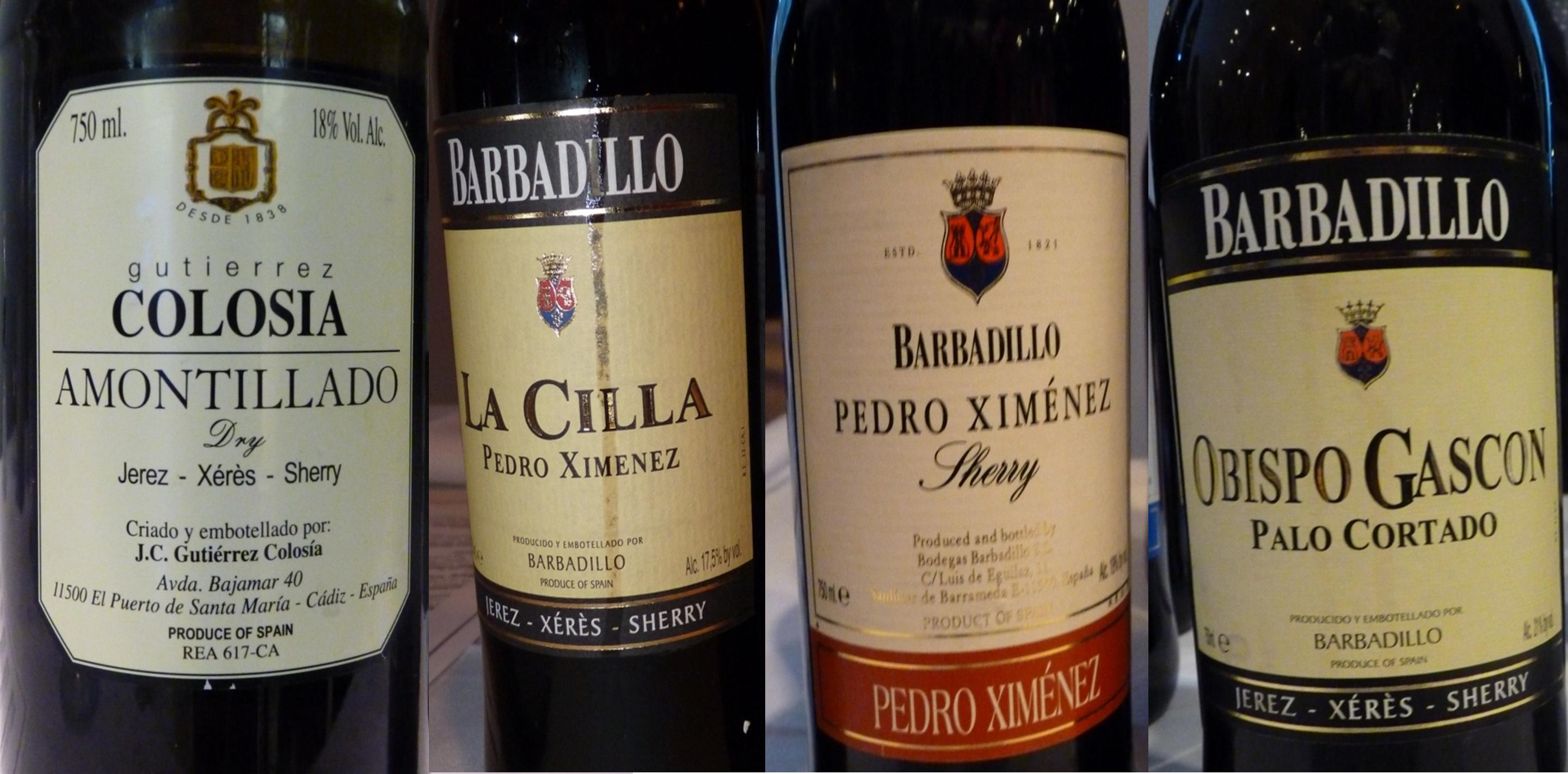
Jerez, a.k.a. Sherry is coming back – take a note of it. All Barbadillo wines were simply delicious, and Colosia Amontillado was also right in the league:
I would like to thank PJ Wine folks profusely for arranging such an amazing line up of wines for the event. And if I can make a suggestion, myself (and I’m sure, hundreds of other wine lovers) would really enjoy PJ Wine Grand Tasting event in the Fall – we can only hope that PJ Wine will be kind enough to organize one…
Last Bottle Sign Up ($10 credit)




 Talk-A-Vino