Archive
Daily Glass: Few Wines, Beautiful and Interesting
Disclaimer: this blog post is not an attempt to create the new rating system. It is rather an account into the emotional escapades of the oenophile tasting wine.
Here I’m again with the super-indescriptive descriptor – beautiful wine. I wonder if the phrase “beautiful wine” gives you a mental image. I’m not talking about the exact image of an object shaped in the form of a bottle, but rather a mental anchor you can relate to “ahh, I understand”. Let me deconstruct this “beautiful wine” term as the following:
1. The wine is perfectly balanced – fruit, acidity, tannins, texture, structure – all together.
2. Drinking this wine is a pleasure
3. The wine is memorable
4. “Beautiful wine” designation is totally spontaneous and emotional. It usually happens after the first sip and the subsequent uncontrollable “wow”.
When it comes to the term of “interesting wine”, that happens when I’m puzzled, like “hmmm, interesting, I’m not sure what to think of it”. Please understand that it is very different from “ouch, it needs time”, “what is it???”, “crap” and “this is disgusting”. “This is interesting” simply means that I can’t put a handle on what I’m tasting, where, for instance, the initial sensation of round and silky is followed by something harsh and unbalanced. “This is interesting” usually ends up being extended into “hmmm, this is interesting, let’s give it some time”. From this point on, the wine can be put aside to be drunk at another day, or it might go into the decanter if I feel that it would be sufficient to change it.
Here are the few wines we had last week, some beautiful and some are … interesting.
2011 Field Recordings “Neverland” Red Wine Grassini Vineyard Happy Canyon of Santa Barbara (15.1% ABV, 75% Cabernet Sauvignon, 15% Petit Verdot, 10% Merlot. Aging: 50% new French barrels, 25% new American barrels, 25% seasoned French for 18 month) – believe it or not, but every time I open a bottle of Field Recordings wine (which is easy – just twist off the screw top), I have a moment of trepidation – will it be as good as everything else I tasted before from Field Recording? You could’ve noticed in this blog that I have a lot of happy reviews of the Field Recordings wines, thus it creates that uneasy moment with each new bottle opened. Luckily, this bottle of “Neverland” didn’t deviate from the trend at all – beautiful nose of cassis and blueberries, open, bright and concentrated, followed by more of cassis, sweet oak and blueberries – but nothing over the top, soft and delicious fruit with perfectly refreshing acidity, soft tannins and overall impeccably balanced. This was a beautiful wine – and equally dangerous (“dangerous wine” = disappears before you notice it). Drinkability: 8+
2012 Cane and Fable 373 Cabernet Sauvignon Paso Robles (14.9% ABV, 85% Cabernet Sauvignon, 10% Tempranillo, 5% Petit Verdot. Aging: 225L oak barriques, 25% new, 12 month) – this wine is the result of collaboration of Field Recordings’ Andrew Jones and Curt Schalchlin of Sans Liege fame. Different presentation of the bottle (yes, I know, that giant cricket on the label can be off-putting), and the bottle is enclosed with the actual cork and not the screw top as all of the Field Recordings wines. The nose was more restrained than the previous wine, but still showing cassis with some earthy overtones. On the palate, this was that exact “interesting wine”. It was showing nice fruit and structure, but was somewhat fluctuating on an off in terms of being round, or not. So this was an interesting wine to put aside, which I did. As you can take a hint from the cork enclosure, this wine is intended to age – and on the second day it came together, showing cassis with the addition of espresso and earthiness – I think that Tempranillo was holding it away from becoming Bordeaux-like, so this was the wine on its own, well balanced, restrained, and craving for food. I have another bottle and I definitely intend to give it a few years to see what it is capable of. By the way – a mini quiz for you – care to guess what 373 stands for in the name of this wine? Drinkability: 8-
2010 CVNE Monopole Rioja DOC (13% ABV, 100% Viura) – the oldest white wine brand of Spain, produced since 1915. Fresh citrus and herbs on the nose, impeccably balanced and restrained on the palate, with the notes of lemon and green apple, clean acidity, very pleasant to drink. I have a few more bottles, and I’m keeping them. Drinkability: 8
2012 Colline de l’Hirondelle Cocolico, France (15% ABV, 60% Chenançon Noir, 25% Grenache, 15% Syrah) – Another case of the interesting wine, this time due to a number of factors. First of all, this wine contains a new grape – Chenançon Noir from France. Second of all, the initial impression from this wine was more reminiscent of the big body, brooding Spanish Grenache – Shatter by Dave Phinney or Alto Moncayo come to mind – and it was not round enough and was asking for decanter – which was provided. After about 40 minutes, it showed plums and ripe sweet cherries, still powerful and big bodied, but more round and balanced then from the get go. Considering the price of $15.99, if you like big and powerful wines, this might be the one for you. Drinkability: 8-
And that concludes my post. Any beautiful or interesting discoveries you care to share? Comment away! Cheers!
Month in Wines – February 2014
Here we go again – a summary of the best wine experiences of the February 2014. Reminder – I rate the wines on the 10 points scale, with pluses and minuses, so the wines typically included in this summary post are those starting with 8- ratings (yes, there can be exceptions). Here we go:
2013 Paumanok Chenin Blanc North Fork of Long Island, New York (11% ABV) – I had an interesting experience with this wine. I had it earlier in January, when it was not at the proper temperature (a bit too warm), and then later on another bottle which was properly chilled – and it was outstanding. Bright, refreshing, perfect acidity, white fruit notes with the touch of minerality, medium to full body, with pleasant creaminess. Very enjoyable. 8-
1966 Louis M. Martini California Mountain Pinot Noir (12.5% ABV) – incredible. Finesse, elegance, clear profile of a classic Pinot Noir – complete surprise and complete delight. 10
2012 Fiction by Field Recordings Red Wine Paso Robles (14.9% ABV, 40% Zinfandel, 13% Tempranillo, 12% Petite Sirah, 11% Touriga Nacional, 10% Mourvedre, 8% Grenache, 6% Cinsault) – fresh meadows on the nose, perfectly elegant and balanced wine, with clean acidity and medium-long finish. 8+
2012 Contrada Santa Croce Casteltermini Sicilia Cuvée Artisanale Chardonnay Grillot (13.5% ABV) – very unique and different wine. Finesse, balance, apricot and apricot pit, clean acidity. 8+
2011 Emile Beranger Pouilly-Fuissé AOC (13% ABV) – vanilla, butter, hint of toasted oak – all perfectly elegant and balanced in effervescent, cleanly structured package. 8+
2011 Domaine Jean Ernest Descombes Morgon AOC (12.9% ABV) – excellent earthy profile, good red fruit, good acidity, very enjoyable. 8-
1998 Ceretto Monsordo Langhe DOC (13% ABV) – Mature fruit, round, inviting and seductive. I think ‘sexy wine” will go fine as a descriptor. 8
1999 Philippe Prie Cuvée Love Flowers Champagne (12% ABV) – Great example of the vintage champagne – fresh bread, yeast, toasted apples, acidity – all together. 8
2011 Peter Lauer “Senior” Fass 6 Riesling, Saar, Germany (12.5% ABV) – A treat from our fellow Riesling guru, Oliver – perfect Riesling, balance, acidity, sunshine in every sip. 8
2008 Dr. Hermann Erdener Heremberg Riesling Eiswine (7% ABV) – Another treat from Oliver – and my first encounter with the actual German Eiswein (had only NY and Canadian wines before) – perfect complexity, perfect balance, good acidity – great finish of the meal, with or without desert. 8+
2009 Fat Cat Rotie Red Wine, California (13% ABV) – this is 100% Syrah, and it is nothing short of spectacular considering the QPR ( it retails for $17.99 is you can find it). Core of dark fruit with earthy profile, mocha and espresso, very balanced. 8+
2004 Carlisle Judge Family Vineyard Syrah Bennett Valley (15.9% ABV) – This is Carlisle – need I say more? Dark, concentrated, but elegant and perfectly balanced at the same time ( don’t even think of the ABV – you wouldn’t notice it unless you read the label). 9
2010 Sequoia Grove Cabernet Sauvignon Napa Valley (14.2% ABV, 100% Cabernet Sauvignon) – classic. Cassis on the nose and palate, touch of espresso, medium to full body, perfect balance. 8
2008 Shaya Verdejo Old Vines, Rueda DO, Spain (13.5% ABV) – one of my very favorite Spanish white wines. In general, it beats Chardonnay hands down, 9 times out of 10 – buttery complexity on the palate, roll-of-your-tongue goodness, round and perfectly balanced. 8+
I also want to mention separately few of the rare grapes I added this month.
2011 I Borboni Vite Maritata Asprinio Aversa DOP, Campania (12% ABV) – very interesting wine which Stefano brought directly from Italy (it seems to be scarcely available in US). Made from the grape called Aspirinio – the wine had very nice acidity, coupled with a plump body and nice lemon notes. 8-
2006 Azienda Agricola Vestini Campagnano Casa Vecchia Terre Del Volturino IGT, Campania (13.5% ABV) – another great treat from Stefano. Made from the grape called Casavecchia – very nice nose of plums with more plums on the palate, medium body, round and inviting, perfect balance. 8
2012 Sant’Isidoro Colli Maceratesi Ribona Pausula, Marche – this wine is made of the grape called Maceratino – very nice with good acidity. I tasted it at the VinItaly expo, so no ratings.


That concludes February wine report. Cheers!
Spotting Rare Grapes
It’s being a while since I talked about new additions to my “grape collection”. No, I didn’t stop looking for the new grapes (I think this will go on forever), I just couldn’t get around posting about the new grape discoveries.
Actually, one of the “pushers” for this post to come out was the fact that subject of Wine Century Club became very popular in my close “blogosphere”, the blogs I’m reading on more or less the regular basis. Oliver of The Wine Getter just crossed his first hundred grapes – here is the post where he explains what makes him going with the Wine Century Club. Here is account of another blogger, GourmetVicariously – she is undertaking the Wine Century Challenge in Australia, and you follow check on her progress here.
So for my own update, I finally submitted my Quattro application, and I’m inching little by little closer to the Pentavini status. As I didn’t post on this subject for a while, today’s update includes 22 grapes, a lot of them came through after the VinItaly and Gambero Rosso tastings I recently attended. Below you will see some pictures of the wine labels, and the names of the grapes and the wines follow right after. Another challenge for me will be to update my grapes of the world table, but I will worry about it later. This same table might be a good resource for you in terms of searching of the new wines and the grapes. Also, if you are using Pinterest, please make sure to check the Wine Centurions shared pinboard, and feel free to join in and start contributing the rare grapes information. Also, if we are talking about resources for the aspiring Wine Centurions, here is the link to all the Wine Century Club posts in this blog, hope you will find it helpful.
Here are the labels:


And the grapes:
Groslot – Sparkling Brut Rose Bouvet ‘Excellence’ NV Bouvet-Ladubay
Carricante – 2010 Planeta Carricante, Sicilia IGT, Italy
Le Crescent – Boyden Valley Winery Cowtipper, Vermont
Rougeon – Palaia Joyful Pink, Hudson Valley, New York
Prensal – 2010 Binigrau Nounat Vi de la Terra Mallorca, Spain
Marquette – 2010 Lincoln Park Vineyard Maquette, Vermont
Turbiana – 2009 Lugana Superiore Il Rintocco
Malvasia di Candia Aromatica – 2011 Lusenti C.P. Malvasia Frizzante Emiliana
Caberlot – 2009 Podere Il Carnasciale Caberlot
Trebbiano Spoletino – 2010 Tabarrini Adarmando
Verdiso – Bisol Prosecco di Valdobbiadene Brut Jeio NV
Cesanese di Affile – 2010 Casale della Ioria Cesanese del Piglio Camponovo
Malvasia Puntinata – 2011 L’Olivella Frascati Superiore Racemo
Bellone – L’Olivella Frascati Superiore Racemo
Cesanese – 2008 L’Olivella Lazio Rosso “>”
Durello – Lessini Durello DOC Spumante 36 Mesi
Lambrusca di Sorbara – 2011 Chiarli 1860 Lambrusco di Sorbara del Fondatore
Lambrusca Grasparossa – 2011 Chiarli 1860 Lambrusco Grasparossa di Castelvetro Vign. Enrico Cialdini
Ginestra – 2010 Marisa Cuomo Costa d’Amalfi Furore Bianco Fiorduva
Fenile – 2010 Marisa Cuomo Costa d’Amalfi Furore Bianco Fiorduva
Ripoli – 2010 Marisa Cuomo Costa d’Amalfi Furore Bianco Fiorduva
Perricone – 2010 Firriato Ribeca, Sicily
If you are not going through the Wine Century club challenge yet, you should really consider doing that, and if you are already living through your obsession – good luck in your journey and remember to have fun! Cheers!
Re-post: Best Hidden Secrets of The Wine World: Wines of Georgia
In 2011 I wrote a number of posts for the project called The Art Of Life Magazine – of course talking about my favorite subject, wine. The project closed, but I still like the posts I wrote, so I decided to re-post them on this blog. Also, in that project, posts were grouped into mini-series, such as “Best Hidden Secrets” you see here – I will continue re-posting them from time to time.
Also note that the series was written for a slightly different audience – I hope none of my readers will take offense to the fact that sometimes I’m stating the obvious…
We are continuing our “secrets” discovering journey, this time moving a few thousand miles mostly east of Veneto, Italy, which was our last stop. Now we are in the fertile mountainous region called the Caucasus. To be more precise, our destination is Georgia, a small country with a rich history (the subject of Georgian Wines was already discussed in this blog, but a recent encounter with Georgian Wines convinced the author that this subject is worth talking about again).
For the sake of this blog, we will of course focus on the part of Georgian history which relates to wine. For beginners, Georgia is widely considered a cradle of winemaking. According to Wikipedia, wine production started in Georgia more than 8,000 years ago. With all due respect to the so-called “old world” of wine, that beats France, Italy, and other European countries by about 7,000 years.
Of course, truth to be told, multiple thousand years of history don’t translate directly into today’s advantage. For instance, the majority of the countries which existed thousands of years ago are not even remembered today. If everything goes well, that long history can only translate into traditions – good or bad, but traditions are just what they are: “typical ways of conducting certain activity”, or “an inherited or established way of thinking, feeling, or doing”, according to the definition from Merriam-Webster.
Fast forward to the middle of the 20th century, and Georgian wine-making traditions came under attack by the Soviet regime, and the Georgian wine-making industry became literally non-existent. Fast forward once again, to the last decade of the 20th century, and traditions came back into play, helping to re-born the Georgian wine industry. Of course, once the former soviet union collapsed and Georgia became independent, freedom had a “drugging” effect. A tremendous amount of mediocre (at the best) wine was produced, all in an attempt to “get rich quick”. This situation backfired, and Georgian wines went into the “ignore” category without any chance to rise to prominence (disclaimer: these are observations from the US-centered wine market).
Luckily, traditions, based on real, rich history and pride came to the rescue. Fast and greedy mostly disappeared, and real winemakers and businessman took their place. Those thousands of years of history and traditions became a multiplying force for skills, craftsmanship, and ambitions, and now started bringing us world-class wines. It is still very difficult to buy good Georgian wines in the US, you have to really know where to get them, but hopefully, this situation will change. Hmmm, maybe we don’t need that to change? Let’s keep it secret, so those in the know can continue enjoying first-growth Bordeaux quality wines at one-hundredth of the price?
 Time to talk about wines – after all, we need to put some substance behind the nice words. Let’s start with… Champagne? Err, Sparkling wine, of course, as Champagne can only come from Champagne. Enters Bagrationi 1882, which makes sparkling wines using traditional “Méthode Champenoise” for more than 100 years. Round, soft and creamy, with perfect acidity, bright and refreshing, this sparkling wine will successfully compete with any of the actual Champagnes and other sparkling wines. In the blind tasting (non-professional), 2007 Royal Cuvee was the best out of the 8 sparkling wines, including classic Champagnes (you can read about it here).
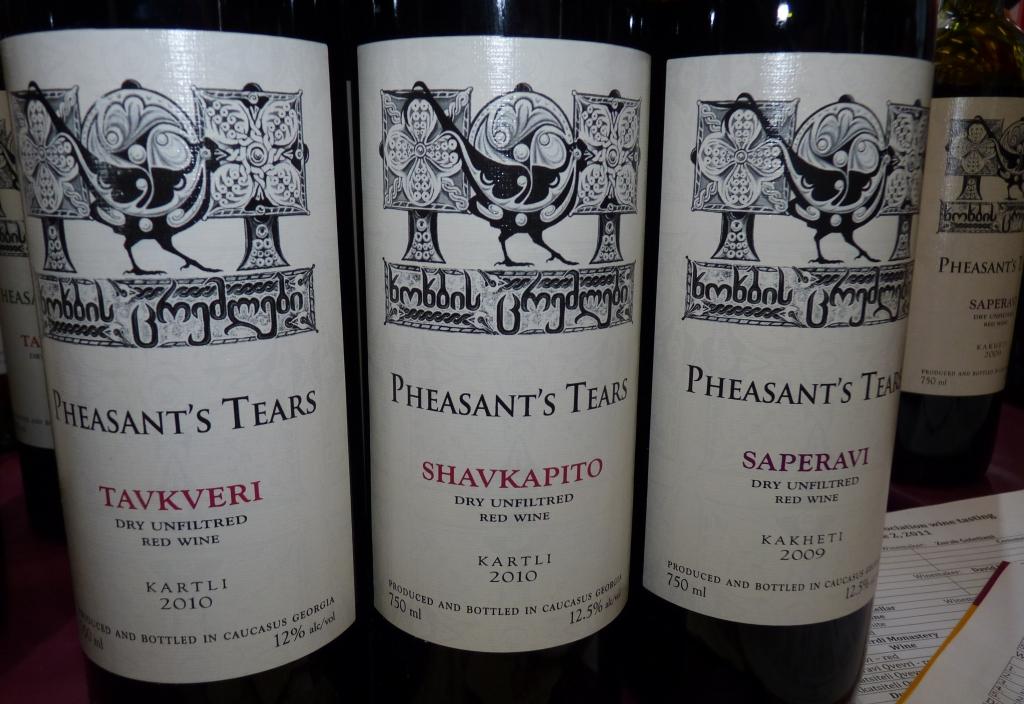 Moving along, let’s talk about some of the most unique wines I ever had a chance to taste. Pheasant’s Tears winery (as well as some others), produces wines using thousands-years old (talk about traditions) technology – the grapes are crushed and fermented for a prolonged period of time in the clay vessels called Qvevri. The resulting wines, made from different indigenous grapes, such as Kisi, Rkatsiteli, Tavkveri, Saperavi, and others, are very different from most of the other wines. Both whites and reds show very nice tannins which come from prolonged contact with skin and seeds (no oak aging whatsoever), as well as a great level of complexity somewhat similar to good Madeira. These wines should really be experienced, as words can’t do them enough justice.
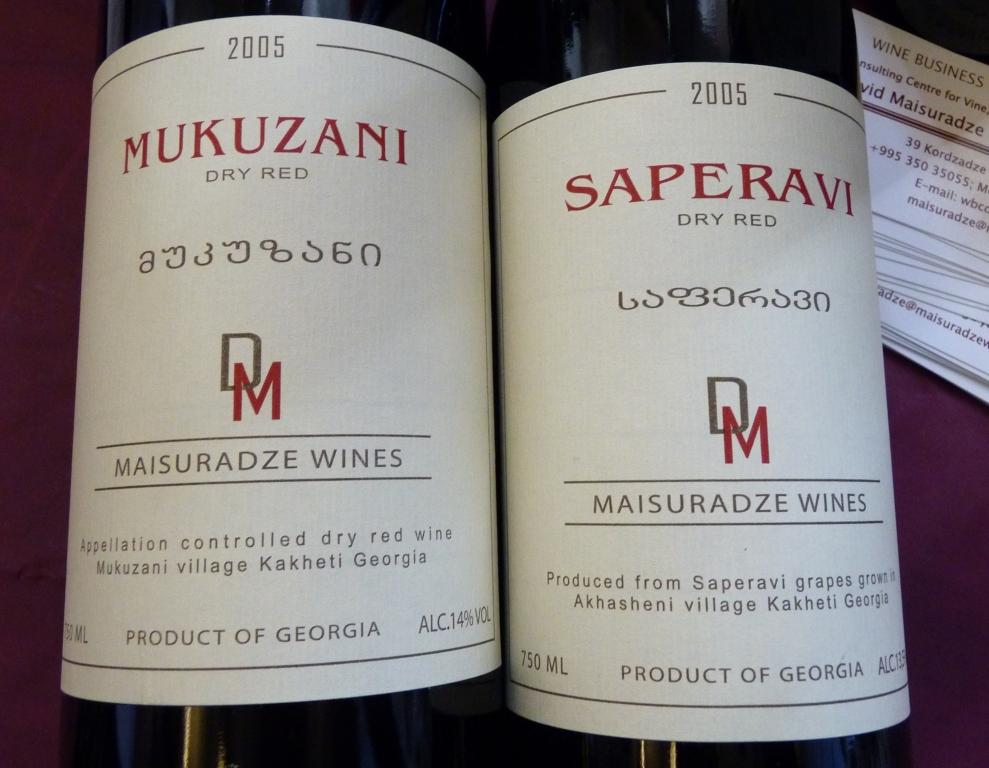 Last for this post, but not least, I want to mention true world-class winemaker-made classic wines. You know, those wines which are happily associated with winemakers or lead producers, such as Michel Rolland, Christian Moeux, Helen Turley, Andy Erickson ( Screaming Eagle), and many others. These wines are made by David Maisuradze out of the classic Georgian red grape called Saperavi. Both Mukuzani and Saperavi are truly amazing wines, with perfect layered dark fruit on the palate, perfect structure, powerful tannins, and excellent balance. 2005 Mukuzani shows more tannins at this point (it was aged for 24 months in the oak), and while it can be definitely enjoyed right now, it needs another 10-15 years to truly shine. Get it, if you can!
Georgian wines came back to the wine lovers to take the place they really deserve, the product of love and obsession supported by deep roots and traditions. While not easy to find, they are definitely worth looking for. Make an effort, find the bottle, try it, and send me a “thank you” note later on, as I’m sure you will be inclined to do. To the wonderful wine discoveries!
Across: Grape, Starts With “O”, 6 letters
 We like puzzles. We like those little challenges, which are innocent but give us a sense of fight, achievement and winning. Here is a little puzzle for you – let’s see how well do you know grapes. Please name a grape which starts with ”O”, 6 letters. I will give you couple of minutes, take your time. Done? What it is? I’m sure some of you could’ve known it, but I honestly think that majority would not.
I don’t want you to feel discouraged. There are about 8,000 different grapes in the world (or more), and about 1,600 of them are used in winemaking, so chances of knowing all of them by a one person are slim to none. Okay, so what is my point, you ask?
The whole point of this little puzzle exercise was to show you an opportunity. An opportunity for an exciting journey and discovery of new experiences. This is an easy journey, which doesn’t require months of planning and tons of special equipment. You can start it any day by joining Wine Century Club. You can download an application, check-mark at least 100 grapes you tasted in your life (doesn’t have to be single grape wines – all blends are perfectly ok), and voila – you can become a member.
I started this journey about 4 years ago. It was relatively simple to get to the first hundred grapes. By the time I received the certificate, I found out that the club now has a new level – Doppel, which requires tasting of 200 grapes. New challenge, great! I started a new journey which was not as simple, and … yes, you got it right – by the time I got to the 200 grapes mark, Treble and Quattro levels appeared! I got to the Treble mark last year, and it was quite hard – had to start including clones in order to get there. But – if you are a ”life traveler”, your arrival to a specific place only means an opportunity to start going to the next destination – so I kept on going.
Just to make myself clear – the point of all this “wine century” journey is not collecting accolades or feeling unique and special. Not at all. The whole point of this journey is a discovery. I can’t tell you how many amazing wines I tried along the way – if you are looking to expand your “grape universe” and collect new experiences – this is definitely what you can achieve with this exercise of purposefully seeking new grapes and unknown bottles.
Trying to reach the ”Quattro” I decided that this shouldn’t be set as a hard task, definitely should be enjoyed more and taken easier than before. I don’t call it a ”quattro journey”, I do very limited updates, and only keep the total grape counter, which you can see at the top of the page if you’re reading this post on the web site.
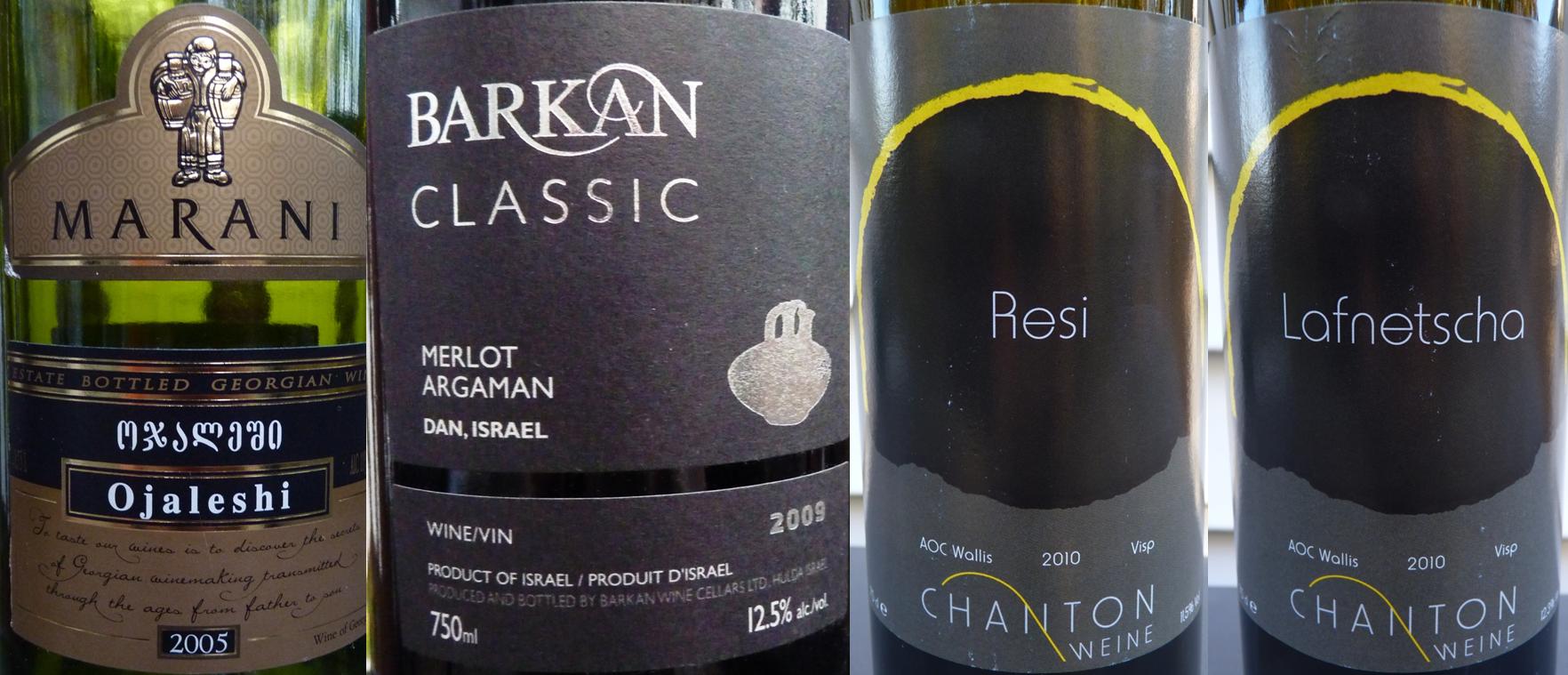
Nevertheless, it seems to be a good time to provide and update and change the grape counter, as I tasted a number of new wines (read: grapes), at Michael Skurnik tasting and not. First, an answer to the puzzle. The name of the grape which starts with ”O” and consists of 6 letters is Ortega – it is used in Germany and produces wines similar to Riesling. Overall, here are 10 new grapes to add the list:
Resi – 2010 Chanton Weine Resi Visp Wallis AOC, Switzerland
Vidiano – 2010 Alexakis Vidiano, Greece
Malagousia – 2010 Alpha Estate Axia White, Greece
Clairette Rose – 2010 Châteauneuf-du-Pape Blanc ‘Cuvée Speciale Vieilles Clairettes’
Doña Blanca – 2009 Godelia Bierzo Blanco, Spain
Bacchus – Château de Briat Armagnac, ‘Hors d’Age’ NV
Folle Blanche – Château de Briat Armagnac, ‘Hors d’Age’ NV
Ortega – 2006 Anselmann Trockenbeerenauslese Ortega. Pfalz, Germany
Ojaleshi – 2005 Marani Ojaleshi, Georgia
Agraman – 2009 Barkan Classic Merlot Agraman, Israel
And here are some pictures for you:
In case you want a head start on the project, I decided to share the list of grapes and reference wines – you can find a full table here. Note – if “reference wine” is empty next to the grape, it means I didn’t try that grape yet (example: Picpoul Noir). Conversely, if you got a suggestion for me as to where I can find an appropriate wine, I will be very appreciative…
That’s all for now, folks. Look for that unknown bottle on the shelf – who knows, you might find your best wine experience ever. Cheers!
Wines of United States
 When you run a wine tasting, one of the great ways to keep people engaged all the time is to ask questions – trivia type and not. One of the simple warmup questions I like to ask the audience is “What do you think, how many states make the wine in the US? This sounds simple enough and goes into the “your guess is as good as mine” category. People usually start with some random number (trying to put sense into it, though), and sometime someone will say “all 50” – often just as a joke. Actually, it is the correct answer – for w while, all 50 states produce some wines.
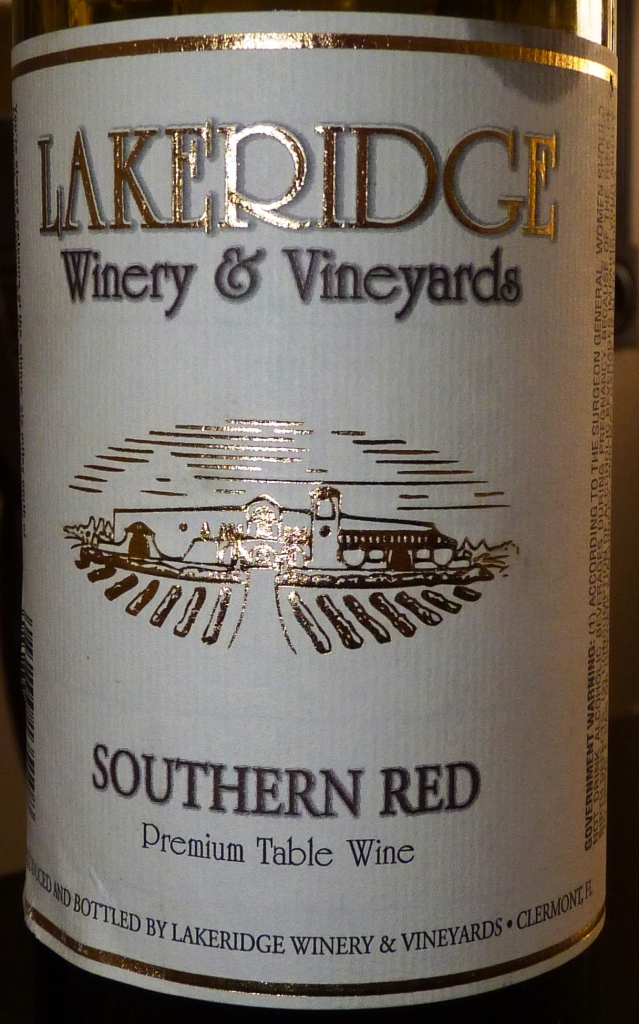
So did you ever think of exploring and experiencing the wines of all 50 states? I’m sure you had California, Oregon, Washington and New York wines, but what about the other 46 states? Last week in Florida, I came across Lakeridge Winery Southern Red Premium Table Wine produced in Clermont, Florida. This wine allowed me to add one more grape to the grape count – Muscadin. And this wine prompted this blog post and the table which I would like to share with you, which lists my experiences with the grapes and wines of all United States to the date:
|
State |
Tasted Wine |
Visited Winery |
Comments |
| Alabama | |||
| Alaska | |||
| Arizona |
Y |
||
| Arkansas | |||
| California |
Y |
Y |
|
| Colorado | |||
| Connecticut |
Y |
||
| Delaware | |||
| Florida |
Y |
||
| Georgia | |||
| Hawaii |
Y |
Pineapple wine | |
| Idaho | |||
| Illinois | |||
| Indiana | |||
| Iowa | |||
| Kansas | |||
| Kentucky | |||
| Louisiana | |||
| Maine |
Y |
Y |
|
| Maryland | |||
| Massachusetts |
Y |
Y |
Truro Vineyards, Nashoba Winery |
| Michigan | |||
| Minnesota | |||
| Mississippi | |||
| Missouri | |||
| Montana | |||
| Nebraska | |||
| Nevada | |||
| New Hampshire | |||
| New Jersey |
Y |
||
| New Mexico |
Y |
||
| New York |
Y |
Y |
Fingerlakes, LI, Hudson |
| North Carolina | |||
| North Dakota | |||
| Ohio | |||
| Oklahoma | |||
| Oregon |
Y |
||
| Pennsylvania |
Y |
Y |
Chaddsford |
| Rhode Island | |||
| South Carolina | |||
| South Dakota | |||
| Tennessee | |||
| Texas |
Y |
||
| Utah | |||
| Vermont | |||
| Virginia |
Y |
Y |
Chrysalis, Williamsburg Winery |
| Washington |
Y |
||
| West Virginia | |||
| Wisconsin | |||
| Wyoming |
What is your experience with wines from 50 states? Can you count and share? It is definitely a fun exercise and might bring back some good memories while you are at it. Happy counting! Cheers!
Counting Grapes
 Among many good wines of recent (yeah, I’m really behind in my writing) there were few of new grape encounters which I want to share with you. First is 2004 Ambasciatore Friularo Bagnoli DOC, made out of the grape called Friularo. I have to tell you that I actually have one problem with this wine – it is not available in US (if you know otherwise – please let me know), and I brought only one bottle from Switzerland (it is an Italian wine which I got in a supermarket in Geneva). This wine was beautiful, layered and powerful, very balanced, with great amount of dark red fruit, all complemented by great acidity and good tannins. This wine would age perfectly, so quick expedition to Geneva or any other place where this wine can be found, sounds like a good idea.
Next three wines were also very good – and they are all available in US, plus all three would be perfect for the summer day, so you can also expand your wine horizon and have good wines at the same time. Starting with the white, 2009 Petite Burja Vipavska Dolina from Slovenia was very nice and unusual – good acidity and sweet herbs on the palate. This wine didn’t have any pronounced sweet fruit notes, but instead it had well defined sweet herbs, may be cucumber-sweet. Very easy to drink. I have to note that this wine also sports one of the most unusual labels I ever saw – it seems that the winemaker had a problem with the getting the modern printer, and had to use a very old one, incapable of producing any graphics (or may be wine maker also used to be a computer engineer, who knows…).
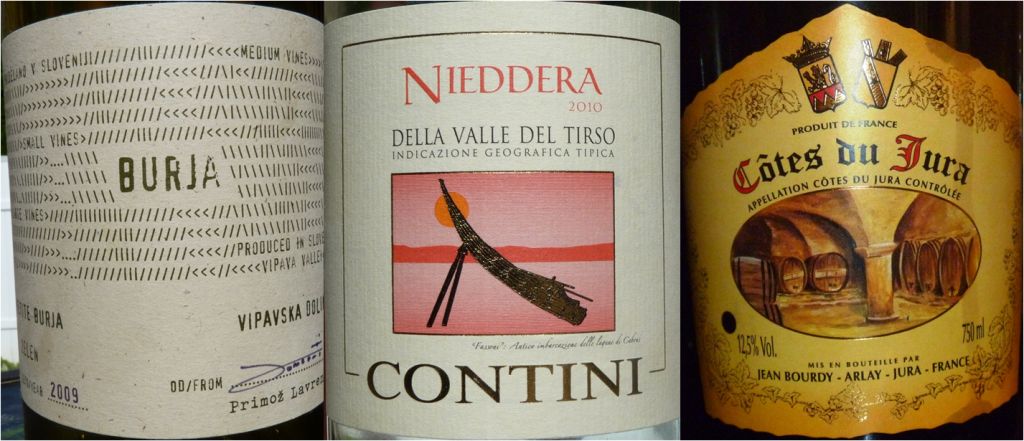
Moving from White to Rose, the next wine is 2010 Contini Nieddera della Valle del Turso IGT – nice and light, with medium body, good refreshing acidity, showing notes of cranberry – very good wine for a hot summer day. Nieddera actually is a local grape which was used for production of this wine.
Last but not least is 2006 Jean Bourdy Cotes du Jura Rouge, which is made out of three gapes – Poulsard, Trousseau and Pinot Noir (Trousseau is a new grape). This is a bio-dynamic wine, and it is very unusual in its flavor profile – but it is light enough to be enjoyed during summer (as soon as you will train your palate a bit on bio-dynamic wines – I will explain myself in one of the future posts very soon).
Four new grapes, four very interesting wines – very happy with this journey so far. Try to find them and experience for yourself – I’m sure you will not regret. Cheers!
Counting Grapes: Some new, some old
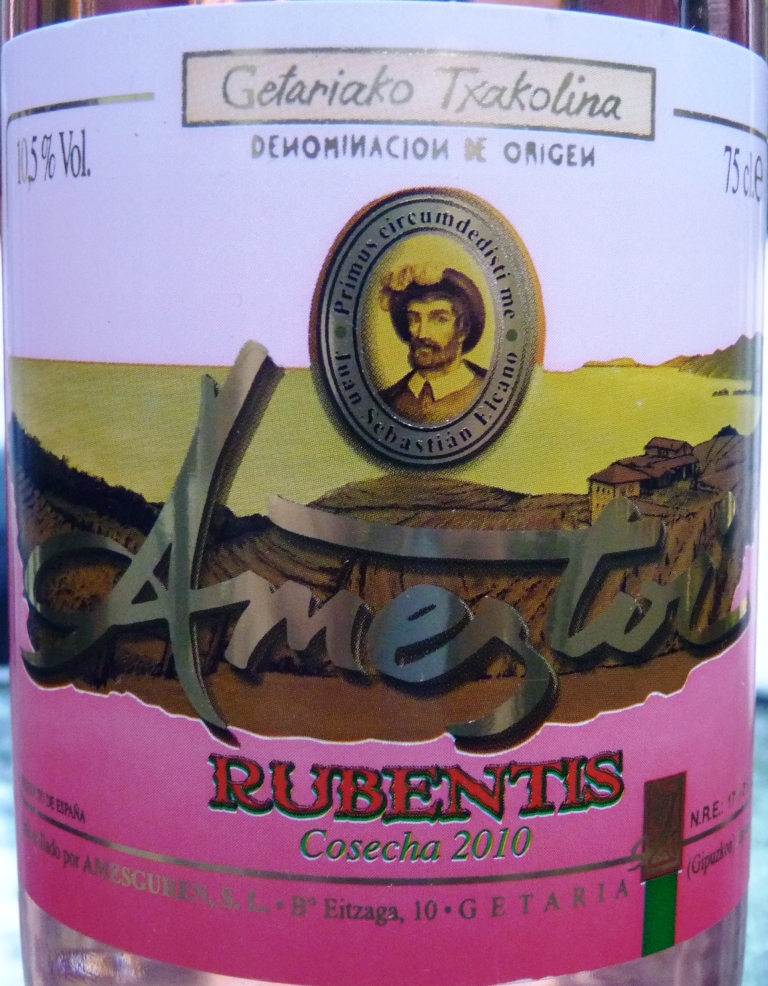 As you know, I’m still counting the new grapes as I come across them. Recently, I was able to add a few to the collection, which I’m happy to report on. I also want to note, that it is quite a rare case when all the new grapes are red (I think there are simply more white varietals used in the wine making), but it happened to be so. Without any particular order, first is the red grape called Hondarribi Beltza, which was one of the grapes used in 2010 Ameztoi Rubentis Rosé Getariako Txakolina wine form Basque region in Spain. The wine is difficult to find, but it worth seeking – very easy to drink, lightly fizzed (should be rather called effervescent), refreshing – perfect wine for the hot day.
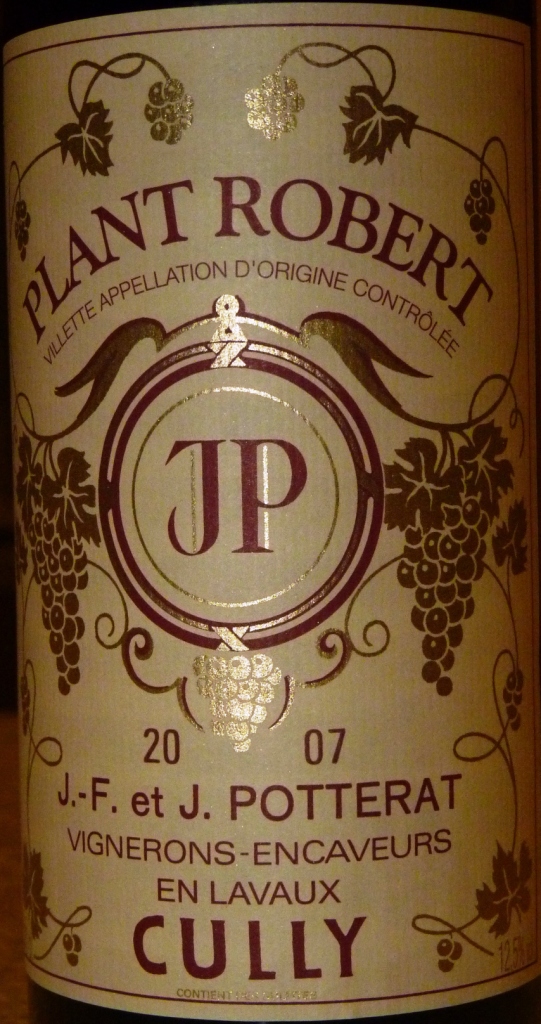 Next wine comes from Switzerland (as usual, courtesy of my friend Patrick), and it is made out of the red grape called Plant Robert. 2007 Plant Robert J-F. et J. Potterat Villette AOC, Cully is very nice, somewhat similar to wines made out of Gamay grape, however, this wine is more spicy and structured than a typical simple Gamay wine. It is very balanced and pleasant to drink (definitely an 8 in Drinkability terms). It is a pity that the wine is not available in US – it is great sipping wine which will also work quite well with wide variety of foods.
Next new grape is called Trepat and it again comes from Spain (as our first grape). I don’t know what is so special about many of these “unknown grapes”, but this 2009 Trepat Josep Foraster, same as many other rare grapes, is very elegant and spicy (of course always possible that my palate is off), with lots of dark fruit and structure on the palate.
So these are the 3 new grapes – so we need to talk about the “old ones”. The old ones are clones – but they are prominent clones. One of such clones makes the wine called Brunello di Montalalcino, and this clone is called Sangiovese Grosso. It is related to the main grape of the Chianti wines, Sangiovese, however, it has a lot more structure and power than regular Chianti wine. I had Brunellos many times, and it has very distinct taste, so this is simply logical to use Sangiovese Grosso as the grape in it’s own right.
Last but not least, another “old grape” is called Tinta de Toro, and it is used in the Toro region in Spain. Technically, Tinta de Toro is a clone of mainstream Spanish grape variety called Tempranillo, which is the main grape in Rioja and Ribero del Duero regions. Toro produces very dense and powerful wines, which require time to mellow out. I had Toro wines before, but my recent experience with the wine called 2007 Teso La Monia Alabaster (there will be a separate post about it) from Toro DO (which is considered best wine produced in Toro region) convinced me that this grape also deserves its own place in the grape quest, as it has lots of differences with the regular Tempranillo.
With the addition of these 5 grapes, I’m inching forward to the next level with 317 grapes accounted for. It’s a long journey to the 400 spot, but it is real fun – let the grape quest continue.
Grape Quest Continues
 Treble Journey finished, destination reached – 301. Do I simply stop or do I leave the port for the next destination – Quattro? 400 different grapes to be experienced in some form?
Yes, I have to honestly admit that I enjoyed that Treble journey. I happened to discover real gems along the way, such as Nielucciu, Grolleau, Grignolino, Pigato, Pugnitello, Romorantin and many others. What now?
As it often happens with me, I decided not to decide. I don’t want to set my mind on the “quattro journey”, as level of obsession will go again ( as it was with Treble) really high. At the same time, the need to look for “what is actually inside of that bottle, may be it is a new grape?” became really ingrained into the DNA, and nothing I can do about it.
The decision is to take it as it goes. I’m not going to spend hours on internet, looking for the grapes I need to try to advance to the next level. At the same time, I’m going to keep paying attention to “what’s inside”, and continue counting the new grapes. To reflect that, “Treble count” on the front page is now “Grape Count”, and it will keep ticking.
And to make an early advance, I was quite lucky (thanks to my friend Zak) to attend a big wine tasting event (one of the posts in the near future will be raving about amazing wines we tried), so the grape counter is advancing by 8 – here is the list:
Gamay Saint Romaine: 2010 Domaine Robert Serol Cote Roannaise Rose “Cabochard”
Tressalier: 2009 Domaine Nebout SAt. Pourcain Blanc Tressalier des Graviers
Mondeuse: 2008 Roger Labbe Mondeuse
Colorino (Tintoretto): 2010 Terenzuola Rosato “Merla Rosa”
Albana: 2009 Fattoria Zerbina Albana di Romagna Secco “AS”
Vespolina, Uva Rara: 2004 Vallana Boca
Prugnolo Gentile: 2006 La Spinetta Il Gentile di Casanova
I’m looking forward continuing this journey – and of course, I will report along the way on all discoveries. Let’s go…
Last Bottle Sign Up ($10 credit)




 Talk-A-Vino