Archive
Beautiful Hungarian Wines, a Deep Immersion
Hungarian wines need no introduction to the wine lovers.
Or they actually might.
Hungary is one of the oldest wine-producing regions in the world, going back to the Roman times (also the Hungarian language is one of only three European languages outside of Latin that have wine terms in the language). It is not for nothing one of the better-known wine brands in Hungary is called Royal Tokaji. Tokaji, the dessert wine produced from the local white grape called Furmint, can give the run for money to the best BA and TBA Rieslings and best Sauternes. It used to be a treat suitable and available only for the royalty, with its official appellation classification predating Port by a few decades.
Then it all came to an abrupt halt. First, the Phylloxera epidemic which destroyed literally all vineyards in Hungary at the end of the 19th century. Then, as the wine industry started to recover, came two world wars, and the communist regime right after. Thus while we can say that Hungary has very old wine traditions, the Hungarian wine industry is very young, with its modern history not exceeding even 40 years.
I just came back after spending 4 days in Budapest, the capital city of Hungary. And while working 9-5 all 4 days, I still managed to get a good taste of the Hungarian wines, and I have to say that it was one delicious and very impressive experience. And even as most of these wines would be hard to find outside of Hungary (okay, that should be reasonably not difficult for the people in Europe, but very difficult in the US for sure), I still believe the experience is well worth sharing.
I will simply recount my experience in chronological order, as I was tasting the wines. And by the way, I made my inner grape geek very happy, by adding 5 new rare grapes to the collection.
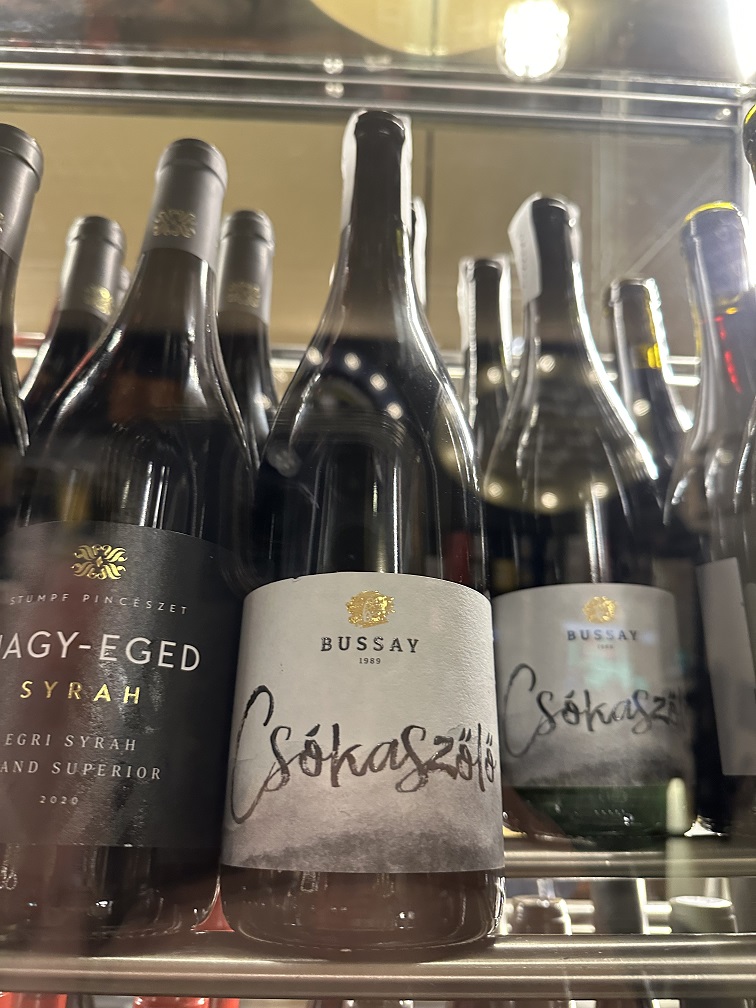
I started my “deep immersion” on Monday night at a dinner. The restaurant had a few interesting (read: made from rare grapes) wines which I was happy to order by the glass.
2022 Bussay Pince Csörnyeföldi Csókaszőlő Zala (11.5% ABV, certified organic, rare grape: Csókaszőlő)
Fresh herbal nose
Fresh acidity, Beaujolais-like mouthfeel, sour cherries, gamey, nice, food friendly
2021/2022 Bóka Birtok Jakab Kadarka Tolna (12.5% ABV, Jakab Kadarka, a.k.a. Jab Kadarka a.k.a. Italian Kadarka, rare grape: Jakab Kadarka)
Red fruit on the nose
Bigger and more round body than a previous one, dark fruit, good balance, good acidity, thoroughly pleasant
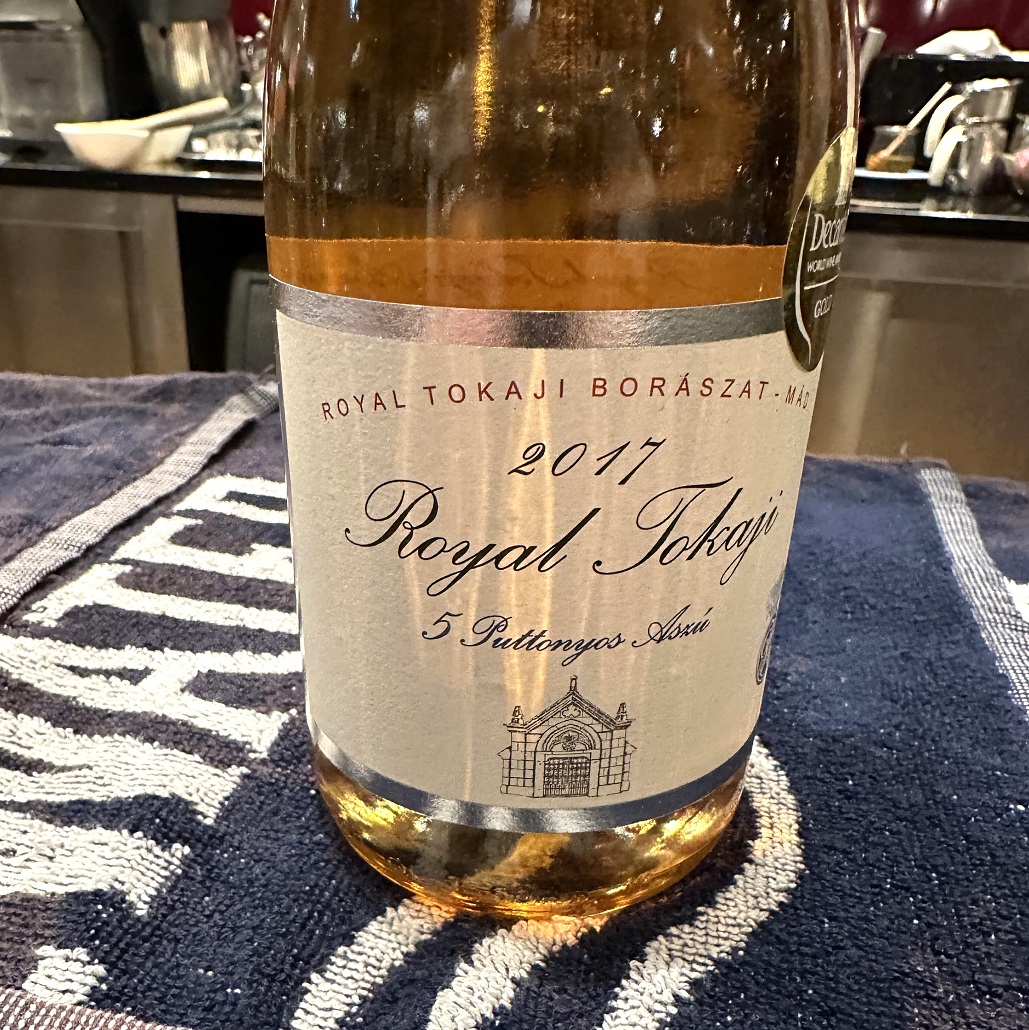
Upon returning to the hotel after dinner, I didn’t feel like going to sleep yet, so I decided to get a glass of wine, and the Tokaji looked very attractive – and at about $11 for a glass, a pure steal.
2017 Royal Tokaji Borászat Mad Royal Tokaji Aszú 5 Puttonyous (11% ABV)
Delicious nose of sweet, ripe fruit – white peach, pear, a touch of honey.
A symphony of flavor on the palate – beautiful ripe fruit, layers of flavor, perfect acidity, perfect balance, pure delight.
Superb.
On Tuesday, we had a short bus tour of Budapest, and our tour guide mentioned that if someone likes wine, he highly recommends visiting a wine bar called Vinlkli. The name was easy to remember – a cross between Vino and Bicycle, and the bar was also conveniently located about 2 minutes walking distance from the hotel where I was staying, so it was a no-brainer decision to visit the place. Boy, what a right decision that was…
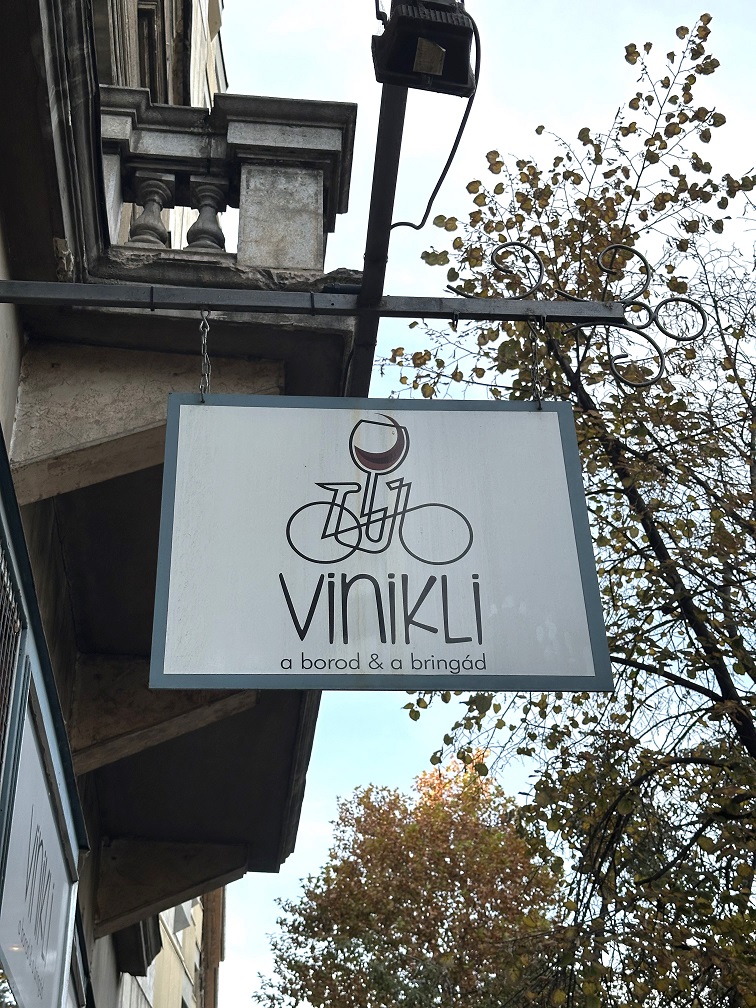
When I came over, there was literally no space to sit at this tiny bar. Not speaking the language, I got rather a cold shoulder from both bartenders, so I was intimidated, but determined. A space in the corner opened up so I was able to take it, and then I just pointed to the wine I wanted to taste strictly based on the label (there was no printed wine list of any sort, and I couldn’t understand anything written on the board hanging on the wall).
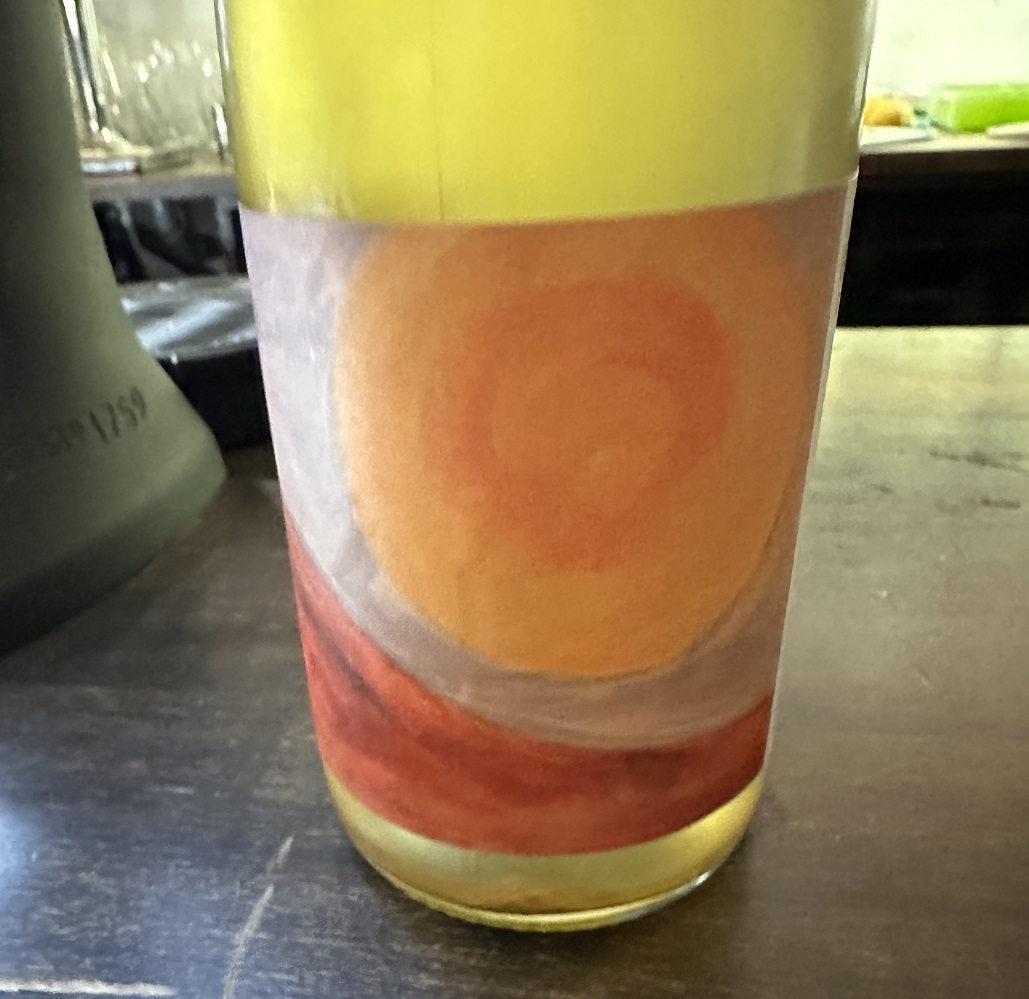
I happened to choose skin contact wine, and it was excellent:
2023 Turay Családi Pincészet Borsementa (11% ABV, 4 days with skin contact, natural wine, rare grape: Borsementa)
You can assume skin contact once you smell the wine – a touch of herbal notes on the nose with a hint of the freshly fermented fruit, following by lemon/apple/peppermint medley on the palate. Fresh, energetic, delicious.
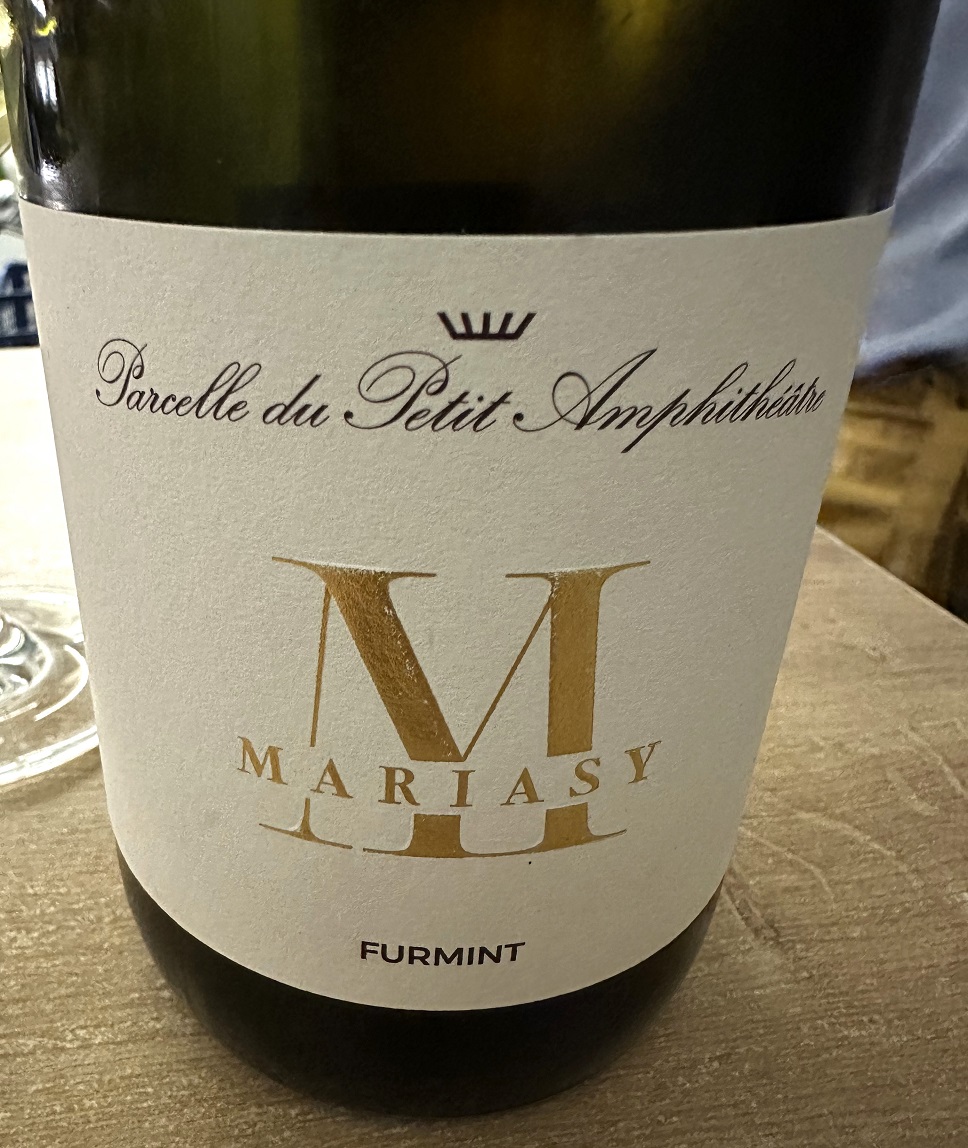
As a few more people left the bar, the bartender finally got a bit more time, and he understood that I was actually at the bar on purpose, so now he started suggesting wines to taste. Next wine white wine was literally out of this world:
2020 Mariasy Tokaji Furmint Hungary (13% ABV)
Wow. Is “blown away” is sufficient wine descriptor?
This wine was truly something else. A hint of honey on the nose, white fruit, fresh and inviting. The palate was mind-blowing – generous, plump, supple, crisp honey and lemon notes, layers and layers of pleasure. This will be easily a “wine of the year” contender. Just superb.
I’m literally salivating as I’m writing this post – I would love to have a glass of this wine right now. Just now.


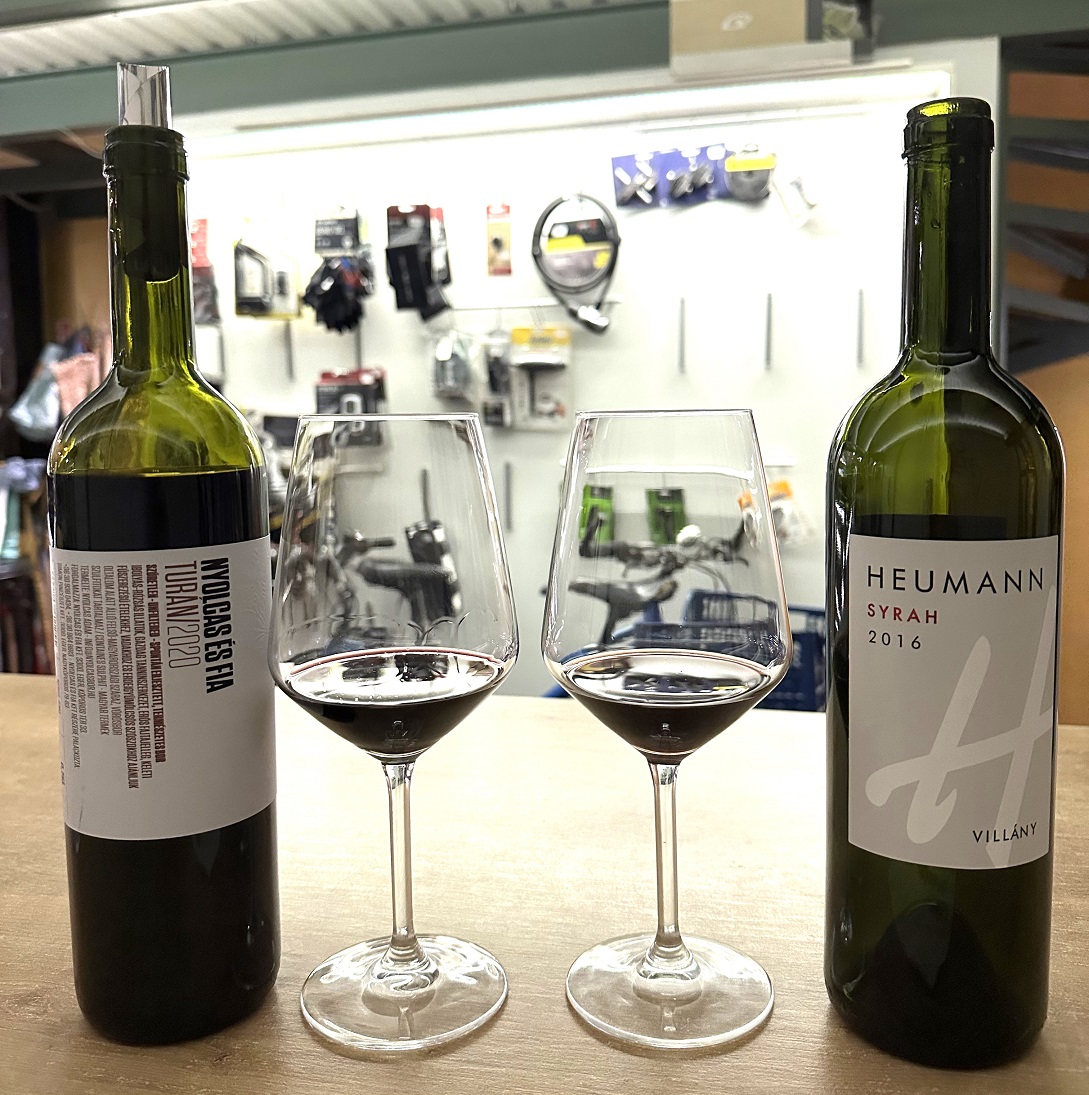
From here on, the new wines were arriving without interruption:
2022 Szentezi Prince Fekete Muskotály (12.5% ABV, rare grape: Fekete Muskotály)
This wine was light and fruity. Somewhat similar to Beaujolais Nouveau but with a bit more substance, loaded with fresh wild berries. Good acidity. Refreshing. Should be great with food.
2022 Sziegl Pince Kadarka Bisztró Hajós-Bahai Hungary (11% ABV)
Yet another light and fruity red, red fruit, simple, clean, light. Well balanced, good acidity.
2020 Nyolcas és Fia Borház Turán (13% ABV, rare grape: Turán)
Dark fruit on the nose, dark fruit on the palate, good mid-palate weight, good structure, excellent wine.
2016 Heumann Syrah Villányi Védett Eredetú Prémium (14% ABV)
Really was not expecting Syrah, but this was an excellent choice. Dark, concentrated, brooding, cherries, a hint of pepper, round, good balance, perfectly well drinkable.
Truth be told, I didn’t have much luck with the food at the restaurants. Yelp is unavailable in Hungary, and I find that TripAdvisor restaurant information is subpar, so the only option left is Google.
Through my search, I found a restaurant called Parisi 6. I almost skipped it at first, as I thought that based on the name it would be a French restaurant. But the menu suggested that this would be a traditional Hungarian restaurant, so I decided to give it a try on the last evening.
The food was excellent (finally had a goulash soup that I enjoyed), and the service was even better than the food if this is possible – ultra-friendly, attentive, and helpful.


Here are the wines we had at a restaurant:
2022 Skrabski Furmint (13% ABV, low histamine (!) wine due to a special strain of yeast used for fermentation)
Whitestone fruit on the nose, Chardonnay-like appearance on the palate, vanilla, fresh apples and hint of apples, fresh acidity. Food friendly.
2022 Szemes Villányi Cabernet Sauvignon Villányi Védett Eredetú Száraz Classicus Vörösbor (14% ABV)
I actually thought asked for a different red wine on the list (Kadarka), but somehow this wine appeared at our table, and the very first sip suggested that mistake or not, this was an excellent choice.
Beautiful core of dark berries, cassis, cassis, and a hint of bell pepper on the palate, round, medium to full body, delicious.
2023 Tokaj Nobilis Szôlôbirtok Kövérszölö Edes Fehérbor
I asked for the dessert wine to have at the end of the dinner. Our waiter suggested that Tokaji would be very expensive, and suggested that this wine would be a more reasonable but still a good choice. Wow. This wine literally delivered an experience. The wine was all into a sweet apple profile – ripe apple on the nose, ripe sweet apples on the palate, perfect sweetness balanced with perfect acidity. And the best part? Our dessert choice was apple strudel, and my oh my, was this a heavenly combination…
That’s my deep dive into Hungarian wines in a good amount of detail. If you have an opportunity, definitely look for the Hungarian wines, I’m sure you will not regret it.
And before we part, two more little tidbits of my experience in Budapest.
I walked a few times to the river, going past this building:
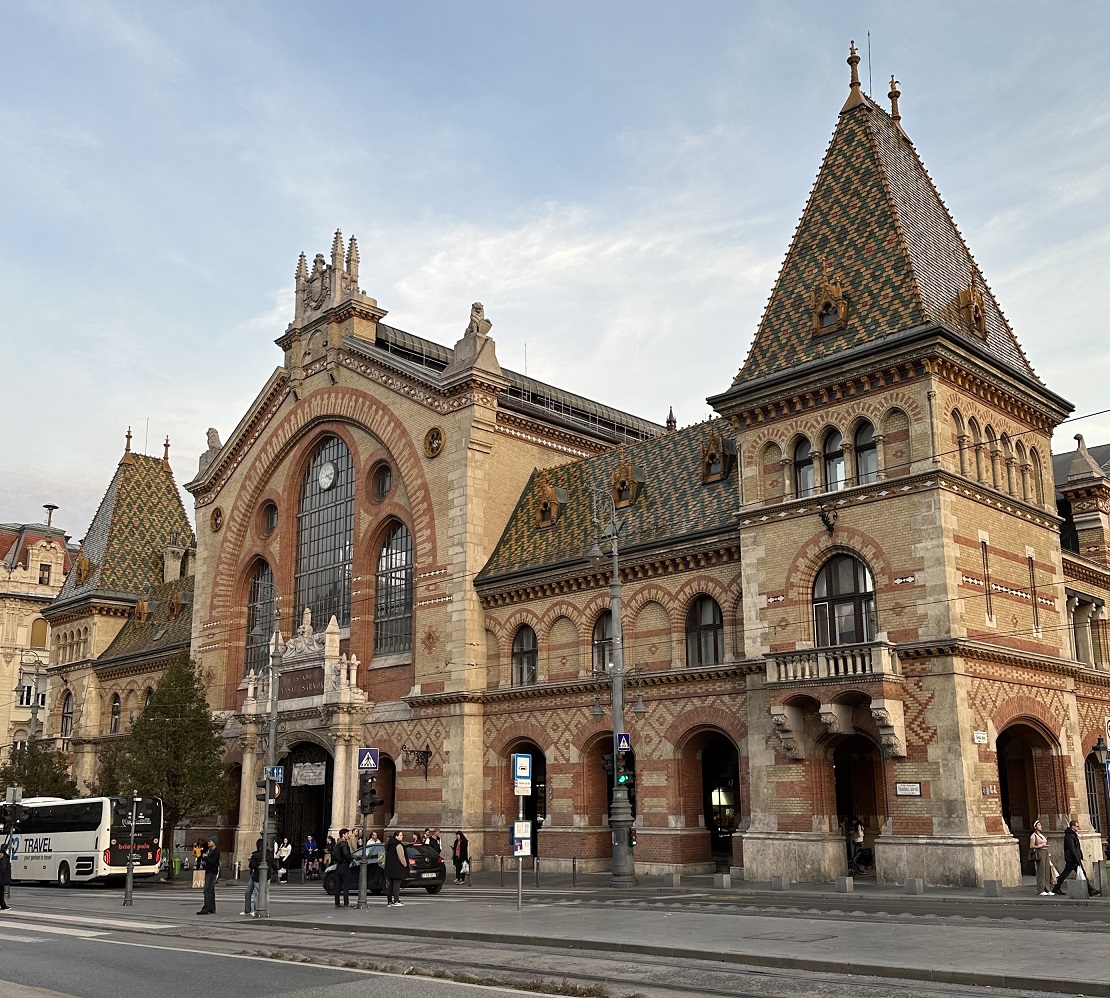
and thinking that this was a museum or some sort of historical building. On my last day, I was looking for a place to get some specialty Hungarian foods, such as Pick salami for example (when fresh, might be the best salami in the world). Somehow, google suggested that there is a supermarket inside that “historic building”. Surprised but obedient, I crossed the road and read the “Central Market” sign above the entrance! The building might be historic, but inside I found lots of small shops offering all types of Hungarian specialty food. The place was somewhat similar to Chelsey Markets in New York – if you ever visited you would get the idea. I was happy to find a pick salami to bring home and much more.
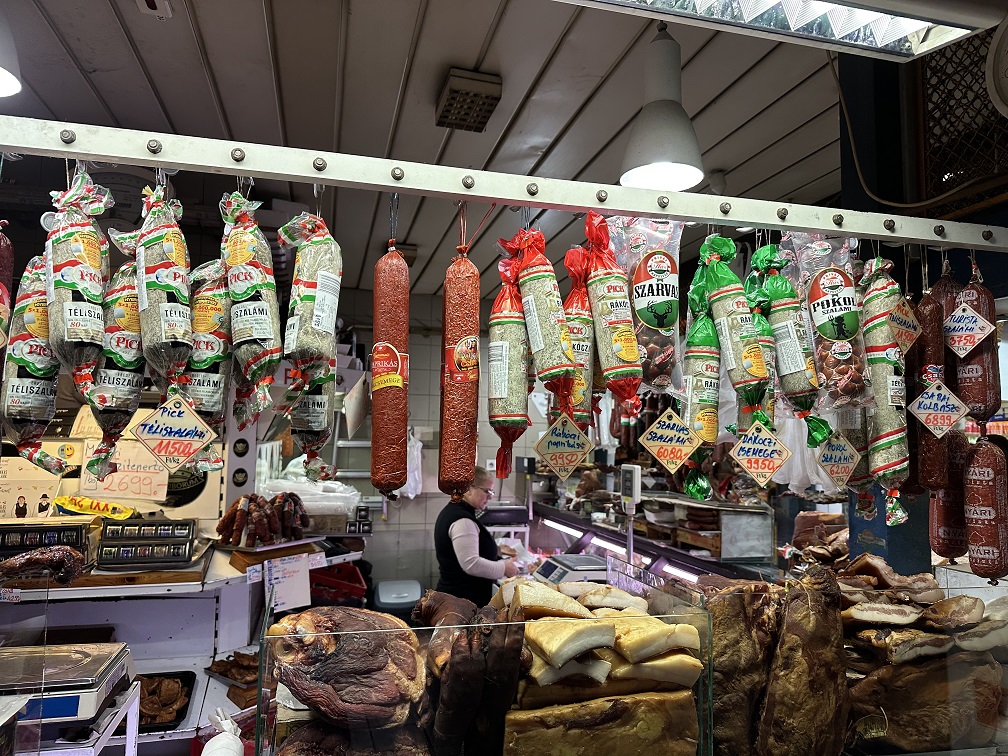
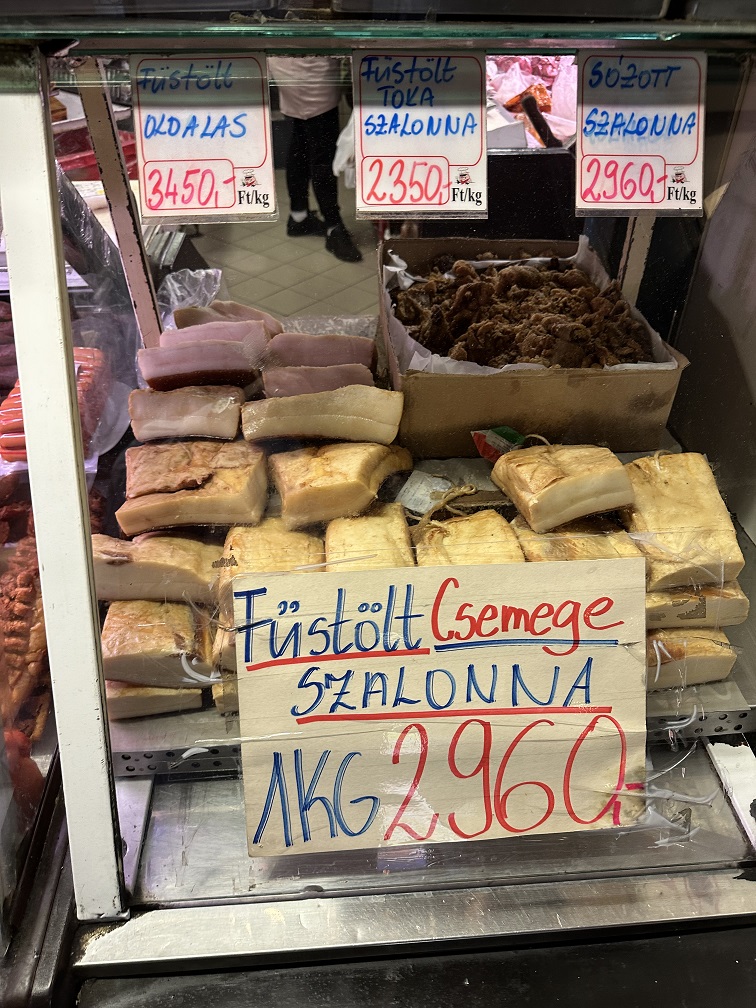
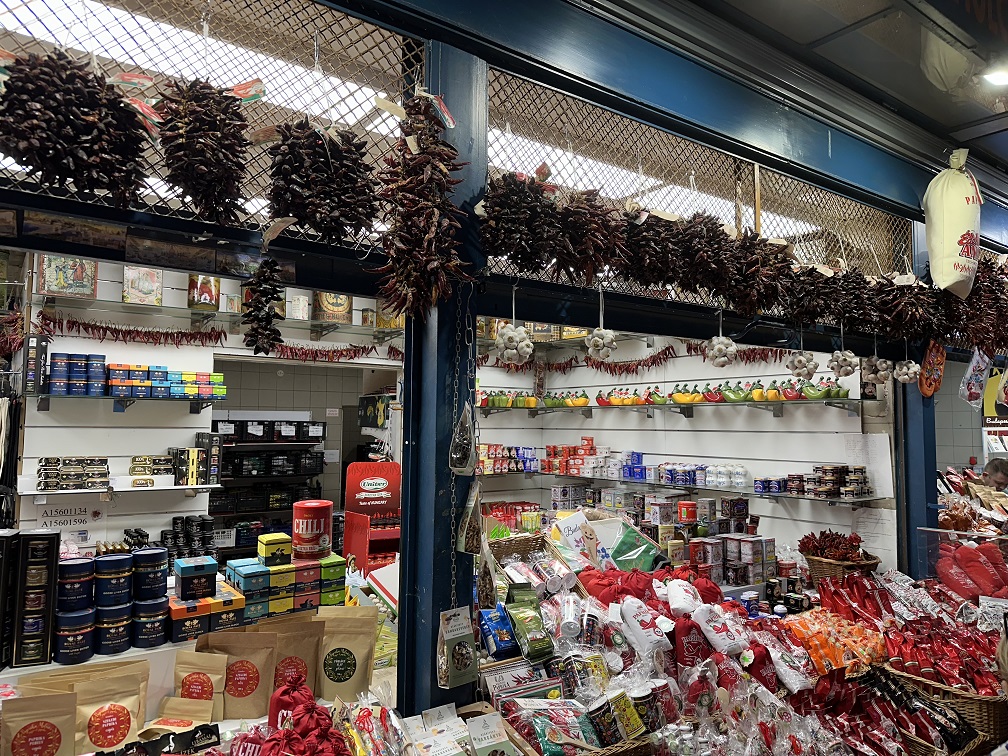
And last but not least, a few pictures of the beautiful Budapest town:
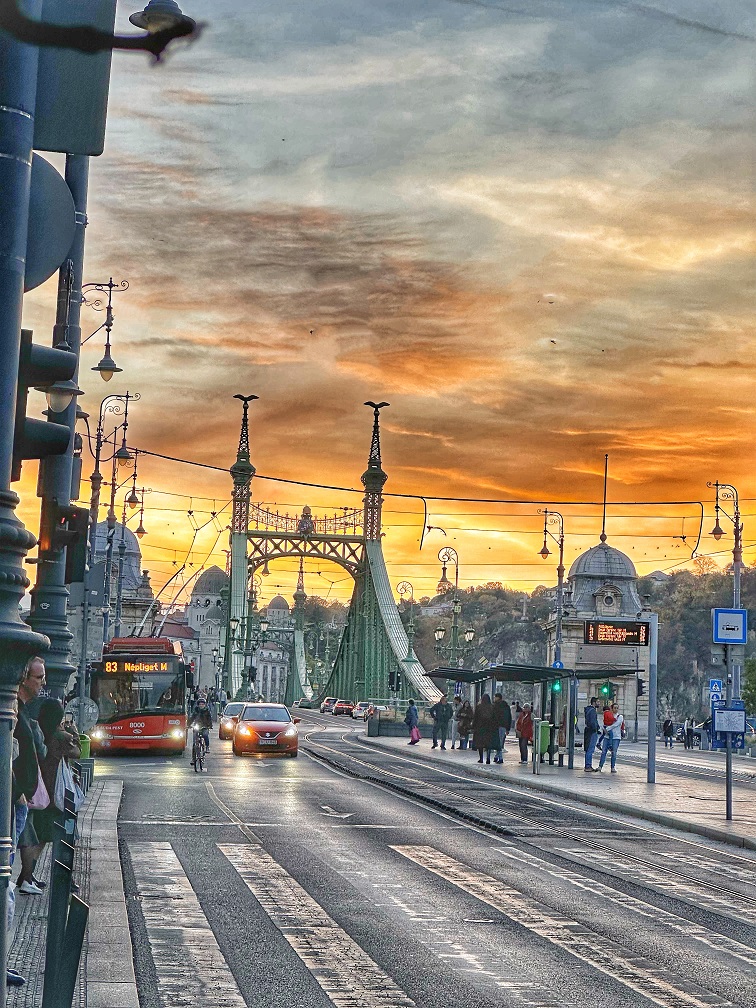
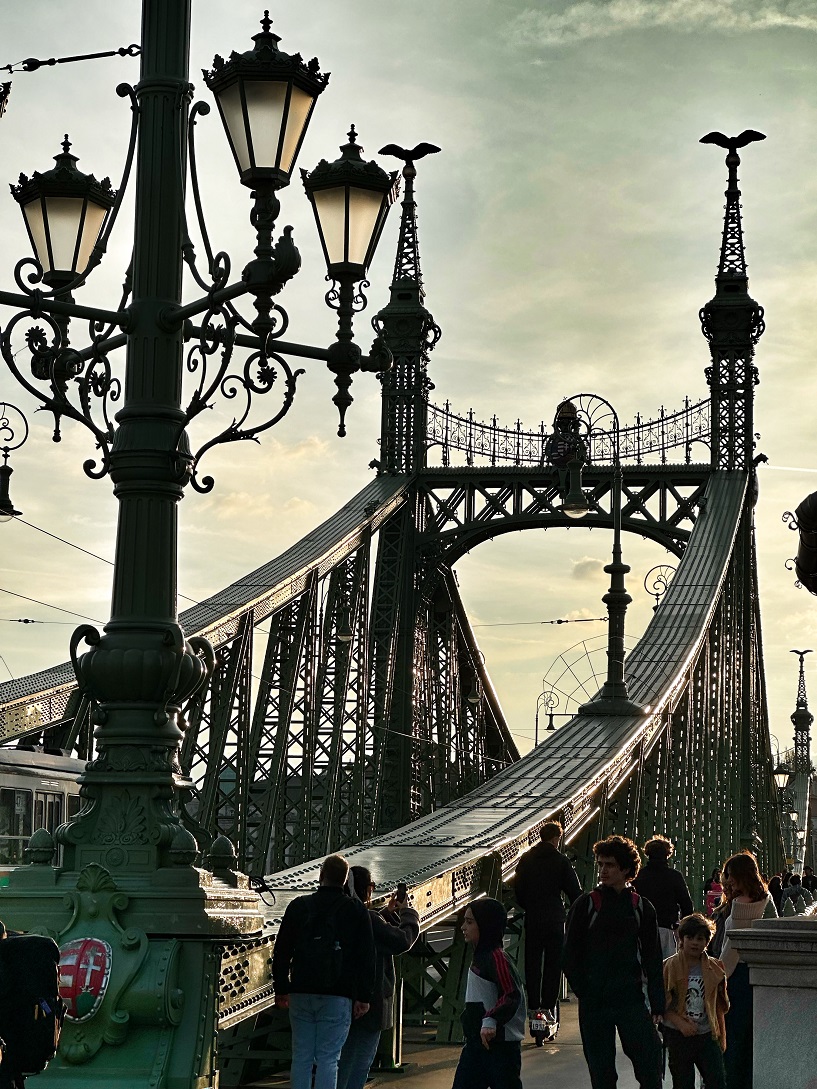
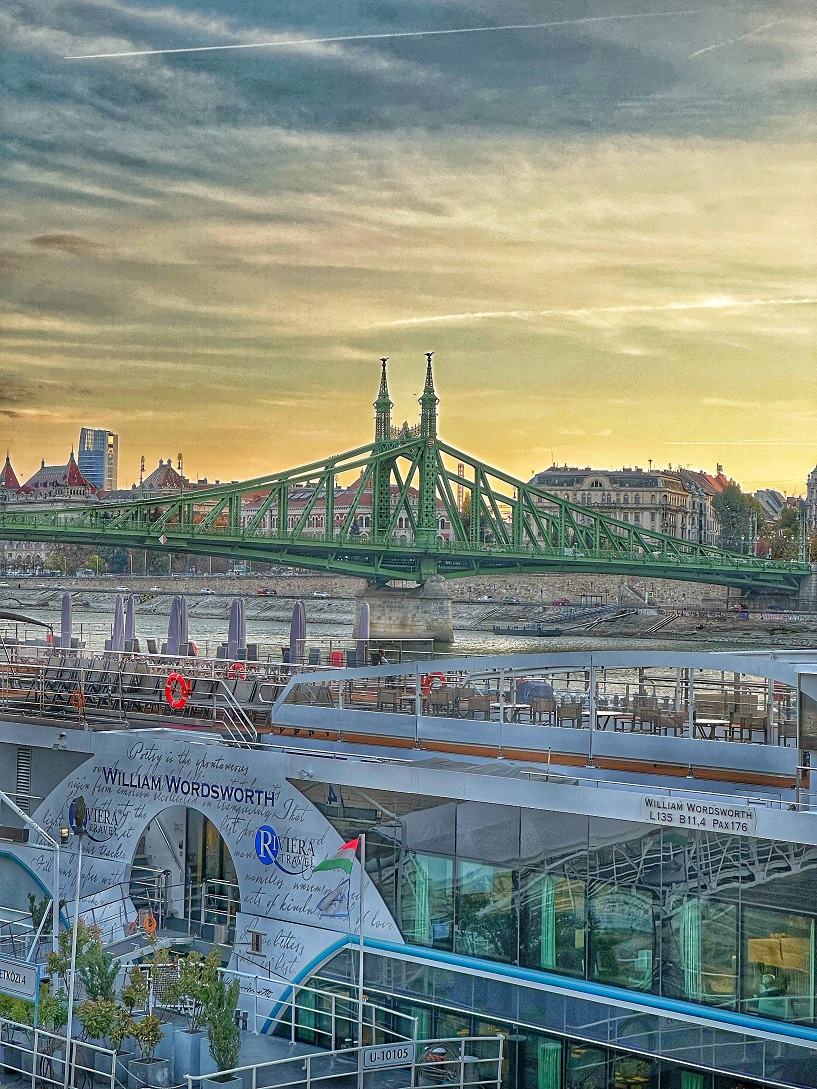
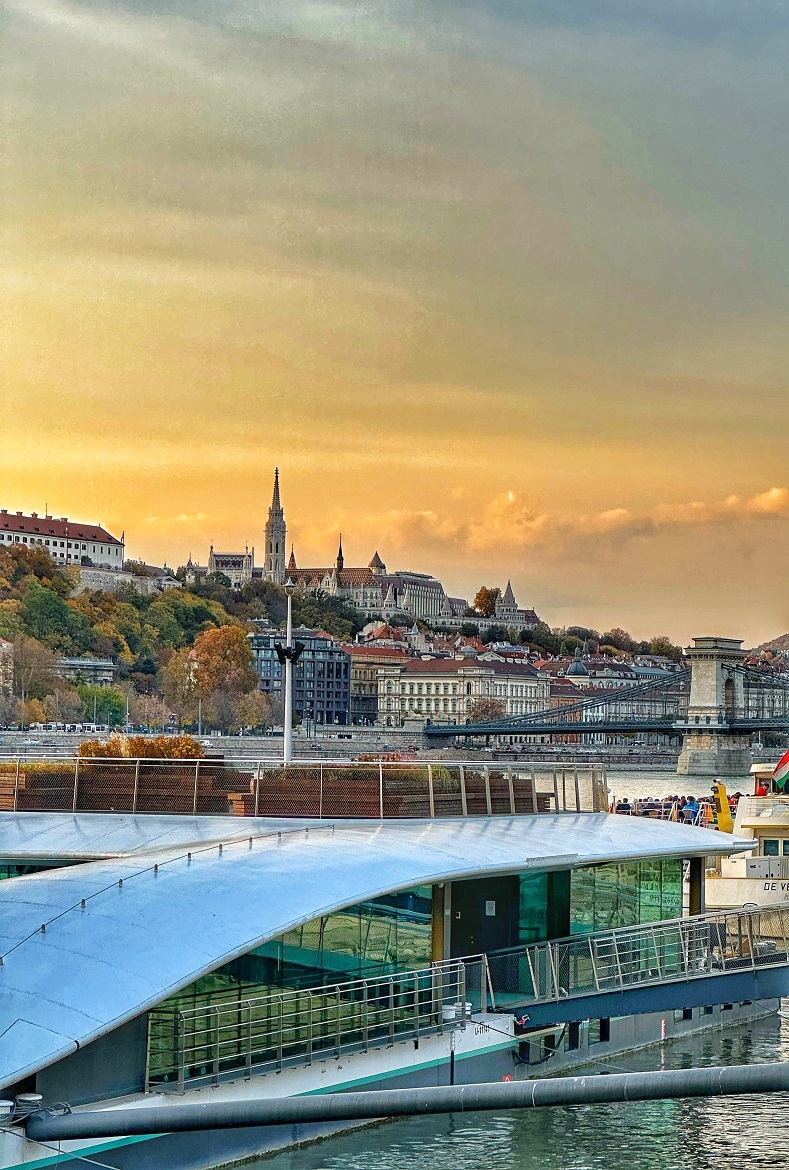
Budapest is a beautiful town, and Hungarian wines are delicious and evolving. Did I just set up your next travel itinerary or what? Cheers!
OTBN 2019 – What a Night!
Open That Bottle Night (OTBN for short) is my favorite “wine holiday”. Of course, the absolute majority of celebrations in our lives – holidays (Mother’s Day, Father’s Day, Thanksgiving…), birthdays, weddings, anniversaries, promotions – include wine, but strictly in the supporting role. All the “grape days” are about wine, yes – but typically restricted to a specific grape. OTBN is a special day when the wine is a front and center of our celebration – OTBN is all about showing respect to those special bottles which all need the special, perfectly appropriate moment to be opened. OTBN allows us to say “the perfect moment has arrived” and just open That Bottle.
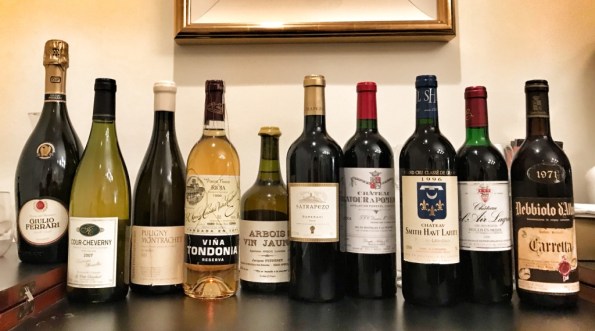
Almost full line up – few bottles are not shown
While I’m celebrating OTBN for a long time, this year’s event helped me to better appreciate the true purpose of this “holiday”. Okay, I have to say that I never had such a massive amount of wine opened for the OTBN – we went through 14 bottles – and each bottle was special in its own way. But until now, all of my OTBN experiences where strictly positive – the majority of the wines opened for OTBN were either at its peak or well drinkable at the moment but still promising to improve with time. But this year, in addition to absolutely stunning, mature, unparalleled wines we had wines which were either past prime or in the strange sleeping mode (yes, I’m an optimist), adding a good reason to follow the founding principals of the OTBN and pull the cork from That Bottle now.
Here are my notes for the wines we opened this year, together with a bit of explanation as to what made this wine special and my impressions.


2001 Giulio Ferrari Riserva del Fondatori Metodo Classico Trento DOC (100% Chardonnay)
Why: I was looking at this bottle for a long time. Ferrari makes some of the very best sparkling wines in Italy, and this is their flagship wine. At 18 years, it is a good age for the sparkling wine – and OTBN is a perfect reason to open a wine like that.
How was it: Amazing. Light bubbles, but the balance is amazing, light toasted notes, wow. The wine stayed fresh throughout the whole evening and was one of everyone’s favorites.
2013 Pierre-Yves Colin-Morey Puligny-Montrachet Le Trezin, Cote de Beaune
Why: Jim had multiple bottles of this wine and was worrying about Premox (Premature oxidation). Thus he put it out just to try.
How was it: Superb. delicious, classic burgundy, beautiful, elegant, round. Another one of the top choices for everyone.


2007 François Cazin Le Petit Chambord Cour-Cheverny AOC
Why: This is one of my favorite wines. When it was 10 years old, was literally blown away
How was it: Underwhelming. A touch of petrol, clean, good acidity, bud no bright fruit. Still delicious in its own way – I would gladly drink it any time. But – lucking the “umpf” which was expected… Still have 2 more bottles – will open later on and see.
2014 Damien Laureau Le Bel Ouvrage Savennières AOC
Why: Well, OTBN is an all-inclusive celebration. I rarely drink Savenniers, so it is always fun to experience something new.
How was it: Ok. For the 5 years old Chenin Blanc from the Loire, it was quite decent. Nice white wine – can’t say much more than that.


1996 Lopez de Heredia Viña Tondonia Blanco Reserva Rioja DOC
Why: why not? Lopez de Heredia is one of the very best Rioja Producers, and their Viña Tondonia Blanco might be one of the best white wines in Spain – at least from point of view of the wines which can age
How was it: A flop. Unless there was a flaw with this particular bottle, this wine was past prime and had no joy in it.
2015 Royal Tokaji The Oddity Hungary (100% Furmint)
Why: Furmit is the grape used in the production of the Hungarian Tokaji wines, some of the very best dessert wines in the world, easily rivaling the best Sauternes. Problem is – it is very difficult to prevent Furmit vineyards from the Noble Rot settling on the grapes – and thus it is rare – and difficult – to produce dry Furmint wine. Here comes The Oddity – dry Furmint wine.
How was it: Very good. Nice, clean, great minerality, balanced well-integrated palate, good acidity. Thank you, Lori, for this delicious find.
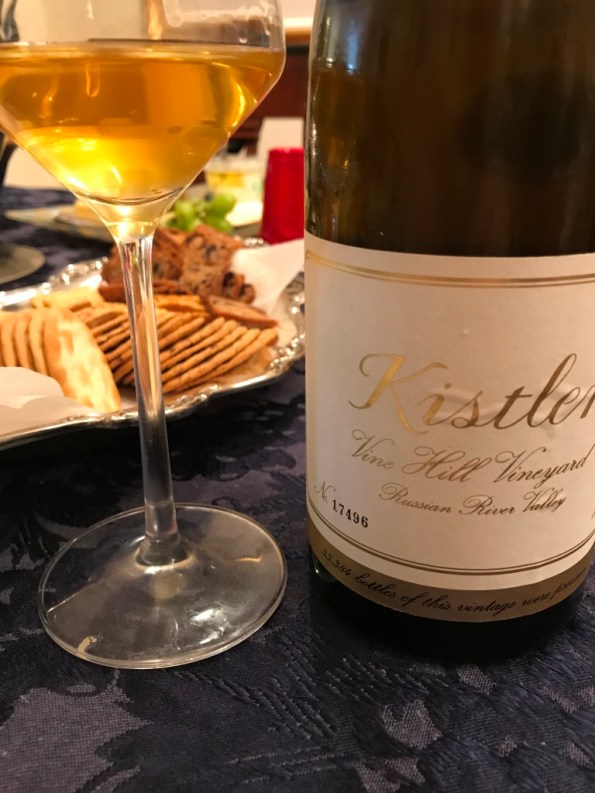
No filter – look at the color of this 24 years old Chardonnay
1995 Kistler Chardonnay Vine Hill Vineyard Russian River Valley
Why: Kistler is one of the best Chardonnay producers in California, so this alone is enough to include such wine into the OTBN line up. But then California Chardonnay rarely built to last for so long, so it was definitely the time to open this bottle.
How was it: Amazing. Almonds, apples, still present vanilla, a touch of smoke, good acidity – amazing for 24 years old white wine


2008 Jacques Puffeney Vin Jaune Arbois Jura
Why: Trying to explain the wine such as Vin Jaune to the uninitiated wine lovers presented an interesting challenge – I failed to explain what “oxidative” means. Anyway, putting this aside – Jura wines are rare. Vin Jaune wines are rare. Jacques Puffeney wines are beyond rare – 2014 was the last vintage which he commercially produced. This wine is absolutely OTBN worthy (thank you, Jim!)
How was it: Amazing. An oxidative nose which was also incredibly attractive, mature fruit, good acidity, elegant, present, delicious wine.
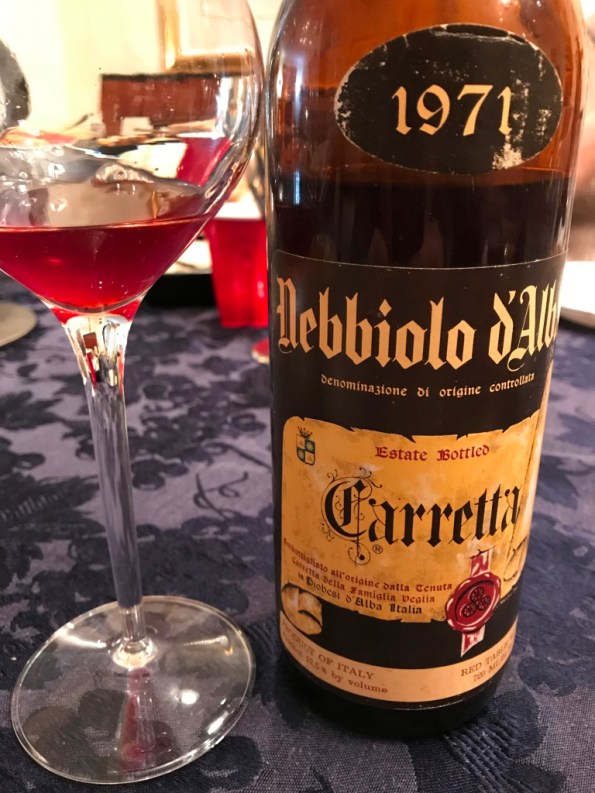
No filter – just look at the color of this wine! Amazing.
1971 Tenuta Carretta Nebbiolo d’Alba DOC
Why: 1971. Need we say more? Yes, the wine of such age is absolutely meant for OTBN.
How was it: Amazing, absolutely amazing. We poured it without decanting. The wine changed dramatically over the course of an hour. My first impressions were: pungent, with clean acidity, mature restrained fruit, still has lots of life left. Wow. About 15 minutes later, the wine totally changed and was the most reminiscent of a nice, concentrated Rosé – cranberries, a touch of strawberries, good acidity, very refreshing. Another 15 minutes made this wine most reminiscent of Jura red, a Poulsard if you will – light, great acidity, a touch of red fruit. Truly an amazing experience. And don’t forget to look at the color of this wine…


1986 Château Bel-Air Lagrave Moulis-en-Médoc AOC
Why: 33 years is a very respectable age for any wine – you really want to ask such wine “how ya doin”
How was it: Wow. Young, beautifully balanced, beautiful Bordeaux, just perfect. In a blind tasting, I would never identify this as a 33 years old wine. Yes, you can call me a failure.
1996 Château Smith Haut Lafitte Pessac-Léognan
Why: My exact question – why? Only because we could?
How was it: not ready. Needs time, mostly locked up. You would never think that 23 years old Bordeaux is not ready to drink, but it was not.


2004 Château Latour à Pomerol Pomerol AOC
Why: Same as previous wine – really, why?
How was it: Not ready. Closed nose, mostly cherries on the palate, need another 10-15 years.
2006 Telavi wine Cellar Satrapezo Saperavi Kakheti Georgia
Why: One of my most favorite Georgian wines. Limited production, a beautiful example of Georgian Saperavi. Most of the wine lovers are still unfamiliar with Georgian wines, so I really wanted to introduce this wine to the people.
How was it: Excellent. Still tight, beautiful fruit, big wine, could use more time. I was a bit concerned that this wine is reaching its peak – I was wrong. I’m sure another 5 years would do wonders here. Oh well…
2005 Weingut Petri Herxheimer Honigsack Scheurebe Trockenbeerenauslese Pfalz Germany (100% Scheurebe)
Why: For one, it is very appropriate to finish a great wine program with the dessert wine. And then how many of you even heard of Scheurebe? Scheurebe grape is a cross between Sylvaner and Riesling. It is quite rare, so yeah, a perfect choice for OTBN.
How was it: Spectacular. Not only it had great acidity which is essential in enjoyable TBA-level sweet wine, but it also showed a mix of honey and herbs – rosemary, sage, thyme – just an unbelievable concoction and ultimate pleasure in every sip. Thank you, Stef, for this treat.
Obviously, I can’t complain about such an amazing OTBN – however, as you saw, we had our share of disappointment. At the same time, the good greatly overweight the bad – 1971 Nebbiolo, 2001 Giulio Ferrari, 1995 Kistler, 2008 Vin Jaune, 1986 Bordeaux were all personal favorites and I would be glad to experience those wines again at any time.
Now that I told you about our OTBN, how was yours?
Beyond Tokaji – Exploring Wines of Hungary
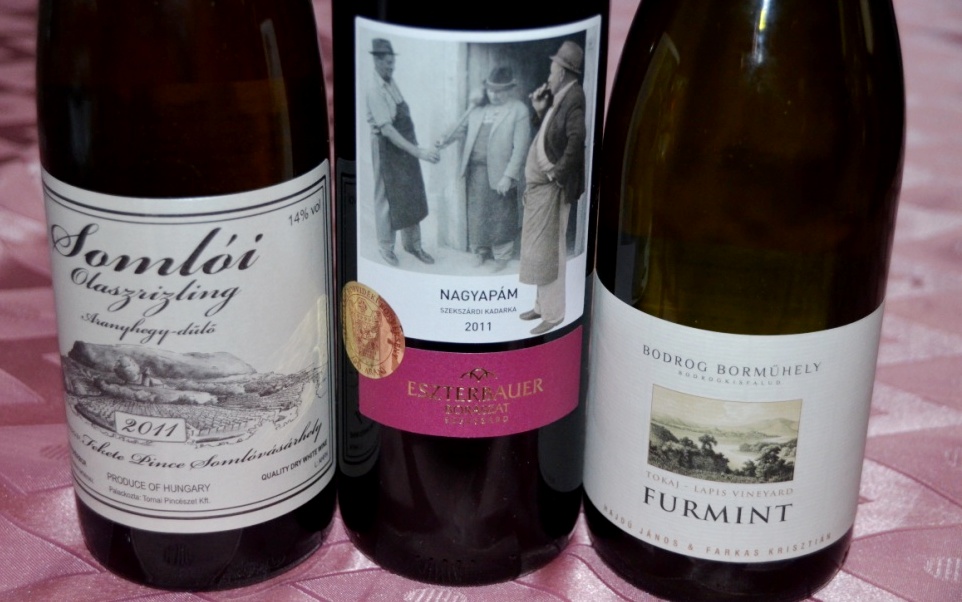 Stop a random wine lover on the street (hmmm, question of the day – how can you identify a random wine lover on the street?), and ask what Hungarian wines he or she knows and what Hungarian wines he/she tried. I would bet that at least three times out of five, you will get the blank stare, and then probably two people out of five will recall that they at least heard about Tokaji, the famous Hungarian dessert wine. On a very lucky day, one out five (I might be overly optimistic here) would also mention red wine called Egri Bikavér (Bull’s Blood). By the way, want even more blank stares? Ask what grape Tokaji is made from…
This is rather unfortunate, as winemaking traditions in Hungary would easily rival those of France. The wine was produced in Hungary since the Roman times, and according to the Wikipedia, Hungarian language is one of only three European languages where words for wine were not derived from Latin (the other two are Greek and Turkish). As most of the countries in Europe, history of Hungary was filled with ups and downs, being conquered and being conqueror, but the wine was thriving through the years, until the phylloxera of the 1870s and communist rule after the World War II delivered their devastating blows. For the last 25 years, there was a lot of hard work done in Hungary to restore the old glory – and the results are starting to show.
In today’s wine world, it is hard to be an underdog (change it from “hard” to simply “painful”, if your winemaking traditions are thousand years old) – the battle for the space on the wine shelves of liquor stores and supermarkets is simply fierce. Luckily, Hungary has at least one advantage when it comes to this wine fight – dessert wine called Tokaji. Tokaji is produced out of the white grape called Furmint, in the style similar to the German Riesling and Sauternes, also making the most concentrated wines out of the grapes affected by the Noble Rot (so called botrytized grapes). But general knowledge and availability of the Hungarian wines often starts and ends with Tokaji – and it should not, as Hungary offers a lot more wine deliciousness beyond Tokaji.
How can you discover new wines? There are only two ways that I know of. You read about them and you taste them. When it comes to the wines of Hungary, there is one company which dedicated itself to bringing those unique wines to the US market – Blue Danube Wine Company. The company was founded in 2002 with the mission of bringing the best wines from Central Europe (that includes wines from Austria, Hungary, Croatia, Slovenia and Montenegro) to the US market. I heard about the Blue Danube Wine Company a while back, but never had the opportunity to taste the wines they are representing. Last week, the opportunity presented itself in the form of the virtual tasting on Twitter called #winechat. #winechat is the regular weekly event on Twitter, created by Protocol Wine Studio, which focuses on educating and connecting oenophiles and everybody who are “into the wine”, whether as trade professionals or just the amateurs. Actually, last week’s event was double-first for me – my first #winechat, and my first encounter with the Blue Danube Wine Company.
The way #winechat works is this. The overall #winechat calendar is published on the Protocol Wine Company Facebook page. For each topic, there is a company which hosts the #winechat. In case the wine samples are available, this information is noted on the events page. If you are interested in the theme of the particular #winechat, you contact the host which might or might not have the samples available. On the day of the #winechat, all the participants get together at a given time ( typically 6 PM US Pacific/9 PM US Eastern), and discuss the wines on the Twitter, using the appropriate hashtags – very simple.
For the #winechat last Wednesday, there were three wines available, made from the grapes called Kadarka (red), Furmint and Olaszrizling (a.k.a. Welchriesling or Riesling Italico). Before the tasting we got the e-mail from the host, giving the tasting order and all the wine notes for these three wines. At 9 PM Eastern, all the fun started.
Contrary to what you might expect, we started the tasting from the red wine ( the other two were white) – 2011 Eszterbauer “Nagyapám” Kadarka, Szekszárd, Hungary (13.5% ABV, 100% Kadarka). This wine is made out of the indigenous grape variety called Kadarka, which is also used as part of the blend in Egri Bikavér wines. Kadarka is known to have big berries and thin skin, and makes a pretty difficult variety to work with. Szekszárd region is located south of Budapest (the capital of Hungary), longitude-wise between Bordeaux and Loire, and the vines had being growing in that regions for more than a thousand years. The Eszterbauer family started making wines in the region in 1746, after immigration from Bavaria. The family owns about 20 acres of vineyards, but farms total of 54. There is a number of Kadarka clones which Eszterbauer family uses to produce their wines. The grapes for this particular wine came from the oldest vineyard, hence the name of the wine “Nagyapám”, which means Grandfather in Hungarian.
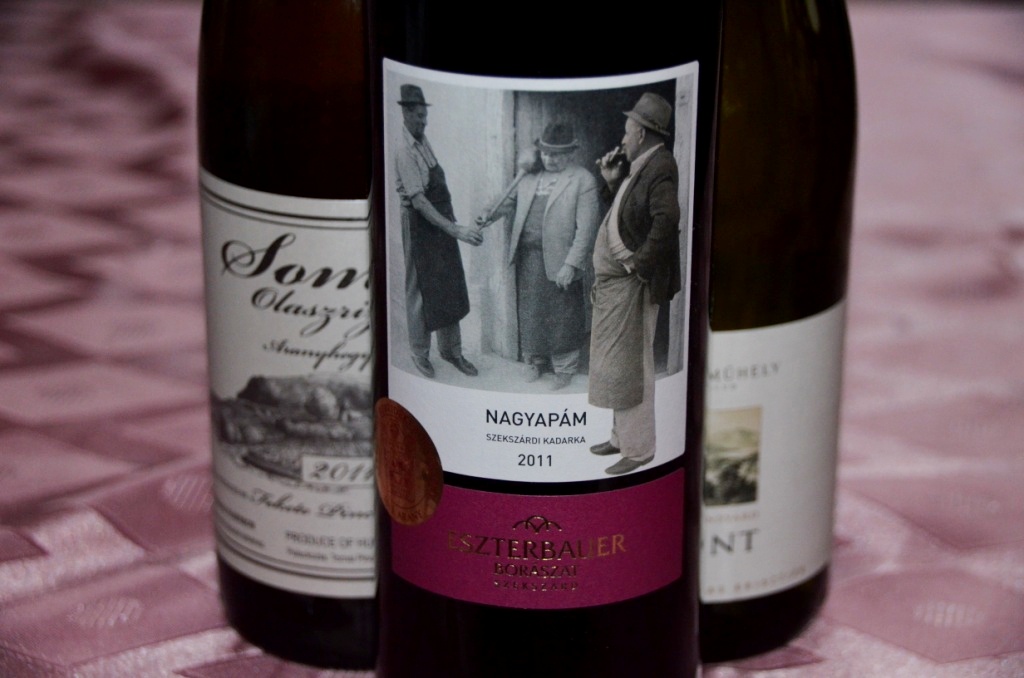 It was recommended to treat this wine like Beaujolais, i.e, drink it slightly chilled. Ask the wine geek to chill the wine, and he (or she) will start playing with thermometer (isn’t it true?) – this is what I did. Here are the tasting notes as I played with the wine.
Color: Ruby/garnet color, more of light Pinot Noir style, somewhat dim.
Nose: Freshly crashed berries, very similar to Beaujolais with a bit more restraint.
Palate: at 13°C/55.4°F, clean acidity, but the wine is too cold, comes through quite astringent. Cranberries and tart cherries, medium to long finish. At 15.6°C/60°F the wine is showing softer in the glass, not as astringent. At 17°C/62.6°F – the best showing so far (at this point the wine is opened for about 50 minutes) – soft, supple, together, with hint of spice in the back.
Verdict: This wine should be consumed at the room temperature (20°C/68°F) or very slightly cooler. Overall, nice and simple, should be good with food. Drinkability: 7+
Our next wine was 2011 Bodrog Borműhely Lapis Furmint, Tokaj, Hungary (13% ABV, 100% Furmint). This wine comes from the region of the best known Hungarian wines in the world – Tokaj, and it is made from the same white grape, Furmint. However, while Tokaji is made from the botrytized grapes, this wine is part of the line called Borműhely, which stands for the “wine workshop”, made with the goal of avoiding any of the botrytized grapes in order to showcase Furmint as a foundation for the dry white wines. This particular wine comes from the Lapis Vineyard which is located near the town of Bodrogkeresztúr, and is considered one of the very best vineyards in the Tokaj region. The mixture of soils at the Lapis Vineyard includes some of the volcanic soil, which imparts an additional minerality on the wines. After harvested by hand, this wine was fermented and aged on the lees for the 9 month in the Hungarian oak barrels.
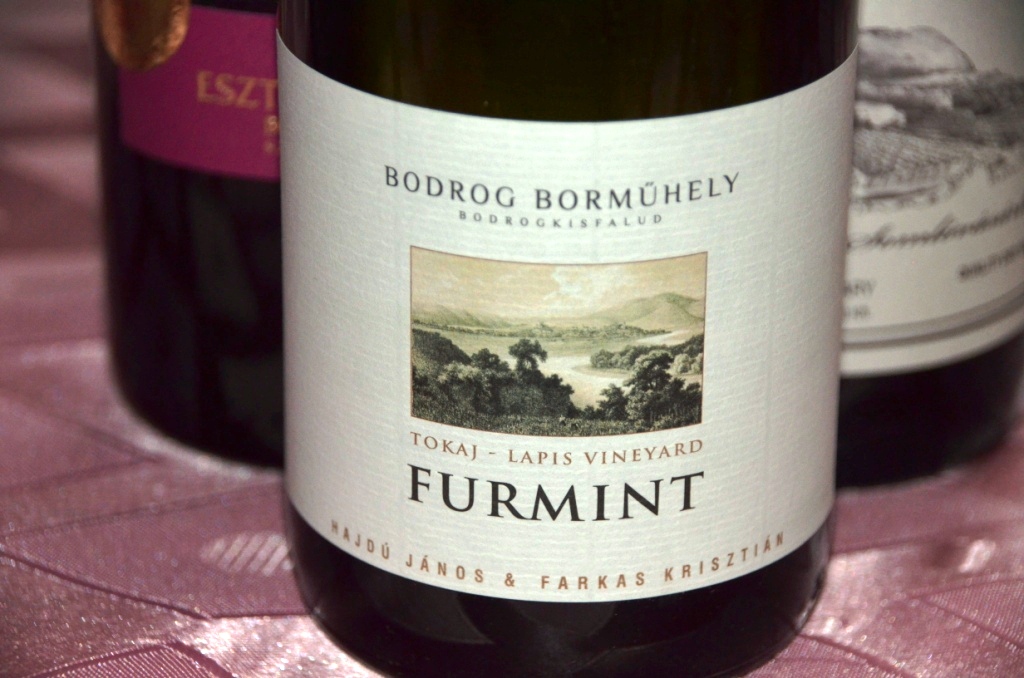 Here are the notes (started tasting at the temperature of 14.4°C/58°F):
Color: Almost clear in the glass, straw pale
Nose: Beautiful – hint of sweetness, caramelized peach, mint, nutty complexity, very unusual. As wine warmed up, nose became phenomenal, almost impossible to describe.
Palate: Great acidity, white peach, toasted pecans, beautiful. Nice legs, medium to full body.
Verdict: Outstanding wine, tastes different at the different temperatures, really should be experienced. Drinkability: 8
Last wine of the #winechat was 2011 Fekete Béla Olaszrizling, Somló, Hungary (14.5% ABV, 100% Olaszrizling). You know, I have a problem here. I know very little about Hungarian wines, and all the facts I gave you about the two previous wines were taken from the excellent notes created by the Blue Danube Wine Company (all available on their web site if you care to read them). My problem here? The note for this wine are so interesting that I would love to include them verbatim! But okay, let me try to compress it into the format of the blog post. Somló is the smallest appellation in Hungary, located on what was the underwater volcano in the very old days. You can imagine the richness and diversity of the soils which can be found in the Somló appellation. The winemaking traditions in Somló go back to the 10th century, and the vineyards in the region were always the object of desire for kings and farmers alike. Here is the excerpt from the tasting notes just to give you an illustration of preponderance of the region of Somló: “In 1752, local laws stated that if you were found adding water to wine, expect 25 lashings as the minimum punishment. If you were found to be labeling wine as Somló but using other fruit sources, you would be banned from making wine permanently and might even have your property confiscated. Perhaps most well known is that belief that drinking the wines of Somló before copulation would guarantee a boy. “Nászéjszakák bora” or “wedding wine” was soon the favored wine of the Hapsburgs to keep the Monarchy in full swing.”.
This particular wine comes from the winery of Fekete Béla, who had being tending to about 10 acres of vines for more than 30 years. The grapes for this wine were harvested by hand, then fermented with the natural yeast in the 1200 liter Hungarian oak casks, and then aged for two years, never punched down and never completely sealed from the oxygen. You have to taste the resulting wine to believe it.
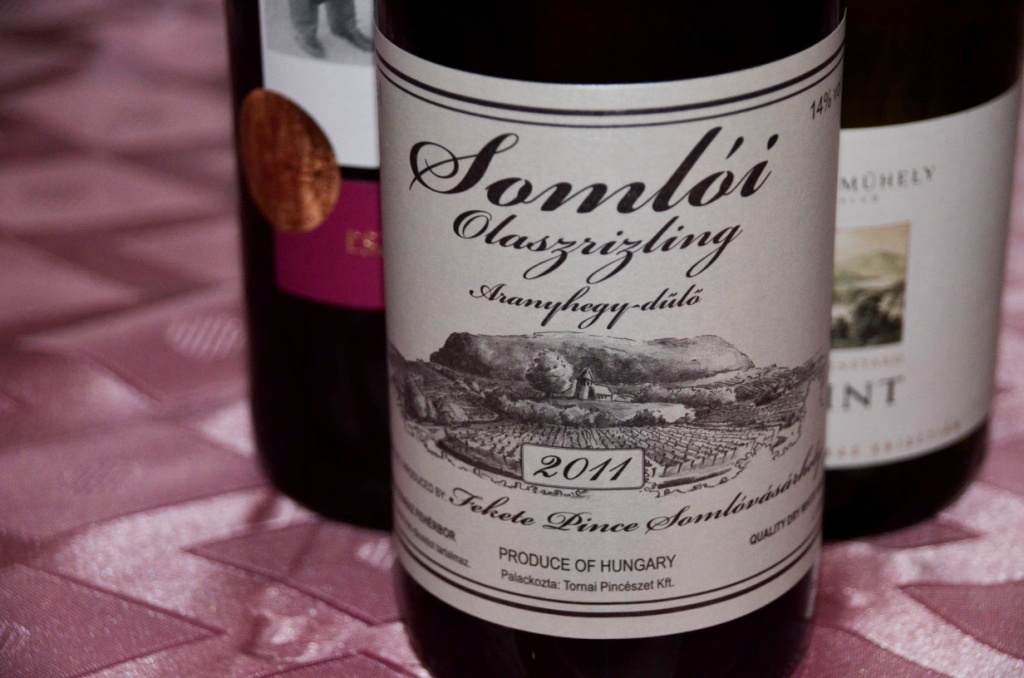 Here are the notes (starting temperature 12.8°C/55°F):
Color: Straw, pale yellow.
Nose: Wild flowers, tamed, distant, very inviting.
Palate: great complexity, very unusual, swings from toasted oats to touch of lemon, granny smith apples, butter, very noticeable legs, crisp and long finish. Noticeable minerality and substantial mid-palate weight.
Verdict: Truly unique wine. I really want to try it in 10 years, as it should evolve incredibly. Yes, you have to taste it to believe it. Drinkability: 8
All in all, this was a great tasting and great opportunity to learn something new and expand your palate. Thank you Blue Danube Wine Company and Protocol Wine Studio for all the fun and education! Until the next time – cheers!
Last Bottle Sign Up ($10 credit)




 Talk-A-Vino