Archive
Screw Top Versus Cork – The Jury Is Still Out
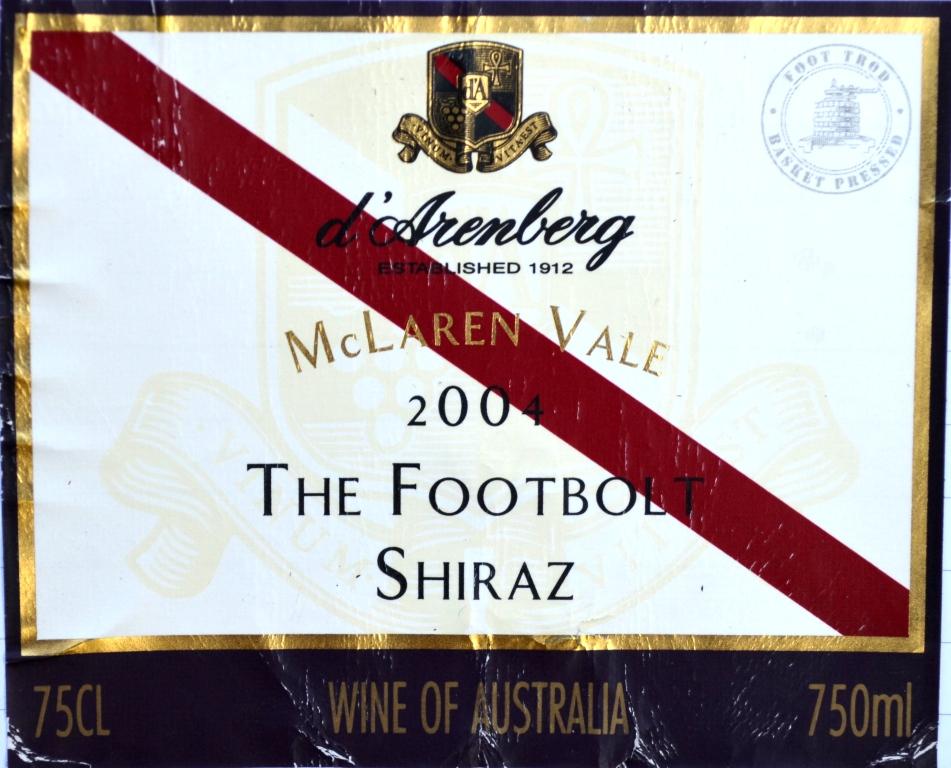 Inadvertently, I run an experiment of cork versus screw top, and the results were interesting enough to discuss them here.
About a week ago, I pulled out of the cellar (which is actually a wine fridge) the bottle of 2004 d’Arenberg The Footbolt Shiraz MacLaren Vale from Australia (14.5% ABV). As I confessed in my blogging addiction in the recent post, before the bottle is open, in addition to just regular anticipation of wine experience itself, now I have added anticipation of the possible blog post which can be written based on the wine experience.
Or not. There are many possible was for the experience not becoming a blog post. Too many things to write about, too little time. Or you just hit the “writer’s block”. Or the experience is not worthy of being captured. Which was the case with this Shiraz.
d’Arenberg is a well known Australian winery, which just celebrated 100 years last year, producing substantial range of typical Australian wines, such as Shiraz, Grenache, Chardonnay, Cabernet Sauvignon and more. I had pleasure of meeting Chester Osborn, d’Arenberg’s winemaker in third generation, and even have couple of bottles with his signature in my cellar (by the way, what do you do with those signed bottles? I should make a separate post to discuss this interesting question).
Now, I didn’t know what to expect from this bottle of Shiraz. The Footbolt is one of the introductory level Shiraz wines from d’Arenberg, but that doesn’t mean anything. Cork is out (regular cork, just keep reading to see why it is important), and judging by the color alone, this wine didn’t reach its prime yet – dark ruby in color. But the nose and then the palate were inconclusive. Acidity would jump up and down with every sip, and while the wine had enough fruit, it was simply not getting together, definitely lacking the balance which is all so important for me in the wine. So, based on this wine alone, the blog post was not born.
And then yesterday I pulled out another bottle of d’Arenberg wine from the same vintage:
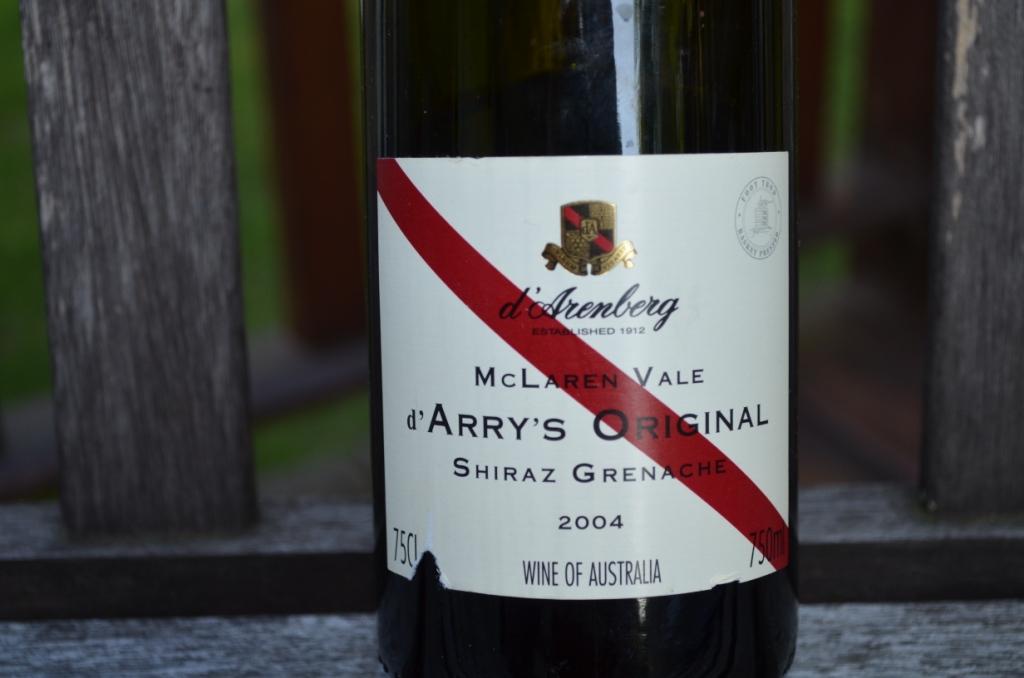
d’Arenberg Shiraz Grenache
2004 d’Arry’s Original Shiraz Grenache McLaren Vale (14.5% ABV) – a blend of 50% Shiraz and 50% Grenache . With the screw top. That was an “aha” moment. Same vintage as the previous wine – but wit the screw top – how different the experience will it be?
No “pop” of the pulled cork. Just a quiet “tsk-tsk-tsk” of unscrewing the top. In the glass, this wine looked like it was made yesterday – dark ruby, very concentrated color. From the get go, the wine showed beautiful fruit on the nose, ripe plums, equally supported on the palate with fresh fruit and energetic acidity.
About 45 minutes or so later, when I poured another glass, the wine tasted almost sweet – the thought was “what happened”? This was a totally a different wine compare to the way the wine started. Another half an hour or so – and we were presented with the new wine again – dark concentrated fruit, firm structure, tannins and acidity all summing up into a gorgeous balanced wine.
Wine ageing in the bottle is typically associated with the tiny inflow of oxygen through the cork. In case of screwtop, the oxygen doesn’t get to the wine at all. Thus my theory is that once you open a bottle under the screwtop, the very quick ageing process starts off, which takes the wine through the different “taste stages” in the rapid succession. Then at the same time, the wine is changing its taste in the glass no matter what, so may be that rapid taste changing has nothing to do with the way the bottle was closed.
Ideally, of course, I would love to compare two identical bottles (same wine, same vintage), only one closed with the screwtop and another one with the regular cork (I believe I actually read about some producers who are doing that). In this experiment, the Shiraz Grenache under the screwtop was a clear winner, but it is hard to tell what it has to do with the screwtop versus regular cork versus the two wines being just differently made.
I guess I can end this report with the words “to be continued…” – and I would love to hear your thoughts. Cheers!
Wednesday’s Meritage – Wine Quiz Answer, Ageing of California Cabs, Is 0.05 an answer?, and more
Meritage time!
As usual, we are starting with the answer to the wine quiz #58, Grape Trivia – Syrah. In the quiz, you were supposed to answer 5 questions about Syrah, a.k.a. Shiraz.
Q1: Where is Shiraz?
A1: Shiraz is a town in Iran (previously Persia) where supposedly Syrah was originated.
Q2: Which white grape often plays a role of blending companion for Shiraz?
A2: Viognier is often added to both Syrah (Côte-Rôtie) and Shiraz. In many cases you can see Shiraz Viognier written on the labels of Australian wines.
Q3: One of the appellations below can be removed from the list – can you tell which one and why? For the answer to count, “why” explanation is required
A. Cornas, B. Côte-Rôtie, C. Crozes-Hermitage, D. Hermitage, E. Saint-Joseph
A3: Cornas. While Syrah is the only red grape allowed to be used in all of the appellations above, all appellations except Cornas also allow addition of white grapes (Viognier or Marsanne and Roussanne) to the final wine.
Q4: About 100 years ago, Syrah was a popular addition to the wines of one well known region – now this practice is totally illegal by the appellation rules. Do you know what region was that?
A4: Bordeaux. Syrah was a popular addition to Bordeaux wine, providing the structure and flesh. Of course the practice is illegal according to Bordeaux AOC rules, but it is still quite popular in the other regions, such as Australia, where you can often find Cabernet Sauvignon Shiraz wines.
Q5: Where do you think are the oldest in the world continuously producing Syrah vineyards are located? Can you guess the approximate age of the vines?
A5: Australia. It is very difficult to figure out who was first and who was not, as in the wine world, there are always multiple claims to the “first” and “oldest” bragging rights. Based on the information I came across in this forum discussion, the oldest Shiraz vines had being planted in 1846 in the Jacobs Creek area, and Schild Estate is producing the wine called Moorooroo Shiraz from those old vines.
And the winners are… The Drunken Cyclist (I think for 5 times in the row!). He got all 5 questions correctly – great job, Jeff! Very close right behind him (with 4.5 out of 5 points – very close in the area for Shiraz, but named a different country – is Barbie from Blindly Guessing Grapes. If you are not familiar with her blog – check it out, she is constantly challenging herself to taste and learn about different grapes, definitely worth your attention. Honorable mention goes to Red Wine Diva, who correctly answered 3 out of 5 questions. Great job all, enjoy your bragging rights!
And now, to the interesting stuff around the vines and the web!
First I want to mention an interesting post by Steve Heimoff, where he is talking about change in perception of what ageable California Cabernet Sauvignon is, from 1970s to today. Steve’s point is that back in the 70s, to be considered age-worthy, Cabernet was supposed to taste bad on the release – where this is definitely not the point now. Read it for yourself, and as usual, don’t forget to read through the comments section, as it contains a lot of interesting information.
Next subject is currently widely discussed in many alcohol-related blogs – NTSB (National Transportation Safety Board) recently came up with recommendation to lower allowed alcohol blood limit to 0.05 (down from 0.08 which is currently the limit). Both Steve Heimoff and W. Blake Gray wrote blog posts about it, which you can read here and here, advocating the idea that just lowering of the alcohol blood level will not be the solution for DUI-related accidents. They both covered the subject quite well, so I’m not going to repeat all of their arguments – but I recommend that you will read their posts, as in the end of the day, this relates to all of us and our ability to have a glass of wine with the meal in the restaurant.
There is also something else I want you to think about here. My friend Emil sent me a very interesting link tot he blog post titled “Survivorship Bias“. The post is very (very!) long and has nothing to do with wine – it is however a very (very!) worthwhile reading. This post is talking about the fact that when we analyze the problem, we tend to focus on successful outcome only, and we forget to carefully look on all the failed results and dead-end paths (it is impossible to give you a good summary in one sentence, you will be better off reading the post). The connection here? I believe that most of drunk-driving accidents were caused by the people whose blood alcohol level was far exceeding 0.08, forget 0.05. Majority of the people involved into DUI accidents never thought of what the allowed blood alcohol level is – 0.08, 0.05 or whatever, so lowering the limit will only allow to collect more fines and get in the way of more people’s lives – but it is not going to address the problem itself and reduce the number of drunk-driving related accidents. By no means I advocate or promote drunk-driving, this is definitely a serious problem which needs to be solved – but in order to solve this problem, it should be analyzed properly first, and this is what I believe this 0.05 recommendation is lacking.
And this is all I have for you for today. I think you are looking at lots of interesting reading, and if you want to discuss any of this “news”, this is what the comments section is for.
The glass is empty – but refill is on the way. Until the next time – cheers!
Weekly Wine Quiz #58: Grape Trivia – Syrah

Shiraz grapes. Source: Wikipedia
Welcome to the weekend! To start your weekend right, it is the time for our traditional grape and vine exercise.
We are continuing the grape trivia, and today’s subject is … Syrah, or as they call it in Australia, Shiraz.
Syrah is a red grape with thick black skin, capable of producing full-bodied, big and powerful wines. Primary aromas associated with Syrah are usually of blackberry and black pepper, but as the wine ages, it shows a number of very diverse flavors, such as leather, tobacco, chocolate and more. Syrah is known under the name of Shiraz in Australia and South Africa. France, United States (California, Washington, Oregon) and Australia are typically considered to be the source of the best in the world Syrah wines, but Spain, Italy, Chile and Argentina are all producing very interesting Syrah wines as well.
Now, let’s move on to the quiz. As before, the quiz consists of 5 questions, and the answers will be provided next Wednesday.
Q1: Where is Shiraz?
Q2: Which white grape often plays a role of blending companion for Shiraz?
Q3: One of the appellations below can be removed from the list – can you tell which one and why? For the answer to count, “why” explanation is required
A. Cornas
B. Côte-Rôtie
C. Crozes-Hermitage
D. Hermitage
E. Saint-Joseph
Q4: About 100 years ago, Syrah was a popular addition to the wines of one well known region – now this practice is totally illegal by the appellation rules. Do you know what region was that?
Q5: Where do you think are the oldest in the world continuously producing Syrah vineyards are located? Can you guess the approximate age of the vines?
Enjoy your weekend, good luck and cheers!
Perfect Winter Fare – Shiraz and Cassoulet
 You can call it “play it for Australia” (with a little bit of France). Or you can just call it Shiraz tasting. Whatever the name is, but a few months ago (actually, right after the hurricane Sandy – it was a miracle that we didn’t lose an electricity) we got together for a Shiraz blind tasting and the dinner.
For the blind tasting, we had two limitations imposed. First, the bottle was supposed to say “Shiraz” on it. Yes, of course Shiraz and Syrah are the same grapes, but – this was a limitation number one. Limitation number two (a soft one) – preferably, the Shiraz shouldn’t be coming from Barossa region. You wonder why? Easy. I had a couple of bottles in mind, all from Barossa, so I wanted others to do the hard work. Ahh, yes – and no blends were allowed – only 100% Shiraz.
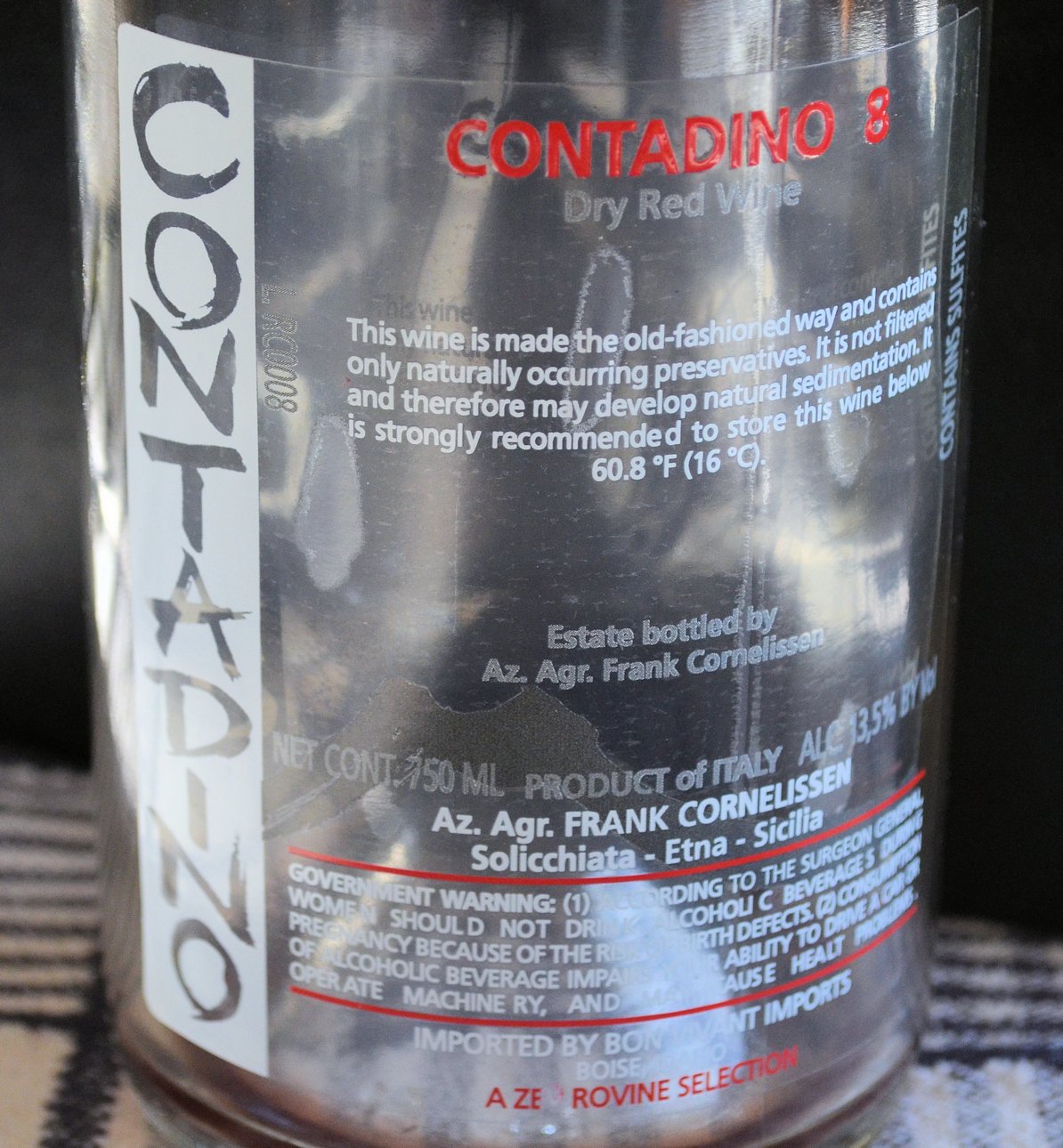 Before we started the tasting, I threw in a monkey wrench. Doesn’t sound right talking about wine, does it? So the role of this allegorical wrench was played by Frank Cornelissen Contadino 8 wine. Frank Cornelissen makes very interesting wines in Sicily – natural, low intervention wines from the grapes growing on volcanic soils of Etna. His aspiration is to let people actually to taste the soil, the actual stones in his wines, and he is probably succeeding with that (here is the link which explains the wine making philosophy – I think it is worth reading). This wine literally represents a very distinct experience – outside of acidity and minerality, there is very little else which you can taste – nevertheless, it is an interesting wine to try (well, I’m not sure we got too many votes of approval for this wine from the group, but still). Okay, let’s get back to the Shiraz.
The tasting was blind. Of course all the wines were Shiraz, but the blind tasting format allows you to focus only on the wine in your glass – no matter who producer is, how cute the animal is on the label (no, I didn’t expect anyone to pull off the Yellow Tail stunt, but thinking about it now, it could’ve been interesting), did someone tasted the wine before or who brought the bottle.
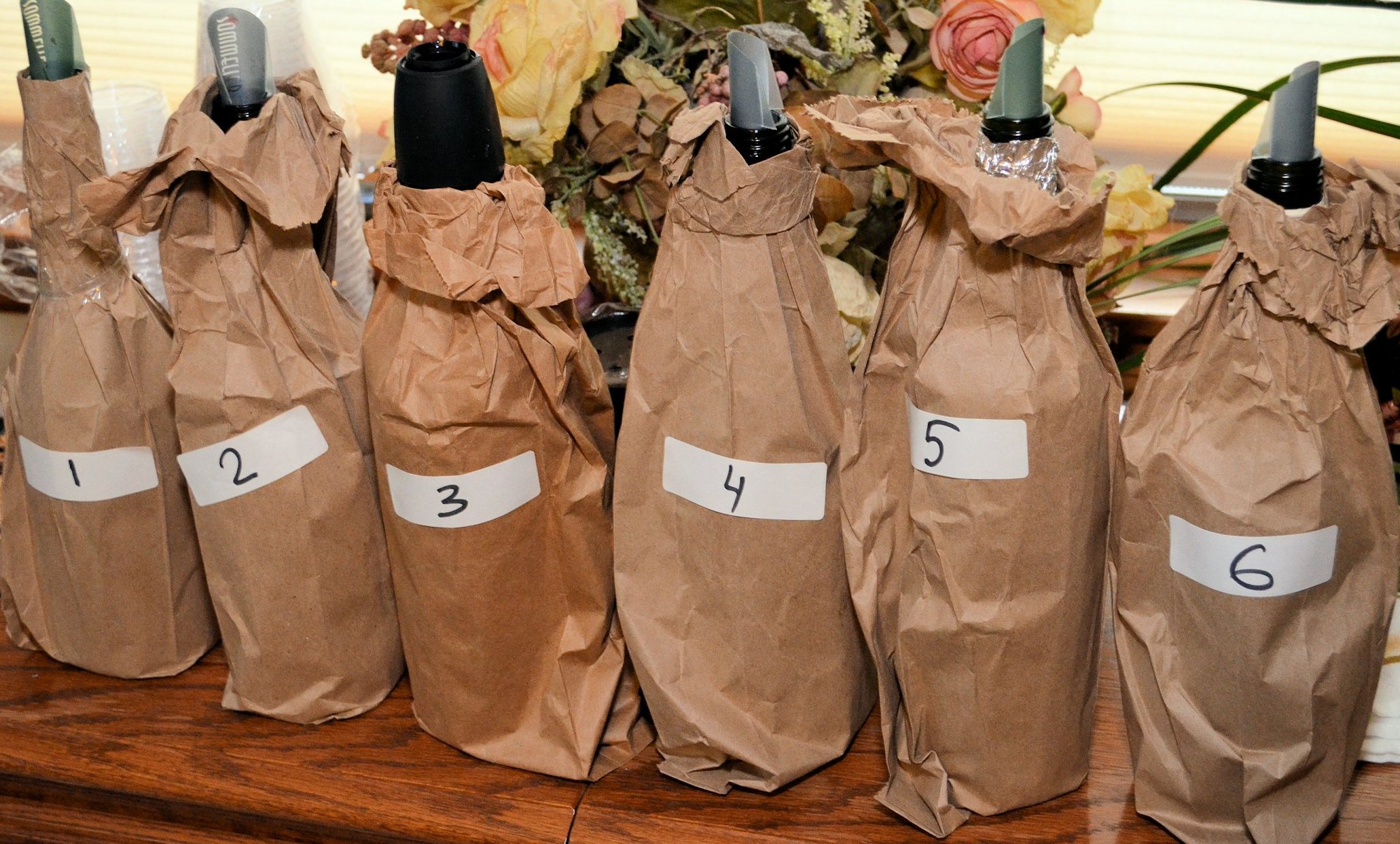
We had 6 wines in the tasting. As the tasting is blind, the person who brings the bottle, gets to open it and puts it in the brown bag. Then we ask kids to stick the numbers on the bags, completely at random. The wines are poured in the numbered glasses, and the fun begins.
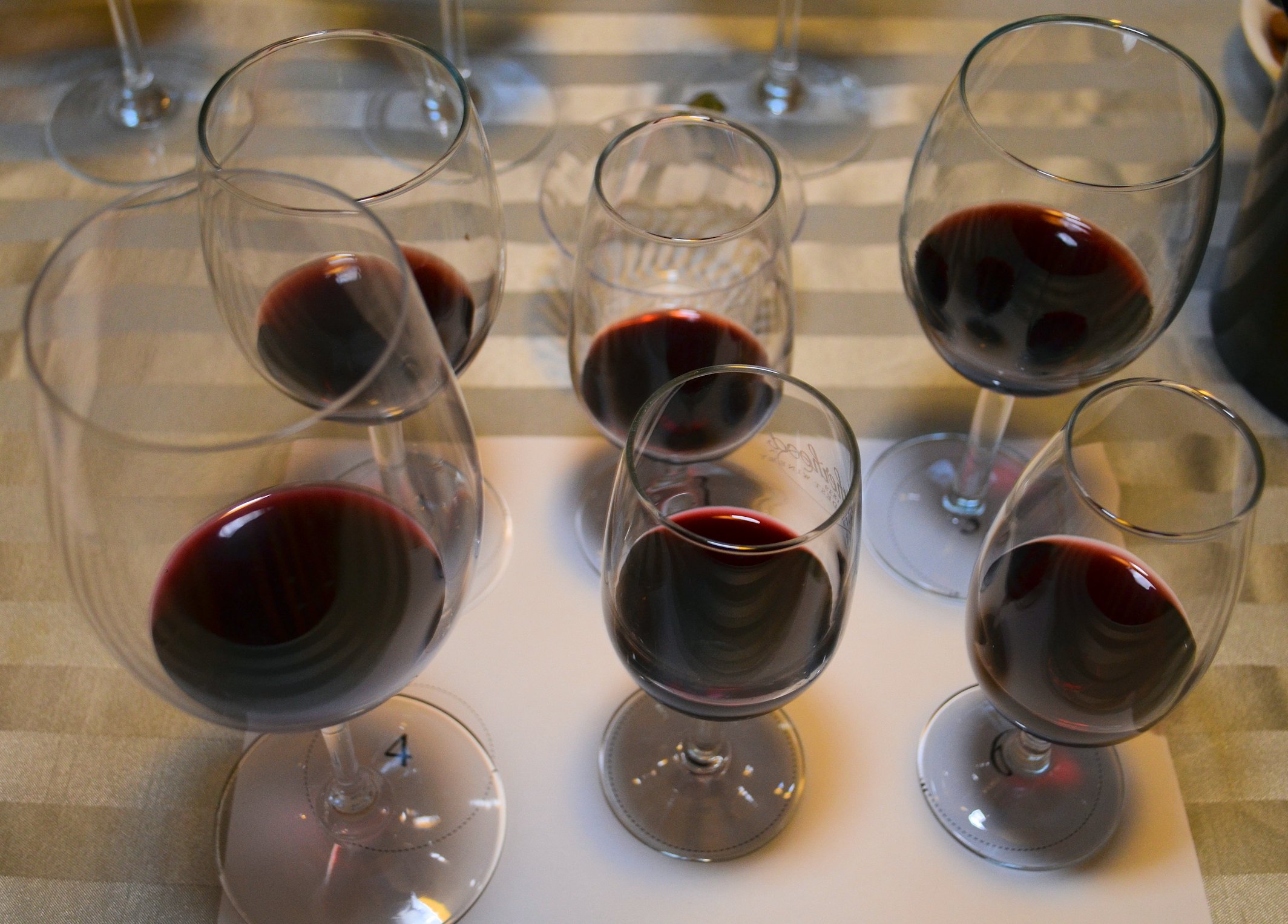
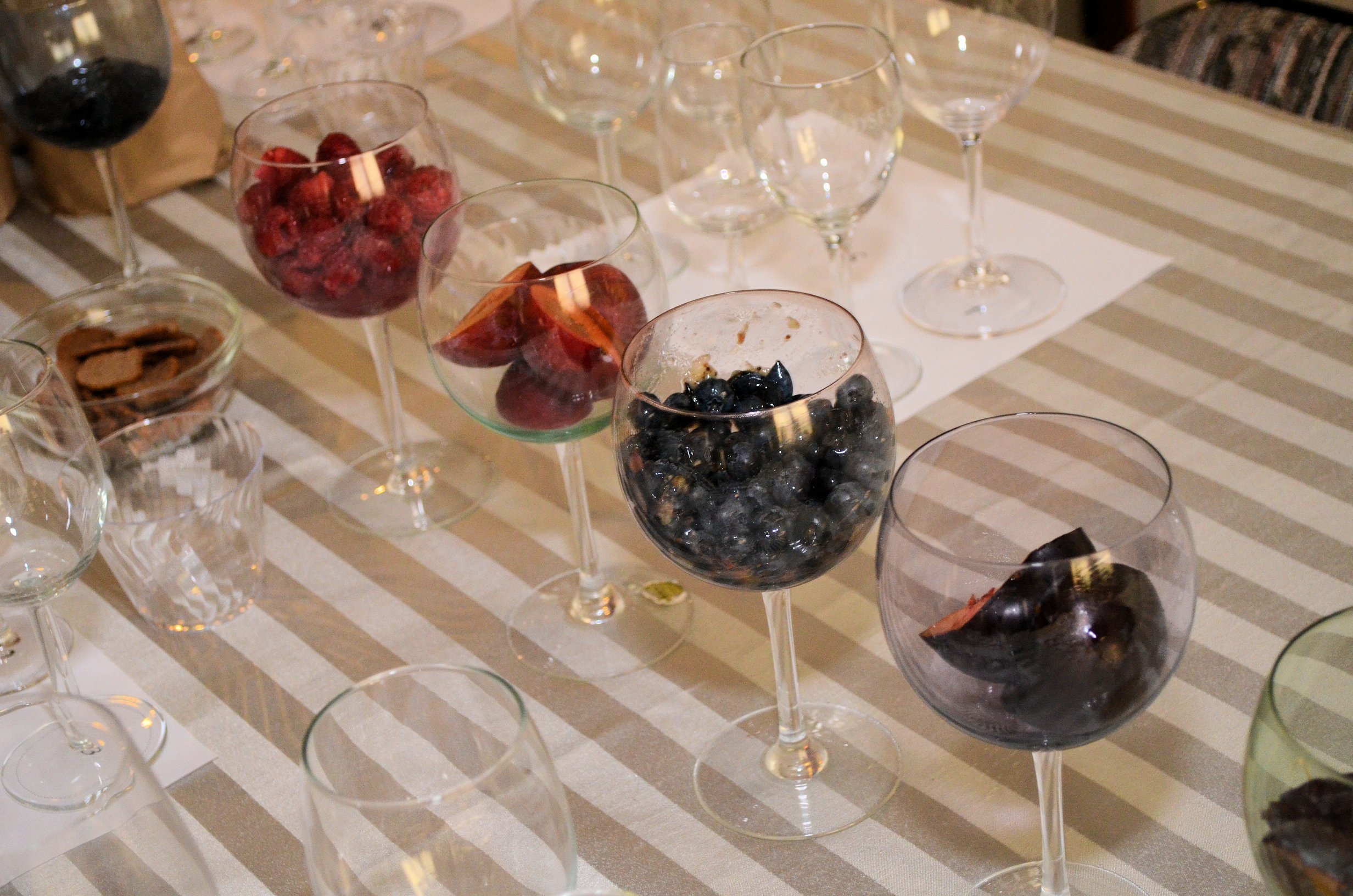
Shiraz is usually quite a playful wine when it comes to the fruit expressions, so this time we decided to add an interesting touch to our tasting – put the fruits on the table. We had raspberries, blackberries, blueberries and couple of different plums in the glasses, slightly smashed to release the flavor. The intent was to use those fruits as a reference while smelling and tasting the wine and to be able to identify what we were tasting. Not sure if it was a successful experiment, but as the very least it was fun.
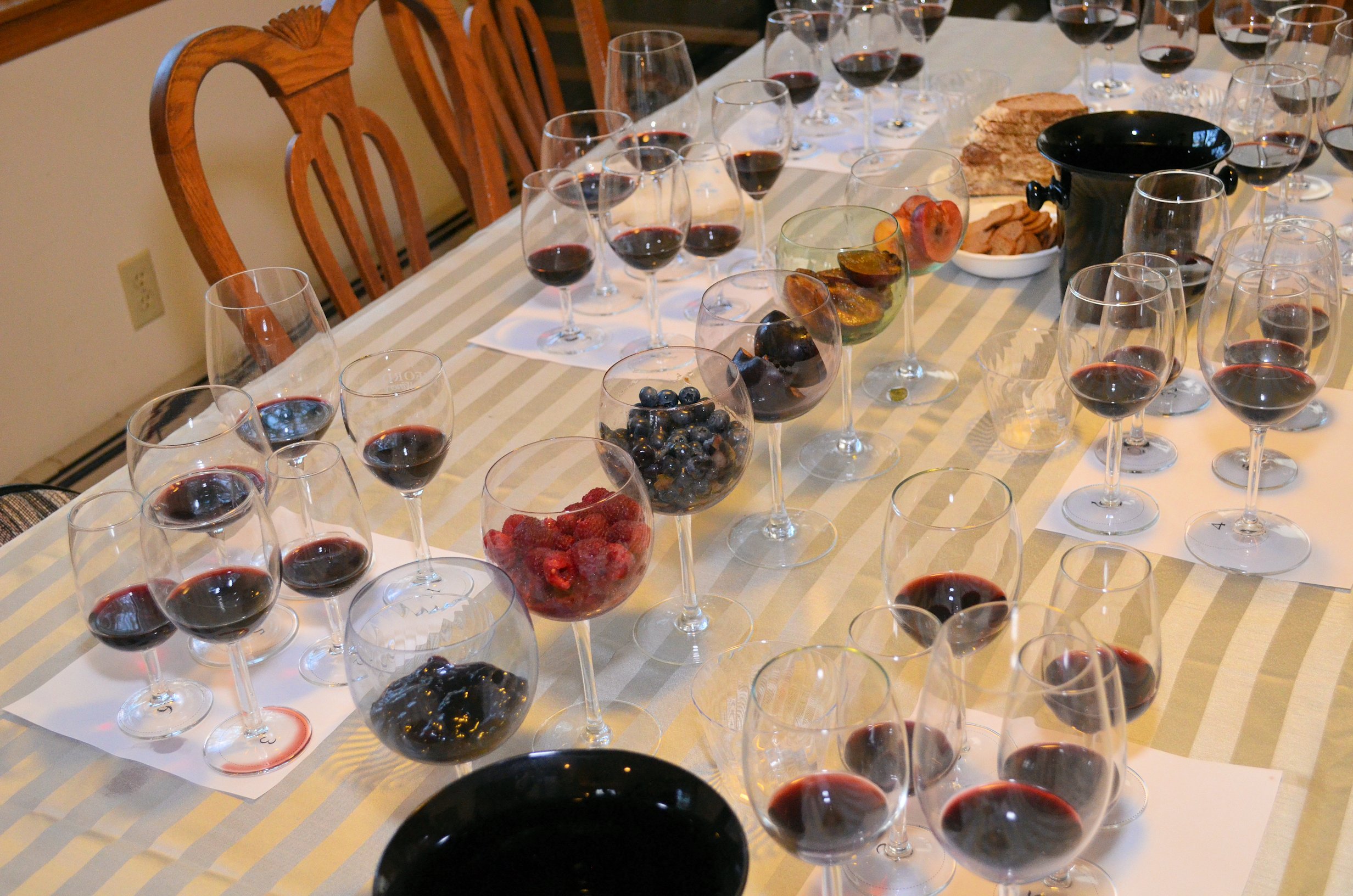
Now everybody are at the table and we start the tasting – sniff, swirl, sniff, more swirling, taste – talking and taking notes at the same time – no, there is no requirement to participate in conversation, but it is part of fun! And the notes are helpful at the end, when we take a popular vote to identify the most favorite wine of the group. Each person can vote for two wines, and the wine which will score the highest, will win. I case of a draw, we take an additional vote to select only one favorite between the two, so we still will have a winner – this all is necessary to have then a culmination point of unwrapping the winner and listening to the collective “ahh?” as pretty much in all of our blind tastings the winning wine was a complete surprise to everyone, including the person who brought the wine.
Once we have a winner, all the wines get unwrapped and admired, and everybody count their surprises for a few minutes. Here is our line up from this tasting:
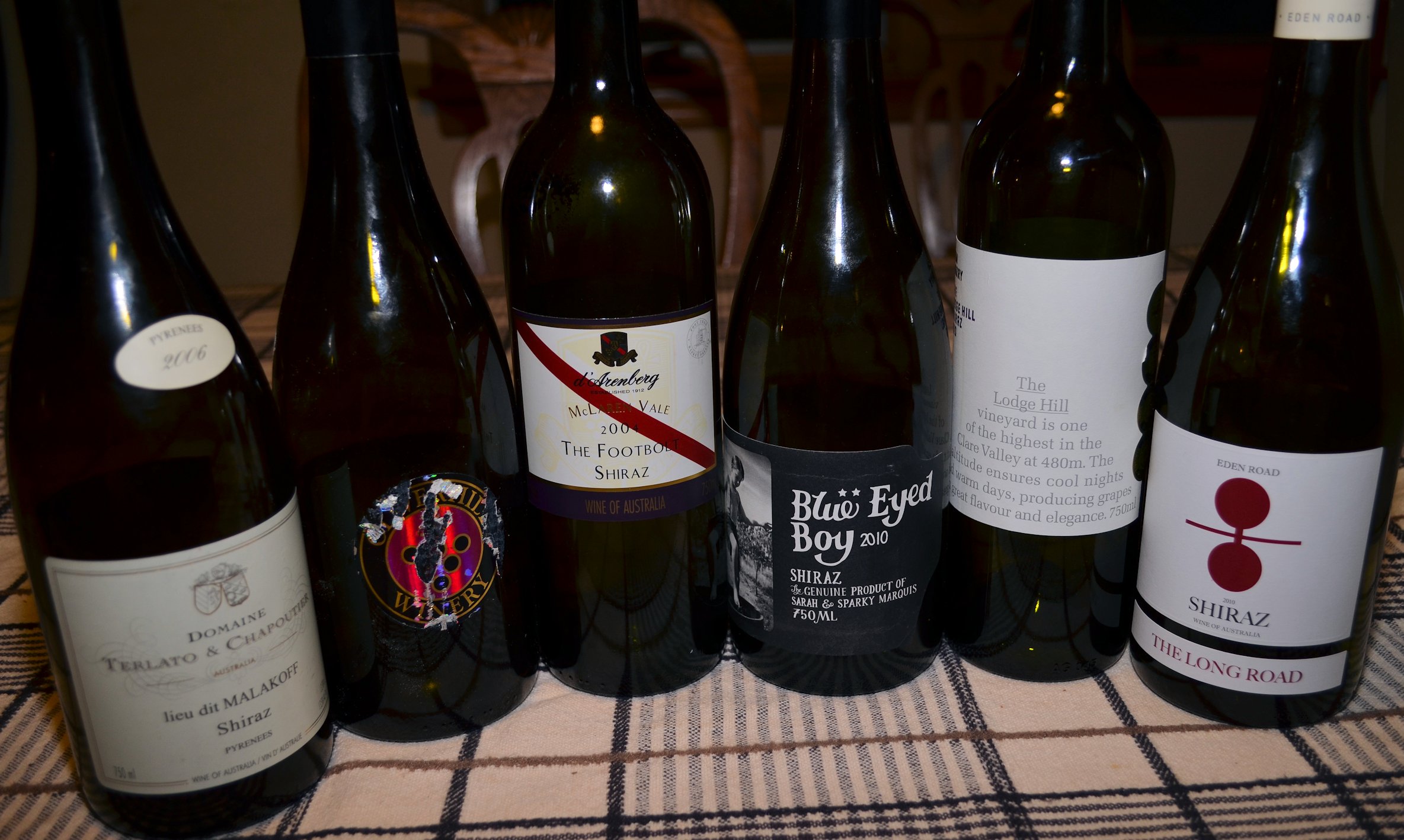
And here are the notes:
1. 2006 Domaine Terlato & Chapoutier lieu dit Malakoff Shiraz Pyrenees (13.5% ABV) – little smoke, blueberries, a bit tart, very restrained. Not a typical Australian Shiraz.
2. 2005 Oliverhill “Jimmy Section” Shiraz McLaren Vale (96RP, no ABV as my label was badly damaged) – a little dust, tart cherries on the nose, blueberries, very sweet on the palate, jammy, a little short on the finish, overall pleasant.
3. 2004 d’Arenberg The Footbolt Shiraz McLaren Vale (14.5% ABV) – interesting blackberries, very tart, not balanced.
4. 2010 Molly Dooker Blue Eyed Boy Shiraz Australia (16.5% ABV) – very nice, dark chocolate, jammy, blackberries, dusty nose, overall very balanced.
5. 2010 Jim Barry the lodge hill Shiraz Clare Valley (14.5% ABV) – very round, balanced, plums on the nose.
6. 2010 Eden Road The Long Road Shiraz Canberra District Australia (13.5% ABV) – Smells very young, but with the tannins in the back. Good dark fruit.
Can you guess the winning wine? I will give you a few moments.
And the winning wine was…
And the winning wine was…
And the winning wine was …

2010 Molly Dooker Blue Eyed Boy Shiraz Australia – the wine got 8 popular votes out of 10. In the second place with 5 votes out of 10 was 2005 Oliverhill “Jimmy Section” Shiraz McLaren Vale – interestingly enough, this wine has a very high rating of Robert Parker ( 96), and expected maturity in 2011 – 2018 – I guess we opened it prematurely… Oh well.
And now – dinner time!
Did you notice the title of this post? Yep, the cassoulet was involved. No, it was probably not cold enough yet, and cassoulet is a dish from south of France, so Cote du Rhone wines would be typically more appropriate – but, cassoulet is one of my all time favorite dishes to make (and to eat too), so you got to do what you want to do, right?
I fell in love with cassoulet during one of my trips to Geneva a while ago. White beans, pork, duck, lamb, sausage – all so succulent and so “together”, a perfectly heart, soul and body warming dish. I tried to find it in the restaurants in US, but never succeeded. Then at some point I came across an article about Cassoulet in Wall Street Journal, which also contained Alain Ducasse recipe – this was a turning moment when I started making it myself. I don’t know what any other cassoulet aficionados would think, but to me it tastes the closest to those I admired in Geneva.
I would like to share the recipe with you – which is mostly Alain Ducasse recipe (here is a link to the article and recipe on WSJ site) – I made certain adaptations which don’t sacrifice the taste, in my opinion, but make it easier to prepare.
Here is list of ingredients – as copied from the original recipe – with my comments.
For the beans:
1.5 lb Tarbais beans or white kidney beans (I’m talking about beans below)
3 carrots
1 celery stalk
1 onion
2 heads of garlic
1 tomato? ( well, in the original recipe there is a mention of tomato being diced – but then it is not used for anything – therefore, I just don’t use it)
Salt
For the meat:
4 sweet Italian sausages
1 lb pork ribs
½ lb garlic sausage
1 lb lamb shoulder
1 lb pork belly
4 duck legs confit
4 qt. chicken stock
3 carrots
1 celery stalk
1 onion
1 head of garlic (I just use garlic cloves here)
1 tomato
2 Tbsp tomato paste
2 sprigs thyme
1 Bay leaf
Salt
12 whole black peppercorns
Cassoulet starts with beans. The subject of proper beans for the cassoulet can almost reach the level of religious war. The original recipe of Alain Ducasse calls for so called Tarbais beans. Good luck finding them here. May be you can order them in advance, but this is a bit too much preparedness for me. So we need a substitute. What’s important is to find beans which will sustain very long cooking time, but will not become a mush – you are looking to see and taste actual beans and not some kind of paste. I successfully used so called Great Northern beans, which can be found in supermarkets, and I believe so called Navy beans will work too, but I don’t remember trying them.
The process starts from soaking the beans overnight in a cold water. The actual cooking starts next day – but you still can do a few things in advance.
The recipe calls for duck leg confit. If you look into the recipes for duck confit, cooking it is a very lengthy process on its own. Buying duck confit is possible, but it is hard to find a supermarket which carries it. I successfully replaced duck confit with just fresh duck legs. Sometimes, finding the duck legs can be a problem too. This was my case this time. Well, when you want a cassoulet, you have to do whatever it takes… Duck flavor profile (gamey, nutty, etc. – you know how the duck tastes) is essential – replacing duck with chicken is not really an option. My solution – using the whole duck. I got the whole duck, cut it up into pieces, leaving the skin on legs and wings, but otherwise removing it together with the fat – there is way too much fat in the duck. I fried the duck in the evening, preserving all of rendered fat together with all the meat, so it was ready to go the next day.
Before we talk about the whole process, let me give you an idea about the sizing. I used 2 pounds of beans, cut up meat from the whole average size duck, about a pound of pork country style ribs, pound of Italian sausage (usually 5 pieces), about a pound of chicken garlic sausage, about a pound of lamb chops (4 large pieces). Instead of pork belly, I used one package of “bacon ends” from Trader Joe’s which were fried the day before. All together, this was enough to feed well 10 or so hungry adults, with some leftovers. Now, lets get back to the cooking.
In the morning, step one was to cook beans. Drain the water from overnight, put beans in the pot together with celery, carrots, garlic and the onion, season, cover with cold water and simmer for about 1.5 hours or until beans are tender but not falling apart. Discard carrots, celery and onion. Technically, you are supposed to discard garlic too, but I just couldn’t do it – so I reused it for the next step.
While beans are cooking, you can start working on the meat. First you will need to roast all the meat separately. I use the cast iron pot (you can also use a heavy skillet), and sear all the meat in batches – you will need to season it with salt and pepper. You really want meat to achieve a nice sear, so note that this operation will take time (usually it takes me about 1.5 hours using the amounts mentioned above). Once all the meat is seared by itself, add duck (whether you are using duck confit or the whole duck prepared the day before), add bacon ( unless you will use the pork belly), add diced vegetables and let it roast for another 10 minutes. Then I put together herbs, bay leaf and peppercorns into a cheese cloth, tie it up and use it as Bouquet garni – i.e., put it inside (this way you can remove it all together so nobody need to chase down that peppercorn out of the dish). Now, add broth, cover and let it simmer for about 1.5 hours.
Once done, strain cooking liquid into the beans and put all the meat on the cutting board and let it rest for about 20 minutes or so. Remove and discard all the bones, and cut up meat into large pieces.
We are ready for the last step. Preheat oven for 250F. Take the cast iron pot. Put all the cut up meat on the bottom. Gently put beans with liquid on the top (again, you want to preserve beans as they are, so you will need to handle them with love). Overall, you want to to have enough liquid in the pot, but without making the whole dish looking like soup. Put a good layer of bread crumbs on top of the dish (no skimping on the bread crumbs – having a nice crust on top is one of the important elements of cassoulet). Put uncovered pot in the oven for about 45 minutes. Take the pot out. When serving, make sure to go all the way to the bottom so you will get the meat together with beans. Now, most importantly – enjoy!
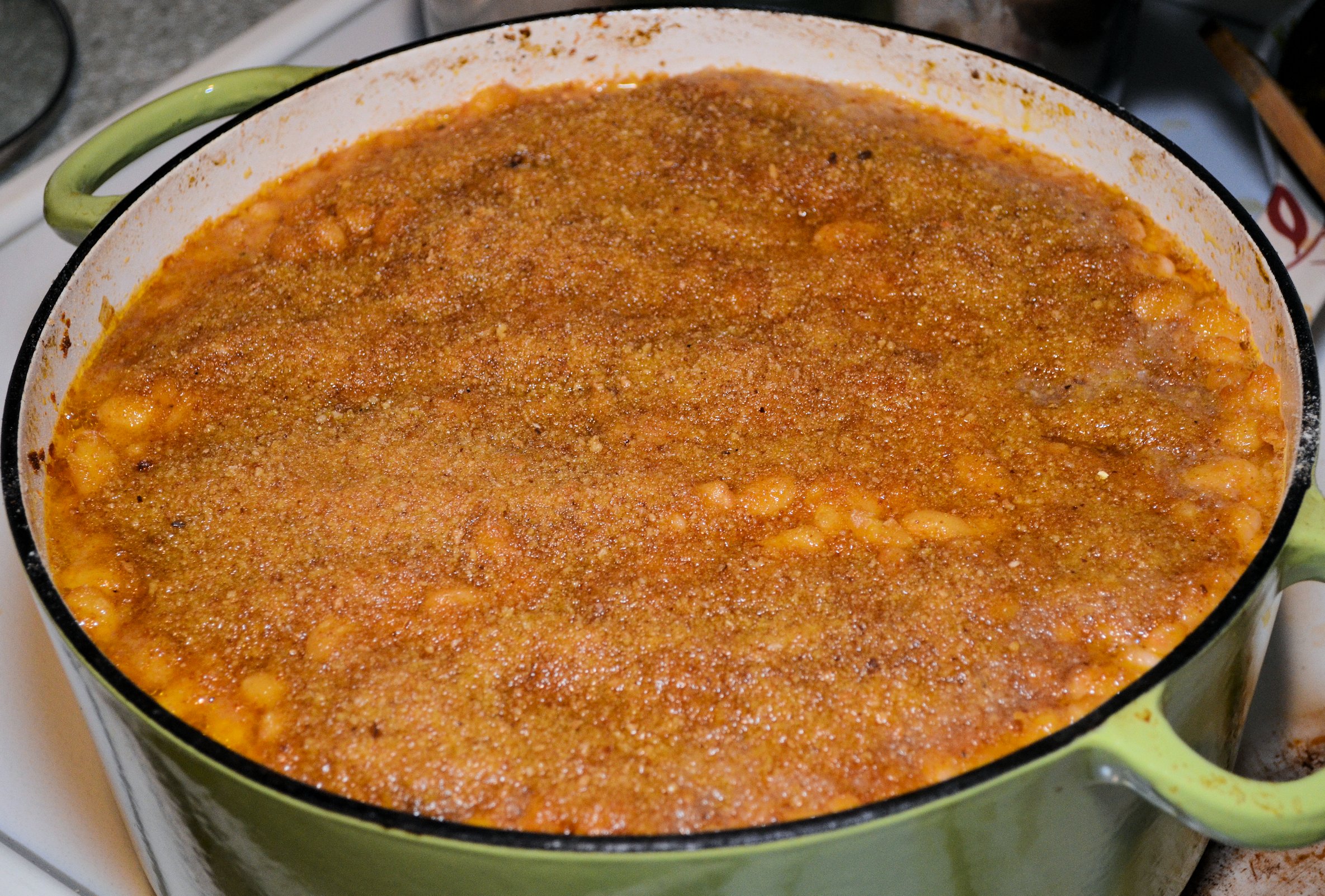
Also I have to mention that we had an outstanding “single plantation” chocolate as part of our dessert – can anything pair better with Shiraz than a spicy dark chocolate?

Never heard of “single plantation” chocolate before? Don’t worry, me too – but it appears that Akesson’s has a a substantial collection of single plantation chocolates, and the one we had was absolutely incredible.
Apologies for the post gone too long, but I think I’m finally done by now. I don’t know if I convinced you to make cassoulet, open a bottle of Shiraz or find that chocolate – but if you are still here and reading this – I’m happy. Until the next time – cheers!
Seductive Barossa
Today is Wednesday, right? Well, yes, of course, it is already Thursday for half of the world, but at least here, on US East coast, it is still Wednesday. And it is not only #WineWednesday as celebrated all over the Twettersphere, it is also a Wine Blogging Wednesday #76, a.k.a #wbw76, with the theme Barossa Boomerang. In other words, it is all about wines coming from Barossa Valley region in South Australia.
Winemaking history in Australia goes back more than 200 years, of course with ups and downs. From 1990s, Australian wine imports were growing very steadily, with Australia literally becoming a number one wine importer to US around 2005-2006. Australian Yellow Tail was the most popular wine on the shelves of US wine stores. And then…it all went down. The glut of inexpensive but at the same time absolutely indistinguishable wines was one of the reasons for that demise. Of course there were more reasons than that, but this is not the subject of today’s post – however, if you want to read more, here is a very good post by Jancis Robinson. As of late, Australian wines are slowly working its ways up the ladder, but it will take time and dedication to regain the lost positions.
So the theme of today’s Wine Blogging Wednesday should help exactly with that – there are many great wines produced in Australia, and this #wbw76 certainly helps to bring attention to the Australian wines. Barossa wines are somewhat of an easy subject, as there are lots of wines produced in the Barossa Valley, so finding the bottle to open is definitely not an issue. Would the subject be Victoria or Great Perth, it would make the task of finding the appropriate wine a lot more difficult. Outside of sheer availability, another great fact about Barossa region is that it is a home to some of the best and most famous wineries in Australia, such as Penfolds, Henschke, Seppeltsfield and others.
Okay, enough fluff, let’s talk about the wine. When the theme of #wbw76 was announced, I pretty much new only one thing about the wine I’m going to select – it will be a Shiraz. Which one exactly – I had lots of ideas in mind, until two days ago, when I saw 2008 Fetish Playmates Barossa Valley wine on sale at local Bottle King for $8.99. Considering the price and the fact that label looked very inviting, the decision was made rather easily.
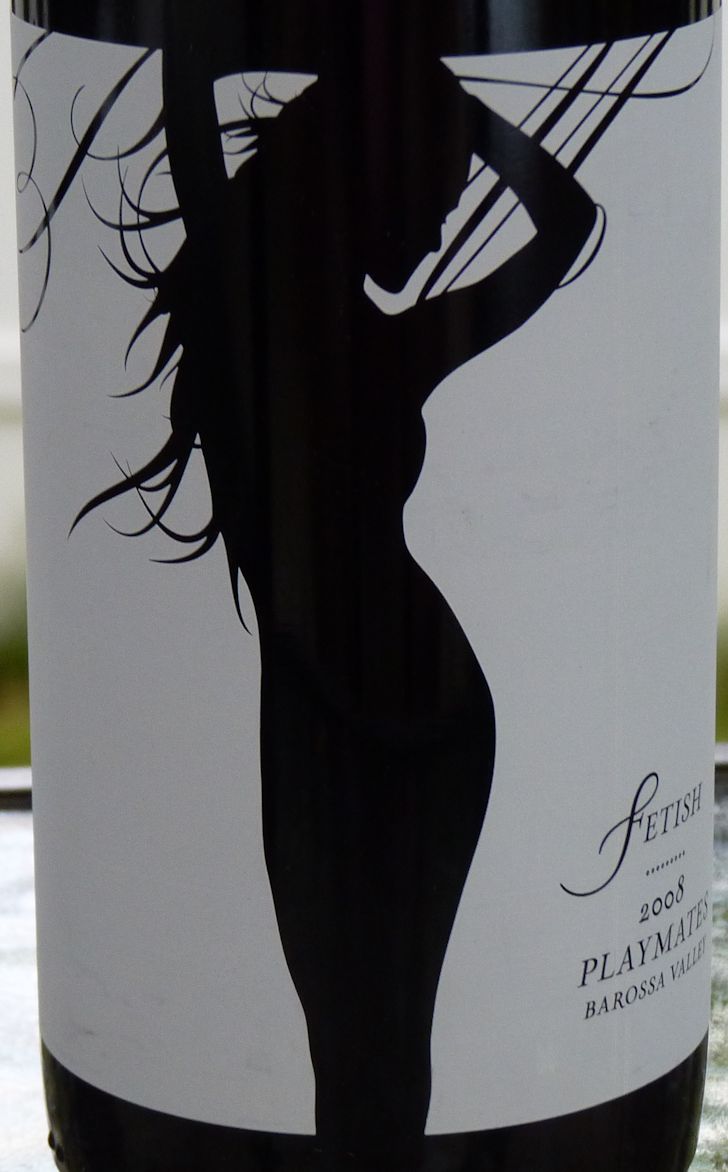
Here are my tasting notes, in quasi-real time: Dark chocolate and blackberries on the nose, slight hint of vanilla. Very round on the palate, showing lighter than expected just by the smell. Touch of spice and wine disappears on the palate, leaving it coated with tannins. Lots of tannins. This wine needs time to allow fruit to develop to support the nose experience on the palate. Very easy to drink… and then this wine grows on you – seductive, escaping and effervescent – if you can say that about red wine. Before you understand what happened, you are looking at the empty bottle – you still want more… but it’s gone.
If you care for a bit of technical detail, this wine is a blend of 80% Shiraz, 10% Grenache and 10% Mataro, ABV 14.5%. Drinkability: 8.
There you have it, folks – great seductive Barossa Shiraz for the Wine Blogging Wednesday. How was your #wbw76 experience? Cheers!
Last Bottle Sign Up ($10 credit)




 Talk-A-Vino