Archive
Seductive Barossa
Today is Wednesday, right? Well, yes, of course, it is already Thursday for half of the world, but at least here, on US East coast, it is still Wednesday. And it is not only #WineWednesday as celebrated all over the Twettersphere, it is also a Wine Blogging Wednesday #76, a.k.a #wbw76, with the theme Barossa Boomerang. In other words, it is all about wines coming from Barossa Valley region in South Australia.
Winemaking history in Australia goes back more than 200 years, of course with ups and downs. From 1990s, Australian wine imports were growing very steadily, with Australia literally becoming a number one wine importer to US around 2005-2006. Australian Yellow Tail was the most popular wine on the shelves of US wine stores. And then…it all went down. The glut of inexpensive but at the same time absolutely indistinguishable wines was one of the reasons for that demise. Of course there were more reasons than that, but this is not the subject of today’s post – however, if you want to read more, here is a very good post by Jancis Robinson. As of late, Australian wines are slowly working its ways up the ladder, but it will take time and dedication to regain the lost positions.
So the theme of today’s Wine Blogging Wednesday should help exactly with that – there are many great wines produced in Australia, and this #wbw76 certainly helps to bring attention to the Australian wines. Barossa wines are somewhat of an easy subject, as there are lots of wines produced in the Barossa Valley, so finding the bottle to open is definitely not an issue. Would the subject be Victoria or Great Perth, it would make the task of finding the appropriate wine a lot more difficult. Outside of sheer availability, another great fact about Barossa region is that it is a home to some of the best and most famous wineries in Australia, such as Penfolds, Henschke, Seppeltsfield and others.
Okay, enough fluff, let’s talk about the wine. When the theme of #wbw76 was announced, I pretty much new only one thing about the wine I’m going to select – it will be a Shiraz. Which one exactly – I had lots of ideas in mind, until two days ago, when I saw 2008 Fetish Playmates Barossa Valley wine on sale at local Bottle King for $8.99. Considering the price and the fact that label looked very inviting, the decision was made rather easily.
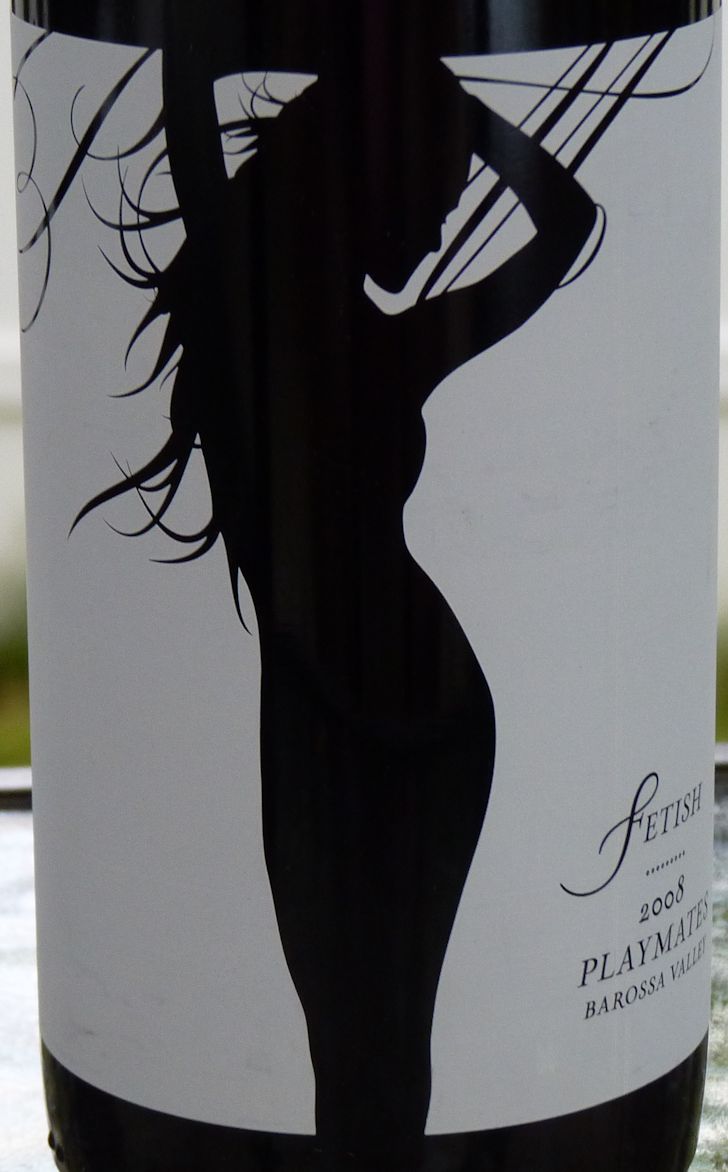
Here are my tasting notes, in quasi-real time: Dark chocolate and blackberries on the nose, slight hint of vanilla. Very round on the palate, showing lighter than expected just by the smell. Touch of spice and wine disappears on the palate, leaving it coated with tannins. Lots of tannins. This wine needs time to allow fruit to develop to support the nose experience on the palate. Very easy to drink… and then this wine grows on you – seductive, escaping and effervescent – if you can say that about red wine. Before you understand what happened, you are looking at the empty bottle – you still want more… but it’s gone.
If you care for a bit of technical detail, this wine is a blend of 80% Shiraz, 10% Grenache and 10% Mataro, ABV 14.5%. Drinkability: 8.
There you have it, folks – great seductive Barossa Shiraz for the Wine Blogging Wednesday. How was your #wbw76 experience? Cheers!
Weekend Wine Happenings
This past weekend was filled with different wine events, which I want to share with you. First and foremost – arrival of the No Girls wine. No Girls wine is made by Christophe Baron, the wine maker behind Cayuse – one of the cult wineries from Washington state. What is so special? No Girls wine is available only through the mailing list. If you ever dealt with winery mailing lists you probably know that before you get on the mailing list, first you spend time on the waiting list for the mailing list. It took more than two years for me to move from waiting list to mailing list with Turley, makers of the great Zinfandels. I think for more than 3 years I’m still on the waiting list for Alban, Cayuse and Carlisle. With No Girls wine, despite the fact that I signed up literally on the same day as the offer came in, initially I got an e-mail that I didn’t make the mailing list, with the follow up e-mail in a couple of month saying that I got an allocation.
Hence the excitement and anticipation associated with arrival of No Girls wine – 2008 Grenache and Syrah from La Paciencia vineyard in Walla Walla. I can’t tell you anything about the wine itself – I plan to give it some time first. However, even packaging alone can make you excited – and to explain what I mean, here are few pictures for you.

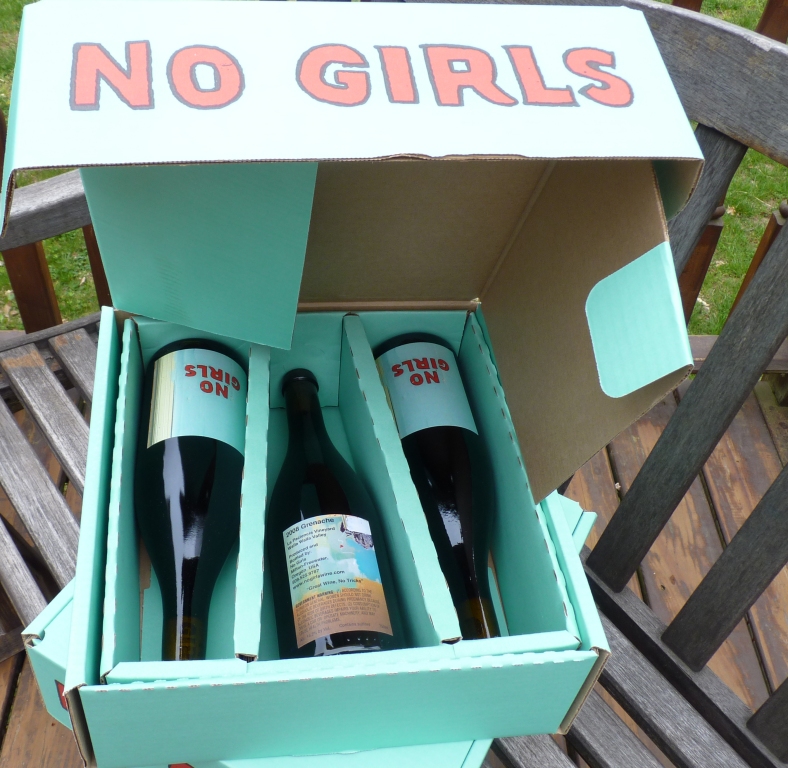

Very bright and clever – what do you think?
Now, on the subject of the wines I actually tasted over this weekend, there were few I wanted to talk about.
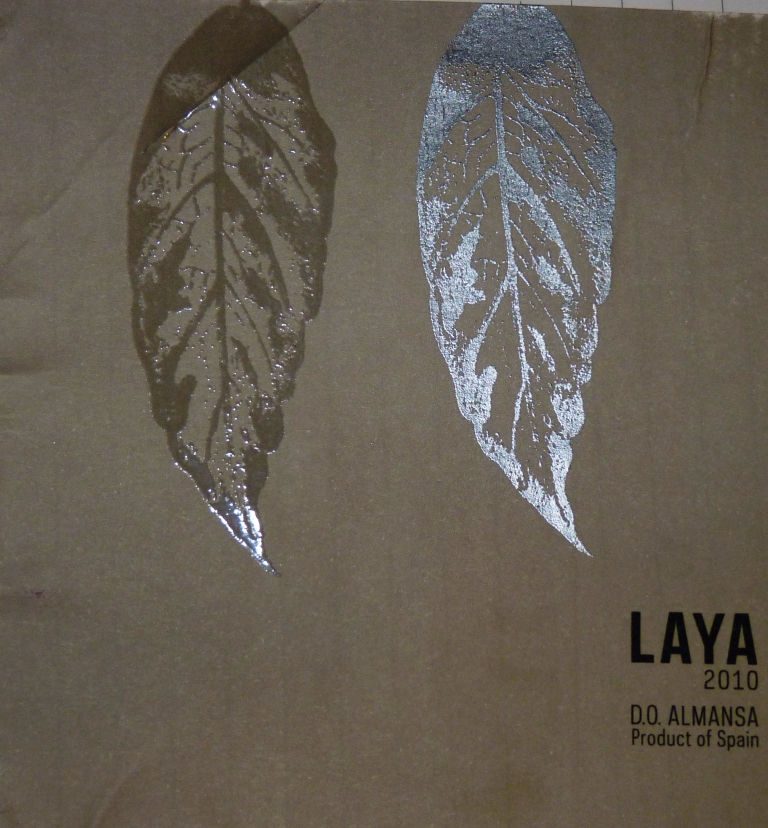
First one is a Spanish wine 2010 Laya D.O. Almansa (14.5% ABV). This wine is a blend of Garnacha (70%) and Monstrell (30%). When you open the bottle and take a first sip, it comes out very grapey and young. It took this wine 3 days to develop a nice undertone of richness, with some ripe red fruit, a touch of spices and smokiness. Considering the price ($7.99) this is a great everyday wine (Drinkability: 7+).
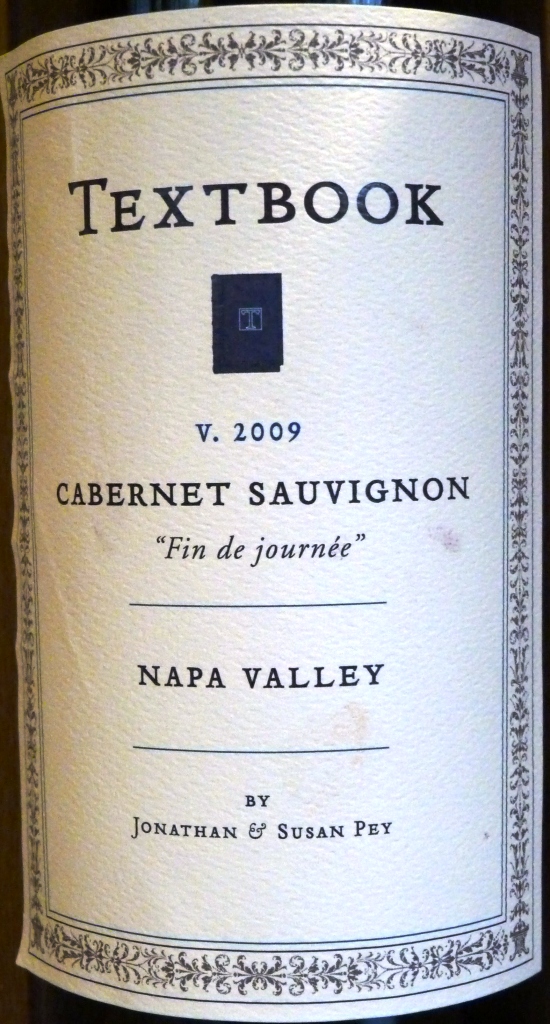 Next one is a 2009 Textbook Cabernet Sauvignon Fin de journee Napa Valley (14.5% ABV). I had this wine for a few months, waiting for the right moment to try it and building up expectations – somehow the name “Textbook” caused a lot of warm expectations, especially with the back label promising a “textbook Napa Cabernet”. The wine had a nice nose of the dense black fruit, not too jammy, but present. On the palate, the fruit grew together with nice tannins and silky texture, only to somehow stop short of delivering the “oompf”. Almost like watching the golf ball slowly rolling after the putt “almost, almost, almost, ahh”. Signature black currant was almost there, but didn’t really show up in its clean beauty. Don’t get me wrong – for a $20 Napa Cab, this was a good wine, but it had to battle my inflated expectations… and lost. Drinkability: 7+.
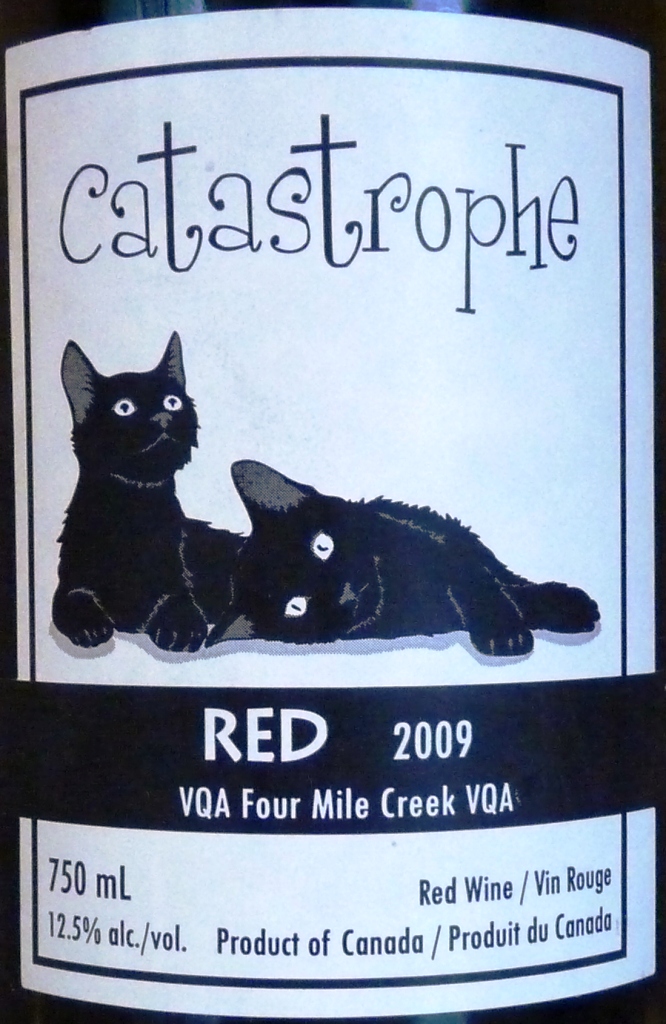
Last but not least was 2009 Catastrophe Red Cattail Creek Estate Winery, Four Mile Creek VQA, Canada (12.5% ABV). We brought this wine back from Canada after the last year’s trip. It is a blend of Gamay Noir, Merlot and Cabernet. On the nose, it has a bright red fruit. On the palate, there is more red fruit, such as sour cherries, hint of earthiness, good clean acidity, very balanced. Medium body and very easy to drink. This wine also would be a great food wine – too bad, I only brought one bottle back. Drinkability: 8-.
That’s all folks. Don’t forget that April 25th is a Wine Blogging Wednesday, with the theme “Barossa Bumerang” – find a bottle of Barossa wine from Australia, enjoy it, and write a blog post or at least leave a comment here. Have a great week! Cheers!
Weekly Wine Quiz #6 – No Pinot?
I guess it is Saturday, therefore, it is a time for our weekly wine quiz. Before we get to the new quiz, let me give you an answer for the past week’s quiz “Do you know Kosher wines” – correct answer is Massaya. While the name might be suggestive that it would be a kosher wine, this [very tasty, full bodied] wine is produced in Lebanon, and it is not Kosher. The rest of the wines on the list are Kosher, including Goose Bay, which I saw was a popular choice as a “non-kosher” wine.
Now, the theme for today’s poll is Pinot Noir. Pinot Noir is one of the most popular grapes in the world, and literally there are very few regions where wines are not made out of Pinot Noir. Below is a list of regions where great wines are made out of Pinot Noir – all except one. Which one do you think it is? Answer is coming next week.
Enjoy your weekend, everyone! Cheers!
Valentine’s Day Food and Wine Experiences
 For many years already Valentine’s Day became our “home” holiday. What I mean is that we are not going to the restaurant – instead, we attempt to create the best possible experience at home. This past Valentine’s Day our attempt was quite successful. First, there was a Champagne. Ahh, what so special, say you, a sparkling wine? Well, we don’t drink Krug every day – Krug is our “special” sparkling wine, as both me and my wife fell in love with it 3 years ago, and nothing beat that ever since.
It was Krug Grand Cuvee Brut NV. Beautiful effervescent nose, with only a hint, a whiff of toasted apple, yeast and fresh bread – the same lightness on the palate, with perfect balance of fruit and acidity. Yes, I know, I fail to give you a critic-worthy description with lots of different elements of soil, the fruit and more – so you will need to take my word for it – this is The Champagne. Once you try Krug…well, you will continue to appreciate many other sparkling wines, but Krug will be the one you will crave. And if you care for my rating, I will put Drinkability at 9+.
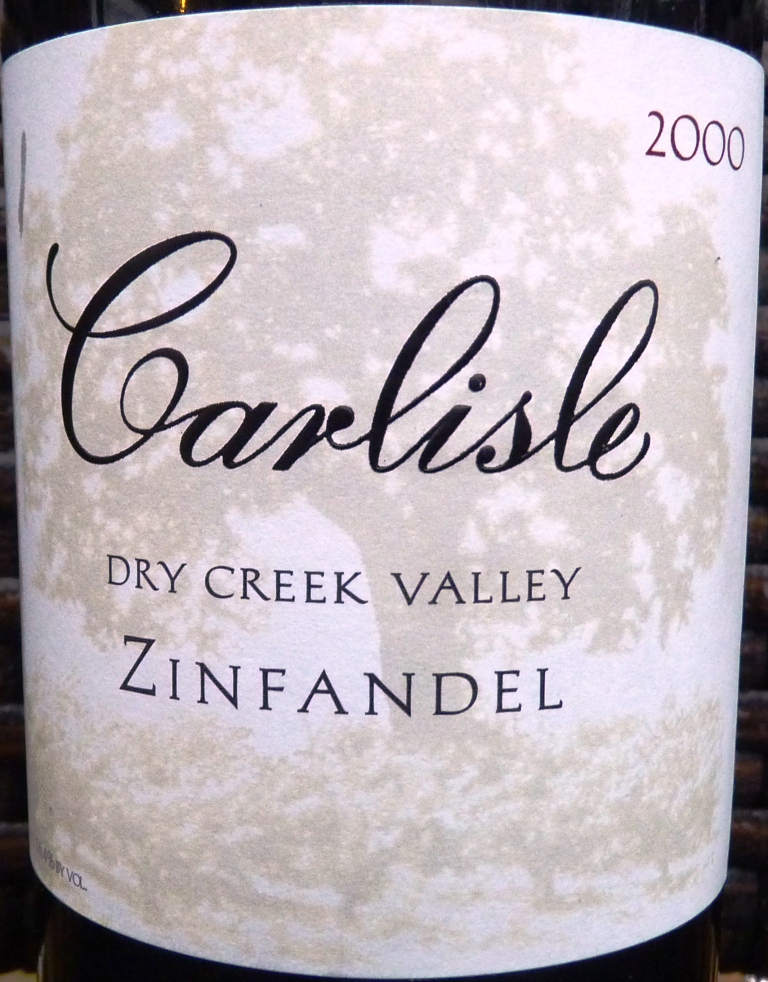 Believe it or not, but Krug was only the beginning of amazing wine experience. The next wine blew me away in many senses. First, it was a realization of a dream. For the long time, I wanted to try Carlisle Zinfandel – consistently high ratings in Wine Spectator, great reviews – many factors contributed into making Carlisle Zinfandel an object of desire. I signed up for the waiting list for the mailing list, I asked around – all to no avail. Then a few month ago I saw a bottle on the Benchmark Wine Company’s web site, priced at about $30 – voila, I got the bottle. Now I just needed special occasion.
Special occasions are easy, right? Valentine’s Day is special enough for us, so the bottle of 2000 Carlisle Zinfandel Dry Creek Valley was opened. The description? One word – “wow”. Beautiful nose of red fruit and smoke (raspberries and blueberries plus a hint of smokiness, to be more precise). Perfect balance of fruit, tannins and acidity on the palate – more playful fruit, eucalyptus, cedar box, spices, tobacco – all components are playing together to deliver an amazing experience.
Here is one interesting note for you. Carlisle web site has a table which is called Drinkability Chart, which lists all the different wines from the different vintages and ideal drinking window for those wines. According to that chart, optimal drinking window for this particular Zinfandel was 2002 – 2005. Well, what can I tell you? If you got a bottle of Carlisle which you think is undrinkable – send it my way, and I will thank you profusely. And just to show you how much I loved this wine, I have to tell you that this is the first time I put Drinkability of wine at 10-! Here is the link to my ratings page – you can judge for yourself.
As you can see, the wines were great – but there was also food. This year we decided to do a Rack of Lamb. Rack of Lamb is a dish which we typically enjoy in the restaurants (especially in French Canada), but it is not that difficult to make at home (once you overcome the sticker shock of a good rack of lamb).
I need a lot of rosemary with my rack of lamb – and this is what we did. A little bit of fresh pepper, and lots of fresh rosemary – with addition of some fresh sage as well. Here is the rack of lamb ready for the oven:
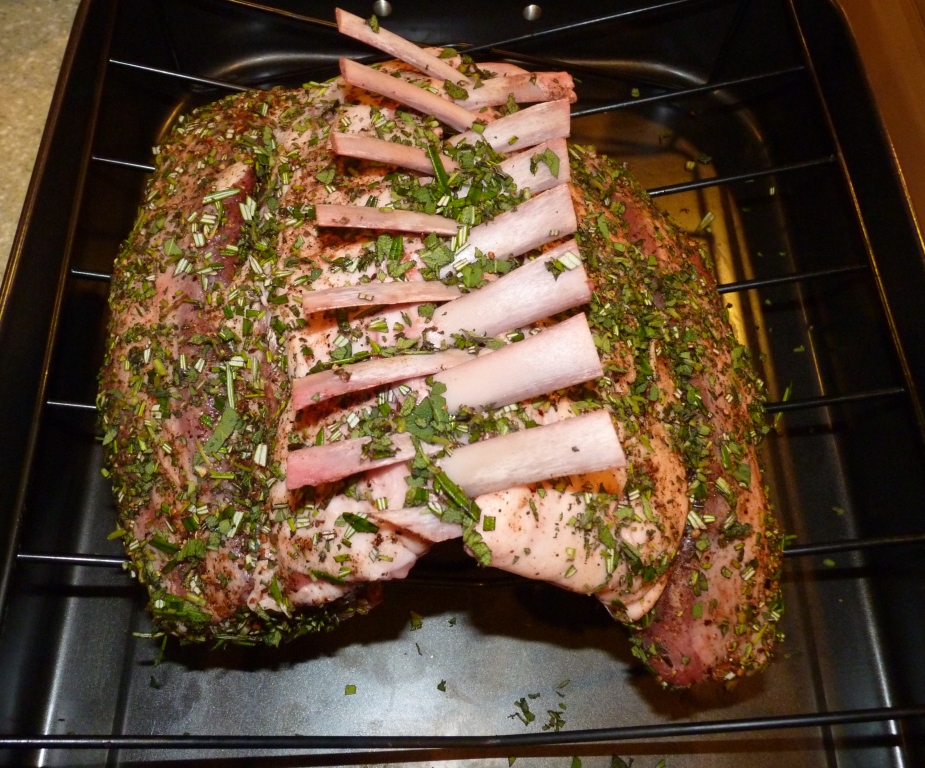
There are couple of techniques which I started using lately when it comes to roasts – and I like the results so far. First one is preheating oven to 500F – temperature is lowered one roast is put in, but it is enough to develop a nice crust. The second one is not using any salt until the roast is done ( so only using finishing salts) – the rationale here is that salt is draining juice out of the meat so it is better to be put on at the last stage. So far I had being very happy with an outcome using these simple rules. After 40 minutes in the oven ( 500F to start, then lowered to 400F), here is the final result:
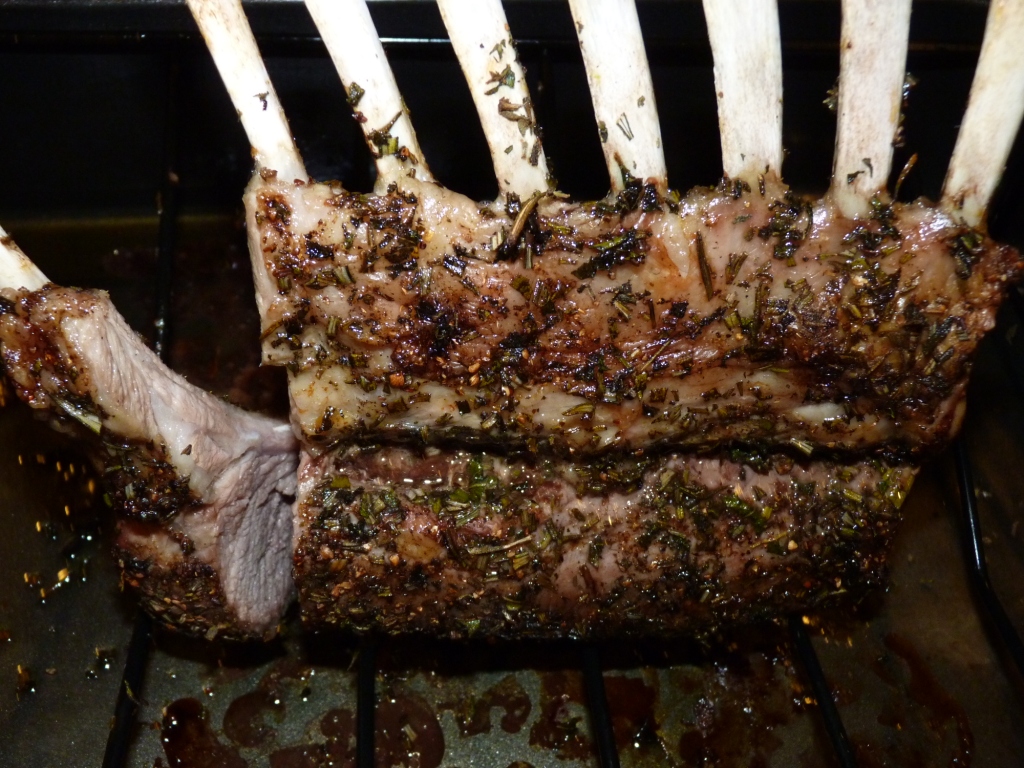
And here is plated version:

Yes, I know, I should work on presentation – you don’t have to tell me that. But the taste was great, and lamb also paired quite well with the Carlisle Zinfandel – to double the pleasure!
That’s all, folks, for our wonderful Valentine’s Day food and wine experience. It will be hard to beat it next year, so I can only wish tat the next year will be not any worse than this year.
Cheers!
Color Me Happy
Why? Very simply, in one word – Anticipation. Anticipation is a big part of enjoying the wine. I can’t speak for everyone, but for me anticipation starts when the bottle is in my hands. Before I can actually hold that bottle, it is just a dream – I can dream of drinking DRC or Screaming Eagle one day, but this will only be a dream, a big “theory”. Once I hold the bottle, the dream is over – in a good sense, as this is when anticipation starts. This is “IT” – now it is practically possible, not theoretically, so now you can start planning that special moment – even if it will take place 10 years from now, but you know that barred all unforeseen circumstances, you will experience that bottle.

Case in point – 2008 Alban Patrina Estate Syrah Edna Valley. Why? Alban was one of the very first wineries in California which started producing “Rhone-style” reds (and I really like Rhone wines). Alban wines are almost impossible to get (it’s being already more than two years since I registered for the waiting list to get on the mailing list) and they are very highly regarded by all those who was able to try them. So now, thanks to the Wade’s Wines, I’m a happy owner of the wine I was dreaming about.
Hello, anticipation. Yes, color me happy! Cheers!
Thanksgiving Experiences
 In the last post I outlined the number of wines which we wanted to taste during Thanksgiving dinner – now it is time to report on what was great and what was not.
There was nothing new with both Beaujolais Noveau compare to the previous report – except this time I remembered to chill both of them (light wines, such as Gamay and Pinot Noir usually taste better when slightly chilled). Chilling improved the taste of George’s Duboeuf, but I still like 2010 better.
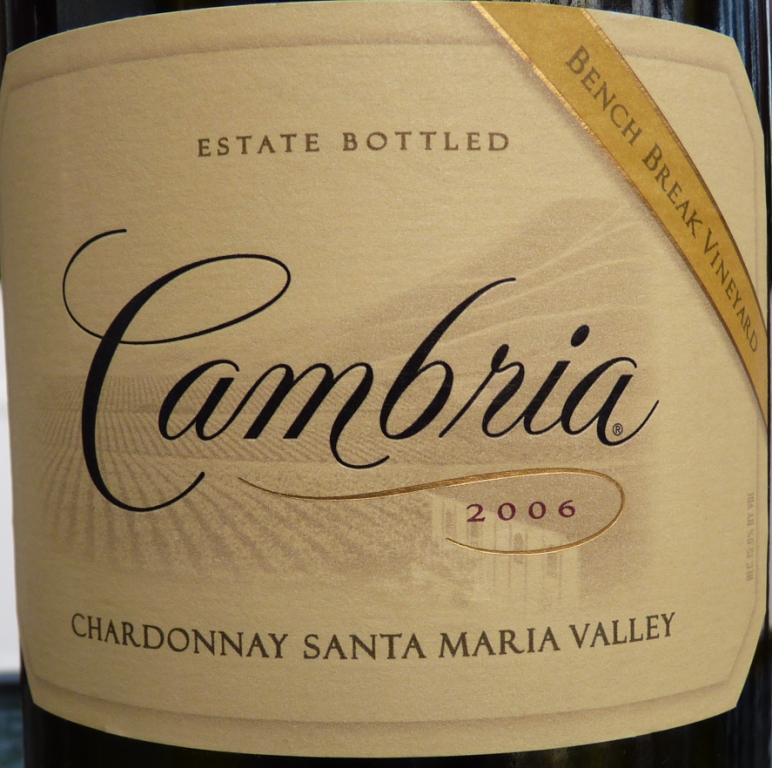
The real highlight of the lineup was 2006 Cambria Bench Break Vineyard Chardonnay from Santa Maria Valley – it was beautifully balanced, with hint of vanilla, literally unnoticeable oak, hint of white apples and perfect acidity. One word to describe this wine is Elegance – it was perfectly elegant, reminiscent of Peter Michael chardonnays which are definitely my all times favorites.
2009 Cazar Pinot Noir was very appropriate at the Thanksgiving table with its bright cranberries and very good balance. One wine which didn’t happen to work for me was 2009 Turley Old Vines Zinfandel – I understand that it was opened prematurely, but still I was expecting more from it (I have to also mention that it didn’t fully opened even after three days – I guess actual aging in the cellar is in the cards for this wine). Bodegas Hidalgo Triana Pedro Ximenez worked very well with the dessert full of nuts, such as Pecan Pie – layered complexity and nutty profile, complemented by good acidity were essential attributes of this wine.
As this is a Thanksgiving post, I have to mention the turkey. Last year our choice was Turducken (chicken inside of duck inside of Turkey), which was very tasty, but required quite a bit of preparation work. This year we decided to do a smoked turkey, which required mush lesser amount of prep time and effort – here are the pictures for you, before and after:

This turkey spent four hours in the charcoal smoker and 4 hours in the oven. The result was moist and delicious bird with lots of smoky flavor. Another dinner highlight was cranberry sauce, which was modeled after Bobby Flay’s recipe – however, it was modified to exclude sugar. If anyone is interested in recipes, I will be glad to share – please drop me a note.
This completes my Thanksgiving 2011 report – until the next time, cheers!
Thanksgiving Wines
Please let me be unique and different and write a blog post about Thanksgiving wines (duh – I meant let me pretend that hundreds of bloggers and wine writers didn’t cover the subject yet as broad as possible). In essence, I’m not planning to offer you any advice. I think the variety of tastes, favors and simply palate preferences at Thanksgiving table is way to wide to be able to do any essential wine and food pairing. Therefore, I would say that there are no limitations to what wines you should have on your table – you simply have to be able to enjoy them with or without food. As far as this blog post is concerned, as I said, I’m not going to offer any advice – I will simply tell you what I have in plans for the thanksgiving meal and why. I will list here way more wines than we will be actually able to consume, but hey, more is better than less, right?
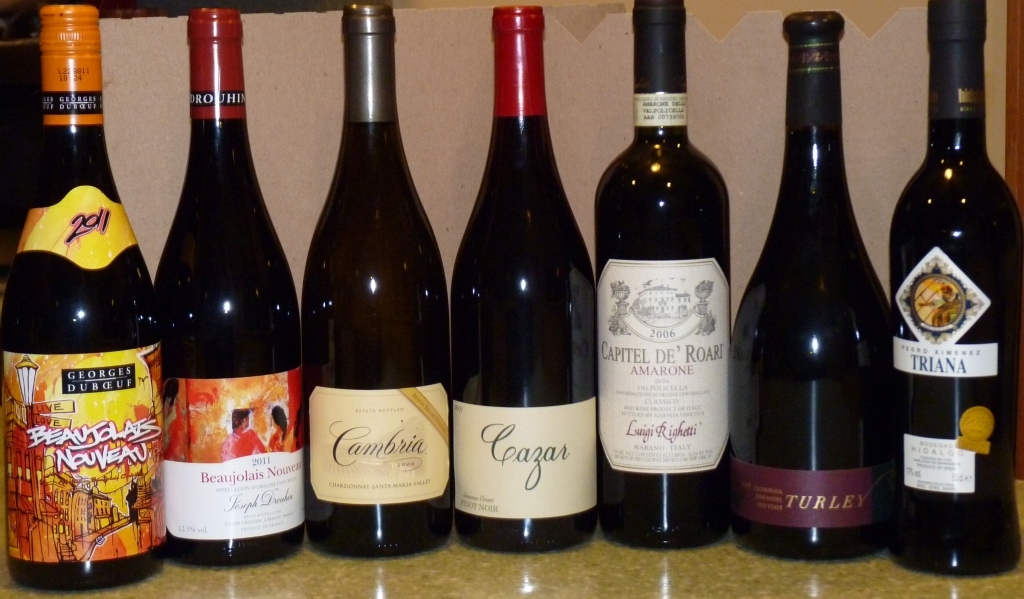
You can definitely start with sparkler, but as I don’t have one ready, 2011 Beaujolais Noveau will do just fine. Why? It should be slightly chilled (let’s say to under 60F), then it is quite refreshing with all the red fruit and mouthwatering acidity – good way to get ready to Thanksgiving meal.
Chardonnay is a must, preferably one from US. Why? Because Chardonnay is one of the great American wines, producing very good results in all different areas from California to Long Island. I would recommend Chardonnay which was aged in the oak barrels and has some butter, vanilla and toasted oak – not the stainless steel-fermented one, which often tastes indistinguishable from Pinot Grigio. My personal choice is 2006 Cambria Bench Break Santa Maria Valley – this is one of my favorites since I tried that at The Capital Grill, and I’m curious to see how it is developing (I still have few bottles left). Besides, I don’t have Peter Michael as my allocation didn’t come through yet.
The next wine is a 2009 Cazar Sonoma Coast Pinot Noir. Why? 2009 was a great year for California Pinot Noir, and this particular wine is simply meant for the Thanksgiving table with all the fresh and juicy cranberries and perfect acidity. I simply see this wine being great with turkey and many other dishes.
Amarone? Of course. Why? Simply because Amarone is one of my favorite wines, and every time we drink it, it is a special occasion. 2006 Luigi Righetti Capitel de Roari Amarone della Valpolicella is one of the simpler versions of a great wines ( also inexpensive compare to what Amarone typically costs), so I’m curious if it will work with the meal at all.
There can’t be Thanksgiving celebration without Zinfandel on the table. Why? Zinfandel is unique grape which doesn’t grow anywhere else outside of United States (with the exception of the close relative, Primitivo, which grows in Italy). Zinfandel has a unique flavor profile with lots of fresh berries and lots of power on the palate, which should bode well with the festive Thanksgiving meal. 2009 Turley Old Vines Zinfandel from Napa Valley is simply one of the great California Zinfandels, and I’m glad we will be able to share a bottle (it is not easy to get).
Time for desert. I’m selecting Bodegas Hidalgo Pedro Ximenez Triana. Why? First of all, this is the very old wine – as Jerez is made using Solera method, with new wines constantly blended with the older ones, this wine started at around 1750, so it can definitely serve as historic reference to the great holiday. And the second reason – this wine simply tastes phenomenal. I already wrote about it in one of the previous posts – the richness and the balance of this wine should really be experienced by any wine lover.
Will we drink all of these wines? Probably not. Will there be other wines on Thanksgiving table? You bet. Of course I will report on all the wonderful food and wine experience once the holiday is over, but for now I will be glad to hear what wines do you plan to have on your table.
That’s all, folks. Happy Thanksgiving and Cheers!
Tasting Beaujolais Noveau 2011 and a Little Bit of Scotch
 Appearance of Beaujolais Nouveau bottles in the wine stores squarely underscores an important notion which is up in the air anyway: the holidays are here, and the year is going to wind up very quickly from here on. But the last six weeks of the year are not going away without a bang – there will be lots of great food and great wine everywhere.
So what do you think about Beaujolais Nouveau 2011? Here are my impressions. To begin with, I like the label of the Georges Duboeuf Beaujolais Nouveau 2011 – it is very bright and attractive, purely an urban statement with graffiti lettering. As as the wine itself is concerned, it was okay, more in style with the years prior to 2010. Let me put it this way – the Beaujolais Nouveau 2010 was real wine of a good depth, a thought provoking wine (here is the link to the post about 2010 wines) – 2011 Georges Duboeuf Beaujolais Nouveau was just that – a Beaujolais Nouveau wine which can be gulped quickly without much reflection. Bright fresh fruit, very grapey – but in need of an overall balance.
I liked the taste of Joseph Drouhin Beaujolais Nouveau 2011 more, as it was combining brightness of the fresh fruit with an overall structure – this wine had legs to stand on, had a nice balance with good acidity and some earthy notes – this will be one of the wines I want to see on our Thanksgiving table (we will talk about Thanksgiving wines in the next post). In any case, drink your Beaujolais Nouveau quickly – these wines are not meant to be kept for the long time.
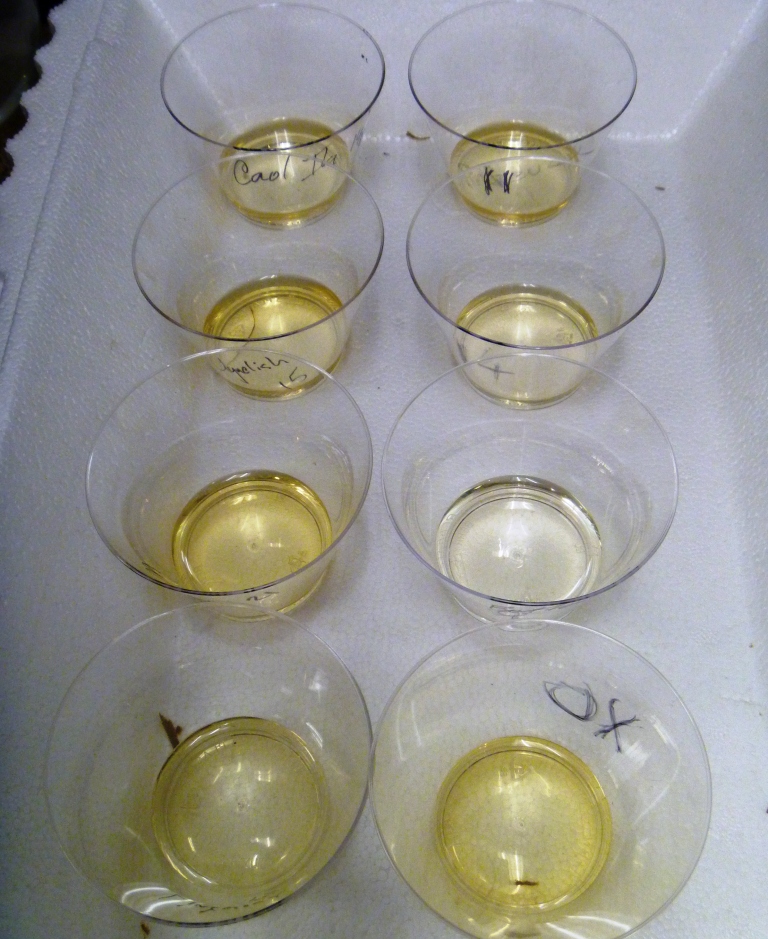 If you are puzzled by the title of this blog, let me explain. No, Scotch has nothing to do with Beaujolais Nouveau – I just happened to stop by Cost Less Wines last Wednesday and try more Scotches from Douglas Laing. Here are some which I would like to note: Linkwood 13 from Speyside was very light, with a hint of smoke and most interestingly, with grape finish. It is very interesting, as it was not finished in any of the wine barrels – it was actually finished in used bourbon casks.
Next, outside of getting into “smoky” category, the Scotch I liked the best was Clynelish 15 from Highlands – it was both very complex and smooth. Complexity is something which I really enjoy in the Scotch (this is why Macallan is never my favorite – I don’t find enough complexity in the taste). Finally my most favorite Scotch from this tasting was Caol Ila 14 from Islay – pronounced smokiness and power, a great scotch if you are into smoky flavors at all. Overall, it was great #WhiskyWednesday, as they say it on Twitter.
The next time I want to talk about Thanksgiving wines – but please tell me, what wines will be on your table on Thursday?
Tasting Spanish Wines – Blind, Of Course
 Once again, we got together with the group of friends to play a fun game of blind wine tasting. This time the subject was Spain (in the past we had a lot of fun blind tasting Pinot Noir and Sparkling wines – you can read the posts here and here).
Why Spain? Spanish wines are getting a lot of recognition among wine lovers of all walks. On average, they deliver the best quality for the price (QPR) among most of other wine regions, and in the end end of the day they simply taste great and deliver lots of pleasure. So the theme was set, the bottles wrapped (every participant have to bring a bottle wrapped in paper bag) and opened, and the numbers are randomly assigned to the bottles.
We had total of six wines, all red. The idea would be may be to identify the grape (an added bonus, of course), but mainly to see a consensus as to which wine would be the most favorite of the group – blind tasting has a great leveling effect – you are not intimidated by the price or a label, so you can stay true to your taste buds. Just to set the stage as to what are the most popular Spanish grapes, I prepared the following cheat sheet, which I’m including here in its entirety:
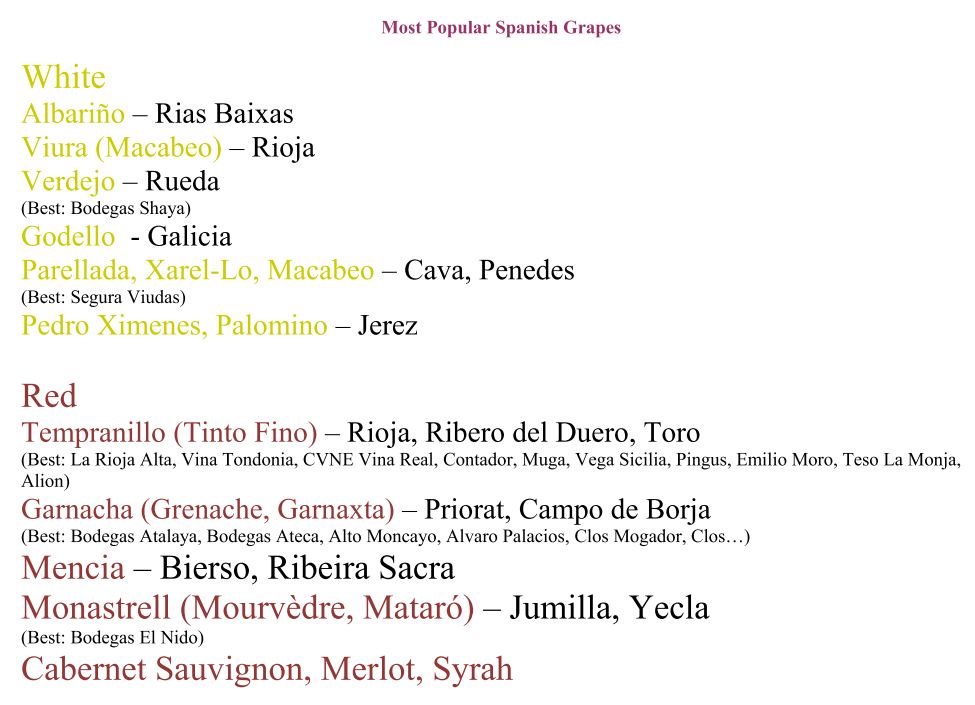
Off we went, so for what it worth, here are my notes as I took them during tasting – no corrections afterwards:
1 brick dust on the nose, good acidity, pepper – tempranillo
2 young wine, good fruit, open – mencia, monastrell?
3 earthy, tame fruit, age, good fruit, dark color, great acidity, pomegranate, smokiness
4 feels like it is corked, but I hope it is not. Fruit at the bottom. Final verdict – corked.
5 beautiful, most balanced, good fruit, plums- Grenache?
6 classic Rioja, cherries, acidity, best of tasting.
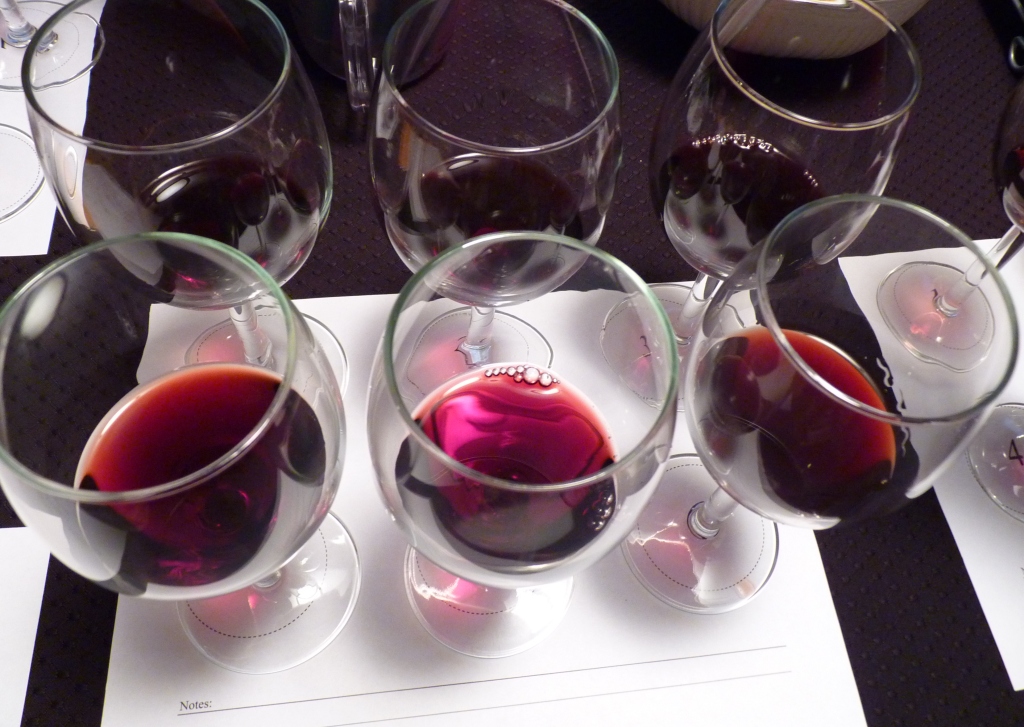
So, reading the descriptions, what do you think those wines are? This is always not an easy guess, as your mind is racing trying to pinpoint taste, texture and any other sensations you are experiencing at the moment against your mental database of the wines you tasted (that database is either resisting and says “nothing found” or goes all the way and says “it is similar to all 10 of these”).
And here are the actual wines:
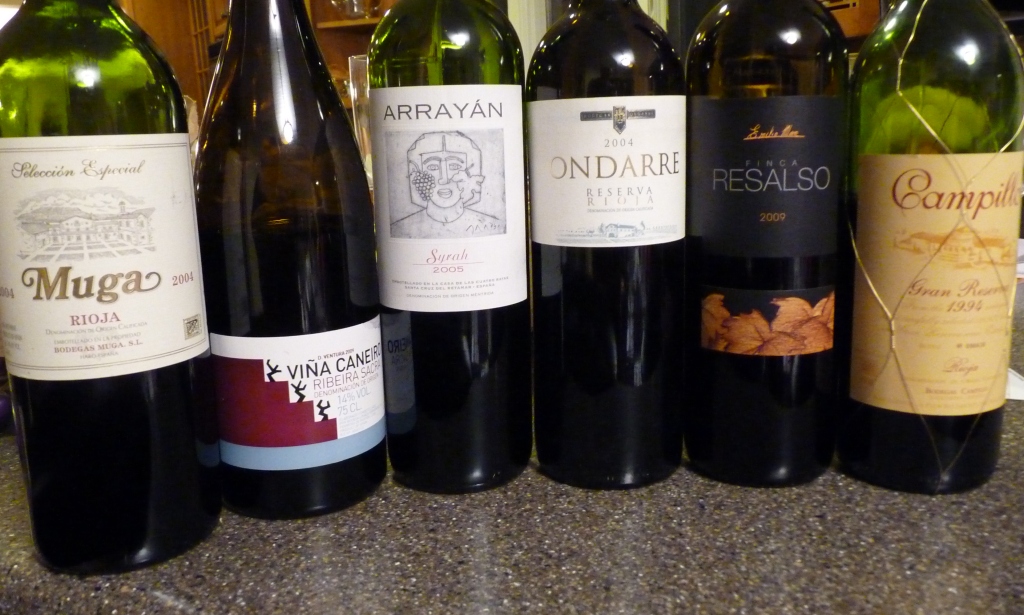
1. 2004 Bodegas Muga Rioja Selection Especiale
2. 2009 D. Ventura Vina Caneiro Ribeira Sacra DO
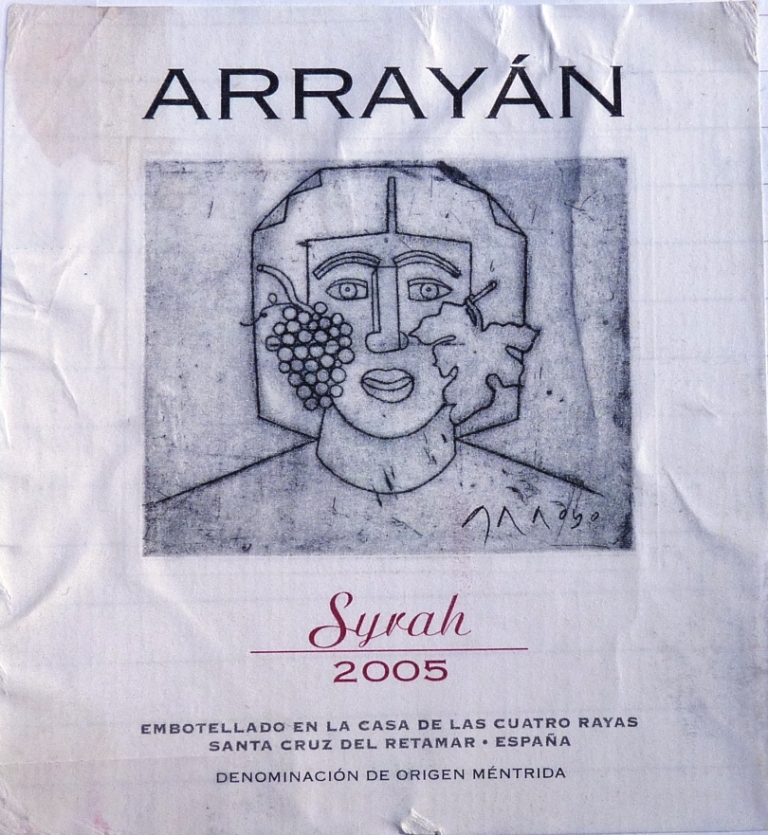
3. 2005 Arrayan Syrah, Mentrida DO
4. 2004 Bodegas Ondarre Rioja
5. 2009 Emilio Moro Finca Resalso, Ribero del Duero
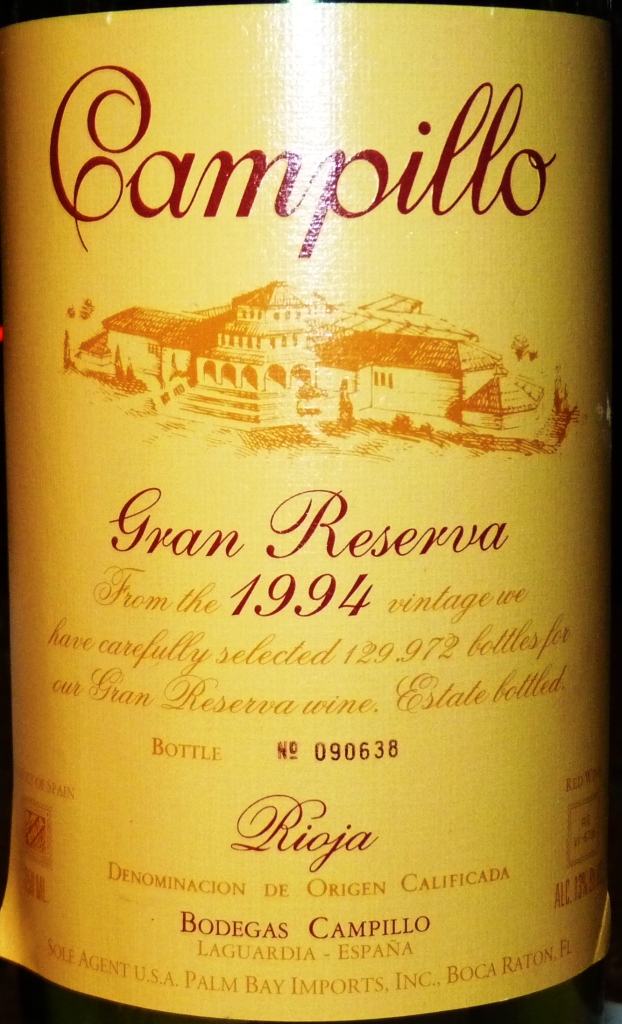
6. 1994 Campillo Rioja Gran Reserva
 Now for the popularity vote, here is how it works. Everybody can vote for up to two wines (but don’t have to). If there will be one wine which will receive a majority of the votes, it will be declared a winner. If two bottles will receive the same number of votes, we would vote again for the one favorite out of the two.
Can you guess which wine won? If you guessed “Bodegas Campillo” (as the very least judging by the label to the left), you are correct. It won by the unanimous vote – everybody liked it. Distant second was Arrayan Syrah (half of the group voted for it). Bodegas Campillo was classic and pure Rioja, with all the clean flavors of cherries and cedar box, great acidity and very fresh, not even a hint of 17 years of age. Arrayan Syrah was probably the most unusual and unexpected wine in the group – beautiful, balanced, and very pleasant to drink. But just to give due respect to all 6 wines we tasted, all except the corked bottle were very good wines, worthy of being in the competition.
If you feel encouraged to try blind tasting on your own, I would suggest to avoid doing it for the whole country. Single region or a single grape (or a stable blend, such as GSM or Bordeaux) would work much better to showcase the range of possibilities. But other than this remark, I think blind tasting is the best way to learn about your wine preferences, to have great experience and to have fun! If you got blind tasting experiences of your own – please share them here! Cheers!
Notes from Slocum & Sons Wine Tasting in Connecticut
This past weekend I attended yet another great wine tasting by Connecticut wine distributor Slocum and Sons. Of course when hundreds of wines are presented in the tasting, there is a good chance of finding lots of great wines among them. This tasting was no exception – I had a lot of tasteful encounters at the event. Here are some notes, with pictures, as usual.
Let’s start with the sparkling wines. One of the first wines we tasted was Armand de Brignac Brut Gold (Ace of Spades):

The Champagne is this sparkled (no pun intended) bottle was good, with good body, green apple and zinging acidity running in the back. At the same time, as I’m always looking for QPR when I’m thinking about wine, this wine, the most expensive in the entire tasting, at about $270 per bottle, doesn’t not represent value at any level. If I have to spend this amount on the bottle of Champagne, I would much rather drink Krug.
Continuing sparkling wines category I have to mention Champagne Vollereaux, which is a Growers Champagne. We tried Vollereaux Brut NV, Vollereaux Rose Brut NV and 2004 Vollereaux Cuvee Marguerite – all beautiful wines, full flavored champagnes, with the most expensive one still being less than 1/4 of the price of Armand de Brignac – and delivering more pleasure.There were other great Champagnes there, such as Laurent Perrier and Veuve Clicquot, but I also have to mention a wide variety of excellent Cavas, sparkling wines from Spain – here is the picture of the line up of one of my all time favorites – Segura Viudas, with all four wines being one better than the other:

Moving one to the white wines, there were some personal discoveries and some “meet and greet” with old favorites. In the “personal discoveries” group first I would like to mention 2008 Trefethen Dry Riesling Oak Knoll District, Napa valley – this is the first California Riesling which I really enjoyed – it got all the beautiful white fruit, balancing acidity and even hint of petrol!

The next discovery are two wines from Bodegas Shaya – 2010 Bodegas Shaya Verdejo Rueda DO and 2009 Bodegas Shaya Habis Rueda DO.

Both wines are made from the 100 years old vines Verdejo, first wine fermented in stainless steel tanks and second one, Habis, fermented in French oak barrels. Bodegas Shaya comes out with very clean fruit and minerality expression, good acidity, very balanced. But once you taste Habis, the first and immediate impression is Wow – this will beat any Chardonnay! I don’t want to push it too far, but I would love to see this wine next to Peter Michael Chardonnays in the blind tasting – that would be a very interesting experiment.
Few more highlights in the white wines category. Three of the Talbott Chardonnays – 2009 Tabott Sleepy Hollow Chardonnay, 2009 Talbott Logan Chardonnay and 2009 Talbott Kali Hart Chardonnay were all outstanding, showcasing balanced wines, with good acidity, white fruit and hint of vanilla. I didn’t have Talbott wines before, so I was very impressed with the quality. And then in the “familiar category” I want to mention two Spanish whites, both of them I got to know thanks to the The Capital Grille’s “The Generous Pour” summer wine program. These wines are 2010 Jorge Ordonez Botani and 2010 Bodegas La Cana Albarigno.
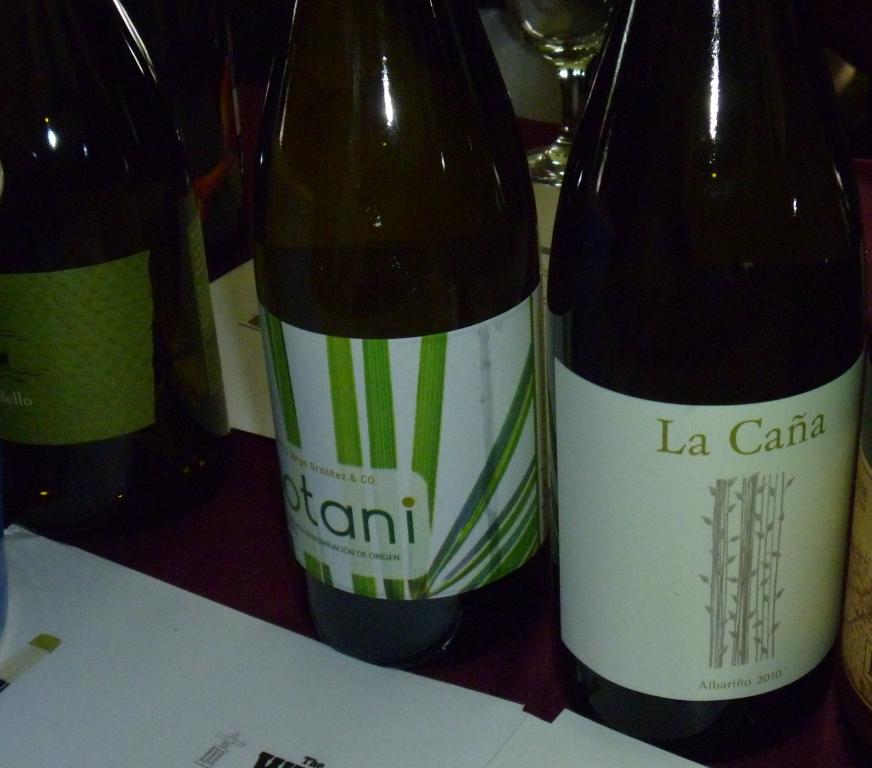
Both were beautifully refreshing, with floral notes on the nose, with La Cana having a bit more of acidity and mineral expression – both wines should be perfect on any summer day.
Coming to reds, the task of sharing my impressions becomes even more challenging – there were A LOT of great ( did I say “great”?) wines from Spain, California and France, so I will have to resolve to more of the pictures than words.
I want to start from the wines of Charles Mara. As some of you might remember, 2007 Mara Pinot Noir Laughlin Road Ranch was my most favorite wine last year (#1 in the Top Dozen). Now, I had an opportunity to try 2008 Mara Pinot Noir Laughlin Road Ranch Russian River Valley. What a radical departure! If I would be given those wines in the blind tasting, I would never even guess that those wines are coming from the same vineyard, left alone made by the same person. While 2007 was California Pinot at its best, 2008 is a pure Burgundy – dry, austere and in need of time – it probably needs another 5 years to open up.
Another very interesting wine was 2008 Mara Russian River Valley Zinfandel “old vines”:

As Charles Mara said himself, he was trying to make a “super-Tuscan” of Zinfandels, by blending zinfandel grape with Cabernet Sauvignon grapes from two different vineyards. I think he successfully accomplished that, ending up with powerful, dense red wine, showing beautiful fruit with a great restraint. This wine also need at least another 5 years to showcase fully.
Spanish reds selection at the tasting was so strong that it is nearly impossible to decide what wines should be mentioned and which were my favorites – El Nido, Alto Moncayo, Muga, Sierra Cantabria, Tesso La Monja – all powerful, beautiful wines, all age-worthy, delivering pleasure right now and for the next 30-40 years (or longer). I guess I would have to put a stick in the ground and say that 2007 Bodegas El Nido El Nido was my favorite Spanish wine in the tasting ( with the second thought in my head – well, yeah, and what about … ) – powerful, with amazing structure, firm tannins, good fruit, very balanced – “wow” was my single word descriptor.

By the way, standing next to El Nido are two Spanish wines, 2009 Blau and 2009 Can Blau – both were outstanding, fresh, with lots of sour cherries on the palate – and quite affordable for every day enjoyment.
There are few more reds I want to tell you about. First, it is Chateau Leoville Poyferre from Saint Julien. I already wrote about great experience with 2005 Chateau Leoville Poyferre Grand Cru Classe wine (here is the link to the post). This time I was able to try first, second and third labels of Chateau Leoville Poyferre – 2006 Chateau Leoville Poyferre Saint Julien Grand Cru Classe, 2006 Pavillion de Poyferre Saint Julien and 2008 Chateau Gulliver Bordeaux AOC.
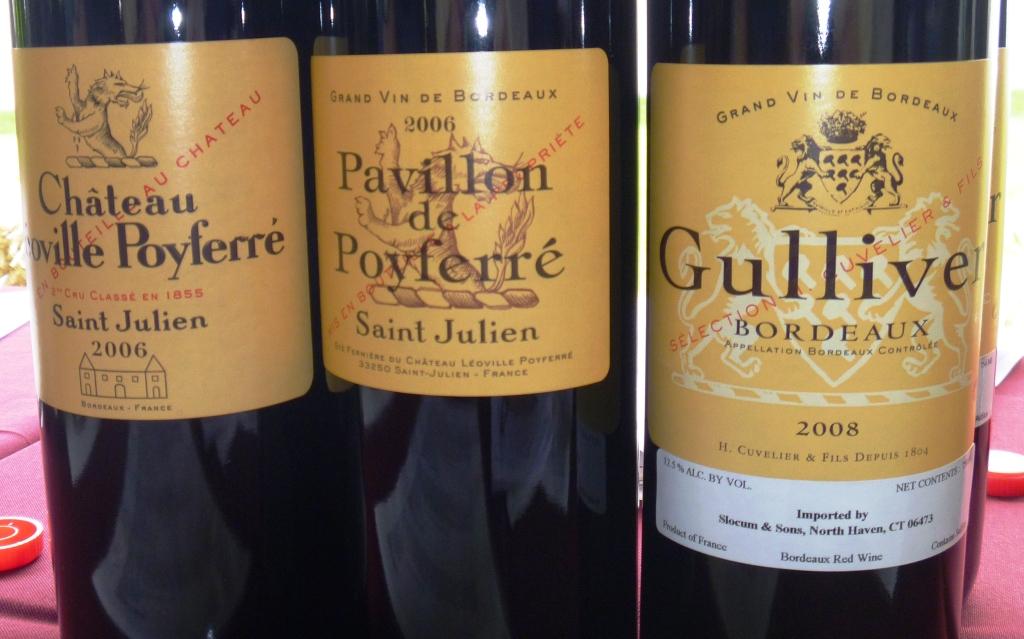
Chateau Gulliver was the lightest from the group, showing lots of earthy notes on the palate, and both Chateau Leoville Poyferre and Pavillion de Poyferre were big, powerful and well structured wines, with chewy tannins and lots of dark fruit, very balanced.
There was another set of wines which belong to the same group (owned by Chateau Leoville Poyferre), but coming from across the ocean – from Argentina, to be precise. These are the wines from Cuvelier Los Andes – take a look at the similarities in the label design:

Two out of four wines presented in the tasting were my favorite – 2009 Cuvelier Los Andes Cuvee Maule, soft and round, and 2007 Cuvelier Los Andes Grand Vin, a Malbec blend, big and powerful.
Last but not least was a group of wines from Ferraton, coming from Northern France – 2006 Ferraton St. Joseph La Source, 2007 Ferraton Cote Rotie L’Eglantine and 2006 Ferraton Hermitage Les Miaux:
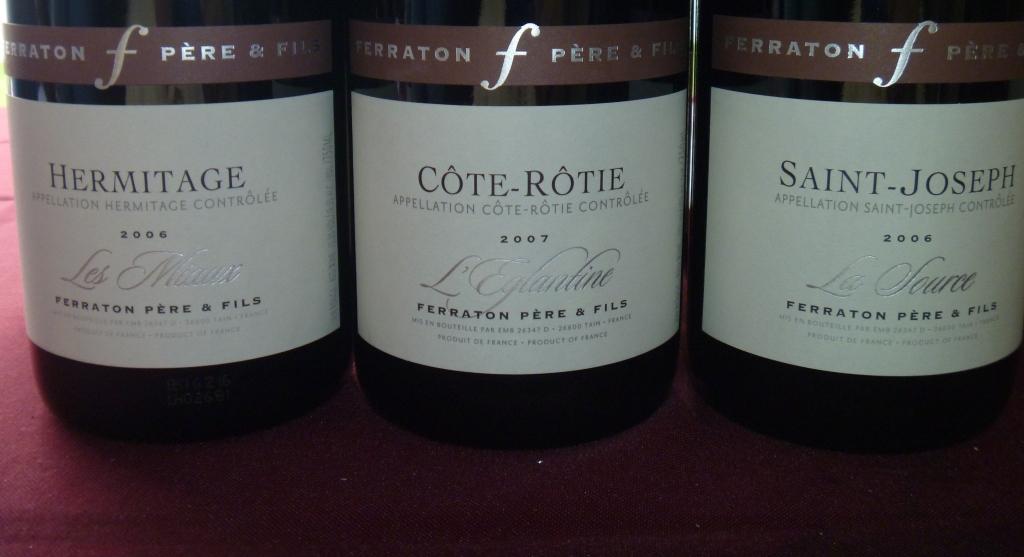
Both St. Joseph and Hermitage were classic Syrah wines, earthy, spicy, with the hint of white pepper and good amount of dark fruit. But my absolute favorite was Cote Rotie. First, I have to admit that it was my first ever taste of Cote Rotie. Actually Cote Rotie meaning in English is “roasted slope”, due to the amount of sunlight and positioning of the vineyards. You could actually taste all those roasted rocks in this wine, creating unforgettable impression. Needless to say this was my absolute favorite in the tasting.
I think it is time to finish – there were still more wines I wanted to share with you, but I think this is enough for now. More great stories is coming, but for now – cheers!
Last Bottle Sign Up ($10 credit)




 Talk-A-Vino