Archive
A Trip to Spain – at Barcelona Restaurant in Greenwich, CT
 About a month ago I got a note, which I shared with all my readers – Barcelona Restaurant in Greenwich is offering a special wine education program, called Passport Through Spain – 4 evenings of exploring the wines of the different regions in Spain, of course accompanied by the food. I didn’t have a chance to attend the classes until the very last one – but boy, am I happy I was able to attend at least one class!
The last class was focused on the region called Valencia. Valencia is more known for its paella and oranges than for its wines – but this is probably what made it more fun for me. The previous three classes were focused on Rioja, Galicia and Priorat, and I’m somewhat familiar with the wines of those three regions – but Valencia is quite unknown to me, and thus intriguing.
Region of Valencia is located on the east coast of Spain, along the Mediterranean sea line. There is a number of winemaking areas in Valencia, with Jumilla probably being the most known. There is a mix of climate zones in the region, some been more Mediterranean, and some more continental, but the very hot temperatures are quite common throughout the summer. However, in the areas with the continental climate the temperatures can drop very low in the evening, so the grapes can achieve great flavor concentration and depth. Similar to all other regions in Spain, the quality of wines in Valencia is steadily increasing, with the regions such as Valencia, Utiel-Requena and Alicante taking their place on the wine map. There is a mix of indigenous and international varieties growing in the region, with probably Malvasia and Moscatel being stars among the whites, and Monstrell, Bobal, Garnacha Tintorera and Garnacha Tinto among the reds.


The Valencia wine class was conducted by Jose Valverde, the Sommelier at Barcelona Greenwich, who is the wealth of knowledge and just a pleasure to listen to. We started with the wine called 2010 Bodegas Rafael Cambra Soplo Valencia DO (14% ABV, 100% Alicante Bouschet/Garnacha Tintorera, 3 month aging in oak) – it was this wine, made out of the Alicante Bouschet, known in Spain as Garnacha Tintorera, which prompted my last wine quiz – so here you can read some interesting facts about that grape.
Here are my notes about the wine:
Color: Dark ruby, concentrated
Nose: Earthy, warm, inviting, with touch of espresso, cherries and pencil shavings, very intense
Palate: Perfect acidity, cassis, almost a Cabernet Sauvignon/Cabernet Franc profile, espresso, touch of bell peppers, very restrained.
Verdict: Beautiful wine, you just can’t put your glass down. Drinkability: 8+
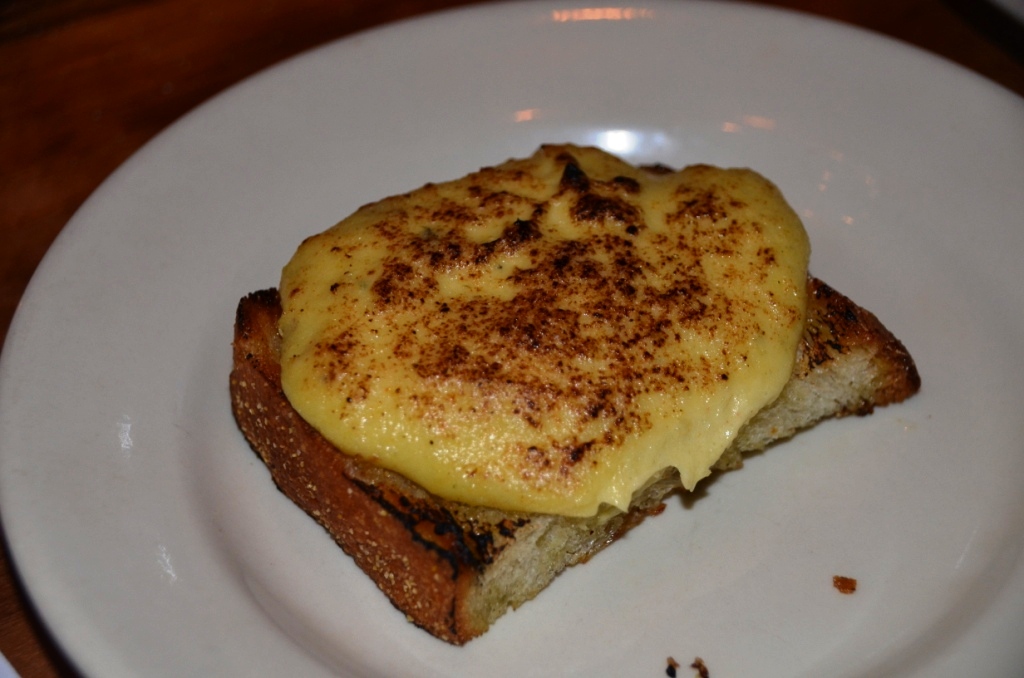
Barcelona is actually a restaurant group, and they have a number of restaurants in Connecticut and even outside, all focused, of course, on Spanish food and wine. It was very interesting for me to learn that Barcelona takes the idea of cultural heritage very seriously – yes, I’m talking here firstly about food, cooking and overall Spanish cuisine traditions. Every year the group of chefs and other people who make your restaurant experience special, travel to Spain to immerse into, to embrace the cuisine, the food, the wines, to learn the ways Spanish restaurants operate. Best of the best is brought back home and then shared with us, lucky customers, in the form of special food and special experiences. The very first dish which was served to us, lucky customers, was the Toast with Bacalao Spread. Executive Chef Michael Lucente tasted that dish at one of the restaurants in Spain while being on educational trip. He loved the dish, and he asked for the recipe. Guess what – he didn’t get it, as the chef outright refused to share it. Chef Michael spent a year (!) perfecting that recipe, but as a foodie I think it was totally worth it. Incredible balance of flavors, and texturally interesting – this was one delicious tapas.
We continued our journey through Valencia with 2010 Bodegas Sierra Norte Pasión de Bobal Utiel-Requena DO (13.5% ABV, 100% Bobal). Bobal is a unique Spanish grape, which doesn’t grow anywhere else – however. there is plenty of it growing in Spain, with more than 80,000 acres, which makes it one of the most planted red grapes in the world. The climate in Utiel-Requena is one of the harshest in Spain, with very hot summers and cold winters with frost and hail, but still, the grapes persevere!
Here are the notes for this wine:
Color: Ruby
Nose: Freshly crushed grapes, but restrained. Brighter nose than the previous wine, with some black cherries, herbs and tobacco.
Palate: Noticeable tannins, but overall light, open and clean, should be very food friendly. I crave the complexity of the first wine!
Verdict: Nice, simple and very food friendly – will complement wide range of foods! Drinkability: 7+
The dish which was served with dish was Roasted Hen with pimento, fried chick peas and cilantro. The dish itself was very tasty, with all the flavors perfectly melding together – and it also worked perfectly with the wine! All those mild flavors of the wine very complementing bold flavors of Mediterranean cuisine, so this was definitely an excellent match.


Our last wine of the evening was 2009 Pedro Luis Martínez Arriba Término de Hilanda Monastrell, Jumilla DO (14.5%ABV, 100% Monastrell, 14 month aging in new American and French oak) – Monastrell, which is a lot more international grape than the previous one (it is known as Mourvedre in France and Mataro in Australia), is definitely the best known grape in this tasting group. One problem I often have with Monastrell wines is that they are made overly jammy, with lots of in-your-face overcooked fruit. Luckily, not this wine!
Here are the notes:
Color: Dark ruby, concentrated, almost black
Nose: Closed
Palate: Powerful, coffee, dark chocolate, espresso, black plums, firm structure with spicy undertones, tar. Thought provoking, with excellent balance.
Verdict: Excellent wine, one of the best Monastrell wines I ever tasted. Drinkability: 8-
Care to guess what our last dish was? Yes, Paella! You can’t have a class on Valencia wine and not experience the classic of the cuisine. It was not even one paella, but two – both seafood and meat (rabbit and sausages) paella were served, and they both were absolutely delicious! No, I’m not going to describe them to you – just get to the restaurant and taste it for yourself.


That was definitely an evening of fun learning, great food, great wine and great conversations. There are only a few things are left for me to do here. First of all, I want to thank Barcelona Greenwich Sommelier Jose Valverde, Executive Chef Michael Lucente and PR Director Ria Rueda for the excellent program and great experience of Spanish wines and Spanish cuisine. Also, I want to bring to your attention the fact that Barcelona Restaurant group does a lot of work to educate the customers on both food and wines of Spain, so you will do yourself a lot of good if you will check their calendar and sign up for updates – there are great events happening literally every week! You can find Barcelona Restaurant and Wine Bar calendar right here – it covers all of the Barcelona locations and even more general events where Barcelona restaurants participate, so don’t think you should live in a close proximity of Greenwich to take an advantage of these special events.

Sommelier Jose Valverde and Executive Chef Michael Lucente
And we are done here. If you are looking for the great Spanish food and wine experience – there might be a Barcelona restaurant near you! Cheers!
Barcelona Greenwich
18 West Putnam Ave.
Greenwich, CT 06830
Tel: 203.983.6400 203.983.6400

Weekly Wine Quiz #96: Grape Trivia – Alicante Bouschet
The Wine Quiz series is not meant to intimidate. The whole idea here is to have fun and learn something new. When answering the questions, it is fully encouraged to use all available sources of information, including Google or any other search engine. There are no embarrassing answers – the most embarrassing thing is not giving it a try…
Welcome to the weekend and your new wine quiz!
We are continuing our grape trivia series, still focusing on the red grapes, and today’s subject is Alicante Bouschet, or Alicante Henri Bouschet, if we want to use the full and official name.
How many of you ever heard of Alicante Bouschet, let alone tasted the wines made from that grape? How about Garnacha Tintorera? Still nada? Yes, I know – at this point, I’m reaching into the obscure grapes territory, the dark side of the wine world. But this grape, Alicante Bouschet, is so unique and different, in its past and present, that I can’t pass an opportunity to learn about it together with you.
Alicante Bouschet grape was created in 1866 by Henri Bouschet as a cross between Petit Bouschet and Grenache. To make things a bit more interesting, it is worth noting that Petit Bouschet was created by Louis Bouschet, the father of Henri Bouschet, this time as a cross between two ancient varietals, Teinturier du Cher and Aramon. Talking about unique – Alicante Bouschet is one of the very few red grapes in the world which are classified as teinturier – the grape which makes the juice of red color. Take any of the well known red grapes – Cabernet Sauvignon, Pinot Noir, Merlot, most anything – and break it apart. The juice which will be coming out will be clear. It is the skin which gives the color to majority of the red wines. When it comes to Alicante Bouschet (and other teinturier grapes, which are very few), the juice will be coming out as red.
After being created in 1866, Alicante Bouschet somewhat rapidly spread out all over the world. It was used in France to replant vineyards after the phylloxera devastation. It made it to Portugal and Spain, where it is known under the name of Garnacha Tintorera, and continued its successful journey further into Italy, Australia, Chile, United States and the number of other countries.
Alicante Bouschet is known to produce not even large, but rather huge crop. It is also an early ripening grape, which creates somewhat of a problem, as it doesn’t accumulate enough flavor depth and enough sugar to make it into the single-varietal wine. As the result, it is often used as part of the blend just with the purpose of adding the color (and the color it got!). Another important characteristic of the grape is a very thick skin, which helps it to withstand the long distance transportation. This quality of Alicante Bouschet made it extremely popular grape during prohibition times in the US, as it could sustain the long railroad voyage from west coast to the east. In addition to handling the long distance transportation quite well, Alicante Bouschet think skin and juicy flesh was allowing for it to be pressed three times (most of the common grapes will allow for one, or an absolute maximum of two pressings), thus one could get more decently colored wine from much lesser amount of grapes.
Today, the plantings of Alicante Bouschet decreased in the countries like France and United States, where it is used mostly for blending. However, the grape is increasingly popular in Portugal, where it makes wonderful concentrated wines in the Alentejo region. Southern Spain also has very substantial plantings of Garnacha Tintorera, and with controlled yield produces outstanding single-varietal wines.
And now, to the quiz!
Q1: True or False: according to the 2010 data, Alicante Bouschet is one of the 15 most planted red grapes in the world?
Q2: Wine Spectator calls wines with 90-94 ratings “Outstanding: a wine of superior character and style”. True or False: There are no Alicante Bouschet-based wines rated as Outstanding by Wine Spectator.
Q3: Alicante Bouschet makes a very popular addition (albeit in miniscule quantities, about 5% or less) to some of the very well known and popular California varietal wines. Can you name two of those popular California grape varieties?
Q4: Below is the list of countries growing Alicante Bouschet/ Garnacha Tintorera. Based on 2010 data, sort that list from the biggest area plantings to the smallest:
a. Chile
b. France
c. Italy
d. Portugal
e. Spain
Q5: Which one doesn’t belong and why?
a. Carlisle
b. Francis Ford Coppola
c. Ridge
d. Turley
Good luck, enjoy the quiz and your weekend! Cheers!
Beyond Tokaji – Exploring Wines of Hungary
 Stop a random wine lover on the street (hmmm, question of the day – how can you identify a random wine lover on the street?), and ask what Hungarian wines he or she knows and what Hungarian wines he/she tried. I would bet that at least three times out of five, you will get the blank stare, and then probably two people out of five will recall that they at least heard about Tokaji, the famous Hungarian dessert wine. On a very lucky day, one out five (I might be overly optimistic here) would also mention red wine called Egri Bikavér (Bull’s Blood). By the way, want even more blank stares? Ask what grape Tokaji is made from…
This is rather unfortunate, as winemaking traditions in Hungary would easily rival those of France. The wine was produced in Hungary since the Roman times, and according to the Wikipedia, Hungarian language is one of only three European languages where words for wine were not derived from Latin (the other two are Greek and Turkish). As most of the countries in Europe, history of Hungary was filled with ups and downs, being conquered and being conqueror, but the wine was thriving through the years, until the phylloxera of the 1870s and communist rule after the World War II delivered their devastating blows. For the last 25 years, there was a lot of hard work done in Hungary to restore the old glory – and the results are starting to show.
In today’s wine world, it is hard to be an underdog (change it from “hard” to simply “painful”, if your winemaking traditions are thousand years old) – the battle for the space on the wine shelves of liquor stores and supermarkets is simply fierce. Luckily, Hungary has at least one advantage when it comes to this wine fight – dessert wine called Tokaji. Tokaji is produced out of the white grape called Furmint, in the style similar to the German Riesling and Sauternes, also making the most concentrated wines out of the grapes affected by the Noble Rot (so called botrytized grapes). But general knowledge and availability of the Hungarian wines often starts and ends with Tokaji – and it should not, as Hungary offers a lot more wine deliciousness beyond Tokaji.
How can you discover new wines? There are only two ways that I know of. You read about them and you taste them. When it comes to the wines of Hungary, there is one company which dedicated itself to bringing those unique wines to the US market – Blue Danube Wine Company. The company was founded in 2002 with the mission of bringing the best wines from Central Europe (that includes wines from Austria, Hungary, Croatia, Slovenia and Montenegro) to the US market. I heard about the Blue Danube Wine Company a while back, but never had the opportunity to taste the wines they are representing. Last week, the opportunity presented itself in the form of the virtual tasting on Twitter called #winechat. #winechat is the regular weekly event on Twitter, created by Protocol Wine Studio, which focuses on educating and connecting oenophiles and everybody who are “into the wine”, whether as trade professionals or just the amateurs. Actually, last week’s event was double-first for me – my first #winechat, and my first encounter with the Blue Danube Wine Company.
The way #winechat works is this. The overall #winechat calendar is published on the Protocol Wine Company Facebook page. For each topic, there is a company which hosts the #winechat. In case the wine samples are available, this information is noted on the events page. If you are interested in the theme of the particular #winechat, you contact the host which might or might not have the samples available. On the day of the #winechat, all the participants get together at a given time ( typically 6 PM US Pacific/9 PM US Eastern), and discuss the wines on the Twitter, using the appropriate hashtags – very simple.
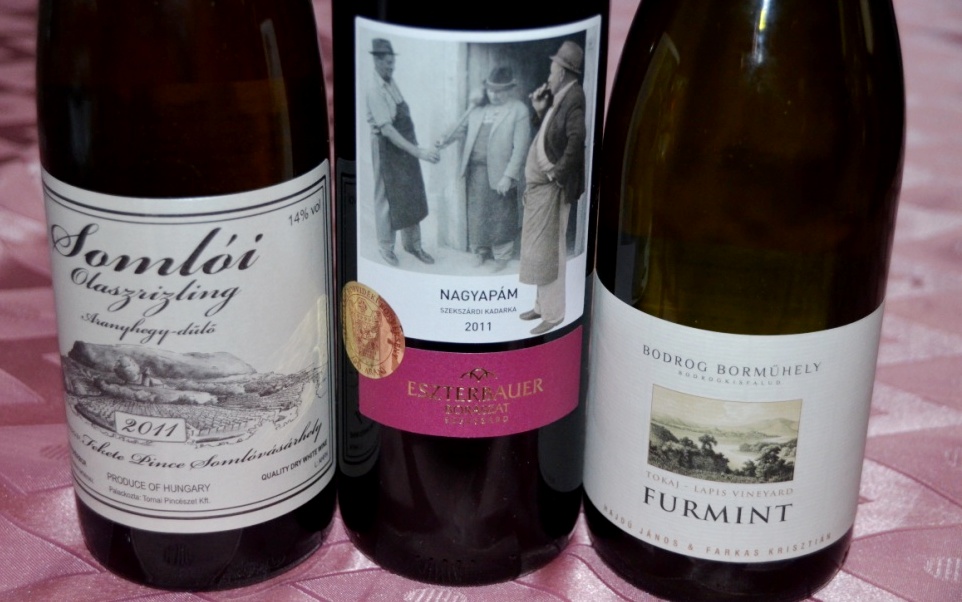
For the #winechat last Wednesday, there were three wines available, made from the grapes called Kadarka (red), Furmint and Olaszrizling (a.k.a. Welchriesling or Riesling Italico). Before the tasting we got the e-mail from the host, giving the tasting order and all the wine notes for these three wines. At 9 PM Eastern, all the fun started.
Contrary to what you might expect, we started the tasting from the red wine ( the other two were white) – 2011 Eszterbauer “Nagyapám” Kadarka, Szekszárd, Hungary (13.5% ABV, 100% Kadarka). This wine is made out of the indigenous grape variety called Kadarka, which is also used as part of the blend in Egri Bikavér wines. Kadarka is known to have big berries and thin skin, and makes a pretty difficult variety to work with. Szekszárd region is located south of Budapest (the capital of Hungary), longitude-wise between Bordeaux and Loire, and the vines had being growing in that regions for more than a thousand years. The Eszterbauer family started making wines in the region in 1746, after immigration from Bavaria. The family owns about 20 acres of vineyards, but farms total of 54. There is a number of Kadarka clones which Eszterbauer family uses to produce their wines. The grapes for this particular wine came from the oldest vineyard, hence the name of the wine “Nagyapám”, which means Grandfather in Hungarian.
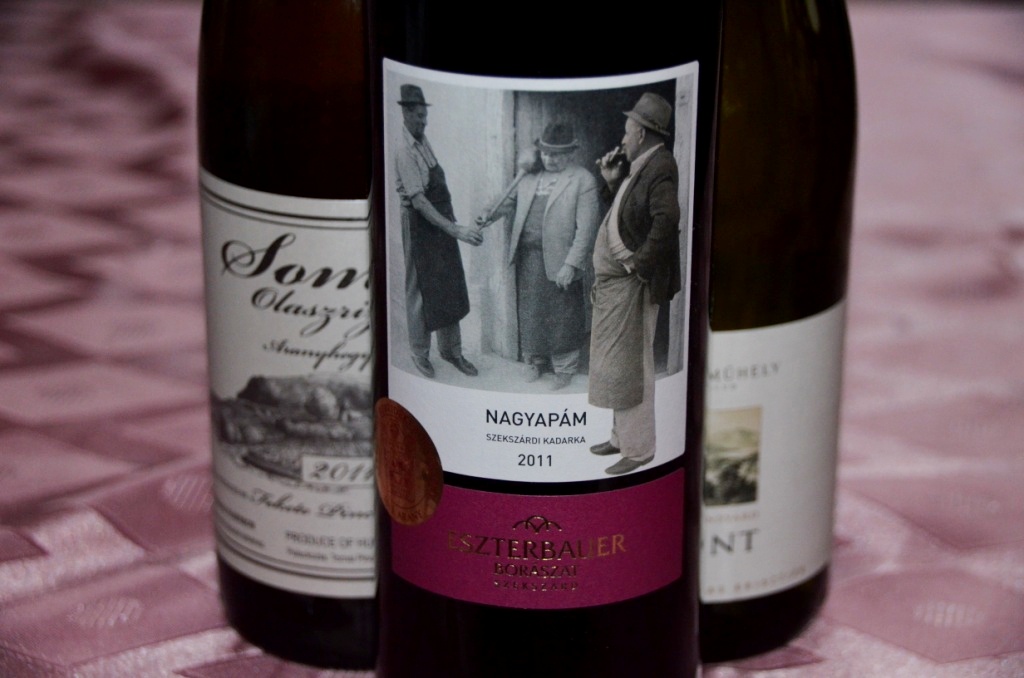 It was recommended to treat this wine like Beaujolais, i.e, drink it slightly chilled. Ask the wine geek to chill the wine, and he (or she) will start playing with thermometer (isn’t it true?) – this is what I did. Here are the tasting notes as I played with the wine.
Color: Ruby/garnet color, more of light Pinot Noir style, somewhat dim.
Nose: Freshly crashed berries, very similar to Beaujolais with a bit more restraint.
Palate: at 13°C/55.4°F, clean acidity, but the wine is too cold, comes through quite astringent. Cranberries and tart cherries, medium to long finish. At 15.6°C/60°F the wine is showing softer in the glass, not as astringent. At 17°C/62.6°F – the best showing so far (at this point the wine is opened for about 50 minutes) – soft, supple, together, with hint of spice in the back.
Verdict: This wine should be consumed at the room temperature (20°C/68°F) or very slightly cooler. Overall, nice and simple, should be good with food. Drinkability: 7+
Our next wine was 2011 Bodrog Borműhely Lapis Furmint, Tokaj, Hungary (13% ABV, 100% Furmint). This wine comes from the region of the best known Hungarian wines in the world – Tokaj, and it is made from the same white grape, Furmint. However, while Tokaji is made from the botrytized grapes, this wine is part of the line called Borműhely, which stands for the “wine workshop”, made with the goal of avoiding any of the botrytized grapes in order to showcase Furmint as a foundation for the dry white wines. This particular wine comes from the Lapis Vineyard which is located near the town of Bodrogkeresztúr, and is considered one of the very best vineyards in the Tokaj region. The mixture of soils at the Lapis Vineyard includes some of the volcanic soil, which imparts an additional minerality on the wines. After harvested by hand, this wine was fermented and aged on the lees for the 9 month in the Hungarian oak barrels.
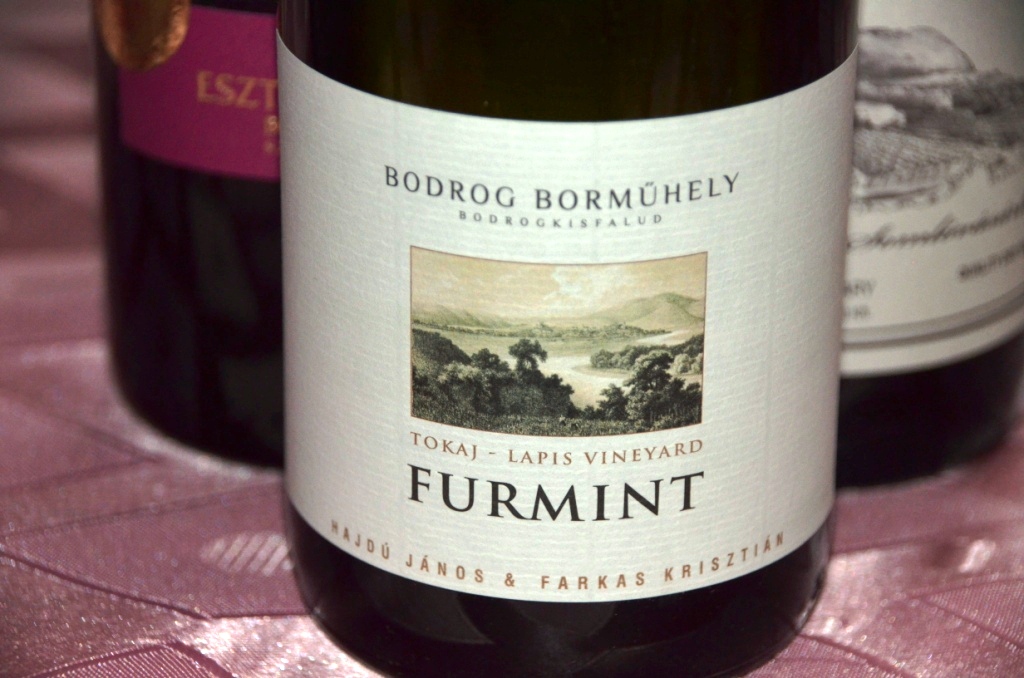 Here are the notes (started tasting at the temperature of 14.4°C/58°F):
Color: Almost clear in the glass, straw pale
Nose: Beautiful – hint of sweetness, caramelized peach, mint, nutty complexity, very unusual. As wine warmed up, nose became phenomenal, almost impossible to describe.
Palate: Great acidity, white peach, toasted pecans, beautiful. Nice legs, medium to full body.
Verdict: Outstanding wine, tastes different at the different temperatures, really should be experienced. Drinkability: 8
Last wine of the #winechat was 2011 Fekete Béla Olaszrizling, Somló, Hungary (14.5% ABV, 100% Olaszrizling). You know, I have a problem here. I know very little about Hungarian wines, and all the facts I gave you about the two previous wines were taken from the excellent notes created by the Blue Danube Wine Company (all available on their web site if you care to read them). My problem here? The note for this wine are so interesting that I would love to include them verbatim! But okay, let me try to compress it into the format of the blog post. Somló is the smallest appellation in Hungary, located on what was the underwater volcano in the very old days. You can imagine the richness and diversity of the soils which can be found in the Somló appellation. The winemaking traditions in Somló go back to the 10th century, and the vineyards in the region were always the object of desire for kings and farmers alike. Here is the excerpt from the tasting notes just to give you an illustration of preponderance of the region of Somló: “In 1752, local laws stated that if you were found adding water to wine, expect 25 lashings as the minimum punishment. If you were found to be labeling wine as Somló but using other fruit sources, you would be banned from making wine permanently and might even have your property confiscated. Perhaps most well known is that belief that drinking the wines of Somló before copulation would guarantee a boy. “Nászéjszakák bora” or “wedding wine” was soon the favored wine of the Hapsburgs to keep the Monarchy in full swing.”.
This particular wine comes from the winery of Fekete Béla, who had being tending to about 10 acres of vines for more than 30 years. The grapes for this wine were harvested by hand, then fermented with the natural yeast in the 1200 liter Hungarian oak casks, and then aged for two years, never punched down and never completely sealed from the oxygen. You have to taste the resulting wine to believe it.
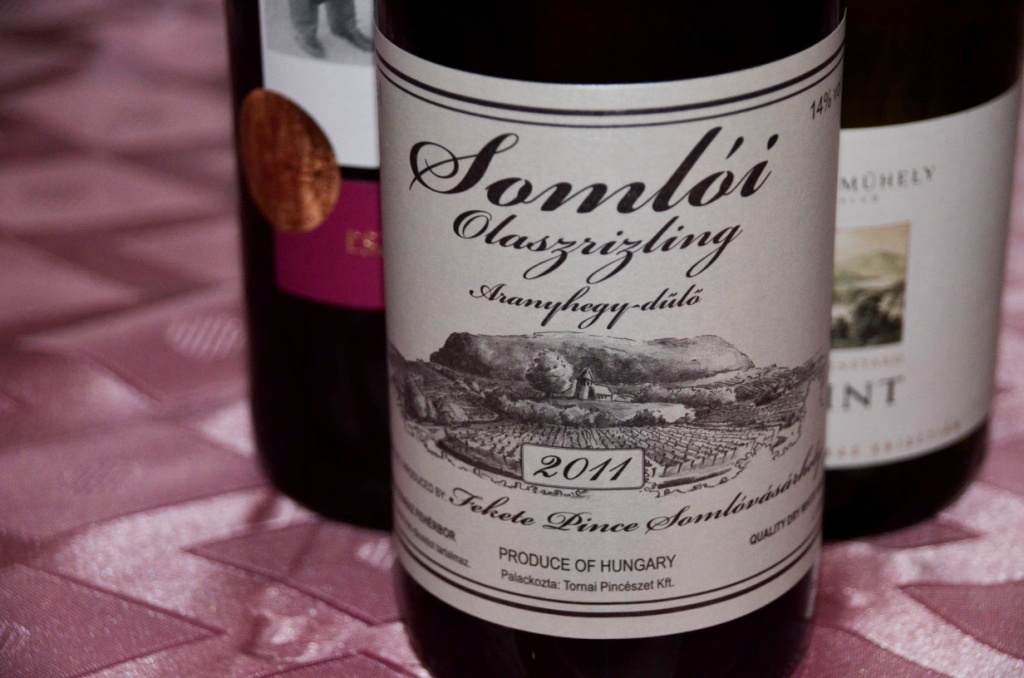 Here are the notes (starting temperature 12.8°C/55°F):
Color: Straw, pale yellow.
Nose: Wild flowers, tamed, distant, very inviting.
Palate: great complexity, very unusual, swings from toasted oats to touch of lemon, granny smith apples, butter, very noticeable legs, crisp and long finish. Noticeable minerality and substantial mid-palate weight.
Verdict: Truly unique wine. I really want to try it in 10 years, as it should evolve incredibly. Yes, you have to taste it to believe it. Drinkability: 8
All in all, this was a great tasting and great opportunity to learn something new and expand your palate. Thank you Blue Danube Wine Company and Protocol Wine Studio for all the fun and education! Until the next time – cheers!
Wednesday’s Meritage – Wine Quiz Answer, #MWWC8 Time to Vote, Bordeaux 2013, Wine-y States, When Wine Critic Attacks
 Meritage time!
Let’s start with the answer to the wine quiz #95, Grape Trivia – Tannat. In the quiz, you were supposed to answer 5 questions about the red grape called Tannat.
Here are the questions, now with the answers:
Q1: Tannat was the reason for one specific winemaking technique to be invented relatively recently. Do you know what technique is that?
a. Malolactic fermentation, b. Micro-oxygenation, c. Carbonic maceration, d. Reverse osmosis
A1: Micro-oxygenation was developed in the 1990s specifically as a method to soften otherwise harsh Tannat wines to make them more approachable while young.
Q2: True or False: Tannat is primarily harvested by hand and not by the machine. Provide an explanation for your answer.
A2: True. Tannat is primarily harvested by hand, but not because of the hilly terrain. The machine is generally harvests the grapes by shaking the vine – Tannat grapes are growing in such a tight bunches and attached to the vine so well that shaking simply doesn’t help, and the grapes have to be harvested by hand.
Q3: Name 3 grapes, often used as blending partners when Tannat wines are produced in France
A3: Cabernet Sauvignon, Cabernet Franc and Fer are often blended with Tannat in Madiran.
Q4: Wine Spectator calls wines with 90-94 ratings “Outstanding: a wine of superior character and style”. True or False: There are no Tannat-based wines rated as Outstanding by Wine Spectator.
A4: False. There are quite a few Tannat based wines with the 90+ ratings from the Wine Spectator, with the 2001 Montus Bouscassé Madiran La Tyre having the highest rating of 94.
Q5: Tannat ripens at about the same time as Cabernet Sauvignon. Assuming you have Tannat and Cabernet Sauvignon which are both slightly underripe, which grape would you make the better wine from, Tannat or Cabernet Sauvignon? Why?
A5: Slightly underripe Tannat doesn’t show those aggressively green notes as Cabernet Sauvignon does, so all other things been equal, Tannat has a better chance of producing more palatable wine.
Talking about the results, two people played in this round – Bill of Duff’s Wines and Julian from Vino in Love – they both correctly answered four questions out of five, so they definitely get the favorable mention. Well done!
Now, to the interesting stuff around the vine and the web!
First of all, the Monthly Wine Writing Challenge #8, with the theme “Luck“, has concluded. Now it is time to vote for your favorite entry! While Kara The Sweet Sommelier was the host of #MWWC8, she is using Blogspot as her platform, which apparently doesn’t allow the inclusion of the polls in the blog post, thus Jeff a.k.a. The Drunken Cyclist hosts the poll on his blog. Click here to read all the entries and cast your vote in the poll. Don’t delay – the voting will close by the end of the week.
It was a very difficult growing season in Bordeaux – Mother Nature threw a tantrum (or a few) – cold spring and hailstorms definitely took its effect. Now winemakers facing a tough dilemma. The 2013 vintage is expected to be of a medium quality (despite all the tantrum’s), so it would be necessary to reduce the selling prices across the region to be able to sell the wines. At the same time, the crop was small, so reducing the prices will definitely affect the small and even medium producers. Well, En Primeur tastings will take place soon, and this is where the prices will be set – for more information please read this article on the Wine-Searcher.
Dr. Vino published a very interesting map in his blog. This map outlines the wine consumption in the United States on the state by state basis. Dr. Vino also took all the wine numbers a bit further – he also included the map of state’s electoral votes from the 2012 elections (democrats versus republicans), as well as the map of income per capita in all 50 states. There are some interesting correlations between all three maps, but I will leave it for you to make any type of conclusions as you will see fit.
And last but not least is latest feud in the wine critics world – which is mind boggling in my opinion. The wine world is huge – there is enough space for all the people who wants to professionally review the wines, and its okay to have a difference of the opinion. But Robert Parker and his company, Wine Advocate, apparently don’t think so. In the fight for the dominance of the opinion, it seems that Robert Parker lashes out at anyone who promotes the wines less bombastic than his palate requires. Last week, Robert Parker attacked Eric Asimov ( New York Times wine critic) and Jon Bonne ( San Francisco Chronicle) for conducting the tasting of the wines which were not to his liking. You can read a general overview of the issue here, but then you need to turn to the blog post by Dr. Vino. After the legal attack from the Wine Advocate lawyers, Dr. Vino had to drastically modify the content of his blog post, which you will be able to see here. And lastly, here is an excellent summary by the W. Blake Gray, explaining the reason for the “vicious attack” . Even if you largely ignore all the wine critics populace, I think this story still worth a few minutes of your time.
And we are done here. The glass is empty – but the refill is on its way! Cheers!
Weekly Wine Quiz #95: Grape Trivia – Tannat
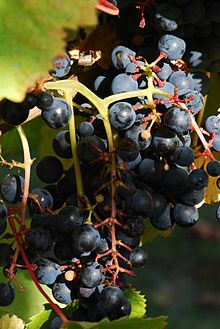
Tannat Grapes. Source: Wikipedia
The Wine Quiz series is not meant to intimidate. The whole idea here is to have fun and learn something new. When answering the questions, it is fully encouraged to use all available sources of information, including Google or any other search engine. There are no embarrassing answers – the most embarrassing thing is not giving it a try…
Welcome to the weekend and your new wine quiz!
We are continuing our grape trivia series, with the focus still on the red grapes, and today’s subject is Tannat.
It is interesting how different the grape stories are. Some grapes, like Bonarda/Charbono, have very convoluted history with changing names and uncertain origins. Some grapes, like Tempranillo, have a page-long list of synonyms, different names they are known under in the different parts of the world and even in the different parts of the same country. The Tannat story is a lot more straightforward. Wikipedia doesn’t list any synonyms for the name Tannat, which is quite rare – most of the grapes have some alternative names listed, and there are no confusions surrounding the Tannat grape.
Tannat originated in the Southwest France, in the area close to Pyrénées. Area surrounding village of Madiran was and still is the main wine growing area for Tannat, but today Tannat is growing in the number of countries in the world (albeit not in the major quantities). In the second half of 1800, Tannat made it to Uruguay, where today it is literally considered the national grape. In addition to Uruguay, the grape is successfully grown in United States – California is increasing its plantings quite a bit, and some other states are experimenting with the grape. Australia, Argentina, South Africa, Brazil, Italy are all also have some plantings of Tannat.
Tannat is a late ripening grape, with the thick black skin. That skin makes the grape resistant to the mildew rot, and also becomes a source of tannins. Tannat wines are generally known to make firmly structured, tannic and powerful wines, which require quite a bit of aging to soften those tannins up – however this is changing nowadays as many winemakers focus on making the Tannat wines more approachable while young. Similar to the other grapes with likewise characteristics (think thick skin/tannins), Tannat has very high level of procyanidins, which according to the Wikipedia are “good for reducing blood pressure, lowering cholesterol and encouraging healthy blood clotting”.
And now, to the quiz!
Q1: Tannat was the reason for one specific winemaking technique to be invented relatively recently. Do you know what technique is that?
a. Malolactic fermentation
b. Micro-oxygenation
c. Carbonic maceration
d. Reverse osmosis
Q2: True or False: Tannat is primarily harvested by hand and not by the machine. Provide an explanation for your answer.
Q3: Name 3 grapes, often used as blending partners when Tannat wines are produced in France
Q4: Wine Spectator calls wines with 90-94 ratings “Outstanding: a wine of superior character and style”. True or False: There are no Tannat-based wines rated as Outstanding by Wine Spectator.
Q5: Tannat ripens at about the same time as Cabernet Sauvignon. Assuming you have Tannat and Cabernet Sauvignon which are both slightly underripe, which grape would you make the better wine from, Tannat or Cabernet Sauvignon? Why?
Bonus: Have you ever had any Tannat wines? What do you think of them?
Good luck, enjoy the quiz and your weekend! Cheers!
Instant Gratification, and Arrival of the Spring
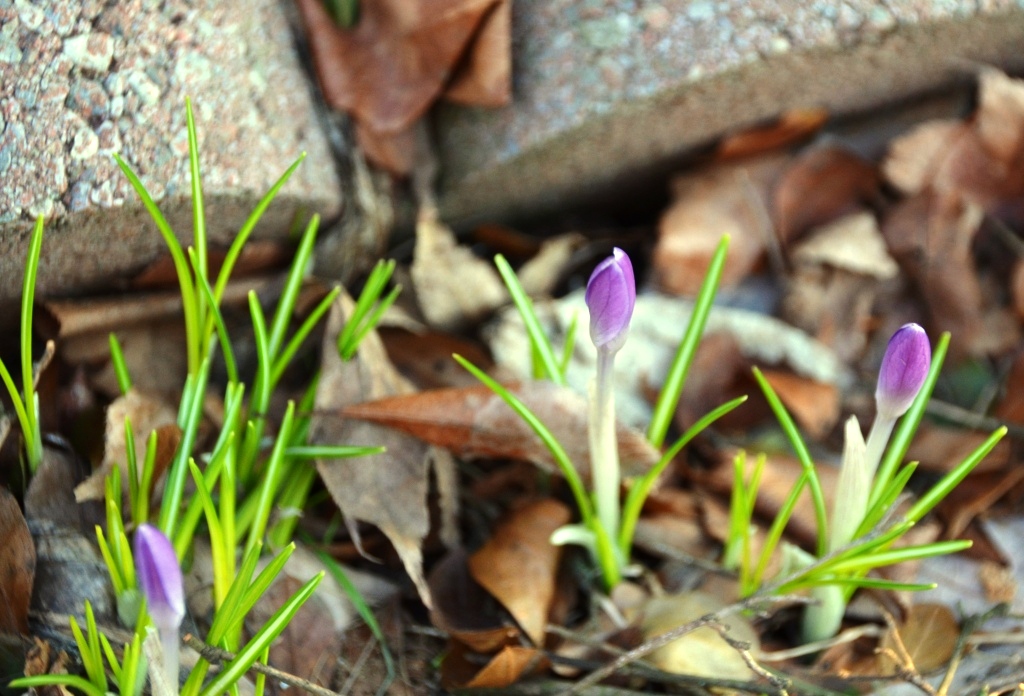 You know, when the winter is like the one we had in New England, you get to the point when you sort of stop believing that the spring will come. You wake up in the morning, your thermometer shows 20F, and your mind doesn’t even comprehends the concept of spring, flowers, grass – no, those leftovers of the snow are going to stay forever. Only a few days ago I was explaining to my daughter about the flowers called snowdrop in English, which are usually showing up as soon as snow melts, and I was lamenting that this year we probably will see no snowdrops as the winter was so brutal here.
Then today was the first official day of spring, and while it was still cold outside, it was definitely more palatable (read: warmer), and the snow was almost gone. And walking around the house all of a sudden I saw… flowers! It was simply magic, the magic of life happening right here, right now. No matter how brutal the winter is, the spring will come no matter what – and I was looking at the proof. Don’t know if this is exactly a snowdrop or simply a similar flower, but I was definitely happy to see it.
Okay, so spring is here. And for the instant gratification part? Easy. Here I’m talking about wine (wow – total surprise, huh?). You know, I can define the instant gratification as a sequence of a few very simple steps – twist, pour, sniff, say “ahh”, sip, roll your eyes towards the ceiling – have a moment of bliss. The wine which gave me this moment of blissful instant gratification – 2006 Mt. Difficulty Pinot Noir Central Otago, New Zealand. I wanted to have a good glass of wine, and as I only have a vague idea of what wines are in the cellar, I was simply looking through the wines on one of the shelves – and when I saw this bottle Mt. Difficulty, I thought – yes, that will do it – and it delivered. Beautiful classic Pinot Noir on the nose – a little smoky, a little earthy – and perfectly fresh, full of juicy cherries and herbs, harmonious palate. You know, the one which gives you an instant gratification. I loved that wine so much that I simply had to connect the first flowers with this wine – as you can see it in the picture below:

The spring is here! Let’s drink to Life! Cheers!
Wednesday’s Meritage – Wine Quiz Answer, National Wine Week, Las Vegas Wine Happenings, French versus American – Really?
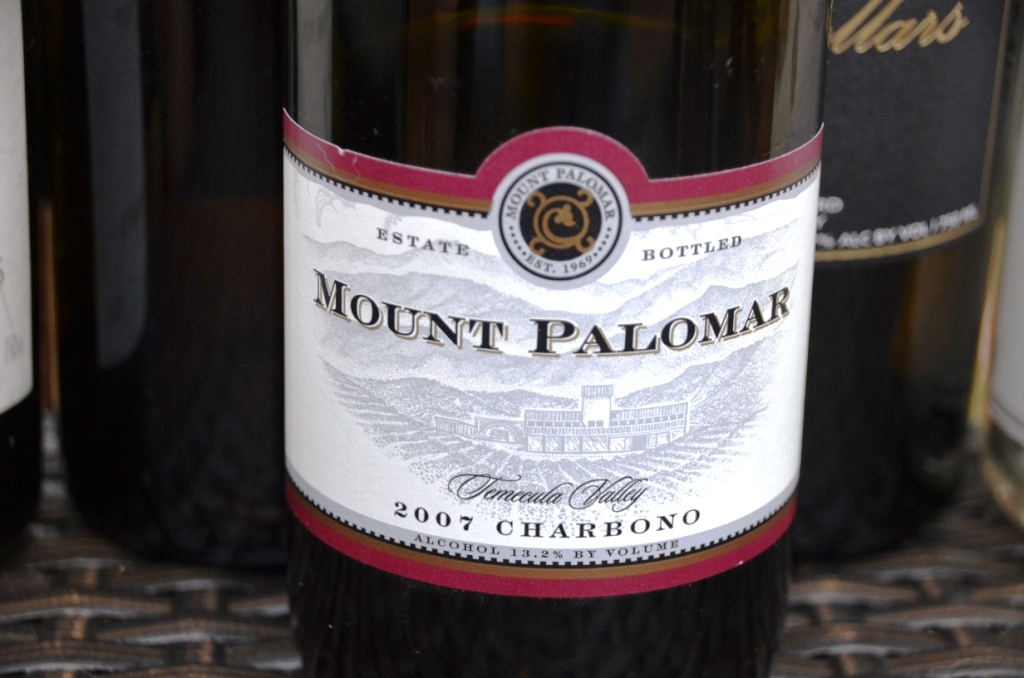
Mount Palomar Charbono
Meritage time!
Let’s start with the answer to the wine quiz #94, Grape Trivia – Bonarda/Charbono/Douce Noir. In the quiz, you were supposed to answer 5 questions about the red grape called sometimes Bonarda, sometimes Charbono, but should be called Douce Noir.
Here are the questions, now with the answers:
Q1: True or False: Bonarda is one of the 30 most planted red grapes in the world?
A1: True. At least as of 2010 it was, and there is an upswing curve in the Bonarda plantings in Argentina, so this definitely should hold true in 2014.
Q2: These are some of the grapes growing in Argentina. Sort this list by the area plantings in the descending order:
a. Bonarda, b. Cabernet Sauvinon, c. Criola Grande, d. Malbec
A2: The correct sequence is: Malbec, Bonarda, Criola Grande. Side note – I heard about Criola Grande grape for the first time while researching information for this quiz. Interesting to note that if we would be talking about year 2000, Criola Grande would be grape #1 on the list.
Q3: Which one doesn’t belong and why?
a. Turley, b. Bonny Doon, c. Robert Foley, d. Mount Palomar
A3: Bonny Doon is the one. The rest of the wineries produce Charbono wines today, but not Bonny Doon (side note – they were making Charbono in the past).
Q4: Wine Spectator calls wines with 90-94 ratings “Outstanding: a wine of superior character and style”. True or False: There are no Charbono wines rated as Outstanding by Wine Spectator.
A4: False. But it is false by the tiny, tiny margin – Robert Foley Charbono has the highest rating of 90 and the only Charbono wine with that rating.
Q5: True or False: From year 2000 to 2010, plantings of Bonarda in Argentina have increased by more than 20%
A5: True. The plantings went from 14989 acres in 2000 to 18127 in 2010.
It is interesting that participation in the wine quiz is very different from the week to the week – I’m sure that at this point as I’m playing in the land of the rare grapes, it makes people afraid to take a risk (where there is none!) and answer the quiz’s questions. Only Bill of Duff’s Wine made an attempt to answer the questions, so I definitely would to acknowledge him. At this point I have a few rare grapes lined up for the quizzes, so I plan to continue with that – but I hope that you, my readers, will make an effort to answer the questions in any case – you have nothing to lose, and will only get the benefit of learning.
Now, to the interesting stuff around the vine and the web!
Heard for the National Wine week? If you are like me, than the answer is no. Meanwhile, it appears that one of the well known restaurants in US, Smith & Wollensky, is celebrating 54th National Restaurant Week! Yes, this is somewhat of a late notice, but if you live in a close proximity to one of the Smith & Wollensky restaurants, you still have about 2 days to go there and taste 10 different wines for only $20 with the purchase of the lunch entree. Here is the link to the web site with more information.
Las Vegas is probably one of the most “happening” places on Earth – a city which exist with only one purpose – to entertain. Music, Art, Food – everything is big in Vegas. As you might expect, wine is also happening in Vegas. If Las Vegas is the part of your travel itinerary over the next few weeks, here is the blog post from the blog hosted by Vegas.com, which will help you to properly plan your travel itinerary and not to miss any of the wine events.
Last but not least for today is a very peculiar article by Tom Wark, a well known figure in the wine industry, who also writes the blog called Fermentation. Why peculiar? The blog is titled “Why French Wine Will Never Be as Interesting as American Wine” – tell me, what do you think of it? What I find peculiar, is that Mr. Wark is a wine professional – thus I would really expect that if anyone, he should really have an appreciation for the wine world as a whole and not make cheap tabloid type of statements, which are generally intended only to attract instant, but short living publicity. In his post, which you can find here, it seems that Mr. Wark got upset over someone else’ opinion about French wines being more superior to the American wines, and that is what prompted Mr. Wark’s post where he has a fictional dialog proving his point about American wines being interesting and I guess French wines being boring. I’m not even going to comment on that blog post here, as in today’s world, each and every country produces phenomenal wines which are only getting better and better, and winemakers everywhere – France, Italy, Spain, New Zealand, Georgia or California – are crossing the boundaries and test the limits literally every day. But I would suggest that you will read the post and shitload of comments it generated – I guarantee you will have fun. I also want to mention that Chris Kassel of Intoxicology Report took a pity on Mr. Wark and wrote the commentary to his post which he titled “Why American Wine Will Never Be As Interesting As French Wine” – you can find it here. Again, a fun reading and well worth your time.
And we are done here. The glass is empty – but the refill is on its way! Cheers!
Daily Glass: Few Wines, Beautiful and Interesting
Disclaimer: this blog post is not an attempt to create the new rating system. It is rather an account into the emotional escapades of the oenophile tasting wine.
Here I’m again with the super-indescriptive descriptor – beautiful wine. I wonder if the phrase “beautiful wine” gives you a mental image. I’m not talking about the exact image of an object shaped in the form of a bottle, but rather a mental anchor you can relate to “ahh, I understand”. Let me deconstruct this “beautiful wine” term as the following:
1. The wine is perfectly balanced – fruit, acidity, tannins, texture, structure – all together.
2. Drinking this wine is a pleasure
3. The wine is memorable
4. “Beautiful wine” designation is totally spontaneous and emotional. It usually happens after the first sip and the subsequent uncontrollable “wow”.
When it comes to the term of “interesting wine”, that happens when I’m puzzled, like “hmmm, interesting, I’m not sure what to think of it”. Please understand that it is very different from “ouch, it needs time”, “what is it???”, “crap” and “this is disgusting”. “This is interesting” simply means that I can’t put a handle on what I’m tasting, where, for instance, the initial sensation of round and silky is followed by something harsh and unbalanced. “This is interesting” usually ends up being extended into “hmmm, this is interesting, let’s give it some time”. From this point on, the wine can be put aside to be drunk at another day, or it might go into the decanter if I feel that it would be sufficient to change it.
Here are the few wines we had last week, some beautiful and some are … interesting.
2011 Field Recordings “Neverland” Red Wine Grassini Vineyard Happy Canyon of Santa Barbara (15.1% ABV, 75% Cabernet Sauvignon, 15% Petit Verdot, 10% Merlot. Aging: 50% new French barrels, 25% new American barrels, 25% seasoned French for 18 month) – believe it or not, but every time I open a bottle of Field Recordings wine (which is easy – just twist off the screw top), I have a moment of trepidation – will it be as good as everything else I tasted before from Field Recording? You could’ve noticed in this blog that I have a lot of happy reviews of the Field Recordings wines, thus it creates that uneasy moment with each new bottle opened. Luckily, this bottle of “Neverland” didn’t deviate from the trend at all – beautiful nose of cassis and blueberries, open, bright and concentrated, followed by more of cassis, sweet oak and blueberries – but nothing over the top, soft and delicious fruit with perfectly refreshing acidity, soft tannins and overall impeccably balanced. This was a beautiful wine – and equally dangerous (“dangerous wine” = disappears before you notice it). Drinkability: 8+
2012 Cane and Fable 373 Cabernet Sauvignon Paso Robles (14.9% ABV, 85% Cabernet Sauvignon, 10% Tempranillo, 5% Petit Verdot. Aging: 225L oak barriques, 25% new, 12 month) – this wine is the result of collaboration of Field Recordings’ Andrew Jones and Curt Schalchlin of Sans Liege fame. Different presentation of the bottle (yes, I know, that giant cricket on the label can be off-putting), and the bottle is enclosed with the actual cork and not the screw top as all of the Field Recordings wines. The nose was more restrained than the previous wine, but still showing cassis with some earthy overtones. On the palate, this was that exact “interesting wine”. It was showing nice fruit and structure, but was somewhat fluctuating on an off in terms of being round, or not. So this was an interesting wine to put aside, which I did. As you can take a hint from the cork enclosure, this wine is intended to age – and on the second day it came together, showing cassis with the addition of espresso and earthiness – I think that Tempranillo was holding it away from becoming Bordeaux-like, so this was the wine on its own, well balanced, restrained, and craving for food. I have another bottle and I definitely intend to give it a few years to see what it is capable of. By the way – a mini quiz for you – care to guess what 373 stands for in the name of this wine? Drinkability: 8-
2010 CVNE Monopole Rioja DOC (13% ABV, 100% Viura) – the oldest white wine brand of Spain, produced since 1915. Fresh citrus and herbs on the nose, impeccably balanced and restrained on the palate, with the notes of lemon and green apple, clean acidity, very pleasant to drink. I have a few more bottles, and I’m keeping them. Drinkability: 8
2012 Colline de l’Hirondelle Cocolico, France (15% ABV, 60% Chenançon Noir, 25% Grenache, 15% Syrah) – Another case of the interesting wine, this time due to a number of factors. First of all, this wine contains a new grape – Chenançon Noir from France. Second of all, the initial impression from this wine was more reminiscent of the big body, brooding Spanish Grenache – Shatter by Dave Phinney or Alto Moncayo come to mind – and it was not round enough and was asking for decanter – which was provided. After about 40 minutes, it showed plums and ripe sweet cherries, still powerful and big bodied, but more round and balanced then from the get go. Considering the price of $15.99, if you like big and powerful wines, this might be the one for you. Drinkability: 8-
And that concludes my post. Any beautiful or interesting discoveries you care to share? Comment away! Cheers!
Weekly Wine Quiz #94: Grape Trivia – You Say Bonarda, I Say Charbono

Bonarda Grapes, Source: Wikipedia
The Wine Quiz series is not meant to intimidate. The whole idea here is to have fun and learn something new. When answering the questions, it is fully encouraged to use all available sources of information, including Google or any other search engine. There are no embarrassing answers – the most embarrassing thing is not giving it a try…
Welcome to the summer time (for those of you in US – and no, don’t worry, I didn’t say “summer”, it is only a day saving time) and your new wine quiz!
We are continuing our grape trivia series, with the focus still on the red grapes, and today’s subject is the red grape called Charbono, also known as Bonarda, and … wait for it … Douce Noir!
If we are looking for the grape with the most confusing story of its origin, this well might be the winner. For the long time Bonarda, which is how the grape is known in Argentina, was considered to be the same as Bonarda Piemontese, the red grape from Piedmont in Italy. Charbono, which has almost the cult status in California (not in term of prices, but in terms of availability), even today is written up on some wine sites as “unique California grape of unknown origin”, however it was considered to be brought to California by Italian immigrants as Barbera. To complete the round of confusion, Douce Noir, a nearly extinct variety in France with only 5 acres planted today, was considered to be related to Italian Dolcetto (Douce in French and Dolce in Italian both mean sweet).
Douce Noir became known in France in Savoie region at the very beginning of the 19th century, and by the end of 19th century, it was the most planted grape in Savoie. It is also known in Jura under the name of Corbeau, which means “crow”, as the grape often has a shiny black color. About 15 years ago, based on DNA research it was established that both Bonarda and Charbono are in reality are Douce Noir grape!
Douce Noir is a very late ripening variety, it ripens after the Cabernet Sauvignon. It is known to have a very think black skin and has very high phenolic content, as well as high acidity, so it is capable of producing deeply flavored and concentrated red wines. It is found that the grape produces the best results in the areas where there is a substantial difference between day and night temperatures. While it is hard to find in France, the grape grows plentiful in Argentina (yes, as Bonarda). The plantings in California are small (less than 50 acres), but the resulting wines are quite unique and equally hard to find due to the very limited production.
And now, to the quiz!
Q1: True or False: Bonarda is one of the 30 most planted red grapes in the world?
Q2: These are some of the grapes growing in Argentina. Sort this list by the area plantings in the descending order:
a. Bonarda
b. Cabernet Sauvinon
c. Criola Grande
d. Malbec
Q3: Which one doesn’t belong and why?
a. Turley
b. Bonny Doon
c. Robert Foley
d. Mount Palomar
Q4: Wine Spectator calls wines with 90-94 ratings “Outstanding: a wine of superior character and style”. True or False: There are no Charbono wines rated as Outstanding by Wine Spectator.
Q5: True or False: From year 2000 to 2010, plantings of Bonarda in Argentina have increased by more than 20%
Bonus: have you ever had Charbono wines (talking specifically California here)? What do you think of them?
Good luck, enjoy the quiz and your weekend! Cheers!
Wednesday’s Meritage – Wine Quiz Answer, #MWWC8 Theme, Water into Wine???, Wine in Numbers, About Champagne and more
 Meritage time!
Let’s start with the answer to the wine quiz #93, Grape Trivia – Norton. In the quiz, you were supposed to answer 5 questions about the red grape called Norton.
Here are the questions, now with the answers:
Q1: Which of the following are synonyms of Norton?
a. Cynthiana, b. St. Croix, c. St. Vincent, d. Virginia Seedling
A1: While looks standard, this was a tricky question – did anyone noticed the plural on the “synonyms“? The correct answer here is Cynthiana and Virginia Seedling – both are synonyms for Norton, even though it seems that Cynthiana might be a slightly different clone rather than identical grape under a different name.
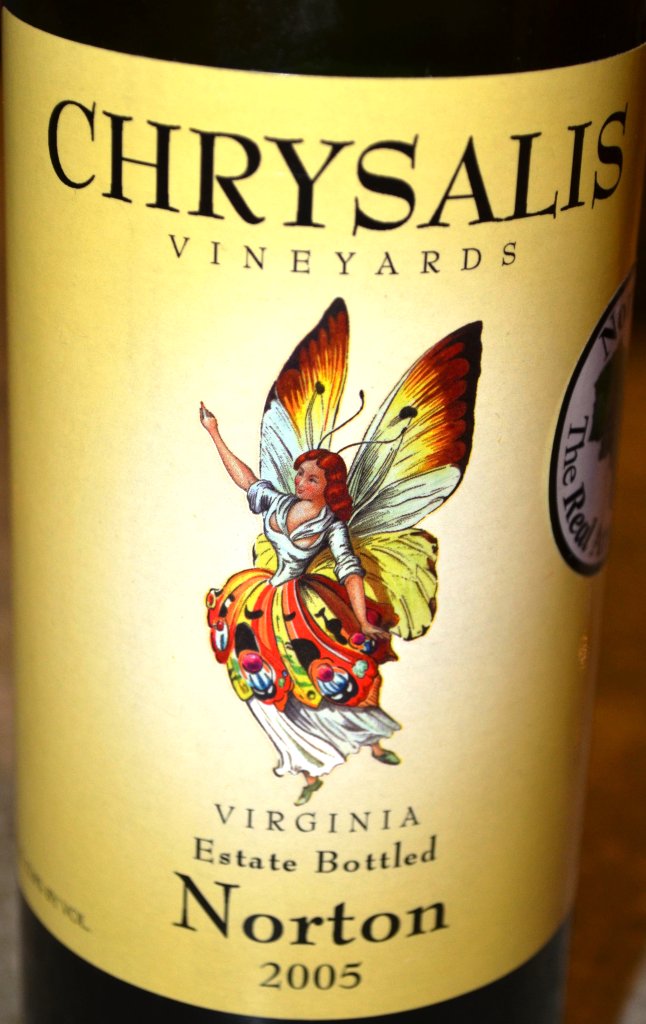
Q2: The winery in which state holds the trademark The Real American Grape®:
a. Arkansas, b. Missouri, c. Pennsylvania, d. Virginia
A2: This phrase was trademarked by Chrysalis winery in Virginia
Q3: Norton is an official State Grape of:
a. Arkansas, b. Mississippi, c. Missouri, d. Virginia
A3: Norton is a staple of wine production in Missouri, so yes, the correct answer is c, Missouri.
Q4: Norton grape generally classified as:
a. Vitis Aestivalis, b. Vitis Cinerea, c. Vitis Labrusca, d. Vitis Vinifera
A4: While there are some competing opinions, it seems the Norton is generally classified as Vitis Aestivalis (Summer Grape), which according to definition in Wikipedia is a “species of grape native to eastern North America from southern Ontario east to Vermont, west to Oklahoma, and south to Florida and Texas”.
Q5: As you know, Riedel is the best known wine glass maker, which creates wine glasses designated for different varietals. True or False: Riedel makes a special varietal glass designated to Norton
A5: Riedel created a Norton-specific glass (a stemware, to be called properly) in 2009
I’m glad to report that we had good participation in this quiz. Nobody was able to provide a full answer to the first question – but then again, it was somewhat of a tricky question so I’m accepting the partial answers here as well. Thus we have three winners – Suzanne from apuginthekitchen, Kirsten The Armchair Sommelier and Julian from Vino in Love – they all get the prize of unlimited bragging rights. Well done!
Now, to the interesting stuff around the vine and the web!
First of all, the Monthly Wine Writing Challenge, now in its 8th reincarnation, has a new theme. As announced by Kara The Sweet Sommelier, winner of the round #7, the new theme is Luck. You might need some luck to connect it to the wine, unless you have a lucky bottle, lucky cork or may be a lucky corkscrew – but in any case, put your lucky hat on and start writing. For all the details, including submission and voting timeline, here is the link to Kara’s post.
Remember Jesus? Yep, The One. Supposedly, he was able to make wine out of water, and this was definitely the miracle. So the new startup, called The Miracle Machine (hint, hint), intends to do exactly that – bring that miracle to all of us, mere mortals. A special device, a little bit of magic and, of course, an iPhone to control the magic, and the founders promise the wine which will rival Screaming Eagle, all done on your kitchen countertop, at a fraction of a fraction of a price. You can read more about the miracle device and watch the video here – as for me, I will take my chances with the local liquor store.
Number junkies, rejoice – I have a new set of numbers for you. As many times in the past, they come from Mike Veseth, who writes the blog The Wine Economist. The point of the numbers is really to illustrate the economic concept called disintermediation, which here has to do with a simple question – how many people does it take to produce a bottle of wine? Some wine businesses prefer to own vineyards, and the whole process of winemaking, and some are “outsourcing” as much of the process as possible to the other specialized businesses (like mobile bottling line, for instance), and this is what disintermediation is all about. The numbers are very interesting, if you think that it takes 4,000 people at E&J Gallo Winery to produce about 85M cases of wine worldwide, and then it takes only 95 people to produce 1.7M cases at Bogle Vineyards. But – take a look for yourself here, I think this is a very interesting read.
Next up – a very interesting article by Jancis Robinson, talking about what the wine drinkers are asking to have more and more in Champagne – in a few words, the demand is to have Champagne more complex (longer aging time on the lees), and more dry (like no added sugar at all). Of course you are better off reading it for yourself here.
Last, but not least at all, I want to bring to your attention an article about wine serial entrepreneur, Charles Banks. I’m always fascinated by the stories of the people who are told that they better give up, and they achieve their best results despite all odds ( Charles Banks was told that asparagus is all he can hope for to grow on the patch of land he acquired – and he managed to produce a great wine on that patch of land). I suggest you will find 5 minutes in your busy day and read this article – definitely worth your time.
And we are done here. The glass is empty – but the refill is on its way! Cheers!
Last Bottle Sign Up ($10 credit)





