Archive
Wine = Art
 The title of this post is not misleading. I plan to talk about wine as an art form, which is the way I look at it. Why all of a sudden? Couple of articles, both great in its own right (I mentioned both in the Meritage post a week ago), prompted this blog post, despite my claim that I’m not going to enter this debate. I don’t know why is that, but I have a habit of saying “No” where deep inside, as soon as I finish my full and long “no” sentence I already know that, “oh it will be a yes”. Anyway, this blog post is not about me, it is about wine, so let’s get closer to the subject.
In case you didn’t have a chance to read those two articles, they were both on the beaten up (badly beaten up, I have to say) subject of cheap wines versus expensive wines. The first article, published in the Forbes magazine, provided a number of illustrations to the fact that…there are many factors affecting perceived taste of wine – temperature, label, feel of the moment, critics’ opinion, rating and many more (I’m not going to cite a full article here – it is well worth reading if you are into the wine world). I believe that one of the points of the article was to suggest that for the most of us, we can’t distinguish between cheap and expensive wines anyway, so why bother – drink any wine, be happy (I’m oversimplifying, I know).
Then Steve Heimoff took the subject close to his heart and went on to explain that there is a very big difference in taste between $15 and $150 bottles of Napa Valley Cabernet Sauvignon, that more expensive wine is always better than the cheap wine and that the the whole premise of Forbes article in Steve’s words is “man bites dog” attempt at a cheap publicity.
Let me take step aside and explain the meaning of the concept “wine = art”. When you are at home, take a look around you. I would make a safe assumption that for absolute majority of people, your home is decorated in one way or the other. You might have pictures and photos on the walls, statues big and small, flowers live and not, little (or big) mementos and many other things which surround our lives with only one purpose – to give us pleasure, set the mood or may be create lasting connections between time and memories. Taking pictures as the simplest example, they can be your kids’ pictures, copies of the works of the famous artists, works of the completely unknown artists or may be they are actual original paintings. Those pictures can be mass produced and acquired at the neighborhood convenience store for $4.99. But they also can be acquired after a long battle at the auction, where you had to put down $4.9 million to beat another guy and get that painting you always dreamed of.
Now, when was the last time you read an article telling you that you are not supposed to buy any works of art more expensive than $19.99, because you are not capable of understanding the difference between $19.99 and $199 pictures? Or when was the last time you read an article telling you that expensive painting is always better than cheap print? I can bet I’m giving you a very taxiing memory-combing exercise which will yield no results.
 So my question is – why wine is treated in any different way than any other works of art? Read (or talk) about the wines, read about vineyards and places, read about wine makers, grape growers, oenophiles, wine collectors – what do you get out of that reading or talking? Passion, obsession, emotions, feelings. We eat because we have to, but we drink wine because we want to, because of its ability to resonate with our beings, to create emotional response. This is my premise of “wine = art” statement. I believe that wine is a form of the renewable art, which also has a pretty unique advantage compare to a simple painting, for instance. Whatever you see on the painting will be exactly the same in 10 years or in 50 years. It will create different emotions on a different day, of course – but it will not change in principal. At the same time, even the simplest wine will change in the bottle. For better or worse, but it will change. Last weekend we shared a bottle of 1997 Toasted Head Cabernet Sauvignon/Syrah blend (probably $9.99 or less) – believe it or not, but this wine was outstanding – it evolved, it had beautiful fruit, great balance and nice finish. It was memorable, it solicited emotions, it created mental staples for that particular moment. If this is not art, I don’t know what is.
Where am I going with this? I don’t believe cheap versus expensive is a meaningful or useful argument for the wine world. Yes, there are many reasons for the wine to be expensive – best quality grapes with very low yield, state of the art facilities, manual processes, need for aging before release, market demand, reputation and many many other factors define the price and can drive it very high up. But if you will exclude snobbery, arrogance and blissful ignorance, price is simply one of many factors which affect your buying decision – nothing more and nothing less. Yes, $150 bottle will taste different than $15 – but can we say “better”? If someone is a Pinot Grigio drinker (and enjoys it very much), will you be able to prove to him or her that $150 Cabernet Sauvignon is really better that $15? I want to see that happening. When it comes to wine, “better” is a difficult category, as the definition of the best wine is 100% personal – the best wine is the one which tastes best to you. Yes, critics matter, ratings matter – but only as a reference, as food for thought.
Wow, did I bore you to death? I truly hope I didn’t – I think this post was brewing for a very long time, slowly ripening to the point of wanting to get out. These are my true feelings, this is how I see the wine world, and “wine = art” makes it so fascinating for me.
Is this arguable? Of course (comments section is down below and only a click away). I don’t pretend to possess the absolute truth – but “wine = art” makes me open a bottle of wine with hope and excitement. No matter what anyone said about that bottle, how much it costs or what the rating is – I hope you will enjoy it and I hope it will create a special memory, a special moment – just for you. Cheers!
Crus of Beaujolais, Year 2011 – Part 2
I like sequels, Well, in the movies – sometimes, not so much. But when it comes to the writing, whatever you forgot to say in the first part, you can say in the second, and feel good about it, claiming that this was the intent from the get go.
What I didn’t mention in the first post about great tasting of Georges Duboeuf 2011 Beaujolais portfolio is that red Beaujolais make one of the best red wines for summer – they are typically light in alcohol (if you noticed, 13% ABV was the most for all wines mentioned in the first post), and they also taste the best when they are slightly chilled. Considering how hot this summer is across pretty much the whole US territory, I hope this will help you to find a good red wine for the hot day, because sometimes it just have to be red.
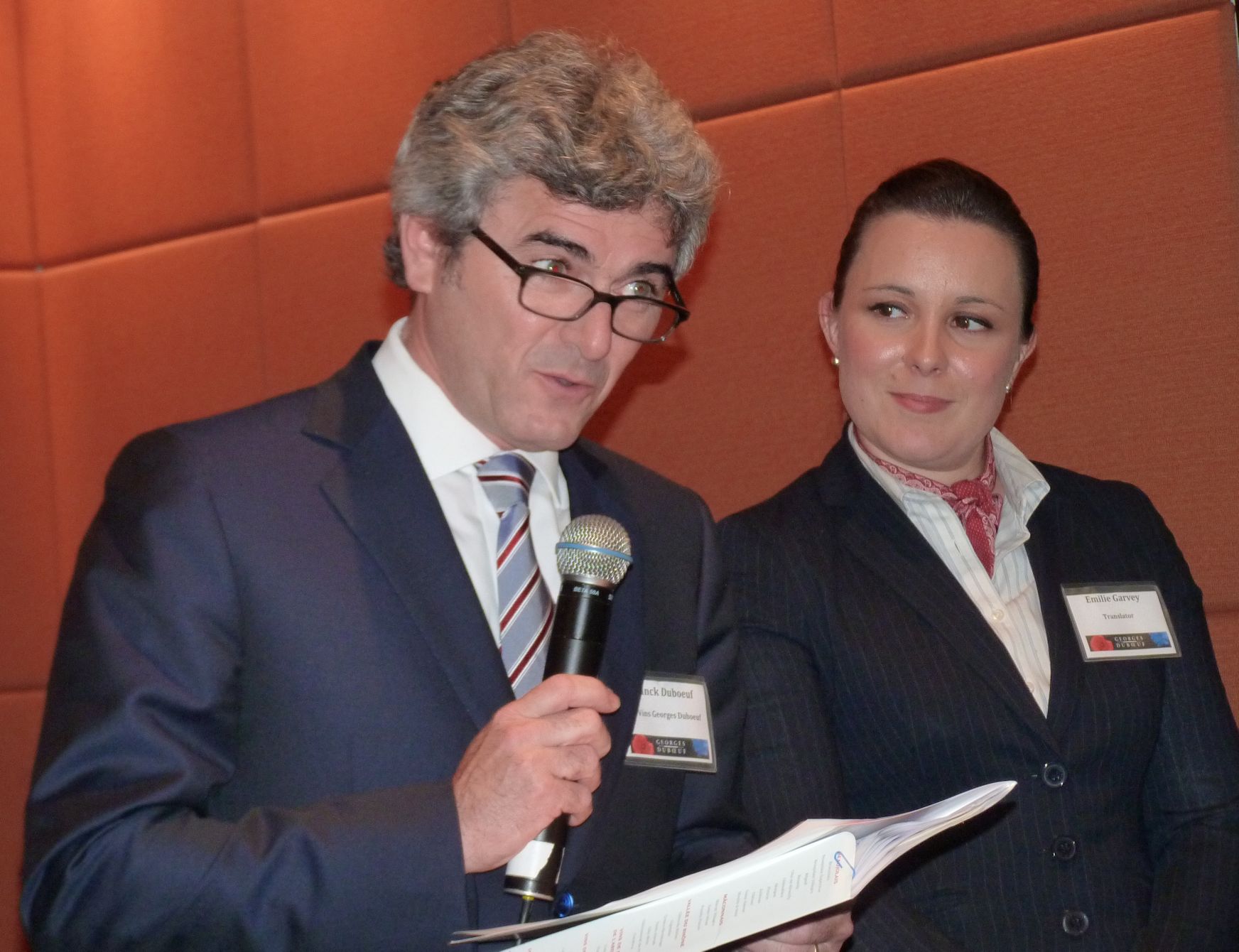
In the first post, I described a self-guided part of tasting. That tasting was followed by the lunch, both of which (tasting and the lunch) taking place at db Bistro Modern, one of the restaurants of the famous chef Daniel Boulud.
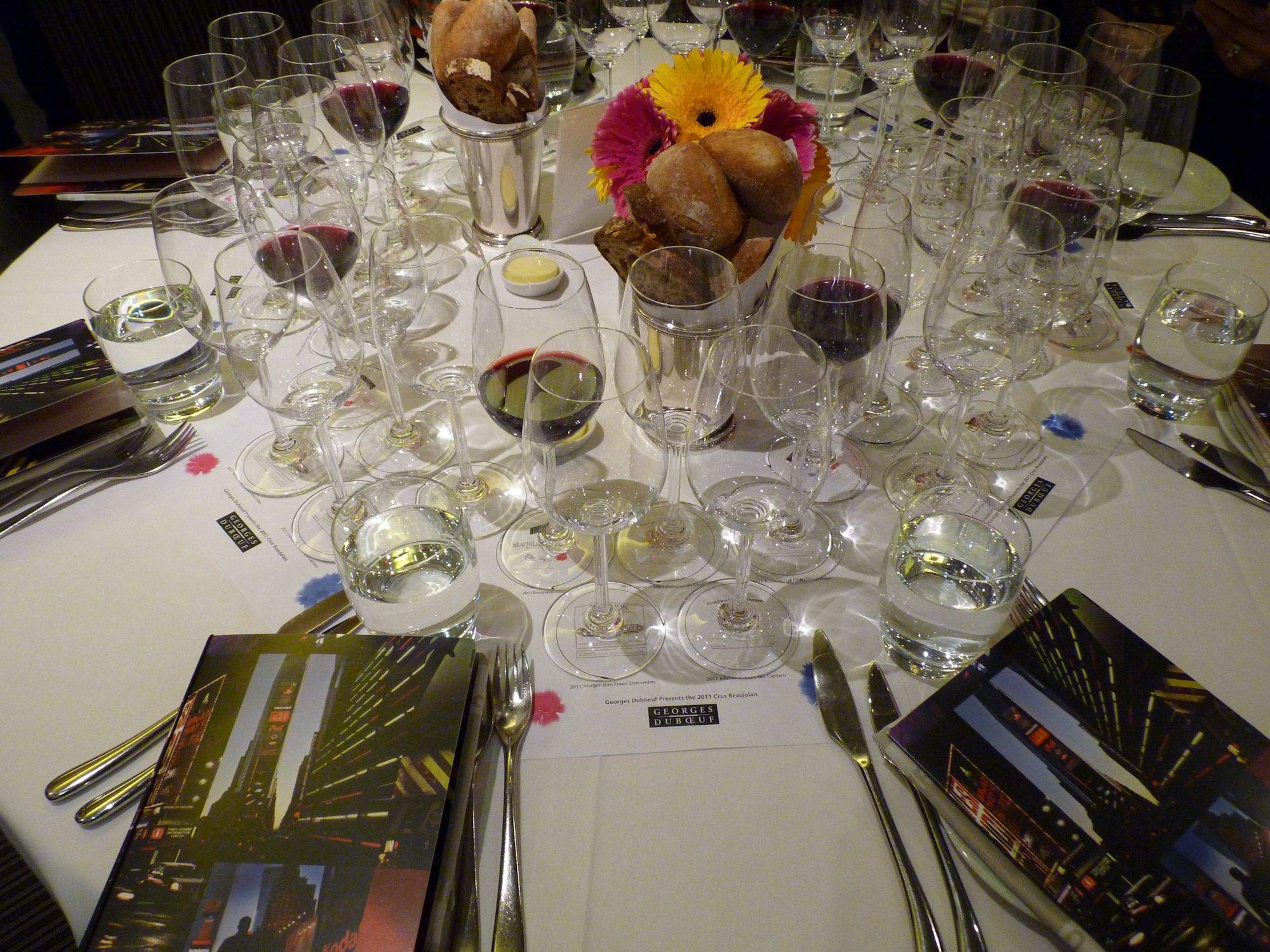
Georges Duboeuf opened the event with presentation of 2011 vintage. Here is my best effort transcript of what he said (remember, I’m not a professional journalist, I’m only pretending): “2011 was a great year. Budding started in April, then flowering started in June, and then harvest started August 22nd and lasted for two weeks. Some areas experienced periods of drought. Overall, grapes reached very good level of ripeness. 2005 and 2009 (considered best in a very long time) were good, but 2011 might be even a little bit better than 2009. Throughout the vintage, there are lots of black cherry and earthy notes.”

After Georges Duboeuf’s presentation, the first dish was served – “Legumes du Marche” – Young Garden Vegetables, Fromage Blanc Dressing, Lavender Honey Vinaigarette.
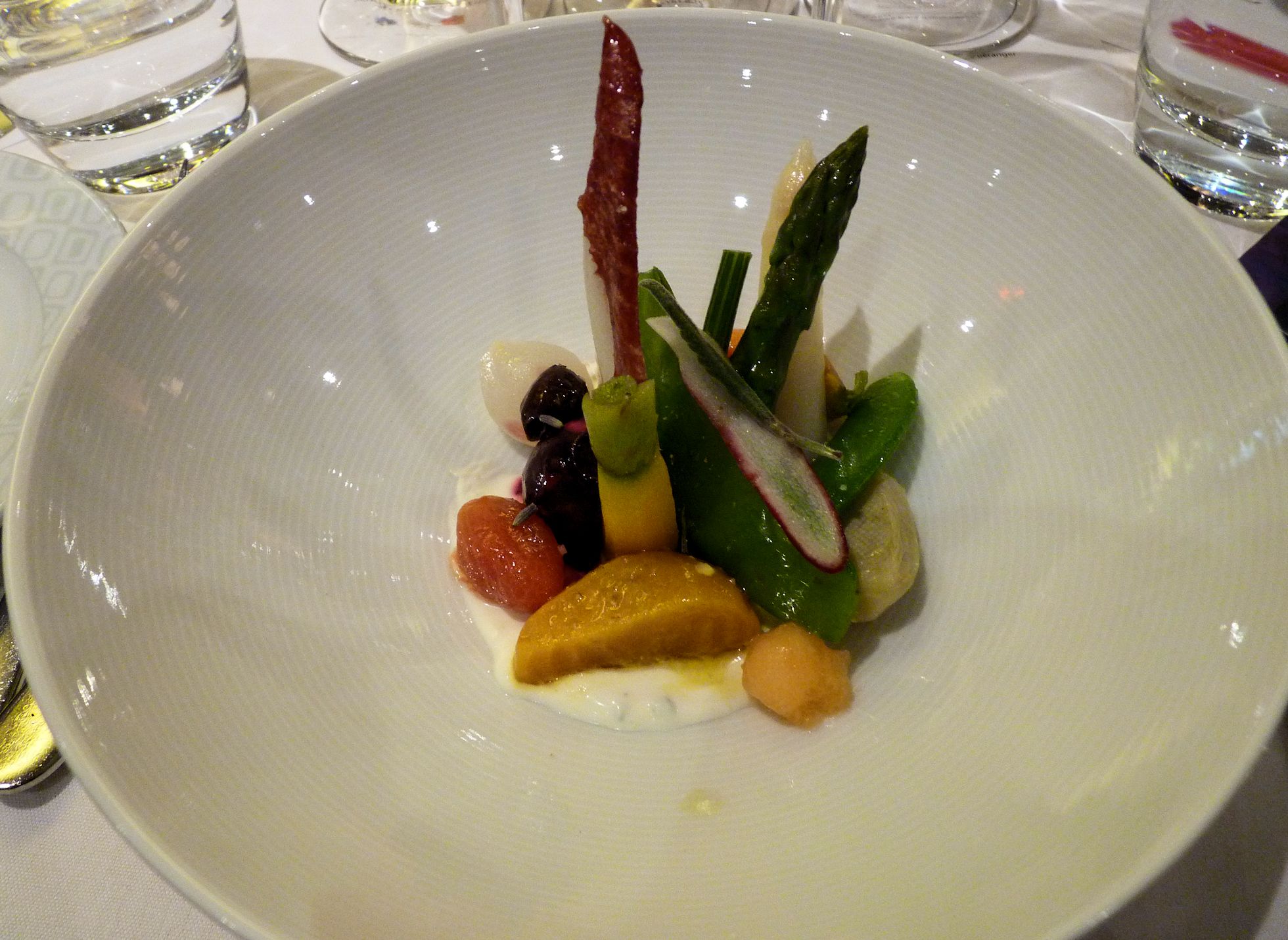
This dish was paired with 2011 Georges Duboeuf Beaujolais-Villages, and it worked together very well by wine complementing soft and earthy flavors of the vegetables.
Next, Frank Duboeuf presented two white wines, Macon-Villages and Pouilly-Fuisse (please see detailed note below). He said that 2011 was equally good year for both whites and the reds, which is a very rare situation. I didn’t take the detailed notes though, as I was preoccupied with parallel discussion at the table and delicious pairing of wine and food ( bad journalism : ( )
White wines were served with the next course, Seafood Risotto – Black Sea Bass, Scallops, Squids, Cockles, Fennel, Tomato Confit “Fumet” Emulsion.

Pouilly-Fuisse worked perfectly well with risotto, which was a unique experience for me. Creaminess of risotto cancelled out some sharpness of the chardonnay, creating next level of experience.
For the next course, Georges Duboeuf presented two red wines, Morgon and Julienas. He described Morgon as having “violet, cassis, kirsch on the nose, same flavors on the palate. A lot of structure. This wine will age very well”. Regarding Julienas, he said that “it is a very special wine, it has great personality. 2011 was a lot like 2009. This particular wine had the biggest success over the last 5-6 years. It was very critical to expand the vineyard (by 4 acres) for the success of this wine. This is a very noble wine with great aging potential. The wine was bottled a week before, right before the event”.
These two reds accompanied the last course of the meal – Duo of Beef – Braised Short Ribs, Beef Tenderloin, Spring Vegetables, Sauce Bordelaise.
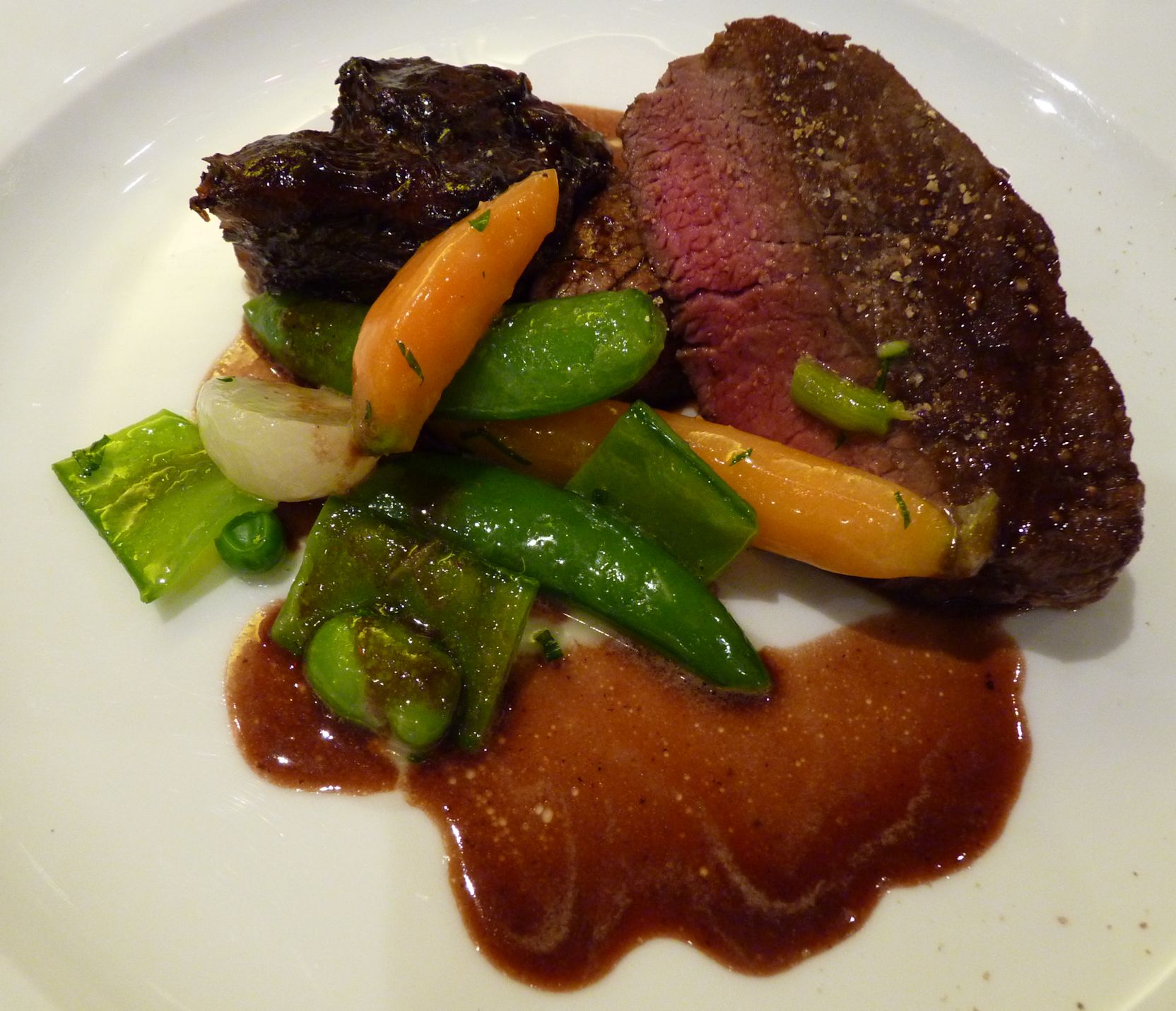
I have to tell that while both food and wine were delicious in its own right, they didn’t work together, so the pairing was not successful by not elevating the whole meal to the next level. But I also have to admit that both food and wine really didn’t bother each other too much – they were really two absolutely parallel experiences without a merge or a collision (which is often the case when wine and food don’t work together).
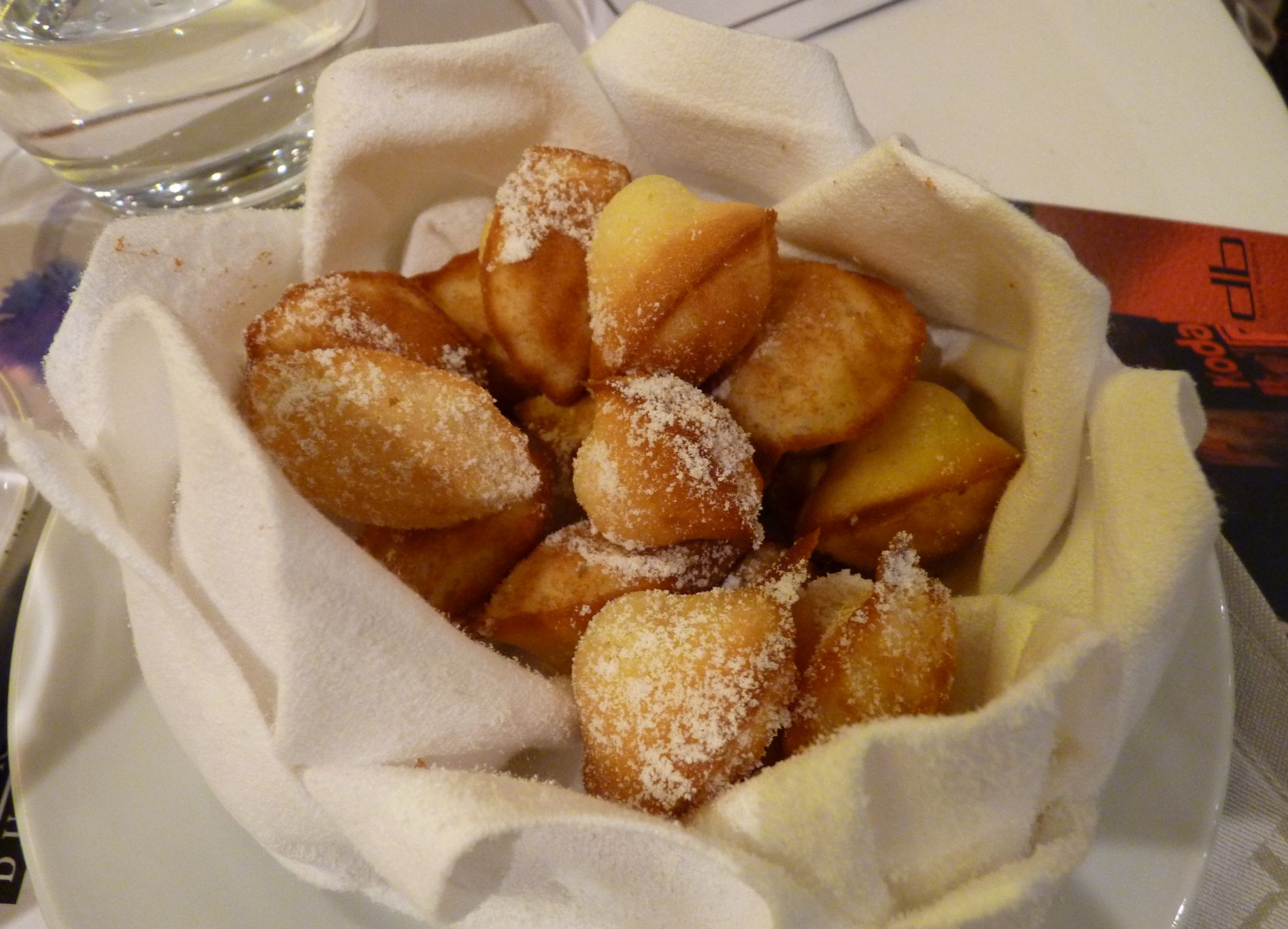
And then…there was a dessert, which was delicious and not paired with any wines (I also have no idea how this little cookies should be called, but it was very hard to stop eating them).
Here are the detailed notes for the wines:
2011 Georges Duboeuf Macon-Villages Domaine Les Chenevieres, Maconnaise, France (100% Chardonnay, SRP: $13.99, 12.5% ABV, 5000 cases produced) – Very nice, hint of hazelnut and citrus on the nose, good fruit, good balance, good acidity, hint of white apples, touch of vanilla and touch of oak on the palate. (Drinkability: 7+)
2011 Georges Duboeuf Pouilly-Fuisse Domaine Beranger, Maconnaise, France (100% Chardonnay, SRP: $17.99, 13% ABV, 3500 cases produced, 1200 imported) – this wine comes from the best area, the actual town of Pouilly-Fuisse. This wine had more pronounced chardonnay qualities than the previous wine – vanilla, touch of citrus and oak notes, excellent balance. (Drinkability: 8- )
2011 Georges Duboeuf Beaujolais-Villages, Beaujolais, France (100% Gamay, SRP: $9.99, 12.5% ABV) – very nice, good balance, a little tartness on the palate, but good overall. (Drinkability: 7)
2011 Georges Duboeuf Morgon, Domaine Jean Descombes, Beaujolais, France (100% Gamay, SRP: $15.99, 13% ABV) – good acidity, fresh fruit, light, soft, a bit too grapey to be great – but should improve with time. (Drinkability: 7)
2011 Georges Duboeuf Julienas Chateau des Capitans, Beaujolais, France (100% Gamay, SRP: $18.99, 14% ABV) – excellent depth, good power, good body, excellent balance. (Drinkability: 8)
All in all, it was one great event, both in the information and experience. Summer is still on, my friends – go find a bottle of Beaujolais to kick it off after a long day. And make an extra effort to find one of Georges Duboeuf wines – it will well worth it. Cheers!
Father’s Day Escapades
 This Father’s Day was one of the best ever, so I decided to share with you some of the experiences – as you can imagine, mostly in the form of the pictures.
The day started with the cards from the kids – this is always a great beginning. Then the weather gradually changed from overcast to a beautiful clear sunny day with just the right temperature (don’t know what is your idea of a great summer temperature, but for me 75F and a light breeze is almost ideal). From there on, there was great food, great wine and … some interesting new experiences.
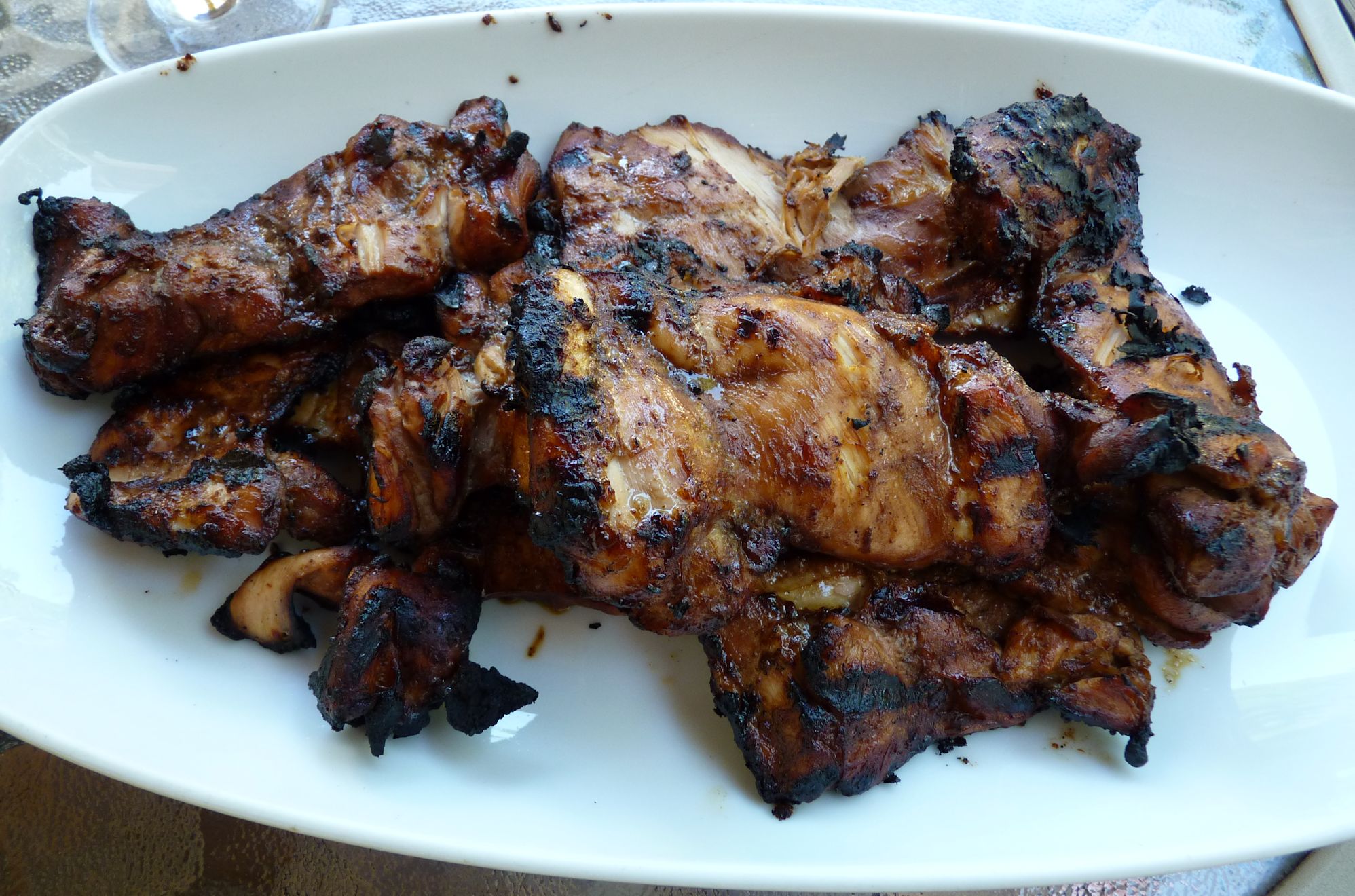
Here are few pictures to give you an idea about cooking (well, yes, not so much cooking, mostly grilling).
Grilled chicken tights:
Kebab, on the grill:
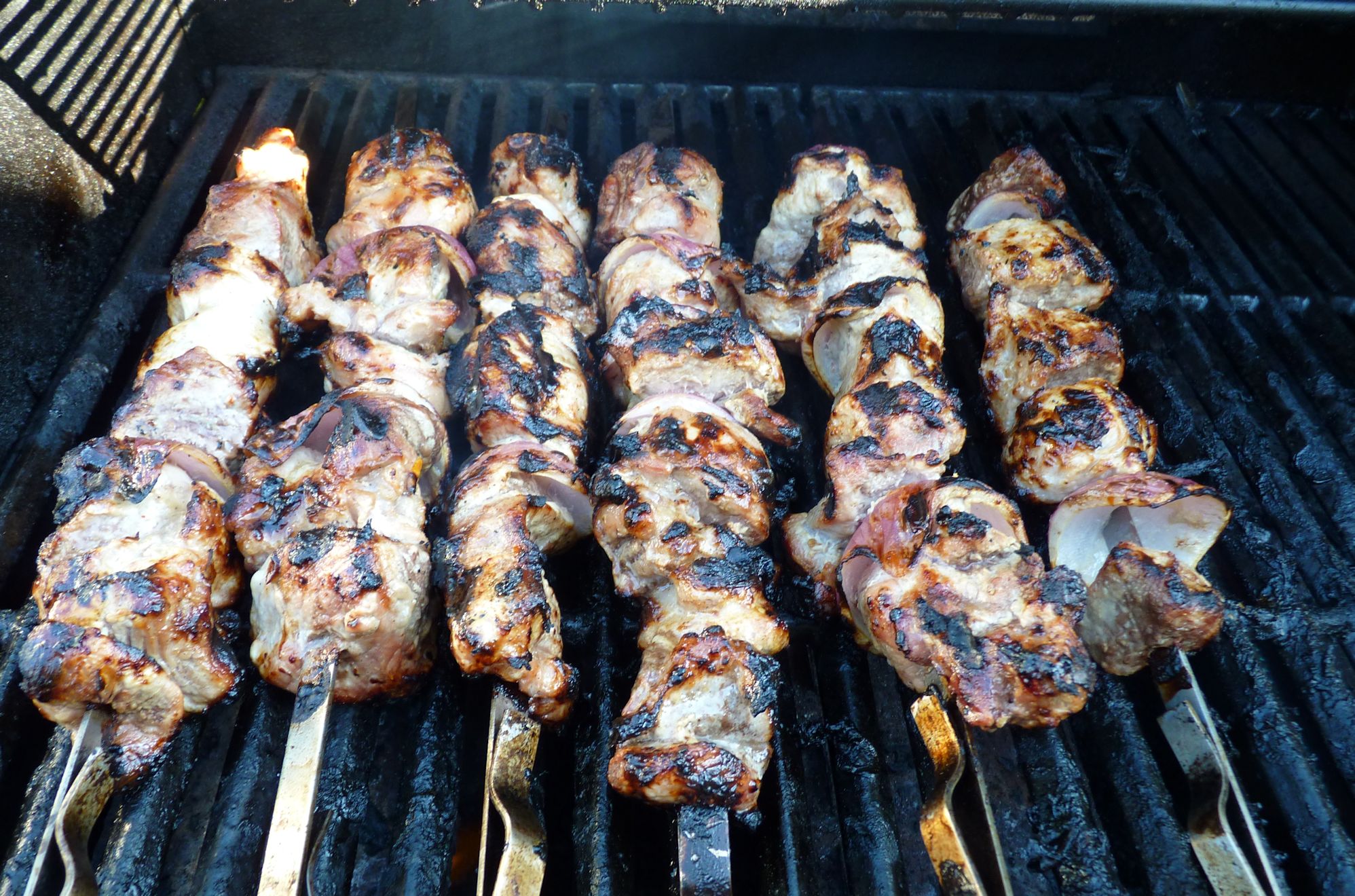
And the same kebab, off the grill:

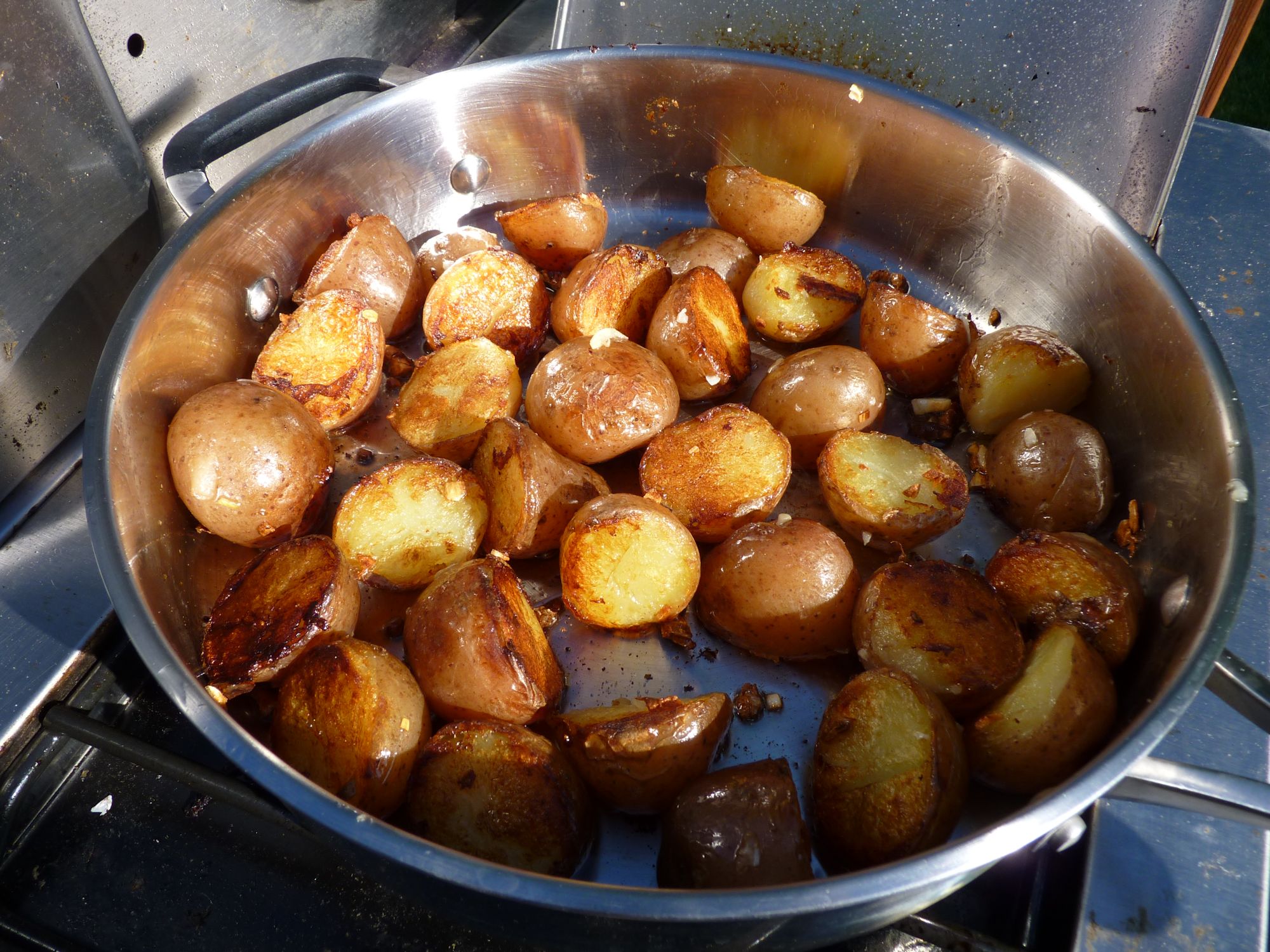
I don’t know why, but potatoes fry the best on the side burner of the grill (we have electric stove in the kitchen):
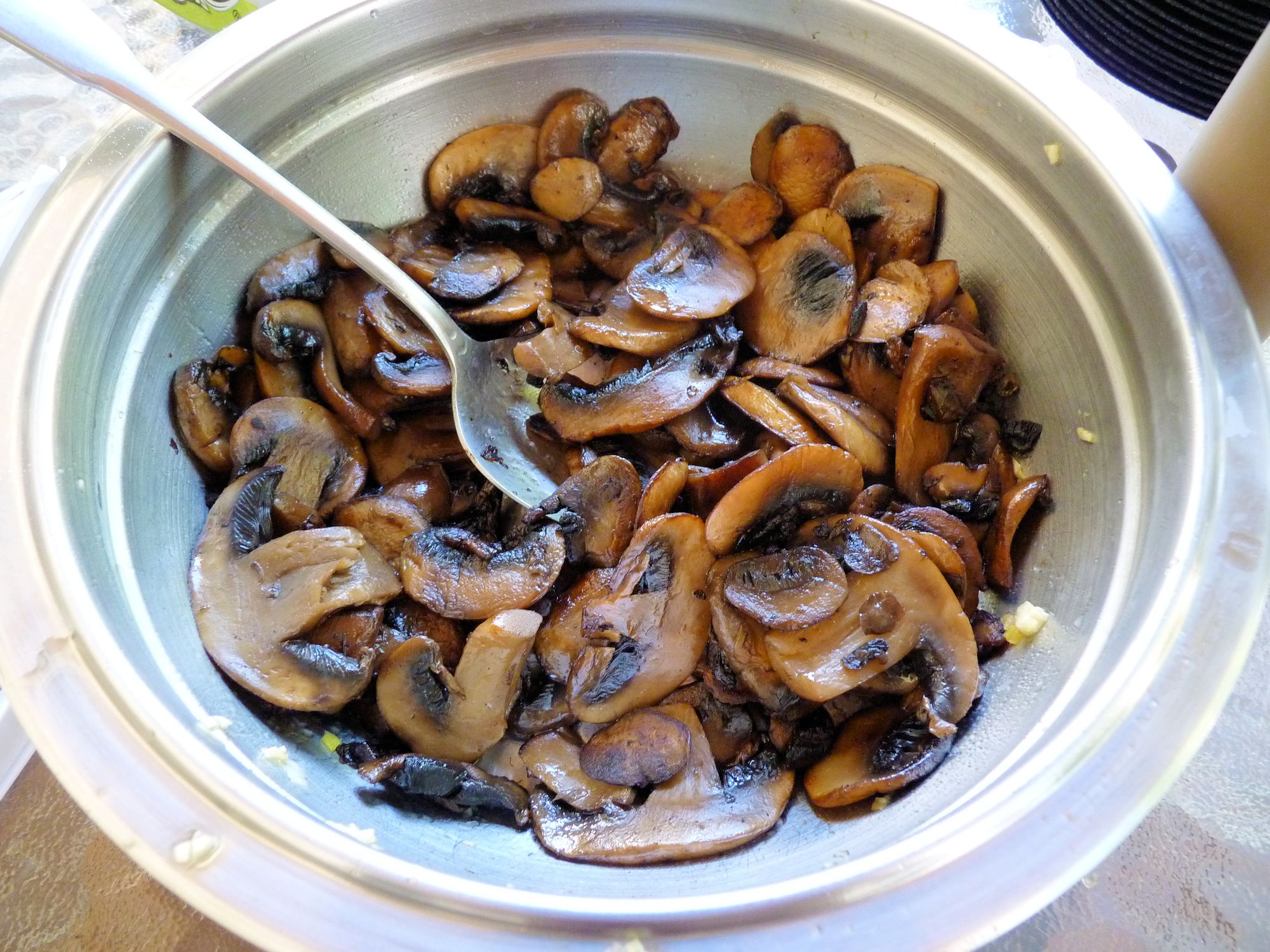
And then mushrooms… I don’t know about you, but I’m ready to eat mushrooms any time and any day:
Enough about the food. Let’s talk about the drinks now.
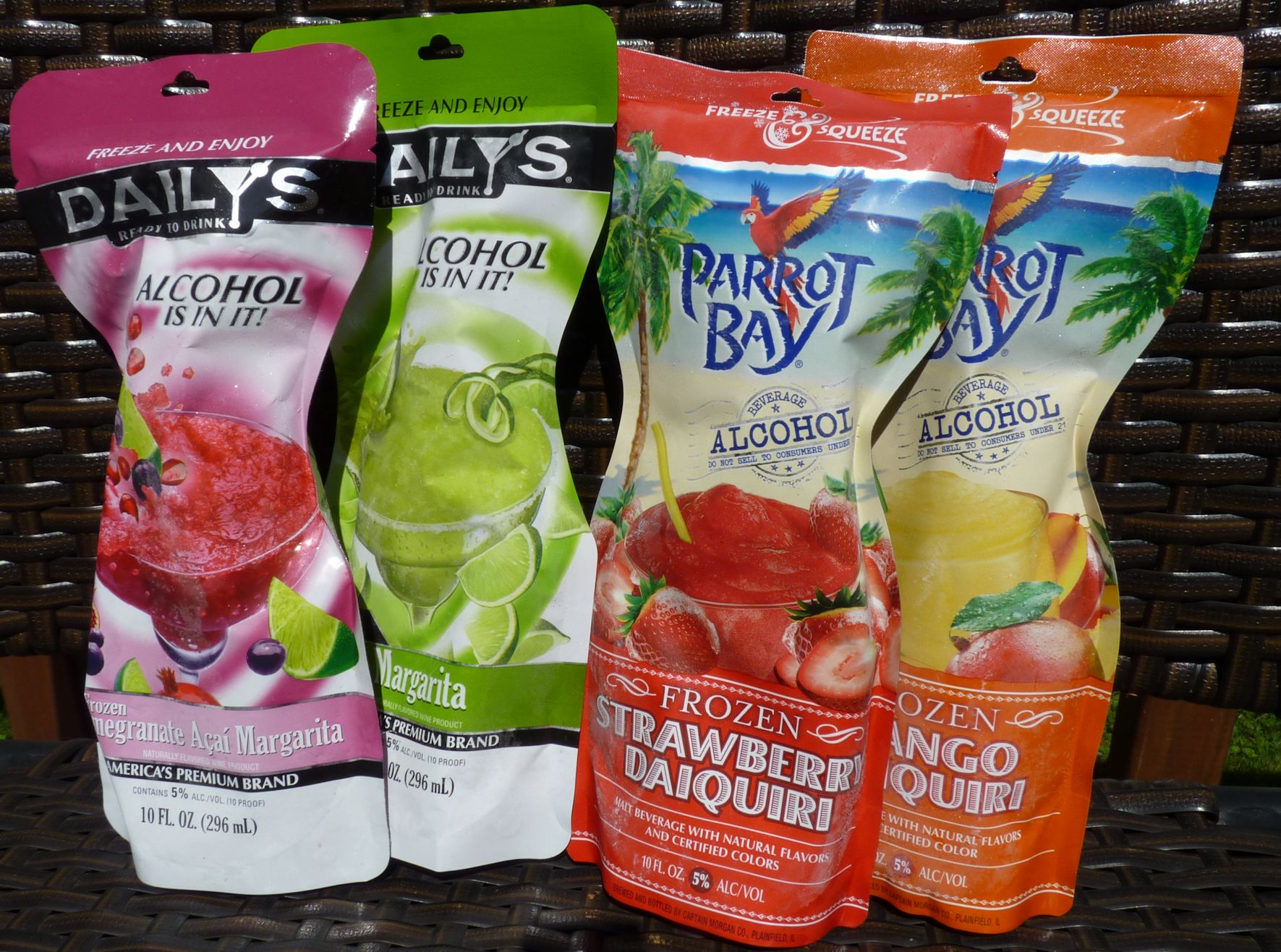
First, we had some [very lazy] cocktails. Just take it out from the freezer, squish in the glass and voila! 8 different flavors are available in the store – and Mango Daiquiri was the best out of the four we tried:
Then we switched to Champagne – errr, Sparkling wine. We had Marques de Gelida Cava Brut Reserva, which is Rose (Pinot Noir based) – very nice, round, medium bodied and refreshing (Drinkability: 7+) :
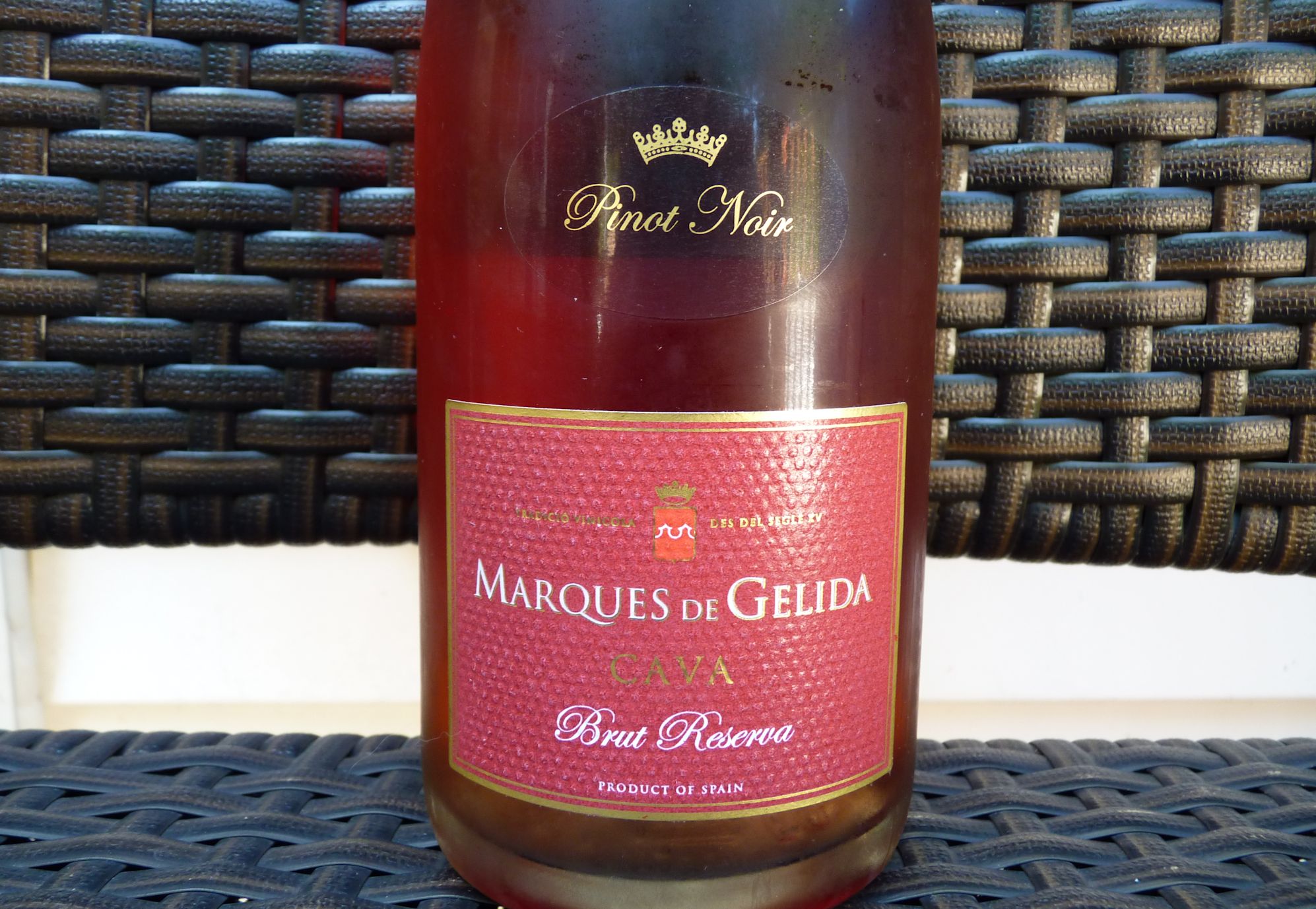
The best part about this sparkling wine was… opening of the bottle. Despite the fact that I told you not to saber a bottle of Champagne at home, I decided to ignore my own recommendation and try to saber the bottle (you should know that deep inside I’m a 10-years old, masquerading as an adult). Sabering was an absolute success, as I managed to do it from the first attempt. I have even a short video of that process, but it will require time to process, so for now, I can only show you some pictures which will illustrate what happened. Here is the top of the bottle:
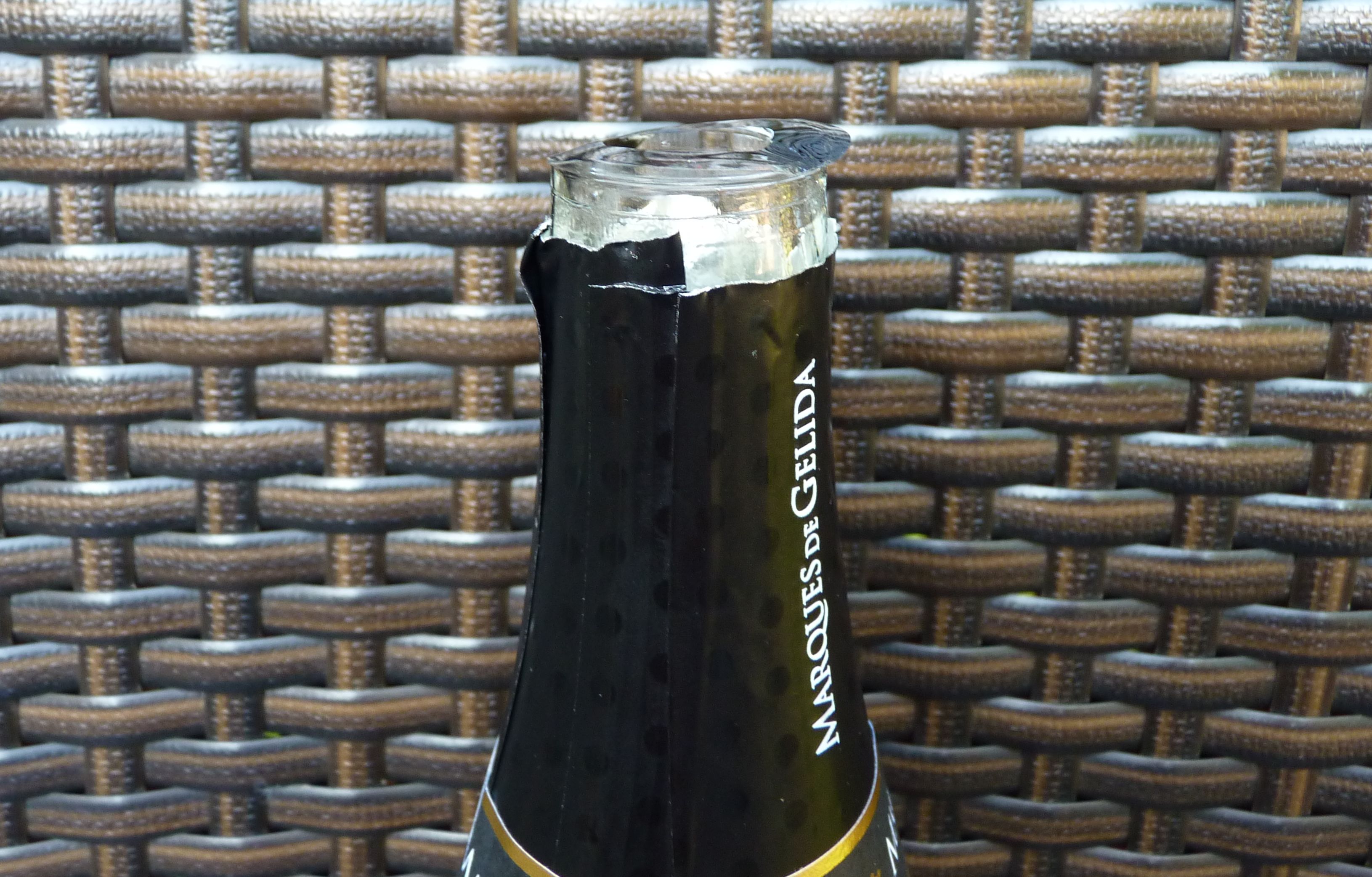
And here is the very top of the neck – the glass top was completely separated during the opening, cork and glass together:

The only problem is – Sabering was so much fun, now I want to do it again!
Then we had a very nice red – 2009 Cave de Tain l’Hermitage Crozes-Hermitage Les Hauts de Fief (13% ABV, $17.99)- earthy nose with some roasted notes, same on the palate – deep concentrated ( but not jammy) fruit, great acidity, touch of spices, round tannins, very balanced (Drinkability: 8).
Then we had scotch – 41 years old Lonach Glendarroch (from Highlands, distilled in 1967) – absolutely amazing. I can’t even try to describe complexity of that scotch here – it will take a few tasting sessions to figure that out (my wife said that it was by far her favorite scotch ever):

Now last, but not least – my Father’s day present – 2005 Giribaldi Cento Uve, Langhe, Italy:
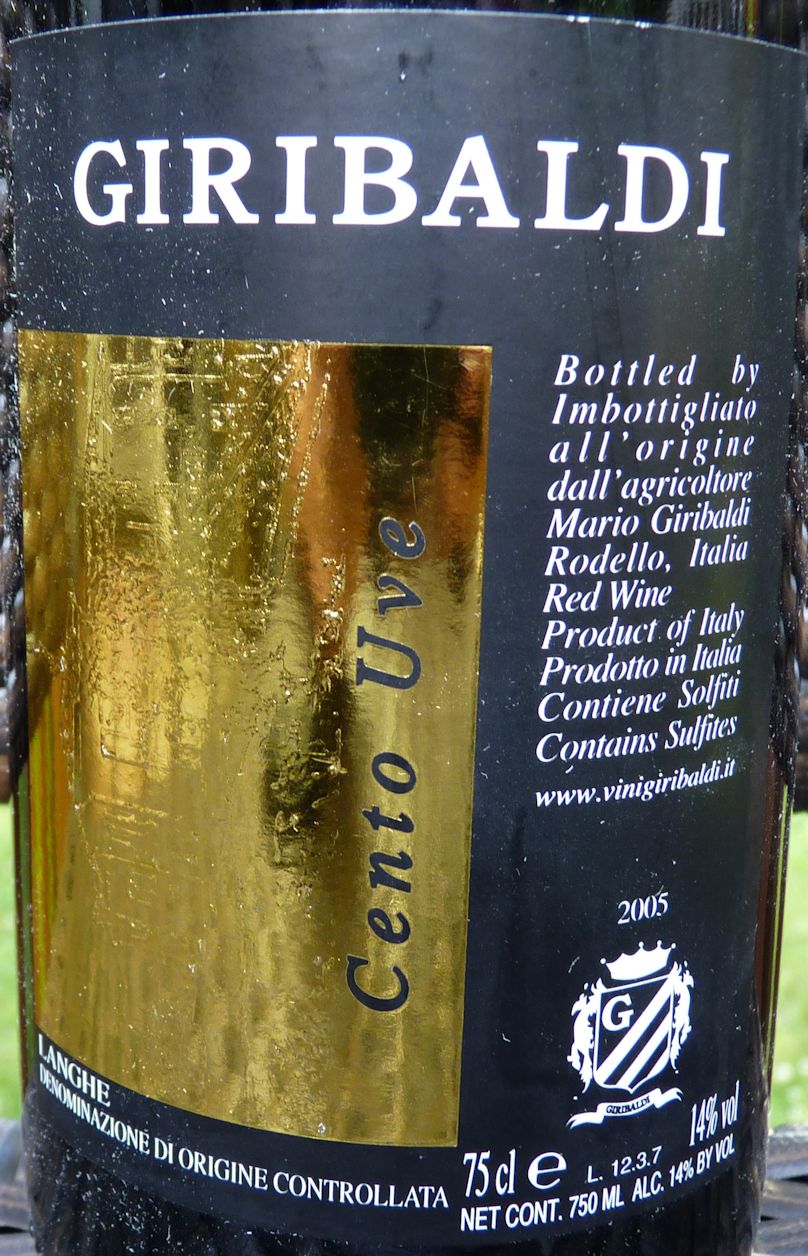
In case you are wondering what’s so special about this wine: it is made out of 152 grape varieties (you can read more here), so it will mean a serious progress of my grape count.
That’s all folks. I’m very happy with my Father’s day. How was yours? Cheers!
Magnificent Rioja
 The title for this post didn’t come up easily. I was back and forth with myself many times. The reason? Tasting these Rioja wines was a phenomenal experience, something which doesn’t happen often during one’s lifetime. The brightness and openness of the 65-years old Rioja was nothing but stunning – but I think I’m getting ahead of myself, let’s go back to the beginning.
I happened to fall in love with Rioja wines about 4 years ago, after attending a Rioja seminar at PJ Wine store (the owner, Peter, is anything but fanatical about Spanish wines – of which PJ Wines houses an amazing selection all the time). At that seminar I was lucky enough to try 1964 Monte Real Gran Reserva Rioja and that was a revelation – the wine was fresh and bright, as it would’ve been maybe 5 years old, not 40+. After that tasting I became a Rioja fan for life. I have to also mention that even today, you can buy 1964 Rioja starting from less than $300 – for comparison, a bottle of 1966 DRC will set you back about $10,000. I rest my case.
When my friend Zak told me that we can get a bottle of 1947 Rioja directly from the winery for less than $400, the decision was instantaneous – this is a once in a lifetime opportunity and it is worth it (don’t remember how many bottles were still available, but surely there were not that many). So we got that 1947 bottle and after a little while, were able to set the date for the tasting.
To make sure our 1947 Rioja will not feel lonely, we got a few more bottles to keep it company. You can see the full line up on the picture above, and here is an exact list:
2008 Raventos & Blanc Reserva Brut Cava
1993 Lopez de Heredia Vina Tondonia Reserva Blanco
1947 Imperial Gran Reserva Rioja
1976 Imperial Gran Reserva Rioja
1995 Imperial Gran Reserva Rioja
Pinord Moscatel NV
There is one more bottle in the picture – Jorge Ordonez Malaga – but, guess what – we never opened that, being quite overwhelmed by the desert time (it is a great bottle of desert wine, but – oh well, there is always a next time).
We started with Cava, of course. It was fresh, round and pleasant – not necessarily hugely distinguishable, but definitely a nice bottle of wine to have before dinner starts.
The first foray into the magnificent world of Rioja was with the 1993 Lopez de Heredia Vina Tondonia Rioja Blanco. I will gladly challenge you to find a bottle of 19 years old white wine that will taste as fresh as this 1993 Rioja. Maybe you will have some luck with white Hermitage, Chablis or some of the white Burgundies, or may be some of the really obscure grapes like Romorantin – but in any case I’m sure it will not be easy. This wine was fresh and complex, with mineral notes, a hint of white apple, perfect mid-palate weight and still bright acidity. Definitely a ”wow” introduction to the ”wow” lineup of reds.

Needless to say we started with 1947 Rioja. Considering the tender age of 65 years, the first challenge of course was to get the cork out. I wish we had one of those glass-cutting devices described in the PJ Wine blog post, which simply allows you to cut the whole neck of the bottle with the cork in it, and not worry about the cork crumbling into your wine – well, we don’t drink wines of that age often enough, so we had to stick with more conventional tools, like the two-prong cork puller.
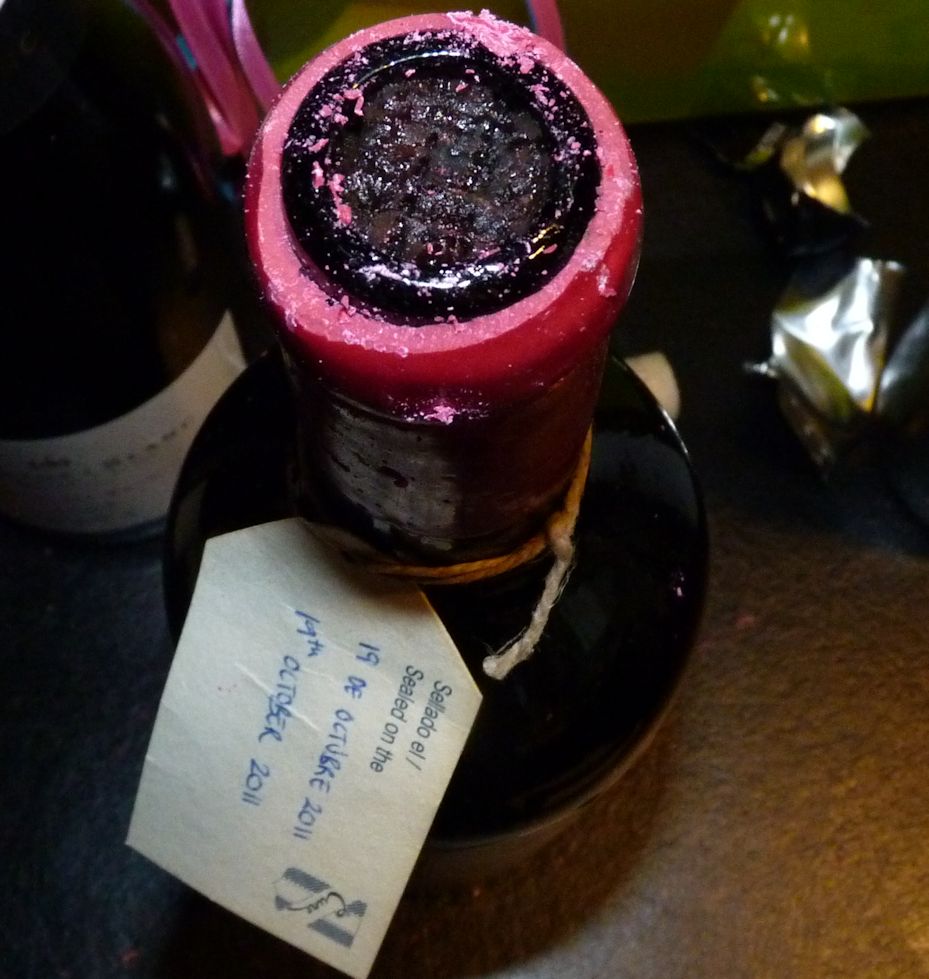 It almost worked.. and then not. It took two people and a good 5 minutes of time to get the cork out, little by little, piece by piece – but we managed to do it almost clean, with maybe one or two tiny pieces falling back into the bottle.
Cork is out, and wine goes into the glasses. The first thing to note is the color, which is still red and not brown – of course, it is not purple, but it is dark garnet red. And for the taste… Should I simply tell you that wine was magnificent and leave it at that? Well, okay, it wouldn’t be fair. Let’s continue. On the nose – cocoa powder, cedar dust, a hint of cinnamon, smoked paprika. On the palate – a good amount of red fruit, wine comes in bright and youthful, with good acidity. Then the second wave came in as wine opened up a bit, with more sweet fruit and then tannins kicking in. I don’t want to bring in exotic animals to describe this wine, as Joe Roberts did with a black panther, so my description will be simple – grace and elegance. I can only wish to have the same grace and elegance myself when I reach that age.
Moving along, it is now time for the 1976 Rioja. 29 years younger than the previous wine and… ahh, so different! Barnyard on the nose, very pungent, savory, with a hint of the same barnyard on the palate, dried cherries, earthiness. If umami is a part of the wine tasting profile, this wine definitely had it.
And for the 1995, we decided to give it a little breathing time – it spent 2 hours in the decanter. The wine was fresh, with beautiful garnet color, bright fruit, very good acidity and soft tannins, a touch of eucalyptus and cedar box. Very youthful and upbeat, if you will.
After tasting this lineup of magnificent Rioja wines from the same producer, the most interesting question in my mind is ”how will these wines evolve?”. Even 1947 didn’t reach the end of life considering the way it was showing, never mind 1976 and 1995. Will the pungency of 1976 stay, or will it evolve to something akin to 1947 in 29 years? How will 1995 taste in 48 years, and will it even last that long? These are all great questions I will not get an answer to – but this is part of the wine connoisseurship game – think about the future but definitely appreciate and enjoy what you have right now (huh – feel free to beat me up in the comments for banalities).
So far I didn’t tell you about the food – there was a lot of great food. While you can’t taste it anyway, here is at least a picture of one of the dishes – roasted potato-encrusted Striped Bass:

We also had “death by chocolate” dessert which perfectly paired with Pinord Moscatel, which happened to be well-aged (the bottle simply got lost under the shelf and was “discovered” many years later).
Overall, this was a great experience, which will stay in my memory for a very long time. To tell you honestly, I think it will not be easy to top off this experience, but as the very least I can promise to share all that with you. Wish you all great fun with wines – cheers!
Rediscovering Ridge
 About five years ago, during one of my numerous trips to California, I had a little bit of free time. What do you do when you are in California, have a little bit of free time and love of wine? Of course, you go visit the winery!
A that time I decided to go visit Ridge Vineyards, located in Santa Cruz Mountains region, not far from San Jose. All I knew is that the winery is making wine called Monte Bello, which became famous after beating classic French Bordeaux during 1976 Judgement of Paris event. So I managed a steep 4 miles ride up the Monte Bello road, reached the winery, tasted 5 or 6 different wines and … didn’t like a single one of them. No, I don’t remember what exact wines and what exact vintages I tried, I just remember that none of the wines created any ”oompf”. I was disappointed and squarely put all the Ridge wines into ”I [really] don’t like it” category.
Holding that unhappy memory through the years, last year I even expressed my opinion in the comment to the twitter post by Jancis Robinson (she selected Ridge for a special wine tasting in Hong Kong), which caused some very unhappy reaction among her followers (to say “very unhappy” is a very mild understatement).
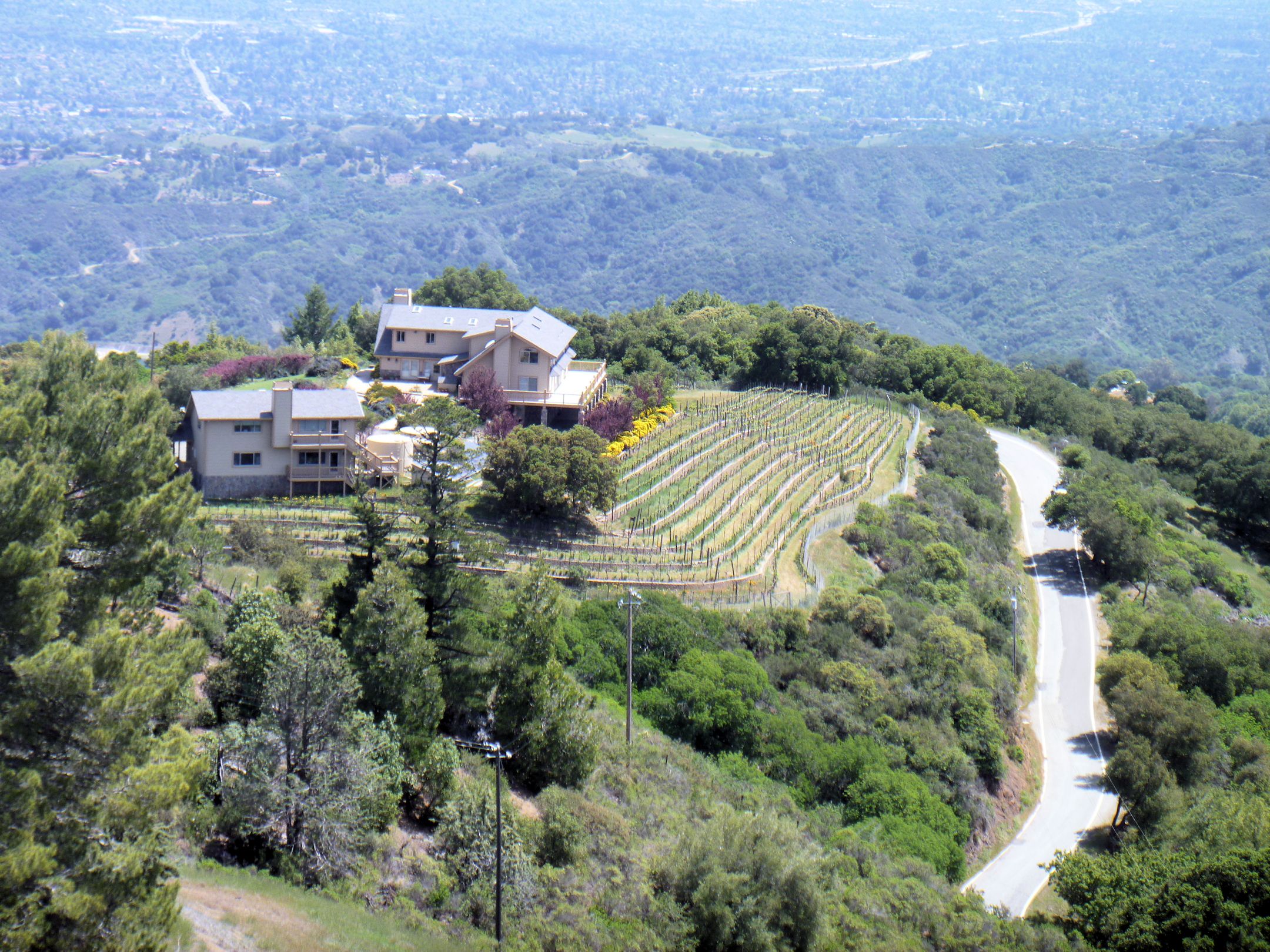
I can’t tell you why, but when this year I found out that I will be in San Jose area and I will have a bit of the free time, very first thought was ”I have to try Ridge wines again”. Four steep miles up the Monte Bello road and here I’m again. The air was beautiful, and so was the scenery – let me share a few pictures with you.
Ridge Vineyards is located near the top of Monte Bello Ridge. This is the “view from the top”:
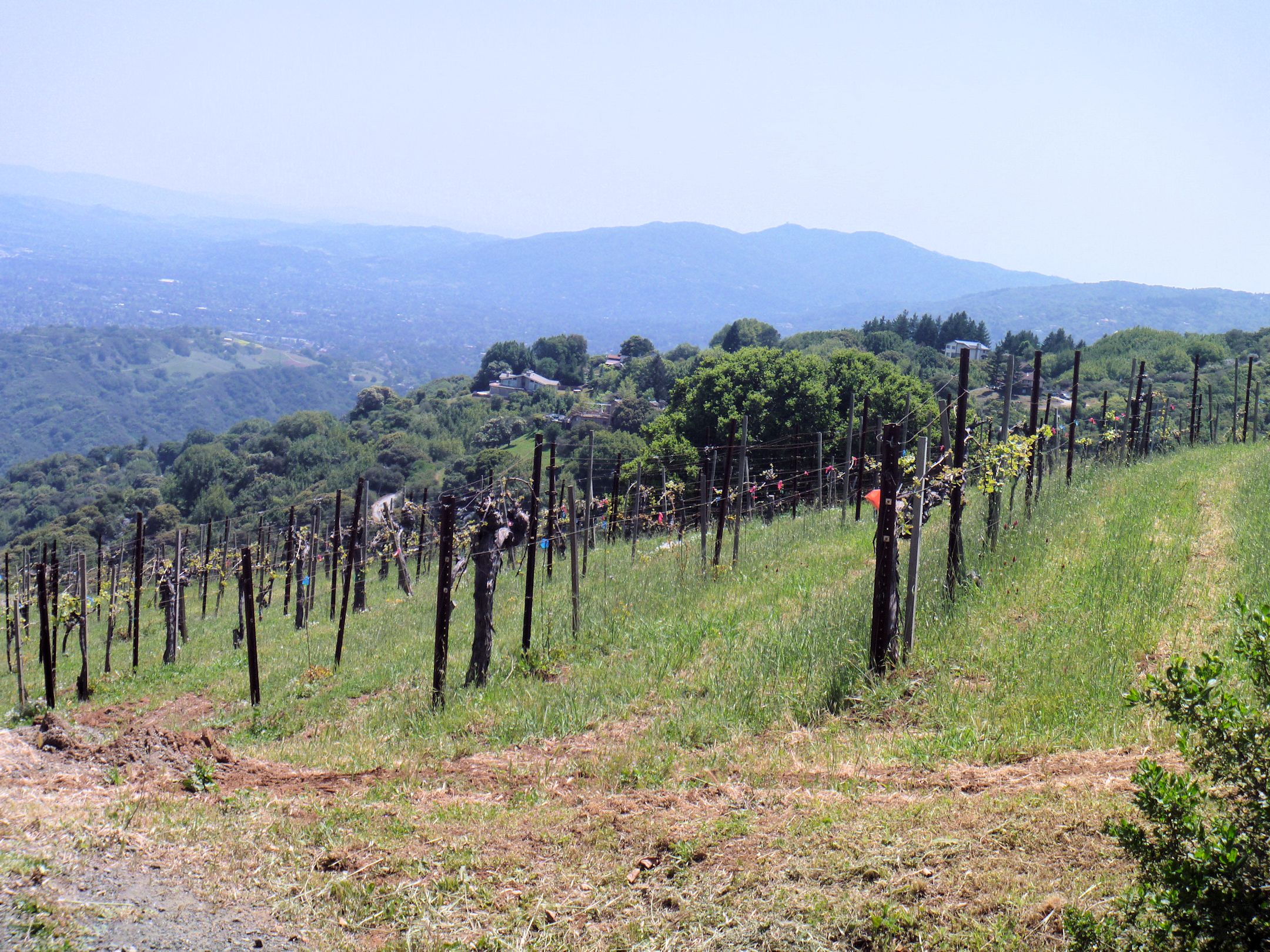
These are the vineyards at Ridge (by the way, in case you recognize the picture, it gives you an answer to the wine quiz #10, Where in California – correct answer is Santa Cruz Mountains region):
Here are some beautiful flowers for you:

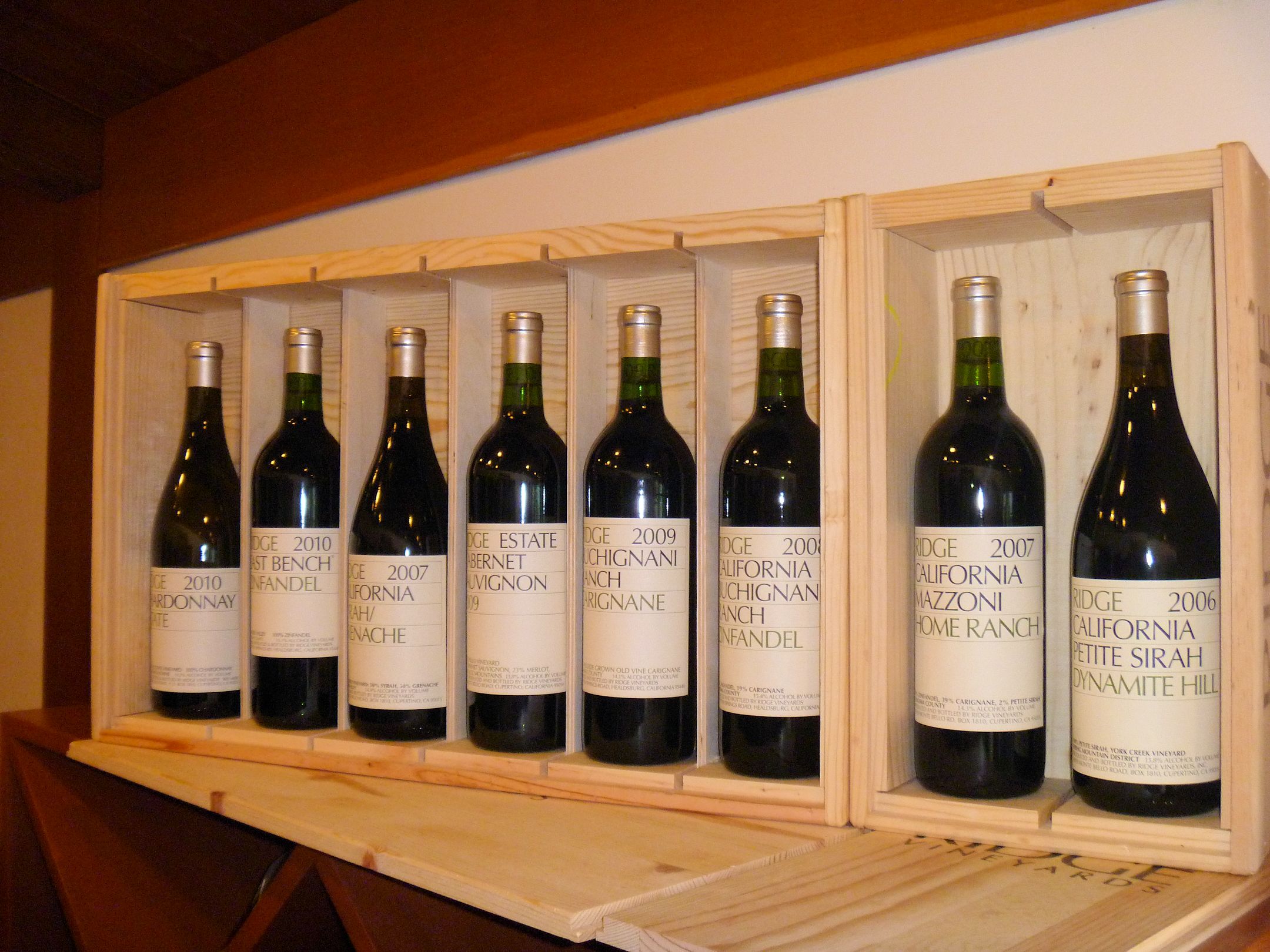
Can you guess what happened now? I tried 7 different wines and … I liked loved every one of them. They all had common trait – balance and elegance, a quiet beauty, and may be most importantly, a sense of place – terroir, as French would put it. None of the wines were in-your-face, see-how-much-muscled-fruit-i-have – all of them were rather subtle, thought provoking and requiring time to reflect upon the content of your glass.
I don’t have an explanation. How come I didn’t like any wines the first time? Was that a ”leaf day”, a ”root day” or ”generally unfavorable” day? Did my palate evolved (that one I’m quite sure is true)? As you can’t enter the same river twice, I will not be able to relive that day 5 years ago and understand my reaction at that time. But I’m glad someone somehow somewhere decided that I have to go and try Ridge wines again – and discover something really beautiful.
 Here are the tasting notes for the wines I tried:
2010 Estate Chardonnay – A little edgy in unusual way, some herbal undertones, oak is unnoticeable, except back palate burn. Opens a bit cleaner later on, long finish with hint of lemon.
2009 East Bench Zinfandel (15.1% ABV) – dry, with some dry rub spices, nice nose of blackberries, unnoticeable alcohol level, very balanced, perfect fruit and acidity on the palate.
2007 Lytton Estate Syrah/Grenache (14.49% ABV) – nice fruit, touch of spice, hint of dry cherries, gentle tannins, good acidity. Perception of tannins increases going forwward.
2009 Estate Cabernet – Tremendous minerality on the nose, you can literally smell the earth. Very nice – hint of green, very Bordeaux-ish in style, restrained and balanced
2009 Buchignani Ranch Carignane – Tobacco and tar, nice bite of spice, nice simplicity. good tannins on the finish.
2006 Dynamite Hill Petite Sirah – Beautiful fruit right on top, dark fruit undertones, some cherries.
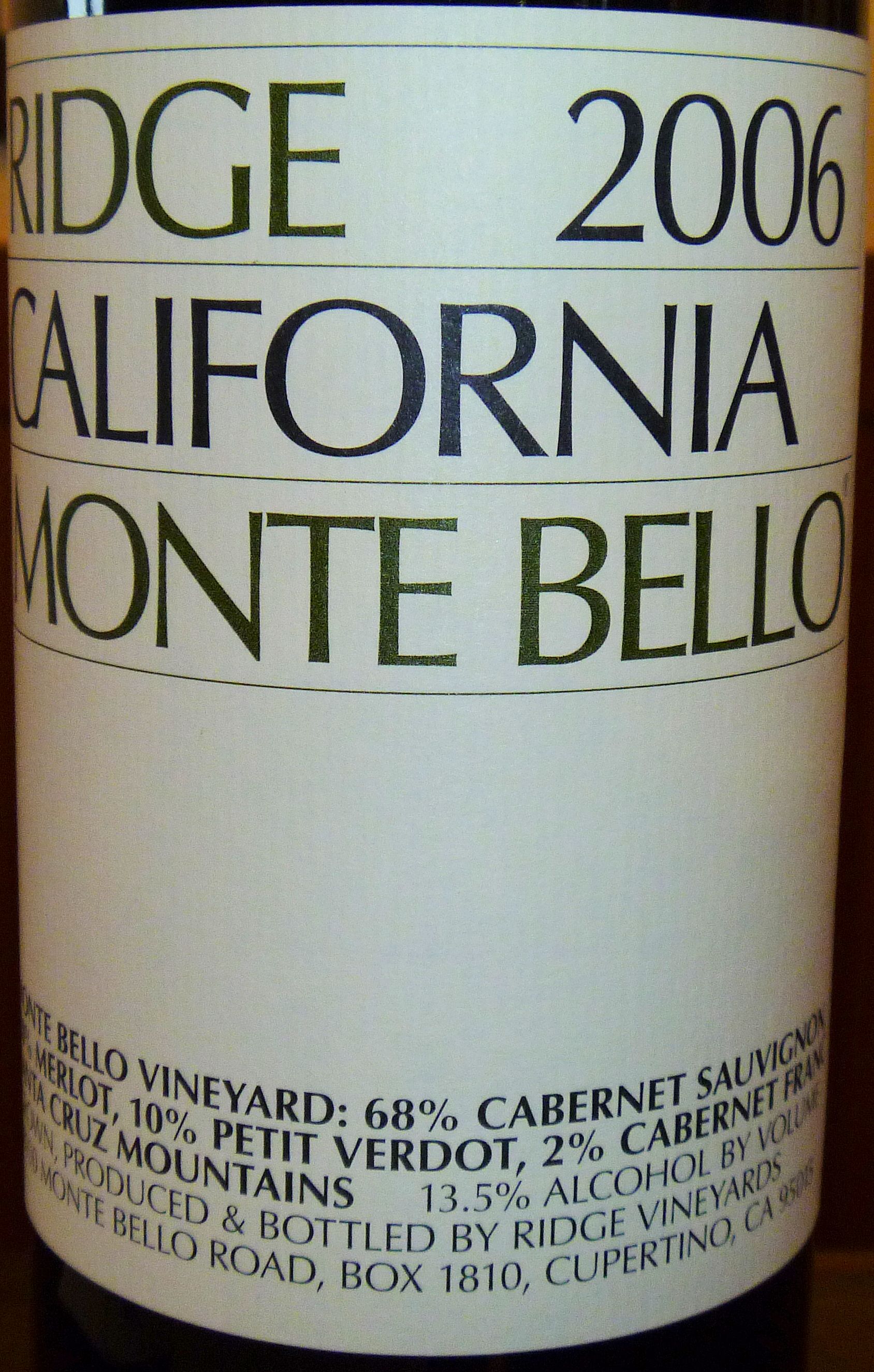
2006 Monte Bello – Beautiful fruit, perfect balance, very classic Cabernet Sauvignon blend, very long finish with tannins which are growing on you, hint of tobacco and earthiness on the palate. I’m glad this was the last wine I tasted, as the finish actually lasted at least for the next 20 minutes.
Yes, I was wrong before, and I don’t have any problems admitting it and getting over it – Ridge Vineyards makes great wines with the sense of place, and – better late than never – I’m very happy I made this discovery. Let’s raise the glass to the great discoveries of our lives! Cheers!
Dozen of Personal Favorites From Michael Skurnik Portfolio Wine Tasting
 Thousand bottles of wine (this is not a mere matter of speech, but- more or less an exact count, give or take a hundred bottles). 4 hours. Come up with the list of 12 most favorite wines. What do you think about a task like that?
Whether you think it is easy or hard, this was my experience at the Michael Skurnik 25th Anniversary wine portfolio tasting few weeks ago in New York (selecting 10 wines was not the goal, of course, but tasting many great wines was).
”Overwhelming” would be an under-representation of the experience. Sip, swish for a second, think for a second, spit. Take a mental note, or may be a quick mark in the book. Move on to the next wine, then to the next table. Get through the crowd with your glass. Repeat until your palate is completely locked down by the amount of fresh tannins. Have a sip of fruity white to unlock and refresh. Continue and repeat until fully exhausted. Leave happy.
Above is a quintessence of the experience. Below, I would like to give you mostly a photo report with some comments on the most memorable wines. The list is not prioritized at all – if anything, it may be coming out in the order we tasted the wines. Here we go.
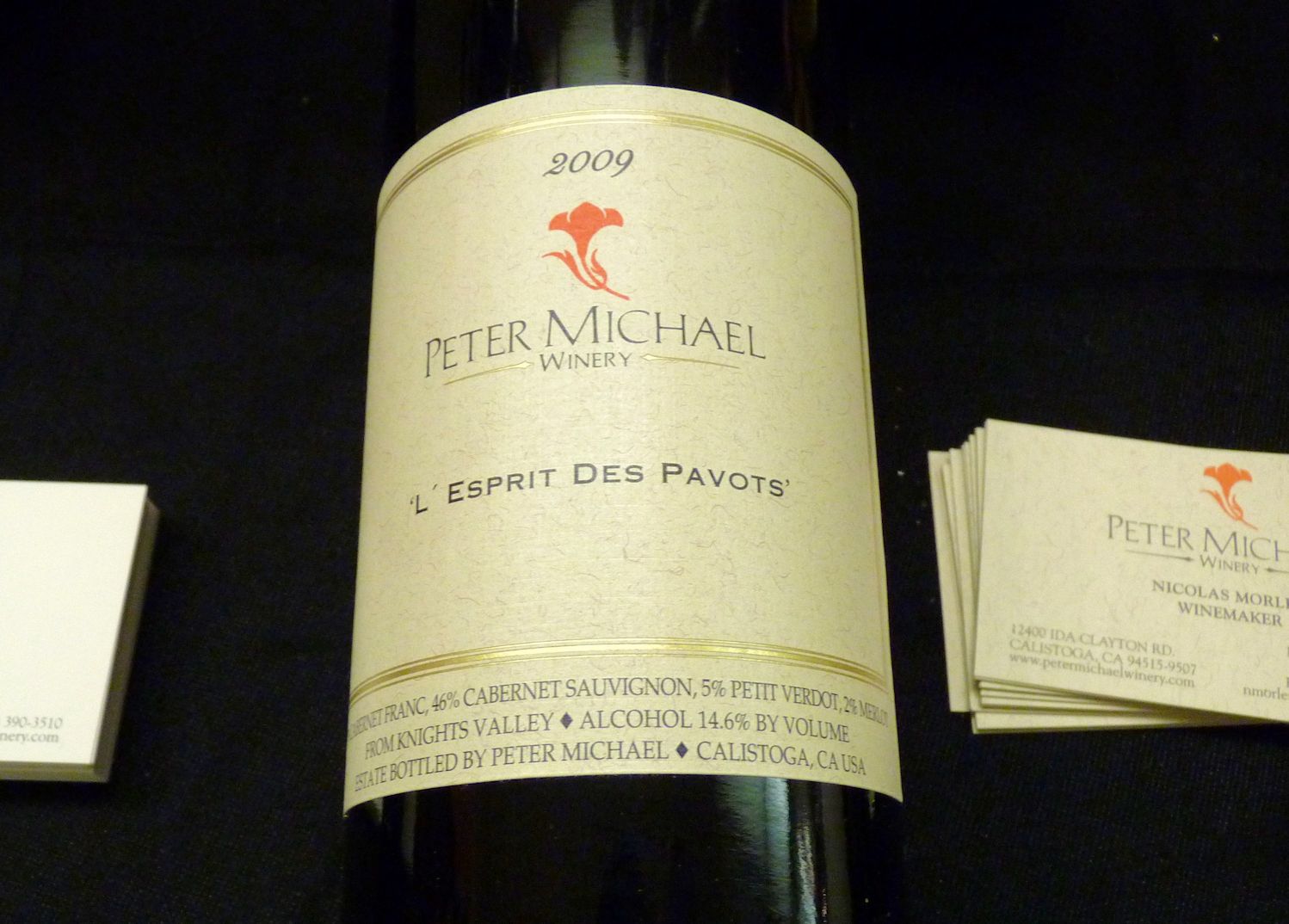
2009 Peter Michael ‘L’Esprit des Pavots’ – clean, gorgeous, elegant, balanced, approachable – this is Bordeaux-style red which you can drink now or cellar for next 20-30 years:
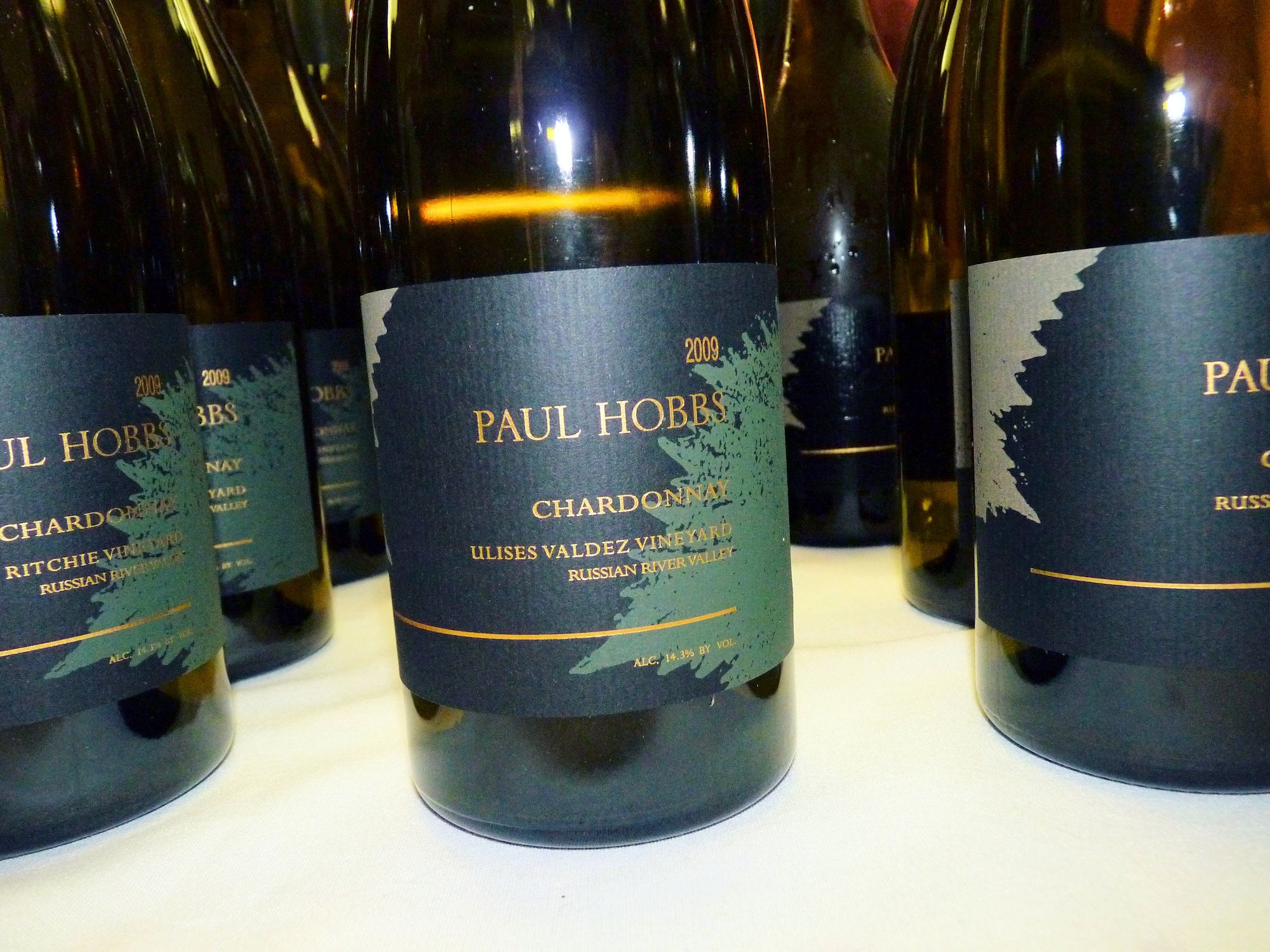
2009 Paul Hobbs Winery Chardonnay, ‘Ulises Valdez Vineyard’ – best non-French Chardonnay I tasted. Elegance and perfection of balance – acidity, hint of vanilla, hint of butter, hint of tasted oak – all in a perfect medley:
2009 Martinelli Syrah ‘Vellutini Ranch’ – full-bodied, luscious and well balanced, with nice dark fruit and spices. Outstanding Syrah:

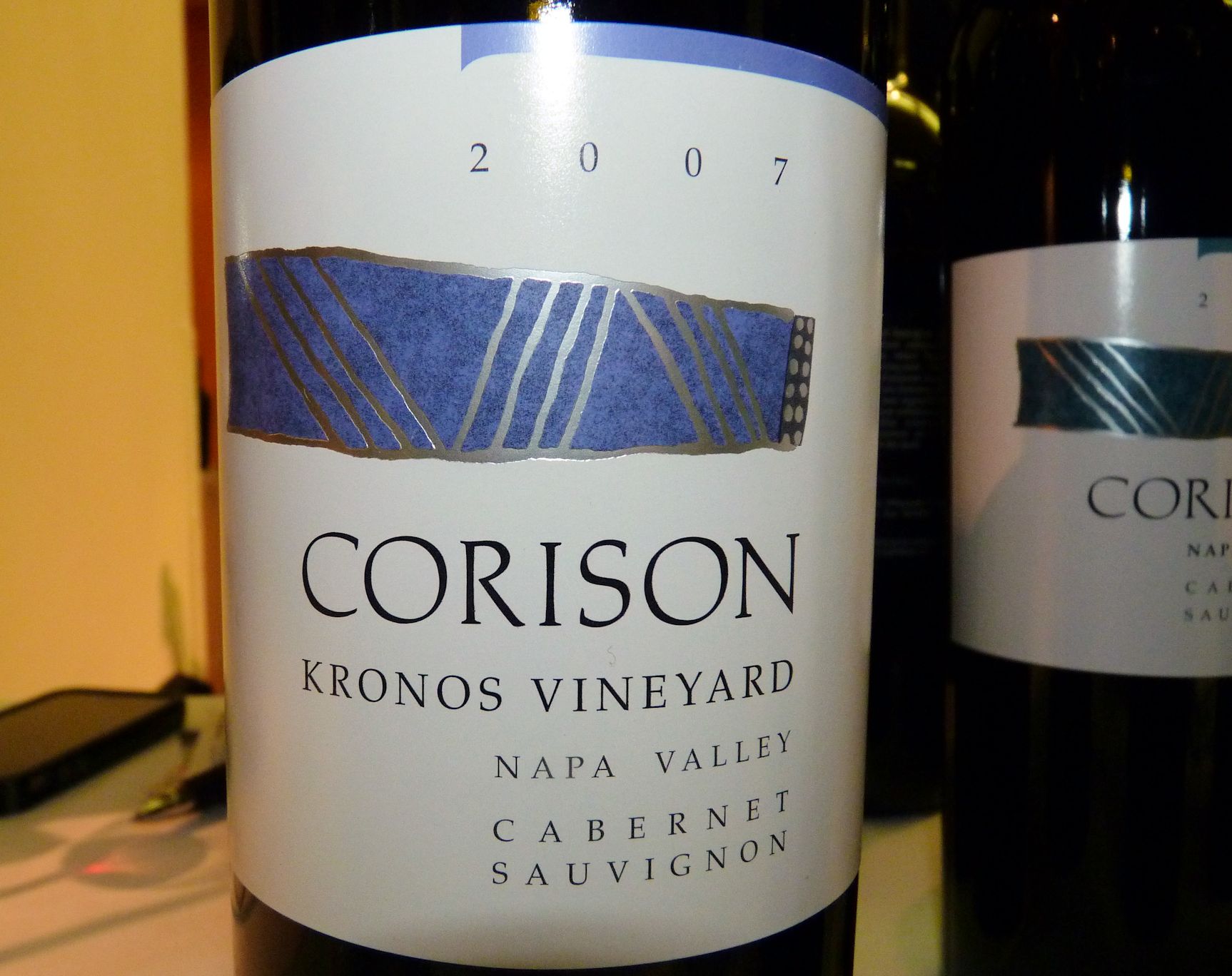
2007 Corison Cabernet Sauvignon ‘Kronos’ – I was really looking forward to trying this wine after Joe Roberts, a.k.a. @1WineDude, called it “Black Panther” in his review. I’m not sure I personally met the panther, I rather discovered a mystery. This wine is impossible to understand in the format of the standard trade wine tasting. It says “let’s dance a little longer, shall we”? When you take a sip of this wine, it is asking you to think – there is no flavor attack, no particular taste element standing out – instead, there is a perfectly balanced, thought-provoking, mysteriously delicious substance. This wine needs double time – time in the cellar, and time in your mouth – then you might stand a chance of solving the mystery:
2009 Domaine Newman Mazis-Chambertin – exemplary Pinot Noir, Pinot Noir by the book – whatever way you want to call it, this was one of the most elegant Pinot Noir at the tasting – perfect balance of earthiness, fruit, acidity and power:

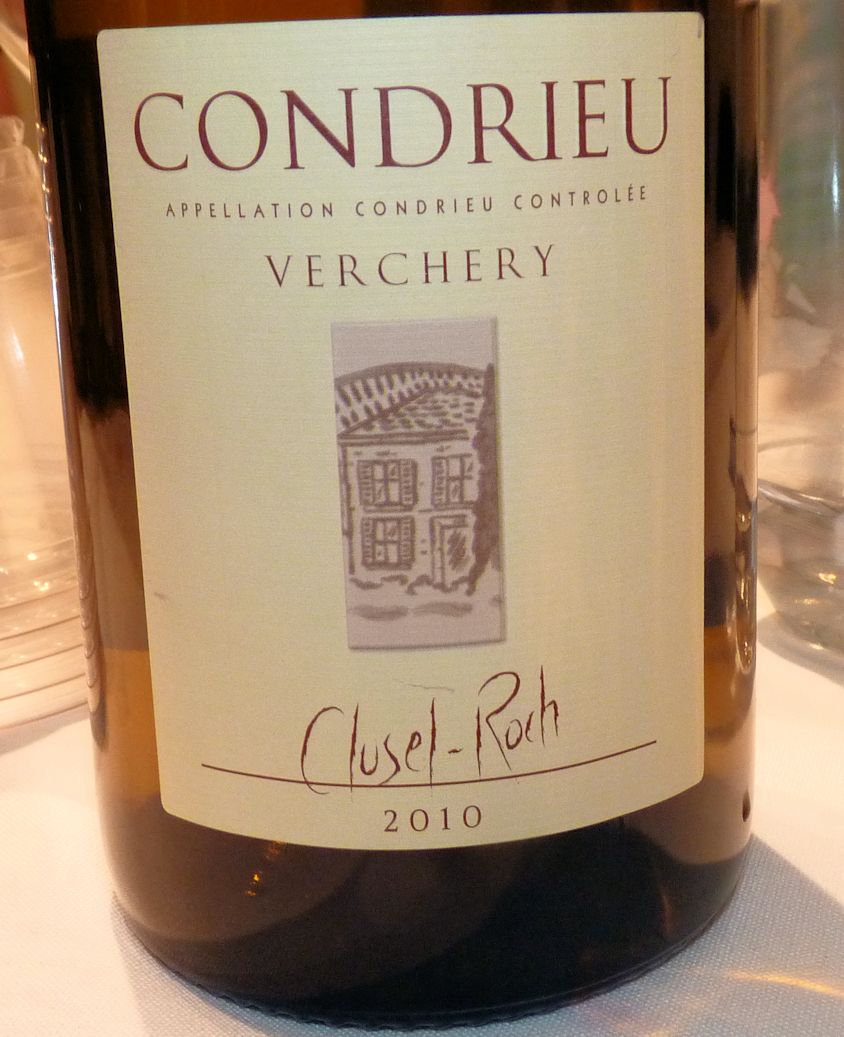
2010 Clusel-Roch Condrieu – beautiful full-bodied white, powerful and structured – great example of Viognier from the most classic Viognier Appellation:
2010 Domaine Saint Prefert Châteauneuf-du-Pape Blanc ‘Cuvée Speciale Vieilles Clairettes’ – fresh, elegant, beautiful white fruit, perfect acidity – definitely one of the best white wines in the tasting. Unfortunately, equally rare and hard to get:
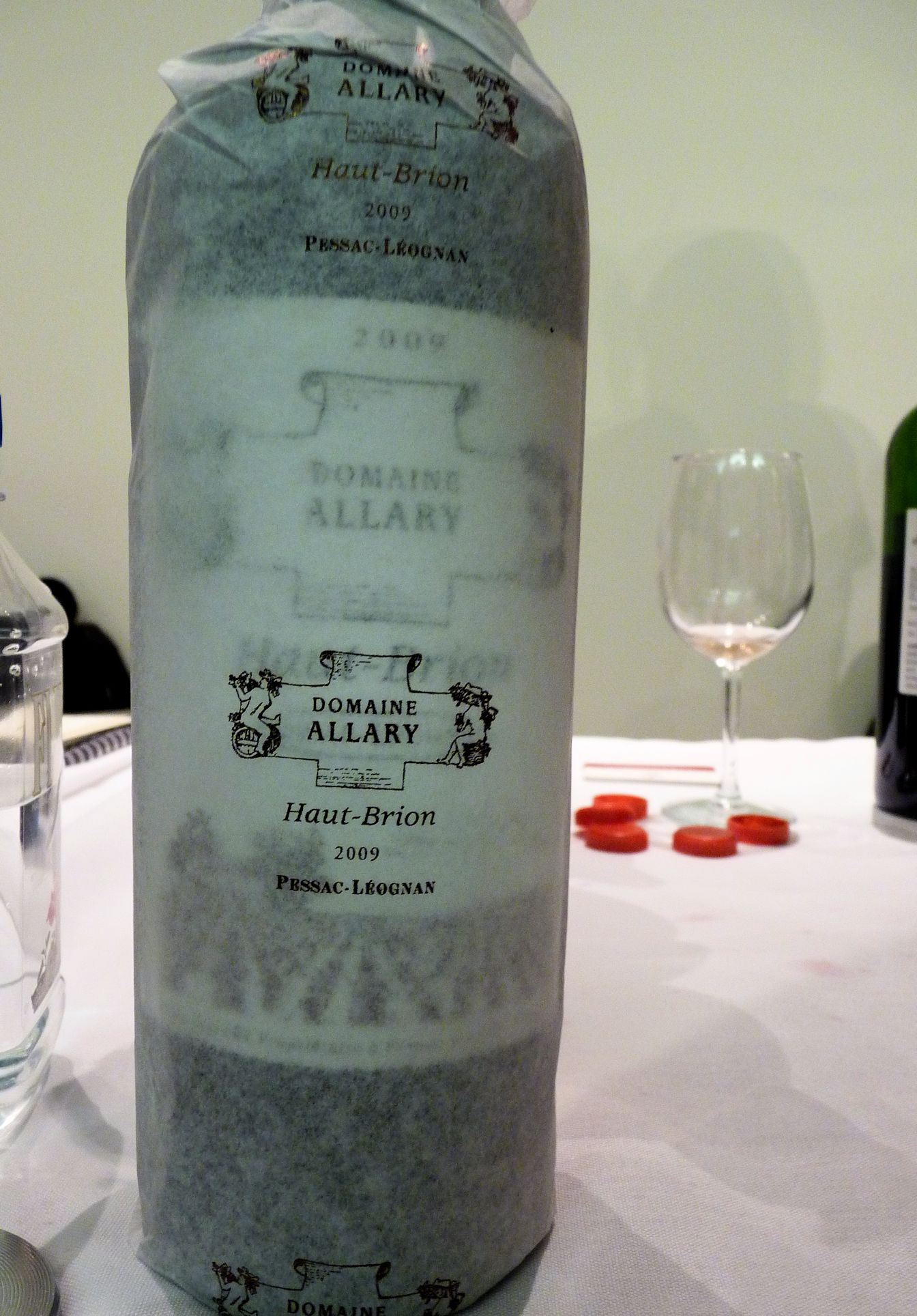
2009 Domaine Allary Haut-Brion Pessac-Léognan – classic Bordeaux from classic vintage. Perfect wine – you can drink it now, or wait for 30 years – the choice is yours:
2010 Boyer-Martenot Meursault 1er, ‘Perrières’ – absolute elegance ( yes, if you think that I’m abusing the word “elegant”, I agree with you, but I can’t find a better word to express my thoughts about these wines, so bear with me, please) – outstanding Chardonnay, great balance of white fruit, acidity, earthiness and tannins:

2011 Domaine du Moulin Méthode Gaillacoise – personal sparkler favorite at the tasting – bright, fresh, full-bodied, with apple and toasted bread perfectly showing on the nose and on the palate. Lots of pleasure:

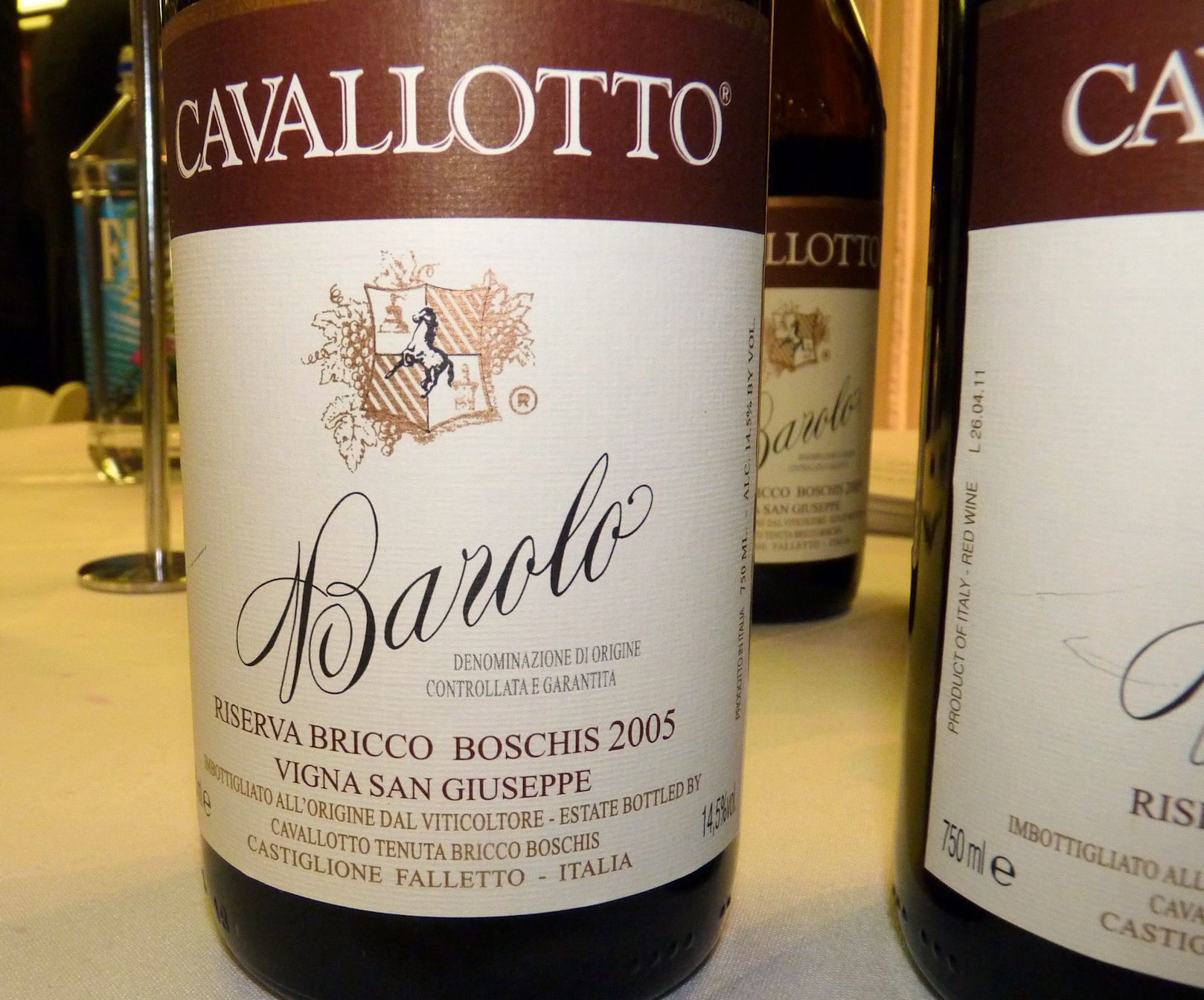
2005 Cavallotto Fratelli Barolo Riserva, ‘San Giuseppe’ – trying Barolos at the such tastings is always fun – you need to build your impressions quickly, before tannins will completely numb your palate. This wine had enough power to get through everything else I tasted before and deliver plums and dark cherries and outstanding balance of spices which make Barolo a King of the Wines. Truly an outstanding wine:
2007 Hendry Vineyards Cabernet Sauvignon and 2007 Hendry Vineyards Red Wine (Meritage Blend) – one of my biggest surprises in the tasting. I never heard of Hendry name before – they mostly had being known as a grape growers for all other prestigious winemakers. But then at some point they started making wines, and I can tell you – it was very hard to pick only one favorite out of the outstanding lineup of wines. This is why you see two red mentioned here – both are very elegant, balanced and varietally correct (and reasonably priced!):

This concludes our journey through the great tasting of Michael Skurnik wines – there were hundreds of other wines worth mentioning, but – sometimes I have to sleep too, right? Thanks for reading and cheers!
Must Try Wines
 It is not so simple to talk about ”must have experiences” – as we move on in life, the idea of ”must have” can be changing dramatically, taking something which was considered divine to something you can literally despise.
Our experiences are personal, and they have value within our view, our picture of the world. This is true pretty much for everything, but this is ultimately true when it comes to food and wine. If someone is strictly a white zinfandel drinker, convincing him or her that this Chateau Latour is a good wine would be an impossible task. Therefore, does it make sense to come up with the list of ”must try wines”? I believe so. This doesn’t have to be a ”must try” list for everyone, but this is rather a personal belief based on the present relationship with the wine world. By reading books, blogs and magazine articles, talking to people (twitter conversations included), and then doing more reading, talking and thinking (and drinking!!!), this list came by as my personal reflection. These are the wines I would like to experience at least once – nothing more and nothing less.
Few notes about the list. First, it is built by country, and then sub-regions. The primary idea behind including most of the wines you can see on the list is their reputation, which is based on what I read and heard. Yes, the majority of the wines in the list are super-expensive, but this just a consequence of their reputation, I guess. Considering that, I also included possible substitutes for some of the wines – some of the substitution suggestions are based on the official (and semi-official) ”second labels” (here’s a link to the post I wrote for The Art Of Life Magazine on the subject of the second labels) – for instance, all of the Bordeaux First Growth have their official second label wines (some of them even have third labels now). Some of the other suggestions are simply based on geographic proximity and ownership – for instance, Chateau Hosanna is located next to the famed Chateau Petrus and both are owned by the same owner, Christian Moueix.
And few more points. If you want to get that list in the form of a PDF file, here is the link for you. If you are interested in my logic as to why particular wines and wineries are there – I will gladly explain, just ask a question. If you think there are other wines I should include in the list, let me know – I will greatly appreciate the suggestions. However, if you think that I’m wrong and some of the wines shouldn’t be on this list – well, tough luck – the is my personal list, and this is the way I see it at the moment.
Without further delay, here is the list. Cheers!
|
Country/Region |
Potential Alternative |
| France | |
|
Champagne |
|
| Krug Clos du Mesnil | Krug Grand Cuvee NV |
| Krug Clos d’Ambonnay | |
| Salon Le Mesnil | |
|
Bordeaux |
|
| Chateau Latour | Les Forts de Latour |
| Chateau Lafite Rothschild | Carruades de Lafite Rothschild |
| Chateau Mouton Rothschild | Le Petit Mouton |
| Chateau Haut Brion | Le Clarence de Haut-Brion |
| Chateau Margaux | Pavillion Rouge |
| Chateau Cheval Blanc | Le Petit Cheval |
| Chateau Petrus | Chateau Hosanna |
| Chateau Le Pin | |
|
Burgundy |
|
| DRC Grand Cru Échezeaux | |
| DRC Grand Cru Richebourg | |
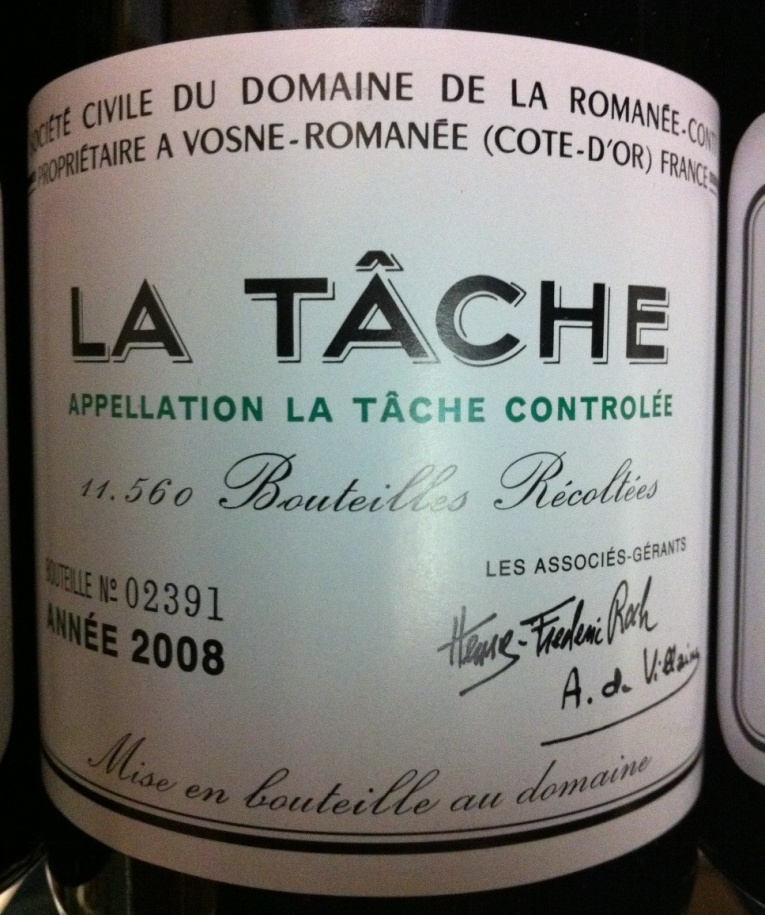
| DRC Grand Cru La Tâche | |
| DRC Grand Cru La Romanée-Conti | |
| DRC Grand Cru Montrachet | |
|
Sauternes |
|
| Chateau d’Yquem | |
|
Northern Rhone |
|
| E. Guigal Cote Rotie La Landonne | |
| E. Guigal Cote Rotie La Mouline | |
| E. Guigal Cote Rotie La Turque | |
| Chateau Grillet | |
|
Southern Rhone |
|
| Chateau Beaucastel Chateauneuf du Pape Hommage a Jacques Perrin | |
| Pegau Chateauneuf du Pape Cuvee da Capo | |
| Italy | |
|
Piedmont |
|
| Gaja | |
| Bruno Giacosa Barbaresco Riserva Asili | |
| Bruno Giacosa Barolo Riserva Falletto | |
|
Tuscany |
|
| Ornelaia Masseto | |
| Antinori Solaia | |
| Tenuta San Guido Sassicaia | Tenuta San Guido Guidalberto |
| Ornelaia | Le Serre Nouve, Le Volte |
| Valdicava Brunello di Montalcino Riserva Madonna del Piano | |
|
Veneto |
|
| Giuseppe Quintarelli Amarone | |
| Spain | |
|
Rioja |
|
| 1964 Lopez de Heredia “Viña Tondonia” Gran Reserva Rioja | |
|
Ribero Del Duero |
|
| Vega Sicilia Unico | Valbuena 5° |
| Bodega Dominio de Pingus | |
| US | |
|
California |
|
| Bryant Family | DB4 |
| Colgin Family | |
| Harlan | Maiden |
| Screaming Eagle | Leviathan |
| Sine Qua Non | |
| Alban Vineyards | |
| Saxum | |
|
Washington |
|
| Cayuse | |
| Quilceda Creek | |
| Portugal | |
| Taylor’s Scion Very Old Port | |
| Australia | |
|
Barossa Valley |
|
| Penfolds Grange | |
| Seppeltsfield 100 year old Para Vintage Tawny |
Best Wine Reviews Ever
 Aren’t you tired of reading wine reviews about “hint of apple”, “cinnamon and clove”, “coriander and last year’s rain”? Especially when you can’t find that specific flavor profile in your glass no matter what? Today I managed to come across two wine reviews which were much easier to assess and appreciate.
First, here is review of the Corison Cabernet Sauvignon (not so widely known but excellent Cabernet from Napa Valley) by Joe Roberts, a.k.a. 1WineDude (@1WineDude on twitter): “07 Corison Kronos Vineyard Cabernet Sauvignon (Napa Valley): Sort of like owning a trained black panther; dark, piercing & gorgeous.“. How do you like that? Is this is the wine you want to try or what? I don’t know about you, but I will be glad to meet this black panther at any time.
And the next one was a review by Adler Yarrow, who has one of the best wine blogs called Vinography. Latest two posts in that blog are on the subject which is an ultimate treasure for any wine lover – wines of Domaine Romanee-Conti (DRC, as it is typically called). DRC wines are considered best of the best, in any vintage and any time. So I think all people who are serious about wine can be divided into two categories – those who tasted DRC wines, and those who are dreaming about it. I belong to the second group ( sigh). Adler Yarrow belongs to the first, and he recently tasted full line of DRC 2009 wines – you can find his detailed notes here. But one particular review attracted my attention. It was for 2009 Domaine de la Romanée-Conti Grand Cru Montrachet, the only white wine produced by DRC and considered the rarest of the rare. While the descriptions there allude to the usual taste elements such as nuts and apples, one sentence I think puts that review in a totally different prospective: “In the mouth the wine has an incredible texture that I’m prompted to describe as liquid sex, and gorgeously balanced flavors that…“. Once you read this description, do you really care about the rest of the grapefruits and nuts, or do you really get one pounding question in your head: “where can I try this wine”?
I’m really glad to find those reviews – now I got a frame of reference for my own reviews to aspire to. What is your favorite wine review, the one which forced you to resolve “nothing can stop me, I will find and drink this wine”? Anyway, while you are thinking, let me go back to my dreams. Cheers!
Knowledge or Wisdom? repost from Whisky-online
Today I came across a blog post which stroke a chord – whether or not you are in love with whisky, this will universally apply to all of us who takes keen interest in Wine, Whisky, Beer, Rum or anything else you strive to know more about, because knowledge enhances the pleasure… Here it is:
http://whisky-online.com/blog/knowledge-or-wisdom/
Enjoy!
Wines of United States
 When you run a wine tasting, one of the great ways to keep people engaged all the time is to ask questions – trivia type and not. One of the simple warmup questions I like to ask the audience is “What do you think, how many states make the wine in the US? This sounds simple enough and goes into the “your guess is as good as mine” category. People usually start with some random number (trying to put sense into it, though), and sometime someone will say “all 50” – often just as a joke. Actually, it is the correct answer – for w while, all 50 states produce some wines.
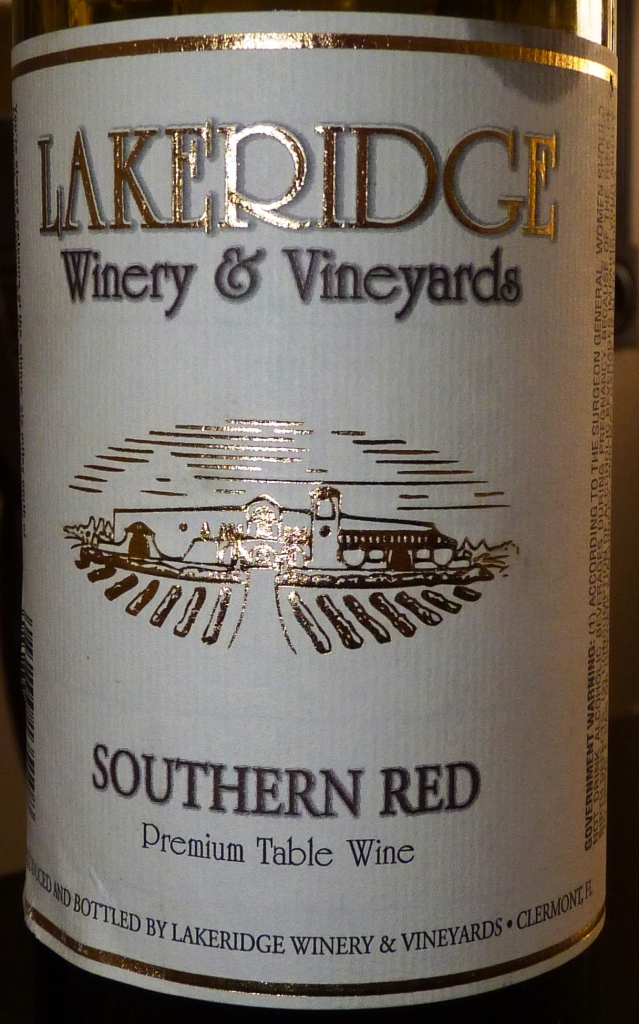
So did you ever think of exploring and experiencing the wines of all 50 states? I’m sure you had California, Oregon, Washington and New York wines, but what about the other 46 states? Last week in Florida, I came across Lakeridge Winery Southern Red Premium Table Wine produced in Clermont, Florida. This wine allowed me to add one more grape to the grape count – Muscadin. And this wine prompted this blog post and the table which I would like to share with you, which lists my experiences with the grapes and wines of all United States to the date:
|
State |
Tasted Wine |
Visited Winery |
Comments |
| Alabama | |||
| Alaska | |||
| Arizona |
Y |
||
| Arkansas | |||
| California |
Y |
Y |
|
| Colorado | |||
| Connecticut |
Y |
||
| Delaware | |||
| Florida |
Y |
||
| Georgia | |||
| Hawaii |
Y |
Pineapple wine | |
| Idaho | |||
| Illinois | |||
| Indiana | |||
| Iowa | |||
| Kansas | |||
| Kentucky | |||
| Louisiana | |||
| Maine |
Y |
Y |
|
| Maryland | |||
| Massachusetts |
Y |
Y |
Truro Vineyards, Nashoba Winery |
| Michigan | |||
| Minnesota | |||
| Mississippi | |||
| Missouri | |||
| Montana | |||
| Nebraska | |||
| Nevada | |||
| New Hampshire | |||
| New Jersey |
Y |
||
| New Mexico |
Y |
||
| New York |
Y |
Y |
Fingerlakes, LI, Hudson |
| North Carolina | |||
| North Dakota | |||
| Ohio | |||
| Oklahoma | |||
| Oregon |
Y |
||
| Pennsylvania |
Y |
Y |
Chaddsford |
| Rhode Island | |||
| South Carolina | |||
| South Dakota | |||
| Tennessee | |||
| Texas |
Y |
||
| Utah | |||
| Vermont | |||
| Virginia |
Y |
Y |
Chrysalis, Williamsburg Winery |
| Washington |
Y |
||
| West Virginia | |||
| Wisconsin | |||
| Wyoming |
What is your experience with wines from 50 states? Can you count and share? It is definitely a fun exercise and might bring back some good memories while you are at it. Happy counting! Cheers!
Last Bottle Sign Up ($10 credit)




 Talk-A-Vino