Archive
Woodinville Wineries: Pondera Winery
 This post is a continuation of the series about my winery experiences in Woodinville, Washington. Here are the links for the first two posts – introduction and Elevation Cellars.
“What other winery do you recommend I should visit here?” I asked Steve before leaving. “Pondera”, he said. Okay. Short, very short walk from the building A to the building B, and I entered the tasting room of Pondera Winery.
I was greeted by Mel, one of the three owners of the Pondera winery. Pondera is focused on Bordeaux varietals, and it achieved a substantial recognition as a Bordeaux blends producer. As we were woking through the tasting, Mel proudly showed me a collection of gold medal-winning wines – 7 of Pondera wines received double gold medals in the blind tasting competition. Pondera 2009 Prima Donna red wine was recognized as one of the Top 100 wines of Northwest – not a small achievement by all means.
The tasting started from the 2013 Pondera Chardonnay Sagecliff Vineyard Columbia Valley. The wine had a subtle nose of vanilla, and more of the same on the palate. The wine spent 7 month on the lees, and while it had a creamy mouthfeel, the mid-palate was a bit heavy for my taste. Drinkability: 7
The next wine was 2011 Pondera Cabernet Franc Columbia Valley (90% Cabernet Franc, 10% Merlot) – the nose was rather muted, but the palate had a classic cassis and bell peppers – nice, clean and round, with a good balance. Drinkability: 7+
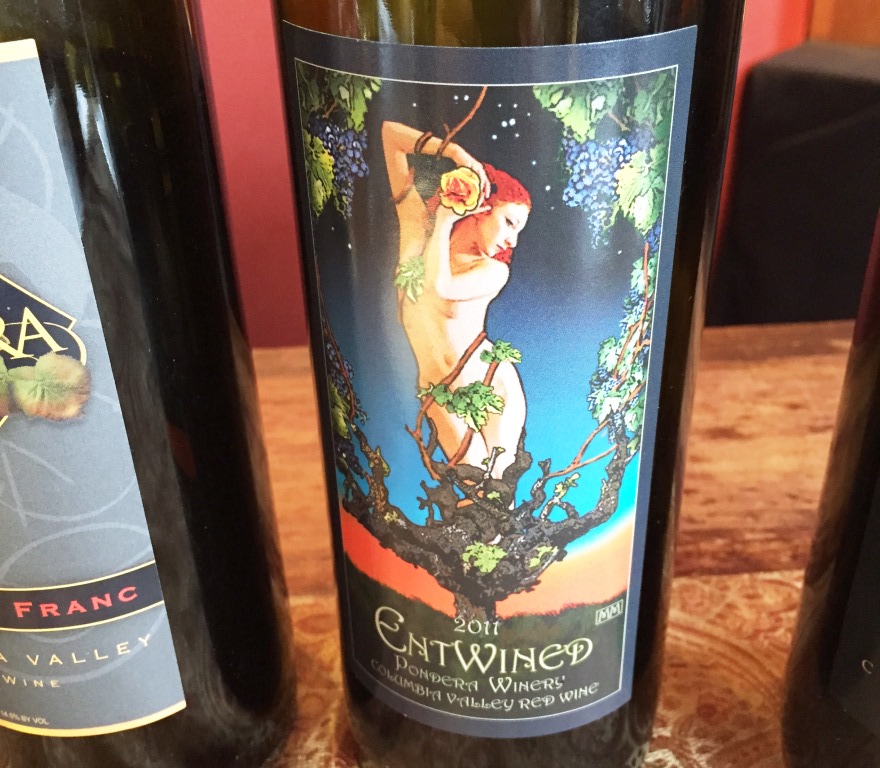
2011 Pondera Entwined Columbia Valley (57% Merlot, 26% Cabernet Sauvignon, 13% Cabernet Franc, 4% Malbec) showed as a classic Bordeaux blend – if I would sniff the glass without knowing what is inside, I would definitely think of classic Bordeaux, made in a bit more of a fruit-forward style, but still quite restrained. The wine showed equally well on the palate – cassis, blackberries, touch of chocolate, clean acidity – and asking for a bit of time with very noticeable tannins. The only non-classic Bordeaux component was a beautiful label. Drinkability: 8-
2011 Pondera SVS Number One Columbia Valley (59% Cabernet Sauvignon, 30% Merlot, 10% Cabernet Franc, 1% Malbec) was yet another classic Bordeaux rendition. Yes, I’m guilty of abusing the word “classic” here, but this was my true impression. Soft, round, clean and perfectly classic. Drinkability: 8-
2011 Pondera Malbec Stillwater Creek Vineyard Columbia Valley (97% Malbec, 3% Cabernet Sauvignon) was, in a word, outstanding. Round, soft, polished, with delicious blueberries and blackberries – this was one of the very few wines I didn’t use the spittoon for in the tasting. Just a pure pleasure. Drinkability: 8+
The last wine was a special treat – 2009 Pondera Prima Donna Columbia Valley (Merlot, Cabernet Franc, Malbec, Cabernet Sauvignon) was made only once, in the exceptional year (2009) only from the 2 exceptional barrels. Delicious, classic Bordeaux style, big, powerful, with chewy tannins and long life perspectives in the cellar (if you can get a bottle, there is). Drinkability: 8
Here you go, my friends. A wonderful Bordeaux blend experience – if you are looking for the bright, delicious, cassis-loaded glass of joy, jot down the name Pondera Winery, and see if you can find a bottle or two. Meanwhile, I’m off to continue my Woodinville discovery journey, stepping literally 5 feet to the left into another door…
To be continued…
Thank you, #GrenacheDay
September 19th was yet another “wine holiday” – the Grenache Day. Grenache, which is known in Spain as Garnacha, needs no introduction for the oenophiles. One of the most planted red grapes in the world. A star of Châteauneuf-du-Pape, Priorat, California, Australia and many other countries and regions. A grape with the middle name “rich and opulent” (when was the last time you had a lean Grenache wine? No rush, think about it…). If big wines are your territory, Grenache is definitely your grape.
So what this “thank you” all about? Easy, let me explain. When I know about the certain “grape day”, I usually try to honor it by opening the wine made with that specific grape. Considering the connotation of the “holiday”, I also look for the somewhat of a special bottle. I’m not saying that I would casually open DRC for the Pinot Day (I wish I would have that choice), but still, it should be an interesting bottle. Talking about the holiday at hand, #GrenacheDay, I realized that Grenache is grossly underrepresented in my cellar. Cabernet, Pinot Noir, Syrah, Tempranillo, Zinfandel – plenty of choice, Grenache – not so much. Searching through the shelves, I noticed the bottle of 2006 Pax Cuvée Moriah. Checked the back label – 88% Grenache, definitely qualifies as Grenache for me. 2006 is considered young in my book, but – either that or some random non-grenache bottle. Done.
 Okay, so here is our wine – 2006 Pax Cuvée Moriah Sonoma County (15.9% ABV, 88% Grenache, 6% Mourvedre, 3% Syrah, 2% Counoise, 1% Roussanne). Cork is out, pour in the glass, swirl, smell. Beautiful. Bright fruit, spices, herbs – a delicious promise. On the palate, great concentration, big, texturally present, roasted meat and bright cherries, clean acidity, an excellent wine overall. Drinkability: 8+
I stepped away from my glass with a small amount of wine left in it. Come back 15-20 minutes later, ready to finish. Swirl, sip – the wine is past prime. Touch of stewed fruit and over-ripe plums. The wine completely transformed. So here is the “thank you” part. If it wouldn’t be for the “grape day”, I would still be waiting for the right moment. Only to find out at some point that all the pleasure was gone, without been experienced. Thanks to the #GrenacheDay, we were able to experience this wine still at its peak (it was only a tiny amount in the glass which turned around).
Let’s raise the glass to the grape holidays, the experience savers. Cheers!
Prime Time at Washington Prime
 When you come to the new restaurant, first you discover the food. Then drinks and wine. Then ambiance and decor. Then service. Well, yes, all of the above – but in the random order. The experience is somewhat like peeling the onion, only with an element of surprise – you don’t know what your next excitement will be. May be a new dish. Or may be, as I recently had, a creative interior which all of a sudden dawns on you, after you already spent more than hour in the restaurant.
About two weeks ago, we visited new restaurant in Norwalk, Connecticut, called Washington Prime. The restaurant is located on the Washington Street, hence the first part of the name. And for the second part, there can be multiple explanations, but as restaurant is a steakhouse, and it serves only Prime cuts of beef (for the readers outside of the US – Prime is a definition from the US Department of Agriculture for the best quality selection of beef), hence the second part of the name.
We walked into the restaurant, immediately got to our table, and started studying the cocktail selection and got into the conversation with our dining companions. Only an hour into our dinner I had an opportunity to walk around and see how creatively the dining room was decorated, with the grape vines on the ceiling above bar and green plants (yes, artificial, not live) covering the walls in the corridor. It became quire dark when I made the discovery, so the pictures wouldn’t do a justice to the decor, but nevertheless, you will get an idea.


The cocktail list was quite interesting, and it was not easy to make a selection. I went with the Basil Smash (basil, simple syrup, tanqueray 10, lemon just) – nicely refreshing and not overly sweet. Moscow Mule‘s presentation also looked quite interesting. Then, of course, we went for the wine. The wine list overall was interesting and well composed – but it was not easy to make a selection as I always go out of my way looking for value, and it was simply not that easy (lots of selections were priced at about triple retail, and you know that I have a problem with that). For the white, we had a 2012 Martín Códax Albariño, Rias Baixas – simple, food friendly wine with clean acidity and touch of white stone fruit. We also had 2013 Jean-Luc Colombo Cape Bleue Rosé Provence, which was light and loaded with strawberries.For the reds, we started with the 2012 David Bynum Jane’s Vineyard Pinot Noir Russian River Valley – young, smokey, light cherry flavor, good acidity. While this was a nice wine, we felt that it wouldn’t really stand up to our dinner which included steak, so the red wine we chose to stay with until the end of the meal was 2011 Ridge Three Valleys Sonoma County – notes of smokey raspberries, espresso, touch of dark chocolate, all weaved together over a firm structure with some earthy notes – excellent overall.
And now let’s talk about the food. Everything was split into the courses. We started with a few appetizers – Seafood Tower (colossal shrimp, local oysters, little necks, Alaskan king crab leg, Maine lobster, spicy mustard, house cocktail sauce, classic mignionette) and House Slab Bacon (). The bacon more resembled the pork belly than traditional bacon, and literally was melting in your mouth. The Seafood tower was excellent, great selection of fresh oysters and clams.


Our dinner continued with Small Plates. Lobster Bisque (parsley, crème fraische) was very concentrated, with nice flavor. Deviled Eggs (creamy yolk, prime meatball, pickled onions, foie gras powder) were unsuccessful, unfortunately. I love deviled eggs, one of my childhood favorite dishes – and we keep making it almost for each and every party. The deviled eggs served at Washington Prime were way too acidic, with pickled onion been just too much. I think this dish requires some work make it a success. Burrata (creamy slaw, sambal aioli, sesame, pretzel bread) was creamy and satisfying, just as you would expect the Burrata to be.


Poutine (oxtail ragu, house fries, cheese curds, green onions) was an interesting dish. The oxtail ragu was outstanding, with the flavor and texture creating irresistible, homey experience . However, the cheese curd didn’t fully integrate into the dish – at least with my memories of Poutine in Quebec.
Knuckle & Claw (blue cork grits, lobster sauce, tobiko) was okay – yes, I’m not really a big fun of lobster, so the blue corn grits and tobiko were the best components of the dish for me.
Octopus (pickled peppers, duck fat marble potato, pepper emulsion) was to die for. Perfectly cooked, with delicious flavor combination, it was definitely a star dish.
Wings (fried, kimchi sauce, scallions, soy, chilli) were crispy and very tasty (could use a bit less salt).


Finally (after about an hour of eating), the time had come for Salads. First, Prime Wedge (gem iceberg, pickled heirloom tomatoes, bacon, ewes blue cheese, chili, house ranch dressing) was spectacular. I love the Wedge, and I order it quite often – this was the very best Wedge salad I ever had – the bacon, the sauce, the sweetness of the lettuce were just spot on. And our next salad dish, Chop Chop Salad (iceberg and romaine, bell peppers, onion, carrot, provolone, salami, red wine vinaigrette) was also very much on par with the Wedge – fresh, light and delicious, with the very tasty sauce.


And the time had come for Land & Sea.
We were in a steakhouse, so of course there was steak! USDA Prime Steaks – 8 oz filet Mignon, 18 oz Ribeye, 32 oz. Porterhouse (dry aged 28 days) – were all served on the beautiful wooden boards, in its perfectly simple beauty. The selection of steak sauces, which also included spicy mayo and Chimichurri, was served on the side. The steaks were just outstanding, all three of them had a slight difference in texture and flavor, but they were all simply done at the “wow” level.
Representing the “sea” part, first we had Grouper (Carolina gold rice, tomato, asparagus, carrot butter sauce) – if the steak was “wow” dish, this was a double “wow”. I know that expression “melting in your mouth” is abused, nevertheless, this is the only way I can describe this dish – great flavor, and the fish was really melting in the mouth… And then there were Scallops (middlins, corn relish, nicoise olives, hunters sauce), my perennial favorite, done at the textbook quality – “perfectly seared, succulent and sweet” – the best way possible.


You didn’t think that we left without having a dessert, right? Of course not! Italian and New York Cheesecake, a Tartufo and an Ice cream cookie sandwich with cereal milk were all included in the sweet ending of our evening. All were excellent, but the ice cream sandwich with the cereal milk was a standout for me in creativity. In case you are wondering, the cereal milk of the day was Fruit Loops…


Executive Chef Jared Falco came out to check on us many times, and we had an opportunity to discuss the dishes and his approach to making his cooking stand out. All in all, we had a great time.
 That’s all I have for you, my friends. Yes, we had a great evening of food and wine, and the restaurant is definitely worth a visit if you are in a mood for steak, or simply a creative bite of food. Oh yes, and I meant to warn you not to read this post hungry – I guess it is too late now, sorry. Cheers!
I visited restaurant as a guest of the management. All opinions are my own.
Washington Prime
141 Washington Street
South Norwalk, CT 06854
Located at the corner of Washington and Water St.
TEL: (203) 857-1314
http://washingtonprimect.com/

Wineries of New England: Newport Vineyards
 Have you heard the term “tourist winery” before? I didn’t, but now I have. Follow along, I will explain.
Recently, the subject of the wines of 50 states came back into my focus – after tasting wines from Vermont, Colorado, Texas and Connecticut, it was kind of easy to get carried away, right? When we arranged a short weekend getaway with family in Newport, Rhode Island, I decided to check on the wineries on Rhode Island. Yes, the almighty google said, there are a few on Rhode Island, and one of them, called Newport Vineyards, is about 20 minutes away from the downtown Newport. My wife likes to visit wineries, and kids are old enough to sustain at least one winery visit, giving me only a reasonable amount of hard time, so our first destination of the trip was set.
Finding our destination was easy – a long building with clear sign, adjacent vineyards and very substantial parking lot ( I understand they got land, but still). Walked in, waited a bit in the lane and bought a ticket for the tasting ($12 allows you to taste 5 wines, or you can pay $15 if you want a logo glass). The tastings were happening in the multiple locations, both inside and outside. We settled for the tasting bar on the second floor, as the crowd appeared to be smaller than in the other places.
We looked at the list of available wines, and it contained 32(!) selections – white, rose, red, sweet – a substantial number of wines, as you see. When I handed the ticket to the gentleman at the bar, I told him that I have a wine blog and would like to try a few more wines if I can. That solicit really no interest, rather a surprise that I asked to taste more wines, and the answer came “okay, may be one or two, but no more”. The next uncomfortable moment came when after the taste of the first wine I did what I usually do at the wine tasting – I used the spittoon for its intended purpose – and the gentleman almost run over to me from another side of the large bar and said that it is fine to use the spittoon to pour over the leftovers of wine if I don’t want to finish it, but I should use it only for that (he didn’t say directly “don’t spit!”, but my wife helped to translate his rather long tirade about usage of the spittoon into the simple instruction). I would guess that seeing someone spit the wine will make the other guests uneasy (and he also said something about “sanitary”). Anyway, moving along…
Before I will talk about the wines, let me tell you a few things about the winery which I picked up from the back and forth conversation with our pourer (it was back and forth as we couldn’t just stand and talk – he had to serve the other guests as well). The winery was founded in 1988. 70% production are the white wines. Winery makes about 22,000 cases a year, primarily from the estate grapes. The mix of grapes is somewhat eclectic, at least judging by the wines of neighboring Connecticut and Massachusetts – for the whites, in addition to Chardonnay, Riesling, Vidal, Cayuga and Seyval Blanc, the winery also grows Sauvignon Blanc and Pinot Gris. The red grapes include Merlot and Cabernet Franc, which are both pretty standard for New England, but Cabernet Sauvignon and Pinot Noir are not so much. Additionally, Newport Vineyards makes single varietal wine from the hybrid grape called Landot Noir – will talk about this wine later. The soils are heavy clay loam (just as a statement of fact – I can’t tell you how does it affect the taste of the wine).
Here is the part of our conversation which I found most interesting. As you know, I’m a big fan of the aged, older wines, and I’m always looking for an opportunity to taste them. If I can’t taste the older wines myself, at least I would like to hear what the winery staff thinks about aging of their own wines, what was was the oldest vintage they ever tasted, what do they think about aging of the current release. Any and all of my inquiries were met with the stern “we don’t do do it”, “no, I have not”, “I never had”, etc, until the phrase came “we are a tourist winery. We have 50,000 people visiting winery every year, and all of our current releases sell out”. This was definitely a revelation for me. I always associate winery existence with utmost passion, borderline obsession to create great wines just for the art of creation (I understand that winery is a business – wines should be created and sold – don’t grab on this, please) – and I always thought that tourists were an afterthought to the winery’s existence. Now, having heard the term almost as an official statement (of course this is not a statement from the winery), that makes me think – yes, I can come up with more examples of the “tourist wineries”, based on my experiences in Temecula Valley and Connecticut. With that concept in mind, I can now better understand the logic of some of the winery decisions which appear puzzling otherwise.
Talking about learning new things, I also learned about new AVA – Southern New England AVA (SENE AVA), which stretches along the Eastern coast of US from Coastal Connecticut through Coastal Rhode Island, South Coast of Massachusetts and into the Cape Cod and the islands. SENE AVA was defined in 1984, so it celebrates 30 years this year. All together, the wineries form the Coastal Wine Trail (here is the link to the web site).


Let’s finally talk about the wines, shall we? I can tell you that the attitude of our pourer changed as we were talking, so we ended up trying way more than the intended 5+1. One general note about most of the wines we tasted – they all had clear cut, vibrant acidity. I don’t know if this is the result of the “heavy clay loam” soils, but the acidity was very present. Here is what we tasted:
2013 Newport Vineyards Newport Chardonnay SENE AVA ($18) – touch of gunflint, apple and tropical fruit on the nose, vibrant cutting-through acidity, apple on the palate. Drinkability: 7+
2013 Newport Vineyards Vintner’s Select Pinot Gris SENE AVA ($22) -very perfumy, pear, substantial sweetness on the nose, fruit forward on the palate, needs acidity. Drinkability: 7
2013 Newport Vineyards Dry Riesling SENE AVA ($23) – traditional east coast Riesling, touch of honeysuckle on the nose, lucks minerality and complexity on the palate, extremely acidic. Drinkability: 7
2013 Newport Vineyards Vidal Blanc SENE AVA ($15) – nice summer wine. Perfumed nose and shellfish-craving acidity on the palate (Muscadet style). Drinkability: 7
2013 Newport Vineyards Rosé White Merlot SENE AVA ($14) – touch of strawberries on the nose. Very light wine with very strong acidity. Drinkability: 7
2012 Newport Vineyards Rochabeau SENE AVA ($19, blend of Merlot, Cabernet Franc, Cabernet Sauvignon and Landot Noir) – fresh fruit nose, nice acidity, old world style. Drinkability: 7
2011 Newport Vineyards Cabernet Franc SENE AVA ($18) – touch of smoke , green bell pepper nose, touch of cassis on the palate, strong acidity. Drinkability: 7
2012 Newport Vineyards Cabernet Sauvignon SENE AVA ($18) -varietally correct profile on the nose and palate (green bell peppers and cassis). Drinkability: 7
2013 Newport Vineyards Landot Noir SENE AVA ($18) -barnyard on the nose, freshly crushed berries on the nose and palate, very unusual. An extra bonus – a new grape. Drinkability: 7+
NV Newport Vineyards Port SENE AVA ($18) -Nice and elegant, clearly a classic Portuguese style, good berry profile, elegant. Drinkability: 7
There you have it, my friends. Definitely an interesting and learning experience. If Newport is in your travel plans, stop by the Newport Vineyards, I’m sure it will worth your time. Cheers!
…And Dinner Becomes an Experience
The dinner is a dinner is a dinner. Sometimes we eat just to satisfy the basic bodily crave for energy. We put something in the mouth, doesn’t really matter what, hopefully chew on it (or not) before gulping it down, and we are done. Then there are family dinners, let’s say spaghetti and meatballs – everything is home made and tasty, but the school day, upcoming play and huge homework project due tomorrow take over the whole experience. And then there are dinners where the food is perfect, the wine pairing is spot on and the good company of friends is amazing – those dinners become the experience.
We have a tradition with our friends – an adults getaway during late summer or early fall. Find B&B to stay within 2-3 hours of driving distance, visit nature trails, little towns and museums, visit wineries, have a good dinner, have fun and most importantly, enjoy the company of each other. Simple, isn’t it? This year would be the our fourth time doing this, and most of our trips had been described in this blog to the various degree. In 2010, we had a great time in Milford, Pennsylvania, and our dinner was definitely an experience. For that dinner, we were allowed to bring our own wines, so we managed to create the special experience (you can read about it here). The next year we went to the Grafton, Vermont – of course we had a great time, but when in Vermont, the cheese is much bigger deal than wine, so it didn’t really make it into this blog, and dinner didn’t make it into the “experience” level. Last year we stayed in the little town in the area of Woodstock, NY (the town was called Palenville), and the highlight of the trip was the visit to the Hudson Distillery (nope, dinner didn’t make it again). This year, we happened to stay in my home state, Connecticut, in the town of Norfolk. We had a great time visiting Connecticut wineries and visiting places in Connecticut, New York and Massachusetts (yep, you can move through all three states within 20 minutes of driving), but the highlight was … yes, you got it – the dinner.
Norfolk, a little town in northern Connecticut, is not exactly a Michelin-starred restaurant oasis. However, does the food needs to be acknowledged with the Micheline star to be good? Not really. It only takes a little bit of love and a little bit of soul. And when we take the soulful food, we can elevate it to the next level with … wine, of course (you didn’t expect me to say coke, didn’t you). And this is how you create an experience – one dish, one wine.
Once we had our plans for Norfolk set (meaning – we reserved our B&B), we reached out to the few restaurants in the area. We said that we are coming in a large group, and we asked for the special tasting menu, which we can pair with wine (preferably brought by us). Chef Heidi Dinsmore of the Wood Creek Bar and Grill offered a tasting menu – and graciously allowed us to bring our own wines without even charging a corking fee. The rest is history – one of the best dinner experiences ever, which you can see (sorry, only see) below.
Appetizers
Crostini with Roasted Pear Gorgonzola and a Balsamic Drizzle
Wine: 2009 Graham Beck Brut Rosé, South Africa


There was a nice combination of flavors in crostini, but we could probably use more pear and less cheese, and the toast itself could probably be a bit less garlic-y. The South African sparkler was very classic, with nice toasted nose, touch of yeast and fine mousse. As for the pairing, I would call it “unoffensive” – both the crostini and wine stayed in its own universe, and they didn’t collide nor complement each other.
Micro greens with Strawberries and a Lemon Vinaigrette
Wine: 2013 La Ferme Saint Pierre Cuvée Juliette Rosé Côtes du Ventoux, France


Salad was nice and fresh (what else do you want from the green salad, right?), and the wine had a nice strawberry profile. The pairing was excellent, the wine really complemented and enhanced the dish, despite the “simple salad” nature of it.
Shrimp with a Champagne Beurre Blanc
Wine: 2011 Bodegas La Cana Albariño Rias Baixas, Spain


Shrimp was cooked perfectly, and Beurre Blanc sauce was outstanding. La Cana Albariño is one of my favorite wines, and this bottle was no exception – bright fruit profile on the nose, but restrained and delicious on the palate. And the pairing? Spectacular, simply spot on. Wine’s acidity was a great complement to the sauce, so the dish was greatly enhanced.
Main Course
Poached Halibut over Spinach, Saffron Heirloom Tomato Sauce
Wine: 2012 Buil & Giné Joan Giné Blanc, Priorat DOQ, Spain


Halibut, which is one of my favorite types of fish, was done “just right”, and together with spinach and the sauce was creating just one spectacular flavor pop. And then the wine… This wine deserves a whole blog post dedicated just to that wine by itself. White Priorat, a blend of 40% White Grenache, 36% Macabeo, 20% Viognier and 4% Pedro Ximenez had stunning complexity – orange peel, white stone fruit, minerality – really an excellent wine, rivaling best Chardonnays. And together with the dish? Another spectacular, spot on pairing, complementing and greatly enhancing flavor.
Beef Tenderloin over Mashed Celery Root, Bordelaise, Tiny mini Potato au Gratin
Wine: 2010 Château de Pibarnon Bandol Rouge Les Restanques de Pibarnon, Bandol, France


Beef was perfectly cooked, and together with the celery root and Bordelaise sauce, every bite was literally divine. The Bandol wine, which is 90% Mourvedre and 10% Grenache, had a warm spice flavor profile, so together with the steak the pairing was just outright delicious.
Guinness Marinated Pork, Cherry Au Jus, Arugula, Crispy Polenta
Wine: 2011 Bodegas Caro ‘Amancaya’ Gran Reserva Malbec – Cabernet Sauvignon, Mendoza, Argentina


The pork was melting in the mouth and the combination with cherries was excellent. The wine, made from two of the Argentina star grapes – Malbec and Cabernet Sauvignon, had an open nose with spicy, cherry-loaded palate. As you can imagine, cherries in the sauce and in the wine played together wonderfully, creating – yep, again – a super-successful pairing.
Dessert
Fresh-made Sorbetto – delicious, clean, refreshing. Perfectly restored the palate before the dessert course.
Chocolate Tart with Fresh Fruit
Wine: 2000 Philip Togni Vineyard Ca’ Togni Sweet Red, Napa Valley


You can’t go wrong with the chocolate, and this dessert was a great proof of that – every bite was a decadent pleasure. And the wine… What can I tell you? It was definitely a mature wine, fragrant, with some sweet cherry notes and balancing acidity. Based on the information on producer’s web site, this wine was inspired by the famous South African dessert wine Klein Constantia, and it is produced from the grape called Black Hamburg (known as Black Muscat), which is quite rare in Napa Valley – and it is also a new grape for me (!). The wine perfectly complemented and literally added a new dimension to the chocolate tart, so our final pairing was again “just perfect”.
Chef Heidi Dinsmore
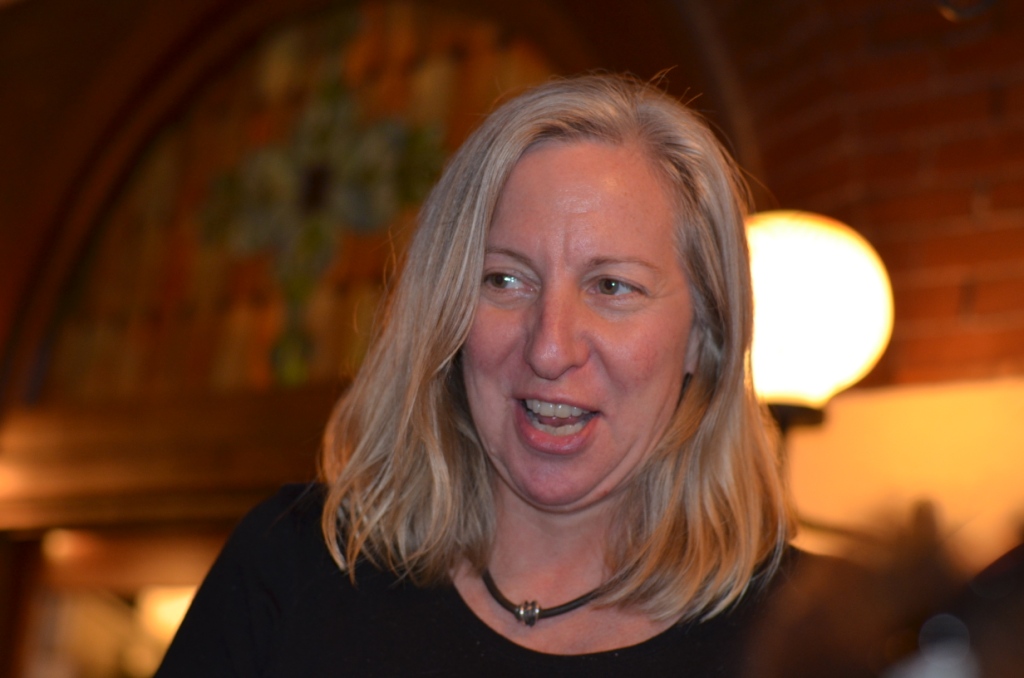
As we were settling into the dessert, Chef Heidi Dinsmore, the creator of the delicious experience, came to talk to us, so we had an opportunity to thank her and to tell her how much we enjoyed our evening, and how delicious the food was. If you are ever in the area of Norfolk, Connecticut, Wood Creek Bar and Grill should be on your list. Ahh, and I also have to say a very big thank you to our waitress Jessica, who did an amazing job managing our wine program, opening the bottles, changing the glasses and of course serving food – she was absolutely fantastic.
There you have it, my friends – the food, the wine and the company – a simple recipe for an unforgettable experience. Cheers!
Wood Creek Bar and Grill
3 Station Place
Norfolk, CT 06058
(860) 542-1200
http://www.woodcreekbarandgrill.com

Are You Ready For The Reality TV Wine Drama? It Is Coming, And May The Best Bottle Win!
 Do you like wine? (Argh, with an opening question like that in the wine blog, I probably lost half of my readers on the spot) When you look at the shiny wine bottle in the store with an artfully (or not) designed label, do you know about – better yet, can you vividly imagine – all the hard work which went into making sure that bottle will get to you and [hopefully] will also taste good? Soon, you will get a chance to get to know it first hand and almost experience it – with the help of the big TV. No, I’m not talking about the new Sideways or SOMM – I’m talking about the real winemaking drama taking place in the format of the Reality TV.
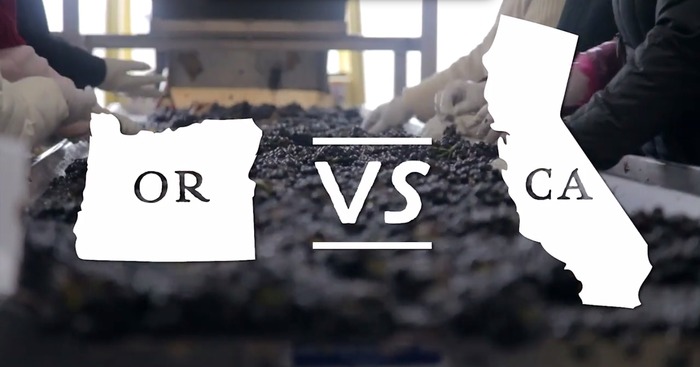
10 aspiring winemakers, two teams, two great wine regions. Lots of vineyard and winery chores. Clash of characters. And pain of elimination. Until only two contestants are left to make their best bottle of wine. Then celebrity judges will put an end to it and decide who gets the $100K and opportunity to bottle one vintage under the Best Bottle label. That’s all there is to it. Intrigued? Want to learn more? Great, as I was intrigued too and wanted to learn more when I heard about Best Bottle Reality TV competition series and its kickstarter campaign.
In an effort to learn more, I got an opportunity to interview Scott Krauger, the executive producer of the Best Bottle series – and I would like to share with you our conversation. Oh yes, before we get to the interview, here is the Best Bottle trailer, for you to get an idea of what to expect from the series:
And here is our Q&A:
How did you start your love affair with wine?
In 1993 I was brought on board to help develop the estate vineyard at Archery Summit Winery in Oregon. My mentors Bernard Lacroute and Gary Andrus taught me about the love of wine, showed me how wine is crafted and the terroir. I was exposed to people who had a deep love for wine-making, and through their art and style, learned to craft exceptional wine.
How the idea for Best Bottle was born?
Three years ago I was producing a documentary called Heart of the Vine which highlighted the terroir, Mother Nature, and the vineyard people who craft the wines. I wanted to show how wineries and winemakers express a wine’s location and vintage.
Why California versus Oregon?
First, this show is all about Community (yes, with a capital ‘C’)! Thus the region vs. region. My mentor, Gary Andrus, gave me a huge shot early in my career when he hired me. Gary taught me so much and Community was at the top of the list. So, Best bottle is a celebration of wine regions and those individuals who delicately craft amazing wines for the world to enjoy. Future seasons are planned to expand into a global competition by shooting future seasons in New Zealand, Australia, France, Germany, Spain, and so on.
What was the selection process to select 10 “aspiring winemaker” contestants?
It really goes to the most entertaining characters with great back drop stories. They have an appreciation and love for making wine. They are artisans, aspiring or established wine makers. This show is used to showcase their skill and art on a world stage.
What makes you think that looking at the winery chores will be attractive enough for the viewers to make it a successful TV program?
With more than 20+ years of experience in the wine industry, it really comes down to the characters we cast for the show. We have exciting episodes planned for 14 seasons. The show takes the contestant and viewers through the wine-making process…”behind the scenes”. We are also demonstrating what happens out in the vineyard and the sale side as well. This all done in an exciting competition/challenge and elimination format.
Will the show be available on YouTube, or would it be a live TV-only program? Where on TV?
We have partnered with Mance Media, our World Wide Distribution agent. They will show case and take this show to VOD and foreign markets. They are already working on establishing the domestic broadcaster and global distribution into other television markets. We’ll also have YouTube clips and other video content highlighting not only the show but supporting aspects…i.e. Interviews and additional content from tasting events at food and wine shows all over the United States.
When the first episode will be coming out?
As you know, the wine industry is dependent on the seasons. Right now we are looking at Harvest of 2014 in the northern hemisphere or Harvest 2015 in the southern.
Do you think this show will be as successful as the movie Sideways? Do you expect your show to change the dynamics of the wine consumer market, as Sideways did for Pinot Noir versus Merlot?
That’s the million dollar question and I’d love to say, “Hell yes!” I do think the show will really showcase the thousands of vineyard and winery workers, who are often the unsung heroes. Everyone remembers the winery owner, but do they even think about the men and women who harvest and process the grapes? Or the many who spend hours blending and tasting to get just the right blend? Best Bottle will open people’s eyes, minds and hearts to the entire Community (there’s that word again).
Can you tell us what wineries will be involved in California and Oregon?
Not yet. That’s still super secret Hollywood stuff. We can say we have commitments for locations, support, and participants.
* * *
Here are some additional links and information for you:
Site: WineBestBotte.com
Kickstarter: https://www.kickstarter.com/projects/595310313/best-bottle-show-for-wine-enthusiasts-and-reality
Producers: Scott Krauger, Rob Richards, Matthew Wilson, Annie Tonsiengsom, Matthew Mancinelli
Media contact: Kari Fredheim Karig@geminidigitalfilms.com
Please understand that Best Bottle series needs your support – visit the Kickstarter project page to learn about sponsorship options and use the opportunity to help to create first ever reality TV wine drama. Cheers!
Wine Bloggers Conference 2014 (#WBC14), Day 2
Yet another ambitious project hitting the dust. I was determined to write blog post updates in the morning of the very next day of the Wine Bloggers Conference – and as you can see, it didn’t happened – I’m back home in Connecticut (nope, not even that – I’ actually on vacation in Cape Cod, and Wine Bloggers Conference 2014 is fading in the metaphorical rear view mirror. Nevertheless, I will finish this the way I initially envisioned – as a series of the blog post about WBC14. Let’s get to it…
 Friday was the first full day of Wine Bloggers Conference 2014 (WBC). My impressions in a few words? Overwhelmed. Is there a word for “more than overwhelmed”? The pace of learning, connecting, tasting, analyzing, networking, mingling and tasting more, more and more was incredible. Here is what was happening throughout the day – brunch (yep, a 10 AM brunch) with Portuguese wines and dishes from Brazil, India, Japan and Portugal – 11 wines and 12 different dishes. Then the opening of the conference and a keynote by Corbett Barr. A panel session with Santa Barbara County winemakers (rather founding fathers of the winemaking in Santa Barbara). Speed tasting of the 10 white wines in 50 minutes (very intense). A breakout session called “How The Pros Taste”, which included both the Pros and the wines. An excursion to the mystery destination (yes, with more wines). The Wine Tourism in North America Expo (yep, with more wines to taste), an unofficial before-party in one of the hotel suites before the actual official after-party, and then finally (oh yes, the best for last!), an official after-party, hosted by Jordan and J Wineries. So, how is that for a day for you? Pretty full schedule, huh? I will leave speed tasting and our mystery excursion for the separate posts, but for the rest of the program, here are my quick impressions.
Brunch with Portuguese food and wine was the very first in our day’s program. As I wrote a few times about Portuguese food and wines before, I would definitely agree that both Portuguese wines and cuisine are well worth the attention. At the brunch, we had an opportunity to experience 11 different wines (both white and red), as well as 12 different dishes. If you take a historic perspective on Portugal, hundreds of years ago, Portuguese influence was spread all over the world. To show that world-wide influence, the dishes in the brunch we coming from the different regions which came into a close encounter with Portuguese culture – namely, the dishes from Brasil, India, Japan and Portugal itself (of course!) were part of our brunch. I will not inundate you with all the details of the dishes and wines (despite taking the detailed notes) – I just want to mention two of my favorite wines. For the whites, 2012 Julia Kemper Branco Dão DOP was delicious, with touch of grass and flowers, very interesting nose, light and simple on the palate. As an added bonus, this wine also added one more rare grape to my collection, Encruzado. From the reds, 2010 Quinta do Romeu Colheita Douro Tinto was my favorite, with very nice dark fruit, medium body, open and round, and good balance. And for the rest of it – here are the pictures of the wines and dishes.
Next up – the conference officially opened with the keynote from Corbett Barr. Listening to Corbett Barr, an entrepreneur whose business, Fizzle, was built starting from the blog, was very relevant at the wine bloggers conference – if not as a role model, definitely as a success model his talk was reaching to the heart and soul of all the attendees (and if someone would tell me that it was not, I would question your premise of being at the bloggers conference). 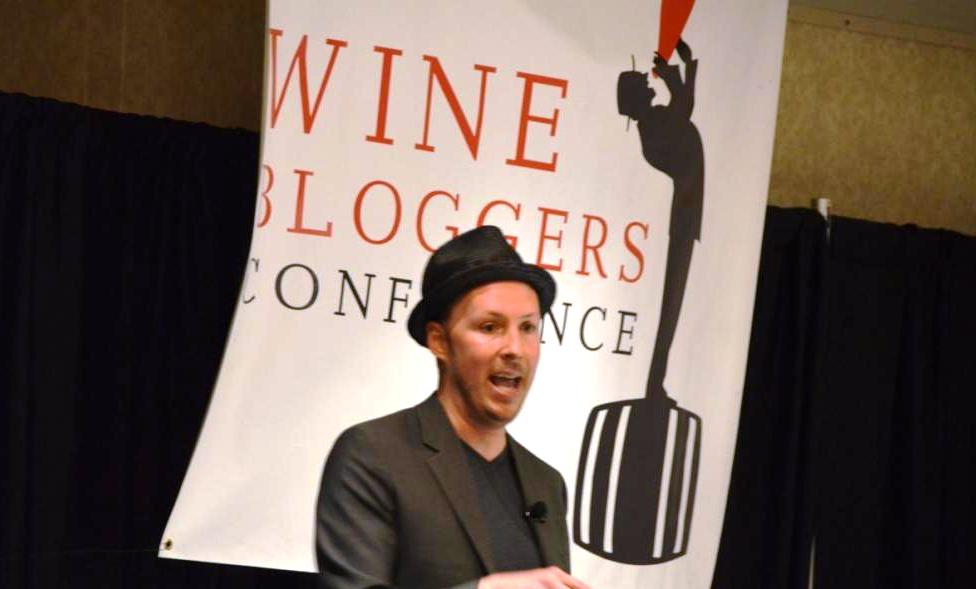 After telling his personal story, Corbett offered a number of do’s and dont’s for building the successful blog and converting it to the business. In short, here are the main ideas:
- Character Trumps Credentials – your passion is more important than many technical accolades and certifications you can achieve. Yes, the certifications are important, but it is passion, will and tenacity which will be a foundation of your success.
- Be different. Stand out. Don’t blend in. Yes, you have to find your own way, don’t be “one of many”.
- Find what works. Don’t repeat exact same thing over and over again, expecting that magically what was not working 100 times, will work on 101st. If something doesn’t work, looks for what will – but keep going.
- Hope is not a marketing strategy. Find where your readers are and figure out how to get in front of them.
- Your blog is not your business. Understand what your business is. The blog is just a tool to help your business, but not the business by itself.
- Keep going, constantly evolving. If you will continue looking for what works and improve all the time, you will [almost magically] leapfrog at some point to your success.
- Mastermind 101 – “You are the average of the five people you spend the most time with” – Jim Rohn. Talk to the people who “get it”. If you will talk to “achievers”, you will [at some point] becoe one yourself.
This is a very lose approximation of what Corbett Barr had to say, but I hope I was able to give you at least the basic idea. And for more information, head over to his web site and read, read, read.
Our day continued with the panel session of Santa Barbara winemakers. Session was moderated by Larry Shafer, the winemaker behind the Tercero label, and it brought together the people who were instrumental in starting and growing Santa Barbara wine industry – Richard Sanford, Ken Brown, Rick Longoria and Bob Lindquist. We learned about the Santa Barbara wine region which started in 1968 with the Santa Barbara Winery, and had grown into the prominent producer of Pinot Noir and Rhone-style wines. 40 different grape varieties are growing today in Santa Barbara area, and a lot of Santa Barbara grapes are shipped to Paso Robles and Napa and used in the coastal blends. Passion, friendship and love to the beautiful Santa Barbara wine region is something which was clearly showing through the words of all the winemakers.
Our next session was the speed tasting of white wines and Rose, which I will be talking about separately – I can only tell you that it was a fun exercise.
You know what else is great about the wine bloggers conference? You get to taste the wines which are not necessarily are even yet available to the general public. Case in point – a unique Viognier, Marsanne, Roussane blend from … Argentina – 2012 Hand of God Fingerprint Series Sobremesa Vineyard VRM White Blend. The wine is in the process of being brought to the United States, and nevertheless we had an opportunity to taste this aromatic, big and well structured white wine, which was simply poured by the winemaker while we were walking from one session to another.


The last session of the day was a so called breakout session, where we had to chose between three different sessions running in parallel in the different rooms. I decided to go and learn “How the Pros Taste”. This session was a panel discussion led by Steve Heimoff, the wine writer who is now the Director of PR for Jackson Family wines, Joe Roberts, a.k.a. 1 Wine Dude, and Patrick Comiskey, senior editor for Wine & Spirits magazine. The idea of the panel was to discuss the ways of the professionals tasting tens of thousands of wines every year, and issues they are facing – and I think the panel did the fine job with issues and challenges. Talking about the “ways” was a bit less successful – I would expect the panelists to explain more of a “how to”, their methods for assessing the wines in the mass quantities – which didn’t take place. And then we tasted 4 wines, 3 of which we selected by the panelists, and one “double blind”, unknown even to the panelists. The selected wines were supposed to represent the unique view point of each panelist, the wines which are “best of the breed” and emotionally engaging. Considering that, I would highly question the rationale of including very obscure wines in this “representative” tasting, but this is mostly what happened. The 2012 Yves Leccia Patrimonio Blanc, a Vermentino wine from Corsica, had nothing but the acidity and didn’t speak to me at all. It didn’t create nor demonstrated any emotional connection. 2013 Poet’s Leap Riesling Washington, while might be typical for Washington, didn’t deliver much pleasure either, and it didn’t connect with the Washington Rieslings as I know them from the Chateau St. Michelle or Snoqualme. Again, I would highly question inclusion of such a wine as “exemplary”. The red wines fared a lot better. 2011 Cambria Clone 4 Pinot Noir Santa Maria Valley was quintessentially Californian, with beautiful nose of smoked cherries, exemplary palate full of forest floor, gentle fruit and perfect balance. Our double-blind wine surprised everybody, including the esteemed panel – clean cherries and acidity were pointing in the direction of Montepulciano from Italy, and the wine happened to be an Yangarra Grenache McLaren Vale from Australia – but it was a very tasty wine. All in all, this was an interesting session, but I would like to see it done differently, more focused on classic methods and classic wines (definitely for the whites).


And then we had a mystery bus excursion. I will keep it a mystery until the next post (trust me, it was good enough for the separate post). When we came back in the evening, we still faced … yes, you guessed it – more wine! The Wine Tourism Throughout North America expo was focused mostly on California wines (or may be I was too tired to notice anything else). I tried a few wines, out of which 2010 Mad Hatter Napa Valley was clearly a stand out – dense and concentrated, with layered fruit, it had a lot of dark power (similar to its color), very drinkable now, but holding also a great promise to evolve. This wine was made by the famed Andy Ericsson (Screaming Eagle, Harlan, Favia and many others). Few other interesting wines were 2007 Terra Valentine Spring Mountain District Cabernet Sauvignon Napa Valley, very clean and classic. 2011 Steven Kent Vinery Cabernet Franc Livermore Valley was perfectly on the mark with beautiful cassis undertones, and 2012 Vasco Urbano “Norm” Grenache Livermore Valley was luscious and delicate, with nice fresh fruit on the nose and the palate.


The “before-Party” for after party was generously hosted by Banfi folks in one of the hotel suites, and the highlights were mostly Italian wines with the few of the wines from Washington state. The 2013 Pacific Rim Chenin Blanc Yakima Valley was perfectly balanced and had an excellent fresh white fruit, a bit of mineral notes and rounding acidity. The Sartori di Verona Ferdi Bianco Veronese IGT was very unique and unusual, an Amarone-style wine (100% Garganega grapes, dried for 40 days on straw mats), with big fruit notes, full body and somewhat sharp acidity.


And last, but not least – an offical after-party, hosted by J Vineyards and Jordan! Both J and Jordan are some of my favorite wines in general, and what a treat it was! Probably unsurprisingly, I was a bit tired after such a day, so I didn’t take too many pictures. But the wines were outstanding. J were pouring both of their sparklers, the White and Rose, as well as the Pinot Noir. And Jordan… How about a full vertical of the Jordan Cabernet Sauvignon Alexander Valley from 2002 until the 2008, including 2005 and 2006 in both 750 and magnum sizes! All the wines, including 2002, tasted fresh and delicious – again, no detailed notes (if you want to blame me for the luck of attention, be my guest). I was especially happy to see that 2002 showing absolutely no signs of age, and 2005 being delicious with still powerful tannins – I have a few bottles of 2005 in the fridge and it seems that I have no reason to touch the for a good while. 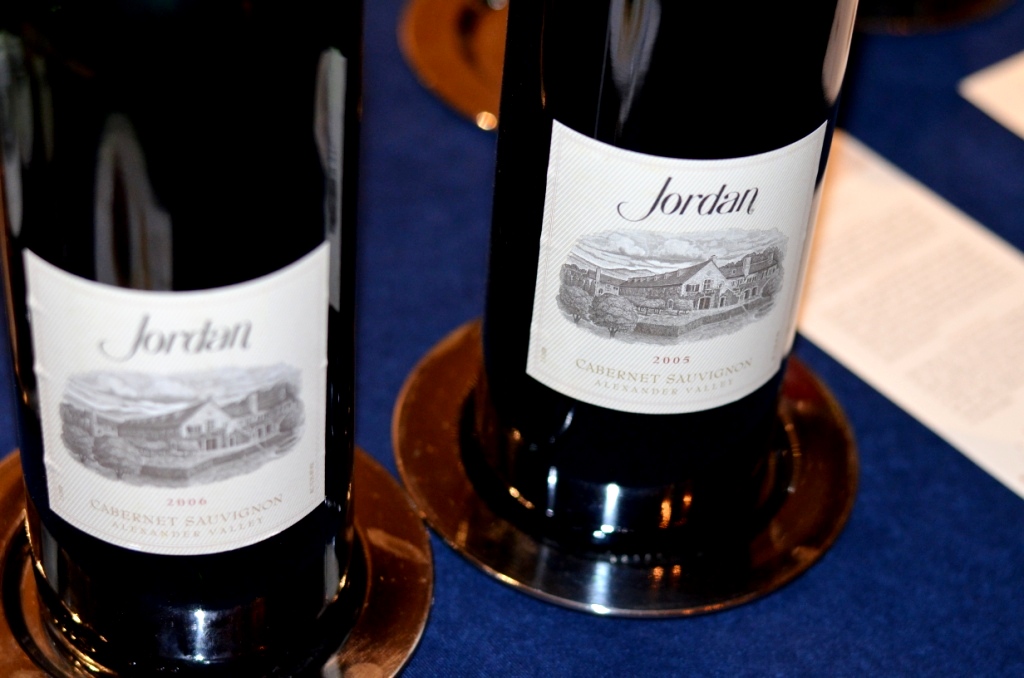 For what it worth, this was an attempt to give you an idea of the happenings in the first day of Wine Bloggers Conference (two more posts will be coming). Hope you are still reading this, and if you are, I want to thank you for your patience. Just one question, if I may – after reading this post, did it make you want to come to the #WBC15, or stay away from it as far as possible? Let me know! Cheers!
P.S. For some reason, this was one of the most difficult posts I ever wrote for this blog… But I’m glad I finished it.
Restaurant Files: Modern Classic or Classic Modern? Carl Anthony Trattoria in Monroe, CT
 When it comes to the Italian cuisine, or probably any cuisine for that matter, what constitutes a “classic cuisine” for you? Old familiar dishes, which stay unchanged for many many years (if it works, don’t touch it)? And then another question is what is the “modern cuisine”? You change the recipe all the time, just to make sure you use ingredients which are “in vogue” (like pork belly or Brussels sprouts today)? Or do you take the familiar dish and put a spin on it? If you ask me, I’m all for the “tasty” – I’ve had classics such as fried calamari or mozzarella sticks done in many unusual ways, so I generally don’t trouble myself with classification “classic versus modern” – if it tastes good, that’s all I want (okay, it is definitely a bonus when food also looks good).


Let me explain why I am taking about this classic/modern relationship. Few weeks ago we visited restaurant called Carl Anthony Trattoria in Monroe, Connecticut. The restaurant had been around for 15 years, and while it has a decidedly Italian flair, the menu represents that exact combination of classic and modern dishes I’m talking about here. You know what – forget this classic and modern – creative is the right word – and I think you will agree with me when we will be talking about food. But – let’s start with cocktails and wine.
The cocktail list was very creative (aha, see, I used that word again) – and here are some of the cocktails we tasted: Mambo Italiano (Averno Amaro, muddled mint and lemons, ginger ale), Black Cherry Mojito (Cruzan Black Cherry Rum, muddled mint and cherry), Cucumber Gimlet (Pearl Cucumber-fresh basil, lemon and lime juice on the rocks) and Clementine Caipirinha (Leblon Cachaça, St. Germain, clementine, orange & lime). Caipirinha was nice, but not necessarily my favorite – I simply prefer more lime.


The highlight of the cocktail extravaganza was the concoction called Campfire (graham cracker glass rim drizzled with chocolate syrup, Smirnoff Fluff Vodka, Baileys, flaming marshmallows). While I didn’t taste it, I captured it in the making:


When it comes to the wine, we didn’t really get a chance to look at the wine list, the wine were preselected for our dinner. The choice of red was 2011 San Giuseppe Pinot Noir Veneto IGT (12% ABV). I’m yet to find a Pinot Noir (or a Pinot Nero as it is typically called) from Italy which I would like – this was definitely not the one. This wine was flat and boring – it was drinkable, but really had no life in it (Drinkability: 7- ). The white wine, 2012 Donnachiara Fiano de Avelino DOCG Montefalcione (13% ABV) was very good – sweet fruit on the nose, plump, open, with touch of minerality and fresh cut grass, nice acidity (Drinkability: 8- ).


And now, to the food!
We started with the two appetizers: Bleu Chips (hand-cut potato chips, gorgonzola fonduta, fig jam, bacon) – a delicious combination, and besides – who can say no to the potato chips? And then the “Original” Balsamic Calamari – the name says it all – it is fried calamari, drizzled with the balsamic reduction – a somewhat unexpected, but a very tasty combination.


Our dinner continued with more appetizers. First, Heirloom Tomato Salad Bruschetta, where you could actually taste a difference in the tomatoes (many times I bought so called heirloom tomatoes in the store which tasted exactly the same as regular tomatoes). Next dish, Charred Hierloom Carrots (straciatella cheese, cilantro-honey citronette) was one of my favorites, as it was simple, yet delicious (I since made the carrots on the grill in the same style, and everybody loved them). Kobe Meatballs (tomato sauce, garlic bread) were very nice, but not necessarily better or worse many other well-made meatballs ( which to me means that they shouldn’t be too dense, and these were just fine). Burrata (bacon jam, pepperoncino) was traditionally delicious, but my very favorite appetizer was Fig & Beet (baby greens, goat cheese ricotta, onion, wildflower honey toasted oats, marcona almonds, Vincotto) – I’m very impartial to the beets salad in any shape and form, and the flavor combination of the beets, marcona almonds and figs was just spot on.


Next we had two entrees family style. “Loaded Baked Potato” Gnocci (hand-made potato pasta pillows, smoked bacon, broccoli, Italian cheddar) was can’t-stop-eating-this delicious and incredibly satisfying. I would even say “homey”, but – this is a descriptor for the next dish. Italian “Ramen” (hand-made noodles, chicken broth, local egg, parmigiano, pepperoncino) had such a surprising simplicity to it, nevertheless the whole table went “wow” after the first sip. I don’t know if chef Sam used some kind of magic potion on this soup, but despite the hot day, this soup was literally warming up the whole body and soul, and this dish alone will definitely worth a separate trip as the temperatures will stop dropping. Our last entree was served on individual plates, and consisted of Pig Roast (slow roasted “Porchetta alla Romana”, broccoli rabe, pickled farm stand tomato) and Wild Ivory King Salmon (spicy spinach, Sultana raisin vinaigrette, walnut romesco aioli). The Pig Roast was perfectly done – meat was falling apart, while the skin was delightfully crisp. And the Ivory King Salmon? Wow. This was my very first encounter with the white salmon – delicious, mild flavor profile, again, very comforting and satisfying.


Believe it or not, but we still got dessert after such a meal. Blueberry Upside-down cake was every morsel delicious. Then Coffee & Doughnuts. I can tell you that in general, I’m not a fan of doughnuts. But this cappuccino/chocolate semifreddo sauce was beyond delicious, it was divine – together with the doughnut, it was one incredible flavor combination. And the Quattro Crème Brûlée? You must love this dish for the presentation alone – and as a bonus, it was outright delicious.


As usual, we had an opportunity to talk to the Executive Chef and Owner Sam DeVillis:
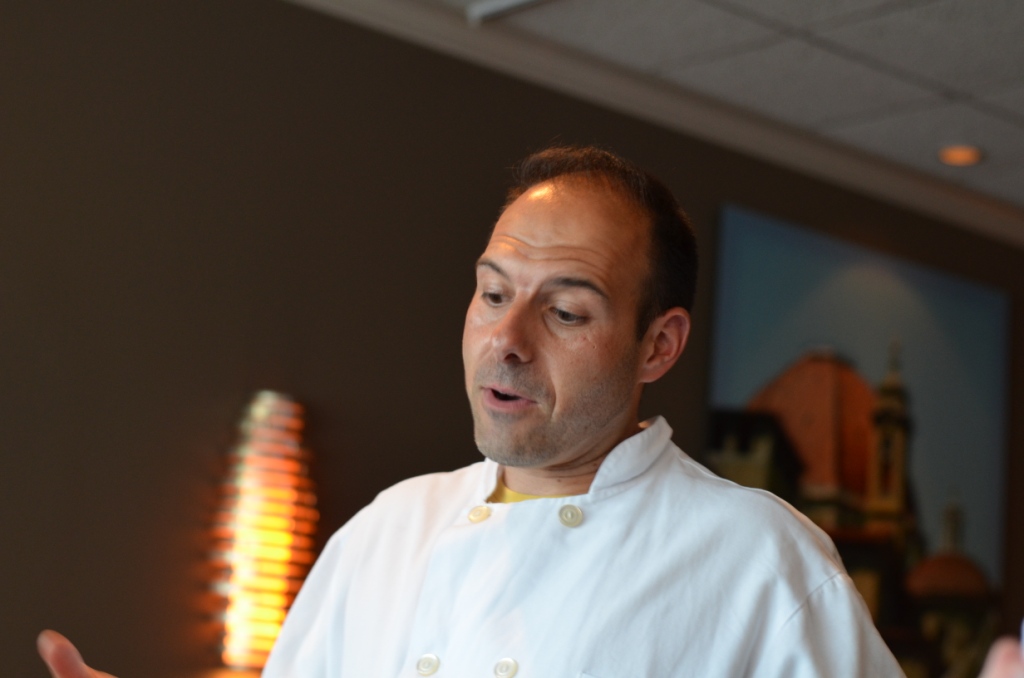
and of course we thanked him wholeheartedly for the spectacular meal.
There you have it, my friends. I can’t tell you if our dinner was more of a classic or modern, but it was top notch creative, and in and out delicious. As Carl Anthony Trattoria celebrates its 15th anniversary this year, I can only wish Chef Sam and his team best of luck to continue satisfying all the demanding foodies for many many years ahead. Cheers!
Disclaimer: I visited the restaurant as a guest of the management. All opinions are my own.
Carl Anthony Trattoria
Clocktower Square
477 Main St
Monroe, CT 06468
(203) 268-8486
http://www.carlanthonys.com/index.htm

Wine Bloggers Conference 2014 (#WBC14), Day 1
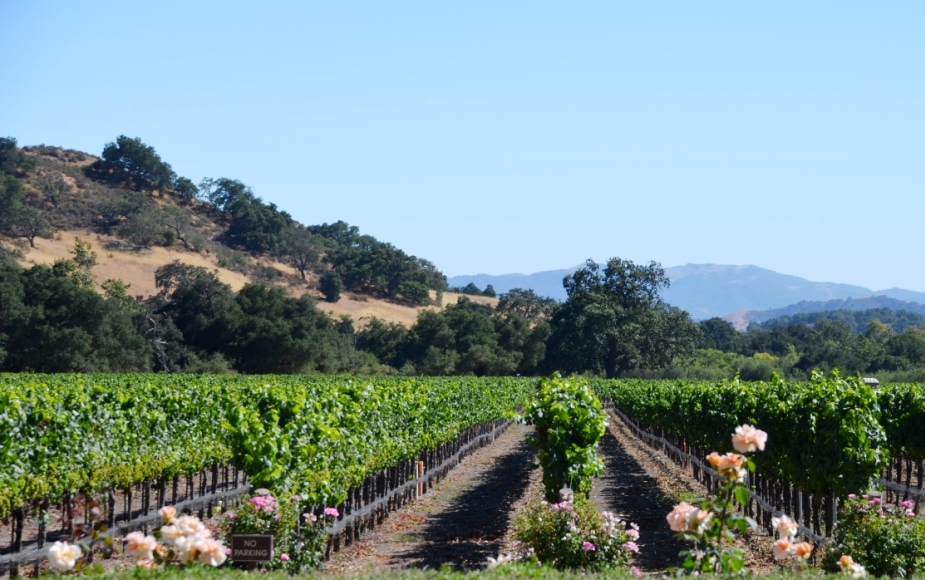 I’m attending the Wine Bloggers Conference 2014 in Santa Barbara, California, and what I will try to do is to give you a brief round up of my daily experiences. This is my only hope to have some level of concise picture of what was happening at the conference – there are way too many wines to taste and way too many experiences to have – unless I do this daily, it will all blur together next week.
In case you are not familiar with the event, Wine Bloggers Conference is exactly what the name says – an event where wine bloggers, wine writers and wine producers get together and discuss all the aspects of the “wine media”. Now in its 7th year, the Wine Bloggers Conference (WBC for short) is taking place in different locations, generally related to the wine production, and this year the location is Santa Barbara county. This is my first WBC event (had been contemplating for a while), so many things are new to me. That’s all I have for the intro, if you are interested in more details, please take a look at the WBC web site.
Here is what I managed to do on my first day. I started the trip early in the morning (at about 3:30 AM) to get from New York to Santa Barbara. The two hours delay, thanks to United (my beloved airline with love/hate relationship), didn’t help, but still didn’t derail may plans, only made me to move a bit faster. Arrived, got a car (with additional unexpected delay now courtesy of Hertz) and then started driving to the Zaca Mesa winery, my first destination. Took the wrong turn, ended up on the beautiful mountain-side drive, so things started to turn to the better.
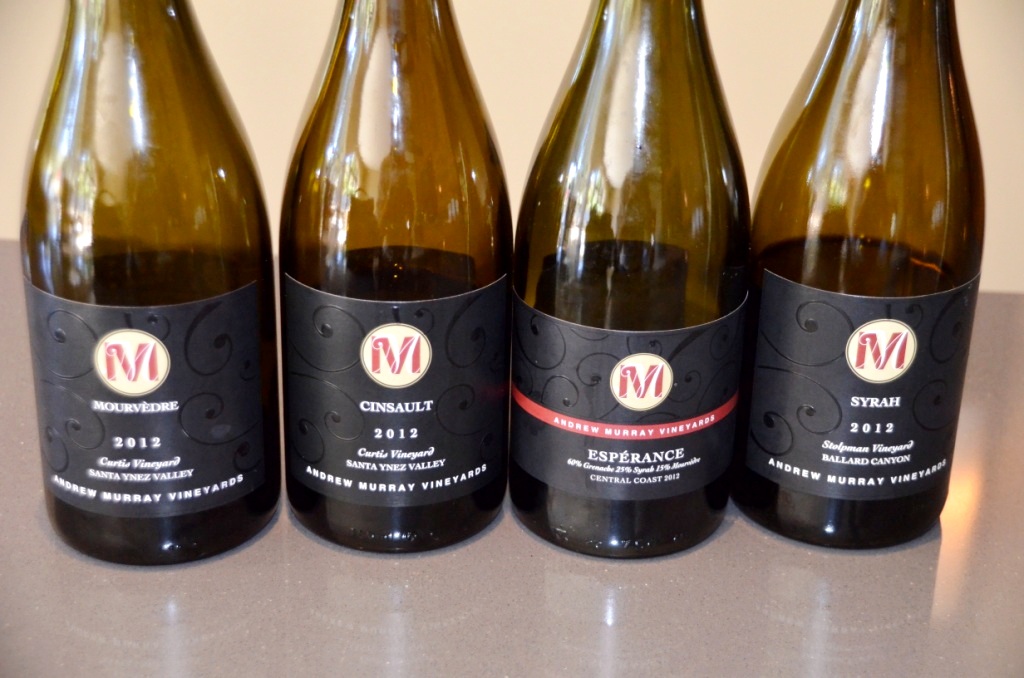
I managed to visit three wineries which we were on my list for Santa Ynez Valley – Zaca Mesa, Fess Parker and Andrew Murray. I will not give you full details of the tastings now (will reserve for the separate post), but I can tell you that all three wineries had some absolutely outstanding wines (outstanding enough to force me to break my resolve not to buy any wines during this trip). Syrah was a star at Zaca Mesa, Pinot Noir was outstanding at Fess Parker, and I was blown away by the rendition of all the Rhone varietals (Cinsault, Mourvedre, Syrah and Viognier) at Andrew Murray Vineyards – here is one picture for you:
After the tour of the wineries, I arrived to the hotel, and later on went for the expo and reception, where we had an opportunity to taste wines (surprise) and look at some innovative products.
As with any conferences and expos, we were offered a number of giveaways. Here is the most thoughtful one – bottle of water with attached travel pack of advil, for the “morning after”:

Water and Advil, how thoughtful!
Before I wil present the highlights of the tasting, let me tell you about couple of interesting product presentations. First, there was a Sonic Decanter – the device which subjects the bottle of wine to the sound energy for about 35 minutes, which completely changes the taste profile of wine. First I wanted to dismiss it as a simple gimmick, but after tasting the wine before and after, I found out that it actually works and changes the taste. If this is a good thing or a bad thing, I will let you decide after the separate post.

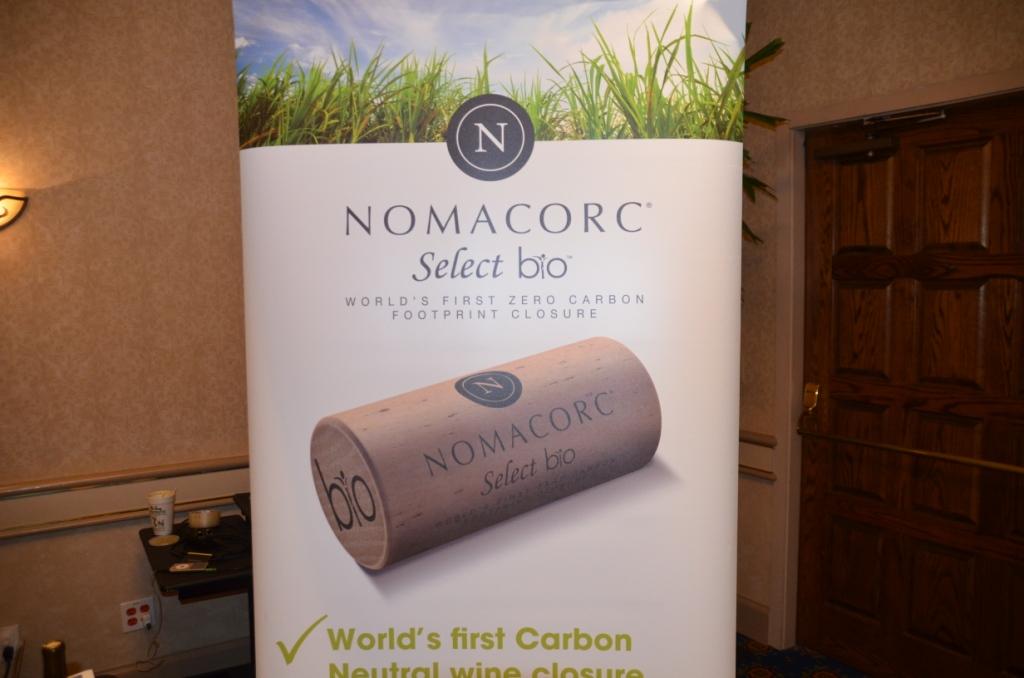 Another interesting presentation was given by Nomacork, a producer of the engineered cork. This cork is made out of the real cork tree, but it is not just a piece of the bark, it is made out of the actual cork tree material, and it can be engineered to allow different levels of oxygen exposure to the wine. To show how it works, the folks at Nomacork had a tasting of the same wine, 2012 Viognier, bottled at the same exact time with two different corks, allowing different levels of the oxygen penetration. The wine which was allowed more oxygen was showing considerably better, so this definitely works. The advantage of Nomacork is consistency, as it eliminates bottle variation, ability to control oxygen intake and the fact that it is still made from the natural material (versus Stelvin screw top, for instance) – and it is the cork which you will have to pull out and not just screw off. The disadvantage to me – I like the natural cork, and I like bottle variation, that mystical element in wine. But – as anyone else, I don’t like tainted wine… So I really can’t make up my mind on this.
And now, few of the wine highlights. Here is what I liked during the tasting – I can only give you “best memory effort” notes, as there were no paper handouts of any sort, so I had to rely only on my camera and the memory. Still, these are the wines which stood out.
2012 Ken Brown Chardonnay Nielson Vineyard Santa Maria Valley – beautiful, classic Chardonnay, with all the flavors being present and in balance – vanilla, butter, toasted bread, perfect acidity.
2013 Tercero The Outlier Gewurztraminer Santa Barbara County – I was very impressed – Gewurztraminer is one of the most difficult grapes to achieve balance, and this wine had it – touch of spice, touch of floral notes, creamy and round – an excellent wine.
2011 Alta Maria Vineyards Pinot Noir Santa Maria Valley – classic California Pinot Noir, good concentration, very well balanced.
2010 Baehner Fournier Vineyards Solus Cabernet Sauvignon, Santa Ynez Valley – classic, concentrated, hint of green bell peppers, delicious overall.
2011 Santa Barbara Winery Primitivo Joughin Vineyard, Santa Ynez Valley – another surprise – excellent, balanced wine, muted raspberries and good concentration, good acidity. Very solid effort.
2010 Ken Brown Pinot Noir Rancho La Vina Vineyard, Sta. Rita Hills – excellent California Pinot Noir – dark power and finesse.
2012 Alma Rosa Pinot Noir La Encantada Vineyard, Sta. Rita Hills – another excellent California Pinot Noir – perfect fruit and perfect balance.
2011 Longoria Tempranillo Santa Ynez Valley – and yet another surprise. Excellent Tempranillo, more on the level of Toro than Rioja or Ribera del Duero – powerful, dense, but well balanced and not over the top. I’m happy do discover more of the old world grapes perfectly executed on the US soil.
That concludes my report about the first day of the conference. Stay tuned, as we are only getting started : ). Cheers!
How Do You Describe Coffee Smell In Words – Visiting Shearwater Organic Coffee Roasters
 Seriously, I really mean it as a question – how do you describe coffee smell? I’m asking here the people who cherishes or may be even worships the good cup of coffee – how one can describe that “pick-me-up” goodness when you walk into the room and smell freshly brewed, real, delicious coffee made with love? It is hard, right? You can describe the effects of that smell (invigorating, uplifting, awakening…), but not the smell itself. But – if you are into the coffee, it is enough to say “the wonderful smell of fresh coffee”, and we understand each other. And let me throw in a few pictures for the good measure…
When I walked into the shop of Shearwater Organic Coffee Roasters in Trumbull, CT, I felt like a kid in the toy store. It was all about coffee – the smell, the coffee makers, huge bags of coffee beans – it was all coffee, coffee, coffee. Shearwater Coffee Roasters has a very simple mission – to let people experience the best possible single origin organic coffee, one small batch at a time. This is a loaded sentence, so let me explain it in a few more words.
Let’s start with “organic“. All the coffee roasted at the Shearwater is USDA certified organic. The coffee comes from all of the world, from Guatemala., Colombia, Ethiopia, Costa Rica and other places, but only from the producers which had being certified by USDA as organic. USDA Organic requirements cover full lifecycle of the coffee production, from the soil and trees handling until the green coffee beans will be packaged for shipping. That organic certification also includes the Fair Trade Certification, which means that the people who grow the coffee are treated properly. Additionally, the Shearwater production process and the whole facility had being also certified by the USDA, so the final product which goes into the little yellow bags is in and out USDA Certified Organic.


Now, a few words about “single origin“. The best way to explain the concept is in the analogy with wine – this is the wine blog after all! Single Origin is really an equivalent of the appellation, or in some cases it can equated to the estate or even single vineyard. Same as grapes, the coffee is a product of mother nature – it exist in multiple varieties, and its taste will be affected by the soil type, the climate, the amount of water, the altitude – yes, you can call it a “coffee terroir” – and if coffee beans are treated properly from the bud breaking until it will make it into your cup, you will be able to taste it.
Now, the “small batch“: that simply means that coffee is processed (i.e., roasted) one small batch at a time. How small? 20 pounds to be exact. 20 pounds of fresh coffee beans are roasted at a time. That’s it – only 20 pounds. Working in the small batches, you have much better control over the process, and you can ensure that all the beans are roasted uniformly. And you can also make each batch to taste individually different. Which gets us to the last term I want to explain – “best possible”.
The “best possible” coffee combines everything which we talked about before – the organic, single origin, the small batch – but it is also a process of Artisan Coffee Roasting. At the heart of the Shearwater operation, supporting the passion of Ed Freedman, the Head Roaster, is the highly efficient machine called Diedrich IR-12, an infrared coffee roaster. This machine allows very efficient control of the temperature during the roasting cycle (which is very short – takes about 14 minutes to produce medium roast coffee), and the roasting process can be fitted exactly for each and every varietal and type of coffee, to allow it to achieve its fullest potential! How about that for the “best possible” coffee? As I said, I’m fully relying on pictures to share my excitement, so here is the machine:


The machine is controlled manually, but it allows full recording of the process (time/temperature changes ) on the computer, so for each batch it is known precisely how it was produced and how the process can be adjusted if and when necessary. On the pictures below you will see Ed Freedman explaining what happens during different stages of the roasting process and how it is recorded on the computer:


The process starts from the green coffee beans been loaded inside, and the temperature gradually increased until you hear coffee to start crackling, pretty much like popcorn. Once you hear that noise, depending on the type of roast you are producing (light, medium, French etc.), you will have to decide for how much longer to continue the process. Also you can all the time have the visual of the progress:
Once you are done, the coffee goes out of the roasting chamber and now it should be cooled off very quickly, to make sure it is not going to roast any more:


Once the coffee is cooled off, it goes into the bin to rest – the coffee needs to rest at least for 2 days before it can be packaged and sold:
 That’s it! Short 14 minutes, 20 lb of the green coffee beans become 17 lb of the wonderful roasted coffee, and you have a room full of delicious invigorating smell as a an added bonus. And you can also check what kind of roast did you achieve, using this simple set of the colored circles (of course you can buy a machine for $10,000 which will do that for you, but Ed feels quite happy with the circles : ) ):


That concludes my story about the Shearwater Coffee Roasters. They are located in Trumbull, Connecticut, so if you live close by or visiting the area, that might be a good place for you to visit (they sell all the coffees and coffee makers right at the shop). If you are not local, but still want to experience Artisan single origin organic coffee at its best, you can order directly from Shearwater web site.
I hope I managed to make your Monday morning – no, I can’t deliver the smell, but I hope I gave you enough coffee pictures so you can add the smell on your own. Oh yes, the cup of fresh coffee sounds divine – time to make one. Cheers!
Last Bottle Sign Up ($10 credit)




 Talk-A-Vino