Archive
Alcohol Shenanigans
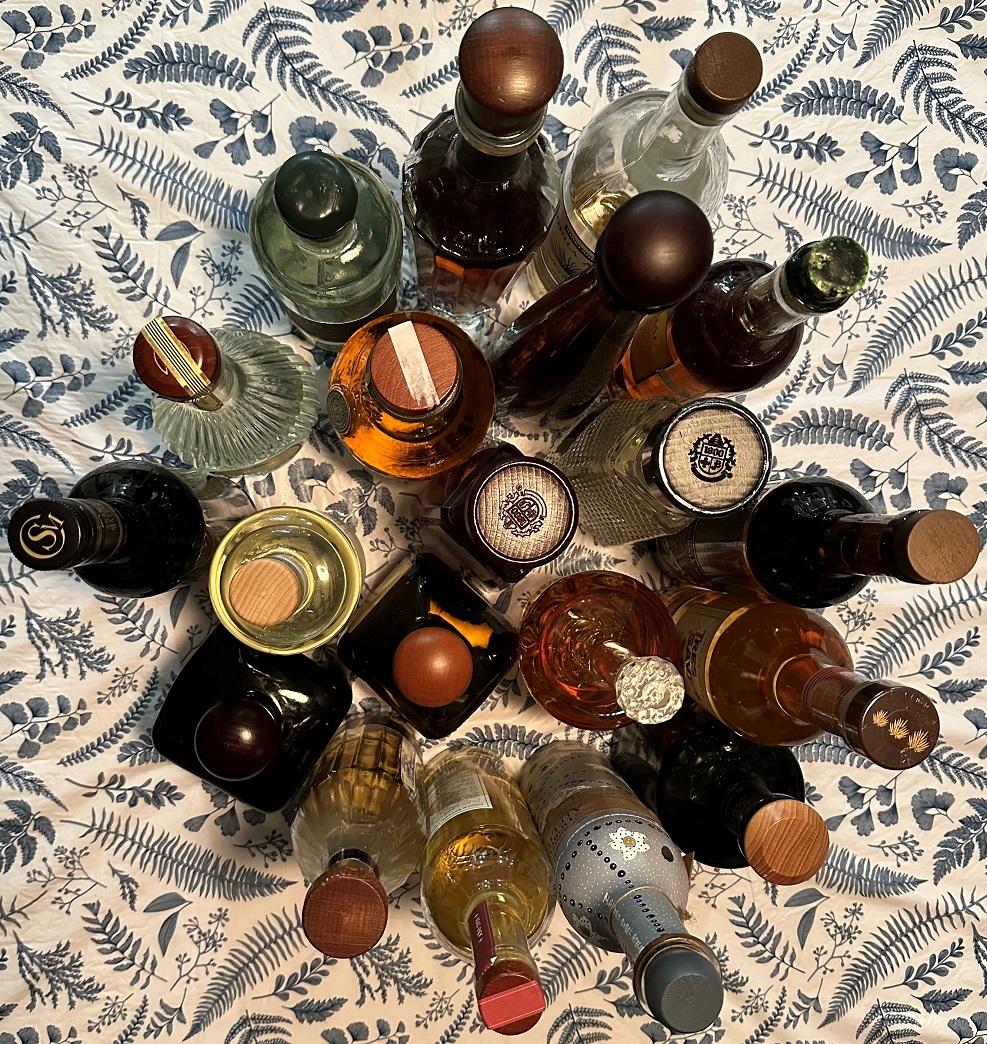 Alcohol Shenanigans.
Yes, I know. The title is not great. Leaves a horrible impression. Sounds like a story about college dorm adventures. And yet this is all I can come up with for this post.
“Next time, we will taste tequila,” said my friend before going home after our cognac tasting. “And I will bring Tequila”, she said.
A few weeks ago, the “next time” arrived – she showed up with about 20 bottles of tequila, mostly anejo with a few interesting oddballs. This is where the shenanigans started.
Mirriam-Webster: Shenanigan Definition: “a: tricky or questionable practices or conduct“
Let’s begin with the fact that we had no idea how you are supposed to taste tequila. Tequila is generally not considered a sipping liquor. Go to the bar, ask for tequila, and it will be served in a shot glass. And here we were not planning on any shots – the plan was to taste tequilas the same way as we do the cognac and scotch. After a short(?) brain freeze, we settled on small glasses – for the people in the US, if you ever bought Tiramisu dessert from Costco – these are the glasses I’m talking about. And off we went.
I think we went through almost a full lineup the first night. I’m sure we made a number of mistakes in the order, as some tequilas tasted sweet and not even reminiscent of a traditional agave – and they tasted very different the next night. And I didn’t mention it before, but we went a bit beyond tequila in the tasting – we also had Mezcal and Sotol. While I’m familiar with Mezcal as a category (side note: Tequila is a subset of Mezcal. Tequila can be made only from blue Agave, but Mezcal can be made from 30 different types of Agave), Sotol was completely new to me.
Sotol is a distilled spirit from Chihuhuan desert in northern Mexico made from the plant called Desert Spoon (there are other scientific names for the plant, but I will leave it for you to research). The plant takes about 15 years to mature, and the yield is about one bottle per plant. Sotol is clearly not widespread at the moment, so I was happy to expand my liquor vocabulary.
This tasting was just for fun, so as you might imagine, I didn’t take any notes. Therefore, the below is just a collection of impressions. We had 3 different types of Don Julio. The Riposado was good, Anejo was very good, and neither one of us cared for Don Julio 1942 Anejo (I call this “overdone”). Chinaco Blanco tequila was very good, restrained and herbal. 1800 Anejo was very good, however, 1800 Anejo Cristalino was even better. I guess when the color was removed to make regular Anejo of the clear color, some of the impurities were filtered out as well, so the resulting tequila was one of the smoothest ever.
Costco’s Kirkland Tequila Anejo was somewhat unimpressive (ok, but too light) – I’m sure it is fine for the money. At some point, we tasted my beloved Tres Generaciones Anejo, which I always compare with the cognac based on its smooth and mellow showing. It had such a pronounced agave taste that I even brought my own bottle thinking that something was wrong with the bottle my friend brought, and my bottle tasted identical. No idea what has happened.
Don Roberto 1924 Anejo was a favorite of my wife and my friend. I liked it too, but it was not my favorite. Casino Azul Anejo, Ocho Single Estate Anejo, Patron Anejo, Centenario Anejo, San Matias Gran Reserva Extra Anejo were all solid, excellent tequilas I would be happy to drink (sip) any day – and yet we had a few more that fared just at an exceptional level.


Wait, before we get to the exceptional ones – the promised oddballs. First, there was not an oddball, but an absolute curveball – 21 Seeds Cucumber Jalapeno Tequila Blanco. It was incredibly spicy to the point of not being able to taste much of anything after a small sip of this fire water. I guess this would be okay as a cocktail mixer, but this is not something I would enjoy by itself.
Los Magos Sotol was very interesting. The herbs were very pronounced on the palate, together with green pepper (not spicy) and cucumber. Truly a unique taste, in a league of its own – of course it makes sense as this was my very first Sotol without any frame of reference.
Next was my personal favorite liquor of the tasting – Mezcal Ilegal Anejo. A typical Mezcal has smoke, both on the nose and on the palate. This Mezcal was truly something else. The only reference I can offer to you is a freshly made log cabin. I don’t know if you ever walked into the log cabin which was recently built – the one that has a smell of freshly cut lumber, this sweet aroma that I can’t really describe. But if you ever experienced that, and if this is something you enjoy, this Mezcal was instantly transporting you to such a cabin – you didn’t even need to close your eyes.


The last Tequila was truly the king of the first night – Gran Centenario Leyenda Extra Anejo. It was round, it was smooth, it was delicious – and it was hiding the agave flavor perfectly well. When I tasted that tequila, I said – tomorrow we are going to compare our “best in show” with cognac. And then we will bring the scotch if we have to.
There is still one more tequila to present – Maestro Dobel Atelier Extra Anejo. A very unique and unusual bottle to begin with. And as far as tequila itself is concerned, it was very round, but somehow was leaving me unmoved, especially in comparison with Gran Centenario. So when we settled for the night’s favorites, Maestro Dobel was not in the picture – but it was a runner-up.

I have to say that I was discouraged by a somewhat puzzling showing of some of the favorite tequilas, so I was convinced that we are not doing the tasting right. The next day, I decided to do a search online to look for recommendations regarding the proper way of tasting the tequila. In one of the first videos, I came across the recommendation to use the Champagne flutes – which made good sense. Our next night’s tasting of Tequila versus Cognac was done using Champagne flutes for Tequila and standard brandy sniffers for the Cognac.
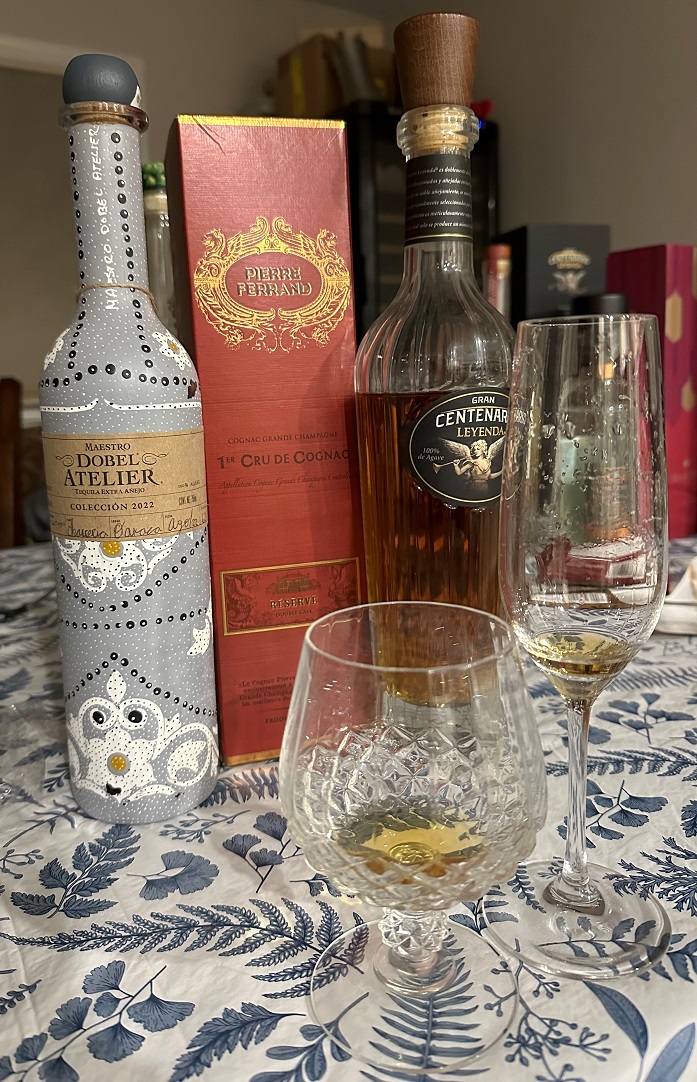
Before we started, I was absolutely sure that cognac, pretty much any decent cognac would have no issues beating tequila in side-by-side tasting. Of course, the only comparison metric we used was a simple “Which liquid do you like more”. And my friend insisted that Dobel Atelier has to be in the tasting – I agreed without much enthusiasm.
As we moved along in the tasting, a simple truth emerged – nothing could beat Dobel Atelier. Granted, I didn’t have the XO-level cognacs to throw into this battle, but we had a few of the excellent cognac specimens – Pierre Ferrand Reserve, Hardy Legend 1863 (spectacular cognac), Park Borderies Mizunara Oak – and Dobel Atelier was still smoother, rounder, and richer than any one of these.
The next night we brought in the Scotch which we both love tremendously. Not only that, but we also decided to switch glasses again and this time we did the tasting using proper, official Glencairn Whisky Tasting glasses. But the story repeated itself. Macallan 15, Macallan 18, Highland Park 16, Lagavulin 16, Glenmorangie 18, Compass Box Affinity – Dobel Atelier was unbeatable…
Truth be told – Dobel Atelier was the most expensive bottle compared with anything else we tasted – if you can find this bottle here in the US (my friend brought it directly from Mexico), it would set you back at least $250. But – I learned about the price of this tequila only after we were done with the tasting, so this was definitely not the factor – and if anything, it would have an opposite effect on me (I’m always a lot more critical of the expensive bottles versus the more reasonably priced ones).

Here you can take another good look at our alcohol shenanigans. Was this tasting a stupid idea? Quite possible. Was it lots of fun? You bet it was. And nobody got hurt 🙂
I’m not trying to be your source of inspiration, but hey, maybe you want to try such a tasting on for size? Cheers!
Weekend in Turley, With a Dash Of Carlisle and Hardy
Many moons ago, my friend Henry and I discovered Turley wines. We were at a restaurant in Manhattan with our wives, either before or after the Broadway show, and on the wine list, Turley Zinfandel (either Juvenile or Old Vines) was one of the reasonably priced wines, so that was the wine we ordered. I don’t remember if I heard about Turley before (maybe), but tasting that wine was a pivotal moment – we fell in love with Turley wines.
Turley Wine Cellars was founded in Napa Valley by emergency room physician, Larry Turley in 1993, and went on to become one of the most prominent Zinfandel producers in the US. Turley produces about 50 different wines from about 50 different vineyards, most of them organically farmed, from all around California. Many of those vineyards date back to the late 1800s. While Turley might be best known for its Zinfandel and Petitte Sirah, they also produce a number of white wines, a number of other reds, and even Cabernet Sauvignon, first produced in 2010, and eloquently called The Label (Larry Turley’s famous saying was that Cabernet drinkers drink “the label”, hence the name – I had my own share of troubles with this wine).
Turley wines are hard to get in the store, and if you really would like to enjoy them at will, you need to be on the Turley mailing list. Turley was one of the very first mailing lists I managed to get on more than 10 years ago, and I had been a happy customer ever since. My friend Henry finally got his first allocation about two years back.
A place on the mailing list still doesn’t guarantee you access to each and every wine Turley makes, and their list operates on a “first come, first serve” basis – I missed quite a few wines that were included in my offering, but disappeared much sooner than I could make up my mind.
Last Saturday, Henry was coming over for dinner, so I had to make it a Turley evening.
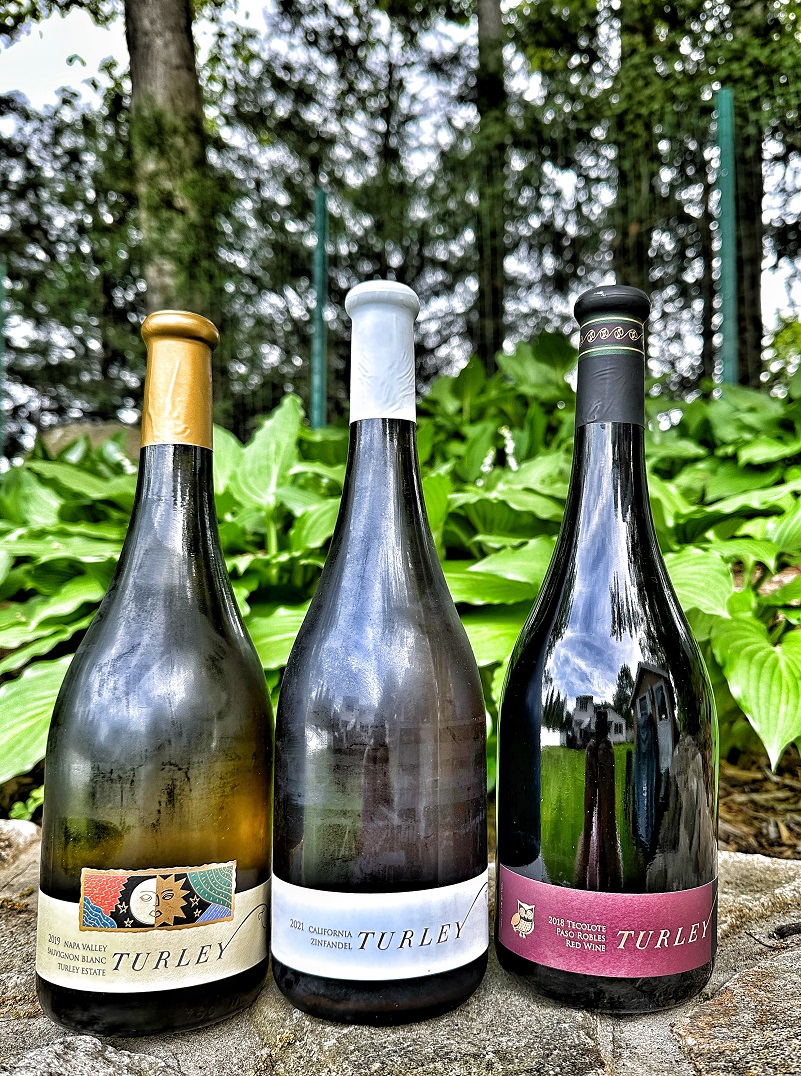
Turley makes only two white wines – Sauvignon Blanc and a blend called White Coat. The wine we opened was the 2019 Turley Estate Sauvignon Blanc Turley Estate Napa Valley (13.4% ABV). It is interesting that Sauvignon Blanc was one of the original wines produced back in 1993. Sauvignon Blanc plantings at Turles Estate were replaced with Zinfandel, but then Sauvignon Blanc was planted again on a small section of the dry-farmed, certified organic vineyard. The wine was fermented using natural yeast and it was bottled after 6 months in 100% French, used oak barrels. The wine was an absolute delight, showing beautiful whitestone fruit, perfectly present, perfectly elegant, with fruit and acidity singing in complete balance.
I had a little bit left in the bottle after that evening, and on Sunday I was able to please the most discerning palate in our household – my mother-in-law. She came over for Mother’s Day on Sunday and wanted to drink the white wine. When it comes to wine, she is completely unpredictable, and I always try to pour her wine without showing the bottle – she has lots of preconceived notions about wines and the regions, so I’m always trying to make sure she will just try the wine first, and then I can tell her where it is from. To my delight, she liked the wine, and even when I told her the wine was from California, she still liked it – a serious achievement in this household.
Our next wine was 2021 Turley Zinfandel Rosé California (12% ABV). This wine sometimes is called White Zinfandel, but only to poke fun at the uninitiated (and the bottle is adorned with the white label). This wine is impossible to score – you literally have to press “buy” as soon as your summer offering arrives. The wine is fermented in stainless steel and aged in used French barriques. It is lip-smacking, it speaks cranberries and strawberries, it is very Provençal in its presentation, but Californian in its soul.
And then there was Tecolote – 2018 Turley Tecolote Paso Robles Red Wine (15.7% ABV). This wine is rarer than rare, as you need to know it exists, to begin with. I got it once through some special holiday offer, but it is never included into the standard seasonal offerings. This wine is typically only available in the tasting room, but being a mailing list member has some advantages – I asked if I can get a few bottles, and they arrived just in time for us to enjoy. This wine is a Spanish-inspired blend of 60% of Grenache and 40% Carignane, coming from the specific block in Pesenti Vineyard, planted in the 1920s. Tecolote means “owl” in Spanish, and this is how the vineyard block is also called. The wine offered layers of lip-smacking black cherries, kitchen spices and sweet tobacco. A perfect balance of textual presence, fruit and acidity made this wine disappear in no time…
Next, let me step away from the wine for a bit – but not from the grapes. I rarely talk about cognac on these pages, but then I have an experience to share.


On an average day, I’m a scotch drinker. But of course, I would never refuse a sip of a good cognac. The keyword is “good” – nowadays, it is difficult to find a good-tasting cognac at a reasonable price in the US. However, my recent cognac tasting with my school friend led me to the discovery of Cognac Expert. Subsequently, I got a recommendation from Cognac Expert for the cognac I now enjoy immensely – without any need to break the bank – Hardy Legend 1863 Cognac. This cognac was produced by the Cognac House of Hardy, to commemorate the founding of the Hardy house back in – yes, you guessed it – 1863. This cognac is a blend of spirits made from the grapes coming from Borderies and Petite Champagne growing areas, aged from 2 to 12 years and finished in classic Limousine oak. From the first enticing smell to the long-lasting, coffee-loaded finish, this cognac offers the ultimate pleasure of balance of fruit, spices, and acidity. And at $40, this might be the best QPR cognac out there today.
Last but not least – 2015 Carlisle Mourvedre Bedrock Vineyard Sonoma Valley (14.9% ABV), which I opened on Sunday. Carlisle is another one of my favorite producers, specializing in Zinfandel, Syrah, and Petite Sirah – and some other grapes. The fruit for this wine came from the 130+ years old vineyard, planted in 1888. The wine was aged in French oak, 20% new. It is interesting that stylistically, this wine was similar to Turley Tecolote – succulent tart cherries on the nose and the palate, a touch of eucalyptus, refreshing acidity, perfect balance. This was an excellent wine to finish the weekend right.
Here you are, my friends – my weekend wine story. If you can find any of the wines mentioned in this post you should definitely look for them. And if you like cognac, this Hardy 1863 Legend is hard to beat. And you know where to find it.
Nevermind. I should have never told you that.
Until the next time – cheers!
And A Little Bit Of Cognac
– I’m tired of drinking scotch. Next time, can we try something else? How about cognac, for example?
– Cognac? Why not? Next time, we will drink cognac.
This was a conversation with my high-school friend earlier this year. She visits a few times a year, and it is customary for us to taste 10-15 different whiskeys during one of the nights during her visit. This is easy to do, as, after the wine, whiskey (primarily scotch or equivalents, such as Japanese whiskey) is my next favorite type of alcohol. At any given moment I have probably 20+ bottles opened – unlike wine, once opened, whiskey can still last forever, so I have no issues opening a bottle, even for a tiny sip. Whiskey tasting on short notice? No problem, let’s do it. But cognac?
I like cognac as well. Totally different bouquet compared with whiskey, the pleasure of eloping the brandy sniffer and letting the aromatics charm you as the amber liquid gently heats up in your hand… Love cognac – however, I still prefer whiskey on an average day. As a result, if I can find 20+ open whiskey bottles on a given day, I would only have 1, 2, or maybe 3 cognac bottles on hand – that doesn’t make it an interesting tasting by any means.
Let’s take a few minutes to talk about cognac first. Same as scotch is a type of whiskey, cognac belongs to the broader spirits category called brandy. Brandy is defined as the hard liquor (35% – 60% alcohol by volume) produced from wine, which can be a grape wine or a fruit wine, by the process of distillation. Cognac is the most famous type of brandy, produced in France in the Cognac region – as you might expect, Cognac name is protected and Cognac can only come from the Cognac region in France.
There are a few classifications that are important for Cognac. The first one is geographic – not any different from any wine classifications. Cognac can be sub-divided into 6 growing areas, or crus – Grande Champagne, Petite Champagne, Borderies, Fins Bois, Bons Bois, and Bois Ordinaires (you can find all the detailed explanations and a map in this excellent blog post). These crus are always identified on the label if the appellation’s requirements are satisfied – but the majority of the cognacs are simply identified as “cognac”, meaning that the grapes can be coming from any vineyard within the Cognac region. There is one more classification that is not precisely geographically delimited – Fine Champagne, which allows mixing grapes from Grand Champagne (at least 50%) and Petite Champagne regions. Of course, there are single vineyard options, but those are rare.
Another classification that potentially has higher prominence for cognac lovers is the age of the liquid in the bottle. Upon distillation, future cognac is clear. All of the beautiful amber colors are acquired during aging in the oak barrels. The age classifications are typically depicted on the bottles in the form of the following abbreviations:
VS (Very Special) – aged at least 2 years in the barrel
VSOP (Very Special Old Pale) – at least 4 years
XO (Extra Old) – at least 10 years
There are other age classification types – XXO, Napoleon, Extra, Réserve – but I would like to offer you another excellent article if you are interested in learning more. While the price of cognac will depend on age, it is not the only dependency – the producer’s name and geographic region need to be taken into account to understand the pricing. You can often find an XO cognac from an unknown producer to cost less than a simple VS from a well-known one, so the age statement alone doesn’t identify the price.
One more note before we get back to our tasting. Approximately 150 miles southeast of Cognac lies another famous french brandy region – Armagnac. Armagnac is also made out of grapes and has its own geographical and aging classifications we are not going to get into here. While there are aromatic and stylistic differences between Cognac and Armagnac, it is important to know that Armagnac is typically cheaper than cognac at the same level of quality. Also, lots of Armagnacs specify the year they were distilled, which makes them an amazing birthday present…
And then, of course, there are brandies, which sometimes can be amazing, and sometimes … just not. Unlike Cognac or Armagnac, brandies are typically not regulated, which means that you need to know what you are buying. Some of the brandies can be amazingly tasty – my favorite brandy when vacationing in Mexico is 10 years old Torres – easily beats all of the big names lifeless VS…
Now, let’s get back to our cognac tasting story. As you might imagine, I decided not to limit the selection to the Cognac alone, and include brandy and Armagnac as it would be possible – however, talking about the prep to the tasting, I would generally use the term “cognac” while talking about my quest.
As I promised the cognac tasting I had to actually find what we will be tasting. And it is much easier said than done. Go to your neighborhood liquor store and compare the size of the cognac and whiskey sections (if your store doesn’t have the cognac section at all, don’t get upset). A typical cognac selection at the store is very limited – and it gets very expensive very quickly,
Okay, so I will be very smart about it, I thought. I need to look for the miniature bottles (50 ml, sometimes 100ml), and tasting sets.
While working on this post, I decided to look at the “popularity” of cognac through the sales numbers. According to this article, cognac sales increased substantially, not only in value but also in volume, comparing 2021 sales with 2020 and even with 2019. As theoretical numbers, it is easy to accept, especially with the value – the average price for the XO cognac almost doubled over the past 5 years. In practical terms, the cognac shelves at most of the wine stores I visited are very short and sometimes even not existing. What’s even worse, finding the miniatures (50 ml) of cognac was mission impossible, with some stores having only one type, and many having none. Our local Total Wine in Norwalk offered a breakthrough – I was able to pick up 6 cognacs and brandies at once.


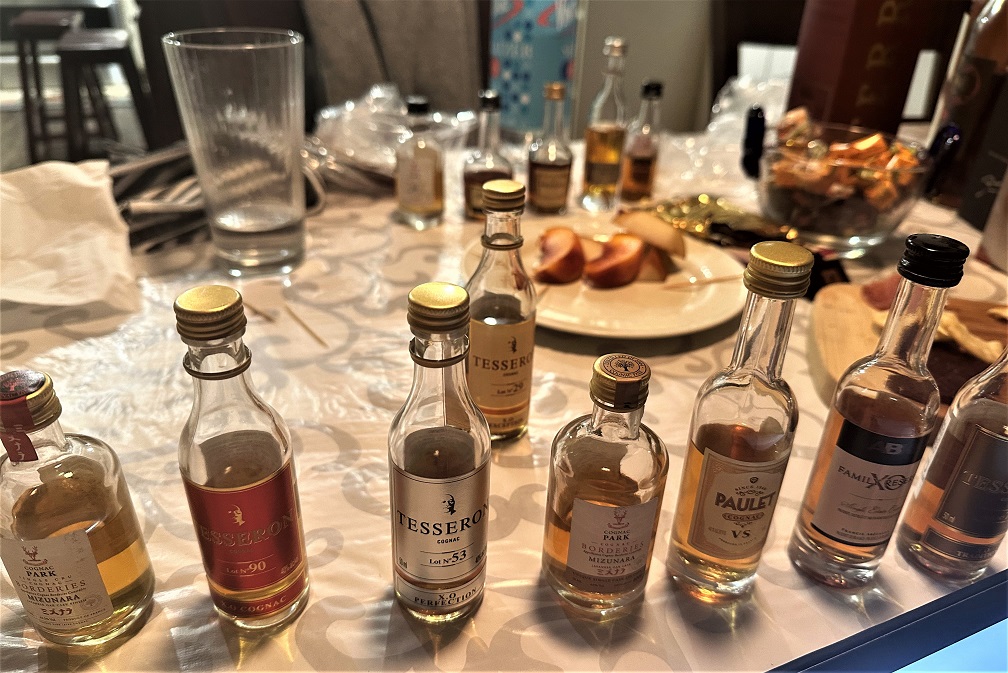
My friend Zak was able to find me a tasting set from cognac Tesseron, which included 4 different bottlings of XO-level cognac. The set contains 4 different cognacs – Lot No 90, Lot No 76, Lot No 53, and Lot No 29, where the number gives you an approximate year(s) when the cognac was distilled – in 1990 – 1991, 1976, 1050-1952, and 1930s. Lot 29 contains a third of the cognac from the 1906 vintage – it is not every day you get to drink alcohol at such an age. Lot 29 also received 100 points from Robert Parker (not that it matters, but still).
I found the second set on the Cognac-Expert website – Park Cognac Mizunara cognac, a set of 3 Park cognacs from Bordieres finished in Japanese oak called Mizunara. Note of advice – if you like cognac, cognac-expert might be a site for you.
With this, we were all set for tasting. Finally, my friend arrived at the end of September, and we were able to get to it.
Below are my notes from the tasting. The notes are similar to any wine notes I would put out in this blog. Does it make sense for the cognac? Maybe yes, maybe no, but this is the best I can do. As a bare minimum, you will get an idea. During the tasting, we also decided which cognacs/brandies would be worth re-tasting (round 2) and then we rated all the cognacs to decide on our top favorites. Without further ado, here are the results:

E&J V.S. Brandy
Sweet fruit on the nose
Caramel candy on the palate, just caramel.
E&J V.S.O.P. Grand Blue Brandy
Sweet fruit on the nose, dry fruit
Burnt sugar on the palate, pure milk chocolate candy with fruit preserve. Horrible.
Paul Mason Grande Amber Brandy
Dark red fruit, herbs
Touch of sweetness, good restrained, good balance
Hennessy Very Special Cognac
Dry fruit on the nose
Wooden notes, a touch of sweetness, lacks excitement
Courvoisier V.S. Cognac
Oak notes on the nose
Nice restraint, but mostly flat
A. De Fussigny Sélection Fine Cognac
Beautiful nose, sandalwood, nice perfume
Disjointed on the palate, needs more balance
Paulet VS Cognac
Nice complexity on the nose
Good fruity palate, perfectly integrated, excellent balance.
Very good, perfectly elegant, round 2 – final verdict #3
ABK6 Family Reserve XO Single Estate Cognac
Beautiful nose, you can smell the grapes
Perfect complexity, wild apricot, wild apricot pit, a hint of sweetness, but dry finish
Excellent, round 2 – final verdict #6
Park Cognac Borderies AOC Mizunara Japanese Oak Cask Finish
Wow. Cigar box, medicine box, great complexity
Amazing complexity, perfect balance, cigar box, apricot, one of the very best
Wow. Round 2 – final verdict – #1, best of the tasting
Park Cognac Borderies AOC Mizunara Japanese Oak Cask Finish Single Cru 10 years aged
Very complex nose
On the palate, effervescent, but not as impressive as the second one
Very good, round 2 – final verdict #11
Park Cognac Borderies AOC Mizunara Japanese Oak Cask Finish Unique Single Cask Edition Distilled 2004
Amazing nose, very complex
Very complex, spicy oak, delicious
Excellent, round 2 – final verdict #9
Tesseron Cognac Lot N 90 XO
Wow, spicy pepper nose, sweet fruit, amazing
Great complexity, fruity notes, excellent balance
Round 2 – final verdict – #5
Tesseron Cognac Lot N 76 XO Tradition
Dry fruit, wild flowers
Interesting complexity, but not harmonious
Round 2, final verdict – #10
Tesseron Cognac Lot N 53 XO Perfection
Very feminine on the nose, delicate, perfumy, plums, vanilla
Floral complexity, elegant, delicious
Excellent, round 2 – final verdict – #8
Tesseron Cognac Lot N 29 XO Exception
Beautiful nose, complex, round
Herbal notes, plums, spices, perfectly balanced.
Very good, round 2 – final verdict #7
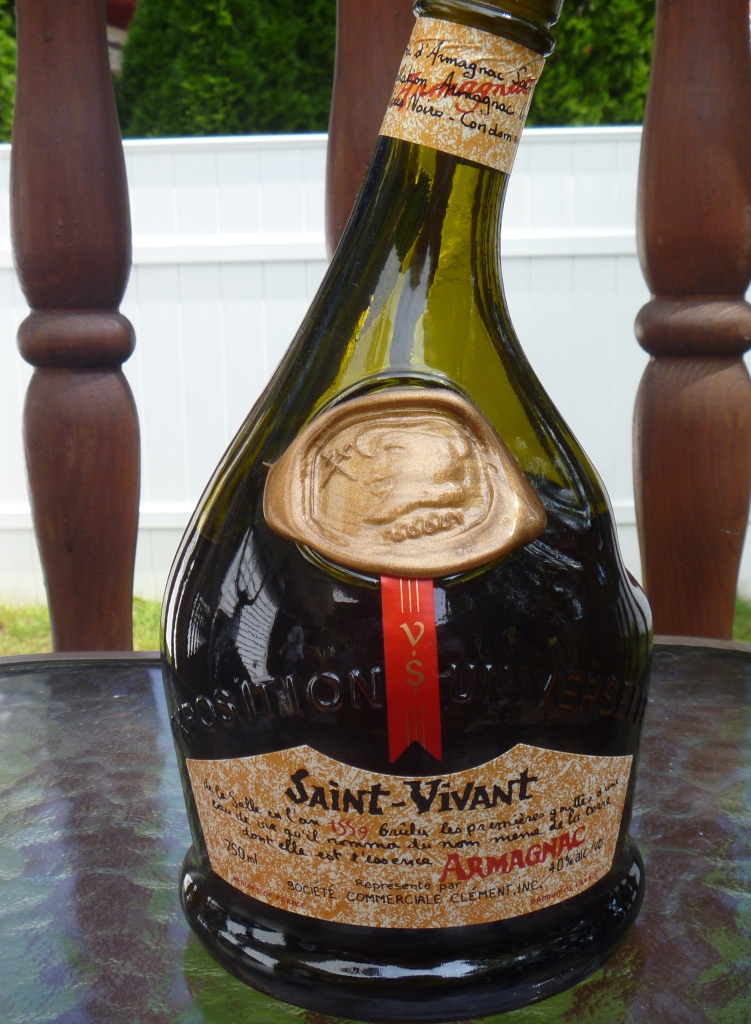
Saint-Vivant Armagnac AOC
Lemon and herbs on the nose
Touch of oak, good acidity, a touch of herbs.
Pierre Ferrand 1er Cru de Cognac Reserve Grand Champagne AOC
Fruity, elegant
Beautiful fruit on the palate, plums, a touch of chocolate, perfectly balanced
Excellent, round 2 – final verdict – #4
1966 Darroze Bas-Armagnac
Very complex, Forrest underbrush, spices, white pepper
Dark chocolate, dried fruit, perfectly restrained
Superb, round 2 – final verdict – #2
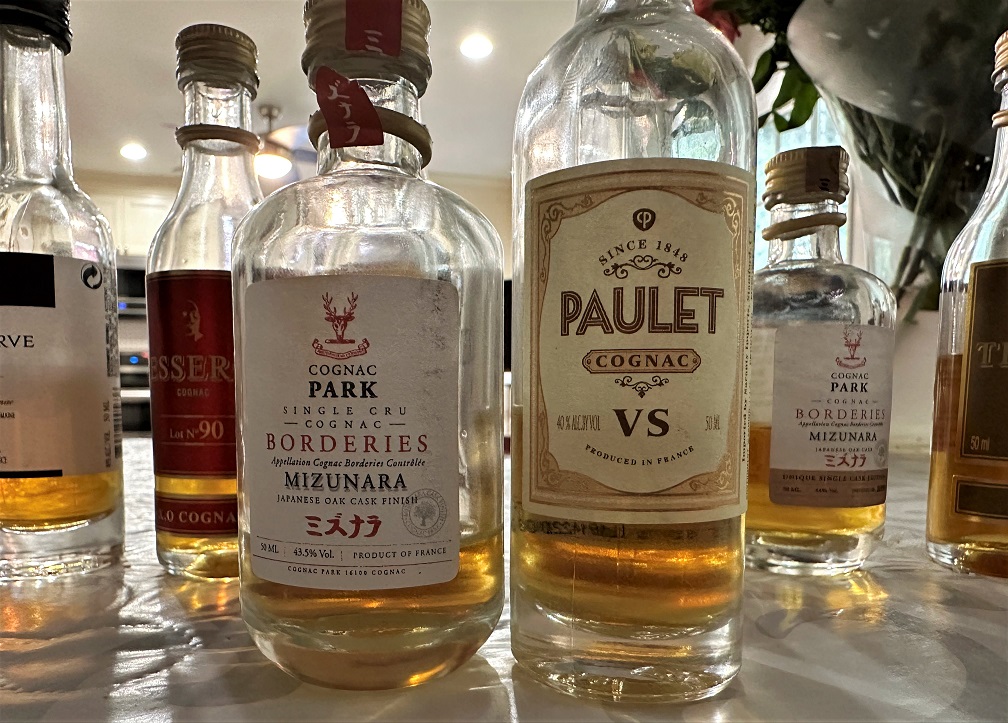
As you can tell, Cognac Park Mizunara Borderies AOC was our top choice, followed by the 1966 Darroze Bas-Armagnac and then Paulet VS cognac ($25 at Total Wine, winery direct program).
Here you go, my friends – an account of the cognac tasting. With the exception of E&J, which humans should not drink, this was a great tasting.
What do think of cognac? Do you like drinking it? Any favorites?
Wine Reflections on the Go, and Cognac Ramblings
 While in San Diego for work, I was on a very strange quest. I wanted to find cognac in miniature bottles (50 ml). Strange and dumb, you say? No problems, I accept the criticism. It is strange, but not criminal or immoral by any means, so let me continue my story.
I don’t know if you drink cognac, but if you do, you could’ve noticed that it is generally in a short supply, and often absurdly priced. Some stores carry no cognac at all. Some stores have a very limited selection, incomparable with other liquors – look at a typical tequila or bourbon selection – the ratio would be 10 to 1.
Why cognac all of sudden? A dear friend is coming over in a few weeks, and we always do a serious tasting of scotch/whiskey with her. What does “serious” mean? At any given moment I have 15–20 (or more, I honestly have no idea) bottles of whiskey open – some might be for 10 years – unlike wine, whiskey doesn’t care, nothing can change in the 46% – 70% ABV weather – as long as the bottle is closed well. This time around, the said dear friend said that she doesn’t want to do a scotch tasting, and would much prefer that we would change the subject – for example to the cognac.
While I love cognac, I prefer scotch for my occasional hard liquor sip. It is much more difficult to find a palatable, never mind tasty cognac which one also can afford – delicious whisky can still be acquired for less than $30, but drinkable cognac in that prices range is mostly a dream.
Okay, so back to that tasting. I set for myself a goal to have at least 15 different cognacs to taste, without spending a small fortune. I probably have 2 or 3 open. I procured two tasting sets (they are very hard to come around), and found one miniature of Courvoisier to include in the tasting, but that’s about it. So I went on the mission to find at least the main brands (Martell, Hennessy, Courvoisier, Remy Martin) and maybe some others – but seemed to be mission impossible in Connecticut and even in New Jersey.
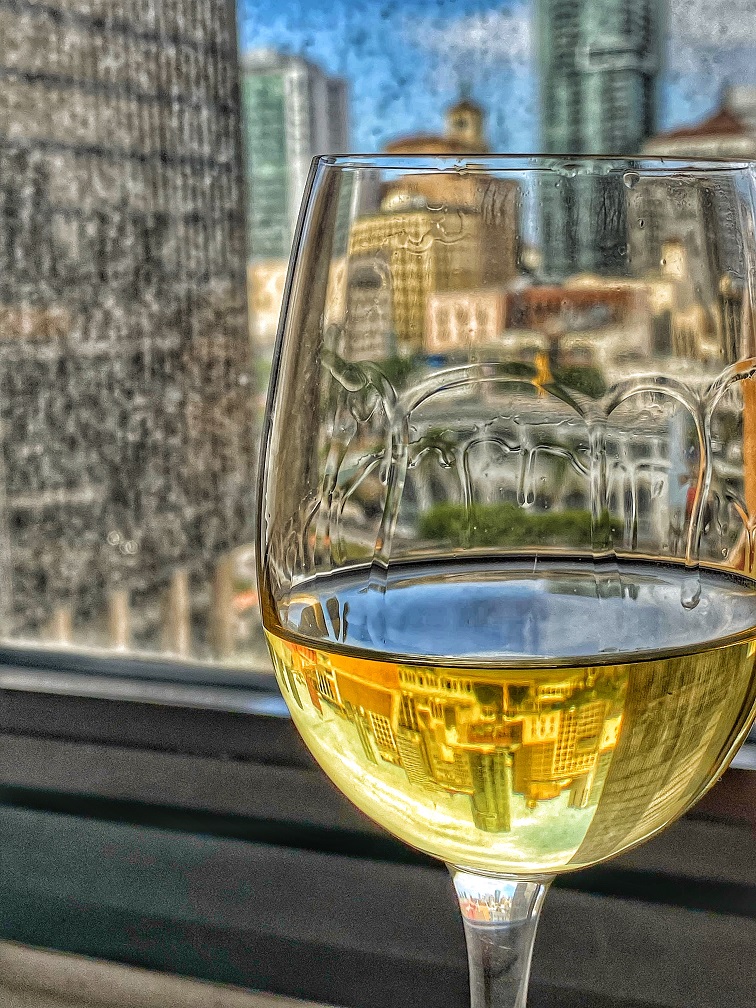
Wine Reflections, as promised
Which brings us to the wine store in San Diego. I honestly went to the wine store creatively called The Wine Bank to look for my cognac miniature bottles. Who goes to the store called The Wine Bank to buy cognac? Happy to be ostracized again, but if I would be looking for tequila, bourbon, or even gin believe me I wouldn’t leave the store empty-handed. But cognac? Nowhere to be found in any size.
The store was “much bigger on the inside” with a huge basement filled with wine shelves. So what should the wine lover do when he encounters wine heaven? At least take a look, right? Just a look. No touch. I promise. I was well behaved. But would you believe me if I would tell you that I left the store called The Wine Bank without buying a bottle? Even if you are naive, my reader(s?), don’t trust the wine lover visiting the wine store.
I was looking for something interesting, yet inexpensive. Interesting means I don’t readily have it at home and would love to drink often but drink rarely. And so I found my beloved Chinon (Cab Franc) and a white blend from the Rhône, $17 and $16 respectively.
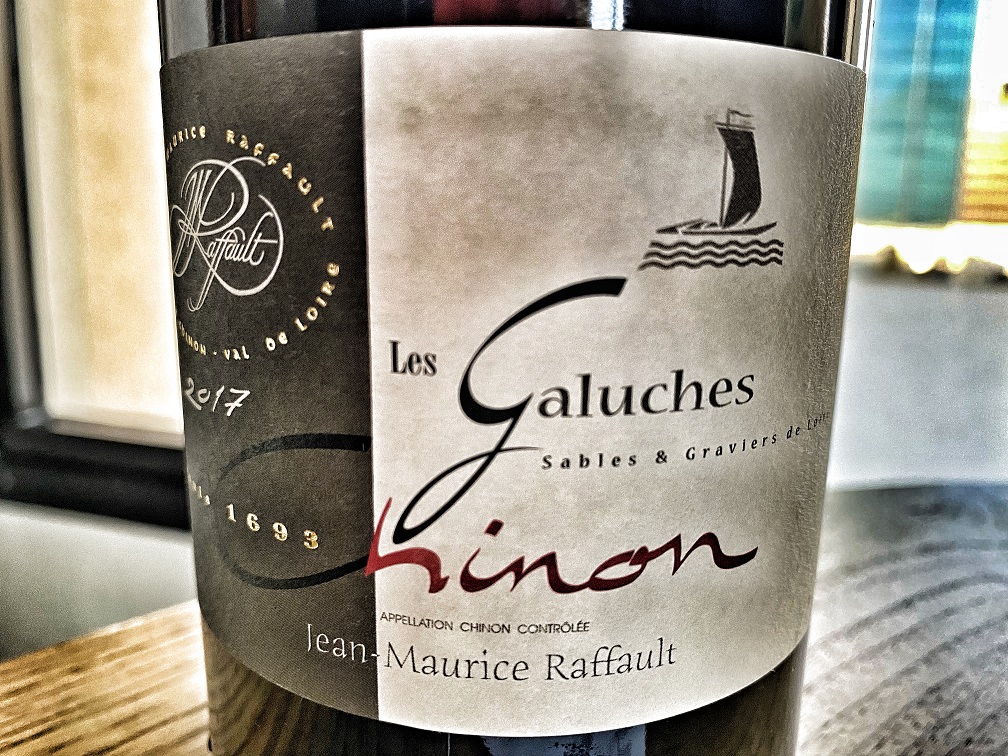
I really like Chinon wines, a classic, cold climate, old world renditions of Cabernet Franc. This wine was from the 2017 vintage, so it had 5 years of age on it. I previously had an amazing experience with Chinon wine from Olga Raffault, so now seeing the same name (Raffault family had been cultivating vines in Chinon for 14 generations!) together with the reasonable price has given the rationale for the decision.
I rarely drink white Rhône wines because there are very few of them available at most of the wine stores, and finding tasty ones is not an easy task as well. However, seeing 60% Roussanne on the back label – and Roussanne might be my favorite white grape – together with a reasonable price again made it an easy decision.
2017 Jean-Maurice Raffault Les Galuches Chinon AOC (13% ABV, $16.99, Les Galuches is the name of the vineyard, had been organically farmed since 2016) was interesting. When I just opened it, it had a beautiful classic nose with a touch of bell pepper, and an almost jammy load of the black currants on the palate, very generous. On the second day, the nose was somewhat closed, and black currants were still pleasant though somewhat scarce. On the third day the wine pretty much closed and offered mostly bell pepper and tart acidity. I don’t believe the wine turned – it should be either consumed upon opening or left alone for 10+ years to enjoy it later.
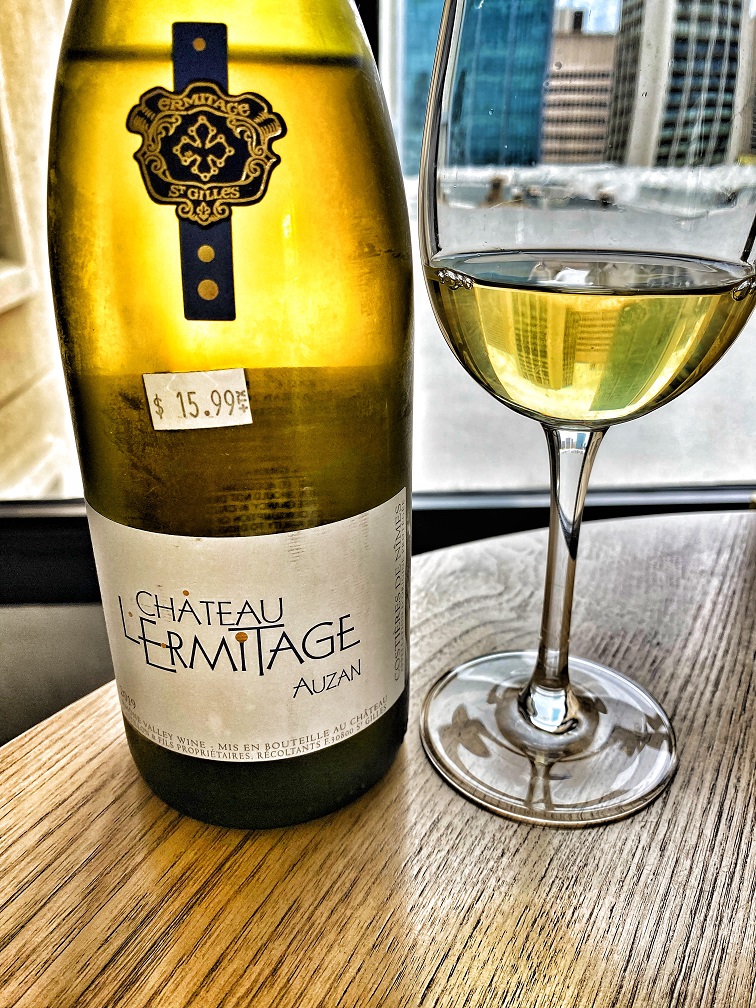
2019 Chateau L’Ermitage Auzan Blanc Costieres de Nimes AOP (13% ABV, $15.99, 60% Roussanne, 20% Grenache, 20% Viognier) was even more interesting. I chilled this wine first overnight in the fridge. When I opened it, I really wanted to like it, but I couldn’t. It was disjointed, with fruit and acidity randomly poking in different directions. As the wine warmed up, it became a lot more palatable and enjoyable, but the magic didn’t happen.
I left the wine bottle on the table overnight. When I tried it in the morning, I literally slapped myself on the forehead – this wine is 60% Roussanne, and Roussanne wines are showing much, much better at the room temperature or gently chilled compared to the full-blown “wine from the fridge”. The wine had gunflint on the nose, and boasted powerful, fully textured, plump, and round white stone fruit on the palate. A beautiful, classic, full-bodied Roussanne rendition.
Here you go, my friends – my wine (and cognac) reflections [directly and figurately] on the go. Drink well, whether you travel or not.
Liquid Pleasures Beyond Wine: Brandy
 During 2011 I wrote a number of posts for the project called The Art Of Life Magazine – of course talking about my favorite subject, wine. The project was closed and even the web site is down, but as I still like the posts I wrote, I decided to re-post them in this blog. Also, in that project, posts were grouped into the mini-series, such as “Best Hidden Secrets” and “Forgotten Vines”. The post I’m offering to you today was from the mini-series called “Liquid Pleasures Beyond Wine”, and the subject of this post is Brandy.
Also note that the series was written for a slightly different audience – I hope none of my readers will take offense in the fact that sometimes I’m stating the obvious…
As you could’ve expected based on the last post, we are going to explore the world of “liquid pleasures beyond wine”, the world of spirits. Let’s start with Brandy, as it is closest to the wine world. To be more precise, wine is a foundation of a Brandy.
Brandy is produced in many different countries, but we should start our journey in France, where it was originated. While Brandy is a generic name for any wine-based spirits, in France Brandy mostly exists under other noble (and protected) names, such as Cognac, Armagnac and Calvados.
Of course Cognac is the most famous French spirit, however let’s start our journey from Armagnac, as historically it was the first region to produce brandy, starting in the 14th century. Armagnac is a region in the south of France, which has a status of AOC – it means that similar to the French wines, production of Armagnac is strictly regulated from start to finish. Armagnac is made out of grapes (about 10 different grapes can be used in production). Once grapes are harvested, pressed and fermented, the resulting liquid undergoes a process of single distillation, and then the spirit is placed into the oak barrels for aging. Armagnac’s age designation is similar to Cognac, which we will discuss a bit later in this post. Taking into account single distillation, Armagnac initially is harsher than the cognac, but it mellows down as it ages in the oak barrels for a minimum of two years.
Similarly to Armagnac, Cognac is also produced from the grapes (mostly Ugni Blanc, but some other grapes are also used). History of Cognac started in 16th century, when it was distilled from the local wine in order to withstand long ocean journey to the destination. Initially it was thought that after the ocean voyage, addition of water will convert spirit back to wine, but then it was found to be quite appealing on its own.
Same as the French wines regions, Cognac is an AOC, which is divided into 6 different zones, with Grand Champagne, Petite Champagne and Borderies being located in a middle of the appellation, and Fins Bois, Bon Bois and Bois Ordinaire surrounding them from all sides. Zone is usually designated on the bottle of cognac. There is also an additional designation of Fine Champagne, which is used if Grand Champagne and Petite Champagne are blended together. Again, same as with wines, the smallest appellation is the most restrictive as to what grapes can be used for the production of the cognac – for the cognac to be called Grand Champagne, all the grapes should be coming strictly from the Grand Champagne region, where for the bottle just labeled as Cognac, the grapes can come from anywhere within Cognac AOC.
In order to make cognac, it is necessary to start with wine. The grapes are harvested, pressed and fermented exactly in the same way as they would be for the wine production. Wine is typically fermented for 2-3 weeks, after which it undergoes process of double distillation (which removes harshness), and the resulting spirit is placed into the oak barrels (Limousine oak is typically used in cognac production) for aging. Cognac spends at least 2 years in the barrel, then it is typically blended with the cognac from different barrels and different ages to achieve persistent taste (here blending process is very similar to the one for the Champagne), and then it gets bottled. Of course some of the cognac spends 10, 15 and more years in the barrel, yielding a more mellow, more aromatic and complex beverage.
Looking at the bottle of cognac, you can always have an idea as for how long the cognac was aging in the barrel. If the label has letters VS (Very Special), it means that cognac spent at least 2 years in the barrel. VSOP (Very Special Old Pale) means that cognac was maturing for a minimum of 4 years, and XO (eXtra Old) has spent at least 6 in the barrel (but on average, XO is aged for about 20 years). There are some other designations, such as Napoleon, which typically designates age between VSOP and XO. One more interesting fact about cognac is that while there are about 200 producers, about 90% of the whole volume of the cognac attributed only to the four companies – Courvoisier, Hennessy, Martell, and Rémy Martin.
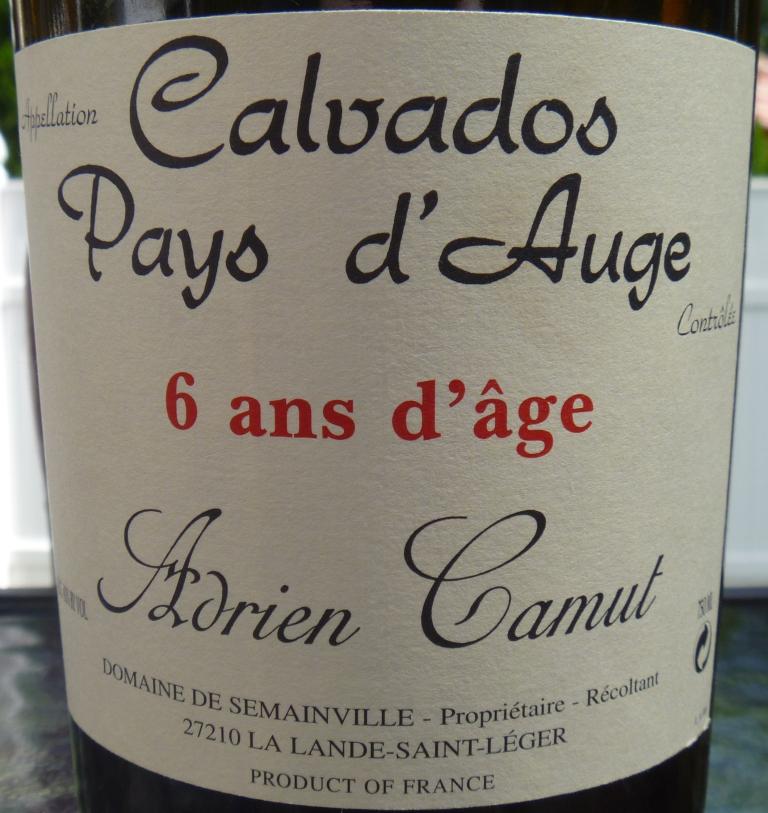 Our next stop is Calvados, where brandy is produced from apples. About 200 different types of apples (sweet, sour, bitter…) are used to produce Calvados. Production of Calvados started in 16th century, and it reached peak of popularity in 19th century, when grapes in the other regions were devastated by Phylloxera.
Production of Calvados starts from the harvesting of the apples, then pressing them and fermenting into dry apple cider. After that the liquid undergoes a process of distillation (both double and single processes are allowed), and then distillate is stored in the oak barrels for the further aging. Calvados should age for at least 2 years in the barrel before it can be released. In many cases it ages for anywhere from 2 to 6 years, but can go for 10, 15, 20 years and longer. Good Calvados, like the one from Adrien Camut, is a wonderful and fragrant drink, with hint of apples both on the nose and the palate, very balanced and delicious.
Leaving France, we have many potential Brandy destinations to visit – however, nobody can really compete with the France for the top spot in Brandy production. Nevertheless, we should mention a few other examples.
Georgia and Armenia started producing brandy in the 19th century, and taste-wise they were quite competitive with the actual French cognacs. They lost some of their edge after both countries became independent and experienced a lot of economic and political issues, but now they are slowly restoring their brandies back to the world class level. In both countries brandies are produced from grapes (wine). Just in case you are curious, you can look for Sarajishvili (Georgia) and Ararat (Armenia) brandies – both should be available in the stores.
I would like to mention two more brandies. First one, coming from Greece, is called Metaxa. It is a wine-based brandy, which is aged similarly to the French cognac, in the limousine oak barrels, and then blended with aged Muscat wine to create final product, which is typically very smooth and mellow (might be a touch too sweet, depending on your preferences).
Second one is coming from Italy and called Grappa. Grappa is made by fermenting of the grape must (skin, seeds and stems leftovers after wine production). Grappas are typically very strong with 53%-55% alcohol (typical brandy is 40%). As of the last 5-8 years, single grape grappas became very popular – and they have distinctive and delicate taste, despite still high concentration of alcohol.
There are many more countries to visit in our brandy journey – however, I hope you got the idea already. Enjoy a glass of your favorite brandy tonight – but if brandy is not your thing, please wait for the next post, where we will be talking about Whisky. Until then – cheers!
Looking for Liquid Pleasures Beyond Wine
 During 2011 I wrote a number of posts for the project called The Art Of Life Magazine – of course talking about my favorite subject, wine. The project was closed and even the web site is down, but as I still like the posts I wrote, I decided to re-post them in this blog. Also, in that project, posts were grouped into the mini-series, such as “Best Hidden Secrets” and “Forgotten Vines”. The post I’m offering you today was an opening post in the mini-series called “Liquid Pleasures Beyond Wine”.
Also note that the series was written for a slightly different audience – I hope none of my readers will take offense in the fact that sometimes I’m stating the obvious…
So far in this blog we mostly talked about wine, wine as an experience. We tried to uncover some of the hidden secrets of the wine world, such as Rioja, second labels of the famous wines, or French sparkling wines. We looked at the wines which were famous, then almost disappeared and now slowly coming back, such as Madeira and Jerez. We also searched for wine values, by comparing wines made from the same grape but coming from the different places. Did we explore enough the world of wines? Not really, we didn’t even touch the tip of a tip of an iceberg. Nevertheless, as we are looking for experiences, let’s take a step outside of the wine world, and let’s take a look at the other “liquid pleasures”.
I’m talking about the group which is collectively called “spirits”, otherwise also known as “distilled beverages”, which is a name which is used in Wikipedia. Overall distillation is a process of separating liquids with the different boiling points, and its application goes way beyond the world of alcoholic beverages. Distillation first was uncovered about 2000 years ago, but first use for production of the “spirits” happened less than a thousand years ago. When applied to the wine or any other fermented substance (meaning that some degree of alcohol is present in the liquid to begin with), the end result of distillation is a liquid with increased concentration of alcohol.
Historically, such high-alcohol liquids had various uses – one of the most important ones, which also has nothing to do with drinking the liquid, was medicinal. Strong alcohol is an excellent antiseptic; it is used in order to disinfect the area of the body, to kill any potential bacteria thus preventing any possible contamination. However, while this very important, such applications are completely outside of the scope of this blog, so let’s go back to the stuff we drink.
There are many different kinds of the spirits produced in the world. Some have more universal appeal and can be produced in many countries following the same basic methodology, but some can be also unique for particular place (but if it is any good, it is extremely hard to keep a secret). Let’s take a quick look at the various types of the spirits – we will discuss some of them in detail in the subsequent posts.
Let’s start with Brandy – brandy is a spirit which is produced from wine. This can be an actual grape wine, or it can be a fruit wine – both can be used for the production of brandy. For instance, Cognac and Armagnac are both made from the grapes, and Calvados, another famous French brandy, is made from apples. Brandy is produced in France, Spain, Italy (where it is known as Grappa), Georgia, Armenia, US, Mexico and many other countries.
Next spirit we need to mention is Whisky, which is made out of grains (barley, rye, wheat, corn). This group includes Scotch, which is made in Scotland, and then Whiskey, which can be made in many different countries – for instance, Irish whiskey is made in Ireland, and in US you can find both Whiskey, which is often made from rye, and Bourbon, which is corn-based. Whisky is also produced in Japan, India, Canada and other countries.
Then comes Vodka – made all around the world, from all possible ingredients. It is made in France, Russia, Poland, Italy, US, Canada and many other countries. It can be made from grapes, fruits, grains, potatoes and probably some other ingredients we can’t even think of. Vodka is often called a “neutral spirit” as it is typically produced flavorless (some flavor can be infused before bottling), and thus it is a popular component in many cocktails.
To complete the “big scale” list of spirits, we need to mention a few more. Tequila, which is produced from the Blue Agave plant, is a very popular spirit coming from Mexico. I can’t resist to mention Mezcal, which is also made in Mexico using Agave plants, but it has distinctly different taste (and very hard to find). Then we need to mention Gin, which is also a popular cocktail ingredient and has a very distinct taste as it is produced from Juniper berries. And last but not least comes Rum, which is produced from sugarcane, and yet another popular cocktail staple.
As we are looking for the great experiences, should we even look at all these “hard liquors” as they often called in the United States? Absolutely. Moderation is a key when it comes to alcohol (this universally applies to any kind of alcoholic beverages – beer, wine or spirits) – but once this is understood, one can definitely enjoy immense richness and variety of flavors coming from all these spirits. They definitely create a lot of great experiences and unique memories, and they bring lots of pleasure. In the coming posts, we will take a closer look at some of them – and until that time – cheers!
Last Bottle Sign Up ($10 credit)




 Talk-A-Vino