For the Love of Madeira
 If I were to offer you a glass of Madeira, what would you say?
Okay, let’s take it up a notch: I assure you it will be a good Madeira.
Would you gladly accept it, or would you energetically decline?
I’m betting about 80% on the latter. And if you like wine, that would be simply your loss. But if you are in that 20%, accepting that glass of good Madeira would be a very wise decision.
Madeira has a long history of ups and downs, similar to many other wines. I wrote about Madeira a few times in the past (not enough!), so let me be obnoxious and quote one of my older posts about the history of Madeira.
Madeira wine takes its name from Madeira Island in Portugal. The history of Madeira, which started around the 15th century, is full of accidental discoveries, glory, overcoming of the hardship, rise and fall, and even love – if you are interested in the full story, you should take a look at the Madeira Wine website. In the 15th / 16th centuries, Madeira wine was created when wine was transported in barrels through the ocean to far away places such as India and China. It was found ( by accident, of course) that a long ocean voyage improves the taste of wine compared to the original one that went into the barrel. After many trial-and-error experiments, it became apparent that prolonged exposure to the warm weather was the culprit, and then the method of heating the wine up to 60°C (140°F) was invented. The process of heating up the wine is called Estufagem, and it is done after the wine is fermented in the oak barrels, same as any other wine – again, you can find more details online – you can find less colorful but more technical details on Wikipedia (click here). Just to give you a few more details from Madeira’s history, trade embargoes led to further improving Madeira by adding brandy spirits in order to preserve the wine. Barrels of Madeira left for a prolonged time under the rain led to the development of the new style of Madeira wine, called Rainwater.
In the 18th century, Madeira was one of the most popular wines in the world, especially in England and the United States. Madeira was used to toast the United States Declaration of Independence, and was highly regarded as a drink of distinction. Unfortunately, first mildew and then phylloxera epidemic delivered a way too powerful one-two punch, which the Madeira wine industry was unable to overcome. Madeira subsided to nearly a cooking wine level, and stayed like that for a long time. Luckily, overall uptake on the wine industry throughout the world helps to revive the Madeira industry, and now it is becoming possible to find a great drinking Madeira even in the US – and you will see why. And I have to note that one of the great qualities of Madeira is in the fact that, unlike practically any other wine, once you open a bottle of Madeira, it will stay the same more or less indefinitely, due to both the Estufagem method and fortification with the spirit.
Now that you have a bit of historical perspective, let’s take a deeper dive into Madeira wine.
Madeira is a beautiful island with a subtropical climate and luscious greenery. Madeira’s name means wood, oak – this is what the first settlers saw. Madeira’s climate sports tropical winds, hot summers, mild winters, and high humidity. It also offers lots of microclimates, from south to north. Mountains and forests cover 47% of the island, mostly with altitudes of up to 200 meters, reaching 700 meters in some areas.
There are about 475 hectares of vineyards growing on the island (about 1,200 acres), cultivated by 2,000 growers. Vineyards utilize a pergola system to ensure proper aeration.
Six main grapes are used in wine production on Madeira: Sercial, Verdelho, Boal, Malvasia, Tinta Negra, and Terrantez. It is interesting to note that Verdelho and Verdejo are different grapes! Another interesting fact is that Tinta Negra can be vinified as white, rosé, or red.
After the harvest, the grapes are pressed and fermented as with any other wines. Fermentation is subsequently stopped, depending on the desired sweetness, by adding neutral spirit. Next, the heating process takes place. Less expensive wines are usually subjected to continuous heating in the steel tanks surrounded by coils for at least 90 days. Higher-end Madeiras, especially the single-harvest ones, are usually heated using the system called Canteiro, where the wine in the oak barrels is secured in place using wooden beams (canteiro) and heated by mother nature for a prolonged period of time, inside the winery.
The majority of Madeira wines are blends, with the labels indicating the age and type of grapes (it is also possible to make Madeira without indicating age and the grapes). The age designations can be 5, 10, 15, 20, 30, 40, and 50 years. There are also single-harvest Madeiras, called Colheita, which should be aged for at least 5 years in oak, and Frasqueira which requires at least 20 years in oak. Another beauty of Madeira is in the fact that the wine can stay in the barrel indefinitely, and bottled only when needed – some of the known Frasqueiras exceed 200 years of age.
Three years ago, in 2022, I was lucky to attend the Madeira tasting in New York City, where I had an opportunity to taste some absolutely spectacular wines. The event included a Madeira Master Class as well as a walk-around tasting.
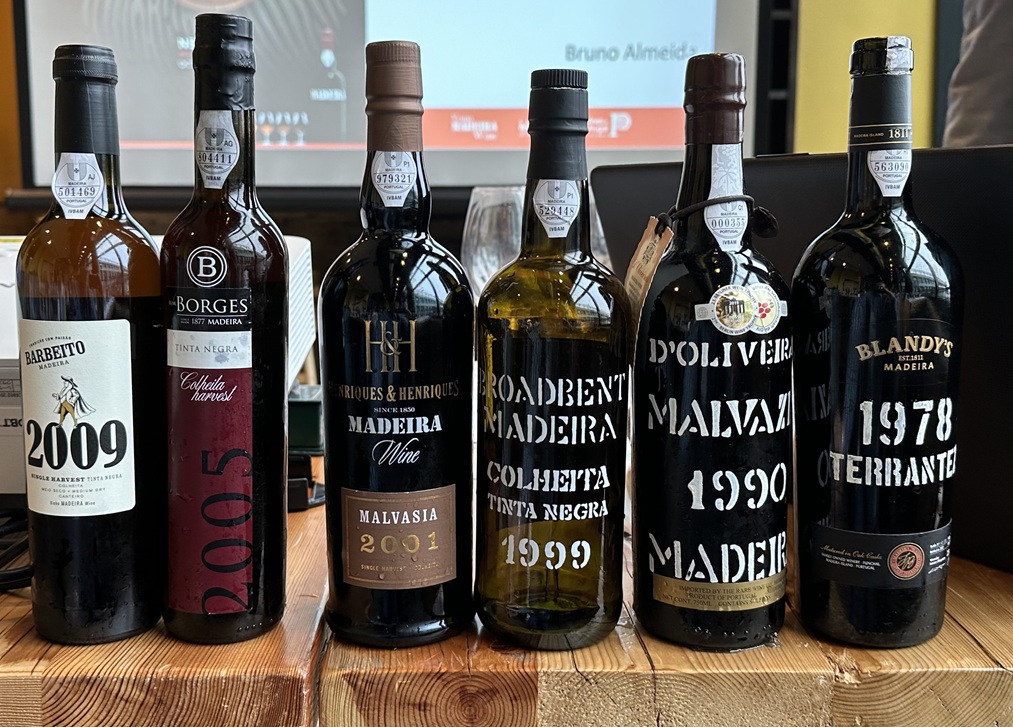
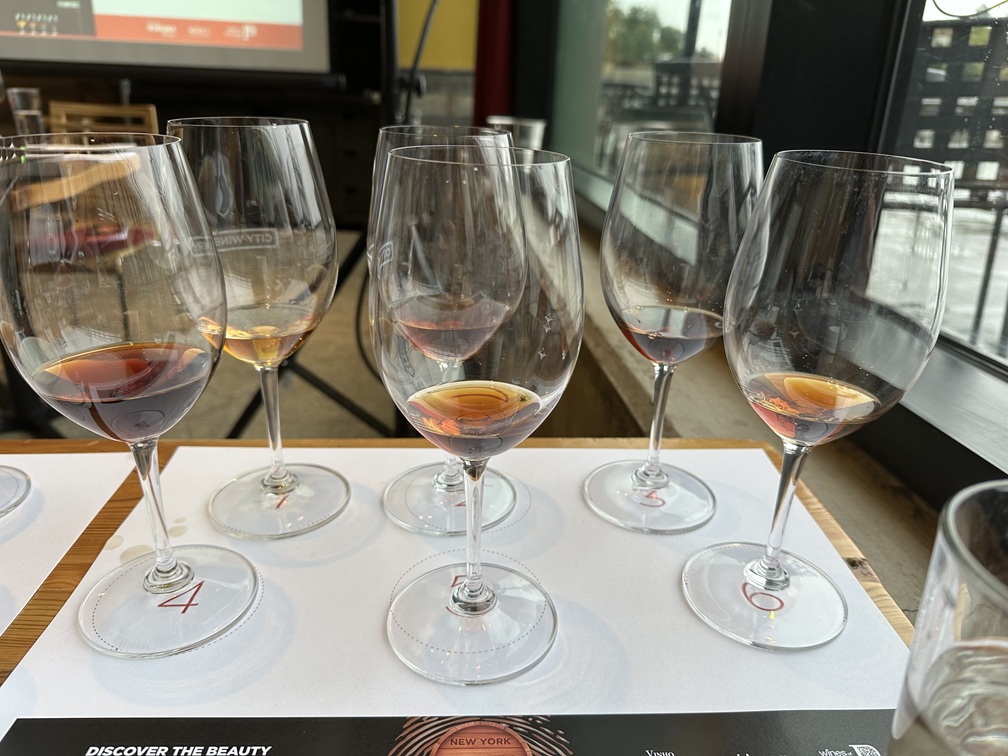


Here are the wines we tasted during the master class:
2009 Barbeito Single Harvest Tinta Negra
clean, open, light, easy to drink
2005 H.M. Borges Tinta Negra Colheita
Hazelnuts, dry fruit, figs, lemon, perfect acidity, beautiful dry fog finish. Lots of pleasure. Foie Gras would be perfect with it.
2001 Henriques and Henriques Malvasia Madeira
Complex herbaceous nose, nicely restrained
Salinity, acidity, supercomplex, dried fruit perfectly balanced
1999 Broadbent Tinta Negra Madeira Colheita
Chocolate, dried fruit compote, very restrained
Dried fruit, great acidity, toffee, tasty notes, outstanding.
1990 Pereira D’Oliveiras Malvasia Fresqueira Madeira
Bottled in 2018
Great herbaceous complexity, fall leaves, medicinal notes, eucalyptus
Amazing palate, dense, complex, loads of dried fruit and hazelnut. Superb.
1978 Blandy’s Fresqueira Terrantez Madeira
beautiful, herbal and vegetative notes, excellent balance, hazelnuts, salinity. Fresh and inviting.


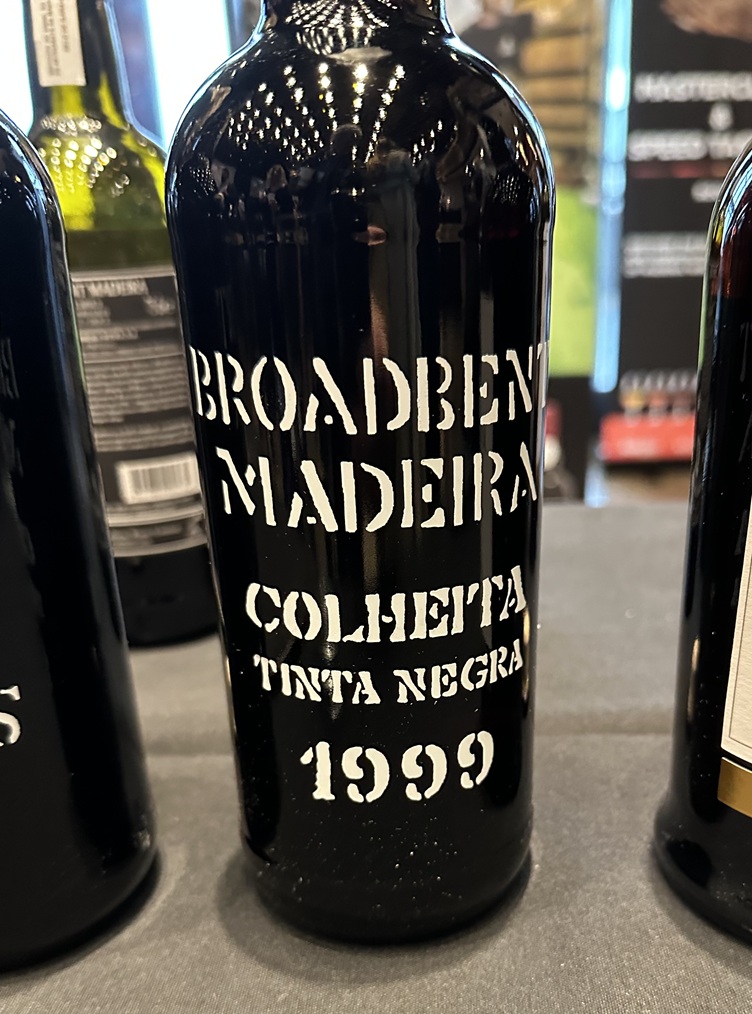
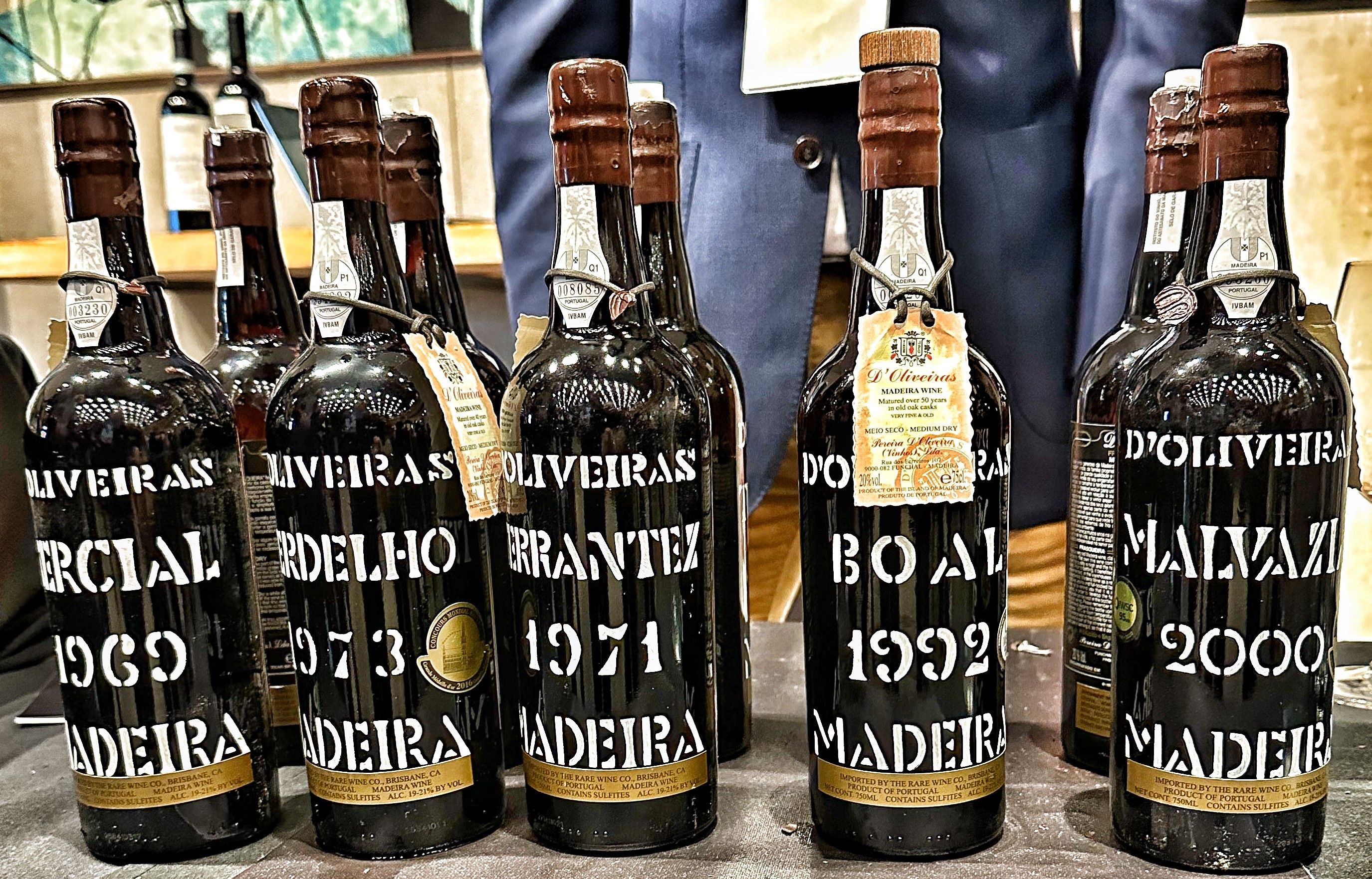
There were lots of gems in the walk-around tasting, such as Justino’s 1996, 1997, and 50 years old Madeiras; D’Olivera Colheita and Fresqueira Madeiras from 2000, 1992, 1973, 1971, and 1969 (1969 was bottled only in 2022); Broadbent 10 years old Sercial, Verdelho, Boal, as well as 1999 Tinta Negra Colheita, and others.
As I said before, Madeira really needs to be experienced, and you have a perfect opportunity to do so.
Coming November 18th, you can experience the beauty of Madeira for yourself. Here are all the details:
Experience the Magic of Madeira – Sip, Taste & Vote!
Tuesday, November 18, 2025 | 5:30pm – 8:30pm
Ideal Glass Studio | 9 W 8th Street, New York, NY 10011
Six producers, six bartenders, one delicious adventure.
You can get 2 tickets for the price of one ($55) using this link.
✨ Your ticket includes:
- Walk-Around Tasting featuring six top Madeira producers — taste rare bottles, some worth over $100.
- Cocktail Competition – six NY bartenders crafting unique Madeira cocktails. Taste and vote for your favorite!
- Food Pairings by Chef Nuno of Leitão.
- Mini “Speed Tastings” with Wines of Portugal Ambassador Eugénio Jardim, exploring Madeira styles in fun, 15-minute bursts.
- Cocktail Seminar: Madeira Cocktails Made Easy with bartender Francesco Dionese — learn how to shake, stir, and sip Madeira at home. (seating is limited).
Don’t miss your opportunity – and you can thank me later. Cheers!
Last Bottle Sign Up ($10 credit)




 Talk-A-Vino