Archive
Treble Journey: Definitely Not Enough Of A Good Thing, Grapes #248 – #263
 For those who is just joining us and for those who forgot: if you wonder what this mysterious journey is, please take a look at this post. As I was wondering in my last post if there can be too many wines in the tasting, I’m continuing here with the update on the progress of the “treble journey”, inching on the ultimate destination point – 300 different grapes. Well, if tasting of the new grape can be defined as “inching”, or in other words, moving forward by an inch, then as a result of the last wine tasting I made more than a foot of the progress – 16 different grapes in one day. Considering that we are talking about that many grapes, I will simply list grapes and wines without providing much of the detailed notes or ratings (besides, with some of the wines, I will be very happy to never try them again…). Here is the list:
Ansonica – Donnafugata Anthilia White 2008, Sicily
Bovale Sardo – Serralori Rosato IGT 2009, Italy
Drupeggio – Palazzone Orvieto 2009, Italy
Frapatto, Nerello Capuccio – Dievole Fourplay Rosso 2007, Italy
Mantonico – Efeso Bianco IGT 2005, Italy
Moristel = Marbore 2003, Spain
Moscato Reale – Apianae 2007, Italy
Muscardin, Terret, Vaccarese – Domaine de Beaurenard Chateauneuf duPape Boisrenard Red 2007, France
Muscat de Frontignan – Klein Constantia Vin de Constance 2005, South Africa
Nuragus – Selegas DOC 2009, Italy
Rabo de Ovelha – Loios White 2009, Portugal
Roscetto – Ferentano Bianco Lazio IGT 2007
Scheurebe – Joseph Phelps Eisrebe 2005, California
So while it is great to add a big number of new grapes, each additional grape makes the “journey” more and more difficult, as now you need to search far and wide in order to find the new grape. But – this search and anticipation are big part of the process, so lets enjoy it.
To sum up – there are still 38 more grapes to go… Unique grape suggestions, anyone?
Is There Too Much Of A Good Thing?
 Assuming you like wine ( otherwise, I don’t think you would be reading this blog), what would you say of a prospect of trying many hundreds of wines in a day ( about 5 hours, to be precise)? I would think at first you would get excited, right. Now, let’s do some simple math – let’s say you will be tasting 500 wines, 1 oz each… will make it equal to 20 (!) bottles of wine. Don’t think that sounds appealing anymore? This is where the bucket with romantic name “spittoon” comes to the rescue (I’m sure many of you are appalled now – what, spit wines?! No way!) – but this is what the professionals have to do. So why is all this talk about professionals and wasted wine? Simply because that this past weekend, thanks to my friend Zak, an owner of Cost Less Wine and Liquors store in Stamford, I was able to join him in the “trade-only” wine tasting events run by two of the Connecticut wine wholesalers, Wine Bow and World Wide Wines.
Believe it or not, tasting wines in such quantities is a hard work. Of course nobody tastes 50o wines in the row – spitting or not, but your palate gets really tired from tasting and tasting and tasting, and while I’m looking only for the fun component of such an event, people in the trade have to actually make business decisions – getting right wines for the store or a restaurant is a border line between success and failure. Luckily, this hard work is associated with pleasure, so enough of the sad picture – no need to take pity. Yes, it is a great opportunity to try an amazing variety of wines, a lot of them being simply great wines, and for me personally it was also an opportunity to make progress in the treble journey ( which I did), but I will report on this in the next post.
 It is impossible ( and probably pointless) to write about all the great wines – but I would like to mention a few highlights. First, among the Cabernet Sauvignon, Neyers Ranch Conn Valley Cabernet Sauvignon 2003 and 2006 were simply outstanding, with pure Cabernet expression of black currant, chocolate and hint of eucalyptus, all beautifully balanced. Ladera Vineyards Cabernet Sauvignon, Napa Valley, Lone Canyon and Howell Mountain were all between excellent and outstanding – again, with beautiful and clean California Cabernet expression at its best. It is also worth mentioning that all of these wines are quite accessible with retail prices at $30 – $60 per bottle. Few more personal highlights among the reds were Morgan Monterey Syrah 2007 (less than $20 retail), amazing 100% Syrah demonstrating all the “textbook” Syrah spicy qualities, and then couple of Zinfandels, Bradford Mountain Dry Creek and Bradford Mountain “Grist” by C. Donatiello Winery, both from 2005.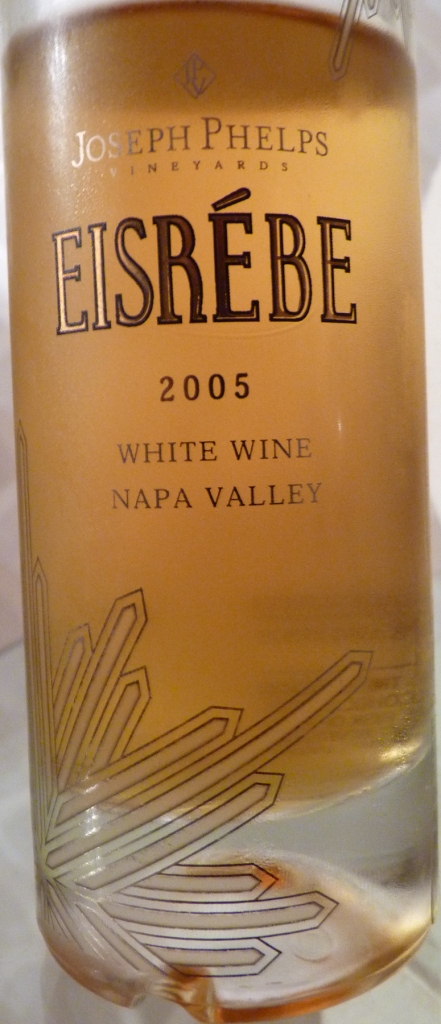
There were a lot of great white wines, but I would like to mention only one, again as personal favorite – the wine called Eisrebe by Joseph Phelps. This is desert wine made from the grape called Scheurebe ( that was a nice surprise for my “treble journey”), and it is done in the style of the Ice wines, except that as there is no chance for the grapes in California to naturally freeze at -8C, special cryogenic methods used to achieve “ice” wine result. The wine had an amazing balance of the white fruits, honey and ripe comice pears with refreshing acidity, so it was not overpowering the palate. Amazingly enough to me, this wine was also perfectly complementing wide variety of desserts, which is not very common from my experience.
All in all – it was a great fun, and I have to conclude that when it comes to the wine tasting, there can be no too much of a good thing (well, a “good thing” is an important hint here), and therefore I will gladly repeat it at any time.
Cheers!
Daily Glass: Kosher Wines and Other Updates
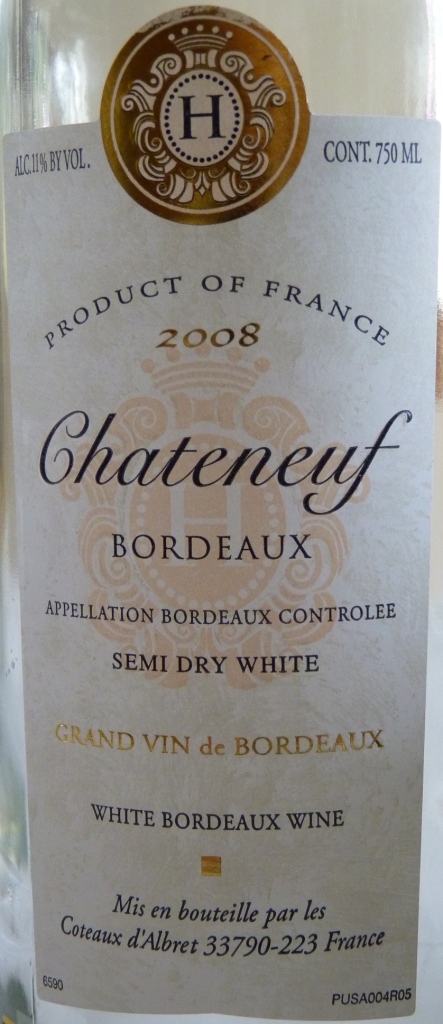 As promised, here is an update on the Kosher wines we had during the Rosh Hashanah celebration. Starting with white, the first one was wine with a tricky name Chateneuf, coming from Bordeaux in France. This wine made out of the Semillon and Muscadelle grapes and stated to be semi-dry. When chilled to the ice-cold condition, the wine does show as semi-dry, but as it had some off-flavor, borderline corked, so I would simply avoid rating this wine now.
 The next wine came from an Israeli producer called Teperberg. In one of the previous posts, I already talked about Teperberg Malbec. This time we had a bottle of Teperberg Cabernet Sauvignon 2007 – it was a nice wine, showing some good Cabernet Sauvignon flavors, like black currant and blueberries, but appearing a little weak on the palate. Still, the wine did drink well, so here is the verdict:
Drinkability: 7
Last, but definitely not least is Vitkin Carignan 2004. Vitkin is one of the best Israeli wine producers – but its wines are literally unavailable outside of Israel. A quick search on wine-searcher produced no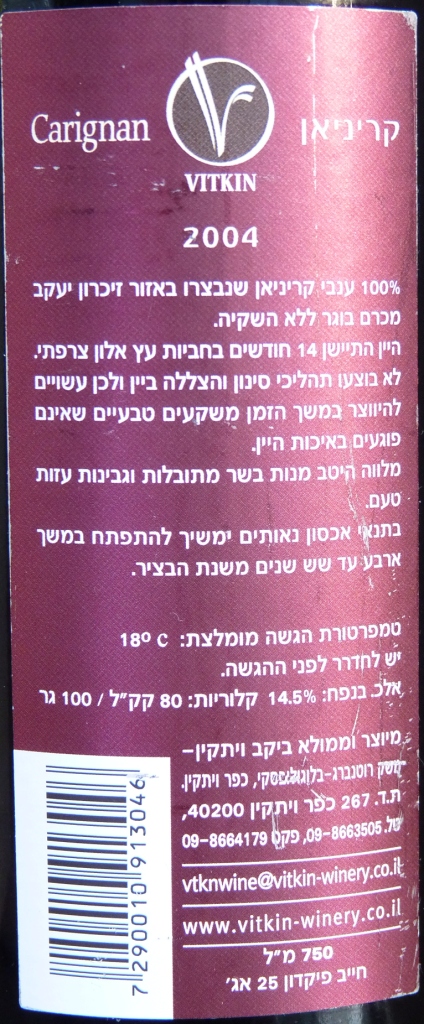 results for the USA, and even worldwide search showed Vitkin wines available only in one store in Germany, at least as it comes to buying the wine online. Therefore, you need to rely on your good friends in order to enjoy Vitkin and many other small production Israeli wines outside of Israel. This Vitkin Carignan 2004 showed a deep purple color, a very nice nose of spicy fruits, and then showed pepper and earthy notes on the palate with layered complexity. Judging by the tannins and midpalate density, I opened this bottle about 4-5 years too soon, but oh well, I will have to rely on my dear friends in the hope to experience this wine again (hmmm, did that just sound needy?).
Drinkability: 8-
Talking about “other updates”: I undertook a small project of compiling a list of highly-rated wines I kept the records of in my books (for more information regarding my record keeping you can refer to the About page), and this list is now available in the Wine Ratings page. This list comprises 8- and above rated wines, accumulated starting from 2003 (this is when I started keeping the labels and the notes) all the way until now. Take a look, I’m sure you will see some familiar names. I’m sure some wines in that list will raise an eyebrow or two – but I decided to simply comb through the books, find everything rated 8- and above, and not to second-guess myself. The subject of wine ratings will make it into a separate post I’m planning to write for a while, so until then – cheers!
The Capital Grille Experience – Great Wine and Dine
It is interesting how we experience things in life. Some things just happen, and some are long-planned and anticipated, maybe for no reason at all (as long as we get the experience we want before we cross the finishing line, we are doing good, right?). 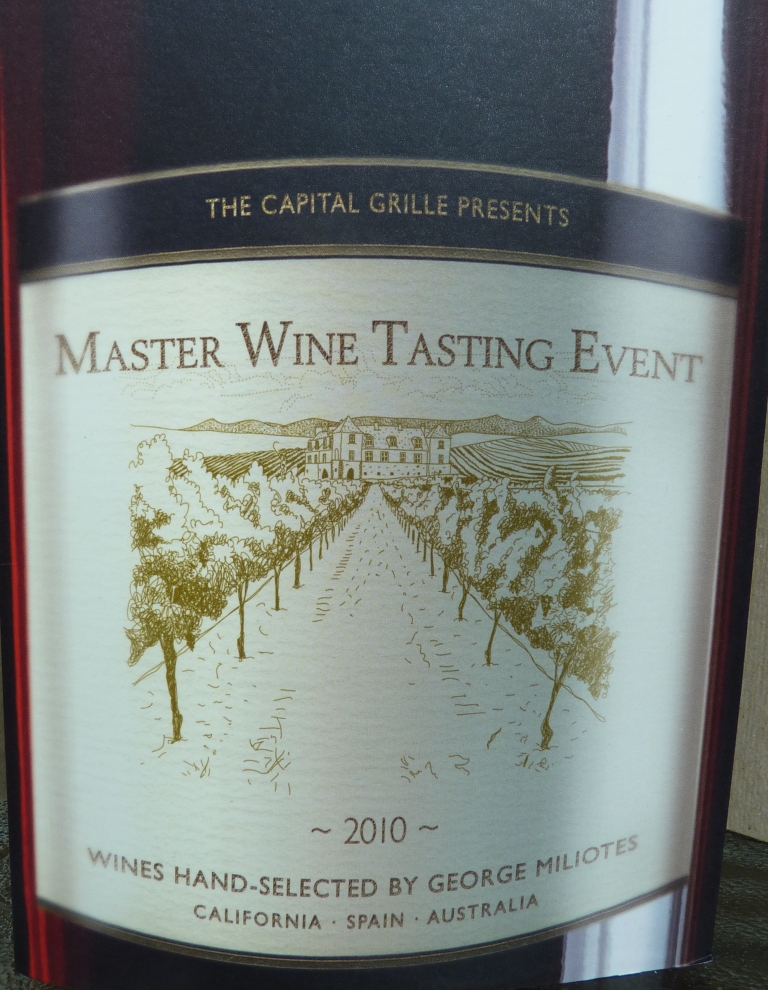 Same as Norton grape on my “to try” list for a long time ( see my last post on the subject), The Capital Grille was on the “to visit” list also for a while, at least from the moment the restaurant opened in Stamford. So finally this experience came through due to a combination of good circumstances – we had a good reason to visit (our anniversary), The Capital Grille was participating in Stamford Restaurant Week (as the restaurant is expensive, that makes it a lot more affordable), and The Capital Grille was running Master Wine tasting event, with 11 wines assembled by The Capital Grille’s Master Sommelier George Miliotes (you know by now that wines come first in this blog). So we decided that we have a great opportunity to see where the “we wine. we dine” motto of The Capital Grille will take us, and there we went.
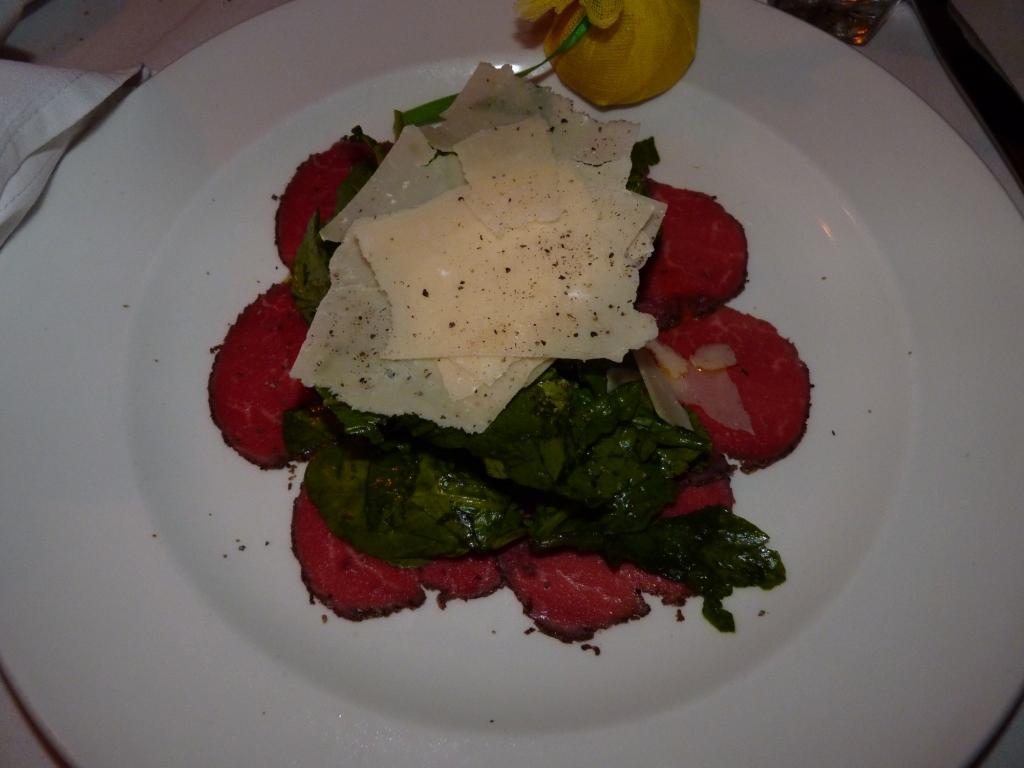
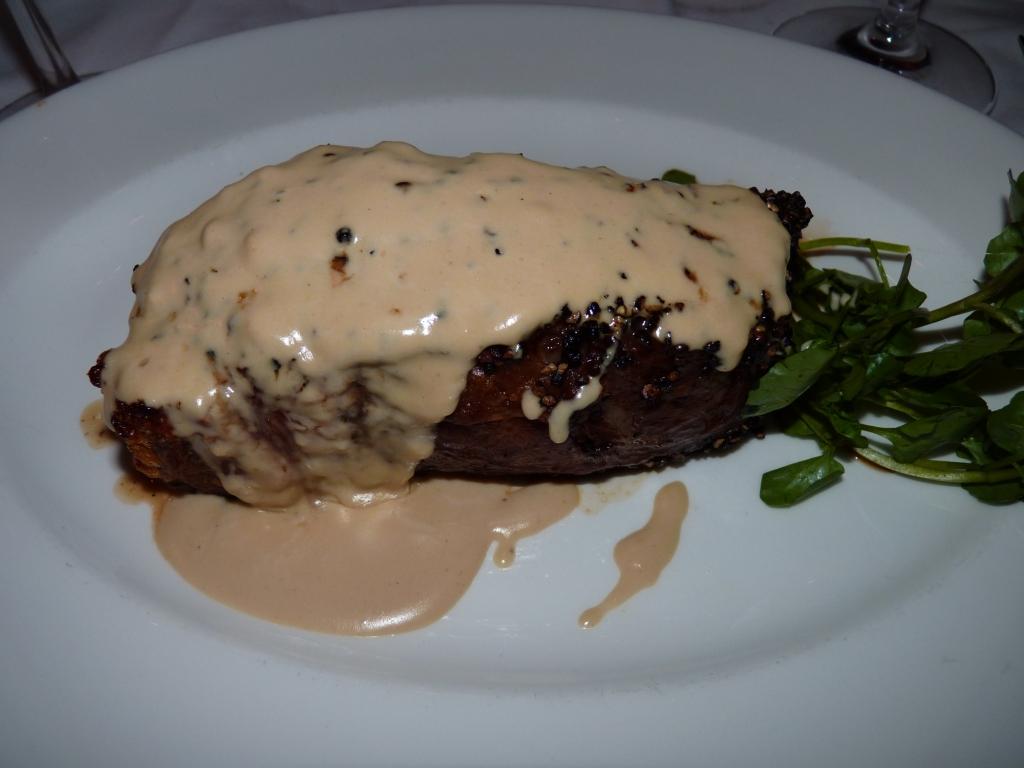
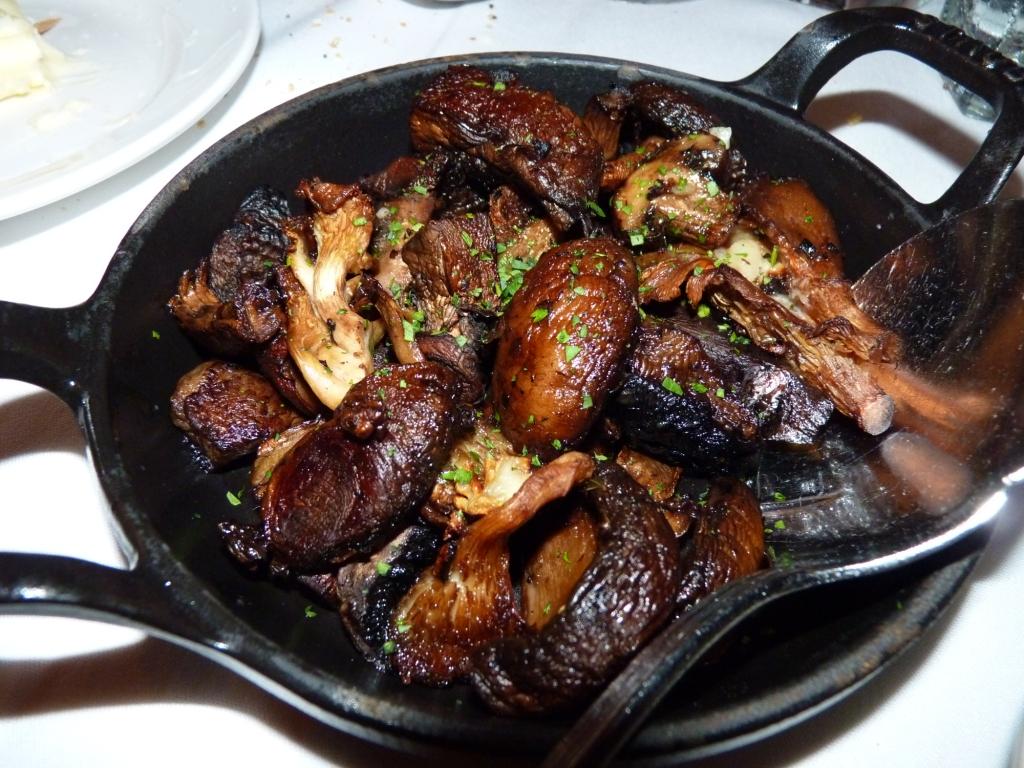
What a great experience! (should I declare this post complete?). From food to wine to service we had a great time all the way. Talking about food, the Wagyu Beef Carpaccio appetizer had an incredible flavor profile combining razor-thin slices of Wagyu beef, Parmesan cheese, and fresh arugula. Next, I have to say that nice thing about ordering steak done to your liking is that in addition to the standard scale of rare-medium-well done you can specify something like medium-rare plus, which is more than rare but less than medium – and then it is even better when you get the steak precisely the way you wanted ( yeah, I know, this is what we typically expect – but how often our expectations had not been met?). All four steaks had being done perfectly as requested, and the sides were outstanding (for the personal taste, Roasted Mushrooms had been my favorite).
Now, let’s talk about wine. The Master Event selection included 11 wines from California, Spain, and Australia, which in turn consisted of 6 reds, 3 whites, sparkling, and dessert wines. I was pleasantly surprised to see a number of wines from 2003 and even 2002. All the wines were very good and considering that the price of the Master Wine Tasting event was $25, I believe it presented a great value. As this is mostly a wine blog, let’s take a more detailed look at the wines included in this tasting (I’m going in the actual order of tasting). For what it is worth, each wine has a “drinkability” rating attached.
The Chook Sparkling Shiraz, Australia – was not tremendously impressive, medium body dry wine with bubbles 🙂 – Drinkability: 7
Whites:
Penfolds Bin 311, Thumbarumba 2008, Australia – I was recently surprised ( in a good way) by the quality of Penfolds Chardonnays. This particular wine was very nice, with a hint of oak and vanilla and a pleasant finish. Drinkability: 8-
Cambria Bench Break Chardonnay 2006, Santa Maria, California – This was one of the two “best of tasting” wines – it had a very noticeable amount of vanilla, butter, and toasted oak, but all of it was extremely balanced. This wine had great finesse. Drinkability: 8
Botani Muscat 2008, Malaga, Spain – beat all expectations. Incredible aromatics, fresh floral and various citrus fruit notes, great acidity – very nice wine overall. Another “best of tasting” wine. Drinkability: 8
Reds:
Triton Tinta del Toro Tempranillo 2008, Castilla y Leon, Spain – This wine was very dense and very earthy. In general, Toro wines are concentrated – and this one didn’t exhibit even a hint of fruit. I would guess it is either a food-only wine, or it needs time (probably both). Drinkability: 7
Avante Mencia 2009, Bierzo, Spain – Mencia makes some of the hottest wines right now. This wine was very interesting, light and fruity, with a hint of spicy cedar, with substantial tannins and a very, very long finish ( did I mention the long finish?). Probably will evolve with age. Drinkability: 7+
Greg Norman Reserve Cabernet Sauvignon 2002, Coonawarra, Australia – I have to honestly admit that I’m not a big fan of Greg Norman wines. This wine had a lot of eucalyptus notes and some dark berries, but it did lack an “umph” factor. Drinkability: 7
Greg Norman Reserve Shiraz 2003, Limestone Coast, Australia – same story as the wine before – lots of fruit, but not enough substance. Drinkability: 7
Freemark Abbey Cabernet Sauvignon Sycamore Vineyards 2003, Napa Valley, California – interesting wine, a bit all over the place. Has fresh fruit and fresh acidity, soft tannins. Drinkability: 7
Beringer Bancroft Ranch Merlot 2003, Howell Mountain, Napa Valley, California – Best of the red wines. Very good fruit, tannins and acidity which leads to overall good balance. This wine was perfect with the steak. Drinkability: 8-
Dessert:
Jorge Ordonez Muscat of Alexandria Victoria #2 2007, Malaga, Spain – nice dessert wine, has lots of honey, white peach and pear notes, has medium acidity and not enough minerality. This wine perfectly complemented the Classic Creme Brulee dessert. Drinkability: 7
As usual, here are some pictures:
Wagyu Beef Carpaccio:
Dry-Aged Steak au Poivre with a Courvoisier Cream Sauce:
Roasted Mushrooms (Portabella, Oyster, Shiitake and Crimini):
And last but not least, Steak Oscar:

As I mentioned before, the service was excellent, thanks to Mike Sabini – all the wine and food were showing on time and in proper order.
All in all – there are still few days left in both Master Wine Tasting and Stamford Restaurant Week programs – get up and go, use a good opportunity to experience great wine and food – in the words of Capital Grille, wine and dine.
Daily Glass Meets Treble Journey: Norton, The Real American Grape, or #245
As I mentioned in my previous post, grape called Norton was on my “to try” list for the long time ( ever since I started with The Wine Century club). 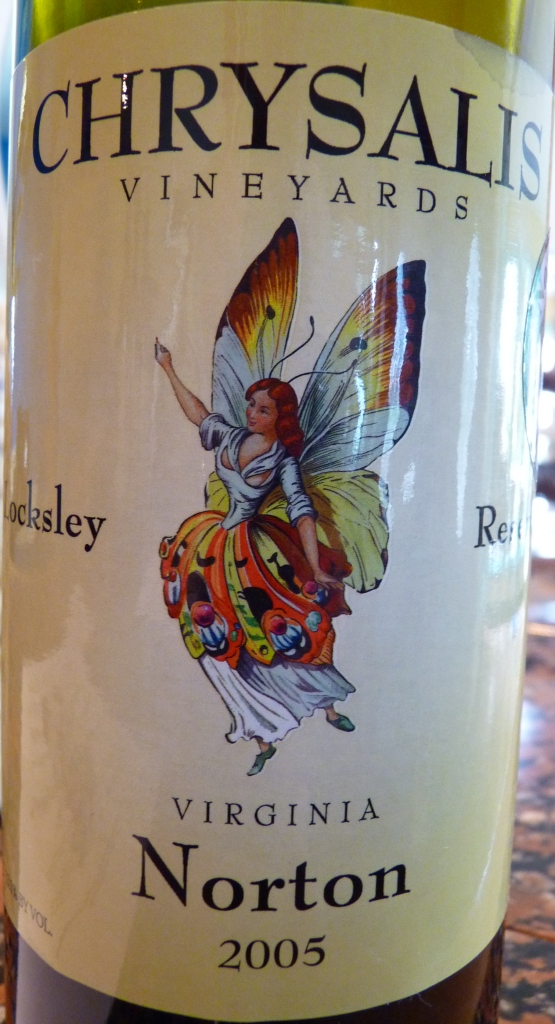 Finally, during my visit to Chrysalis Vineyards, I got an opportunity to try it in the different versions (Estate 2005, Estate 2006, Locksley Reserve 2005 and Sarah’s Patio Red, a semi-sweet wine). As I also shared the bottle with friends, I decided that it would be appropriate to share this post between daily glass and treble journey.
Talking about whole line of Norton wines I happened to try during the tasting, they were all good wines, or to use the previously given definitions, they were all “pleasant” wines. Not to say that I’m very judgmental, but this would not be my average experience of visiting the wineries. So I’m happy to repeat that I was pleasantly surprised. Now, looking at all those Norton wines, I have to say that while Norton Locksley Reserve 2005 is designated “best” by the winery (if price, $35, is any indicator), and excluding Sarah’s Patio Red, as semi-sweet wine to me is a “special occasion” wine, my favorite was Norton Estate 2005 ($19).
This Norton Estate 2005 wine was very round and supple, with good amount of red fruit, like blackberries, and hint of spicy cedar notes. Soft tannins, fruit and acidity are well balanced, and finish is lingering for a very long time.
Drinkability: 8-
My only wish at this point is that the rest of the 55 grapes I still need to get through in my Treble journey would be as good as the grape #245 – Norton, The Real American Grape.
Daily Glass: Arnoux & Fils Gigondas Vieilles Vignes 2007


Gigondas is a small appellation in Southern Rhone in France, which produces the wines somewhat similar in style to the famed Chateaneuf du Pape. 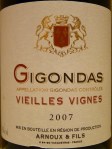 Absolute majority of the wines are red, and main grape is Granache (up to 80% in the final wine based on AOC laws), with Syrah and other grapes adding up. Grenache is a very versatile red grape, used in a wide range of wines all over the world.
Considering that Robert Parker gave 2007 vintage in Southern Rhone a 98 rating ( of course this rating is generalized for the whole region and nobody expect all the wines to achieve the same rating), I had good expectations for this wine as well ( as I had already a number of great generic Cote du Rhones from 2007 vintage). Unfortunately, that didn’t play out. The problem with this wine was related to alcohol. Yes, yes, the wine is alcoholic beverage, duh, of course. But it is the balance which I’m looking for in wine. While at 14.5% ABV it doesn’t stand out in today’s wine world as super-loaded, somehow the alcohol in this wine was not integrated at all. Burning sensation of alcohol was overpowering all other smells on the nose, and burning sensation of alcohol was absolutely prevalent on the palate, even on the second day. While it was possible to catch a glimpse of leather and pepper, which is a characteristic of Southern Rhone wines, this wine didn’t achieve great deal of balance. So the rating is:
Drinkability: 7-
Well, I guess I have to keep trying…
What The Heck Is Treble and Where This Journey Is Going?
I think it is time to explain mysterious “treble journey” posts, before I will be fully declared “boring crazy win e geek”. Starting from the beginning: about 3 years ago I came across something called Wine Century club. At first I couldn’t even figure out what the name means, and then finally I realized that this is a club for people who declare (completely honor-based) that they have try at least 100 different grapes. At that point, I was into wines already for a while, and due to the fact that I do my best to keep the labels from all the different wines I happened to taste, this task appeared to be somewhat simple. By the end of 2008, I was a proud owner of Wine Century Club certificate. Then in May of 2009, when the club was celebrating it’s 4th year, I found out that there is a new challenge level – doppel. In order to become a doppel member one have to try … you guessed it right – 200 different varieties of the grapes! This was substantially bigger challenge – but challenges make our lives fun, don’t they? And there I went, and mysterious “doppel journey” notes where coming out on twitter for a while (2009 for me was an active twitting year 🙂 ). While challenging, the mission was accomplished, and I received my next certificate, which I believe was proclaiming doppel members somewhat crazy… Anyway, I was convinced that I’m done with those “journeys” – until another anniversary celebration… yep, in 2010, I found out that club now has 3 “treble” members ( and even one quattro, but that deserves another post, I believe). So yes, a 300 grapes challenge – I just couldn’t resist the urge…. So now you have to keep up with those “treble journey” updates ( even though I do make an honest effort to do them in the fun way)…
Why “journey”? This is how I see it – I’m moving along in the world of wine, looking for something new all the time, looking for any obscure place in search of the most obscure grape – I think calling this process a journey is well justified. Also, it is a real journey, as I’m not doing it alone. Wine is meant for sharing (my honest opinion) so I always make an effort to take my friends along in such a travel – remember, I did mention the fun part already?!
What else makes it fun? I get a chance to work as a detective, to unravel the mystery. Come again, you say? Well, let me explain. A lot of wine labels don’t contain any information about the grapes the wine is made of. For some of the wines such information is easy to find on the web sites. For some of the wines, it is a real challenge – you need to find a web site which is not necessarily in English, find the right wine, and then there is a decent chance that you will find the names of the grapes. You think mission accomplished? Not so fast… Problem is that a lot o grapes have different names in different regions, but it really is the same grape! Of course it is easy to figure out when french grape Grenache is called Garnacha in Spain. But what do you think of Aragonez, Cencibel, Tinta Roriz and Toro? Yep, all are synonyms for Tempranillo, the most planted red grape in the world – therefore, as you can see, there is some fun work to do in order to get to the final destination.
Obviously one can spend a lot of time and effort on this (and don’t forget money!), but I think that end result is ultimately rewarding, as with any true passion. I hope my explanation make sense, and now you will be able to ignore the geek portion, and see the fun side instead – and again I promise to make an effort to bring out the fun.
And until the next treble grape comes along – cheers!
Treble Journey: New and Unusual Grapes, #242 – #244
And once again this will be rather a progress report on the road to the Treble status at Wine Century Club. Three new grapes, three unusual names (well, yeah, it would be surprising to see grape #242 being called Merlot).
#242, Seyval Noir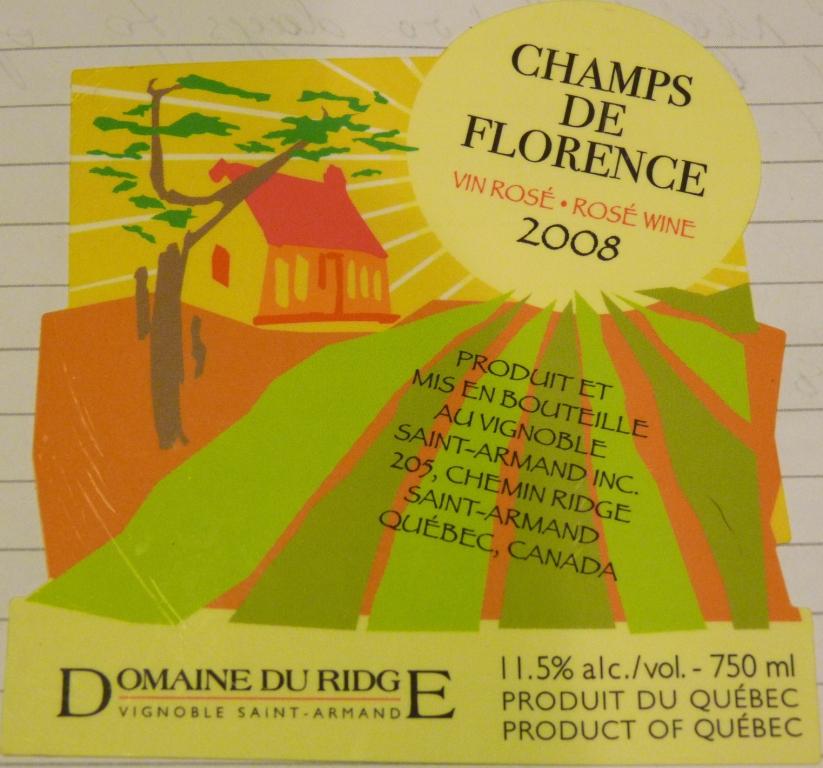
Domaine Du Ridge Champs de Florence 2008, Quebec, Canada
As I routinely check the grapes for the wines I drink, I was pleasantly surprised to find that this Rose wine was made out of the grape called Seyval Noir. I know Seyval Blanc, which is a popular grape choice for the white wines in the eastern part of US, but Seyval Noir is a new one. The wine, Champs de Florence from Domaine du Ridge is a nice rose wine, with aromas of fresh strawberries ( quite typical for rose), medium body and good refreshing acidity.
Drinkability: 7-
#243, Heida
 Bibacchus Heida 2009, Valais AOC, Switzerland
Every time I’m lucky enough to come across the wine from Switzerland, I regret that it is almost impossible to find them in US – both traditional ( Pinot Noir, Gamay, Chardonnay) and indigenous grapes (Gamaret, Diolinoir, Humagne…) produce very good results there – but the wines are literally unknown outside of Switzerland. This particular white wine is made out of the grape called Heida. I would like to note that every “unknown” grape forces me to do quite a bit of research (and it deserves a separate post) – and based on information available on internet, Heida is a close relative of another grape coming from Jura in France and called Savagnin – however, the information is not strong enough to declare Heida and Savagnin to be identical, so please let me consider Heida a grape on its own for now.
Going back to wine, it has very pleasant nose with aromas of white peaches and hints of white flowers, medium body and nice rounding acidity, all in all making it great wine for summer day. Interesting to note that wine didn’t have enough aromatics to stand up against Asian food, but should work better with mild cheeses ( well, I wish I had another bottle to try it with 🙂 ).
Drinkability: 7
#244, Raboso Piave
Vigna Dogarina Ros de Plana 2004, Veneto IGT, Italy
This wine comes from Vigna Dogarina winery in Veneto region in northern Italy. Veneto is well known for its traditional Valpolicella, Amarone and Bardolino wines, though grapes like Cabernet Sauvignon and Merlot also produce very good results. Ros de Plana is a very good example of that – this blend of Cabernet Sauvignon and Raboso Piave is unmistakably Italian wine – dense and earthy on the palate, somewhat of a middle ground between Barolo and Brunello, two of very famous and powerful Italian wines, it opens into a very nice and balanced wine, with spicy oak, walnuts and sour cherries and great midpalate density. This balanced wine will also continue to age very nicely. Just to comment on what seems to be a wine-geek talk, “midpalate density” (essentially the feeling of the liquid weight in your mouth) is a term I recently learned in the article by one of my favorite wine writers, Matt Kramer, regular contributor to the Wine Spectator magazine. Matt Kramer uses midpalate density as a main factor in determining age-worthiness of the wine. One more comment on a comment – to open an article from the link above you might need a subscription to the Wine Spectator online (if you like wine – this is one of the best investments you can make). Anyway, talking about Ros de Plana – here is the rating:
Drinkability: 8-
I just hope that I didn’t overwhelm my readers with the wine speak and geek – and if I did – please feel free to slap me…
Daily Glass: Is There Such Thing As Dangerous Wine, or Carchelo
So, what do you think – is there a such thing as dangerous wines? Let’s leave all the issues of addiction outside of this conversation, as this is not worth debating – addictions are bad, no matter what the subject is, so let’s leave it at that. So let’s start again – when would you call the wine “dangerous”?
First, of course, there are all the forms of the wine faults – wine can be corked ( smells like musty basement, not pleasant to drink at all, because no flavor left), wine can be oxidized (again, no flavor left), wine can be “cooked” ( this is usually the result of of prolonged exposure to the heat, like transporting the wine for a day or two in the trunk of a car during hot summer), and so on. If you actually interested in learning more about wine faults, here is very good Wiki article.
Then the wine can be simply not made well. This is the case when you try the wine and you just want to spit, and then you declare a bottle “not good even for cooking”. Not sure if this is the case of “dangerous” we are looking for, but this is definitely the case of wine we don’t want to drink.
And now, let me explain what I call a “dangerous” wine. To me, dangerous wine is the one you can not put down. You take a sip, you say “wow”, you take another sip, your glass is empty, and then in a while you don’t understand what happened with the bottle? Where this all go? Did I spill half a bottle? Is my dog walks suspiciously – but, hey, she couldn’t reach that bottle, right? So what just happened here??? Yep, the wine was so 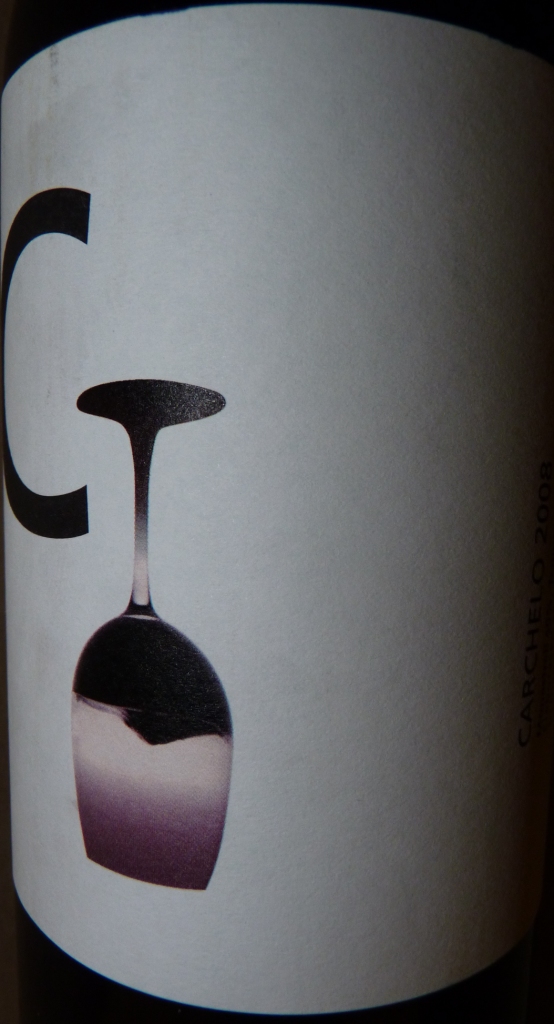 smooth, so round, so it went down so easily that now you completely astonished – but it’s all gone… This is what I call dangerous :).
Recently, I was lucky to come across such a dangerous wine, thanks to my friend Zak from Cost Less Wines and Liquors in Stamford – this is the wine called Carchelo:
Carchelo 2008, Bodegas Carchelo, Jumilla, Spain
This wine comes from the Jumilla region in Spain, and it is a blend of Monastrell, Tempranillo and Cabernet Sauvignon. The wine has very deep purple color, beautiful nose of dark fruit, plums, sweet cherries and blackberries, silky smooth tannins and good acidity, so all together comes in a “dangerously” balanced package. Final verdict:
Drinkability: 8
Try is today, and tell me if how dangerous it was for you!
Daily Glass: Finding Pleasure, or Haut Charmes Sauternes
I already touched on the subject of the “best wine” in my previous post, which can be defined as “the one you like the most”. Continuing the subject, I would also like to refer to the great teacher, author and wine guru Kevin Zraly, who taught tens of thousands of people (myself included) to understand and appreciate wine in his Windows on the World Wine School. In the words of Kevin Zraly, the best wine is the one which gives you pleas ure. As simple as that. Why do I bring it up? Because today I want to talk about wine called Sauternes. Sauternes is a white dessert wine which comes from Sauternes region in Bordeaux in France and typically made out of Semillon, Sauvignon Blanc and Muscadelle grapes in various proportions. And if you ever tasted any of the Sauternes (and if you didn’t – please do it as soon as possible), you would agree, that this is one of the few wines which can be consistently associated with pleasure, which is also proven by the fact that Chateau d’Yquem (one of the very best, Grand producers in Sauternes) wines received a perfect score of 100 points (absolute max) from Wine Spectator literally more often that any other rated wine ( you can check for yourself at Wine Spectator web site).
Enters Haut Charmes 2007, Sauternes, France.
As with any wines from any regions,of course not all of Sauternes are created equal, and there are always ups and downs. Luckily, Haut Charmes 2007 belongs to the “up” side. This wine comes beautifully clean on the nose and palate, with white fruits like peaches, and honey being prominent in the taste, all complemented with very good minerality and acidity. The wine presents itself in a very ethereal fashion, and doesn’t leave sweet residue on the palate, which many of its cousins would do, finishing with desire to reach for the glass again and again and again. I have to also mention that rumor has it that it is declassified d’Yquem – you can find this information in a number of places on Internet, but not at the Chateau d’Yquem official web site, so we have to take it as is. With or without any relationship to the actual d’Yquem, this wine is 10-fold less expensive that the actual d’Yquem – assuming you can find it ( in one of the near future posts, I will write about wine stores I shop at, so you will learn about the right places for that). And talking about rating:
Drinkability: 8+
Make an effort – find it and try it, and then let’s talk about wine and pleasure!
Last Bottle Sign Up ($10 credit)




 Talk-A-Vino