Archive
Weekly Wine Quiz #78: Grape Trivia – Petit Verdot
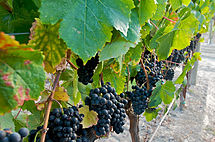
Petit Verdot, as shown in Wikipedia
The Wine Quiz series is not meant to intimidate. The whole idea here is to have fun and learn something new. When answering the questions, it is fully encouraged to use all available sources of information, including Google or any other search engine. There are no embarrassing answers – the most embarrassing thing is not giving it a try…
Welcome to the weekend and your new wine quiz!
We are continuing our grape trivia series, and we are back to the red grapes! Today’s subject is Petit Verdot.
Origins of Petit Verdot are unknown, and according to one of the theories, the grape came to Bordeaux region in France with ancient Romans. Petit Verdot is a very tricky grape in the vineyard – its early budding makes it susceptive to the early spring dangers, such as frost. Its very late ripening puts it in danger of the same frost and some of the diseases, At the same time, small berry with thick skin offers a lot of concentrated tannins and structure when it ripens properly.
This tricky behavior in the vineyard with tendency to underripe, results in Petit Verdot sometimes even not included in the final blend in Bordeaux wines. However, the grape behaves a lot more consistently in the warmer climates. Petit Vedot made it to Australia in 1800s, and it is successfully growing in most of the wine making countries around the world (Spain, Italy, US, Chile, Argentina, New Zealand), producing the best results in the warmer climates. in the US, it is growing in many regions across the country, from New York to Texas to California to Oregon. At its best, Petit Verdot produces dense, powerful, concentrated and age-worthy wines.
And now, to the quiz!
Q1: Explain the meaning of the name Petit Verdot
Q2: Name four grapes, main blending partners of Petit Verdot in France
Q3: True or False: Australia’s plantings of Petit Verdot far exceed the plantings of Petit Verdot in France
Q4: While Petit Verdot is a difficult grape to work with, two events were major contributors to the demise of Petit Verdot in Bordeaux. Can you name those two events?
Q5: While it is not impossible to find a pure 100% Petit Verdot wines made in Bordeaux, those wines are rather the exceptions. What is the typical percentage of Petit Verdot in Bordeaux blends?
Bonus question: what was your personal encounter with Petit Verdot? Do you have any memorable bottles?
Good luck, enjoy the quiz and your weekend! Cheers!
Weekly Wine Quiz #77: Grape Trivia – Savagnin
Welcome to the second day of the weekend and your new wine quiz!
We are continuing our grape trivia series, still focusing on the white grapes, and today’s subject is Savagnin.
Actually, with Savagnin, we are finishing the white grapes series, and will be going back to reds next week – but for now, let’s talk about Savagnin.
Have you heard of Savagnin? Have you ever had any wines made from that grape? Actually, Savagnin is one of the oldest known grapes, taking its roots in the 10th century in the French Alps. From there, it slowly made it to the other side of the Alps into the Switzerland, where it is known since the 16th century. Savagnin is primarily used in winemaking in Jura, and it is barely used outside of that area in its direct form, with only some known plantings in Australia. However, as part of the Traminer family, it has relatives living all over the world.
Savagnin is one of the not just late, but the latest ripening grape varieties – it is not uncommon for Savagnin to fully ripen only in December. Savagnin is quite versatile, capable of producing both dry and dessert wines. It is also typically blended with Chardonnay to create Crémant du Jura, a local sparkling wine. The most famous wine from Jura is called Vin Jaune (“Yellow wine”). Vin Jaune is produced in the sherry-like style, and Savagnin is the only grape variety allowed in production of that wine.
And now, to the quiz!
Q1: Australia makes wines from Savagnin grapes. However, when the grape was planted, it was assumed to be …?
Q2: Wine made from Savagnin was one of the most expensive wines ever sold at an auction. It was sold at about:
a. $98,000
b. $74,000
C. $47,000
d. $30,000
Q3: Continuing previous question – do you know what wine was that? Bonus part: can you also identify the vintage?
Q4: Name at least two other wines, produced in the same way as way Vin de Paille, one of the popular wines made from Savagnin.
Q5: Which reddish-skinned ( but technically white) grape is a close relative of Savagnin?
Good luck, enjoy the quiz and the rest of your weekend! Cheers!
Weekly Wine Quiz #76: Grape Trivia – Roussanne
 Welcome to the weekend and your new wine quiz!
We are continuing our grape trivia series, still focusing on the white grapes, and today’s subject is the white grape called Roussanne.
Last week we talked about grape called Marsanne, and today’s quiz is about its close friend, Roussanne. Similar to Marsanne, Roussanne is also seemed to appear first in the Northern Rhône, and then from there it slowly got into the other wine regions. Today it is growing in different areas in France, in Australia, California, Washington, Texas ( up and coming to the greatness), Spain and … Italy. If you remember, Italy was the major winemaking country which didn’t make any Marsanne wines. Another interesting note about Roussanne is that it is actually allowed to be a part of the 18 grapes permitted in Châteauneuf-du-Pape wines.
Roussanne is a late ripening variety, and it is also susceptible to the various grape diseases, which makes it tricky to work with in the vineyard. However, Roussanne compensate from those vineyard difficulties with great flexibility in the hands of the winemaker, helping to create full bodied, long living wines which greatly improve with age. This is where Roussanne is often paired with Marsanne to create those spectacular ( and very expensive 😦 ) white wines of Northern Rhône.
And now, to the quiz!
Q1: Explain the source of the name Roussanne
Q2: Which one doesn’t belong and why:
a. Hermitage
b. Côte-Rôtie
c. Châteauneuf-du-Pape
d. St.-Joseph
Q3: Outside of Northern Rhône, the traditional bending partner of Roussanne is…
Q4: Roussanne was re-introduced in California in the 1980s, only to be proven in the late 1990s to be not the Roussanne but another grape. Do you know what grape was that?
Q5: One of the first California “Roussanne” wines from the 1980s had a specific name. Can you name that wine?
Good luck, enjoy the quiz and your weekend! Cheers!
Weekly Wine Quiz #75: Grape Trivia – Marsanne
Welcome to the weekend and your new wine quiz!
We are continuing our grape trivia series, still focusing on the white grapes, and today’s subject is grape called Marsanne.
Marsanne seems to originate near the town of Marsanne in Northern Rhône, hence the name. The grape is known at least from the 17th century (but could’ve been used in winemaking before). Marsanne is a foundation for the white wines of Northern Rhône appellations of Crozes-Hermitage, Hermitage, St.-Joseph and St.-Péray, but it is also used in the white wines throughout the whole Côtes du Rhône region and in a few other regions in France. White wines of Northern Rhône are typically full bodied and powerful, known for its great longevity (might be some of the longest living dry white wines). It is not just the longevity which matters – Northern Rhône whites also known to improve with age.
Marsanne made it to Australia in the 1860s, where it became quite popular. It is interesting that considering the fact that Marsanne wines improve with age, one of the best known Australian producers of Marsanne, Tahbilk, makes two releases per year, offering both current and older ( 6 years older or so) vintages of the wines.
Marsanne also made it to California, however, it is not very clear when. Based on some of the internet sources, Marsanne made it to US in the 1870s and was used in some of the red blends, paired with Syrah to replicate Northern Rhône wines. However, it appears that Marsanne started to be actively used in California wines some time in 1980s, and today it is offered by many producers in California and state of Washington.
And now, to the quiz!
Q1: Name the grape, typical blending partner of Marsanne in Northern Rhône
Q2: True or False: Plantings of Marsanne in Australia far exceed Marsanne plantings in France.
Q3: Solve the riddle and explain: Part of 8, but not part of 18
Q4: Marsanne is known in Switzerland under the name of …
Q5: Name major wine producing country which doesn’t make any Marsanne wines of notice
Good luck, enjoy the quiz and your weekend! Cheers!
Weekly Wine Quiz #74: Grape Trivia – Trebbiano

Ugni Blanc grapes, as shown in Wikipedia
Welcome to the weekend and your new wine quiz!
We are continuing our grape trivia series, still focusing on the white grapes, and today’s subject is Trebbiano.
Have you had Trebbiano wines? How about Ugni Blanc? Before you answer no, think again. There is a very high degree of probability that you had the wine made either from Trebbiano, a.k.a. Ugni Blanc, or at least with Trebbiano being a part of the blend, as Trebbiano is second most planted grape in the world. Ugni Blanc is the most planted grape in France, spanning from Bordeaux to Provance to Corsica. In Italy, Trebbiano is allowed to be used in more than 80 different DOCs and has 7 DOCs of its own.
The grape’s historical (as well as genetical) roots are still not fully established yet. It seems that the first mentions come from the area of Bologna in Italy in 13th century. In the 14th century, the grape made it to France together with the Papal court, where it became known as Ugni Blanc. Starting from 16th century, the plantings of the Trebbiano increased quite substantially, but the grape practically never made it on its own. Trebbiano’s main characteristics include high acid, low sugar, minimum aromatics and vigorous growth, which are not the star quality when we are talking about the wines. At the same time, these very characteristics make it an excellent foundation for producing all kinds of distilled spirits – this is where majority of the Trebbiano/Ugni Blanc grapes are used today.
And now, to the quiz!
Q1: Ugni Blanc is a main grape in the production of what famous spirit?
Q2: Name the wine, in which Trebbiano was a required part of the blend, and it was considered to be the reason for a bad, flabby quality of that wine (it is no longer required to be used in that wine).
Q3: Trebbiano is often a foundation for the popular food product (containing no alcohol). Do you know what food product it is?
Q4: Contrary to the name, Trebbiano di Lugano is not considered to be a part of the Trebbiano family, but rather related to another Italian grape. Do you know what grape is that?
Q5: When used for the wine production (as opposed to the distilled spirits), Ugni Blanc is rarely used on its own – it is typically a part of the blend. Name 3 grapes, traditional blending partners of Ugni Blanc.
Good luck, enjoy the quiz and your weekend! Cheers!
Weekly Wine Quiz #73: Grape Trivia – Sémillon

Sémillon grapes affected by noble rot, as shown in Wikipedia
Welcome to the weekend and your new wine quiz!
We are continuing our grape trivia series, still focusing on the white grapes, and today’s subject is Sémillon.
Sémillon is a white grape, once considered the most planted grape in the world. One interesting fact is that the origin of Sémillon is not easy to pinpoint – while working on this quiz, I went through quite a few articles on Internet and even books, and it is hard to find any historical data outside of the fact that Sémillon was very popular in the early 19th century throughout the world. In the early 19th century, over the 90% of all grape plantings in South Africa was Sémillon – considering its popularity, it was simply called Wyndruif, the “wine grape”. Today, Sémillon occupies roughly 1% of the grape plantings in South Africa. It is still the most planted white grape in Bordeaux, where it is used in the production of most of the white wines, from dry wines of Pessac-Léognan, Graves and Entre-deux-mers, to the spectacular dessert jewels of Sauternes and Barsac. Sémillon plantings exist in many other winemaking countries – Australia, Chile, Italy, New Zealand, California and Washington in US – but you rarely hear about Sémillon, as it is mostly used as a blending grape. Well, this might be changing – but we will not be talking about it in the quiz.
The issue with Sémillon is that under normal growing conditions, it tends to produce plump and dull wines, the wines which are not showing much of the aromatics and have very low acidity. When the grape is forced to work hard, it can produce amazing wines. In Sauternes, Sémillon is typically affected by Botrytis cinerea, the noble rot, which leads to the shriveling of the grapes which concentrates the sugar – dessert wines produced from such shriveled grapes are some of the best in the world (Châteaud’Yquem, anyone?) – they also make some of the longest living wines in the world, being capable of ageing for 100 years and beyond. In Australia’s Hunter Valley region, the grapes are exposed to the harsh climate with the high level of humidity, which leads to the grapes accumulating high level of acidity. Hunter Valley Sémillon is known to age very well, and the wines also improve with age quite significantly.
And now, to the quiz!
Q1: Name a grape, primary blending partner of Sémillon
Q2: Below is the list of years. There is something common between all of them (and of course it has a relationship with Sémillon) – do you know what is common among those years?
1930, 1952, 1964, 1974, 2012
Q3: Ture or False: Sauternes produces only sweet wines
Q4: Name a key factor for the great tasting dry Sémillon wines
Q5: What is Semageddon?
There is nothing wrong with answering even only one question from the quiz – your participation is always appreciated! Also, without any regard to the questions, please share your personal experiences with Sémillon wines.
Good luck, enjoy the quiz and your weekend! Cheers!
Weekly Wine Quiz #72: Grape Trivia – Torrontés

Torrontés grapes, as shown in Wikipedia
Welcome to the weekend and your new wine quiz!
We are continuing our grape trivia series, still focusing on the white grapes, and today’s subject is Torrontés.
How often do you drink Torrontés? Do you know at least what country it is coming from? Yes, I understand that my choice of the grape for today’s quiz might be questionable – Torrontés is not a mainstream grape by all means. But as we are continuing with the white grapes, and the last white grape we talked about was the spanish grape called Albariño, the choice of Torrontés as a subject for today’s quiz is almost automatic for me.
Torrontés has a relatively short history, first appearing under its name in the second half of the 19th century in Argentina. Originally it was thought that Torrontés came from Spain, where there is a grape with the same name, but it appears that the two have nothing in common. While Torrontés plantings only amount to the 10% of total grape plantings in Argentina, it yields about 20% of the total wine production. Torrontés today is mostly growing in Argentina with some small plantings appearing on the other side of the Andes, in Chile. Torrontés wines typically have very expressive aromatics, more of a floral nature, coupled with crisp acidity on the palate, which makes them a great accompaniment to the wide variety of dishes. Best Torrontés wines come from the regions of Salta and Cafayate, where grapes are growing at the altitude of 5,000 ft (~1700 m) above sea level.
And now, to the quiz!
Q1: Name three varietals of Torrontés growing in Argentina
Q2: Wine Spectator calls wines rated in 90-94 range Outstanding. True or False: there are no Torrontés wines with Outstanding rating?
Q3: As established by DNA analysis, Torrontés is a cross of two grapes. One of them is Muscat of Alexandria. The second grape played an important role in the early days of winemaking in the United States. Do you know what grape it is?
Q4: Most of the Torrontés is growing in pretty unique conditions, for most of the plantings being at a high altitude. Name one problem which needs to be controlled for the production of the high quality wines.
Q5: True or False: Torrontés produces both dry and dessert wines
Even if you don’t feel like answering the questions in the quiz, I’m curious to know if you had Torrontés wines, and if you did, what do you think of them.
Good luck, enjoy the quiz and your weekend! Cheers!
Weekly Wine Quiz #71: Grape Trivia – Albariño

Albariño grapes, as shown in Wikipedia
Welcome to the weekend and your new wine quiz!
We are continuing our grape trivia series, still focusing on the white grapes, and today’s subject is Albariño.
According to the legend, Albariño was brought to Galicia region of Spain some time in the 12th century, of course by nobody else but monks. But it was not until almost the end of 20th century that Albariño wines became well known and well recognized in the world. Albariño is the main grape in the Rias Baixas region of Spain. Rias Baixas became a DO (Denominación de Origen is Spanish definition of the quality of agricultural products, similar to AOC in France) for Albariño in 1980. The rules had to change after Spain joined European Union, which doesn’t allow DO definitions for the single grape, so the new rules had being put in place in 1988, allowing for a number of other grapes, such as white grapes Loureira blanca, Treixadura, Caiño blanca, Torrontés and Godello, to be included into Rias Baixas DO wines.
Albariño makes perfect summer white wines. It usually combines very expressive aromatics of bright white fruit, with zesty, lemony and dry palate, making it perfectly drinkable by itself or with the wide array of summer dishes. While Albariño is literally considered to be the most important Spanish white grape, it is also successfully growing now in the other countries, such as Argentina, United States and others. In Portugal, Albariño had being known for the very long time under the name of Alvarinho, where it is often used in making of the Vinho Verde wines.
And now, to the quiz!
Q1: Explain the origin of the name Albariño
Q2: What kind of food is typically expected to be paired with Albariño?
Q3: When Albariño was first planted in California?
a. 2000
b. 1996
c. 1992
d. 1988
Q4: For the long time, winemakers in Australia thought that they are making Albariño wine – until it was recently found that due to the mistake, what they thought they planted as Albariño is not Albariño at all, but a totally unrelated grape. Do you know what grape it was?
Q5: Val do Salnés is one of the sub-regions in Rias Baixas, making wines from Albariño grapes. True or False: to be labeled Albariño Val do Salnés, the wine must contain 100% Albariño grapes
Good luck, enjoy the quiz and your weekend! Cheers!
Weekly Wine Quiz #70: Grape Trivia – Gewurztraminer
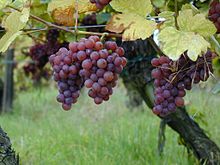
Gewurztraminer grapes, as shown in Wikipedia
Welcome to the weekend and your new wine quiz!
We are continuing our grape trivia series, still focusing on the white grapes, and today’s subject is Gewurztraminer.
Gewurztraminer, which often spelled with umlaut, Gewürztraminer, is a very interesting white grape for variety of reasons. Even starting with the appearance – take a look at the picture – does it look white to you? Nevertheless, similar to Pinot Gris, it is considered to be the white grape, as its skin color ranges from pinkish to the reddish. Gewurztraminer has about 1000 years of history, and it is growing pretty much all over the world in literally each and every wine producing country – yet it is very seldom that any of the oenophiles would rave about their Gewurztraminer experiences.
It is difficult to grow, as it tends to have high sugar content and low acidity, which doesn’t bode well for the well balanced wines – and for that reason, it also performs better in the cooler climates. Its characteristic trait is extreme aromatics – on the nose, Gewurztraminer wine usually exhumes with aromas of white flowers, lychees, peaches and tropical fruits. Gewurztraminer wines can be made in the range of styles, from very dry to the full power dessert wine. For the well made Gewurztraminer wines, the combination of extreme aromatics and balanced body, whether dry or sweet, creates very memorable experience – yes, this would hold true from absolute majority of the wines, of course – but I would say that Gewurztraminer wines very seldom have middle ground in their showing – they are either great, or they are really bad, with the very few which you will place into “well, it’s okay” category.
Most of the best in the world Gewurztraminers come from Alsace in France, but you can also find very good wines in Germany, Austria, Italy, California and probably some other places (in a lot of cases the wines will be made only for the local consumption and you would never hear about them). One more curious fact I want to point to before we get to the quiz is that Gewurztraminer is probably one of the most promiscuous grapes, having been used more often than most of other grapes in creation of different crosses – Flora, Traminette, Ortega, Irsai Oliver and many others are not clones, but actual purposeful crosses of Gewurztraminer with the other grapes.
Now, to the quiz!
Q1: Where Gewurztraminer was supposedly originated? Name the grape which was a precursor of Gewurztraminer
Q2: Explain the meaning of the name Gewurztraminer
Q3: Unlike many other grapes, if the French wine is made out of Gewurztraminer, you can easily know that just by looking at the bottle. Why is that?
Q4: Which area in California produces best Gewurztraminer wines:
a. Monterey County
b. Alexander Valley
c. Russian River Valley
d. Anderson Valley
Q5: Wine Spectator calls wines rated in 95-100 range Classic (the highest and the most prestigious category). True or False: there are no Gewurztraminer wines with Classic rating
Good luck, enjoy the quiz and your weekend! Cheers!
Weekly Wine Quiz #69: Grape Trivia – Viognier
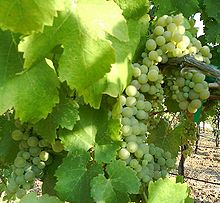
California Viognier grapes, as shown in Wikipedia
Welcome to the weekend and your new wine quiz!
We are continuing our grape trivia series, still focusing on the white grapes, and today’s subject is Viognier.
Talking about turbulent history here. Viognier is one of the oldest known white grapes in the world, with the first mentions attributed to the 280 AD. It is considered that Romans brought it to France from Croatia (of course the region was called differently in those times, but it is still geographically correct). Historically, Viognier wines were mostly made in the Northern Rhone region in France, and they were quite popular in the 1800. However, by the 1965, there were only 8 acres (!) planted in the world, producing minuscule amount of wine.
Viognier‘s renaissance started in 1980s, when the grape was brought into the United States and Australia. From that time on, the interest to the grape increased and even skyrocketed in the 21st century worldwide, with the plantings in France alone increasing 100-fold. Now Viognier is growing in pretty much every major winemaking country in the world, including Spain with some experimental plantings in Rioja area. In the United States alone, the grape is becoming more and more popular, and not only in California, but also in the states such as Texas and Virginia, producing very interesting wines (take a look at my notes from Viognier tasting in Texas).
Viognier at its best produces wines with very perfumy, floral nose, which are firm, structured and full bodied on the palate, with peach and apricot flavors often being most noticeable. The challenge of Viognier lies in the fact that the grape is naturally low in acidity, so if it is not ripen properly, it will produce sweet and not very drinkable plonk. One of the reason for Viognier to do much better nowadays is greatly improved winegrowing and winemaking techniques, which allow to produce great tasting wines more consistently.
And now, to the quiz!
Q1: Viognier stands pretty unique among all white grapes as it is often added or can be added as blending component during the production of the red wines around the world. Do you know the name of the red grape it typically accompanies?
Q2: Name the source of essentially the best and most long-living Viognier wines in the world
Q3: Viognier became so popular in the United States, that one of the states even called it “an official grape of the state”. Do you know which state it is?
a. California
b. New York
c. Texas
d. Virginia
Q4: Wine Spectator calls wines rated in 95-100 range Classic (the highest and the most prestigious category). True or False: there are no Viognier wines with Classic rating
Q5: Based on DNA research, Viognier has an unlikely cousin in Italy, which is not even the white grape, but red. Can you name that “cousin”?
Good luck, enjoy the quiz and your weekend! Cheers!
Last Bottle Sign Up ($10 credit)




 Talk-A-Vino