Archive
Stories of Passion and Pinot: Eugenia Keegan
Joseph Swan Vineyards. Volnay, Puligny-Montrachet. Hop Kiln Winery in the Russian River Valley, Bouchaine Vineyards in Carneros, Vine Cliff Winery in Oakville.
Keegan Cellars in Russian River Valley, dedicated to single-vineyard Chardonnay and Pinot Noir.
Oregon.
France again, this time Châteauneuf-du-Pape and Roussillon.
And back to Oregon.
This is not a random list – these are some of the places where Eugenia Keegan, born fifth generation to a family with deep roots in the Russian River Valley, worked during more than 45 years of her wine-centered career.
Working in the cellar. Working in the vineyard. Making wines. Managing wineries. Managing wine businesses. Going beyond just a business, Eugenia had been actively involved in Oregon’s wine world at a higher level as chair of the board of directors of the Oregon Wine Board, president of the Oregon Winegrowers Association, president of the Willamette Valley Wineries Association Board, and co-chair of Willamette: The Pinot Noir Auction. And to top it all off, Eugenia was named the 2021 Wine Executive of the Year as part of Wine Enthusiast Magazine’s 2021 Wine Star Awards.
Since 2016, Eugenia is working as a senior vice president of winemaking and business development for Jackson Family Wines’ Oregon properties, overseeing the winemaking programs for Gran Moraine, Penner-Ash Wine Cellars, WillaKenzie Estate, and Zena Crown Vineyard.
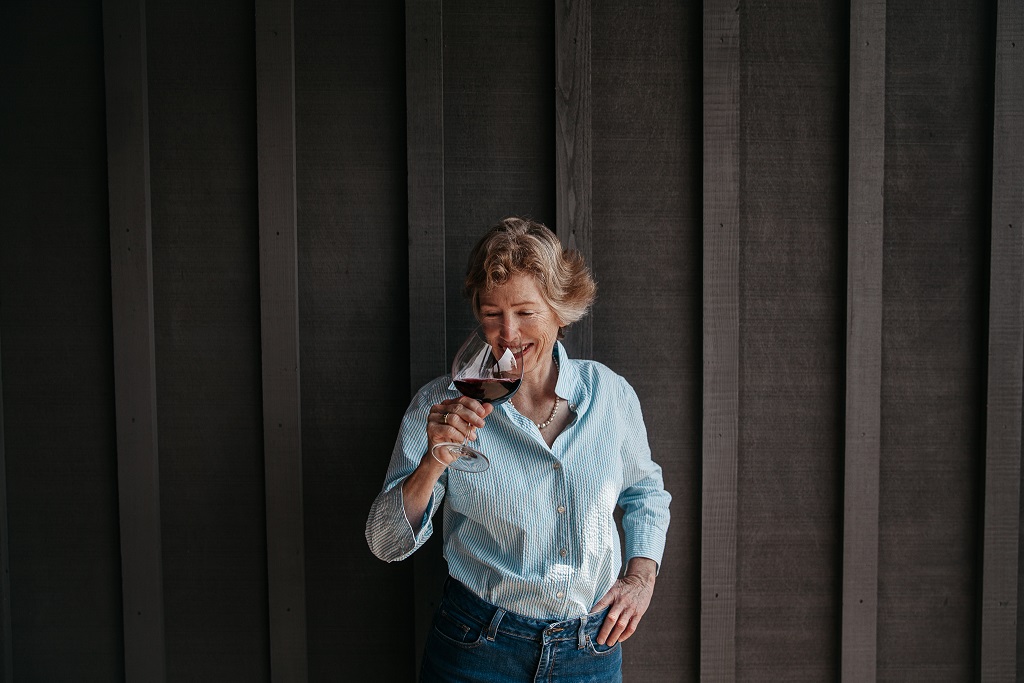
Eugenia Keegan. Source: Jackson Family Wines
A conversation about Oregon’s Willamette Valley wine inexplicably means a conversation about Pinot Noir. As you probably know by now, conversations about Oregon’s Pinot Noir had been one of the longest-running themes on the blog, a collection of winemaker interviews under the Stories of Passion and Pinot. As most of Eugenia’s winemaking career rotated around Pinot Noir, I thought that a conversation with her would be a great addition to the series – and with the help of Carl Giavanti, I managed to sit down (virtually) and talk with Eugenia.
Here is what transpired in our conversation:
[TaV]: How is this managing 4 different wineries with their own established style and following? Do you enforce JFW brand identity or encourage individuality?
[EK]: Individuality is a major part of our success. JFW provides the tools and overarching guidance (safety and quality). Each winery is encouraged to find its own personality based on the estates and people that are key to that brand.
[TaV]: You personally produced Pinot Noir in California and Oregon. If it is at all possible to “average out”, how would you describe the difference between California and Oregon Pinot Noir?
[EK]: Weather and light are the key differentiating factors when comparing these two areas. The long summer evenings allow the grapes to catch up to a warmer area like parts of California that bud out earlier and the cool Septembers allow the Oregon fruit to mature during cooler days, pushing fresh fruit and higher acidities.
[TaV]: You started in the wine early, and you were born in Sonoma, so wine obviously is in your DNA, but nevertheless – did you have a pivotal wine in your life? The one you tasted and said, “now I understand”?
[EK]: Yes indeed! But after I was in the business. I recall with absolute clarity while in Ireland having a 1985 Louis Latour Corton Charlemagne and “knew” that this was the benchmark of great chardonnay and have been in pursuit of that ever since. There were many fabulous Burgundies, both red and white, along the way that continue to provide inspiration years later.
[TaV]: Thinking about your long career in wine, do you have any regrets? Is there anything you would do differently knowing what you know now?
[EK]: I would have stayed in Burgundy longer. After each of my stagiaire I quickly came home excited to apply what I had learned. If I knew then how long a road this would be, I would have stayed longer and probably have tried to work there full time.
[TaV]: What is the sustainability story for Jackson Family Wines in Oregon? Where are you now and what are your plans for the future?
[EK]: Throughout our 40 years in business, the Jackson family has long prioritized natural resource conservation and environmental stewardship. We embrace climate-smart farming and winemaking practices that lower our environmental impacts, including preserving open space to building soil health and reducing our water and energy use. These sustainability values and practices extend to all regions where we grow and make wine, including Oregon. In fact, our Oregon properties have been on the forefront of many initiatives that we’re proud of as a global wine company. Less than 35% of our total acres are planted to vines to protect natural habitats and wildlife. Each year, we generate enough onsite renewable energy to offset the annual consumption of approximately 15 homes in Oregon. It’s also worth pointing out that our WillaKenzie Estate was the first LIVE-certified winery in Oregon, so it has a long history and legacy of sustainability leadership. All of our other Oregon vineyards and wineries are also certified through the LIVE program.
So, whether it’s through sustainability certification, our commitment to protecting natural habitats, or use of renewable energy, Oregon has had a positive impact on our overall Jackson Family Wines Rooted for Good: Roadmap to 2030 sustainability and climate action efforts. And, they will play a major role in our efforts to reach or goals for 2030.
[TaV]: Are there any plans to convert to organic viticulture at any of the JFW properties in Oregon?
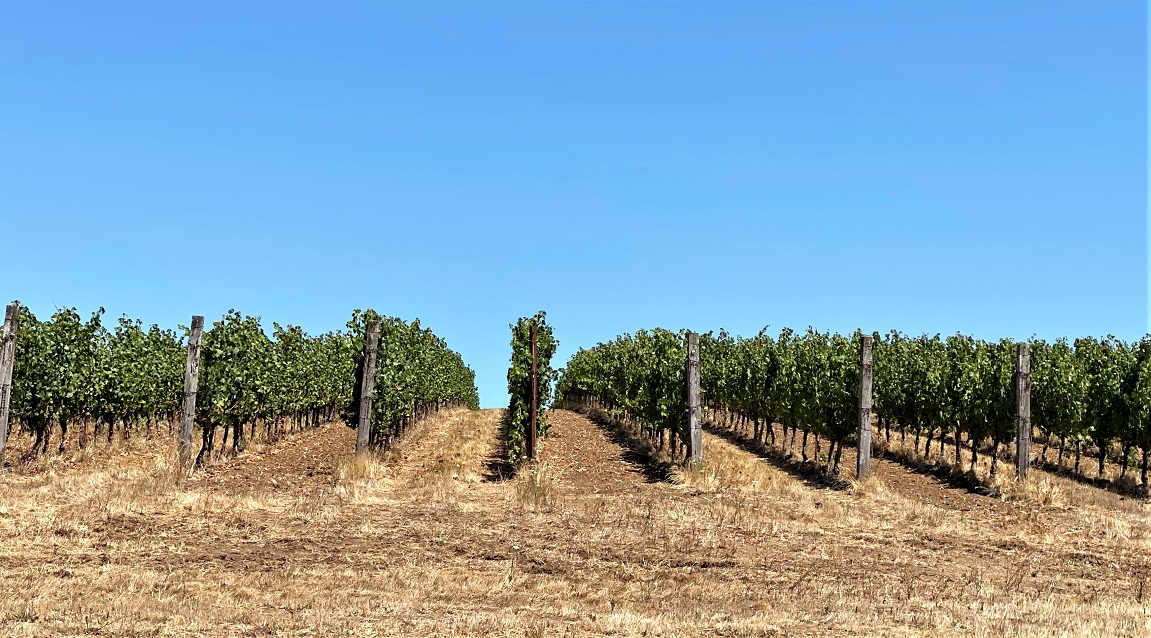
[EK]: At this time, there is no plan to convert our estate vineyards towards organic farming in Oregon. As I mentioned all our vineyards are currently LIVE certified and as part of our Rooted for Good: Roadmap 2030 sustainability plan, we made a commitment to transition 100% of our estate vineyards to regenerative farming practices, including in Oregon. We believe this transition to regenerative agriculture is the best approach for maintaining a healthy ecosystem. By using a lighter touch, regenerative farming will leave our lands healthier for future generations so we can continue to craft distinctive, beautiful wines for the next hundred years. For us, we define regenerative farming as a set of farming principles and practices that increases biodiversity, enriches soil heath, improves watersheds and enhances the ecosystem surrounding our vines. Key regenerative farming practices include rebuilding soil organic matter through limited tillage and adding carbon rich compost and other nutrients; increasing biodiversity in and around our vineyard with cover crops and livestock integration (sheep + chickens); and reducing synthetic chemical inputs. Beyond the environmental benefits of regenerative farming, we also believe it’s the best approach for wine quality.
[TaV]: We repeatedly hear that the young generation (Gen Z, I guess) doesn’t want to drink wine. Do you agree with this? If yes, what needs to be done to change that?
[EK]: I think that the approach to wine is very different for younger consumers. My generation grew up with wine as mystical and magical. Everything was done in the ancient European tradition. I think for people growing up in the US now, wine is just another beverage option, not an extension of some old culture. I consider this a huge opportunity to move outside the traditional European varieties and styles and a chance to experiment. And along the way I believe that many will find the same magic and mystery of the ancients.
[TaV]: This might be the only question I like to ask all the winemakers I’m speaking with – what is your take on biodynamic viticulture?
[EK]: There are two things that I love about biodynamics: the whole farm concept and the attention to detail. And the beauty is that these two principles apply to any approach to farming and land stewardship.
[TaV]: What is ahead for the Willamette Valley wine in general? What do you think will happen over the next 10 years?
[EK]: I think that in the traditional world we will see Chardonnay and sparkling wines take their position on the global stage next to our Pinot Noirs. And I think that we will see a lot of new and interesting wines from the younger winemakers.
[TaV]: Are there any plans to add more wineries to the JFW collection in Oregon?
[EK]: We are always looking for the best sites for winegrowing everywhere in the world. Oregon is no exception, but for now we are pretty busy with what we have.
[TaV]: Is there a wine you always wanted to make but still didn’t have a chance?
[EK]: Working with Pinot Noir and Chardonnay for 50 years has been everything that I could ask for. But I would not mind taking a crack at Chenin Blanc and Grenache, two of my favorite wines.
[TaV]: Are there any problems facing Oregon wineries now, or is everything is perfectly clear on the horizon?
[EK]: There is climate change of course. The fascinating thing about climate change is that it is a global challenge. EVERY winegrowing area in the world is facing this same issue. That helps in working toward solutions. But nothing that is existential to Oregon.
[TaV]: Can Oregon ever produce the wine rivaling DRC? Leaving the image aside, maybe a better question is: is there an Oregon Pinot Noir that you know of which can take on DRC in the blind tasting?
[EK]: HA, that is a loaded question! Oregon cannot make Burgundy anymore than Burgundy can make Oregon. Can Oregon wines give one the same pleasure and satisfaction as the great wines of Burgundy? Yes indeed.
[TaV]: Do you have unicorn wine? The wine you always wanted to try? For example, I have two – DRC and Quintarelli Amarone. What would be yours?
[EK]: After several hours of thinking about this, the answer is no. BUT having said that I still have that same thirst for winegrowing knowledge that I had 50 years ago and continue to explore new regions and wines every day.
[TaV]: You and David Adelsheim have been friends and partners for a long time. How did you meet and how would you characterize your relationship? Do you talk business or keep church and state separate?
[EK]: David and I met at the Steamboat Pinot Noir Conference in the early 80’s. We found that we shared a lot of interests in common not just being fully engaged as producers of Pinot Noir (before Sideways) in full throttle pursuit of wine quality and healthy sales. We are still the very best of friends with a dash of romance thrown in. NO, there is no division of church and state. We talk wine ALL the time.
Here you are – another addition to the Stories of Passion and Pinot. I hope you enjoyed this encounter with the winemaker’s passion and maybe even learned something new.
Until the next time…
P.S. For more stories of Passion and Pinot please visit the series’ main page.
Stories of Passion and Pinot: David Adelsheim
 For those of us, eternal optimists and romanticists, who also happen to be wine lovers, wine always has a story. A glass of good wine always solicits an emotional response, and we truly believe that passion trumpets the world of wine. To create a wine that can move emotions, passion must be one of the key ingredients.
In the wine world, passion alone will not get you very far. It needs to be supported by hard labor. Unwavering resolve. Gumption and belief that you can not fail. Or so I learned by talking with winemakers in Oregon who made Pinot Noir their passion, growing it sometimes in places where nothing is supposed to grow. These conversations became the series that I called Stories of Passion and Pinot – in these stories you can see for yourself what that passion means.
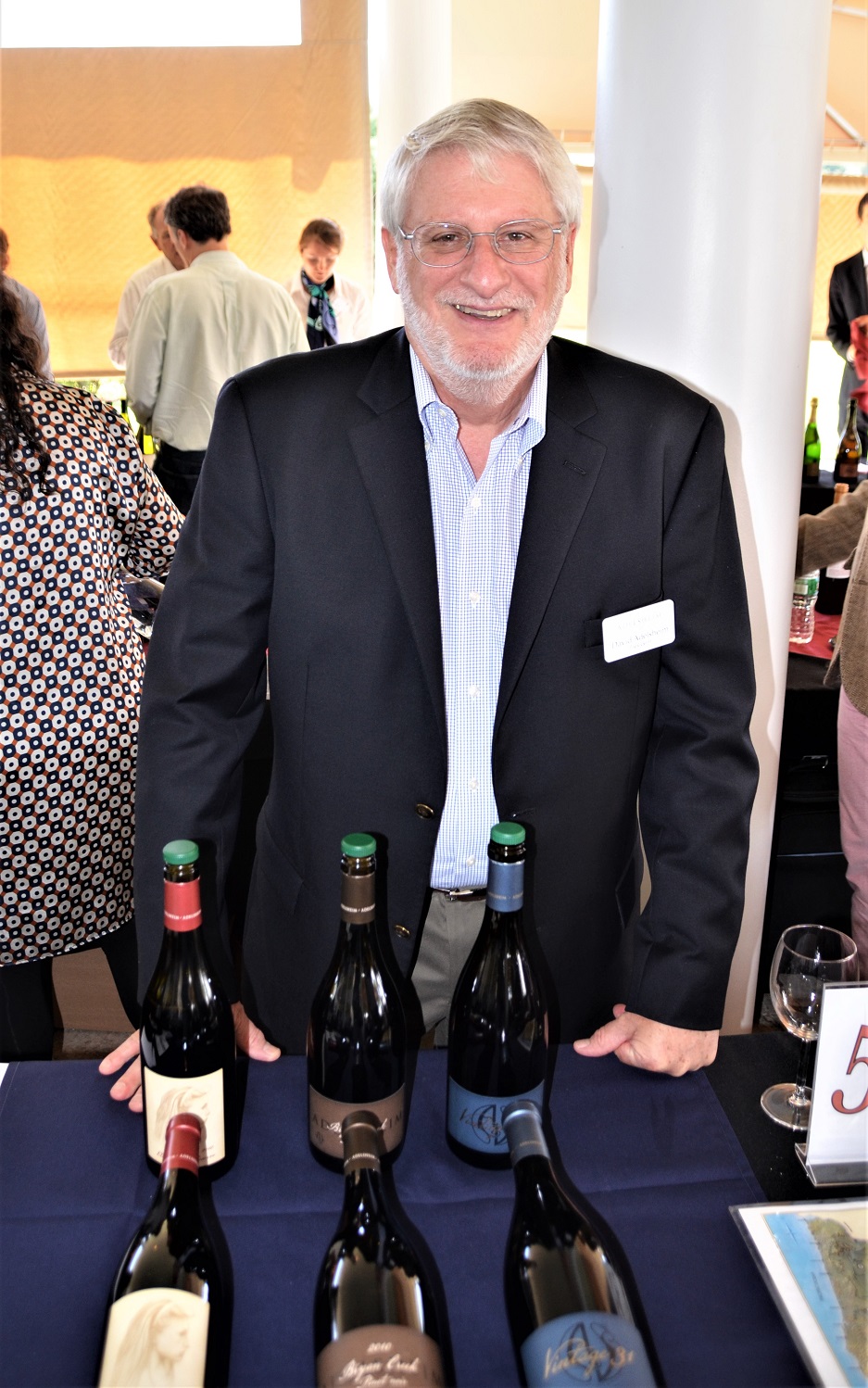
Among winemakers, there are those who rightly deserve to be called pioneers. They come first, building the road that others can follow. David and Ginny Adelsheim were such pioneers, planting some of the first Pinot Noir vines in Willamette Valley in 1971, starting Adelsheim Vineyard, and never looking back. I had the pleasure of briefly meeting David about 10 years ago at a trade wine tasting in Connecticut and tasting some of his wines. A few months ago, Carl Giavanti helped me to actually have a conversation with David and ask him a few questions albeit virtually. David’s achievements over the 50 years and his role in promoting Oregon wines and bringing them to the world stage are nothing short of legendary and very hard to capture in a short interview format – but I believe it still will be well worth a few minutes of your time.
[TaV]: You learned a lot over the 50 years. If you would start the winery again, would you do something differently?
[DA]: Probably, I’d try to focus more attention on the quality of wines we produced and the fiscal stability of the winery. Or hire a winemaking consultant and a CFO, who could do those things, since my time is probably better spent helping the industry and selling wine.
[TaV]: Over the course of your winemaking career, what were your favorite vintages and why?
[DA]: I don’t really have favorite vintages because it was my job to be excited about every vintage. There are vintages, like 2021, where the weather cooperated, and the vineyard and winery logistics were easy. There are vintages, like 1983, 1988, 1990, 1999, 2005, 2012, and 2019, where the wines received great scores from the critics. There are vintages, like 1986, 1991, 1997, 2007, 2013, where the wines got so-so scores, but with time became glorious. There have been a couple of disastrous vintages like 1984 that, with time in bottle, became better than I would have expected. And then there are a few vintages, like 2003, 2006, 2009, and 2015, that ended up being very ripe.
[TaV]: Not to go too far on this tangent, but what is your opinion of biodynamic winemaking?
[DA]: Our vineyards are not biodynamically farmed, and our winery does not follow biodynamic principles. All our vineyards are LIVE-certified as is our winery. In addition, we use no herbicides in our vineyards.

Quarter Mile Lane Vineyard. Source: Adelsheim Vineyard
[TaV]: Adelsheim Vineyard farms about 200 acres in Chehalem Mountains AVA with a large variety of soil types and microclimates. Based on your experience, is this the time to think about establishing additional sub-AVAs?
[DA]: The 1979 regulations establishing the system of American Viticultural Areas is not rigorous enough. The word “wine” does not appear, no expertise is required to submit a petition, and there is no top-down guidance to ensure a logical, helpful system of AVAs. It is time to help everyone, from consumers to our own winemakers, understand the connection between where grapes come from and how a wine smells and tastes. In the Chehalem Mountains, we have undertaken a project to define distinct neighborhoods of wine, using a winemaker tasting panel working under the guidance of a researcher in Burgundy. If we are able to define such neighborhoods, just by tasting single vineyard wines, the wineries in the Chehalem Mountains area will have to decide whether to petition for additional nested, nested-AVAs (like Ribbon Ridge and Laurelwood District) or devise a better way to communicate with the public.
[TaV]: What are the oldest Adelsheim wines in the winery’s cellar?
[DA]: We have an extensive library that is supposed to contain examples of every wine we’ve ever produced, included from 1978, our first vintage.
[TaV]: How are they holding up?
[DA]: I haven’t tasted the 1978s in a pretty long time. The estate Pinot noir was served at our 40th anniversary in 2011. I was surprised that had held up. The whites – an estate Chardonnay and a WA Sémillon – are, of course, pretty oxidized but both still have fruit. And I bet that the two WA Merlots are pretty stunning – I can’t remember when I last tried one.
[TaV]: Over the last 4-5 years, significant efforts were made to protect the origins of Willamette Valley wines, such as the case against Copper Cane from California. How widespread is this problem, and what more needs to be done to better protect the Oregon wine industry?
[DA]: The Copper Cane case is getting resolved, I believe. But it illustrates that there are people, who would like to take advantage of the geographic brands we created – like Oregon and Willamette Valley. We saw a Chilean Pinot noir, bottled by a company with “Oregon” in their brand name. That’s illegal under TTB rules, but where’s the enforcement? Of course, I believe that the Willamette Valley AVA should have stricter rules – a 100% requirement to use the varietal name and 100% to use the Willamette Valley AVA or its nested AVAs. But proposing that to the 2019 legislature ended up splitting the industry so there’s little appetite for a second round any time soon.
[TaV]: Last year, the EU awarded Protected Geographical Indication status to Willamette Valley. Is that sufficient to protect the Oregon wine industry as a whole, or more needs to be done?
[DA]: We probably should figure out how to protect the name “Willamette Valley” in China and, perhaps, other parts of the world. Napa isn’t going through the work of protecting the names of their nested AVAs with the EU, so we probably don’t have to do that either.
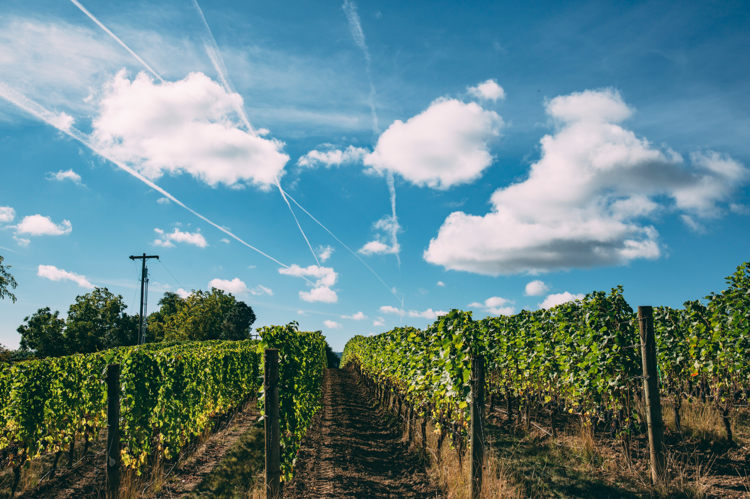
Calkins Lane Vineyard. Source: Adelsheim Vineyard
[TaV]: Should Oregon also receive a PGI status?
[DA]: Probably, yes. But someone will need to volunteer to complete the incredibly long application and the revisions required. It took Harry Peterson-Nedry ten years to get the EU to grant Willamette Valley TGI status. The Oregon Wine Board should do that application. But probably doesn’t have the bandwidth.
[TaV]: You are often referred to as an ambassador of Oregon wines to the world. Are Oregon wines well recognized worldwide?
[DA]: Well, the top wines from the Willamette Valley (mostly Pinot noirs) are starting to be recognized in markets that can afford them. The problem is that they are being called “Oregon,” which leads to confusion of consumers. We need to stop using “Oregon” when we’re referring only to the wines of the Willamette Valley.
[TaV]: What are the main exporting countries for Willamette Valley Pinot noir?
[DA]: Number 1 is Canada, followed by the UK and Japan, followed by Sweden and Denmark. Other Asia markets (Korea, Singapore, Taiwan, the Philippines) are growing as are Caribbean markets. In the EU, there are countries that can afford WV PNs – Germany, France, Italy, Holland, Belgium in particular. But they continue to focus primarily on French, German, and Mediterranean wines.
[TaV]: What needs to be done to make Willamette Valley wines better known internationally?
[DA]: Education of the importers about our region and the brands available in the particular country. Once enough wineries have representation, then we can start educating the media and the trade. Finally, once the wines are available in stores and restaurants, with stories appearing in wine and lifestyle media, then we can start education consumers.
[TaV]: What are the main problems facing the Willamette Valley wine industry, now, and say, over the next 20 years?
[DA]: You mean besides global climates change, which threatens all of today’s top wine regions. Well, beyond that, we need to ensure that Oregonians are buying the State’s successful wineries, not just wine companies from outside the State and, often, outside the country. You can’t talk about Avis being the best rental car company if it’s owned by Hertz.
[TaV]: What would be your advice to the young winemakers who are just getting started?
[DA]: They don’t seem to need my advice. They have figured out the pathway to starting their own brand – start at the bottom, working for others. Buy grapes and rent space to make tiny amounts of amazing wine. Grow slowly, never making enough wine, always over-delivering on quality. Don’t borrow capital. Once they have a strong reputation and a successful brand, they can start thinking about their own vineyards, and way down the road, their own bricks-and-mortar winery.
[TaV]: If you could select just “one thing” you’d like to be remembered for, let’s call it your legacy trademark, what would that one thing be?
[DA]: Heck if I know; you pick one:
1973 – Worked with Bill Blosser, Dick Erath and others to map where grapes could be grown in Yamhill County, which led to the saving of YC hillsides for agriculture; and adoption of a similar approach in other counties
1973-1977 – Drafted the strict Oregon Labeling Regulations, lobbied the industry to support and the OLCC to adopt them
1974 – Realized the importance of PN & CH clones in Burgundy while an intern at the Lycée Viticole in Beaune
1974-1983 – Helped establish the clonal importation & evaluation programs at OSU
1975 – Coordinated the importation of clones from Alsace, including first Pinot blanc in the U.S.
1976 – Coordinated the importation of clones from ANTAV, including first Gamay noir in the U.S.
1977 – Participated in the effort to pass legislation to establish the TWRAB
1982 – Wrote petitions to establish the Willamette Valley and Umpqua Valley AVAs
1983-1993 – Led the discussion program at the Steamboat PN Conference each summer
1987 – Requested Raymond Bernard send clones of Chardonnay (incl 95) and Pinot noir (incl 667 and 777) to OSU
1987 – Helping Robert Drouhin find and buy land for DDO
1987/8 – Responsible for the Burgundians attending first and second IPNC
2000 – Cofounded OPC with Pat Dudley
2002 – Wrote the petition to establish the Chehalem Mountains AVA
2003 – Led the lobbying effort to change OWAB to OWB
2005 – Drafted extensive amendments to the labeling regulations
2005 – Helped lead the effort to rebuild the WVWA into one of the U.S.’s most important wine marketing organizations
2014 – Founded Chehalem Mountains Winegrowers
2015 – Proposed and led the creation of the first Chardonnay Technical Tasting that has elevated the style of WV Chardonnay
2015 – Leader in the effort to pass legislation to limit the number of non-sales-related events at wineries
2016 – Helped envision Willamette Valley: the Pinot Noir Auction
2019 – Leader in the lobbying effort for stricter regulations for varietal content and origin for WV wines, which failed
2020-202? – Envisioned and played a leadership role in the Neighborhoods Project for the region of the Ribbon Ridge, Laurelwood District and Chehalem Mountains AVAs
2021 – Conducted and edited the Founders’ Stories for Adelsheim’s 50th anniversary
2022/3 – Working with Josh Bergstöm on a technical winemaker event for Pinot noir
[TaV]: It seems that your motto is “never stop”, and for sure when it is necessary to advocate for and advance the Willamette Valley wine industry. What special Willamette Valley wine projects are you involved in now?
[DA]: I mentioned the Neighborhoods Project, focused on Pinot noirs from the Ribbon Ridge, Laurelwood District and the Chehalem Mountains AVAs back under question #5. I’m finishing up video interviews of the Founders of the first ten wineries in the Willamette Valley. Short versions are on our winery’s website (“Founders’ Stories.”) Videos of the entire interviews are in the Linfield University Wine History Archive. I’m working with other winemakers to create a way to come together and taste each other’s wines, so that the Pinot noirs of the Willamette Valley can evolve in a thoughtful way. Yeah, and the book… everyone says I need to write a book, and maybe I will.
Here you are – another addition to the Stories of Passion and Pinot. I hope you enjoyed this encounter with the winemaker’s passion and maybe even learned something new.
Until the next time…
P.S. For more stories of Passion and Pinot please visit the series’ main page.
Last Bottle Sign Up ($10 credit)




 Talk-A-Vino