Archive
The Region Which Started It All
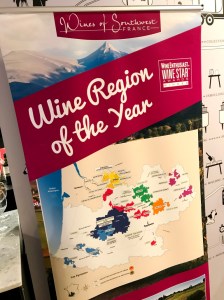 The wine had been made in the Southwest of France ( Sud-Ouest in French) almost forever – in terms of human life, 2,000+ years well classified as “forever”. The region is considered one of the “cradles of winemaking” in Europe, and it maintains its uniqueness and diversity today – for example, out of 300 grape varieties used in the winemaking in the region, 120 are not found anywhere else.
Of course, we know that winemaking started about 8,000 years ago, and not in the Southwest of France. So what’s up with “started it all” claim? Glad you asked! Let me explain.
We live in the times when the wine is a part of daily life of many. Drinking wine is a norm and normal, simply a part of the daily routine for many, not a luxury or a weird exception anymore. Yes, that’s how it was in Europe forever – but now I’m talking about the rest of the world, countries such the USA, and even China now heading that way. The demand for wine had been constantly increasing since the late 1990s, and even Great Recession of 2008 didn’t kill it (just shifted the “acceptable” price ranges). Is it all just a normal course of events? We can, of course, settle for this. However, I believe that on a deeper level, there are exact reasons, “tip the scale” moments for many things which seem to happen just on its own – however, sometimes it is not easy to identify those “reasons”.
Remember the impact of the movie Sideways on consumption and production of the Merlot in the USA? That movie was the reason for a huge slump after 2004, and production and interest to Merlot are still in the recovery mode even now, 14 years later.
Late in the 1980s, the world started talking about The French Paradox – French eat cheese and foie gras, cook with butter and duck fat daily, and nevertheless, the coronary disease rates are much less than in the countries with comparable living standards and much lesser fat consumption. Possible explanation? Red wine. French consume lots of red wine, and resveratrol, one of the prominent substances found in seeds and skins of the red grapes, acts as a defense against clogging of the arteries. That was the outcome of the extensive medical research study conducted in France, which became known in the world as French Paradox.
In 1991, CBS in the USA dedicated one of their popular programs, 60 Minutes, to the French Paradox, and you know how Americans are, right? We are always looking for an easy way out, so wine sounded like an easy enough cure, and I believe this became a pivotal moment which triggered a renewed interest in the wine. Almost 40 years later, it seems that the wine successfully keeps the momentum. And before you will attack me with all the facts from the latest research – yes, I’m aware of many articles pointing to the issues with the study. Whether French Paradox study conclusions were medically solid I have to leave to professionals to debate and decide on. But it was still that pivotal “tip the scale” moment which changed the perception of the wine for many in the world.
At this point, I’m sure you want to see the connection between the title, the Southwest of France, and the story of the French Paradox, right? Here it is. While attending the tasting of the wines of Southwest France, I was listening to the presentation by sommelier André Compeyre, who mentioned that Southwest France has the biggest number of centenarians in France and it was one of the main regions where the French Paradox study was conducted – here we go, now everything is connected and explained. Is it time for a glass of wine?


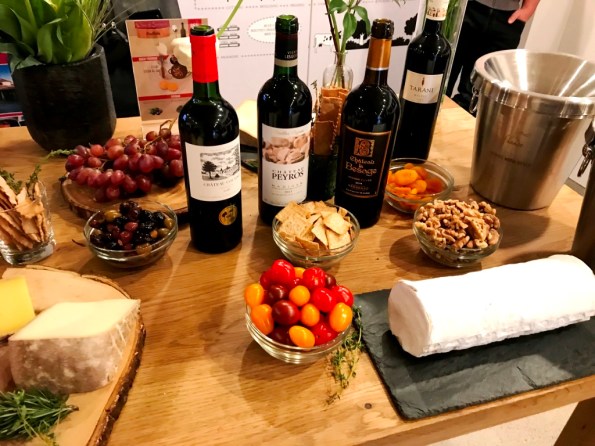
The tasting took place at the little store in New York called the French Cheese Board – what can be better than wine with a little cheese, right? Especially if both come from the same region, where they trained to live together for a few thousand years…
We started tasting with the sparkling wine, moved to the white and then red. As usual in such events, there was not enough time (and desire) for the formal notes, so below is the best I can offer. However, overall, the word is “outstanding” – the wines of Southwest France are well worth seeking – and you will not be disappointed.


NV Domaine du Moulin Mauzac Méthode Ancestrale Gaillac AOP (12% ABV, $15, 100% Mauzac) – very nice and simple. 7+
2017 Domaine du Tariquet Premières Grives Côtes de Gascogne IGP (11.5% ABV, $14, 100% Gros Manseng) – semi-sweet wine. It appears to be a traditional wine in the Southwest of France, which people are accustomed to drinking. It is possible that the wine was not cold enough when I tasted it, but I really didn’t appreciate it. If you like sweeter wines – this might be the one for you.
2016 Héritage Blanc Saint-Mont AOP (13% ABV, blend of Gros Manseng, Petit Courbu, Arrufiac) – excellent, bright, crisp, but very complex and thought-provoking. A touch of grass, vanilla, ta ouch of honey on the palate, green apples, wow. Excellent acidity. Great complexity. 8. And let’s not forget 2 new grapes – Petit Courbu and Arrufiac
2017 Domaine de Joy l’Eclat Côtes de Gascogne AOP (12% ABV, $7, blend of Colombard, Ugni Blanc, Gros Manseng and Sauvignon Blanc) – crisp, clean, superb. 8


2012 Château de Haute Serre Cahors AOP (13.5% ABV, $22) – superb, ripe berries, blueberries, round, delicious, acidity, vanilla, the backbone of minerality. 8+
2012 Château Montus Madiran AOP (15% ABV, $32.99, blend of Tannat and Cabernet Sauvignon) – smoke, campfire, tobacco, great concentration, powerful, excellent, great acidity, outstanding. 8
2011 Jean-Luc Baldès Triguedina Clos Triguedina Cahors AOP (14.5% ABV, $40, 85% Malbec, 10% Merlot, 5% Tannat, 12 months in oak) – touch of barnyard on the nose, delicious fruit, ta ouch of funkiness on the palate, great acidity. 8
2015 Domaine de Terrisses Terre Originelle Gaillac AOP (13% ABV, $16, blend of Braucol (Fer) and Prunelart) – beautiful Cabernet nose, crisp, cassis, Bordeaux style -outstanding. 8. and a new grape – Prunelart
2015 Réserve Bélingard Côtes de Bergerac AOP ($15, 50% Cabernet Sauvignon, 50% Merlot) – beautiful, warm nose, vanilla, cassis, beautiful, soft. 8
2013 Chateau Peyros Vieilles Vignes Madiran AOP (13% ABV, $18, 80% Tannat, 20% Cabernet Franc) – excellent, soft. 8-
2017 Domaine de Joy l’Eclat Côtes de Gascogne AOP (12% ABV, $7, blend of Colombard, Ugni Blanc, Gros Manseng and Sauvignon Blanc) – crisp, clean, superb. 8
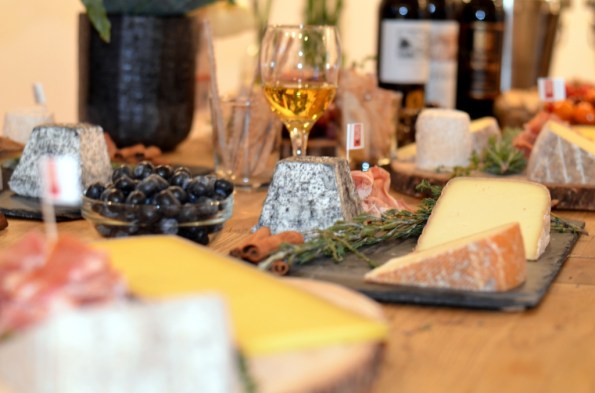


In addition tot he wines, we had an opportunity to indulge on the local cheeses of Southwest France – Ossau Iraty, Buche de Lucay, Bethmale Chèvre, Chabichou, Valencay, and Comté. Sorry, I’m not going to give you any individual notes, but all the cheese were superb. If you are like me and accustomed to the Comté cheese from Costco – that Comté in the tasting was the whole different game (go visit the store and taste, you don’t have to believe me).
There you go, my friends. Have you had wines of Southwest France lately? Any favorites you want to mention? Let’s raise the glass to many happy wine discoveries – and some red wine as a solution to all our problems. Cheers!
Geekiest Way to Celebrate #MalbecWorldDay – #WineStudio Blind Tasting with Achaval-Ferrer
 Starting in 2011, April 17th is the day when we celebrate Malbec – one of the noble French grapes, which almost disappeared in France, but found its new life in Argentina, where it became a star. I don’t want to bore you with the Malbec history – you can read it on your own in many places, including few posts in this very blog (here is a bit about the history of the Malbec grape, and here you can take a Malbec quiz).
Typical “grape holiday” celebration usually includes an opening of an upscale (high end, memorable, etc) varietally correct bottle. Our today’s celebration was a bit different, as it was based on the concept of pure, unadulterated, geeky wine lovers’ fun – a blind tasting, and, of course, guessing.
This blind tasting was a part of the educational program run by the WineStudio during the month of April. In case you are not aware of the Wine Studio, it is a brainchild of Tina Morey, and it is wine education and marketing program which helps to expand people’s wine horizon and help them discover new regions, new grapes and new wines. April program, quite appropriately (April is designated as a Malbec wine month), was focused on the wines of Achaval-Ferrer, one of the very best wine producers from Argentina.
To facilitate the blind tasting, all the participants received a set of two bottles, some wrapped in colorful foil, and some in the black plastic – mine were the second type:


About an hour before the session I opened the bottles to let the wines breathe a little, as it was suggested by the organizers. And then the session started.
Of course, this was not the usual blind tasting. There are many ways to run the blind tasting, some of them quite extreme – for instance, tasting the wine without any known information from the black glass – an extreme sensual challenge. Going less extreme, in a typical blind tasting you will have at least some kind of limits installed – Pinot Noir grape, for instance, or wines of Pauillac. Our #winestudio blind tasting was on one side a lot less challenging, as we knew that the wines were made by Achaval-Ferrer, so we didn’t expect to find Petite Sirah in any of those bottles, and we even knew the vintage years, 2013 and 2012. At the same time, for sure for me, it was almost more challenging, as I was trying to guess the wines based on what I knew about Achaval-Ferrer and thinking about what they might want to showcase in the tasting, instead of focusing on the actual wines.
 We were asked to evaluate wines using WSET Level 3 tasting grid (you can find it here if you are curious). Here is a summary of my tasting notes – I’m distinguishing the wines by their vintage:
Wine 2013
APPEARANCE
Clarity: clear
Intensity: deep
Colour: garnet
NOSE
Condition: clean
Intensity: medium
Aroma characteristics: touch of funk, mint, underbrush, blackberries
Development: youthful
PALATE
Sweetness: off-dry
Acidity: medium+
Tannin: medium
Alcohol: medium
Body: medium+
Flavour intensity: medium+
Flavour Characteristics: cassis, eucalyptus, mint, blackberries
Finish: medium-
CONCLUSIONS
Quality level: outstanding
Level of readiness for drinking/potential for ageing: can drink now, but has potential for ageing
Wine 2012
APPEARANCE
Clarity: clear
Intensity: deep
Colour: garnet
NOSE
Condition: clean
Intensity: medium+
Aroma characteristics: tar, tobacco
Development: developing
PALATE
Sweetness: off-dry
Acidity: medium+
Tannin: medium
Alcohol: medium
Body: medium+
Flavour intensity: medium+
Flavour Characteristics: red and black fruit, salinity, raspberries, anis
Finish: medium
CONCLUSIONS
Quality level: outstanding
Level of readiness for drinking/potential for ageing: can drink now, but has potential for ageing
As it is usually the case with the blind tastings, I didn’t do well. I really wanted the wines to be pure Malbec and Cab Franc, and this is what I included into my final guess:
then, of course, I second guessed myself and changed the answer:
When the bottles were finally unwrapped, we found this beautiful Bordeaux blend called Quimera been our Quimera for the night – it is no wonder every back label of Quimera explains the name: “Quimera. The Perfection we dream of and strive for. The search for an ideal wine”.


The wines were 2013 and 2012 Quimera, both classic Bordeaux blends, but with a high amount of Argentinian star variety – Malbec. Both vintages had the same composition: 50% Malbec, 24% Cab Franc, 16% Merlot, 8% Cab Sauv and 2% Petit Verdot. Just as a point of reference, I still have a few bottles of 2008 Quimera, and that wine has 40% of Malbec. Both wines were beautiful, but very different in its own right – and they will for sure age quite nicely. This was definitely a treat and yet another testament to the great wines Argentina is capable of producing.
Here you go, my friends. Another great night at #winestudio, celebrating the grape well worth a celebration. Next Tuesday, April 25, we will be tasting Achaval-Ferrer Cabernet Franc, their new single-varietal bottling – been Cab Franc aficionado, I can’t tell you how excited I am. Join the fun – see you at 9 pm! Cheers!
Precision of Flavors – Tasting the Wines of Achaval-Ferrer
 Drinking wine is a pleasure – for sure it should be, and if you don’t feel like it, maybe you shouldn’t drink it at all. At the same time, there are multiple ways to look at one and the same thing.
A pleasure of drinking of the glass of wine may be just as it sounds, very simple – take a sip of the liquid in the glass, say “ahh, it tastes good”, and continue to the next sip or with the conversation, whatever entices you the most at the moment.
Then there are many of us, wine lovers, who, professionally or unprofessionally, can’t stop just at that. Yes, we take pleasure in every sip, but then we need to dig in. We feel compelled to put on the Sherlock Holmes hat and play the wine sleuth, figuring out exactly what we are tasting in that very sip. What was that flavor? Was that a raspberry? Hmmm, maybe not. And that whiff of something? It is so familiar! Why can’t I put a name on it? Grrrr.
Everyone who engaged in that wine tasting exercise I’m sure can relate to what I’m saying. But every once in a while, we do get a break, when the flavor simply jumps at you, pristine and obvious. And the best twist here is when the flavor is matching to what is expected to find in the wine, like fresh cut grass in Sauvignon Blanc, black currant in Cabernet Sauvignon, or pepper in Syrah – don’t we love those pure and precise flavors?
Achaval-Ferrer winery is only about 20 years old, built on the passion and vision of a group of friends in Mendoza, Argentina. In those 20 years, Achaval-Ferrer accomplishments are nothing short of enviable. Achaval-Ferrer wines earned multiple Decanter magazine 5-star ratings (the highest). There are 29 wines from Argentina rated as “Classic” by Wine Spectator (95-100 ratings) – 13 out of those 29 wines are Achaval-Ferrer wines; the flagship Malbec Finca Altamira consistently getting 96 points rating year after year.
In addition to passion, vision, hard work and perseverance, the success foundation of Achaval-Ferrer is its high altitude vineyards, located from 700 to 1100 meters above sea level (2,300 – 3,600 ft). Three out of four main vineyards of Achaval-Ferrer are also about 100 years old, and boast pre-phylloxera vines, as Phylloxera simply can’t survive in those high mountains conditions. Now all left to do is to take the beautiful fruit those vineyards produce and make it into equally beautiful wines – the Achaval-Ferrer does it quite successfully.
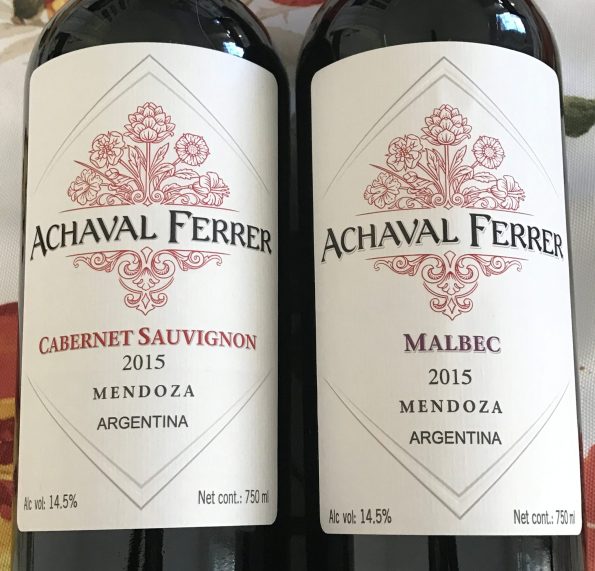
Here is what triggered my “precision of flavors” opening. I had an opportunity to taste a sample of Achaval-Ferrer wines recently, Cabernet Sauvignon and Malbec. While Malbec was a very good wine, but clearly needed time to mature, Cabernet Sauvignon was stunning, with flavors and aromas just jumping at your right away from the glass, with easy to relate to, textbook-correct cassis – also intensifying its purity with the time. This was a perfect example of why Argentinian wines are so popular and deserving of all your attention. And at a price of $24.99, the Cabernet Sauvignon offer an outstanding QPR, easily beating many classic Napa Cabs which would also cost you at least three times as much.
Here are my detailed notes:
2015 Achaval-Ferrer Cabernet Sauvignon Mendoza Argentina (14.5% ABV, $24.99, 100% Cabernet Sauvignon)
C: dark garnet, almost black
N: very intense, dark roasted fruit, cassis. The roasted fruit intensity diminishes as the wine breathes.
P: beautiful cassis, clean acidity, soft tannins, lots of layers. As the wine breathes, the tannins show better and more pronounced. Pure clean black currant after a day.
V: 8+, outstanding, wow. Will evolve.
2015 Achaval-Ferrer Malbec Mendoza Argentina (14.5% ABV, $24.99, 100% Malbec)
C: practically black
N: roasted meat, smoke, tar, intense, baking spices
P: dark fruit, bright acidity, mint, alcohol burn in the back?, succulent, lavender, spicy. Blueberries showed up on the second day.
V: 8, needs time, but perfectly delicious on the second day.
Here you are, my friends. Achaval-Ferrer definitely makes wines worthy of oenophile’s attention – and the QPR makes these wines worth seeking. Cheers!
Expanding My Wine Map of Argentina
Let’s start with the question: name winemaking region in Argentina, other than Mendoza. You have 5 seconds. Fine, take 10. Your time is up! Hmmm, no answer, huh?
May be I couldn’t hear and you said “Uco Valley”? That would be a good answer, though Uco Valley is a high altitude sub-appellation in Mendoza. But don’t feel bad; as a bare minimum, it makes two of us – Mendoza was the only appellation I knew in Argentina until a few weeks ago.
 Then I was offered to try a few Argentinian wines from the appellation I never heard of – Salta, located all the way up in the northwest. In addition to unknown appellation, the wines were coming from the high altitude vineyards – not just high, but the highest in the world. I’m always interested to learn about the effect of extreme conditions on the grapes and wines. Poor soils and lack of water make vines to work hard, which is then manifested in flavor. High altitude usually means a large difference in day and night temperatures, which makes grapes to concentrate flavors. So yes – new region and high altitude vineyards – I’m definitely game.
The wines I got to try were produced by two wineries, both part of Hess Family Wine Estates collection. Wine production at Bodegas Colomé dates all the way back to 1831, when the winery was built high in the Andes Mountains. The pre-phylloxera Malbec and Cabernet Sauvignon vinies were brought in directly from Bordeux in 1854, and they still produce fruit today, which is used for the Reserva wines. Today, Bodegas Colomé sustainably farms highest elevation vineyards in the world, including Altura Máxima, located at the 3,100 meters (about 10,170 feet) above sea level (mind boggling, if you ask me).
The second winery, Amalaya, is much, much younger – it was founded in 2010 as a project by Bodegas Colomé, with the idea to grow more than just signature Malbec and Torrontés, but the other old world varietals as well (like Cabernet Franc, for instance). It was built high up in the desert, where nothing was growing before. I like this quote from the winery web site, I think it explains well the philosophy behind it and explains the colorful labels: “Amalaya means «Hope for a Miracle» in native language. the miracle is revealed from the heart of the Cafayate desert in a mystical and magic way, in order to provide us vines with excellent quality. The holistic circle embodies the fertility of the «pachamama» or «mother earth».”
I had an opportunity to try Malbec and Torrontés wines produced by Amalaya and Bodegas Colomé – below you will find my tasting notes:


2015 Amalaya Malbec Salta Argentina (13.9% ABV, $16, 85% Malbec, 10% Tannat, 5% Syrah, 5,900 feet above sea level)
C: Dark garnet, practically black
N: black truffles, ripe plums, touch of cinnamon, licorice, warm, inviting
P: lighter than expected, medium body, a bit of back burn on the palate, under extracted?, unbalanced. After 2 days, the wine leveled out and became more balanced, with dark core.
V: 7- initially, 2 days after opening – 7, wine improved.
2015 Amalaya Torrontés/Riesling Salta Argentina (13% ABV, SRP: $12, 85% Torrontés, 15% Riesling, 5,500 feet above sea level)
C: light straw pale, just a touch darker than water
N: exuberant, intense, lots of ripe tropical fruit, guava, mango
P: crisp, clean, good acidity, good balance, grassy notes after warming up
V: 7+, very good, refreshing wine


2013 Colomé Estate Malbec Salta Argentina (14.9% ABV, SRP: $25, 100% Malbec, 4 high altitude vineyards from 5,600 to 10,100 feet)
C: dark Garnet, practically black
N: intense, ripe fruit, plums, cherries, touch of roasted meat
P: polished, silky smooth, fine grain tannins, dusty mouthfeel, tar, dark restrained fruit, needs time to open,
V: 8/8+, good aging potential
2015 Colomé Estate Torrontés Valle Calchaquí Salta Argentina (13.5% ABV, SRP: $15, 100% Torrontés, vineyards altitude from 5,600 to 10,100 feet)
C: straw pale
N: lightly perfumed, restrained, touch of tropical fruit, hint of lemon
P: continues to be restrained, elegant, fresh clean and balanced, touch of white fruit with good acidity, good structure
V: 8, elegant white wine, definitely a next level for Torrontés, great QPR
As you can tell from my notes, these were good wines. Would I claim that I clearly saw the effects of the high altitude? No, not at all. To make such an observation would probably require a tasting (blind) of seemingly similar wines, produced at the different altitudes – may be someone will come up with such a tasting, that would be cool. In any case, these were interesting wines and I’m glad I had an opportunity to try them. Have you had any of these wines? What are your thoughts? Cheers!
Weekly Wine Quiz #63: Grape Trivia – Malbec
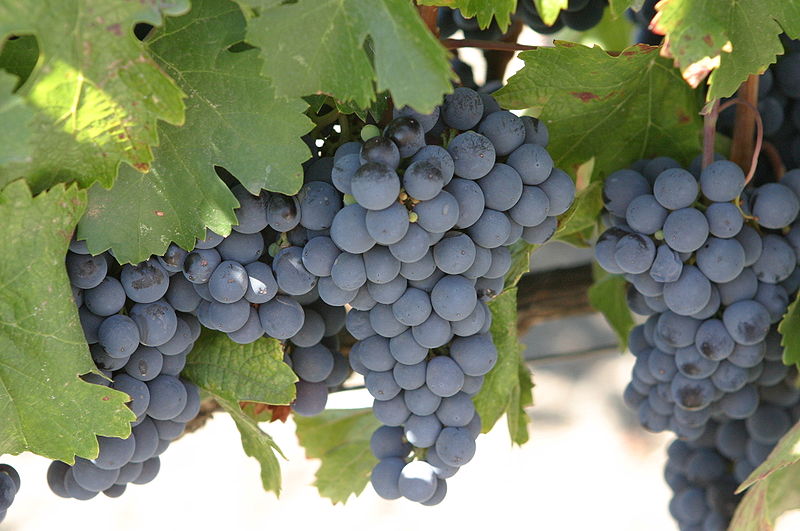
Malbec grapes, picture from Wikipedia
Welcome to the weekend and your new wine quiz!
Believe it or not, but we are still continuing the Grape Trivia series, and our subject for today is Malbec.
Malbec has one of the most dramatic fates out of many other red grapes, going from being one of the most popular among royal families and even the Pope, to becoming literally non existent. Today it is mostly grown in Argentina (50,000 acres) and France, but winemakers experiment with Malbec more and more all over the world. Use of Malbec ranges from being one of the five noble grapes in Bordeaux (but rarely being a star of the blend) to the single grape wonderful wines of Argentina.
Malbec grapes are black in color and have thin skin, however capable of accumulating a very substantial amount of tannins. Malbec is unfortunately prone to various grape diseases and viticultural hazards, such as frost, mildew and others. But the grape worth the effort as it can produce some of the most versatile red wines, ranging from very soft and approachable to the tannin monsters requiring long ageing. Now, to the quiz!
Here are the questions:
Q1: Explain the meaning of the name Malbec.
Q2: In France, Malbec is known under a number of different names, used in the different regions. Can you name at least two of those “other names”?
Q3: About 200 years ago, Malbec was widely planted in France, and it was considered to be one of the major grapes. Two events lead to severe decline in plantings and almost disappearance of Malbec as a grape of any importance. Do you know what events were those?
Q4: Some of the best Malbecs in the world come from Argentina. The quality of Malbec grapes in Argentina is also often associated with high altitude at which grapes are growing. Do you know what is the highest altitude of Malbec vineyards at the moment?
A: 1,500 feet
B: 5,000 feet
C: 7,000 feet
D: 3,000 feet
Q5: In its best times, Malbec was the grape made into so called Black Wine, very popular among Royal families. One Royal family went as far as even associating health benefits with consumption of Black wine. Now, do you know what Royal family was that and where the Black Wine was made?
Have fun, have a great weekend and cheers!
Weekly Wine Quiz #32 – A Guessing Game: Ultimate Challenge, Part 2
And yet another Saturday is here, and, of course, a new quiz. It will be the last one (at least for now) in the Guessing Game series (previous three can be found here: #29, #30, #31). As promised, this one is about red grapes, but we will kick it up a notch – you have 7 grapes to match with 6 reviews – one grape is there just for fun, but in my opinion, it easily could’ve been for real. So here are your grapes:
A. Cabernet Sauvignon
B. Malbec
C. Merlot
D. Nebbiolo
E. Pinot Noir
F. Syrah
G. Zinfandel
And here are the reviews:
1. “complex, yet subtle, with blackberries, minerals and berries. Full-bodied and very velvety, with lovely rich fruit, with chocolate and berry character. Very long and refined. A joy to taste.”
2. “aromas of tar and smoke, with very pure, concentrated blackberry and spice notes underneath mark this exotic, seductive red. Silky and complex, it caresses the palate. It needs a little time to absorb the oak, but this is long and has great potential.”
3. “a seductive red, drawing you in with its pure cherry and floral aromas and flavors, then capturing you with the silky texture and harmonious profile. Stays fresh and elegant, with a long, ethereal finish.”
4. “still tight, with a wall of mocha and raspberry ganache covering the massive core of fig fruit, hoisin sauce and plum cake notes. This is extremely dense but remarkably polished, with a long, tongue-penetrating finish that drips of fruit and spice laid over massive grip.”
5. “delicious stuff; not huge, but impeccably balanced, nuanced and tremendously long and pure. It’s a cascade of currant, blueberry and plum fruit shaded on one side by subtle, toasty oak, on the other by hints of minerality and exotic spice. But it’s the elegance and the length that make this a winner.”
6. “torrent of blackberry, boysenberry and bittersweet ganache notes. But there’s exceptional drive and focus here as well, with a great graphite spine driving through the spice- and floral-infused finish. A stunner for its combination of power and precision.”
For an extra credit, try to figure out the country of origin for the wine in the reviews.
Good Luck! Have a great weekend and drink well! Cheers!
Last Bottle Sign Up ($10 credit)




 Talk-A-Vino