Archive
Wednesday’s Meritage – Wine Quiz Answer, #MWWC4 Deadline Nears, What Vinotype Are You, Understanding Luxury Goods
 Meritage Time!
Let’s start with the answer to the wine quiz #77, grape trivia – Savagnin. In the quiz, you were supposed to answer 5 questions about white grape called Savagnin, best known in the Jura region of France. Here are the questions, now with the answers:
Q1: Australia makes wines from Savagnin grapes. However, when the grape was planted, it was assumed to be …?
A1: Albariño. We actually already talked about it when we run through the Albariño quiz, only in reverse (in the Albariño quiz, Savagnin was the answer).
Q2: Wine made from Savagnin was one of the most expensive wines ever sold at an auction. It was sold at about:
a. $98,000, b. $74,000, C. $47,000, d. $30,000
A2: b, ~$74,000. See the full answer below
Q3: Continuing previous question – do you know what wine was that? Bonus part: can you also identify the vintage?
A3: This wine was 1774 Arbois Vin Jaune, sold at an auction in France for €57,000, which would be about $77,000 considering today’s exchange rate.
Q4: Name at least two other wines, produced in the same way as way Vin de Paille, one of the popular wines made from Savagnin.
A4: To produce Vin de Paille, after the harvest, the grapes are dried out on the straw mats for a few month, to concentrate the flavors. Similar methods of production are used for Vin Santo, Amarone, Sfursat of Valtellina and a number of others.
Q5: Which reddish-skinned ( but technically white) grape is a close relative of Savagnin?
A5: Gewurztraminer. Savagnin is closely related to the whole Traminer family, and Gewurztraminer, “an aromatic Traminer” is known for its reddish skin.
There was very little participation in this quiz (sad, but mostly expected). We don’t have the winner, but I have to acknowledge Namie from Eat with Namie for her excellent attempt at the quiz.
Now, to the interesting stuff around the vine and the web!
First, a friendly reminder. Your Oops! moment is getting near – the deadline for #MWWC4 (Monthly Wine Writing Challenge #4) is next Wednesday, October 23rd. The #MWWC4 is hosted by The Wine Kat, and the theme is Oops – you better get your wine oops together, or it will be a clear oops on your part… I have an idea, I hope to be able to find time to actually put it into the blog post, or oops.
Now, couple of interesting articles for you. First one is coming from The Wine Economist blog, where Mike Veseth is suggesting that all wine drinkers can be divided into the four categories, or Vinotypes – sweet, hypersensitive, sensitive and tolerant. The concept of the Vinotype is described in the book by Tim Hanni, MW, and Mike is explaining the concept in his blog post – but you should probably read the book. In the post, there is also a link to the web site where you can quickly perform your Vinotype assessment. I actually did, and came out as “Tolerant” – I would probably accept that, but the description provided for the Toerant type didn’t match me for a second. Well, YMMV – see it for yourself.
The second post I want to bring to your attention comes from Seth Godin, who is one of the very few people I would call as my mentor. His understanding of the world is nothing less than stunning to me, and every time I read his daily blog posts, it is almost a revelation of a simple truth, right in front of you. Seth’s post, called Understanding Luxury Goods, has nothing to do with wine in the direct form. However, every time we scoff at a bottle of Screaming Eagle, or Chateau Petrus, or 1755 Taylor Port at a price of north of $3000, or 1966 DRC at $10,000, understanding of how the luxury works helps to put things in perspective. Read it for yourself, and better yet, subscribe for Seth’s blog – it will provide infinite value compare to your subscription price.
That’s all I have for you for today, folks. The glass is empty – but refill is on the way! Until the next time, cheers!
Weekly Wine Quiz #77: Grape Trivia – Savagnin
Welcome to the second day of the weekend and your new wine quiz!
We are continuing our grape trivia series, still focusing on the white grapes, and today’s subject is Savagnin.
Actually, with Savagnin, we are finishing the white grapes series, and will be going back to reds next week – but for now, let’s talk about Savagnin.
Have you heard of Savagnin? Have you ever had any wines made from that grape? Actually, Savagnin is one of the oldest known grapes, taking its roots in the 10th century in the French Alps. From there, it slowly made it to the other side of the Alps into the Switzerland, where it is known since the 16th century. Savagnin is primarily used in winemaking in Jura, and it is barely used outside of that area in its direct form, with only some known plantings in Australia. However, as part of the Traminer family, it has relatives living all over the world.
Savagnin is one of the not just late, but the latest ripening grape varieties – it is not uncommon for Savagnin to fully ripen only in December. Savagnin is quite versatile, capable of producing both dry and dessert wines. It is also typically blended with Chardonnay to create Crémant du Jura, a local sparkling wine. The most famous wine from Jura is called Vin Jaune (“Yellow wine”). Vin Jaune is produced in the sherry-like style, and Savagnin is the only grape variety allowed in production of that wine.
And now, to the quiz!
Q1: Australia makes wines from Savagnin grapes. However, when the grape was planted, it was assumed to be …?
Q2: Wine made from Savagnin was one of the most expensive wines ever sold at an auction. It was sold at about:
a. $98,000
b. $74,000
C. $47,000
d. $30,000
Q3: Continuing previous question – do you know what wine was that? Bonus part: can you also identify the vintage?
Q4: Name at least two other wines, produced in the same way as way Vin de Paille, one of the popular wines made from Savagnin.
Q5: Which reddish-skinned ( but technically white) grape is a close relative of Savagnin?
Good luck, enjoy the quiz and the rest of your weekend! Cheers!
Wednesday’s Meritage – Wine Quiz Answer, #MWWC4 Theme, Merlot is Back!, And a Few Videos
Meritage time!
Let’s start from the answer to our weekly wine quiz #76, grape trivia – Roussanne. In the quiz, you were supposed to answer 5 questions about white grape called Roussanne.
Here are the questions, now with the answers:
Q1: Explain the source of the name Roussanne
A1: Name Roussanne most like comes from the word “roux”, which refers to the reddish color of the grapes.
Q2: Which one doesn’t belong and why:
a. Hermitage, b. Côte-Rôtie, c. Châteauneuf-du-Pape, d. St.-Joseph
A2: b. Côte-Rôtie. Roussanne is allowed to be blended into the red wines of the three other regions – but the white grape allowed to be used in Côte-Rôtie is Viognier.
Q3: Outside of Northern Rhône, the traditional bending partner of Roussanne is…
A3: Grenache Blanc is the most popular blending partner for Roussanne outside of Northern Rhône
Q4: Roussanne was re-introduced in California in the 1980s, only to be proven in the late 1990s to be not the Roussanne but another grape. Do you know what grape was that?
A4: Viognier. Randall Grahm, winemaker from Bonny Doon winery, brought [illegally] a number of cuttings of supposedly Roussanne from France at the beginning of 1980s. In 1998 it was found that the grape is actually Viognier, not the Roussanne.
Q5: One of the first California “Roussanne” wines from the 1980s had a specific name. Can you name that wine?
A5: The “Roussanne” wine was produced by Randall Grahm under the name of Le Sophiste.
Sadly, there was very little participation in this quiz – I have to acknowledge Julian at VinoInLove, who was a sole participant – thank you Julian! I guess I’m going to far into the vineyard with some of my latest quizzes… Well, one more white grape, and we are switching back to the red right after.
Now, to the interesting stuff around the vine and the web!
First of all, we have a new theme for the Monthly Wine Writing Challenge! Now in its 4th round, it is hosted by The Wine Kat, winner of the round #3. The theme of the #MWWC4 is… OOPS!, and I can tell you that oops is looming, as the submission deadline is already very close, it is only two weeks away – October 23rd. Get your writing pants… oops, may be glass? Writing hat? Well, whatever oops gets you moving, get it on and start writing. The theme announcement and all the important dates can be found here.
Just a quick question at the moment. What do you think of Merlot? Do you still have an image of Miles “I’m not drinking no #$%^ Merlot”, or does it trickle back to you table and Cellar? Well, I can tell you that about 100 Merlot producers from California want to make sure you will once again look at Merlot seriously. Tomorrow, October 10th, is actually the start of #MerlotMe, a month-long celebration of Merlot, taking place both with the live events and all over the social media. You can find more details about the festivities here – and don’t wait, grab your bottle already!
Continuing the theme of Merlot, I wanted to share with you this video, made by one of the Merlot pioneers, Gundlach Bundschu:
And for no other reason, but just for your enjoyment on this Wine Wednesday, here is the video which I wanted to share a while ago – a “Blurred Lines” parody, made by the enterprising folks at Jordan (in addition to making great wines, they also have one of the best social media outreach in the wine industry):
That’s all I have for you for today, folks. The glass is empty – but refill is on its way. Until the next time – cheers!
Weekly Wine Quiz #76: Grape Trivia – Roussanne
 Welcome to the weekend and your new wine quiz!
We are continuing our grape trivia series, still focusing on the white grapes, and today’s subject is the white grape called Roussanne.
Last week we talked about grape called Marsanne, and today’s quiz is about its close friend, Roussanne. Similar to Marsanne, Roussanne is also seemed to appear first in the Northern Rhône, and then from there it slowly got into the other wine regions. Today it is growing in different areas in France, in Australia, California, Washington, Texas ( up and coming to the greatness), Spain and … Italy. If you remember, Italy was the major winemaking country which didn’t make any Marsanne wines. Another interesting note about Roussanne is that it is actually allowed to be a part of the 18 grapes permitted in Châteauneuf-du-Pape wines.
Roussanne is a late ripening variety, and it is also susceptible to the various grape diseases, which makes it tricky to work with in the vineyard. However, Roussanne compensate from those vineyard difficulties with great flexibility in the hands of the winemaker, helping to create full bodied, long living wines which greatly improve with age. This is where Roussanne is often paired with Marsanne to create those spectacular ( and very expensive 😦 ) white wines of Northern Rhône.
And now, to the quiz!
Q1: Explain the source of the name Roussanne
Q2: Which one doesn’t belong and why:
a. Hermitage
b. Côte-Rôtie
c. Châteauneuf-du-Pape
d. St.-Joseph
Q3: Outside of Northern Rhône, the traditional bending partner of Roussanne is…
Q4: Roussanne was re-introduced in California in the 1980s, only to be proven in the late 1990s to be not the Roussanne but another grape. Do you know what grape was that?
Q5: One of the first California “Roussanne” wines from the 1980s had a specific name. Can you name that wine?
Good luck, enjoy the quiz and your weekend! Cheers!
Wednesday’s Meritage – Wine Quiz Answer, #MWWC3 Winner, The Way You Pour, Wine and Shutdown, and more
Meritage time!
As usual, let’s start from the answer to the wine quiz #75, grape trivia – Marsanne. In the quiz, you were supposed to answer 5 questions about white grape called Marsanne. Here are the questions, now with the answers:
Q1: Name the grape, typical blending partner of Marsanne in Northern Rhône
A1: Roussanne.
Q2: True or False: Plantings of Marsanne in Australia far exceed Marsanne plantings in France.
A2: True. Actually, about 80% of worldwide plantings of Marsanne are located in Australia
Q3: Solve the riddle and explain: Part of 8, but not part of 18
A3: Marsanne is one of the 8 white grapes officially allowed in the Rhône appellations. At the same time, Marsanne is not a part of the 18 grapes officially allowed to be used in Châteauneuf-du-Pape appellation
Q4: Marsanne is known in Switzerland under the name of …
A4: Ermitage [blanc]
Q5: Name major wine producing country which doesn’t make any Marsanne wines of notice
A5: Italy. Yes, Italy makes no wines out of Marsanne – at least no wines which can be easily accessible or found on the internet.
I’m glad to report that we have a winner! Jeff of the drunken cyclist fame correctly answered all 5 questions, so he is our uncontested winner and he gets the coveted prize of unlimited bragging rights. Well done!
And now, to the interesting stuff around the web and the vine!
First of all, we have a winner for the Monthly Wine Writing Challenge #3! The Wine Kat wrote the winning story, which you can find here. Congratulations to the winner! Now we are all eagerly waiting to learn the theme for the challenge #4 – hopefully it will be announced soon…
Do you know that the way you pour the wine affects how much you drink? Here is the link to the post on the subject. Weather you hold the glass, tilt the glass, pour red or white – all of this factors affect the amount you consume – according to this study, of course.
Wondering about the connections between US Government shutdown and wine? I had no idea there is one, until I read this post by Dr. Vino. TTB, the government agency which approves all the new labels, is part of the shutdown. On one side it makes perfect sense as it is seemingly not-essential. At the same time, as opposed to many other parts of the government, this one actually makes money… Anyway, read the article for more details.
Actually, there is another small post by the same Dr. Vino, which I want to bring to your attention. Before you read it, I have a question for you. Which country do you think might request to put the words “wine kills” on the labels? No, it is not United States. Interestingly enough, it is France, which is concerned with the fact that people drink wine, so this was one of the proposals as a way to reduce wine consumption. Another, similarly bright proposal, was suggesting to ban all the internet writing about the wine – brilliant, isn’t it? You can read the post here – it is short and interesting.
That’s all I have for you for today, folks. The glass is empty – but refill is on its way. Until the next time – cheers!
Weekly Wine Quiz #75: Grape Trivia – Marsanne
Welcome to the weekend and your new wine quiz!
We are continuing our grape trivia series, still focusing on the white grapes, and today’s subject is grape called Marsanne.
Marsanne seems to originate near the town of Marsanne in Northern Rhône, hence the name. The grape is known at least from the 17th century (but could’ve been used in winemaking before). Marsanne is a foundation for the white wines of Northern Rhône appellations of Crozes-Hermitage, Hermitage, St.-Joseph and St.-Péray, but it is also used in the white wines throughout the whole Côtes du Rhône region and in a few other regions in France. White wines of Northern Rhône are typically full bodied and powerful, known for its great longevity (might be some of the longest living dry white wines). It is not just the longevity which matters – Northern Rhône whites also known to improve with age.
Marsanne made it to Australia in the 1860s, where it became quite popular. It is interesting that considering the fact that Marsanne wines improve with age, one of the best known Australian producers of Marsanne, Tahbilk, makes two releases per year, offering both current and older ( 6 years older or so) vintages of the wines.
Marsanne also made it to California, however, it is not very clear when. Based on some of the internet sources, Marsanne made it to US in the 1870s and was used in some of the red blends, paired with Syrah to replicate Northern Rhône wines. However, it appears that Marsanne started to be actively used in California wines some time in 1980s, and today it is offered by many producers in California and state of Washington.
And now, to the quiz!
Q1: Name the grape, typical blending partner of Marsanne in Northern Rhône
Q2: True or False: Plantings of Marsanne in Australia far exceed Marsanne plantings in France.
Q3: Solve the riddle and explain: Part of 8, but not part of 18
Q4: Marsanne is known in Switzerland under the name of …
Q5: Name major wine producing country which doesn’t make any Marsanne wines of notice
Good luck, enjoy the quiz and your weekend! Cheers!
Wednesday’s Meritage – Wine Quiz Answer, #MWWC3 Vote, Greenwich Food and Wine Festival, [In]decent Wine Labels, and more
 Meritage time!
First, let’s start with the answer for the wine quiz #74, grape trivia – Trebbiano.
In the quiz, you were supposed to answer 5 questions about the white grape called Trebbiano (known in France as Ugni Blanc). Here are the questions, now with the answers:
Q1: Ugni Blanc is a main grape in the production of what famous spirit?
A1: Cognac.
Q2: Name the wine, in which Trebbiano was a required part of the blend, and it was considered to be the reason for a bad, flabby quality of that wine (it is no longer required to be used in that wine).
A2: Chianti. For the long time, Trebbiano was a mandatory part of the Chianti wines, rendering them dull and uninteresting.
Q3: Trebbiano is often a foundation for the popular food product (containing no alcohol). Do you know what food product it is?
A3: Balsamic Vinegar! Yes, of course when you look at the literally a black-colored balsamic vinegar, it is hard to imagine that it is made out of the white grape juice – but all the color comes from the ageing in wood. Trebbiano is a popular choice due to its neutral taste characteristics.
Q4: Contrary to the name, Trebbiano di Lugano is not considered to be a part of the Trebbiano family, but rather related to another Italian grape. Do you know what grape is that?
A4: Verdicchio. Based on genetic analysis, it is established that Trebbiano di Lugano is a close relative of Verdicchio grape from Marche region in Italy.
Q5: When used for the wine production (as opposed to the distilled spirits), Ugni Blanc is rarely used on its own – it is typically a part of the blend. Name 3 grapes, traditional blending partners of Ugni Blanc.
A5: Sauvignon Blanc, Muscadelle, Sémillon. While other combinations are possible, I was looking for classic Bordeaux lineup, which are these three grapes.
Now, when to comes to declaring the winners (or not) of this quiz, the becomes somewhat of a challenge. Both Michael (who has no web site) and Eat with Namie answered first 4 questions correctly, and provided a different answer to the question #5, compare to what I was looking for, but I can’t fully disqualify their answer. So we don’t have an absolute winner this week, but both Michael and Namie get an honorable mention. Well done!
Now, to the interesting stuff around the vine and the web!
First and foremost, 3rd Monthly Wine Writing Challenge (#MWWC3) concluded with 15 entries, taking on a difficult theme “possession”. Now it is your time to chose the host for #MWWC4, a.k.a. The Winner of #MWWC3. Here is the post from Sally, the winner of #MWWC2 and the host of #MWWC3, which summarizes all the entries. Your job is simple: 1. Get glass of wine. 2. Read. 3. Vote. Yes, don’t forget to vote!
Now, if you live in a close proximity of Greenwich , Connecticut, or plan to visit the area, here is the event you don’t want to miss – Greenwich Food and Wine Festival, taking place over 3 days, October 3 – 5. In its third year, the festival brings together more than 90 restaurants and vendors, chefs, musicians, sommeliers. You will find great food, great wines, cooking demos by celebrity chefs such as Duff Goldman, live music, BBQ, beer, competitions (had enough?) and more. For the schedule of events and tickets please click here.
Next – do you think some wine labels are going too far? Too suggestive, too sensual, simply indecent? May be some are. Take a look at Tyler Colman’s, a.k.a. Dr. Vino, blog post on the subject. Make sure to check the link to his article in the Details magazine – you will find some interesting labels there.
And the last one for today – another installment of Wine in China is available for your reading pleasure on the Wine Economist blog. This time you can learn about Chinese government involvement and its role in shaping up the Chinese wine industry.
That’s all I have for you for today, folks. The glass is empty – but refill is on its way. Until the next time – cheers!
Weekly Wine Quiz #74: Grape Trivia – Trebbiano

Ugni Blanc grapes, as shown in Wikipedia
Welcome to the weekend and your new wine quiz!
We are continuing our grape trivia series, still focusing on the white grapes, and today’s subject is Trebbiano.
Have you had Trebbiano wines? How about Ugni Blanc? Before you answer no, think again. There is a very high degree of probability that you had the wine made either from Trebbiano, a.k.a. Ugni Blanc, or at least with Trebbiano being a part of the blend, as Trebbiano is second most planted grape in the world. Ugni Blanc is the most planted grape in France, spanning from Bordeaux to Provance to Corsica. In Italy, Trebbiano is allowed to be used in more than 80 different DOCs and has 7 DOCs of its own.
The grape’s historical (as well as genetical) roots are still not fully established yet. It seems that the first mentions come from the area of Bologna in Italy in 13th century. In the 14th century, the grape made it to France together with the Papal court, where it became known as Ugni Blanc. Starting from 16th century, the plantings of the Trebbiano increased quite substantially, but the grape practically never made it on its own. Trebbiano’s main characteristics include high acid, low sugar, minimum aromatics and vigorous growth, which are not the star quality when we are talking about the wines. At the same time, these very characteristics make it an excellent foundation for producing all kinds of distilled spirits – this is where majority of the Trebbiano/Ugni Blanc grapes are used today.
And now, to the quiz!
Q1: Ugni Blanc is a main grape in the production of what famous spirit?
Q2: Name the wine, in which Trebbiano was a required part of the blend, and it was considered to be the reason for a bad, flabby quality of that wine (it is no longer required to be used in that wine).
Q3: Trebbiano is often a foundation for the popular food product (containing no alcohol). Do you know what food product it is?
Q4: Contrary to the name, Trebbiano di Lugano is not considered to be a part of the Trebbiano family, but rather related to another Italian grape. Do you know what grape is that?
Q5: When used for the wine production (as opposed to the distilled spirits), Ugni Blanc is rarely used on its own – it is typically a part of the blend. Name 3 grapes, traditional blending partners of Ugni Blanc.
Good luck, enjoy the quiz and your weekend! Cheers!
Wednesday’s Meritage – Wine Quiz Answer, Chinese Terroirs, #MWWC3 Last Chance, [again] Wine Reviews and more
 Meritage time!
First, let’s start with the answer for the wine quiz #73, grape trivia – Sémillon.
In the quiz, you were supposed to answer 5 questions about white grape called Sémillon. Here are the questions, now with the answers:
Q1: Name a grape, primary blending partner of Sémillon
A1: Sauvignon Blanc. While Muscadelle is also allowed as part of the blend in Bordeaux, the most popular combination worldwide is Sémillon and Sauvignon Blanc.
Q2: Below is the list of years. There is something common between all of them (and of course it has a relationship with Sémillon) – do you know what is common among those years?
1930, 1952, 1964, 1974, 2012
A2: This is a partial list of years when Château d’Yquem Sauternes, the most famous Sauternes wine, was not produced. Since 1825, there were only 10 years when d’Yquem Sauternes was not produced: 1910, 1915, 1930, 1951, 1952, 1964, 1972, 1974, 1992 and 2012.
Q3: Ture or False: Sauternes produces only sweet wines
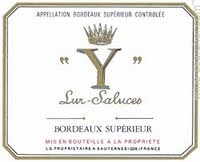
A3: False. Dry wines are also produced in Sauternes, under a designation of Bordeaux Supérieur. Example – “Y” by Château d’Yquem, 50% Sémillon and 50% Sauvignon Blanc.
Q4: Name a key factor for the great tasting dry Sémillon wines
A4: Bottle age. While acidity is important, dry Sémillon wines, such as those produced in the Hunter Valley in Australia, are known to fully develop and really blossom after about 10 years of age in the bottle.
Q5: What is Semageddon?
A5: Semageddon is a new annual event in Napa Valley, created to celebrate Sémillon grape. You can read more about the event here.
This was somewhat of a difficult quiz. We don’t have a winner, but we have three people who get an honorable mention – the drunken cyclist, EatwithNamie and Vinoinlove.
Now, to the interesting stuff around the vine and the web!
What do you know about wine in China? Do you think China will be able to produce the wines we will all crave? Well, can’t tell you about the craving yet, but the hard work already started. Here is an interesting blog post from The Wine Economist blog, talking about the Chinese Terroir quest which is already under way.
Another interesting post is coming from the Joe Roberts of a 1WineDude fame. Joe is bringing up a well beaten subject of the wine reviews, relevance of the wine critics, collective wisdom of the crowd-sourced wine reviews (yep, of course the CellarTracker) and more. You can read the post here, and of course please make sure to read through all the comments. I personally don’t understand why is it so popular and necessary to return to this subject over and over again. I might respond with the rant of my own – if I do, you will be the first to know.
Next important subject: Monthly Wine Writing Challenge #3 is almost over! You need to make a final effort to convert your obsession into possession, and finally publish that blog post. Submission deadline is September 23rd, and for more details please check this formal announcement with all the rules and dates.
As I mentioned last week, Spanish Wine Festival is coming to New York City. If you love Spanish wines and want to taste something amazing, don’t miss this event! For more details and tickets please click here.
And one more event I want to bring to your attention. If you love (or at least like) whiskey, this is the right event for you. WhiskeyFest is coming to New York on October 11-12. For more details and tickets, please use this link.
That’s all I have for you for today, folks. The glass is empty – but refill is on its way. Until the next time – cheers!
Weekly Wine Quiz #73: Grape Trivia – Sémillon

Sémillon grapes affected by noble rot, as shown in Wikipedia
Welcome to the weekend and your new wine quiz!
We are continuing our grape trivia series, still focusing on the white grapes, and today’s subject is Sémillon.
Sémillon is a white grape, once considered the most planted grape in the world. One interesting fact is that the origin of Sémillon is not easy to pinpoint – while working on this quiz, I went through quite a few articles on Internet and even books, and it is hard to find any historical data outside of the fact that Sémillon was very popular in the early 19th century throughout the world. In the early 19th century, over the 90% of all grape plantings in South Africa was Sémillon – considering its popularity, it was simply called Wyndruif, the “wine grape”. Today, Sémillon occupies roughly 1% of the grape plantings in South Africa. It is still the most planted white grape in Bordeaux, where it is used in the production of most of the white wines, from dry wines of Pessac-Léognan, Graves and Entre-deux-mers, to the spectacular dessert jewels of Sauternes and Barsac. Sémillon plantings exist in many other winemaking countries – Australia, Chile, Italy, New Zealand, California and Washington in US – but you rarely hear about Sémillon, as it is mostly used as a blending grape. Well, this might be changing – but we will not be talking about it in the quiz.
The issue with Sémillon is that under normal growing conditions, it tends to produce plump and dull wines, the wines which are not showing much of the aromatics and have very low acidity. When the grape is forced to work hard, it can produce amazing wines. In Sauternes, Sémillon is typically affected by Botrytis cinerea, the noble rot, which leads to the shriveling of the grapes which concentrates the sugar – dessert wines produced from such shriveled grapes are some of the best in the world (Châteaud’Yquem, anyone?) – they also make some of the longest living wines in the world, being capable of ageing for 100 years and beyond. In Australia’s Hunter Valley region, the grapes are exposed to the harsh climate with the high level of humidity, which leads to the grapes accumulating high level of acidity. Hunter Valley Sémillon is known to age very well, and the wines also improve with age quite significantly.
And now, to the quiz!
Q1: Name a grape, primary blending partner of Sémillon
Q2: Below is the list of years. There is something common between all of them (and of course it has a relationship with Sémillon) – do you know what is common among those years?
1930, 1952, 1964, 1974, 2012
Q3: Ture or False: Sauternes produces only sweet wines
Q4: Name a key factor for the great tasting dry Sémillon wines
Q5: What is Semageddon?
There is nothing wrong with answering even only one question from the quiz – your participation is always appreciated! Also, without any regard to the questions, please share your personal experiences with Sémillon wines.
Good luck, enjoy the quiz and your weekend! Cheers!
Last Bottle Sign Up ($10 credit)




 Talk-A-Vino