Archive
Alcohol Shenanigans
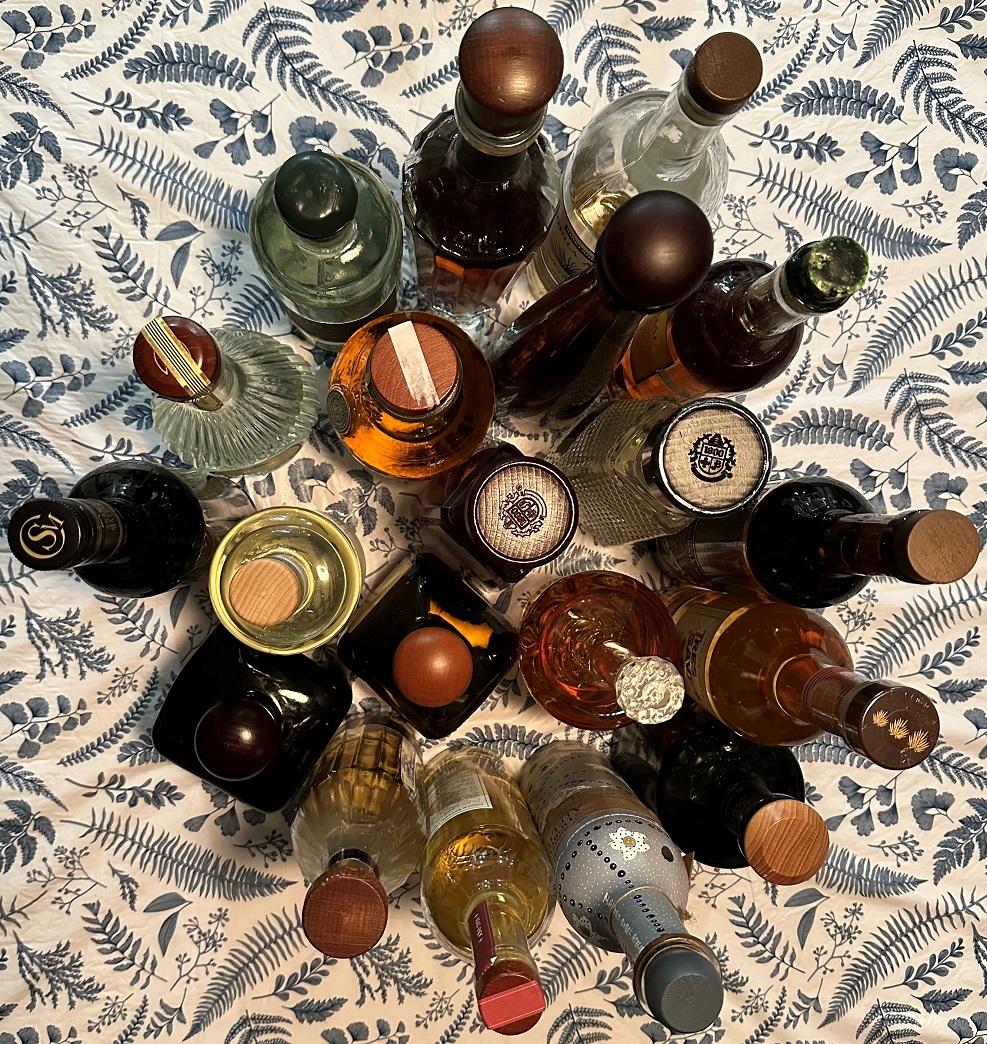 Alcohol Shenanigans.
Yes, I know. The title is not great. Leaves a horrible impression. Sounds like a story about college dorm adventures. And yet this is all I can come up with for this post.
“Next time, we will taste tequila,” said my friend before going home after our cognac tasting. “And I will bring Tequila”, she said.
A few weeks ago, the “next time” arrived – she showed up with about 20 bottles of tequila, mostly anejo with a few interesting oddballs. This is where the shenanigans started.
Mirriam-Webster: Shenanigan Definition: “a: tricky or questionable practices or conduct“
Let’s begin with the fact that we had no idea how you are supposed to taste tequila. Tequila is generally not considered a sipping liquor. Go to the bar, ask for tequila, and it will be served in a shot glass. And here we were not planning on any shots – the plan was to taste tequilas the same way as we do the cognac and scotch. After a short(?) brain freeze, we settled on small glasses – for the people in the US, if you ever bought Tiramisu dessert from Costco – these are the glasses I’m talking about. And off we went.
I think we went through almost a full lineup the first night. I’m sure we made a number of mistakes in the order, as some tequilas tasted sweet and not even reminiscent of a traditional agave – and they tasted very different the next night. And I didn’t mention it before, but we went a bit beyond tequila in the tasting – we also had Mezcal and Sotol. While I’m familiar with Mezcal as a category (side note: Tequila is a subset of Mezcal. Tequila can be made only from blue Agave, but Mezcal can be made from 30 different types of Agave), Sotol was completely new to me.
Sotol is a distilled spirit from Chihuhuan desert in northern Mexico made from the plant called Desert Spoon (there are other scientific names for the plant, but I will leave it for you to research). The plant takes about 15 years to mature, and the yield is about one bottle per plant. Sotol is clearly not widespread at the moment, so I was happy to expand my liquor vocabulary.
This tasting was just for fun, so as you might imagine, I didn’t take any notes. Therefore, the below is just a collection of impressions. We had 3 different types of Don Julio. The Riposado was good, Anejo was very good, and neither one of us cared for Don Julio 1942 Anejo (I call this “overdone”). Chinaco Blanco tequila was very good, restrained and herbal. 1800 Anejo was very good, however, 1800 Anejo Cristalino was even better. I guess when the color was removed to make regular Anejo of the clear color, some of the impurities were filtered out as well, so the resulting tequila was one of the smoothest ever.
Costco’s Kirkland Tequila Anejo was somewhat unimpressive (ok, but too light) – I’m sure it is fine for the money. At some point, we tasted my beloved Tres Generaciones Anejo, which I always compare with the cognac based on its smooth and mellow showing. It had such a pronounced agave taste that I even brought my own bottle thinking that something was wrong with the bottle my friend brought, and my bottle tasted identical. No idea what has happened.
Don Roberto 1924 Anejo was a favorite of my wife and my friend. I liked it too, but it was not my favorite. Casino Azul Anejo, Ocho Single Estate Anejo, Patron Anejo, Centenario Anejo, San Matias Gran Reserva Extra Anejo were all solid, excellent tequilas I would be happy to drink (sip) any day – and yet we had a few more that fared just at an exceptional level.


Wait, before we get to the exceptional ones – the promised oddballs. First, there was not an oddball, but an absolute curveball – 21 Seeds Cucumber Jalapeno Tequila Blanco. It was incredibly spicy to the point of not being able to taste much of anything after a small sip of this fire water. I guess this would be okay as a cocktail mixer, but this is not something I would enjoy by itself.
Los Magos Sotol was very interesting. The herbs were very pronounced on the palate, together with green pepper (not spicy) and cucumber. Truly a unique taste, in a league of its own – of course it makes sense as this was my very first Sotol without any frame of reference.
Next was my personal favorite liquor of the tasting – Mezcal Ilegal Anejo. A typical Mezcal has smoke, both on the nose and on the palate. This Mezcal was truly something else. The only reference I can offer to you is a freshly made log cabin. I don’t know if you ever walked into the log cabin which was recently built – the one that has a smell of freshly cut lumber, this sweet aroma that I can’t really describe. But if you ever experienced that, and if this is something you enjoy, this Mezcal was instantly transporting you to such a cabin – you didn’t even need to close your eyes.


The last Tequila was truly the king of the first night – Gran Centenario Leyenda Extra Anejo. It was round, it was smooth, it was delicious – and it was hiding the agave flavor perfectly well. When I tasted that tequila, I said – tomorrow we are going to compare our “best in show” with cognac. And then we will bring the scotch if we have to.
There is still one more tequila to present – Maestro Dobel Atelier Extra Anejo. A very unique and unusual bottle to begin with. And as far as tequila itself is concerned, it was very round, but somehow was leaving me unmoved, especially in comparison with Gran Centenario. So when we settled for the night’s favorites, Maestro Dobel was not in the picture – but it was a runner-up.

I have to say that I was discouraged by a somewhat puzzling showing of some of the favorite tequilas, so I was convinced that we are not doing the tasting right. The next day, I decided to do a search online to look for recommendations regarding the proper way of tasting the tequila. In one of the first videos, I came across the recommendation to use the Champagne flutes – which made good sense. Our next night’s tasting of Tequila versus Cognac was done using Champagne flutes for Tequila and standard brandy sniffers for the Cognac.
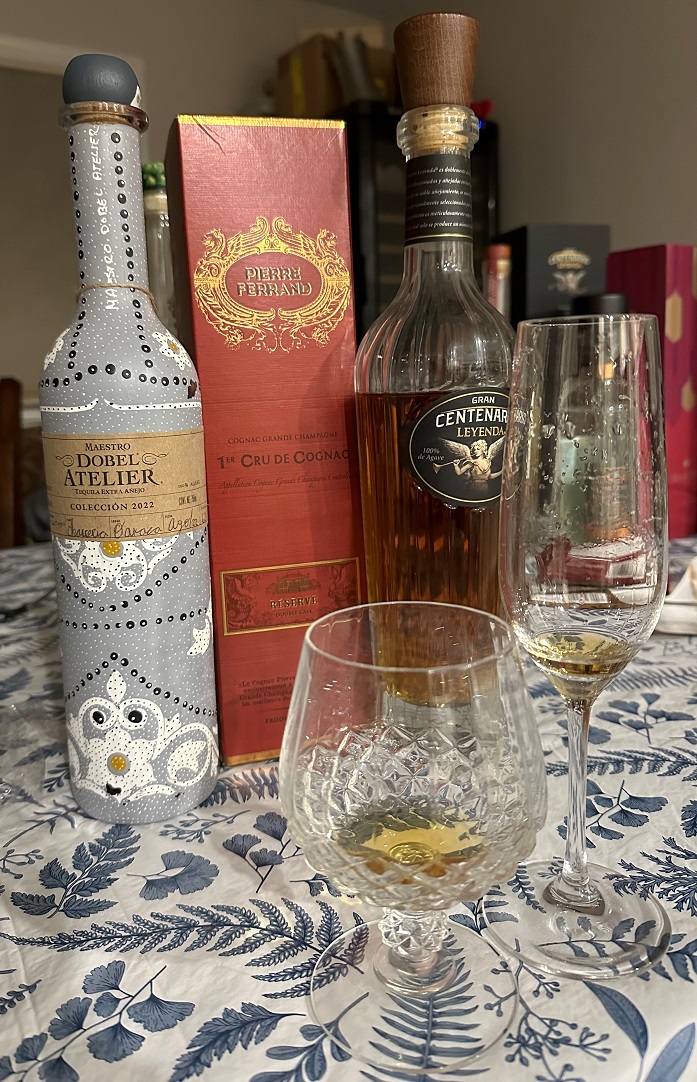
Before we started, I was absolutely sure that cognac, pretty much any decent cognac would have no issues beating tequila in side-by-side tasting. Of course, the only comparison metric we used was a simple “Which liquid do you like more”. And my friend insisted that Dobel Atelier has to be in the tasting – I agreed without much enthusiasm.
As we moved along in the tasting, a simple truth emerged – nothing could beat Dobel Atelier. Granted, I didn’t have the XO-level cognacs to throw into this battle, but we had a few of the excellent cognac specimens – Pierre Ferrand Reserve, Hardy Legend 1863 (spectacular cognac), Park Borderies Mizunara Oak – and Dobel Atelier was still smoother, rounder, and richer than any one of these.
The next night we brought in the Scotch which we both love tremendously. Not only that, but we also decided to switch glasses again and this time we did the tasting using proper, official Glencairn Whisky Tasting glasses. But the story repeated itself. Macallan 15, Macallan 18, Highland Park 16, Lagavulin 16, Glenmorangie 18, Compass Box Affinity – Dobel Atelier was unbeatable…
Truth be told – Dobel Atelier was the most expensive bottle compared with anything else we tasted – if you can find this bottle here in the US (my friend brought it directly from Mexico), it would set you back at least $250. But – I learned about the price of this tequila only after we were done with the tasting, so this was definitely not the factor – and if anything, it would have an opposite effect on me (I’m always a lot more critical of the expensive bottles versus the more reasonably priced ones).

Here you can take another good look at our alcohol shenanigans. Was this tasting a stupid idea? Quite possible. Was it lots of fun? You bet it was. And nobody got hurt 🙂
I’m not trying to be your source of inspiration, but hey, maybe you want to try such a tasting on for size? Cheers!
Daily Glass: Scotch for Every Day
 Yes, Scotch. Yes, Talk-a-Vino is a wine blog – mostly, anyway.
When I was looking for the name for this blog, my first choice was Grapes and Grains – unfortunately, the domain was taken, and of course, you know the end result of this search. But this is not important. The important fact, the truth of the matter, is that in the making of this snob/aficionado, Scotch was there before wine.
Unlike many wine lovers, I never had my pivotal wine – many wine lovers can refer to a specific bottle which was a revelation and a turning point for them to become faithful wine lovers – however, this was not my case. At the same time, when it comes to the world of scotch, my story was different.
I tried to find my love in scotch for a while, but nothing worked – I couldn’t derive pleasure from a sip of this dark yellow liquid – whatever I tried was too harsh for my palate. And those were not necessarily Dewar’s, Cutty Sark, or J&B – standard staple single malts, such as Glenlivet 12, Balvenie 12 and similar – nothing was working for me.
One day in the liquor store, looking helplessly at the great selection of the beverage which was not singing with me, my eye stopped at Cardhu – a 12 years old single malt from Speyside (there are five main regions in Scotland producing distinctly different scotch – Highland, Lowland, Speyside, Islay, and Campbeltown, plus a number of islands, such as Orkney and Skye). It was reasonably inexpensive at $27 (this was in the mid-1990s, today the same bottle is $40+), and I decided to try it. The first sip of Cardhu was a turning point – it was mellow, playful, and elegant – enough to make me an instant convert.
For Cardhu’s revelation to happen, I can only guess that my palate was ready at that time by all the previous attempts – this is what we call an acquired taste. I had a similar scotch revelation in 2005 when I all of a sudden fell in love with Talisker, peaty and medicinal tasting scotch from the Isle of Skye – until that evening, I couldn’t stand Talisker’s iodine and smoke loaded profile. An acquired taste again, yes. Anyway, this is my scotch lover’s story.
When drinking for pleasure, scotch is a perfect drink (once you acquire the taste, of course!). Today, you can buy a bottle of good scotch for $50 – $60. You can spend a little less, and you can spend a lot more – as with the wine, the sky is the limit. While $60 sounds expensive, versus, let’s say, a $25 bottle of wine, let’s look at the things in perspective. $25 bottle of wine means 5 glasses, so each glass is $5, and you can only keep the wine bottle open for so long. Good scotch is a sipping beverage, so one ounce of that is perfectly good enough to enjoy (if your idea of drinking scotch is by doing the shots, you reading the wrong post for a while). $60 for 25 ounces means less than $2.50 per drink. Plus, you can take your time drinking that bottle – I have some bottles at home which had been open for a few years – they are still perfectly enjoyable as on the day when I opened them. I hope you can see my point that scotch makes a perfect drink for every day.
Recently I got two bottles of Speyside scotch for review. The idea was to write a post before January 25th, to celebrate Robert Burns’ 261st birthday. Born in Scotland in 1759, Robert Burns was one of the most celebrated poets, who also happened to mention whisky (scotch) in many of his poems, so it makes perfect sense that his birthday is best celebrated with a glass of dram. Well, that blog post didn’t happen on time, but the scotch I received was simply delicious, and this is what I want to share with you.
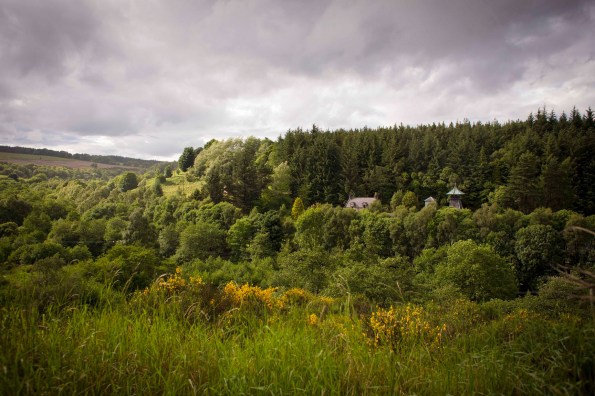
Source: Speyburn Speyside Distillery
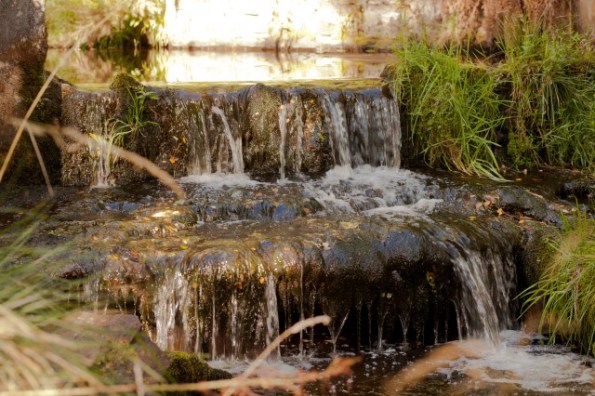
Source: Speyburn Speyside Distillery
If you will read the stories of the different distilleries in Scotland, you will find one common theme in those – the water. Distillery’s unique water source is often cited as the foundation of the “distinct character” particular scotch has.
Speyburn Distillery was founded by John Hopkins in the 1890s when he “discovered the Granty Burn – an untouched stream hidden in a secluded Speyside valley”. The first Speyburn whisky was distilled in 1897 to celebrate Queen’s Jubilee – it was not a simple task, and you can read more about the challenges on distillery’s website.
The making of whisky at Speyburn distillery starts with the best quality malted barley, and of course, the water. The barley is crushed, and then it is sprayed with hot water for 4 hours to convert starches into the sugars. The next step is fermentation which is done in stainless steel tanks and wooden barrels made out of Douglas fir. Once fermentation is finished, the liquid goes through the double-distillation process which results in the production of alcohol. It is only now the most important part – aging – starts, using bourbon and sherry casks. 10 (15, 18, …) years later, we get the golden liquid which we can then enjoy.


I had an opportunity to taste two different scotches from Speyburn. Speyburn 10 Years Old Single Malt Scotch Whisky ($30) was beautifully mellow, with playful herbal aromatics on the nose, and citrus, honey, and spice on the palate. It is perfectly smooth and easy to drink. I have to mention that in today’s world, this scotch offers an insane QPR.
Speyburn Arranta Casks Single Malt ($44) (Arranta means “intrepid” and “daring” in Gaelic) takes your taste buds to the next level. On the nose, it offers more of the vanilla and butterscotch profile, adding honey, mint, lime and a touch of white pepper on the palate. Beautifully round and complex, with a long playful finish – this scotch really lingers, going and going for the next 3-4 minutes after the sip. Delicious, and again an excellent QPR.
There you are, my friends. If you like scotch, Speyburn perfectly represents Speyside and offers a tremendous value for every day enjoyment – but it will also play perfectly well for any special occasion you might have in mind. Cheers!
Liquid Pleasures Beyond Wine: Whiskey Around The World
During 2011 I wrote a number of posts for the project called The Art Of Life Magazine – of course talking about my favorite subject, wine. The project was closed and even the web site is down, but as I still like the posts I wrote, I decided to re-post them in this blog. Also, in that project, posts were grouped into the mini-series, such as “Best Hidden Secrets” and “Forgotten Vines”. The post I’m offering to you today was from the mini-series called “Liquid Pleasures Beyond Wine”, and the subject of this post is Whiskey. Well, it is almost an original – I had to make a few small edits.
Also note that the series was written for a slightly different audience – I hope none of my readers will take offense in the fact that sometimes I’m stating the obvious…
In the previous post about Whiskey, we focused solely on Scotch, a malt Whisky produced in Scotland. The whole world of Whiskey (see, we are even changing the spelling from whisky to whiskey to accommodate the change) is much larger, with various kinds of whiskey coming the from different places all over the globe.
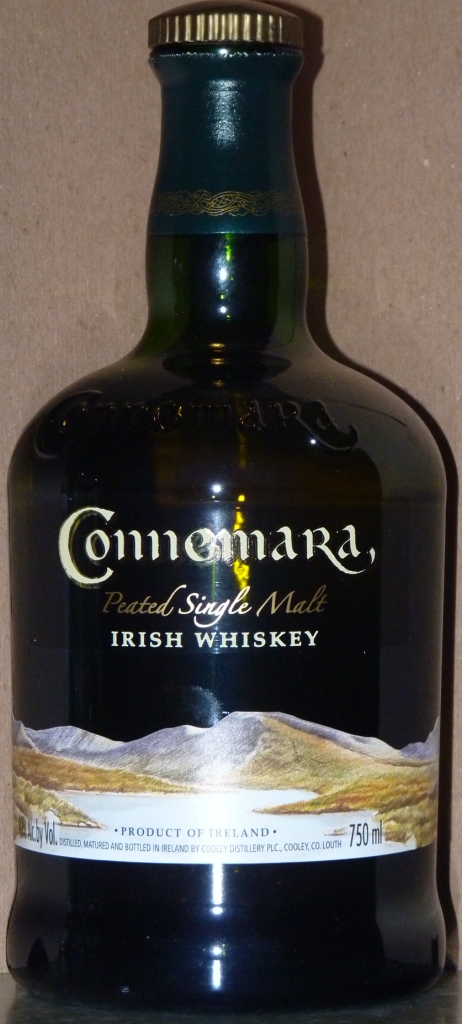 Let’s take a look at those places. We can and should start from Ireland – a close neighbor of the Scotland. Despite the “geographical closeness”, Irish Whiskeys are typically very different in style from the Scotch – to be more precise, they are much lighter. There are a few factors which define the lighter taste of the Irish Whiskeys. First, they are usually triple-distilled, versus double distillation process used in production of the Scotch. The next factor is reduced use of a peat smoke (actually, it is practically not used with some exceptions, such as Connemara, which is nicely peated). Lastly, many Irish whiskeys are made from the mix of grains as opposed to the malted barley used in Scotch production, which also leads to the lighter tasting final product.
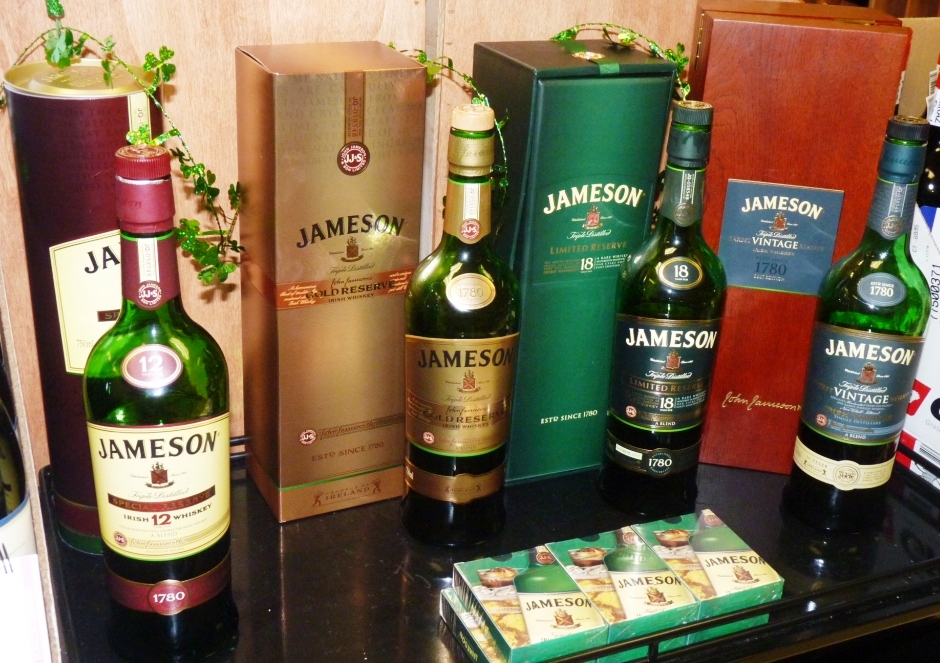 Irish Whiskeys are probably the oldest distilled spirit produced in Europe – at least based on information in Wikipedia, with the first notices going back to the 12th century. While there are only four acting distilleries in Ireland, one of those four, Old Bushmills Distillery claims to be the oldest officially recognized distillery in the world, tracing its history to 1608 (hence the name of one of their Whiskies, 1608). Each one of the four distilleries produces a substantial number of different lines of whiskey, so there is a good variety of the Irish Whiskeys available in the stores today. Some of the best known examples of Irish Whiskey include Jameson, Bushmills, 1608, Tullamore Dew – but of course there are lots more.
Let’s move to the United States, where a number of different whiskeys had being made for centuries. Some of the most popular kinds include Bourbon, a whiskey made out of the corn mash (mash should contain at least 51% of corn), and Rye Whiskey, which is, of course, made out of rye. As any other whiskey, American whiskey undergo a process of fermentation of the mash, distillation (usually single), and oak barrel aging. Sometimes a special filtration process is used in order to remove impurities and have softer tasting final product. Jack Daniels is probably one of the most famous examples of Bourbon, along with many others:


Some of the examples of the Rye whiskies include Old Rip Van Winkle, Whistle Pig and many others:
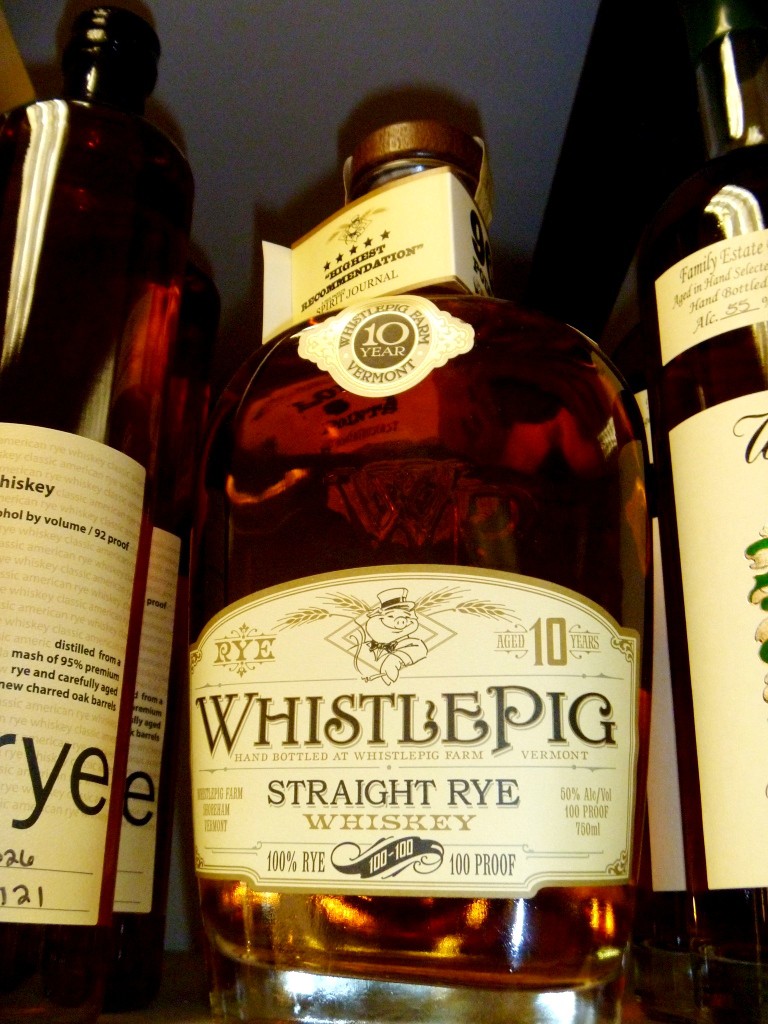
History of Bourbon and Rye Whiskey accounts for a few hundred years and includes interesting chapters such as Prohibition (you can read more about different kinds of American Whiskey here). What I have to mention is that today we are literally are living through the Whiskey revolution in the US – in addition to all the “traditionalists” in Tennessee and Kentucky, amazing Rye, Bourbon and Malts are produced in New York, Oregon, Texas, Utah, North Carolina, Colorado – and these are only some of those I’m aware of, I’m sure there are lots of others. It will make it for a very long post if I will start naming all those Whiskeys, so let me just give you a few examples in the pictures:
In addition to US, a number of other countries should be mentioned here as the world-class Whiskey producers (I would be curious to know if you would be able to guess what those are, so pause your reading for a moment). To answer my own trivia question, here are some of them – Japan, Taiwan and India (surprised?).
In all of those countries, blended and single malt whiskeys are made in the best tradition of Scotch Whisky. Whiskeys from those countries are quite rare and hard to find, but definitely worth seeking. One of the most famous Japanese Whiskeys is called Yamazaki and it is made as 12 and 18 years old single malts, using copper pot stills very similar to those used in Scotland. Another Japanese whiskey which is somewhat available in US is Hibiki, which is a blended 12 years old (there is also Hibiki 18, but it is even harder to find). Both Yamazaki, Hibiki and many others are owned by Suntory, a Japanese conglomerate.


Then there is Amrut, which produces whiskey in India, again using the Scotch methodology – with very good results. Amrut produces a number of single malt and blended whiskeys – for more information and tasting notes you can read this blog post.
With this we are finishing our exploration of the world of Whiskeys – and remember that paper exercise can not replace an actual experience which a good whiskey can bring. If you never had whiskey before, you need to resolve to try it now. For those who already knows the beauty of the Whiskey spirit – pour some of your favorite in the glass and cheers!
Liquid Pleasures Beyond Wine: Scotch Whisky
 During 2011 I wrote a number of posts for the project called The Art Of Life Magazine – of course talking about my favorite subject, wine. The project was closed and even the web site is down, but as I still like the posts I wrote, I decided to re-post them in this blog. Also, in that project, posts were grouped into the mini-series, such as “Best Hidden Secrets” and “Forgotten Vines”. The post I’m offering to you today was from the mini-series called “Liquid Pleasures Beyond Wine”, and the subject of this post is Scotch Whisky.
Also note that the series was written for a slightly different audience – I hope none of my readers will take offense in the fact that sometimes I’m stating the obvious…
Moving from grapes to grains (last week’s subject – Brandy), now is the time to talk about literally my favorite spirit: Scotch Whisky, or simply Scotch for a shorter name. Scotch is a part of a broader category of spirits which are called Whiskey, which is a distilled alcoholic beverage made from the fermented grains. While Whiskey can be produced anywhere in the world, Scotch Whisky can be produced … yep, only in Scotland (by the way, note the spelling difference – Whisky versus Whiskey, and make no mistake using the right spelling when talking about Scotch – it is Whisky).
First mentions of the Scotch Whisky (will just refer to it as Scotch from here on) go all the way back to the end of the 15th century, so this alcoholic beverage has quite a bit of heritage and knew very turbulent times in its half a millennia history. Scotch can be made from different grains such as barley, wheat and so on, but many particularly famous Scotches are made from malted barley, and typically are called “malt”. And then if you ever paid attention to Scotch, I’m sure you heard of a “single malt” – that is a Whisky which is made out of malted barley at a single distillery. So just to emphasize – “single” here refers to a single distillery, and an opposite of single would be “blended”, in case Scotch from two or more distilleries is blended together. By the way – don’t be afraid of the blended Scotch – a lot of them are on par with the best single malts.
Making of the malted Scotch starts from the barley, which is steeped with water for some time to start germination process – during this process, complex starches will be broken down and converted into sugar. Next step is drying of the barley, which is typically done in the pit, using heated air. The heat is coming from burning of the peat (fossil fuel), which imparts the smoky flavor on the grains; later on the smoke becomes the part of the flavor profile of the final product – the intensity of the smoke varies greatly among different areas and different producers. Dried grains are coarsely ground and will be steeped with the hot water and will become a sugary liquid.
Next step is cooling off and then start of the fermentation process, which technically results in the beer with 7%-8% alcohol. From here on, the liquid goes through the first and second distillation process, which will get the level of alcohol anywhere between 40% and 94%, and then it is put in the oak barrels to age. The minimum age for Scotch is 3 years, but if we are talking about single malts, majority of them would age for 10 or 12 years (12 years seems to be a very popular demarcation line for introductory level Scotch from a lot of producers), and from there it can continue aging until it reaches 18-19 years (anything in between also goes). 25 and 30 years also seem to be a popular option, and 40-50 years old are not so rare – but keep in mind that the age of the Scotch will be appropriately reflected in the price (you expected that, right?).


Before Scotch is bottled, the decision is made regarding the strength of the alcohol in the final product. Sometimes it can be released at so called “cask strength”, which can be anywhere from 50% to 60% ABV or even higher. But more often than not, it is diluted with water to get to 43% – 46% of alcohol in the final beverage. One important note – unlike wine, Scotch doesn’t age in the bottle – however, once it is opened, again unlike wine, it doesn’t spoil and can be kept indefinitely in the bottle, just don’t forget to put the cork back every time you pour a glass.
With the same process used across the board (fermentation of the malted barley and [typically] double distillation), and the “fruit” (err, grain) being effectively the same (barley) versus many hundreds of different grapes used in the winemaking, would you expect that all the Scotch of the same age will taste the same? Well, it truly does not. What makes Scotches taste different? First of all, it is water, which is different in every Scotch-producing region. Then it is the type and intensity of peat smoke used for drying of the germinated grains. Of course the number of distillations matters, but more importantly it is the type or types of casks used for aging (some Scotches undergo aging in a few different types of casks before they are bottled) and the time of aging. Lastly, it is the type of filtering (or no filtering at all) which will also affect the taste of the final product. Oh yes, and a little bit of magic.
There are five official areas where Scotch is produced – Lowland, Highland, Speyside, Campbeltown (never tasted anything from this area) and Islay. There are also a number of small islands which produce Scotch in a very distinct styles (like Skye, Orkney and others), but they are technically considered the part of the Highland region. Each distillery produces Scotch in its own unique style, but there can be some general similarities between scotches. If we paint flavor profile for the different regions, using very wide brushstrokes, we can say that Scotches from Highlands are typically very balanced and round, with good balance of acidity, flavor and spiciness. Lowlands flavor expression is usually toned down, and Speyside are very delicate and nuanced – Orkney scotches (Scappa) are similar to Speyside in their expressions, but probably add a touch more body. Islay and Skye produce very powerful and assertive scotches, exhibiting tremendous amount of peat (read: smoke); those who like them (me!) find them very pleasant.
When you are looking at the bottle of Scotch, you would typically be able understand if this is a single malt or not, how old it is (10, 12, 14, 15 and so on years), or the year when it was distilled and when it was put in a bottle, as well as the type of finish – Madeira, Jerez, Port and many others types of barrels this scotch was matured in. Of course alcohol content, cask strength or not and type of filtering would also be typically denoted on the bottle. Well, as a popular trend, that exact age statement can be nowhere to be found on the bottle nowadays – but this should be a subject for a separate post…
There are hundreds and hundreds of distilleries making great single malt and blended Scotches. If you want to learn about all of the distilleries, you can start from Wikipedia link, or Malt Madness web site. At the same time, I would be glad to share the list of some of my single malt favorites: Ardbeg Alligator (Islay), Cardhu 12 (Speyside), Lagavulin 16 (Islay), Laphroaig 16 (Islay), Glenfiddich 15 (Speyside), Scappa 14 and 16 (Orkney), Talisker 10 (Skye). Of course the world is not limited by the single malts only. When it comes to blended whisky, there are a number of Whiskies which I can recommend – Johnnie Walker (Black, Gold, Blue), Chivas Regal 12 and 18, Monkey Shoulder, Compass Box, Blue Hanger, Black Bottle – and many others.
I hope I was able to share my passion for the Scotch Whisky – but I’m curious to hear what do you think about Scotch? Also, just so you know, in our next post we will insert only one letter ‘e” into the word Whisky, to discover to whole huge world of Whiskey. Until then – happy dramming!
Cheers!
Looking for Liquid Pleasures Beyond Wine
 During 2011 I wrote a number of posts for the project called The Art Of Life Magazine – of course talking about my favorite subject, wine. The project was closed and even the web site is down, but as I still like the posts I wrote, I decided to re-post them in this blog. Also, in that project, posts were grouped into the mini-series, such as “Best Hidden Secrets” and “Forgotten Vines”. The post I’m offering you today was an opening post in the mini-series called “Liquid Pleasures Beyond Wine”.
Also note that the series was written for a slightly different audience – I hope none of my readers will take offense in the fact that sometimes I’m stating the obvious…
So far in this blog we mostly talked about wine, wine as an experience. We tried to uncover some of the hidden secrets of the wine world, such as Rioja, second labels of the famous wines, or French sparkling wines. We looked at the wines which were famous, then almost disappeared and now slowly coming back, such as Madeira and Jerez. We also searched for wine values, by comparing wines made from the same grape but coming from the different places. Did we explore enough the world of wines? Not really, we didn’t even touch the tip of a tip of an iceberg. Nevertheless, as we are looking for experiences, let’s take a step outside of the wine world, and let’s take a look at the other “liquid pleasures”.
I’m talking about the group which is collectively called “spirits”, otherwise also known as “distilled beverages”, which is a name which is used in Wikipedia. Overall distillation is a process of separating liquids with the different boiling points, and its application goes way beyond the world of alcoholic beverages. Distillation first was uncovered about 2000 years ago, but first use for production of the “spirits” happened less than a thousand years ago. When applied to the wine or any other fermented substance (meaning that some degree of alcohol is present in the liquid to begin with), the end result of distillation is a liquid with increased concentration of alcohol.
Historically, such high-alcohol liquids had various uses – one of the most important ones, which also has nothing to do with drinking the liquid, was medicinal. Strong alcohol is an excellent antiseptic; it is used in order to disinfect the area of the body, to kill any potential bacteria thus preventing any possible contamination. However, while this very important, such applications are completely outside of the scope of this blog, so let’s go back to the stuff we drink.
There are many different kinds of the spirits produced in the world. Some have more universal appeal and can be produced in many countries following the same basic methodology, but some can be also unique for particular place (but if it is any good, it is extremely hard to keep a secret). Let’s take a quick look at the various types of the spirits – we will discuss some of them in detail in the subsequent posts.
Let’s start with Brandy – brandy is a spirit which is produced from wine. This can be an actual grape wine, or it can be a fruit wine – both can be used for the production of brandy. For instance, Cognac and Armagnac are both made from the grapes, and Calvados, another famous French brandy, is made from apples. Brandy is produced in France, Spain, Italy (where it is known as Grappa), Georgia, Armenia, US, Mexico and many other countries.
Next spirit we need to mention is Whisky, which is made out of grains (barley, rye, wheat, corn). This group includes Scotch, which is made in Scotland, and then Whiskey, which can be made in many different countries – for instance, Irish whiskey is made in Ireland, and in US you can find both Whiskey, which is often made from rye, and Bourbon, which is corn-based. Whisky is also produced in Japan, India, Canada and other countries.
Then comes Vodka – made all around the world, from all possible ingredients. It is made in France, Russia, Poland, Italy, US, Canada and many other countries. It can be made from grapes, fruits, grains, potatoes and probably some other ingredients we can’t even think of. Vodka is often called a “neutral spirit” as it is typically produced flavorless (some flavor can be infused before bottling), and thus it is a popular component in many cocktails.
To complete the “big scale” list of spirits, we need to mention a few more. Tequila, which is produced from the Blue Agave plant, is a very popular spirit coming from Mexico. I can’t resist to mention Mezcal, which is also made in Mexico using Agave plants, but it has distinctly different taste (and very hard to find). Then we need to mention Gin, which is also a popular cocktail ingredient and has a very distinct taste as it is produced from Juniper berries. And last but not least comes Rum, which is produced from sugarcane, and yet another popular cocktail staple.
As we are looking for the great experiences, should we even look at all these “hard liquors” as they often called in the United States? Absolutely. Moderation is a key when it comes to alcohol (this universally applies to any kind of alcoholic beverages – beer, wine or spirits) – but once this is understood, one can definitely enjoy immense richness and variety of flavors coming from all these spirits. They definitely create a lot of great experiences and unique memories, and they bring lots of pleasure. In the coming posts, we will take a closer look at some of them – and until that time – cheers!
Month in Wines (and Whiskys) – December 2013
At first I wanted to preface this post with the notion of December being somewhat uneventful in terms of great wine experiences, but as I was thinking about it, I realized that this would be a mistake to put it like that. So yes, December brought quite a few of the great discoveries.
Here we go:
NV Ayala Brut Majeur Ay Champagne, France (12% ABV, 45% Pinot Noir, 35% Chardonnay, 20% Pinot Meunier ) – one of the very best non-vintage champagne I ever tasted – perfectly complex, yeasty, showing aromas of the fresh bread and apples, all in a very bright and energetic package. Considering the price ($26.99 on special) is simply unbeatable (people, stop buying the yellow label, get the real thing and save some money!). 8
2011 Mt. Beautiful Sauvignon Blanc North Canterbury, New Zealand (14% ABV) – nice, restrained – recognizably New Zealand, but more in the Sancerre style, with grass and lemon prevailing over the grapefruit. Well balanced and very refreshing. 8-
2012 Mt. Beautiful Pinot Noir North Canterbury, New Zealand (13.5% ABV) – clean. delicate. perfectly balanced. perfectly delicious. Saying that Mt Beautiful Pinot Noir is beautiful sounds somewhat broken, but there is nothing I can do here – definitely an outstanding Pinot Noir of a rare precision. 8+
2010 Hooker Breakaway Chardonnay Oak Knoll District, Napa Valley (13.3% ABV) – Perfectly classic – vanilla, apple, butter and toasted oak, all elegantly connected, round and supple, perfectly balanced and supported by acidity. A pleasure. 8-
2011 Bogle Petite Sirah California (13.5% ABV) – probably one of the very best value wines in existence – I have to yet to taste a bad Bogle Petite Sirah. Amazingly consistent from vintage to a vintage – dark fruit on the nose and the palate, blackberries and raspberries, firm structure, powerful but elegant tannins, very good balance. 8-
2007 Talullah Syrah Bald Mountain Napa Valley (14.8% ABV) – inky black color in the glass, very restrained on the nose, nice dark fruit on the palate with the spicy notes. Definitely needs time to evolve. 8-
2004 Chateau Puy Arnaud Maureze Côtes de Castillon AOC (13.5% ABV) – very nice, rich, open and classic Bordeaux – hint of cassis, touch of bell peppers, well structured with firm tannins, good overall balance. 8-
2008 Gorys Crespiello Cariñena DO (14% ABV, 100% Old Vine Vidadillo) – outstanding. Very restrained, with nice dark fruit on the nose, on the palate shows raspberries and elegant sweet oak undertones, nice earthiness. Well balanced and intriguing, a thought provoking wine. Medium to long, mellow finish. This is the wine to be enjoyed slowly, preferably with the book or by the fire. Highly, highly recommended. Ahh, and on top of everything – a new grape. 8
1998 La Rioja Alta 904 Gran Reserva, Rioja, Spain (12.5% ABV) – dialed back and elegant, needs time to open up. Nice fruit, cedar notes, well present tannins, good overall balance. Needs time. 8-
2010 Quota 31 Primitivo Menhir Salento, Salento IGT (14% ABV) – playful and elegant. Dark, dense fruit, raspberries and blackberries profile, round tannins, good balance. Very enjoyable. 8-
And here are few of the whisky discoveries:
Blue Ridge Distilling Defiant Whisky, North Carolina (41% ABV, 100% Malted Barley) – North Carolina, really? Well, I’m kidding, I’m not that surprised at all – after tasting great drams from Oregon, Utah, Texas and New York, I believe that great whisky can be made anywhere, as long as you apply enough passion. This whisky was unique and different, as it was the most scotch-like compare to all other US whiskeys I tasted. Very well balanced with nice viscosity, some caramel undertones, herbs and acidity.
The Lost Distillery Company Auchnagie Blended Malt Whisky (46% ABV) – one of the very best whiskys I ever tasted – touch of smoke, perfectly clean and balanced. It is also a very unique product – you can read my original post for more details about it.
Gordon & MacPhail Highland Park 8 yo (40% ABV) – I know that many people will just turn their nose away from this scotch simply based on the “low age” of 8 years. To me, this was absolutely delicious – excellent peatiness (I love peat in my scotch, if you don’t – this will not be your drink), clean, balanced – an excellent dram.


That’s all I have to report for December. Cheers!
Month in Wines (and Whiskeys and …) – November 2013
 It is time to summarize yet another month in wines. This month, I decided to extend this summary to whiskeys and beyond, as I managed to make a number of very interesting discoveries.
Talking about wines, there were two clear standouts – Pinot Noir from South Africa and white Burgundy, but generally, there were quite a few good wines. Here we go:
2010 Clos du Val Cabernet Sauvignon Napa Valley (13.5% ABV) – nice round fruit, good acidity, hint of cassis on the nose and palate, soft tannins, light and balanced. 8-
2009 Chamonix Pinot Noir Reserve Franschhoek South Africa (13.5% ABV) – phenomenal. Muscular, powerful, intimidating – it attacks you with the dark smoky fruit right from the first sniff. An extremely pronounced gunflint, which has an effect of the light on the moth – you just can’t stop smelling this wine. Dark power on the palate, intense, dense, structured, full bodied and shameless. 9-
2008 Basel Cellars Merriment Estate Red Wine Pheasant Run Vineyard Walla Walla Washington (14.57% ABV) – Nice Bordeaux-style blend. Lots of depth, dark fruit, firm structure, good acidity and balance overall. 8-
2007 Mount Palomar Charbono Temecula Valley, California (13.2% ABV) – Mount Palomar is one of my all times favorite producer from the Temecula Valley. This wine was probably at it’s peak. Perfect nose of ripe raspberries. Raspberries and blueberries on the palate, dark chocolate, medium to full body, overall welcoming and heart-warming. Perfect. 8+
2011 Siduri Pinot Noir Sonoma County (13% ABV) – nice and clean. Beautiful nose of light cherries with a touch of herbal notes, a sage profile. Light, perfectly integrated fruit on the palate – fresh cranberries and tart cherries, nice underpinning of a touch of mint and sage. Easy to drink and delightful. 8
2010 Cala de Poet Maremma Toscana IGT, Italy – total surprise from Trader Joe’s considering the price of $5.99. Dark plums and herbs on the nose, tart raspberries, eucalyptus and dark chocolate on the palate, firm structure and nice tannins, very balanced. 8-
2012 Cecilia Beretta Brut Millesimato Prosecco Superiore Coneglian Valdobbiadene DOCG, Italy (11% ABV) – another surprise from Trader Joe’s – tiny refreshing bubbles, notes of fresh apple on the nose, round and roll-of-your-tongue on the palate with more of the fresh apple and yeast notes. Excelllent sparkling wine (and a great value at $9.99). 8-
2013 Georges Duboeuf Beaujolais Nouveau (12% ABV) – Georges Duboeuf Beaujolais Nouveau literally gets better and better every year. Young, fresh and inviting on the nose, with lots of juicy cherries. Very concentrated on the palate, with good, tightly knit, firm body, fruit and acidity fully in check, excellent balance. 8-
2004 Jade Mountain Syrah Napa Valley (14.6% ABV) – this was a total surprise. It was my last bottle from the case, and couple of the previous bottles were hinting that they are getting past prime. When I saw this bottle (unexpectedly) on the wine cabinet’s shelf, the first thought was “oops”. The first sniff and the first sip immediately proved me wrong. Fresh, dark fruit on the nose, same on the palate – nice, round, supple blackberries, dark chocolate, touch of espresso, full body, integrated tannins, overall excellent balance. Now I wish I had more left. 8
2003 Neyers Cabernet Sauvignon Neyres Ranch – Conn Valley Napa Valley (14.5% ABV) – one of my favorite cabernet Sauvignon wines. A classic, cassis nose with a touch of bell peppers. Dark fruit on the palate, more cassis with some blackberries, round, warm and supple. Full body, acidity and tannins are in check. Excellent balance. 8
2006 Clos Pepe Estate Pinot Noir Sta. Rita Hills, California (14.5% ABV) – Dark garnet color, nice touch of smoke on the nose, cherries. Classic California Pinot Noir. Fresh cherries on the palate, medium to full body, round tannins and acidity. Drinkability: 8
2005 Domaine Laleure-Piot Pernand-Vergelesses AOC, Burgundy (13% ABV) – I have no idea how this bottle ended up in my cellar. I also had no expectations, as previously I had bad luck with older white Burgundies. Boy, what a treat this wine was! Pale yellow in the glass, hint of an apple and gunflint on the nose. Touch of vanilla and more fresh apples on the palate, round, inviting, effervescent but perfectly present. Delicious! 8+
Whew, done with wines!
Regarding the whiskeys – I already had a separate post about them, but I want to specifically include them here:
Catskill Distilling Company Wicked White Whiskey – this is six-grain (corn, wheat, buckwheat, rye, smoked corn, malt), un-aged whiskey. Absolutely spectacular nose and flavor – complete impression of delicate single-grape grappa with round sweet fruit and all around delicious. You have to taste it to believe it.
Catskill Distilling Company Most Righteous Bourbon (70% corn, 20% rye, and 10% malt) – round, clean, caramel, butterscotch, all perfectly balanced together. One of the best bourbons I ever tasted.
Catskill Distilling Company One and only Buckwheat (80% buckwheat, 20% small grains) – unique and different. Nose is absolutely unusual, reminiscent of sun flower oil. Viscous, roll-of-your-tongue delicious concoction. Great complexity, another drink you have to taste to believe it.

Last but not least – Gin! Yes, I know – if you ask an audience of 10 “who likes Gin”, you might be lucky if you will get one enthusiastic “yes”. However, this Gin was truly something else.
Caledonia Spirits Barr Hill Gin, locally produced in Vermont, made out of Juniper berries and honey – absolutely spectacular on the nose and the palate, with the refreshing scent of juniper berries and a touch of honey sweetness. Perfect balance. Ability to convert people – two of the gin haters became gin lovers after they tasted this nectar. If you will have an opportunity – find it and taste it for yourself, and let me know if you will become a convert too.
And we are done here. If you tasted any of the wines and spirits I mentioned – don’t be shy, and comment away. And just as a feature preview, the next up in the “best wines” posts is my personal Top Dozen wines of 2013. Don’t miss it… Cheers!
Indifferent, Okay and Spectacular
Over the last few days, I had a few of the “accidental tastings”, which I would like to share with you. Oh yes, and if you are wondering about the title of this post – read on.
It is not the wine we will be talking about today – instead, it is the other type of “liquid pleasures”. Well, actually, not even one”type”, but a few – Tequila, Scotch and Whiskey!
I have to admit, I don’t drink tequila all that often. When I do drink it, I don’t do shots (as I don’t see a point of pleasure in a quick gulp of an alcohol) – as wine, scotch or cognac, I like to sip and enjoy it slowly.
Tequila DeLeón is definitely not something to look at lightly. I would say that in the overall image presentation, starting from the bottle itself (take a look below – that top is so heavy, it can be literally used as a weapon), to the web site and all the marketing materials, Tequila DeLeón is an attempt to bring out the tequila, shall we say it, of Rémy Martin’s level, and not just any Rémy Martin, but all the way to the top – Louis XIII de Rémy Martin.
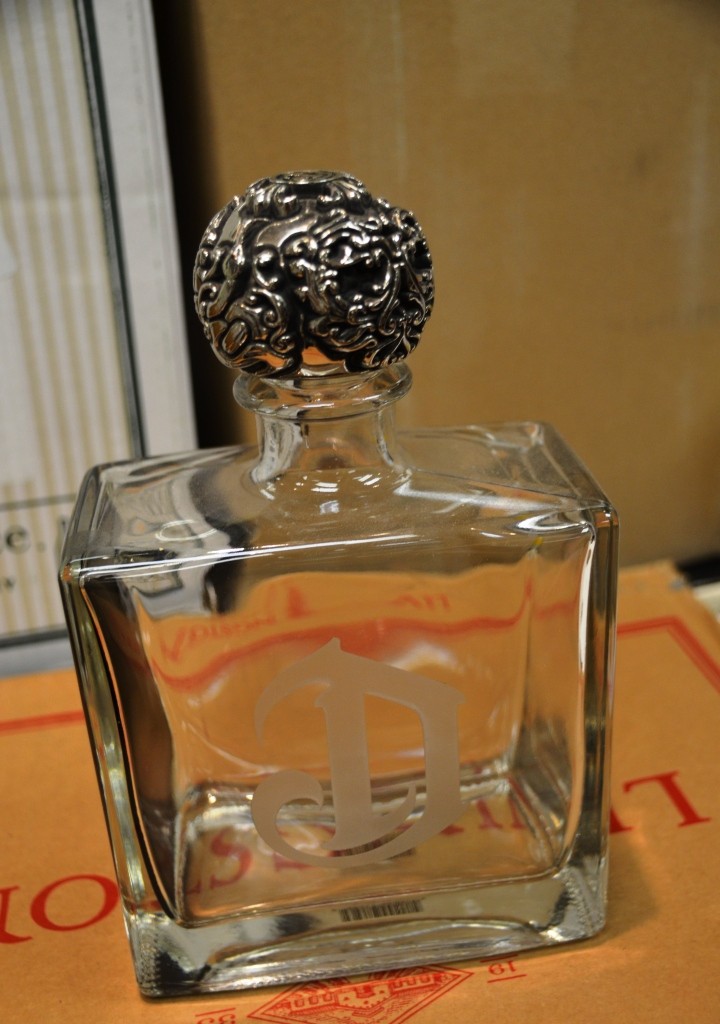
Tequila DeLeón bottle
I had an opportunity to taste through the full line of Tequila DeLeón, starting from the tequila blanco, which is unpretentiously called Diamante, to the Louis XIII-like Leóna. Below is the complete list with the descriptions and suggested retail prices (sorry for the quality of the picture, but I hope you will be able to see enough – or go to the web site for more info):
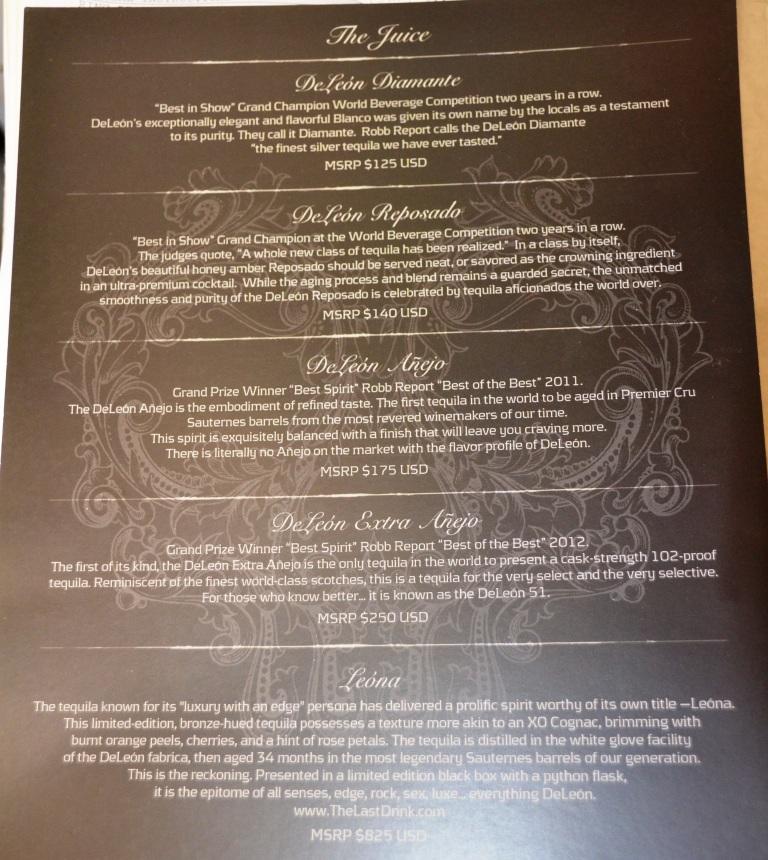
Tequila DeLeón The Juice line
Here are my notes:
DeLeón Diamante – touch of sweetness, the classic Agave notes of tequila are very muted, viscous mouthfeel.
DeLeón Riposado – nice herbal profile, had some lightness and touch of spiciness. One of my favorites.
DeLeón Añejo – mind you, this tequila is aged in the used Sauternes oak casks, and not just any Sauternes, but venerable d’Yquem. Interesting palate, but not smooth enough, some rough edges.
DeLeón Extra Añejo – very nice, excellent flavor profile, some spiciness, very good depth. Probably my favorite – which is not surprising, considering that it is compared with the Scotch in the official description.
DeLeón Leóna – this is simply overdone. It has a lot of oak. A LOT. Oak is the only thing I was able to taste.
Now, if we look at the prices, which are ranging from $125 for Diamante to $825 for Leóna, this is where Indifferent part of the post’s title comes into a play. I would gladly take Chinaco and Don Julio for the sipping tequila blanco any day (both are under $50), and I never tasted Añejo better than my favorite Tres Generaciones ( also under $50). I appreciate the art of the Tequila DeLeón, and yes, if you need to impress, go for it; meanwhile, I will have another sip of Chinaco.
So you know what left me indifferent. Now, for the Okay part, I tasted through a group of Scotches. Here they are:
MacPhail’s Collection Highland Park 8 years old – very nice! hint of smoke, perfect balance, touch of sweetness.
MacPhail’s Collection Glan Grant 10 years old – herbal notes, smooth, nice acidity, very good.
Mortlach 15 years old – nice and simple, but somewhat one-dimensional.
Old Pulteney 21 years old – nice, very complex, interesting nose, spicy profile – excellent overall.
Glenlivet 21 years old – okay, so it is a scotch, but it doesn’t do anything for me.
The Macallan 21 years old – least interesting of all. Just boring…
Based on the notes, you can probably see why this is just “okay”. But if you like Scotch, I would definitely recommend the Highland Park 8 and Old Pulteney 21 – those are worth seeking out.
And now, let’s talk about Spectacular. I was given to taste (blind) four different spirits, one by one, and the most I could say after each one was “wow”. They were one better than the other. Zak was looking at me patiently, waiting for me to guess what they were. The first one, I said, was a grappa. The second? Bourbon. The third? No idea – absolutely unusual profile. The fourth? May be a Rye? Then he put 4 bottles on the table, one by one. Here they are:
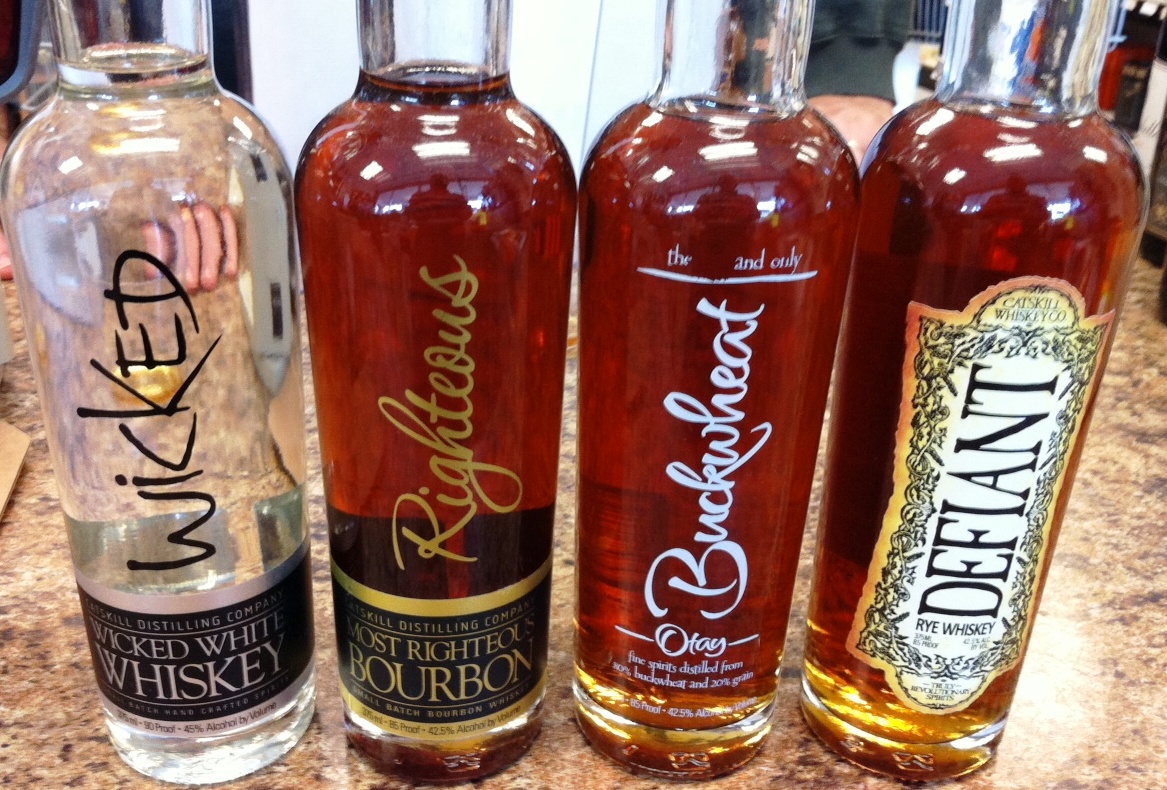
Catskill Distilling Company Spirits Collection
When I saw what they were, I had to say “wow” one more time. All of the spirits were produced about 90 miles away from my house, in the town of Bethel, New York . It is amazing how far the local New York producers went. You probably read my rave review of Hudson Distillery – I will definitely make an effort to visit Catskill Distilling Company when I will have a chance. Here is what I tasted:
Wicked White Whiskey – this is six-grain (corn, wheat, buckwheat, rye, smoked corn, malt), un-aged whiskey. Absolutely spectacular nose and flavor – complete impression of delicate single-grape grappa with round sweet fruit and all around delicious. You have to taste it to believe it.
Most Righteous Bourbon (70% corn, 20% rye, and 10% malt) – round, clean, caramel, butterscotch, all perfectly balanced together. One of the best bourbons I ever tasted.
One and only Buckwheat (80% buckwheat, 20% small grains) – unique and different. Nose is absolutely unusual, reminiscent of sun flower oil. Viscous, roll-of-your-tongue delicious concoction. Great complexity, another drink you have to taste to believe it.
Definat Rye – a very classic Rye, with a touch of sweetness, but otherwise dry palate, some spiciness and good acidity.
All four spirits are reasonably priced ( from $19 to $38) and definitely highly recommended.
There you have it, my friends – my story of indifferent, okay and spectacular. Enjoy the rest of your weekend and cheers!
Gumption, Tenacity and Whiskey
 Ralph Erenzo had a dream. Being an avid rock-climber, he had a vision of building a “resort” for the rock climbers, a place where they will be able to relax and have fun. With that vision in mind, in 2001, he acquired an old 35 acres farm in upstate New York, about 80 miles up north from New York City.
It appears that his new neighbors had their own idea of who the rock climbers are, as the first thing they told him was that they will do everything in their power to prevent him from successfully realizing his dream – they don’t need all these “bad people rock climbers” to come to their quiet neighborhood. And they did. Two years down the road, having sold 15 acres out of the 35 and practically out of money, Ralph had to think about what to do next.
He talked to the local authorities, asking “what can I do here”, and he got somewhat of an obvious answer – well, it is a farm, so nobody can object if you will use it as a farm. So, what can you do at the farm? Creating a vineyard was one option – but the wait time until the vines will be able to bear decent fruit was not acceptable to Ralph. Then something interesting caught his eye – New York state passed the law encouraging creation of the small distilleries, thus reducing the license fees from $60,000 to only $1,000 for three years. That was an “aha” moment, and this is how Tuthilltown distillery was born.
Ralph had no idea about spirits and distillation, but he was eager to learn – thus he built his first distilling apparatus out of the copper tea kettle and proceeded with practical exercises in the comfort of his own kitchen (boy, am I glad the Prohibition was over) – you can now see that original machinery on display in the tasting room at the distillery:

how the things started…
From there on, there was a lot of excitement, learning, selling, upgrading, building of a real business, selling it and much much more. You know what – let me ask for the 18 minutes of your time – you will much better learn everything which happened from the Ralph Erenzo himself. In return, I will tell you that you will learn about gumption and tenacity, and may be some of you will even feel encouraged to do something they’ve being postponing for the long time. Watch this TEDx video, and then come back for more fun facts and pictures.
When we visited distillery few weeks ago, Ralph Erenzo was leading our tour.

Ralph Erenzo leading our tour
It was really a great experience, listening to someone who “made it”, and who is nevertheless very much down to earth. I hope you watched the video, as I don’t plan to repeat what was said there. In the day to day operations of Tuthilltown, there is a constant desire to optimize, improve, waste nothing, be self-sufficient and most importantly, to be a fun place to work at (the distillery currently employs 25 people on staff). Just to give you few examples of the mindset:
Ralph showed us their new steam boiler waiting to be installed – acquired on eBay for the absolute fraction of the price of the new one.
Big solar panels are installed right on property – on a good sunny day, they generate enough electricity to power up the whole production and return electricity back to the grid.
Tuthilltown also grows its own apples (750 trees are planted, and another 750 will be planted soon), some of them on those 15 acres which Ralph had to sell, but later was able to buy back.
The distillery owns a cooperage, so they have control over the wooden casks, which are [the most] important part of making the whiskey.
After the grains are crushed, fermented and converted to liquid with alcohol, the leftover mass needs to be removed. Today, it means hauling it to the town dump and paying for the disposal. The distillery is about to install the machine which will convert the leftovers into the water (which will be used back at the distillery) and a little bit of ash – making the distillery completely green and even more self-sufficient.
The distillery needs grains to make whiskey. The grains are typically stored in silos. Say the word “silo” – what picture comes to mind? A super-boring, huge column, colored in gray or brown, right? Well, not at Tuthilltown. The graffiti artists were invited, to make the silos look like the museum pieces:

Silos at Tuthilltown Distillery

you can see solar panels in the back
Let’s talk quickly about how the whiskey are made (yes, I have a few more pictures to share). To make a whiskey, you need corn, or rye, or barley, or some other grain – something like you see below, only in slightly bigger quantities:

The beginning of whiskey
Then you have to run it through the mill, like this one used at Tuthilltown distillery (circa 1930s):
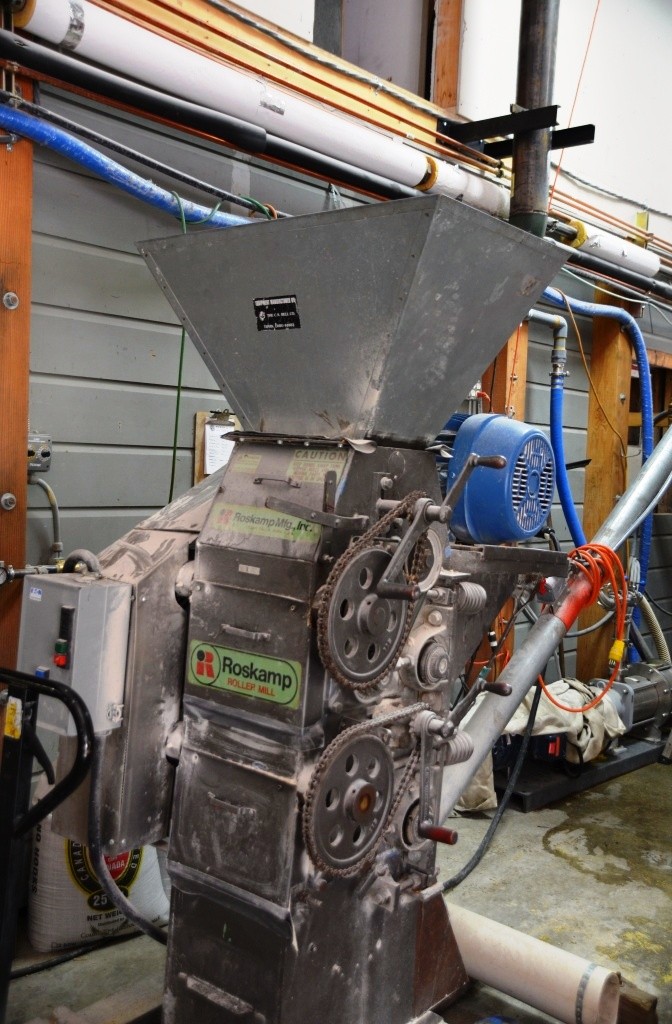
Manually operated (!) grain mill
Add water and yeast to the coarsely ground grains, get some heat going, and fermentation will start. Once you are done fermenting, the leftovers mash will be disposed, and the water with alcohol will go through the distillation process, where they will be separated.

Distillation column at Tuthilltown
Once you have the alcohol, it can be either bottled as is, or it can be aged in the barrels. When it comes to ageing, Tuthilltown uses heavily charred new American Oak casks (made by the cooperage which they own).

Small American oak cask
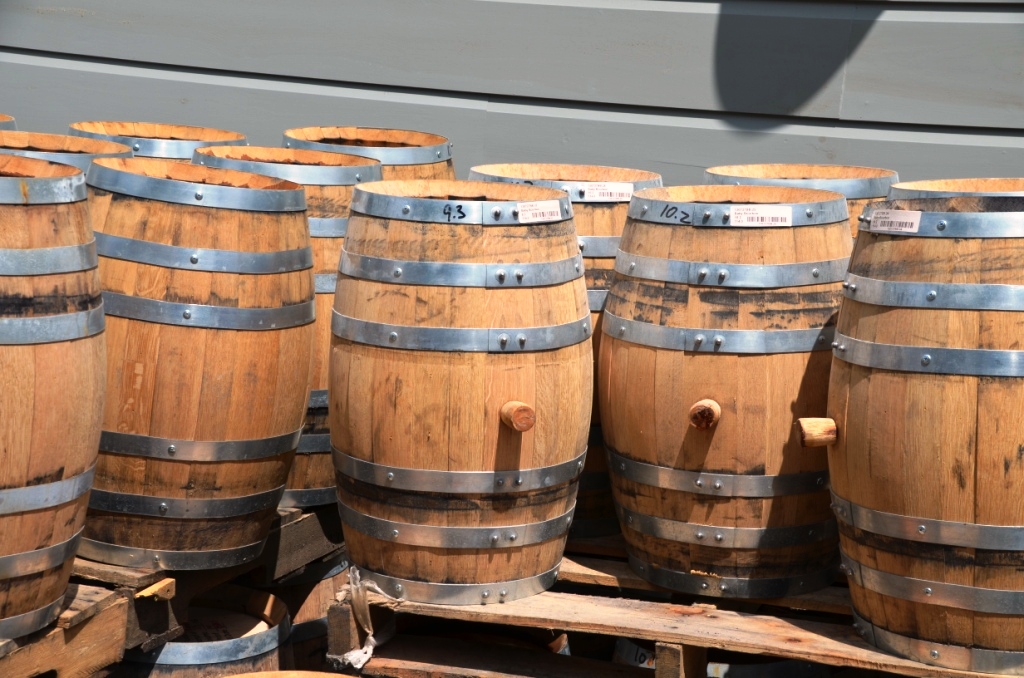
Ageing goodness
American whiskey is typically aged for 30-40 days per gallon, so if you have a 10 gallon cask, it will take a bit longer than a year to reach the proper age – of course whiskey can be aged for any period of time, but at least today Tuthilltown doesn’t produce any whiskey with extended ageing.
Once the ageing is done or close to be done, bottlers will decide when the particular batch is ready to be bottled. The bottling operation is located in the basement of Tuthilltown distillery. The process starts from filling the empty bottles:
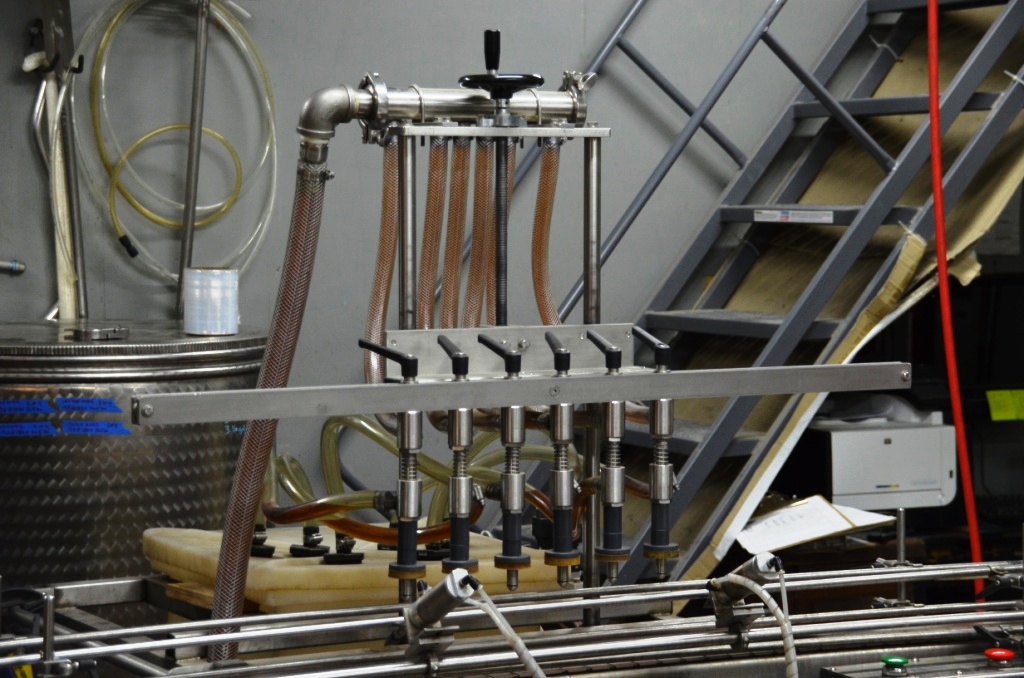
this is where the bottles are filled
Then the bottles are closed with cork, and dipped into the hot wax and lastly, labeled:
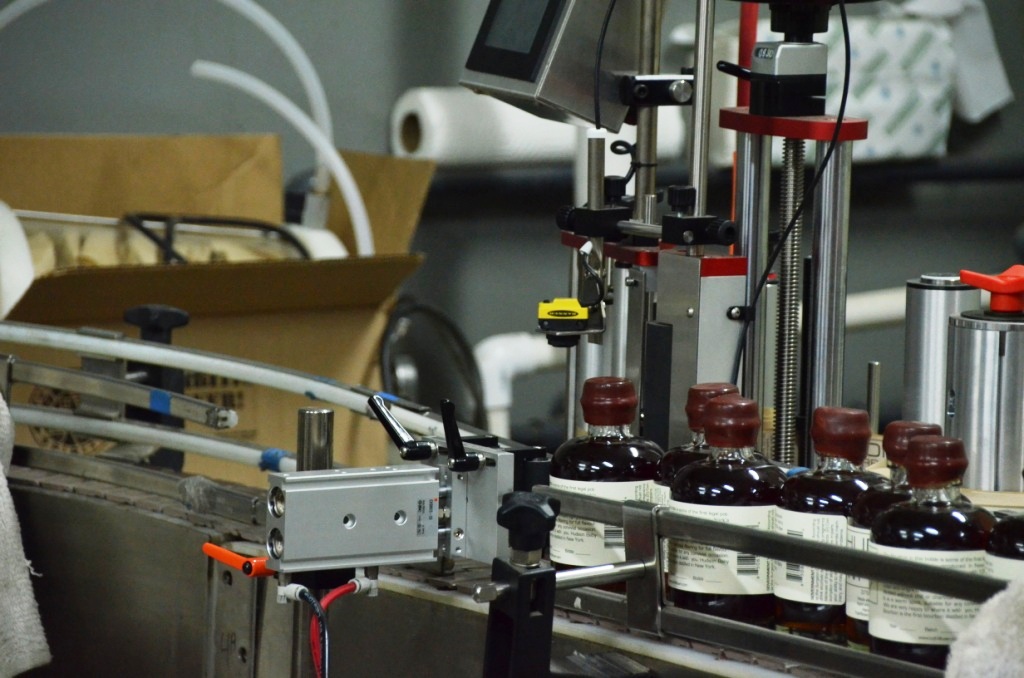
labeling part
Labeling was one of the most mundane tasks which Tuthilltown automated very recently. By automating this task, it allowed people to use the freed up time for something useful and creative – and the new product, called Basement Bitters was born ( beautiful aromatic drops for your cocktail).
And once you are done with the labeling, you get … lots of whiskey, ready to be numbered (by hand!) and shipped for all of us to enjoy:
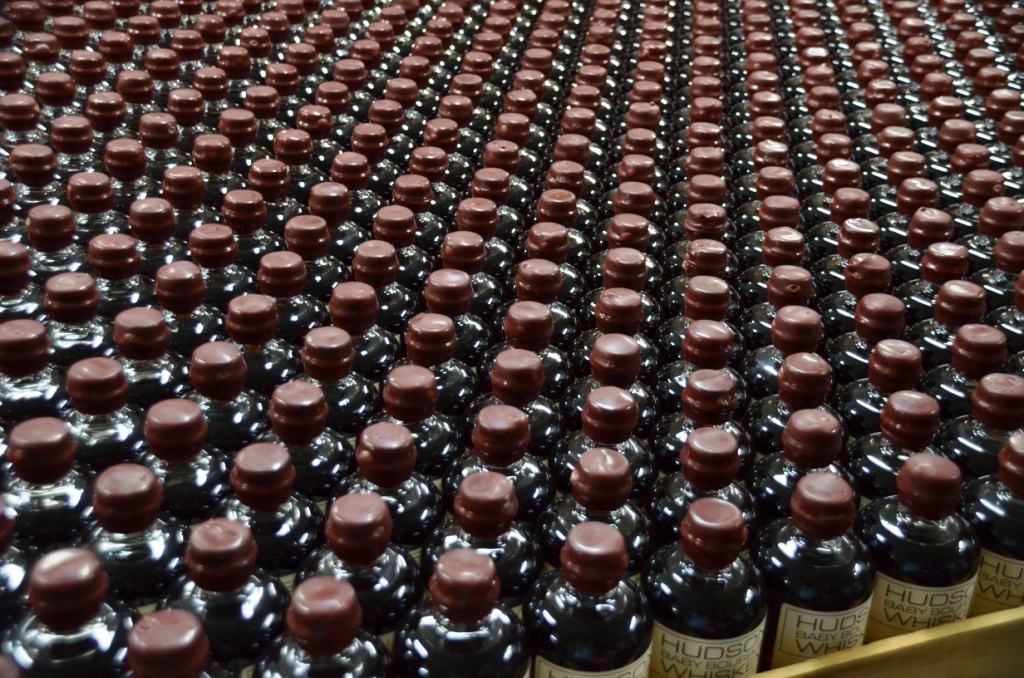
Ready to go

yes, ready
And of course after the tour you can go and taste the whiskey (and vodka, and gin) in the tasting room:

Tasting time!

Don’t forget the bitters
Tuthilltown lineup includes Indigenous Vodka (made out of apples), Half Moon Orchard Gin, Hudson New York Corn Whiskey (unaged), Hudson Baby Bourbon, Hudson Four Grains Bourbon and Hudson Manhattan Rye Whiskey ( last three are all aged whiskeys). Hudson Baby Bourbon is my favorite, but hey, you have to taste it for yourself.
And I think we are done here. I hope you found the time to watch the video. And what I want to leave you with is this:
Dictionary.com defines “gumption” as:
2. courage; spunk; guts
Follow your dreams! Cheers!
Last Bottle Sign Up ($10 credit)




 Talk-A-Vino