Archive
Rosé – Still Misunderstood and Looking for Love?
This Wednesday, August 14th, is the Wine Blogging Wednesday event, where all wine bloggers get the chance to share their thoughts and experiences related to the designated theme. The theme of this upcoming Wine Blogging Wednesday event, or WBW for short, is Rosé – here are the details of the announcement. This is what this blog post is all about.
How often do you drink Rosé? Do you think Rosé is fully understood and appreciated by the consumers en mass? I’m afraid that many wine drinkers still have a notion that Rosé is either sweet, or strictly seasonal, or mostly inferior, or all of the above. I remember being in France about 7 years ago, in November, and ordering a bottle of Tavel in a restaurant. My French colleague gave me a look, and then said sternly “just keep in mind, you are ordering a summer wine” – of course he has an excuse as a Burgundy buff, but still – even in France, people often see Rosé as seasonal wine, not as a wine you can drink all the year around. In the US, yo would rarely find Rosé on the main shelves – they are usually setup on a side, ready to be replaced by the holiday wines, and slowly moving to the “closeout bins” as summer comes to an end.
Many people judge Rosé by the color, which reminds them of White Zinfandel, and think it is a sweet wine. I have seen many people come to taste the wines at the store and refuse the glass of Rosé simply saying “no, thank you, I don’t drink sweet wines”. It really takes time to convince them that the wine they are refusing is actually perfectly dry, refreshing and food friendly – and not only during summer, but all year around.
Having presented this pinkish “doom and gloom” to you, I actually have to admit (happily) that over the past 3-4 years, the situation is changing to the better. Even as a seasonal wine, there is really an abundance of Rosé offered in the wine stores. More and more wineries and winemakers now include Rosé as part of their standard offering, year in, year out. This happens in France, this happens in Georgia, this happens in California, Greece, Italy, Spain, New York and many other places.
The great thing about Rosé is that they are some of the easiest wines to drink – and some of the food-friendliest. Rosé typically has a flavor profile of a light red wine, with strawberries, cranberries and onion peel being some of the main characteristics – it also lacks the punch of tannins as skin, seeds and stems contact is minimized during the winemaking. At the same time, Rosé typically has savory complexity coupled with acidity which is usually a bit less than the acidity of a dry white wine. Overall, it is easy to drink and food friendly – what else do you need from wine? Of course I’m not advocating that the whole world should start drinking only Rosé at this point – but Rosé definitely has its own permanent (not seasonal!) place on the shelves of the wine stores and in your wine cellars.
Let me now give you two great examples of Rosé wines.
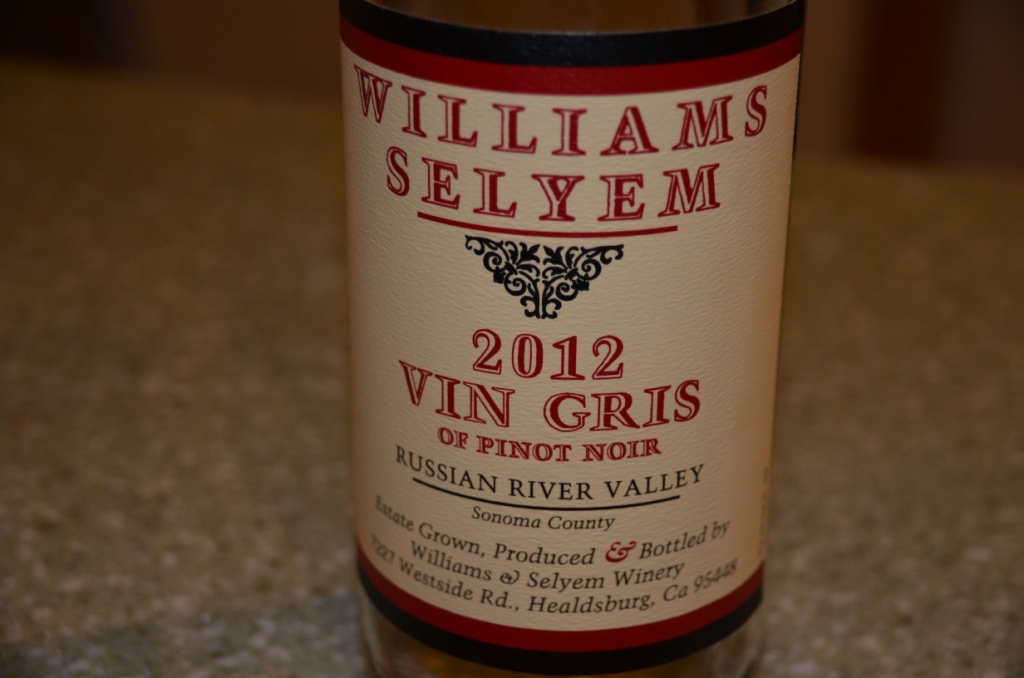
Williams Selyem Vin Gris of Pinot Noir
2012 Williams Selyem Vin Gris of Pinot Noir Russian River Valley (12.9% ABV) – bright concentrated pink color, reminiscent of cranberry juice. Strawberries and cranberries on the nose, same on the palate, lots of strawberries and cranberries, very dry, perfect acidity, very balanced overall and very easy to drink. Drinkability: 8-

Antica Terra Erratica
2011 Antica Terra Erratica Willamette Valley Oregon (13.1% ABV) – another 100% Pinot Noir Rosé. What a treat! Perfectly bright strawberry red in color, nice nose of raspberries and cherries. First the wine opened into a light Pinot Noir, showing some smokiness and earthiness, then evolved into into bright strawberry and onion peel wine, classic Rosé, and then it was gone… Drinkability: 9-
There you have it, my friends. Open a bottle of your favorite Rosé, pour a glass and enjoy – however remember – sometimes Rosé is too easy to drink… Oops, did we just finished this bottle? Cheers!
One on One with Angelina Jolie and Brad Pitt, The Winemakers
Do you really think I managed to get face time with Angelina Jolie and Brad Pitt? Or at least a Skype interview? A phone call? Yeah, none of the above, you are correct. But – as it was announced a while back, they joined the ranks of celebrity winemakers with the release of their first wine from Château Miraval, a property in Provence, which they acquired a few years ago – and considering that they both participated in the tasting and selection of the final blend, I think the title of this post stands as appropriate. Well, yes, they didn’t make the wine all by themselves – they got some serious help by partnering with Marc Perrin of Château de Beaucastel in Châteauneuf-du-Pape, so the wine officially lists Jolie-Pitt & Perrin on the back label.
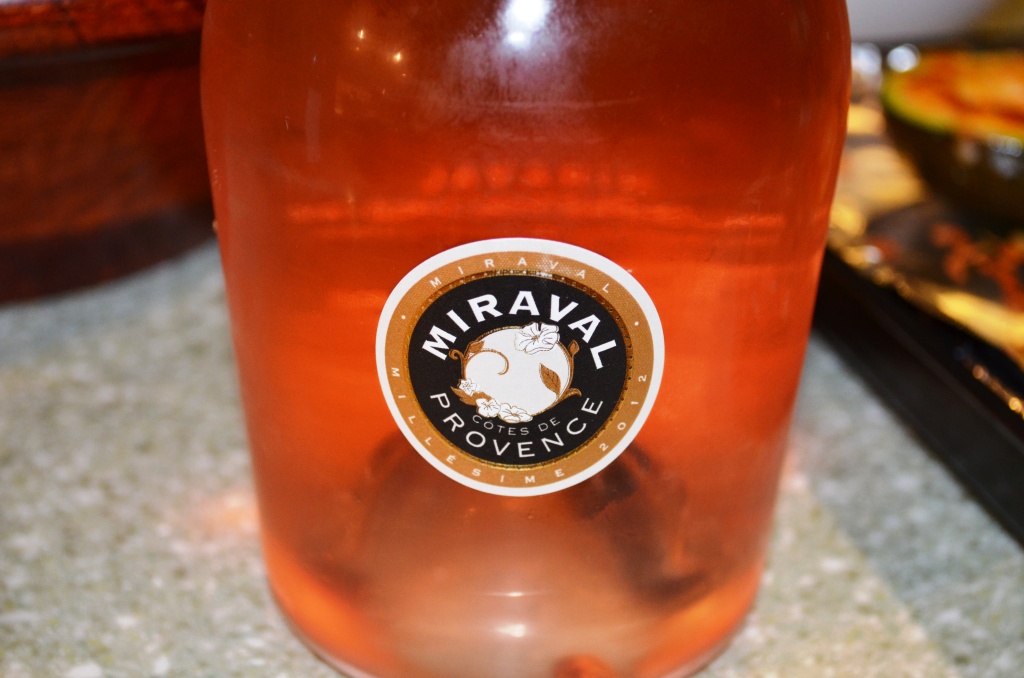
Miraval Rosé
Before we will talk about the wine, I want to mention that Château Miraval has very interesting history – in the 1970s, it belonged to the famous jazz musician Jacques Loussier, who converted the chateau into the recording studio. Many famous musicians, such as Pink Floyd, Sting and others, used that studio to produce their albums.
Now, let’s get to the wines. While celebrity status of winemakers is nice, in the end of the day, I care about content of my glass. So in this particular case, I wanted to have some frame of reference – of course in the form of another wine. As Miraval Rosé comes from Provence, I wanted to compare it with another Provence Rosé. Looking at the wide range of Rosé available, my eyes stopped at the label. Whispering Angel. I think I heard it somewhere. And it is from Provence. Problem solved – I got my second Rosé, and the battle (okay, it is only two, so let’s call it a mini-battle) of Rosé was set.
Then I found out that I have chosen well. It appears that Whispering Angel Rosé was a hit of 2012, and it was literally impossible to get it last year. Thus it was very interesting to see how the two will fare, and how the arrival of the Miraval might affect the cult status of the Whispering Angel.
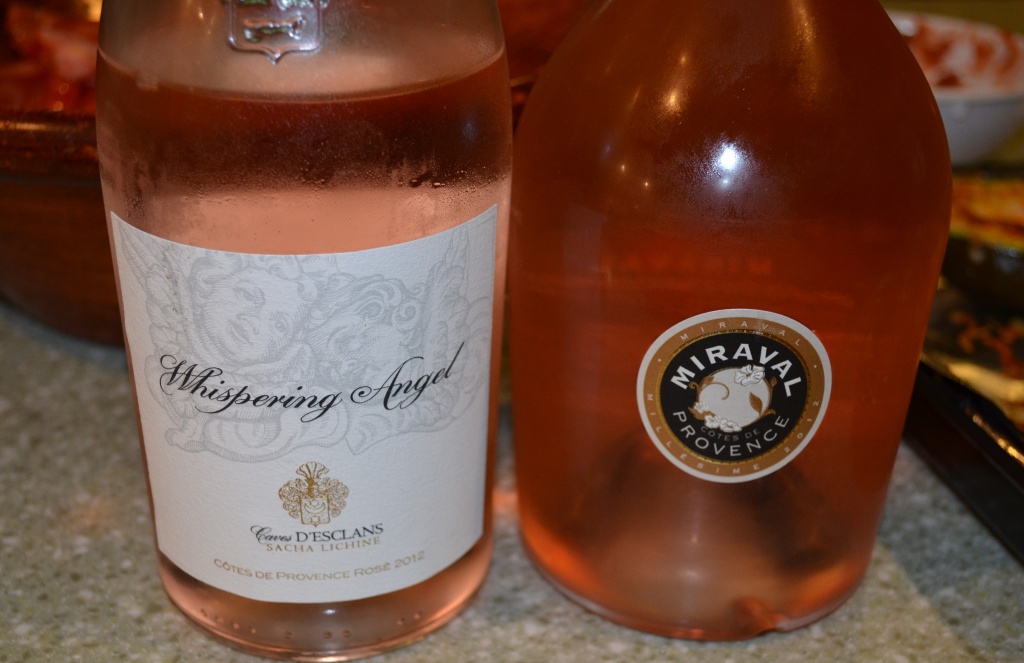
Whispering Angel and Miraval side by side
Now, before we get on to the wines themselves (didn’t I say it already? yes I did, sorry for the interruption once again, but please read on), I need to let out a little rant. When I visit a winery’s web site, I’m doing it because I’m looking for information. Information for me includes history of people, story of the winemaker, information about vineyards, but most importantly, I want to know about the particular wine made at that winery. I want to know what grapes went into the wine, how the wine was made, what winemaker thinks about wine, and so on. Anything and everything which winery is willing to share about the wine, I’m willing to read, but (ahh, my finger is dancing above the Caps Lock key – I’m not going to press it only because I really respect you, my readers, but read rest of this sentence in the loud voice) – I’m not looking to read four praising quotes from the different sources and none, zero, nada, zilch of any actual information about the wine. The wine I’m talking about here – Whispering Angle. 4 quotes on the web site – and no wine information to be found anywhere. Yes, some of those quotes are wine tasting notes from the critics – but you don’t even know what vintage is being described. Yes, I do find it very annoying. End of the rant.
Now, let’s [finally] get to the wines. Here are the two wines side by side:
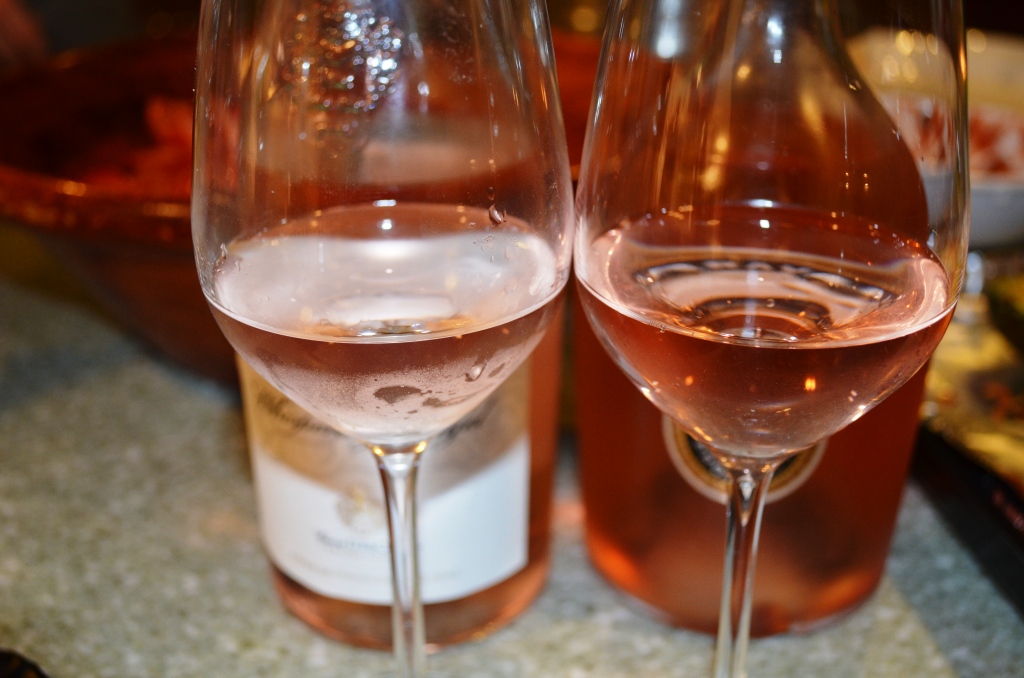
Whispering Angel and Miraval, now in the glass
2012 Whispering Angel Rosé Caves D’Esclans Côtes de Provence AOC ($17.99, 13.5% ABV) – supposedly a blend of Grenache, Rolle, Cinsault, Syrah and Mourvedre – the reason I say “supposedly” is because I didn’t find this information at winemaker’s web site or the back label – see the rant above.
Literally non-existent color in the glass. Pretty intense nose, more on the sweet side, with some tropical fruit (uncommon for Rose?). On the nose, it is more white wine than a red wine. Opens with the degree of sweetness on the palate, but as wine warms up, the sweetness disappears. After the wine opened up a bit, the palate is almost insignificant – there no traditional strawberries and onion peel. The wine is pleasant, but behaves more as indistinct white. Drinkability: 7
2012 Miraval Rosé Côtes de Provence AOC ($21.99, 13%ABV) – a blend of Cinsalt, Grenache, Syrah and Rolle. Syrah was vinified by saignée (bleeding, the pink juice is collected separately instead of leaving the juice in contact with skin for the short period of time), and the other varieties were direct pressed. 5% of the cuvee was aged in the oak casks.
Here are the tasting notes: Nice rose color, more intensity that the previous wine. Some strawberries on the nose, no sweetness. Nice density on the palate, more strawberries, very round but with the character. Drinkability: 7+
Time to conclude our small Rosé competition. I would give a small edge to Miraval, it was a bit more interesting. Miraval Rosé was good, but – it was not a wow wine I can’t live without. In that price range ($20+) there are plenty of interesting Rosé, lots of options are available to the curious palate in need of refreshing sip – in other words, I don’t think I will be specifically rushing over to the store to pick up whatever supply is left for either one of these Rosé.
Before we done here (I know, I keep testing your patience), I want to mention an excellent Rosé post by The Armchair Sommelier (I hope you discovered and follow her blog already, if not – fix that problem immediately). One of the dishes in that blog post looked so good and simple – Grilled Avocado with melted cheese – that I asked for the recipe (very easy – take avocado, make some holes with the fork, smother with the hot sauce, cover with cheese and broil for 5 minutes). I made it to accompany my Rosé and the dish came out perfectly and was very enjoyable, especially with the wine.
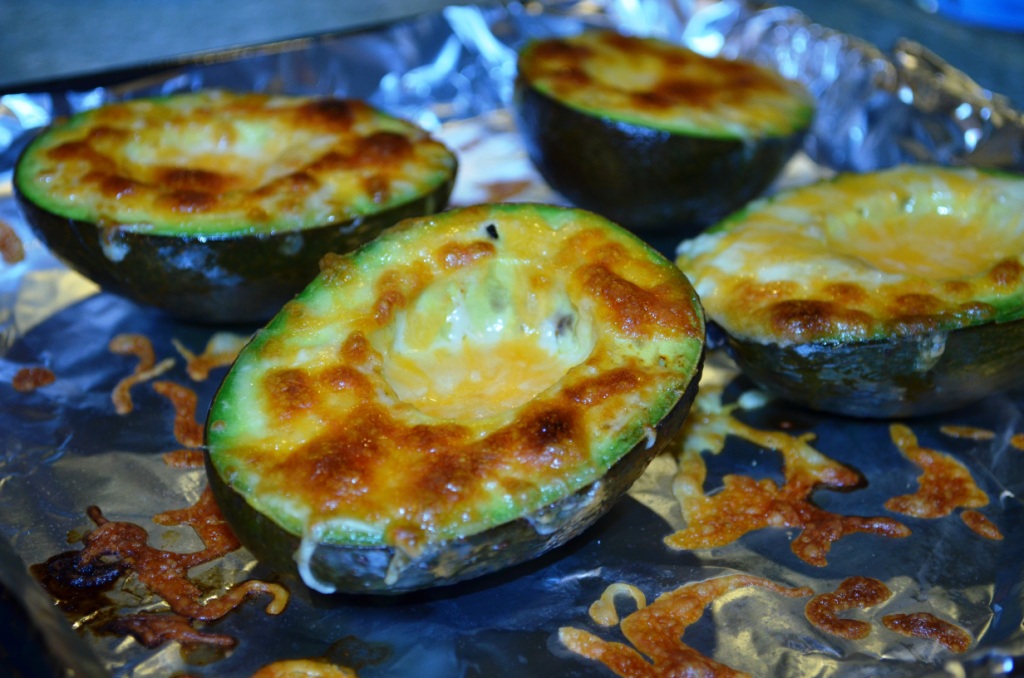
Grilled Avocado with melted cheese
Now it is the time to conclude for real. Until the next time – cheers!
Rosé!
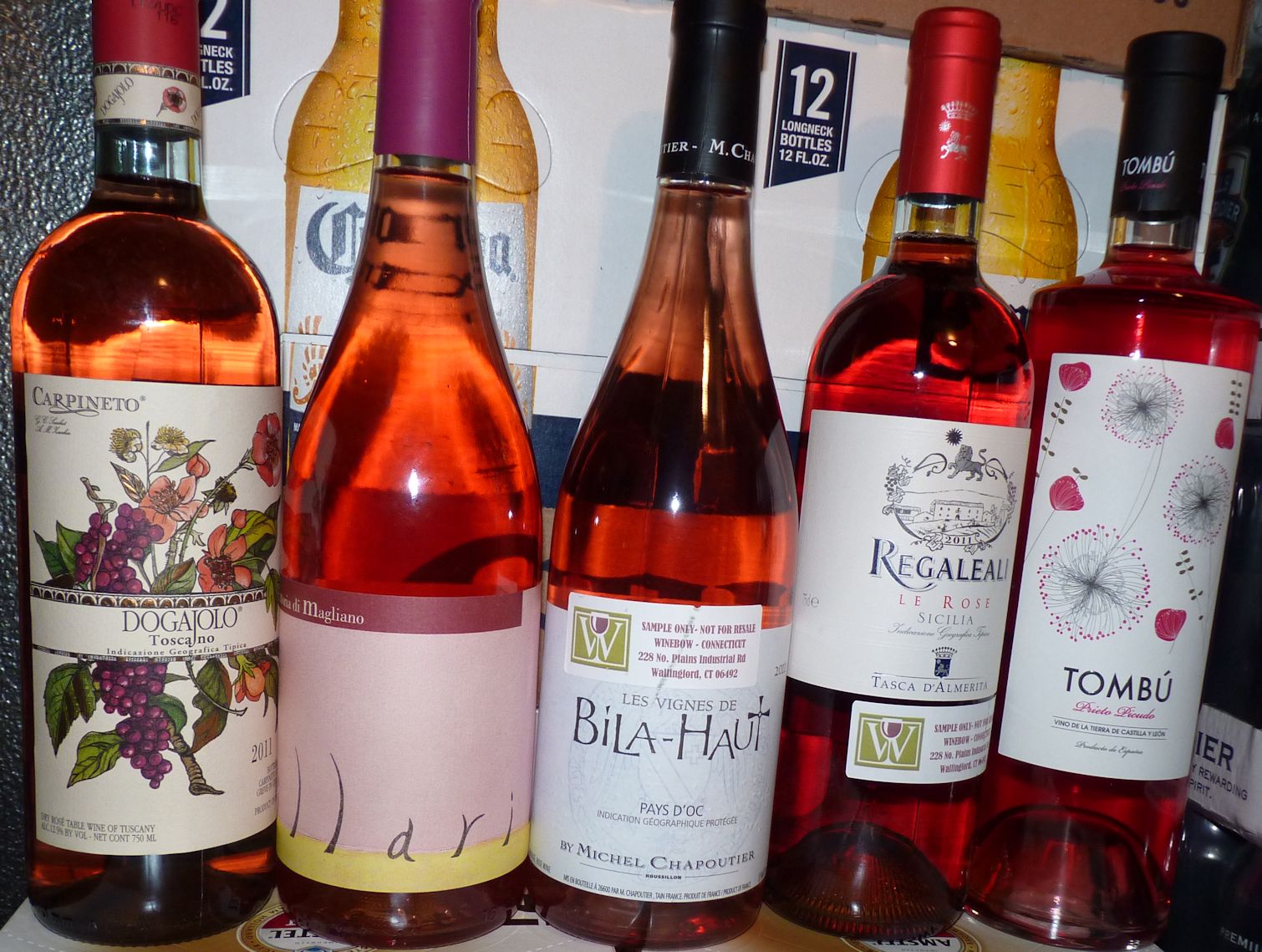 The weather fully turned around, and despite way too much rain (at least here in Connecticut), summer season has started. Which means we can start drinking Rosé, and feel good about it!
In the US, Rosé had being a very interesting phenomenon. Even 6-7 years ago, it was pretty hard to find Rosé wine on the shelves of the wine stores. Tavel (one of the world most famous Rosé wines from the Rhone region in France) was practically the only Rosé you could find in the better wine stores. Mind you, I’m talking specifically about dry Rosé wines, not White Zinfandel or any other sweet concoctions. I guess many years of the pink colored plonk trained US wine consumers that you can not expect anything good from the pink-colored liquid, therefore stores had no incentive to offer Rosé. Little by little, situation changed, and now you can see lots of different Rosé coming from all over the world, made out of every possible grape and occupying more and more shelf space at the wine stores.
What I like about Rosé wine is that it combines light and refreshing qualities of the white wine with the fruit and structure of the red, making Rosé a perfect complement to anything you do and anything you eat on a hot summer day. Don’t get me wrong – personally, I’m happy to drink Rosé at any time of the year, but somehow it has a notion of being ”summer wine”. I remember being in France in November of 2006, and when I asked for the Anjou Rosé offered on the restaurant wine list, my French companion said with the expression of disapproval on his face ”but you only supposed to drink Rosé during summer?!”. I’m very happy that summer is here and glass of Rosé is officially appropriate.
Couple of days ago, I had an opportunity to taste 8 different Rosé wines which my friend Zak was considering for his store – and I’m glad to share my tasting notes with you.
 2011 Les Quatre Tours Espirit Sud Rosé, Coteaux d’Aix-en-Provence – this was the first wine of the tasting, and it set it on the right foot. Provence Rosé in general are some of the best wines in the world, which is probably not very surprising considering the fact that Provence is a birthplace of French winemaking. This particular wine is a blend of Grenache, Cinsault, Syrah and Cabernet Sauvignon. Pale salmon hue in color, strawberries on the nose, subtle and delicate on the palate, with very good acidity. Drinkability: 7+
 2011 Chateau Les VaValentines Le Caprice de Clementine Rosé, Cotes de Provence – second wine from the Provence. This one is a blend of Cinsault and Grenache.
This wine had bigger body compare to the first one – however, it was not very balanced and had too much bite (may be needed some time, but I will leave that for you to check). Drinkability: 6
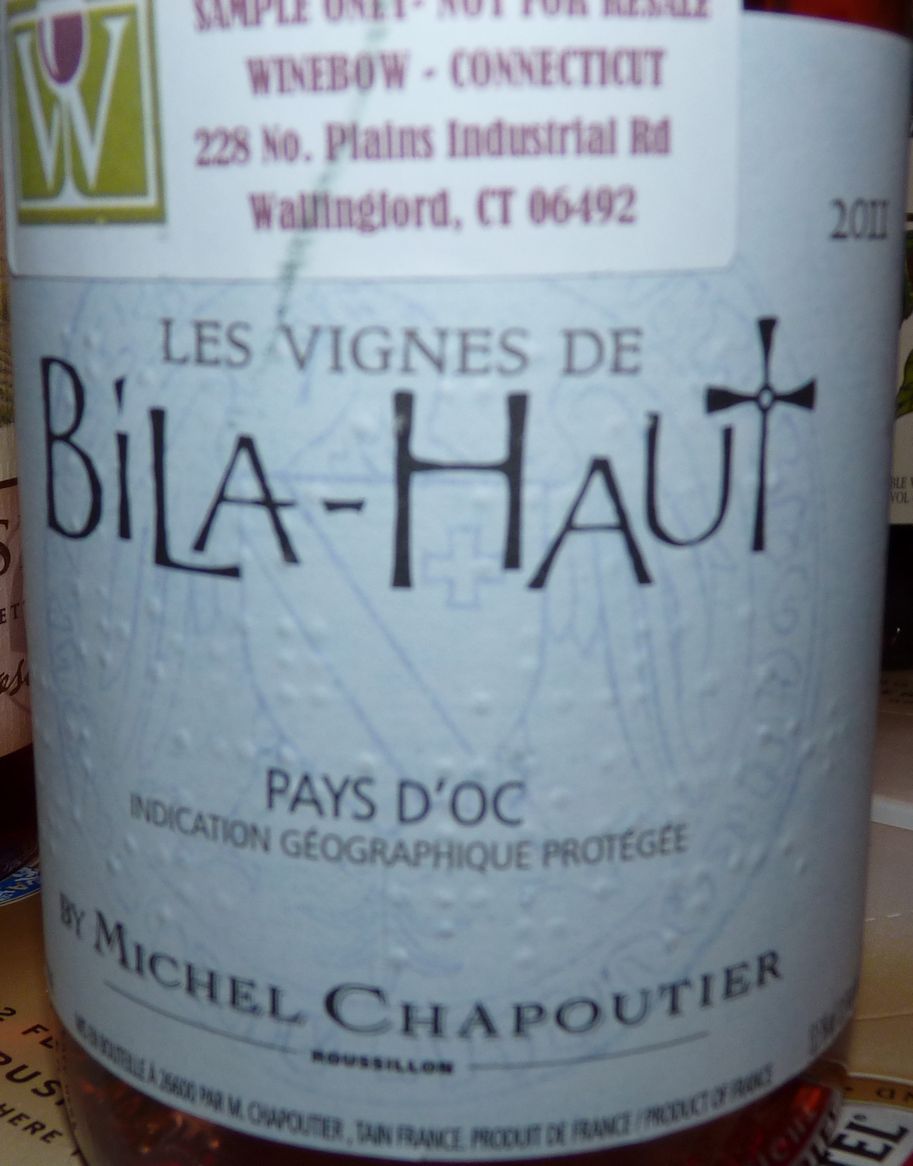 2011 M. Chapoutier Les Vignes de Bila-Haut, Cotes de Languedoc (13.5% ABV) – yet another wine from France, this time it is from the area called Languedoc. Bila-Haut wines are made by M. Chapoutier, a very respected producer. I had some Bila-Haut reds in the past, and they were very good, so I was definitely interested to see how Bila-Haut Rosé woud fare. This wine is yet again a blend of Grenache and Cinsault.
Nice pale pink color, not very expressive on the nose, same on the palate – the wine showed some bite and tamed fruit. Drinkability: 6+
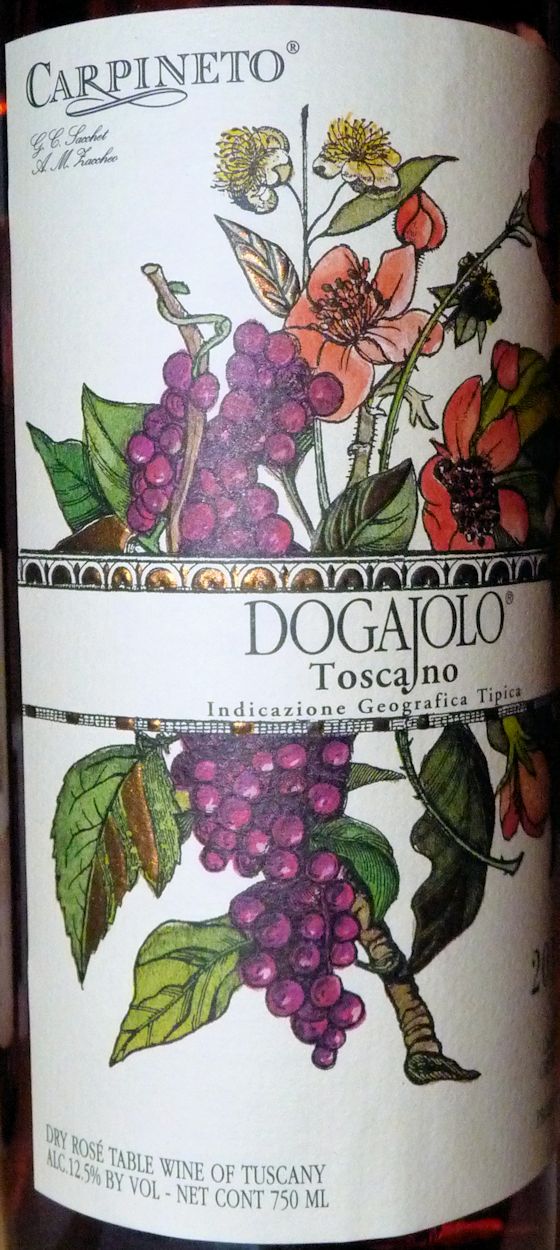 2011 Carpineto Dogajolo Toscano IGT (12.5% ABV) – Carpineto produces Super Tuscan wines, made out of Sangiovese with the addition of Cabernet Sauvignon and other grapes.
After being pressed and left in the contact with the skins for the short time, this wine was fermented in the stainless steel tanks and bottled in January.
Solid pink color, this wine showed some good fruit, but was somewhat lacking the acidity. Drinkability: 7-.
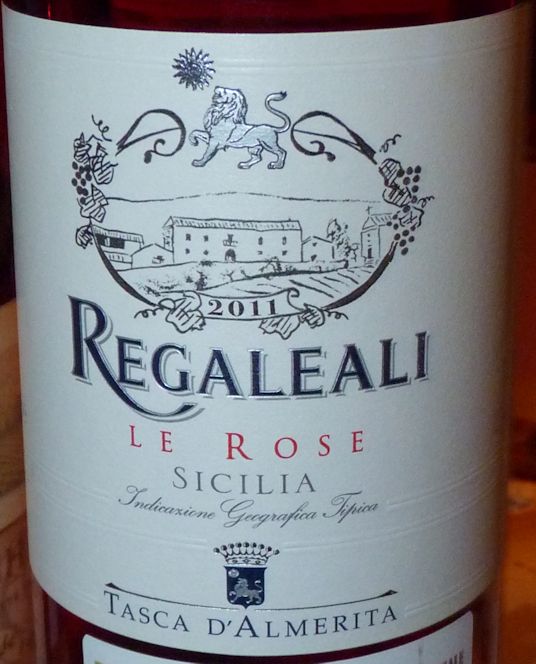 2011 Tasca d’Almerita Regaleali Le Rose Sicilia IGT (12.5 ABV) – another Italian wine, this time from Sicily. The name of the wine comes from thousands of roses which had being brought from all over the world and are happily growing at the Regaleali estate. The wine is made out of 100% Nerello Mascalese, an indigenous Italian variety growing primarily in Sicily.
The wine showed beautiful strawberries and cranberries both on the nose and on the palate. Overall, wine had very good body and great balance. Drinkability : 7+.
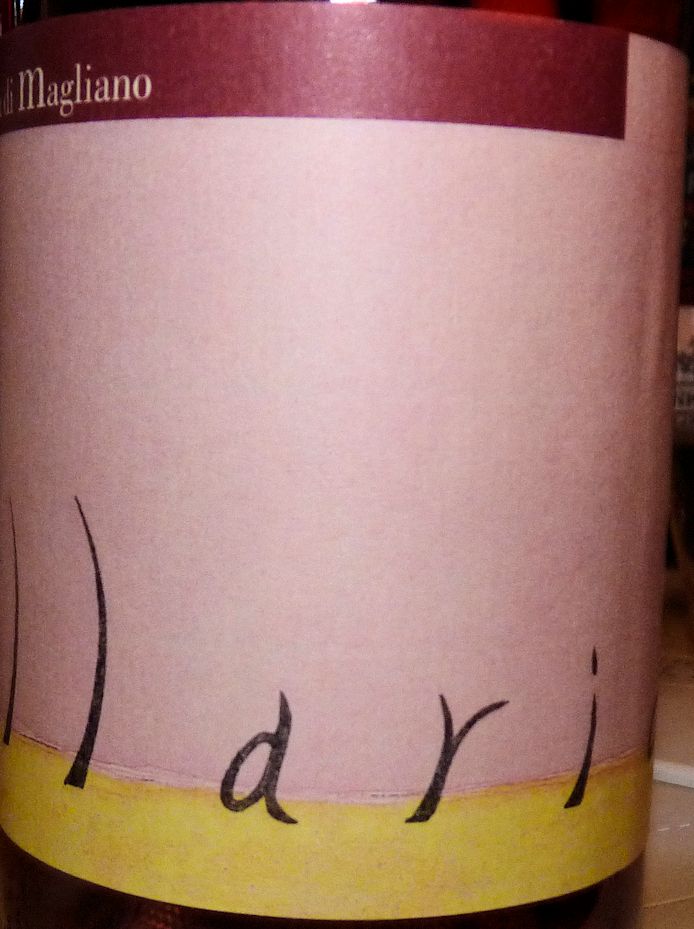 2011 Fattoria di Magliano Illario Rosato, Maremma Toscana IGT (13% ABV) – One more Rosé from Italy, again from Tuscany. This wine actually comes from Maremma region which is famous for its Super-Tuscan wines. This wine is produced by Fattoria di Magliano out of 100% Sangiovese grape.
The wine was similar to the previous one, showing red fruit with nice acidity, but a bit more delicate on the palate. Drinkability: 7+
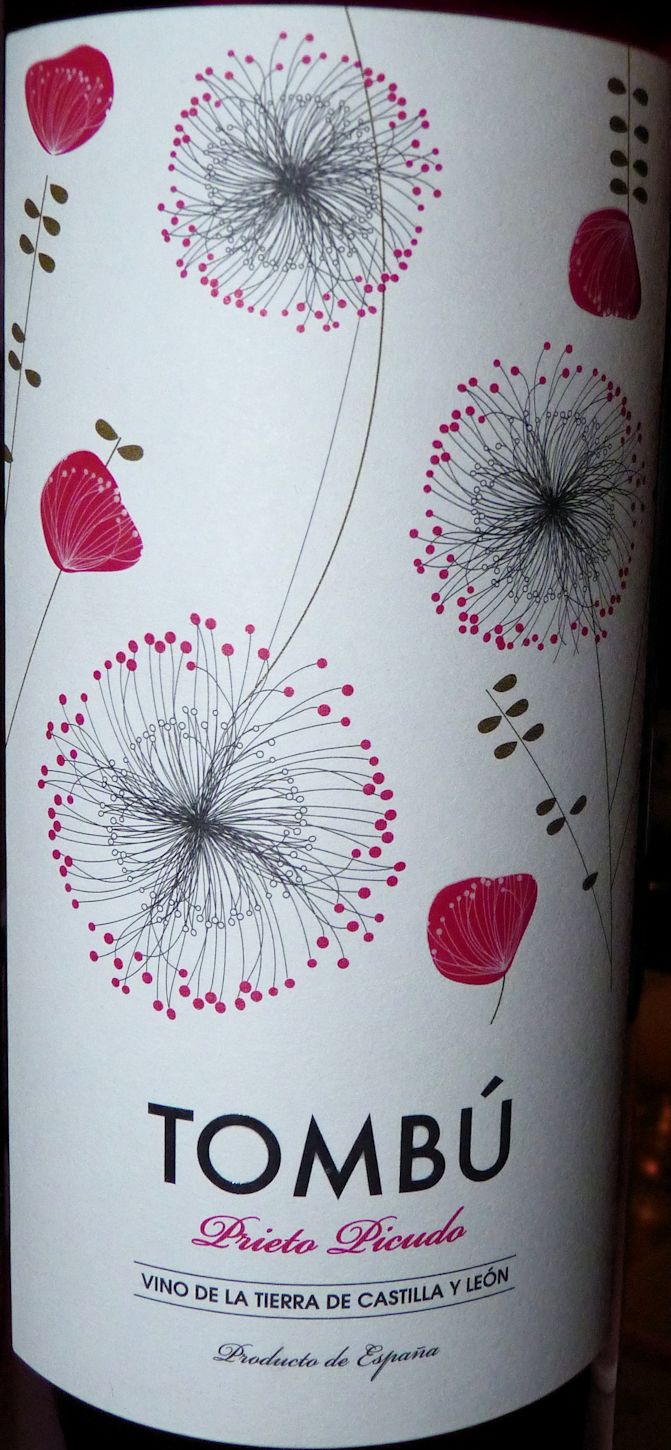 2011 Tombu Rose Castilla y Leon, Spain (13.5% ABV) – Something different – this wine comes from Spain, from the Castilla y Leon region, and it is made out of indigenous grape called Prieto Picudo.
As far as tasting notes are concerned…Would you accept a very short and simple “WOW!” as complete tasting notes? Saturated pink color, akin to cranberry juice, this wine starts from the concentrated nose of fresh cranberries and continues to deliver an exuberant punch of fresh zesty summer on the palate – perfect balance of fruit and acidity, extremely refreshing. Best of tasting! Drinkability: 8+
 2011 Adelsheim Pinot Noir Rosé, Willamette Valley, Oregon (13.4% ABV) – Last but not least, this Rosé comes from Oregon, and as you would rightfully expect it is made out of 100% Pinot Noir which was sourced from 6 different vineyards in the region.
Inviting nose of strawberries and cranberries, may be a hint of sour cherries, beautifully balanced on the palate with the same fruit and right amount of acidity. Again, very refreshing and just what the doctor ordered for the hot summer day. There are only 1,200 cases produced, so if you want this wine, you better not wait. Drinkability: 8-
I don’t know what you think of Rosé wines, but I can’t stress their greatness enough. If you were ignoring them until now, it’s time to change. If you had being a fan all along, I will be glad to learn about your favorites! Whatever you do, don’t let summer heat get to you – protect yourself with some Rosé in your glass! Cheers!
Canada Food and Wine Experiences, In Pictures, Part 2
For the love of food photography, here is more pictures from our trip to Canada. Now we moved to the French Canada, Montreal and Quebec, and we definitely focused on experiencing the french-style food for as much as possible. Once again, if you want to read more on the actual restaurants we visited, you can find my reviews on Yelp (click here).
Let’s start with Montreal:
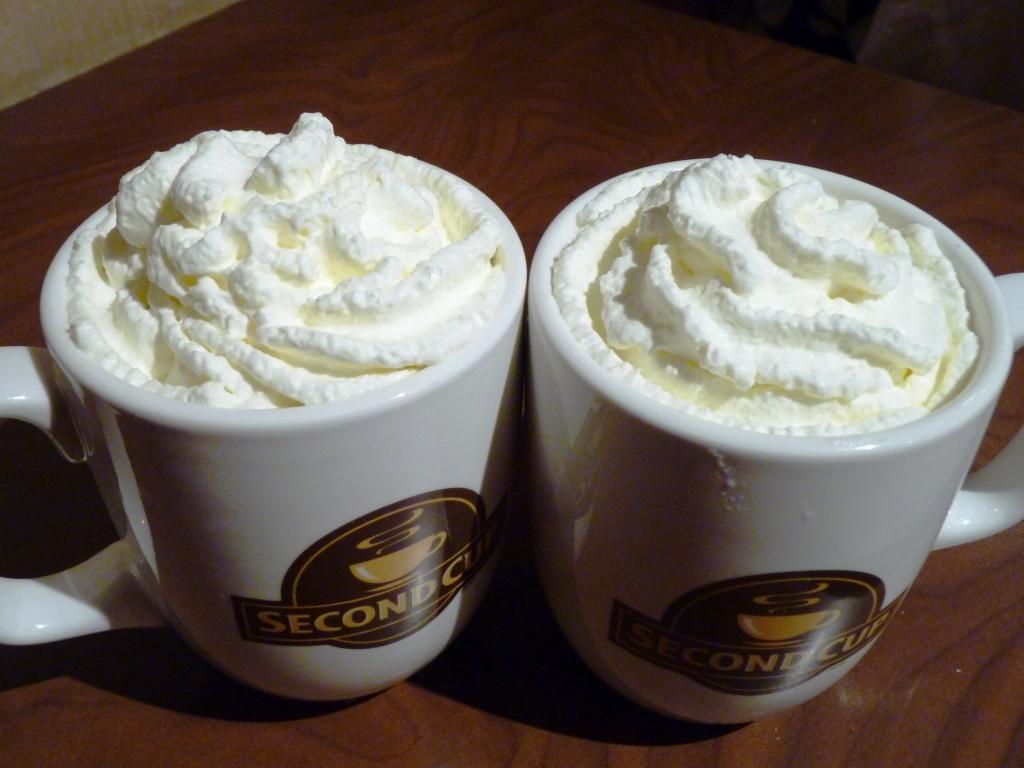
Cappuccino at Second Cup (the place is a striving Starbucks but not that great):
Steak at Le Grill Bistro:

Rack of Lamb at Le Grill Bistro (why is that rack of lamb always tastes amazing in Montreal?):

Breakfast at Chez Cora (again, but now in Montreal) – best Eggs Benedict I ever had, Hollandaise sauce is amazingly balanced !

More coffee – at Cafe Imagination (great place for inexpensive lunch in downtown Montreal):
Honestly – the coffee was good, but I love the cup…

Moving to Quebec now:
La Nouvelle France Resto-Bar Terrasse:
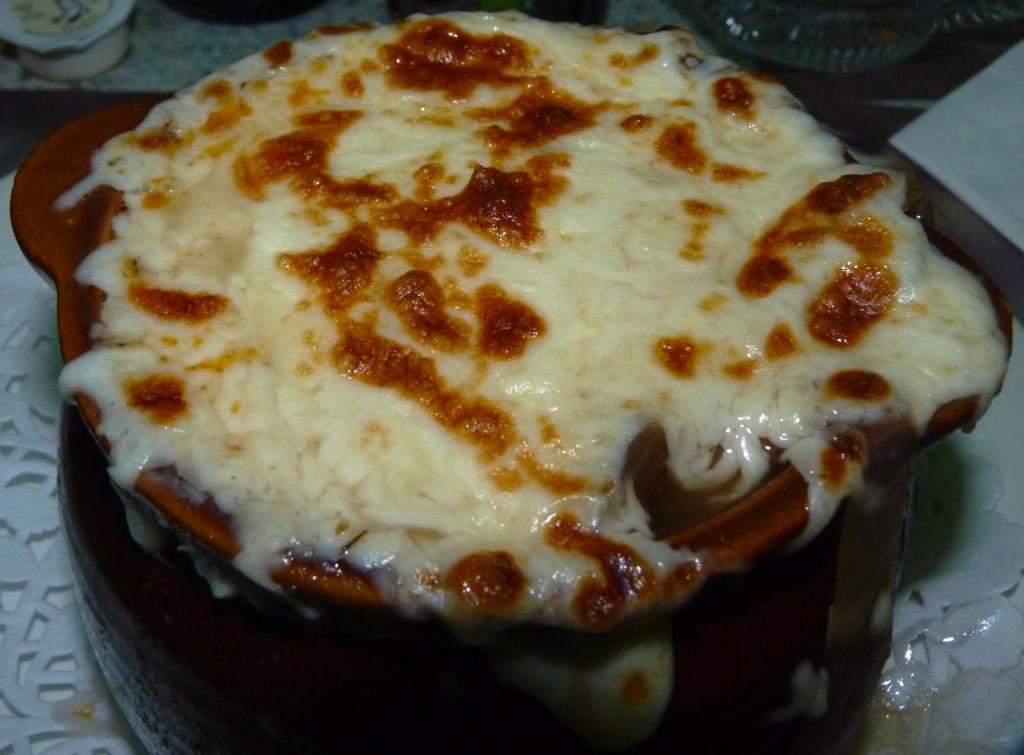
French Onion Soup (more classic than the one in Beef Baron):
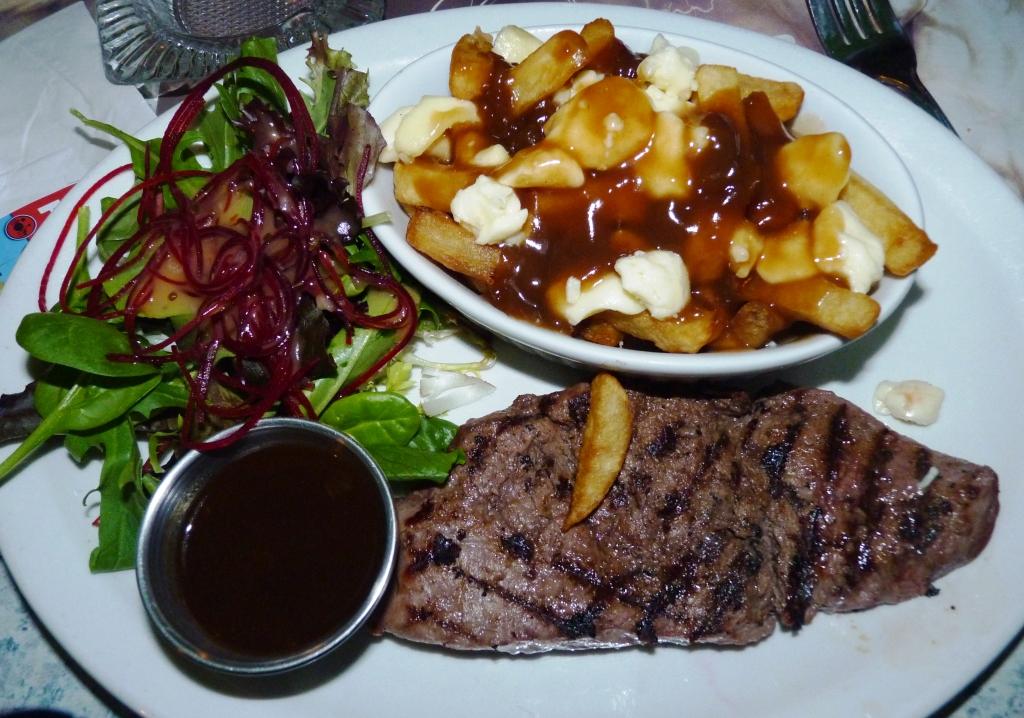
Steak with Poutine (Poutine is Quebec’s specialty – french fries with melted cheese and gravy – very very good):
Quebec Meat Pie (with poutine, of course) – sad thing is that meat pie was supposed to be great, but it was so dry, it was almost inedible:

Breakfast at Cosmos Cafe:
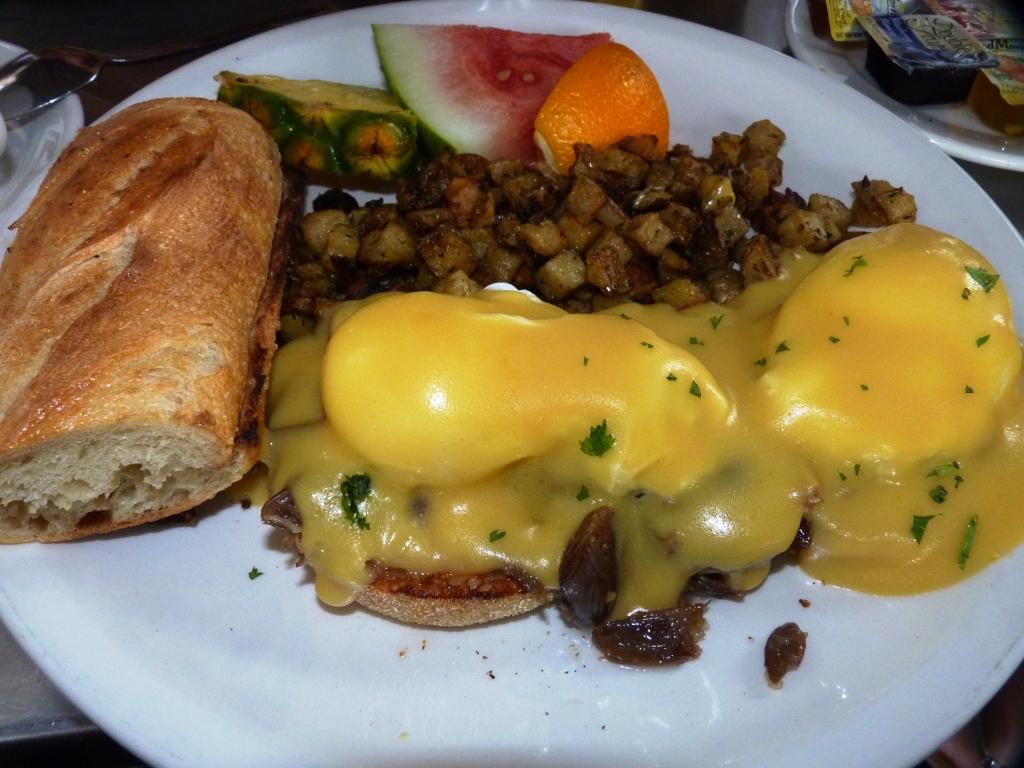
Eggs Benedict with Duck Confit (Eggs Benedict tasted very good – except for the duck confit which was way too salty and simply made no sense in this dish…):
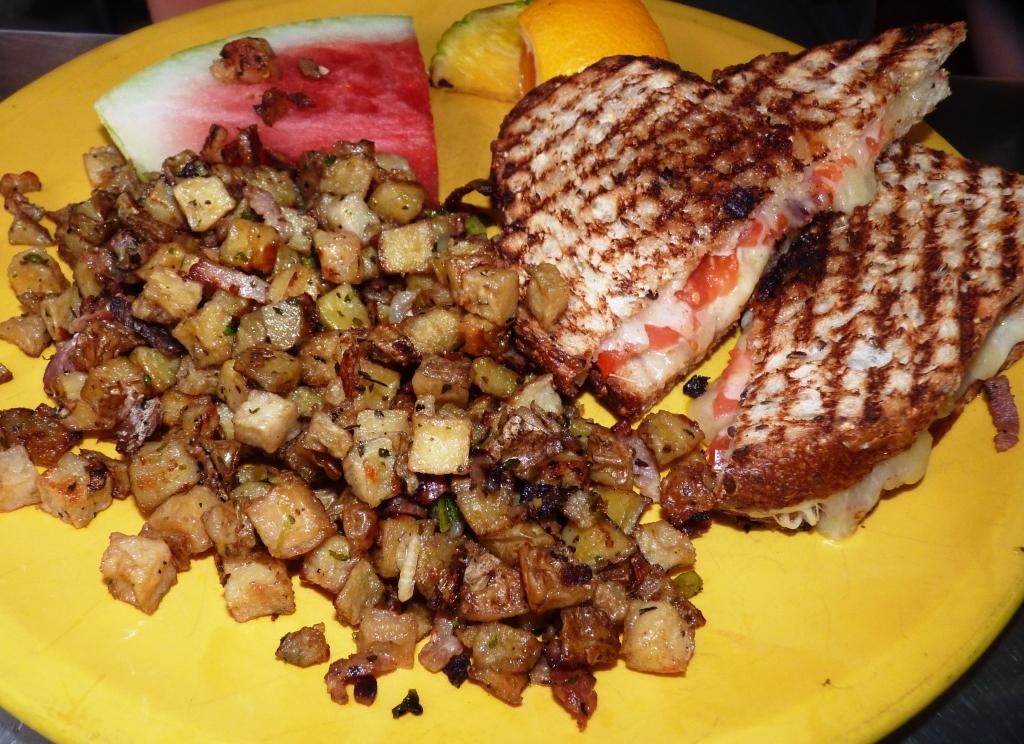
Panini Sandwich:
Le Brigantin Restaurant:
Yes, finally here is the wine – very nice rose LeRose Gabrielle, local Quebec wine:

Of course you can do Pizza any time and anywhere:

Lasagna (phenomenal, amazing array of spices, probably the best Lasagna I ever tasted):

Now, visiting Farmer’s Market in Quebec:
Fresh Berries:
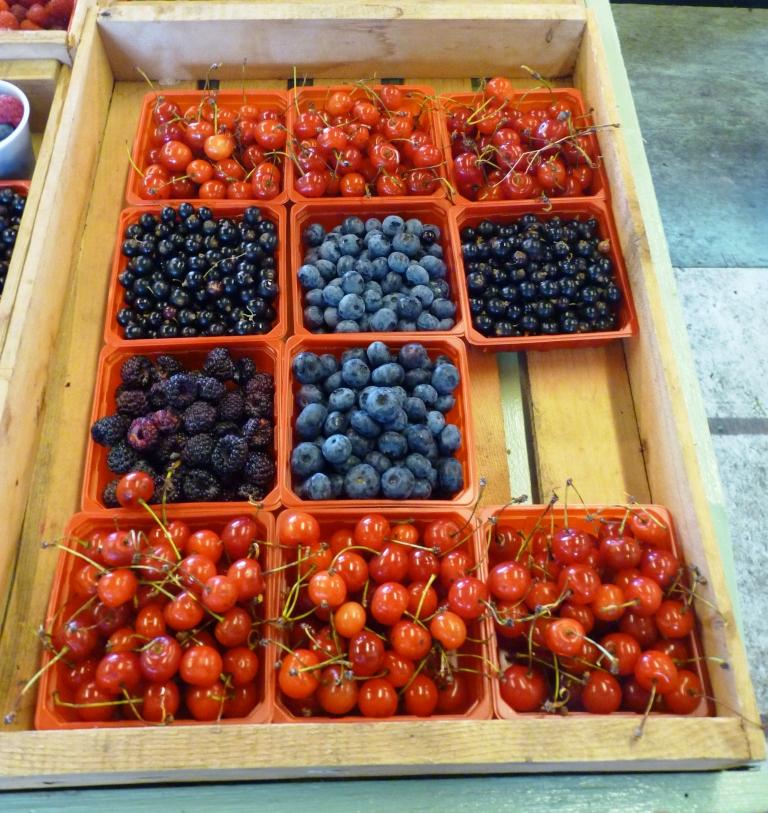
I love Farmer’s Market where you can taste wine! Le Tourelle Vin Rouge (nice and simple):

Le Lapin Saute Restaurant ( the best food experience during the trip, real french cuisine):
Of course wine goes first: L’Angerose Rose wine – very good, full body:
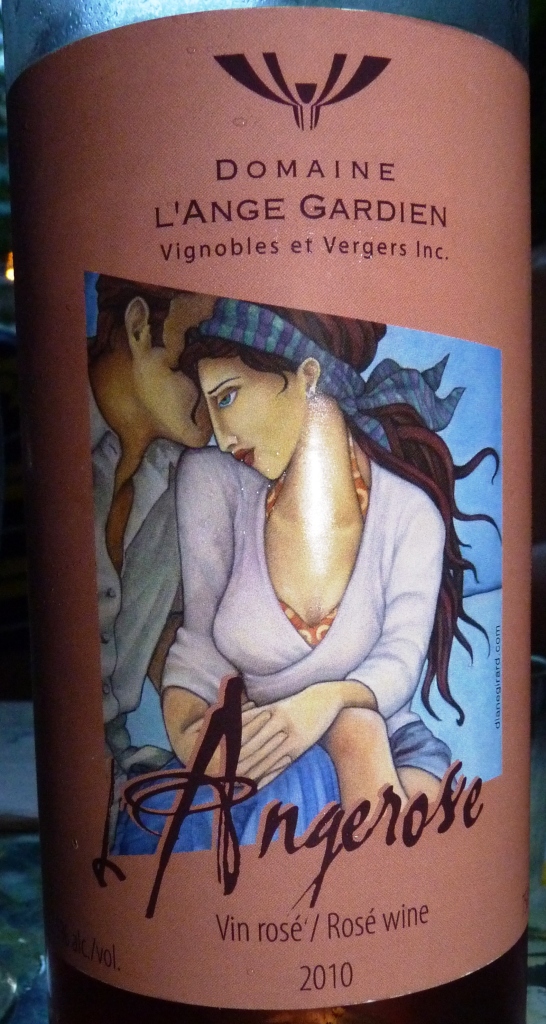
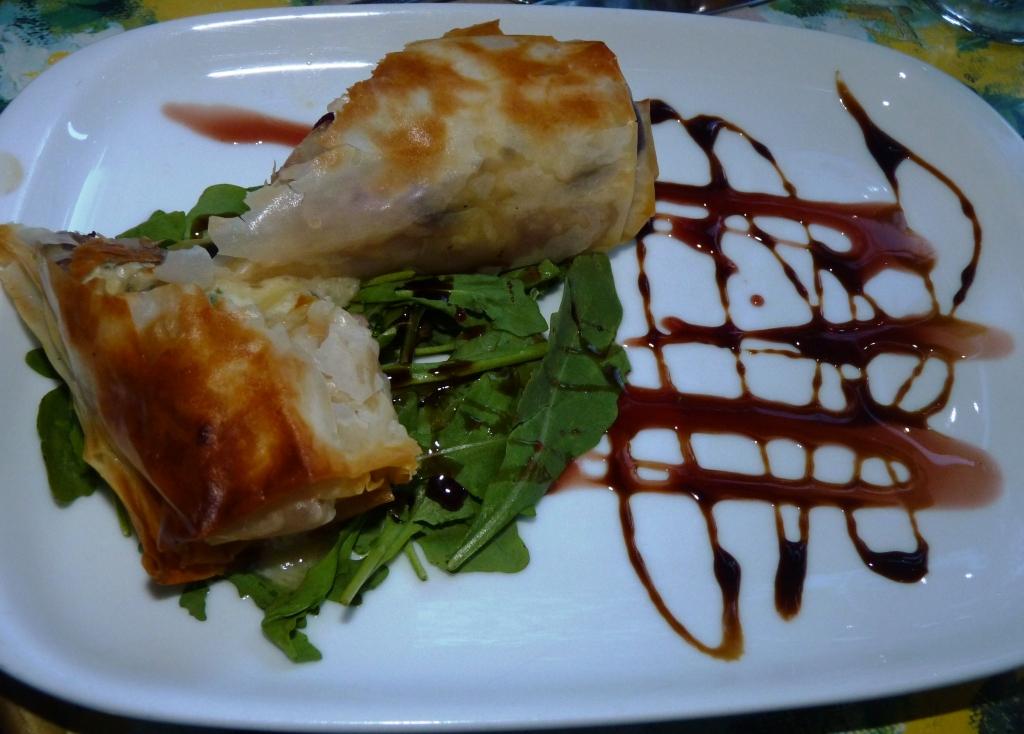
Blue Cheese and Berries Turnover (delicious):
Escargot (unusual style and very tasty):

Rabbit Rilettes:

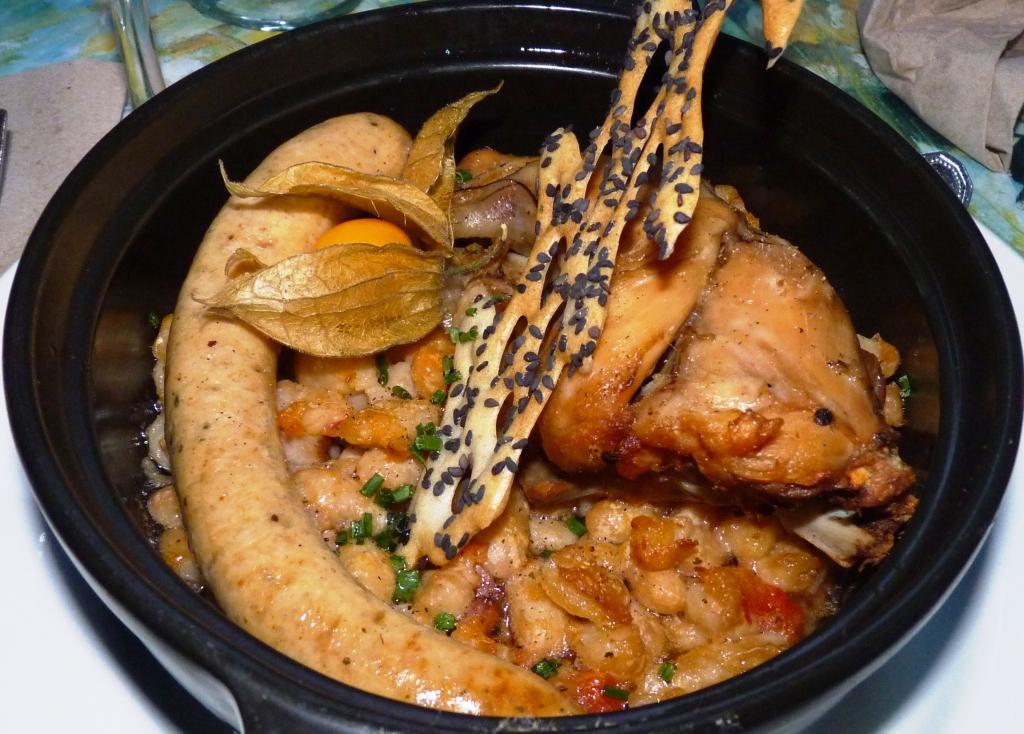
Cassoulet with rabbit leg and rabbit sausage (I’m very impartial to cassoulet and this one was excellent)
That concludes our food in pictures presentation. There still will be a blog post about Canadian wines, coming out soon. However, I want to mention that during this trip I managed to increase grape count by 5 (of course some are clones, but nevertheless):
St. Croix – 2009 De Lavoie La Tourelle Vin Rouge, Quebec
Radisson(ES 5-17) – 2010 Domaine L’Ange Gardien L’Angerose, Quebec
Sabrevois – 2010 Le Rosé Gabrielle Vignoble de la Rivière-du-Chêne, Quebec
Chardonnay Musque – 2009 Cattail Creek Chardonnay Musqué, VQA Four Mile Creek, Canada
Gamay Droit – 2009 Chateau des Charmes Gamay Noir St. David’s Bench Vineyard, Canada
That’s all, folks. Until the next time – cheers!
What Do You Drink When Weather Is Like This?
This heat is literally paralyzing…

Is there anything to drink besides water?
Here is one possible answer:

So, what do you drink?
Last Bottle Sign Up ($10 credit)




 Talk-A-Vino