Archive
Tango Tours – A Pioneer In Wine and Culinary Tourism
Wine and Travel – aren’t those the best together? Visit new places, try new wines, then more new places and more new wines. I’m sure this is simply a music to the ears of many. Today I want to offer to your attention a guest post by Mark Davis, Managing Partner at Tango Tours – A Luxury Travel Company (www.tango.tours) – the company which can help you realise that dream of having a great time and great wine while travelling the world. And as we are still in the Malbec Month of April, below you will find the Argentinian wine Infographics, courtesy of Tango Tours. Cheers!
Do wines fascinate you or are you yet to explore about this luxurious drink? Tango Tours will make that happen for you. Whether you are planning a private wine tasting tour or looking to indulge in a world-class and an unforgettable culinary experience, this is the right place for you.
Food And Wine Tour– Tango Tours curates food and wine tour to feature the finest restaurants serving local delicacies.
Exclusive Vineyard Tours– You get to explore some of the exclusive vineyard tours featuring wineries that are publicly inaccessible.
Luxury Wine Tours– Enjoy a guided luxury wine tour and taste some of the most exquisite wines of the world.
Deluxe Accommodation– You will be offered deluxe accommodation during your tour so you can sink into the silky soft beds of a luxury five-star hotel after a long and fulfilling day.
Tango Tours covers the most popular wine destinations around the world and the tours include:
Argentina Wine Tours– The itinerary features tasting the Argentinean Malbec, luxury food and wine adventure across Argentina and a visit to the reputable Argentina vineyards, along with discovering the local cuisine and culture.
Napa/Sonoma Tours– The luxury wine tour packages of the Napa and Sonoma valley offer you with a unique wine and culinary experience. From the sprawling vineyards of the region to delectable dishes from the finest restaurants, you get to explore everything.
Chile Tours– The highlights of Chile Tours include deluxe tour packages for wine connoisseurs who wish to explore the best of Chile.
Custom Wine Tours– If you have a specific destination in mind, Tango Tours helps you plan the vacation of your dream. Pick a place of your choice and we will make all the arrangements.
Why Choose Tango Tours?
At Tango Tours, we have an extensive knowledge of wines and food from the famous wine regions of the country. We work closely with some of the best winemakers and restaurateurs in the food and wine industry through which you can access private wineries and prestige vineyards across the region.
All ready to enjoy the fruity Merlots of Chile and Napa/Sonoma Valley or the dark, smoky flavors of the highest-quality Argentine Malbec? Just pack your bags and let us plan it for you and give us a chance to take you on a remarkable food and wine adventure.

Just in: Another Wine Auction From Invaluable
This is a guest post, or may be rather a last minute guest announcement from Invaluable, the company wich runs wine auctions. This is truly a last minute, as the auction starts tomorrow. But – if you got some spare change, you can use it to get that bottle of Pétrus…
Invaluable teaming up with Waddington’s, a fine wine auction house in Canada, over the next week to auction off almost 700 exceptional lots from an international collection. Waddington’s experience in auctioning dates back to 1841. There are three different auctions in the upcoming week: Fine & Rare Wine, Fine Spirits, and Fine wine.
These three auctions by Waddington’s take place on February 25 and the 28th. We’ll be auctioning off nearly 700 wine and rare wines and spirits. Saturday’s auction begins at Toronto’s Nota Bene Restaurant where Chef David Lee will prepare an exquisite three-course lunch before we launch into the auction. This auction is followed by two auctions on the 28th; the first offers fine spirits and the second offers fine wines.


Here are a few noteworthy lots from the upcoming events:
Lot 87: CHÂTEAU PÉTRUS 2009
Estimated Price: $19,900 – $23,100
Quantity: 6, Size: 750ml
Notes: This 100% Merlot has a dense plum/purple color and a sweet nose of mulberries, black cherries, some subtle toast and licorice as well as a floral element. A wine of great intensity, a multidimensional mouthfeel and full-bodied, stunning concentration, the 2009 Petrus is everything one would expect of it.
Lot 1: Armagnac Chateau de Laubade
Estimated Price: $1,100 – $1,300
Quantity: 1, Size: 750ml
Notes: Bottled in 1948, in original wooden box
Lot 76: Screaming Eagle Cabernet Sauvignon
Estimated Price: $7,300 – $8,500
Quantity: 1
Notes: The blend of 88% Cabernet Sauvignon, 10% Merlot, and 2% Cabernet Franc was bottled in 1999. It boasts an opaque purple color along with a gorgeously pure nose of creme de cassis, charcoal, and floral characteristics. The wine is opulent, dense, and rich, with exceptional purity, a viscous texture, and impressive underlying tannin that frames its large but elegant personality.
We have a variety of wine and spirits along with collectibles up for auction daily, so stay up to date with Invaluable; you never know what you’ll find.
Desperately Seeking Saperavi
Saperavi is one of my absolute favorite grapes. It is capable of a wide range of expressions, as well as extended aging, and Saperavi wines often present an unbeatable value compare to any wines in the same or even higher price category. Saperavi is typically associated with the Republic of Georgia, where it is an undisputable star, but it is slowly gaining its enthusiastic following in the other regions. This grape also became a connection point between myself and Rich Rocca, whose passion for the Saperavi is unquestionable, and I’m always looking forward learning from Rich as to what is going on in the world of Saperavi, especially considering his focus on the New World regions. I thought it would be perfectly appropriate to offer pages of this blog for the guest post from Rich, who shares his quest for Saperavi below.
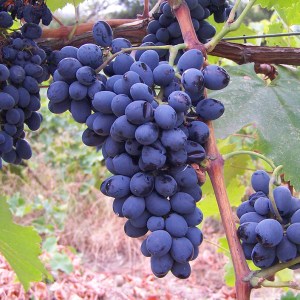
Saperavi Grapes. Source: Marani website
My name is Rich Rocca and I write the wine blog wpawinepirate. I have covered a wide variety of subjects in my posts but the primary objective has always been to provide my readers information about the wineries and vineyards in my home region of Western Pennsylvania. The Finger Lakes Wine Region of New York (FLX) has also been of great interest to me. I have made numerous trips to the FLX and it was during these visits I discovered Saperavi. Anatoli and I became friends after we began exchanging our thoughts concerning the state of Saperavi in America and even Saperavi wine itself. Those years of accessing the progress of this grape eventually lead to Anatoli’s gracious invitation to write a guest post on his blog which I eagerly accepted. Saperavi has always been a “Secret Handshake” type of wine that you either knew about or you didn’t. Here’s your chance to get into the club but unlike in the past don’t keep it to yourself and spread the word about this rising star.
The vintners of the Northeastern United States have long searched for a red wine grape that could be their signature grape. Over the years several have been on the cusp of becoming the iconic red wine grape that would be identified with the region for producing world-class red wine. Vintages of Lemberger and Cabernet Franc have produced stellar wines that can hold their own with other regions but just couldn’t elbow their way through a crowded field of reds for the attention of the wine drinkers of the Eastern U.S. and beyond. The fact that you are reading this post proves that you have a curiosity about something new in a world full of wine that can be overwhelming at times. The following is a summary of information I have gathered over the years about this intriguing grape from the winemakers and vineyard managers who know it best.
Saperavi is an ancient grape that can trace its origin to the Kakheti Region of Georgia and the surrounding regions as far back as 6000 B.C. Saperavi is a teinturier-type grape, which means it has a dark skin and a pink-tinted flesh. A teinturier variety of grape will produce an intensely colored juice when crushed because both the skin and flesh contain the water-soluble pigment anthocyanin which is responsible for giving fruits and vegetables their red, blue and purple color. Saperavi is a very adaptable loose bunch, late-ripening, cool climate grape variety that can produce large yields without sacrificing much in the quality of the fruit. These vines are able to thrive in cool climate regions even at high altitudes because they have above average resistance to cold temperatures. A more cold/frost tolerant hybrid called Saperavi Severny has been developed by incorporating genes from the hardy Severny grape. Traditionally Saperavi wine has been blended with lesser wines but recently it has been gaining popularity as a varietal bottling. A common translation of Saperavi is “dye” because it makes an extremely dark colored wine. Saperavi wine is known for having good acidity and firm but not overwhelming tannins. It is these attributes that make it a wine that takes well to aging with some examples being found to have aged nicely for fifty years. Georgia recently has had political problems with its neighbors over the export of wine, notably Saperavi, but that is a blessing in disguise because it is diverting more wine to the world market.
When talking about Saperavi I can’t contain my excitement and expectations for the wine being grown and made in the United States. I have coined the term “New World Saperavi” for the wine being grown and made by three wineries in the Finger Lakes Wine Region of New York and one in Central Pennsylvania. In the FLX Saperavi is being grown and made at Dr. Konstantin Frank Vinifera Wine Cellar by Fredrick (Fred) Frank, the son of Willy Frank and grandson of Dr. Konstantin Frank, two legendary winemakers. Saperavi winemaking is well established at Standing Stone Vineyards thanks to Martha (Marti) Macinski (owner/winemaker). She is one of the pioneers of Saperavi in the FLX and is making her wine using grapes from her ever expanding Saperavi vineyard, arguably the largest in North America. Anyone familiar with FLX Saperavi knows John McGregor at McGregor Vineyards the maker of McGregor Black Russian Red. This wine is often referred to as “THE” cult wine of the FLX. McGregor Black Russian Red is a unique blend of Saperavi and Sereksiya Charni and is only produced at John’s Keuka Lake winery. The only other producer of Saperavi outside of the FLX is Fero Vineyards and Winery in Lewisburg, Pennsylvania. Chuck Zaleski is the owner/winemaker at Fero and as his award-winning Saperavi vines mature he has been experimenting with different wine making techniques and styles to capitalize on the distinct characteristics this grape exhibits.


Fero isn’t the only winery exploring the possibilities of Saperavi, all three of its counterparts in New York continue to hone in on their particular vision of what Saperavi can be and what styles it can be made into. Their success isn’t going unnoticed as more vineyard managers are planting Saperavi but the addition of newly planted acreage is slow. There are several factors that have hindered the spread of Saperavi not the least of which is the scarcity of the vines themselves. Two eastern wineries that have young Saperavi vineyards are Knapp Winery in the FLX and White Barrel Winery (formerly Attimo) in Christianburg, Virginia. Anyone considering adding Saperavi to their property can start their search at Grafted Grapevine Nursery Clifton Springs, New York, a longtime supplier of Saperavi and other varieties to the wine industry.
“New World Saperavi” can be difficult to find because of the small number of producers and the limited yields from vineyards that are expanding but cannot meet the increasing demand. If you are interested in learning more about the Saperavi producers in the United States I have written an in-depth post about them. The post can be viewed at wpawinepirate.wordpress.com/2015/09/22/new-world-saperavi-report/
The next stop on our search for “New World Saperavi” is Australia. South Australia to be more exact, home to Dan Traucki, wine industry consultant, Director of Wine Assist Pty Ltd, freelance writer and my newest friend in the search for Saperavi wherever it may take me. Through his articles and our correspondences, Dan has given me an insider’s perspective of the current state of Saperavi and other lesser known wines being made in Australia. Australian wine production from its approximately 4000 wineries is dominated by Shiraz and Chardonnay making competition for market share acutely competitive. Fourteen ground-breaking vineyard managers have taken the speculative position of planting Saperavi in their vineyards. The majority of these plantings are in the warm climate of the Barossa Valley and McLaren Vale Regions. Saperavi can also be found in the cool climate of the Alpine Valley Region of Victoria. The cool climate Saperavi produces a slender wine with an angular taste profile while the warm climate renders a wine of muscular body and vivid taste.


I am interested in how Saperavi’s innate ability to express its terroir plays out when it is being planted in such a diverse assortment of locations around the globe. Even though these vineyards are planted in vastly different regions of the world there is a high probability that over the course of time the DNA of other wine grapes has found its way into the DNA of Saperavi as it has with all other “pure” strains of wine grapes. The vines for Australian Saperavi were sourced from the Archival Saperavi of Roseworthy Agricultural College. This noteworthy collection of vines has been amassed from vineyards worldwide over the past 100 years. With this thought in mind, I am sure that Saperavi produced anywhere will display the unmistakable qualities that we associate with it but will also manifest certain location-specific characteristics that will be inevitable because of its genetic tendency to adapt the growing environment.
The history of the “Old World Saperavi” has been well chronicled over the centuries dating back to ancient times. Much of the craftsmanship used to make this wine has change little over time from the way it is fermented and stored in large egg-shaped earthenware vessels called Qvevri to the traditions of the Georgian communities that are as intertwined with this grape as are the Saperavi vines themselves. The story of “New World Saperavi” is still in its early chapters but luckily for us it is being written by skilled winemakers that are fearless visionaries when it comes to the future they see for their wineries. The possibilities surrounding this wine are fascinating and evolving with each new harvest. I am a curious person by nature and have always enjoyed learning about something new and exciting. I invite you to join me on this journey in the pursuit of an ageless red wine grape reinvented in vineyards a world away from its ancestral home by dreamers and risk-takers as full of life as Saperavi itself. I urge you to indulge your inquisitive side and try Saperavi from anywhere in the world. I think you will be surprised and glad you got to taste something a little different.
Thank you to Anatoli for the invitation to be a guest on his blog and the opportunity it provides me to reach so many new readers/friends. I am always interested in news of Saperavi growers and producers anywhere. If you know of any please contact me at email: wpainepirate@gmail.com or follow me on my blog: wpawinepirate.wordpress.com
Twitter: @wpawinepirate
Instagram: rich_wpawinepirate_
Website: wpawinepirate.wixsite.com/wpawinepirateevents/
Feel at Home in the Old Dominion: Luxury B&B’s in Virginia Wine Country
Today I would like to offer to your attention yet another guest post written by Stef Schwalb, Director of PR and Marketing at BnBFinder.com. October is Virginia Wine Month, so just in case you are contemplating a last minute getaway to the “Napa of the South”, you might find information below quite helpful. Note – it is not only about places to stay – the innkeepers also share their favorite wine recommendations. Here we go…
The Old Dominion State is celebrating the 27th year of Virginia Wine Month this October, and the region is definitely on its way up as a desired destination for all wine lovers. With more than 250 wineries participating in the event in one way or another, and the media buzz surrounding the area due to its exquisite scenery and record-breaking sales of 2015, now is the ideal time to check out the Virginia wine. Of course in addition to sipping, you’ll need a place to stay – here is a handful of B&B’s that are great finds in Virginia wine country.

Iris Inn Bed and Breakfast
Iris Inn Bed & Breakfast in Waynesboro, VA is located on 12 wooded acres in the Blue Ridge Mountains. Overlooking the Shenandoah Valley, the inn was designed with comfort in mind. With beautiful mountain views and a woodsy feel, the modern facility features spacious accommodations with expansive outdoor decks; king beds; Wi-Fi; flat-screen HDTVs; DVD players; refrigerators; writing desks; private baths with hairdryers; and cozy sitting areas. A full gourmet breakfast is served in the great room each morning and includes an enticing entrée along with homemade breads, coffee, juice, and fruit. There is also a “bottomless” cookie jar situated on the sideboard and beverages are available at check-in time. Convenient to numerous local attractions, including the Shenandoah Valley, Blue Ridge Parkway, Skyline Drive, Charlottesville, The University of Virginia, Monticello, and several local wineries, Iris Inn is an excellent home base for exploring the region. The inn also offers several wine packages, including Sip & Spa, Sip & Simmer (a cabin dinner), Sip & Slip on Your Boots (hiking), Sip & Saddle (horseback riding), and Sip & Scribble (for aspiring writers). Some wineries located near the inn include King Family Vineyards, Flying Fox Vineyard, and Afton Mountain Vineyard.
Innkeeper Heidi Lanford recommends King Family Vineyard’s blended medium-bodied red, Meritage 2007. “And any vineyard’s Viognier in central VA is excellent,” says Heidi, “as this perfumed white is gaining world acclaim as Virginia signature grape.” One must try a Cabernet Franc, since the grape grows so well in this area, she continues, “we like the Cabernet Franc Reserve from Afton Mountain Vineyard.”

The Inn at Meander Plantation
Situated near Orange, VA in Locust Dale, The Inn at Meander Plantation is a historic B&B located one hour from Washington DC, Fredericksburg, and Charlottesville. The elegantly furnished, pet-friendly accommodations offer triple-sheeted king or queen beds with luxury linens, down comforters, and pillows; large private bathrooms; lavish microfiber bath robes; bottled water; hairdryers; clock radios with CD players and an assorted selection of CDs; Keurig coffeemakers; gas or wood-burning fireplaces; and air conditioning. Each morning, the complimentary breakfast includes a daily entree choice between sweet and savory options, a fresh fruit plate, and muffin or sweet bread. The inn also has a popular restaurant onsite that features a delicious 4-course dinner made from local produce and served strictly with the best of Virginia wines. Since the innkeepers/owners Suzie Blanchard and Suzanne Thomas work so closely with local wineries, the expansive wine list is quite unique. Guests can also indulge in the Virginia Wine Country Special package as well as tasting coupons for select local wineries. This charming Madison County country inn is just a short drive to Monticello and Montpelier, the celebrated residences of presidents Thomas Jefferson and James Madison (respectively).
Suzanne recommends Gray Ghost Vineyards and Winery in Amissville – “I love their Chardonnay Reserve, Ranger Reserve, and of course, their amazing, award-winning Adieu dessert wine”; Reynard Florence Vineyard in Barboursville – “I’m very fond of their Petit Manseng, an excellent example of this white varietal, which is my personal favorite white wine”; and Ducard Vineyards (in Etlan, located in the northern part of Madison County ) – “I like the Popham Run Red Blend and the C’est Trop, a unique red dessert wine.”
Oaks Victorian Inn Bed and Breakfast
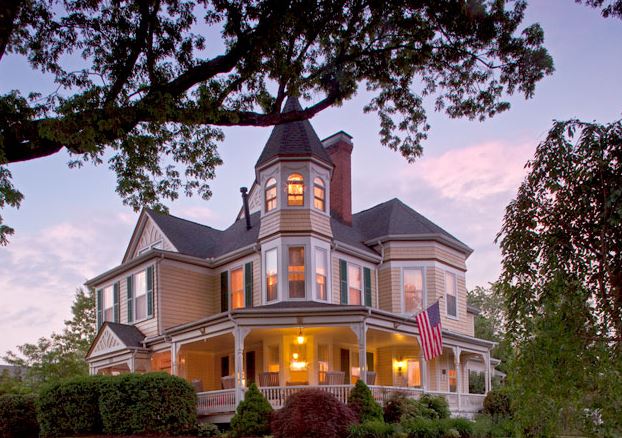
Built in 1889 and listed on the National Register of Historic Places, The Oaks Victorian Inn Bed and Breakfast is at home in the quaint historic town of Christiansburg, VA. This classic Queen Anne Victorian bed and breakfast inn seamlessly combines Victorian elegance with modern day amenities within the backdrop of its stunning surroundings. It features six spacious guestrooms, each comfortably appointed with antique furnishings, private baths, and personal refrigerators with complimentary beverages. Select accommodations feature claw-foot tubs, fireplaces, body showers, and jetted Jacuzzi tubs. There is also a separate facility, The Garden Cottage with gazebo, that has a bathroom complete with sauna and shower, a 400-gallon private hot tub, a microwave, and a refrigerator with complimentary beverages. Guests enjoy downtime in the parlor and library onsite, and they can also relax and take in the scenic landscape on the large wrap-around porch lined with rockers, comfy chairs, and small tables for wine, cheese, and other goodies. The property is highlighted by meticulous landscaping, a fish pond, gorgeous perennial gardens, and oak trees that are more than 300 years old. Just two miles off I-81 in the center of New River Valley near Roanoke, the inn is a quick ride to Blacksburg, Floyd, Roanoke, the Blue Ridge Parkway, and more. The gracious hospitality and unforgettable breakfasts are hallmarks of The Oaks Victorian. With the Virginia is for Wine Lovers Times 2 Package, wine lovers can stay two consecutive nights at the B&B and receive two pairs of tasting passes to the innkeepers’ favorite local wineries – Whitebarrel Winery in Christiansburg and Beliveau Estate Winery in Blacksburg.
At Whitebarrel, the Chambourcin, which used to be called 325 AD, is a favorite of innkeeper Linda Wurtzburger. “And for a white, my favorite is Yesterday’s Song, which is a Chardonnay.”
Towards More Sustainable Viticulture
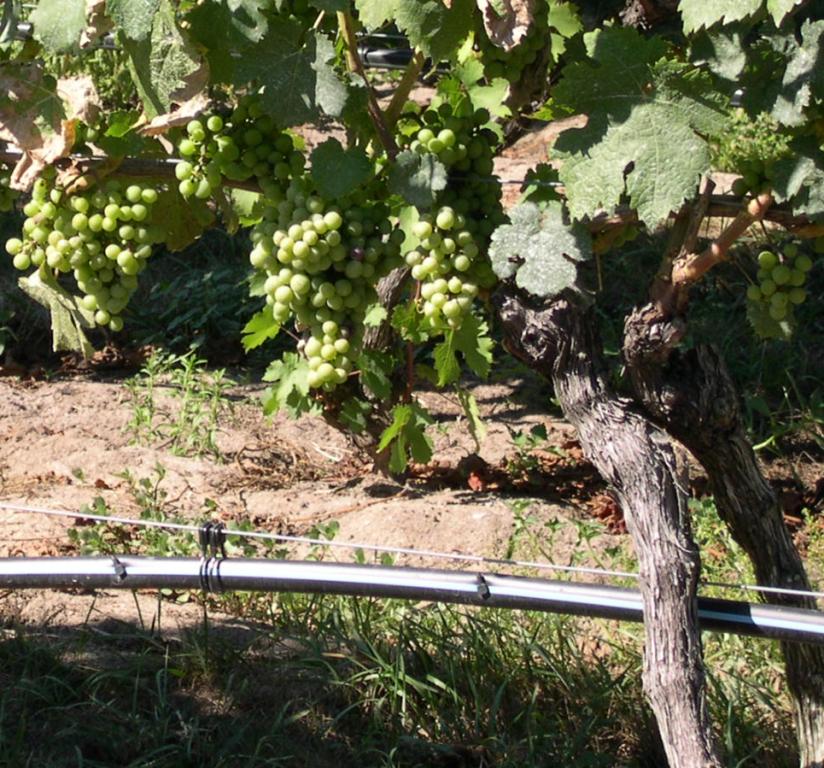 Today I’m offering to your attention a guest post which is a bit unusual for this blog – it is a lot more technical then we usually get here, on the pages of Talk-a-Vino. This blog post is written by Urška Krajnc (email: urska@eviti.co), Business developer of eVineyard, a vineyard management solution (and an App), helping viticulturists to grow better grapes. Hope you will find it interesting. Your comments and questions are definitely encouraged. Enjoy!
Agricultural production is one of the most important economic activities on Earth. The majority of human food originates from land, which must perform over time in a consistent manner and produce huge quantities of output. To meet the demands of the world’s growing population, farmers have to increase crop production and availability of food. This is nowadays achieved through the standardization of crops, genetic changes of plants, growth hormones and excessive use of pesticides. Many argue that changes in agricultural production are not going into the right direction. Therefore initiatives for more economical, environmentally and socially sustainable agriculture have emerged.
An important problem of the agriculture production are pesticides, which have negative impact on human health and environmental pollution. While inappropriate use of pesticides is literally directly threatening human lives in certain (usually less developed) areas of the world, it also counts for many indirect harmful effects on human health, ecosystem changes, etc. Pesticide spraying, for example, has a huge impact on the bee population in the country-side, while bees are the main pollinators of certain species of plants. In certain areas, the bee population has reduced by as impressive amounts as 30%. All this is leading to large environmental imbalances – as the pollination reduces, the flora will not flourish as it should anymore, and soon fauna will follow. And we’re a very part of that, even though we may not see it.
Similar story exists with water organisms, which are being killed by the over-usage of pesticides, drifted from the spray targets to the water flows. Pesticides affect human health also through the residues left in food, that can be toxic to humans. Grapes are believed to be among fruits with the highest level of pesticide residues. Not only in table grapes, but also in wine, several pesticides can be found, especially when the conventional production methods of wine are followed. Therefore in certain regions of the world, more sustainable and environmentally friendly agricultural production methods have developed to a larger extent. Alternative methods for large-scale growing are becoming feasible through the latest technology. The fact is that the food production needs optimization, and research has shown that an optimization can be only achieved if the resources that farmers use, are applied in a knowledgeable way.
Some of the countries are already taking steps towards the reduction of pesticides usage. France, for example, decided to reduce the amount of pesticide spraying by 50% in the time between 2008 and 2018. But even though there are national directives, and common sense leading more and more people to move away from pesticides, there are still situations where spraying is seen as necessary – and maybe in some cases it actually is, in order to avoid larger pollution later on, and to sustain the production that feeds our world today. However, a French winegrower from Burgundy probably wouldn’t agree, and would rather go to jail for a few weeks than to spray his grapevines with a pesticide that would consequently poison his soil for the generations to come. Even more, the first real cases against the corporations providing pesticides, are starting, as some people die of cancer which was clearly the consequence of long-term pesticide usage.
 The fact is that some of the pesticides are originating from military chemicals and the vast majority of them includes synthetically originated chemical compounds, developed to kill certain pests. Even here, the things are changing through the development of the natural fungicides, which don’t harm non-target pests, but work on fungus. Big steps were done also by science in predicting the disease outbreaks according to the environmental conditions, and using those predictions to spray selectively in order to prevent the diseases at the optimal time, instead of routine spraying. This scientific research is nowadays manifesting in practice through cost-effective solutions, based on sensors and data about the weather, and is targeted at the crops which are classically produced with large amounts of pesticides, like grapes.
Several wine producing countries – France, Spain and Italy under the EU agricultural policy, as well as Australia and United States of America, are systematically reducing the use of pesticides on grapevines for the last 15 years. The practical measures are taken to reduce pesticide residues and environmental pollution via usage restrictions of several dangerous pesticides and introduction of Integrated Pest Management approach. This approach has proven to reduce pesticides residues not only in wine, but also in the other agricultural products. Australian winegrowers have reduced the usage of pesticides through the use of technological solutions for strategic spray timing and through the use of more naturally produced pesticides. In the United States of America, the reduction of pollution is achieved through banning of several harmful pesticides and through the introduction of sustainable wine-growing practices, supported with the sensors and information technology, used to optimize other processes, such as irrigation. Similar practices are used throughout the Europe, which has seen a big increase in pesticide use in post World War II time, which is now decreasing.
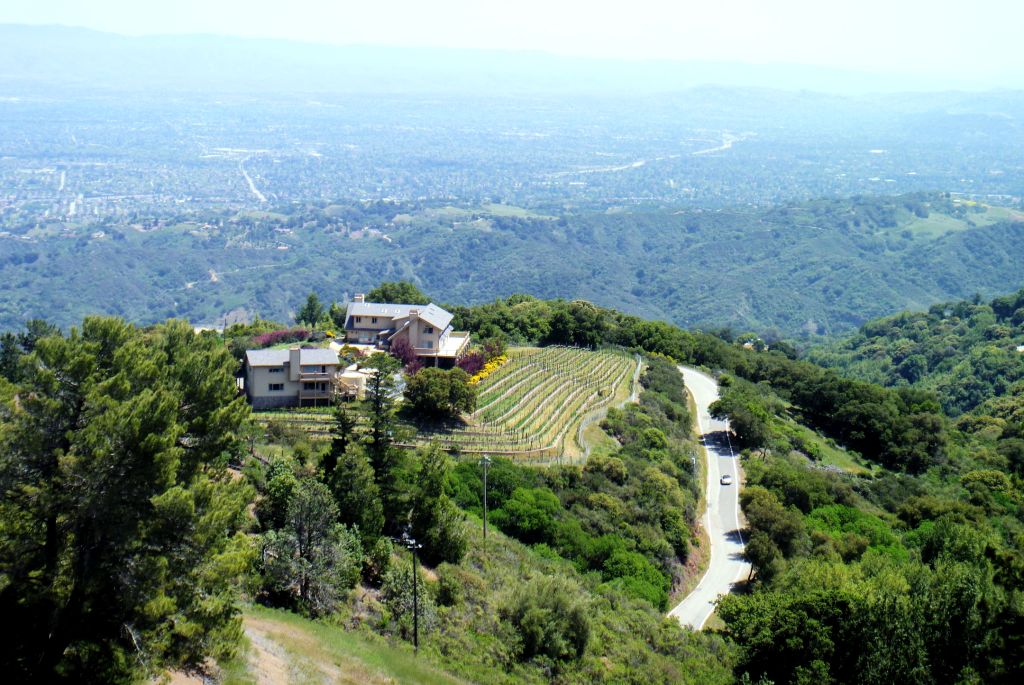
In many European countries, the “Denomination of Origin” policies don’t allow irrigation and some other kinds of terroir manipulation in order to get the “DO” sign. But systems for smarter plant protection are always welcome and are already in place in most of the countries by big growers, with the adoption of technology now being done by smaller growers as well. Some winegrowers around the world went even a step further and applied organic wine production principals, due to the changes in market demands, led by the conscious consumers. In EU, 6.6% of the grape-growing area is treated as organic, from which one third of organic grape-growing area is in Spain. Unfortunately, on the other side of the world, in China, with rapidly growing grape production, a production and usage of pesticides is increasing.
A lot of solutions exist – we can spray very selectively by using sensors and computers that take into account the existent knowledge. We can completely avoid spraying in some cases, and in the other cases, we may use the natural fungicides that don’t harm the organisms, which were not targeted as harmful, like bees. It will take some time for all those solutions to become mainstream, but some parts of the world are already moving in that direction. It’s our, humanity’s, turn, to make healthy and sustainable future a reality. We’re not left with many other options anyway.
Time To Travel: Experience Wine-Friendly Inns
Today I would like to offer to your attention a guest post written by Stef Schwalb, Director of PR and Marketing at BnBFinder.com. I don’t know about you, but I love staying at the Bed and Breakfast Inns when I travel for fun. All those B&Bs offer so much charm and personality, it is totally different and much more relaxing experience compare to any of the major hotel chains. And as this is a wine blog, of course, we will be talking about wine-friendly places. Here we go…
At long last, it’s time for summer travel, and thankfully, there are several destinations where oenophiles will feel right at home. In fact, it may surprise you to know that B&B’s across the country are not only located in several industry hot spots, but many also offer amenities with wine lovers in mind.

Image courtesy of Inn on Lake Granbury & Jumping Rocks Photography
Granbury, TX is located in the heart of the Texas Hill Country, a region that’s increasingly becoming ripe for wine tourism, and Granbury’s Historic Town Square provides travelers with plenty to enjoy, including outdoor activities such as golfing and biking, live theater, concerts, fine dining restaurants, specialty shops, festivals and wine tours. Plus, a visit to the D’Vine Wine of Texas store includes onsite winemaking, daily tastings, and more. All of this is found within a short distance of Inn on Lake Granbury. Situated on three acres of landscaped gardens, this cozy lakefront retreat offers guests unique, upscale accommodations, ranging from elegant rooms and luxurious suites to fully-furnished guest house rentals. Each one features hardwood floors, European decor with Hill Country accents, heated bathroom floors, steam showers, stone fireplaces, outdoor porches and balconies. In the morning, guests can indulge in a five-course breakfast, and in the afternoon, there’s an enticing wine and appetizer hour too. Other amenities include a saltwater pool with waterfall, conference facility, and plenty of personalized services. Romantic walks down the winding pathways to the edge of Lake Granbury, coupled with relaxing on the bluff beneath stunning live oak trees overlooking the lake, make this wine country retreat more than memorable.

Image courtesy of The Inn at Gothic Eves & Jumping Rocks Photography
The Finger Lakes region of New York is fast becoming a go-to destination for wine lovers. Initially known just for its renowned Rieslings, the area continues to expand in varietal offerings as well as things to do for travelers headed to there. Whether it’s fishing in spring, swimming and boating in summer, skiing in winter or foliage tours in the autumn, visitors will find a wine to pair with every season and activity, including the many hiking trails and overlooks to breathtaking waterfalls. Centrally located to the Seneca and Cayuga Lakes’ Wine Trails, Watkins Glen International Race Track, and the Taughannock Falls State Park, The Inn at Gothic Eves in Trumansburg, NY is a great place to take it all in. This historic B&B, built in 1855, features eight luxurious suites, six of which are named after wines including Riesling, Syrah, and Bordeaux. All accommodations come with private baths, fireplaces, fine linens, sitting rooms, wet bars, period furnishings and modern amenities including flat-screen TVs. The plush accommodations perfectly complement the comfort guests enjoy at the onsite spa, complete with hot tubs and massage treatments. It’s an ideal spot for relaxation and revitalization. Each morning breakfast is made from fresh local produce and organic ingredients for a farm-to-table meal. Situated close to Cornell University and Ithaca College, The Inn at Gothic Eves is also a popular destination for families of college students.
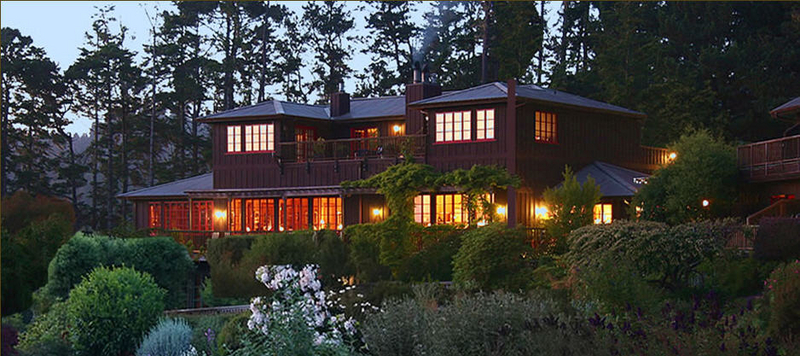
Image courtesy of Stanford Inn by the Sea & Christine Gustafson
Mendocino, CA is a paradise for nature lovers, foodies, and arts and culture enthusiasts alike. Visitors can enjoy outdoor activities in breathtaking scenery, attend a variety of music and arts festivals, and best of all, indulge in culinary adventures including wine and craft beer tastings year-round. There are 100 wineries in the county, so ensuring a good night’s sleep is paramount for the palate. At the pet-friendly Stanford Inn by the Sea, guests stay nestled atop a meadow overlooking the beautiful Mendocino Bay in comfy accommodations that feature wood-burning fireplaces, private baths, and exquisite views. Quality of life is what it’s all about at this eco-resort. Here cyclists and paddlers can find their groove on the Big River and beyond at Canoe & Bicycles too!, while those looking to recharge physically and mentally can head to the Wellness Center for spa services, yoga, gardening and cooking classes, nature tours and more. The inn’s certified organic gardens serve as the primary ingredients for the Ravens’ Restaurant’s exceptional vegetarian cuisine that could easily convert even the most hardcore of carnivores. The menu is also complemented by an award-winning wine list that focuses on the finest selections from Mendocino County. These wines are primarily organic or produced according to traditional methods, without the use of synthetic chemicals, fertilizers, or pesticides. If you find one you like it’s easy to enjoy more since many of the wines are also available for purchase at the inn’s store onsite.
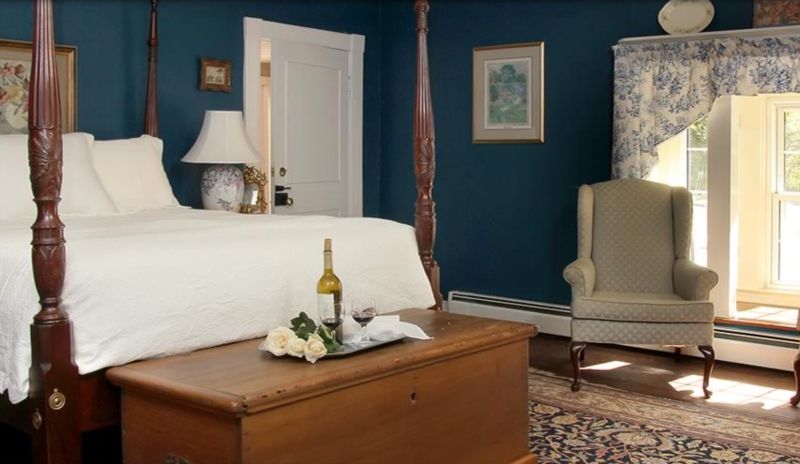
Image courtesy of Prospect Hill Plantation Inn & Wowi Zowi Photography
Charlottesville, VA is for wine lovers, and as the “Napa Valley of the East Coast,” there are numerous vineyards to visit as well as a plethora of activities travelers can enjoy during their stay. History comes alive at historic sites such as Thomas Jefferson’s home at Monticello and the University of Virginia, while the arts and entertainment scene flourishes at downtown marquees that features both local artists and famous names. Outside the city, the scenic countryside provides an idyllic drive over winding hills and low mountains punctuated by exquisite vistas of open space. Hiking and biking trails and kayaking the James or Rivanna attract the active crowd, and nature fans find the appeal of roadside orchards a huge draw during harvest time. Speaking of which, we’d be remiss not to mention the Monticello Wine Trail and area’s award-winning small-batch breweries you’ll find along the Brew Ridge Trail. At the elegant Prospect Hill Plantation Inn, the oldest continually occupied frame manor-house plantation in the state, the Findley Family will provide all the guidance you need to navigate the area – in addition to comfy accommodations that feature private entrances and baths, working fireplaces, air-conditioning, and a full gourmet breakfast in bed. Most rooms also include revitalizing whirlpool tubs. The onsite restaurant features a creative menu, with a distinctly European character that is influenced by the season and the availability of fresh, local, and organic ingredients. Situated on 40 stunning acres, the breathtaking grounds of this authentic 1700’s former wheat plantation are just 15 miles from downtown and within 30 miles of more than 25 boutique wineries.
Last Bottle Sign Up ($10 credit)




 Talk-A-Vino