Archive
Zin Versus Zin Versus Zin
 I was in “zin’s mind” this past Father’s day. I don’t know how did that happened, but when I was thinking what bottle to open for dinner, “how about Zinfandel” thought came over. I had no reason to resist, so Zinfandel was it. And by the way – the title of this post sounds a bit antagonistic – but this is not the idea. I just happened to enjoy recently 3 different Zinfandel wines, hence the wording in the title.
Zinfandel is one of the pretty unique grapes – even if we will count Primitivo as Zinfandel (which technically is incorrect – it is only a very close relative), there are only a handful of places where Zinfandel wines are produced. But – the good news is that California, the primary Zinfandel’s habitat, has no shortage of excellent Zinfandel producers.
If you will take a look at my “Happy Father’s Day” picture, you can see two Zinfandels there – and these are the wines I want to talk about. First, a couple of words about producers. Turley Wine Cellars needs no introduction for any Zinfandel aficionado. Turley produces 28 wines, most of the them are Zinfandel with addition of few Petite Sirah and some others, coming from Napa, Sonoma, Lodi, Paso Robles and other primary areas in California. Turley is a “cult” winery, and while their wines can be found in some of the very select wine stores and restaurants, one really have to be on their mailing list to have more universal access to their wines (Turley was the first mailing list I was accepted onto – give me a second and slice of lemon to extinguish smile on my face).
The second producer is called The Wine Guerrilla. While not as well known as Turley, they also produce a full range of Zinfandel wines from the different areas in California. It is interesting to point out that The Wine Guerrilla is the only producer (to the best of my knowledge), which doesn’t make any other wines but Zinfandel. When your slogan is “The Art And Soul of Zinfandel”, I guess this is rather appropriate.
 I decanted both Turley and Wine Guerrilla Zinfandel for about 2 hours. Yes, I know this is not typical to use a decanter around Zinfandel, but both wineries make wines rather in restrained style, so I really wanted them to open up. First up – 2009 Turley Pesenti Vineyard Zinfandel Paso Robles (16% ABV). Even after two hours of decanting, the most I got on the nose was a hint of blackberries and some dark chocolate notes. The very first sip of the wine said “I’m big”. The first words which come to mind to describe this wine are “dense”, “firm”, “structured”. On the very firm structure the perfect fruit is weaved (hmm, interesting composition of the sentence – not a typical one for me, but I like it : ) ). More blackberries and dark chocolate on the palate, but also an “old world style” minerality was coming through, and then acidity was all in check. The wine is perfectly balanced, with tannins, alcohol, fruit and acidity being all together, in harmony. Drinkability: 8-
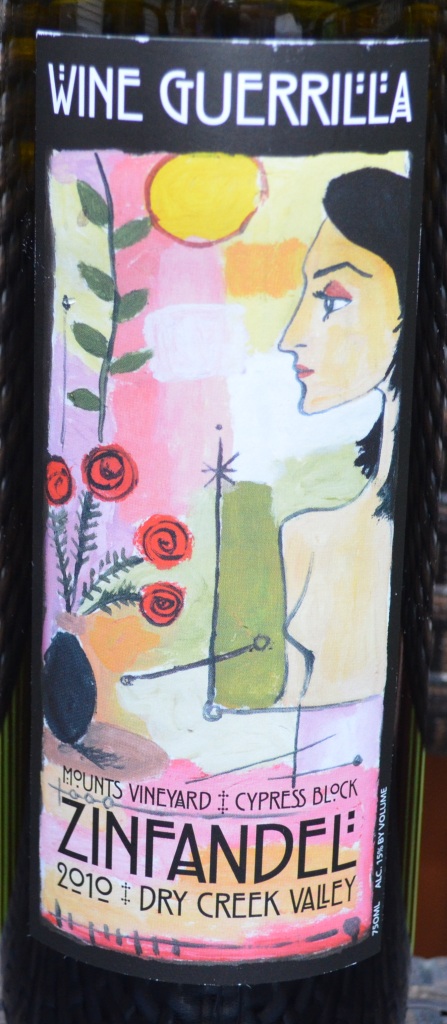 Now, let’s talk about 2010 Wine Guerrilla Mounts Vineyard Cypress Block Zinfandel Dry Creek Valley, Sonoma (15% ABV, 95% Zinfandel, 5% Petite Sirah, 300 cases produced). The wine showed a lot of dark fruit on the nose, mostly blackberries and cherries. On the palate, the wine was not as structurally dense as Turley, but instead it had layers of fruit with very nice luscious texture – ripe blackberries, cherries and dark chocolate, and a hint of eucalyptus. Very good acidity and overall nice and round wine, excellent balance. Drinkability: 8-
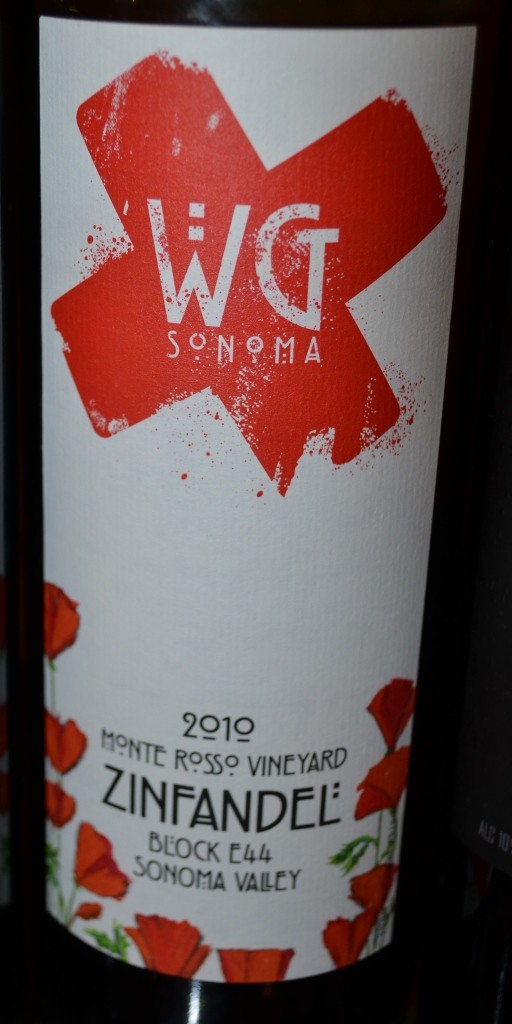
Did you notice a label of another Wine Guerrilla Zinfandel at the beginning of this post? It is there not for the purposes of decoration – it is actually another Wine Guerrilla Zinfandel which I had a week ago. 2010 Wine Guerrilla Monte Rosso Vineyard Block E44 Zinfandel Sonoma Valley (15% ABV, 200 cases produced) was totally unique in its style. To give you an idea, I would call it a Brunello of Zinfandels. After 2+ hours in decanter, the first thing which came to mind after the first sip was “dry”. This wine was soooo dry – uniquely dry for Zinfandel. It was also very herbaceous for the Zinfandel, with lots of dried herbs aromas, such as sage and oregano. It did show some fruit, but in very restrained, dialed back fashion. Definitely the most food friendly Zinfandel I ever tried, very balanced overall. Drinkability: 8
So I have to confess that I have one regret in regards to three wines I presented to you today. One, but big regret – I really want to taste these wines 10 years down the road! No, decanting didn’t do them any justice. These wines have to mature first, and then they will give you an ultimate pleasure. They were great and very enjoyable wines now, but they would become something much much bigger – if I would only have some spares…
Before we part, I want to share a few pictures from the Father’s day. Few weeks ago, my cousin got for me a new charcoal grill which is called “mangal” and it is mostly intended for making a kabob, but of course can be used as generic charcoal grill. Here are few pictures for you – with the warning – it might make you hungry…

Ribs and chicken

just chicken

just ribs
That’s all I have for you for now. Ahh, before I will forget – don’t miss the WTSO Cheapskate Wednesday tomorrow, June 19th. Expected to appear are Benziger Pinot Noir, Rioja DOC Crianza, Provenance Merlot, Pomo Nation Cabernet, Expo Cabernet and Edenhall Shiraz, of course in addition to many many other wines. Cheers!
Disclaimer: The Wine Guerrilla wines were provided courtesy of Wine Guerrilla. But of course all opinions are my own.
Wednesday’s Meritage – Wine Quiz Answer, Le Féret, En Premeur Tales, 1WD Giveaway and more
Meritage time!
Let’s start from the answer to the wine quiz #59, Grape Trivia – Zinfandel. In the quiz, you were supposed to answer 5 questions about California’s star grape, Zinfandel. 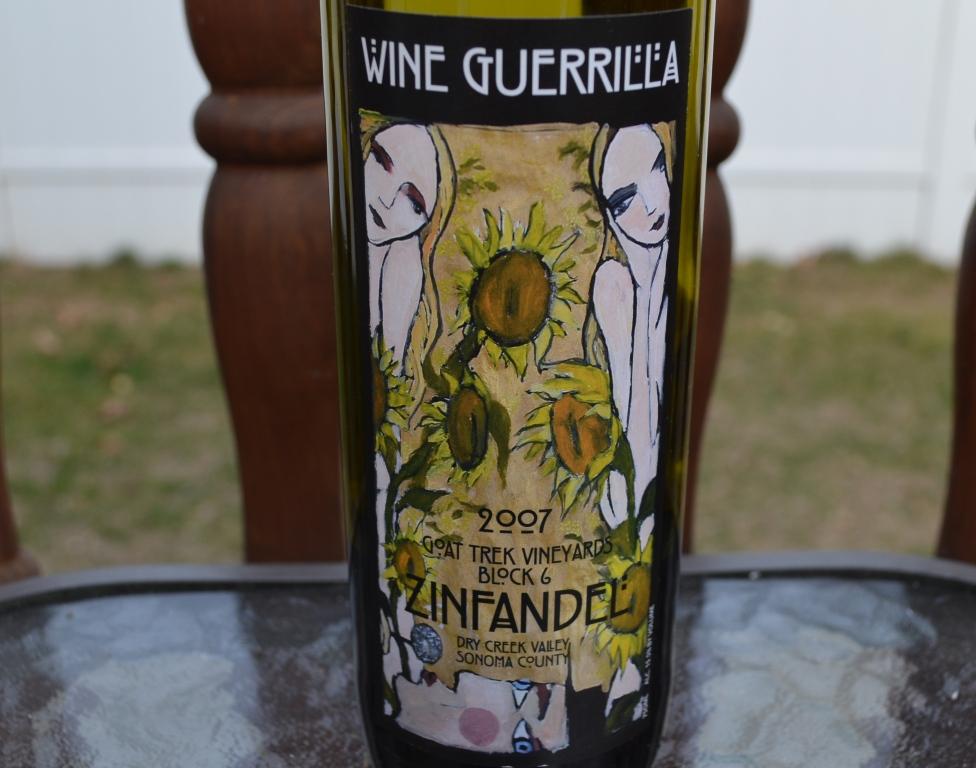
I know many people prefer to answer quizzes in the Google-free form – however, this Zinfandel quiz was somewhat of an exception. Let’s move on to the answers.
Q1: It was established recently that Zinfandel existed in Croatia under a different name, at least from the 15th century. Do you know what was that name?
A1. This was actually a tricky question. People, I mentioned Crljenak Kaštelanski right in the text of the quiz – I was hoping that this would be enough of a hint that this will not be a right answer. If someone will look into Wikipedia, you will be able to find that “After years of research and DNA testing of vines from vineyards across the globe, a single 90 year old grape vine from the garden of an elderly lady in Split, Croatia, provided the evidence to show that Zinfandel was a Croatian grape that has been known as Tribidrag since at least the 15th century.” So the correct answer for the question #1 is Tribidrag.
Q2: While Zinfandel typically listed on the label, very often some other grapes are added to the blend. Name one grape which can be considered a traditional blending partner of Zinfandel
A2: Petite Sirah. Look at the information on many Zinfandel wines, and you will often see at least some percentage of Petit Sirah to be a part of the blend.
Q3: Pink Zinfandel was discovered by accident. Can you explain how that happen, and possibly use the proper winemaking term for the “accident”
A3: Oops, sorry, I should’ve being checking my writing. It is actually White Zinfandel, not Pink, of course – pink is just a color… Anyway, I see that many of you figured out what I meant ( I will still correct the question) – yes, White Zinfandel was discovered as a result of the accident, which is called “stuck fermentation” – all the yeast dies and fermentation stopped before sugar was fully converted into the alcohol.
Q4: Two California winemakers are largely credited with putting red Zinfandel wines on the wine map. Can you name them?
A4: Most of you mentioned only the wineries – and the question was actually about the winemakers. But thedrunkencyclist was correct mentioning Ridge and Ravenswood – Paul Draper of Ridge and Joel Peterson of Ravenswood are largely considered the pioneers of California Zinfandel.
Q5: Most of the well known Zinfandel producers still make other wines from the different grapes. But there is one winery in California ( at least that I know of), which make nothing but Zinfandel wines. Can you name that winery?
A5: Yes, this was a tough question too. Most of the famous Zinfandel producers – Turley, Ravenswood, Rosenbloom, Seghesio, Robert Biale, and so on – are all producing other wines in addition to their great Zinfandels. The only winery I know of which produces Zinfandel and nothing but Zinfandel is Wine Guerilla – it is not for nothing they are calling themselves “An Art and Soul of Zinfandel”. Take a look at their line up – they are currently offering 13 different kinds of Zinfandel – and nothing but Zinfandel.
Summing it up, we don’t have winners this week, and Jeff, a.k.a. thedrunkencyclist gets an honorable mention with 3 correct answers out of 5.
Now, to the interesting stuff around vine and the web!
Have you heard of Editions Féret? I have to admit that I didn’t, not until I read a Wine Spectator article called “The Book that Defined Bordeaux“. It appears that the book, now called Editions Féret, or simply Le Féret, which started exactly 200 years ago as 84 pages travel guide, and had grown to become a 2,296 pages bible, largely defined Bordeaux wines, starting from famous 1855 classification – it was that book which rated the wines simply based on their prices in 1850, which was taken as a foundation of 1855 classification. Read the article, I think it is quite interesting.
According the post on Dr.Vino’s blog, it appears that during En Premeur, a primary Bordeaux event where new vintages are presented, one and the same wine can be “processed ” differently for the different groups of tasters – Americans will get the wine exposed to more of the new oak, and the same wine for the French audience will be finished to have more subtle showing of the fruit. Is it true? I have no idea. But it gets a final product into an interesting perspective – does it mean that one and the same Bordeaux wine can taste differently depending on where you will buy it ( in US or in Europe)? Hmmm…
Do you like giveaways? Of course you do, who doesn’t? So assuming that you do, please go and check this post at 1WineDude web site – if you leave a comment there, you will get a chance to wine one of the 5 memberships in the French Wine Society. I think it is not a bad deal, huh?
Last but not least – mark your calendars for June 19th – and make room in your wine cellars and their equivalents. Yep – WTSO is doing it again! Famous Cheapskate Wednesday is coming into town on June 19th – for more information please visit WTSO web site (you can find link in the “Buying Wine section to your right) or click this link.
That’s all I have for you for today, folks – the glass is empty. But refill is on on its way. Until the next time – cheers!
Weekly Wine Quiz #59: Grape Trivia – Zinfandel
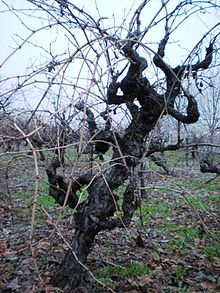
Traditional gnarly look of old Zinfandel vines. Picture from Wikipedia.
And the new weekend is upon us, together with the wine quiz.
We are continuing the grape trivia, and we are continuing exploring the red grapes (let me know if you think it is the time to switch to the whites). Today’s subject is Zinfandel, an American star.
Zinfandel is the black-skinned grape, known as an early ripening variety and capable of accumulating very high levels of sugar – this is one of the reasons why you can often see Zinfandel wines with alcohol by volume levels easily exceeding 15%.
Story of Zinfandel is one of the most fascinating ones compare to many other grapes you can think of – considering the amount of genetic research which went into establishing the origins of Zinfandel, the amount of attention this grape received is pretty mind boggling. After many years of back and force, it is now established that Zinfandel and Primitivo (an Italian grape from Apulia) are two individual clones of Croatian grape called Crljenak Kaštelanski. As The Drunken Cyclist, a regular winner of these quizzes, pointed out in his own quiz a while back, both Zinfandel and Primitivo are considered independent varieties and should be listed as separate varieties on the wine labels of the wines in US.
Another interesting part of the Zinfandel story is that actual powerful and seductive Zinfandel red wines as we know them now, almost became extinct at some point due to the success of sweet and insipid Pink Zinfandel wines (but please pay some respect – Pink Zinfandel still accounts for almost 10% of wine sales in US).
And now, to the quiz! As the subject is very narrow (Zinfandel is not growing all over the world), enlisting Google as your helper is totally fine (not that it was not with any of my quizzes before) – but this is up to you, of course. In any case, even if you can only answer a few questions – please do!
Q1: It was established recently that Zinfandel existed in Croatia under a different name, at least from the 15th century. Do you know what was that name?
Q2: While Zinfandel typically listed on the label, very often some other grapes are added to the blend. Name one grape which can be considered a traditional blending partner of Zinfandel
Q3: White Zinfandel was discovered by accident. Can you explain how that happen, and possibly use the proper winemaking term for the “accident”
Q4: Two California winemakers are largely credited with putting red Zinfandel wines on the wine map. Can you name them?
Q5: Most of the well known Zinfandel producers still make other wines from the different grapes. But there is one winery in California ( at least that I know of), which make nothing but Zinfandel wines. Can you name that winery?
Good luck, enjoy your weekend and cheers!
And Then There Was Zin…
Only yesterday I wrote the post about difficult task of figuring out when the wine is at its peak. And then I opened a bottle of 2007 Zinfandel. Unscrewed the top and poured into the glass. Quick swirl, sniff – and I’m blown away. Pure dried figs. Beautiful. Pure. Clean. Nothing gets in the way. Not overpowering. Just clean and firmly present. May be there were other flavors there – from that moment on, I didn’t look for anything else. It was reincarnation of 1997 Le Ragose Amarone, the magnificent moment I keep re-living on and on.
The first sip brought in the same level of perfection. Dry. Round. Crisp, if you can apply that to the red wine. Dried figs, blueberries, sage, eucalyptus. No fruit jams of any kind. No sweetness at all. Prefect balance and harmony. Yes, this kind of wine makes you emotional and forces you to reflect.
The wine – 2007 Wine Guerrilla Goat Trek Vineyard Block 6 Zinfandel Dry Creek Valley Sonoma County (15.5% ABV). A blend of 87% Zinfandel, 7% Cabernet Franc and 6% Petite Sirah. This wine is made by Wine Guerrilla. And when the have a slogan “Wine Guerrilla – The Art and Soul of Zinfandel”, they are really not kidding. Take a look at their line of Zinfandel wines here.
6 years old wine. Did I manage to hit the peak? I have no idea. Is it possible that the wine would improve further. Quite possible, but this was my last bottle.
Oh yes, and there is a culprit here. The wine I enjoyed so much was a little warmer than the cellar temperature – my wine fridge is set for 55°, so I guess the wine was about 62°-64° when I was drinking it. The next day when I finished the bottle, it was much warmer, probably at about 72° – and while it was good, it was not magical. And the temperature of the wine is literally the last thing I want to deal with instead of just enjoying the wine. Oh well… I’m glad I had this experience in my life. Cheers!
Second Look – Wines of Cameron Hughes
Have you heard of Cameron Hughes? About three years ago, his name was one of the most mentioned in the wine and even general business press. In the 2009-2010, when the US economy was down, he created a business where he managed to take the wines which many wineries had no ability to sell, bottle them under his name and successfully sell – of course at a fraction of the price. Cabernet Sauvignon which winery had no ability to sell for $85, he was successfully selling for $18 – well, I guess you are not surprised. The small caveat was – you could never know what actual wine it was, as all of his dealings were protected under very strong non-disclosure agreements.
Why second look? Back in 2010, I tried some of his wines, and after failing to fall in love 3 or 4 times, I simply decided that I’m done trying. Two days ago, walking into Cost Less Wines in Stamford, I found a line of Cameron Hughes wines being tasted:

Do you think I could pass a free tasting? Even with my preconceived notion of Cameron Hughes wines, a free tasting is a free tasting, right?
Let me pause for a second and ask – do you think I liked any of the wines? Did I like 0, 1, 2, 3 or 4?
Okay, got an opinion? Let’s move on and see if you got it right.
2010 Cameron Hughes Lot 270 Sauvignon Blanc Russian River Valley ($10.99, 13.2% ABV)- from the first smell, this was a perfect beginning – bright, citrusy, fresh on the nose, with the same notion supported on the palate – grapefruit, lemon peel, white apple, perfect acidity – somewhat similar to New Zealand Sauvignon Blanc but more delicately weaved. This wine was close to Honig Sauvignon Blanc or Mara White Grass – but a bit cheaper then either one of those. Here is the link for the full info on Cameron Hughes site. And you probably got the idea that I liked the wine.
2010 Cameron Hughes Lot 314 Chardonnay Atlas Peak Napa Valley ($14.99, 14.2% ABV) – very nice vanilla on the nose, light and not aggressive – continuing with fresh balance of vanilla and white apples on the palate, light touch of oak, very remote hint of butter and may be some addition of papaya – very balanced, and very pleasant. Here is the link. And yes, you are right, I liked that one too.
2009 Cameron Hughes Lot 304 Meritage Napa Valley ($11.99, 14.5% ABV) – this wine is a blend of 64% Cabernet Franc, 23% Merlot, 9% Cabernet Sauvignon, 4% Petite Verdot. Very delicate red fruit aroma on the nose, nothing overboard, no jammy burnt fruit which is often associated with inexpensive California reds. Black currant, mint and eucalyptus on the palate, soft tannins, good acidity, overall very balanced. Yes, that is 3 out of three (and here is the link).
2011 Zin Your Face Zinfandel California ($16.99, 14.4% ABV) – this wine proudly advertizes itself right on the front label as “Spicy Jammy Yummy”. It has all the classic aromas on the nose – blueberries, blueberry pie, blackberries, the same profile is repeated on the palate – but it is too watery, it doesn’t have a supportive body density and power, and as the result appears somewhat sweet. While it is a well made wine, it is not the wine of my style. As the end result, we are staying with 3 out of 4 (here is the link).
As you can see from the notes, you can call me a convert – these are definitely the wines to buy, and they offer an excellent QPR for everyday drinking. I’m glad I stopped by, overcame my predisposition and can now put Cameron Hughes wines into “to drink” category.
If you have your own experience with Cameron Hughes wines or become a convert on something – please share it here.
Until the next time – cheers!
Serious Fun With Wines
In case you are wondering about the “serious fun” versus “not so serious fun”, somehow this title just got stuck in my head when I thought about this post, and I decided not to fight that. Also, when you have Gaja, Ornellaia, Turley, Bertani and whole bunch of other interesting wines, I think “serious fun” is a good way to put it. And to stress even further how serious the fun was, I’m even using different style of pictures for this post instead of usual “just label” style (and yes, you are right, I also use an opportunity to play with my new camera).
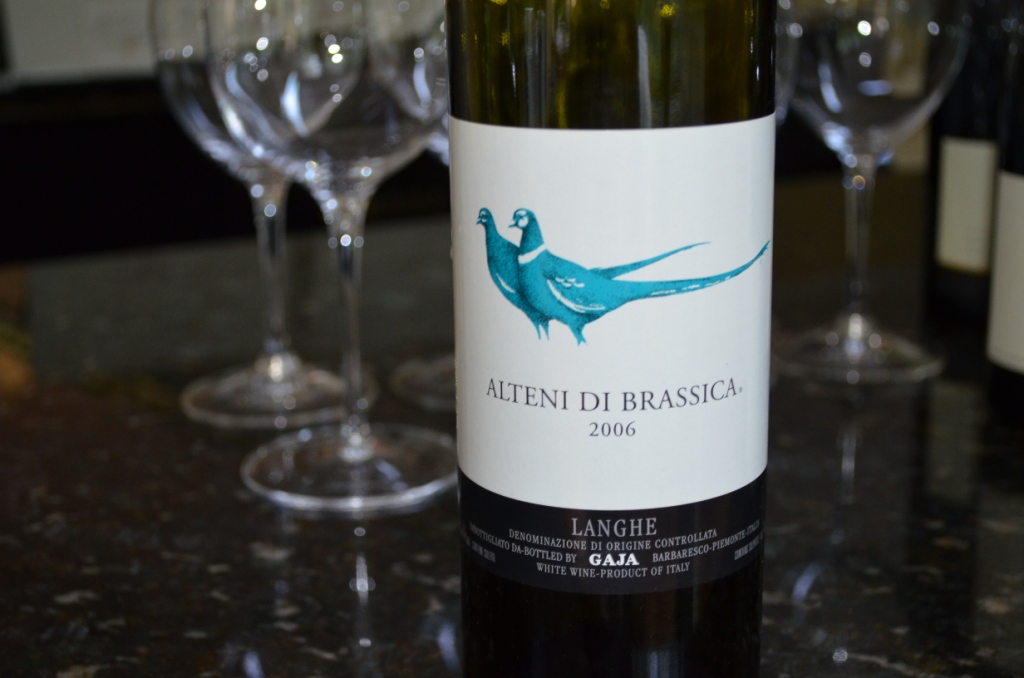
What is your first thought when you see the name like Gaja on the wine list? I don’t know about you, but in majority of the cases I would expect to see a red wine there. Yes, I can think of Gaja Chardonnay, and only because it typically looks at least as an affordable possibility on the wine list, as opposed to the Gaja red wines, which are not. So the wine we had was a white wine made out of …(wait for it)…Sauvignon Blanc!
2006 Gaja Alteni di Brassica Langhe DOC, Italy was a total surprise. Mineral nose, with wet stone, smoke and heavy grass. Touch of white fruit on the palate, more stone, touch of lemon, perfectly balanced. Finish lasted for 3 minutes, if not longer! Very beautiful wine. Drinkability: 9
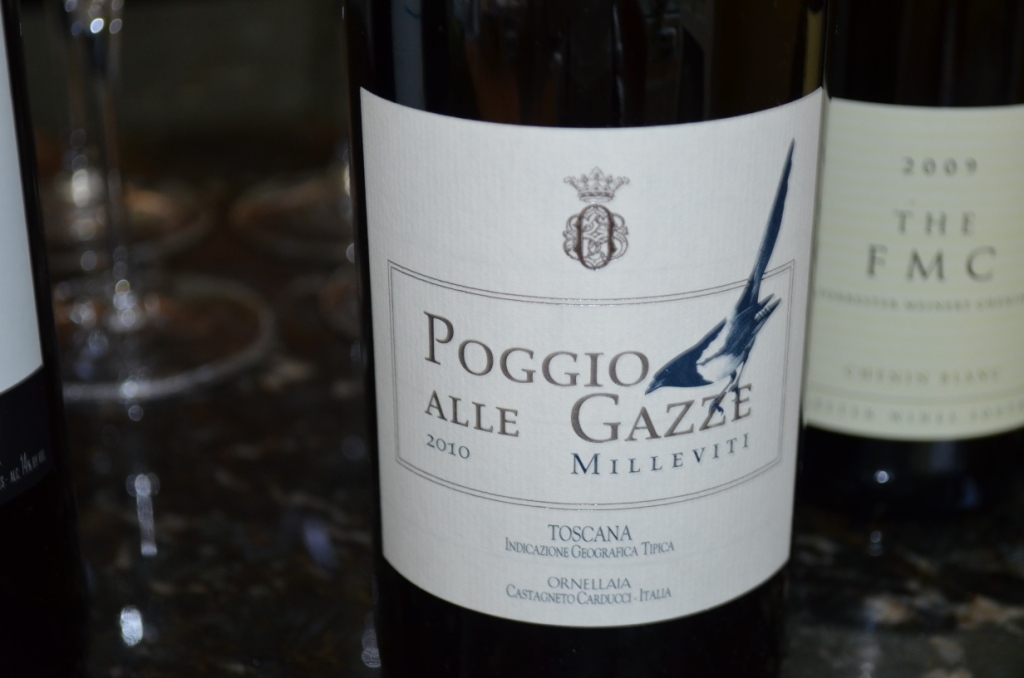
The next wine we had was also coming from a very respectful Italian producer, Tenuta dell’Ornellaia. And the wine was…yes, white again! The grape? Yep, Sauvignon Blanc. 2010 Poggio alle Gazze dell’Ornellaia, Toscana IGT was simply delicious, with perfumed nose of lychees and white apple. Palate was exhibiting nuts and ripe apple. Very long finish with some tropical fruit notes coming in later on. Bright, round, amazing! Drinkability: 9
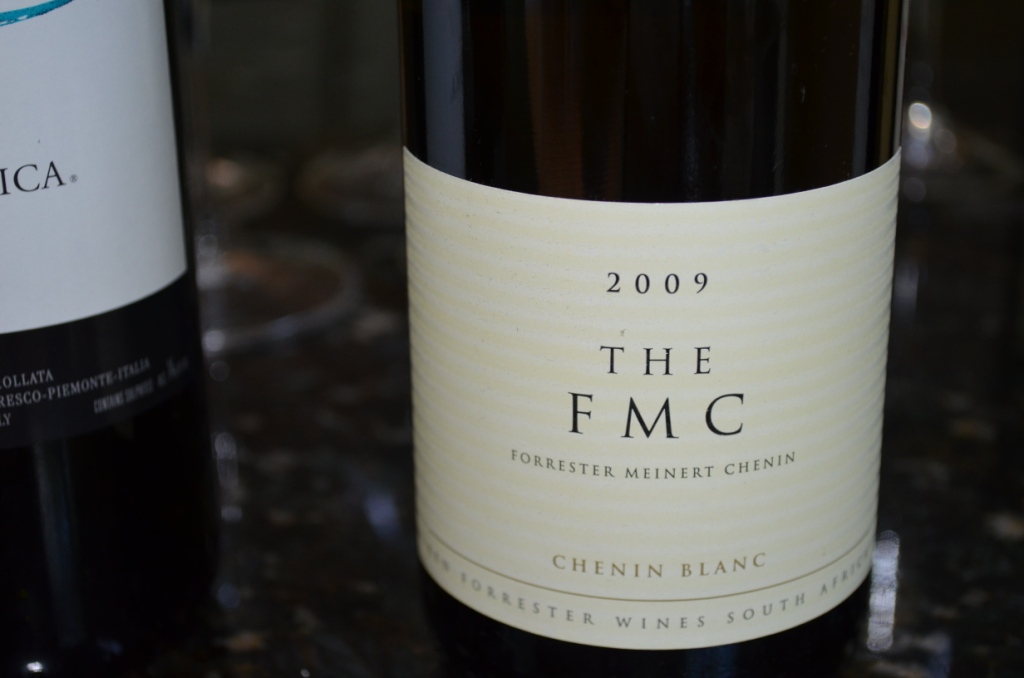
We continued our “whites’ extravaganza” with 2009 Ken Forrester The FMC ( (Forrester Meinert Chenin), South Africa. This wine was made out of the Chenin Blanc grape. While Chenin Blanc is one of the signature white French grapes from Loire, it also makes great wines around the world. It does particularly well in South Africa, where it is also known under the name Steen. This particular The FMC wine is a single vineyard flagship wine of Ken Forrester, one of the oldest producers in South Africa. This wine had a beautiful nose very similar to a typical chardonnay – nutty with some acidity, bright yellow color, very round. Drinkability: 8+

Done with whites. Before switching to the reds, we had a different, very unusual wine – as you can judge from the color above, this wine is not called “Orange” for nothing. Orange wine is one of the latest trends, where skin of the white grapes is left in the contact with juice during maceration. This imparts a nice deep yellow/orange color, hence the name, orange wine. This wine also was not some fly by night experimental plonk. 2008 Marani Satrapezo 10 kvevri, Georgia (100% Rkatsiteli grape, all coming from specific block of the Kondoli vineyard) was made in a traditional Georgian style with maceration for 20-25 days in historical clay vessel called Kvevri.
The wine had beautiful orange color. On the nose it had aromas of a bright fresh apricot. Palate was dry, full bodied, vegetative with enough brightness, touch of apricot but no sweetness whatsoever. After three hours in decanter the wine softened considerably – this wine definitely would benefit from a few years in the cellar. Drinkability: 8
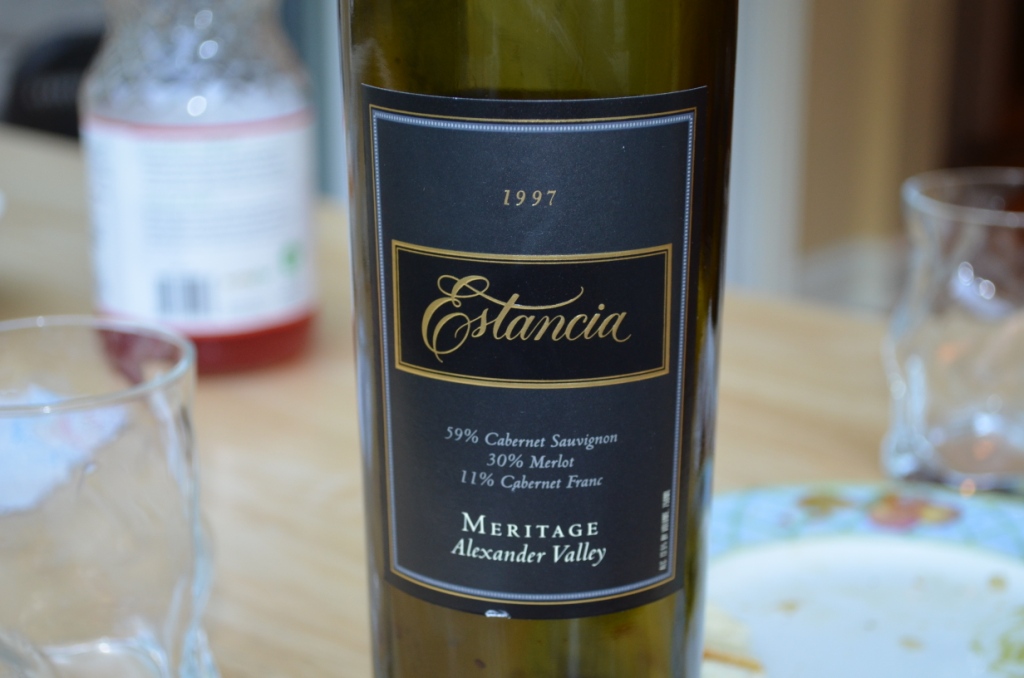 Okay, we are finally switching to reds – with it’s own set of surprises. We started from 1997 Estancia Meritage Alexander Valley (Cabernet Sauvignon/Merlot/Cabernet Franc blend). The wine had perfect color – dark, concentrated ruby red. Eucalyptus, wet stone, dust and raspberries on the nose. Bright red and black fruit on the palate with cassis, eucalyptus and licorice – perfect balance, nice, soft tannins. Drinkability: 8+
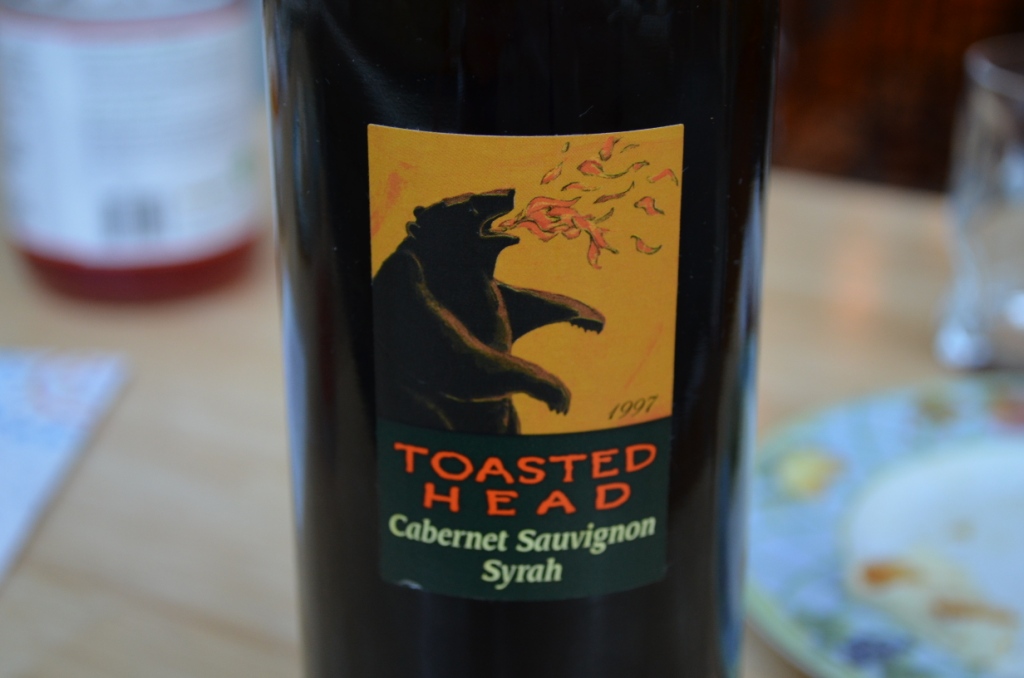 This was probably the biggest surprise of the evening – 1997 Toasted Head Cabernet Sauvignon Syrah California. Generally, Toasted Head makes simple everyday wines – which you generally are not going to age. This wine was simply lost in the cellar, and we opened it to taste but with the full readiness to dump it. To our astonishment (too strong of a word, but – why not), the wine had perfect acidity, bright youthful color, good black fruit, soft tannins and a touch of cassis. Drinkability: 8
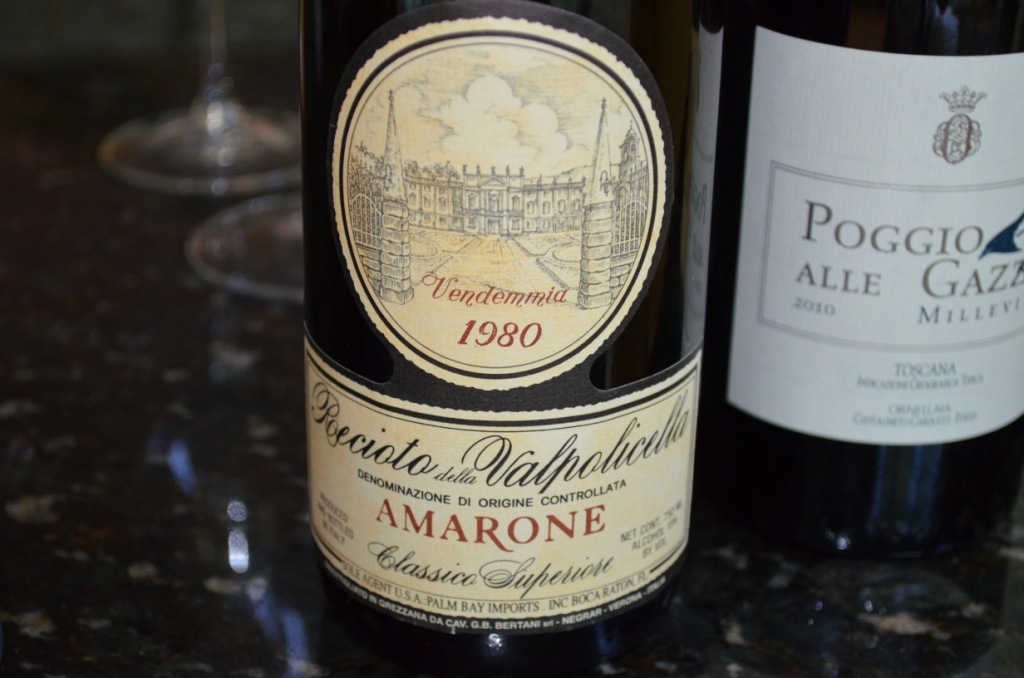
The next wine was Giribaldi Cento Uve – but this will be a subject of a separate post, so I will skip my tasting notes for that wine. And the next wine was the one … we killed – it sounds way too strong, I know – but please read on. Amarone are typically big enough wines, so we decided to decant this wine – without even tasting it first (but the nose was perfect!). This was a [big] mistake. After 3 hours in decanter, the wine became barely drinkable. Another 30 minutes later, the fruit came back, both on the palate and the nose, only to disappear shortly after. Note to self – be careful with decanting. Considering this experience, I will not give this wine any rating – it simply wouldn’t be fair.
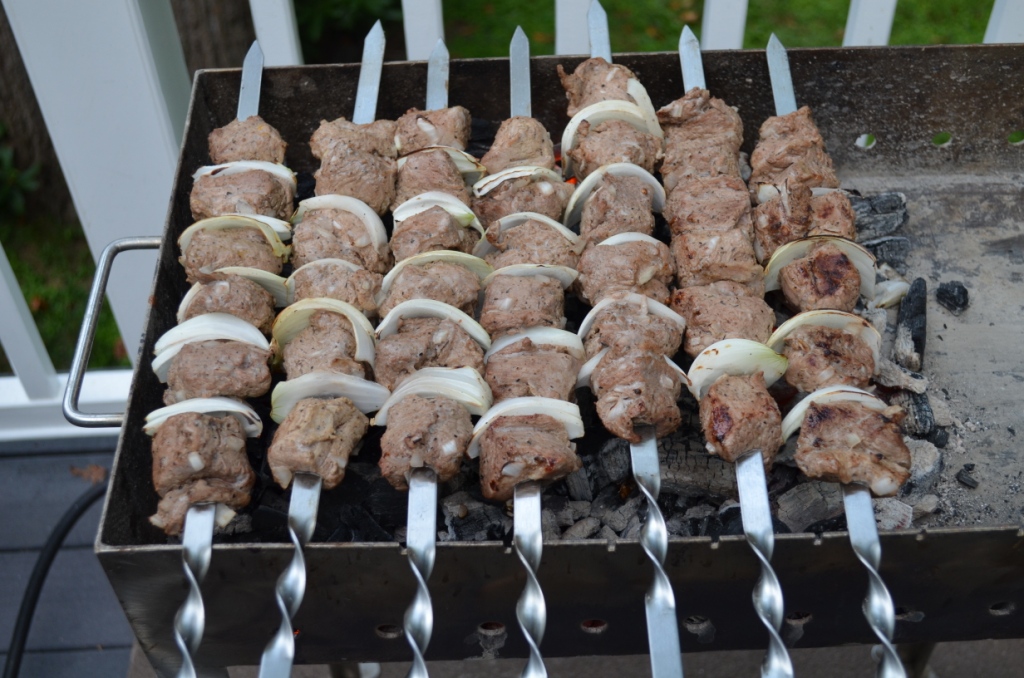
As you might expect, we didn’t just drink – we had a lot of good food as well. Just to give you an example, here is lamb kabob in the process of making:
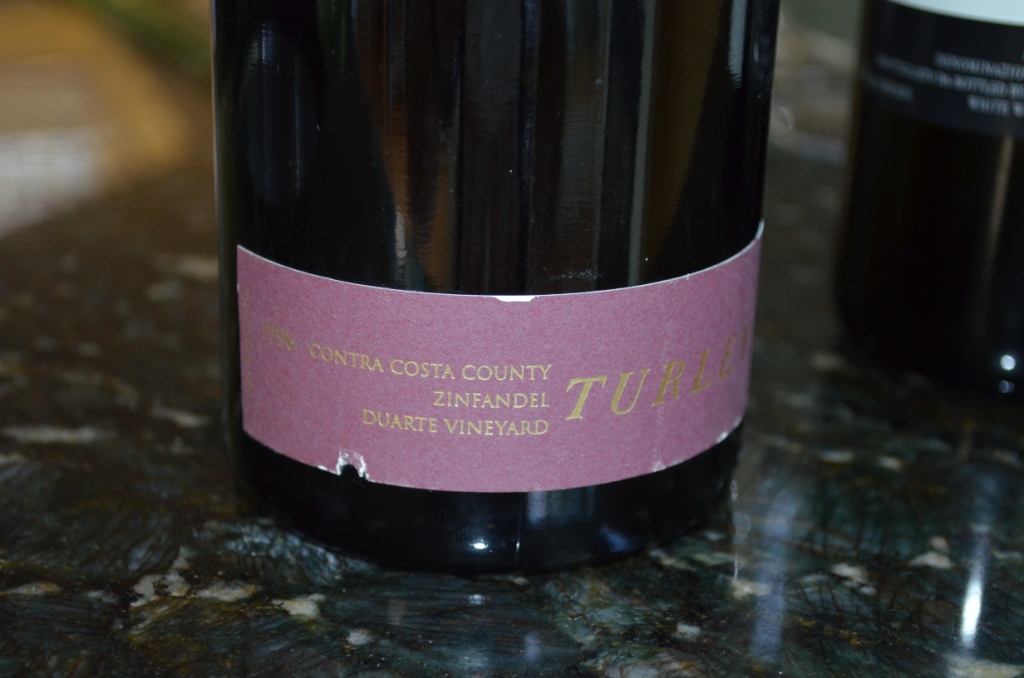
To complement the lamb, we had 1996 Turley Duarte Zinfandel – nice fruit, raspberries on the nose and the palate, hint of jammy fruit later on, plus some eucalyptus. Very good overall balance for the wine at 15.4% ABV. Drinkability: 8-
And then of course there was a dessert – Clafoutis (no further comments, just look at the picture):
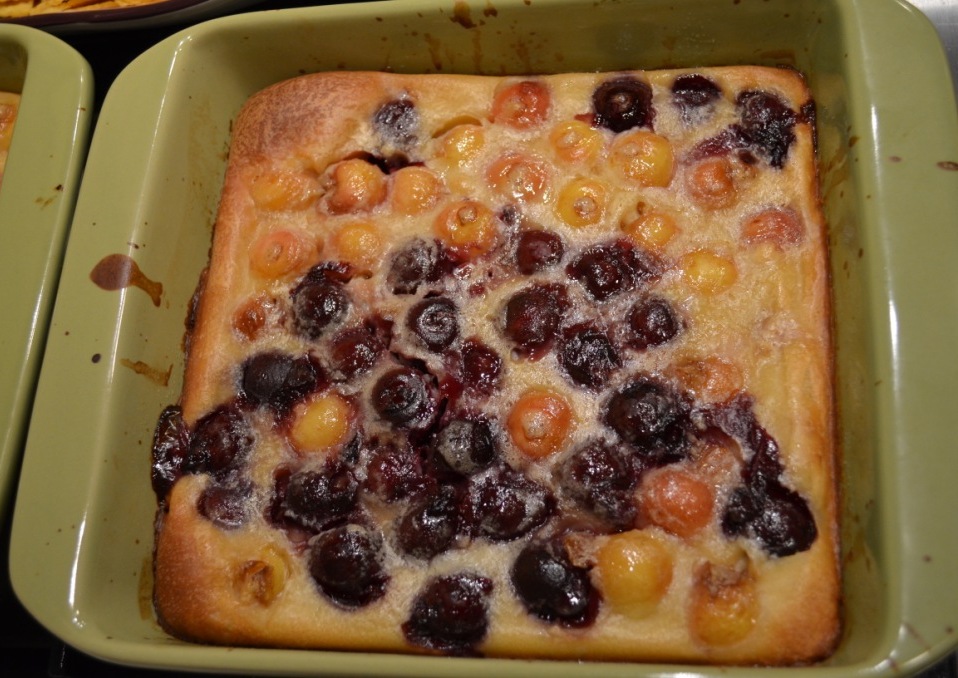
This was definitely a great experience. Pretty rare case when all the wines worked very well and were absolutely delightful – if I can only re-taste that Amarone… Well, may be one day. Wishing you great wine experiences! Cheers!
Valentine’s Day Food and Wine Experiences
 For many years already Valentine’s Day became our “home” holiday. What I mean is that we are not going to the restaurant – instead, we attempt to create the best possible experience at home. This past Valentine’s Day our attempt was quite successful. First, there was a Champagne. Ahh, what so special, say you, a sparkling wine? Well, we don’t drink Krug every day – Krug is our “special” sparkling wine, as both me and my wife fell in love with it 3 years ago, and nothing beat that ever since.
It was Krug Grand Cuvee Brut NV. Beautiful effervescent nose, with only a hint, a whiff of toasted apple, yeast and fresh bread – the same lightness on the palate, with perfect balance of fruit and acidity. Yes, I know, I fail to give you a critic-worthy description with lots of different elements of soil, the fruit and more – so you will need to take my word for it – this is The Champagne. Once you try Krug…well, you will continue to appreciate many other sparkling wines, but Krug will be the one you will crave. And if you care for my rating, I will put Drinkability at 9+.
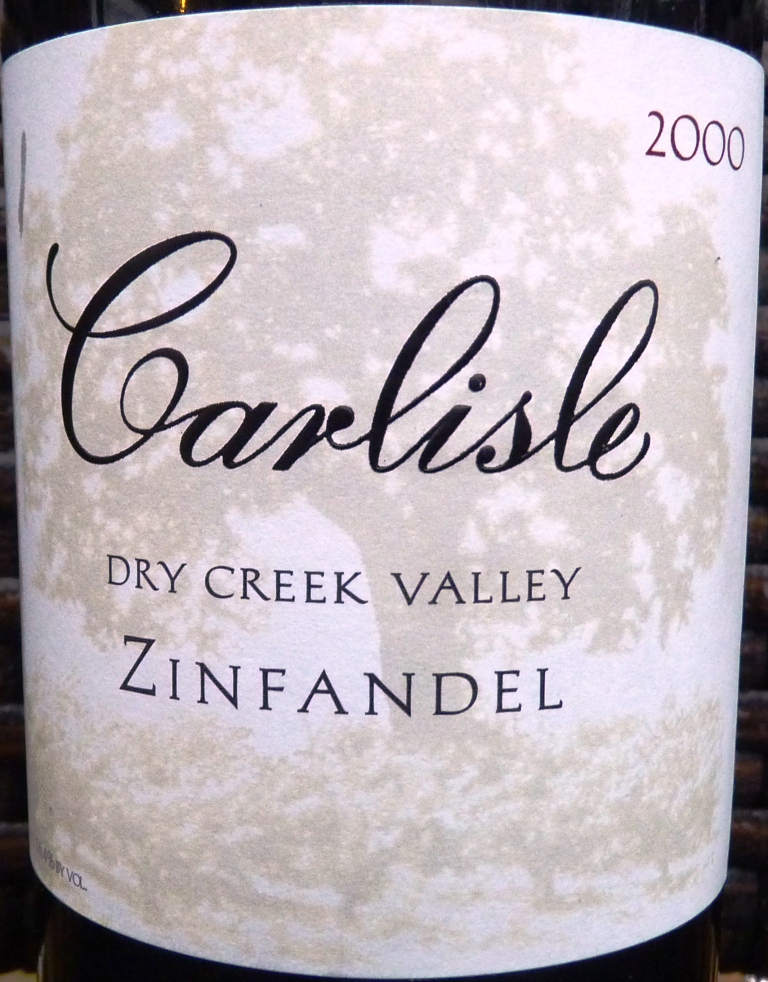 Believe it or not, but Krug was only the beginning of amazing wine experience. The next wine blew me away in many senses. First, it was a realization of a dream. For the long time, I wanted to try Carlisle Zinfandel – consistently high ratings in Wine Spectator, great reviews – many factors contributed into making Carlisle Zinfandel an object of desire. I signed up for the waiting list for the mailing list, I asked around – all to no avail. Then a few month ago I saw a bottle on the Benchmark Wine Company’s web site, priced at about $30 – voila, I got the bottle. Now I just needed special occasion.
Special occasions are easy, right? Valentine’s Day is special enough for us, so the bottle of 2000 Carlisle Zinfandel Dry Creek Valley was opened. The description? One word – “wow”. Beautiful nose of red fruit and smoke (raspberries and blueberries plus a hint of smokiness, to be more precise). Perfect balance of fruit, tannins and acidity on the palate – more playful fruit, eucalyptus, cedar box, spices, tobacco – all components are playing together to deliver an amazing experience.
Here is one interesting note for you. Carlisle web site has a table which is called Drinkability Chart, which lists all the different wines from the different vintages and ideal drinking window for those wines. According to that chart, optimal drinking window for this particular Zinfandel was 2002 – 2005. Well, what can I tell you? If you got a bottle of Carlisle which you think is undrinkable – send it my way, and I will thank you profusely. And just to show you how much I loved this wine, I have to tell you that this is the first time I put Drinkability of wine at 10-! Here is the link to my ratings page – you can judge for yourself.
As you can see, the wines were great – but there was also food. This year we decided to do a Rack of Lamb. Rack of Lamb is a dish which we typically enjoy in the restaurants (especially in French Canada), but it is not that difficult to make at home (once you overcome the sticker shock of a good rack of lamb).
I need a lot of rosemary with my rack of lamb – and this is what we did. A little bit of fresh pepper, and lots of fresh rosemary – with addition of some fresh sage as well. Here is the rack of lamb ready for the oven:
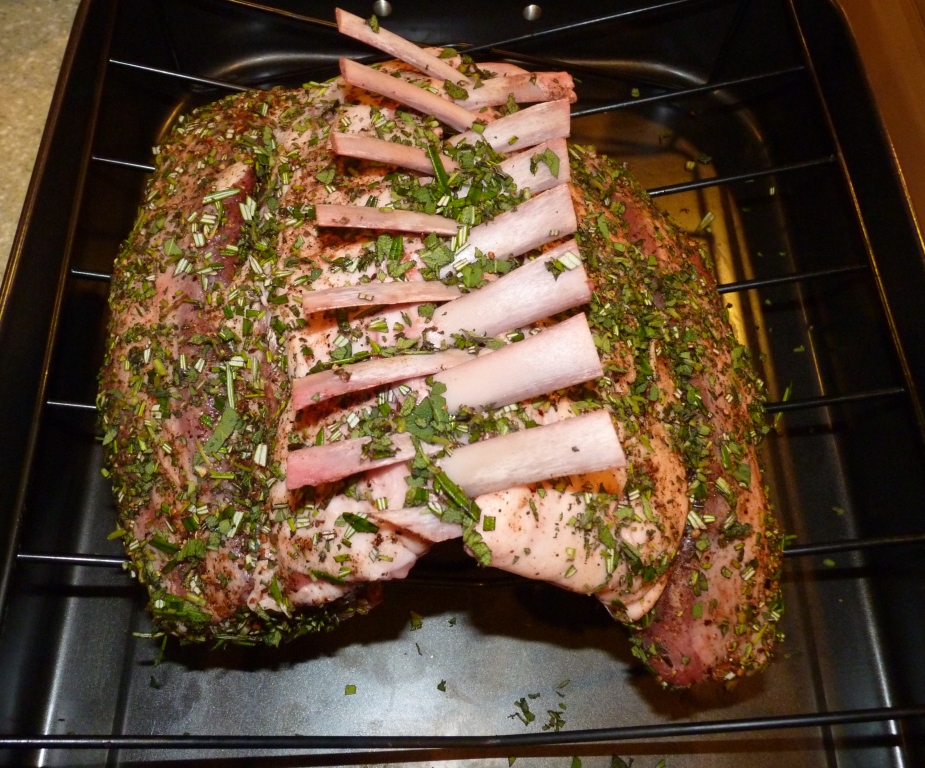
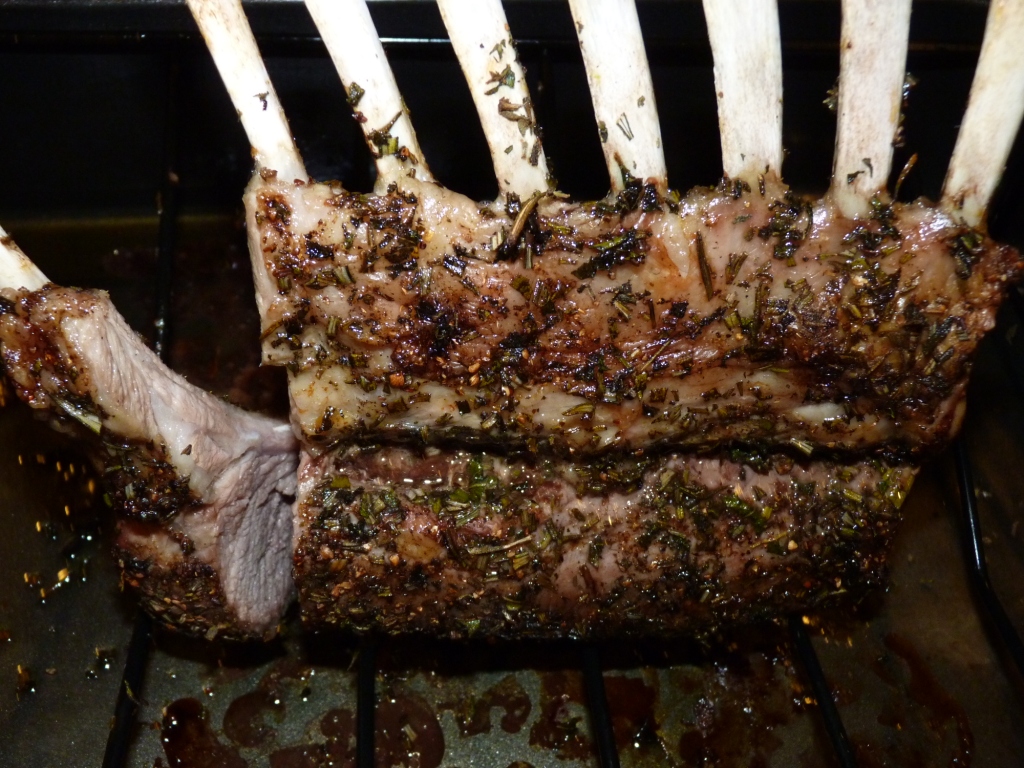
There are couple of techniques which I started using lately when it comes to roasts – and I like the results so far. First one is preheating oven to 500F – temperature is lowered one roast is put in, but it is enough to develop a nice crust. The second one is not using any salt until the roast is done ( so only using finishing salts) – the rationale here is that salt is draining juice out of the meat so it is better to be put on at the last stage. So far I had being very happy with an outcome using these simple rules. After 40 minutes in the oven ( 500F to start, then lowered to 400F), here is the final result:
And here is plated version:

Yes, I know, I should work on presentation – you don’t have to tell me that. But the taste was great, and lamb also paired quite well with the Carlisle Zinfandel – to double the pleasure!
That’s all, folks, for our wonderful Valentine’s Day food and wine experience. It will be hard to beat it next year, so I can only wish tat the next year will be not any worse than this year.
Cheers!
Last Bottle Sign Up ($10 credit)




 Talk-A-Vino