Archive
Deceptive Simplicity: Masciarelli Linea Classica
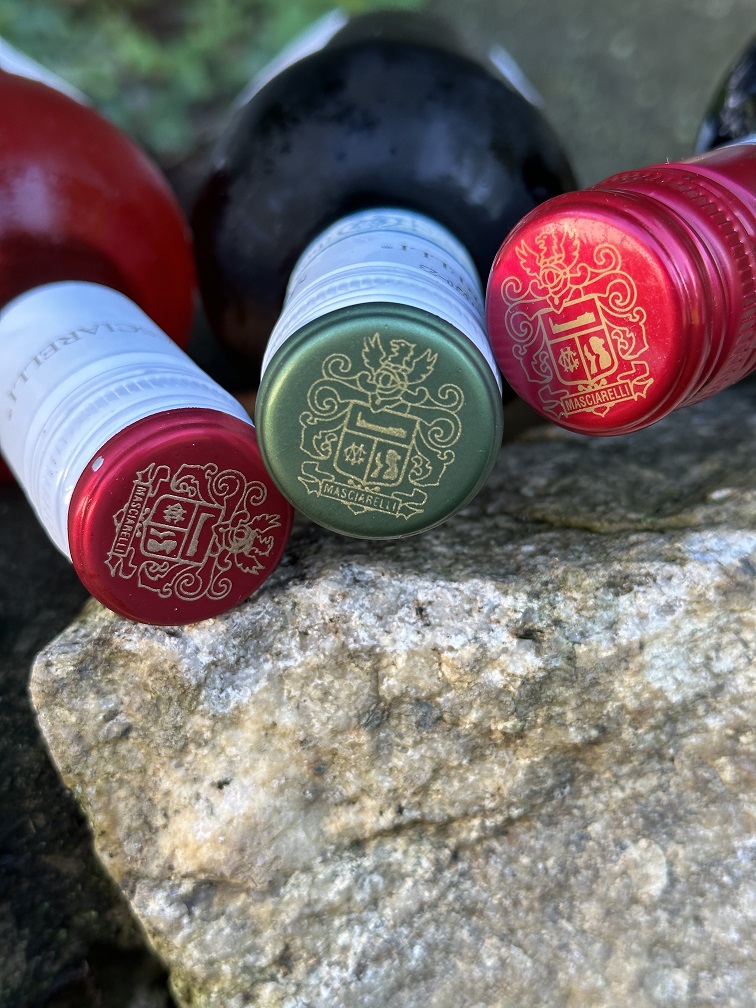 Simple is an interesting word to use around food and wine – there is a lot of dependency on the context.
I love simple recipes – one of my favorite recipes for sauteed eggplant has only 5 ingredients in it, takes 30 minutes to make and the result is consistently delicious. Air-fried salmon bites take less than a minute to prep, consist of only salmon and seasoning, and again, are consistently delicious. Near East couscous takes 5 minutes to make – and it is a perfect side dish every time it is made. When it comes to food, “simple” usually is a good word.
Calling the wine simple requires clarifications, it requires real context. “Simple wine” often means inexpensive, and this is a good thing – as long as the wine tastes good, as long as wine gives you pleasure “simple/inexpensive” is a good word (nobody likes “inexpensive” but crappy). Simple can apply to the label and overall packaging. The wine can also taste simple, and here the truth is in the eye of the beholder – many people prefer simpler-tasting wines so they will not interfere with the food. But if someone is craving complex, thought-provoking, multi-layered wine, “simple” is the last descriptor that someone will be happy about. “Simple wine” has a meaning only in the context.
The interesting part of a “simple wine” designation is that once we call the wine simple based on price and appearance, we make assumptions about the taste. Once we say “simple wine”, we are intuned to take it all the way – assuming that this simply looking wine will be also simply tasting wine.
Can simple packaging and a reasonable price hide the wine of a much grander standing than it appears to be? In other words, can simplicity be deceiving? Of course. Let me present my case to you – a classic lineup (Linea Classica) of wines from Tenuta Agricola Masciarelli in Abruzzo Italy.
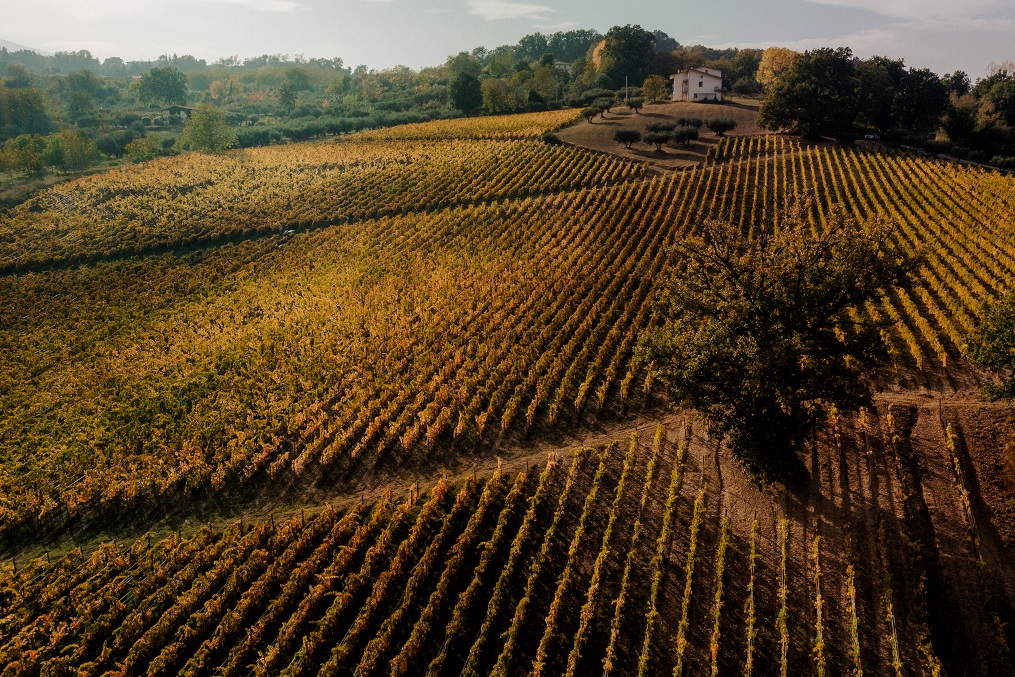
Masciarelli Vineyards. Source: Tenuta Agricola masciarelli
Gianni Masciarelli produced his first vintage of red, white, and Rosé in 1981 from the 5 acres vineyard owned by his grandfather and located near the family house in San Martino in the province of Chieti in Abruzzo. Abruzzo region, located east of Rome along the Adriatic coast is best known for its – here it comes again – simple white and red wines, produced, respectively, from Trebbiano and Montepulciano. From the very beginning, Gianno was convinced that Abruzzo was capable of producing world-class wines. He worked very hard not only in his own winery but pushing forward the whole region. Gianny was the first to introduce a French Guyot training system for the vines and French oak barrels for aging the Montepulciano and Trebbiano wines. By the way, while Trebbiano is a popular white grape that grows all over Italy, Trebbiano Abruzzese is a local ancient Trebbiano clone that is growing only in Abruzzo. Trebbiano Abruzzese has lower yields and produces wines that can age.
Today, Tenuta Agricola Masciarelli is run by Giovanni’s wife, Marina Cvetić, together with their eldest daughter, Miriam Lee Masciarelli. Tenuta Masciarelli is the only winery that owns vineyards in all four provinces in Abruzzo (Chieti, Pescara, Teramo, l’Aquila). The vineyards span 740 acres (300 hectares) and consist of 60 non-adjacent parcels. Masciarelli produces 7 different lines of wines, 4 out of which are exported to the USA. The winery produces about 2.2 million bottles of wine every year that gets exported to 55 countries.
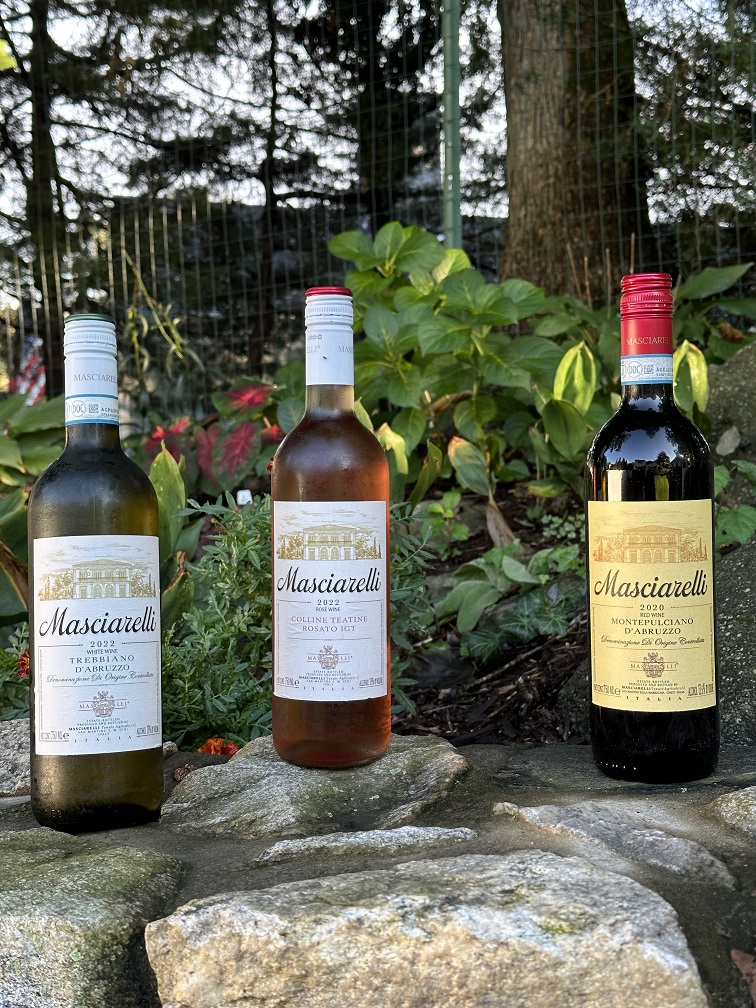 Here are my notes for the Linea Classica wines I had an opportunity to try:
2022 Masciarelli Trebbiano di Abruzzo DOC (13% ABV, $15)
Light golden
Tropical fruit, peach, minerality, medium intensity, inviting
Crisp, fresh, lemon notes, tart minerality, medium long refreshing finish, cleansing acidity, very nice
8-/8
2022 Masciarelli Colline Teatine Rosato IGT (13% ABV, $14)
Beautiful salmon pink
Fresh strawberries on the nose
Strawberries, brilliant fresh strawberries, cranberries, perfect acidity, good mouthfeel presence, crisp and clean finish. Excellent.
8
2020 Masciarelli Montepulciano di Abruzzo DOC (13.5% ABV, $15)
Dark garnet
Earthy, restrained, hint of cherries
Dark tart cherries, succulent, a touch of tobacco, dark, earthy, minerality, good acidity, good balance, medium to full body.
8, excellent
All three wines are unoaked and … yes… simple. At least in their presentation and pricing. But here is the interesting part. You can’t treat them as “simple wines”. Despite being unoaked, all three wines improved on the next day. And the next day. And even the next day. Truth be told, after I just opened and tried the Montepulciano, I was simply upset – the wine was not drinkable. For sure for my palate – green and tart. It became better the next day. And it really blossomed on the third day. In total, I enjoyed this screwtop-capped wine over the 6 days – pouring a glass, twisting the cap back, and leaving it on until the next day on the counter. And the wine kept getting better and better. This is a testament to the quality of this simple wine. And this simple wine can definitely age and it will become better with age. All for under $15.
Simplicity can be deceiving. Don’t take my word for it – try Masciarelli Linea Classica for yourself and let’s compare the notes. Cheers!
Hold The Pizza – I Just Want The Wine: Masciarelli Villa Gemma
At the age of 20, Gianni Masciarelli was helping with the harvest in Champagne. At the age of 26, in 1981, he started making his own wines in the Italian region called Abruzzo. 1984 was the first release of the Villa Gemma Rosso wine, truly a different take on the Montepulciano wines.
Montepulciano is the main grape of Abruzzo (not to be confused with Montepulciano in Tuscany, which is the name of the village where the wines are made from Sangiovese grape). Late in the 20th century, Montepulciano d’Abruzzo became one of the most exported Italian wines – it was dry, it was simple, it was quaffable and, of course, good for pizza.
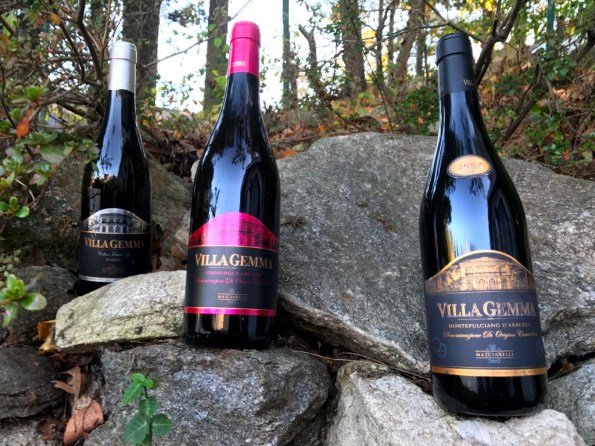
Gianni Masciarelli had his own, pioneer view on how the Montepulciano wines should be made. He introduced the Guyot training system for the vines in Abruzzo. He was the first to start using French oak barrels in the production of Montepulciano d’Abruzzo and Trebbiano d’Abruzzo, showing the world that Montepulciano can go way beyond just a “pizza wine” qualities. Today, Masciarelli estates are run by Marina Cvetic Masciarelli, late wife of Gianni Masciarelli; the vineyards spawn 350 acres and produce about 1.1M bottles of wine across 5 different lines.
Recently, I had an opportunity to taste a few of the wines from the Villa Gemma line, and here are my notes:
2016 Masciarelli Villa Gemma Blanco Colline Teatine IGT (13% ABV, $17.99, 80% Trebbiano d’Abruzzo, 15% Cococciola, 5% Chardonnay)
C: light golden
N: a touch of fresh grass, a hint of white stone fruit, a hint of gunflint, medium intensity
P: crisp, refreshing, crunchy, touch of lemon, slightly underripe peaches, very clean, medium finish
V: 8-, craving food, excellent overall. Trebbiano d’Abruzzo and Cococciola also extended my grape hunting collection
2016 Masciarelli Villa Gemma Cerasuolo D’Abruzzo DOC (13.5% ABV, $14.99, 100% Montepulciano)
C: intense, ripe strawberry pink
N: pure strawberries, fresh, succulent strawberries
P: fresh, tart, restrained, lightweight, clean strawberry profile, good overall balance
V: 8, simply delightful. An excellent Rosé for any time of the year
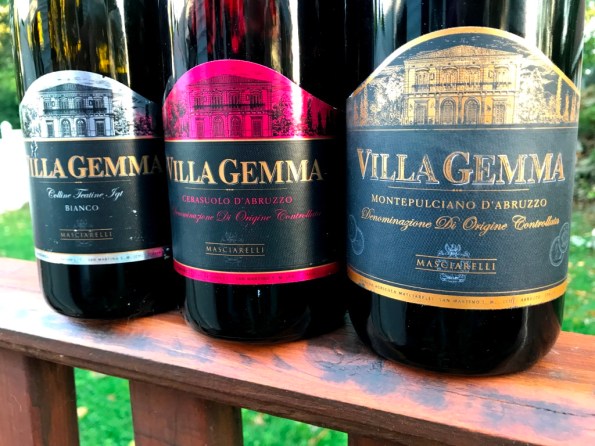
2007 Masciarelli Villa Gemma Montepulciano D’Abruzzo DOC (14.5% ABV, $89.99, 100% Montepulciano, aged 18-24 months in oak barriques, total 36 months))
C: Dark garnet
N: fresh cherries, anis, mint, blackberries
P: soft, generous, round, fresh acidity, touch of leather, cherries and cherry pit, generous tannins on the finish.
V: 8, excellent wine, unmistakably Italian, supremely delicious.
These wines were absolutely delicious in their own right. I seriously don’t know about pizza – you can probably pair anything with pizza, from two buck chuck to the Screaming Eagle and Petrus – but you really don’t have to. These three wines from Masciarelli Villa Gemma would perfectly complement any dinner – appetizers, salads, and mains – these wines pack a serious amount of pleasure. Don’t take my word for it – try them for yourself. The pizza is entirely optional. Cheers!
Wednesday’s Meritage – Wine Quiz Answer, #MWWC3 Vote, Greenwich Food and Wine Festival, [In]decent Wine Labels, and more
 Meritage time!
First, let’s start with the answer for the wine quiz #74, grape trivia – Trebbiano.
In the quiz, you were supposed to answer 5 questions about the white grape called Trebbiano (known in France as Ugni Blanc). Here are the questions, now with the answers:
Q1: Ugni Blanc is a main grape in the production of what famous spirit?
A1: Cognac.
Q2: Name the wine, in which Trebbiano was a required part of the blend, and it was considered to be the reason for a bad, flabby quality of that wine (it is no longer required to be used in that wine).
A2: Chianti. For the long time, Trebbiano was a mandatory part of the Chianti wines, rendering them dull and uninteresting.
Q3: Trebbiano is often a foundation for the popular food product (containing no alcohol). Do you know what food product it is?
A3: Balsamic Vinegar! Yes, of course when you look at the literally a black-colored balsamic vinegar, it is hard to imagine that it is made out of the white grape juice – but all the color comes from the ageing in wood. Trebbiano is a popular choice due to its neutral taste characteristics.
Q4: Contrary to the name, Trebbiano di Lugano is not considered to be a part of the Trebbiano family, but rather related to another Italian grape. Do you know what grape is that?
A4: Verdicchio. Based on genetic analysis, it is established that Trebbiano di Lugano is a close relative of Verdicchio grape from Marche region in Italy.
Q5: When used for the wine production (as opposed to the distilled spirits), Ugni Blanc is rarely used on its own – it is typically a part of the blend. Name 3 grapes, traditional blending partners of Ugni Blanc.
A5: Sauvignon Blanc, Muscadelle, Sémillon. While other combinations are possible, I was looking for classic Bordeaux lineup, which are these three grapes.
Now, when to comes to declaring the winners (or not) of this quiz, the becomes somewhat of a challenge. Both Michael (who has no web site) and Eat with Namie answered first 4 questions correctly, and provided a different answer to the question #5, compare to what I was looking for, but I can’t fully disqualify their answer. So we don’t have an absolute winner this week, but both Michael and Namie get an honorable mention. Well done!
Now, to the interesting stuff around the vine and the web!
First and foremost, 3rd Monthly Wine Writing Challenge (#MWWC3) concluded with 15 entries, taking on a difficult theme “possession”. Now it is your time to chose the host for #MWWC4, a.k.a. The Winner of #MWWC3. Here is the post from Sally, the winner of #MWWC2 and the host of #MWWC3, which summarizes all the entries. Your job is simple: 1. Get glass of wine. 2. Read. 3. Vote. Yes, don’t forget to vote!
Now, if you live in a close proximity of Greenwich , Connecticut, or plan to visit the area, here is the event you don’t want to miss – Greenwich Food and Wine Festival, taking place over 3 days, October 3 – 5. In its third year, the festival brings together more than 90 restaurants and vendors, chefs, musicians, sommeliers. You will find great food, great wines, cooking demos by celebrity chefs such as Duff Goldman, live music, BBQ, beer, competitions (had enough?) and more. For the schedule of events and tickets please click here.
Next – do you think some wine labels are going too far? Too suggestive, too sensual, simply indecent? May be some are. Take a look at Tyler Colman’s, a.k.a. Dr. Vino, blog post on the subject. Make sure to check the link to his article in the Details magazine – you will find some interesting labels there.
And the last one for today – another installment of Wine in China is available for your reading pleasure on the Wine Economist blog. This time you can learn about Chinese government involvement and its role in shaping up the Chinese wine industry.
That’s all I have for you for today, folks. The glass is empty – but refill is on its way. Until the next time – cheers!
Weekly Wine Quiz #74: Grape Trivia – Trebbiano

Ugni Blanc grapes, as shown in Wikipedia
Welcome to the weekend and your new wine quiz!
We are continuing our grape trivia series, still focusing on the white grapes, and today’s subject is Trebbiano.
Have you had Trebbiano wines? How about Ugni Blanc? Before you answer no, think again. There is a very high degree of probability that you had the wine made either from Trebbiano, a.k.a. Ugni Blanc, or at least with Trebbiano being a part of the blend, as Trebbiano is second most planted grape in the world. Ugni Blanc is the most planted grape in France, spanning from Bordeaux to Provance to Corsica. In Italy, Trebbiano is allowed to be used in more than 80 different DOCs and has 7 DOCs of its own.
The grape’s historical (as well as genetical) roots are still not fully established yet. It seems that the first mentions come from the area of Bologna in Italy in 13th century. In the 14th century, the grape made it to France together with the Papal court, where it became known as Ugni Blanc. Starting from 16th century, the plantings of the Trebbiano increased quite substantially, but the grape practically never made it on its own. Trebbiano’s main characteristics include high acid, low sugar, minimum aromatics and vigorous growth, which are not the star quality when we are talking about the wines. At the same time, these very characteristics make it an excellent foundation for producing all kinds of distilled spirits – this is where majority of the Trebbiano/Ugni Blanc grapes are used today.
And now, to the quiz!
Q1: Ugni Blanc is a main grape in the production of what famous spirit?
Q2: Name the wine, in which Trebbiano was a required part of the blend, and it was considered to be the reason for a bad, flabby quality of that wine (it is no longer required to be used in that wine).
Q3: Trebbiano is often a foundation for the popular food product (containing no alcohol). Do you know what food product it is?
Q4: Contrary to the name, Trebbiano di Lugano is not considered to be a part of the Trebbiano family, but rather related to another Italian grape. Do you know what grape is that?
Q5: When used for the wine production (as opposed to the distilled spirits), Ugni Blanc is rarely used on its own – it is typically a part of the blend. Name 3 grapes, traditional blending partners of Ugni Blanc.
Good luck, enjoy the quiz and your weekend! Cheers!
Last Bottle Sign Up ($10 credit)




 Talk-A-Vino