Archive
Celebrate Tannat!
Yesterday, April 14th, Tannat Day was celebrated around the world.
Obviously, I’m late to the “Celebrate Tannat” party, so why even bother, right?
Tell me honestly – have you ever forgotten to wish a happy birthday to a friend on the actual birthday day, only to call the next day, apologize, and still wish a happy birthday? If you have never done that, you can probably skip this post altogether as “too late”. For those who had been in this movie once or twice, let’s still celebrate the Tannat grape.
Tannat is an interesting grape due to a number of reasons. First, this is one of the most tannic grapes out there, with one of the highest levels of phenolic compounds in seeds and skin (you can check this article if you would like to get some actual scientific data), competing for the leadership here with Sagrantino grapes from Umbria in Italy. Second, Tannat’s story is very similar to the story of its very close cousin, Malbec.
I’m not implying that Tannat and Malbec are genetically related. But they share similar lifecycle stories. Both grapes originate from the cradle of the French wine world, Southwest France, also known as Sud Ouest. Once upon a time, Malbec used to be the king of Cahors, and Tannat was ruling in Madiran. Both grapes managed to lose their crowns and were reincarnated in full glory in South America – Malbec found kingship in Argentina, and Tannat became an uncontested star of Uruguayan winemaking.
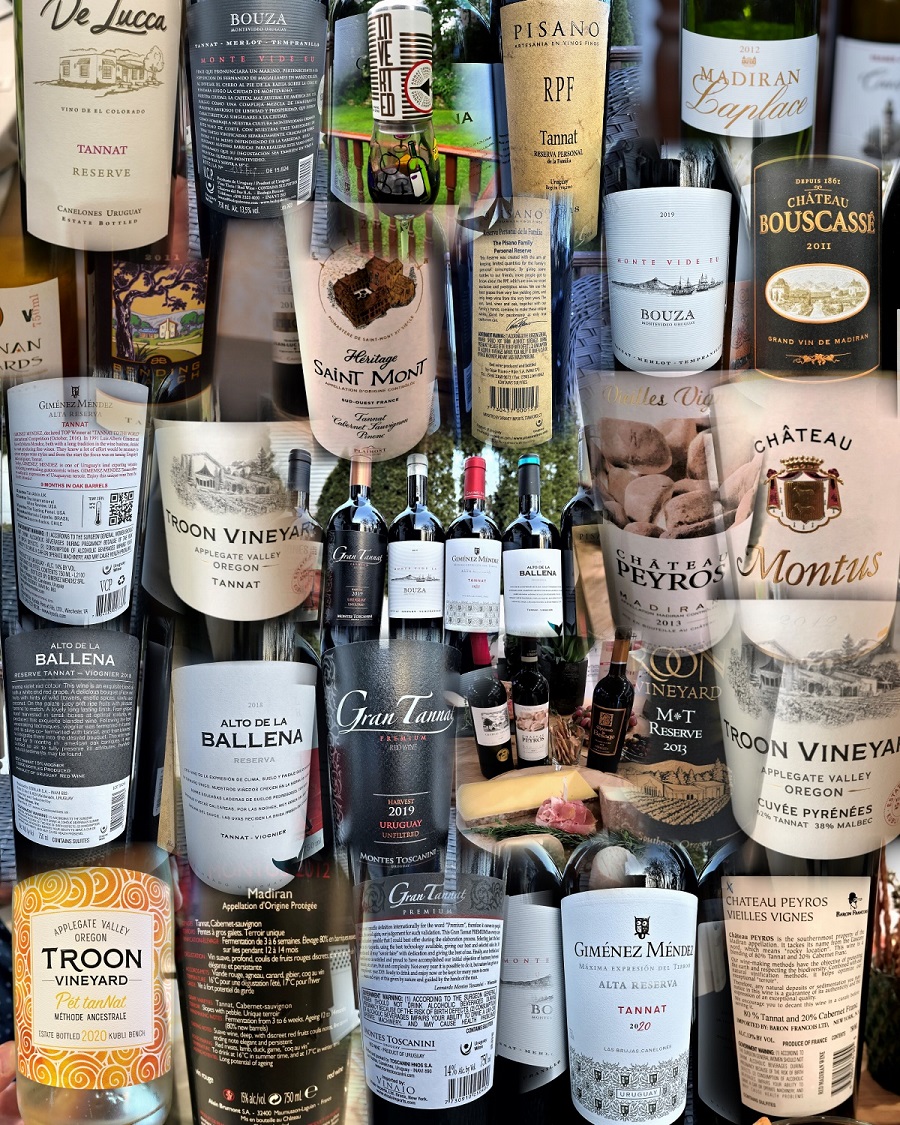
While Tannat found its new home in Uruguay, the grape is actually growing all around the world. But Uruguay is not just the new home. The interesting part about Tannat’s story in Uruguay is that the local winemakers found a way to tame its powerful tannins and acidity, and are able to produce delicious single-grape Tannat wines. However, Tannat can be found in Australia, Chile, Argentina, France, California, Oregon, Texas, and many other winemaking regions, where it is often used as a part of the blend.
While working on this post, I decided to check how often I mentioned Tannat one way or the other in my blog. From almost 1,500 posts, 34 posts contain the word “Tannat”. For comparison, 453 posts contain the words “Cabernet Sauvignon”, 13 times difference. However, just looking at the website word count, the word “Tannat” was mentioned in the blog about 700 times, and Cabernet Sauvignon about 2,500, less than 4 times difference.
Never mind the word count. As we said before, Tannat is the star of Uruguayan winemaking. Also, if you care to look for them, Madiran wines made somewhat of a comeback as of late, and Tannat is a major grape there. You can also find single-grape Tannat wines in Oregon, Texas, and Virginia. Speaking of Oregon, I have to mention the wines of Troon Vineyard. Craig Camp, the head winemaker at Troon, makes wonders with Tannat, from beautiful full-bodied organic reds to sparkling Tannat wines – Pet tanNat is definitely the wine to experience.
And then there is blending. If you would care to look at the list of grapes in the blend, lots of red wines from around the world have some amount of Tannat. Sometimes it is only 1% or 2%, but this might be enough to add acidity and tannins to the blend, to make the wine shine a little bit more.
Playing solo or in a minor supporting role, Tannat is well worth celebrating. Whether you celebrated Tannat yesterday or not, give this grape a chance – you might well like it in your glass.
Wednesday’s Meritage – Wine Quiz Answer, #MWWC8 Time to Vote, Bordeaux 2013, Wine-y States, When Wine Critic Attacks
 Meritage time!
Let’s start with the answer to the wine quiz #95, Grape Trivia – Tannat. In the quiz, you were supposed to answer 5 questions about the red grape called Tannat.
Here are the questions, now with the answers:
Q1: Tannat was the reason for one specific winemaking technique to be invented relatively recently. Do you know what technique is that?
a. Malolactic fermentation, b. Micro-oxygenation, c. Carbonic maceration, d. Reverse osmosis
A1: Micro-oxygenation was developed in the 1990s specifically as a method to soften otherwise harsh Tannat wines to make them more approachable while young.
Q2: True or False: Tannat is primarily harvested by hand and not by the machine. Provide an explanation for your answer.
A2: True. Tannat is primarily harvested by hand, but not because of the hilly terrain. The machine is generally harvests the grapes by shaking the vine – Tannat grapes are growing in such a tight bunches and attached to the vine so well that shaking simply doesn’t help, and the grapes have to be harvested by hand.
Q3: Name 3 grapes, often used as blending partners when Tannat wines are produced in France
A3: Cabernet Sauvignon, Cabernet Franc and Fer are often blended with Tannat in Madiran.
Q4: Wine Spectator calls wines with 90-94 ratings “Outstanding: a wine of superior character and style”. True or False: There are no Tannat-based wines rated as Outstanding by Wine Spectator.
A4: False. There are quite a few Tannat based wines with the 90+ ratings from the Wine Spectator, with the 2001 Montus Bouscassé Madiran La Tyre having the highest rating of 94.
Q5: Tannat ripens at about the same time as Cabernet Sauvignon. Assuming you have Tannat and Cabernet Sauvignon which are both slightly underripe, which grape would you make the better wine from, Tannat or Cabernet Sauvignon? Why?
A5: Slightly underripe Tannat doesn’t show those aggressively green notes as Cabernet Sauvignon does, so all other things been equal, Tannat has a better chance of producing more palatable wine.
Talking about the results, two people played in this round – Bill of Duff’s Wines and Julian from Vino in Love – they both correctly answered four questions out of five, so they definitely get the favorable mention. Well done!
Now, to the interesting stuff around the vine and the web!
First of all, the Monthly Wine Writing Challenge #8, with the theme “Luck“, has concluded. Now it is time to vote for your favorite entry! While Kara The Sweet Sommelier was the host of #MWWC8, she is using Blogspot as her platform, which apparently doesn’t allow the inclusion of the polls in the blog post, thus Jeff a.k.a. The Drunken Cyclist hosts the poll on his blog. Click here to read all the entries and cast your vote in the poll. Don’t delay – the voting will close by the end of the week.
It was a very difficult growing season in Bordeaux – Mother Nature threw a tantrum (or a few) – cold spring and hailstorms definitely took its effect. Now winemakers facing a tough dilemma. The 2013 vintage is expected to be of a medium quality (despite all the tantrum’s), so it would be necessary to reduce the selling prices across the region to be able to sell the wines. At the same time, the crop was small, so reducing the prices will definitely affect the small and even medium producers. Well, En Primeur tastings will take place soon, and this is where the prices will be set – for more information please read this article on the Wine-Searcher.
Dr. Vino published a very interesting map in his blog. This map outlines the wine consumption in the United States on the state by state basis. Dr. Vino also took all the wine numbers a bit further – he also included the map of state’s electoral votes from the 2012 elections (democrats versus republicans), as well as the map of income per capita in all 50 states. There are some interesting correlations between all three maps, but I will leave it for you to make any type of conclusions as you will see fit.
And last but not least is latest feud in the wine critics world – which is mind boggling in my opinion. The wine world is huge – there is enough space for all the people who wants to professionally review the wines, and its okay to have a difference of the opinion. But Robert Parker and his company, Wine Advocate, apparently don’t think so. In the fight for the dominance of the opinion, it seems that Robert Parker lashes out at anyone who promotes the wines less bombastic than his palate requires. Last week, Robert Parker attacked Eric Asimov ( New York Times wine critic) and Jon Bonne ( San Francisco Chronicle) for conducting the tasting of the wines which were not to his liking. You can read a general overview of the issue here, but then you need to turn to the blog post by Dr. Vino. After the legal attack from the Wine Advocate lawyers, Dr. Vino had to drastically modify the content of his blog post, which you will be able to see here. And lastly, here is an excellent summary by the W. Blake Gray, explaining the reason for the “vicious attack” . Even if you largely ignore all the wine critics populace, I think this story still worth a few minutes of your time.
And we are done here. The glass is empty – but the refill is on its way! Cheers!
Weekly Wine Quiz #95: Grape Trivia – Tannat
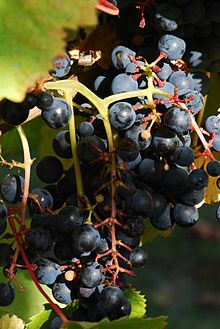
Tannat Grapes. Source: Wikipedia
The Wine Quiz series is not meant to intimidate. The whole idea here is to have fun and learn something new. When answering the questions, it is fully encouraged to use all available sources of information, including Google or any other search engine. There are no embarrassing answers – the most embarrassing thing is not giving it a try…
Welcome to the weekend and your new wine quiz!
We are continuing our grape trivia series, with the focus still on the red grapes, and today’s subject is Tannat.
It is interesting how different the grape stories are. Some grapes, like Bonarda/Charbono, have very convoluted history with changing names and uncertain origins. Some grapes, like Tempranillo, have a page-long list of synonyms, different names they are known under in the different parts of the world and even in the different parts of the same country. The Tannat story is a lot more straightforward. Wikipedia doesn’t list any synonyms for the name Tannat, which is quite rare – most of the grapes have some alternative names listed, and there are no confusions surrounding the Tannat grape.
Tannat originated in the Southwest France, in the area close to Pyrénées. Area surrounding village of Madiran was and still is the main wine growing area for Tannat, but today Tannat is growing in the number of countries in the world (albeit not in the major quantities). In the second half of 1800, Tannat made it to Uruguay, where today it is literally considered the national grape. In addition to Uruguay, the grape is successfully grown in United States – California is increasing its plantings quite a bit, and some other states are experimenting with the grape. Australia, Argentina, South Africa, Brazil, Italy are all also have some plantings of Tannat.
Tannat is a late ripening grape, with the thick black skin. That skin makes the grape resistant to the mildew rot, and also becomes a source of tannins. Tannat wines are generally known to make firmly structured, tannic and powerful wines, which require quite a bit of aging to soften those tannins up – however this is changing nowadays as many winemakers focus on making the Tannat wines more approachable while young. Similar to the other grapes with likewise characteristics (think thick skin/tannins), Tannat has very high level of procyanidins, which according to the Wikipedia are “good for reducing blood pressure, lowering cholesterol and encouraging healthy blood clotting”.
And now, to the quiz!
Q1: Tannat was the reason for one specific winemaking technique to be invented relatively recently. Do you know what technique is that?
a. Malolactic fermentation
b. Micro-oxygenation
c. Carbonic maceration
d. Reverse osmosis
Q2: True or False: Tannat is primarily harvested by hand and not by the machine. Provide an explanation for your answer.
Q3: Name 3 grapes, often used as blending partners when Tannat wines are produced in France
Q4: Wine Spectator calls wines with 90-94 ratings “Outstanding: a wine of superior character and style”. True or False: There are no Tannat-based wines rated as Outstanding by Wine Spectator.
Q5: Tannat ripens at about the same time as Cabernet Sauvignon. Assuming you have Tannat and Cabernet Sauvignon which are both slightly underripe, which grape would you make the better wine from, Tannat or Cabernet Sauvignon? Why?
Bonus: Have you ever had any Tannat wines? What do you think of them?
Good luck, enjoy the quiz and your weekend! Cheers!
Last Bottle Sign Up ($10 credit)




 Talk-A-Vino