Archive
Craving Acidity
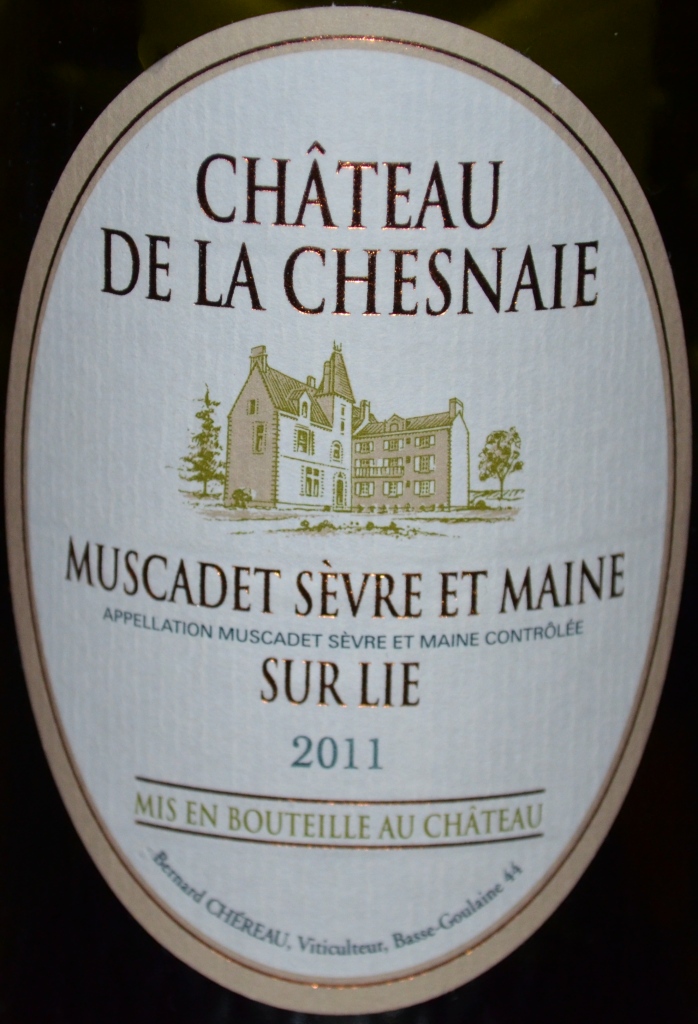 I’m not complaining – complaining is futile, as things always can be worse than they are. I’m just stating – this is not my kind of weather. I don’t like it. I don’t like this stuffed hot air, so dense that it can be cut with the knife.
Don’t think cutting air with knife would be very effective. I guess there are better tools for making that hot stuffy air less noticeable. One of the best ones I know is acidity. No, I don’t mean rubbing myself all over with the slice of lemon, or drinking copious amounts of the lime juice. Of course I’m slowly nudging towards the main subject of this blog – wine. And one of the wines which possesses this refreshing, “hot-air-cutting” acidity is Muscadet from Loire.
Serious Fun With Wines
In case you are wondering about the “serious fun” versus “not so serious fun”, somehow this title just got stuck in my head when I thought about this post, and I decided not to fight that. Also, when you have Gaja, Ornellaia, Turley, Bertani and whole bunch of other interesting wines, I think “serious fun” is a good way to put it. And to stress even further how serious the fun was, I’m even using different style of pictures for this post instead of usual “just label” style (and yes, you are right, I also use an opportunity to play with my new camera).
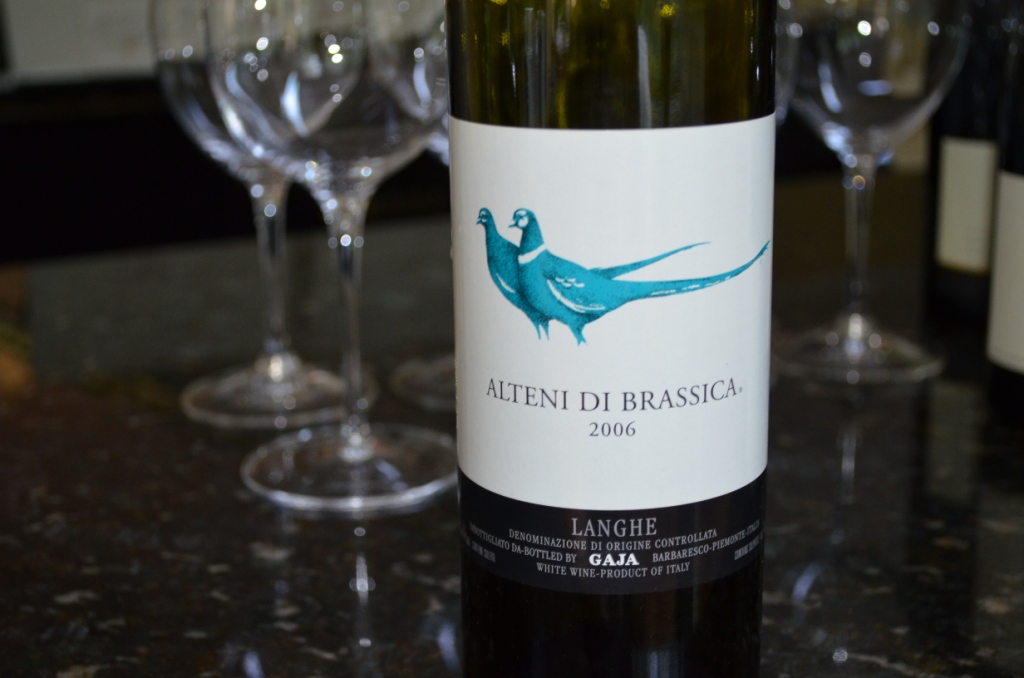
What is your first thought when you see the name like Gaja on the wine list? I don’t know about you, but in majority of the cases I would expect to see a red wine there. Yes, I can think of Gaja Chardonnay, and only because it typically looks at least as an affordable possibility on the wine list, as opposed to the Gaja red wines, which are not. So the wine we had was a white wine made out of …(wait for it)…Sauvignon Blanc!
2006 Gaja Alteni di Brassica Langhe DOC, Italy was a total surprise. Mineral nose, with wet stone, smoke and heavy grass. Touch of white fruit on the palate, more stone, touch of lemon, perfectly balanced. Finish lasted for 3 minutes, if not longer! Very beautiful wine. Drinkability: 9
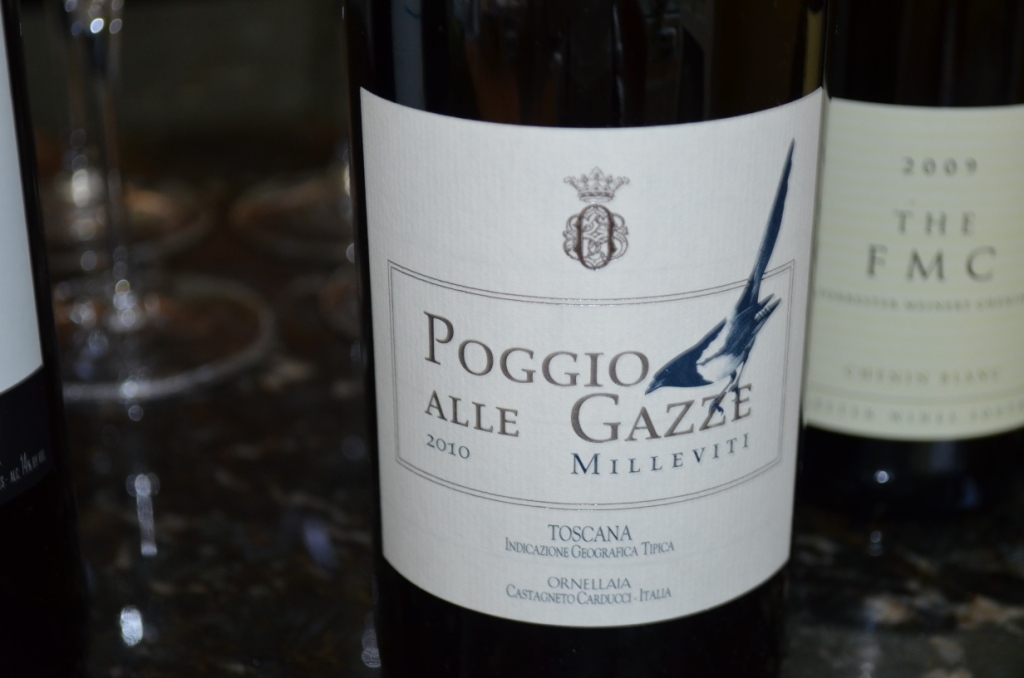
The next wine we had was also coming from a very respectful Italian producer, Tenuta dell’Ornellaia. And the wine was…yes, white again! The grape? Yep, Sauvignon Blanc. 2010 Poggio alle Gazze dell’Ornellaia, Toscana IGT was simply delicious, with perfumed nose of lychees and white apple. Palate was exhibiting nuts and ripe apple. Very long finish with some tropical fruit notes coming in later on. Bright, round, amazing! Drinkability: 9
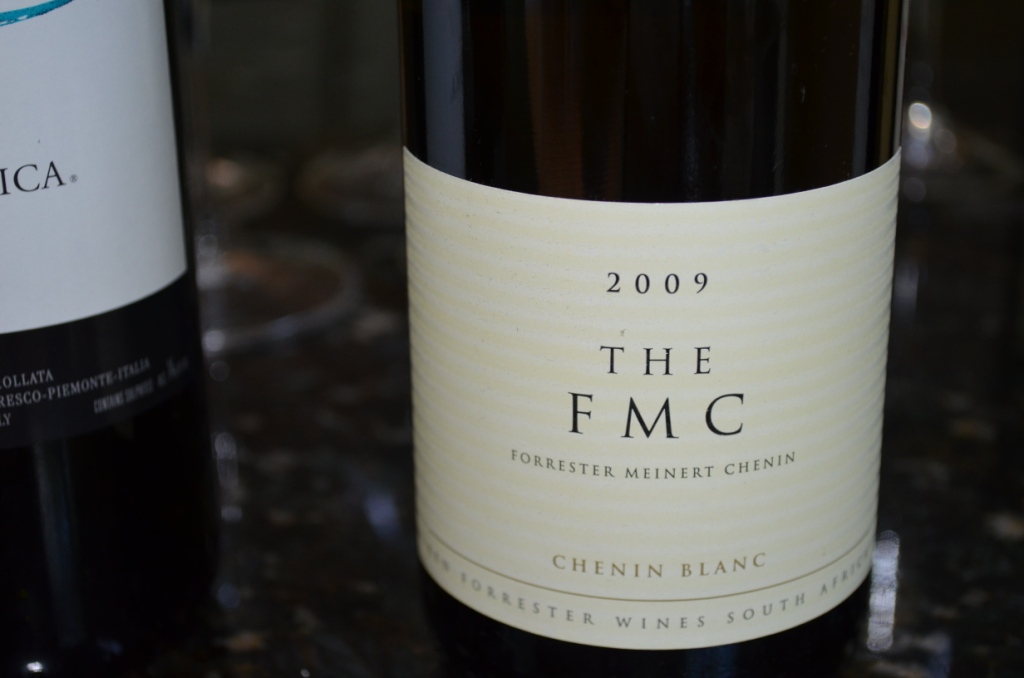
We continued our “whites’ extravaganza” with 2009 Ken Forrester The FMC ( (Forrester Meinert Chenin), South Africa. This wine was made out of the Chenin Blanc grape. While Chenin Blanc is one of the signature white French grapes from Loire, it also makes great wines around the world. It does particularly well in South Africa, where it is also known under the name Steen. This particular The FMC wine is a single vineyard flagship wine of Ken Forrester, one of the oldest producers in South Africa. This wine had a beautiful nose very similar to a typical chardonnay – nutty with some acidity, bright yellow color, very round. Drinkability: 8+

Done with whites. Before switching to the reds, we had a different, very unusual wine – as you can judge from the color above, this wine is not called “Orange” for nothing. Orange wine is one of the latest trends, where skin of the white grapes is left in the contact with juice during maceration. This imparts a nice deep yellow/orange color, hence the name, orange wine. This wine also was not some fly by night experimental plonk. 2008 Marani Satrapezo 10 kvevri, Georgia (100% Rkatsiteli grape, all coming from specific block of the Kondoli vineyard) was made in a traditional Georgian style with maceration for 20-25 days in historical clay vessel called Kvevri.
The wine had beautiful orange color. On the nose it had aromas of a bright fresh apricot. Palate was dry, full bodied, vegetative with enough brightness, touch of apricot but no sweetness whatsoever. After three hours in decanter the wine softened considerably – this wine definitely would benefit from a few years in the cellar. Drinkability: 8
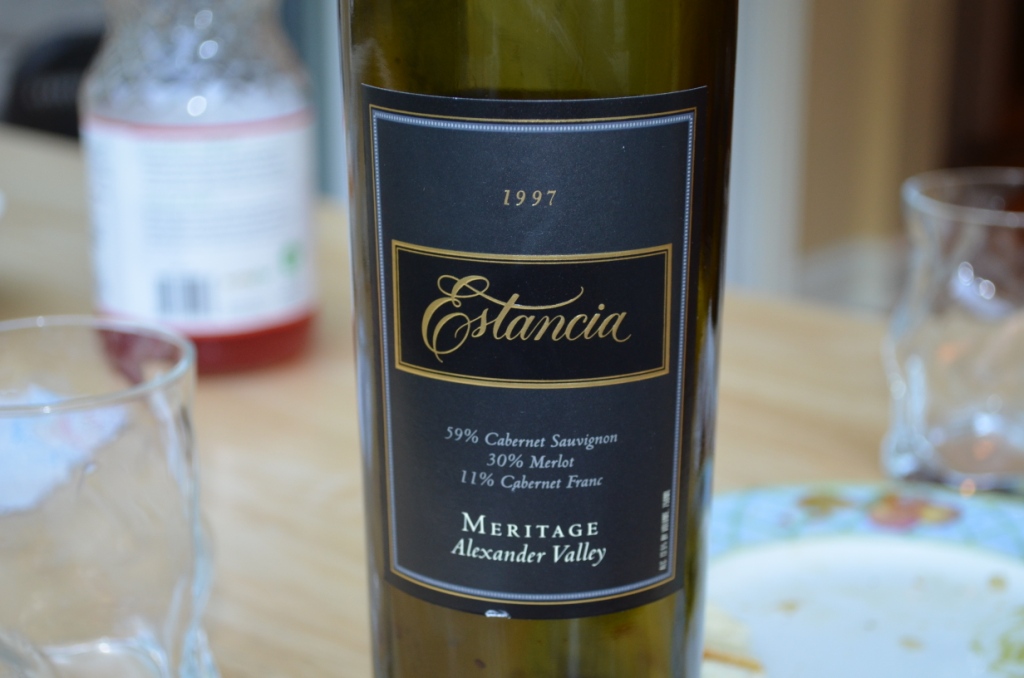 Okay, we are finally switching to reds – with it’s own set of surprises. We started from 1997 Estancia Meritage Alexander Valley (Cabernet Sauvignon/Merlot/Cabernet Franc blend). The wine had perfect color – dark, concentrated ruby red. Eucalyptus, wet stone, dust and raspberries on the nose. Bright red and black fruit on the palate with cassis, eucalyptus and licorice – perfect balance, nice, soft tannins. Drinkability: 8+
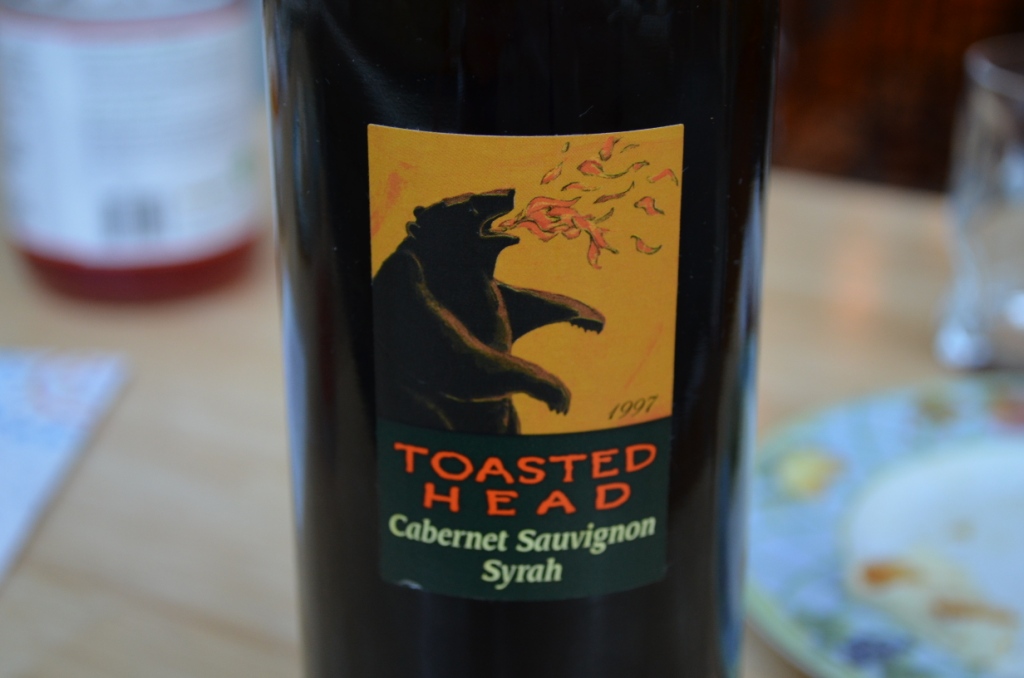 This was probably the biggest surprise of the evening – 1997 Toasted Head Cabernet Sauvignon Syrah California. Generally, Toasted Head makes simple everyday wines – which you generally are not going to age. This wine was simply lost in the cellar, and we opened it to taste but with the full readiness to dump it. To our astonishment (too strong of a word, but – why not), the wine had perfect acidity, bright youthful color, good black fruit, soft tannins and a touch of cassis. Drinkability: 8
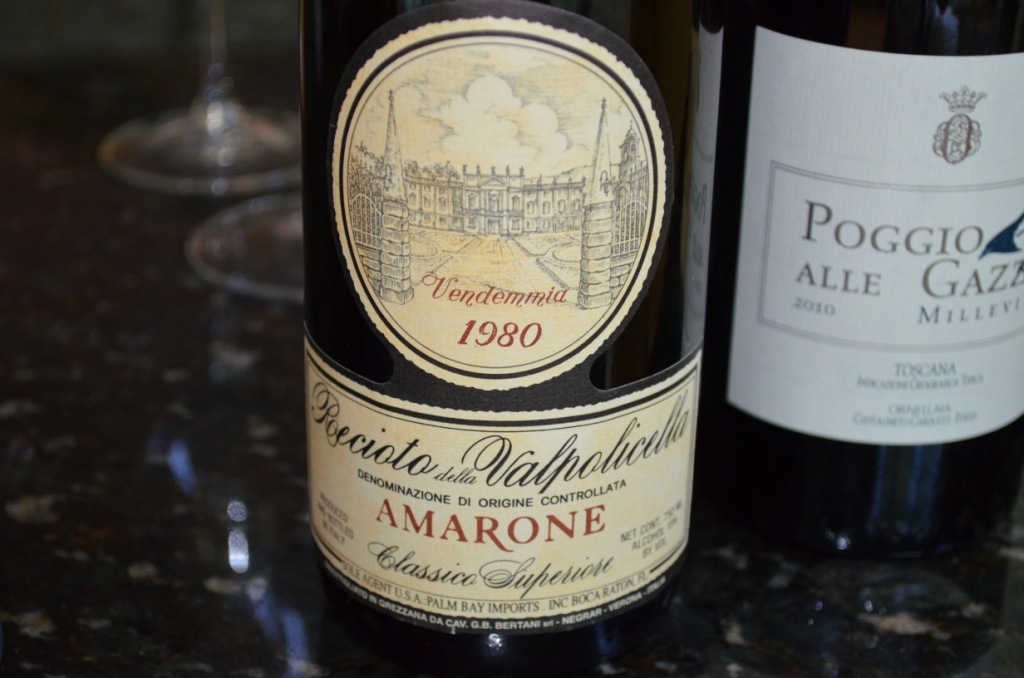
The next wine was Giribaldi Cento Uve – but this will be a subject of a separate post, so I will skip my tasting notes for that wine. And the next wine was the one … we killed – it sounds way too strong, I know – but please read on. Amarone are typically big enough wines, so we decided to decant this wine – without even tasting it first (but the nose was perfect!). This was a [big] mistake. After 3 hours in decanter, the wine became barely drinkable. Another 30 minutes later, the fruit came back, both on the palate and the nose, only to disappear shortly after. Note to self – be careful with decanting. Considering this experience, I will not give this wine any rating – it simply wouldn’t be fair.
As you might expect, we didn’t just drink – we had a lot of good food as well. Just to give you an example, here is lamb kabob in the process of making:
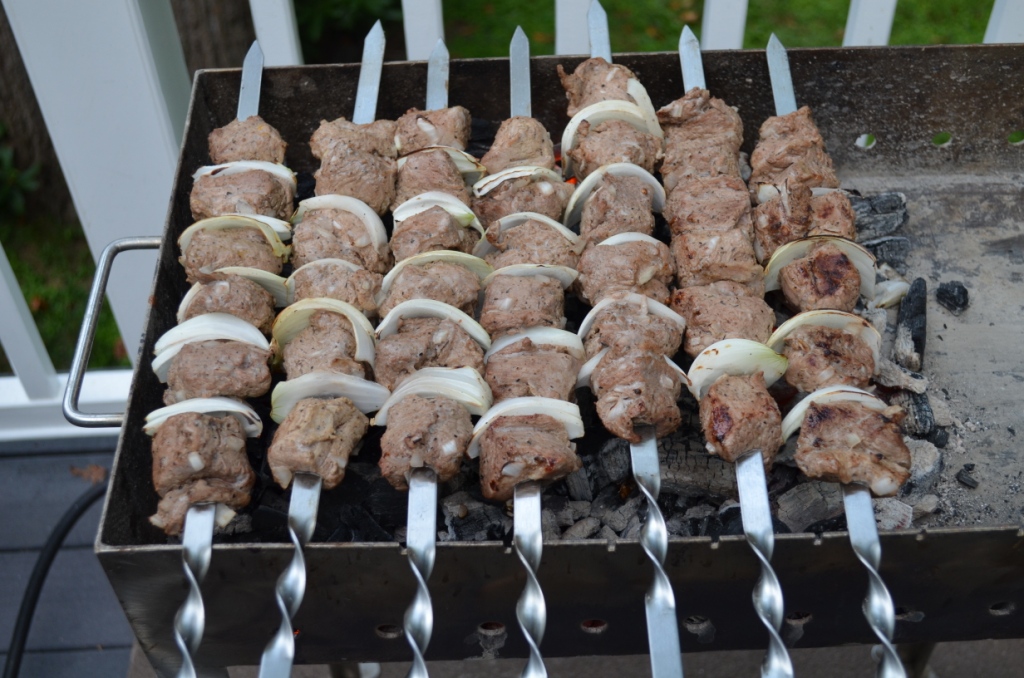
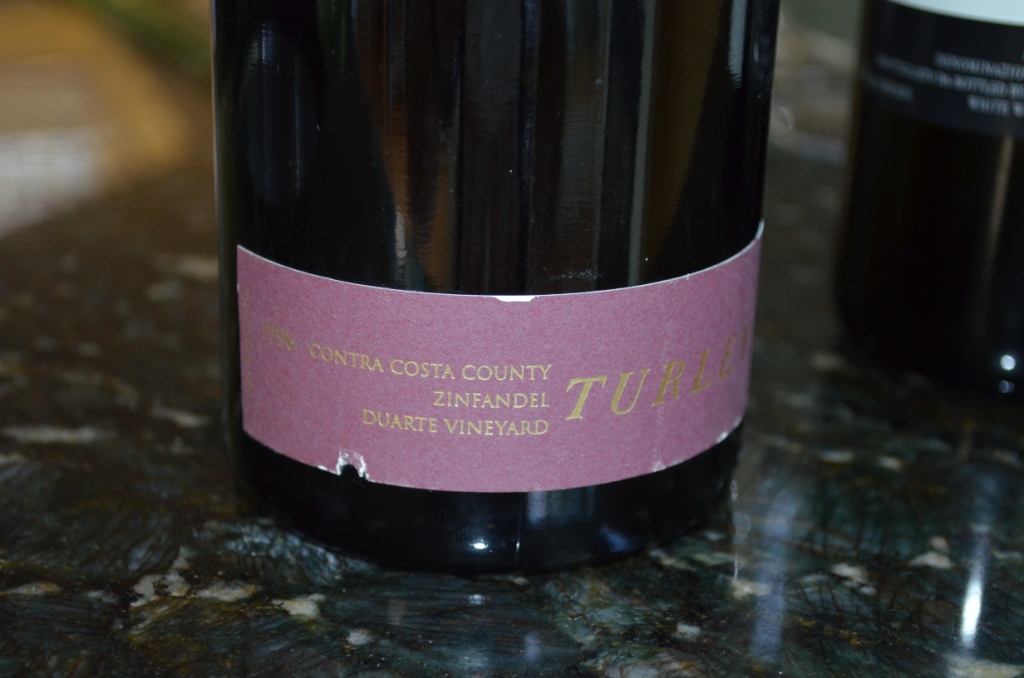
To complement the lamb, we had 1996 Turley Duarte Zinfandel – nice fruit, raspberries on the nose and the palate, hint of jammy fruit later on, plus some eucalyptus. Very good overall balance for the wine at 15.4% ABV. Drinkability: 8-
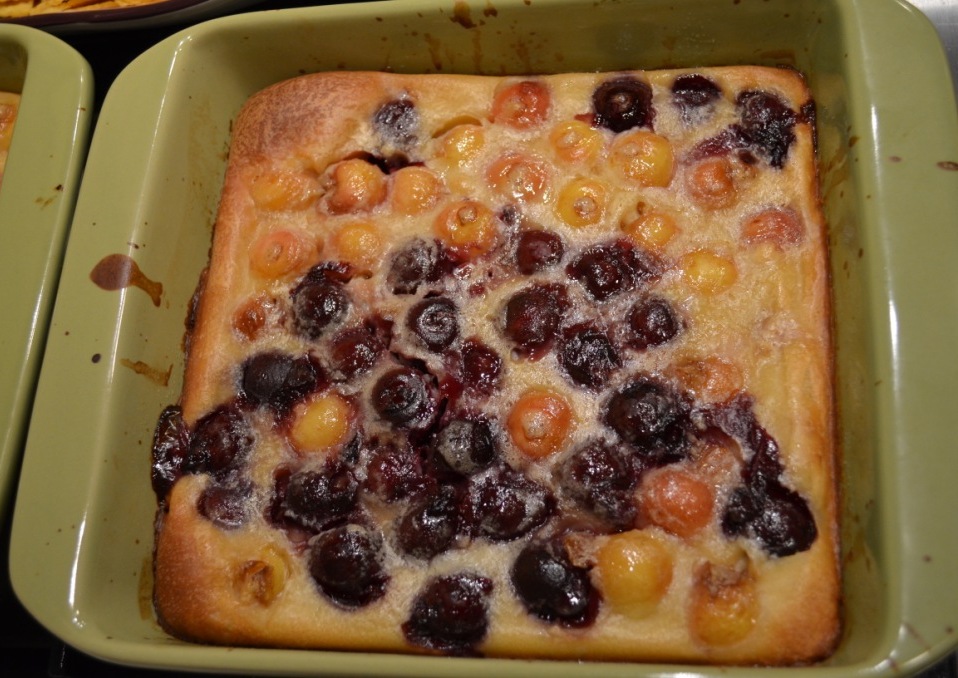
And then of course there was a dessert – Clafoutis (no further comments, just look at the picture):
This was definitely a great experience. Pretty rare case when all the wines worked very well and were absolutely delightful – if I can only re-taste that Amarone… Well, may be one day. Wishing you great wine experiences! Cheers!
Sauvignon Blanc For Sauvignon Blanc Day #SauvBlanc
 Turns out that yesterday was an [International] Sauvignon Blanc Day, as I learned from the post on Bottle Notes. I wouldn’t call this quite “International” yet – it was originated in 2009 by St. Supéry winery in California, to celebrate one of the main wine-making grapes in the world, Sauvignon Blanc. While St. Supéry run the whole program of seminars and tastings on June 24th, all dedicated to Sauvignon Blanc, this was also a social media event which anyone could join in using Twitter or any other social media outlets.
Sauvignon Blanc is a white grape used in many regions throughout the world. With all due respect to California, I would like to first mention Loire Valley in France, which brings us Sancerre and Pouilly-Fumé wines. French Sauvignon Blanc wines typically very dry, with pronounced herbaceous flavors and expressive minerality. The same Sauvignon Blanc grape takes on totally different expression in New Zealand and Chile – very bright, zinging acidity, lots of fresh citrus flavors and some hint of fresh cut grass. Then comes California with yet another take on the popular grape – California Sauvignon Blanc typically much fuller bodied than their counterparts from France or New Zealand, much fruitier and with lesser acidity.
I talked about Sauvignon Blanc wines already a few times on this blog (you can find those posts here and here). This time, I want to talk about some special (and totally unexpected) experience with California Sauvignon Blanc. In general, Sauvignon Blanc wines are not expected to age. They are typically consumed young, may be within 3-4 years of age. When we opened a bottle of 2000 Flora Springs Soliloquy from Napa Valley, a Sauvignon Blanc wine, we didn’t have much [good] expectations – it was more of an experiment – hey, let’s see if this is even drinkable. To our complete surprise, this wine was perfect! Yes, it showed signs of maturity, definitely in the dense dark yellow color of aged white wine, but otherwise, it was fresh, complex, with lots of white fruit and hint of earthiness on the palate, good acidity. 2009 Soliloquy was one of my favorite wines of last year, it was number 9 in my 2010 Top Dozen list, but still I didn’t expect that 11 years old Sauvignon Blanc will taste so good. Drinkability: 8+.
Sauvignon Blanc is perfect summer wine. You really don’t need to wait for 11 years to enjoy it – and even that we are already past Sauvignon Blanc Day, go get a bottle today and toast summer day and great discoveries. Cheers!
Last Bottle Sign Up ($10 credit)




 Talk-A-Vino