Archive
Food Network, Coming To The Bottle Near You
 Yesterday I found out that Food Network is not about only food anymore. Of course wine always was present in various Food Network shows, but only as a cooking ingredient. Now Food Network teamed up with Wente Vineyards to make your in-home entertainment easier by bringing you food friendly wines, which will also fit any budget (all wines are priced at $10.99 at Cost Less Wines and Liquors).
I’m ashamed to admit that I never heard about Wente Vineyards before, and it appears that they are the oldest continuously operated family-owned winery ( they’ve in business for more than 128 years) located close to San Francisco in Livermore Valley. It is interesting to note that Wente Vineyards has Certified Sustainable designation, which means that that they are using sustainable methods to produce their wines ( which is good for us, consumers).
So far there are 4 different wines in the Entwine series, two whites and two reds – Pinot Grigio, Chardonnay, Merlot and Cabernet Sauvignon.

The idea behind the Entwines is simple – food and wine are meant to be consumed together, and Food Network wants to help you to make the pairing effortless and enjoyable. On the Entwines dedicated web site you can find  recipes and food/wine pairing suggestions. Useful pairing information is also available on the back label of each and every bottle.
So what about wines themselves? I had an opportunity to try all four wines yesterday. They are all nice, easy to drink and should pair well with food – but may be they are too easy to drink for my taste. When I drink wine, I’m looking for the experience, and one of main questions which I’m trying to answer for myself is whether or not I would want to experience that wine again. While it might be interesting to try the Entwines with food, these are not the wines I would have a desire to experience again. At the same time, if you need to entertain a group of people, these wines will do just fine, exactly because of their simplicity (don’t forget also that they are inexpensive). In terms of Drinkability, I would rate them all at 7-, except Chardonnay which had more substance to it, so I will give it a 7.
You should try it for yourself – I’m sure these wines will be widely available. As for the Food Network and wines, I think they can kick it up a notch, by introducing a Wine Program. And guess what – I would be delighted to host it. Yep. We can all dream – let’s drink to that. Cheers!
Wine, Aged Beautifully
 Let’s talk about aging. No, that’s not what you think – not people aging and not the world problems with the aging populations. Let’s talk about the aging of the wine. By the way, it appears that second time in the row I’m taking upon the popular subject – in the previous post we were comparing the wine glasses (post can be found here), and now the wine aging.
With all due respect (based on this phrase, my friend Kfir would tell you right away that I’m about to blast something), I completely disagree with the majority of the popular opinion on the subject of wine aging. Open a wine book, read a wine blog, or ask a question on Quora, and for the most part, you will get an answer that 95% of the wines are not supposed to be aged and should be consumed within a year or two from the release date.
Based on my personal experience, I disagree with this viewpoint. I can’t put a percentage or a quantity on it, but I believe that well in excess of half of the wines produced in the world (not by the volume, but by the variety of the actual wines) can age very well for 5 to 10 years – and “age well” means “to improve with age”. My biggest problem with the aging of the wines is … space. If you want to drink aged wine, you either need a lot of space, or you need [typically] lots of money, as most of the aged wines increase in price. If you have a cool and dark area with constant humidity, you can buy wines as they are released. store them and enjoy them later as they evolve and mature. Otherwise, you need to have money and a reputable source of the aged wines (improper storage conditions will ruin any wine in no time). Once you solved your space problem, the rest is easy.
How easy is that? How can we know if that bottle of wine will age well – read: improve with age? There are way too many factors affecting the aging of the wine, and being able to predict age-worthiness of the wine (age-worthiness means that wine will evolve and taste better in the future) is more art than science. As an example, Matt Kramer, one of my favorite wine writers identifies age-worthy wines using characteristic of the mouth-feel, a mid-palate weight of the wine in the mouth. Here is my take on the subject. First, yes, of course, some of the wines are meant to be aged – for instance, Beaujolais Noveau is released in November and should be consumed by May of next year. Outside of the wines which are designated by winemakers as “do not age”, the majority has some aging potential. I believe the biggest dependency here is on the winemaker and what she or he wants to achieve with particular wine – if wine is well made, there is a good chance that it will also age well.
Some wines are helped by their “DNA” – under which I mean from what grape and where in the world the wine is made (of course good/bad year matters too). California Cabernet Sauvignon expected to [typically] reach maturity at around 13 years. Bordeaux easily ages for 30-50 years. Syrah-based wines, whether from Australia or France, can live for 50 years. Many 50-years old Riojas are fresh and vibrant as being just made. But “DNA” alone is not enough – wine should be well made in order to age well.
If you are still reading this post, I guess you might be tired by now by this prolonged escapade into the wine aging, and you might be wondering why, why is all that wine aging might be important? Well, I can’t answer this question. At least not before you will find the wine with a little age on it, which will blow you away. Yes, it is an acquired taste. But once you will actually acquire that “mature wine” taste, this is what you are going to crave, I guarantee you.
 Let me share some recent and exciting discoveries. Let’s start with 1995 Flora Springs Chardonnay Napa Valley. This wine is made out of 100% Chardonnay. While the nose was not very expressive, the level of complexity of this wine is unimaginable. Yes, considering dark golden color, this wine might well be past prime, and without that “acquired taste” for the aged white wine, you might be even upset after the first sip. This wine was exhibiting notes of vanilla which almost moved up to some sort of the almond paste, still showing some acidity. Next are savory notes, almost to the level of saltiness, which was increasing the complexity even further. The wine was in a very stable shape as it tasted the same on the second day as well. Will this wine evolve further? Who knows – but I would be very happy to taste this wine again in five or maybe ten years. Drinkability: 8
 The next wine is 1992 Domaine de Thalabert Crozes-Hermitage from France. Crozes-Hermitage wines are made primarily out of Syrah, typically with a very small addition of Marsanne and Rousanne grapes. As we mentioned before, Syrah wines age quite well, and this was an excellent example of the well-aged Syrah wine. This wine was very playful and soft, with lots of red fruit on the nose and on the palate, very good acidity and a good level of tannins. This wine probably will continue evolving for the next five to ten years, and again I will be glad to help you share the bottle later on – if you will have one. Drinkability: 8-
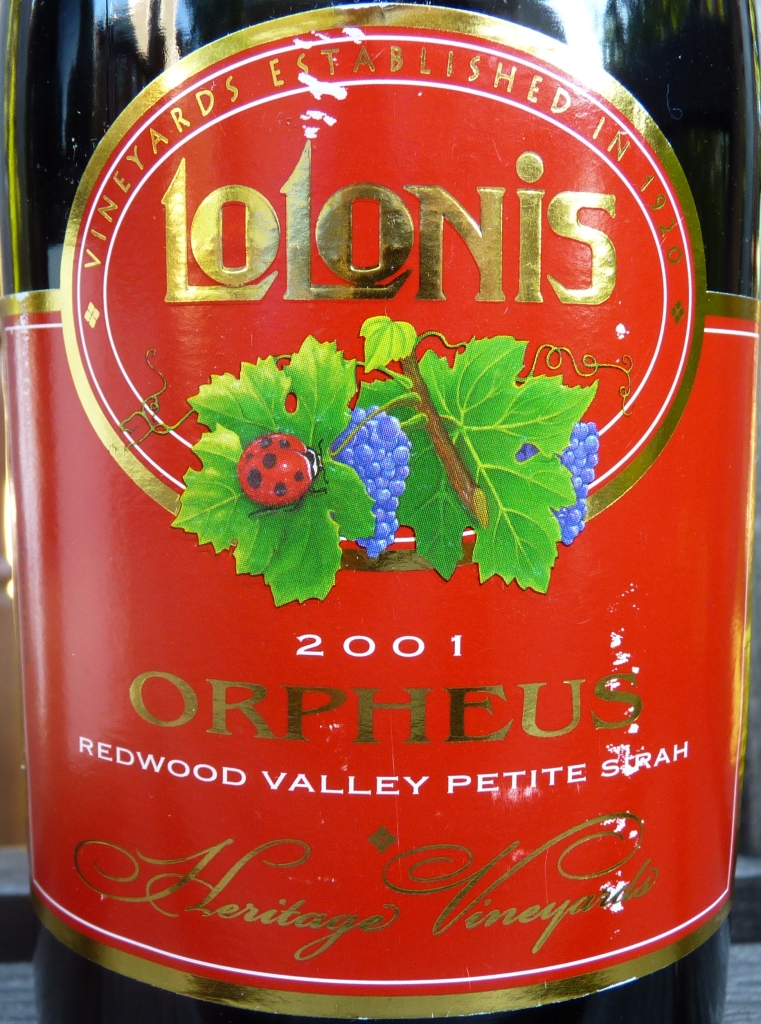 Going back to California, 2001 Lolonis Petite Sirah Redwood Valley. In short – outstanding. This 10 years old wine was completely fresh and beautiful. It is made from organically grown Petite Sirah grape. The wine showed perfect dark fruit, good acidity, full body, excellent tannins, and perfect overall balance. This wine might be evolving for the next 10-20 years – again, the trick will be to find it.
Drinkability: 8+.
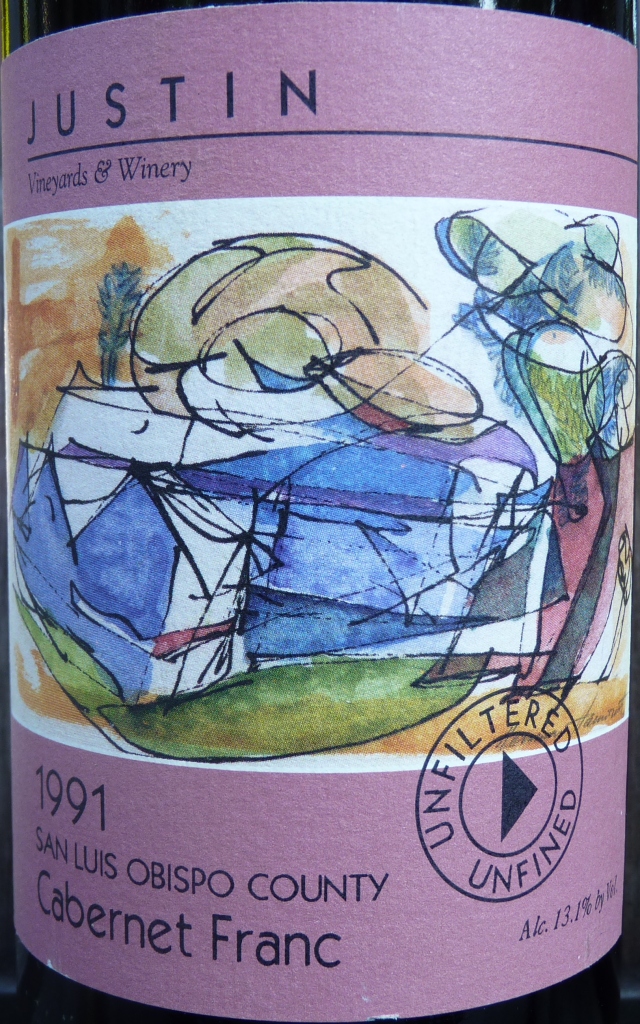
Last, but not least, 1991 Justin Cabernet Franc, San Luis Obispo County. This was the “wow” wine, that exact mind-blowing one. First, while I like Cabernet Franc wines, I had no idea they can age so well. I can literally guarantee that in the blind tasting format, very very few people would be able to guess the age of this wine. Deep garnet color, not a hint of age (no brownish overtones at all). Perfect fresh fruit, soft and luscious, a perfect balance of tannins and acidity. This wine was the oldest in the tasting, and it was definitely the best of tasting. Considering how good it was now, I can’t even guess how much time it has left – but I would be very glad to find a few more bottles to be “wowed” again in the future. Drinkability: 9-
One note before we conclude – this was a rare case of someone doing all the hard work, and me enjoying the results – I got all wines from Benchmark Wine Company and each one of them had been less than $20.
Don’t know if you got the desire to seek well-aged wines – I hope you will one day. For now, I can only wish upon myself, my family, all my friends and all of you, my readers, to age as beautifully as this Justin Cabernet Franc does. Cheers!
Tasting Wines of Anderson’s Conn Valley
 Once again Stew Leonard’s Wines brought up a excellent opportunity to experience wines (you can find some of the old posts about wine tasting at Stew Leonard’s Wines here). This time, the tasting included wines from Anderson’s Conn Valley Vineyards in Napa Valley, California.
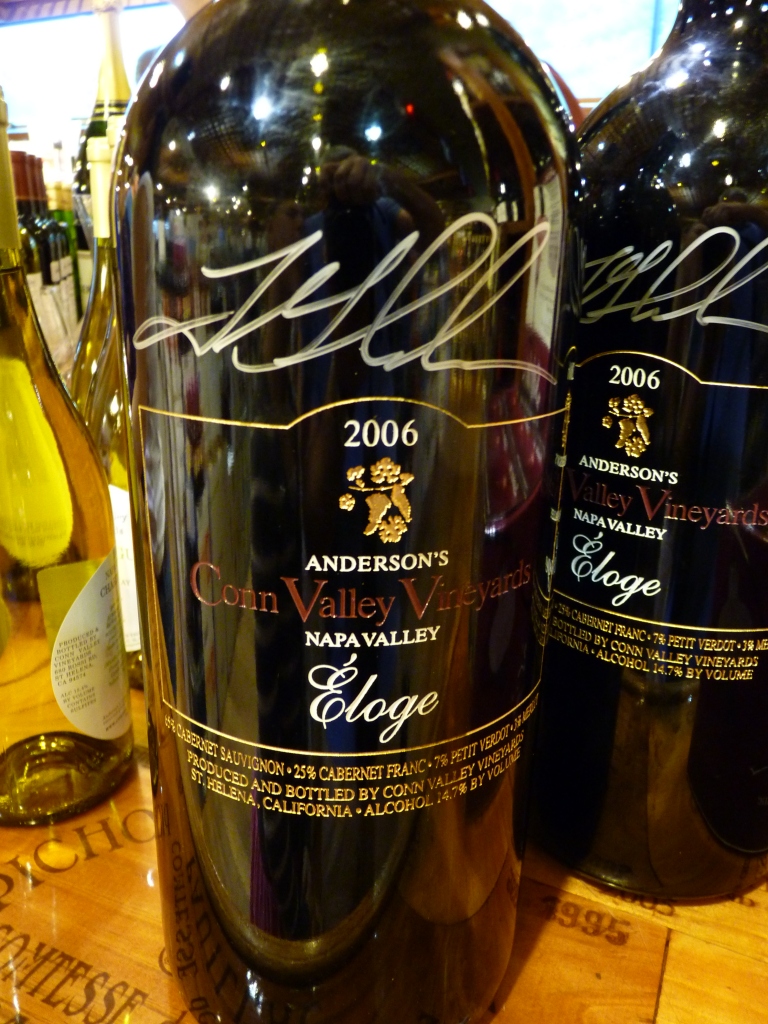
Four different wines were presented in the tasting: 2009 Anderson’s Conn Valley Prologue Chardonnay, 2008 Anderson’s Conn Valley Prologue Cabernet Sauvignon, 2008 Anderson’s Conn Valley Right Bank and 2008 Anderson’s Conn Valley Cabernet Sauvignon Reserve. There was also wine #5 there, 2006 Anderson’s Conn Valley Eloge, but only available for sale, not for tasting (in large, 3L bottle format, at $599 each).
2009 Anderson’s Conn Valley Prologue Chardonnay had a very nice nose of white fruit, very delicate and inviting. On the palate, it was also nice and light, but too sweet – the elegance was lost behind that unexpected sweetness. Don’t get me wrong – this was still a nice wine, and it was, of course, a dry wine – but it was asking for more acidity. And for my personal taste I like more tannins and butter. Drinkability: 7+
Next was 2008 Anderson’s Conn Valley Prologue Cabernet Sauvignon. As winemaker Todd Anderson, who was present at the tasting, said, “this wine for made for the price point”. The price point ( in that particular store) was $23.99, which would make it a reasonably priced Cabernet Sauvignon. The wine was oaky, with some fruit showing up in the background. It will probably improve over the next 4-5 years. Drinkability: 7
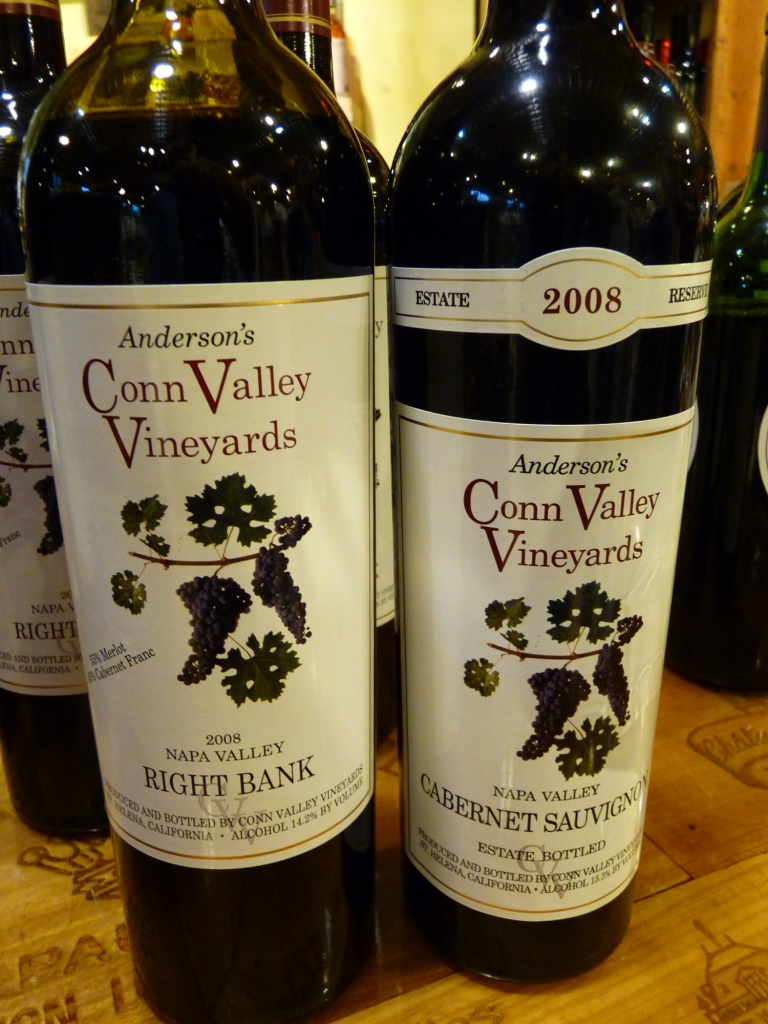 Next in the tasting was 2008 Anderson’s Conn Valley Right Bank red, which is a Bordeaux style blend ( Merlot/Cabernet Franc). This wine actually was quite enjoyable, with good structure and good balance of fruit, acidity and tannins, nice, very delicate earthy notes of the good Bordeaux, and with medium finish. This wine was best in tasting. It will also improve with ageing, probably over the next 10 years or more. Drinkability: 8-
Lat wine in the tasting was 2008 Anderson’s Conn Valley Cabernet Sauvignon Reserve, 100% Cabernet Sauvignon grape. This wine had a great nose of black currant and blackberries, and very delicate balance on the palate. At the same time, it was lacking the body and was falling short on the finish. It is quite possible that this wine will improve with age, or may be even with the breathing time, but as it was presented in the tasting, it was lacking the “umph” factor. Drinkability: 7+
Overall, it was great to be able to try good California wines, and if you are not following Stew Leonard’s Wines on Facebook, click here to open their page and become fun – this way you will not miss any opportunities to try some good wines. Until the next time – Cheers!
[Unanticipated] Burgundy Pleasure and Other Grape Encounters
 Looking through the cellar, many bottles have their stories, memories associated with them: “Ahh, I remember I brought this bottle from Italy. And it was raining like crazy when we stopped by that small wine shop in Paris, where this bottle is from. And this one – it was our vacation in Florida (coconut wine, anyone?). Aha, this one I got as a present for my birthday… And those five? I hope they will be as good as the first one was three years ago…”.
Then you stumble upon a bottle on which you go totally blank: “No, I don’t recognize the producer or the winery. Did I bring it from somewhere? Probably not. Where could I buy it? I think I got it as a present?”. Good thing in such a case is the fact that most likely you will have no expectations, so you will take this wine for what it is.
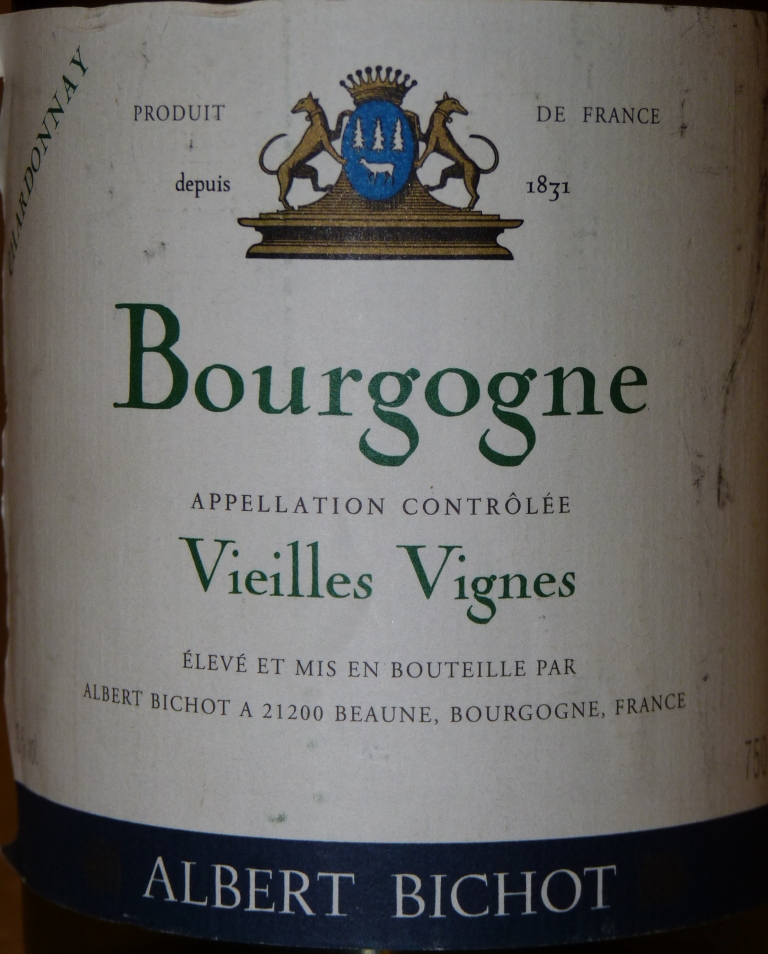
This was exactly my experience with 2004 Albert Bichot Vieilles Vignes Bourgogne – I had the bottle for a while, but how did it end up in my wine fridge, I had (and still have) no idea. Considering the wine was 7 years old, and from unknown ( for me) producer, it could’ve been already gone in terms of quality and pleasure, so the decision was made – the time has come to open the bottle.
This 2004 white Burgundy (100% Chardonnay, of course) happened to be in a perfect shape! Vanilla and touch of spices on the nose, hint of vanilla and lichee fruit on the palate, good acidity – very round and perfectly balanced (Drinkability: 8). Turns out it was a good choice – and having no expectations made it even better experience.
As I mentioned “other grape encounters”, let’s move from France to Italy. I recently had a chance to experience some of my most favorite wines – Amarone. You can read about it in details here – this is my post at The Art of Life Magazine. While the Amarone from Vaona was excellent, I’m still trying to find Amarone which will deliver the same mind-blowing experience I had with 1997 Le Ragose Amarone at the Windows on the World Wine School (read The Art of Life post for the full story) – of course full report is guaranteed if I will be able to find that wine.
And another “grape encounter”, this time moving across the globe east and south, we are getting from Italy to Georgia (and I’m not talking about one of the 50 US States). Few days ago, I was lucky enough to attend Georgian Wine tasting, which I can summarize in one short word: “WOW!”. Extensive report is coming in one of the near future posts, but for now I would like to mention great progress with unique grape count – it increased by 7! In case you are curios, here is the list of grapes and wines:
Chinuri – 2009 Pheasant’s Tears Chinuri Qvevry
Tetra – Alazanis Valley White
Goruli – 2009 Chateau Mukhrani Goruli Mtsvane
Pink Rkatsiteli – 2010 Alaverdi Monasteri Rkatsiteli Qvevry Rose
Kavkveri – 2010 Pheasant’s Tears Kavkveri Qvevry
Tavkvery – 2010 Pheasant’s Tears Tavkvery Qvevry
Shavkapito – 2009 Chateau Mukhrani Shavkapito
Total grape count now reached 324, and counting. Happy grape discoveries to everyone! Cheers!
Long Overdue–Notes From Michal Skurnik Wine Tasting
 Yes, this post is long overdue, as I hinted that it’s coming a while back. Better late than never, right? Here it is.
Let’s say you are in a wine store. Bottles, bottles are everywhere. Sometimes you know exactly what you want. Sometimes you don’t – and this is when it becomes challenging. How do you know if that bottle of wine is any good? Price is really not an indicator of quality. You can’t try the wine ( at least in the majority of cases). Yes, you can ask for the advice – then it really depends what store you are at (some of the store advice should be avoided at all costs). So, what do you do? Of course, using your iPhone is always an option, but this is not where I’m going right now. One possible solution is to look at the back label, which all the wines in the US have to have. Look for the name of the importer. And if it says “Michael Skurnik” or “Kermit Lynch”, you should smile, because you just learned that chances this bottle of wine is good just increased dramatically.
Why you are asking? Michael Skurnik Wines is so-called “importer” (they are also a wholesaler, but this information is typically not advertised on the label). It means that Michael Skurnik Wines company (MSW) works with thousands and thousands of wineries and other wine merchants all over the world to find the wines which will pass through their rigorous selection process and will be represented by Michael Skurnik Wines.
The wines chosen to be carried in the portfolio might not be all your favorite – but they all will be quality well-made wines. It means that MSW folks are doing all the hard work of selecting the best wines for you, and all you need to do is to enjoy the fruits of labor.
Few times a year wine importers and wholesalers organize special wine tasting events to present their portfolio to the trade. I was lucky to attend Michael Skurnik Wines Spring Grand Tasting, and I would like to share some of my personal highlights.
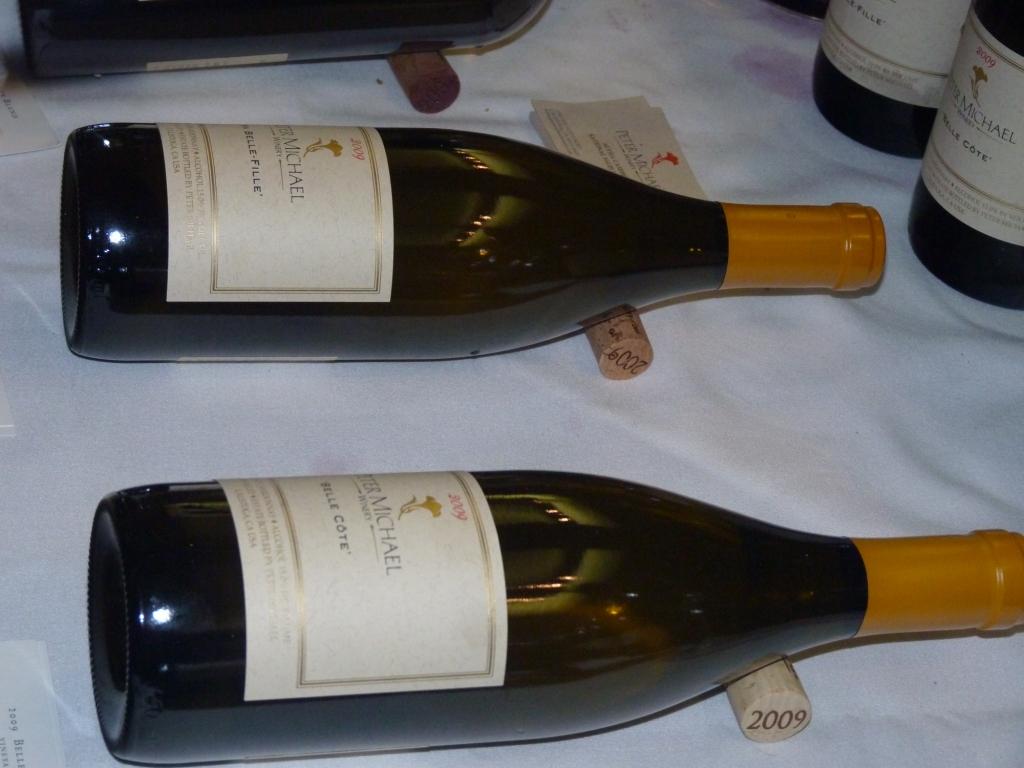
First and foremost, my personal “Best of tasting” is Peter Michael wines. Four 2009 Chardonnays were presented in the tasting (“Mon Plaisir”, “La Carriere”, “Belle Cote” and “Ma Belle-Fille”) – tremendous, all four are the best Chardonnays I ever tasted. Finesse and absolute balance – vanilla, toasted oak and butter all being present, but in absolute harmony with bright acidity, fruit and silky smooth tannins. I would put drinkability for all four at 9+. Just so you know, these are the cult wines, which affects the pricing and availability. These wines are available only through the mailing list or through select merchants – you might be able to find them at Wades Wines and Benchmark Wine Company.
The next highlight was an amazing line of Barolos. A mix of 2005, 2006, 2007 Barolos from Azella, Manzone, Renato Corino, Marengo, Altare, Clerico, Cavalotto – one was better than another, all beautiful and powerful wines. Anyone of the names I mentioned is worth seeking.
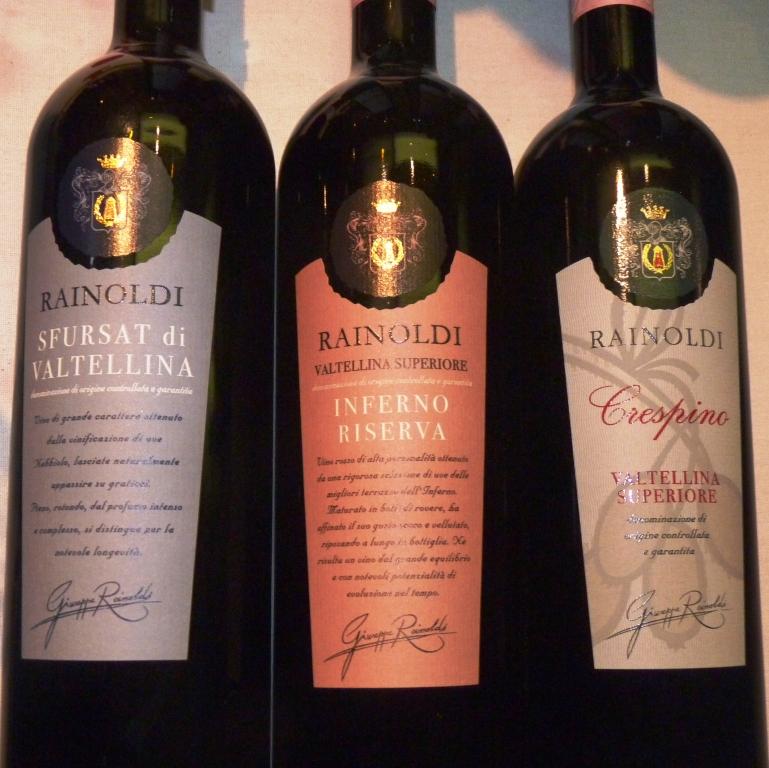 While the Barolos were great, they had a group of contenders, which were literally as good. Wines of Aldo Rainoldi come from the area in Lombardy region called Valtellina. These wines are produced from the same grape as all Barolos – Nebbiolo, with all the vineyards located at the very high altitude of 600+ meters (1800+ feet). I tried four different Aldo Rainoldi wines – 2007 Sassella, 2005 Crespino, 2006 Inferno Reserva and 2007 Sfursat Classico – all were truly outstanding and very comparable with great Barolos, but at the half price as the least.
In addition to all the wines in the tasting (about 700), there were some stronger spirits as well. One of the surprises was Calvados I tried. Calvados is a brandy which is made out of apples in the Calvados region of Normandy in France. Typically, I can drink it, but it is not something I would be seeking out. However, two of the Calvados presented at the tasting – Camut Calvados 6 years old and Camut Calvados Reserve 12 years old were simply incredible. Soft, smooth, elegant, great aroma of fresh apples, very delicate balance. They will not be easy to find, but I would highly recommend you will make an effort. You can try your luck at D&M, and believe me, you will not be disappointed.
That’s all, folks. There were many many more great wines, but you got to stop somewhere, right? Until the next time – cheers!
Last Bottle Sign Up ($10 credit)




 Talk-A-Vino