Stories of Passion and Pinot: Eugenia Keegan
Joseph Swan Vineyards. Volnay, Puligny-Montrachet. Hop Kiln Winery in the Russian River Valley, Bouchaine Vineyards in Carneros, Vine Cliff Winery in Oakville.
Keegan Cellars in Russian River Valley, dedicated to single-vineyard Chardonnay and Pinot Noir.
Oregon.
France again, this time Châteauneuf-du-Pape and Roussillon.
And back to Oregon.
This is not a random list – these are some of the places where Eugenia Keegan, born fifth generation to a family with deep roots in the Russian River Valley, worked during more than 45 years of her wine-centered career.
Working in the cellar. Working in the vineyard. Making wines. Managing wineries. Managing wine businesses. Going beyond just a business, Eugenia had been actively involved in Oregon’s wine world at a higher level as chair of the board of directors of the Oregon Wine Board, president of the Oregon Winegrowers Association, president of the Willamette Valley Wineries Association Board, and co-chair of Willamette: The Pinot Noir Auction. And to top it all off, Eugenia was named the 2021 Wine Executive of the Year as part of Wine Enthusiast Magazine’s 2021 Wine Star Awards.
Since 2016, Eugenia is working as a senior vice president of winemaking and business development for Jackson Family Wines’ Oregon properties, overseeing the winemaking programs for Gran Moraine, Penner-Ash Wine Cellars, WillaKenzie Estate, and Zena Crown Vineyard.
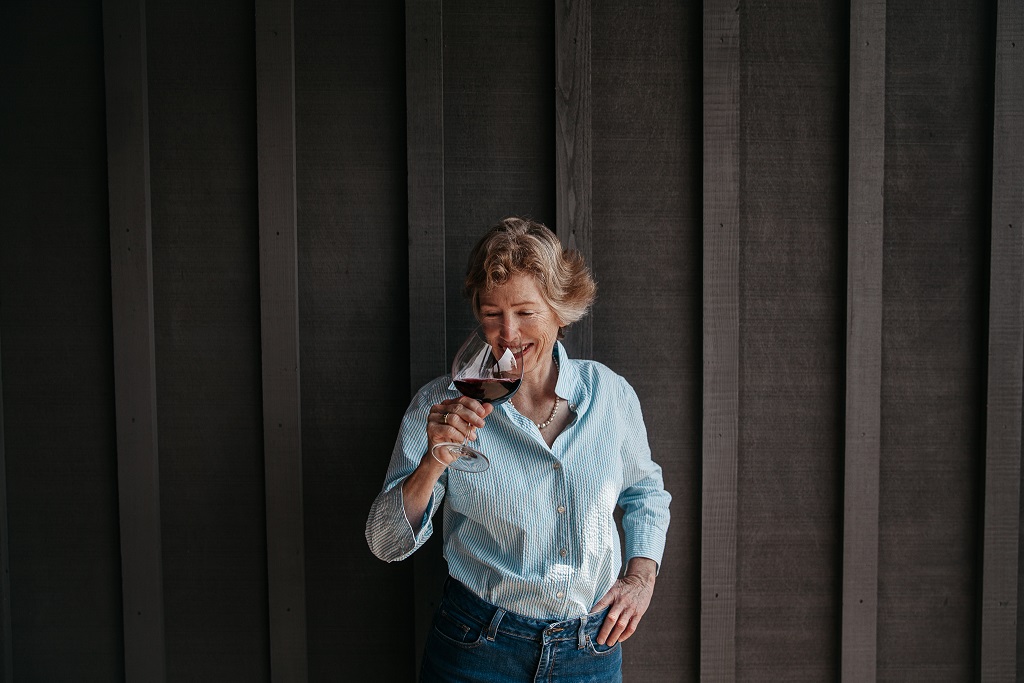
Eugenia Keegan. Source: Jackson Family Wines
A conversation about Oregon’s Willamette Valley wine inexplicably means a conversation about Pinot Noir. As you probably know by now, conversations about Oregon’s Pinot Noir had been one of the longest-running themes on the blog, a collection of winemaker interviews under the Stories of Passion and Pinot. As most of Eugenia’s winemaking career rotated around Pinot Noir, I thought that a conversation with her would be a great addition to the series – and with the help of Carl Giavanti, I managed to sit down (virtually) and talk with Eugenia.
Here is what transpired in our conversation:
[TaV]: How is this managing 4 different wineries with their own established style and following? Do you enforce JFW brand identity or encourage individuality?
[EK]: Individuality is a major part of our success. JFW provides the tools and overarching guidance (safety and quality). Each winery is encouraged to find its own personality based on the estates and people that are key to that brand.
[TaV]: You personally produced Pinot Noir in California and Oregon. If it is at all possible to “average out”, how would you describe the difference between California and Oregon Pinot Noir?
[EK]: Weather and light are the key differentiating factors when comparing these two areas. The long summer evenings allow the grapes to catch up to a warmer area like parts of California that bud out earlier and the cool Septembers allow the Oregon fruit to mature during cooler days, pushing fresh fruit and higher acidities.
[TaV]: You started in the wine early, and you were born in Sonoma, so wine obviously is in your DNA, but nevertheless – did you have a pivotal wine in your life? The one you tasted and said, “now I understand”?
[EK]: Yes indeed! But after I was in the business. I recall with absolute clarity while in Ireland having a 1985 Louis Latour Corton Charlemagne and “knew” that this was the benchmark of great chardonnay and have been in pursuit of that ever since. There were many fabulous Burgundies, both red and white, along the way that continue to provide inspiration years later.
[TaV]: Thinking about your long career in wine, do you have any regrets? Is there anything you would do differently knowing what you know now?
[EK]: I would have stayed in Burgundy longer. After each of my stagiaire I quickly came home excited to apply what I had learned. If I knew then how long a road this would be, I would have stayed longer and probably have tried to work there full time.
[TaV]: What is the sustainability story for Jackson Family Wines in Oregon? Where are you now and what are your plans for the future?
[EK]: Throughout our 40 years in business, the Jackson family has long prioritized natural resource conservation and environmental stewardship. We embrace climate-smart farming and winemaking practices that lower our environmental impacts, including preserving open space to building soil health and reducing our water and energy use. These sustainability values and practices extend to all regions where we grow and make wine, including Oregon. In fact, our Oregon properties have been on the forefront of many initiatives that we’re proud of as a global wine company. Less than 35% of our total acres are planted to vines to protect natural habitats and wildlife. Each year, we generate enough onsite renewable energy to offset the annual consumption of approximately 15 homes in Oregon. It’s also worth pointing out that our WillaKenzie Estate was the first LIVE-certified winery in Oregon, so it has a long history and legacy of sustainability leadership. All of our other Oregon vineyards and wineries are also certified through the LIVE program.
So, whether it’s through sustainability certification, our commitment to protecting natural habitats, or use of renewable energy, Oregon has had a positive impact on our overall Jackson Family Wines Rooted for Good: Roadmap to 2030 sustainability and climate action efforts. And, they will play a major role in our efforts to reach or goals for 2030.
[TaV]: Are there any plans to convert to organic viticulture at any of the JFW properties in Oregon?
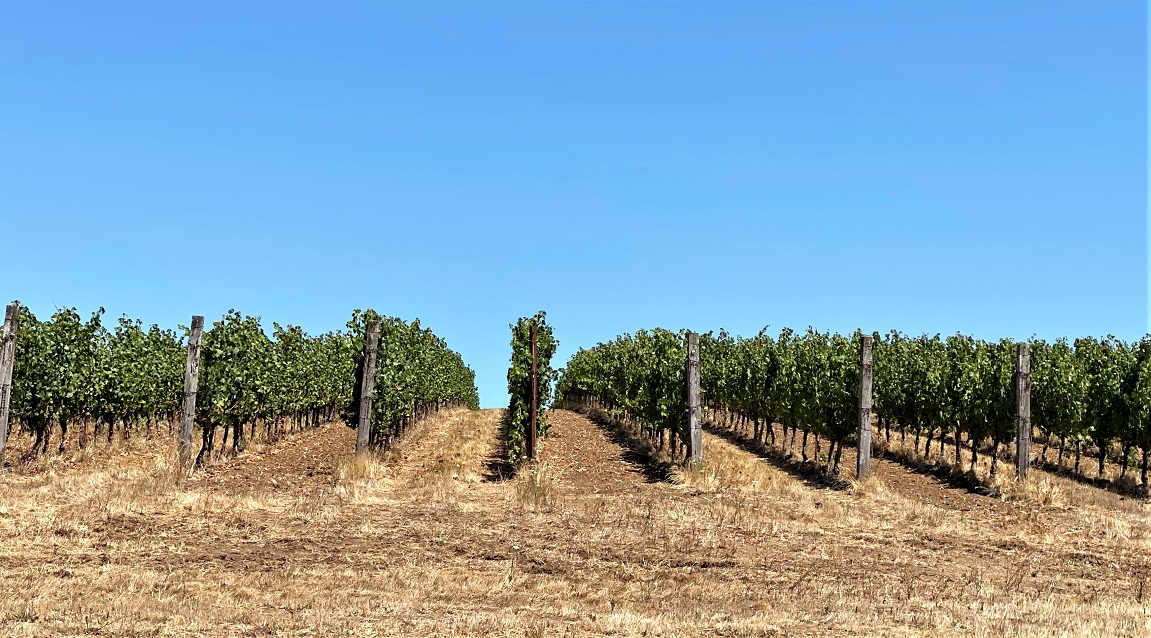
[EK]: At this time, there is no plan to convert our estate vineyards towards organic farming in Oregon. As I mentioned all our vineyards are currently LIVE certified and as part of our Rooted for Good: Roadmap 2030 sustainability plan, we made a commitment to transition 100% of our estate vineyards to regenerative farming practices, including in Oregon. We believe this transition to regenerative agriculture is the best approach for maintaining a healthy ecosystem. By using a lighter touch, regenerative farming will leave our lands healthier for future generations so we can continue to craft distinctive, beautiful wines for the next hundred years. For us, we define regenerative farming as a set of farming principles and practices that increases biodiversity, enriches soil heath, improves watersheds and enhances the ecosystem surrounding our vines. Key regenerative farming practices include rebuilding soil organic matter through limited tillage and adding carbon rich compost and other nutrients; increasing biodiversity in and around our vineyard with cover crops and livestock integration (sheep + chickens); and reducing synthetic chemical inputs. Beyond the environmental benefits of regenerative farming, we also believe it’s the best approach for wine quality.
[TaV]: We repeatedly hear that the young generation (Gen Z, I guess) doesn’t want to drink wine. Do you agree with this? If yes, what needs to be done to change that?
[EK]: I think that the approach to wine is very different for younger consumers. My generation grew up with wine as mystical and magical. Everything was done in the ancient European tradition. I think for people growing up in the US now, wine is just another beverage option, not an extension of some old culture. I consider this a huge opportunity to move outside the traditional European varieties and styles and a chance to experiment. And along the way I believe that many will find the same magic and mystery of the ancients.
[TaV]: This might be the only question I like to ask all the winemakers I’m speaking with – what is your take on biodynamic viticulture?
[EK]: There are two things that I love about biodynamics: the whole farm concept and the attention to detail. And the beauty is that these two principles apply to any approach to farming and land stewardship.
[TaV]: What is ahead for the Willamette Valley wine in general? What do you think will happen over the next 10 years?
[EK]: I think that in the traditional world we will see Chardonnay and sparkling wines take their position on the global stage next to our Pinot Noirs. And I think that we will see a lot of new and interesting wines from the younger winemakers.
[TaV]: Are there any plans to add more wineries to the JFW collection in Oregon?
[EK]: We are always looking for the best sites for winegrowing everywhere in the world. Oregon is no exception, but for now we are pretty busy with what we have.
[TaV]: Is there a wine you always wanted to make but still didn’t have a chance?
[EK]: Working with Pinot Noir and Chardonnay for 50 years has been everything that I could ask for. But I would not mind taking a crack at Chenin Blanc and Grenache, two of my favorite wines.
[TaV]: Are there any problems facing Oregon wineries now, or is everything is perfectly clear on the horizon?
[EK]: There is climate change of course. The fascinating thing about climate change is that it is a global challenge. EVERY winegrowing area in the world is facing this same issue. That helps in working toward solutions. But nothing that is existential to Oregon.
[TaV]: Can Oregon ever produce the wine rivaling DRC? Leaving the image aside, maybe a better question is: is there an Oregon Pinot Noir that you know of which can take on DRC in the blind tasting?
[EK]: HA, that is a loaded question! Oregon cannot make Burgundy anymore than Burgundy can make Oregon. Can Oregon wines give one the same pleasure and satisfaction as the great wines of Burgundy? Yes indeed.
[TaV]: Do you have unicorn wine? The wine you always wanted to try? For example, I have two – DRC and Quintarelli Amarone. What would be yours?
[EK]: After several hours of thinking about this, the answer is no. BUT having said that I still have that same thirst for winegrowing knowledge that I had 50 years ago and continue to explore new regions and wines every day.
[TaV]: You and David Adelsheim have been friends and partners for a long time. How did you meet and how would you characterize your relationship? Do you talk business or keep church and state separate?
[EK]: David and I met at the Steamboat Pinot Noir Conference in the early 80’s. We found that we shared a lot of interests in common not just being fully engaged as producers of Pinot Noir (before Sideways) in full throttle pursuit of wine quality and healthy sales. We are still the very best of friends with a dash of romance thrown in. NO, there is no division of church and state. We talk wine ALL the time.
Here you are – another addition to the Stories of Passion and Pinot. I hope you enjoyed this encounter with the winemaker’s passion and maybe even learned something new.
Until the next time…
P.S. For more stories of Passion and Pinot please visit the series’ main page.
Last Bottle Sign Up ($10 credit)




 Talk-A-Vino