Archive
How To Cool Yourself Off On A Hot Summer Day
The heat is rising.

Photo by Quốc Bảo from Pexels
 This is not a metaphor – the summer is here, the temperatures are pushing up to the “beyond comfort” level, and the question is real – how do you cool yourself off?
Of course, there are lots and lots of solutions – from very low-tech fans, powered by one’s own hand, to the battery operated misters, neck braces and more – but this is the wine blog, remember? Thus we will not be talking about any gadgets, neither low-tech nor high-tech. We are going to proceed with our simple, you can even call it simplistic, approach – “wine is the answer, what is the question?”
To tame down that heat, we are going to ask for the help of mountains, called the Dolomites, or Dolomiti in Italian. The Dolomites are the mountain range located in northern Italy; they are a part of the Italian Alps, and overall they are located in the Alto Adige region. The Dolomites are known for its striking beauty and intense contrasts. The whole area is considered the world’s treasure and was designated as a UNESCO World Heritage site in 2009.
Alto Adige is one of my favorite Italian wine regions, especially when it comes to white wines. The mountain climate, soil, vineyard elevations – everything which we know as terroir, all take part in producing the wines of character. Thus when I was offered a couple of wines from the region for the review, I gladly said “yes, please” – with or without a summer, Alto Adige, Trento, and all of the sub-regions, such as Vigneti delle Dolomiti, always promise to surprise you, and generally, in a good way.
The history of Alois Lageder started in 1823, first as a wine merchant business in Bolzano. Next generations of Lageder family started acquiring vineyards and experimenting with making the wine, and in 1934, Alois Lageder III purchased wine estate in Alto Adige, which became the starting point of the modern period for Alois Lageder Estate. With attention to the quality becoming paramount since the 1970s, today Alois Lageder’s 125 acres of the family estate are farmed biodynamically. You can visit the winery’s website for more information – it is not only the information, you will also find some stunning photographs there.
In addition to producing more than three dozens of different wines, Alois Lageder is also involved in the number of special projects. One such project is called Terra Alpina and it is dedicated to the striking beauty of Dolomites, it is an attempt to convey that beauty in the liquid form – take a look at this picture:
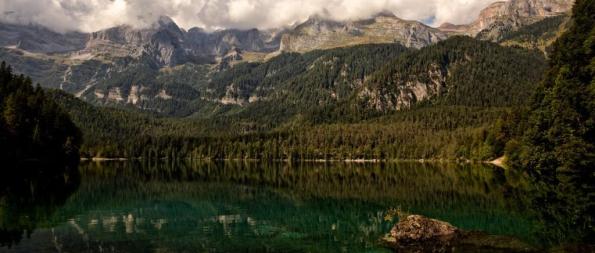
Source: Terra Alpina by Alois Lageder website
The wines in the Terra Alpina project produced via the partnership with local grape growers and winemakers in the Vigneti delle Dolomiti area. Currently, there are two wines produced under the Terra Alpina label, Pinot Bianco and Pinot Grigio – these were the wines I received for the tasting.
When the wines arrived, at first I even thought I got two bottles of the same wine – they looked very similar. After a few seconds, I figured out that this was not the case, and those were actually different wines. While the bottles looked similar on the outside, once I opened the wines, there was no question of similarity – the wines were beautifully and distinctly different, with Pinot Bianco strongly minerally-driven, and Pinot Grigio showing a perfectly noticeable, but the well-balanced amount of fruit – you can see my notes below.
Were these wines capable of delivering on the “cooling off” promise? Perfectly so. While different, both were fresh and bright, dropping a few degrees off a summer heat with every sip. The wines would be perfect on its own, but they would also play very well with food. And please make no mistake – while the wines offer a welcome relief to the summer heat, these are excellent, year-around, versatile wines, which offer a great value, and perfect for any day, and every day.
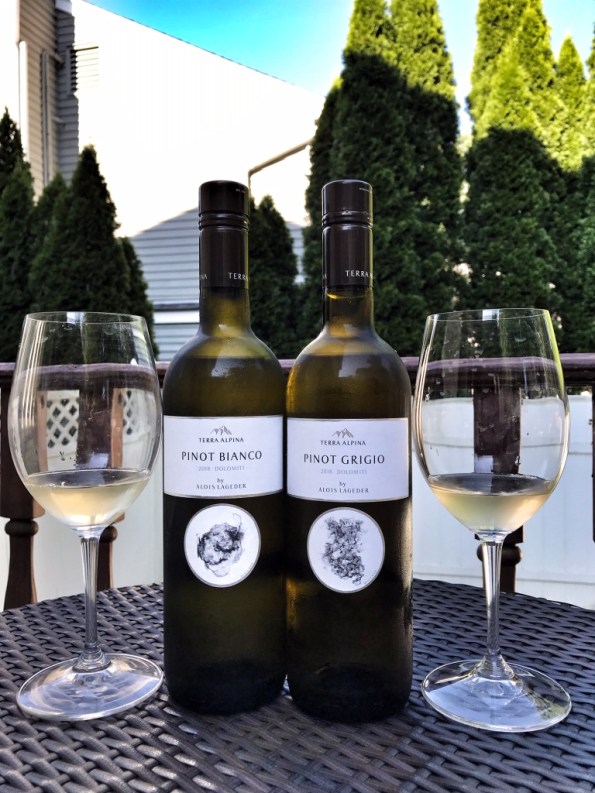
2018 Alois Lageder Terra Alpina Pinot Bianco Vigneti delle Dolomiti IGT (12.5% ABV, $15)
Straw pale
Touch of sweet apples, lemon, minerality
Crisp but buttery, noticeable salinity, minerally driven, dry, refreshing, lemon, lemon finish.
7+/8-, very nice
2018 Alois Lageder Terra Alpina Pinot Grigio Vigneti delle Dolomiti IGT (12.5% ABV, $16)
Light golden, a shade darker than Pinot Bianco
Intense, tropical fruit, guava, candied lemon, honeysuckle
Crisp, also a bit buttery and round, fresh lemon, vibrant, refreshing, delicious.
8-/8, excellent, passes room temperature test with flying colors
Here is my summer cooling off story. What’s yours? Cheers!
Daily Glass – Pinot Grigio To Ask For By Name
 Blind tasting is probably the most difficult part of any of the Guild of Sommeliers examinations. It is one thing to memorize the names of the hundreds of the German villages producing Riesling. It is an entirely different thing to be able to distinguish, let’s say, Cabernet Sauvignon and Merlot, and identify a possible region, vintage and even a producer.
As with anything humans do, blind tasting also has its own set of “tricks” associated with it. Some of them perfectly legitimate – for instance, Nebbiolo wines (Barolo, Barbaresco, etc) typically have red brick hue in the glass, even when young, so this is a great “giveaway” for the blind tasting. Or the fact that the tannins from the American oak are perceived more in the back of the mouth, versus the French oak, which comes in front.
But then some of the “tricks” have nothing to do with the characteristics of the wine. Here is one, a statement by the Master Somms running the exam: “we will never pour Pinot Grigio for your blind tasting”. Pretty good hint, right?
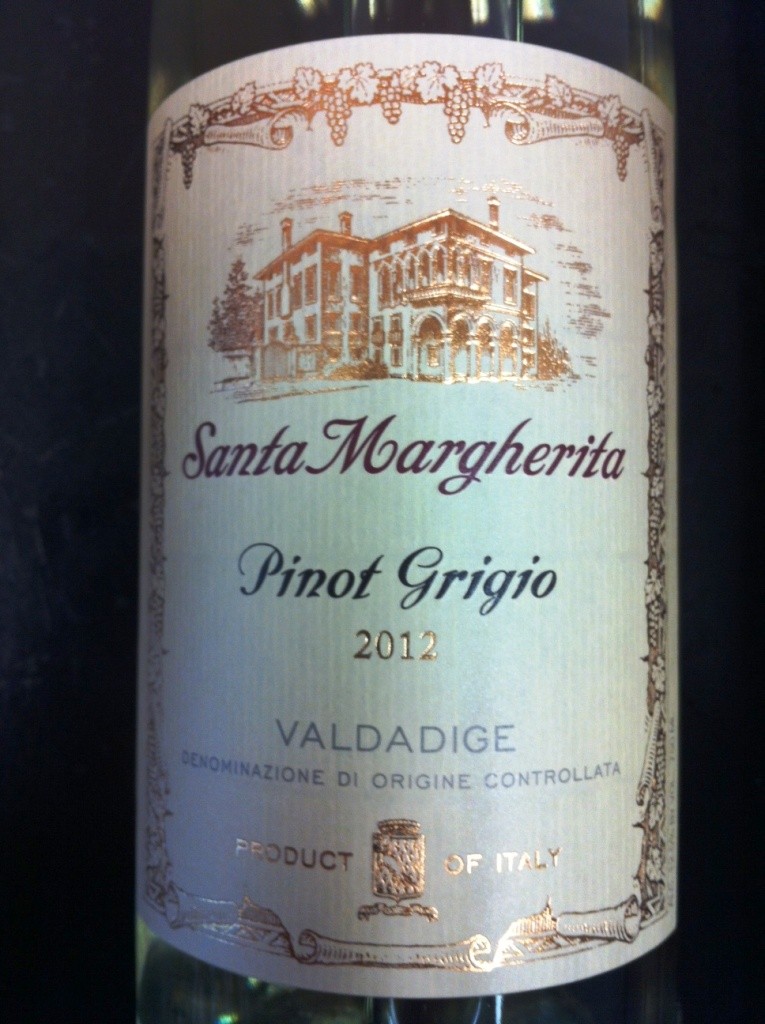
To a degree, Pinot Grigio became a victim of its own success. Santa Margherita Pinot Grigio became an overnight sensation in 1979, driving demand for the Pinot Grigio wines in the USA. That, in turn, led to the appearance of the great number of “imitations”, Italian Pinot Grigio which had no bouquet or a flavor but was very easy to drink and affordable. Fast forward on, and Italian Pinot Grigio became the “wine to ignore” for any self-respecting oenophile, next in line to White Zinfandel.
But let’s not forget that Pinot Grigio is simply an Italian name for the grape known throughout the world as Pinot Gris. As soon as one hears Pinot Gris, I’m sure Alsace comes to mind first, and then, of course, the Oregon. Alsatian Pinot Gris is extremely well respected among wine lovers, beautiful when young and amazing with some age on it. Oregon Pinot Gris is beautifully crisp, clear and flavorful, and as such, a popular choice for the wine consumers as well. So why can’t Italian Pinot Gris, err, Pinot Grigio be a well respected and delicious wine?
Well, it can. There are many producers who make Italian Pinot Grigio a wine worth seeking and drinking – for instance, how about Elena Walch or Livio Felluga – if you never had their Pinot Grigio, this is a mistake which you need to correct ASAP. And here is one more Pinot Grigio which you need to ask for by name – the one made by Terlato.
Terlato is a very well respected wine importer – and by the way, Tony Terlato was responsible for the overnight success of Santa Margherita, creating that Pinot Grigio phenomenon in the USA. Terlato Family also goes beyond just importing, producing the wines under their own label around the world. The wine I suggest you will look for is Terlato Vineyards Pinot Grigio from Friuli. It is very different from the mainstream – in Terlato’s own words, “First we pioneered Pinot Grigio. Now we’ve revolutionized it”.
Friuli region is nestled in the foothills of the Alps, in a close proximity to the Adriatic sea, which creates great winegrowing conditions. Add to that poor soils and hillside vineyards with 20-30 years old vines, harvested by hand in the small plots, and you’ve got an excellent foundation for making a delicious wine.
Here are my notes from the tasting of this wine:
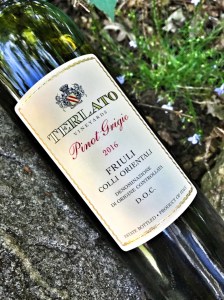
2016 Terlato Vineyards Pinot Grigio Friuli Colli Orientali DOC (13% ABV, $22.99)
C: light golden
N: intense, minerally, touch of honeysuckle, white stone fruit and fresh brioche, very promising.
P: crisp acidity, touch of gunflint, pronounced lemon, touch of freshly cut grass, medium body softly coating the mouth. Great complexity.
V: 8/8+, wow, very impressive.
Here you are, my friends. Next time you are looking for a bottle of wine, you might want to include Pinot Grigio into your shopping list. Trust the producer, and you might uncover something new to enjoy. Cheers!
Wednesday’s Meritage – Wine Quiz Answer, How To Make Wine Into a Cult, Interesting Videos, Few Reminders and more
 Meritage Time!
First and foremost, the answer to the weekly wine quiz #67, grape trivia – Pinot Gris, a.k.a. Pinot Grigio.
In the quiz, you were supposed to answer 5 questions about Pinot Gris grape – here are the questions, now with the answers.
Q1: Name Italian Pinot Grigio wine which is considered a golden standard of Pinot Grigio in the United States (people really ask for it by name).
A1: Santa Margherita. In the 1979, a few cases of Santa Margherita were shipped to US by Billy Terlato, the wine importer. The marketing campaign in the 1980s happened to be pure genius ( I guess, I didn’t witness the campaign, but I can see the results) – the rest was history. In 2006 Santa Margherita alone sold 8.5M (that’s millions to you) bottles of Pinot Grigio worldwide, 65% in US. Mind-boggling, if you ask me… You can find some additoinal interesting information in this Imbibe.com article.
Q2: Name two famous regions in France which used to make wines out of Pinot Gris, but not anymore
A2: Both Burgundy and Champagne used to make Pinot Gris wines in the 18th century. Nowadays, both regions still grow Pinot Gris, but practically never use it for the mainstream winemaking.
Q3: When do you think Pinot Gris was first planted in Oregon?
a. 1947, b. 1966, c. 1978, d. 1990
A3: 1966. David Lett of Eyrie Vineyards planted first Pinot Gris vines in Oregon in 1966.
Q4: Wine Spectator calls wines rated in 95-100 range Classic. True or False: there are more classically rated Pinot Gris wines than Sauvignon Blanc?
A4: True. There are quite a few Pinot Gris (no Pinot Grigio, of course) with very high ratings, including 2001 Zind-Humbrecht Pinot Gris Alsace Clos Windsbuhl Sélection des Grains Nobles, which got 100 points. The highest of Sauvignon Blanc ratings belongs to 2005 Didier Dagueneau Pouilly-Fumé Pur Sang (97 points), and overall there are very few Sauvignon Blanc wines in the Classic ratings range.
Q5: During early 2000s, producers in Alsace had to change the way the Pinot Gris wines were typically labeled (you can still find the old name on the bottles from 1990s and before). Do you know what was changed and why? As an added bonus, please explain the origin of the old name.
A5: As with many grapes, the story is quite interesting. Pinot Gris originated in Burgundy, some time in 12th century. From there, it made it to Hungary, and then in 16th century it made it to Alsace, now under the name of Tokay d’Alsace. At the same time, Tokay ( Tokaj to be precise) is the name used for one of the best Hungarian wines, so in 1993 the agreement was reached in EU to phase out the use of “Tokay” in Alsace, which was completed in 2007.
I’m glad to tell you that we have the winner this time! Jeff, a.k.a. The Drunken Cyclist, nailed all 5 questions – he also did it Google-free, which deserved a special commendation – however I can only offer a double amount of the typical prize – unlimited bragging rights. Double unlimited? Not sure how that should work… but great job Jeff!
Now, to the interesting stuff around the vine and web!
First, here is an interesting story for you on how to make the wine into a cult wine. The story was published in the Drinks Business online magazine, so it is written more a trade article, but it makes an interesting reading nevertheless.
Now, I have two important reminders for you:
August 14th – Wine Blogging Wednesday event, #WBW80 – Dry Rosé. All you need to do is to write a blog post pertinent to the subject, and submit it to the host. For all the details please click here. Let’s make it a success!
August 16th – deadline for submission for the Monthly Wine Writing Challenge #2, with the theme called Trouble. You can find all the rules here. I personally have big trouble with this trouble, so I’m not sure if you will see an article from me… Oh well – I’ve seen a few submissions already, and they were worth the trouble!
Thanks to the tweet from the fellow oenophile Peter L. Zachar (@PeterZachar ), I came across an interesting series of videos about Bordeaux. Recorded by James Cluer, Master of Wine, the series is presenting some of the greatest estates in Bordeaux. Below is the first video of the series, and you can follow it from there.
And this is all I have for you for today. The glass is empty – but the refill is coming. Open something great tonight, and until the next time – cheers!
Weekly Wine Quiz #67: Grape Trivia – Pinot Gris, a.k.a. Pinot Grigio
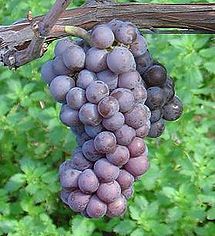
Pinot Gris cluster, as pictured in Wikipedia
Welcome to the weekend and your new wine quiz! Today’s subject is the grape called Pinot Gris, probably even better known as Pinot Grigio.
Pinot Gris is an old grape, cultivated since the middle ages in various regions in France. It had been shown based on the latest DNA research, that Pinot Gris is a very close relative of Pinot Noir. As you can see from the picture, the color of the grapes are somewhat of the grayish purple, and that what the “Gris”, or “Grigio” in the name stands for – Gray. It is almost a bit surprising that the white wine is made out of a grape with such a color of the skin.
Pinot Gris popularity in the world is steadily increasing, even surpassing Riesling and becoming third most popular grape in the world (I couldn’t find convincing numbers to this claim though). Pinot Gris was growing and producing great wines in Alsace since the 16th century, but it was Italian Pinot Grigio which created this world-wide phenomena in 1970s, propelling the grape from very local consumption in Italian restaurants to such a mass phenomena. I wonder if there is a book about geniuses of marketing who managed to create this Pinot Grigio revolution – this must be a fascinating read. Just to give you an interesting fact – Pinot Gris plantings in New Zealand increased 6.5 times (!) in 5 years from 2003 to 2008 – yeah, talk about popularity.
When it comes to the taste, it is interesting to note that there is a very substantial range of expression in the Pinot Gris wines. A lot of Italian mainstream Pinot Grigio has almost water-like consistency both in the taste and appearance (this is why many people presumably like it, and this is also why this type of wine is never served in my house – sorry for the sidetrack). But even in Italy, when you go further north to the Alto Adige region, the wines will show a lot more substance, with nice acidity and minerality. Then you got Oregon Pinot Gris, which typically have a perfect combination of white stone fruit and acidity, and going all the way back to Alsace, Pinot Gris makes luscious, opulent, full bodied white wines.
Now, let’s get to our quiz, shall we?
Q1: Name Italian Pinot Grigio wine which is considered a golden standard of Pinot Grigio in the United States (people really ask for it by name).
Q2: Name two famous regions in France which used to make wines out of Pinot Gris, but not anymore
Q3: When do you think Pinot Gris was first planted in Oregon?
a. 1947
b. 1966
c. 1978
d. 1990
Q4: Wine Spectator calls wines rated in 95-100 range Classic. True or False: there are more classically rated Pinot Gris wines than Sauvignon Blanc?
Q5: During early 2000s, producers in Alsace had to change the way the Pinot Gris wines were typically labeled (you can still find the old name on the bottles from 1990s and before). Do you know what was changed and why? As an added bonus, please explain the origin of the old name.
Have fun, enjoy your weekend and cheers!
Last Bottle Sign Up ($10 credit)




 Talk-A-Vino