Archive
Weekly Wine Quiz #57 – Grape Trivia: Grenache, a.k.a Garnacha

Grenache Noir picture from Wikipedia
And we are continuing the Grape Trivia series – today’s focus is the red grape called Grenache (also known as Garnacha and Garnaxta in Spain).
Grenache is one of the most planted red grape in the world. It is a late ripening variety, which typically produces spicy, juicy, berry-flavored wines with high alcohol content. In the number of regions, such as Priorat in Spain, Châteauneuf-du-Pape in France or California and Washington in US, Grenache produces outstanding single-varietal wines, but more often than not it is used as a blending companion, adding juicy component and structure.
And now, to the quiz!
Q1: Name two grapes which are traditional blending partners of Grenache
Q2: Below is the list of countries which use Grenache in the winemaking. Sort the list by the area of Grenache plantings, from the highest acreage to the lowest:
A. Australia
B. France
C. Italy
D. Spain
E. United States
Q3: One winery in US is often credited with spearheading the success of Grenache in US. Can you name that winery?
Q4: A few centuries ago, Grenache was a popular blending addition in one of the regions in France, until it became illegal by the AOC rules. Do you know what region was that?
Q5: Same as for the number of other grapes, Grenache exists in three different grape variations – Grenache Noir, Grenache Blanc and Grenache Gris. There is one wine where it is absolutely legal to use all three grapes as the part of the blend. Can you name that wine?
Enjoy your weekend, have fun and good luck! Cheers!
Re-post: Affordable Luxuries of the Wine World: Garnacha versus Grenache
During 2011 I wrote a number of posts for the project called The Art Of Life Magazine – of course talking about my favorite subject, wine. The project closed, but I still like the posts I wrote, so I decided to re-post them in this blog. Also, in that project, posts were grouped into mini-series, such as “Affordable Luxuries” you see here – I will continue re-posting them from time to time.
If you are interested as to “why now”, it is simple – Friday, September 21st is International #GrenacheDay – and I don’t have time to write the whole new post. I think this re-post will fit the bill quite well. Here it is.
 So far we talked about and compared Hermitage and Crozes-Hermitage wines, as well as sweet wines in our quest for “affordable luxuries” of the wine world. If you remember, Hermitage and Crozes-Hermitage are made out of the grape called Syrah. Today we are going to talk about Syrah’s brethren (totally unrelated, though), the grape which is often blended together with Syrah – we are going to talk about Grenache.
Grenache is one of the main winemaking red grapes in the world. It used to be the most planted red grape in the world, with biggest planting area being in Spain (Spain actually has the biggest area planted with grapes in the entire world). Grenache, which is known under the name of Garnacha in Spain, lost its “biggest plantings” status in Spain as a lot of vineyards were replanted with other grapes, such as Tempranillo, Cabernet Sauvignon and Merlot, and France took “the most planted” helm now.
Grenache is used in winemaking both by itself and as part of the blend. In Spain, Grenache, or rather Garnacha, is main ingredient of the blend in wines of Priorat, many of which have cult status, such as Clos Mogador. In another region, Campo de Borja, it produces amazing single grape wines, for instance, at Bodegas Alto Moncayo. In France, it is a key ingredient in wines of Southern Rhone, with Chateauneuf-du-Pape being most famous – there it is typically blended with Syrah. It is also used in production of Rose wines in Provence. In Australia, it is used in so called GSM wines, where GSM is simply an abbreviation for Grenache Syrah Mourvedre, three grapes used in production of the GSM wines. In California, it is very successfully used in production of the Rhone-style wines mostly in the Central Coast area, with many of the wines also achieving a cult status (which simply means that production is limited and wines are very hard to get – of course because they are good). As usual, you can take a look at the Grenache article in Wikipedia, which provides great depth of information.
When it comes to “affordable luxuries”, there are plenty of wines which can be compared. As this is Grenache versus Garnacha battle, let’s focus on pure Grenache wines. Of course blends would be fun to look at as well, but finding some of the better ones is a challenge in itself, so let’s stay our course.
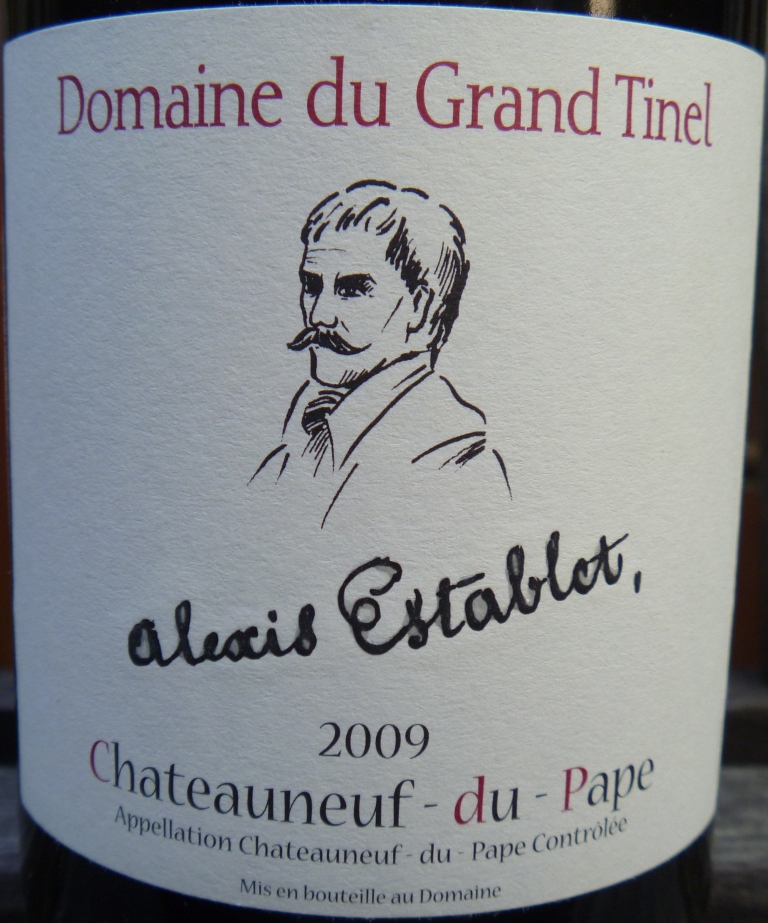
So today’s contenders are: 2009 Bodegas Borsao Tres Picos Garnacha Campo de Borja from Spain and 2009 Domaine du Grand Tinel Cuvee Alexis Establet Chateauneuf-du-Pape from France. It can’t get any better than that – we have here if not two of the best, then at least two of the most classic areas to produce Grenache wines. Both wines are 100% Grenache – which is very unusual for Chateauneauf-du-Pape, where blend can contain up to 13 different grapes.
 Let’s start with 2009 Domaine du Grand Tinel Cuvee Alexis Establet Chateauneuf-du-Pape. The wine is unfortunately way too young (give it 8-10 years, if you have enough patience, of course), but it was very drinkable from the get go – at least you get a punch of tannins at about 10 seconds after the first sip. It is very classic Grenache, with purple color, violets on the nose, and perfect balance of fruit and acidity. Don’t want to repeat myself, but it will be gorgeous – given enough time to mature.
2009 Bodegas Borsao Tres Picos Garnacha Campo de Borja is a full bodied wine, with hint of earthiness on the palate, with lots of dark fruit and hint of pepper. You can also detect violets, hint of cedar, spice box and tar. With supple tannins and medium finish, this wine is more approachable now than the previous one, but will also improve with time.
Is one of those wines better than the other? It is very hard to tell. And for the affordable luxuries, Tres Picos Garnacha costs about $12, and Domaine du Grand Tinel is about $70, so make your choice. And while you will be deciding, I’m going to raise my glass to the pleasures of wine discoveries – cheers!
Daily Glass: Claraval, Another Dangerous Wine
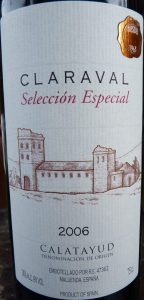 In one of the previous posts, I came up with the term “dangerous wine” – the wine which is so smooth and so good, once you start drinking it, you pretty much can’t put the glass down until the wine is all gone. Here comes the second wine from Spain which I also have to declare “dangerous”.
It is called Claraval and it is coming from the Calatayud region. This wine is a blend of four grapes – Garnacha (50%), Tempranillo (20%), Cabernet Sauvignon (20%) and Syrah (10%). The wine has sour cherries on the nose, and it opens up into a beautiful array of spices and fruit, with earthy notes coming through, all complemented by balancing acidity and tannins. If anything, this wine is reminiscent of good Southern Rhone wines (which is not surprising as it shares the same main grape, Grenache, known as Garnacha in Spain), but it definitely has its own character. Judging by the mid-palate weight and tannins, this wine will also do well in the cellar – and I was glad to see that Robert Parker think the same, giving this wine 91 rating and saying that wine will evolve all the way into 2020.
So, how much do you think such wine should cost? Nope, it is not $30, which would not be surprising at such a level of quality, it is only… $11.99, so it definitely has very high QPR. This is definitely the wine to buy by the case.
And now, it is time for the verdict (of course you already guessed it):
Drinkability: 8
What is next? The trip to Long Island wineries, which is almost a annual tradition by now – a trip to Long Island wineries in the Fall, when it is already not hot, and still very beautiful. Off we go (well, the team members have to wake up first). Report to follow…
Stew Leonard’s Wines: Meeting Winemaker Chester Osborn
 A few times lately I have come across blog posts talking about too many wines on the shelves of the stores and poor consumers being intimidated and having troubles to find what they want. Quite honestly, I find this annoying – I believe convincing consumers that they should be intimidated is the wrong thing to do. Why am I annoyed with this? Very simple. Today, you need a very few things to navigate the world of wine and feel comfortable. One is desire to learn (if someone doesn’t want to learn, it makes no sense to complain that one can not). Learning about wines simply means trying them and making an effort to remember what you like and what you don’t. Another helpful thing – finding a good wine store.
There are quite a few good wine stores where I live – I do plan to write a separate blog post (or may be a few) covering some of those in more detail. One of such good wine stores is Stew Leonard’s Wines in Norwalk, CT. What makes the wine store “good”? It is easy to navigate, it has helpful and knowledgeable personnel, and it is helping you to learn about wines. You got all of that at Stew Leonard’s Wines – easy to navigate, helpful staff and great education. What do I mean by education? When it comes to wines, education consist of learning about wines and tasting them. One of the ultimate forms of “education” then is when you can learn from the best and taste excellent wine – and did I mention that it is usually free? Yep, it is free and available, almost every Friday and Saturday, again, thanks to the folks at Stew Leonard’s Wines. Every Friday and and Saturday, you can come to the store for the wine tasting, and if you are lucky – you will also learn from the winemaker, as it was the case last Friday, September 24th , when Chester Osborn, winemaker of the famed Australian winery, d’Arenberg, was presenting his wines.
d’Arenberg produces quite a few different wines in the McLaren Vale region in the South Australia, of course with Shiraz being a star grape. Five different wines were presented at the tasting. First, Lightly Oaked Chardonnay – it is actually very nice and simple, with clear fruit and light oak expression. Then comes The Stump Jump 2008, which is also should be known at GSM. GSM stands for Grenache, Shiraz and Mourvèdre, and it is a blend modeled after wines from Southern Rhone. It is also interesting to note that Friday, September 24th was the First International Grenache Day which was proudly stressed by Chester holding up the bottle of GSM. Stump Jump is a very nice and approachable wine with great and powerful fruit expression. The next wine was classic The Footbolt Shiraz 2007 (Footbolt actually was the name of the horse), nicely showing spicy bouquet of MacLaren Vale’s shiraz (need my rack of lamb wit that one). And then the flagship Dead Arm Shiraz 2006 – great wine which will need another 15-20 years to be enjoyed fully, very earthy and dense, drinkable now, but boy, will it evolve! In case anyone wonders, the Dead Arm has nothing to do with human body parts – the name is related to the grapevine disease, which can kill part of the plant, producing “dead arm”, or a “dead branch” – in this case the grapes on the surviving part have very high flavor concentration.
And last wine presented was Sticky Chardonnay – beautiful desert wine, made from Chardonnay grapes, exhibiting honey and white peaches notes, all with nice minerals, acidity and green apple bite. At $9.99, the wine of such quality is a pure steal. All in all, it was a pleasure meetings Chester d’Arenberg Osborn, learning from him and experiencing his wines.
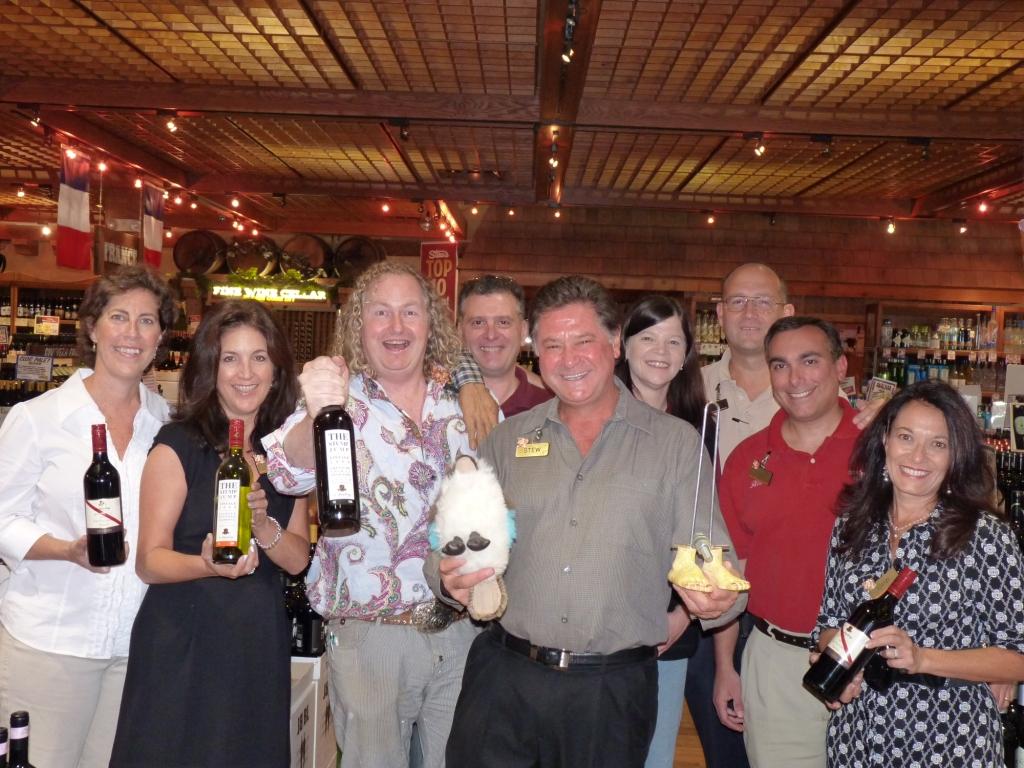
To complete the story, I would like to include a picture of the great folks from Stew Leonard’s Wines, including Stew Leonard Jr. himself:
Going back to where we started – it is not difficult to learn about wines today – all you have to do is make an effort. As one of my teachers was saying, when the student is ready, the teacher will come…
Daily Glass: Arnoux & Fils Gigondas Vieilles Vignes 2007


Gigondas is a small appellation in Southern Rhone in France, which produces the wines somewhat similar in style to the famed Chateaneuf du Pape.  Absolute majority of the wines are red, and main grape is Granache (up to 80% in the final wine based on AOC laws), with Syrah and other grapes adding up. Grenache is a very versatile red grape, used in a wide range of wines all over the world.
Considering that Robert Parker gave 2007 vintage in Southern Rhone a 98 rating ( of course this rating is generalized for the whole region and nobody expect all the wines to achieve the same rating), I had good expectations for this wine as well ( as I had already a number of great generic Cote du Rhones from 2007 vintage). Unfortunately, that didn’t play out. The problem with this wine was related to alcohol. Yes, yes, the wine is alcoholic beverage, duh, of course. But it is the balance which I’m looking for in wine. While at 14.5% ABV it doesn’t stand out in today’s wine world as super-loaded, somehow the alcohol in this wine was not integrated at all. Burning sensation of alcohol was overpowering all other smells on the nose, and burning sensation of alcohol was absolutely prevalent on the palate, even on the second day. While it was possible to catch a glimpse of leather and pepper, which is a characteristic of Southern Rhone wines, this wine didn’t achieve great deal of balance. So the rating is:
Drinkability: 7-
Well, I guess I have to keep trying…
What The Heck Is Treble and Where This Journey Is Going?
I think it is time to explain mysterious “treble journey” posts, before I will be fully declared “boring crazy win e geek”. Starting from the beginning: about 3 years ago I came across something called Wine Century club. At first I couldn’t even figure out what the name means, and then finally I realized that this is a club for people who declare (completely honor-based) that they have try at least 100 different grapes. At that point, I was into wines already for a while, and due to the fact that I do my best to keep the labels from all the different wines I happened to taste, this task appeared to be somewhat simple. By the end of 2008, I was a proud owner of Wine Century Club certificate. Then in May of 2009, when the club was celebrating it’s 4th year, I found out that there is a new challenge level – doppel. In order to become a doppel member one have to try … you guessed it right – 200 different varieties of the grapes! This was substantially bigger challenge – but challenges make our lives fun, don’t they? And there I went, and mysterious “doppel journey” notes where coming out on twitter for a while (2009 for me was an active twitting year 🙂 ). While challenging, the mission was accomplished, and I received my next certificate, which I believe was proclaiming doppel members somewhat crazy… Anyway, I was convinced that I’m done with those “journeys” – until another anniversary celebration… yep, in 2010, I found out that club now has 3 “treble” members ( and even one quattro, but that deserves another post, I believe). So yes, a 300 grapes challenge – I just couldn’t resist the urge…. So now you have to keep up with those “treble journey” updates ( even though I do make an honest effort to do them in the fun way)…
Why “journey”? This is how I see it – I’m moving along in the world of wine, looking for something new all the time, looking for any obscure place in search of the most obscure grape – I think calling this process a journey is well justified. Also, it is a real journey, as I’m not doing it alone. Wine is meant for sharing (my honest opinion) so I always make an effort to take my friends along in such a travel – remember, I did mention the fun part already?!
What else makes it fun? I get a chance to work as a detective, to unravel the mystery. Come again, you say? Well, let me explain. A lot of wine labels don’t contain any information about the grapes the wine is made of. For some of the wines such information is easy to find on the web sites. For some of the wines, it is a real challenge – you need to find a web site which is not necessarily in English, find the right wine, and then there is a decent chance that you will find the names of the grapes. You think mission accomplished? Not so fast… Problem is that a lot o grapes have different names in different regions, but it really is the same grape! Of course it is easy to figure out when french grape Grenache is called Garnacha in Spain. But what do you think of Aragonez, Cencibel, Tinta Roriz and Toro? Yep, all are synonyms for Tempranillo, the most planted red grape in the world – therefore, as you can see, there is some fun work to do in order to get to the final destination.
Obviously one can spend a lot of time and effort on this (and don’t forget money!), but I think that end result is ultimately rewarding, as with any true passion. I hope my explanation make sense, and now you will be able to ignore the geek portion, and see the fun side instead – and again I promise to make an effort to bring out the fun.
And until the next treble grape comes along – cheers!
Last Bottle Sign Up ($10 credit)




 Talk-A-Vino