Archive
Thanksgiving Experiences
 In the last post I outlined the number of wines which we wanted to taste during Thanksgiving dinner – now it is time to report on what was great and what was not.
There was nothing new with both Beaujolais Noveau compare to the previous report – except this time I remembered to chill both of them (light wines, such as Gamay and Pinot Noir usually taste better when slightly chilled). Chilling improved the taste of George’s Duboeuf, but I still like 2010 better.
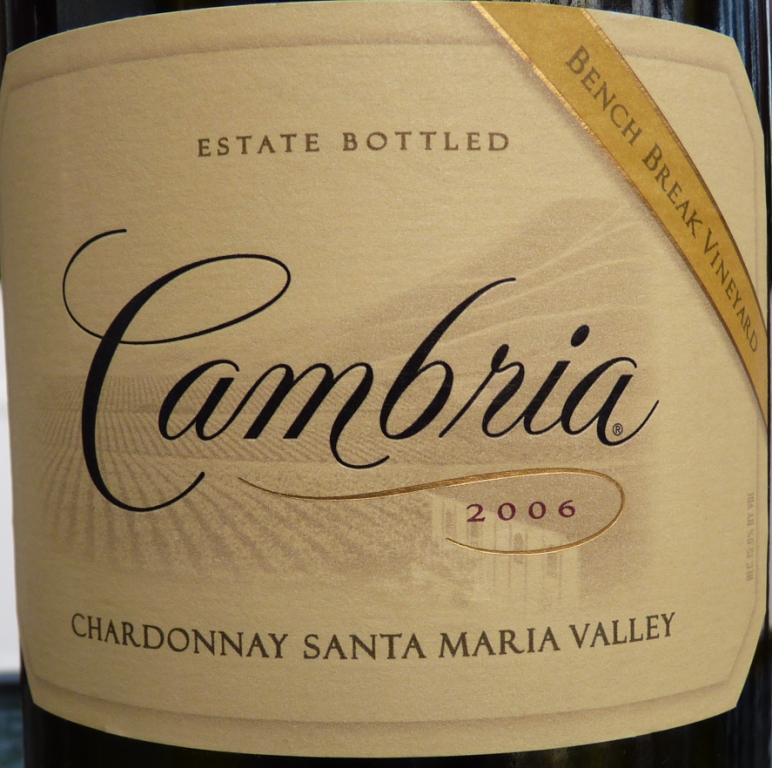
The real highlight of the lineup was 2006 Cambria Bench Break Vineyard Chardonnay from Santa Maria Valley – it was beautifully balanced, with hint of vanilla, literally unnoticeable oak, hint of white apples and perfect acidity. One word to describe this wine is Elegance – it was perfectly elegant, reminiscent of Peter Michael chardonnays which are definitely my all times favorites.
2009 Cazar Pinot Noir was very appropriate at the Thanksgiving table with its bright cranberries and very good balance. One wine which didn’t happen to work for me was 2009 Turley Old Vines Zinfandel – I understand that it was opened prematurely, but still I was expecting more from it (I have to also mention that it didn’t fully opened even after three days – I guess actual aging in the cellar is in the cards for this wine). Bodegas Hidalgo Triana Pedro Ximenez worked very well with the dessert full of nuts, such as Pecan Pie – layered complexity and nutty profile, complemented by good acidity were essential attributes of this wine.
As this is a Thanksgiving post, I have to mention the turkey. Last year our choice was Turducken (chicken inside of duck inside of Turkey), which was very tasty, but required quite a bit of preparation work. This year we decided to do a smoked turkey, which required mush lesser amount of prep time and effort – here are the pictures for you, before and after:

This turkey spent four hours in the charcoal smoker and 4 hours in the oven. The result was moist and delicious bird with lots of smoky flavor. Another dinner highlight was cranberry sauce, which was modeled after Bobby Flay’s recipe – however, it was modified to exclude sugar. If anyone is interested in recipes, I will be glad to share – please drop me a note.
This completes my Thanksgiving 2011 report – until the next time, cheers!
Wine, Aged Beautifully
 Let’s talk about aging. No, that’s not what you think – not people aging and not the world problems with the aging populations. Let’s talk about the aging of the wine. By the way, it appears that second time in the row I’m taking upon the popular subject – in the previous post we were comparing the wine glasses (post can be found here), and now the wine aging.
With all due respect (based on this phrase, my friend Kfir would tell you right away that I’m about to blast something), I completely disagree with the majority of the popular opinion on the subject of wine aging. Open a wine book, read a wine blog, or ask a question on Quora, and for the most part, you will get an answer that 95% of the wines are not supposed to be aged and should be consumed within a year or two from the release date.
Based on my personal experience, I disagree with this viewpoint. I can’t put a percentage or a quantity on it, but I believe that well in excess of half of the wines produced in the world (not by the volume, but by the variety of the actual wines) can age very well for 5 to 10 years – and “age well” means “to improve with age”. My biggest problem with the aging of the wines is … space. If you want to drink aged wine, you either need a lot of space, or you need [typically] lots of money, as most of the aged wines increase in price. If you have a cool and dark area with constant humidity, you can buy wines as they are released. store them and enjoy them later as they evolve and mature. Otherwise, you need to have money and a reputable source of the aged wines (improper storage conditions will ruin any wine in no time). Once you solved your space problem, the rest is easy.
How easy is that? How can we know if that bottle of wine will age well – read: improve with age? There are way too many factors affecting the aging of the wine, and being able to predict age-worthiness of the wine (age-worthiness means that wine will evolve and taste better in the future) is more art than science. As an example, Matt Kramer, one of my favorite wine writers identifies age-worthy wines using characteristic of the mouth-feel, a mid-palate weight of the wine in the mouth. Here is my take on the subject. First, yes, of course, some of the wines are meant to be aged – for instance, Beaujolais Noveau is released in November and should be consumed by May of next year. Outside of the wines which are designated by winemakers as “do not age”, the majority has some aging potential. I believe the biggest dependency here is on the winemaker and what she or he wants to achieve with particular wine – if wine is well made, there is a good chance that it will also age well.
Some wines are helped by their “DNA” – under which I mean from what grape and where in the world the wine is made (of course good/bad year matters too). California Cabernet Sauvignon expected to [typically] reach maturity at around 13 years. Bordeaux easily ages for 30-50 years. Syrah-based wines, whether from Australia or France, can live for 50 years. Many 50-years old Riojas are fresh and vibrant as being just made. But “DNA” alone is not enough – wine should be well made in order to age well.
If you are still reading this post, I guess you might be tired by now by this prolonged escapade into the wine aging, and you might be wondering why, why is all that wine aging might be important? Well, I can’t answer this question. At least not before you will find the wine with a little age on it, which will blow you away. Yes, it is an acquired taste. But once you will actually acquire that “mature wine” taste, this is what you are going to crave, I guarantee you.
 Let me share some recent and exciting discoveries. Let’s start with 1995 Flora Springs Chardonnay Napa Valley. This wine is made out of 100% Chardonnay. While the nose was not very expressive, the level of complexity of this wine is unimaginable. Yes, considering dark golden color, this wine might well be past prime, and without that “acquired taste” for the aged white wine, you might be even upset after the first sip. This wine was exhibiting notes of vanilla which almost moved up to some sort of the almond paste, still showing some acidity. Next are savory notes, almost to the level of saltiness, which was increasing the complexity even further. The wine was in a very stable shape as it tasted the same on the second day as well. Will this wine evolve further? Who knows – but I would be very happy to taste this wine again in five or maybe ten years. Drinkability: 8
 The next wine is 1992 Domaine de Thalabert Crozes-Hermitage from France. Crozes-Hermitage wines are made primarily out of Syrah, typically with a very small addition of Marsanne and Rousanne grapes. As we mentioned before, Syrah wines age quite well, and this was an excellent example of the well-aged Syrah wine. This wine was very playful and soft, with lots of red fruit on the nose and on the palate, very good acidity and a good level of tannins. This wine probably will continue evolving for the next five to ten years, and again I will be glad to help you share the bottle later on – if you will have one. Drinkability: 8-
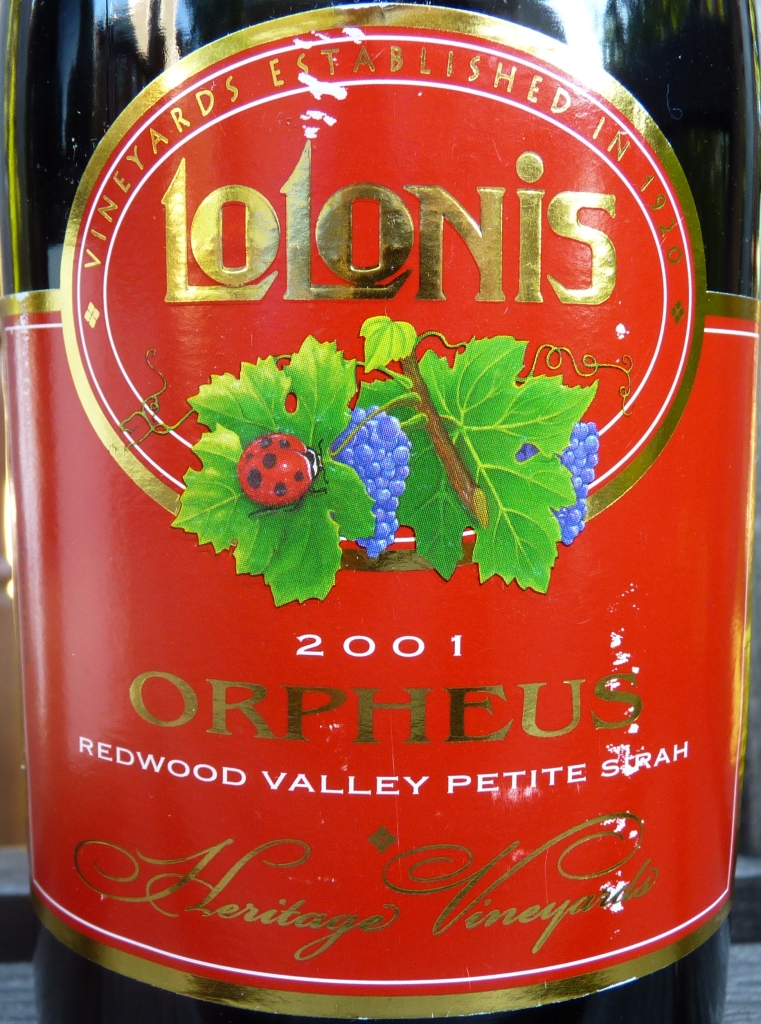 Going back to California, 2001 Lolonis Petite Sirah Redwood Valley. In short – outstanding. This 10 years old wine was completely fresh and beautiful. It is made from organically grown Petite Sirah grape. The wine showed perfect dark fruit, good acidity, full body, excellent tannins, and perfect overall balance. This wine might be evolving for the next 10-20 years – again, the trick will be to find it.
Drinkability: 8+.
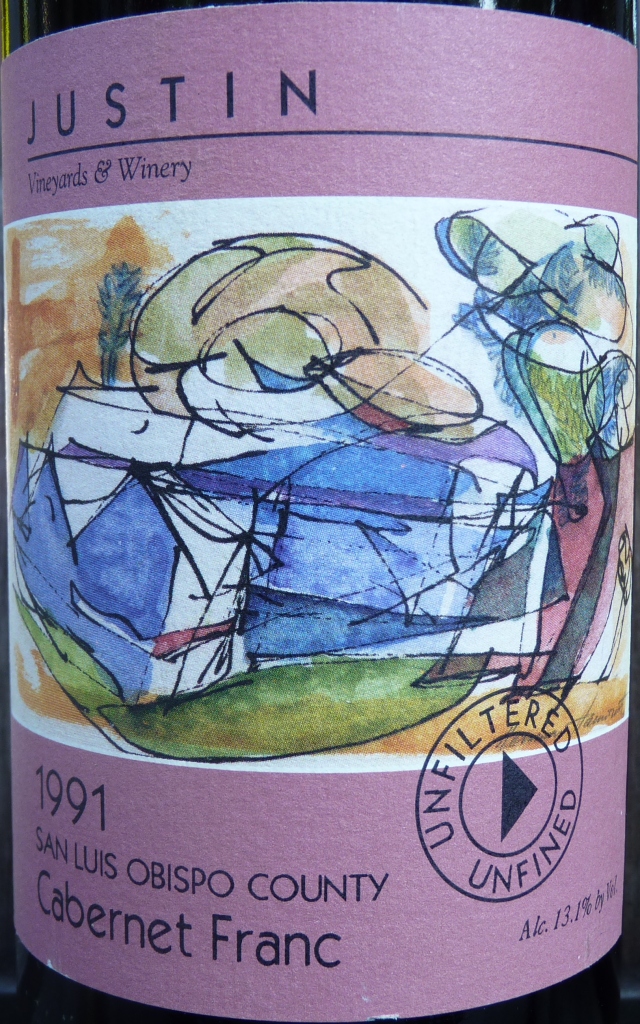
Last, but not least, 1991 Justin Cabernet Franc, San Luis Obispo County. This was the “wow” wine, that exact mind-blowing one. First, while I like Cabernet Franc wines, I had no idea they can age so well. I can literally guarantee that in the blind tasting format, very very few people would be able to guess the age of this wine. Deep garnet color, not a hint of age (no brownish overtones at all). Perfect fresh fruit, soft and luscious, a perfect balance of tannins and acidity. This wine was the oldest in the tasting, and it was definitely the best of tasting. Considering how good it was now, I can’t even guess how much time it has left – but I would be very glad to find a few more bottles to be “wowed” again in the future. Drinkability: 9-
One note before we conclude – this was a rare case of someone doing all the hard work, and me enjoying the results – I got all wines from Benchmark Wine Company and each one of them had been less than $20.
Don’t know if you got the desire to seek well-aged wines – I hope you will one day. For now, I can only wish upon myself, my family, all my friends and all of you, my readers, to age as beautifully as this Justin Cabernet Franc does. Cheers!
Cakebread Cellars Tasting at Stew Leonard’s Wines
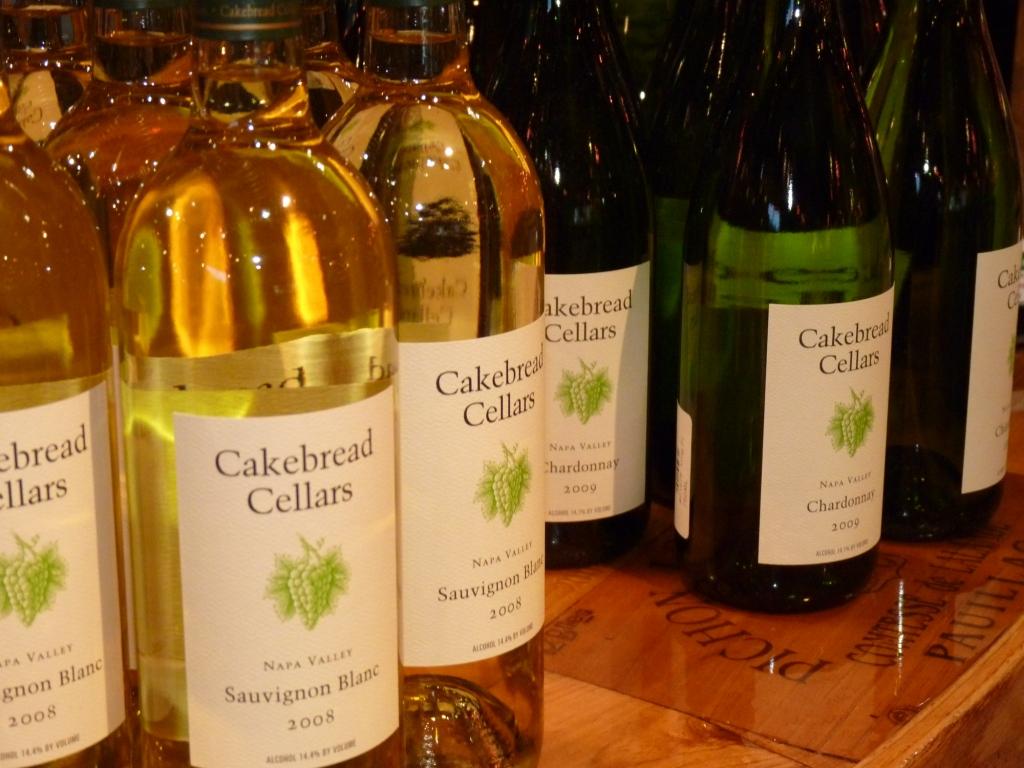 And again I have to thank Stew Leonard’s Wines folks for a free education session. This Friday and Saturday (October 1st and 2nd) you can try three different wines from the Cakebread Cellars. Cakebread cellars is a well regarded producer from Napa Valley in California, so I definitely was interested in experiencing their wines.
Two whites and one red were presented, all classical wines from Napa Valley – Sauvignon Blanc 2008, Chardonnay 2009 and Cabernet Sauvignon 2006, and I tasted them in this exact order. Just to share an overall expression – there are good wines, but I didn’t like them, especially taking into account QPR (Quality Price Ratio), a very popular metric used nowadays among wine aficionados. Sauvignon Blanc has a very nice nose, but on the palate it lacks the acidity, and while it finishes with the fresh cut grass (classic Sauvignon Blanc characteristic), the sensation is too warm and a bit burning. Considering this wine retails for $29.99, I would gladly take any time New Zealanad Sauvignon Blanc instead at $10 to $15 a bottle.
Chardonnay simply didn’t do anything for me. It is very young, somewhat of a Chablis style, but it was missing steely acidity of Chablis. I understand it is 2009, and it might need more time to evolve, but at $39.99 there are so many more better choices, I wouldn’t even go there.
And then the Cabernet Sauvignon, the king of Napa Valley wines – beautiful nose of classic cab, but no mid-palate weight and in general, not enough substance on the palate. At $74, it is really not a player – if not under $20, in the $30 – $40 category there are soooo many better choices…
To conclude, these Cakebread wines are definitely worth trying – and learning. I also have to tell you ( but it is a secret), that tomorrow I plan to try some very interesting wines – and I promise to report on that later on!
Last Bottle Sign Up ($10 credit)




 Talk-A-Vino