Archive
Alcohol Shenanigans
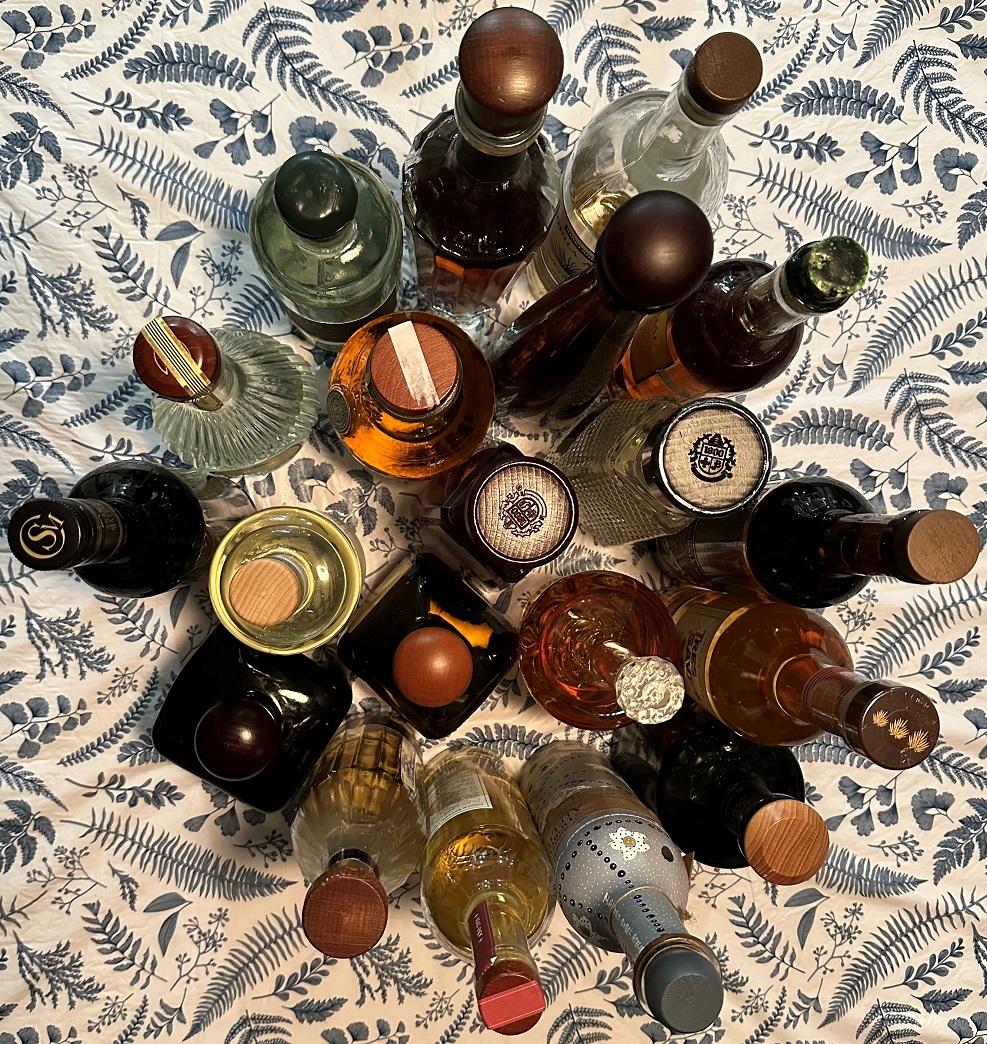 Alcohol Shenanigans.
Yes, I know. The title is not great. Leaves a horrible impression. Sounds like a story about college dorm adventures. And yet this is all I can come up with for this post.
“Next time, we will taste tequila,” said my friend before going home after our cognac tasting. “And I will bring Tequila”, she said.
A few weeks ago, the “next time” arrived – she showed up with about 20 bottles of tequila, mostly anejo with a few interesting oddballs. This is where the shenanigans started.
Mirriam-Webster: Shenanigan Definition: “a: tricky or questionable practices or conduct“
Let’s begin with the fact that we had no idea how you are supposed to taste tequila. Tequila is generally not considered a sipping liquor. Go to the bar, ask for tequila, and it will be served in a shot glass. And here we were not planning on any shots – the plan was to taste tequilas the same way as we do the cognac and scotch. After a short(?) brain freeze, we settled on small glasses – for the people in the US, if you ever bought Tiramisu dessert from Costco – these are the glasses I’m talking about. And off we went.
I think we went through almost a full lineup the first night. I’m sure we made a number of mistakes in the order, as some tequilas tasted sweet and not even reminiscent of a traditional agave – and they tasted very different the next night. And I didn’t mention it before, but we went a bit beyond tequila in the tasting – we also had Mezcal and Sotol. While I’m familiar with Mezcal as a category (side note: Tequila is a subset of Mezcal. Tequila can be made only from blue Agave, but Mezcal can be made from 30 different types of Agave), Sotol was completely new to me.
Sotol is a distilled spirit from Chihuhuan desert in northern Mexico made from the plant called Desert Spoon (there are other scientific names for the plant, but I will leave it for you to research). The plant takes about 15 years to mature, and the yield is about one bottle per plant. Sotol is clearly not widespread at the moment, so I was happy to expand my liquor vocabulary.
This tasting was just for fun, so as you might imagine, I didn’t take any notes. Therefore, the below is just a collection of impressions. We had 3 different types of Don Julio. The Riposado was good, Anejo was very good, and neither one of us cared for Don Julio 1942 Anejo (I call this “overdone”). Chinaco Blanco tequila was very good, restrained and herbal. 1800 Anejo was very good, however, 1800 Anejo Cristalino was even better. I guess when the color was removed to make regular Anejo of the clear color, some of the impurities were filtered out as well, so the resulting tequila was one of the smoothest ever.
Costco’s Kirkland Tequila Anejo was somewhat unimpressive (ok, but too light) – I’m sure it is fine for the money. At some point, we tasted my beloved Tres Generaciones Anejo, which I always compare with the cognac based on its smooth and mellow showing. It had such a pronounced agave taste that I even brought my own bottle thinking that something was wrong with the bottle my friend brought, and my bottle tasted identical. No idea what has happened.
Don Roberto 1924 Anejo was a favorite of my wife and my friend. I liked it too, but it was not my favorite. Casino Azul Anejo, Ocho Single Estate Anejo, Patron Anejo, Centenario Anejo, San Matias Gran Reserva Extra Anejo were all solid, excellent tequilas I would be happy to drink (sip) any day – and yet we had a few more that fared just at an exceptional level.


Wait, before we get to the exceptional ones – the promised oddballs. First, there was not an oddball, but an absolute curveball – 21 Seeds Cucumber Jalapeno Tequila Blanco. It was incredibly spicy to the point of not being able to taste much of anything after a small sip of this fire water. I guess this would be okay as a cocktail mixer, but this is not something I would enjoy by itself.
Los Magos Sotol was very interesting. The herbs were very pronounced on the palate, together with green pepper (not spicy) and cucumber. Truly a unique taste, in a league of its own – of course it makes sense as this was my very first Sotol without any frame of reference.
Next was my personal favorite liquor of the tasting – Mezcal Ilegal Anejo. A typical Mezcal has smoke, both on the nose and on the palate. This Mezcal was truly something else. The only reference I can offer to you is a freshly made log cabin. I don’t know if you ever walked into the log cabin which was recently built – the one that has a smell of freshly cut lumber, this sweet aroma that I can’t really describe. But if you ever experienced that, and if this is something you enjoy, this Mezcal was instantly transporting you to such a cabin – you didn’t even need to close your eyes.


The last Tequila was truly the king of the first night – Gran Centenario Leyenda Extra Anejo. It was round, it was smooth, it was delicious – and it was hiding the agave flavor perfectly well. When I tasted that tequila, I said – tomorrow we are going to compare our “best in show” with cognac. And then we will bring the scotch if we have to.
There is still one more tequila to present – Maestro Dobel Atelier Extra Anejo. A very unique and unusual bottle to begin with. And as far as tequila itself is concerned, it was very round, but somehow was leaving me unmoved, especially in comparison with Gran Centenario. So when we settled for the night’s favorites, Maestro Dobel was not in the picture – but it was a runner-up.

I have to say that I was discouraged by a somewhat puzzling showing of some of the favorite tequilas, so I was convinced that we are not doing the tasting right. The next day, I decided to do a search online to look for recommendations regarding the proper way of tasting the tequila. In one of the first videos, I came across the recommendation to use the Champagne flutes – which made good sense. Our next night’s tasting of Tequila versus Cognac was done using Champagne flutes for Tequila and standard brandy sniffers for the Cognac.
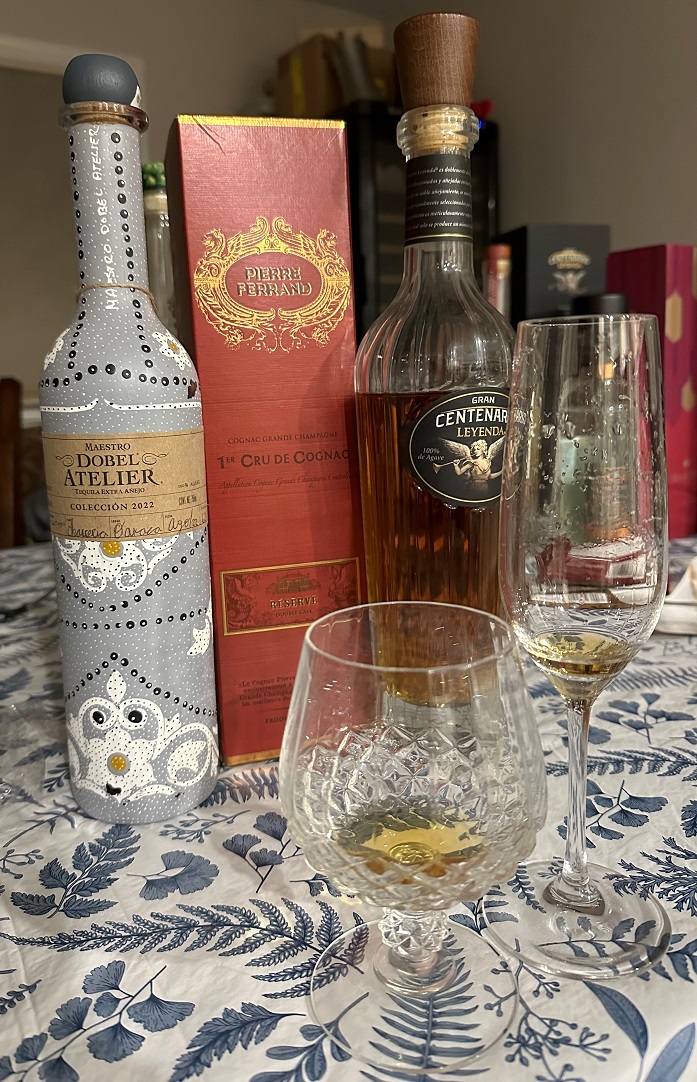
Before we started, I was absolutely sure that cognac, pretty much any decent cognac would have no issues beating tequila in side-by-side tasting. Of course, the only comparison metric we used was a simple “Which liquid do you like more”. And my friend insisted that Dobel Atelier has to be in the tasting – I agreed without much enthusiasm.
As we moved along in the tasting, a simple truth emerged – nothing could beat Dobel Atelier. Granted, I didn’t have the XO-level cognacs to throw into this battle, but we had a few of the excellent cognac specimens – Pierre Ferrand Reserve, Hardy Legend 1863 (spectacular cognac), Park Borderies Mizunara Oak – and Dobel Atelier was still smoother, rounder, and richer than any one of these.
The next night we brought in the Scotch which we both love tremendously. Not only that, but we also decided to switch glasses again and this time we did the tasting using proper, official Glencairn Whisky Tasting glasses. But the story repeated itself. Macallan 15, Macallan 18, Highland Park 16, Lagavulin 16, Glenmorangie 18, Compass Box Affinity – Dobel Atelier was unbeatable…
Truth be told – Dobel Atelier was the most expensive bottle compared with anything else we tasted – if you can find this bottle here in the US (my friend brought it directly from Mexico), it would set you back at least $250. But – I learned about the price of this tequila only after we were done with the tasting, so this was definitely not the factor – and if anything, it would have an opposite effect on me (I’m always a lot more critical of the expensive bottles versus the more reasonably priced ones).

Here you can take another good look at our alcohol shenanigans. Was this tasting a stupid idea? Quite possible. Was it lots of fun? You bet it was. And nobody got hurt 🙂
I’m not trying to be your source of inspiration, but hey, maybe you want to try such a tasting on for size? Cheers!
Looking for Liquid Pleasures Beyond Wine
 During 2011 I wrote a number of posts for the project called The Art Of Life Magazine – of course talking about my favorite subject, wine. The project was closed and even the web site is down, but as I still like the posts I wrote, I decided to re-post them in this blog. Also, in that project, posts were grouped into the mini-series, such as “Best Hidden Secrets” and “Forgotten Vines”. The post I’m offering you today was an opening post in the mini-series called “Liquid Pleasures Beyond Wine”.
Also note that the series was written for a slightly different audience – I hope none of my readers will take offense in the fact that sometimes I’m stating the obvious…
So far in this blog we mostly talked about wine, wine as an experience. We tried to uncover some of the hidden secrets of the wine world, such as Rioja, second labels of the famous wines, or French sparkling wines. We looked at the wines which were famous, then almost disappeared and now slowly coming back, such as Madeira and Jerez. We also searched for wine values, by comparing wines made from the same grape but coming from the different places. Did we explore enough the world of wines? Not really, we didn’t even touch the tip of a tip of an iceberg. Nevertheless, as we are looking for experiences, let’s take a step outside of the wine world, and let’s take a look at the other “liquid pleasures”.
I’m talking about the group which is collectively called “spirits”, otherwise also known as “distilled beverages”, which is a name which is used in Wikipedia. Overall distillation is a process of separating liquids with the different boiling points, and its application goes way beyond the world of alcoholic beverages. Distillation first was uncovered about 2000 years ago, but first use for production of the “spirits” happened less than a thousand years ago. When applied to the wine or any other fermented substance (meaning that some degree of alcohol is present in the liquid to begin with), the end result of distillation is a liquid with increased concentration of alcohol.
Historically, such high-alcohol liquids had various uses – one of the most important ones, which also has nothing to do with drinking the liquid, was medicinal. Strong alcohol is an excellent antiseptic; it is used in order to disinfect the area of the body, to kill any potential bacteria thus preventing any possible contamination. However, while this very important, such applications are completely outside of the scope of this blog, so let’s go back to the stuff we drink.
There are many different kinds of the spirits produced in the world. Some have more universal appeal and can be produced in many countries following the same basic methodology, but some can be also unique for particular place (but if it is any good, it is extremely hard to keep a secret). Let’s take a quick look at the various types of the spirits – we will discuss some of them in detail in the subsequent posts.
Let’s start with Brandy – brandy is a spirit which is produced from wine. This can be an actual grape wine, or it can be a fruit wine – both can be used for the production of brandy. For instance, Cognac and Armagnac are both made from the grapes, and Calvados, another famous French brandy, is made from apples. Brandy is produced in France, Spain, Italy (where it is known as Grappa), Georgia, Armenia, US, Mexico and many other countries.
Next spirit we need to mention is Whisky, which is made out of grains (barley, rye, wheat, corn). This group includes Scotch, which is made in Scotland, and then Whiskey, which can be made in many different countries – for instance, Irish whiskey is made in Ireland, and in US you can find both Whiskey, which is often made from rye, and Bourbon, which is corn-based. Whisky is also produced in Japan, India, Canada and other countries.
Then comes Vodka – made all around the world, from all possible ingredients. It is made in France, Russia, Poland, Italy, US, Canada and many other countries. It can be made from grapes, fruits, grains, potatoes and probably some other ingredients we can’t even think of. Vodka is often called a “neutral spirit” as it is typically produced flavorless (some flavor can be infused before bottling), and thus it is a popular component in many cocktails.
To complete the “big scale” list of spirits, we need to mention a few more. Tequila, which is produced from the Blue Agave plant, is a very popular spirit coming from Mexico. I can’t resist to mention Mezcal, which is also made in Mexico using Agave plants, but it has distinctly different taste (and very hard to find). Then we need to mention Gin, which is also a popular cocktail ingredient and has a very distinct taste as it is produced from Juniper berries. And last but not least comes Rum, which is produced from sugarcane, and yet another popular cocktail staple.
As we are looking for the great experiences, should we even look at all these “hard liquors” as they often called in the United States? Absolutely. Moderation is a key when it comes to alcohol (this universally applies to any kind of alcoholic beverages – beer, wine or spirits) – but once this is understood, one can definitely enjoy immense richness and variety of flavors coming from all these spirits. They definitely create a lot of great experiences and unique memories, and they bring lots of pleasure. In the coming posts, we will take a closer look at some of them – and until that time – cheers!
Indifferent, Okay and Spectacular
Over the last few days, I had a few of the “accidental tastings”, which I would like to share with you. Oh yes, and if you are wondering about the title of this post – read on.
It is not the wine we will be talking about today – instead, it is the other type of “liquid pleasures”. Well, actually, not even one”type”, but a few – Tequila, Scotch and Whiskey!
I have to admit, I don’t drink tequila all that often. When I do drink it, I don’t do shots (as I don’t see a point of pleasure in a quick gulp of an alcohol) – as wine, scotch or cognac, I like to sip and enjoy it slowly.
Tequila DeLeón is definitely not something to look at lightly. I would say that in the overall image presentation, starting from the bottle itself (take a look below – that top is so heavy, it can be literally used as a weapon), to the web site and all the marketing materials, Tequila DeLeón is an attempt to bring out the tequila, shall we say it, of Rémy Martin’s level, and not just any Rémy Martin, but all the way to the top – Louis XIII de Rémy Martin.
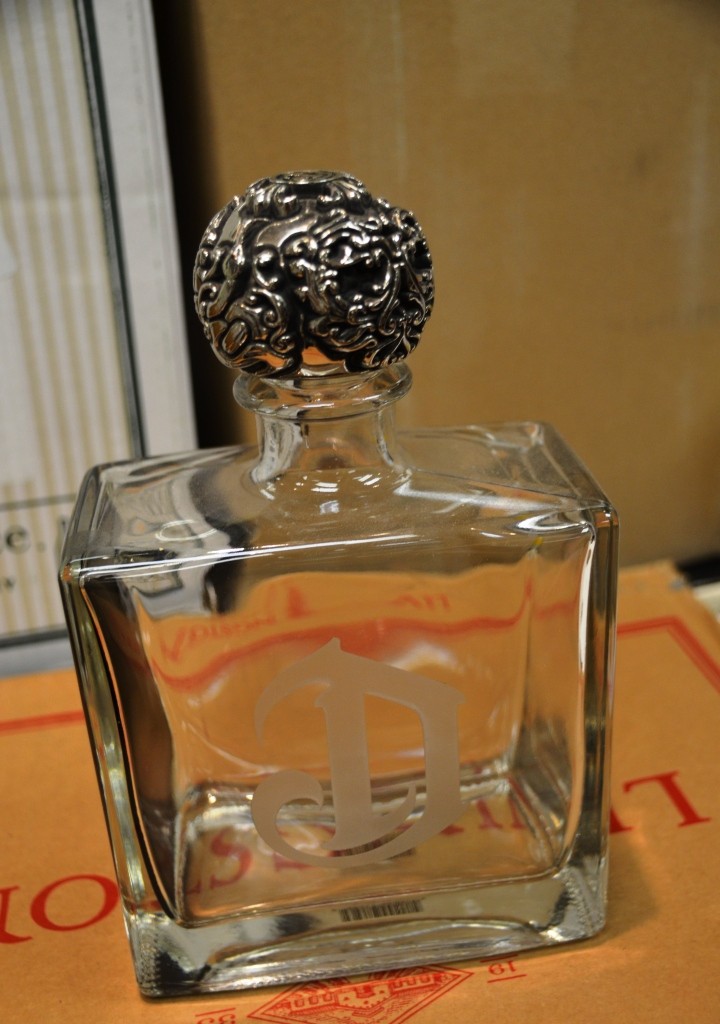
Tequila DeLeón bottle
I had an opportunity to taste through the full line of Tequila DeLeón, starting from the tequila blanco, which is unpretentiously called Diamante, to the Louis XIII-like Leóna. Below is the complete list with the descriptions and suggested retail prices (sorry for the quality of the picture, but I hope you will be able to see enough – or go to the web site for more info):
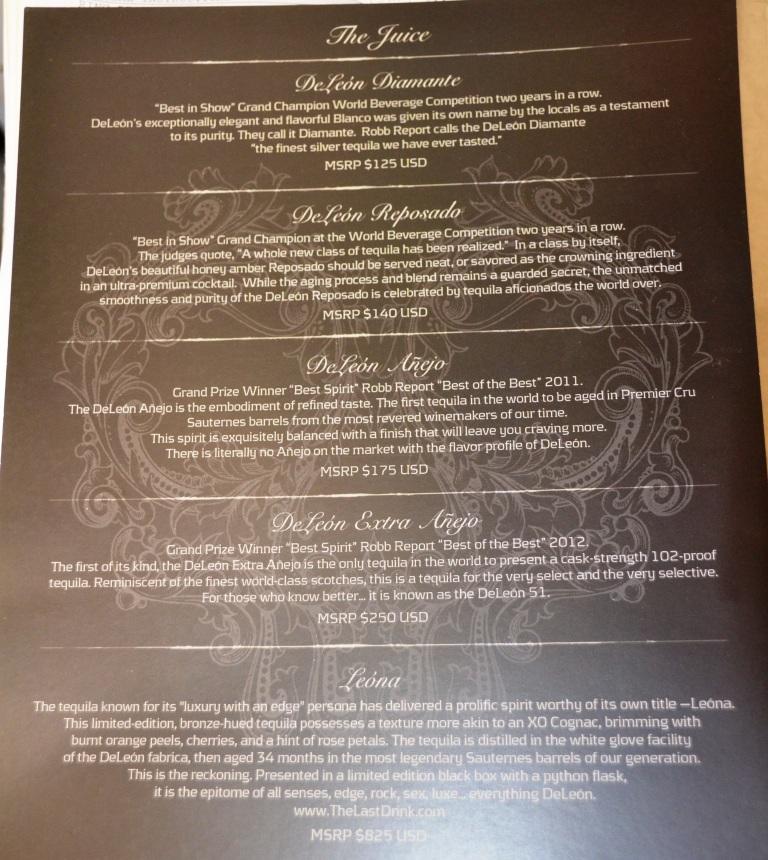
Tequila DeLeón The Juice line
Here are my notes:
DeLeón Diamante – touch of sweetness, the classic Agave notes of tequila are very muted, viscous mouthfeel.
DeLeón Riposado – nice herbal profile, had some lightness and touch of spiciness. One of my favorites.
DeLeón Añejo – mind you, this tequila is aged in the used Sauternes oak casks, and not just any Sauternes, but venerable d’Yquem. Interesting palate, but not smooth enough, some rough edges.
DeLeón Extra Añejo – very nice, excellent flavor profile, some spiciness, very good depth. Probably my favorite – which is not surprising, considering that it is compared with the Scotch in the official description.
DeLeón Leóna – this is simply overdone. It has a lot of oak. A LOT. Oak is the only thing I was able to taste.
Now, if we look at the prices, which are ranging from $125 for Diamante to $825 for Leóna, this is where Indifferent part of the post’s title comes into a play. I would gladly take Chinaco and Don Julio for the sipping tequila blanco any day (both are under $50), and I never tasted Añejo better than my favorite Tres Generaciones ( also under $50). I appreciate the art of the Tequila DeLeón, and yes, if you need to impress, go for it; meanwhile, I will have another sip of Chinaco.
So you know what left me indifferent. Now, for the Okay part, I tasted through a group of Scotches. Here they are:
MacPhail’s Collection Highland Park 8 years old – very nice! hint of smoke, perfect balance, touch of sweetness.
MacPhail’s Collection Glan Grant 10 years old – herbal notes, smooth, nice acidity, very good.
Mortlach 15 years old – nice and simple, but somewhat one-dimensional.
Old Pulteney 21 years old – nice, very complex, interesting nose, spicy profile – excellent overall.
Glenlivet 21 years old – okay, so it is a scotch, but it doesn’t do anything for me.
The Macallan 21 years old – least interesting of all. Just boring…
Based on the notes, you can probably see why this is just “okay”. But if you like Scotch, I would definitely recommend the Highland Park 8 and Old Pulteney 21 – those are worth seeking out.
And now, let’s talk about Spectacular. I was given to taste (blind) four different spirits, one by one, and the most I could say after each one was “wow”. They were one better than the other. Zak was looking at me patiently, waiting for me to guess what they were. The first one, I said, was a grappa. The second? Bourbon. The third? No idea – absolutely unusual profile. The fourth? May be a Rye? Then he put 4 bottles on the table, one by one. Here they are:
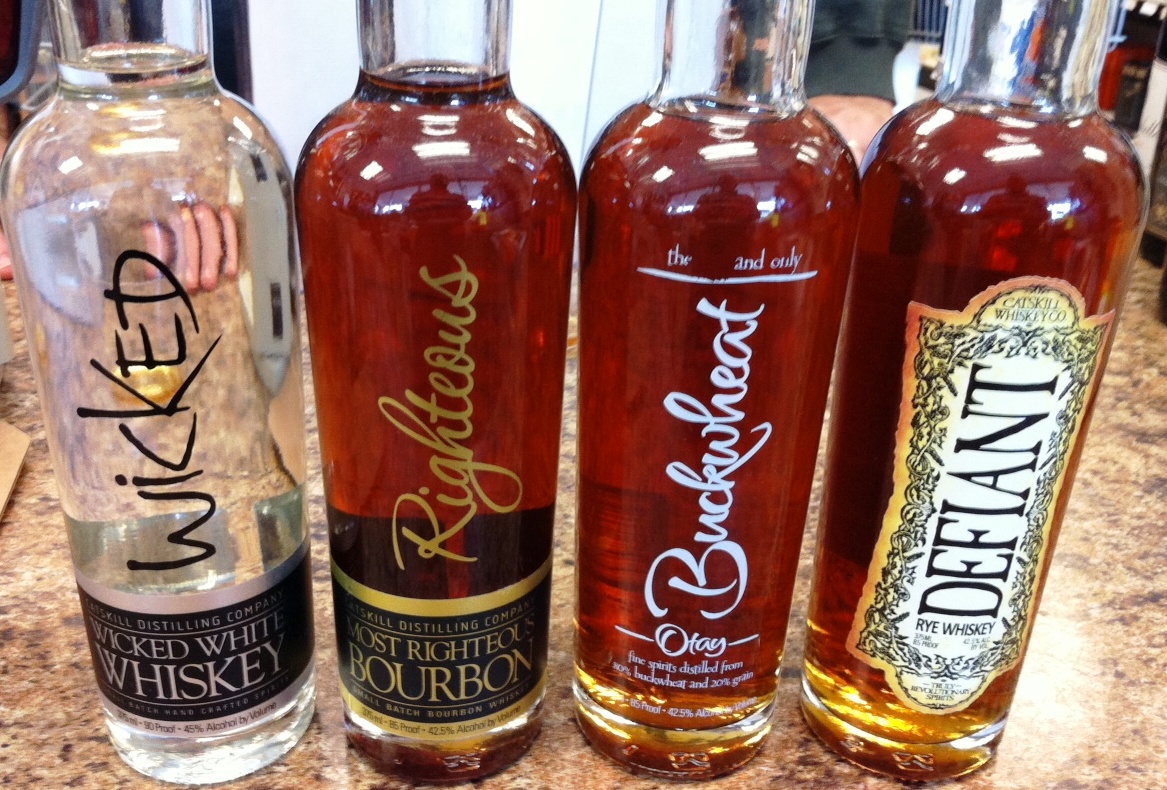
Catskill Distilling Company Spirits Collection
When I saw what they were, I had to say “wow” one more time. All of the spirits were produced about 90 miles away from my house, in the town of Bethel, New York . It is amazing how far the local New York producers went. You probably read my rave review of Hudson Distillery – I will definitely make an effort to visit Catskill Distilling Company when I will have a chance. Here is what I tasted:
Wicked White Whiskey – this is six-grain (corn, wheat, buckwheat, rye, smoked corn, malt), un-aged whiskey. Absolutely spectacular nose and flavor – complete impression of delicate single-grape grappa with round sweet fruit and all around delicious. You have to taste it to believe it.
Most Righteous Bourbon (70% corn, 20% rye, and 10% malt) – round, clean, caramel, butterscotch, all perfectly balanced together. One of the best bourbons I ever tasted.
One and only Buckwheat (80% buckwheat, 20% small grains) – unique and different. Nose is absolutely unusual, reminiscent of sun flower oil. Viscous, roll-of-your-tongue delicious concoction. Great complexity, another drink you have to taste to believe it.
Definat Rye – a very classic Rye, with a touch of sweetness, but otherwise dry palate, some spiciness and good acidity.
All four spirits are reasonably priced ( from $19 to $38) and definitely highly recommended.
There you have it, my friends – my story of indifferent, okay and spectacular. Enjoy the rest of your weekend and cheers!
Last Bottle Sign Up ($10 credit)




 Talk-A-Vino