Archive
Villa Torrigiani: Traditional Roots, Modern Wines
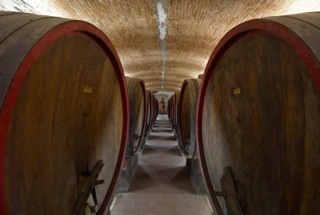
Source: Villa Torrigiani
When it comes to traditions, Italians definitely know how to preserve them. Tour the country, and you will see that finding a 500 years old villa or palace in Italy is very easy; there are plenty of places where the connection can be made through even a 1000 years of history. Italians definitely know how to preserve their traditions.
Talking about traditions, Villa Torrigiani, located in the heart of Tuscany, is exactly one of those well-preserved places, tracking its history back for 1000 years if not longer. Here is the information you can find on Wikipedia:
“In the hills of San Martino alla Palma, vineyards and olive groves have been cultivated for more than a 1,000 years. The estate is located not far from the Via Francigena, the route used by crusaders returning from the Holy Land, and as such a point of passage, the location took its name from Saint Martin, patron saint of vintners and grape harvesters, and Palma (Olive tree), the symbol brought home by crusaders as proof of their travels.
In the mid-1400s, in the very midst of the Renaissance, the marquises Torrigiani, bankers and wine sellers, bought the land that extends from Castellina all the way to the top of the hill of San Martino alla Palma, thus founding Fattoria Torrigiani (The Torrigiani farm). The marquises Torrigiani called on the renowned Florentine architect Michelozzo who designed the stately Villa Torrigiani, which was constructed from 1470 to 1495. The villa, with its numerous halls frescoed by master Florentine painters, is situated at the center of the farm and looks out over the valley of Florence and the cupola of the Duomo.


At the beginning of the 16th century, the farm was divided into 22 “poderi”, or farmsteads, each run by a family group, many of whom have descendants who live in San Martino to this day. The farm was so well organized that it was self-sufficient and no longer dependent on Florence, and consequently, its inhabitants were able to avoid the bubonic plague outbreak of the 1600s.
Fattoria Torrigiani remained the property of the same family for around 500 years until 1967 when it was purchased by the Zingone family who carried out an extensive restoration of the villa and an expansion of agricultural production, of wine and olive oil in particular.”
Fattoria San Martino alla Palma covers almost 900 acres, out of which the vineyards take about 115 acres, and about 300 acres dedicated to the olive trees – in addition to wines and grappa, Villa Torrigiani also produces olive oil.
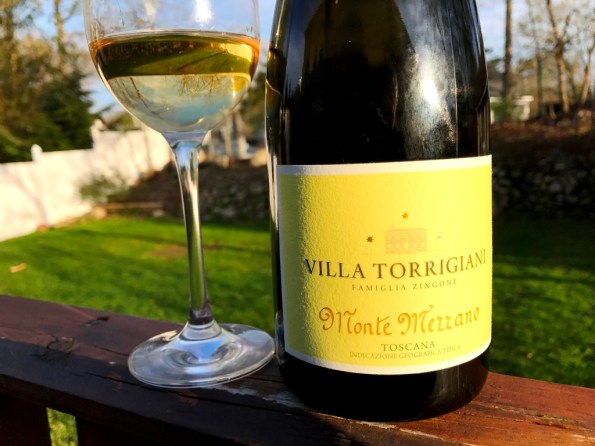
Now, the wines produced by Villa Torrigiani are unquestionably modern. Unoaked Chianti, Chardonnay from Tuscany, super-toscan – while the wines are rooted in tradition, it is hard to argue that they also represent modern Italian winemaking.
I had a pleasure to taste a number of Villa Torrigiani wines, and my tasting notes are below:
2015 Villa Torrigiani Monte Mezzano Bianco Toscana IGT (13% ABV, 100% Chardonnay, 6 mo in French oak barriques)
C: light golden
N: medium intensity, green apples, touch of vanilla
P: needed about 15 minutes in the glass, opened up nice and plump, vanilla, golden delicious apples, crisp acidity, disputants hint of butter
V: 8-, very nicely made, pleasant
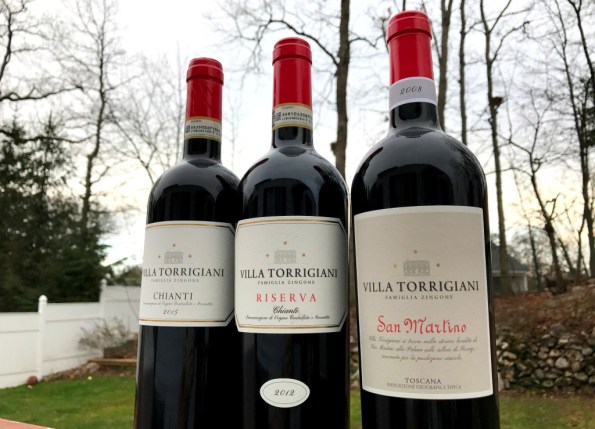
2015 Villa Torrigiani Chianti DOCG (12.5% ABV, 90% Sangiovese, 10% Canaiolo, Stainless steel)
C: garnet
N: fresh, open, medium intensity, caraway seed, touch of sweet cherries
P: fresh, clean, medium body, ripe cherries, touch of cherry peats
V: 7+, needed about 20 minutes to open up and come together, after that delicious all the way through
2012 Villa Torrigiani Chianti Reserva DOCG (13.5% ABV, 90% Sangiovese, 10% Canaiolo, 12-14 month in barrique, additional 6-8 month large oak botti)
C: dark garnet
N: espresso, sweet oak, ripe plums, tobacco, sweet plums
P: dry, perfect balance, dark fruit, supple cherries, good acidity, medium body, medium finish, fresh and open
V: 8-
2008 Villa Torrigiani San Martino Rosso Toscana IGT (13.5% ABV, 85% Cabernet Sauvignon, 15% Sangiovese, 12 month barrique, additional 12-14 month in large oak botti)
C: garnet
N: open, inviting, cassis, eucalyptus
P: fresh, playful, polished, layers of dark fruit, cassis, clean acidity, excellent balance. A true delight.
V: 9-, outstanding. I would love to drink this wine every day.
Here you are, my friends. A beautiful estate with a very long history, producing excellent wines. The only challenge we have at the moment is finding these wines in the USA – but hopefully this will change soon. Cheers!
Serious Fun With Wines
 We do drink wine mostly every day, thus we do have fun with wine every day. But then every so often, we are lucky to get together with the other wine
 crazy people aficionados, usually to celebrate some sort of occasion (Birthday, etc. ), and this is when from everyday simple fun we advance to the area of “serious fun”.
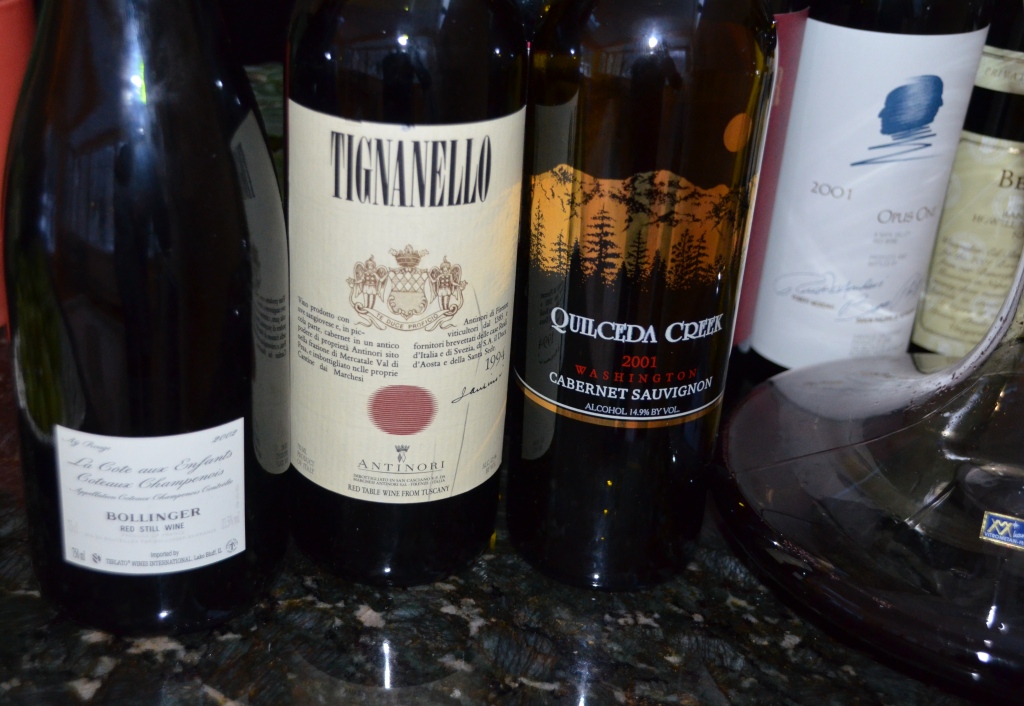
What makes the wine fun “serious”? It is age and pedigree for the most of the cases, where just a quick glance at the bottle makes your heart race. “Wow, this is so cool” the brain sings, and you literally start to salivate even though it will be a long time until dinner will be served and the wine will be opened. If you will look at the lineup in the picture, you will easily get my point.
We started our evening with the 2013 Paumanok Chenin Blanc North Fork of Long Island, New York (11% ABV) – it had a nice nose of white fruit, white stone fruit on the palate, fresh acidity and overall very uplifting character with residual sweetness on the finish. Drinkability: 7+
The next wine was quite unique and different, at least for me – it was Sauternes, but – it was a dry Sauternes. 2007 Chateau Suduiraut S de Suduiraut Blanc Sec, Bordeaux (70% Sauvignon Blanc, 30% Semillon, some oak aging) was definitely an interesting wine. I’m still trying to understand if this wine was already past prime, or was simply in its slumber. It is unfortunate that the Chateau Suduiraut’s web site lists no technical information about the wine, only implies that it underwent the oak aging. The wine was showing as full bodied and plump. At the same time, the fruit was very muted and initially the wine showed a hint of oxidation on the finish, which disappeared as the wine was breathing. I think this wine left all of us puzzled – it was not bad by all means, but it was not great either. It would be interesting to try the same wine maybe in 5 years – not sure it will be easy to do as it is quite rare. Drinkability: 7
And then there were reds. We opened both 1994 Tignanello and 2001 Quilceda Creek, and Tignanello was exhuming the pleasure, while Quilceda Creek was clearly asking for decanter – which was provided. Meanwhile, another fun and rare bottle was opened. I’m sure you know Bollinger. Yes, the Champagne producer. But – according to Champagne AOC rules, even Champagne producers are allowed to make … yes, still wines! 2002 Bollinger Ay Rouge La Cote Aux Enfant Coteaux Champenois was a bit tight first in the glass, but after about 10 minutes, it opened up into a luscious, complex goodness. Dark garnet color in the glass with some orange hue, an earthy nose of mature fruit with just a touch of characteristic Pinot Noir smokiness. Soft, supple and round on the palate, good amount of dark fruit, well integrated tannins and balancing acidity. Definitely a very interesting wine and experience. Drinkability: 8
1994 Antinori Tignanello (80% Sangiovese, 20% Cabernet Sauvignon) didn’t even show any signs of age! Dark ruby color in the glass, intense nose of dark cherries with a touch of leather and herbs. Fresh fruit and fresh acidity on the palate, cherries, leather and sage, perfectly balanced and ohh so enjoyable! I believe I tasted Tignanello before at some of the trade shows, but this was my first one on one encounter with this wonderful wine, with the ability to slowly enjoy and savor every sip. Drinkability: 9-
2001 Quilceda Creek Cabernet Sauvignon Washington (14.9% ABV, 97% Cabernet Sauvignon, 3% Cabernet Franc, 22 month in New French oak) spent about two hours in the decanter – but even that was not enough. Dark, brooding, concentrated, powerful – but not yielding much of the fruit, all closed up behind that power. After a first glass, we decided that we were simply wasting this wine, and we moved on to the another bottle.
1999 Pahlmeyer Proprietary Red Oakville, a classic Bordeaux blend with Cabernet Sauvignon, Merlot, Cabernet Franc, Malbec and Petit Verdot. Dark ruby red in the glass, blackberries and blueberries on the nose. Powerful and concentrated on the palate, with black currant, eucalyptus and espresso notes on the palate, soft tannins, very balanced with the medium long finish. Drinkability: 8
And last, but not least – dessert! Yes,the liquid dessert. 1977 Grahams Port. The first challenge was to get the cork out – this is where I regretted not having the Port Tongues available. The cork was pulled out almost completely, with a few little crumbles going back into the bottle, so we used a little mesh to pour the wine. The Port was beautiful – fragrant, fresh, with good acidity, palate full of not overly sweet dried fruit – dried cherries and may be dates come to mind. Perfectly balanced and very very enjoyable. Drinkability: 8+.
And the drop of Scotch to finish the meal properly – very unique and different, Bruichladdich 14 Years The Italian Collection Sassicaia French Oak – the scotch was beautifully mellow, well integrating a touch of traditional Bruichladdich peatiness with round and polished, almost sweet finish imparted by Sassicaia French Oak casks.
That concludes my “drool report” for now – well, life is an interesting thing, so it seems that couple of upcoming weeks will lead to more of the “great wine” reports.
Whether you had or had not any of the wines I’m talking about here, your comments are most welcome! Cheers!
[My belated notes from ] Gambero Rosso Tre Bicchieri Event
 Two months ago I attended the Gambero Rosso Tre Bicchieri event in New York City. Writing this blog post late in the game has some advantages – particularly, I can refer you to the work of others. Here is the link to the excellent blog post by Stefano of Flora’s Table and Clicks and Corks fame. Moreover, I had the pleasure of attending the event in Stefano’s company, where his expert knowledge of Italian wines was very helpful in navigating the selection of about 500 creme de la creme wines. Thus you can even compare our notes (I doubt though you will find much discrepancy in our thoughts).
Every year since 1986, Gambero Rosso publishes its guide to Italian wines and awards its prestigious Tre Bicchieri (three glasses) rating to the best wines. An event like the one we attended has the purpose of showcasing all the best wines, and it attracts a lot of attention.
I have to start with the same rant as you can see in Stefano’s post. All the wineries were arranged by the distributors and not by the region – therefore, in the presence of 173 wine tables and countless people, my well-thought plan fell apart. Yes, I understand that distributors are important, but I don’t see why all the wineries couldn’t be pulled together by the region, instead of being all over the place. In terms of the overall organization, Vinitaly, which we attended about two weeks before the Tre Bicchieri event, was put together in a lot more logical way.
Leaving that aside, let’s talk about the event. I generally attend a good number of trade wine tastings. So when you start going from table to table, it takes time to find the wine which will “wow” you. What I didn’t realize at first was that the Tre Bicchiery event was different. All the wines which you taste there already had been preselected, they were all winners of the Tre Bicchiery award, and therefore they were all great wines by definition. This was exactly my experience. Table one – wow, this is good. Table two – very good. Table three – excellent! Table four – excellent again – what is happening? How is that possible? Ahh, it is the Tre Bicchiere event, so all the wines are rather expected to be great…
Another important part of the events such as Tre Bicchieri is the opportunity to meet a lot of great people there. For instance, we met Giuseppe Vajra, a winemaker at G.D Vajra in Piedmont, who was a pleasure to talk to.
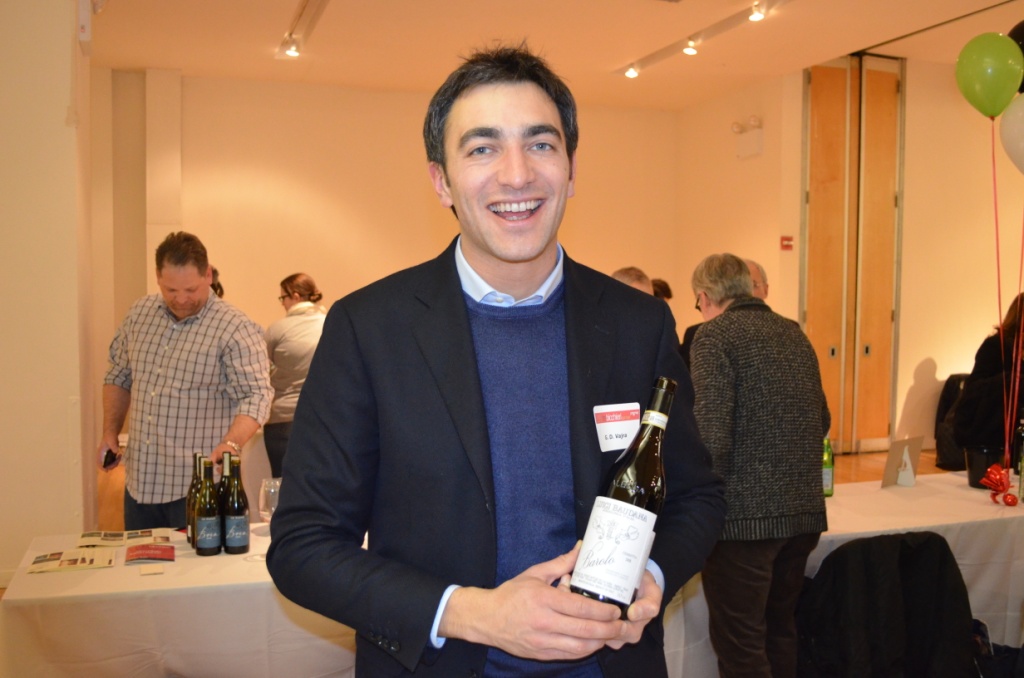
He gave us a taste of his 2004 Barolo Cerretta Luigi Baudana, which he was not supposed to do at the event ( this wine was not a part of the 2013 Tre Bicchieri awards), and the wine was stunning.
Meeting people is great, but navigating the crowds – not so much. Here is a “Hail Mary” style picture – you raise your arm with the camera as high as you can, at the angle you think will fit, and then release the shutter. Here are a few pictures for you, I think it gives you an idea that the event was quite busy:
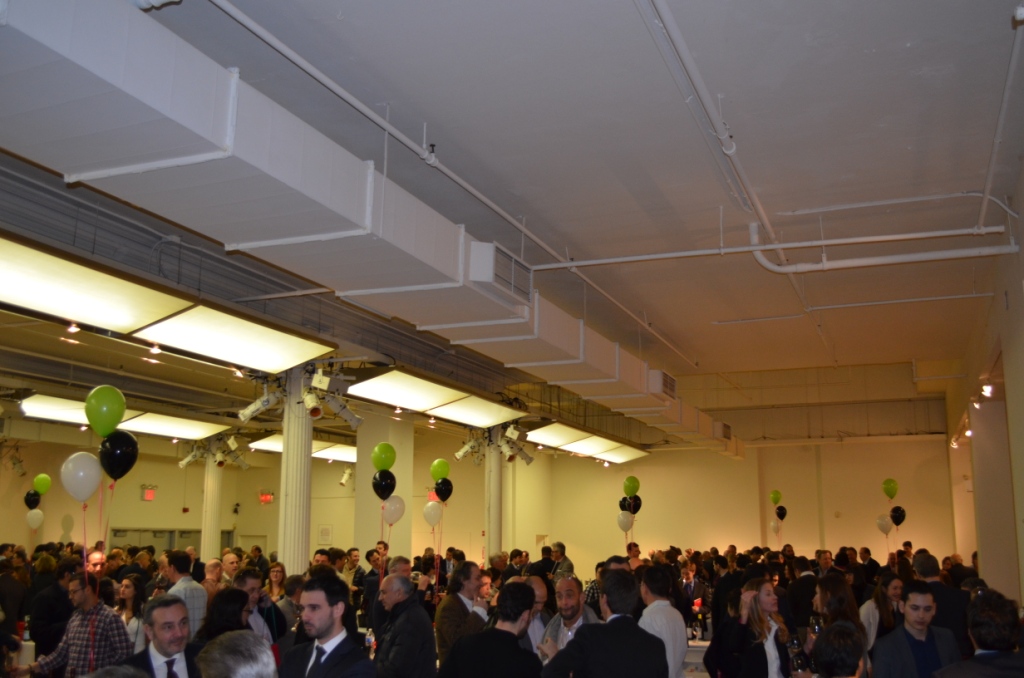
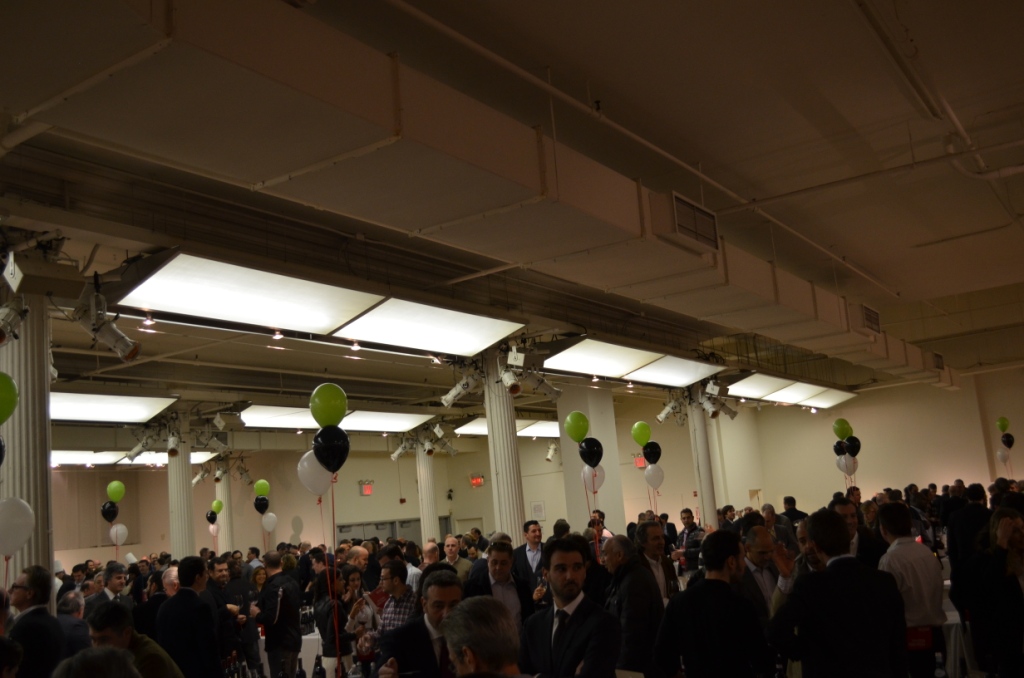
Another problem with an event like this? You are destined to miss out on some of the wines. Taking into account the gross level of disorganization at the event, it is obvious that you will miss out on the best wines. The list of the wines we missed includes Masseto, Ornellaia, Sassicaia, Oreno, Bertani, and more…


The real bummer in this group was Masseto, which is a part of my “Must Try Wines ” list – it is Super Tuscan made out of 100% Merlot – this is the wine that can rival Petrus. Well, maybe next year…
Now, let me offer you my highlights from the event. In the format of such an event, it is impossible (for me, at least) to take any detailed notes – I’m trying to experience as many wines as possible, only jotting down a single word descriptors at the best, which often don’t go beyond “wow” or “outstanding”. Below is the list of wines I really liked (a lot, huh?), with maybe one-word descriptors on them (or maybe not), and then I offer to your attention a picture gallery of mostly the same wines. Oh yes – and unlike the Gambero Rosso event itself, the wines below are grouped by region. Remember I recently suggested a new scale of ratings (yuck, ok, nice, wow, OMG) – let me use it here when possible, and I promise not to bring any “yuck” and “ok” wines to your attention. And one last note – not all the wines below have “three glasses” rating – some of them are rated at 2, but I believe they would still be worth your attention. Here we go.
ABRUZZO
2009 Torre dei Beati Montepulciano d’Abruzzo Cocciapazza – perfect!
ALTO ADIGE
2011 Abbazia di Novacella Alto Adige Valle Isarco Sylvaner Praepositus – outstanding bouquet on the nose, very nice overall
2009 Cantina Tarlano Alto Adige Pinot Blanco Vorberg Riserva – complex, beautiful, perfect minerality, wow!
CAMPANIA
2010 Nanni Cope Sabbie di Sopra il Bosco Terre del Volturno – nice acidity, very good overall. Added bonus – this wine has two rare grapes which I need to add to my grape count – Palagrello and Casavecchia
2010 Marisa Cuomo Casta di Amalfi Furore Bianco Fiorduva – my descriptors for this wine include “beautiful”, “amazing” and “balanced” – definitely a wow! wine. This is a very unique wine in many ways (outside of the fact that it is made out of three rare grapes Ginestra, Fenile and Ripoli) – I need to refer you to Stefano’s blog post where you can learn more about this fascinating wine.
FRIULI VENEZIA GIULIA
2010 Livon Collio Friulano Manditocai – complex nose, nice palate
2011 Ronco dei Tassi Collio Malvasia – nice minerality, very good overall
2011 La Tunella COF Ribolla Gialla Rjgialla – perfect white fruit, clean, excellent
2011 Livio Felluga Friulano – super-expressive wine, very good overall
LAZIO
2010 Sergio Mottura Grechetto Latour a Civitella – excellent
LIGURIA
2011 Cantine Lunae Bosoni Colli di Luni Vermentino Cavagnino – mint and apricot on the nose and palate, OMG
LOMBARDY
2009 Mamete Prevostini Valtellina Superiore Riserva – very unusual nose, perfect power.
2004 Ca’Del Bosco Franciacorta Brut Rose Cuvee Annamaria Clementi – 100% Pinot Noir, the nose of fresh bread and yeast, strawberries on the palate – OMG
2007 Ricci Curbastro Franciacorta Extra Brut – perfect
NV Ricci Curbastro Franciacorta Brut Rose – more complex than the previous one, OMG
2006 Ferghettina Franciacorta Extra Brut – 80% Chardonnay, 20% Pinot Noir; wow!
2007 Cavalleri Franciacorta Pas Rose – very bread-y, excellent!
2008 Guido Berlucchi Franciacorta Cellarius Brut – wow!
MARCHE
2010 Umani Ronchi Verdicchio dei Cazstelli di Jesi Classico Superiore Vecchie Vigne – wow!
2009 Umani Ronchi Conero Cumaro Riserva – excellent!
2009 Velenosi Rosso Piceno Superiore Roggio del Filare – roasted, gamey nose, a touch too sweet, but good
PIEDMONT
2009 Bricco del Cucu Dogliani Bricco S. Bernardo – 100% Grechetto, cherries on the nose and palate, very nice!
2008 Le Piane Boca – a blend of 85% Barolo, 15% Vespolina – wow!
2008 G.D Vajra Barolo Ceretta Luigi Baudana – this wine comes from a specific plot in the vineyard, called Baudana. This was a wow wine, but the next one was one level up, as it had an age on it
2004 G.D Vajra Barolo Ceretta Luigi Baudana – OMG
2008 Schiavenza Barolo Prapo – perfect fruit, open, beautiful, wow!
2009 Vietty Barbera d’Asti Superiore Nizza La Crena – excellent
2006 Massolino Barolo Villa Rionda Riserva – wow!
2010 Villa Sparina Gavi del Commune di Gavi Monterotondo – very nice
2008 Marchesi di Barolo Barolo Sarmassa – nice, round, perfect!
2006 Elvio Cogno Barolo Vigna Elena Riserva – excellent!
SARDINIA
2009 Cantina di Santandi Carignano del Sulcis Superiore Rocca Rubia Riserva – aged for 24 months in oak, excellent.
2009 6Mura Carignano del Sulcis – 120 years old vines, growing on sandy soils, very good balance, excellent.
SICILY
2010 Pietradolce Etna Rosso Archineri – very green
2010 Pietradolce Vigna Barbagalli – nice
2010 Donnafugata Ben Ryé Passito di Pantelleria – the only wine in Italy to receive top awards from all wine publications! Apricots on the nose and palate, perfectly balanced. Overall – wow and OMG!
2010 Tenute Rapitala Conte Hugues Bernard de la Gatinais Grand Cru – 100% Chardonnay, excellent, clean
2010 Firriato Ribeca Perricone – excellent! ( and the rare grape called Perricone)
TRENTINO
2006 Ferrari Trento Extra Brut Perle Nero – outstanding, off brut
2002 Ferrari Trento Brut Giulio Ferrari Riserva del Fondatore – 10 years aging on the lees, wow!
TUSCANY
2008 Famiglia Cecchi Chianti Classico Villa Cerna Riserva – very nice
2009 Famiglia Cecchi Coevo – wow!
2009 Tolani Picconero – 65% Merlot, perfectly Bordeaux in style, excellent!
2007 Poggio di Sotto Brunello di Montalcino – open, fresh, clean – wow!
2009 Poliziano Vino Nobile di Montepulciano – tannins! very good.
2009 Brancaia Chianti Classico Riserva – perfect balance, wow!
2010 Tenuta San Guido Montessu Isola dei Nuraghi – excellent!
2009 Tenuta Sette Ponti Orma Toscana – OMG! depth and breadth of this wine were phenomenal
2010 Marchesi Antinori Cervaro della Sala – perfect chardonnay, outstanding!
VENETO
2010 Ottello Lugana Superiore Molceo – perfumy, perfect!
2010 Ottello Campo Sireso – a blend of Cabernet Sauvignon, Merlot, Corvina and Lagrein – roasted notes, wow!
2009 Roccolo Grassi Valpolicella Superiore Roccolo Grassi -very nice
2007 Vignalta Colli Euganei Rosso Gemola – Merlot/Cabernet Franc blend, classic Bordeaux profile, wow!
2005 Cantina Valpolicella Negrar Amarone della Valpolicella Classico Villa Domini Veneti – pure chocolate on the nose, a bit too sweet and too tannic on the palate. Just ok (I know, I promised that there will be no ok or lesser wines – but I’m an Amarone junkie, you will have to excuse me for that…)
2007 Tedeschi Amarone della Valpolicella Classico Capitel Monte Olmi – 16% ABV, alcohol on the nose – not “yack”, but not good [at all]
2008 Tedeschi Amarone della Valpolicella Classico – very good
2006 Masi Amarone della Valpolicella Mazzano – 120 days of drying the grapes, good overall (not great), too much alcohol on the nose and palate
2008 Viticoltori Speri Amarone della Valpolicella Classico Monte Sant’Urbano – 15% ABV; wow!
And here is the photo gallery for you – enjoy!
Long post, after a long delay – but it is finally done. Yay! Cheers!
Dreaming of Tuscan Wines
Source: Wkipedia.com
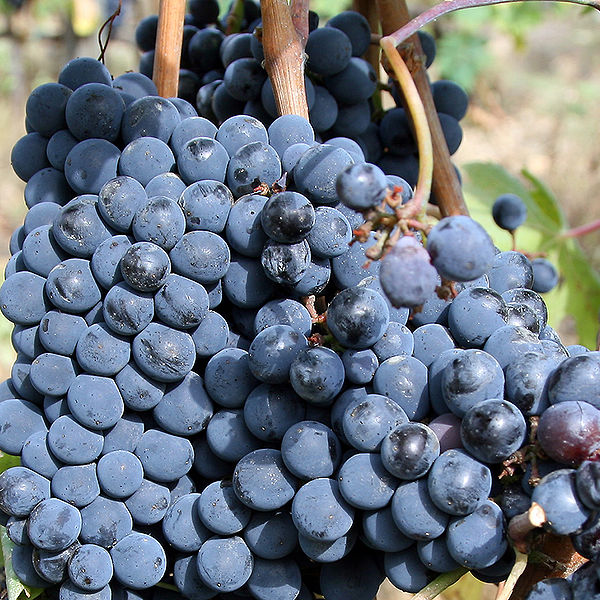
“Tuscany”. Try to say the word out loud. It rolls of your tongue, smooth, round and effortless. It is so easy to picture endless green hills, beautiful little houses spread across the endless green, and of course, sun-soaked grapes.
I visited Italy many times, but not the Tuscany, which still stays on the “dream destinations” list. I can easily picture bringing my family there, renting a little villa (there are many villas in Tuscany), and spending time doing… nothing, just enjoying that beautiful scenery, true, simple and honest food and of course, the wines.
The wines of Tuscany hold its own special and unique place in the wine world. True, the wine making was born outside of Italy ( Georgia and Greece are the top contenders for the title of “cradle of the winemaking”). But where else you can find wineries and winemaking families which are almost a thousand years old (look at Barone Ricasoli, which is tracing its wine history to 1141, or Castello di Ama, which goes all the way back to 1210), next to the wineries which propelled from non-existent to the world’s best in mere 30-40 years, as many of so called Super-Tuscan wines did? Tuscany offers tremendous diversity when it comes to wines, and I want to take you on a little tour of Tuscan wines.
We are going to start with Chianti, one of the oldest wine-making areas in Tuscany, located in the center of region. Sangiovese is the main grape which is used to produce Chianti wines, but other grapes can be also blended in, including both red and white grapes.

Then there are all sorts of classifications for the Italian wines – but I really don’t want to bore you with the details of it. While classification information is very important, there are so many available resources covering subject in depth, like this Wikipedia article, for instance, you can definitely learn about it without my help. As a side note, I want to mention that in the end of the day, DOC, DOCG, IGT , the producers and the wine ratings are all important, but you really have to let your taste buds be a judge when it comes to finding the wine you like.
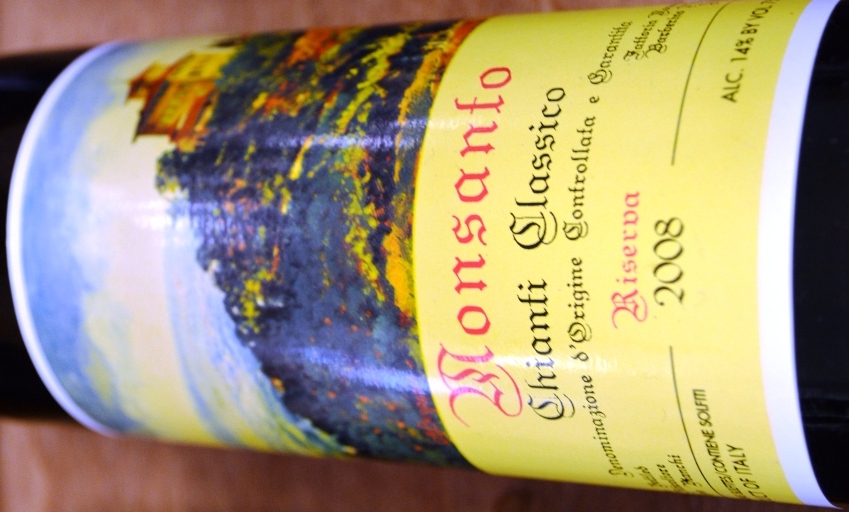 Chianti are some of the oldest wines with the world, with the very rich history having its up and down times – it is impossible to cover Chianti’s history at any good depth in the blog post, so again I have to refer you to the great source – the Wikipedia article. Chianti wines are usually split into two main groups – Chianti and Chianti Classico. Chianti Classico, which comes from its own part of the Chianti region, is available as Chianti Classico and Chianti Classico Riserva, which is usually aged for more than two years before it is released. If you are looking for a good bottle of the Chianti, you can always play it safe and go by a good producer – Antinori, Castello Banfi, Castello di Ama, Fontodi, Frescobaldi, Monsanto, Ricasoli, Ruffino are all well known producers and represent a good bet as you are looking for your next bottle of Chianti.
Let’s move down south from Chianti to the town of Montalcino. A bit younger than the Chianti, only going back to the 14th century : ), there was a local wine produced there, which was called Brunello, referring to the name of the local grape. Eventually it was established that the actual grape was a clone of Sangiovese, called Sangiovese Grosso, but the name of Brunello always stayed with the wines called Brunello di Montalcino (often referred to simply as Brunello).
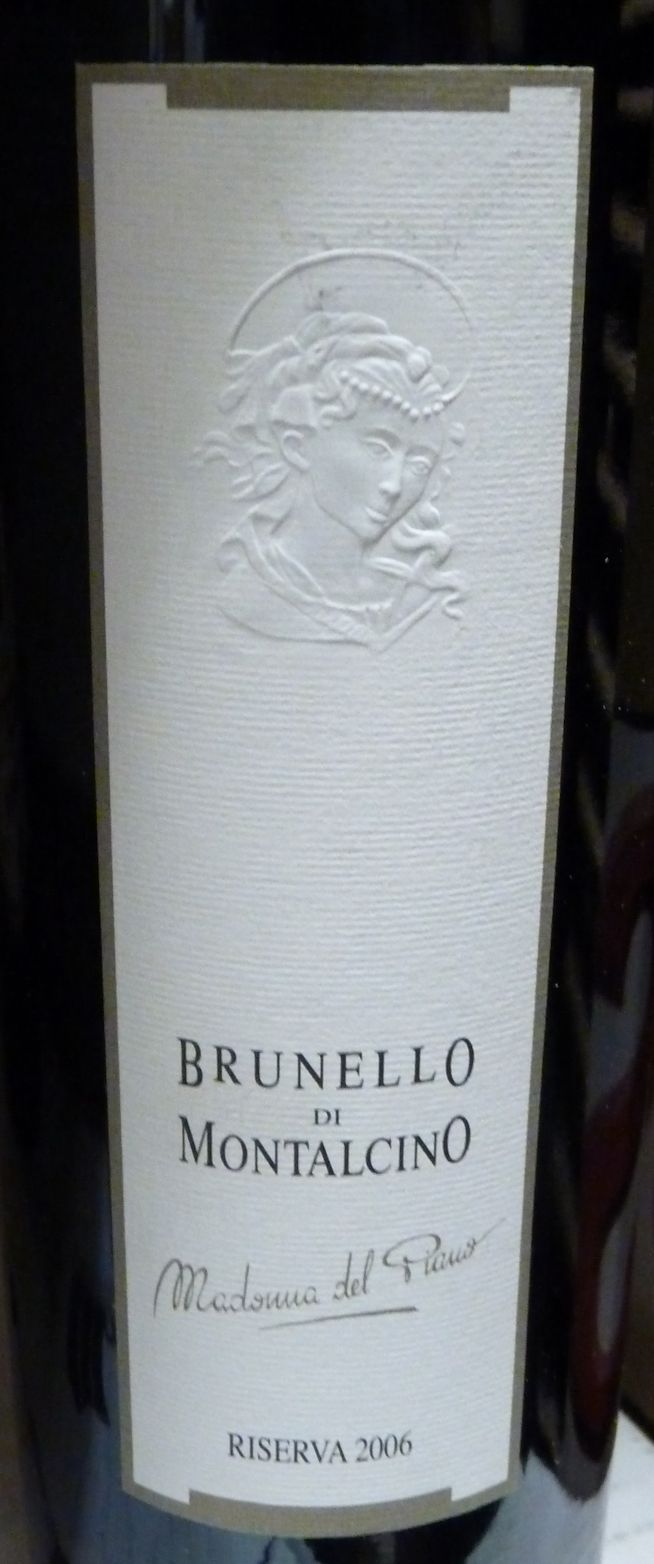 In order to be classified as Brunello, the wines have to be made from 100% of Sangiovese Grosso (no other grapes allowed). Over the many years, Brunello built a reputation as some of the best wines in the world – power, finesse and ultimate ageability make them very desired wines among wine consumers and collectors. Biondi Santi is probably the most legendary producer of Brunello wines, but Altesino, Casanova di Neri, Castello Banfi, Poggio Antico, Valdicava are all well worthy of your attention.
Continuing our tour from the town of Montalcino, we got two options – we can move east, to the town of Monepulciano, or west to the region called Bolgheri. Let’s talk about Montepulciano first, as Vino Nobile di Montepulciano wines are rivaling Chianti in its history. The first references to the vineyards around Montepulciano go all the way back to the 8th (!) century, but it was not until 1925 that the wines from the region are actually assumed the Vino Nobile name. Vino Nobile di Montepulciano wines are again produced from Sangiovese clone, known as Prugnolo Gentile, and often blended with other local grape varieties. Vino Nobile di Montepulciano are lesser known then Chianti wines, but they are worth looking for as they still provide a good value.
 And now, let’s go all the way west, to the coastal area of Tyrrhenian Sea, to the town of Bolgheri, where some of the best wines in Italy are made. I’m sure you heard the term Super-Tuscan – these are the wines made in Tuscany, but in completely non-traditional way. Starting from 1960s, Bolgheri was a center of Super-Tuscan wine revolution – instead of making the wines by the strict Chianti rules, many vintners started producing wines based on terroir, always looking for the best grapes from particular vineyards. In 1978, Antinori started producing the Sangiovese-Cabernet Sauvignon blend wine called Tignanello, which became a great success. Many winemakers turned their attention to traditional Bordeaux varieties, such as Cabernet Franc, Cabernet Sauvignon and Merlot, eventually producing the wines rightfully called some of the best wines in the world. Today Super-Tuscan wines need no introduction, and absolute majority of wine lovers can’t pronounce the names such as Ornellaia, Solaia, Masseto, Sassicaia, Redigaffi without their breathing stopping for a second and eyes rolling up to show utmost respect. You don’t need to take my word for it – get a bottle and taste it for yourself, and you can thank me later.

Before we are done here, I want to share some interesting numbers with you. You probably heard of Wine Spectator, a very famous wine magazine. Wine Spectator has their 100 points rating system and obviously, it is not simple to get a 100 points, as the wine should be truly ultimate to get such a high rating – only 74 wines out of more than 250,000 rated wines received 100 points. Out of those 74, 13 are Italian wines. Out of those 13, 6 are the Tuscan wines. And out of those 6, 2 are Brunello di Montalcino wines, 3 are Super Tuscan, and one wine is a Vin Santo – another famous Tuscan wine, this time it is a dessert wine, made out of Trebbiano and Malvasia white grapes. And to complete the picture, do you want to guess what grape those 100-point Super Tuscans are made from? Sorry Miles ( remember movie Sideways?), but all three 100-point Super Tuscans (Tenuta dell’Ornellaia Masetto, Tua Rite Redigaffi and Le Macchiole Messorio) are made out of 100% Merlot!
I think it is time to finish our tour. Tuscany makes a lot of great wines, and there are many books, articles and blog posts covering those wines from all possible angles. I think my top tip for choosing the Tuscan wines will be very simple – go out and play! Open a bottle of Tuscan wine, and be transported in the instance to the warm and inviting land of great food, wines and people. Salute!
Last Bottle Sign Up ($10 credit)




 Talk-A-Vino