Archive
Thank you, #GrenacheDay
September 19th was yet another “wine holiday” – the Grenache Day. Grenache, which is known in Spain as Garnacha, needs no introduction for the oenophiles. One of the most planted red grapes in the world. A star of Châteauneuf-du-Pape, Priorat, California, Australia and many other countries and regions. A grape with the middle name “rich and opulent” (when was the last time you had a lean Grenache wine? No rush, think about it…). If big wines are your territory, Grenache is definitely your grape.
So what this “thank you” all about? Easy, let me explain. When I know about the certain “grape day”, I usually try to honor it by opening the wine made with that specific grape. Considering the connotation of the “holiday”, I also look for the somewhat of a special bottle. I’m not saying that I would casually open DRC for the Pinot Day (I wish I would have that choice), but still, it should be an interesting bottle. Talking about the holiday at hand, #GrenacheDay, I realized that Grenache is grossly underrepresented in my cellar. Cabernet, Pinot Noir, Syrah, Tempranillo, Zinfandel – plenty of choice, Grenache – not so much. Searching through the shelves, I noticed the bottle of 2006 Pax Cuvée Moriah. Checked the back label – 88% Grenache, definitely qualifies as Grenache for me. 2006 is considered young in my book, but – either that or some random non-grenache bottle. Done.
 Okay, so here is our wine – 2006 Pax Cuvée Moriah Sonoma County (15.9% ABV, 88% Grenache, 6% Mourvedre, 3% Syrah, 2% Counoise, 1% Roussanne). Cork is out, pour in the glass, swirl, smell. Beautiful. Bright fruit, spices, herbs – a delicious promise. On the palate, great concentration, big, texturally present, roasted meat and bright cherries, clean acidity, an excellent wine overall. Drinkability: 8+
I stepped away from my glass with a small amount of wine left in it. Come back 15-20 minutes later, ready to finish. Swirl, sip – the wine is past prime. Touch of stewed fruit and over-ripe plums. The wine completely transformed. So here is the “thank you” part. If it wouldn’t be for the “grape day”, I would still be waiting for the right moment. Only to find out at some point that all the pleasure was gone, without been experienced. Thanks to the #GrenacheDay, we were able to experience this wine still at its peak (it was only a tiny amount in the glass which turned around).
Let’s raise the glass to the grape holidays, the experience savers. Cheers!
Re-post: Affordable Luxuries of the Wine World: Garnacha versus Grenache
During 2011 I wrote a number of posts for the project called The Art Of Life Magazine – of course talking about my favorite subject, wine. The project closed, but I still like the posts I wrote, so I decided to re-post them in this blog. Also, in that project, posts were grouped into mini-series, such as “Affordable Luxuries” you see here – I will continue re-posting them from time to time.
If you are interested as to “why now”, it is simple – Friday, September 21st is International #GrenacheDay – and I don’t have time to write the whole new post. I think this re-post will fit the bill quite well. Here it is.
 So far we talked about and compared Hermitage and Crozes-Hermitage wines, as well as sweet wines in our quest for “affordable luxuries” of the wine world. If you remember, Hermitage and Crozes-Hermitage are made out of the grape called Syrah. Today we are going to talk about Syrah’s brethren (totally unrelated, though), the grape which is often blended together with Syrah – we are going to talk about Grenache.
Grenache is one of the main winemaking red grapes in the world. It used to be the most planted red grape in the world, with biggest planting area being in Spain (Spain actually has the biggest area planted with grapes in the entire world). Grenache, which is known under the name of Garnacha in Spain, lost its “biggest plantings” status in Spain as a lot of vineyards were replanted with other grapes, such as Tempranillo, Cabernet Sauvignon and Merlot, and France took “the most planted” helm now.
Grenache is used in winemaking both by itself and as part of the blend. In Spain, Grenache, or rather Garnacha, is main ingredient of the blend in wines of Priorat, many of which have cult status, such as Clos Mogador. In another region, Campo de Borja, it produces amazing single grape wines, for instance, at Bodegas Alto Moncayo. In France, it is a key ingredient in wines of Southern Rhone, with Chateauneuf-du-Pape being most famous – there it is typically blended with Syrah. It is also used in production of Rose wines in Provence. In Australia, it is used in so called GSM wines, where GSM is simply an abbreviation for Grenache Syrah Mourvedre, three grapes used in production of the GSM wines. In California, it is very successfully used in production of the Rhone-style wines mostly in the Central Coast area, with many of the wines also achieving a cult status (which simply means that production is limited and wines are very hard to get – of course because they are good). As usual, you can take a look at the Grenache article in Wikipedia, which provides great depth of information.
When it comes to “affordable luxuries”, there are plenty of wines which can be compared. As this is Grenache versus Garnacha battle, let’s focus on pure Grenache wines. Of course blends would be fun to look at as well, but finding some of the better ones is a challenge in itself, so let’s stay our course.
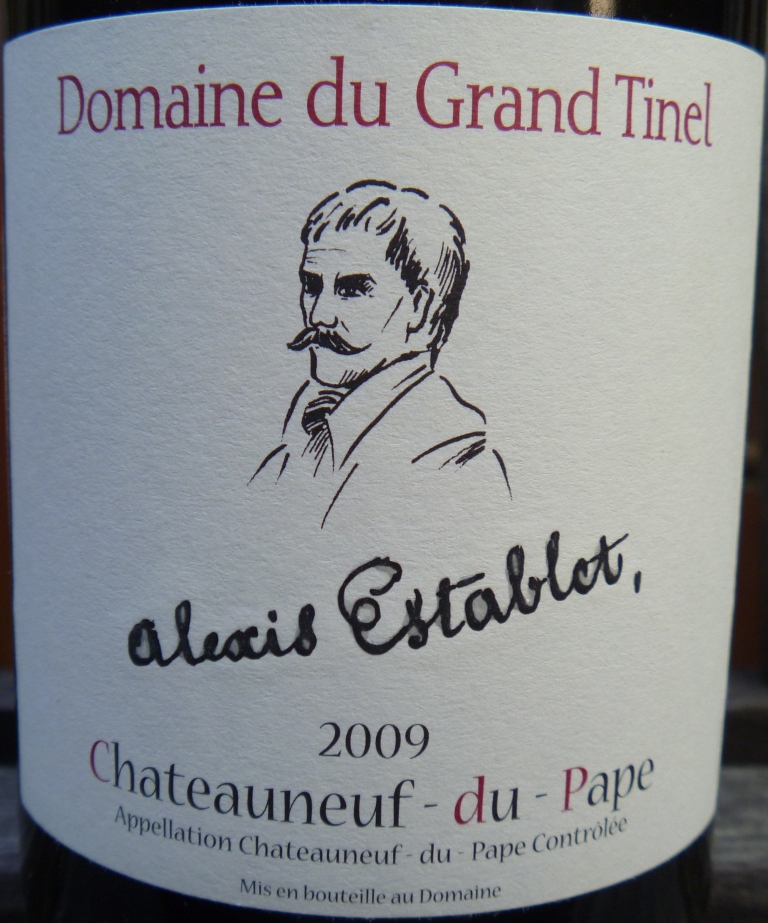
So today’s contenders are: 2009 Bodegas Borsao Tres Picos Garnacha Campo de Borja from Spain and 2009 Domaine du Grand Tinel Cuvee Alexis Establet Chateauneuf-du-Pape from France. It can’t get any better than that – we have here if not two of the best, then at least two of the most classic areas to produce Grenache wines. Both wines are 100% Grenache – which is very unusual for Chateauneauf-du-Pape, where blend can contain up to 13 different grapes.
 Let’s start with 2009 Domaine du Grand Tinel Cuvee Alexis Establet Chateauneuf-du-Pape. The wine is unfortunately way too young (give it 8-10 years, if you have enough patience, of course), but it was very drinkable from the get go – at least you get a punch of tannins at about 10 seconds after the first sip. It is very classic Grenache, with purple color, violets on the nose, and perfect balance of fruit and acidity. Don’t want to repeat myself, but it will be gorgeous – given enough time to mature.
2009 Bodegas Borsao Tres Picos Garnacha Campo de Borja is a full bodied wine, with hint of earthiness on the palate, with lots of dark fruit and hint of pepper. You can also detect violets, hint of cedar, spice box and tar. With supple tannins and medium finish, this wine is more approachable now than the previous one, but will also improve with time.
Is one of those wines better than the other? It is very hard to tell. And for the affordable luxuries, Tres Picos Garnacha costs about $12, and Domaine du Grand Tinel is about $70, so make your choice. And while you will be deciding, I’m going to raise my glass to the pleasures of wine discoveries – cheers!
Last Bottle Sign Up ($10 credit)




 Talk-A-Vino