Simple Recipes: Cottage Cheese
I can hear you saying “what?” Every supermarket sells at least 10 different kinds. Why should I bother making it?
I’m not here to argue. I’m here simply to share. This is what this whole blog is all about. Sharing the experiences for what it’s worth. Also, this blog serves as my personal memory journal. Once it is published here, I can always come back to it later. Anyway, let’s get back to the subject of this post.
I have two reasons for making my own cottage cheese. First, taste. Second, cost.
Food store offerings around the country might differ vastly, and I don’t know if we share the same experience. But here in my town, the cottage cheese selection in a typical supermarket is limited to 4-5 types, with the prices ranging from $3 to $7+ per pound. But strictly focusing on the taste, I find most of the cottage cheeses I tried edible, but none of them are really tasty.
I tried to find a good recipe to make cottage cheese many times. Made many attempts and wasted a lot of milk in the process. Until finally, my wife found a recipe on Instagram that seemed promising. We tried it, and it was a home run! We got tasty cottage cheese, and got a very good amount of it. As I told you, I was looking for a better taste and better cost, and this recipe answered both. And it is really, really simple.
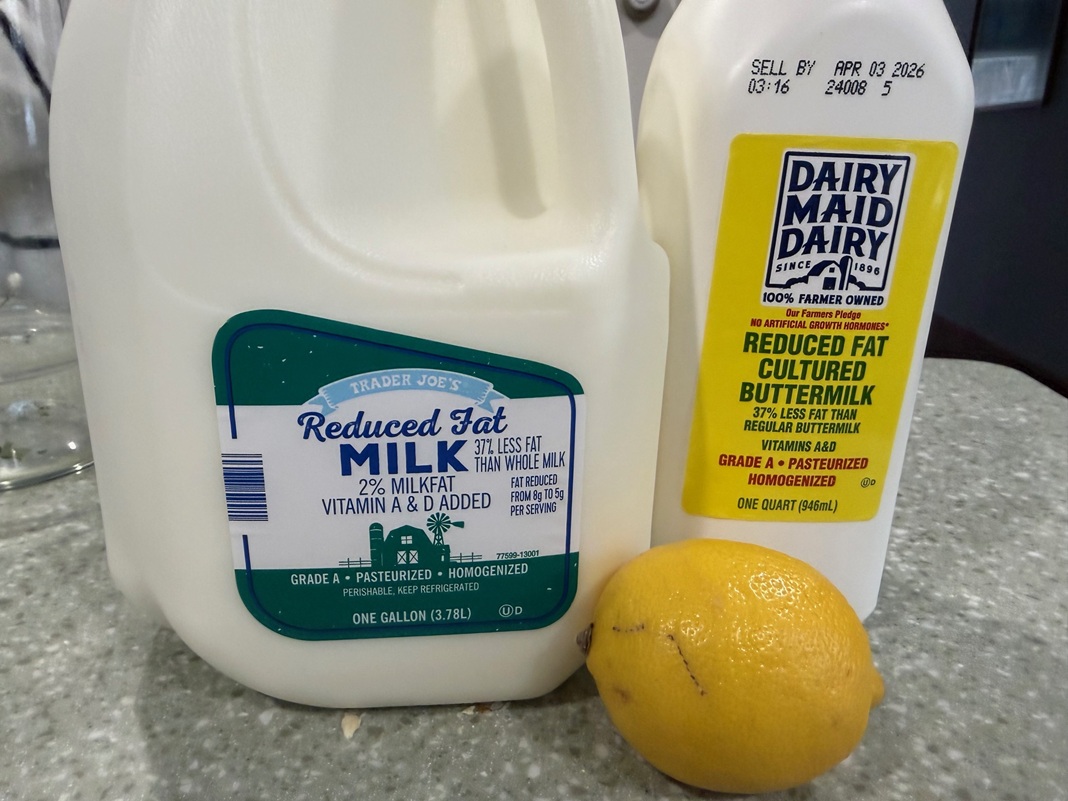
There are only 3 ingredients in this recipe – milk, kefir/buttermilk, and lemon. That’s it! You can make it all organic if you want by using only organic ingredients. You can also easily control the fat content. I’m not sure how well it will work if you use skim milk, but we have done this with both 2% milk and 4% (whole) milk, and we liked the result in both cases.
The first step is very simple – in the large pot, combine a gallon of milk, a quart of buttermilk, and the juice of one small lemon (2 tablespoons or less, unless you like sour things). Mix it, cover the pot, and put it into a warm place for 24 hours.
Here is where it gets a bit tricky. For this recipe to work, you need to maintain an average temperature of 85°F (I’m sure 80°F to 90°F will work equally well). We are lucky, as we have a room with a radiant heat floor where we can close the door and maintain this temperature. In the original video, the pot was placed outside in Florida, which I’m sure would give you the right temperature. Once summer comes, this will be our plan too. If necessary, you can heat up the pot to 85°F, and then cover it with blankets. Anyway, I’m assuming you can figure it out.
After 24 hours, when you open the pot, you should be able to see a “crust” floating on top. Put the pot on the stove and start gently heating it up, pretty much on the lowest setting. You need to bring the liquid to the boil, but not allow it to boil. This heating-up process should take about 45 minutes. Don’t rush it. It was tested multiple times – 45 minutes is what you need, give or take a few minutes.
Now, the most important step. Take the pot off the heat and let it cool off. It should cool off sufficiently for you to be able to put it into the refrigerator overnight. The next day, the cottage cheese will be collected at the bottom. Now, you can dump the whey, or you can use it – there are many options. We typically just drain the pot through the fine mesh and then just leave the mesh for another 30 minutes to let the water drain. As our goal is cottage cheese, which is granular, and not farmer cheese, which is usually compact and smooth, we don’t specifically squeeze the moisture out; we just let the cottage cheese drain. If you want to get to the farmer cheese consistency, you can, of course, use the cheesecloth and squeeze all the moisture out.
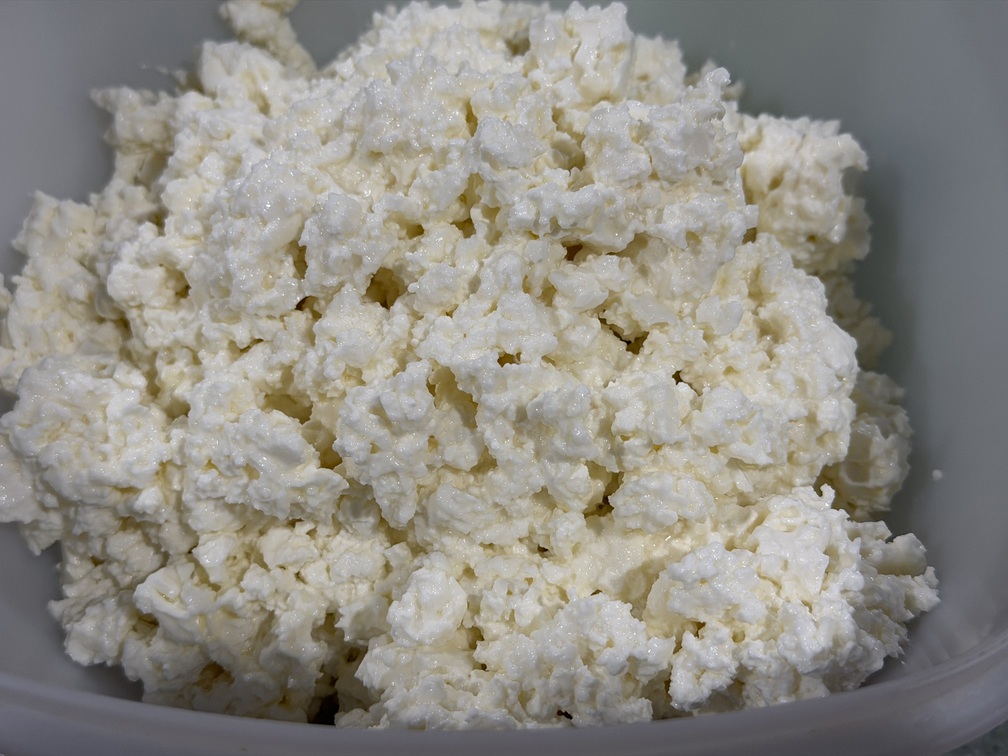
Voila! The cottage cheese is ready to be enjoyed in whatever way you like. By the way, we typically don’t add salt, but of course, you can.
As I mentioned cost as one of the factors in this exercise, let me give you the details. The gallon of 2% milk we typically use costs $3.99 at Trader Joe’s. The quart of buttermilk shown in the picture above is $2.99. We can count the lemon at $.50, so the total cost is $7.50. Our typical yield from 5 liters of liquid is 3 lb of cottage cheese, which brings our cost to roughly $2.50 per pound. This is definitely reasonable.
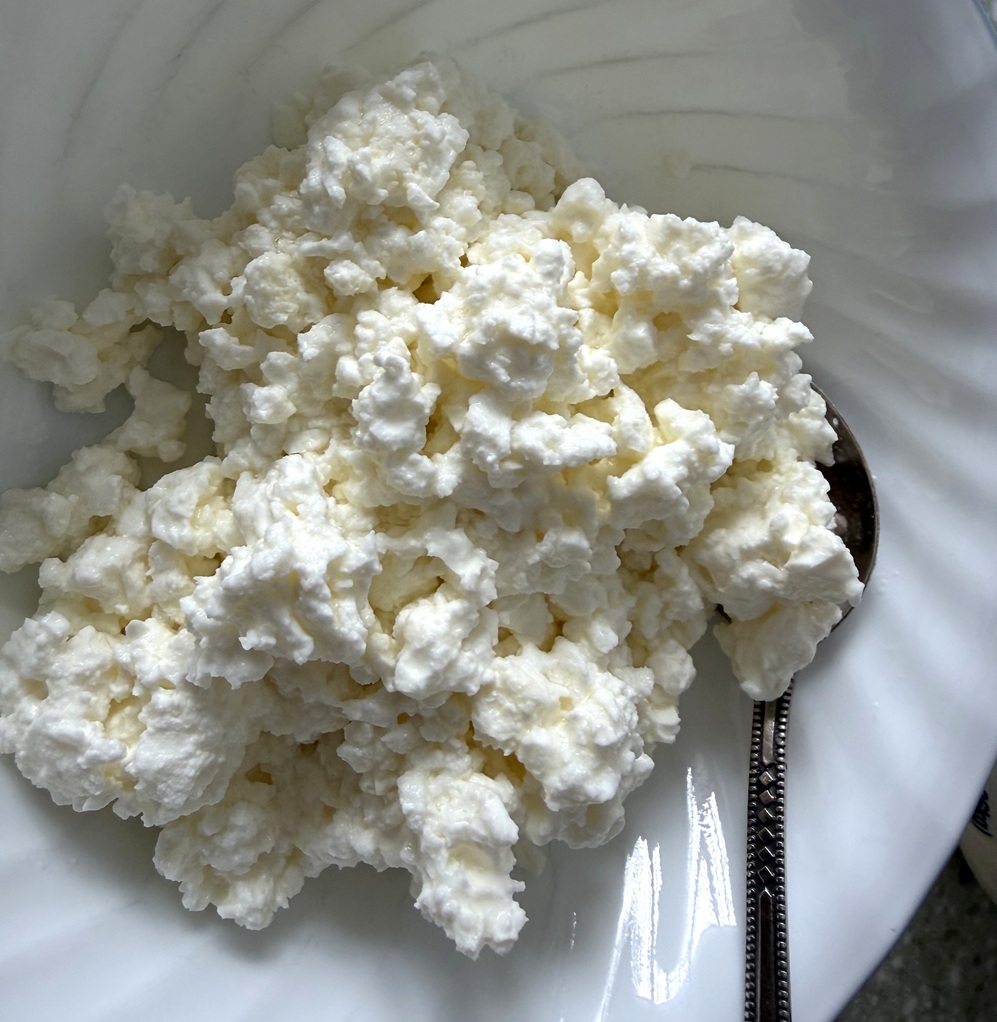
And yet the main goal here is tasty cottage cheese, and this is exactly what this recipe allows you to achieve. We are now making it every week, and it is our typical breakfast staple here.
There you are, my friends. A simple recipe worth making. If you try it, and I really encourage you to try it, I will be really curious to hear your feedback.
And until the next time – bon appetit!
Last Bottle Sign Up ($10 credit)




 Talk-A-Vino