Moscato d’Asti – The Joy of Sharing
 Wine should give you pleasure.
This pleasure can come in many forms.
The simplest one is a pure hedonistic pleasure of that sip itself, the burst of flavor overwhelming your taste buds, and the opportunity to mindfully reflect on that very burst.
Or, with one sip of familiar wine, you can be instantly transposed in time and space – the wine can bring back memories. You can instantly imagine yourself being in Italy 5 years ago, experiencing this wine for the first time, vividly seeing the faces of the people you were there with, and reliving that beautiful moment again.
And then there is possibly the biggest pleasure of all – an opportunity to share wine with people. It is great to enjoy good wine by yourself – but that pleasure amplifies disproportionally when you pour the wine for your guests and you hear the collective “oh, it is so good!”.
I’m happy to share all of my wines with my guests, but then there are some wines that I even prefer to share. Let me explain.
I’m happy to open a bottle of Cabernet Sauvignon, Chardonnay, Syrah, any still red, white, or Rosé. Even if nobody would share it with me, I can drink it by myself over the next 2-3 days, no problem. But I would be very reluctant to open a bottle of sparkling wine for myself – I definitely prefer to share it with friends. Especially if this is a dessert sparkling wine, such as Moscato d’Asti.
I love doing that at the end of the dinner, when nobody expects that more wine might be coming. Seeing another bottle being brought up to the table, guests’ usual and immediate reaction is “what, more wine???”. This question requires no answer; I just wait for the people to taste the wine first.
Moscato d’Asti might be one of the hidden gems of the wine world, lightly fizzed, low alcohol, and deliciously, “just enough” sweet. This wine, made from the Moscato Bianco (white Muscat) grape, comes from the area in Piedmont where Moscato wines have been made for hundreds of years. Moscato d’Asti wine in its present, lightly fizzed form was born in the 1870s, when a number of winemakers started producing it in commercial quantities. Yet despite its 150+ years of history, I would still call it a hidden gem, as many winelovers are not aware of this wine or have the wrong ideas because of its sweetness.
The beauty of Moscato d’Asti is in its lightness and effervescence, and sweetness well balanced with acidity. If you want a glass of wine with your dessert, you will have to search far and wide to find the wine that would pair better with literally any type of dessert. And at a typical 5.5% alcohol level, it is guaranteed not to overwhelm your dining experience with a heavy punch of alcohol.
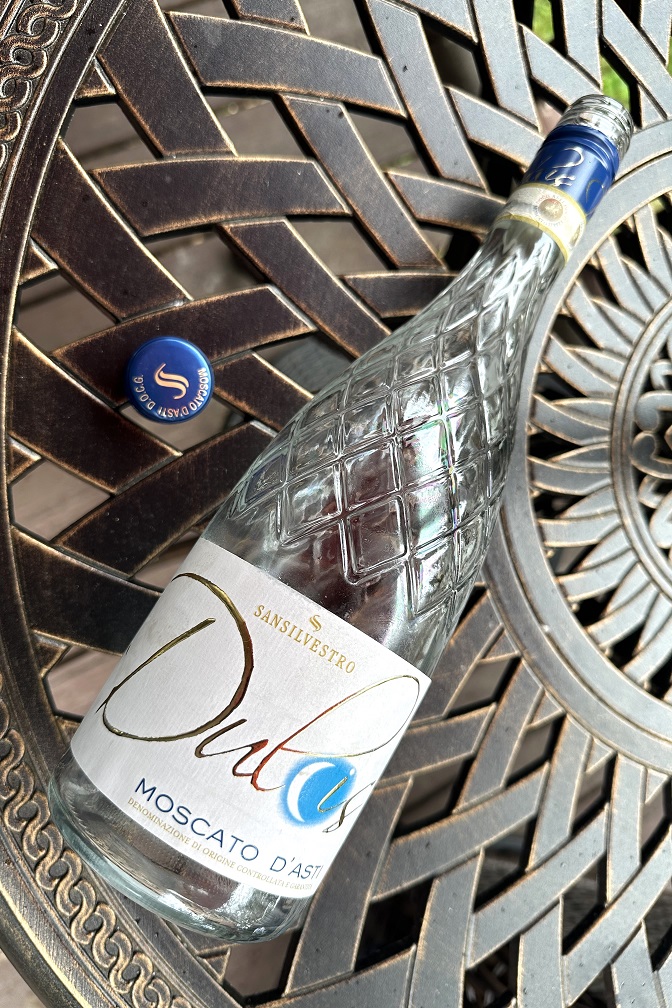
I recently had an opportunity to experience this “pleasure moment” when I opened the bottle of 2024 Sansilvestro Dulcis Moscato d’Asti DOCG (5.5% ABV) to serve with dessert. Overcoming the “what, more wine” resistance, I poured the wine for my guests and encouraged them just to take a sip. The next thing I heard was “oh my god, this is so good! Can I have more, please?” – there it is, that exact oenophile’s pleasure moment, equally as pleasant as taking a sip of the wine.
Moscato d’Asti is generally well priced, with a great selection of the wines at around $15 or less, so it definitely offers a great QPR and lots of pleasure without the need for an expense account. You should always have a bottle on hand, just in case you are craving a simple pleasure – double though considering the upcoming holiday season and all the get-togethers with friends.
By the way, on the subject of Moscato – back on May 9th, we celebrated Moscato Day (it is always celebrated on May 9th). I attended wonderful festivities in New York and never wrote about them, so if you care to see some of the images from that celebration, feel free to click “more” below.
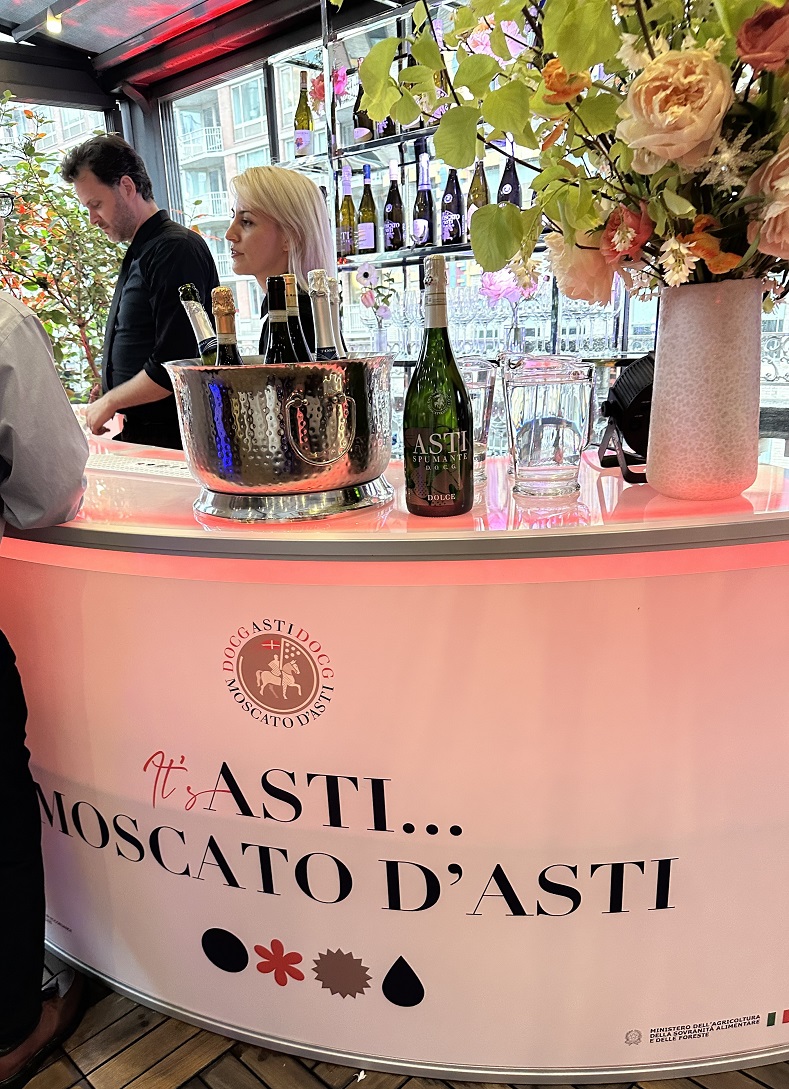
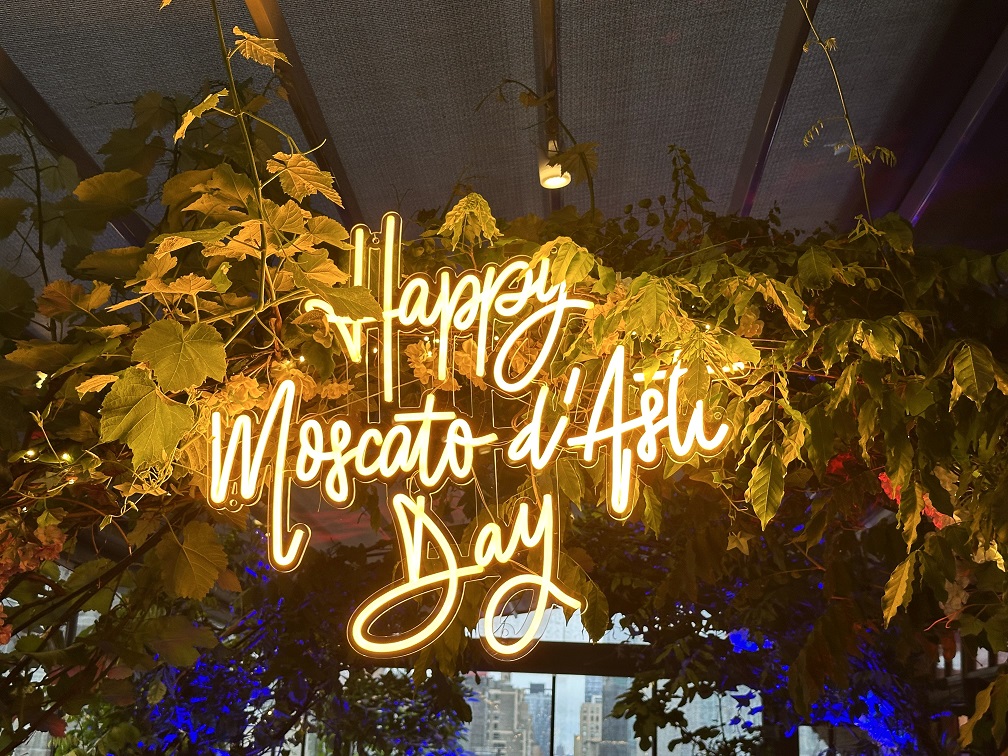 Moscato d’Asti’s light sweetness, accompanied by acidity, combined with low alcohol (eliminates burning sensation in your mouth) makes it a versatile pairing wine, working well with a wide variety of dishes. We had the pleasure of making sure Moscato wines can accompany lots of dishes, including even fresh oysters, which were shucked right on the spot (can’t tell you how many I had – a lot). Here is a smorgasbord, in pictures.


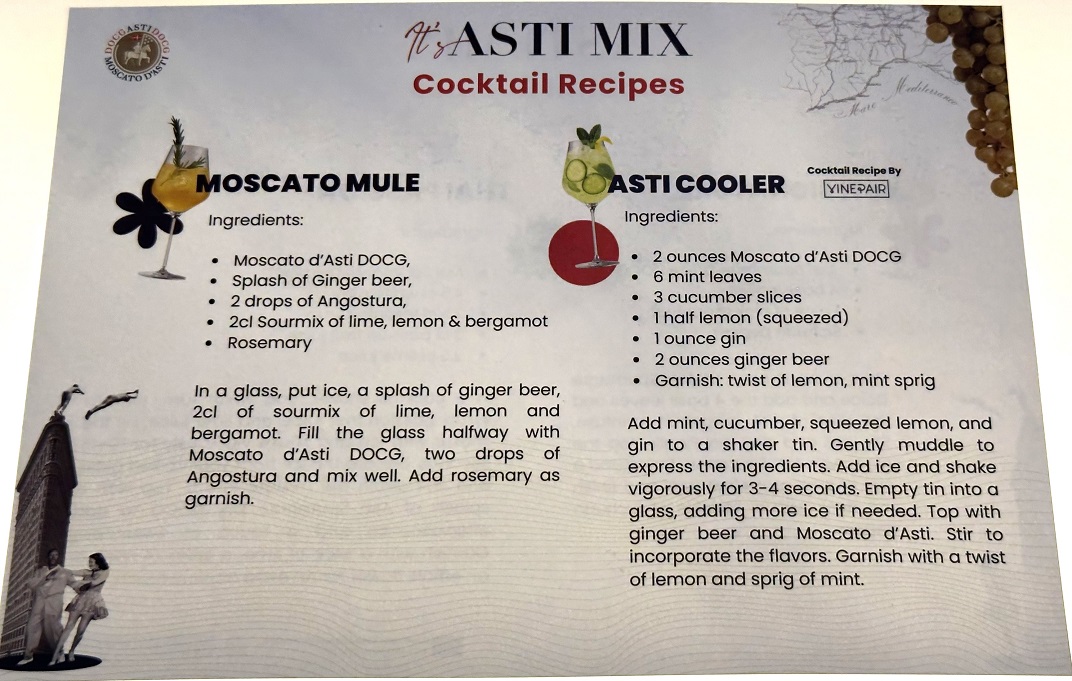
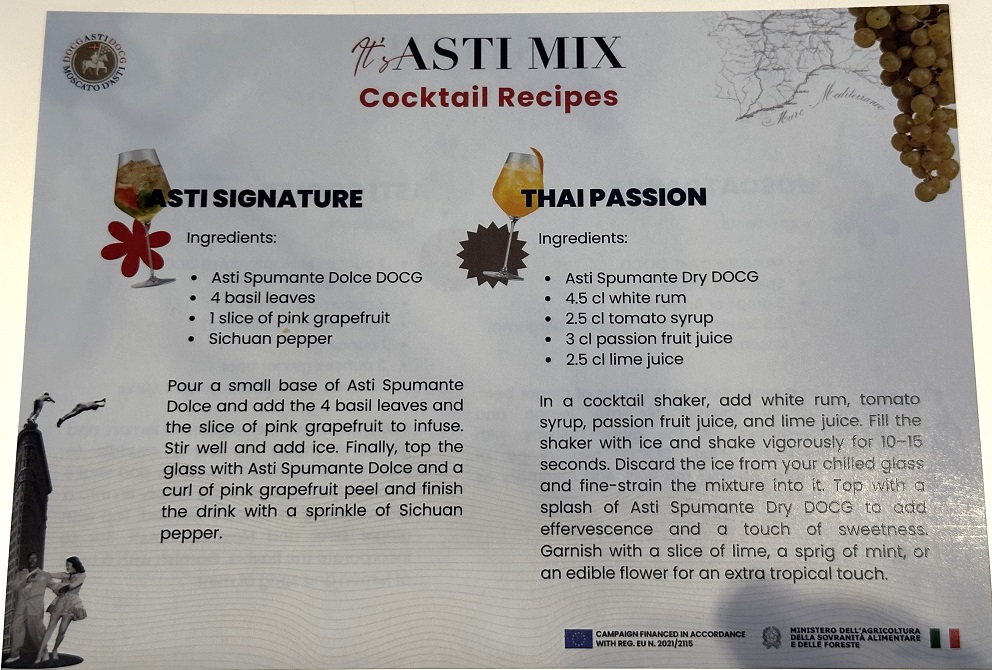
Moscato d’Asti is great in cocktails – there were four different cocktails offered at the event, all delicious. By the way, this is something you should do at home – here are the copies of the recipes for you.


And of course, Moscato d’Asti is delicious just by itself (considering typical alcohol between 5% and 7%, it is even okay to overindulge). I don’t have an exact record of all the wines I enjoyed, but here are some references for you:


2024 Umberto Fiore Moscato d’Asti DOCG (5.5% ABV)
2024 Cavallero Moscato d’Asti DOCG (5% ABV)
2024 Cantina Alice Bel Colle Moscato d’Asti DOCG (5.5% ABV)
2024 Tenute Neirano Pitulè Moscato d’Asti DOCG (5.5% ABV)
2023 Marangona MuscatèBianc Moscato d’Asti DOCG (5% ABV)
2022 Bava Bass Tuba Moscato d’Asti DOCG (4.5% ABV)
2023 Tenuta Olim Bauda Centive Moscato d’Asti DOCG (5% ABV)
2023 Ceretto I Vignaioli di Stefano Moscato d’Asti DOCG (7% ABV)
I said it before, and I will say it again – Moscato d’Asti is well worth your attention and it will brighten up any holiday or just any regular evening dinner. Cheers!
-
January 4, 2026 at 11:24 pmTop 25 of 25 | Talk-A-Vino
Last Bottle Sign Up ($10 credit)




 Talk-A-Vino