Archive
Weekly Wine Quiz #31 – A Guessing Game: Ultimate Challenge, Part 1
To finish off the wine reviews quiz series, today we are following the steps of the previous two wine quizzes (#29 and #30), only now going to the next level: you will need to match 5 reviews and 5 wines. Actually, that “finishing off” will separate into two separate quizzes – one for white wines and one for reds.
Here are your grape choices:
A. Chardonnay
B. Chenin Blanc
C. Sauvignon Blanc
D. Savagnin
E. Viognier
Here are the reviews. Just to make it a bit easier, note that all the reviews are for single-grape wines.
1. “Gently kissed with toast, giving the core of white peach, lemon and chamomile a broader frame of lightly toasted brioche and paraffin. A suave echo of flint chimes through the finish in this lovely rendering of the toasty style.”
2. “An enticing, lemony white that is both aromatic and rich on the palate. Apple and mineral notes combine with the lemon flavors that glide to a lingering finish”
3. “This has weight and depth but remains stylish, with ginger and glazed pear notes in reserve while persimmon, green almond and piecrust notes lead the way. Lovely cut on the finish keeps the ginger edge echoing. Should develop nicely in the cellar”
4. “Extremely rich and generous, with ripe, opulent peach, nectarine, apricot and tangerine flavors that are woven together on a full, lush body with smoke, spice, cedar and mineral details and a juicy acidity.”
5. “Intensely minerally and smoky, with a blanket of acidity behind the apple, sea salt and anise flavors. The long finish is bracing and powerful.”
Please provide the answers in the form of A1, B2 etc. Bonus question – provide country of origin for each grape/review combination. Double bonus – in addition to country, provide more precise appellation, like Finger Lakes, Oregon, etc (doesn’t have be exact, but it should be more narrow that the whole country).
Have fun, good luck and have a great weekend! Cheers!
Re-Post: Best Hidden Secrets Of The Wine World: Rioja
During 2011 I wrote a number of posts for the project called The Art Of Life Magazine – of course talking about my favorite subject, wine. The project closed, but I still like the posts I wrote, so I decided to re-post them in this blog. Also, in that project, posts were grouped into mini-series, such as “Best Hidden Secrets” you see here – I will continue re-posting them from time to time.
Also note that the series was written for a slightly different audience – I hope none of my readers will take offense in the fact that sometimes I’m stating the obvious…
 “Let me tell you a secret” – how many stories started from this sentence? Adventures, journeys, discoveries, friendships and feuds, love and hate – secrets can be beginning of many things.
Secrets have special place in our lives. Secret is a hope. Hope, anticipation and promise of unique experience. Humans always hope to find secrets – of health, wealth, attraction, eternal life. When you know a secret, you feel good – you possess something which nobody else does. Or at least nobody from the people you know. And this is when it becomes difficult. We are social creatures, and we want to share. When we share a secret, we feel special, we feel high above, as we share something which a moment ago was unique and exclusively ours. Then we regret we shared – ahh, that moment of weakness. And yes, you are right, there are evil secrets, those which bring death and destruction – but nothing like that belongs to this blog.
Okay, fine, I hear you. This is not a philosophical blog – this is the blog about wine and experience. But – the preamble was necessary, as we will continue from here on. Secrets (sometimes referred to as “know-how”) are everywhere, and world of wine is no exception. Are they really such a secrety secrets? Of course they are not, and you don’t need a special clearance to learn them. However, secrets are personable, and if secrets I plan to share will only make you yawn, please make sure to tell me so.
So what can be so secret about something which is available in abundance literally everywhere? Of course it would be nice to discover a secret of buying a bottle of Chateau Petrus for $100 instead of $3,500, but this is something which I don’t know myself (hey, if by any chance you do, can you PLEASE share that special knowledge with the rest of us?).
So my secrets will be about wines which will give you a lot of pleasure without the need to refinance the house. And they will be about the wines you probably never heard of. I promise you will learn some secrets, and I’m certain you are not going to regret.
Bored, tired, lost my chain of thoughts and need a drink? And even if you like it so far, it might still be a time for a drink. Get your bottle opener and reach out for that Spanish wine called Rioja. Why Rioja? Rioja is a well known wine from Spain – what makes it a “secret”? I truly believe that Rioja is under-appreciated by the wine lovers, despite two very essential characteristics: value and ability to age. Let’s start from aging: Rioja will rival best Bordeaux and Burgundies in its ability to age. Just to give you an example, I recently had an opportunity to try 1964 Monte Real Rioja Gran Reserva (the wine was exactly 45 years old when I had it) – and the wine was still youthful, with bright fruit, very round and polished, and was not over the peak at all. Now, talking about value: how much do you think this 1964 Rioja costs today? Before we get to the numbers, you need to take into consideration that 1964 was one of the most exceptional years for Rioja in the past century. Essentially, best Riojas had being produced in 1964, 1973 and 2001. So if you would take a parallel with great Bordeaux of 1982, a bottle of wine from that vintage would easily cost you thousands of dollars. Yet that 1964 Monte Real Gran Reserva can be bought today for $220 (if you are in US, you can find it at PJ Wine store in New York) – this is an outstanding QPR (quality price ratio).
Rioja wines are typically aged in the oak barrels, and then still can be aged in the bottle before they are released. You can see all that information on the label of Rioja wine. If the wine just called Rioja, it means that it was aged in oak less than a year. If the wine is called Rioja Crianza, it means that it had being aged for two years total – 1 year in the oak, and another year in the bottle. Rioja Reserva had being aged for a minimum of 3 years – 1 in the oak, 2 in the bottle. And the Rioja Gran Reserva is aged for a minimum of two years in oak and 3 years in bottle. Also, Reserva and Gran Reserva is produced only in good years, not always. Why all the classification? Let’s take a look at couple of Rioja wines readily available today.
First, 2001 La Rioja Alta Vina Ardanza Reserva Especial. Just to make things more complicated, here is additional designation of Rioja wines – Reserva Especial. “Good” thing is, you are not going to find too many wines like that, because Reserva Especial is assigned only in the best of the best years – again, repeating from above – 1964, 1973 and 2001. La Rioja Alta is a very good producer with wide variety of great Rioja wines, and one can make a few blog posts talking just specifically about them. This 2001 Reserva Especial is outstanding – when you take a sip, it becomes a fiesta of flavor in your mouth – cherries, plums, cigar box, chocolate notes, all bright but not overpowering at all, with silky smooth tannins and long finish. This is the great wine, and will continue to evolve for many years to come. The price of the pleasure – $29.95!
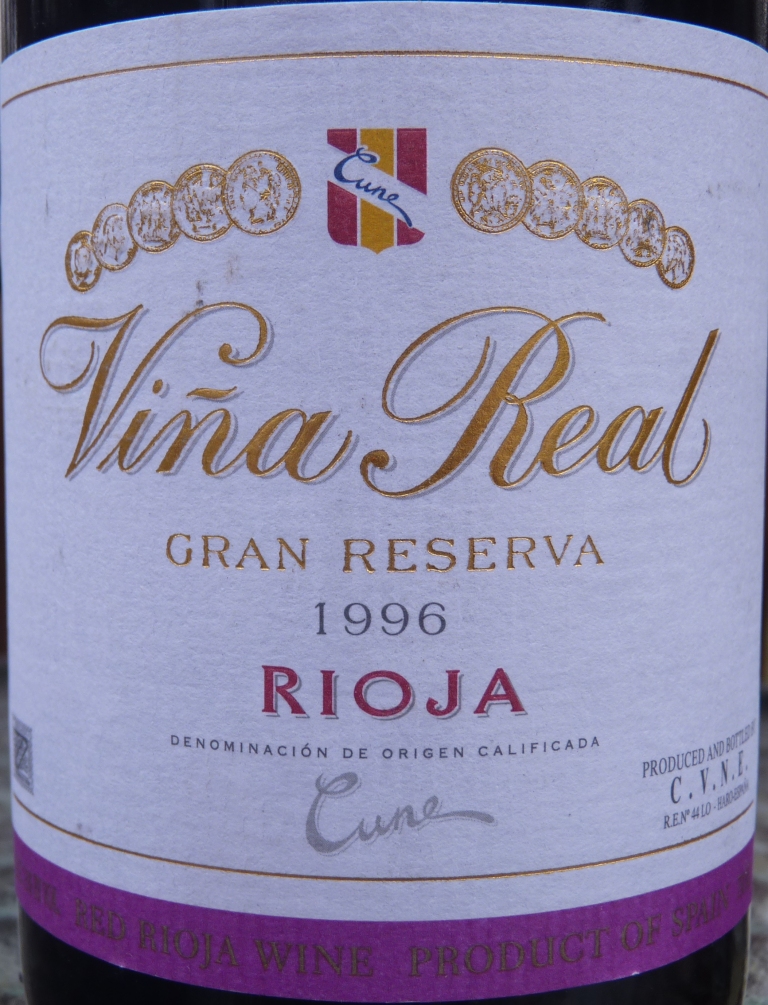 Here is another example – 1996 CVNE “Vina Real” Rioja Gran Reserva. This is Gran Reserva in all meanings – while this wine is 15 years old, it needs time like great Barolo to be enjoyed fully. In the first half an hour of breathing, only tannins opened up to the point of completely puckering the mouth, and the fruit appeared after another half an hour of time. After an hour and a half of breathing, this became a nice and gentle wine with the cherry and eucalyptus notes. Great wine, again at a great price – $31.99! Considering that this is a Gran Reserva, comparable Bordeaux or Burgundy wine would cost probably ten-fold, if not more.
I did my best to share the great secret of Rioja – don’t know if I managed to convince you, but I hope at least you feel encouraged to give Rioja a try. I truly believe you will not be disappointed. In any case, there are many more secrets we are going to share – rare grapes, little known wine regions, and many other wine pleasures to be discovered along the way. Cheers!
Wednesday’s Meritage – Wine Quiz Answer, 16+% ABV Wines, CatchWine, Sake Day and more
 Meritage time!
Let’s start from the answer for the Wine Quiz #30 – A Guessing Game, In Reverse. You were supposed to pick the right review for the Chateau Latour from the list of five options. I’m happy to announce that we have a winner! Before I will tell you who won, let me tell you about the reviews I cited. All four options were legitimate reviews, of course for the different wines. This is what they were:
A: “dense ruby/purple color as well as an extraordinary nose of spring flowers intermixed with blueberries, black raspberries, wet rocks and spice box. Deep, full-bodied, rich and intense, this gorgeous effort again demonstrates what brilliant winemaking and a top-notch terroir can produce. It should drink well for 15-20 years.”
This is Wine Advocate review for 2008 Hundred Acres Cabernet Sauvignon from California (99 points).
B: “deep purple-ruby. Pungent floral and spice notes enliven complex aromas of dark plum, cocoa and minerals. Large-scaled and juicy, with lively acidity giving sharp definition to the uncommonly deep, pure flavors of black fruits, forest floor and dark spices. The impressively ripe, powerful finish features youthfully chewy tannins and outstanding persistence. This big boy will require a lot of patience: forget about it in the cellar for at least 15 years”
International Wine Cellar review for 2009 Chateau Latour (IWC96+, WA100)
C: “bright ruby. Perfumed, expressive aromas of red and dark berry preserves, smoky herbs and lavender, with a touch of licorice adding depth. Fleshy and supple in texture, offering intense black raspberry and bitter cherry flavors lifted by a spicy quality. Shows the richness of the vintage but carries no excess fat. The finish lingers with impressive tenacity and echoes the floral and smoke notes”
International Wine Cellar review for 2009 Beaucastel Chateauneuf du Pape (93 points)
E: “Deep, bright violet. Intensely perfumed black raspberry and blueberry on the nose, with seductive Asian spice, lavender and incense qualities emerging with air. Sappy red and dark berry liqueur flavors are lifted by juicy acidity picking up suave spice and floral pastille notes on the back end. Velvety tannins provide shape but are absorbed by the lush fruit, which carries through an extremely long, sappy, incisive finish.”
International Wine Cellar review for 2009 Saxum James Berry Vineyard (96 points).
So based on the comments we have two winners – April and The Drunken Cyclist, who also almost correctly answered the bonus question about the vintage (almost is a key word here, as he couldn’t decide between 2005 and 2009, but still, very impressive). Great job guys, you got all the bragging rights which come with winning of this [I would think somewhat difficult] quiz. I wish my prizes could be more tangible…
And now, let’s move on to interesting news and updates.
Need more wine holidays (the last one we celebrated was International Grenache Day on Friday, September 21st)? You are in luck! 35th Annual (show some respect!) Sake Day is coming on October 1st! Here is the blog post about it from The Passionate Foodie blog.
Wine Til Sold Out Full-On marathon is coming up next Tuesday, October 2nd – 6 AM – Midnight, wines are priced $15.99 – $$$.
Joe Roberts of 1WienDude fame had an interesting discussion in his blog regarding wines with ABV in excess of 16% – can those be balanced? If you have an opinion – join the discussion in Joe’s blog.
W. Blake Gray had a great post about wine collectors versus wine lovers – I highly recommend that you will read it.
I accidentally came across very interesting web site called Catch Wine – it seems to list a lot of very useful information about wineries in all the different states, including address and phone number, the hours when tasting rooms are open, wineries near by, user reviews and more. Check it out!
Last but not least – PJ Wine’s Grand Tasting in New York is coming up on Friday, November 16th – if you are in the area, you don’t want to miss Chateau Margaux, Chateau Haut-Brion, Vega Sicilia and many many other amazing wines (click the link above for more information).
That’s all for today, folks. Happy Wine Wednesday! Cheers!
Big Time at the Big Winery: Visiting Chateau Ste. Michelle
As you know, wine is my hobby – I don’t belong to the “wine trade”, but as a wine aficionado (oenophile and occasional snob), I’m an eternal student of wine (luckily, the world of wine happily offers eternal learning opportunities). How do you learn about wine? There are many ways, but tasting the wines and talking to the people who make them is probably one of the best – I just had a great learning experience which I want to share with you.
Chateau Ste. Michelle is located in the State of Washington, about 30 miles north of Seattle. While visiting Seattle not long ago, I realized that I have enough time before my flight back to the east coast to visit the winery and (yay!) try some wines.
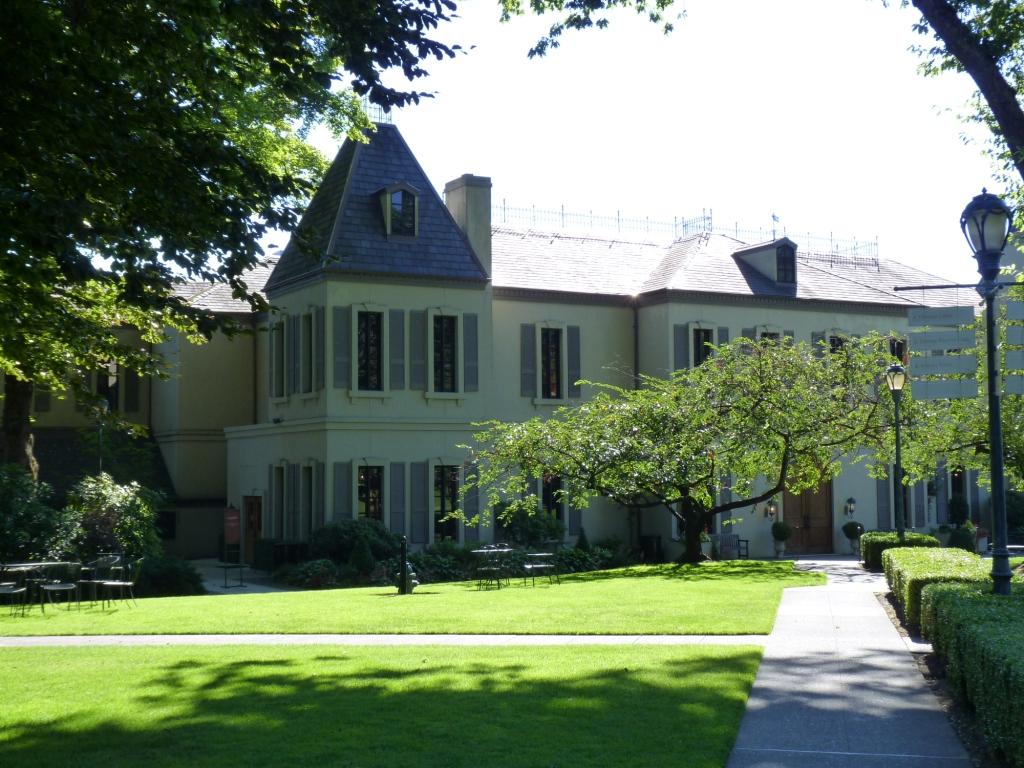
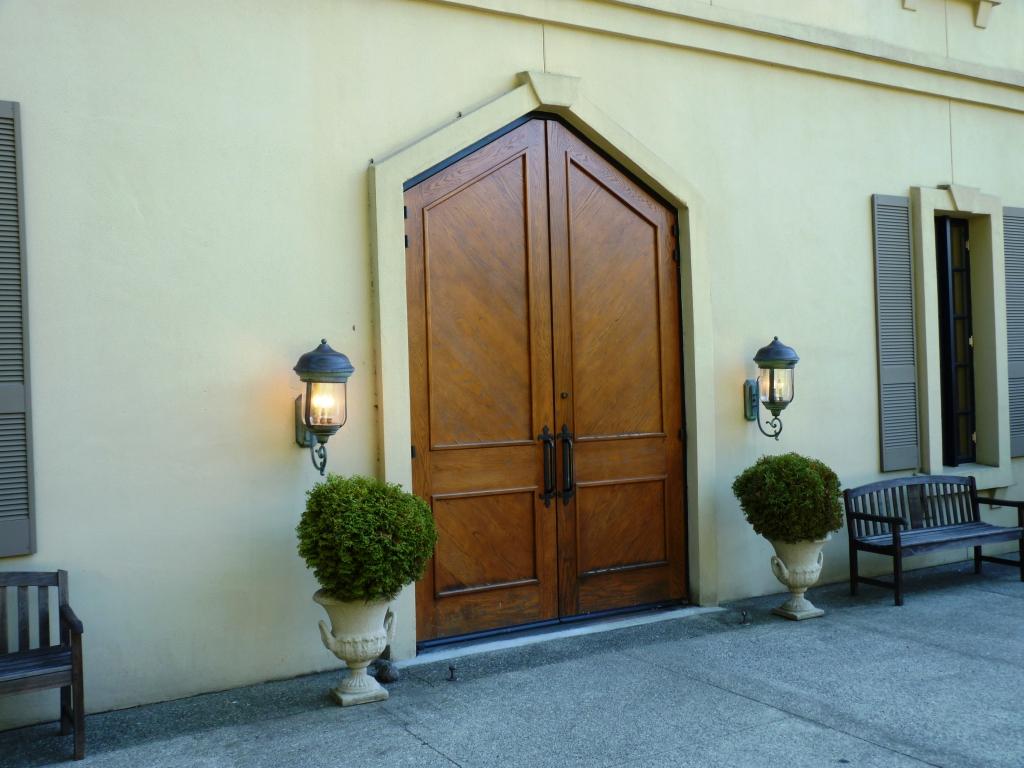
The place looked pretty impressive as I drove in – I visited quite a few wineries over the years and Chateau Ste. Michelle probably was the biggest one I have ever been to. Took me a while even to realize that the big door was there with the purpose and not just a part of the old mansion. Here are a few pictures from you so you will get the idea:
 Here is the door I was contemplating to touch:
From here on, this will be pretty much a picture report with some tasting notes, of course.
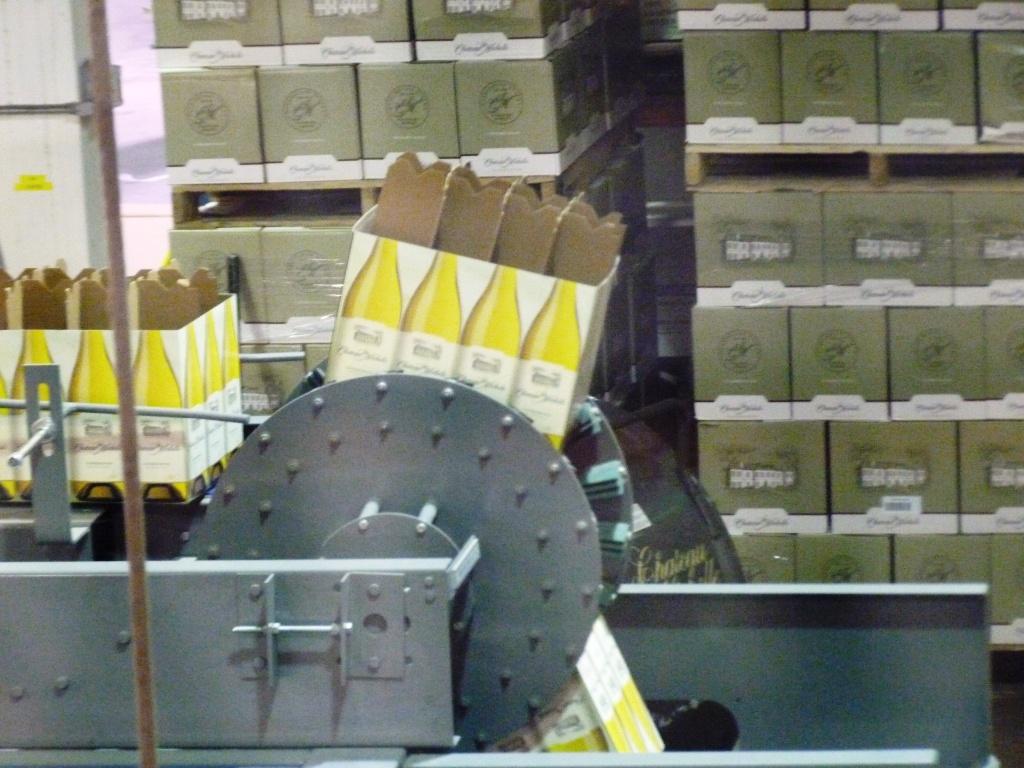
By the way, just to give you an idea of the size of this winery – look at this conveyor belt – there are between 7,000 and 9,000 cases (!) of white wine made there per day (!):
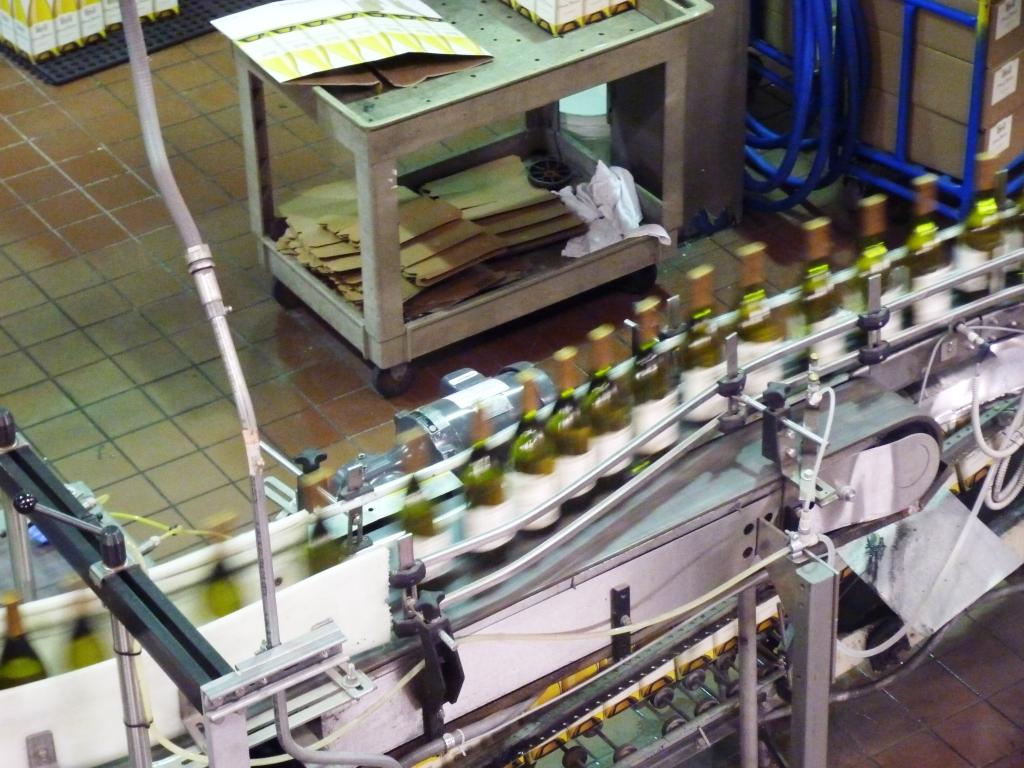
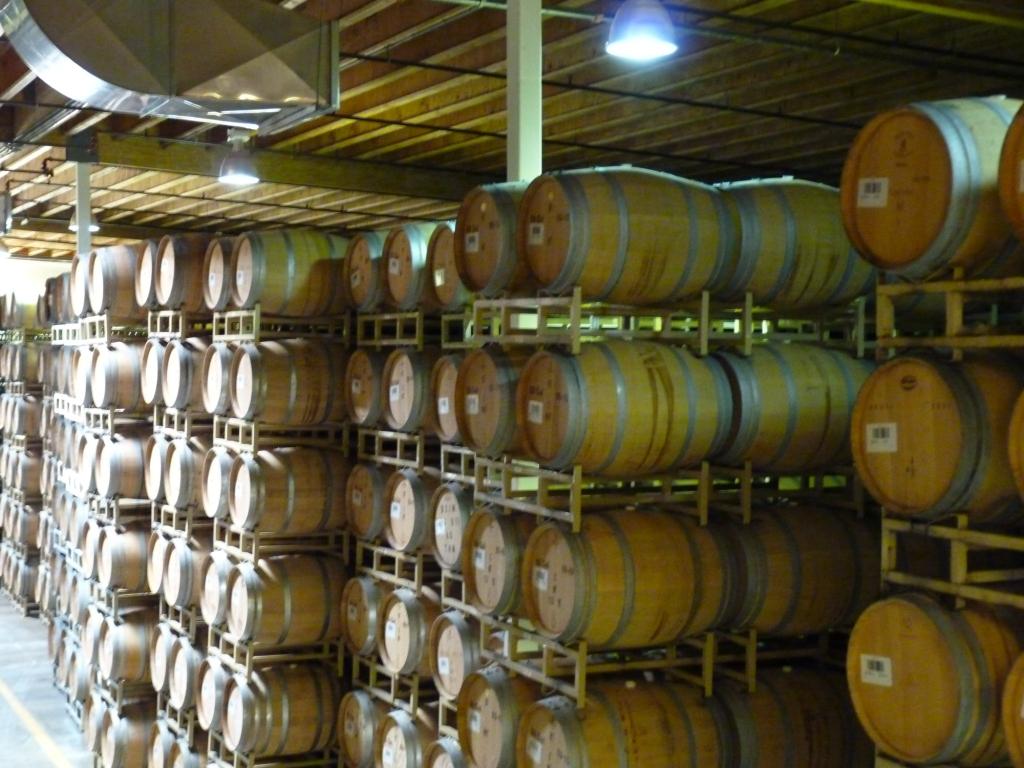
And those barrels? They all hold white wine, and there are 28,000 barrels in that room (!). And the smell alone in that room – ahh, you really should experience it for yourself – the magnificent Chardonnay aromas filling up the air – you really can enjoy this smell countless amount of time.
Wait, here are the tanks first:
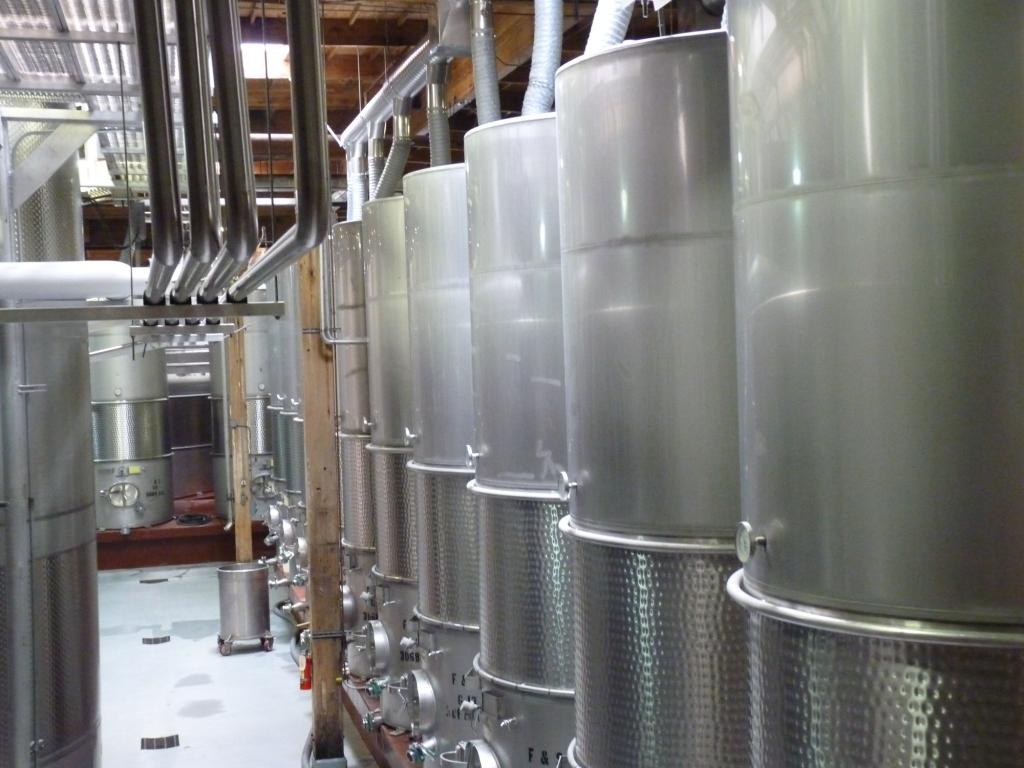
And now, the barrels (no, you can’t see all 28,000 in this picture):
Now, let’s talk about the wine – no more “supporting pictures”.
The tasting was conducted in the library room, where I was surrounded by the wines I really (REALLY!!!) wanted to try – but I had to only look at them… Here are some of the wines I didn’t try:
1977 Cabernet Sauvignon:

Then I didn’t try this 1993 Meritage:
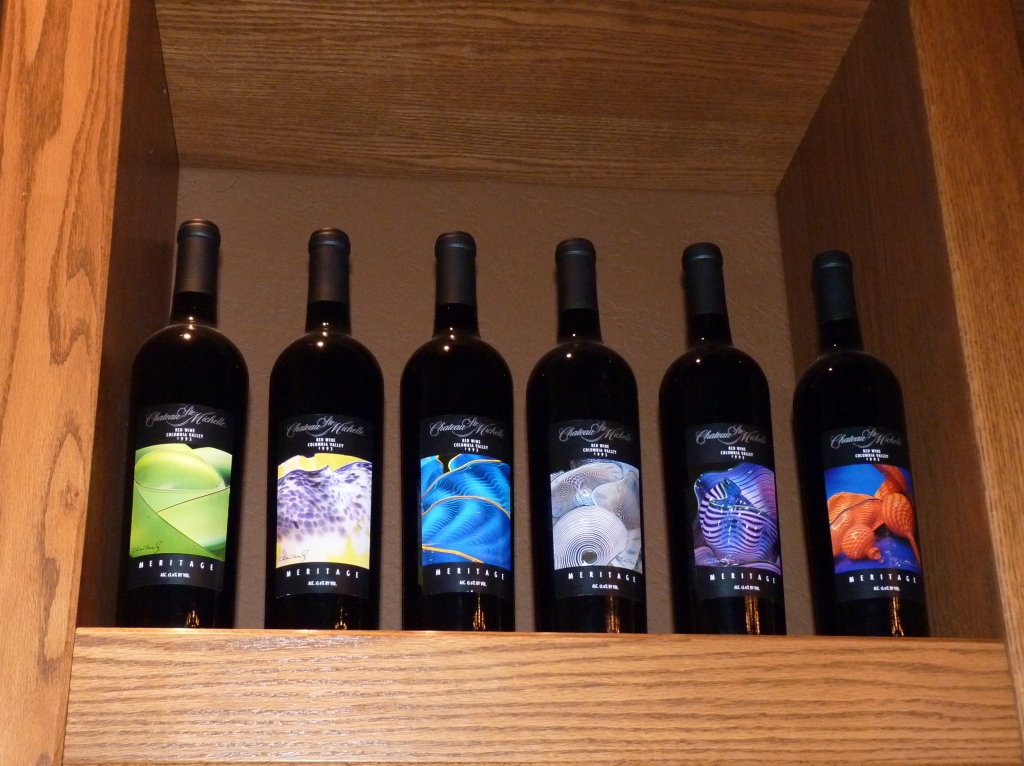
1994 Meritage? Nope, still nothing…
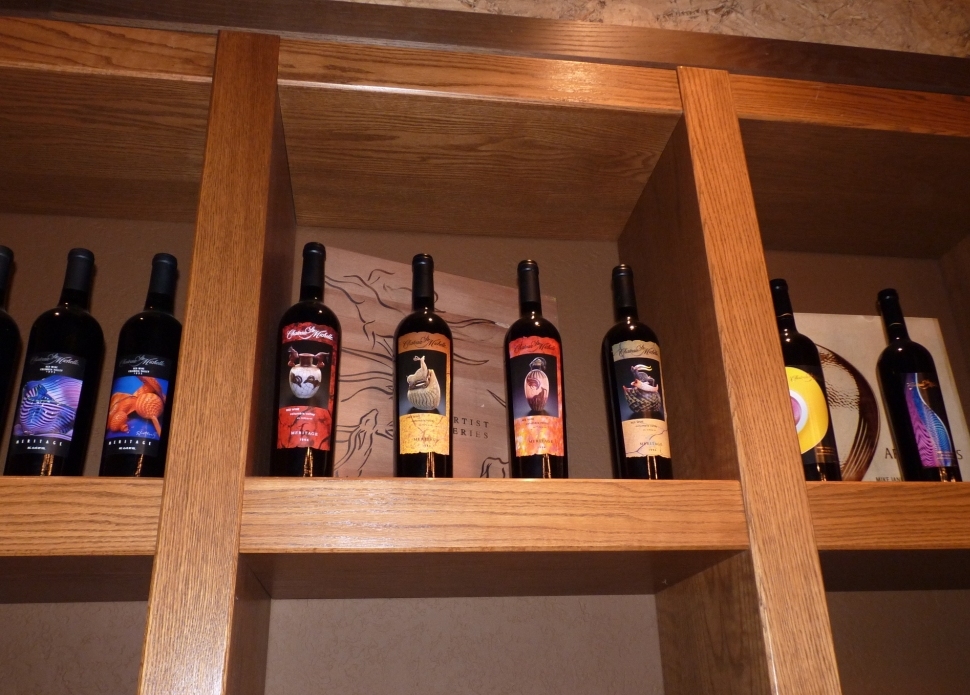
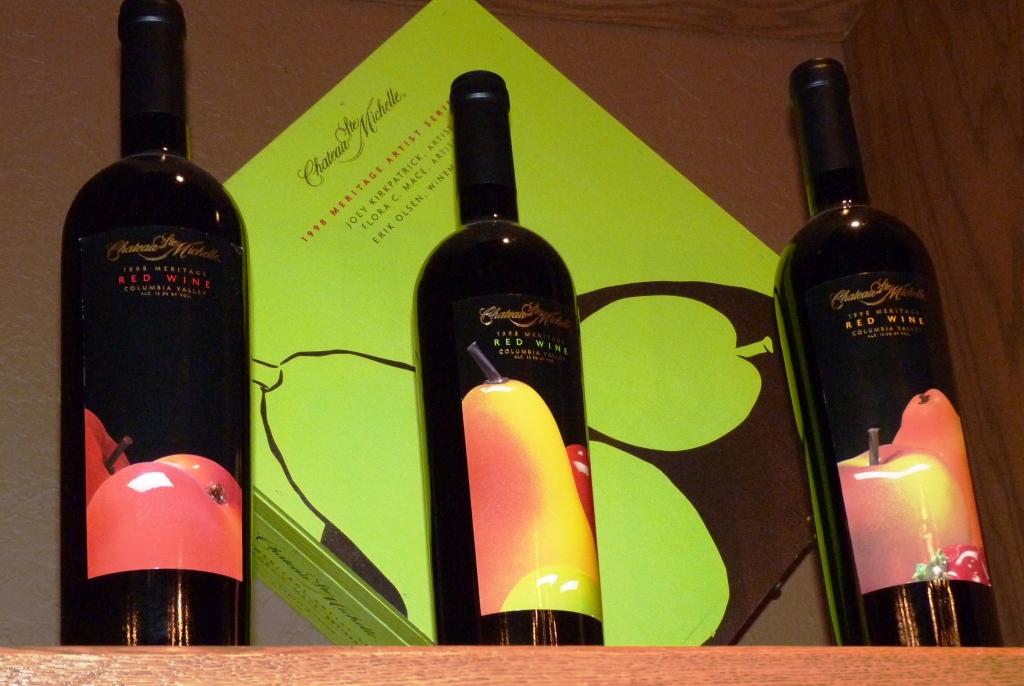
And I didn’t try this 1998 Meritage:
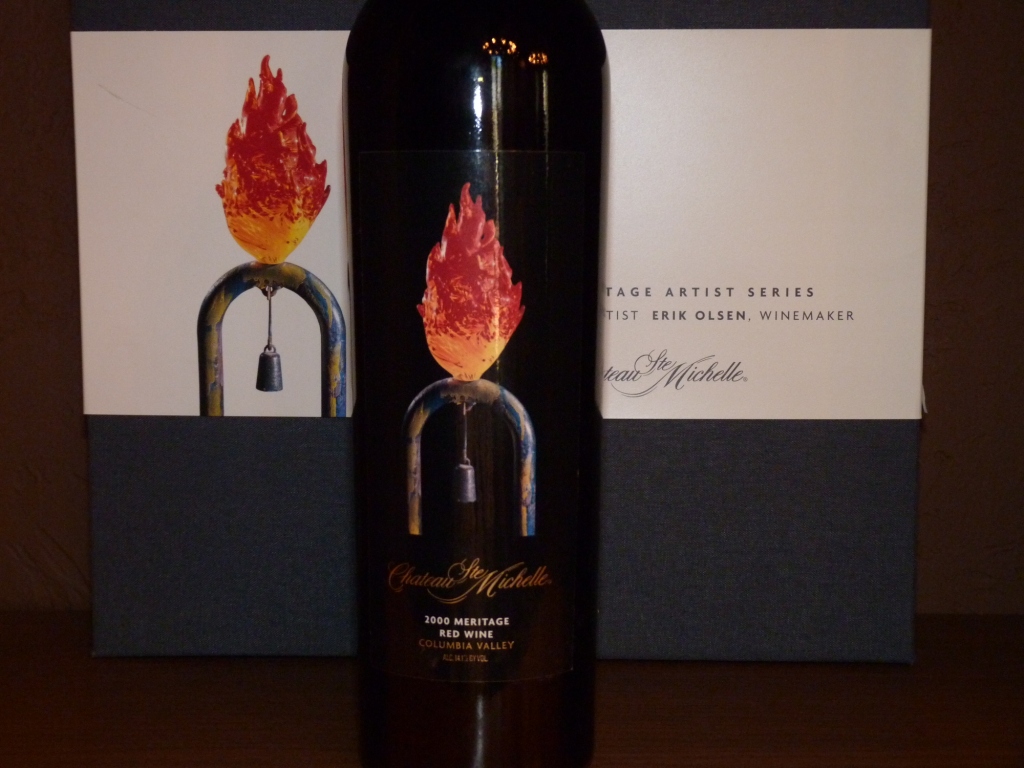
Another wine I missed on, 2000 Meritage:
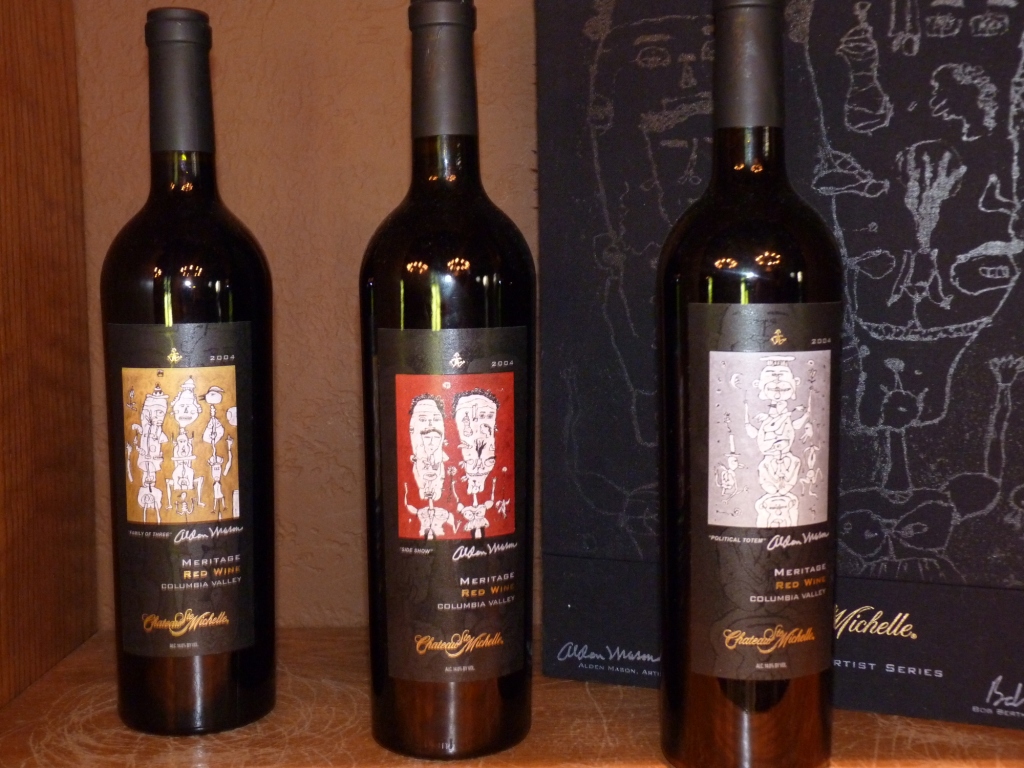
2004 Meritage? I could touch…the bottle, that’s all:
Okay, that’s it. Yes, I just wanted to share some pictures with you, so it would mean that I didn’t take those pictures for nothing.
And now, let’s talk about wines I actually tasted.
The tasting started with Domaine Ste. Michelle Cuvee Brut NV. As a confession of the wine snob (wow! need to patent that – should be a great name for a series of posts) I have to admit that I always passed that sparkler in the wine stores. I will not make this mistake anymore! Perfectly balanced, with the nice notes of green apple, and fresh, clean, high note acidity (and the price of $11 or so), this can be your perfect everyday bottle of sparkling wine.
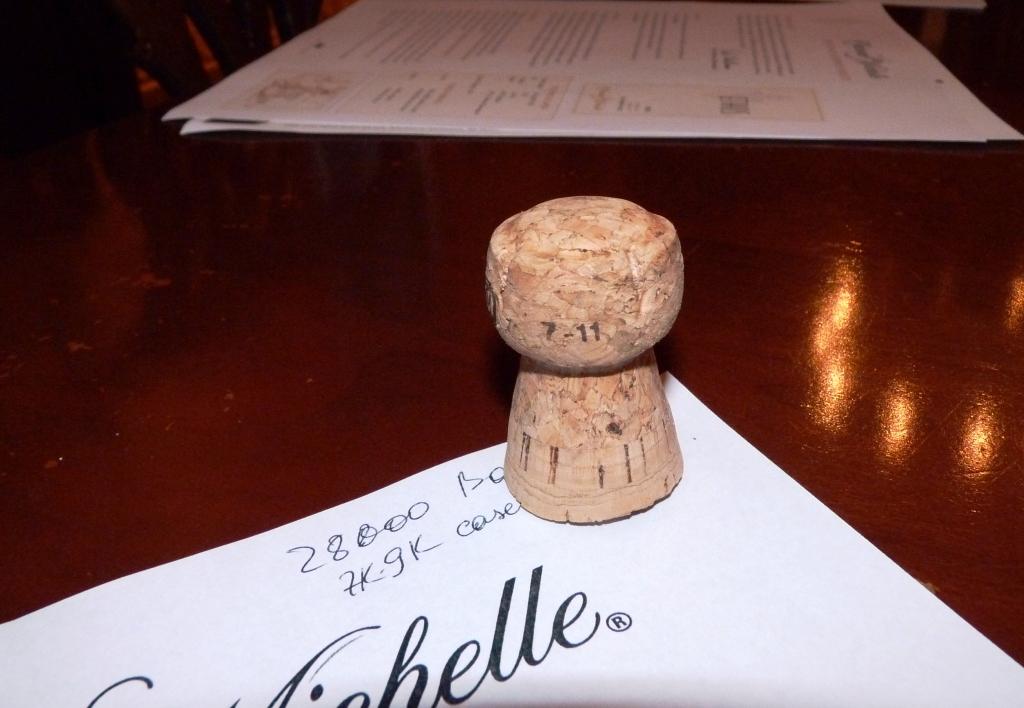
On a related note, I would like to also give you a mini-quiz (the answer will be at the bottom of the post) – below is a picture of the cork – what do you think those numbers mean and why are they there?
Next, we moved to the 2009 Canoe Ridge Chardonnay – it had a touch of butter and toasted oak on the nose, but was somewhat green on the palate – I was hoping for a bit more round profile on the palate.
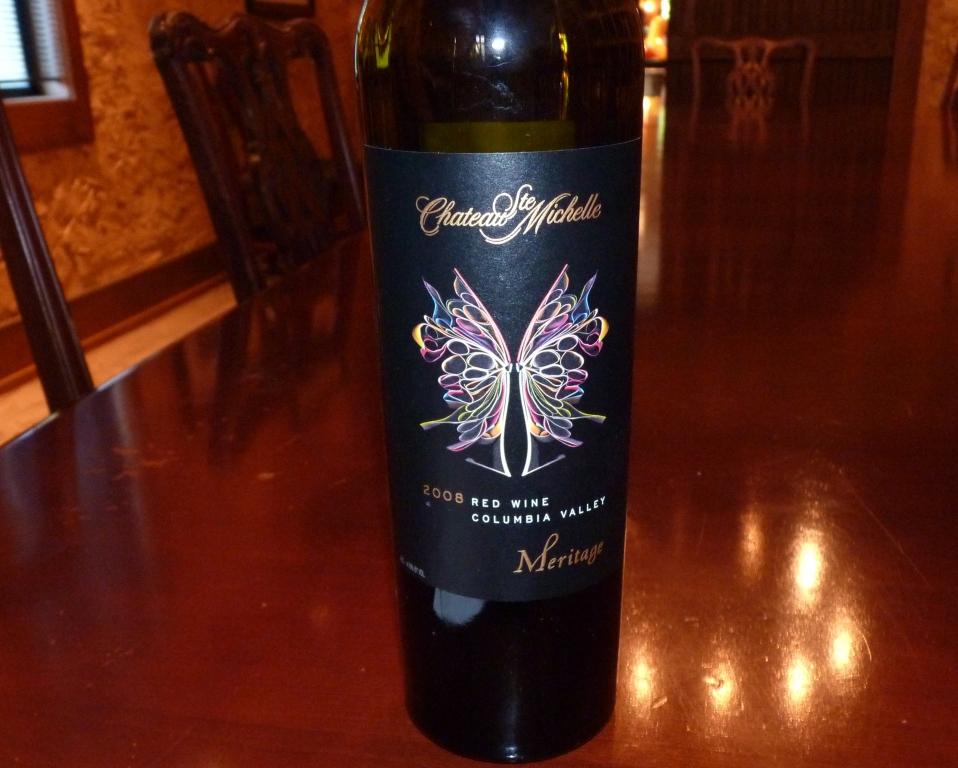
Next wine was the 2008 Artist Series Meritage – 51% Cabernet Sauvignon, 36% Merlot, 6% Cabernet Franc, 6% Malbec and 1% Petit Verdot – this was actually the first year for the whole period of Meritage production when all 5 classic Bordeaux varieties had been used. The wine was beautiful, perfectly balanced and reminiscent of a classic Bordeaux.
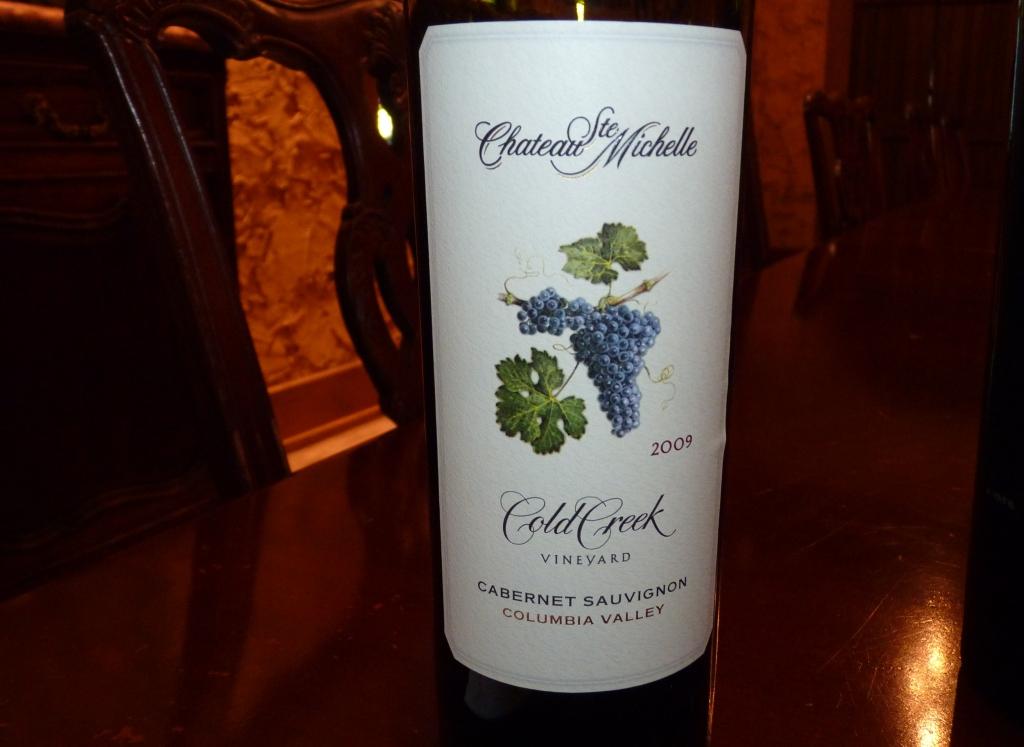
2009 Cold Creek Cabernet Sauvignon – single-vineyard Cabernet was perfectly clean with eucalyptus and earthy notes, soft fruit, and a long finish. As Renee ( my host) explained, this wine is usually not really welcomed by guests from California, as it shows much less exuberance compare to the traditional California Cab.
However, Washington Merlot, such as 2009 Ethos Reserve Merlot is fully redeeming the softness of Cabernet – this wine has broad shoulders, very big, powerful, with blueberries and blueberry jam, tobacco and dark chocolate notes – very impressive wine.
Last in that line of the tasting was 2006 Late Harvest Chenin Blanc, single vineyards from Horse Heaven Hills, RS 17.8% – this wine was perfectly balanced, with notes of honey and apricots, and clean, fresh acidity – very nice.
Do you think we are done? Nope. There are a few more wines to report: 2008 Stone Tree Vineyard Syrah Wahluke Slope was soft and supple, with a touch of spice:

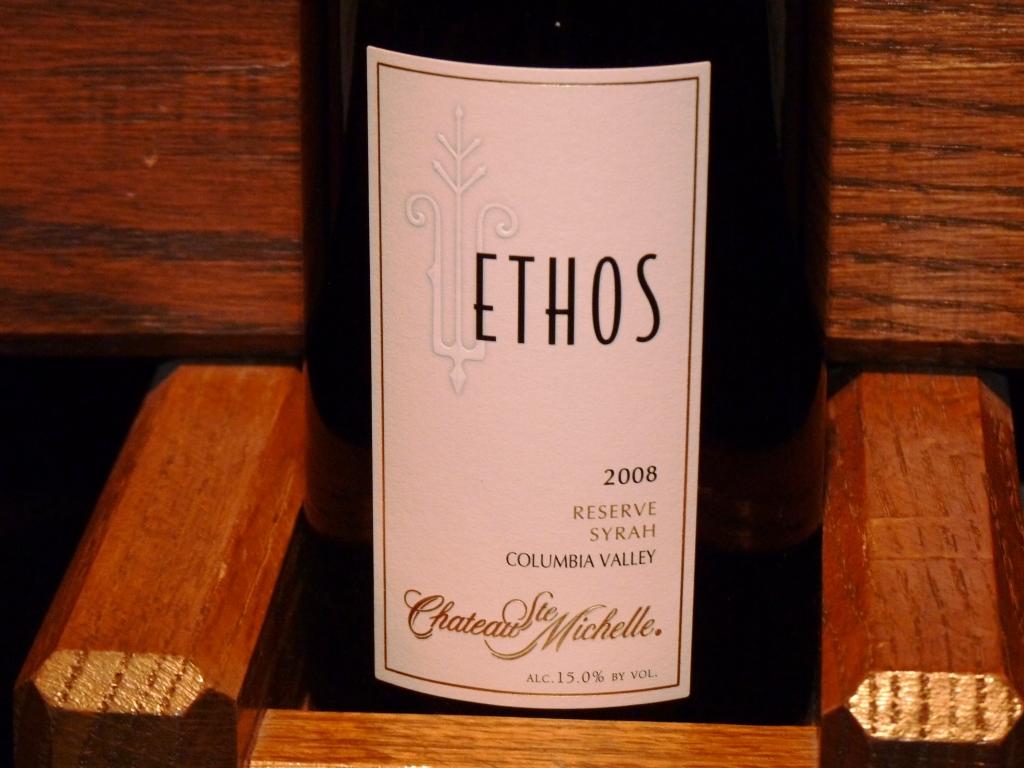
And then there was 2008 Ethos Reserve Syrah, which I have to simply call Best of Tasting – it was a “wow” wine, perfect BBQ wine with the nose of smokey roast, perfect power, balance and beauty:
And… We are not done yet! Then I had an opportunity to try Col Solare wines, which are a product of the partnership between Chateau Ste. Michelle and Tuscany’s Marchesi Antinori. The winery is situated on the Red Mountain in Washington, a part of Columbia Valley appellation, and the vineyards and the whole winery are resembling sun rays – you can see it for yourself in this picture on the website.
The wines are done in the true Super Tuscan style, powerful but reserved. I had an opportunity to try 2006, 2007, and 2008, and as a common point, I can only say – these wines need more time…
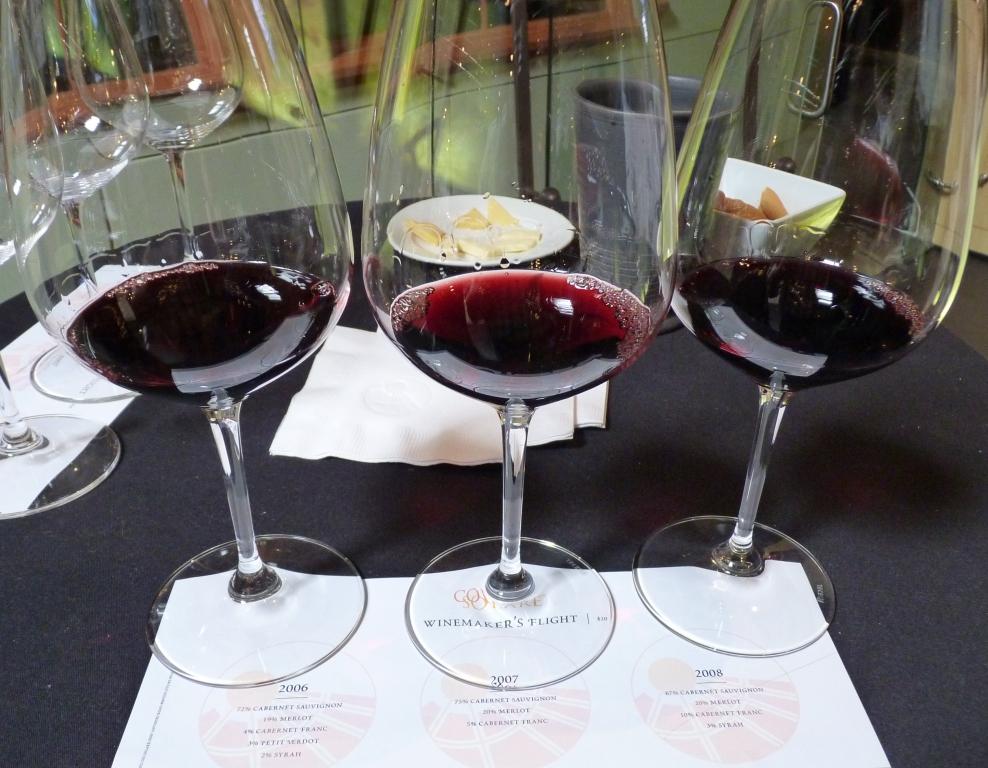 Dense and a touch chewy, with nice dark fruit, cherries and plums, earthy notes and good acidity, very balanced. These wines are not easy to find, but worth seeking.
And for me – here is something again which I didn’t try:

Okay, your photo-torture is done. I’m taking complaints in the comment section. And I’m pretty much done with my report. Ahh, yes, almost forgot – that mini-quiz… Did you figure out those numbers on the cork? Of course, you did, it is a production date. But I managed to surprise even my host Renee, who didn’t know about that date being printed on the cork (I even surprised myself as I never saw it before and only read about it) – the importance of this information is that with this date, you can know how long ago that non-vintage sparkling wine was produced. And I don’t know if you tasted an NV sparkler that was laying around for 5-6 years – it tastes very different from the freshly made version. And with the date on the cork – now you know.
Now I’m done with this post for sure. Find the bottle of Chateau Ste Michelle wine and have a glass – if you managed to read up to this point, you definitely deserve it. And if you are visiting Seattle – well, now you know what you shouldn’t miss. Cheers!
Weekly Wine Quiz #30 – A Guessing Game, In Reverse
 In the last week’s quiz, you were given two reviews of the wine, and you were asked to identify the wine (from the multiple choice selection). I want to continue with that “guessing game”, but change it around. In today’s quiz, you will know the wine, and you will need to select the proper review for it.
There is no reason to be shabby with our wine for this quiz – as you could’ve guessed from the picture, you will need to select a correct review for Chateau Latour, one of the original five so called “First Growth” from Bordeaux 1855 classification, and in general, one of the grandest wines in existence.
Here are five possible review choices for you – again, all coming from professional publications (well, may be except one – you will figure it out):
A: “dense ruby/purple color as well as an extraordinary nose of spring flowers intermixed with blueberries, black raspberries, wet rocks and spice box. Deep, full-bodied, rich and intense, this gorgeous effort again demonstrates what brilliant winemaking and a top-notch terroir can produce. It should drink well for 15-20 years.”
B: “deep purple-ruby. Pungent floral and spice notes enliven complex aromas of dark plum, cocoa and minerals. Large-scaled and juicy, with lively acidity giving sharp definition to the uncommonly deep, pure flavors of black fruits, forest floor and dark spices. The impressively ripe, powerful finish features youthfully chewy tannins and outstanding persistence. This big boy will require a lot of patience: forget about it in the cellar for at least 15 years”
C: “bright ruby. Perfumed, expressive aromas of red and dark berry preserves, smoky herbs and lavender, with a touch of licorice adding depth. Fleshy and supple in texture, offering intense black raspberry and bitter cherry flavors lifted by a spicy quality. Shows the richness of the vintage but carries no excess fat. The finish lingers with impressive tenacity and echoes the floral and smoke notes”
D: None of the reviews here are for Chateau Latour
E: “Deep, bright violet. Intensely perfumed black raspberry and blueberry on the nose, with seductive Asian spice, lavender and incense qualities emerging with air. Sappy red and dark berry liqueur flavors are lifted by juicy acidity picking up suave spice and floral pastille notes on the back end. Velvety tannins provide shape but are absorbed by the lush fruit, which carries through an extremely long, sappy, incisive finish.”
Bonus question – try to identify the vintage of Chateau Latour as well, at least the range. Again, just for fun, try to answer without using the “brute force” methods.
Have fun and a great weekend! Cheers!
Re-post: Affordable Luxuries of the Wine World: Garnacha versus Grenache
During 2011 I wrote a number of posts for the project called The Art Of Life Magazine – of course talking about my favorite subject, wine. The project closed, but I still like the posts I wrote, so I decided to re-post them in this blog. Also, in that project, posts were grouped into mini-series, such as “Affordable Luxuries” you see here – I will continue re-posting them from time to time.
If you are interested as to “why now”, it is simple – Friday, September 21st is International #GrenacheDay – and I don’t have time to write the whole new post. I think this re-post will fit the bill quite well. Here it is.
 So far we talked about and compared Hermitage and Crozes-Hermitage wines, as well as sweet wines in our quest for “affordable luxuries” of the wine world. If you remember, Hermitage and Crozes-Hermitage are made out of the grape called Syrah. Today we are going to talk about Syrah’s brethren (totally unrelated, though), the grape which is often blended together with Syrah – we are going to talk about Grenache.
Grenache is one of the main winemaking red grapes in the world. It used to be the most planted red grape in the world, with biggest planting area being in Spain (Spain actually has the biggest area planted with grapes in the entire world). Grenache, which is known under the name of Garnacha in Spain, lost its “biggest plantings” status in Spain as a lot of vineyards were replanted with other grapes, such as Tempranillo, Cabernet Sauvignon and Merlot, and France took “the most planted” helm now.
Grenache is used in winemaking both by itself and as part of the blend. In Spain, Grenache, or rather Garnacha, is main ingredient of the blend in wines of Priorat, many of which have cult status, such as Clos Mogador. In another region, Campo de Borja, it produces amazing single grape wines, for instance, at Bodegas Alto Moncayo. In France, it is a key ingredient in wines of Southern Rhone, with Chateauneuf-du-Pape being most famous – there it is typically blended with Syrah. It is also used in production of Rose wines in Provence. In Australia, it is used in so called GSM wines, where GSM is simply an abbreviation for Grenache Syrah Mourvedre, three grapes used in production of the GSM wines. In California, it is very successfully used in production of the Rhone-style wines mostly in the Central Coast area, with many of the wines also achieving a cult status (which simply means that production is limited and wines are very hard to get – of course because they are good). As usual, you can take a look at the Grenache article in Wikipedia, which provides great depth of information.
When it comes to “affordable luxuries”, there are plenty of wines which can be compared. As this is Grenache versus Garnacha battle, let’s focus on pure Grenache wines. Of course blends would be fun to look at as well, but finding some of the better ones is a challenge in itself, so let’s stay our course.
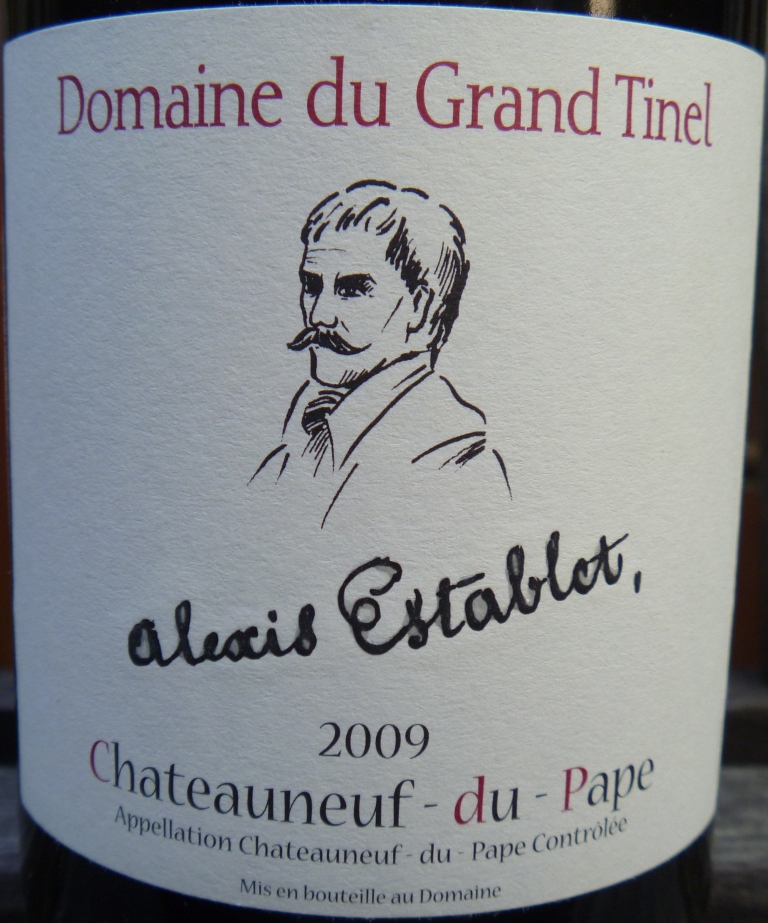
So today’s contenders are: 2009 Bodegas Borsao Tres Picos Garnacha Campo de Borja from Spain and 2009 Domaine du Grand Tinel Cuvee Alexis Establet Chateauneuf-du-Pape from France. It can’t get any better than that – we have here if not two of the best, then at least two of the most classic areas to produce Grenache wines. Both wines are 100% Grenache – which is very unusual for Chateauneauf-du-Pape, where blend can contain up to 13 different grapes.
 Let’s start with 2009 Domaine du Grand Tinel Cuvee Alexis Establet Chateauneuf-du-Pape. The wine is unfortunately way too young (give it 8-10 years, if you have enough patience, of course), but it was very drinkable from the get go – at least you get a punch of tannins at about 10 seconds after the first sip. It is very classic Grenache, with purple color, violets on the nose, and perfect balance of fruit and acidity. Don’t want to repeat myself, but it will be gorgeous – given enough time to mature.
2009 Bodegas Borsao Tres Picos Garnacha Campo de Borja is a full bodied wine, with hint of earthiness on the palate, with lots of dark fruit and hint of pepper. You can also detect violets, hint of cedar, spice box and tar. With supple tannins and medium finish, this wine is more approachable now than the previous one, but will also improve with time.
Is one of those wines better than the other? It is very hard to tell. And for the affordable luxuries, Tres Picos Garnacha costs about $12, and Domaine du Grand Tinel is about $70, so make your choice. And while you will be deciding, I’m going to raise my glass to the pleasures of wine discoveries – cheers!
Wednesday’s Meritage – Wine Quiz Answer, #GrenacheDay, #ChampagneDay, WTSO Full-On and more
 Get wine with free shipping on 12 bottles or more.
Meritage Time!
So, what do you think of Wine Quiz #29, A Guessing Game? I now understand that I goofed up with my logic (not the first time; sigh) and the way second question was asked implied the answer for the first – so I definitely have a room for improvement. I still hope it was fun, and – we have a winner!
Both reviews included into the post were for the same wine, 2001 La Rioja Alta Vina Ardanza Reserva Especial – the first one was written by Robert Parker, and second was Stephen Tanzer’s review. And the winners are (drumroll, please) whineandcheersforwine and thedrunkencyclist – both were able to correctly answer all three questions including the bonus part. Well done! As a side note, this is one of the best Rioja wines you can find for the money – it will cost you between $25 and $30, it drinks perfectly now, and will be for the next 20-30 years.
And now let’s move on to the interesting news section.
On October 2nd, the greatest purveyor of the QPR wines, Wine Til Sold Out, says “Make room in your cellars”, and I say “hold on to your wallets” – Full-On Marathon is coming. Starting at 6 AM Eastern time, WTSO will be offering wines staring from $15.99 and going all the way into the hundreds of dollars. The event will end at midnight on the same day. Knowing WTSO, this will be one amazing event which will put your family finances in a grave danger – but if anything, it will be fun to watch!
I almost missed it (changing the post after it was out) – International #GrenacheDay is coming on Friday, September 21st! There is not much time left – find that Grenache bottle and get ready to celebrate!
Champagne lovers, your special day is coming! 3rd annual #ChampagneDay will be celebrated through all social media outlets on October 25th – you can find your invitation here. You have enough time to be well prepared – start thinking about that special bottle.
There is an interesting debate going in regarding the actual state of the wine blogging – best of the best are trying to figure out if it is dead or alive (as I’m writing this post, I would consider it quite alive, but what do I know…). Here are couple of viewpoints: Joe Roberts, a.k.a. 1WineDude, and Steve Heimoff. If you have an opinion – write a blog post, join the debate!
Last but not least, St. Emilion region in Bordeaux has a new classification – you can read more about it here in Dr. Vino’s blog post.
We are done here – the glass is empty – for the moment, of course. Cheers!
Weekly Wine Quiz #29: A Guessing Game
 I have to admit – I was beaten up by some folks for the last week’s quiz, denoted as too difficult. This week’s quiz will be a traditional multiple choice type, so will see what you will think about this one.
Nowadays, wine reviews are coming from everywhere. On a high level, you got Wine Spectator, Wine Advocate, James Suckling, Wine Enthusiast, Stephen Tanzer and many tens of others, and then you got thousands of wine bloggers, store owners, educators, aficionado – fine, I know, you got the picture. All of the reviews are written in the context – here is a bottle of wine, and here is the review – so when you read it, it is easy to connect particular wine with the particular review. Now, what if we break the context link? How easy it would be to identify the wine just based on the review by itself?
Here are two reviews for you, both belonging to the “professional” category. First:
“bucolic, natural bouquet of bright red cherries, balsamic, mint and a touch of dried honey all with superb delineation. The palate is medium-bodied with wonderful delineation and supple, lithe tannins. The acidity is very well judged and it leads to a pert, tense finish of bitter cherry, loganberry and licorice. This is an outstanding wine drinking perfectly now, but it should age effortlessly.”
and second:
“deep red. Sexy, intensely perfumed bouquet of ripe raspberry and cherry with suggestions of potpourri, sandalwood and vanilla. Shows more power and darker fruits on the palate, picking up a touch of singed plum that adds a serious quality to the sweet black raspberry and cherry flavors without costing the wine any of its vibrancy. The long, sweet finish hangs on with very good tenacity.”
For the wine quiz, here are my questions:
Question #1: Are these two reviews for the same or different wines?
Question #2: Which wine do you think it is?
A. Burgundy
B. Super Tuscan
C. Oregon Pinot Noir
D. Rioja
E: Chateauneuf-du-Pape
Bonus question: How old do you think this wine is – approximately, of course?
See, it is a multiple choice, as I promised – but you will have to use the comment section. Just for fun, try to answer this question without using “brut force” methods.
Have a great weekend! Cheers!
More Great Values from Trader Joe’s
Again this is one of those posts which was supposed to be quick, short and easy, a sequel to the first post about great value wines which can be found at Trader Joe’s stores. This post was started on April 30th! And it was hanging in the drafts section until now. Why? Beats me…
 Anyway, keeping all the non-relevant rants aside, let me talk about few more wine discoveries at Trader Joe’s.
Last week, while visiting state of Washington, it was an “aha” moment – why not explore the local Trader Joe’s with the two-prong goal – fine some local Washington wines and spend not more than $20.
I was able to accomplish both – spent $19.97 (okay, before taxes) on three bottles, and two of them were from Washington! Here are the notes:
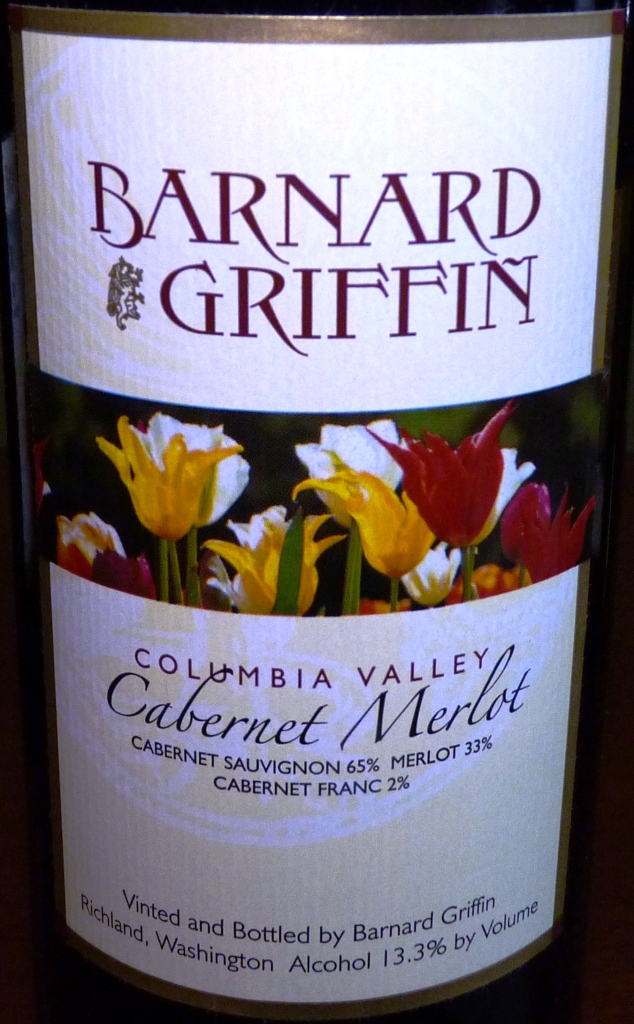 Barnard Griffin Cabernet Merlot Columbia Valley (13.3% ABV, $8.99) – blend of 65% cabernet Sauvignon, 33% Merlot, 2% Cabernet Franc. Only after I took the first sip and got over the initial “hmmm, this is nice!” I realized that this is a non-vintage wine. In general, I have a tendency to avoid non-vintage wines outside of sparkling category, which might be a mistake – I had a great experience with Mitch Cosentino’s Ol’ Red, which was also a non-vintage wine. The Barnard Griffin Cab Merlot had dark garnet, very inviting color. It needed about 15-20 minutes of breathing time to open up. It had a nose of dark fruit with the hint of cocoa. On the palate, it had supple blackberries, dark chocolate, tobacco and may be touch of cinnamon (just a nice touch) – soft, balanced, easy to drink. This was definitely the wine to drink again. I don’t know if you can find it outside of Washington state, but I would suggest you will look for it – worth a try. Drinkability: 8-
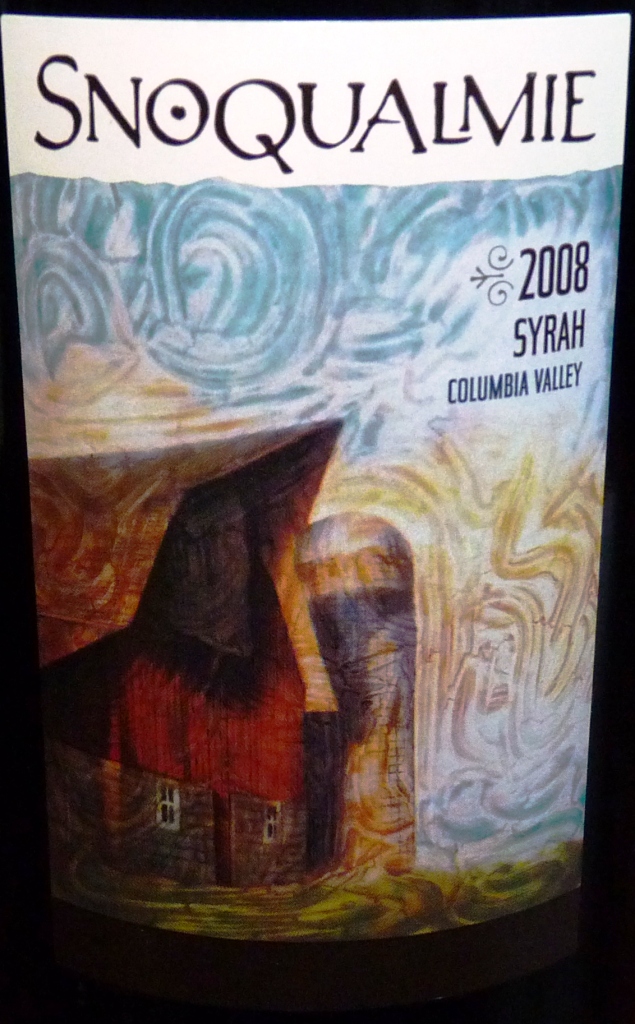 2008 Snoqualmie Syrah Columbia Valley (13.5% ABV, $6.99) – took me a little while to realize, why the name Snoqualmie sounds so familiar – I used to drink Snoqualmie Naked Riesling before, and I remember liking it quite a bit. So instead of giving you a description of this wine, how about I will just tell you – go get it by the case – is that a sufficient description for you? Dark, dense, a bit chewy, ripe plums and blueberries on the palate, good tannins, touch of pepper, good balance. The wine only started to open up on the second day, actually showing some mouth-coating tannins, so I’m sure it got at least 5-7 years of life on it (or more). Definitely the wine I would be happy to drink every day – yeah, only Trader Joe’s in Connecticut don’t sell wine… Again, this wine is worth seeking. Drinkability: 7+
2009 Santa Barbara Landing Chardonnay, Santa Barbara County (13% ABV, $3.99) – this wine was a pure experiment – how can $3.99 California Chardonnay taste. Admittedly, I was not blown away at all (was that really expected at that price level?). This was the wine without sense of place. In a blind tasting, it would puzzle many, I think, as it lacks any of the characteristic traits – butter, vanilla, toasted oak. It has some overall sweet notes, may be somewhat of a white peach pedigree, but that is about the only characteristic I would give. Lacks acidity and balance. Was it terrible? No. Would I drink it again – no. At that price range (little as it is), Vinho Verde from Portugal would give you a lot more pleasure. Drinkability: 6-
 And here are couple of finds from my trip to California back in April – hope some of them are still available!
2010 La Ferme Julien Luberon AOC Rhone Valley Vineyards (13% ABV, $4.99) – blend of Bourboulenc, Grenache Blanc, Ugni Blanc and Rousanne (aspiring Wine Century Club enrollees, take notice – 4 good varieties). Green pear and lemon zest on the nose, grapefruit with some gooseberries on the palate, very nice acidity, overall very good balance. Drinkability: 8-
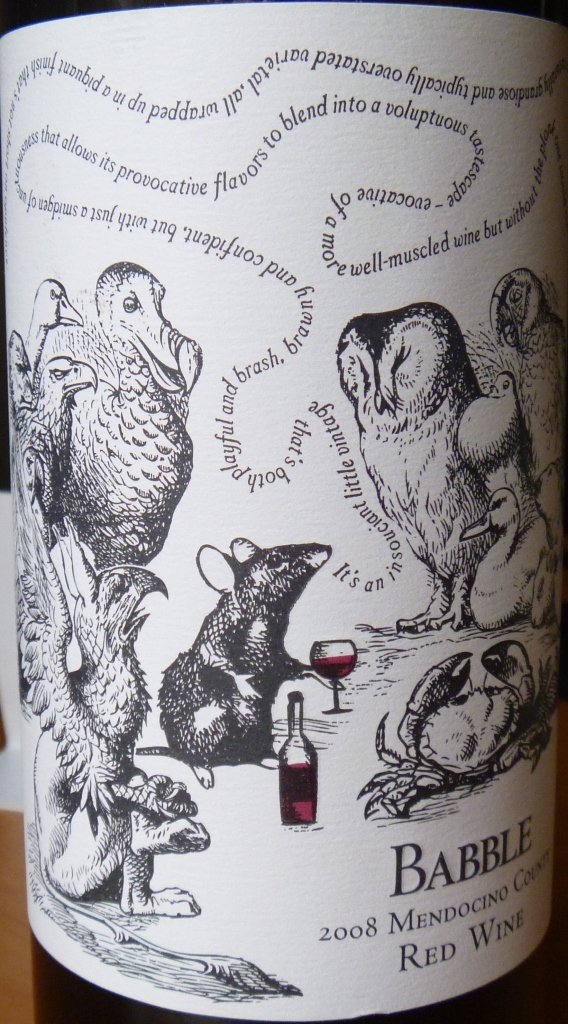 2008 Babble Mendocino County Red Wine (13.7% ABV, $6.99) – blend of 36% Petite Syrah, 26% Syrah, 17% Merlot, 10% Carignane, 10% Grenache and 1% Malbec. Deep purple color, hint of blackberries on the nose, touch of oak, some cherries and a bit of spice box on the palate, very gentle tannins, good acidity. Paired very well with TJ’s Pulled Beef Brisket in smoky BBQ sauce. The text on the label is priceless and somewhat nicely mocking all the “over-sophisticated” wine reviews. Drinkability: 7+.
I need to mention one more great value discovery from Trader Joe’s stores – Poggio Basso Grappa.
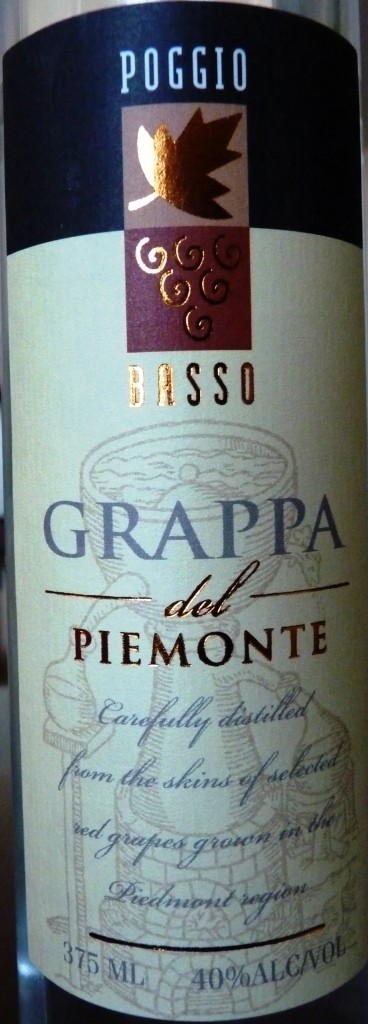 Just curious, how many of you, my readers out there, just had shivers after reading that word “Grappa”? If you did, it is okay, because you simply were deprived of great grappas. Grappa is distilled spirit, made out of grapes, also known for high alcohol content (around 55% is typical). Even 10 years ago, a lot of grappas reaching the US were made out of grape leftovers (skins, seeds, etc.) after the wine production, and was showing in the sharp, attacking taste (not really drinkable, if you ask me). Now situation is different, with a lot of grappas made out of single grape (which is usually listed on the label in such a case), and not leftovers, but actual grapes. These grappas are delicate, flavorful and effervescent, and really give you a lot of pleasure – but you have to pay for it, as most of those excellent grappas will be priced north of $50.
Here comes Trader Joe’s with its Poggio Basso Grappa del Piemonte (40% ABV, 500 ml) – while this is not a single-grape grappa, it is perfectly balanced, with nice fruit profile, very delicate – it is a powerful spirit, but perfectly drinkable and enjoyable all for (you knew that the puncheons was coming) $9.99. No matter what you think of grappas, if you have an access to the Trader Joe’s which carries it, you owe it to yourself to try it – you might discover your new favorite drink.
That’s all for today, folks. Cheers!
Wednesday’s Meritage – Wine Quiz Answer, #PinotSmackdown Results and more…
It is Meritage time!
Let’s start from the answer for Weekly Wine Quiz #28, Where is the wine in this picture? This quiz was done in a different format ( no multiple-choice answers), and it had a lesser number of answers than I would want to – but, we have a clear winner. Here is the answer, also in the form of the picture:

That glass fruit bowl which was shown on the picture in the quiz was a photograph of the original artwork of Flora C. Mace and Joey Kirkpatrick, which I took at the winery, and that is what was shown on the the label of 1998 Artist Series Meritage wines. Congratulations to Mika on figuring out this (very difficult) wine quiz!
In the “interesting news” category, I only have a few things for you. First, the results for the #PinotSmackDown event, held on Twitter on September 6th (which I missed with the wine, but I cast my vote) were tallied up, and the winner was New Zealand (#NZ was actually my vote, but somehow I thought that I’m pretty unique with that opinion and New Zealand would not win) – here is the summary post for you.
Looking over recent posts at The Gray Report, I found this post with the link to the video from the series “Real Winemakers Read Wine Spectator Reviews” – the video is very entertaining, and you will also find more videos from the same series once you will finish watching the first one.
Believe it or not, this is all I have for you in today’s Meritage issue. Until next Wednesday – cheers!
Last Bottle Sign Up ($10 credit)




 Talk-A-Vino