Archive
Weekly Wine Quiz #15 – Most Historically Significant Spirit?
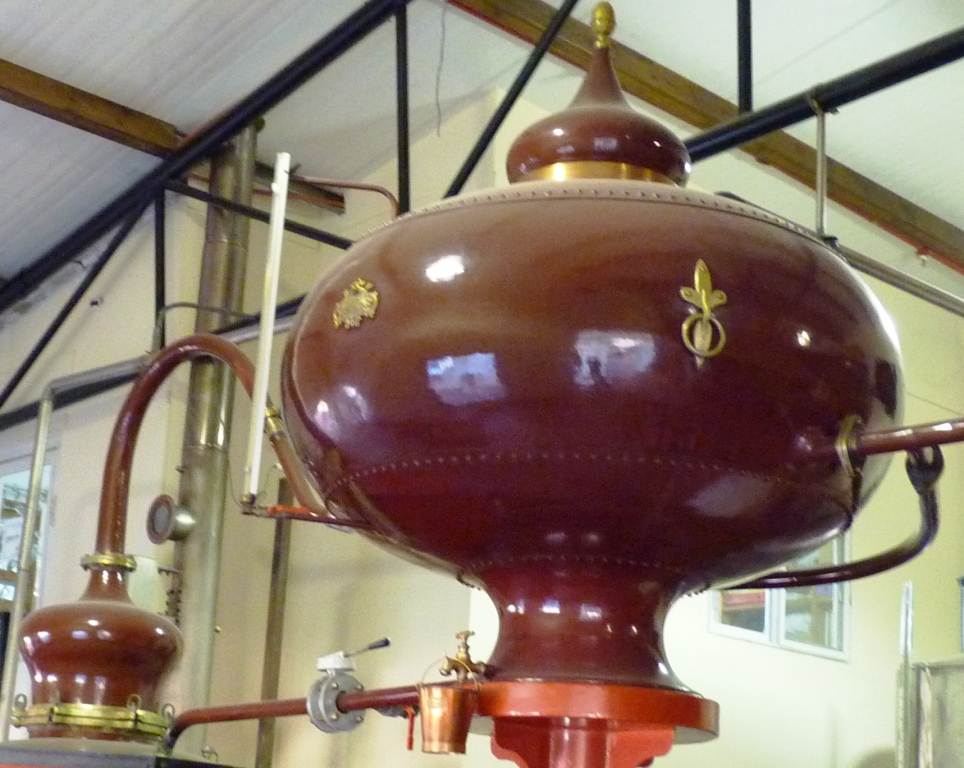 We are continuing the historical angle here, but stepping aside from the softer world of wine into the brave and powerful world of strong spirit (yeah, I know you can read it in different ways) – I’m talking about so called hard liquors.
Hard liquors came about some time in 14th – 15th centuries, when the alchemists of all walks were perfecting distillation process in their search for the ways to turn everything into a gold (or maybe they were searching for eternal life elixir?). It was quickly discovered that the hard liquors have a great range of effects on humans, from giving them pleasure to making them completely crazy and even killing them. During the course of history, hard liquors played wide variety of roles, from being an object of trade, a currency, to the object of desire and status symbol (Louis XIII, anyone?).
Each spirit has it’s own rich and unique history, full of all the human drama, discovery, excitement, love, hate and everything else which constitutes life (it is not for nothing French call some of their liquors Eau de Vie, a Water of Life). And of course each spirit affected hundreds of millions of lives throughout its course of history. However, there is one hard liquor which can be singled out for its role in the history of western civilization, where it was even an essential part of the slavery trade (the whole process was called “slavery triangle”), and its status was dramatically affected by the American Revolution. Do you know what spirit it is?
Have a fun filled weekend! Cheers!
Weekly Wine Quiz #14: True American Grape
 Cabernet Sauvignon. Pinot Noir. Syrah. Chardonnay. If you would be asked to name a region which makes world class wines out of those grapes, I’m sure many of you would think of California or may be Washington or Oregon first. Yes, we are fully considering all of these grapes to be “local” here in the United States. At the same time, none f those grapes were born here, they were all brought in from Europe (after all, Europe has about 7,500 years of winemaking advantage over the Americas).
Ever since the first colonists arrived to America, making wines was a fascination for many of them, including our forefathers such as Thomas Jefferson. Of course there were actual local grapes growing here, and needless to say that every possible effort was made to produce wines out of those grapes. The wines didn’t come out very drinkable, as the grapes were lacking one “minor” component – time in training to become the true wine grapes.
Determination, dedication and countless years of hard work produced its results. If you travel today through many wine trails throughout this country, you will find many wines produced from variety of actual American grapes. Yes, I agree, lots of those wines will not make you say “wow” as their big European brothers do – however, there is one grape which truly stands out on its own, making wonderfully rich and concentrated wines. The story of this grape is closely intertwined with the history of this country, following its ups and downs, so this grape is often deservedly referred to as the “true American grape”. Do you know the name of that grape?
Have a fun filled weekend. Cheers!
And The Answer For Wine Quiz #13 Is…
 Wine quiz #13 was about wine and history, “When wine is a matter of life and death“. I would say that this quiz worked better, as different answers were chosen by about the same number of people (in most of the previous quizzes there was a clear majority preferred answer). I might have to learn about history of Haro in Spain, which was one of the historical centers of Rioja, but correct answer is Jamestown.
In 1619, at the first representative assembly of the New World, held at Jamestown church, Acte 12 was passed: “…every householder doe yearly plante and maintaine ten vines, untill they have attained to the arte and experience of dressing a Vineyard, either by their owne industry, or by Instruction of some Vigneron. And that upon what penalty soever the Governour and Counsell of Estate shall thinke fitt to impose upone the neglecters of this acte”. And the penalty was eventually decided to be the “pain of death”. I will tell you in one of the follow up posts about the source of this information, but for now you have your answer.
Whomever answered “Jamestown” can pat themselves on the back and have an extra glass of wine (or two). Until the next quiz – cheers!
Weekly Wine Quiz #13 – Wine as a Matter of Life and … Death
Continuing our historical angle, here is a new quiz for you. While reading a wine book, I was surprised to learn about harsh ways wine industry was using in order to promote itself. What do I mean by the harsh ways? So there was a town which enacted a law, requiring all households to plant and tend for grape vines. The penalty for not complying? Nothing less than “pain of death”! Don’t know about you, but that doesn’t sound pretty for me.
Anyway, would you care to guess which town was it?
Have a great long weekend! Cheers!
Weekly Wine Quiz #12: The End of Prohibition
It seems that wine quiz #11, Bubbles, Big and Small, was really simple, and most of you did great – yes, the correct answer is 49,000,000 – assuming our source of information didn’t make a grave mathematical error (you can read about it here).
For the next few of quizzes, I want to focus a bit on history. Actually, a wine quiz by 1WineDude Joe Roberts, called State of (Grape) Affairs, prompted me to look at the historical side of all things wine.
Have you ever tried a wine from state of Missouri? Me neither – and it appears that before Prohibition, there were more than 2 million gallons of wine produced in the State of Missouri, including internationally renowned wines. Prohibition squarely put an end to it and tremendous number of vineyards were destroyed.
I don’t know about you, but I’m surely glad Prohibition was repealed on December 5, 1933. Of course while majority of the states had to vote for repeal of the Prohibition, there is one state which is considered to have a deciding vote. Do you know what state was that?
As a bonus question, please provide a number of deciding vote (use comments section).
Have fun! Cheers!
Last Bottle Sign Up ($10 credit)




 Talk-A-Vino